



Abstract
The World Health Organization (WHO) strives to assist and inspire cities to become more ‘age-friendly’ through the Global Age-Friendly Cities Guide. An age-friendly city offers a supportive environment that enables residents to grow older actively within their families, neighbourhoods and civil society, and offers extensive opportunities for their participation in the community. In the attempts to make cities age-friendly, ageism may interact with these developments. The goal of this study was to investigate the extent to which features of age-friendly cities, both facilitators and hindrances, are visible in the city scape of the Dutch municipalities of The Hague and Zoetermeer and whether or not ageism is manifested explicitly or implicitly. A qualitative photoproduction study based on the Checklist of Essential Features of Age-Friendly Cities was conducted in five neighbourhoods. Both municipalities have a large number of visual age-friendly features, which are manifested in five domains of the WHO model, namely Communication and information; Housing; Transportation; Community support and health services; and Outdoor spaces and buildings. Age-stereotypes, both positive and negative, can be observed in the domain of Communication and information, especially in the depiction of third agers as winners. At the same time, older people and age-friendly features are very visible in the cityscapes of both municipalities, and this is a positive expression of the changing demographics.
Introduction
In Europe and the Western World as a whole, people live longer and are generally in better health than previous generations of their age. According to the Organisation for Economic Co-operation and Development (OECD), 1 the population share of those adults aged 65 years old and over is expected to rise to 25.1% in 2050 across its member states. Cities, in particular, have large numbers of older inhabitants and are home to 43.2% of this older population. The increase of our ageing society is a positive yet challenging phenomenon, as population ageing and urbanisation are the culmination of successful human development. 2 The interaction of ageing and urbanism, which is also termed urban ageing, 3 , 4 raises issues for all types of communities in various domains of urban living. 5
Understanding the relationship between population ageing and urban change, and the need to develop supportive urban communities, are major issues for public policy. 5 According to Caro and Fitzgerald, 6 an age-friendly city offers a supportive environment that enables residents to grow older actively within their families, neighbourhoods and civil society. An age-friendly city, in their view, offers extensive opportunities for the participation of older people in the community. In other words, a place where older people are actively involved, valued and supported with infrastructure and services that effectively accommodate their needs.
Plouffe and Kalache 2 described the efforts of the World Health Organization (WHO) to engage and assist cities in becoming more ‘age-friendly’, through the Global Age-Friendly Cities Guide and a companion ‘Checklist of Essential Features of Age-Friendly Cities’. 7 The WHO project proposed that an ‘age-friendly’ city is one that promotes active ageing. 7 Such a city optimises opportunities for health, participation and security in order to enhance quality of life as people age. 2 There are eight domains of an age-friendly city, namely Social participation; Communication and information; Civic participation and employment; Housing; Transportation; Community support and health services; Outdoor spaces and buildings; and Respect and social inclusion. According to the OECD, 1 ageing societies pose diverse challenges, such as redesigning infrastructure and urban development patterns.
There are many cities world-wide that are in the process of becoming age-friendly,8–15 and the process goes together with practical and scientific questions about the impact of such efforts on the health, independence and well-being of the older people, and the design of the urban environment and services offered to the older citizens of a self-proclaimed age-friendly city. When referring to age-friendly cities, there seems to be a lack of studies focusing on the outcomes of age-friendly city approaches at the individual city-level.
4
In the attempts to make cities age-friendly, some of the features that are intended at improving the quality of life of older people may actually be based on age-stereotypes, both positive and negative ones. In practice, the phenomenon of ageism may interact with the age-friendly developments, which may sound counterintuitive as the process of a city towards becoming age-friendly is often perceived as something positive. Ageism as a concept was coined by Butler,
16
who referred to it as prejudice on the basis of age. Although the literature provides multiple manifestations of ageism, there is a lack of consensus on the conceptualisation of ageism.
17
The most recent and comprehensive definition of ageism is by São José et al.,
18
namely that: ‘Ageism is defined as negative or positive stereotypes, prejudice and/or discrimination against (or to the advantage of) us on the basis of our chronological age or on the basis of a perception of us as being “old”, “too old,”… Ageism can be self-directed or other-directed, implicit or explicit and can be expressed on a micro, meso or macro-level’.
When talking about implicit and explicit ageism in the domain of urban ageing and age-friendly cities, there are numerous examples to illustrate how these forms of ageism are manifest in the built environment. Examples of explicit ageism in the urban environment are poor or absent accessibility for older people, and, who, therefore, are often completely ignored by architects, designers and urban planners. This lack of accessibility can be encountered in public transport, such as buses with high entrance steps or an underground metro station without a lift or escalator, or even in public and private buildings with entrances with steps. Implicit ageism can be witnessed in buildings that from an aesthetic perspective are beautifully designed, but which in practice do not cater for the needs of older people. In such buildings, the artistic design takes precedence over the practical functionality of the building. In practice, this should not happen as town-planning authorities should scrutinise designs before being given green light or permit to build or construct. Apart from the aspects of explicit and implicit ageism, all citizens of a city that invested in becoming age-friendly have the right to know how public money has been spent and how the public funding has had an impact on the design of the city. In short, are these features noticeable to laymen when walking through a neighbourhood, and to older people when venturing outside and whilst making use of services?
In this study, we aimed to investigate the extent to which features of age-friendly cities (both facilitators and hindrances 20 ) are visible in the city scape, and whether or not ageism is manifested explicitly or implicitly. Explicit ageism implies conscious ageism, mainly through ageist beliefs, feelings and behaviours, which are consciously endorsed, while implicit ageism infers unconscious ageism also through ageist beliefs, feelings and behaviours, which are spontaneously manifested without cognizant mindfulness. 19 We conducted this investigation on the neighbourhood level in two cities (municipalities) in the Netherlands.
City profiles: The Hague and Zoetermeer
This study was conducted in two municipalities in the Netherlands, namely The Hague (Den Haag or 's-Gravenhage) and Zoetermeer, which are located in the Haaglanden region in the Province of South Holland (Zuid-Holland; Figure 1). The Hague is a member of the WHO Age-Friendly Cities consortium, 21 and Zoetermeer is a municipality which implements strategies for age-friendliness without being a consortium member. A total of five neighbourhoods were selected for this study: (1) The Hague Centre, (2) Laak – The Hague, (3) Wateringse Veld – The Hague, (4) Zoetermeer Stadshart (Zoetermeer City Centre) and (5) Rokkeveen – Zoetermeer (Figure 1).
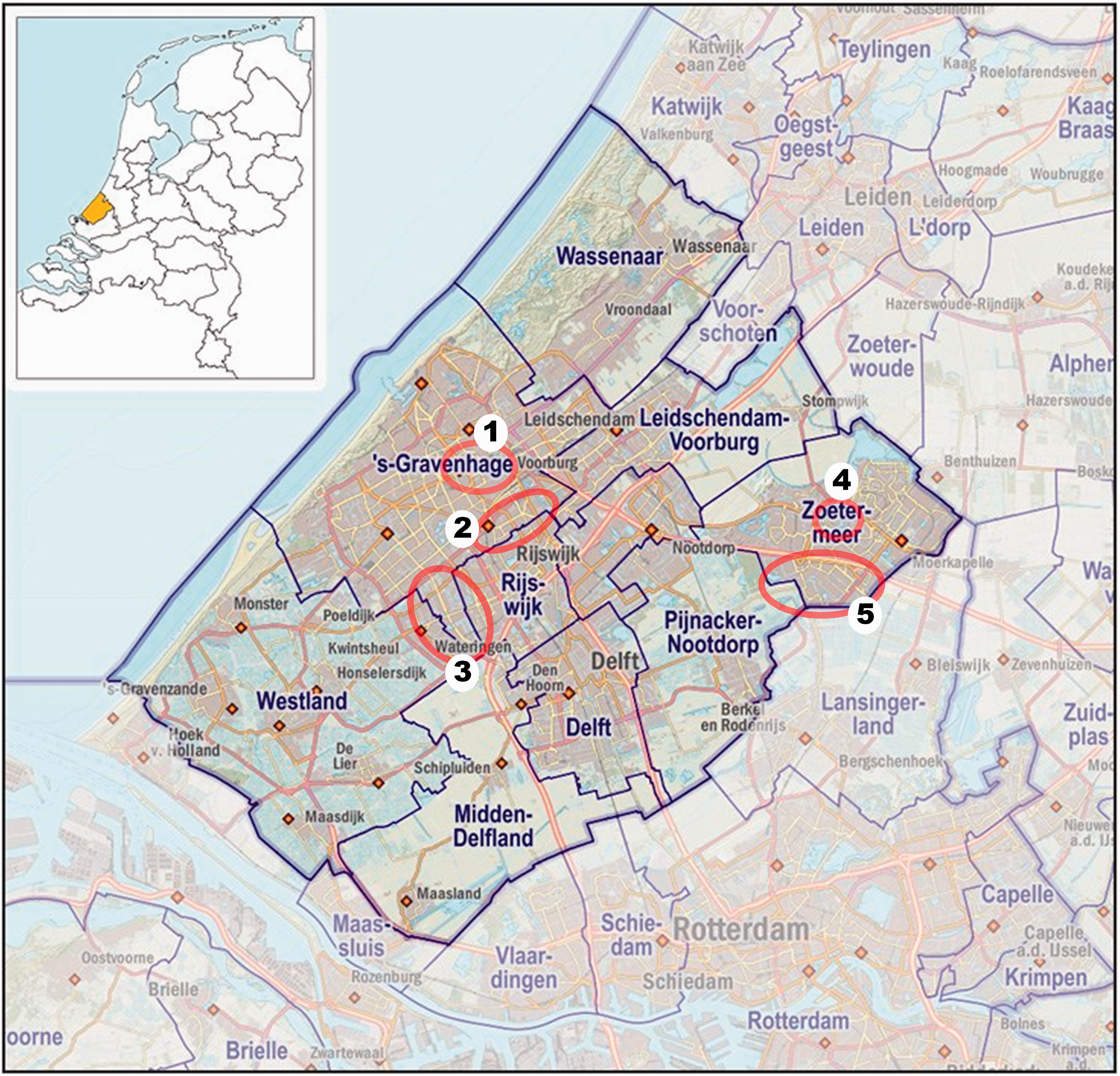
Overview of the five neighbourhoods in Haaglanden region that were analysed: (1) Den Haag Centrum (The Hague Centre), (2) Laak (The Hague), (3) Wateringse Veld (The Hague), (4) Zoetermeer Stadshart (Zoetermeer City Centre) and (5) Rokkeveen (Zoetermeer).
The Hague
On 1 January 2018, the population of The Hague was just over 533,000 people, which included 76,465 people aged 65 years and over. 22 The percentage of older people (65+ years) living in the city was 14.3%. Of these older people, 41.9% were 75 years and over. 23 Over three-quarters of the community-dwelling older people live in a multi-storey building. Approximately 40% of older people (65+ years) living in The Hague live in a home that is labelled or is known as a home for older people, a nursing home or a so-called life-time home, of which a large section is made up of social housing. Of all senior households in the city, approximately 17% of residents have a minimum expenditure (per month) to live on (usually a state pension). 23 Whilst, approximately 75% of the older people are able to use the Internet, 24 a further 60% of older people have a physical limitation or chronic disease. Moreover, 68% of older people experience a limitation in daily functioning, and approximately 10% deal with the effects of dementia syndrome. 24
Statistics from 2018 showed 58.9% of people aged 65 years and over live in a single household, 94.6% of people live independently and 5.4% of people live in residential or hospital care. In 2015, 73.4% of all people aged 65 years and over lived in a multi-storey building, 16.9% of people lived in a house that was adapted for habitation by older people and 41.9% of people lived in social housing. 23 Most people aged 65 years and over are generally satisfied with the various facilities in their neighbourhood, such as shops for daily needs and public transport (85%), street lighting (83%), green areas (76%) and the maintenance of roads and cycle paths (71%). People are less satisfied with parking facilities (41%). Moreover, 19.7% of people indicate that they sometimes feel unsafe in their neighbourhood. 23
In 2017, 27.0% of all the people aged 65 years and older reported to be involved in voluntary work, and a further 26.6% of people provided informal care. Over half (54%) of all people aged 65 years and over feel at home in their neighbourhood and believe that people in their neighbourhood interact with each other in a pleasant and positive manner. About 29% of older people think that they live in a pleasant neighbourhood, and 32% have many social contacts in the neighbourhood. However, 40% of people aged over 65 years think that people in their neighbourhood hardly know each other. In 2015, 9% of all people aged 65 years and over were involved in neighbourhood activities, and 79% helped their neighbours once in a while or receive help from their neighbours. More than half (52%) of those aged 65 years and over were moderately to very severely lonely in the year prior to the study (in 2016). Another 11% were dealing with serious to very severe loneliness, and 7% felt socially excluded. 23 , 24 According to the Armoedemonitor 2016 (Poverty Monitor 2016), 25 of all senior households, 25% of people lived on less than 110% of the legal minimum income.
Given the make-up of older residents in this city, there are three main challenges for the city of The Hague, 24 and these are: (1) to improve the vitality of its older citizens, (2) to combat loneliness and focus on quality of life and well-being and (3) age-in-place. Improving the vitality of citizens can decrease loneliness (52% of older people in the city experience these feelings), for instance through community engagement and simultaneously meeting new people. 24 This is particularly the case when a spouse dies and one’s social network becomes smaller. The more active older people are, the more they are expected to take care of things themselves and to participate in society. Setting goals in life should be in accordance with one’s health status and living conditions. 24
Furthermore, the municipality focuses on improving safety and security and addresses domestic violence and abuse of older people. For older people with dementia, a strong network of services and support for both the individuals and informal carers, offering counselling and day-care is set up for both people. Inclusion of other sectors such as arts, culture and sports networks and community initiatives with aged-care initiatives and networks should challenge people to explore and identify new life goals based on their personal abilities.
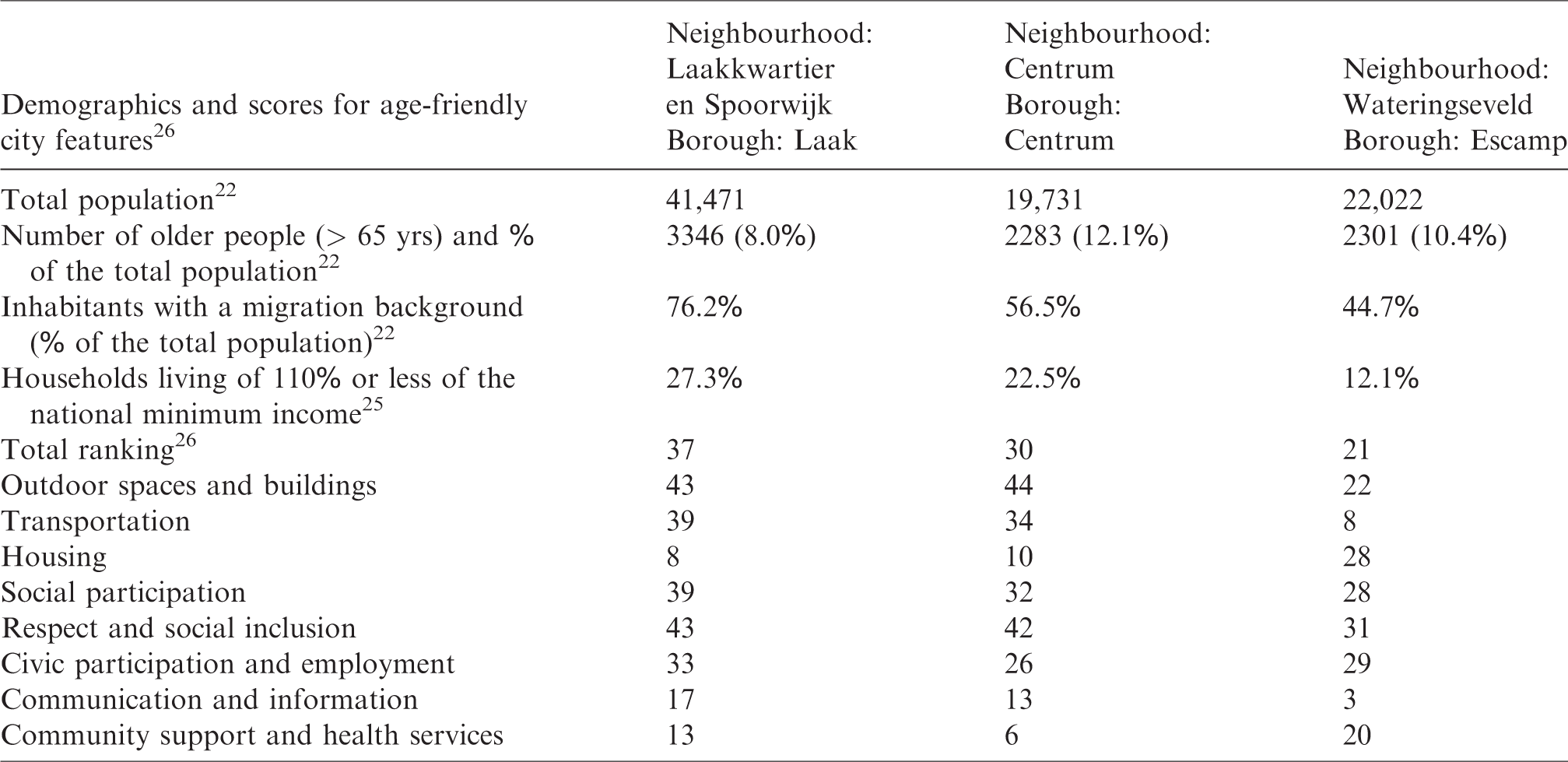
The 44 neighbourhoods that make-up the municipality of The Hague have been analysed in terms of their age-friendliness, and their positions were ranked. 26 For the three neighbourhoods included in this study, their relative positions are given in Table 1.
Zoetermeer
In January 2019, 124,940 people lived in the municipality of Zoetermeer, which included 23,114 people aged 65 years and over and 8425 aged 75 years and over. 27 The percentage of people aged 65 years and over living in the city was 18.5% (Table 2). Currently, 31.4% of people living in Zoetermeer have a migrant background (20.6% non-Western and 10.8% Western). Over the last nine years, the mean percentage of older people in Zoetermeer grew from 12.6% to 18.5%, an increase of 5.9% points. Although most neighbourhoods in Zoetermeer demonstrated an increase (n = 24), not all neighbourhoods shared the same extremity in increase (Table 3). For example, Zoetermeer Dorp remained more or less stable (21.4% in 2010 to 22.1% in 2019), and even a decrease was observed: the most extreme scenario was observed in Zoetermeer Zoeterhage (32.4% in 2010 to 22.2% in 2019). 27
Demographics of studied neighbourhoods in the municipality of Zoetermeer. 28
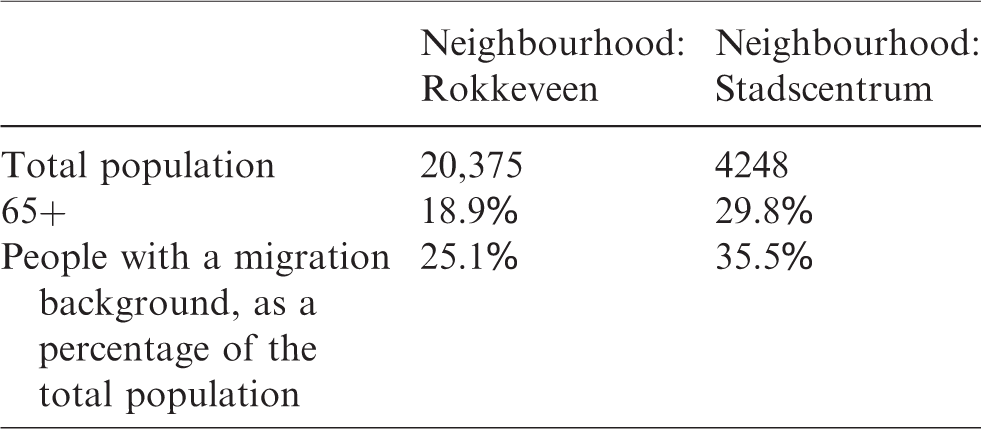
Percentage growth in the number of older people (65+ years) from 2010 to 2019 in Zoetermeer. 28

aNeighbourhoods included in this study.
This diversity in the increase of the number of older people means that different neighbourhoods have different challenges. In 2019, 45.7% of the people who resided in social housing and of this group, 22% of people were aged 65+ years. In 2017, people rated their living environment and their own homes. Their living environment scored a 7.6 (0–10 scale), and their homes scored an 8.0 (scale 0–10). Of the older people who need care provided by the government (for instance, aids, domestic care, home modifications, regional taxi services, individual counselling at home, day-care and overnight care), 79% rated the quality as ‘good’, and 81% experience the care as fitting to their needs. 27 Of this group, 65% never/seldom experience problems with accessibility, and only 16% experienced accessibility issues when entering public places (pavements, streets and walking routes). Public transport was never used by 15% of the respondents, 45% of this group never or seldom experienced challenges and 40% experienced challenges occasionally or often.
Given the demographic conditions of the population of Zoetermeer, several challenges for the municipality lie in the field of ageing-in-place and vitality for the ageing population. In order to support ageing-in-place, existing homes need to be modified and or retrofitted according to the principles of life-time homes. Furthermore, the living environment has to meet the needs of older residents. Finally, there is an increase of older people in Zoetermeer who need nursing home care, and the current quantity and quality are insufficient. In relation to the national developments in the domain of social care and support, the municipality of Zoetermeer described that it will adjust or expand the provisions for welfare care. 29 In order to improve the vitality of older people in Zoetermeer, the municipality described in their vision statement that they want older people to pursue a more active lifestyle, ask for support from family carers and consider combatting malnutrition. This should be done through offering leisure, minor sports and other activities for the elderly, and also do research on how older people travel outdoors in Zoetermeer, also to support a government project on strengthening the positive health vision for (future) family carers and to provide information on nutrition by organising group meetings regarding malnutrition. 30
Profiles of studied neighbourhoods
A total of five neighbourhoods in Haaglanden region were analysed: (1) Den Haag Centrum (The Hague Centre), (2) Laak (The Hague), (3) Wateringse Veld (The Hague), (4) Zoetermeer Stadshart (Zoetermeer City Centre) and (5) Rokkeveen (Zoetermeer).
Den Haag Centrum (The Hague – Centre) is a large borough of the municipality of The Hague, which is made up of eight smaller residential areas. The central area (Centrum) was part of this study. The area is known for its segregation in terms of the type of housing, social economic status and ethnic background of residents. Also, the area is home to the main shopping district, which draws 30 million visitors annually, and numerous cultural venues and political institutions. The surface area is 2.05 km2, and in 2017, there were 102,945 inhabitants. 31
Laak is the smallest borough of The Hague and is made up of two residential areas. This study focuses on the Laakkwartier area. This area is known for its multicultural population. Around the 1900s, the dockyards were established in this area, which gave the neighbourhood its industrial look and feel. Between 1915 and 1935, social housing in the style of the Dutch architect and urban planner Berlage were built. The surface area is 4.27 km2, and in 2017, there were 42,405 inhabitants. 31
Wateringse Veld in The Hague is a recently developed residential area that was built between 1996 and 2012, which consists of 7500 dwellings. The area is part of Escamp borough and was previously a horticultural area. The surface area is 3.28 km2, and in 2017, there were 21,610 inhabitants. 31
Zoetermeer Stadshart (Zoetermeer City Centre) is the main shopping district of the municipality. In 1985, the construction of the area commenced, which also included the construction of a town hall and the public library. The area has been carefully planned and consists of two layers, an underground area for logistics and the area for consumers with over 200 shops. There are also residential tower blocks in the area, thus, the neighbourhood is vibrant after the closing hours of the shops and restaurants. The surface area is 0.55 km2, and in 2017, there were 3300 inhabitants. 31
Rokkeveen is one of the largest residential neighbourhoods in Zoetermeer, and was built after 1987. Rokkeveen is divided into a western and an eastern section; the latter being the oldest part of Rokkeveen. Remarkable features of Rokkeveen-West are several bridges and the Floriadepark. In the eastern area, there are landmarks such as a water tower and a large park for public use. The surface area is 3.79 km2, and in 2017, there were 20,645 inhabitants. 31
Methodology
Photography
A visual research method was chosen for this study, namely the photoproduction method.32–34 Photography facilitates participants to tell a story through images.35–37 Images provide a lasting record of an urban scene and perspective, which can be used to study the relationship of people and their living environments. Photography allows complex environmental and social issues to be captured and then shared. Building on existing work by Annemans et al., 33 this particular study aims to identify and obtain a thorough understanding of the city scape and age-friendly features visible in the photos whilst also aiming to understand why and how.
This study used the approach of photographing real-life features at the neighbourhood level during a walkthrough, whilst considering the eight domains of the WHO’s model of age-friendly cities. The four-page Checklist of Essential Features of Age-Friendly Cities 7 was used, bearing in mind that aspects of transportation and the built environment are more visible than the human-related aspects of an age-friendly city, such as respect and social inclusion. The purpose of this checklist is to identify how a city can be improved upon and to align a city to the definition and checklist created by the WHO. Assessing age-friendly features in a city in terms of facilitators and hindrances is based on the International Classification of Functioning, Disability and Health of the WHO. 20 Within the classification, the built environment is an environmental factor that influences one’s health through the facilitating or hindering impact of features of the physical, social and attitudinal world. 20 Photos were made in September and October 2018 by an extended research team, mainly with a background in social work and nursing, who were aged in their 20s, 30s and 40s; 38 in total receiving instructions from two principal investigators. There were 5 + 5 researchers (two groups) taking photographs in The Hague Centre, 5 + 5 researchers (two groups) in Laak, 5 + 4 researchers (two groups) in Wateringse Veld, five researchers (one group) in Zoetermeer City Centre, and 4 + 5 researchers (two groups) in Rokkeveen. Researchers were instructed to take pictures based on the Checklist of Essential Features of Age-Friendly Cities, with a focus on the built environment, and the consideration of ageism was not a part of the photoproduction process.
Ageism
Over the past two to three decades, in reaction to the ageing demographic changes, governments of developed countries attempted to respond to the goals and requirements of older people by reforming social and public policies and making serious attempts to transform cities into older age-friendly habitats. 38 Ageism, which is a combination of several connected elements, namely: prejudicial attitudes towards older people, old age and the ageing process; discriminatory practices; and institutional practices and policies that perpetuate stereotypes about older people, may interact with these attempts to make cities age-friendly. Of relevance to this context, it is worthwhile to focus on the three reported levels of ageism, namely the micro-level at the individual level – reflected through thoughts, emotions and actions; the meso-level at the group/organisational/sectoral level – evident in polices or strategies; and the macro-level at cultural or societal level – manifested through values as a whole and entrenched within political regulations. 39 One level of ageism may trigger the manifestation at the other levels. For example, disabling environments and ageist social norms generated by political systems that are insensitive to older people’s needs are more likely to elicit ageism at the group/organisational/sectoral level, trickling down to the individual level ageist behaviour and decision-making. Indeed, age-friendly cities should nurture social inclusion and minimise disadvantages arising from vulnerabilities by ensuring actions that foster social integration and social support, while safeguarding older adults’ access to essential resources. 40 , 41 In other words, age-friendly cities may only be guaranteed by fighting ageism at all levels starting off with entrenching anti-ageism within social and public policies and reinforcing, rewarding and incentivizing anti-ageist behaviour at organisational and individual levels. The aspects of ageism were analysed in a secondary round of data analyses.
Ethics
During the photoproduction, no explicit photographs were taken of people, who did not want to be photographed. This study did not involve the participation of older people, and, therefore, gaining ethical approval and informed consent was not required from the ethics committee.
Data analyses
The Checklist of Essential Features of Age-Friendly Cities 7 was used for the primary data analyses (a priori thematic analysis). There were 152 photographs made in The Hague Centre, 72 in Laak, 206 in Wateringse Veld, 98 in Zoetermeer City Centre and 92 in Rokkeveen (620 in total). For every neighbourhood, data saturation was achieved. Photographs were clustered based on the domains of the WHO’s checklist, and the stories that relate to these photos were used to describe the visibility and state-of-the-art of the age-friendliness in/of the built environment. After taking the photographs, the set of photos were presented to at least one healthcare professional working in a local community/healthcare centre and one or two older adults, as a form of member check. For each of the five neighbourhoods, collages were made of some age-friendly features or hindrances, in order to support the description of the situation on the neighbourhood level. Some additional stand-alone photographs were chosen for the same purpose.
The aspects of ageism were analysed in a secondary round of data analyses, based on the photographic material available, mainly of features relating to the implicit and explicit ageism found in the design of features of the built environment, and within the domain of Communication and Information of the WHO’s Global Age-Friendly Cities Guide model. Photos that included older people in advertising, signage and other printed materials were studied for implicit and explicit ageism. Also, design aspects of the built environment (architecture and urban planning) were analysed using the photos only to see if age-friendly features are in fact age-friendly, or, for instance, related to accessibility only.
Results
In the following sections, each of the five neighbourhoods in The Hague and Zoetermeer are described in more detail.
The Hague – Centre
One of the focal points of this neighbourhood (Figure 2) is the large shopping district, which is frequented by thousands of people on a daily basis. In this district, photographs displayed many outdoor benches and seating facilities. The traffic is generally crowded and hurried. There is a limitation surrounding older people based on the varying traffic lanes, including people riding their bicycles and scooters. Overall, many older people avoid going into the city centre because of how busy it is. This in turn results in older populations choosing to visit quieter areas of the city. At the same time, there are many options for public transport for people to use in and around the city centre, including buses, trams and the underground tram lines. All platforms are accessible for people in wheelchairs and using wheeled walkers. However, due to the age of some trams, users still need to climb the steps to get on board.
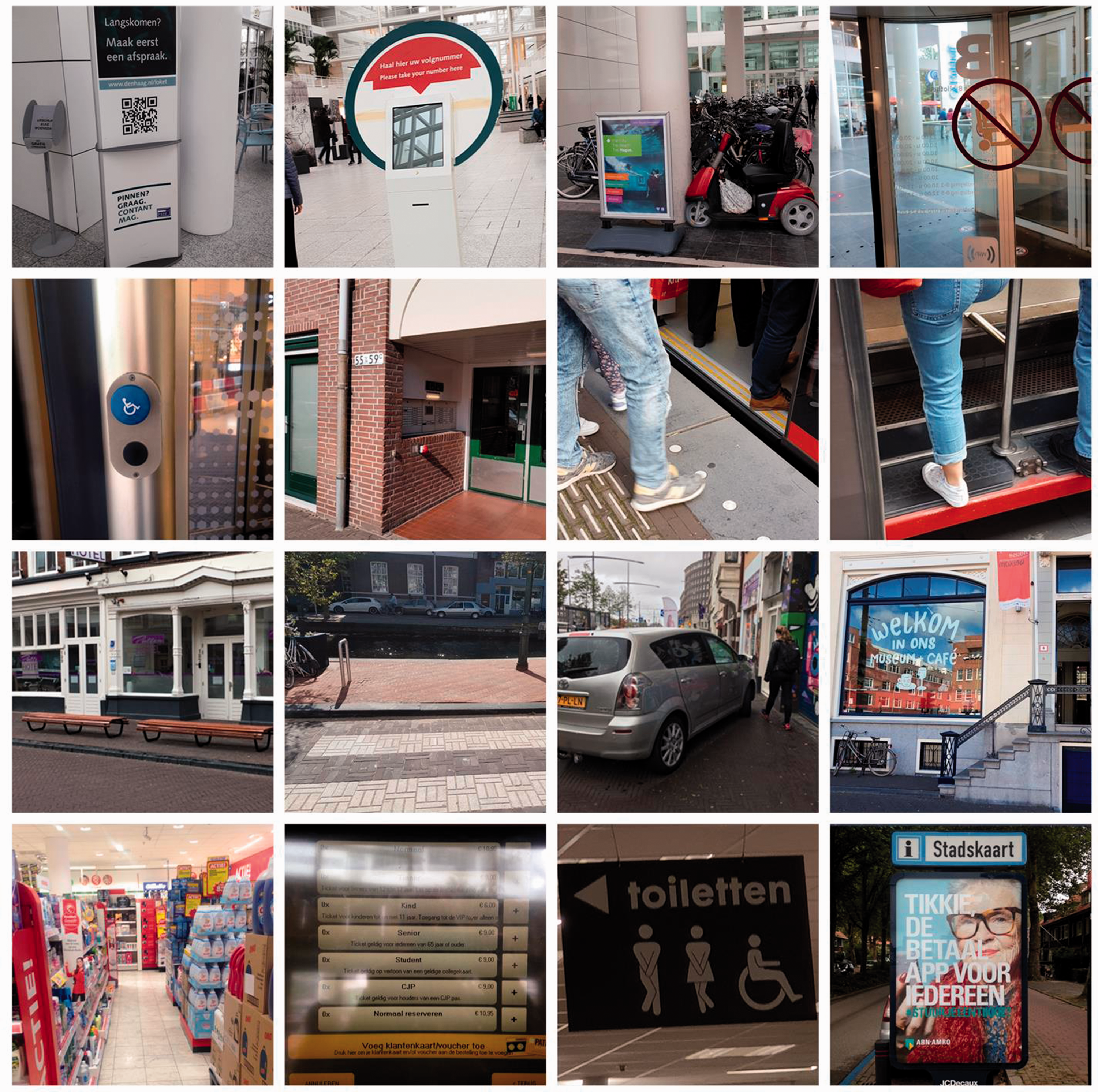
Overview of features of The Hague – Centre. (a to d) show the City Hall, the digital devices for making appointments, as well as the limited access for users of mobility scooters plus the parking lots outside. (e to h) show the options for wheelchair users to access buildings by pushing special buttons, and the either limited or excellent options for access to public transportation. (i to l) show outdoor environment with benches, pedestrian crossings (uneven and even access), traffic blocking pavements and restricted access to customers with mobility limitations in older buildings. (m to p) show options for entrepreneurs to be age-friendly or not, for instance, by having to narrow alleyways, offering reduced senior fares for the cinema, having public lavatories available and by advertising for the senior market (a bank’s digital payment service).
Throughout the city centre, many of the buildings, including the shops, can be easily accessed, because the shops or buildings have open doors. However, many of the shops have narrow aisles and are hard to reach when using a mobility scooter or other assistive transport (such as wheelchairs). Additionally, elevators and escalators are present in many shops, which can offer assistance to user, whilst some of the restaurants and cafes cannot be reached without climbing outdoor stairs.
Overall, the city centre is largely free of thresholds and kerbs, and there is sufficient space for users of mobility scooters to drive around (safely) and park the device (Figure 3). Furthermore, there are private mobility scooter parking boxes (Figure 4) that can be installed when living in this part of the city.
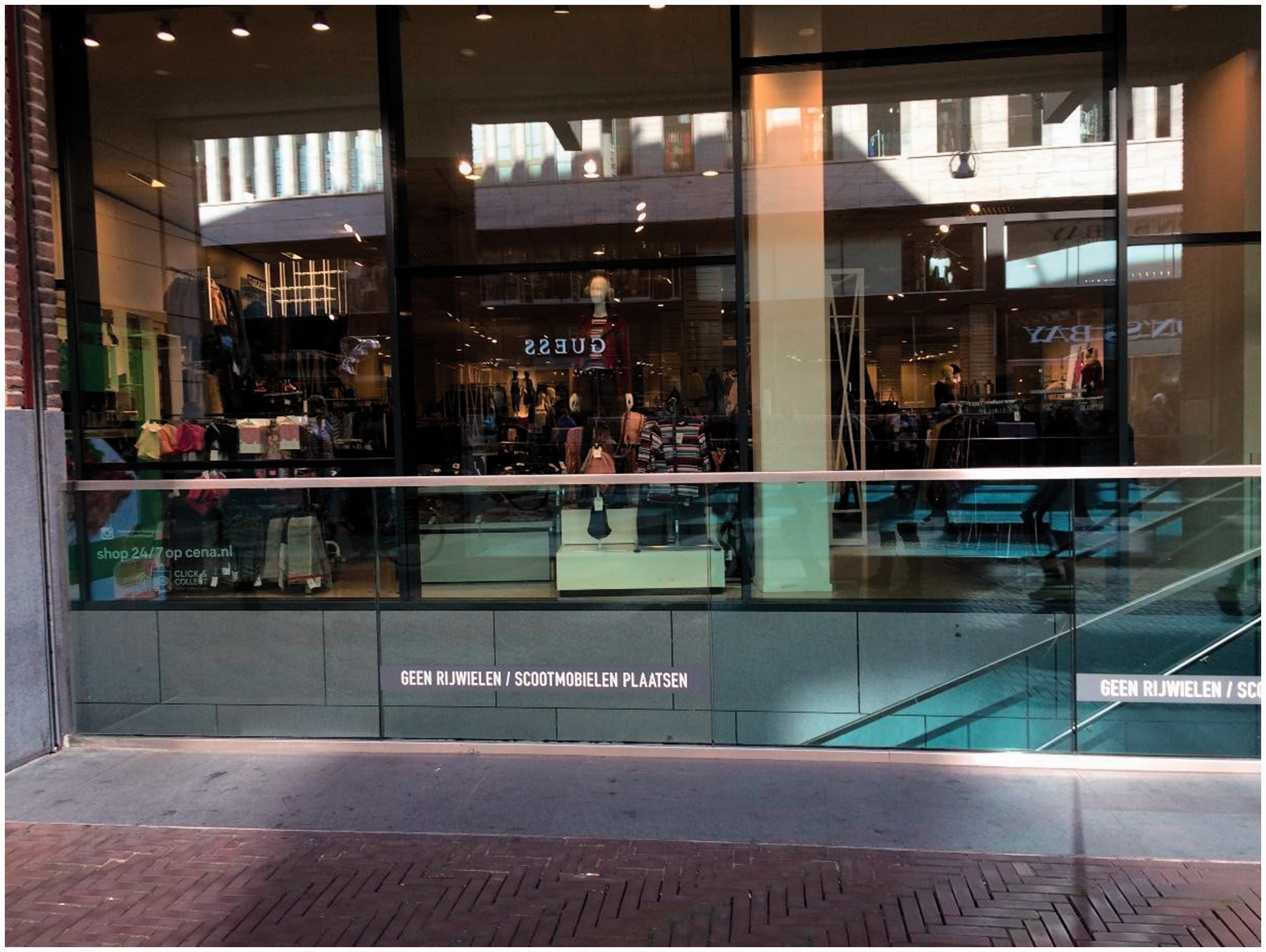
The Hague – Centre: no parking for bicycles and mobility scooters. There are no alternative parking areas in the shopping district.
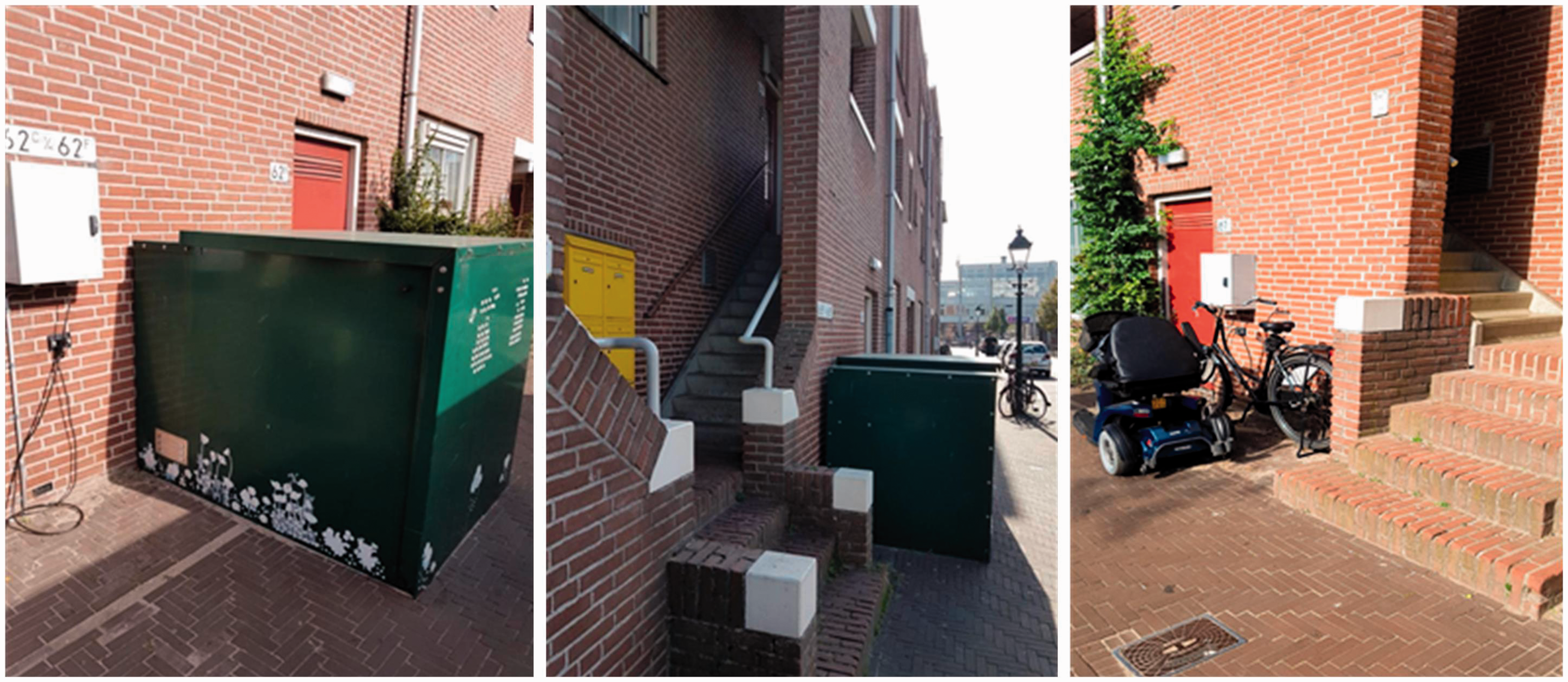
The Hague – Centre: not every apartment building is accessible for people using mobility scooters. Parking boxes have been placed outside for parking of mobility scooters, as at Zuidwal street.
In the City Hall, people can use digital codes for using the myriad of service available. A number is pulled by the person (who requires to use the service) from a machine, and once the number is displayed (both through visual and sound), the person with the code is able to make an appointment or via a computer or via the person who is delivering the service.
Across the city, there are a number of community and health centres, and in some centres, day-care activities are offered. Providing information to the residents of the city is important, and during the walkarounds, it was noted pamphlets and notices were not at eye-height and only uses small print. This is the same for the signage installed across the city. Inside entrance halls of social housing, signs depicting older people in relationship to hindrance are put in place (Figure 5).
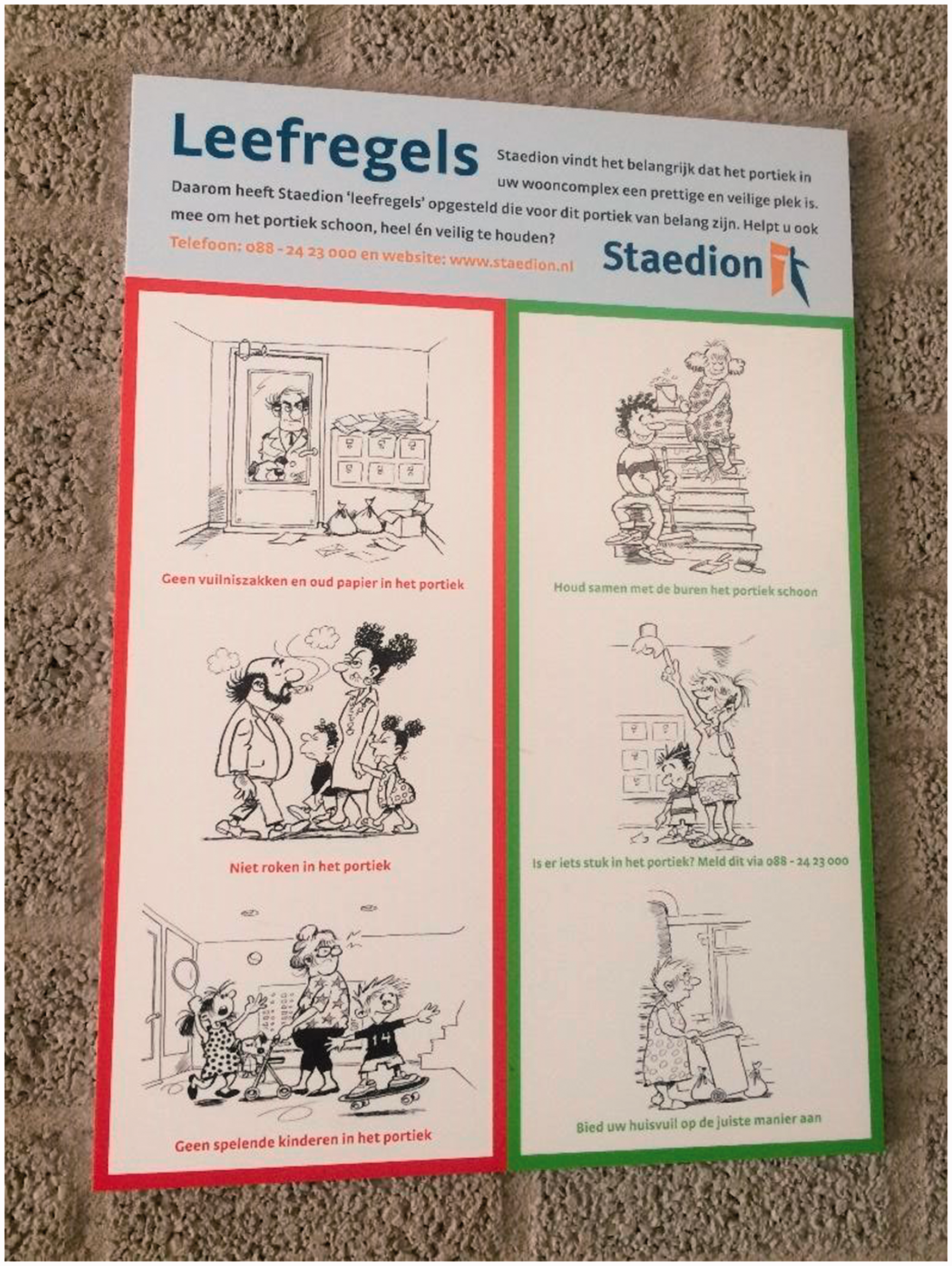
The Hague – Centre: signs with rules of behaviour for tenants of social housing apartments, with stereotypical older woman depicted on the bottom two cartoons.
The overall look-and-feel of the city centre is maintained by a team of cleaners, who ensure all rubbish is collected and the streets are swept daily. Issues regarding safety and security are also paramount, and such issues were identified through the installation of streetlights for use during the night. A large number of surveillance cameras are also installed across this part of the city.
The Hague – Laak
Laak is a multicultural area in The Hague, with multi-storey homes dating between the 1910 and the 1930s (Figure 6). The majority of the services are easily accessible, and the pavements have dropped kerbs, while most buildings have level access or lowered thresholds for ease of entry. The pavements are often uneven with many loose tiles. Many of the older houses have stair elevators put in place for people who cannot climb stairs without assistance (Figure 7).
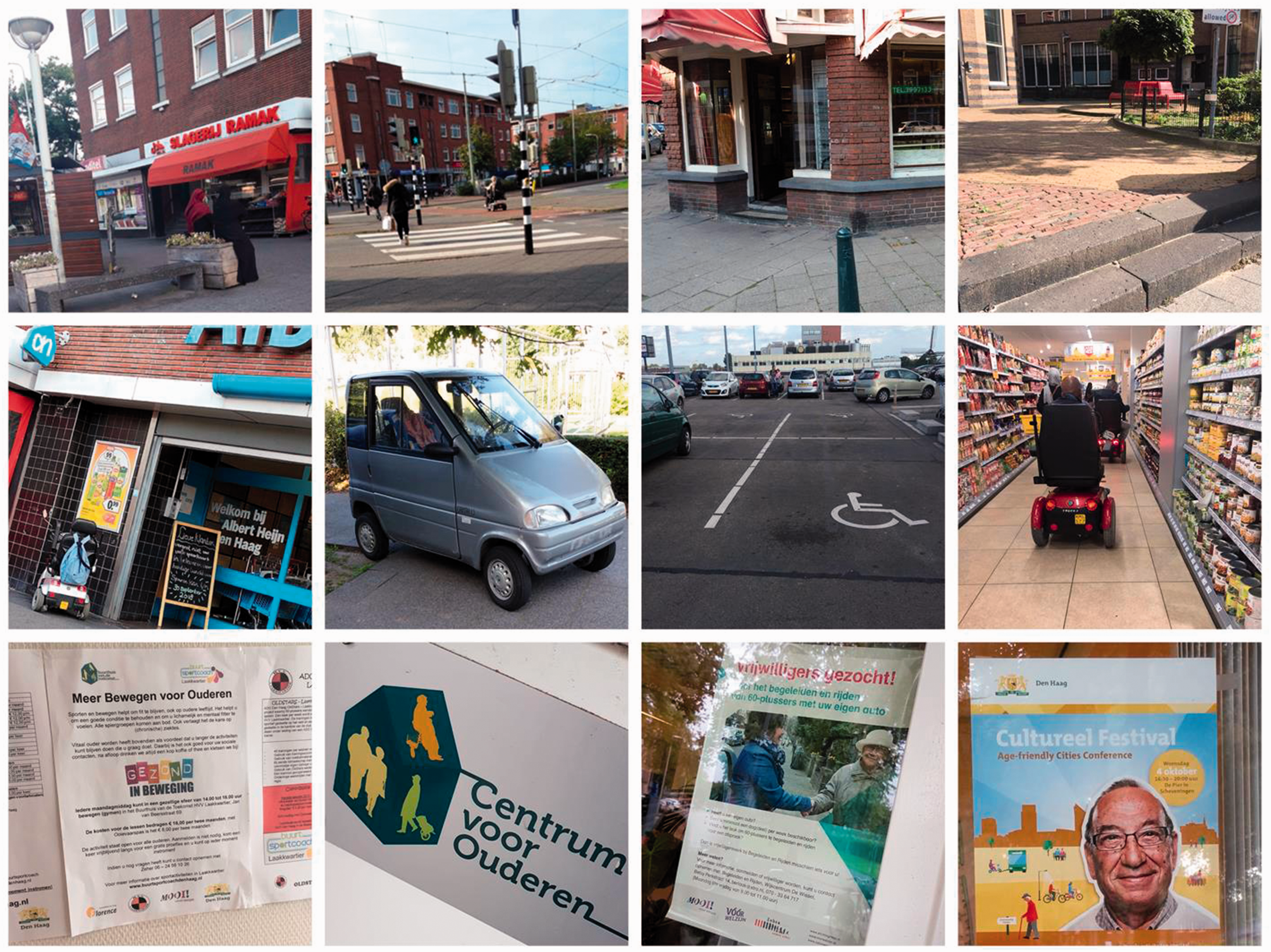
Overview of features of Laak. (a to d) show the densely built-up neighbourhood, which is one of the most multicultural areas of the Netherlands. There are many steps in the streets, and not all pedestrian crossings are levelled. Old shops have thresholds and narrow doorways. (e to h) show aspects of transportation, such as outdoor parking of mobility scooters at the local supermarket and having broad alleys in the store, the availability of parking places for people with mobility limitations and a ‘canta’, a two-seat microcar from the Netherlands specifically created for disabled drivers. (i to l) show communication leaflets and posters for older people, including an invitation for a cultural festival as a part of a previously held age-friendly cities conference.
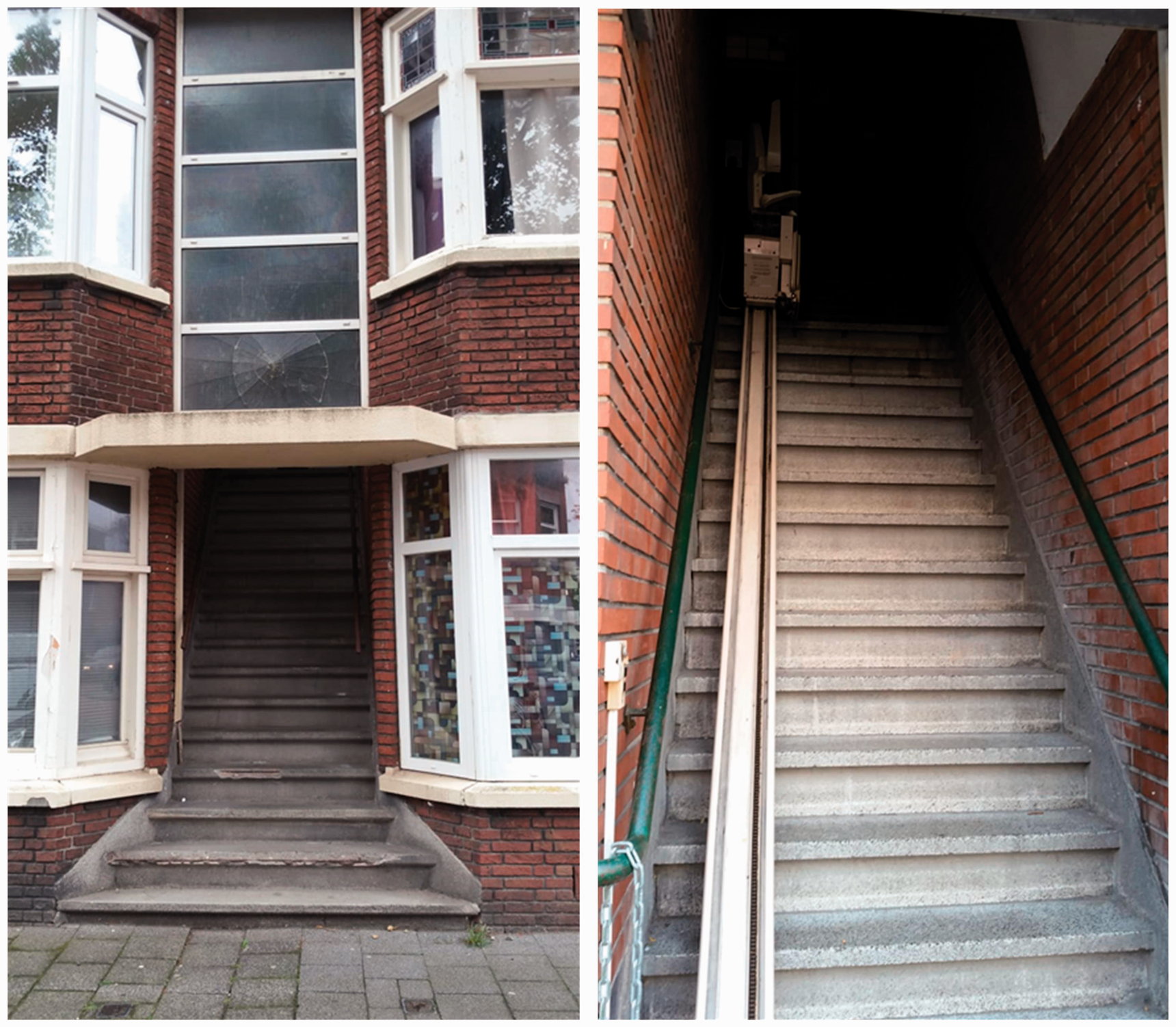
A typical scene in Laak: multi-storey dwellings dating from the first half of the 20th century. Stair elevators are the only solution when older tenants are no longer able to climb stairs.
It was noticeable that traffic lights do not allow sufficient time for older people to cross the roads and who were using the traffic lights at pedestrian crossings. The older people did not have adequate time to cross before it turned red. Mobility support for older people with mobility impairments is offered close to their homes, while the health centre, the municipal office and supermarkets are easily accessible and located centrally in the area. The provision of public transport is high, and it was noticed that many outdoor benches often lack a back rest.
There are several community centres in Laak, which offer opportunities a myriad of activities for older people to engage and participate in. For example, the ‘De Laakse Lente’ initiative, which is a special interest’s group for older people, and the community centre at Cromvlietplein aims to improve the satisfaction of the culturally diverse attendees, for instance, by offering a large variety of activities and culturally-sensitive discussion groups.
Throughout the Laak area, information is shared and distributed through posters and flyers throughout public spaces, advertising the different and forthcoming activities. Throughout the local shopping centres, it was noticeable that there were many wide doors, which are always open, and more importantly can provide easy access for people using mobility scooters or wheelchairs.
The Hague – Wateringse Veld
Older people are offered a myriad of activities held in the community centre in the Wateringse Veld neighbourhood (Figure 8). The different types of activities offered to the older people are actually organized by the older people themselves. These activities include, amongst others, bingo and flower arrangement. Younger older adults can join a range of sporting activities, including fit hockey, and there is a gym with additional activities and fitness classes. The older adults have the option to seek advice from the ‘ouderenconsulent’ (consultant for older people). This consultant can assist the older person in choosing the appropriate activity for them.
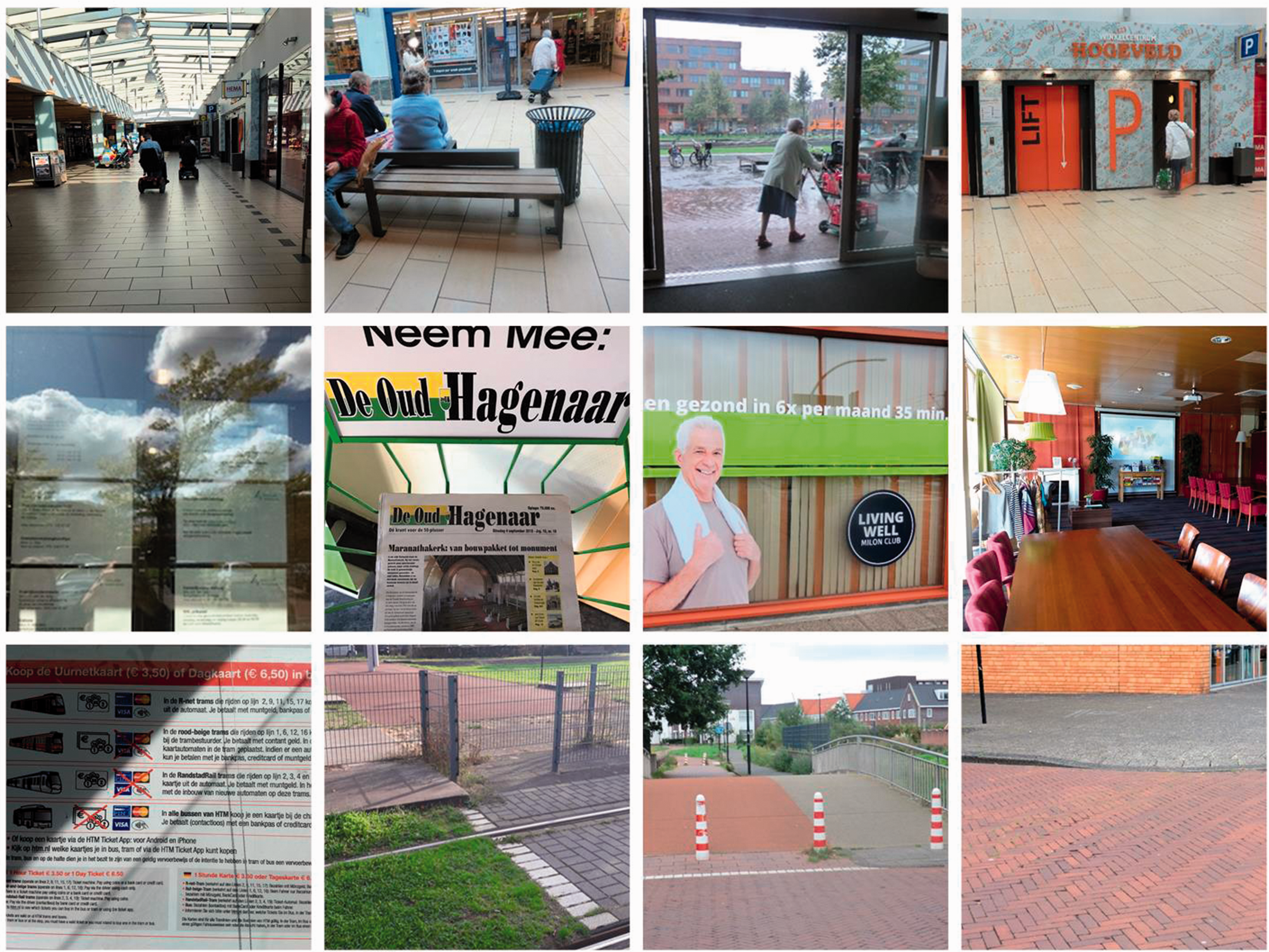
Overview of features of Wateringse Veld. (a to d) show the shopping centre and the levelled access, as well as the slippery and reflective tiles. (e to g) show communication in the neighbourhood through brochures, which can be illegible behind reflective glass. Older people are shown on an advertisement for the gym. (h) shows the recreational room at the local healthcare centre. (i to l) show images of the public space with dropped kerbs, steep bridges and aspects of public transportation. Cash payments are no longer allowed in public transportation in The Hague.
In this area, there is a swathe of information distributed through leaflets and brochures at the community centre. However, the print on the posters and brochures is small, and some of the brochures can be seen behind reflecting glass of a community centre window. This results in the difficult legibility of materials, and more so for those older people with visual impairments. Furthermore, information is distributed to people’s residences or placed on noticeboards within their local supermarket(s), while there is a service point from the municipality which can distribute information.
Within the physical space and residential areas, there are health centres, which house physiotherapists and general practitioners, which in turn can conduct blood tests on site. Furthermore, home care services are housed in these centres; with additional services focusing on financial matters relating to filling out tax forms and advising against debt. Having all these different types of services under one roof, in an accessible building with automated doors and levelled access, can facilitate older people to make use of the services. Throughout the neighbourhood, automated external defibrillators can be found for public use. Some of the health centres have visual signs of older people on their façades (Figures 8 and 9).
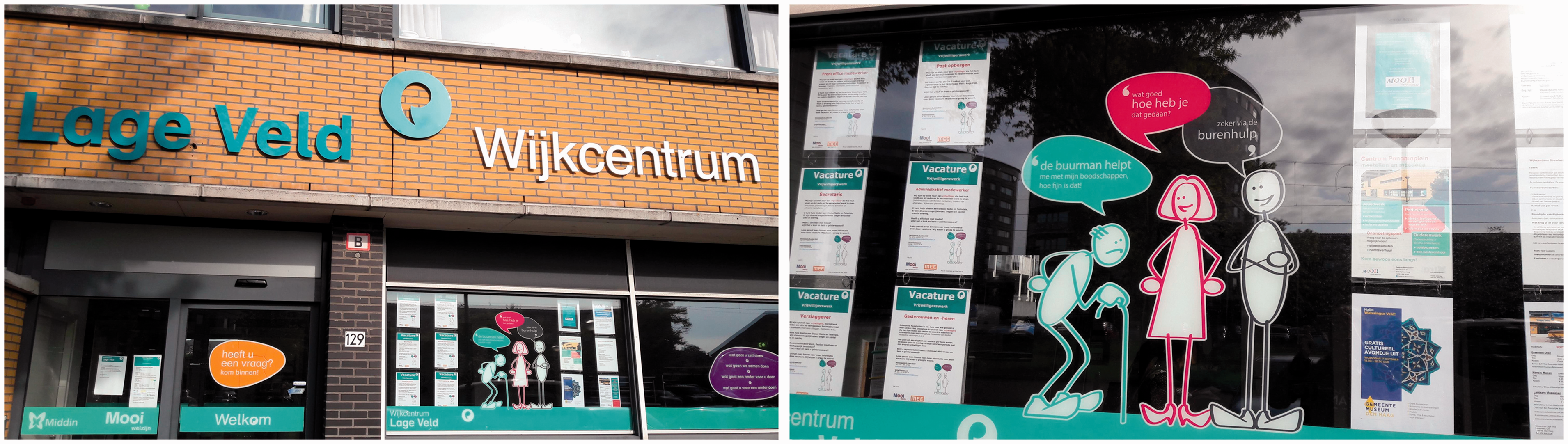
Overview of Wijkcentrum Lage Veld (community centre), with stereotypical depictions of an older man.
Around these buildings, the pavements are wide and have dropped kerbs, which can provide assistance for those who need this additional accessibility. The quality of pavements across the different streets vary, and there are many loose tiles and bricks. Additionally, many walk ways have poles and fences blocking access to those people who are using wheeled walkers and mobility scooters, for instance, when wanting to go into the local park. There are no protective fences along water ways. It was also noticed the seating located inside the shopping centre did not have arm rests or back rests, whilst the outdoor seating at the local nursing home does have these features. From the standpoint of mobility scooters, there are limited public parking lots and facilities for parking one’s mobility scooter in this particular neighbourhood. At the local nursing home, electric tricycles can be rented (Figure 10). There are many public transportation services, but customers in The Hague cannot pay with cash. Platforms of bus and tram stops have been raised, and the railway crossings of the tram are levelled access.
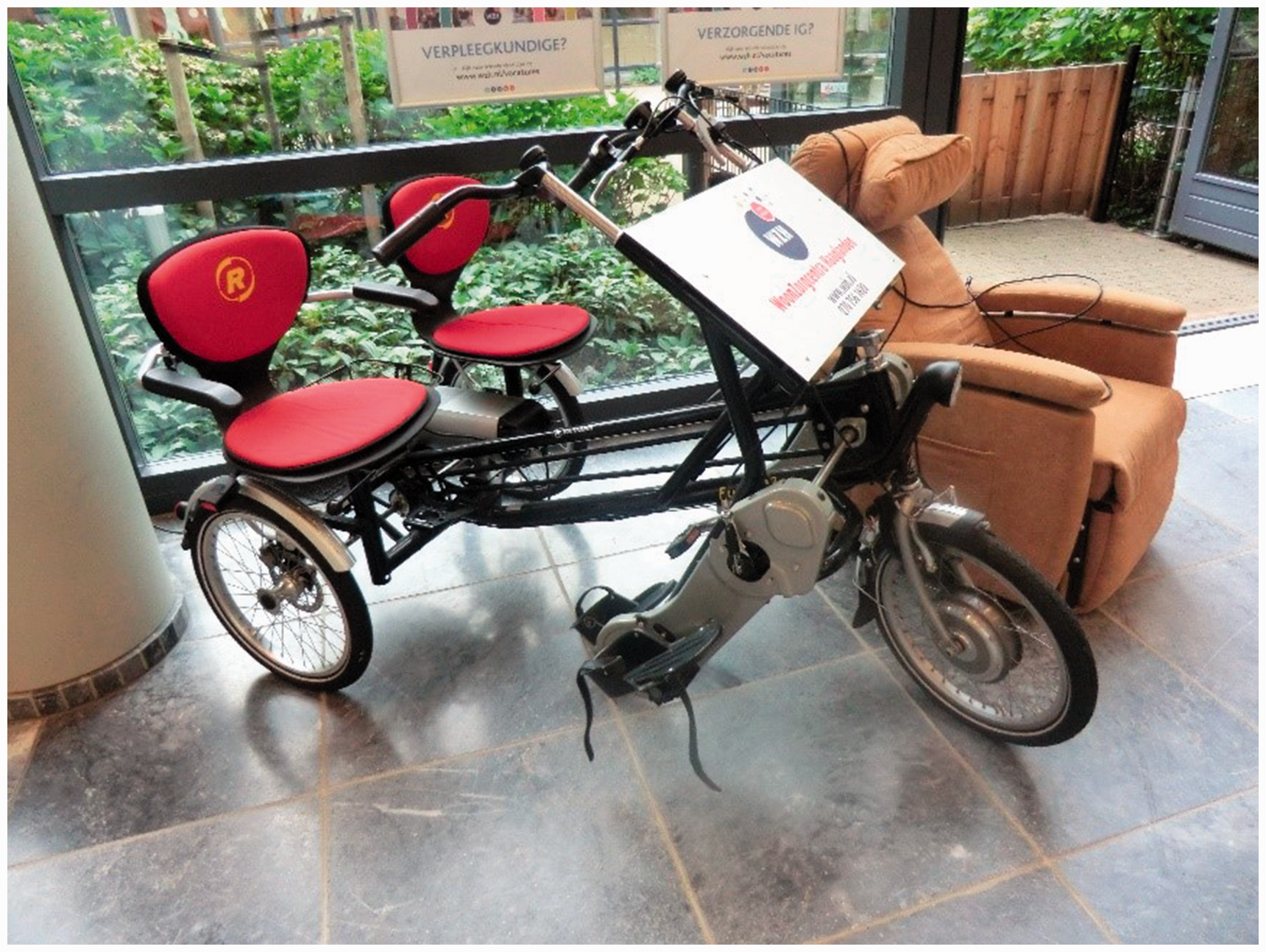
Photograph of an electric tricycle that can be rented from a care organisation. The tricycle has an engine for additional support.
Zoetermeer – Stadshart
Zoetermeer city centre is characterised by an elevated shopping district, with an urban underground infrastructure including an urban railway (Figure 11). This type of public transportation is a positive asset to the city providing all residents – young and old – with access to different areas. Whilst, the streets are evenly paved, there are many loose paving slabs and bricks, which could cause a person to fall. The exterior landscape displayed more than 20 wood-clad benches for residents and visitors to sit on, but the majority of them did not feature back rests. The city centre is full of older visitors using mobility scooters and wheeled walkers (Figure 12), and there are municipal agreements that the local baker stores, cafes and restaurant do not mind older people sitting outside their business if they need to rest. Throughout the city centre, there are many older people who are walking around. Many of the pavements are easy access with dropped kerbs, even at the bus station. Entrances to shops and buildings are often without thresholds and easily accessible for all generations. The platforms at the bus station are quite narrow and do not offer sufficient space for people using a mobility scooter, but then again, there is a special bus service for older people called ‘Ouderenbus’ (Senior bus), which is in service from Tuesday to Saturday. One of the assets of the city centre is that most of the streets are either covered or provide protective overhangs against precipitation.
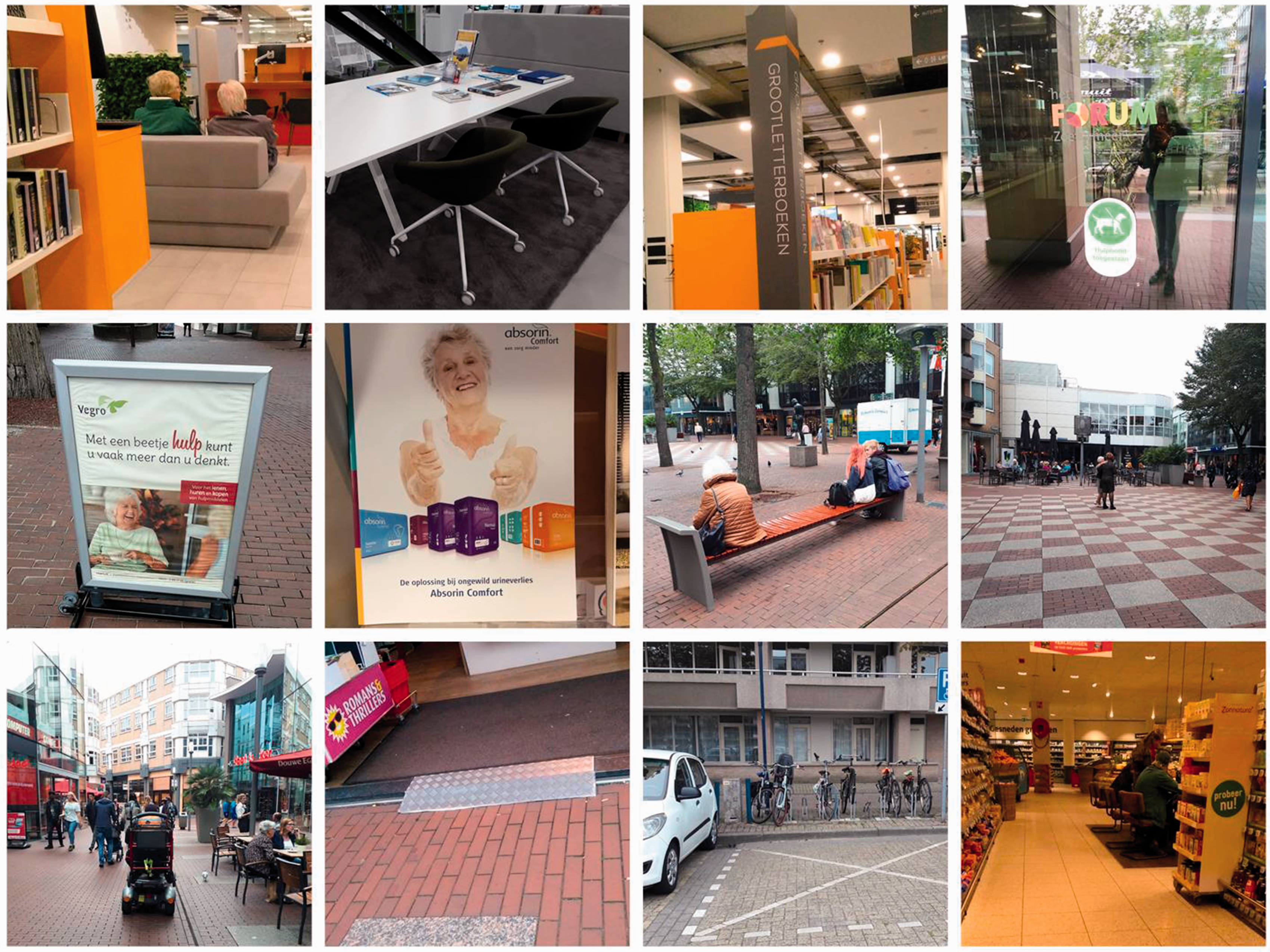
Overview of features of Zoetermeer – Stadshart. (a to d) seats in the library at Stadhuis Forum are used by older citizens, and the library offers large-print books. Guide dogs are welcome too. (e to h) show scenes of the outdoor area with benches and numerous older people walking around. Many of the advertisements of shops are targeting an older population, including ads for assistive devices and incontinence materials. (i to l) show levelled access designs in the city centre, parking lots of people with a disablement and seats in the local supermarket where older people can enjoy a coffee and read a paper.
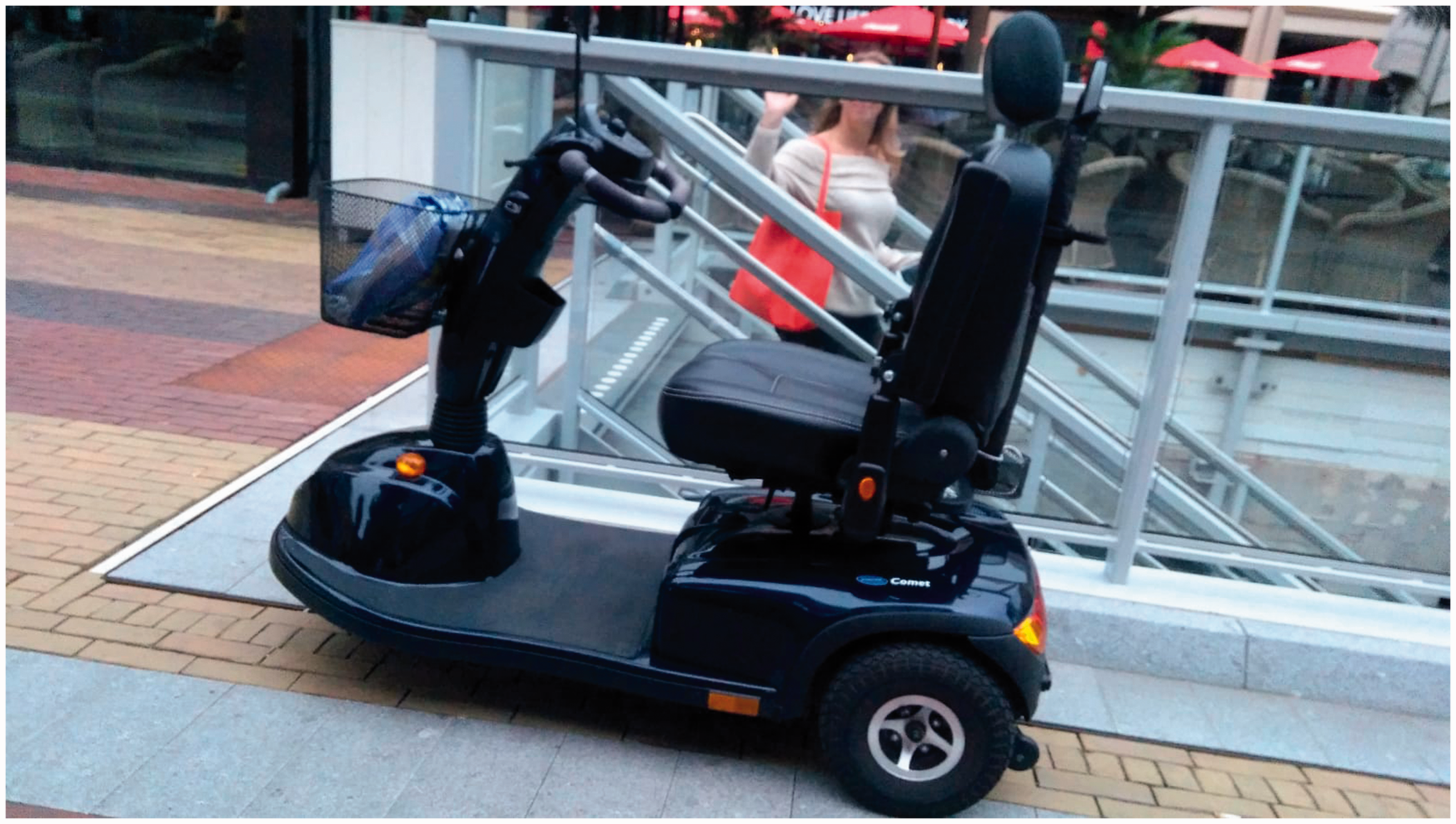
Zoetermeer Stadshart: forbidden in The Hague but still condoned in Zoetermeer. Parking a mobility scooter and securing it to the railing of a stairway.
The so-called Stadhuis-Forum (Town Hall Forum) located in the municipality building is an important meeting place, and many organisations have a helpdesk. Many older people come to the Town Hall Forum to search for information or to meet other people. Within this building, there is a library (renting out books with large letters/print), a social/café area and public restrooms (two of which are wheelchair accessible). Many visitors come in to sit and rest for a while, read a book or magazine or have coffee. There is also a large supply of information via brochures and leaflets, not just at Stadhuis Forum, but also in the local home care shop, inside the shopping centre and in community centres. On many folders and advertisements, older people are shown.
Zoetermeer – Rokkeveen
In the Rokkeveen district of Zoetermeer, there are many visible features of an age-friendly city (Figure 13). First of all, inside the former water tower, all health and welfare services are located under one roof, including a general practitioner and a pharmacy. Residents in this district do not have too far to walk throughout the centre, which is positive for those who may have mobility issues. In the centre of the neighbourhood, there is a community/recreational centre, which offers many activities (such as bingo) to the residents. These activities and other additional information are advertised throughout the neighbourhood via notice boards located inside the local supermarket and the recreational centre. Additionally, there are many posters and pamphlets (new and old) detailing the variety of activity. However, given the overflow of past information, this suggests there is a lack of oversight of the actual supply of activities. Inside the community centre, there are also brochures for the local Alzheimer Café sessions. There is even a special community centre for people with dementia, called ‘Carpe Diem’. At the ‘Open Tafels’ (Open Tables) initiative, people can eat together, and meals are serviced by volunteers. Rokkeveen is a very green neighbourhood, with a large park close to the water tower. There are many benches around to take rest.
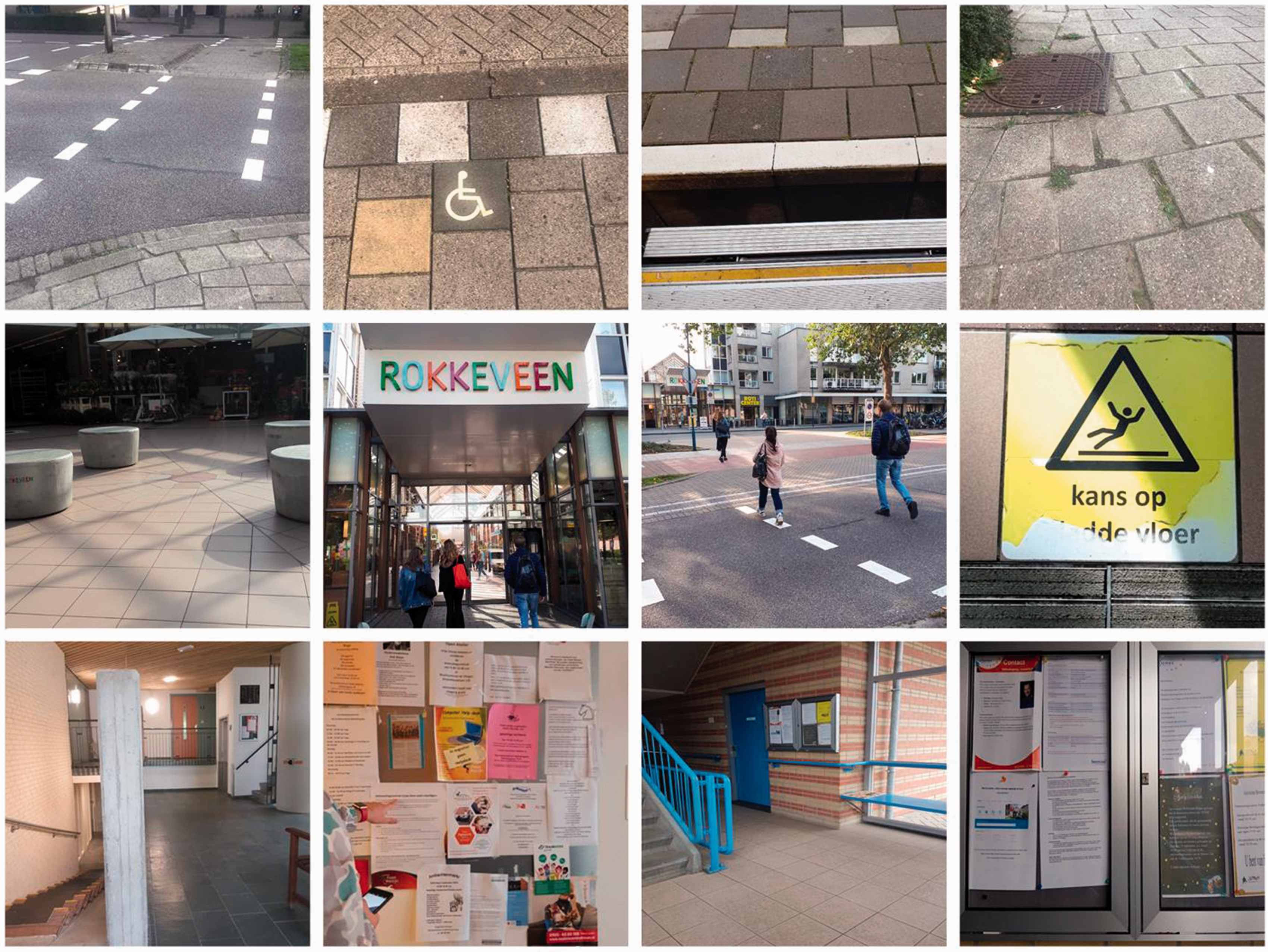
Overview of features of Zoetermeer-Rokkeveen. (a to d) show the quality of streets and pavements, including loose tiles, levelled pedestrian crossings, the gap between the train and the platform and the special tile for wheelchair users who wish to use public transportation services. (e to h) show the art work that is used as stools in the public space, the levelled entrance to the main shopping area and a sign warning for slippery floors. (i to l) show the interiors of apartment blocks for older people and the spacious layout of corridors. Inside these buildings and community centres, many folders and brochures show which activities and services can be enjoyed by older citizens.
The central shopping centre is accessible for older residents and visitors based on the fact there are many parking lots available, there are dropped kerbs for mobility scooters and wheeled walker access, and there are anti-slip mats inside buildings. In contrast, many paving slabs are uneven or loose, and hamper the accessibility and walkability of a neighbourhood, but also increases the risk of a person experiencing a fall or injury. From the exterior landscape, there are a limited number of outdoor benches for older people to sit on. Some of the objects (works of art) are used as seats but are made of concrete and do not have any arm or back rests.
There are two bus services that offer older people to travel between A and B (Ouderenbus initiative, numbers 65 and 66). At the bus stops in Zoetermeer, a special tile has been laid in the pavement displaying a wheelchair user, which indicates that the bus stop is accessible for people using mobility aids. Customers need to be over 65 years old and can get on and off where needed, close to home or the final destination. Through the neighbourhood of Rokkeveen, there is a physical divide from the rest of the town of Zoetermeer, because of the motorway and a railway line intersecting between the two places of The Hague and Utrecht. Analysing the accessibility at the train stations identified a 15–20 cm gap between the platform and the train. For some people, and in particular older people, with physical impairments, this gap would cause additional concerns and increase the risk of falling and injury. There are no public chargers for mobility scooters and electric bicycles in the neighbourhood. There also ‘Fokus-woningen’ (type of housing for people with special needs, which are modified, wheelchair accessible and single-floor) in the neighbourhood, which is normally a sign that many features of accessible design can be found in the urban planning and infrastructure.
Discussion
The WHO’s Global Age-Friendly Cities Guide 7 showed how features of an age-friendly city can be manifested in eight domains of an age-friendly city, namely: Social participation; Communication and information; Civic participation and employment; Housing; Transportation; Community support and health services; Outdoor spaces and buildings; and Respect and social inclusion. Our field study has found a large number of features that manifest mainly in the WHO domains of Communication and information; Housing; Transportation; Community support and Health services; and Outdoor spaces and buildings. Age-friendly features can be found in these five domains in both municipalities, whether the city studied is an official WHO age-friendly city’s consortium member or not. Overall, the density of age-friendly features is rather high, and it seems that the municipalities are doing well, even beyond the borders of the well-visited city centres stretching into the more remote residential areas of both municipalities. In the current study, we did not specifically identify features in the domains of Social participation; Civic participation and employment; and Respect and social inclusion. As the aim of the study was to investigate the extent to which features of age-friendly cities were visible in the city scape, aspects that were not encountered in the built environment were not included in the process of data collection. Future studies could explicitly study the visibility of older people engaging in employment, in social activities and leisure, in volunteering in neighbourhood centres, and so on, which would require a critical assessment of ethical aspects as it concerns observation people in a given context. Some of the limitations to the current methodological approach are that some of the age-friendly features (both facilitators and hindrances) may be overlooked, and that because the photographs were taken by relatively young people instead of older people themselves. In future studies, older people should be invited in a photoproduction or photo-voice study to map the age-friendliness of their neighbourhoods, with additional qualitative data on the interpretation of their findings, like in the study by Chan et al. 42 This would help involve older people themselves in improving the built environment of an age-friendly city. Also, the everyday activities of urban older adults in public open spaces should be studied, which can be done through photography. 43
If we look at the outcomes of this study, it becomes clear that older people themselves are visible throughout the street and society. Apart from some areas, which are not accessible for people in wheelchairs, streets are generally very accessible, with dropped kerbs as the most eye-catching feature. Such dropped kerbs are also a facilitator for young families using prams and strollers. The main problem in terms of accessibility is the overall accessibility of pavements (for instance, the need for more dropped kerbs) and improvement of the quality of the pavement without gaps in between the tiles, which may hamper the mobility of older people using wheeled walkers. It needs to be noted that biological ageing itself is not a synonym for mobility problems (i.e. using a wheelchair), although many older people seen out on the street use mobility scooters. These mobility scooters are a more prominent feature in the city scape than wheeled walkers. It seems that there are plenty of parking places available for people using wheelchairs, but not all of the parking lots are broad enough to allow for separate wheelchair use next to the car itself. Additional challenges relating to accessibility are the need to use cash to pay for accessing public transport.
Overall, the built environment is well adapted to the needs of older people (buildings, roads and infrastructure and transportation), but especially older buildings are not. Multi-storey homes have stair elevators when needed, which are especially visible in Laakkwartier, and special parking boxes are provided for mobility scooters, which are installed on municipal land (The Hague – Centre). The individual garage boxes for mobility scooters may be perceived as stigmatizing, as everyone can see where a user of a mobility scooter actually lives. From the perspective of safety and security, people may be easily identifiable targets for burglary. Overall, it seems that both The Hague and Zoetermeer districts have a lot of age-friendly features throughout the respective cities, and it seems that these features are an integral part of daily living for the society and residents as a whole. Apart from the municipality playing an important role in making a city age-friendly, there are numerous other stakeholders, such as entrepreneurs, social housing associations, shopkeepers, healthcare facilities and so on, that can help make their services and buildings more age-friendly by installing, designing and implementing a large range of features in the built environment. Many shops and healthcare centres have implemented strategies to make their buildings more accessible (levelled access and wide shopping lanes), to target older clients in advertisements, and to offer special day-care programmes for older citizens. Such measures do not require municipal investments and may even help improve the turn-overs of these stakeholders. Many of the public transport vehicles are easily accessible for people with impaired mobility or even prams, but if people do not use a digital public transportation card, then bus tickets can only by purchased using debit and credit cards.
A recent evaluation by The Hague Senior Committee 44 showed similar outcomes as the current study. According to older citizens living in the municipality of The Hague who were consulted (n = 533), the city is very age-friendly. A total of 60% stated that The Hague is age-friendly, 35% stated that the city is partly age-friendly and only 5% said the city was not. Older people are satisfied with their own lives (7.7 out of 10), and they rate the quality of their living surroundings with a 7.9 out of 10. The most important reasons for being satisfied with The Hague being age-friendly was the quality of the public transport services, the service level in neighbourhoods. The Hague being a city where one feels at home and where one can live a good life, the supply of activities, and the city’s focus on older citizens. Features that can be improved are the frequency of public transport (in particular after work hours) and the price level, the maintenance of pavements (lose tiles) and kerbs, and the presence of obstacles on pavements, safety and security during evening hours, the accessibility and supply of social services and providing a listening ear to the actual needs of older people. 44 The latter desire can also be related to the design of the outdoor and built environment, as well as the implementation of new technologies.
Nevertheless, there are some downsides as well. In terms of the design (look and feel) of the age-friendly features, it needs to be mentioned that not all design solutions are inviting or aesthetically pleasing. For example, signs saying ‘no access and parking of mobility scooters’, narrow gangways and access in shops and public transportation, which does not yet have levelled access. These are just some of the design features that can be, and need to be, improved in the coming years if the cities wish to become fully age-friendly.
All over both municipalities, there are posters, leaflets, newsletters and posters on noticeboards placed within community centres, shopping centres and supermarkets aimed at older residents (Oud Hagenaar) highlighting and advertising specific information about healthcare and social care services, as well as different activities. Still, many of the leaflets are old and outdated, and it seems like an overall coordinator about the contents is lacking. Many of the posters are put up behind reflective glass and are printed using very small fonts, which are illegible for most older people. Overall, it seems that there is always something to do in the city, free of charge, and covering a broad range of social activities. The Hague is like a candy store for older people: everyday, there are events that are free of charge, there are nice museums, the city centre is lively, if you have the courage to venture out, there is always something waiting for you. This is one of the assets of living in a large city. Many of the events and places are accessible and can be reached by public transportation. It is good to understand that not everyone is willing to venture out alone, which may lead to social isolation.
Modern technologies may pose barriers to older people’s participation in daily life as noted by Marston et al., 45 who explored the use of technology by adults aged 65+ years living in one of three countries (Germany, Australia and Spain). Whilst, Genoe et al. 46 explored how technology is used on a daily basis and from the standpoint of leisure residing in rural and urban locations across the UK and Canada. These technologies include the information technologies at the city hall of The Hague, but also ticket vending machines and the lack of options to pay with cash in public transport. All these technologies may not be perceived as age-friendly features of a city, especially if older adults have little or no experience of using such machines or if there is a change of machines. Technology may pose barriers and be perceived as hindrances. At the same time, one of the Dutch banks had an advertisement for a digital banking service, targeting older people as a potential user group. One may wonder if this is a form of ageism that manifests itself in the implementation of new technologies or whether it is just a manifestation of the digital divide between the generations. The integration and use of technology within the age-friendly city domain and frameworks need to be discussed. It should be noted since the turn of the new millennium, we have seen a phenomenal growth and interest across society, research and development by people who are focusing their attentions on the use and deployment of technology to assist citizens with their daily activities. 47 The increase of ageing populations across Europe and worldwide means that many families and carers undertake caring duties for their spouse, parent or dependent child, or those living with conditions such as dementia. 48 , 49 Technology has the potential to offer carers with additional support such as remote monitoring or assist with day-to-day activities, as discussed by Marston and Samuels, 50 who explored the use of virtual assistants in the home environment, while also discussing how intergenerational relationships can play a part in the age-friendly framework. Conversely, citizens have bored witness to the rise and development of mobile phones, with many using and owning smartphones offering the user a vast has in turn led to the development of mobile apps (mApps) and mobile health (mHealth) apps, which facilitate people to self-monitor their health and share their data with their friends and health practitioner. 51 Whilst videogames have garnered great interest and worldwide investigations, focusing on the use of health and societal benefits,52–56 little focus has explored how videogames could be integrated into an age-friendly city. This seems to be true for the whole spectrum of technological solutions that are available on the marketplace to support older people.
Whilst there have been great strides made in the contemporary literature surrounding the discussions of age-friendly cities, 6 , 11 ,57–61 there is however, a paucity in the varying discussions and agendas surrounding the integration, use and deployment of technology into the age-friendly movement. Thus, to move the age-friendly debate forward, the authors propose future discussions and research surrounding age-friendly cities should start to include technology, even if previously this was not the case. Given the myriad of technologies available and used by citizens, exploring how such technologies can be used and deployed in the home and across different communities to benefit the citizens in the respective age-friendly communities, including those communities that are not categorised as age-friendly by the WHO. Scholars who have conducted research in the domain of digital health and technology can bring substantial experience and knowledge to the age-friendly agenda and framework. Building a multi- and cross-disciplinary approach, primarily focusing on technology and its role(s) within the age-friendly movement, is the key for moving this agenda forward.
When reflecting on the age-stereotypes in the design of the age-friendly features, there are two types of design features that need to be discussed: (1) the built environment and transportation and (2) advertisements. In the built environment, ageism can be witnessed in signs as the no parking for mobility scooters (which can actually be seen as a sign of inclusion that not only riders of bicycles are considered) or signs of social housing associations depicting older tenants as the ones who experience hindrance from fellow residents the most frequently. Sending a ‘negative’ message to older people as a sort of instruction (no parking) is not a sign of ageism at all, it is merely an instruction how to keep the public space accessible and liveable for all. It could be considered as a sign of ageism in a way if benches on public streets are designed without arm and back rests and to install raised plateaus with kerbs in order to keep older people away (as they cannot access such places when using wheeled walkers or mobility scooters). Such situations have not been encountered in the city centre.
Nevertheless, it remains important that features in the built environment, such as benches, can be used by the main groups of users, such as older adults. Whilst aspects of human factors should be considered as much as possible (being able to get up and out of the seats), as well as making sure the benches are comfortable, even in cold winters, hot summers and after a shower, without freezing, scalding or getting wet. In addition, urban planning and the design of public spaces should be conducted in relation to the effects of climate adaptation 62 or socio-environmental vulnerability, 63 and besides planning and designing for accessibility, a secondary focus on egressibility should be chosen in order to facilitate older people being able to leave their homes or neighbourhoods, for instance, in cases of emergency. 3 , 4 The design of age-friendly places should ideally follow the principles of user-centred design based on the needs of actual stakeholders. 64 , 65 Given the demographic changes in our urban populations (including a large number of tourists visiting the city centre of The Hague, who are also in need to public lavatories), this seems to be no more than logical. In the old days, transportation services (trams and buses) and social housing were not designed bearing the needs of people in mind. Between 1910 and 1930s, in the Laakkwartier district, for example, people had to be appreciative to have access to social housing in the first place. These houses had appropriate sanitation and were dwelled by single-generation households. Another way of identifying ageism in the design would be that all homes for older people would be designed as levelled access (without any thresholds) and be full of a wide range of home modifications focusing on disability,66–69 just because of the condition that older people are indeed old and perhaps frail, instead of just offering a sense of a home. 70 All older people, even those without any impairments, would then be treated as frail and in need for care. This is not the case in either of the two municipalities. In The Hague, measures are often personalised solutions, such as the stair elevators, which are only provided by the municipality in case of actual needs. In the case of public transportation, the special tile with a depiction of a wheelchair user in Zoetermeer may be a very clear symbol (Figure 13), but not every older person may feel attracted to this depiction at all.
This brings us to discussing the use of symbols and depictions as a form of implicit or explicit ageism. Many of the posters and advertisements relate ageing to physical decline, irrespective of which emotions the person him/herself is showing. Although most posters and advertisements are made with a great sense of respect, you may ask yourself if you feel attracted by a smiling woman who advertises products for incontinence. At the same time, some companies have discovered older people as a specific target group, such as the advertisement for digital banking, assistive technologies, and so on, and this seems to be an actual reflection of the actual age distribution of our societies. Older people are very visible on the streets, but it seems that they were omitted from advertisements. Loos and Ivan 71 analysed representation of older people in the visual media – print advertisements, television advertisements and television programs. They examined whether older people were represented as third or fourth agers (active, healthy older people versus care-dependent older people). Overall, the data from The Hague and Zoetermeer showed that older people were depicted as third agers, albeit that some of the advertisements were targeted at physical limitations, including incontinence and the need for assistive devices. These solutions could be purchased in order to live a normal or independent life. Loos and Ivan 71 noted that there is a trend towards a positive representation of older people in the media. Still, one of the depictions of older people on a healthcare centre in Wateringse Veld showed an older man with a slightly bent back, holding a cane, which is a stereotype of physical decline and impaired mobility. The fact that the older woman cheering on the advertisement for incontinence material, make her seem like a winner, not a loser. This trend is also identified by Loos and Ivan. 71 The scholars call for designing for dynamic diversity as an alternative to visual ageism, which in The Hague should also include the visibility of the multicultural society and fourth agers in the way older people are shown in advertisements in the built environment.
Conclusions
The municipalities of The Hague and Zoetermeer have integrated a large array of age-friendly features in their respective neighbourhoods in order to make their societies more inclusive for older age groups. The city of The Hague is a consortium member of the WHO’s Global Age-Friendly Cities Guide. Both municipalities have a large number of visual features, both facilitators and hindrances, that can be observed in the streets of the two cities. These features are manifested particularly in five domains of the Global Age-Friendly Cities model, namely Communication and information; Housing; Transportation; Community support and health services; and Outdoor spaces and buildings. Both municipalities and entrepreneurs (shops) have invested great effort in making the cities accessible for all age groups, and a large set of services and activities are offered to older people. Future research should address the solutions offered by entrepreneurs as a way to make their businesses more age-friendly. Age-stereotypes, both positive and negative, can be observed in the domain of Communication and information, especially in the depiction of third agers as winners. At the same time, older people are very visible in the cityscapes of both municipalities, and it is an expression of the changing demographics that signs and advertisements targeting older people are emerging in our societies. Other cities in the Netherlands could use the results of this study to make their own cities more age-friendly, for instance, by looking at best practices that can be implemented into their own urban planning or the design of public services, such as the availability of parking places for mobility scooters, as such patterns are very similar throughout the country. Cities abroad could benefit from taking notice of the best practices and by trying to translate these findings into the local urban context and level of service provision.
Footnotes
Authors’ contribution
This is the result of an educational project, Rudy F. M. van den Hoven and Esther Kroon were involved in data collection and guiding students in the project. Joost van Hoof and Jeroen Dikken supervised the projected and wrote the manuscript in collaboration with Sandra C. Buttigieg and Hannah R. Marston. This was a co-production, all authors made a minimal contribution of 25%.
Declaration of conflicting interests
The author(s) declared no potential conflicts of interest with respect to the research, authorship, and/or publication of this article.
Funding
The author(s) disclosed receipt of the following financial support for the research, authorship, and/or publication of this article: The authors would like to acknowledge networking support by the COST Action IS1402 Ageism – a multi-national, interdisciplinary perspective.