



Abstract
Objective:
To assess women’s experiences of interpersonal violence using best practice approaches and explore associated health consequences measured through health service utilization documented through national-level hospital discharge data.
Methods:
Information on violence exposure (child sexual abuse (CSA), non-partner physical and sexual violence, and intimate partner violence (IPV)) was collected from 1151 ever-partnered women through a population-based survey and linked with publicly funded hospital discharge data from New Zealand. Logistic regression was used to explore associations between women’s experience of each interpersonal violence type and hospitalization by health condition.
Results:
Women who experienced CSA were more likely to be hospitalized for: neoplasms (adjusted odds ratio (AOR) 1.78 (1.14–2.77)), digestive (AOR 1.70 (1.18–2.44)), musculoskeletal conditions (AOR 1.60 (1.03–2.50)), pregnancy complications (AOR 1.59 (1.15–2.19)) and injuries (AOR 1.53 (1.08–2.17)). Women who experienced non-partner physical violence had increased hospitalization for pregnancy complications (AOR 1.61 (1.11–2.33)); those who experienced sexual violence had increased hospitalizations for pregnancy complications (AOR 1.76 (1.5–2.69)) and injuries (AOR 2.00 (1.28–3.11)). Experience of 3+ IPV types was associated with increased hospitalization for: respiratory conditions (AOR 2.14 (1.17–3.92)), pregnancy complications (AOR 2.07 (1.42–3.04)), musculoskeletal (AOR 1.78 (1.07–2.97)), neoplasms (AOR 1.73 (1.04–2.88)), digestive (AOR 1.64 (1.10–2.44)) and injuries (AOR 1.55 (1.01–2.37)).
Conclusions:
Keywords
Key Messages
Gender-based violence (GBV) against women and girls is widespread globally, and emerging data indicates that this may contribute to ongoing health problems, however, there is a paucity of research that has used comprehensive measures of violence across the life-course using validated and nuanced measures of violence exposure.Further, much of the published research assessing health consequences has been reliant on self-report rather than the clinical measurement of health outcomes, which potentially introduces bias. These limitations are compounded by reliance on small scale selected samples (e.g., those already seeking shelter or healthcare), rather than use of population-based samples.
Within a population-based sample, best practices approaches were used to assess violence experiences across the life-course and combined assessment of health outcomes drawn from data on hospitalization usage over a 31-year period.
This study is the first to document how women’s experience of violence across the life course is associated with increased hospitalization usage for multiple diseases.
Women exposed to any interpersonal violence increased likelihood of hospitalization for various health conditions, including neoplasms, pregnancy complications, digestive and respiratory conditions, and injuries.
There is urgent need for healthcare providers to identify and respond to violence exposure across the life-course, and for violence prevention efforts. Robust implementation has potential to reduce demand for hospital services.
Introduction
The 2002 World report of violence and health signalled the importance of understanding this global public health issue [1]. Global estimates indicate that one in three ever-partnered women have experienced physical and/or sexual violence by an intimate partner in their lifetime [2], and one in five girls have experienced child sexual abuse [3]. Understanding of health consequences of violence has also increased, but gaps remain. A 2023 Burden of Proof Study showed that women’s experiences of intimate partner violence and child sexual abuse violence were associated with a range of mental and reproductive health outcomes, but also noted that there was a dearth of studies from which to draw conclusions on other health consequences [4].
Currently, strong evidence documents how childhood physical and sexual abuse, as types of adverse childhood experiences (ACEs), are associated with a wide range of negative health outcomes. Strong methodological approaches (e.g. linking identification of ACEs with health records [5], state-level assessment of ACEs to understand prevalence [6] and exploration of ACEs and self-reported health consequences among specific populations) support this understanding [7,8]. Evidence about health effects associated with women’s experience of intimate partner violence (IPV) is developing [9 –12], but limitations remain. Reviews indicate a paucity of research using validated tools for identifying IPV exposure or which measure exposure to multiple IPV types, with most studies assessing physical and/or sexual IPV, but not psychological or other forms of abuse [10]. Little research has assessed the health effects of other forms of interpersonal violence, such as violence inflicted by acquaintances and strangers [13], or explored how combinations of violence exposures across the lifespan may influence health.
Methodological limitations also hamper the ability to explore associations between violence exposure and health outcomes. Many studies are drawn from non-generalizable samples (e.g. from shelters or those seeking healthcare) [10]. Frequently research has utilized self-reported health measures rather than clinically measured outcomes [11], which may introduce bias [12]. Nascent research seeking to address bias in ascertainment of health outcomes by using electronic health records has been undertaken, but has limited identification of IPV exposure [13 –19] as there is strong evidence that clinicians vastly under-identify patients’ IPV exposure in healthcare settings [7,20]. This compounds potential errors in data capture and limits our ability to identify relationships between violence experience and health conditions [21]. Furthermore, limited research currently assesses life-course exposure to different types of interpersonal violence, including violence by acquaintances and strangers [22]. Collectively, these limitations restrict our ability to assess how violence exposure is associated with healthcare usage at national levels.
The present research investigates the association between women’s experiences of interpersonal violence and health consequences. It uses best practice approaches for assessing multiple types of violence exposure among a community-dwelling and representative sample of women, and explores the associations of these experiences with actual health service utilization as documented through national-level hospital discharge data.
Materials and methods
Data is from the population-based, cross-sectional He Koiora Matapopore | 2019 New Zealand Family Violence Study (NZFVS). Methods have been presented in detail elsewhere [14], but a brief overview is provided here.
Study sample
The survey was conducted between March 2017 and March 2019 in three regions which included approximately 40% of the New Zealand (NZ) population with a representative ethnic composition. A population-based cluster sampling scheme was used to randomly select dwellings. Primary sampling units (PSUs) provided starting points for the selection of households and were based on meshblock boundaries which contain between 50 and 100 dwellings. Beginning from a randomly selected starting point in each PSU, every second and sixth house was chosen. Non-residential, aged-care and short-term residential properties were excluded. Interviewers made up to seven visits to each selected household to identify and recruit study participants. In households with more than one eligible resident, the participant was randomly selected. The names of all eligible residents were listed on an administration form in the order of oldest to youngest. The selected respondent number was identified from a random number sheet. If the selected person was available, consent was sought and an interview arranged, otherwise contact details were obtained and further attempts made to set up an interview.
To be eligible to participate, household members needed to be aged 16 years or older, have lived in the household for at least one month, have slept in the house for four or more nights per week and able to speak conversational English. The NZFVS included data from 2887 total participants, including men. Complete interviews took place with 1464 women, the household response rate for the survey was 78%, a response rate of 63.7% of eligible women contacted [14]. For the present study, the dataset was restricted to ever-partnered women (N=1431), irrespective of sexual orientation.
Safety and ethical considerations
Ethics and safety recommendations for the field were followed [15]. Interviews were conducted in privacy with no one else over the age of two years present. After interview completion, all respondents were provided with a list of support agencies regardless of disclosure status. Participants provided written informed consent for the interview and to link survey responses with health records. Ethics approval was granted by the University of Auckland Human Participants Ethics Committee (Reference 2015/018244).
Survey tool design
The internationally standardized World Health Organization (WHO) Multi-Country Study on violence against women questionnaire [16] was adapted to the NZ setting and used for data collection. The NZFVS assessed childhood sexual abuse (CSA) experienced before the age of 15 years, physical and sexual violence by non-partners after age 15 (NP-PV and NP-SV, respectively), and five types of IPV: physical violence, sexual violence, psychological abuse, controlling behaviours and economic abuse experienced by any partner ever in the respondents’ lifetime. An any interpersonal violence variable was created for participants who recorded a ‘yes’ for at least one of the previous variables (Table I).
Derived variables and definitions used in analysis including questions from the 2019 New Zealand Family Violence Study and National Minimum Dataset (NMDS) International Classification of Diseases (ICD) chapters.
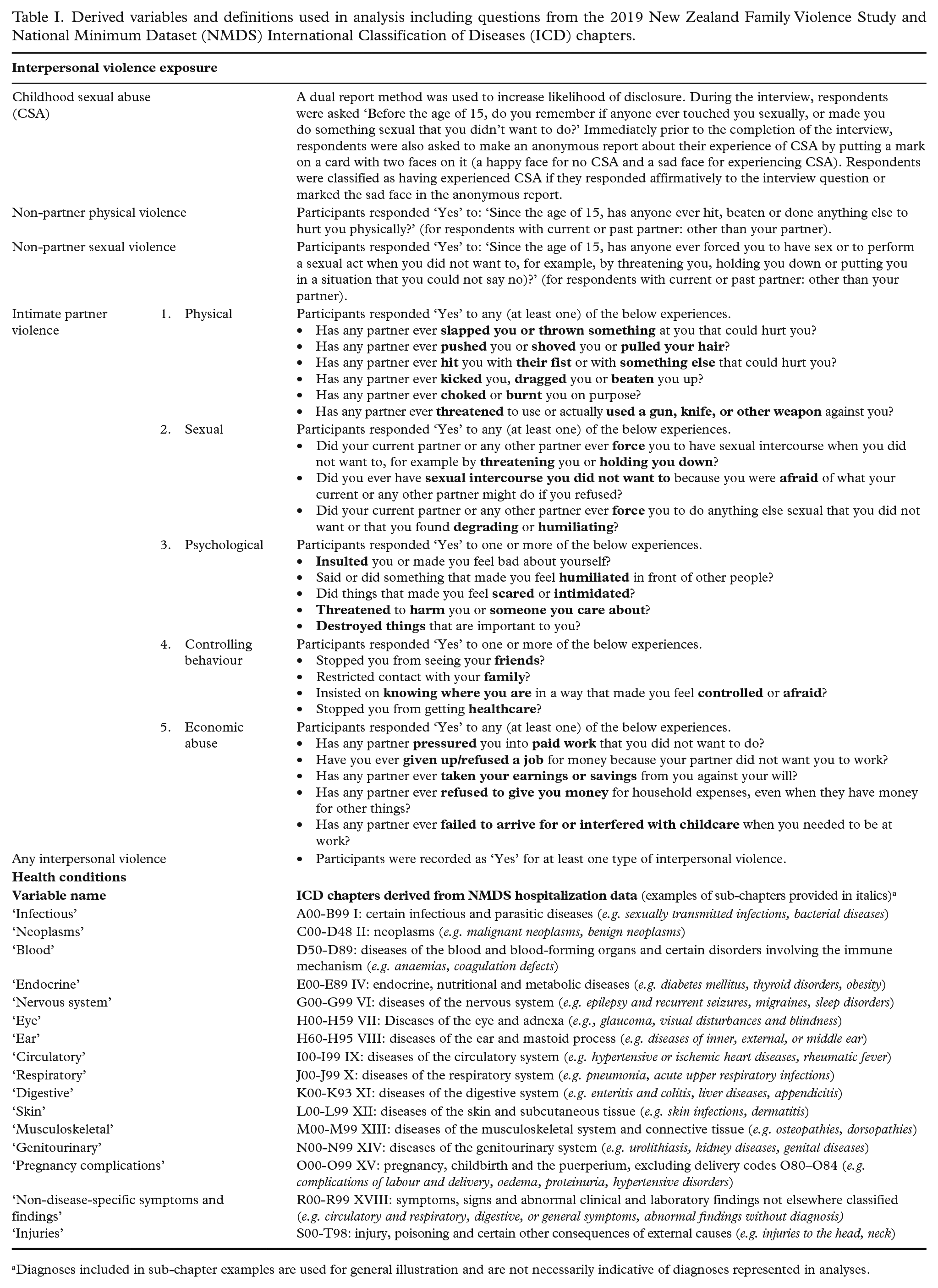
Diagnoses included in sub-chapter examples are used for general illustration and are not necessarily indicative of diagnoses represented in analyses.
National Minimum Dataset on hospital discharges (NMDS)
For participants who provided informed consent, information on all publicly funded hospital discharges from 1988 to 2019 was obtained from the NMDS (31-year look-back period). The NMDS is a national collection of public and private hospital discharge information, including clinical information for inpatients and day patients, administered by the NZ Ministry of Health (NZ MoH) [17]. Information on individuals’ health service usage is collected and stored by National Health Index (NHI), a unique identifier provided to all users of health and disability services in NZ [18]. The current analysis was restricted to publicly funded events (including those provided in private facilities), which account for approximately 90% of all reported NZ hospitalizations [19].
Since July 1999, diagnosis has been recorded using the International Classification of Diseases and Health Related Conditions, Version 10, Australian Modification (ICD-10-AM). Admissions prior to 1999 were coded using the Australian Version of The International Classification of Diseases, 9th Revision, Clinical Modification, 2nd edition (ICD-9-CM-A), and were mapped to the associated ICD-10-AM codes by the NZ MoH according to internal procedures [17].
The current investigation considered only principal diagnoses (by NMDS code) to focus on primary cause of hospitalization or attendance at the healthcare establishment [17], not co-existing additional diagnoses or diagnoses arising during the admission episode.
Analysis was restricted to hospital discharges with principal diagnoses from 16 ICD-10-AM chapters (see Table I). Mental and behavioural disorders were excluded as the NMDS does not include admission to psychiatric wards.
Data linkage
Where participant consent was obtained, probabilistic data linkage was undertaken using names (first, middle and surname), date of birth and residential address to link between survey response and NHI. Only this identifying information (no other survey content) was provided to the NZ MoH to obtain NHI numbers. Once obtained, NHI numbers were used to extract relevant hospital records from the NMDS. Deterministic data linkage could not be conducted, as it is not common for people to know and reliably access their NHI number.
Statistical analysis
Analyses were conducted using Stata 13. Survey weighting functions were used to account for sampling methods (clustering by PSU, number of eligible participants per household). Descriptive analyses (weighted percentages) were calculated for prevalence of interpersonal violence experience by sociodemographic characteristics (Table II). Chi-square tests for co-occurrence between each interpersonal violence type are in Table III.
Sociodemographic characteristics and prevalence of interpersonal violence exposure for ever-partnered women with data linked to the National Minimum Dataset.
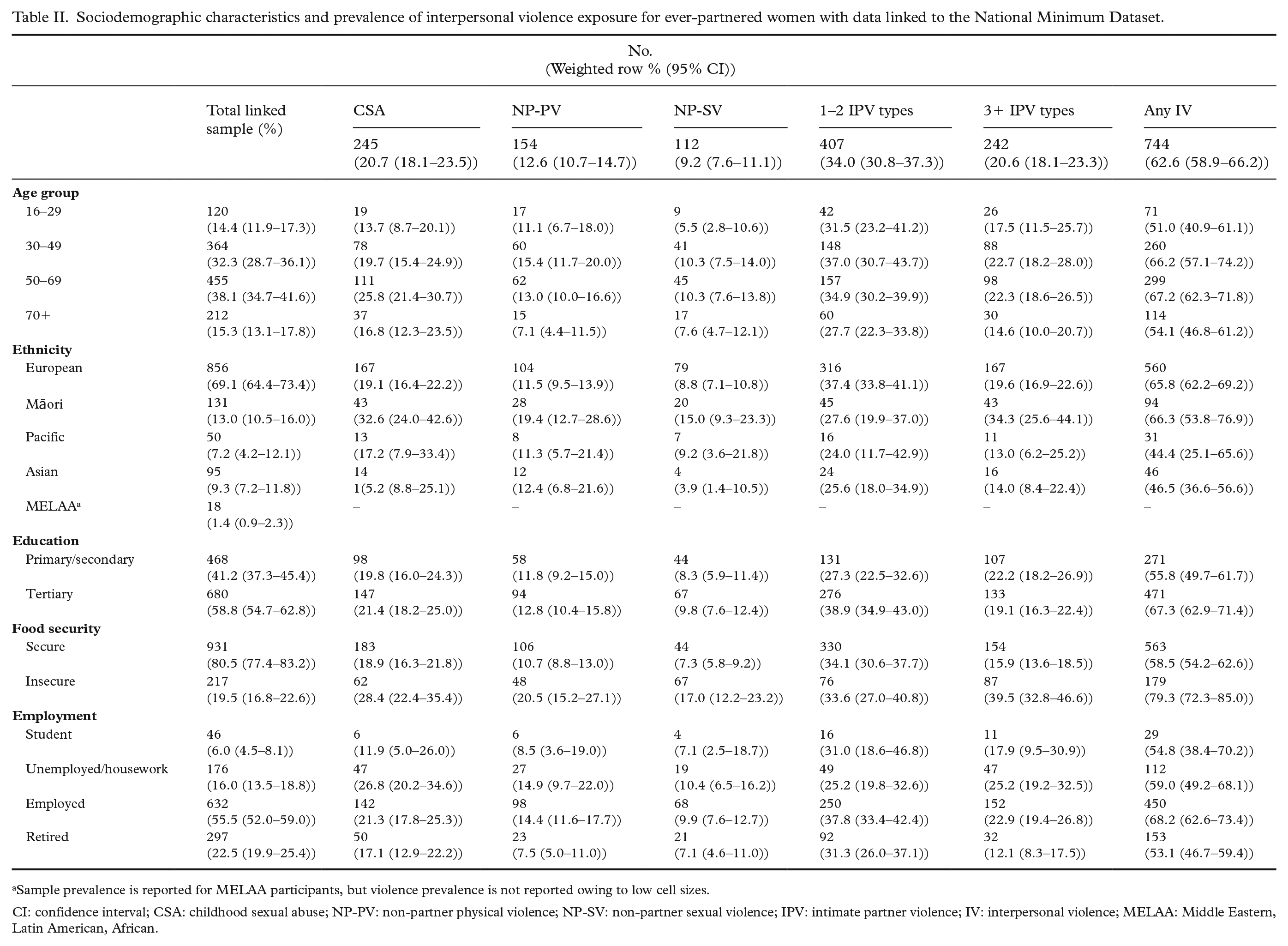
Sample prevalence is reported for MELAA participants, but violence prevalence is not reported owing to low cell sizes.
CI: confidence interval; CSA: childhood sexual abuse; NP-PV: non-partner physical violence; NP-SV: non-partner sexual violence; IPV: intimate partner violence; IV: interpersonal violence; MELAA: Middle Eastern, Latin American, African.
Intersecting prevalence estimates of interpersonal violence types experienced by women with data extracted from the National Minimum Dataset.
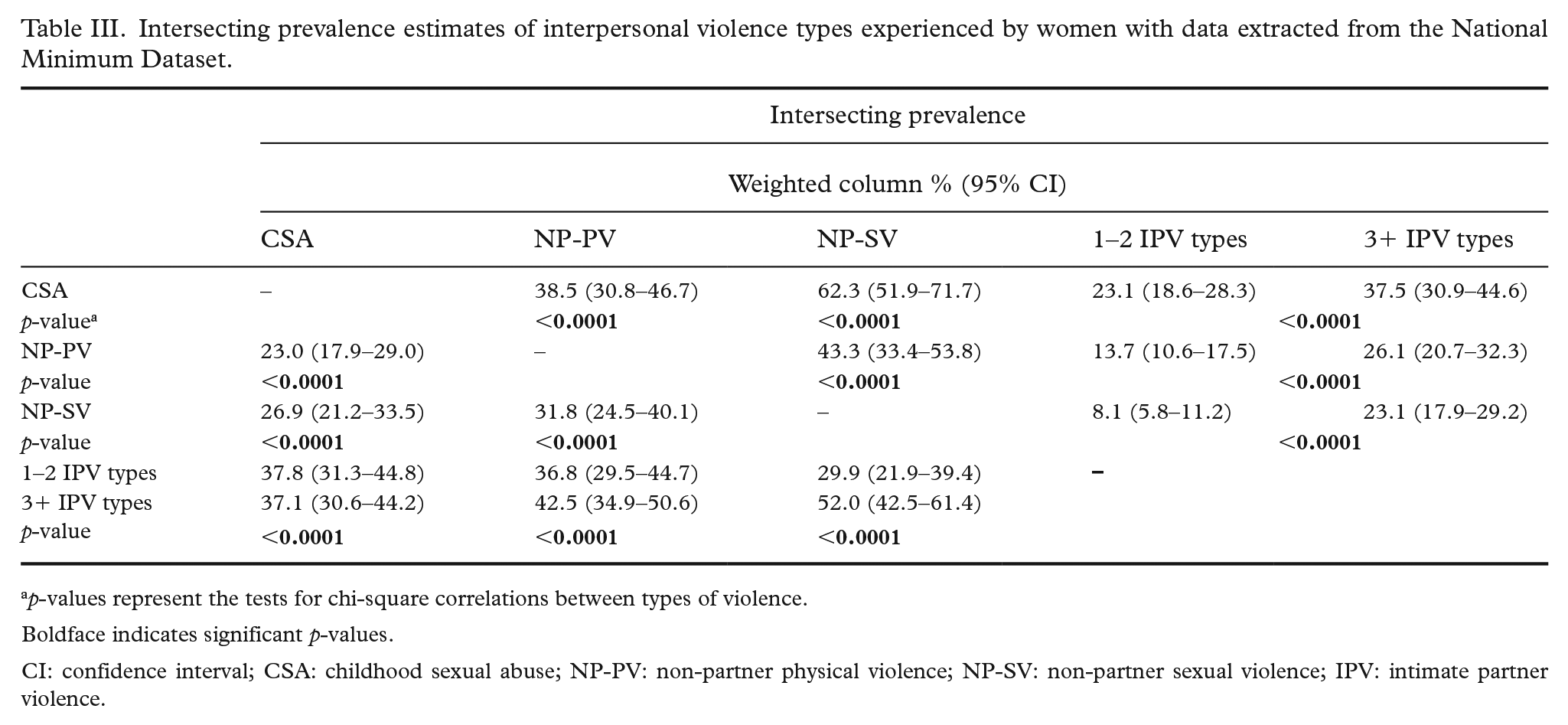
p-values represent the tests for chi-square correlations between types of violence.
Boldface indicates significant p-values.
CI: confidence interval; CSA: childhood sexual abuse; NP-PV: non-partner physical violence; NP-SV: non-partner sexual violence; IPV: intimate partner violence.
Univariate logistic regression was used to determine association between hospitalization for health conditions for women who reported exposure to each interpersonal violence type: CSA experience (ever/never), NP-PV experience (ever/never), NP-SV experience (ever/never), IPV (1–2 IPV types/3+ IPV types/no IPV) and any interpersonal violence (at least one type/no interpersonal violence) (Table IV).
Univariate associations between women’s exposure to interpersonal violence and health conditions requiring hospitalization.
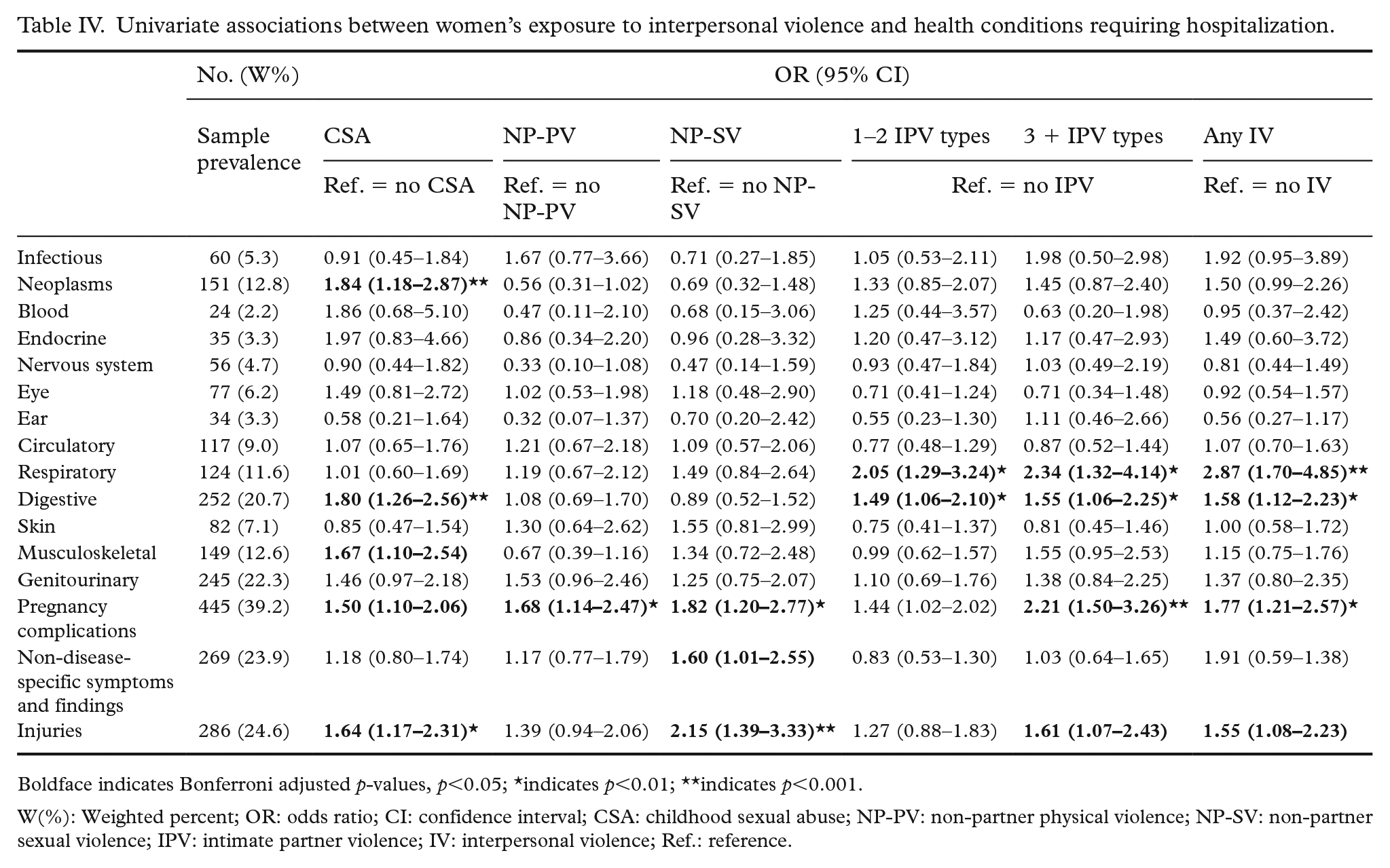
Boldface indicates Bonferroni adjusted p-values, p<0.05; ★indicates p<0.01; ★★indicates p<0.001.
W(%): Weighted percent; OR: odds ratio; CI: confidence interval; CSA: childhood sexual abuse; NP-PV: non-partner physical violence; NP-SV: non-partner sexual violence; IPV: intimate partner violence; IV: interpersonal violence; Ref.: reference.
Multivariable logistic regression was used to determine association between each interpersonal violence type and each assessed health condition, after adjustment for age and ethnicity (Table V). Socioeconomic status was not adjusted for in order to capture the population-level impact of violence irrespective of individuals’ socioeconomic status. This decision limits the potential for over-adjustment as women’s experiences of violence, particularly IPV, have been shown to contribute to poverty or worsen financial insecurity [20 –23], and the marginalization of Indigenous people in NZ (and other colonized societies) results in disparities in socioeconomic status, violence experiences, and health outcomes and inequities in accessibility of hospital services [24 –30]. Where a significant relationship was identified, Bonferroni’s test was used to adjust for multiple comparisons.
Associations between women’s exposure to interpersonal violence and health conditions requiring hospitalization, adjusted for age and ethnicity.
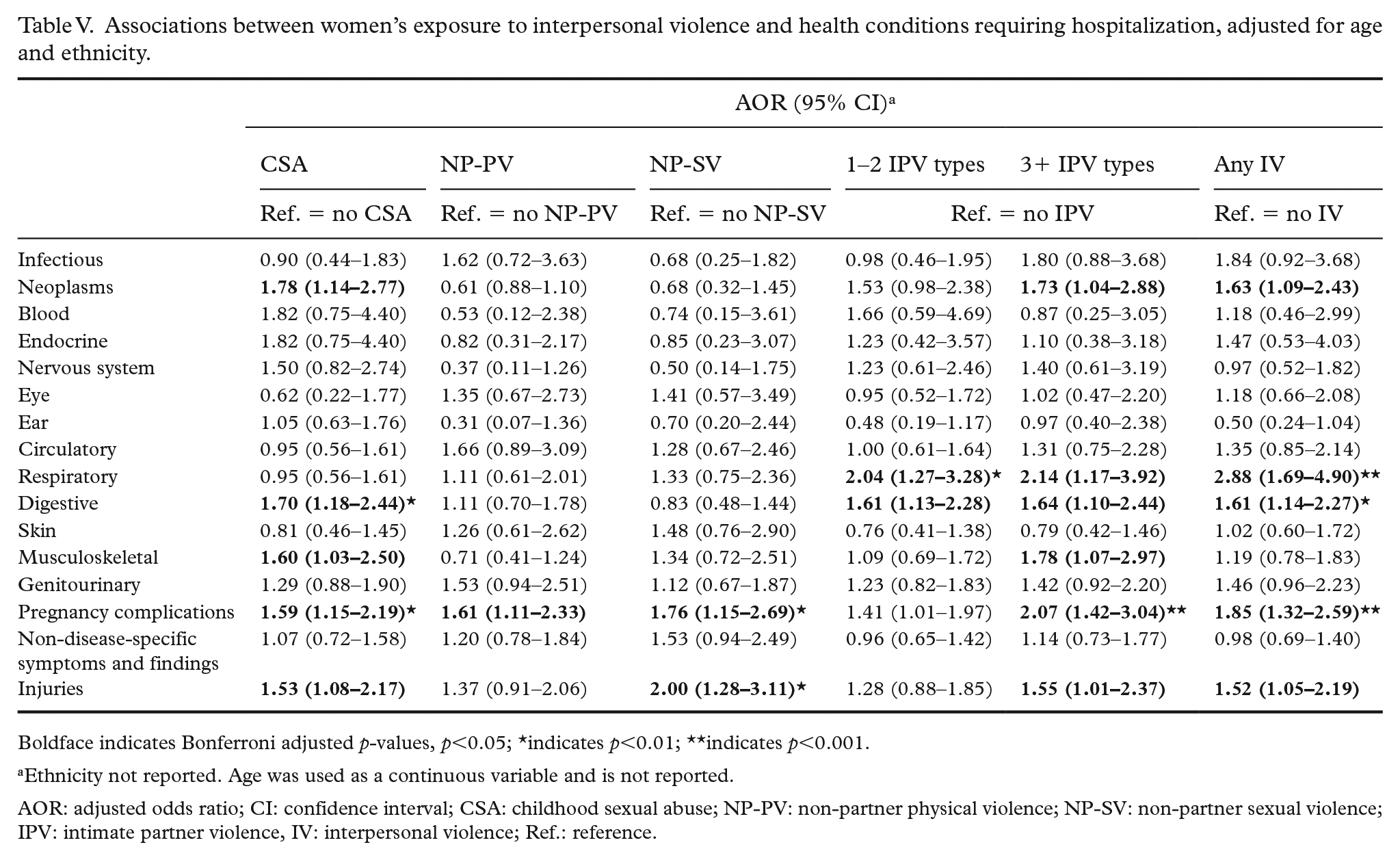
Boldface indicates Bonferroni adjusted p-values, p<0.05; ★indicates p<0.01; ★★indicates p<0.001.
Ethnicity not reported. Age was used as a continuous variable and is not reported.
AOR: adjusted odds ratio; CI: confidence interval; CSA: childhood sexual abuse; NP-PV: non-partner physical violence; NP-SV: non-partner sexual violence; IPV: intimate partner violence, IV: interpersonal violence; Ref.: reference.
Missingness issues were minor and therefore not addressed in analysis; less than 1% for all exposure and outcome variables were missing except for CSA (1.65%) and economic IPV (13.3%), where missing was driven by ‘Not applicable’, ‘Don’t know’ or ‘Refused’ responses.
Results
Of 1464 women recruited, 1240 (84.7%) agreed to their survey data being linked with the NMDS. Of these, 23 (1.8%) women had never had an intimate partner and were not included. A total of 1151 of 1217 (94.6%) ever-partnered women were able to be linked using their NHI to the NMDS and were included in the investigation.
Mean age of women in the sample was 52.8 years (SD: 17.0; range: 16–96 years). Most were NZ European (69.1%, n=856), with 13.0% Māori (n=131), 7.2% Pacific (n=50), 9.3% Asian (n=95) and 1.4% Middle Eastern, Latin American or African (MELAA) (n=18). For the linked cohort, 97.4% (96.1–98.3) identified as heterosexual.
One in five women (20.7%) reported experiencing CSA, 12.6% of women reported experiencing NP-PV and 9.2% reported NP-SV since the age of 15 years. For IPV, 34.0% of women reported experiencing one or two IPV types, and 20.6% reported experiencing 3+ IPV types. Experience of any interpersonal violence was reported by 62.6% of the linked sample. Among ethnic groups, Māori women reported the highest prevalence of CSA, NP-PV and NP-SV, and 3+ IPV types; 66.3% of Māori women reported experiencing any interpersonal violence. Women who were food insecure had higher prevalence of all interpersonal violence types compared with women who were food secure, except for those who reported 1–2 IPV types; overall 79.3% of women who experienced food insecurity reported at least one type of interpersonal violence (Table II).
Prevalence rates of interpersonal violence types were correlated. For example, compared with those reporting no IPV experience, women who experienced 1–2 and 3+ types of IPV reported higher experiences of both NP-PV and NP-SV, and CSA (p<0.0001). This suggests that violence experiences can co-occur across the life course (Table III).
Table IV presents unadjusted associations between each interpersonal violence type and each assessed health condition, grouped by ICD chapter. Women who experienced CSA were at increased odds of hospitalization for neoplasms, digestive diseases, musculoskeletal diseases, and injuries. Those who experienced 1–2 and 3+ IPV types had increased odds of hospitalization for respiratory diseases and digestive system diseases. Women who experienced three or more types of IPV were also more likely to have been hospitalized for injuries. Increased likelihood for pregnancy, childbirth and puerperium complications was observed for those exposed to each interpersonal violence type, with odds ratios ranging between 1.44 and 2.21. Women who experienced NP-SV were also at increased odds of hospitalization for non-disease-specific symptoms and findings and injuries. Exposure to any interpersonal violence type was associated with increased odds of hospitalization for respiratory diseases, digestive system diseases, and injuries.
After adjusting for age and ethnicity (Table V), several associations persisted from the univariate model, including increased risk for respiratory and digestive diseases for women who reported 1–2 and 3+ types of IPV. All interpersonal violence types remained associated with pregnancy complications (adjusted odd ratios between 1.41 and 2.07). Hospitalizations for neoplasms were more likely for women who experienced 3+ IPV types and CSA. Women who experienced CSA were also at increased odds of hospitalization for digestive diseases and injuries. Women who experienced NP-SV were twice as likely to be hospitalized for injuries compared with those who had not experienced NP-SV. Experience of any interpersonal violence type was associated with increased odds of hospitalization for neoplasms, digestive diseases, pregnancy complications, and injuries, and near three-fold increased odds for respiratory diseases.
Discussion
Findings from this population-based study provide new evidence that women’s experience of any interpersonal violence is strongly associated with increased likelihood of hospitalization for chronic health conditions, including respiratory and digestive diseases, neoplasms and adverse events such as pregnancy complications and injuries. To our knowledge, this is the first study globally to evaluate associations between interpersonal violence across the life-course and hospitalization at the national level. The study extends previous work by measuring multiple forms of violence exposure (child sexual abuse, violence by non-partners, and five types of IPV) in a population-based sample. An additional strength of the study is its use of objective measures of hospitalization service use; as these measures are based on routinely collected data, they are not subject to recall bias, which is a significant methodological advance on previous work. The ability to capture the majority (approximately 90% of all reported hospitalizations in NZ) also adds strength to our findings [19]. Results are globally relevant, as our findings are comparable to international prevalence estimates (i.e. 24.6% CSA, 12.9% non-partner sexual assault, 38.3% IPV globally) [12].
CSA experience was associated with increased likelihood of hospitalization for five ICD chapters, highlighting the need for effective and widespread implementation of policy and programmatic support to enable identification and healing opportunities for CSA survivors [31]. In addition, as CSA experience was highly correlated with experience of other violence types, findings strongly support the need to consider cumulative impacts of interpersonal violence experiences. This knowledge should inform violence prevention and intervention efforts across the life-course [32,33].
This study contributes to understanding how frequency and severity of violence exposure may heighten likelihood of poor health outcomes, as women exposed to 3+ IPV types are more likely to be hospitalized for health problems across six ICD chapters, with those exposed to 1–2 IPV types having increased likelihood of hospitalization for three ICD chapters. These findings substantiate claims that, for women, IPV is a form of chronic and toxic stress that adds to national burden of disease [34,35], and corroborates information on the stepwise associations between number of IPV types experienced and self-reported health outcomes [9,36]. Violence exposure and the health outcomes may also be directly associated, with, for example, experiences of IPV directly resulting in injury requiring hospitalization. For men, patterns of violence exposure differ and have different associations with health outcomes [37–39], and may require different responses.
Of note, women’s experience of each interpersonal violence type was associated with increased likelihood of hospitalization for pregnancy-related complications. While violence experiences assessed in this study may have preceded pregnancy, research has also found a high prevalence of IPV victimization during pregnancy [40], which is associated with myriad complications including miscarriage, premature delivery and low birthweight [40 –43]. Our findings reinforce previous calls for gynaecological and obstetric services to develop and actively implement violence identification and intervention approaches [44,45] and to provide referral pathways that support long-term trauma recovery.
Overall, findings underscore the need to recognize violence exposure as an underlying risk for multiple health outcomes. Violence exposure can result in a range of behavioural (e.g. substance abuse, smoking, sleeping difficulties), social (e.g. future relationship difficulties, social isolation, homelessness), cognitive (e.g. chronically negative, fearful and mistrusting) and emotional (e.g. depression, post-traumatic stress disorder) pathways that influence health [46]. However, treating these ‘coping’ responses as individual problems without recognizing the underlying causes of violence exposure limits the ability of health systems to develop effective holistic responses to these interlocking issues. To best meet the health needs of women, we need to consider violence exposure alongside other socioeconomic factors as part of a comprehensive health assessment and that requires appropriate response. Health system infrastructure and leadership support is needed to enable robust healthcare responses to victims of interpersonal violence. These efforts would be supported by provision of foundational education about interpersonal violence in medical and healthcare training [47–49].
Limitations
While documenting a strong relationship between women’s experiences of interpersonal violence and health conditions requiring hospitalization, there are limitations. The cross-sectional nature of this investigation precludes determining causality. There could be shared underlying factors that should be considered in future research.
Other study limitations may lead to underestimation of the true strength of the associations found. For example, women who were experiencing severe IPV were less likely to have participated in the current survey. Additionally, the sample excluded women who did not consent to linkage with NMDS data and never-partnered women who may have experienced CSA or non-partner violence. While a high proportion of women from the full NZFVS consented to their survey data being linked to NMDS data, and IPV and non-partner violence prevalence reported in this study were consistent with rates reported in the full study, those who experienced CSA were underrepresented (20.7% of the linked sampled reported CSA, compared with 26% in the full NZFVS sample) [33].
Additionally, while we adjusted for age in regression analyses, there is potential for an ongoing age effect to exist. First, younger participants would be less likely to experience many of the chronic health conditions identified. Second, older people may not recognize, or may minimize, previous violence experience, and experiences of violence that resulted in injury hospitalization may not have been captured within the 31-year look-back period available. Further, as respondents were recruited from community-dwelling individuals, with those dwelling in retirement communities or other care facilities excluded, and those who were ill less likely to have participated in the survey, respondents present in our sample were likely to be healthier and potentially less likely to have experienced violence. Taken together, these limitations mean our findings are likely to underestimate associations between violence and healthcare usage. Dichotomization of some exposure variables and ICD chapter codes may have obscured dose–response effects by frequency/severity of violence experiences or by number of hospitalizations per participant [38,50]. Studies with larger sample sizes undertaking similar analyses in future would be of benefit to confirm or extend these findings, and might enable findings related to differences between groups (e.g. ethnic-specific differences) to be more robustly explored.
Conclusions
The current investigation identified strong associations between women’s experiences of interpersonal violence and adverse health outcomes requiring hospitalization. Findings reinforce the urgent need for healthcare providers and healthcare systems to be equipped to proactively identify and respond to violence exposure across the life-course [51]. Clinical identification and assessment of interpersonal violence must be linked with referral pathways that create realistic opportunities for women’s immediate safety from current violence, or to heal from previous violence exposures, as past violence experience may also have long-term health implications. Robust implementation of these strategies could reduce the health, human and economic costs of violence against women and girls. Further research could enhance development of effective intervention approaches by continuing to explore mediating or moderating factors between violence and poor health outcomes [12,52,53]. Finally, widespread implementation of violence prevention strategies and addressing structural inequities that exacerbate the likelihood of experiencing violence [54] are essential steps to achieving the Sustainable Development Goals [55].
Footnotes
Acknowledgements
The authors gratefully acknowledge the participants, interviewers, and study project team led by Patricia Meagher-Lundberg and Dr Ladan Hashemi for data curation. Representatives from the Ministry of Justice, Accident Compensation Corporation, New Zealand Police, and Ministry of Education, who were part of the Governance Group for Family and Sexual Violence at the inception of the study, are also acknowledged. Brooklyn Mellar and Janet Fanslow had full access to all the data in the study and take responsibility for the integrity of the data and the accuracy of the data analysis. This study is based on the WHO Violence Against Women Instrument as developed for use in the WHO Multi-country Study on Women’s Health and Domestic Violence and has been adapted from the version used in Asia and the Pacific by kNOwVAWdata, version 12.03. It adheres to the WHO ethical guidelines for the conduct of violence against women research. The study funder had no involvement in the design and conduct of the study; collection, management, analysis, and interpretation of the data; preparation, review, or approval of the manuscript; and decision to submit the manuscript for publication.
Author contributions
JLF contributed to conceptualization, funding acquisition, project administration, supervision of the study, and writing – review and editing. PJG contributed to the statistical analysis, conceptualization, funding acquisition, and writing – review and editing. BMM performed the statistical analysis, and contributed to the literature review, conceptualization, and writing – review and editing. VS contributed to conceptualization and writing-review and editing. TKDM contributed to the funding acquisition and writing – review and editing. All authors contributed to manuscript revision, rea and approved the submitted version.
Declaration of conflicting interests
The authors declared the following potential conflicts of interest with respect to the research, authorship, and/or publication of this article: JLF reported receiving grants from the New Zealand Ministry of Justice outside the submitted work. PJG reported being employed at the Health Quality & Safety Commission and being a senior specialist for the Family Violence Death Review Committee. VS reported receiving grants from Auckland Medical Research Foundation, Health Research Council of New Zealand, National Heart Foundation of New Zealand, and New Zealand National Science Challenge (Healthier Lives) outside the submitted work. In addition to her role at the University of Auckland, TKDM is Chief Science Advisor for the Ministry of Social Development.
Funding
The authors disclosed receipt of the following financial support for the research, authorship, and/or publication of this article: This work was supported by the New Zealand Ministry of Business, Innovation and Employment (grant number CONT-42799-HASTR-UOA).
