




Abstract
Aims: The aims of this study were to explore time-based trends of socioeconomic differences in alcohol use and drunkenness in Finnish adolescents from 1990 to 2014 and to investigate the significance of two indicators in detecting socioeconomic differences in alcohol use and drunkenness. Methods: Data were retrieved from seven surveys conducted as part of the Health Behaviour in School-aged Children (HBSC) study in Finland from 1990 to 2014. The alcohol use and drunkenness of 15-year-old students, as well as socioeconomic status, including educational aspiration and perceived family wealth, were assessed via a self-report questionnaire. Logistic regression models were used to investigate the relationships between alcohol use, drunkenness and indicators of socioeconomic status. Results: The study showed that the alcohol use and drunkenness of Finnish 15-year-old adolescents have decreased since the late 1990s. However, the level of decrease is not consistent among different socioeconomic groups and socioeconomic differences in drinking behaviour between two educational aspiration groups have persisted over two decades. Girls from the groups with low perceived family wealth were more likely to be frequently drunk in the time period 2006–2014.
Introduction
Alcohol use in young people has long been a global concern. It is one of the most prevalent risk behaviours during adolescence and can cause many health and social problems, either directly or indirectly. The use of alcohol by adolescents has been widely studied; however, there has been less analysis of the trends in drinking habits among adolescents [1]. Analysing secular trends can provide important information on the prevalence of alcohol use among adolescents and can support decision-making and influence policy changes and other interventions aimed at preventing harm. A recent study reported that the weekly alcohol use of adolescents declined in 20 of 28 European countries from 2002 to 2010 [2]. However, the association between drunkenness-oriented drinking and a variety of alcohol-related problems was still particularly strong among Finnish 14–16-year-olds [3].
There are many factors contributing to the use of alcohol by adolescents, of which socioeconomic status (SES) plays a particularly important part. Previous studies have investigated the presence of socioeconomic differences in alcohol use [4] and the clear and persistent social gradient in alcohol-related mortality among adults has been documented by these studies. Alcohol use is initiated in adolescence and therefore it is important to understand the relationship between SES and alcohol use during adolescence, as this may provide a better understanding of the origins of socioeconomic differences in adult health inequalities [5].
Evidence from previous studies of the relationship between SES and adolescent drinking behaviour has not yet presented a persistent and clear social gradient. For instance, a British study revealed that among adolescents aged 13 years, alcohol drinking was more common within higher household income groups and was less commonly associated with a higher level of maternal education [6], indicating the different results generated by different SES measures. In addition, a cross-national survey in 28 countries demonstrated that parental SES is only of limited importance for episodes of drunkenness in early adolescence and this very limited role seems to apply for girls more than for boys and for parental occupation more than family affluence [7]. Regarding Finnish adolescents, it has been reported that health inequality exists among 12-, 14- and 16-year-old Finns [8]. Regarding alcohol use, socioeconomic background has been found to be a strong determinant of weekly alcohol use for adolescents [9]. Regarding drunkenness, Lintonen et al. [10] found that monthly drunkenness among 14-year-old girls was associated with their guardian’s level of education: girls whose parents had a lower educational level were more likely to report being drunk on a monthly basis.
The differences in socioeconomic gradients in the health behaviour of adolescents have triggered debate about possible explanations. One of the hypotheses is latent differences, which considers that although socioeconomic differences in the health behaviour of adolescents emerge, they still cannot be measured by the current indicators of health outcomes [11]. In addition, the different indicators of SES used may contribute to divergent findings about the socioeconomic differences in adolescent health behaviour [12]. Thus it is suggested that the same indicators of SES should be used in research on socioeconomic differences in adolescent health behaviour so that the results from different studies are comparable [11].
In Finland, the results of national and international long-term studies provide the possibility of comparing the trends in alcohol use among adolescents, as indicated by research projects such as the European School Project on Alcohol and other Drugs (ESPAD), the Adolescent Health and Lifestyle Survey (AHLS), the School Health Promotion (SHP) study and the Health Behaviour in School-aged Children (HBSC) study. Based on the AHLS results from 1977 to 1999, Lintonen et al. [10] examined the trends in drinking habits among Finnish adolescents and found that during this time period, alcohol use among 12-year-olds remained rare, but became more prevalent and drunkenness-oriented among 14–18-year-olds. They also studied the effect of societal changes on the drunkenness trend in early adolescence in Finland, specifically that improved nutrition leads to earlier maturation and a growing economy leads to more pocket money for adolescents [13]. Subsequently, it has been found that the frequency of alcohol use and drunkenness of 14- and 16-year-olds increased significantly until the late 1990s and decreased thereafter [14]. Another trends study using ESPAD data from 1995 to 2007 indicated that heavy episodic drinking among 15-year-old adolescents was highly prevalent in Finland in the late 1990s, but significantly decreased during the 2000s [15]. In addition, Raitasalo and Simonen [16] examined data from the ESPAD, AHLS and SHP studies from 1976 to the present day and found that abstention from alcohol has increased and binge drinking has decreased among younger adolescents.
From a public health perspective, it is important to study the trends of socioeconomic differences in the use of alcohol by adolescents and drunkenness, as this does not only deepen our understanding of socioeconomic inequalities of the use of alcohol by adolescents, but also provides evidence-based findings for policy-makers and health promoters to identify target populations when planning and implementing interventions. The aims of the present study were: (a) to report time-based trends of socioeconomic differences in alcohol use and drunkenness in Finnish adolescents from 1990 to 2014; and (b) to investigate the difference of two indicators of SES in detecting socioeconomic differences in alcohol use and drunkenness.
Methods
Samples and survey procedure
The present research represents the Finnish HBSC study as one part of the World Health Organization’s collaborative cross-national survey. Since 1986, the HBSC survey has been carried out every four years in all member countries following the international research protocol. The HBSC focuses on understanding young people’s health and health behaviour in their social context. The HBSC survey is based on the completion of a self-reported questionnaire during a normal school class with a teacher and/or researcher supervising. The student’s participation in the survey is voluntary and they complete the questionnaire anonymously [17].
Finland, one of the founding countries of the HBSC study, took part in all surveys from 1986 to the latest 2014 survey. The research data in Finland were collected from schools using a cluster sampling method with the probability proportional to size of schools. The analyses in this study were based on boys and girls at age 15 years from the Finnish HBSC study from 1990 to 2014. Detailed information regarding the response rate, sample size and basic characteristics are given in the supplementary table (available online).
Measurements of drinking behaviour
Alcohol use
Alcohol use was assessed by the item, ‘At present, how often do you have the following alcoholic drinks? Also include those times when you only drink a very small amount’. For each type of beverage (beer, wine, strong liquor, mild alcohol drinks and any other drink that contains alcohol), the possible answers were ‘daily’, ‘at least once a week’, ‘at least once a month’, ‘less’ and ‘never’. Abstinence was defined as the participant who answered ‘never’ for all alcoholic beverages. Those who drank any alcohol at least once a month were defined as monthly alcohol users.
Drunkenness
Drunkenness was assessed by asking the respondents whether they had had so much alcohol that they had been really drunk. The response alternatives were ‘never’, ‘yes, once’, ‘yes, 2–3 times’, ‘yes, 4–10 times’ and ‘yes, more than 10 times’. Frequent drunkenness was defined as four or more times.
Measurements of socioeconomic status
Educational aspiration
Students were asked, ‘What do you think you will do when you finish compulsory basic education?’ The alternatives were ‘try to enter general upper secondary education’, ‘try to enter vocational upper education school or other vocational training’, ‘try to get an apprenticeship’, ‘get a job’, ‘be unemployed’ and ‘do not know’. Response options were dichotomized into two categories of ‘enter general upper secondary education’ and ‘other’. The distribution of educational aspiration in each survey year are given in the supplementary table (available online).
Perceived family wealth
The item related to perceived family wealth (PFW) was also inquired by asking the student, ‘What do you think of the financial situation of your family?’ The answers were ‘my family is very well off financially’, ‘my family is quite well off financially’, ‘average’, ‘my family is not very well off financially’ and ‘my family is not at all well off financially’. Response options were categorized into high (very well off and quite well off), middle (average) and low (not very well off and not well off at all) PFW. The distribution of PFW in each survey year can be found in the supplementary table (available online).
Statistical analyses
Descriptive statistics were used to show the characteristics of the study sample and the frequencies of variables used in analyses. The socioeconomic difference in alcohol use and drunkenness were examined in each survey year using Pearson’s χ2 test. P<0.05 was considered as a statistically significant difference between the groups. Logistic regression models were used to investigate the relationships between alcohol use and drunkenness and SES indicators with odds ratios (ORs) and 95% confidence intervals (CIs). A CI not including the value 1.00 of the OR was considered to show a statistically significant difference from the reference group. Rates of abstinence, monthly alcohol use and frequent drunkenness from 1990 to 2014 are illustrated in the figures. All the analyses were conducted separately by sex using the statistical package PASW (former SPSS) version 20.0.
Results
Overall trends of alcohol use and drunkenness
For boys, the rates of abstinence remained stable from 1990 to 2002, but increased considerably after 2002. In 2014, over one-third of Finnish 15-year-olds reported that they do not drink any alcoholic beverages. For girls, the increasing trend of abstinence emerged earlier than boys, from 1990 to 1994 and again after 1998, with the exception being the period between 1994 and 1998. The monthly alcohol use of Finnish adolescents decreased from 1998 and the rates in 2014 dropped to 27.2 and 24.5% for boys and girls, respectively. Compared with girls, the decreasing trend of monthly alcohol use of boys was more apparent. Rates of frequent drunkenness of Finnish 15-year-old boys decreased from 41.1% in 1990 to 18.3% in 2014. For Finnish 15-year-old girls, the rates of frequent drunkenness only dropped 6.2% within the 20-year period from 1990 to 2010. However, there was a notable decline (12.2%) between 2010 and 2014.
Trends in the association between drinking behaviour and socioeconomic factors
Figure 1 shows the trends of the association between adolescents’ drinking behaviour and their educational aspiration. For both sexes and throughout the whole period, the rates of monthly alcohol use and frequent drunkenness of students who reported not aiming at general upper secondary education after comprehensive education were higher than the rates of those students who wanted to go to high school. The differences of drinking behaviour between the two groups changed with time. Figure 1(a) shows that the gap of abstinence rates between the two educational aspiration groups increased for Finnish girls from 1998 to 2006. Figure 1(c) also indicates that there was an apparent growing trend of rates of frequent drunkenness for girls who did not want to go to high school between 2006 and 2010, but a declining trend between 2010 and 2014.
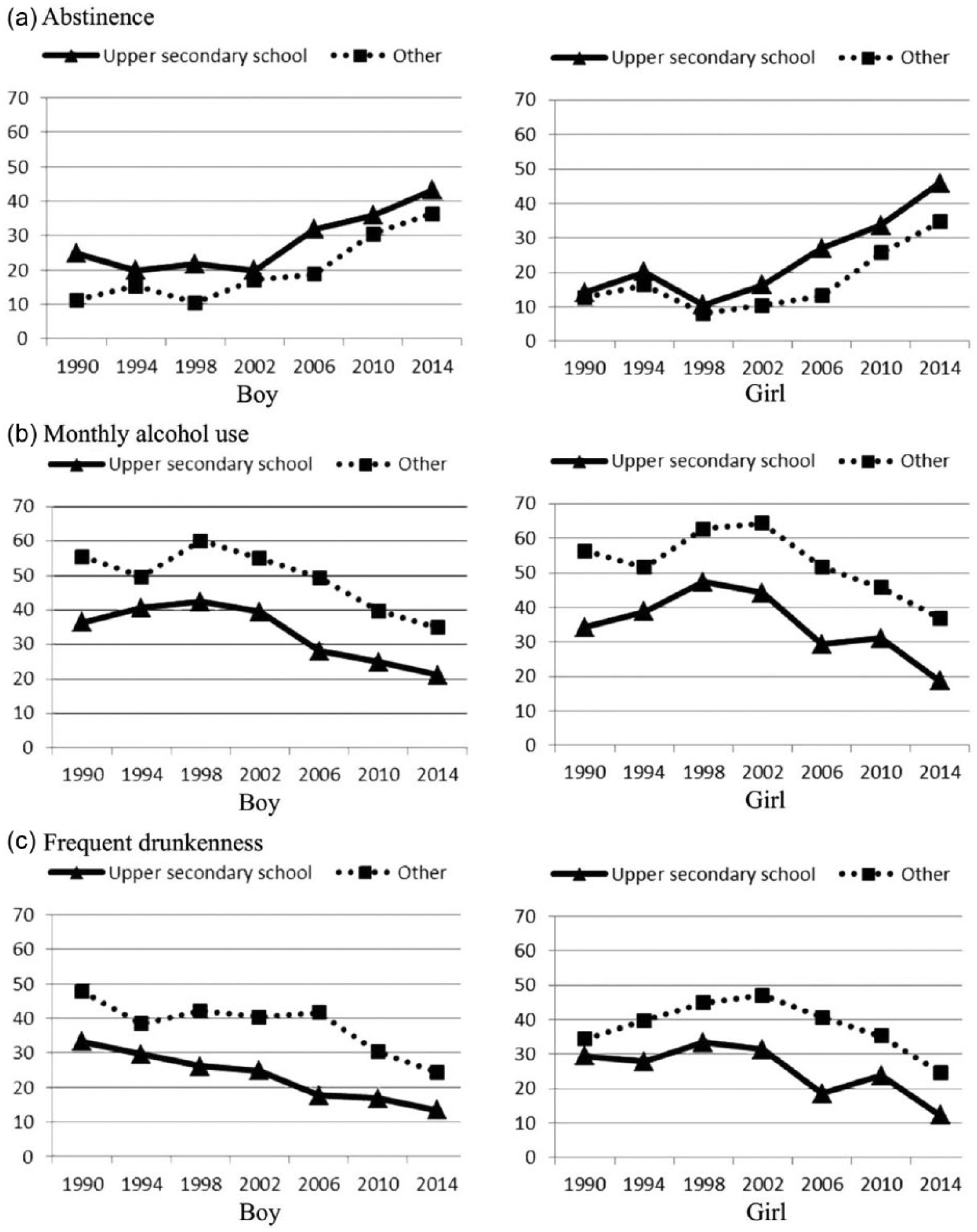
(a) Rates of abstinence, (b) monthly alcohol use and (c) frequent drunkenness (%) by educational aspiration, sex and survey year.
The trends of the association between adolescents’ drinking behaviour and their PFW are shown in Figure 2. Figure 2(a) indicates that the three PFW groups had similar trends in the rates of abstinence, which increased from 1998 for both boys and girls. With regard to the rates of monthly alcohol use, there was an opposite trend; the rate for girls from the low and high PFW groups dropped and the rate of girls from the middle PFW group increased between 2006 and 2010 (Figure 2(b)). Inconsistent trends from three PFW groups were also observed in the rates of frequent drunkenness for both boys and girls (Figure 2(c)). However, the rate difference of frequent drunkenness between the high and low PFW groups were increased for girls in 2006 and 2010 and for boys in 2014 compared with previous years.
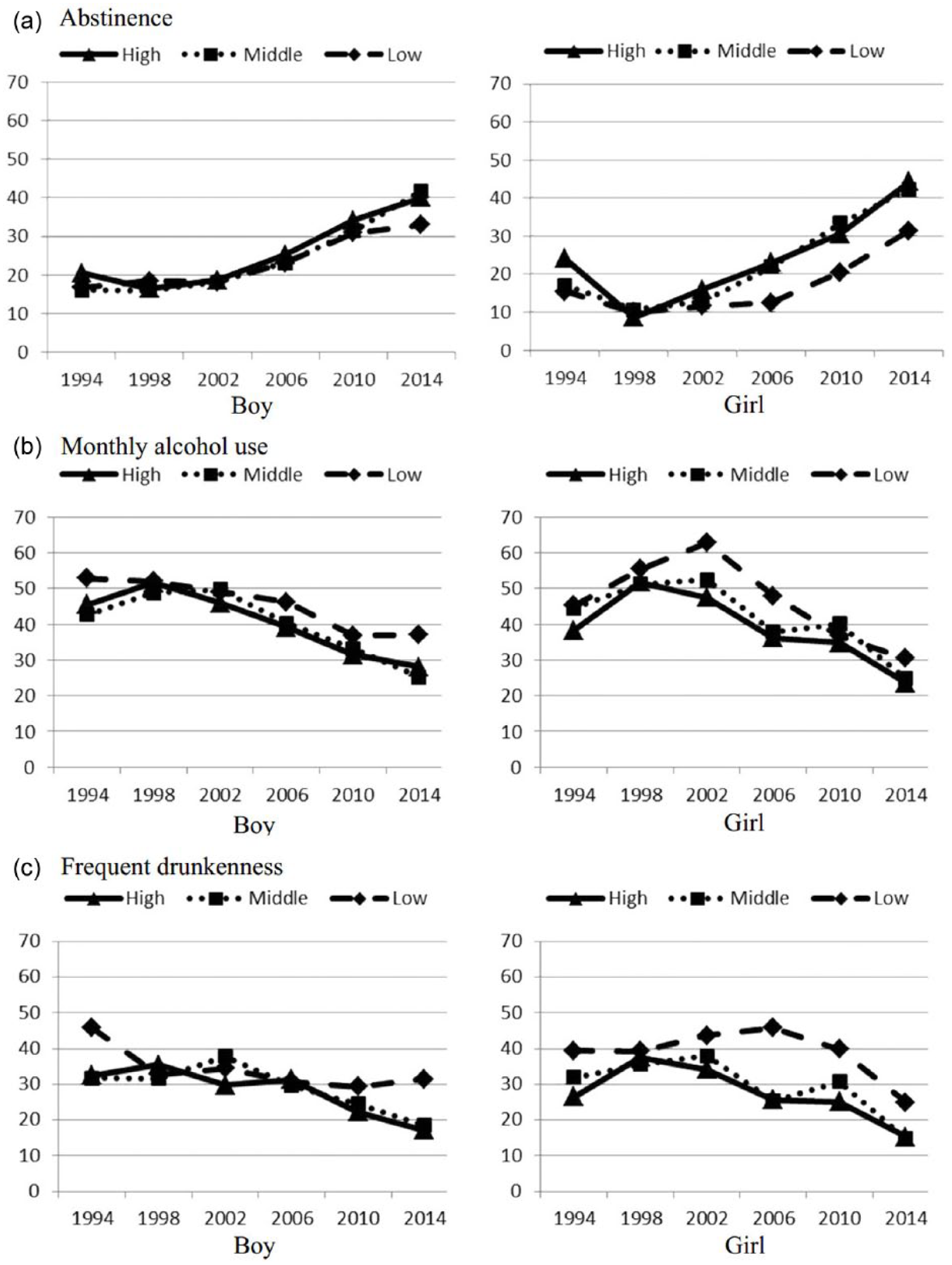
(a) Rates of abstinence, (b) monthly alcohol use and (c) frequent drunkenness (%) by perceived family wealth (PFW), sex and survey year.
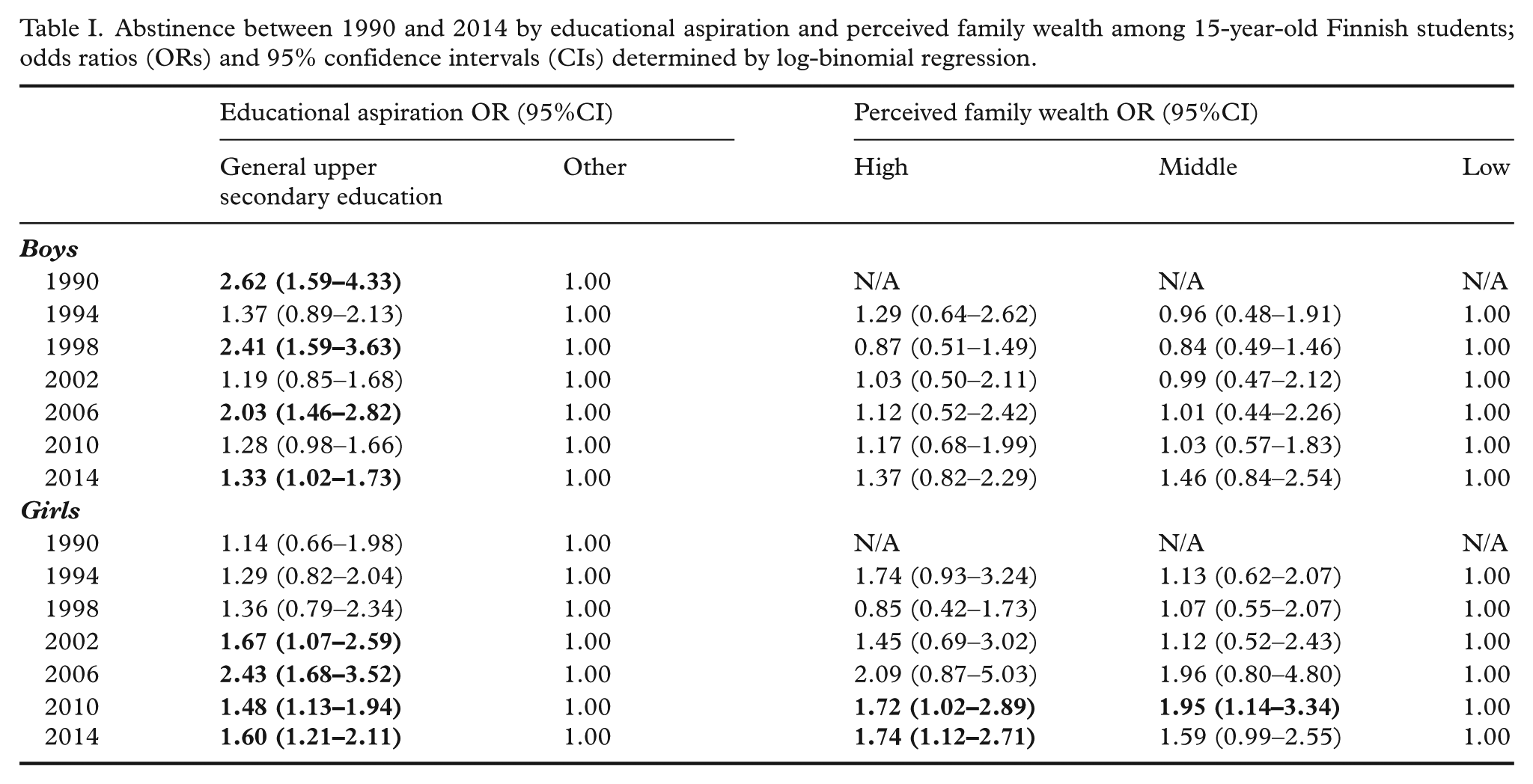
The relationships between alcohol use, drunkenness and SES indicators were examined by logistic regression models (Tables I–III). Taking the students with low educational aspiration as the reference, statistically significant differences of abstinence rate were found for boys in 1990, 1998, 2006 and 2014 and for girls at every measurement between 2002 and 2014, showing that students with higher educational aspiration were more likely to be abstainers (Table I). No statistically significant difference in abstinence rate was found among the three PFW groups, except for the results from the two most recent surveys, which showed that girls from high PFW groups were more likely to be abstainers than girls from the low PFW group (Table I).
Abstinence between 1990 and 2014 by educational aspiration and perceived family wealth among 15-year-old Finnish students; odds ratios (ORs) and 95% confidence intervals (CIs) determined by log-binomial regression.
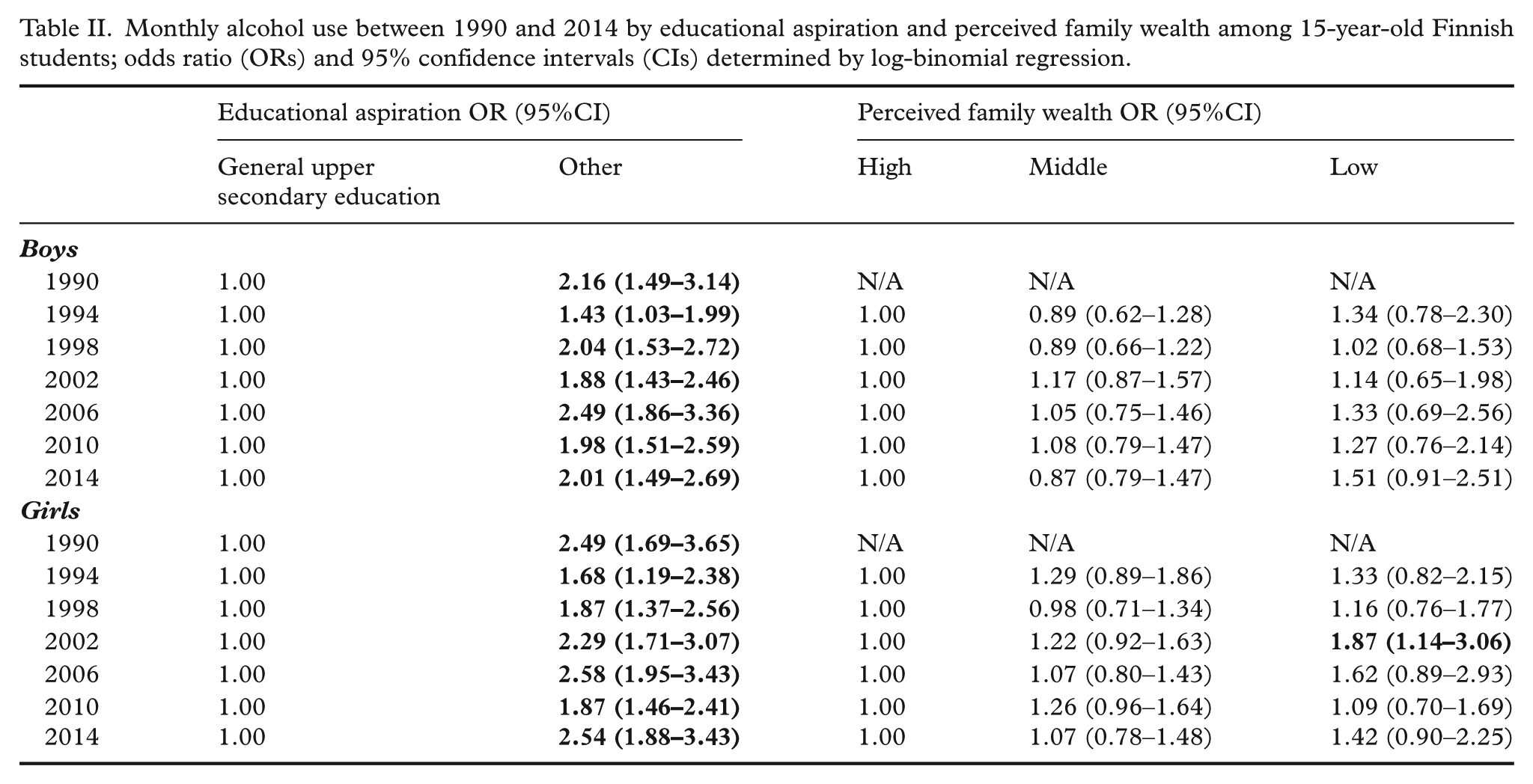
Monthly alcohol use between 1990 and 2014 by educational aspiration and perceived family wealth among 15-year-old Finnish students; odds ratio (ORs) and 95% confidence intervals (CIs) determined by log-binomial regression.
Frequent drunkenness between 1990 and 2014 by educational aspiration and perceived family wealth among 15-year-old Finnish students; odds ratios (ORs) and 95% confidence intervals (CIs) determined by log-binomial regression.
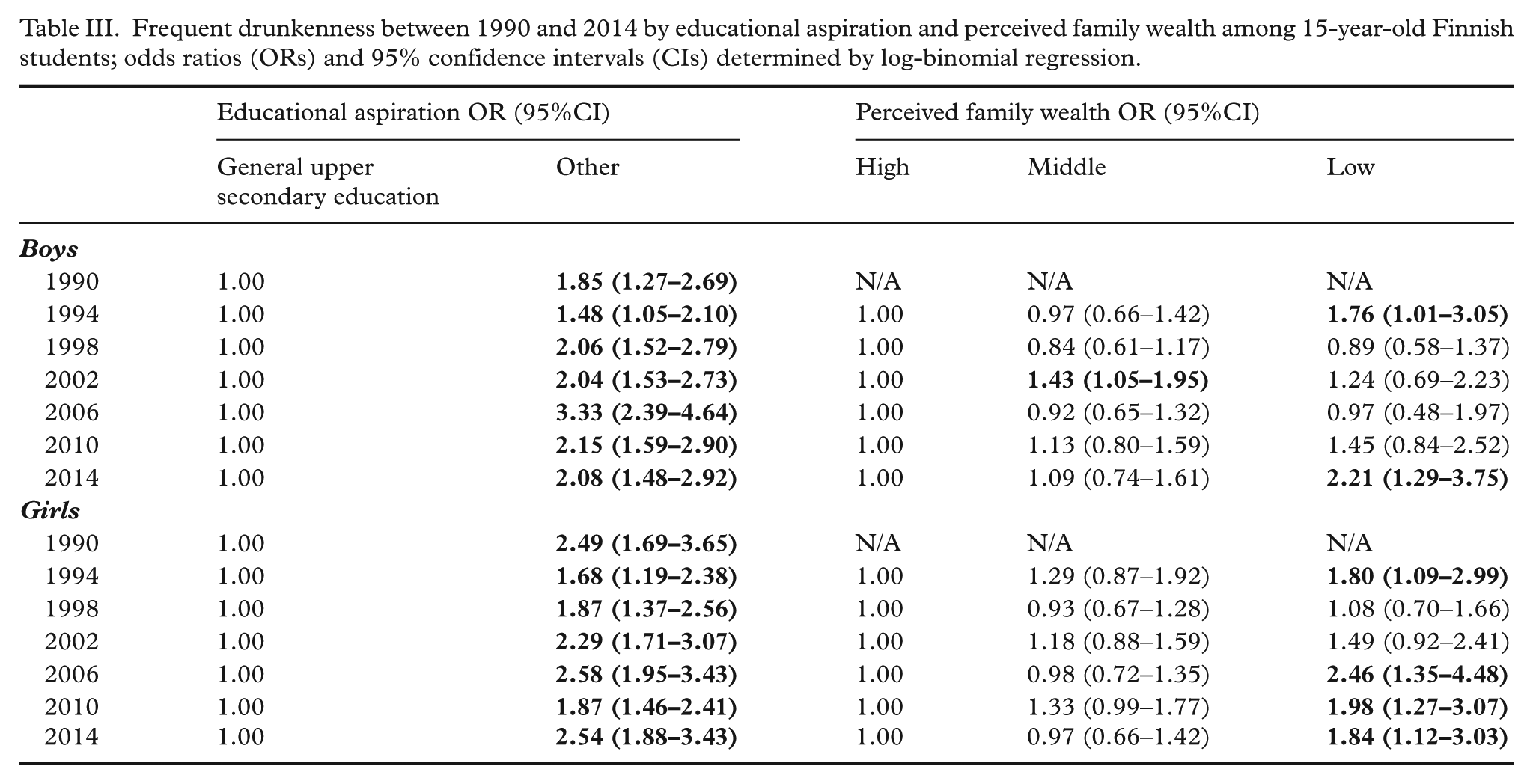
Table II shows that, compared with students with high educational aspiration, both boys and girls with other educational aspirations were more likely to use alcohol monthly during the period 1990–2014. Except for girls in 2002, there was no difference in rates of monthly alcohol use among the three PFW groups (Table II).
Table III reveals that with the high educational aspiration group as the reference, both boys and girls with low educational aspiration were more likely to report frequent drunkenness throughout the whole period. Girls from the low PFW groups had a higher rate of reporting frequent drunkenness than those from high PFW groups in 2006 and 2014. However, the difference of frequent drunkenness among the PFW groups for boys was only found in the most recent survey in 2014.
Discussion
The present study analysed trends in socioeconomic differences in alcohol use and drunkenness of Finnish 15-year-old students based on the Finnish HBSC data from 1990 to 2014. The results indicated that the rates of monthly alcohol use and frequent drunkenness decreased from 1998 to 2014 for both boys and girls. Findings from the present study also revealed that a higher educational aspiration was negatively associated with monthly alcohol use and frequent drunkenness over the whole 25-year study period for Finnish 15-year-old schoolchildren.
The burgeoning research on health inequalities in adolescence has received increasing attention. Several studies have explored the relationship between SES and drinking behaviour in adolescents [18], yet research on trends in socioeconomic differences in alcohol use and drunkenness of adolescents over time are still rare compared with cross-sectional studies. Cross-sectional studies about the relationship between SES and adolescent drinking behaviour have revealed inconsistent and even contradictory results [6,12]. Apart from the different measurements of SES and alcohol use, this inconsistency might be caused by the nature of the study population due to cultural differences, local/regional policies and the price of alcohol. Such factors can influence the alcohol use of adolescents among different SES groups to different extents. Even for those adolescents who come from the same region/country, it is understandable that trends in socioeconomic inequalities in adolescence could change over time because the social context varies with time. Thus the examination of trends in relationships between SES and the drinking behaviour of adolescents provides more valuable information when trying to understand socioeconomic inequalities in adolescent alcohol use.
The general increase in the rate of abstinence, as well as the decrease in the level of monthly alcohol use and frequent drunkenness among 15-year-old Finnish adolescents after the late 1990s, were in line with other Finnish studies using different datasets [14–16]. Similar trends of decline were also observed in other countries’ reports based on the data from HBSC surveys [1]. Previous studies have indicated that the educational aspirations reported by the adolescents themselves may be a valid indicator of their SES, as it is both stable from an early age and strongly related to their parents’ educational status [19,20]. School career was one of the most important socioeconomic factors that yielded differences in the prevalence of smoking among Finnish adolescents [21] and, likewise, in Finland the choice of school career strongly predicts educational level and social position in adulthood [22,23]. Koivusilta et al. [23,24] investigated the close relationship between adolescents’ choice of educational track and their health behaviour by documenting how these two factors influence each other during adolescence to produce the link between adult health and social status. When examining trends in differences in drinking behaviour in different educational aspiration groups, the present study found that although the overall trends in monthly alcohol use and drunkenness of Finnish 15-year-old schoolchildren have been downwards since the late 1990s, the disparity between different educational aspiration groups remained throughout the whole 20-year study period. Lintonen and Konu [25] demonstrated that adolescents tend to misperceive the normative drinking pattern ‘to be drunk’ and these biased beliefs are likely to cause increased drinking at both an individual and group level. Lintonen and Konu [25] argue that the misperception may gain strength from the need to associate with peers who appear ‘more mature’, such as those who exhibit a pattern of heavier alcohol use. Thus the drinking behaviour of students in the low educational aspiration group might be influenced by other, heavier drinking, peers from the same group. However, it should be noted that the indicator of educational aspiration may not represent students’ SES or disposable income that can be used for purchasing alcoholic drinks. Nevertheless, the finding suggested that the health gap observed in adulthood between socioeconomic groups seems to start developing in adolescence, with those likely to end up in lower socioeconomic groups displaying more detrimental drinking habits at the age of 15 years. Therefore those students who do not want to go to general upper secondary school should be the target population for interventions aiming to reduce alcohol use and drunkenness. In other words, more actions regarding the reduction of alcohol use of Finnish adolescents should be encouraged in vocational education institutions.
Researchers have argued that adolescents’ personal social position should be included in studies of health inequalities [8]. PFW has been included in all survey years (since 1994) and has the advantage that it is easy to answer for schoolchildren, reflects dimensions of socioeconomic position and relates to almost all health and health behaviour outcomes in the HBSC study [26]. It was designed as a proxy for young people’s perceptions of their own family’s socioeconomic circumstances and implicates a subjective socioeconomic status [27]. Unlike the disparity between educational aspiration groups, the present study indicated only a few significant differences in drinking behaviour among the three PFW groups. Richter et al. [1] examined trends in socioeconomic inequalities in alcohol use in Germany between 1994 and 2006 and found that family affluence only had a weak effect on weekly drinking, with a tendency for less wealthy students to report less alcohol use. This might be due to the fact that the direction of the socioeconomic differences in adolescent alcohol use may vary according to different dimensions of SES and that educational aspiration and PFW are not measuring SES from the same perspective. In addition, it has been suggested that there are some other determinants that may have a greater influence on the alcohol use and drunkenness of adolescents than their SES [28]. For instance, adolescents become less dependent on the social circumstances of their parents and the influence of the peer group increases as they grow older [29]. Nevertheless, it should be pointed out that significant socioeconomic disparities of frequent drunkenness were observed among Finnish 15-year-old girls from different PFW groups in all three of the most recent surveys (2006, 2010 and 2014). This implies that future interventions to reduce heavier drinking should prioritize girls from less wealthy families.
Strengths and limitations
The strengths of this study include the use of large Finnish national representative regional datasets covering a time span of 25 years (1990–2014), which use the same procedures and protocols across survey years as well as the different available measures of SES, alcohol use and drunkenness of adolescents. However, there are several limitations to this study. First, the data are based on the Finnish HBSC surveys, which used self-report measures. Therefore the reported rates of alcohol use and drunkenness might be under- or over-estimated, although the results of the present study were consistent with other trend studies in Finland. Nevertheless, evidence has been provided that measuring alcohol use and drunkenness via self-report questionnaires are reasonably valid and reliable in adolescence [25]. Second, both SES indicators used in the present study – educational aspiration and PFW – are subjective measures reflecting different aspects of socioeconomic position. However, it has been stated that if the main purpose is to demonstrate the existence of socioeconomic differences in a particular health outcome, then the choice of indicator may not be crucial [30]. Nevertheless, other measures such as disposable money should be used whenever possible. Third, the current study used dichotomous indicators of alcohol use and drunkenness, which might be crude and cause some loss of information. Fourth, other determinants that could influence the socioeconomic difference in adolescents’ drinking behaviour, such as family culture, and fashions of young people, were not explored in the present study.
Conclusions
The present study revealed that the alcohol use and drunkenness of Finnish 15-year-old adolescents have both decreased since the late 1990s. However, the decreasing level of these behaviours within different SES groups is not consistent and socioeconomic differences of adolescents’ drinking behaviour between two educational aspiration groups persists over two decades. Girls from the low PFW family groups were more likely to be frequently drunk according to the data gathered between 2006 and 2014. Findings from this study suggest that students with low educational aspiration should be the target population for interventions aiming at reducing the alcohol use and drunkenness of Finnish adolescents and that more actions regarding the reduction of, and the abstinence from, alcohol use should be encouraged in vocational education institutions. Future interventions on reducing heavier drinking should prioritize girls from lower wealth families. Further studies should be conducted using different SES indicators and other social context factors should be taken into account when analysing the trends in socioeconomic differences in relation to the alcohol use and drunkenness of adolescents.
Footnotes
Acknowledgements
The Health Behaviour in School-aged Children (HBSC) survey is an international study carried out in collaboration with WHO/EURO. The International Coordinator is Candace Currie (University of St Andrews, UK) and the Data Bank Manager is Oddrun Samdal (University of Bergen, Norway). The principal investigator of the HBSC study in Finland is Jorma Tynjälä (University of Jyvaskyla, Finland). For details, see  .
.
Declaration of conflicting interests
The author(s) declared no potential conflicts of interest with respect to the research, authorship, and/or publication of this article.
Funding
The author(s) disclosed receipt of the following financial support for the research, authorship, and/or publication of this article: This study and the first author were supported by grants from the Finnish Foundation for Alcohol Studies, the University of Jyvaskyla, Shuguang Program by Shanghai Education Development Foundation and Shanghai Municipal Education Commission (grant number 14SG46), Shanghai Pujiang Program (grant number 16PJC075), Science and Technology Commission of Shanghai Municipality (grant number 16080503400) and Shanghai Key Lab of Human Performance (Shanghai University of Sport) (grant number 11DZ2261100).
References
Supplementary Material
Please find the following supplemental material available below.
For Open Access articles published under a Creative Commons License, all supplemental material carries the same license as the article it is associated with.
For non-Open Access articles published, all supplemental material carries a non-exclusive license, and permission requests for re-use of supplemental material or any part of supplemental material shall be sent directly to the copyright owner as specified in the copyright notice associated with the article.
