



Abstract
Background
Dancing may be protective for cognitive health among adults with mild cognitive impairment, Alzheimer's disease or dementia; however, additional methods are needed to characterize motor behavior quality in studies of dance.
Objective
To determine how long each of a range of motor behaviors should be observed to optimize the reliability of “dance-like state” (DLS) scores—a novel metric for characterizing motor behavior quality in reference to free-form dancing using accelerometry.
Methods
Adults (n = 41) wore five triaxial accelerometers (on both wrists, both ankles, and the waist) while engaged in sitting, standing, walking, and free-form dancing in a laboratory. Accelerometer data were used as predictors in a long short-term memory (LSTM) network, where the target was the binary coded observed behavior (dancing/not dancing) over time. LSTM accuracy was evaluated, and the Spearman-Brown (SB) Prophecy formula was used to determine the number of 1-min observational periods required to reach sufficient reliability (r ≥ 0.80) when using DLS scores.
Results
The LSTM network trained with accelerometer data that were collected using all five devices showed very good to excellent classification accuracy (95% confidence interval: 89.1% to 94.0%) in the task of recognizing free-form dance behavior. SB results showed LSTM-generated posterior probabilities are reliable (r > 0.80) when averaged over ≥2 min periods. DLS scores were significantly correlated with age, prior dance training, height, body mass, music tempo and mode, gait speed, and energy expenditure.
Conclusions
DLS scores can be used to characterize motor behavior quality. Additional research on motor behavior quality in relation to cognitive health is needed.
Keywords
Introduction
Dance is a complex mode of physical activity (PA) behavior and an art form, and engaging in dance is associated with psychological and cognitive health benefits among adults.1,2 Participating in dance, when compared to other modes of PA, appears to confer similar or especial health benefits across psychological and cognitive health outcomes such as working memory, emotional wellbeing, and depression. 1 A meta-analysis on the effects of dance-based interventions among adults with mild cognitive impairment, Alzheimer's disease, or dementia similarly reported that engaging in dance was positively associated with global cognition, memory, and balance. 3 However, dance behavior can be expressed in a number of ways, and reports on dance and cognitive health have thus stated that characterizing dance style (i.e., the quality and sequence of motor activities performed within a given bout of dance behavior) within studies on dance and health may be crucial for better understanding dance complexity in relation to cognitive outcomes.1–3 Dancing encompasses a range of quotidian actions (e.g., walking, sitting, standing), and dance behavior can dually extend to include any of a wide variety of spontaneous or codified sequences of motor activity. To advance the study of dance and health, additional methods are needed for reliably quantifying movement qualities associated with dancing.
Prior studies that have used wearable devices, such as accelerometers, to classify PA behaviors as dance have reported that PA classifiers may yield moderate to good accuracy when applied to dance recognition tasks.4,5 The performance of such PA classifiers, however, appears to differ based upon where accelerometers are worn on the body,4,6 or available algorithms trained for detecting dance using wearable devices have been optimized to recognize only a single style of dance, such as ballet. 4 Reports show that spending time engaged in dance of any style may confer especial health benefits when compared to other modes of PA.1,7 As such, it is important that wearable sensor calibration studies implement robust methodological approaches in order to facilitate the automated detection of dance as a complex PA behavior. To that end, incorporating a wide range of dance styles while training PA classifiers for dance recognition tasks will augment dance recognition applications designed for accelerometer data. Accelerometry may, thus, provide a common means for researchers to investigate the effects of time spent engaged in dance in relation to health status across the lifespan.
Beyond the available methods for quantifying time spent engaged in dance, there are a dearth of accessible methods for describing qualities observed in dance behavior when recording PA using accelerometers.8,9 Moreover, accelerometer data typically reflect both intra- and inter-individual variability when used to quantify PA or characterize motor behavior,10,11 which means that recording, analyzing, and aggregating kinematic parameters across multiple observational periods is required in order to obtain reliable PA measurements. 10 Little is known about the length of time that dance behavior should be observed to arrive at a reliable measure of its qualitative nature using accelerometers. Identifying an accelerometer-based metric by which to reliably characterize dance-like qualities during PA would offer a novel descriptive statistic for research on health in relation to how adults engage in dance behavior more broadly.
Though prior studies of PA behavior have used machine learning to classify time spent engaged in dancing, 6 or to detect the frequency of discrete actions in dance (such as recognizing jumping and kicking), 4 the alternative use of a deep learning approach designed for sequence (i.e., time series) data may lead to the specification of robust models that can broadly recognize a wide range of dance behaviors using accelerometer data. Specifically, recent studies using accelerometry have shown that a long short-term memory (LSTM) network may yield good to excellent results when applied to human activity recognition tasks.12,13 However, these recent PA classification studies have not used PA data acquired from multiple accelerometers to specifically train an LSTM network to recognize dance behavior across a wide range of expressions. Additional research is needed to address the current lack of accessible methods that can be used for either accurately and reliably quantifying time spent engaged in dancing or characterizing momentary dance-like qualities observed during PA using accelerometer data in adults. The development of automated, wearable sensor-based methods for both detecting and characterizing participation in dance will afford researchers the ability to systematically investigate quantitative and qualitative features of dance behavior in relation to cognitive health status. Moreover, toward addressing a critical need highlighted within a recent review focused on dance participation and brain health, 14 the development of sensor-based method for analyzing dance behavior may dually afford researchers a common tool by which to automatically characterize the type of movements expressed in dance.
This study, therefore, intended to (a) train an LSTM network using accelerometers worn across multiple locations on the body to optimize classification accuracy for dance recognition tasks, and (b) determine an optimal duration for observing a range of behaviors in order to generate reliable “dance-like state” (DLS) scores (i.e., LSTM-derived posterior probabilities that a motor behavior appears to be like dancing). To that end, this study used free-form dance behavior (i.e., dancing however one wishes), as observed among young to older adults with and without prior dance training experience, to train an LSTM network to detect dance behavior using accelerometer data. Finally, this study (c) explored associations between DLS scores, sociodemographic and anthropometric characteristics, and motor behaviors observed in a laboratory.
Methods
Participants
Adults (N = 66), ages 18 to 83 years old who met study inclusion criteria agreed to participate in the research study and provided verbal and written informed consent. Further details about the study inclusion and exclusion criteria have been provided elsewhere; 15 the study was approved by the University of Massachusetts Amherst Institutional Review Board. Briefly, participants confirmed they were without contraindications to moderate-to-vigorous intensity exercise using the Physical Activity Readiness Questionnaire for Everyone, 16 and they were classified as being currently active using the Modifiable Activity Questionnaire. 17
Procedures
Participants were invited to complete a sociodemographic questionnaire and report the number of years in which they had previously taken professionally led dance classes. During an orientation session within the laboratory, participants were invited to familiarize themselves with walking on a treadmill and to respectively select a preferred easy pace, usual or moderate pace, and brisk pace that they could maintain comfortably for five minutes each while walking on a treadmill. Height and weight were measured in the laboratory on a separate day, and participants were asked to select music from their own personal library to accompany their solo, free-form dancing. At least two hours prior to each participant returning to the laboratory to engage in free-form dance, the lab temperature was set to 21.1°C. Participants returned to the laboratory and engaged in a range of motor behaviors while wearing a portable indirect calorimeter, wireless heart rate monitor, and five triaxial accelerometers (i.e., one on each wrist, one on each ankle, and one on the waist at the right anterior superior iliac spine). Data from accelerometers were recorded continuously across all activity periods and transitional periods observed in the laboratory. Activity periods included respective 5-min bouts of quiet sitting, standing, walking on a treadmill at self-selected easy, usual, and brisk paces, and engaging in free-form dancing at self-determined intensities with and without music, which were all respectively interleaved with 3-min transitional bouts of rest. Transitional activities that were observed in the lab included a range of sedentary and physical activity behaviors such as: using a mobile device, quiet sitting, resting while lying down, using a computer while seated, using a computer while standing, jumping, walking, quiet standing, stretching, and performing warm-up activities in preparation for dancing.
Free-form dancing
Each participant was invited to dance however one wished at 2–3 self-determined physical activity intensities (i.e., light, moderate, and vigorous) both with and without music. The order of music presentation was randomly assigned. Participants engaged in free-form dancing at each intensity twice, once with music and once without music, and the order of music presentation was kept consistent for a given participant across each intensity. The sequence of self-determined physical activity intensities was the same for all participants, with all participants beginning at the lowest intensity and ending at the highest intensity. A subset of participants in the study (n = 35) who returned the lab to complete the free-form dance session while wearing accelerometers engaged in free-form dancing at self-determined light, moderate and vigorous intensities (i.e., a total of six dance bouts); the remaining participants who returned to the lab to complete the free-form dance session while wearing accelerometers (n = 6) engaged in free-form dancing at self-determined moderate and vigorous intensities (i.e., a total of four dance bouts). Thus, accelerometer data were available for n = 41 adults.
Measures
Sociodemographic questionnaire
A brief sociodemographic questionnaire with items on age and sex was administered, and participants self-reported the total number of years they had engaged in dance training.
Total energy expenditure & anthropometric characteristics
A portable indirect calorimeter (MetaMax 3B-R2, CORTEX Biophysik GmbH, Leipzig, Germany) was used to quantify energy expenditure across each of the walking and dancing conditions. Breath-by-breath oxygen uptake data (
Treadmill speeds
The treadmill speeds that reflected easy, moderate (or usual), and brisk paces for each participant respectively were pre-programmed into a Mercury Treadmill (Woodway USA Inc., Waukesha, WI). Self-selected treadmill speeds were included in exploratory analyses to identify relationships between “dance-like state” scores and walking behavior observed in the laboratory.
Accelerometry
Each participant wore a total of five (5) ActiGraph GT9X accelerometers (ActiGraph, Pensacola, FL), with one device respectively placed on each wrist, each ankle, and the waist, as noted previously.
Music information retrieval
MIRToolbox 20 was used to extract information about tempo and mode from each piece of music that each participant selected to accompany their free-form dancing. Mode assesses whether the piece of music tended to represent a major key (> 0), a minor key (< 0), or if the mode tended to be ambiguous (0). The tempo for each piece was reported in beats per minute (bpm).
Signal acquisition
Triaxial accelerations (x, y, z) were collected continuously using accelerometers as participants engaged in each activity and any intermediary transitional activities. Devices were initialized with a sampling frequency of 100 Hz, and raw triaxial acceleration data (units g; range: ± 8 g) were exported as *.csv files using ActiLife software for further processing in MATLAB R2024a (The MathWorks Inc., Natick, MA).
Data reduction and signal feature extraction
For each triaxial device, the Euclidean norm (VM) of the time rate of change of acceleration (1) was calculated:
21

Statistical analyses
Data were analyzed in MATLAB R2024a. Descriptive statistics are reported as mean (standard deviation), percentages (frequencies), or median (interquartile range).
Network calibration and device location
To detect dance behavior using accelerometer data, a long short-term memory network was used. 26 Briefly, an LSTM network is type of recurrent neural network that utilizes available time-dependent structures and signal features within sequence data (i.e., time series) to minimize model error in the prediction of continuous or categorical target variables. The LSTM architecture features gated memory cells, which respectively access information available in sequence data for predicting a given target. Gates are multiplicative units responsible for dampening the degree to which a given memory cell accesses information from its input connections in the network at each time step, and they reduce the degree to which irrelevant information stored within a given memory cell is distributed to respective output connections in the network as the memory cell propagates network weights for a given prediction task. For every 1 s epoch during which accelerometer data were collected in this study, a parallel vector of labels was binary coded (0,1) to indicate whether a participant was engaged in either a non-dance-related motor behavior (i.e., participants were observed to be sitting, standing, walking on the treadmill, engaged in a transition activity while in the laboratory) or a dance-related episode (i.e., participants were observed to be engaged in solo, free-form dancing). Using accelerometer data from each 5-min activity period, and each 3-min transition period respectively following, sequence data from each of the five device locations were then used to train a long short-term memory network, with the binary coded labels as the ground truth. As such, a total of 5 time series (i.e., the norm of the jerk as measured by each device) were entered into the LSTM network for each participant. Only data from participants who engaged in free-form dancing at light, moderate and vigorous self-determined intensities (n = 35) were used to train the LSTM network. LSTM networks were used to fit four (4) competing models that each used the norm of the jerk, which was calculated using triaxial accelerometer data from each respective device location, as predictors—Model 1 (all five devices): left and right wrists, waist, left and right ankles; Model 2 (waist): waist only; Model 3 (upper extremities): left and right wrists only; Model 4 (lower extremities): left and right ankles only. In each respective model, the architecture of the neural network was specified with the following layers and hyperparameters—Layers: sequence input ∼ LSTM ∼ fullyConnected ∼ Sigmoid; Loss function: binary cross-entropy; Input Size: 5; Hidden size: 200; Output layer size: 2; Optimizer: Adam; Initial learning rate: 0.001; Learning rate decay factor: 0.9.
Performance of each trained LSTM network was evaluated across all data sets (n = 41) using the k-fold cross validated (k = 5, 10 repetitions) accuracy [((True Positive + True Negative)/(True Positive + True Negative + False Positive + False Negative))×100], precision [True Positive/(True Positive + False Positive)], recall [True Positive/(True Positive + False Negative)], and the F1-score [2×((Recall×Precision)/(Recall + Precision))]—where, relative to the ground truth, True Positive denotes the number of correctly classified positive observations, False Negative denotes the number of incorrectly classified negative observations, True Negative denotes the number of correctly classified negative observations, False Positive denotes the number of incorrectly classified positive observations, and the F1-score represents a balanced measure of recall and precision for the binary classifier. The misclassification rate for each respective participant was calculated using the overall percent error, and systematic differences in error were evaluated in relation to participant sex, age, and years of dance training experience. To that end, a two-tailed Wilcoxon rank sum test 27 was used to assess for differences in percent error between female and male participants. Associations between percent error, age, and years of dance training experience were tested using robust linear regression models with a bisquare weight function (tuning constant = 4.685). 28 Finally, posterior probabilities that each epoch was a dance-related episode, as derived from the best-performing trained LSTM network, were used as “dance-like state” scores for every 1 s epoch.
Reliability of posterior probabilities generated from the LSTM network
The Spearman-Brown Prophecy formula 29 was used to determine the number of 1-min observational periods required to generate reliable posterior probabilities from the trained LSTM network. The Spearman-Brown prophecy formula has been implemented in studies of both sedentary and physical activity behavior to identify the optimal number of observational periods required to derive reliable measures of motor behavior using accelerometers. 10 For each behavior, the intraclass correlation coefficient (ICC; two-way, random effects absolute agreement) was calculated between posterior probabilities generated across two contiguous 1-min observational periods, on average. The ICC calculated for each observed behavior was then input into the Spearman-Brown prophecy formula to assess the reliability of posterior probabilities generated from the trained LSTM network (i.e., “dance-like state” scores) when the duration of the observational period was lengthened to 2-min, 3-min, 4-min, and 5-min windows.
Exploratory mapping of “dance-like state” scores
Mean “dance-like state” scores for each participant were respectively calculated across all modes of behavior that were determined to be reliable within Spearman-Brown prophecy analyses. Patterns among “dance-like state” scores were then evaluated by using nonmetric multidimensional scaling (NMDS), 30 which facilitated a data-driven interpretation of any underlying relationships among mean “dance-like state” scores that were generated across each 5-min activity bout (i.e., sitting, standing, walking and free-form dancing). An NMDS model was fit using an 11 × 11 dissimilarity matrix that was calculated using the mean “dance-like state” scores that were generated during each of the 5-min bouts. The dissimilarity matrix was derived by computing the maximum coordinate distance 31 between pairs of mean “dance-like state” scores for each observed 5-min activity bout (row) and subject (column); therefore, only data from participants who engaged in free-form dancing at light, moderate and vigorous self-determined intensities (n = 35) were used to fit the NMDS solution. The NMDS algorithm was run using the model squared stress as the fit criterion. To arrive at a final NMDS solution with three (3) dimensions, a solution that minimized the model squared stress, and also allowed for meaningful interpretation of each dimension, was selected. The NDMS solution was interpreted by an expert in dance and movement analysis (AKM).
Finally, to create a map (Figure 1) from the three-dimensional NMDS solution to individual-level “dance-like state” score summary statistics, Spearman's correlations (
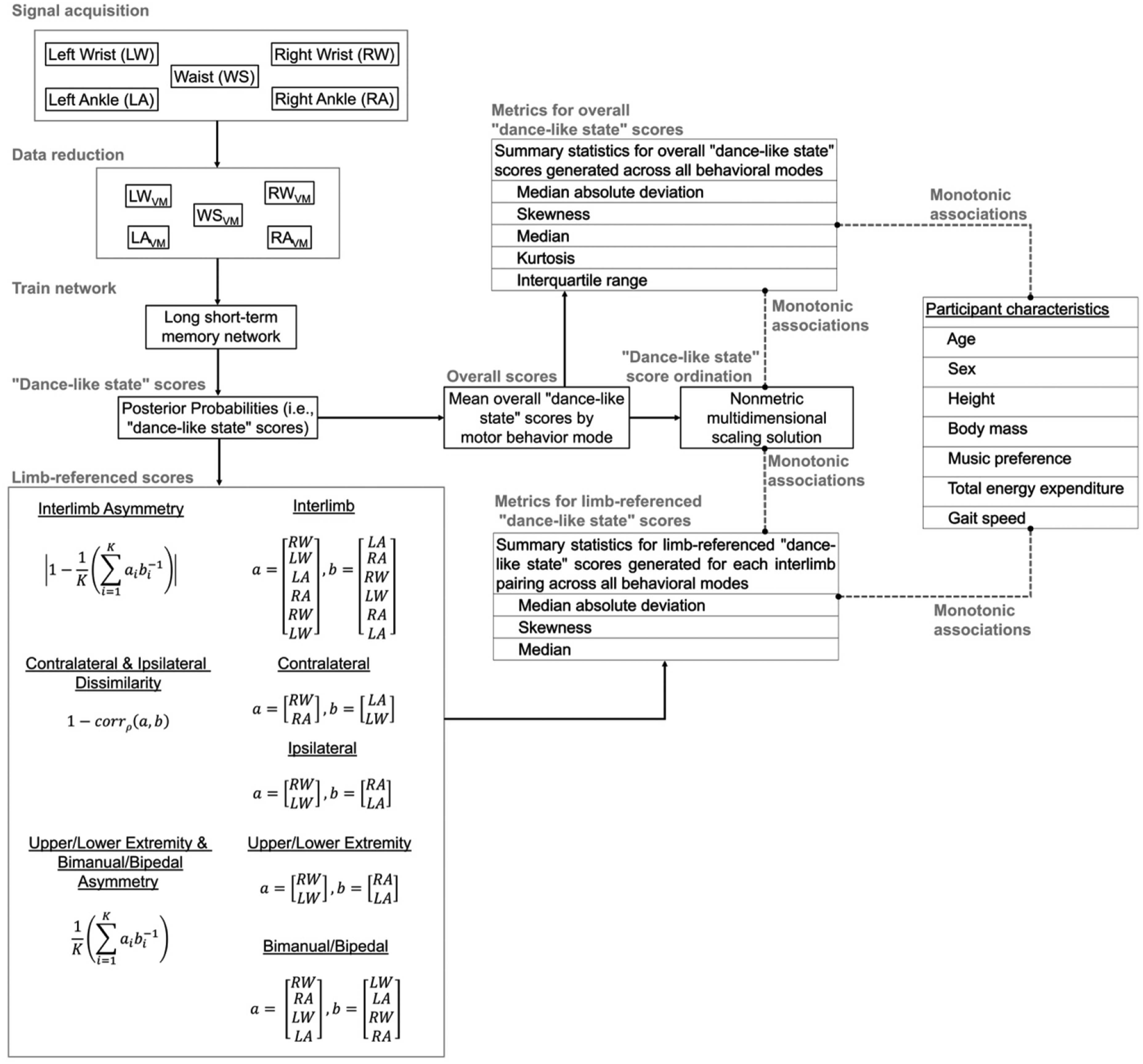
Conceptual mapping of “dance-like state” scores to participant-level sociodemographic and anthropometric characteristics, physical activity behavior indicators, and music preference information.
The significance level was established a priori at
Results
Toward facilitating wholistic interpretation of a novel measure of dance behavior, results below are presented in three parts—(1) the performance of an LSTM network trained to detect dance behavior using accelerometers, by device placement and combination; (2) the reliability of posterior probabilities generated using the trained LSTM network; and (3) an exploratory mapping of LSTM network-derived posterior probabilities (i.e., “dance-like state” scores) to (a) participant characteristics, and (b) participant-level “dance-like state” score summary statistics that were calculated using “dance-like state” scores respectively generated for each subject.
Participants [80.5% (33) female], ages 18–39 [41.5% (17)], 40–59 [39% (16)], and 60 + years old [19.5% (8)], reported a range of 0 to 56 years of prior dance training experience. On average, BMI was 24.8 (4.5) kg/m2, and the average height and body mass were 165.0 (7.5) cm and 68.0 (14.6) kg.
Device placement and LSTM performance
The LSTM network was trained to recognize free-form dance behavior using accelerometers worn across multiple locations on the body. Table 1 shows that the cross-validated classification accuracy (91.5%) and F1-score (0.88) were highest when accelerometer data from all locations—both wrists, both ankles, and the waist—were simultaneously included as inputs within the LSTM network. The LSTM network with the second-best performance was trained using data from both ankles only; followed by the use of accelerometer data recorded at both wrists; and the poorest performance was observed when the LSTM network was trained using data from a single accelerometer that was worn on the waist.
Cross-validated performance of a dance recognition model by device placement.
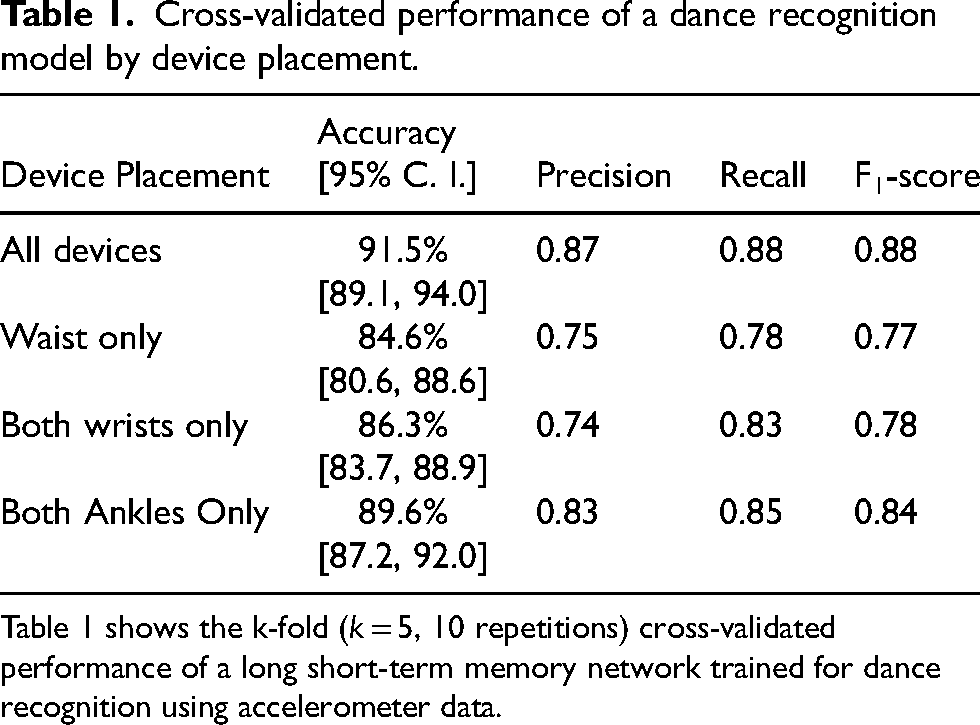
Table 1 shows the k-fold (k = 5, 10 repetitions) cross-validated performance of a long short-term memory network trained for dance recognition using accelerometer data.
When using data from all device locations, the median misclassification rate (i.e., percent error) observed across conditions was 4.8% (4.5). Results from the rank sum test showed that the overall percent error was not significantly different (p > 0.05) between female [4.9% (6.3)] and male [4.2% (2.9)] participants. Furthermore, robust linear regression results showed, on average, covariate-adjusted percent error [6.0% (0.6)] and age were significantly associated (t41 = 2.38, p = 0.022), as every 1-year increase in age above its mean (44.5 years) was associated with a 0.09(0.04) increase in the overall percent error (Adj. R2: 0.13). However, after adjusting the robust linear regression model for age and years of professional dance training experience, there were no significant associations (p > 0.05) found between percent error and any model covariates (Adj. R2: 0.19).
Reliability of posterior probabilities generated from an LSTM network
Posterior probabilities from the trained LSTM network (i.e., “dance-like state” scores) were then evaluated as a novel movement quality metric. During sitting, standing, and walking bouts, the median posterior probability that a 1 s motor behavior episode was classified as dancing, when generated using the LSTM network trained with sequence data from all devices, was 0.01 (0.05), with a minimum posterior probability of 0 and a maximum of 0.62. During free-form dance bouts, the median posterior probability that a 1 s motor behavior episode was detected as dancing was 0.93 (0.13), with a minimum posterior probability of 0.29 and a maximum of 0.99. The mean overall posterior probability for each 5-min activity period is presented in Table 2.
Mean overall “dance-like state” scores across time periods, and intraclass correlation coefficients (ICC) calculated for “dance-like state” scores generated across multiple activities.
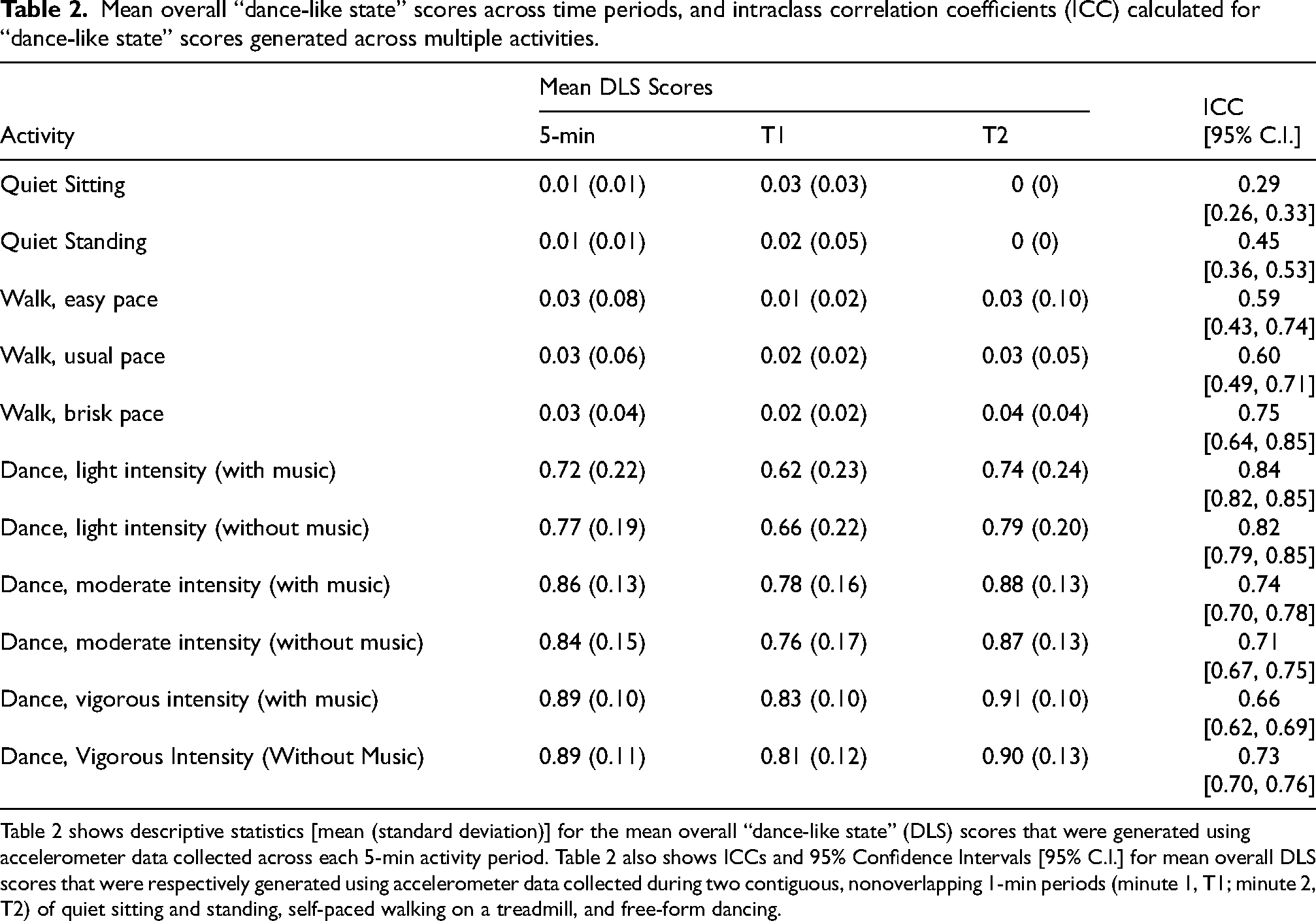
Table 2 shows descriptive statistics [mean (standard deviation)] for the mean overall “dance-like state” (DLS) scores that were generated using accelerometer data collected across each 5-min activity period. Table 2 also shows ICCs and 95% Confidence Intervals [95% C.I.] for mean overall DLS scores that were respectively generated using accelerometer data collected during two contiguous, nonoverlapping 1-min periods (minute 1, T1; minute 2, T2) of quiet sitting and standing, self-paced walking on a treadmill, and free-form dancing.
Figure 2 shows the posterior probability that a given motor behavior episode was detected as dancing relative to the norm of the jerk, as measured by accelerometers worn on the upper extremities (i.e., both wrists), lower extremities (i.e., both ankles), and the waist. When the norm of the jerk was low (normalized jerk vector magnitude < 0.05), as measured by the waist-worn accelerometer, greater relative jerk detected at the ankles (normalized jerk vector magnitude > 0.3) reflected higher posterior probabilities that a given motor behavior episode was classified as dancing in contrast to when jerk was detected at the wrists within the same range (Figure 2E and F).
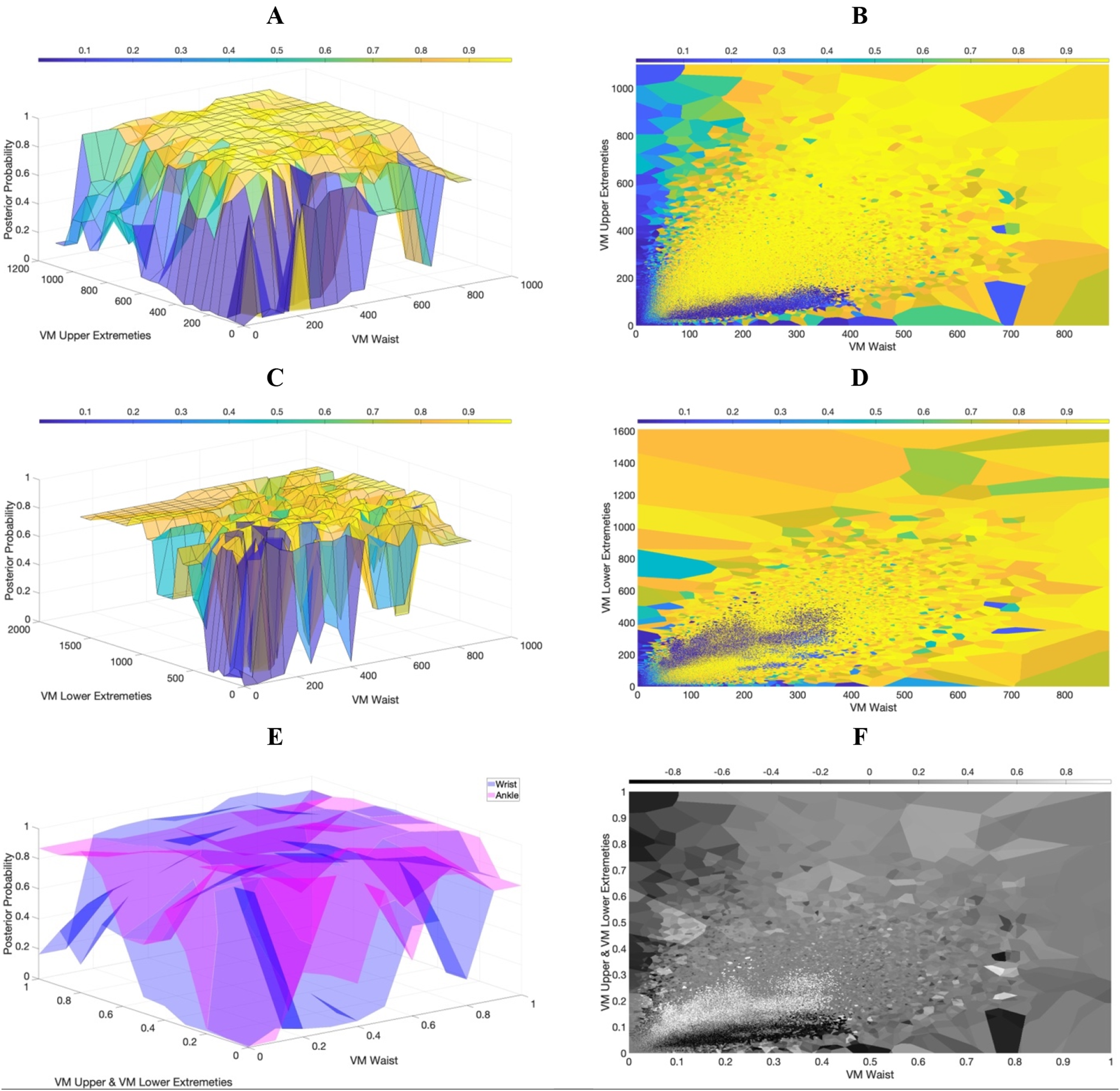
Distribution of LSTM posterior probabilities in relation to accelerometer signals recorded at the upper extremities (both wrists), lower extremities (both ankles), and the waist.
For each observed motor behavior, Table 2 reports the ICC for posterior probabilities (i.e., “dance-like state” scores) that were generated from the trained LSTM network using accelerometer data that were recorded across contiguous 1-min observational periods. Results from the Spearman-Brown analysis showed that lengthening the observational window to ≥ 2 min resulted in “dance-like state” scores with sufficient reliability (r ≥ 0.80) across all respective motor behaviors reported in Table 2.
“Dance-like state” score summary statistics
Similarities between “dance-like state” scores generated during each of the 5-min activity bouts were explored among n = 35 adults using NMDS.
Ordination of overall “dance-like state” scores
Analysis of proximities between “dance-like state” scores using NMDS (model squared stress: 0.048) yielded a solution with three interpretable dimensions, as shown in Figure 3. Coordinates associated with each of the three NMDS dimensions are presented in Supplemental File 1. Interpretations for each dimension of the NMDS solution were determined using the coordinates presented in Supplemental File 1, and the interpretations for each dimension were as follows:
Dimension 1: “Gross Motor Pattern”—appears to be associated with whether a gross motor pattern tended to resemble more quotidian behavior (> 0); versus free-form dancing (< 0). Dimension 2: “Relative Limb Phrasing”—appears to be associated with whether motor behavior tended to include locomotion (e.g., walking) or emphasize lower extremity phrasing (< 0); versus when motor behavior tended toward using a stationary base of support or emphasized upper extremity phrasing (> 0). Phrasing may be defined as the relative contribution of each motor behavior to the perceived meaning of a motor sequence; phrasing may also refer to emphases observed within a sequence of motor behaviors.
33
Dimension 3: “Music/Usual Cadence”—appears to be associated with whether the frequency of motor behavior (e.g., arm swing or step rate during walking) tended to align with one's usual cadence or when dancing in the presence of self-selected music (> 0); versus dancing in the absence of music or when engaging in motor behavior at a frequency that tended to diverge from one's usual cadence (e.g., brisk walking)/no cadence (e.g., sitting and standing) (< 0).
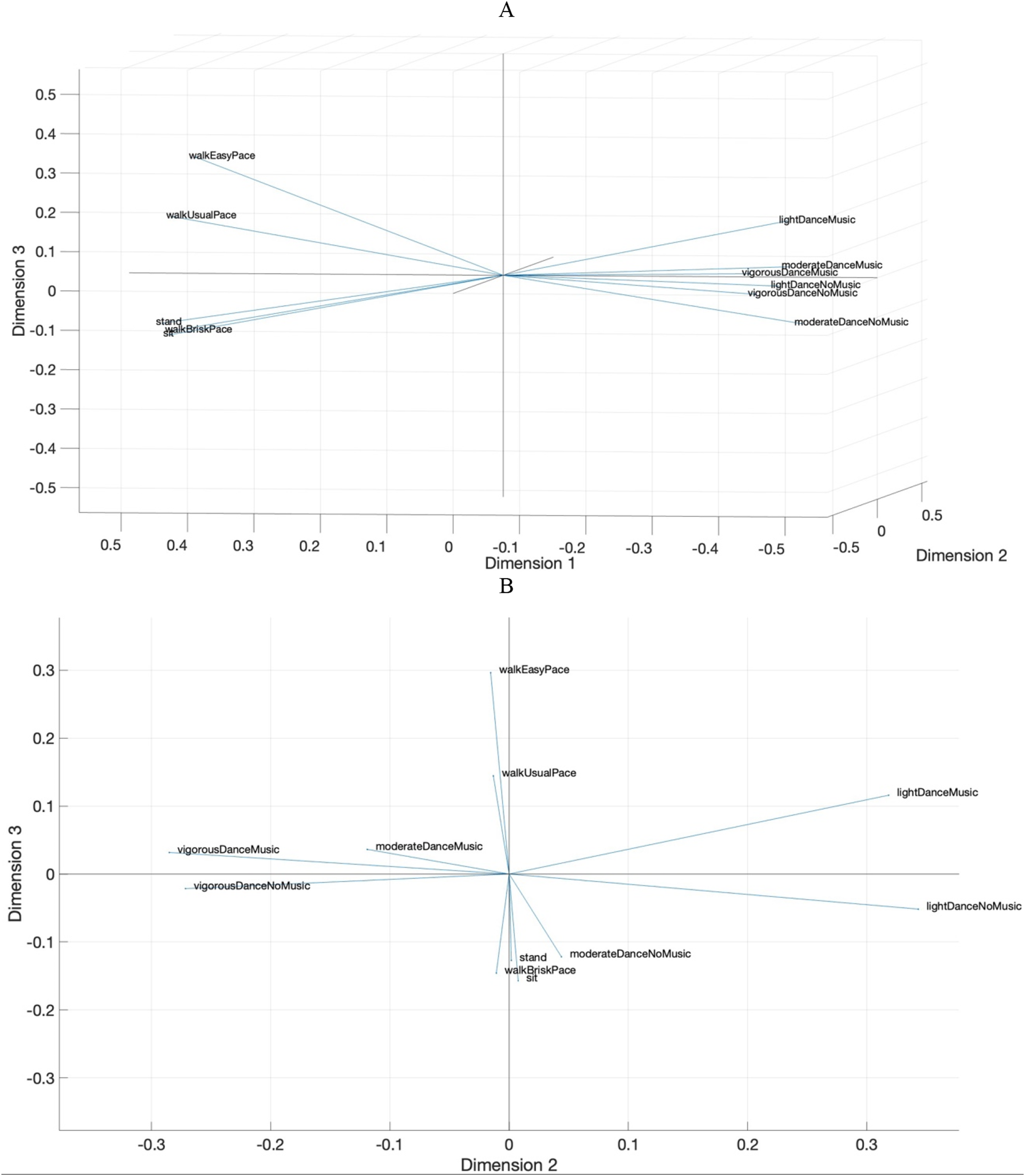
Biplot for a 3-dimesional nonmetric multidimensional scaling (NMDS) solution for “dance-like state” scores generated across various modes of motor behavior.
Associations were further explored between DLS scores, sociodemographic and anthropometric characteristics, and motor behaviors observed in the laboratory.
NMDS dimensions and overall “dance-like state” score summary statistics
Average treadmill speeds for each self-paced walking condition were—easy pace: 2.0 (0.2) mph, moderate pace: 2.6 (0.3) mph, and brisk pace: 3.4 (0.4) mph. Across all walking and free-form dance conditions, mean total energy expenditure was 246 (54) kcal. The median preferred music tempi during self-determined moderate and vigorous dancing, respectively, were 122 (32) bpm and 123 (41) bpm. At the group level, the median preferred music mode during self-determined moderate intensity dancing tended toward minor keys [-0.06 (0.16)], and the median preferred music mode during self-determined vigorous intensity dancing reflected neither major nor minor keys [0 (0.14)].
Table 3 shows associations between each NMDS dimension and a panel of robust summary statistics that were calculated for each participant by using individual-level “dance-like state” scores observed across each condition. Additionally, Table 3 shows associations between individual-level “dance-like state” score summary statistics, sociodemographic and anthropometric characteristics, physical activity behavior indicators, and music preference information. Supplemental File 1 reports 95% C.I. for
Associations between participant-level “dance-like state” score summary statistics and “dance-like state” score NMDS dimensions, in addition to sociodemographic and anthropometric characteristics, physical activity behavior indicators, and music preference information.
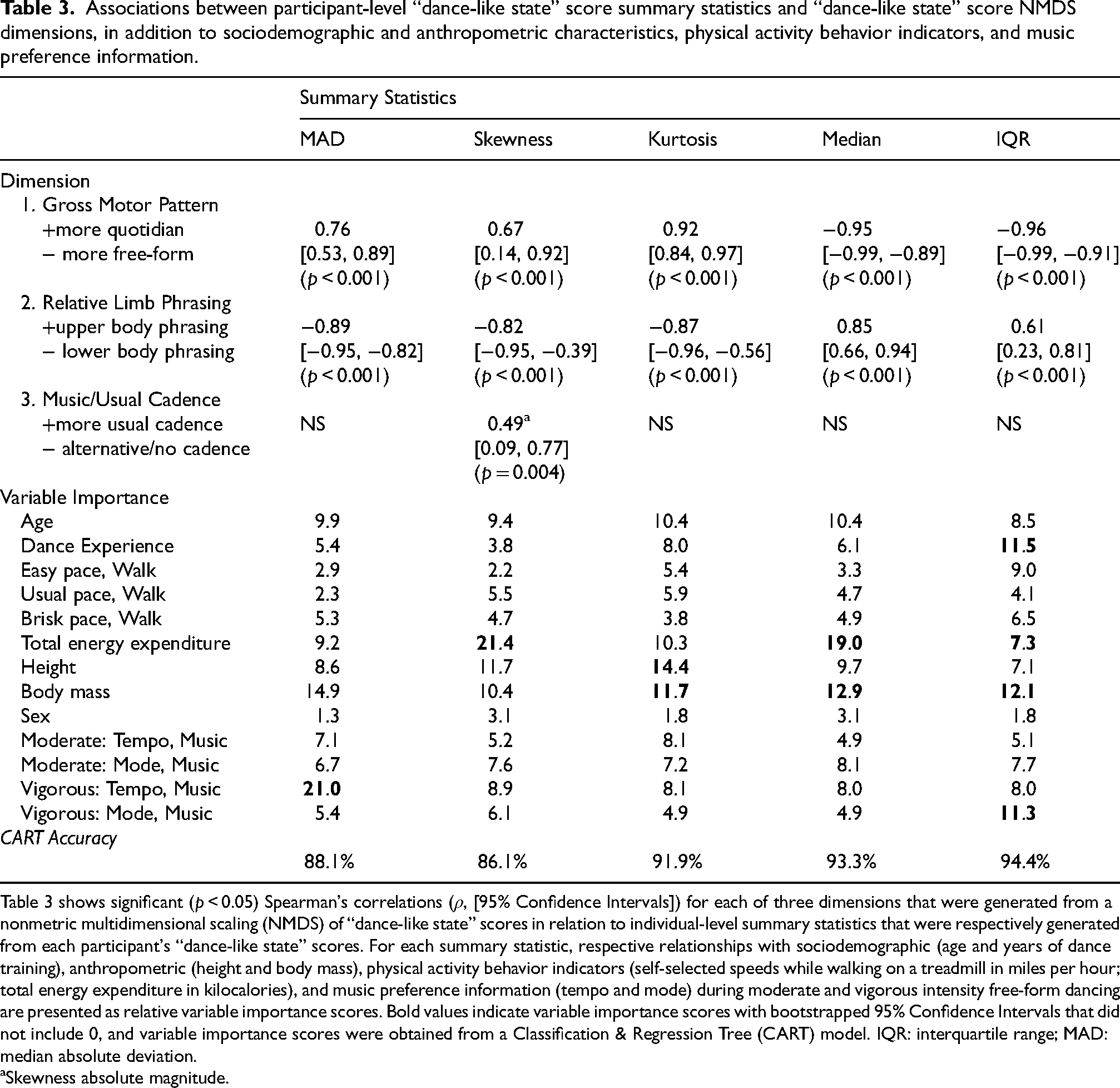
Table 3 shows significant (p < 0.05) Spearman's correlations (
Skewness absolute magnitude.
Participant order along the “Gross Motor Pattern” NMDS dimension (Dim. 1) was positively associated with both the overall “dance-like state” score median absolute deviation, skewness, and kurtosis (
Results for the limb-referenced “dance-like state” scores are presented in Supplemental File 2.
Discussion
This study intended to calibrate a dance detection algorithm using accelerometer data that were collected among adults ages 18 to 83 years old with and without prior dance training experience. The long short-term memory network that was trained to detect dance behavior in this study achieved very good to excellent classification accuracy when five accelerometers were used for training the network. Furthermore, posterior probabilities generated from the LSTM network across a range of motor behaviors were shown to be reliable when averaged over two-minute periods. An exploratory mapping of “dance-like state” scores (i.e., posterior probabilities generated from the trained LSTM network) showed that “dance-like state” score summary statistics were associated with sociodemographic and anthropometric characteristics, physical activity behavior indicators, and music preferences among young to older adults. These results show that the LSTM network presented in this study may serve as a useful model in future studies and applications that intend to detect dance behavior, and that “dance-like state” scores are a reliable metric for describing movement qualities that are dually associated with dance behavior and participant-level factors. Future studies on the relationship between cognitive health and participation in dance among older adults, those with mild cognitive impairment, Alzheimer's disease or dementia are needed to further explore the use of DLS scores to monitor motor behavior qualities during dance-based interventions.
The LSTM network that was trained to detect free-form dance behavior in this study using a total of five accelerometers (one on each wrist, one on the waist, and one on each ankle) achieved excellent classification accuracy (91.5%) within a cohort of 18- to 83-year-old adults with a range of 0 to 56 years of dance training experience. When trained using accelerometer data that were respectively acquired at either both ankles or both wrists, LSTM network performance (accuracy 86.3% to 89.6%) approached that of the network trained using five devices. Though this study did not generate posterior probabilities from the LSTM network that was trained using ankle accelerometer data only, the performance of the network trained using ankle data suggests that collecting accelerometer data at the ankles alone may be a useful way to achieve very good classification accuracy within dance recognition applications when study limitations prohibit the use of five devices per participant. LSTM network performance was worst when the network was trained using data from only a single accelerometer worn on the waist. In this study, the norm of the signal jerk was used to train an LSTM network to detect dance behavior; however, prior studies that have used waist- or thigh-worn devices have shown that acceleration-based metrics may outperform jerk-based metrics when training models using accelerometer data acquired from these respective device placements. 34 Contrastingly, studies that have used jerk-based metrics to process accelerometer data acquired at the extremities have found, as in this study, that jerk provided sufficient information for accurate classification of the target behavior.22,23 The results reported in this study, and in others, collectively suggest that additional research may be needed to identify the signal feature sets that offer the most discriminative information when training respective classification models, with specific attention to where devices are placed on the body and the range of motor behaviors to be identified when determining discriminative performance. Nevertheless, the LSTM network trained using jerk-based metrics in this study is a valid classifier of dance behavior among young to older adults.
Additionally, this study found that posterior probabilities obtained from the trained LSTM network were reliable (r > 0.80) when averaged over a 2-min period. From an applied perspective, dance bouts may include a wide range of motor behaviors, including sitting and standing. In this study, assessing the reliability of posterior probabilities that were generated across a range of behaviors that are typically observed in dance contexts afforded further support for the use of “dance-like state” scores to characterize motor qualities, in reference to free-form dance, using accelerometry. The magnitude of the ICCs calculated for DLS scores across free-form dance bouts were descriptively higher (0.66 to 0.84) than those calculated for the warm-up bouts (0.29 to 0.75). Prior studies that have used accelerometers to quantify sedentary and physical activity behaviors have shown that the ICC magnitude may be associated with overall device wear time when calculating accelerometer-based metrics. 10 In our study, all participants engaged in equal durations of all activities; therefore, wear time was likely not a determinant in the lower ICCs observed during quiet sitting. Existing studies that have presented dance detection algorithms for accelerometer applications with very good to excellent performance have mainly focused on identifying specific dance forms and dance actions 4 or on feature extraction. 35 Thus, the dual use of the LSTM network in this study to detect free-form dancing using accelerometry, in tandem with utilizing LSTM network posterior probabilities to characterize motor behavior quality, represent novel applications of the LSTM network for implementation in future studies of dance behavior.
Moreover, previous research on dance behavior has shown that jerk may provide relevant information for analyses of movement quality, 24 and characterizing movement quality was a key interest in this present study alongside the task of dance detection. Ordination of overall “dance-like state” scores using nonmetric multidimensional scaling resulted in a three-dimensional solution, and each dimension appeared to reflect a movement quality. These three movement quality dimensions represented overall gross motor patterns, relative phrasing of the upper and lower extremities, and musicality/cadence. The use of jerk in this study resulted in “dance-like state” score summary statistics that were both meaningfully associated with participant characteristics and broadly related to the three movement quality dimensions derived using ordination. Overall “dance-like state” score summary statistics were associated with total energy expenditure during data collection, as well as age, body mass, height, and dance training experience. Given that absolute physical activity intensity is known to be associated with factors such as age and body mass, 36 the reported associations between “dance-like state” scores and these participant-level characteristics provide support for “dance-like state” scores as being a metric associated with energy expenditure and related sociodemographic and anthropometric factors across adult development. Furthermore, respective associations between DLS scores, music preferences, and dance training experience provide preliminary evidence that DLS scores may be sensitive to differences in motor learning exposures and correlates of motor performance.
Prior studies on human movement quality have similarly used robust statistics, such as the median and interquartile range, to calculate metrics for characterizing human movement quality using sensor data. 37 These studies have mostly used expert ratings of motor behavior, comparative performance of a given motor behavior between experts and non-experts, or rhythm and timing during motor performance to calibrate movement quality metrics from what would otherwise be general summary statistics of kinematic or kinetic features of human movement such as joint angles, angular acceleration, and torque. In this study, however, summary statistics that were used to determine movement quality were calculated from a novel metric (i.e., “dance-like state” scores) that was specifically generated from accelerometer data to represent features that are intrinsic to free-form dance behavior. As such, “dance-like state” score summary statistics necessarily represent a measure of movement quality in relation to free-form dancing. Additionally, as an alternative to defining movement quality by asking experts to rate motor performance quality 33 or a participant's level of expertise, 37 this study used a data-driven, unsupervised learning approach to identify movement qualities across a range of behaviors. The nonmetric multidimensional scaling solution in this study, which revealed three (3) dimensions of motor behavior that “dance-like state” scores appear to represent, was interpreted by an expert in dance and movement analysis (AKM), thus an expert evaluator approach was dually integrated into this study design as in others. Notably, study participants often chose to hold onto the handrails while walking at a brisk pace on the treadmill, which may have affected the unsupervised machine learning solution which was derived using accelerometer data collected at the waist, wrists, and ankles. Future studies should repeat the unsupervised learning approach implemented in this study using a wider range of dance styles to further compare movement qualities across dance styles using “dance-like state” scores.
As noted previously, this study used a jerk-based metric as the predictor of interest when training each respective LSTM network. Though the use of jerk-based metrics aligns with prior studies of dance or activity recognition,21–24 the use of this measure may also limit generalizability of these findings to other calibration studies that have similarly utilized jerk-based metrics. This is because studies have shown that acceleration- versus jerk-based metrics may lead to differential model performance.34,38 Similarly, the specific activities, the accelerometer brand, and sampling frequencies used in the design of this study may limit generalizability to studies with a similar design. 39 The cross-validated results presented in this study represent a range of behaviors from sitting and standing, to typing on a computer or using a mobile phone, to walking on a treadmill and free-form dancing among a cohort of 18- to 83-year-olds. Physical activity behavior develops across the lifespan, 40 thus the models and related results presented in this study may be specific to dance behavior as observed among adults. Thus, it is suggested that future studies calibrate and evaluate “dance-like state” scores for children and adolescents for further investigation of the metric. Though many dance styles were featured within the free-form dance bouts recorded in this study, and were thus used to train the LSTM network, the performance of the LSTM network trained in this study as applied to a singular dance style (e.g., ballroom, tap, or ballet) is presently unknown. Additional studies are needed to determine if the free-form dance classifier presented in this study can generally be applied to accelerometer data in order to detect dance behavior when the style of dance under investigation is codified or limited to a single form of dance. Relatedly, a major strength of this study is that participants were invited to engage in a wide number of dance expressions following their own interests. Thus, the “dance-like state” scores presented in this study were generated using kinematic features of human movement that were recorded across a wide variety of dance expressions within a cohort of young to older adults. Another strength of this study is that the LSTM network was trained using data from adults with and without dance training experience, which means that the data collected represent a wide range of motor learning exposures that may impact motor performance during dance behavior. The free-form dance detection models were calibrated using data that were recorded as adults danced either in the presence or absence of music, given that kinematic analyses of dance have suggested that musical features such as rhythm and groove,41,42 or playing familiar music versus unfamiliar music, 43 may affect motor performance. To that end, the LSTM network presented in this study appears to be a valid and reliable classifier for detecting free-form dance behavior in the presence or absence of music among adults without and without prior dance training.
Results from this study suggest the use of five accelerometers when researchers seek to optimize classification accuracy for free-form dance detection using the LSTM architecture specified in this study. All of the trained LSTM networks presented in this study are available for researchers to further utilize and test in future studies that seek to quantify and characterize motor behavior, in reference to free-form dancing, using accelerometry (https://doi.org/10.5281/ZENODO.15151257). As suggested in multiple reviews on dance and cognition,1–3,14 future studies on dance and brain health should include within their design not only the duration and frequency of dance exposures, but should also characterize the types of movement expressed during each dance exposure in order to advance what is known about dance and its effects on cognitive and brain health. Though evidence suggests that participation in dance, broadly, is positively associated with psychological and cognitive health outcomes,1–3 additional research is needed to more carefully define associations between dance, a highly heterogenous behavior, and health. Future studies should explore the use of “dance-like state” scores to quantify and characterize dance exposures in studies of cognitive and brain health among adults. Researchers studying dance in relation to cognitive health among older adults, adults with mild cognitive impairment, Alzheimer's disease or dementia should explore the use of DLS scores to monitor and compare motor behavior qualities observed in dance-based interventions over time and across participants.
Conclusions
Among 18- to 83-year-old adults, the range of motor activities observed during sitting, standing, walking, and dancing were sufficiently diverse for training a long short-term memory network to classify gross motor behavior as free-form dancing using accelerometry data with excellent accuracy. As tested among a cohort of adults with 0 to 56 years of dance training experience, posterior probabilities (i.e., “dance-like state” scores) that were generated from the long short-term memory network were reliable when averaged over 2-min periods. LSTM network performance was best when a total of five devices were used to calibrate the network. “Dance-like state” score summary statistics that were calculated across the range of motor behaviors observed in this study were associated with participant age, dance training experience, height, body mass, gait speeds, music preference, and total energy expenditure. The LSTM network trained using accelerometer data in this study appears to generate a novel metric that is valid and reliable for use in free-form dance detection applications and for characterizing motor behavior in reference to dancing. Additional research on motor behavior qualities observed during dance is needed to further characterize the cognitive health benefits associated with participating in dance-based interventions among adults with mild cognitive impairment, Alzheimer's disease or dementia.
Supplemental Material
sj-docx-1-alz-10.1177_13872877251336482 - Supplemental material for Use of posterior probabilities from a long short-term memory network for characterizing dance behavior with multiple accelerometers
Supplemental material, sj-docx-1-alz-10.1177_13872877251336482 for Use of posterior probabilities from a long short-term memory network for characterizing dance behavior with multiple accelerometers by Aston K McCullough in Journal of Alzheimer's Disease
Supplemental Material
sj-docx-2-alz-10.1177_13872877251336482 - Supplemental material for Use of posterior probabilities from a long short-term memory network for characterizing dance behavior with multiple accelerometers
Supplemental material, sj-docx-2-alz-10.1177_13872877251336482 for Use of posterior probabilities from a long short-term memory network for characterizing dance behavior with multiple accelerometers by Aston K McCullough in Journal of Alzheimer's Disease
Footnotes
Acknowledgments
We are grateful to all participants who volunteered their time in the study.

Ethical considerations
The University of Massachusetts Amherst Institutional Review Board approved study protocol IRB #2070 on 1 October 2021. Respondents gave verbal and written consent before any data were collected.
Consent to participate
All study participants provided verbal and written informed consent before any data were collected.
Author contributions
Aston McCullough (Conceptualization; Data curation; Formal analysis; Funding acquisition; Investigation; Methodology; Project administration; Resources; Software; Supervision; Validation; Visualization; Writing – original draft; Writing – review & editing).
Funding
The authors disclosed receipt of the following financial support for the research, authorship, and/or publication of this article: The study was funded in part by an award from the National Endowment for the Arts (Award #: 1879058-38-C-21) and an award from the National Institutes of Health (Award #: 1K12TR004384).
Declaration of conflicting interests
The author declared no potential conflicts of interest with respect to the research, authorship, and/or publication of this article.
Data availability
Study data presented in this article may be obtained upon submitting a request to the corresponding author.
Disclaimer
The opinions expressed are those of the author and do not represent the views of the National Endowment for the Arts (NEA) Office of Research & Analysis or the National Endowment for the Arts. The NEA does not guarantee the accuracy or completeness of the information included in this material and is not responsible for any consequences of its use.
Supplemental material
Supplemental material for this article is available online.
References
Supplementary Material
Please find the following supplemental material available below.
For Open Access articles published under a Creative Commons License, all supplemental material carries the same license as the article it is associated with.
For non-Open Access articles published, all supplemental material carries a non-exclusive license, and permission requests for re-use of supplemental material or any part of supplemental material shall be sent directly to the copyright owner as specified in the copyright notice associated with the article.
