




Abstract
This article sets out to examine the politicising and depoliticising effects of the various stories that were deployed by the UK government in its response to the coronavirus crisis during its daily press briefings over a 2-month period between 16 March and 16 May 2020. In doing so, we identify four key narratives: (1) unprecedented government activism; (2) working to plan; (3) national security, wartime unity and sacrifice; and (4) scientific guidance. Through a quantitative and qualitative study of the deployment of these narratives, we attempt to further recent theoretical insights on depoliticisation by noting that the COVID-19 crisis produced a particular type of crisis moment in which the government was forced to respond in ‘real time’ to a set of circumstances which were rapidly changing. As such, this made it much more difficult to control the various stories they wanted to tell and therefore find a coherent ‘anchor’ for their politicising and depoliticising strategies. This led to some deft discursive footwork as the government sought to pass the ball of responsibility between various groups of actors in order to rapidly and continually shift the balance between avoiding blame and taking credit.
Introduction
This article contributes to recent debates on depoliticisation by analysing the UK government’s attempts, during the COVID-19 crisis, to use its daily press briefings to steer a balance between taking credit and shifting blame for its response to the crisis. We build on recent contributions to the depoliticisation literature: in particular, the work of Fawcett and Wood (2017), who contend that the meta-governance of complex policy issues often involves policy actors ‘hopping’ between different stories in order to create interlocking politicising and depoliticising effects. Building on this, our own quantitative and qualitative study of the government’s daily briefings in the early part of its pandemic response highlights the various stories that were deployed by UK ministers as they sought to manage their response to the crisis in an environment of fast-changing policy complexity.
Our analysis identifies four primary stories that were deployed by ministers in the daily press briefings over a 2-month period, from 16 March to 16 May 2020: (1) unprecedented government activism; (2) working to plan; (3) national security, wartime unity and sacrifice; and (4) scientific guidance. In particular, we highlight the politicising and depoliticising effects of these narratives. In doing so, we contribute to the wider theorisation of depoliticisation in three key ways. First, by strengthening claims within recent literature that depoliticisation should be viewed, in some instances, as an ongoing discursive process rather than a single governing act. In this sense, we show how government rhetoric and discourse can be used to define the parameters of political action and the distribution of responsibility, credit and blame for particular policy problems and solutions. Second, we provide empirical weight to some claims within the literature that politicisation and depoliticisation should not be viewed in a binary way, as mutually exclusive processes and political strategies. Rather, we show that the stories deployed by government actors can have simultaneous politicising and depoliticising effects, as policymakers ‘hop’ between politicising and depoliticising stories. Third, our analysis aims to open up a new area of inquiry within the depoliticisation literature, around the variable effects of political time on a government’s ability to steer a coherent and consistent depoliticisation narrative. While much of the existing literature examines depoliticising strategies which operate in the relative long – or medium – term of policymaking (such as passing control of monetary policy to an independent central bank), our own case study highlights a (de)politicising process being played out in a real-time, rapidly shifting, crisis moment.
Our findings show that the COVID-19 pandemic created a temporal context in which ministers were forced to react swiftly and on a daily basis to a set of circumstances which were constantly changing. In such a context, the attempt to construct a coherent narrative to explain the government’s response was characterised by frenetic and disjointed discursive ‘hopping’ as ministers struggled to control the various stories they wanted to tell. On one hand, ministers sought to depoliticise their actions through repeated assertions that decisions were being guided by the scientific and medical advice given to the government by its committee of experts. On the other hand, they attempted to politicise their efforts by maximising credit for their handling of the crisis by hailing a range of ‘world leading’ activist measures. The result was a constantly shifting set of (de)politicising narratives as the government sought to rapidly shift the balance between avoiding blame and taking credit.
Analysing depoliticisation
Recent years have seen a burgeoning of literature on the functioning of depoliticisation in processes of democracy, governance, statecraft, and political management. In contrast to ‘politicised’ modes of governance, in which officials assume direct control and responsibility for policymaking decisions, depoliticisation is characterised as the removal of political issues from the arena of democratic control and accountability, relegating them to ostensibly technocratic concerns or the whims of fate. Depoliticisation has thus been defined as ‘the process of placing at one remove the political character of decision-making’ (Burnham, 2001: 127), ‘the art of suppressing the political’ (Rancière, 2007: 11), and ‘the denial of the choice, agency, and deliberation that are necessary in any democratic society’ (Fawcett et al., 2017: 6; see also Hay, 2007; Jenkins, 2011).
Buller et al. (2019) identify two broad strands of depoliticisation literature. The first views depoliticisation as a systemic condition affecting all modern democracies, involving a widespread contraction of spaces and opportunities for deliberation, participation, and dissent. Modern forms of technocratic governance, often viewed as driven by neoliberalism, are thought to have produced a post-political, or post-democratic condition, in which the ability of citizens and groups to exercise political efficacy and agency has become severely circumvented (see Boggs, 2000; Ranciere, 2007; Wilson and Swyngedouw, 2015). Some authors have claimed that the democratic deficit arising from this post-political condition has helped fuel the recent growth in ‘anti-politics’, characterised by increased levels of public disillusionment, disengagement, and distrust of institutions and formal political authority (Fawcett et al., 2017; Hay, 2007).
The second (and more commonly applied) approach views depoliticisation as a form of statecraft, or governing strategy. Within this literature, the primary focus is placed on the activities of the state in shifting responsibility and foreclosing debates around key policy areas and wider political and socioeconomic developments. Select examples from a substantial corpus include the following: environmental governance and policymaking (Felli, 2015; Kuzemko, 2016), the impact of flooding (Wood, 2016), monetary and economic policymaking (Buller and Flinders, 2005; Kettell, 2008; Rogers, 2009), international development (Feldman, 2003), community development (Gaynor, 2011), social inequality and poverty (Etherington and Jones, 2018; Nisbett, 2017), Internet technologies (Hall, 2012), political participation (Fawcett and Marsh, 2014), and the management of economic crises (Burnham, 2014).
Scholars from both approaches have identified a variety of means by which depoliticisation can be achieved (for overviews, see Flinders and Buller, 2006; Hay, 2007; Wood and Flinders, 2014). One common method is the use of formal institutional mechanisms. Here, officials will ostensibly pass control of key policy issues to an independent body, such as a central bank or other regulatory regime, operating autonomously from, but within parameters determined by, government officials. Another common approach is the use of rules-based systems. In these, policy measures are constrained by a series of technocratic rules, such as monetary targeting or the setting of ‘key tests’ that need to be met before a policy direction can be altered. Institutional and rules-based approaches are more effective if they have a credible ‘anchor’ to enhance the credibility of the depoliticising tactic and thereby persuade citizens that the framework will be followed. Depoliticisation frameworks that are more costly to break – typically those embedded within international agreements and/or legally binding systems – are often viewed as carrying more credibility than those based upon purely domestic, self-imposed commitments or targets.
In a partial break from some of the more traditional accounts, recent work in this area has begun to move beyond the recognition of depoliticisation as a simple governmental ‘act’ (Fawcett and Wood, 2017). Instead, a growing number of authors now emphasise the role of discourse in helping to shape public perceptions and expectations around policy issues, thereby providing the context for politicising or depoliticising strategies (Hay, 2007; Jenkins, 2011; Watson and Hay, 2003; Wood and Flinders, 2014). The key point of this literature is to highlight the way in which political actors use a range of linguistic and rhetorical tools to shape perceptions and beliefs about the scope and content of the political. Typically, these seek to frame particular issues in a way that will enable state actors to identify core problems and challenges, set the boundaries of available potential solutions, and define whose responsibility it is to enact them. In this way, discourses and rhetoric can be employed to justify certain courses of action and inaction in ways that ultimately play out in the favour of policymakers (on framing see, for example, Chong and Druckman, 2007). In this respect, the core purpose of discursive depoliticisation is to restrict, constrain, or deny the use of agency, typically by framing a course of action as having no viable alternative. As Hay (2007) notes, this involves moving issues from the realm of deliberation to that of necessity and fate. Or, as Jenkins (2011: 160) puts it, ‘a strategy of depoliticisation entails forming necessities, permanence, immobility, closure and fatalism and concealing/negating or removing contingency’.
As such, this recent literature has tended to shift the focus onto the use of discourse as a ‘less formal way of governing’ (Fawcett et al., 2017: 6) and to emphasise its role in helping to shape perceptions of where responsibility for an issue lies. From this perspective, depoliticisation is a complex and often diffuse process which ‘occurs not from a point where a well-defined policy is “displaced,” but at the point at which an issue, ill-defined and poorly known, is narrated by the actors who have an interest in the outcomes that arise from responses to the issue’ (Fawcett and Wood, 2017: 220).
An important facet of the discursive approach is that processes of politicisation and depoliticisation can become intertwined and mutually reinforcing as responsibility is displaced from one arena, or set of actors, to another (Bates et al., 2014; Foster et al., 2014). Thus, it has become increasingly recognised that discursive strategies carry both politicising and depoliticising effects. This is particularly the case for complex policy dilemmas wherein ‘the responsibilities for particular policies within government, and indeed the nature of the issues themselves, are often not clear cut, but are evolving and complex’ (Fawcett et al., 2017: 21). This reflects a growing focus on how processes of politicisation and depoliticisation often become interlocked with one another within increasingly complex governance structures. One component of this is an emphasis on the interplay between politicisation and depoliticisation in the rolling out of new forms of neoliberal governmentality as the state displaces its own responsibility for tackling a range of social problems onto a range of ‘privatised’, and increasingly politicised technocratic bodies and an increasingly ‘socialised’ citizenry (Foster et al., 2014; Toplišek, 2018). Another strand of literature turns attention towards the so-called ‘meta-governance’ of complex policy issues. This is defined as ‘the governance of governance’ (Torfing et al., 2012), whereby state actors will attempt to steer or manage complex governance networks which are relatively self-regulating without assuming direct state control.
Building on the work of Sørensen (2006) and others, Fawcett and Wood (2017) make an innovative contribution to these debates by demonstrating the important role of ‘storytelling’ as a particular strategy that can be used by state and policy actors to help coordinate network interactions in areas of policy complexity. In their study of conflicts around the regulation of coal seam gas (CSG) in New South Wales, the authors show how government officials attempted to meta-govern the issue by proliferating three ‘stories’ around energy security, economic growth, and credible science. These stories allowed policy actors to ‘hop’ between the different issues, creating simultaneous politicising and depoliticising effects as policy actors were able ‘to use the same story to both deny and depoliticize the concerns of protestors against CSG extraction and at the same time to politicize questions of energy security, economic growth, and credible science’ (Fawcett and Wood, 2017: 217). The result was a situation in which pro-CSG extraction actors presented evidence designed to nullify opposition in the name of energy security, economic growth, and credible science, while politicising the need for action.
Our aim in what follows is to build on the discursive depoliticisation literature, especially the work of Fawcett and Wood (2017), by examining the politicising and depoliticising effects of the various stories that were deployed by the UK government in its response to the coronavirus crisis during its daily press briefings. In doing so, we aim to make three main contributions to the existing scholarship on depoliticisation: first, by providing strong empirical weight to the idea of depoliticisation as an ongoing and dynamic discursive process rather than a single governing act, and second, by providing added support to the growing idea within the literature that processes of politicisation and depoliticisation should not be viewed in a binary way, as mutually exclusive governing strategies. Our evidence here adds weight to previous claims that the government’s discursive handling of the COVID-19 crisis produced interlocking and simultaneous politicising and depoliticising effects. Third, we aim to add a novel strand to existing research, by highlighting the variable effects of political time on a government’s ability to steer a coherent (de)politicisation strategy and manage the balance between maximising credit for their actions, while displacing blame for any mistakes. In this vein, our findings show how processes of discursive ‘hopping’ can become more frenetic and disjointed during highly politicised crisis moments, where events are rapidly changing and where governments are forced to respond in real time.
Our findings show that the use of discursive depoliticisation is particularly apposite in the case of a national crisis, where a government is forced to respond quickly to exogenously driven events, but also enjoys a degree of leeway in shaping how those events are interpreted. In the context of a public health emergency, a discourse based on claims to be ‘following the science’ could be used to frame the political response as being driven by the advice that ministers were given by their experts, thereby helping to shield ministers from blame for any problems that might result from their decision-making. This is not to say that this discursive frame, which lay at the core of the government’s response to the COVID-19 crisis, simply sought to reduce the scope of government activity – indeed, it was also used to justify government interventions (such as imposing strict limits on public movements via a national lockdown) that in other circumstances would be considered extreme. By framing such measures as being effectively out of their hands, ministers sought to justify their response by foreclosing possible alternatives and by limiting their exposure to any unpopular consequences that could arise. Conversely, politicising discourses (emphasising interventionist steps, such as the introduction of a furlough scheme) were designed to draw credit for government actions and to frame these as the exercise of agency, as pro-active and discretionary choices that ministers had made.
To date, much of the existing literature has identified depoliticisation strategies that have been deployed in the relative long – or even medium – term of policymaking. However, the COVID-19 crisis presents us with a different type of case study. Here, the government was confronted with a fast-moving crisis moment, in which it was forced to constantly adapt its response, and narrate this to the public, on a daily basis. In a temporal context of an urgent national emergency (see also Jarvis, 2021), intense media scrutiny and a mounting set of problems and criticisms, it became much more difficult for government actors to control the various stories they wanted to tell. As our findings below highlight, this forced ministers into a frantic attempt to pass responsibility between a number of actors using a range of narratives designed to steer a delicate line between receiving credit for their emergency measures and distancing themselves from blame for a growing number of failures.
The coronavirus crisis
The COVID-19 crisis put the United Kingdom’s recently re-elected Conservative government under fierce pressure and media scrutiny. As the virus swept around the world following the initial outbreak in China at the end of 2019, ministers faced growing calls to introduce a national lockdown of a kind imposed in other countries amid fear that the National Health Service (NHS) would become overwhelmed. These calls were initially resisted. Instead, ministers issued advice on social distancing and made recommendations for home working and avoiding large crowds. This, however, proved to be untenable, and with rising public anxieties and panic buying in supermarkets, and with many businesses effectively shutting themselves down, the government finally introduced a national lockdown on 23 March – a full 12 days after the outbreak had been officially declared a pandemic by the World Health Organisation.
As the United Kingdom’s official death toll rose – reaching 44,000 by the end of June (the highest level in Europe and the second highest in the world behind the United States) – criticism of the government’s handling of the crisis began to mount, drawing unflattering comparisons to the way in which the situation was being handled in other countries, notably Germany and South Korea. The focus of much of this criticism centred on the lack of personal protective equipment (PPE) for health and care workers, the low levels of testing for coronavirus, the delay in introducing the lockdown, and a growing crisis around the rising numbers of deaths in care homes. In the midst of this escalating criticism, the PM, Boris Johnson, was admitted to intensive care with coronavirus, while his most senior advisor, Dominic Cummings, was also diagnosed positive, generating a sense of leadership crisis (for useful reviews, see Calvert et al., 2020; Knapton and Donnelly, 2020; Stewart et al., 2020). This impression was further fuelled by later revelations that Cummings had subsequently travelled 250 miles to his family’s estate in Durham, while infected by the virus, in clear breach of the government’s own lockdown restrictions.
The government’s attempts to meta-govern and coordinate a series of responses over a large number of policy areas were both highlighted and performed (on the performance of crisis, see Price, 2018) through a series of daily press briefings. Beginning on 16 March, these briefings were carried live by television, radio, and online media outlets, forming the central, flagship channel of information about the government’s handling of the crisis. The briefings were led by a minister (or the PM), accompanied by the government’s scientific and medical advisers (supplemented, on occasions, by figures from other key services). 1 Each briefing began with an opening statement from the minister, who explained the government’s latest steps and advice on coronavirus. This was followed by a presentation (typically an update on the progress of the virus, including statistics on numbers of deaths, infection rates, and testing) from the scientific and medical officials. These presentations were followed by a question-and-answer session from select journalists and (later) members of the public.
Briefing duties were shared between senior members of the government. Most briefings for the period in our sample were taken by the Health Secretary, Mat Hancock (who headed 14) and the Foreign Secretary, Dominic Raab (10), who deputised for the PM throughout his absence. The Prime Minister himself led nine briefings. A full breakdown of the numbers of briefings taken by ministers for the timeframe of this study is shown in Table 1.
Ministers leading the coronavirus daily briefings (16 March–16 May).
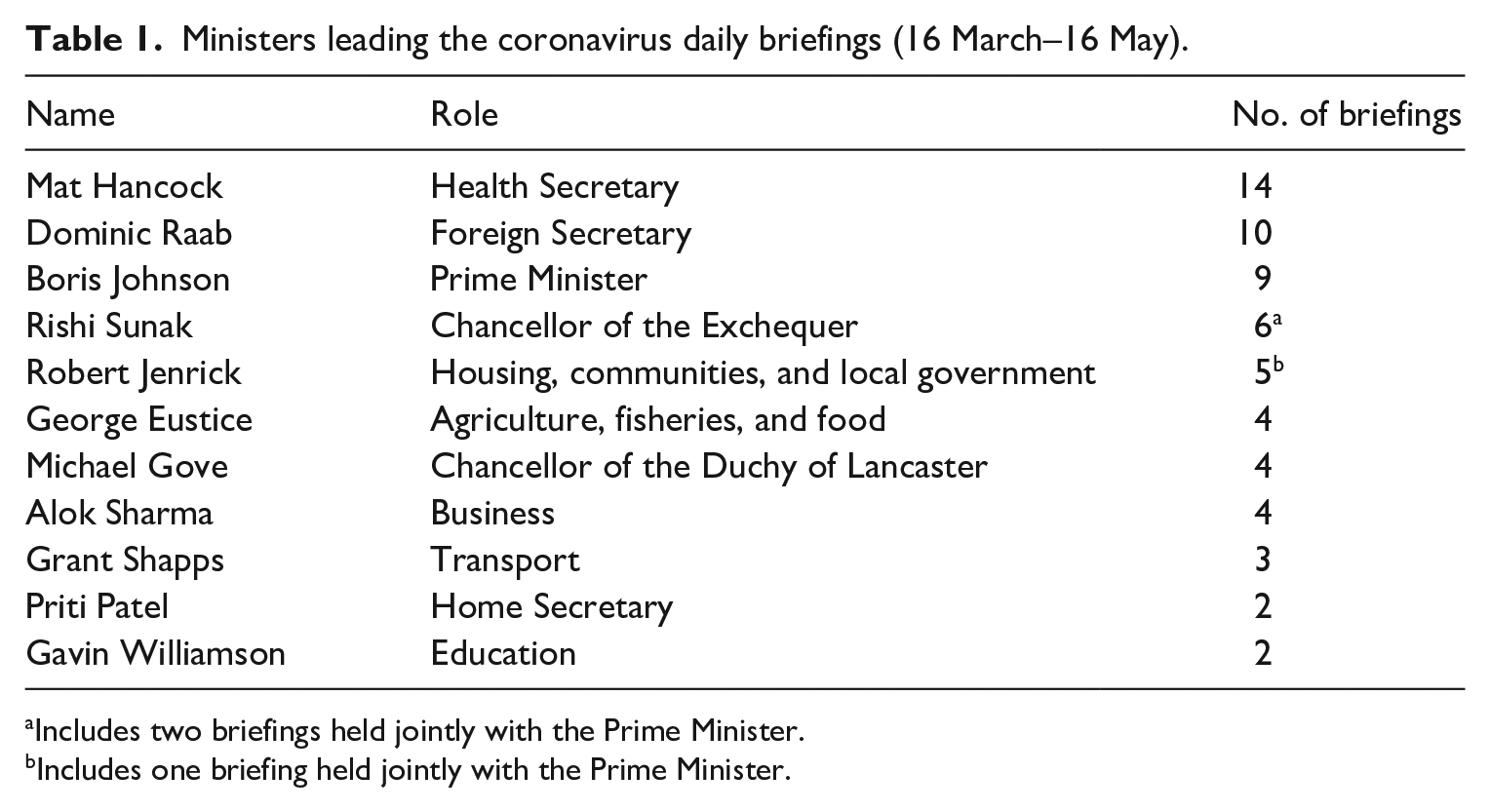
Includes two briefings held jointly with the Prime Minister.
Includes one briefing held jointly with the Prime Minister.
To examine the narratives deployed by ministers during these briefings, our study constructed a data set of all briefings for the 2-month period following their introduction (16 March–16 May). This gave a total sample of 60 briefings (there were no briefings on 23 March and 10 May, when the national lockdown and the easing of lockdown restrictions were announced in televised broadcasts by the Prime Minister). 2 Transcripts of these briefings were compiled using videos of the events hosted by media outlets (principally the Guardian, the BBC, and the Daily Telegraph) on YouTube. Third party software was used to strip out the automatically generated closed captions (subtitles) of the audio, and the resulting transcripts were checked against delivery to ensure that they provided an accurate account of what was said. 3 This process yielded a corpus of text amounting to some 433,000 words.
An inductive qualitative content analysis based on a close reading of this text was carried out to identify the core themes that were used by these actors to frame their attempts to meta-govern the crisis. This sought to draw out the principal narratives and discursive themes that officials used to frame the crisis and their response to it. Following the general literature on discursive depoliticisation, the analysis centred on the ways in which these frames either activated or circumscribed the degree of autonomy and agency in governmental decision-making. On one side, efforts to depoliticise the crisis would be expected to impose constraints on political agency using frames which emphasised ministers’ lack of any meaningful or effective choice in the strategies and policy direction they were pursuing. On the other hand, attempts to politicise certain issues would be expected to highlight the government’s own discretion in pursuing measures that involved government-led activism.
In all, our analysis identified four main stories:
Unprecedented Government Activism. This narrative centred on the idea that ministers were dealing with an entirely unprecedented situation and stood ready to take whatever measures were necessary in order to tackle the crisis. This was a story that promoted and talked-up a number of (claimed) successes, including the expansion of testing and the provision of radical intervention designed to save jobs and protect the economy.
Working to Plan. This narrative centred on the extent to which officials’ actions were part of a rationally unfolding, overarching, coherent plan of action, thereby creating a reassuring impression of governing competence, foresight, and readiness.
National Security, Wartime Unity, and Sacrifice. This narrative centred on the fact that the United Kingdom was confronted by a deadly opponent, requiring an urgent, wartime-type response promoting national cohesion.
Scientific Guidance. This narrative centred on the extent to which the government’s decisions were based on the advice of the government’s scientific advisers. By drawing on the epistemic status of science and medical expertise, ministers were able to make repeated claims that their decision-making at each stage of their response to the pandemic was being ‘guided by the science’.
Once these core themes had been identified, the narratives were operationalised by distilling them into a number of key terms and phrases. The narrative ‘working to plan’, for instance, was coded with the use of references to terms such as ‘plan/s/ing/ed’, ‘strategy’, ‘right time’, and ‘from the start’. The narrative ‘national security, wartime unity and sacrifice’ involved coding for militaristic metaphors and terms such as ‘mission’, ‘war’, ‘heroes’, and ‘national effort’. 4 Once the core narratives and phrases had been determined, we conducted a search of the transcripts to assess the frequency with which these terms were used by officials in the briefings. Terms were classified as belonging to a particular narrative only when they could be reasonably located within the parameters of that discourse. Thus, terms connected to ‘science’ were counted when they appeared in a context such as that of ministers being ‘guided by the science’ but not for descriptive references to the ‘Institute for Biomedical Science’. Similarly, the term ‘together’ was counted as part of a narrative of collective action when it featured in a setting such as ‘together, we will pull through’, but not when describing a medical trial that was ‘put together in just nine days’. Although this method did not allow us to capture the full variety of rhetoric that might be contained within a narrative, it enabled us to quantify their prevalence in a number of useful ways.
The initial coding process was undertaken by the corresponding author. Following the best practice guidelines set out by Lombard et al. (2002), the coding was then checked by the second author using a randomly chosen representative sample consisting of 10% of the total data set (also see O’Connor and Joffe, 2020). The intercoder agreement scores were calculated using Excel. The score for the subsample as a whole was 86%, meeting the generally accepted figure of 80% required for a valid coding process. The only specific coding category that failed to reach this threshold was ‘Unprecedented Government Activism’, which scored 78% (we do not consider this to be hugely detrimental, but it does perhaps highlight the need for caution when drawing conclusions for this particular coding category). The intercoder agreement scores for the other narratives were as follows: ‘Working to Plan’ (93%), ‘National Security’ (87%), and ‘Guided by the Science’ (81%).
Alongside the identification of these narratives, our analysis also compiled a quantitative overview of the frequency of their deployment in order to capture their development over time. To do this, the sample was divided into three separate periods. The first, from 16 March to 5 April (a total of 20 briefings), covered events from the start of the briefings, including the first 2 weeks of the national lockdown, up to Boris Johnson’s admission to hospital with Coronavirus. The second period, from 6 to 29 April (24 briefings), covered the intensification of the governing crisis and captured ministers’ response to growing criticism of their handling of events, especially over the lack of PPE and testing provisions. The third period, from 30 April to 16 May (16 briefings), covered Johnson’s return to government, the passing of the peak of the virus, and the tentative moves by ministers towards ending the lockdown.
This periodisation allows us to track the ways in which these stories were deployed throughout the 2-month period, creating intersecting politicising and depoliticising effects. Our analysis of the data shows that each narrative was given a different degree of emphasis at a different point of the crisis. Frames of National Security and Wartime Unity, for example, were more prominent during the early phase of the crisis, suggesting that ministers were keen to provide a narrative of national cohesion that could build resolve for the lockdown and prepare people for the impending effects of the outbreak. Similarly, frames of Unprecedented Government Activism were prominent during the first two phases but fell away towards the end of the period being studied. These narratives had a strong depoliticising effect, by setting out the urgency of the need for an almost militaristic response to the crisis and the requirement to put aside normal party politics and criticism of the government.
In contrast, notions of Working to Plan were more prominent during the mid-to-latter phases of the crisis, reflecting ministerial sensitivity to rising criticism about their handling of events. This narrative helped to create a politicising effect by emphasising the government’s readiness to take decisive steps to manage a range of emerging problems around testing and a general lack of equipment. The narrative of National Security also began to include the frame of Sacrifice during this midpoint of the crisis as ministers sought to quell opposition and criticism of their response with tributes to the ‘heroism’ of key workers. The narrative around Scientific Guidance remained a constant depoliticising mechanism throughout each phase of the crisis, although references to being ‘guided by science’ were more frequently deployed during the early stages. This reflects a growing ministerial concern towards the latter part of the time frame to move the narrative away from one of crisis management towards a new phase of ending the lockdown, a set of decisions which the government were keener to own. These key trends and developments are discussed in our analysis of the four stories below.
Unprecedented government activism
A key part of the government’s storytelling centred on claims of policy activism and assertions that ministers were taking decisive measures in response to the crisis. The desire to perform activism even had the effect of impacting the average length of the daily briefings. This increased from 38 minutes in Period 1 to 46 minutes in Period 2 and 50 minutes in Period 3 as ministers sought to demonstrate that they were eager to respond to emerging criticisms in an open and transparent way by allowing journalists to ask more questions.
Overall, however, the narrative of unprecedented government activism was dominant during the opening segment of each briefing, as ministers used their introductory statements to outline a range of policy measures. These included extra funding for a range of vital services, including the NHS, local councils, transport, and support for victims of domestic abuse. The most extensive policy measure was the introduction of an enormous package of economic assistance (enabling firms to furlough workers, with 80% of wages being paid by the state) announced by the Chancellor, Rishi Sunak, on 17 March (coverage for self-employed workers was introduced at a later date) designed to protect the economy. These moves were accompanied by an interventionist narrative which was deeply politicising, as the government attempted to force home its message that the measures it was taking were of a historically unprecedented nature. Thus, the PM spoke of ‘a quite exceptional package’ (20 March) and ‘an unprecedented program of support’ (25 March) provided by a government that had ‘moved with extraordinary speed to support and prop up the whole of the economy’ (25 March). The Chancellor similarly described the scheme as ‘an unprecedented package’ (17 March) and claimed that it was ‘one of the most generous and comprehensive . . . anywhere in the world’ (26 March). The government, he said, were taking ‘Unprecedented measures for unprecedented times’ (20 March). Such references were most prominent during the early part of the crisis. Ministers made 31 references to the ‘unprecedented’ nature of the situation and their response to it during Period 1, 29 references during Period 2, and just 11 during Period 3.
Alongside this, ministers claimed that the United Kingdom was taking a world-leading role in dealing with the crisis. Thus, the PM announced that ‘the UK is now leading a growing global campaign . . . to fight back against this disease’ (16 March) and maintained that the government was ‘leading international efforts to find a vaccine’ (30 April). The Secretary of State for Housing, Communities, and Local Government, Robert Jenrick, claimed that ‘the UK is leading the international efforts’ (29 March) and insisted that ministers were ‘showing global leadership in a coherent coordinated approach between monetary and fiscal policy’ (17 March). The Health Secretary, Mat Hancock, declared that the United Kingdom had ‘donated more money to the global search for a vaccine than any other country’, and was going to ‘lead the world in the science of these treatments’ (3 April).
Ministers continued to project a bullish activism as criticism mounted over the lack of PPE provisions and testing. To highlight the progress that they were making, a dizzying series of raw numbers were produced showcasing the amount of equipment that was being distributed. Here, the Business Secretary, Alok Sharma, cited ‘vast numbers’ of PPE, including ‘over 170 million of the very highest-level masks . . . 40 million gloves, 25 million face masks, 40 million aprons’ (28 March); Rishi Sunak referred to the delivery of ‘a billion pieces of PPE’ (20 April); and Mat Hancock claimed there was ‘literally a military effort to get these millions of pieces of kit out to people’ (24 March): ‘[W]e are distributing many millions of pieces every day . . . Over the last couple of weeks, it’s around 400 million’ (3 April).
This was combined with assertions about the extent to which testing and intensive care capacity was also being extended. The PM insisted that the government was ‘massively ramping up our testing programs’ with a view to reaching 250,000 tests a day (25 March; variants of the phrase ‘ramping’ or ‘scaling up’ were used no fewer than 90 times during the course of the briefings). Michael Gove claimed that testing was ‘dramatically scaling up’ (27 March) and that the government was working ‘at an unprecedented pace’ (4 April). Alok Sharma claimed that the government were ‘extending capacity all the time’ (28 March) and were ‘trying to do something at huge scale very fast’ (1 April). Dominic Raab claimed that the government were continuing ‘to boost NHS capacity’ (5 May; the word ‘boost’ itself featured no fewer than 26 times in the sample) and were ‘doing everything we can to provide the equipment’ (9 April). Mat Hancock claimed that the government was ‘boosting the capacity of the NHS’ (5 April) and hailed the government’s achievement in meeting a target of 100,000 tests a day (the PM’s initial target of 250,000 tests having been quietly abandoned) as ‘an incredible achievement . . . a national achievement’, and ‘one of the greatest national mobilizations that we’ve seen’ (1 May). 5
Overall, ministers were keen to impress the extraordinary scale of the actions that had been taken. Hancock claimed that the government had created ‘a whole new logistics network essentially from scratch’, ‘a giant PPE distribution network on an unprecedented scale’, and hailed this as a ‘Herculean effort of enormous operational complexity’ (10 April). The government, he said, were ‘working day and night’ (21 April) and were ‘moving heaven and earth to get the amount of PPE that we need to the frontline’ (28 April). Priti Patel claimed that the government were ‘doing everything within our power and our means to ensure that we can boost our capacity’ (11 April). Dominic Raab maintained that officials were ‘straining every sinew’ to deliver PPE (13 April). ‘We’re fighting tooth and nail’, he said, ‘we are doing everything we can’ (22 April).
Towards the end of April, with the daily death toll starting to subside, ministers were increasingly anxious to take credit for having tackled the worst of the crisis. According to Raab, the peak of the pandemic was now passing: ‘And that is only happening because we delivered on the two central pillars of our strategic approach to defeating coronavirus’ – namely, ‘we reinforced our NHS capacity’ and ‘we introduced the social distancing measures at the right time, guided by the scientific and medical evidence’ (29 April). This quote provides a good illustration of the tendency for ministers to hop between different stories, producing simultaneous politicising and depoliticising effects. While ministers were evidently keen to accrue credit for the measures they had taken, by this point in the crisis they faced increasing criticism that they had been too slow to act. Thus, the insistence that their actions had been guided by the science appears to blur the lines of responsibility, enabling them to simultaneously own and disown their actions.
Working to plan
A related storyline was that the government had a clear strategy for dealing with coronavirus, and that this was unfolding according to plan, in an orderly fashion. This narrative was designed to create an impression of strategic wherewithal, foresight, and governing competence. Overall, ministers and their advisers made an average of 8.25 references to their planning and preparedness per briefing throughout the time frame of the study (the average for ministers was 5.5). The distribution of these references shows a sustained increase through each period, reflecting increasing sensitivity to criticism that the government had been caught off guard by the crisis. Ministerial references grew from an average of 3.7 per briefing in Period 1, to 5.8 in Period 2, and 7.3 in Period 3 (see Chart 1).
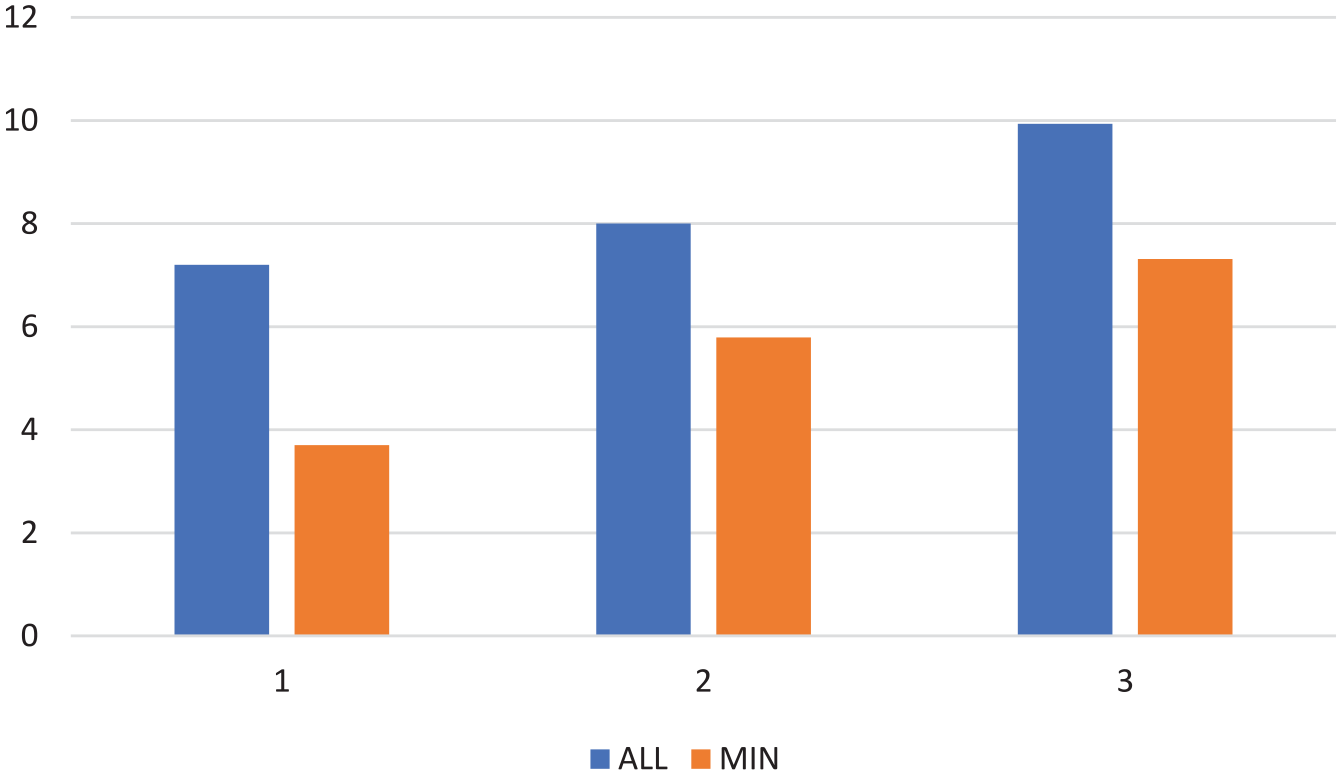
Working to plan (average references per briefing).
The rhetoric around this narrative was deployed in different ways. The two most frequently used terms for this storyline – ‘plans’ and ‘phases’ – diverged significantly. References to ‘plans’ worked to create an impression of ministerial competence, and these increased as the crisis around PPE and testing intensified, rising from an average of 1.5 per briefing in Period 1 to 2.6 during Period 2, and 2.7 in Period 3. Thus, Boris Johnson referred to ‘our overall plan for beating this new coronavirus’ (17 March), and ‘the government’s plan to defeat the virus’ (25 March), Priti Patel noted ‘a clear plan when it comes to PPE’ (11 April), and Robert Jenrick insisted that there was a ‘clear plan’ to ensure that PPE was being delivered (29 March). Similarly, Mat Hancock talked of ‘working through our action plan’ (27 April), ‘our plan to test, track and trace’ (1 May), and ‘a clear ramp up in testing as part of the strategy from the start’ (3 April).
These claims were buttressed with references to the timeliness of the government’s actions. The PM, for instance, claimed that ‘we need to take the right decisions at the right time of this epidemic’ (17 March), that ‘we’re going to do the right measures at the right time’ (18 March), and that ‘we did the right thing at the right time’ (30 April). Alok Sharma claimed that ‘We have been deliberate in our actions, taking the right steps at the right time’ (1 April). Dominic Raab maintained that it was ‘vital we take the right decisions at the right time’ (9 April). In all, the phrases ‘right time’ and ‘from the start’ were used 103 times.
In contrast, talk of the crisis in terms of ‘phases’ enabled ministers to create a narrative around their response that shifted attention away from the growing crisis in PPE provision and testing and onto the lifting of the lockdown. Here, ministers were keen to deflect the focus from their current handling of events towards talking about the ‘next phase’ of their response. References to ‘phases’ grew from an average of 0.2 per briefing in Period 1 to 0.6 in Period 2, and 2.6 in Period 3. One notable aspect of this centred on a related rhetoric of ‘safety’. This reflected concerns around whether or not it would be safe to end the lockdown, particularly for people returning to work and for schools reopening. Ministerial references to ‘safety’ increased dramatically during this latter phase – from 1.4 references per briefing in Period 1 to 7.1 in Period 3 – as the government sought to persuade people that they would only end the lockdown when there was no risk to public health. A comparison of these discourses is shown in Chart 2.
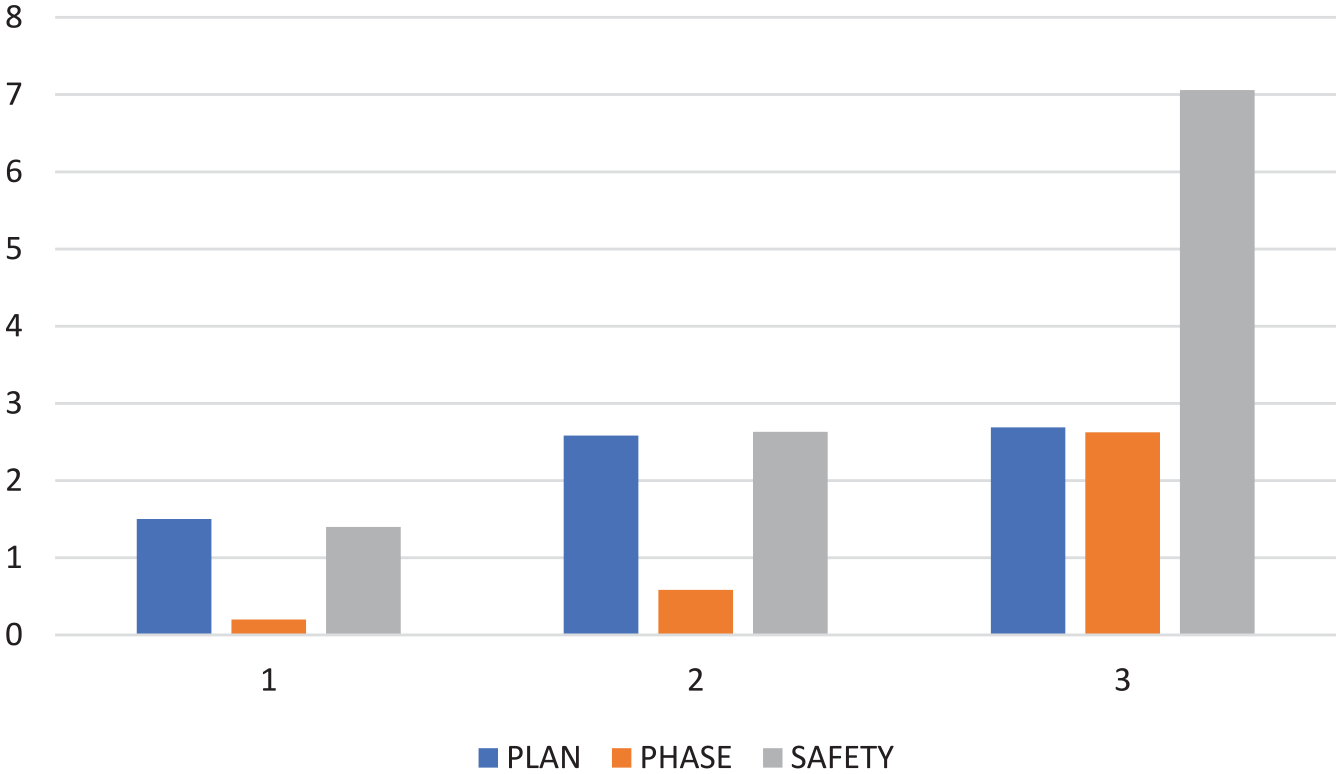
Average use of ‘plans’, ‘phases’, and ‘safety’.
Thus, did ministers pivot between their desire to assure the public that they were following a planned, orderly, and well-timed strategy, towards attempting to divert attention to the ‘next phase’ of their strategy as mounting criticisms and failures made it increasingly difficult to claim that their initial strategy was working.
National security, wartime unity, and sacrifice
While stories about the government’s activism and preparedness mainly aimed at maximising credit for ministers’ handling of the crisis, they were interlaced with narratives aimed at simultaneously displacing responsibility for a growing number of mistakes. One depoliticising strategy was to emphasise the unique and global nature of the crisis, a frame utilised to present the government as being forced to respond to unprecedented events beyond anyone’s control. Thus, the PM stated that ‘I can’t remember anything like it in my lifetime’ (16 March), while Robert Jenrick described the crisis as ‘an unprecedented event for this generation in this country’ (29 March). Likewise, Alok Sharma said the crisis was ‘the biggest threat our country has faced in decades’ (1 April), while Dominic Raab said it was ‘the greatest global challenge in a generation’ (30 March) and ‘a pretty unique pandemic, something that certainly I’ve never seen before in my lifetime’ (5 May).
The unique nature of the pandemic was used as a particular justification for the emerging crisis around PPE, although here we can see ministers becoming caught up in the contradictory character of their politicising and depoliticising stories. For instance, the PM maintained that ‘the country has a perfectly adequate supply of personal protective equipment’ (20 March) before claiming that the problem was due to ‘global shortages in a global pandemic’ (30 April). Dominic Raab claimed that the problems were due to ‘challenges with the distribution’ (9 April) but that there was, at the same time, ‘a global shortage’ (22 April). Mat Hancock insisted that ‘we have the stockpiles . . . the challenge is a logistical one’ (12 April) but also claimed that ‘essentially the problem on PPE is that there is a global shortage. There is more demand across the world than there is supply’ (21 April).
These claims about the unprecedented nature of the crisis were accompanied by a narrative around security and the need for national unity. It has long been recognised that crises are essentially contested events and that dominant constructions of these crises help produce particular political outcomes (see in particular Hay, 1996, 2010). Thus, political responses to crises are rooted in and shaped by the ways in which key groups of political actors are able to construct the nature and causes of the crisis. This idea of crises as constructed and contingent events has been particularly prominent in driving the literature on securitisation which has burgeoned in recent years. Here, it is recognised that crisis narratives are often used to elevate a particular issue (such as global warming) above the status of a normal, everyday policy issue, by emphasising the serious ‘threat’ that it poses to a society’s values and ways of life (e.g. Buzan et al., 1998; Paglia, 2018). More recently, Jarvis (2021) has shown how the COVID-19 crisis was constructed in such a way as to emphasise a level of threat that demanded unprecedented levels of national response from both government and the public. Thus, for Jarvis (2021) such claims were ‘politically productive – helping to explain, justify, and defend vital moments in the UK’s efforts to manage the crisis’.
In this vein, ministers – especially during the early part of the crisis – sought to define the crisis in martial terms, as something akin to a military conflict. Thus, attempts were made to impress the severity of the problem, but also to transform the crisis from a mere ‘political’ issue into a fight for national survival. In all, ministers used a total of 161 security frames during the daily briefings (an average of 2.6 references per briefing). The most prominent frames were ‘fight’ (with 53 references), ‘defeat’ (with 36), and ‘beat’ (29). Here, for example, the PM made repeated references to ‘our national fight back against Corona’ (18 March) and the need to combat the ‘invisible enemy’ (18 March), adding that ‘in this fight we can be in no doubt that each and every one of us is directly enlisted’ (23 March). Michael Gove spoke of ‘this effort to reinforce the front line in the battle against the virus’ (27 March) and the need ‘to defeat this invisible enemy’ (4 April). Dominic Raab insisted that the government was taking steps ‘to reinforce our efforts on the home front’ (7 April) and hailed ‘our national mission to defeat the coronavirus’ (13 April). The Education Secretary, Gavin Williamson, claimed that ‘each of us has a role to play in fighting this virus’ (19 April), while the Transport Secretary, Grant Shapps, referred to the need ‘to fight the pandemic with all the resources we can muster’ (9 May). Mat Hancock claimed that NHS staff were ‘the frontline in this war against this virus’ (24 March), claiming that ‘[W]e are in the midst of a war against an invisible enemy, and it is a war in which all of humanity is on the same side’ (2 April).
This security narrative was accompanied by calls for national unity. Ministers made a total of 160 references in this coding category, an average of 2.7 per briefing throughout the period of the study, in an effort to rally people behind the government. These calls for solidarity and resolve, as might be appropriate for a time of war, were in evidence from the very first briefings, in which the PM called for ‘national unity’ (17 March), ‘determined collective action’ (19 March), and declared that ‘We’re going to defeat this disease with a huge national effort’ (20 March). Ministers spoke of ‘a collective national effort’ (Sunak, 20 March), ‘a united national effort’ (Raab, 30 March), ‘the national solidarity being shown in the fight against this disease’ (Gove, 27 March), ‘a joint endeavour to get through this pandemic’ (Sharma, 28 March), ‘a shared spirit of national endeavour’ (Gove, 4 April), and ‘the national spirit of unity and resolve’ (Raab, 6 April). As the Foreign Secretary put it, ‘It’s a team effort and as a country we need to be united in this mission’ (Raab, 9 April). Or, as Priti Patel declared, ‘Fighting coronavirus requires an extraordinary national effort’ (11 April) and ‘a spirit of national unity’ (25 April).
Alongside these calls for national unity, ministers deployed other, more overtly nationalist cues designed to consolidate a spirit of resolve and forbearance. Among these were references to ‘our great nation’ (Sharma, 1 April), ‘Britain at its best’ (Hancock, 2 April), ‘British community spirit at its very best’ (Raab, 9 April), the United Kingdom’s ‘amazing compassion and community spirit’ (Patel, 11 April), ‘amazing stoicism’ (Gove, 3 May), and ‘the hard work and ingenuity of the British people’ (Sunak, 14 April). These were combined with platitudes such as ‘the amazing workers in the NHS’ (Johnson, 22 March), ‘our amazing NHS staff’ (Hancock, 10 April), ‘the amazing doctors, nurses and support staff in our NHS’ (Gove, 27 March), ‘our brilliant, brilliant NHS’ (Sharma, 28 March), ‘the amazing doctors, the amazing nurses’ (Raab, 30 March), and ‘our brilliant NHS’ (Patel, 11 April). 6
The use of security and national unity frames were more prominent during the earlier part of the crisis and both declined as the crisis intensified. Ministerial references to security fell from an average of 3.5 per briefing in Period 1 to 2.1 in Period 3. Ministerial references to unity fell from 3.6 per briefing in Period 1 to 1.7 in Period 3 (see Chart 3).
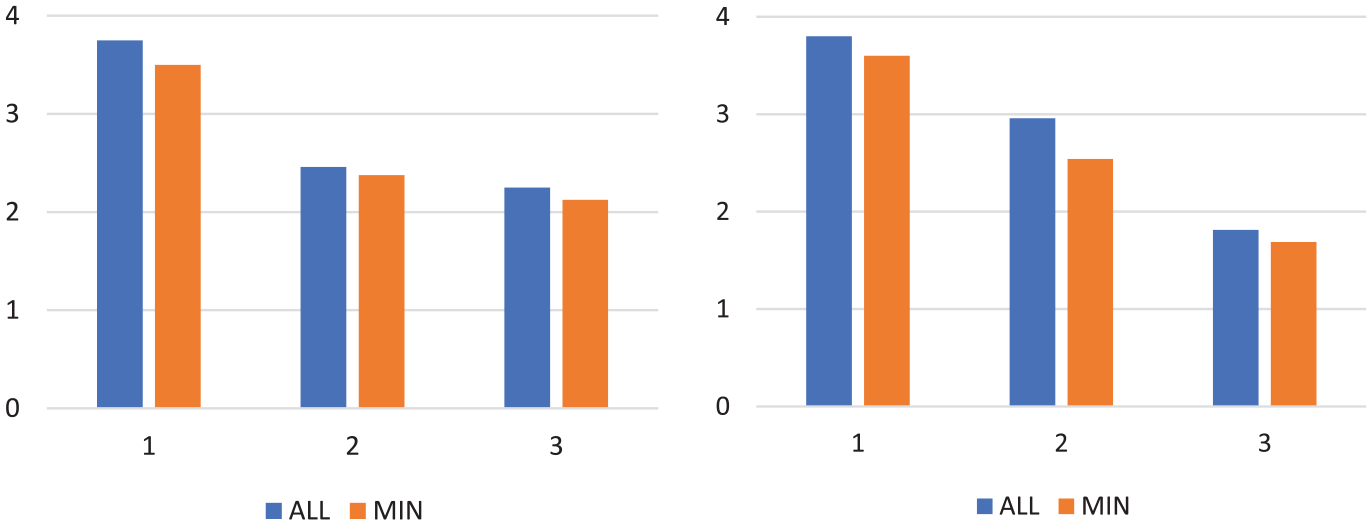
National security (left) and wartime unity (right) frames.
This pattern suggests that security and unity frames were used early on by ministers as a device to solidify public opinion behind a narrative of wartime conflict and resolve, but that as the crisis progressed and as criticism of the government intensified, ministers transitioned to a discourse of sacrifice and heroism to prevent the crisis from reaching politically destabilising levels.
Overall, ministers used 130 references relating to sacrifice and heroism throughout the time frame (an average of 2.2 per briefing) but more than half of these (80) appeared in Phase 2 of the crisis. References from this coding category grew from an average of 1.3 per briefing in Period 1 to 3.3 in Period 2 – exceeding both security and national unity frames – before falling back to 1.5 for Period 3 (Chart 4). Examples of this included references to ‘the enormous sacrifice’ made by NHS staff (Raab, 9 April), ‘the sacrifices that so many are making’ (Gove, 31 March), ‘the hard work and sacrifices of the British people’ (Johnson, 11 May), ‘heroic former doctors and nurses and paramedics who have come back to work’ (Jenrick, 29 March), ‘our heroic doctors, nurses and care workers’ (Raab, 6 April), NHS staff doing ‘truly heroic work’ (Raab, 6 April), and ‘our frontline heroes’ (Hancock, 10 April).
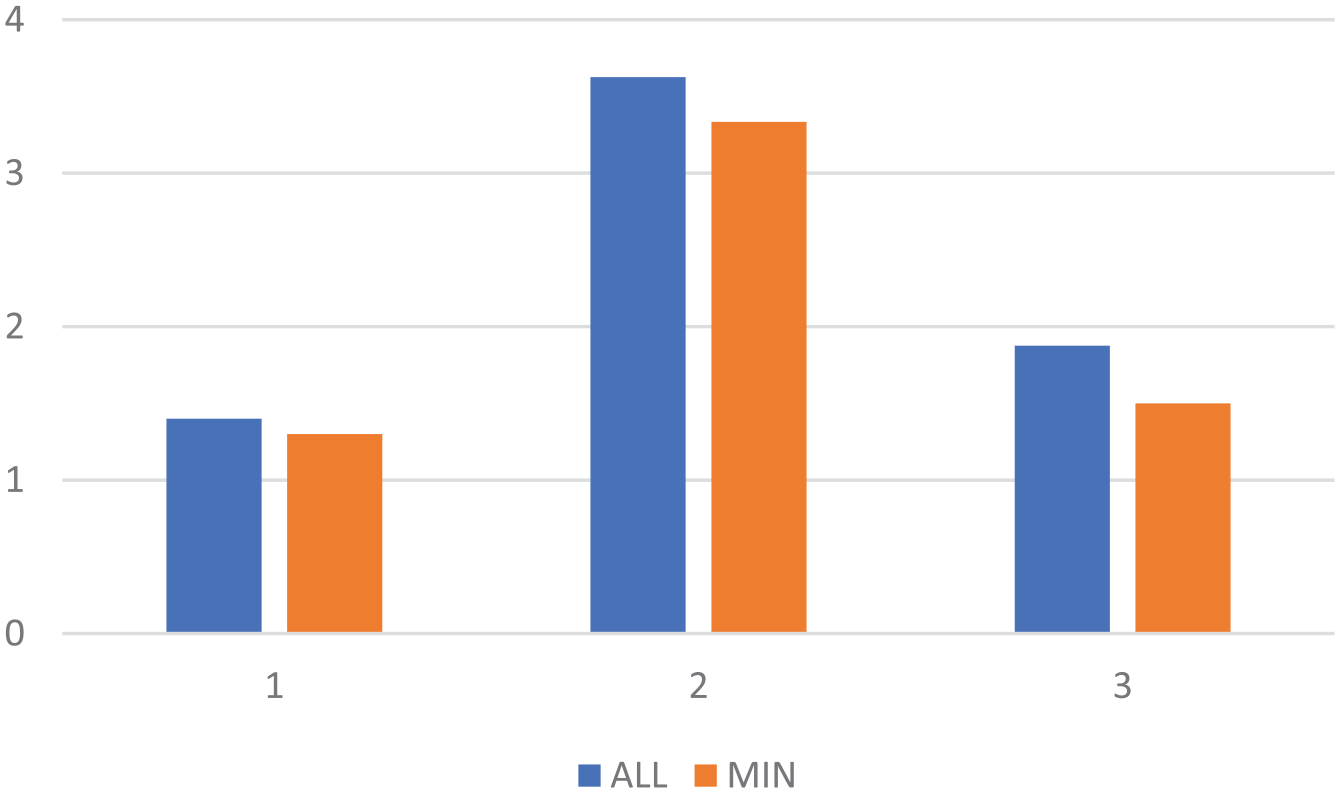
Sacrifice and heroism.
Scientific guidance
While appeals for national unity and sacrifice allowed the government a degree of protection from the normal processes of criticism and scrutiny, the primary depoliticising discourse deployed by ministers centred on the narrative that the government’s decision-making was rooted in the best available science and expertise. The repeated insistence was that government officials were simply following the scientific recommendations given to them by their scientific and medical advisors, in particular the advice from the Scientific Advisory Group for Emergencies (SAGE), whose role is ‘ensuring that timely and coordinated scientific advice is made available to decision makers to support UK cross-government decisions’. 7
This storyline underpinned, and was frequently aligned with, the narratives around Working to Plan and National Security, Wartime Unity. The narrative was evident from the very first briefings. Here, the PM proclaimed that ‘everything we do is based scrupulously on the best scientific advice’ (16 March), and that ‘we will take the right steps at the right time guided by the science’ (18 March). Later, he added that ‘as I said right at the beginning . . . we were going to do the right measures at the right time, and not according to political diktat, but according to the best scientific and medical advice in the world’, and ‘We have the best scientific advice in the world, and we will continue to follow it’ (25 March).
This narrative was repeatedly expressed by ministers throughout the course of the briefings. Robert Jenrick maintained that ‘our response from the outset to the virus has been guided by scientific evidence’ (22 March), Rishi Sunak claimed that ‘[a]t every stage in this crisis, we have been guided by the scientific advice and have been making the right decisions at the right time’ (20 April). Michael Gove similarly claimed that ‘at every stage we have followed the scientific and medical advice that we’ve been given’ (27 March). Priti Patel claimed, ‘we are following the experts’ scientific and medical advice and taking the right steps at the right moment in time’ (11 April), while Alok Sharma insisted that ‘we’ve always been very clear right from the start of the situation . . . we will be led by the scientific and medical advice’ (28 March). Mat Hancock said that ‘Right since the start of this crisis, we’ve been clear that all our plans are based on the best possible science’ (3 April) and that ‘the judgements are made by the Cabinet on the advice of the scientists’ (23 April).
Nevertheless, despite the clear depoliticising effects of this narrative, the government remained keen throughout to blur the lines of responsibility by hopping between different stories. For example, Rishi Sunak straddled both the Scientific Guidance and Working to Plan narratives when he claimed that ‘The government’s approach is to follow scientific and medical advice through our step by step action plan’ (14 April). Likewise, the PM deftly demonstrated the simultaneously politicising and depoliticising effects of the government’s storytelling by declaring that ‘the buck stops with me and I take full responsibility for all the actions that this government is taking, all the decisions we’re taking, difficult though many of them are . . . we follow the advice of our scientific and medical advisers’ (17 March).
Throughout the time frame for this study, ministers and advisers made a total of 386 references to science and expertise, averaging 6.4 references per briefing. The relatively high level of these references compared with other frames is unsurprising given that the role of the scientific and medical officials at the briefings was to explain the science behind coronavirus and the medical response to it. Within this, however, ministers were also keen to utilise the language of science and expertise, doing so a total of 224 times (an average of 3.7 references per briefing). The distribution of these references remained high throughout the period, peaking in Period 2 and with a slight decline in Period 3 (see Chart 5).
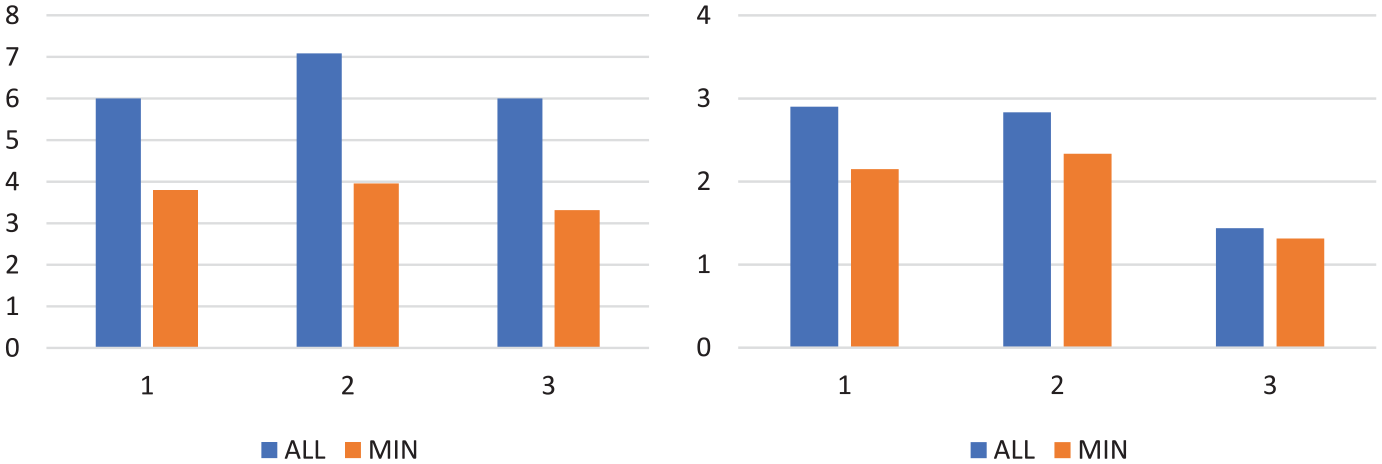
Science/expertise (left) and scientific guidance (right).
Within this overarching narrative, specific references to science providing the basis for the government’s response to the coronavirus crisis showed a different distribution. Overall, there were 149 references to policy being guided by science throughout the time frame, with 120 (81%) of these references being made by ministers. In contrast to the relatively consistent and substantial use of this framing, by ministers throughout the crisis, references to government policy being guided by science were concentrated during the first two phases (increasing from 2.2 to 2.3) and fell away in Period 3 (to 1.3; see Chart 5). This is consistent with a view of science as a depoliticising discourse – a protective shield during the onset and height of the crisis but being discarded as the narrative of the briefings shifted towards the government looking to move discussion on to ending the lockdown. This constant shifting of the narrative reflects the delicate balance that ministers were forced to steer between rapidly moving responsibility in such a way as to minimise blame and maximise credit for their actions.
Conclusion: (De)politicising the coronavirus crisis
This article contributes to ongoing debates around depoliticisation in three key ways. First, it adds empirical weight to the growing recognition within the literature that depoliticisation can be deployed as an ongoing discursive process rather than a single governing act of institutional reform. Second, it provides evidence to support some claims within the literature that the relationship between processes of politicisation and depoliticisation is not always a simple binary one. Rather, the discursive strategies that policymakers deploy can have interlocking and simultaneous politicising and depoliticising effects. Third, and perhaps more innovatively, we attempt to introduce a new dimension to recent depoliticisation scholarship by directing our focus towards the variable impact which political time can have on a government’s attempts to steer coherent and consistent (de)politicisation stories. While the bulk of previous research focuses on the deployment of depoliticisation strategies over the long, or medium, term of policymaking, our research highlights some of the problems of managing the balance between responsibility, credit, and blame, within a constantly changing moment of national crisis. Here, we urge for future research into this area of inquiry. Overall, our analysis shows how, in a temporal context of real-time crisis management, processes of discursive politicisation and depoliticisation can be deployed in interlocking and simultaneous ways, as governing officials hop between narratives as part of a dynamic and complex process of meta-governance.
In the introduction to their recent volume on depoliticisation and anti-politics, Fawcett et al. (2017) argue that it is important for scholars of depoliticisation to take account of the wider ‘nexus’ of political developments within which certain depoliticisation strategies are played out. In particular, contemporary depoliticisation occurs within an environment of anti-politics and mounting distrust of political institutions and authority. Against this wider backdrop, and the more immediate backdrop of the pandemic, the luxury of deploying a fixed and stable depoliticising strategy was largely unachievable in a context in which ministers were confronted with a singular type of crisis moment, played out in real time, and for which quantifiable, international comparisons of government responses were readily available. In such a context, ministers were repeatedly called upon to demonstrate that they were delivering appropriate levels of government action. As such, the daily press briefings became a useful means through which ministers could performatively demonstrate their competence in handling the crisis. In such a context, the use of storytelling as a way of meta-governing an incredibly complex and evolving emergency became useful to a government which was equally keen to take credit for its ‘unprecedented’ actions, while simultaneously shifting blame for a myriad of growing problems. With the crisis playing out in real time and the government coming under intense scrutiny on a daily basis, our evidence shows that it was neither seemingly possible, nor indeed favourable, for ministers to settle on a decisive depoliticising strategy. Rather, the government was forced, by the unfolding circumstances, to engage in a quick-fire passing of responsibility from one set of actors, or events, to another in order to balance the shifting demands of maximising credit for their actions while eliminating any potential blame for their mistakes. In this respect, our findings here show that the concept of political time may be relevant to any analysis of depoliticisation. While some depoliticisation strategies, such as the anchoring of monetary policy, can exist in the medium to longer-term of political time, other circumstances throw up crisis moments which require a deft and quick-fire manoeuvring between politicising and depoliticising stories.
