




Abstract
Trust between representatives and citizens is regarded as central to effective governance in times of peace and uncertainty. This article tests that assumption by engaging elite and mass perspectives to provide a 360-degree appraisal of vertical and horizontal policy coordination in a crisis scenario. Specifically, a multi-dimensional conception of political trust, anchored in psychological studies of interpersonal relations, is operationalised in the context of the United Kingdom’s response to the 2020 coronavirus pandemic. Detailed analysis of data collected from 1045 members of the public and more than 250 elected politicians suggests that particular facets of political trust and distrust may have contributed to levels of mass behavioural compliance and elite policy support in the UK at the height of the COVID-19 crisis. These findings help to evaluate policy success during a unique and challenging moment while contributing theoretically and methodologically to broader studies of political trust and governance.
Rapid response research about the novel coronavirus SARS-CoV-2 (severe acute respiratory syndrome coronavirus 2), which causes the respiratory disease otherwise known as COVID-19, emphasised the importance of mass behavioural change to reduce contagion (see Anderson et al., 2020). Yet while national governments implemented a range of social and economic ‘lockdowns’, albeit at different paces, early reports suggested varying degrees of public support and adherence (e.g. Connolly et al., 2020; Tominey et al., 2020). In this context, the importance of the social and behavioural sciences, including psycho-social concepts such as trust, quickly gained traction in both academic and practitioner debates about the pandemic response (Van Bavel et al., 2020). As Devine et al. (2020: 2) posited in their review of emerging research, ‘Trust between governors and the governed could be seen as essential to facilitating good governance of the pandemic’. As countries around the world grapple with second or third waves of the virus and contemplate new tranches of long-term legal restrictions on people’s behaviour, this article draws on original data collected at the first peak of the virus to understand the role of political trust as an antecedent of mass behavioural compliance with, and elite support for, crisis-related public policy decisions.
To the extent that political leaders were quickly made aware of epidemiological measures such as social distancing, contact tracing and mass testing that could counter the virus’s urgent threat, the COVID-19 crisis was somewhat of a ‘known unknown’ in the words of former US Secretary of Defence Donald Rumsfeld. Yet whether or not existing intelligence was successfully deployed relied on confident relations between political leaders and those they govern. From this perspective, political trust – understood in sum as the willingness of citizens to make themselves vulnerable to political actors and institutions – can be seen as a key psychological lubricant for governing effectively in such times of uncertainty. In democratic polities especially, the official response to COVID-19 was shaped by (a) political leaders who were tasked with delivering public health announcements (and thus became the public-facing interlocutors of public health guidelines), (b) parliaments and legislatures who were tasked with granting emergency powers to sitting governments or passing legislation related to the crisis response and (c) democratically elected officials who had to take the difficult decisions, in line with scientific evidence or not, about implementing fast-paced changes to social, cultural and economic life.
Crises like COVID-19 do, then, place an added premium on the ‘social contract’ underpinning principal–agent relations in democracies, which relies fundamentally on conditional trust judgements by those without power in those with decision-making authority to act in their better interests. The importance of political trust is thus twofold during crises such as COVID-19. At one level, a climate of declining political trust (or rising distrust in the political) might reduce public compliance with political mandates and/or delimit politicians’ policy toolkit by structuring the viability of legitimate governance and policy making (for similar arguments, see ‘t Hart, 2011: 324–326). At another level, political trust between politicians might facilitate an effective crisis response by pushing actors towards enhanced cooperation, while distrust may hinder it by catalysing strategic action, anticipated reactions and partisan politicking.
Early studies of the COVID-19 crisis provide supporting evidence for the claim that higher levels of political trust precipitated public compliance (Goldstein and Wiedemann, 2020; Oksanen et al., 2020; Olsen and Hjorth, 2020). These studies are limited, however, by measurement issues that leave the underlying causal mechanisms of this relationship rather opaque. For example, ‘compliance’ has been measured in the US using mobility data (Goldstein and Wiedemann, 2020) and in Denmark using self-reported social distancing (Olsen and Hjorth, 2020), and related conclusions have even been drawn in comparative studies using COVID-19 mortality rates (Oksanen et al., 2020). Similarly, trust has been measured using a variety of standalone survey items (as fielded in the World Values Survey, Eurobarometer and European Social Surveys), but in some cases it has been inferred from partisanship and voter turnout (Goldstein and Wiedemann, 2020). In contrast, this article tackles the topic of trust, governance and COVID-19 according to three clear premises: that trust is a multi-dimensional concept and its relationship to political behaviour can only be properly understood when it is measured as such; that comprehensive appraisals of trust and public policy require researchers to engage with both vertical trust between principals and agents and horizontal trust between political elites; and that researchers must analyse data on a range of relevant behaviours and related policies to fully understand the crisis response.
In this article, I address this knowledge gap by analysing a unique dataset gathered from members of the public and elected politicians in the United Kingdom. The aims and contributions of the article are twofold. First, this article demonstrates the theoretical and empirical applicability of trust as a predictor of political behaviour when it is measured at the individual level using multi-dimensional indicators. Findings presented later in the article show not only that a multifaceted measure of trust can help to explain behavioural and attitudinal responses to COVID-19 but also that it can reveal more precisely how and why the public trusts in political elites as well as when the latter’s perceptions thereof are out of kilter with reality. Second, this article provides a 360-degree analysis of political trust in a crisis scenario by engaging with those who advocate and enforce policy decisions as well as those who must abide by them. Findings suggest that specific facets of trust and distrust were relevant to both actions at the height of the coronavirus pandemic. The article proceeds in four broad steps. First, the importance of trust for governance in times of crisis is enumerated and clarified. Second, a multi-dimensional model of trust is introduced that sets up a number of falsifiable hypotheses. Third, methods of data collection and associated empirical analyses are described and discussed at length. Fourth, the article concludes by reflecting on the academic and practical significance of the results.
Trust and Governance In and Out of Crises
Vertical trust between citizens and representatives is a necessary feature of democracy (see Lenard, 2012; Warren, 2017). At a practical level, democracy requires a certain delegation of labour in which the majority – with scarce time, resource or knowledge – give agency to elected politicians to pass laws and devise policies in their better interests. In turn, specialised agencies, arm’s-length bodies, civil service departments and judicial systems implement or regulate those laws and policies. This chain of delegation requires continuous trust judgements by principals (i.e. citizens) about agents (i.e. politicians and policy-makers), but the efficacy of those relationships also arguably rests on a mutual recognition of vertical trust. Put simply, for trust to facilitate good governance and effective representation or for distrust to stimulate change (especially where formal institutions or accountability measures fail), politicians must accurately perceive those sentiments and act accordingly (for similar theoretical arguments, see Bottoms and Tankebe’s (2012) ‘dialogic approach’ towards police legitimacy).
In parallel literatures on crisis management, similar arguments manifest via a strong emphasis on vertical coordination, which refers to cooperation between crisis responders who are otherwise situated in some form of hierarchical relationship to one another (see Boin et al., 2017; McGuire et al., 2010). Thus, existing research explores the ways that leaders at the political centre frame and communicate crises as well as public views of and reactions to unpredictable or significant shocks (for a review, see De Clercy and Ferguson, 2016). There is clearly appraisive potential to both top-down and bottom-up analytical lenses. However, there is even more potential to conjoining these multiple perspectives to examine the interaction of leaders and followers in crisis scenarios and, in particular, exploring the factors that facilitate or hinder crisis coordination. It is here that vertical political trust, as well as the latter’s perceptions thereof, may be important for both elite policy decisions and mass compliance therewith.
Issues of horizontal trust between politicians are of equal, if not more, importance in democracies generally and during crises in particular. Related arguments were originally coined by William G. Sumner (1913) in his theory of ‘antagonistic cooperation’ whereby, for example, political elites may enter into limited yet durable partnerships to pursue mutual and commonly beneficial goals for society at large (see also Best, 2009: 113). In parliaments and legislatures at a regional, national and international level, politicians must work towards consensus (albeit more so in multi-party proportional representation systems than in single-member plurality systems). Across political parties, antagonistic cooperation can be observed in committee systems where politicians of all partisan persuasions come together to scrutinise legislation and pursue common policy interests. Within parties, high levels of trust and low levels of distrust between elected members are required to bind individuals who are otherwise competing contenders for vote, office, and policy success.
During crises, the political stakes attached to antagonistic cooperation are much higher. Politicians are required to lay aside pre-existing disputes, suspend long-term strategic ambition and resolve emerging tensions in order to collaborate by, inter alia, granting emergency powers to governments and supporting government policies in public-facing communication. On the one hand, such decisions give the executive a [greater] monopoly on state resource at a time when all actors must also seek to mitigate the political consequences of crisis fallout. On the other hand, crises like COVID-19 disrupt carefully constructed webs of checks and balances that usually institutionalise distrust in representative democracies (see also Sztompka, 1999; Tilly, 2005). To reach consensus and facilitate effective crisis management, politicians on all sides must have acceptably low levels of distrust and relatively acceptable levels of trust in one another. To be more precise, they must be willing to accept vulnerability when entering into discussions, joint decisions and/or unique legislative arrangements with other politicians whom they ordinarily disagree with, compete against or criticise.
Theorising Political Trust and Behaviour during COVID-19
To better theorise and clarify relationships between trust and governance in the context of COVID-19, this section presents a specific conception of trust and a series of related hypotheses. In contrast to studies of generalised political trust based on holistic single-item survey indicators (e.g. Feldman, 1983; Hooghe, 2011), this article takes a normative stance in assuming that political trust is decidedly multi-level, multi-dimensional and reflective of interpersonal projections in a specific domain of action (see also Chan, 2019). These propositions are developed in Figure 1, which distinguishes between trust as an action (decisions or behaviours such as complying with COVID-19 policies) and trust as a series of internalised psychological processes that inform those actions. Specifically, political behaviours or decisions are catalysed by (a) a trustor’s generalised propensity to trust and their particularised policy/government evaluations as mediated by (b) their multifaceted trust judgements about the trustworthiness of a trustee (e.g. politicians).
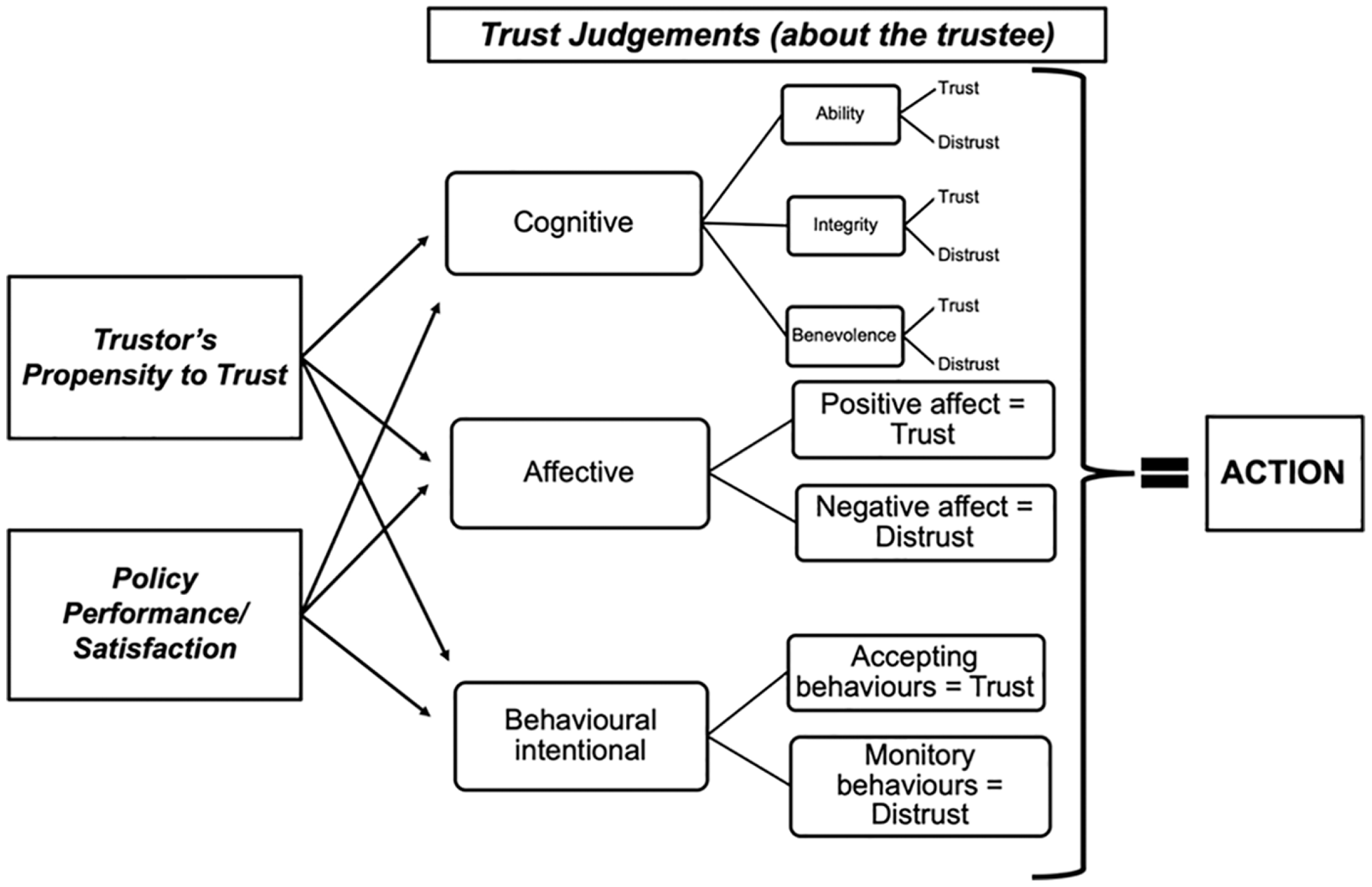
Simple System Model of Political Trust and Behaviour.
This model is underpinned by three key arguments. First, all individuals have a propensity to trust that is non-political and, often subconsciously, shapes their willingness ‘to be vulnerable to the actions of another party based on the expectation that the other will perform a particular action important to the trustor, irrespective of the ability to monitor or control that other party’ (Mayer et al., 1995: 712). Second, prior performance matters. An extant literature in the trust-as-evaluation tradition has shown a strong link between government performance and political trust. As Huseby (2000: 10) concludes, ‘poor performance in salient political issues leads to negative evaluations of government performance, which in turn influences citizens’ support for the political system’. Third, cognitive, affective and behavioural-intentional trust judgements about a relevant trustee (i.e. politicians making policy announcements) act as ‘psychological conduits’ (see Hamm et al., 2019: 2) for both (a) the behavioural execution of a trustor’s propensity to trust in a specific domain of action (i.e. politics and the COVID-19 crisis) and (b) the utilisation of prior policy or performance evaluations in determining behavioural responses to political mandates or situations (for a review of these three ‘trust dimensions’, see Lewicki et al., 2006).
The heuristic potential of all three sets of trust judgements is highly relevant in politics and even more so in crises when politicians and publics not only (a) share in asymmetries of information about one another’s characteristics and attitudes but also (b) face a low-information environment about the policy topic requiring cooperation. On the one hand, citizens (i.e. trustors) are more likely to abide by behavioural restrictions when they also (a) believe that those issuing such demands (i.e. trustees) know what they are doing, have common interests in mind and communicate truthfully (i.e. cognitive trust); (b) feel positively about trustees generally and hold positive expectations about their future behaviour (i.e. affective trust); and (c) already view trustees as an open or dependable source of support (i.e. behavioural-intentional trust). These same contentions hold when considering politicians’ support for policy decisions and, by implication, horizontal as well as vertical coordination during crises like COVID-19. Put simply, positive cognitive, affective and behavioural-intentional trust judgements of other politicians may reduce uncertainty when entering into precarious, high-risk or co-dependent policy decisions. At the same time, politicians who believe that they are judged positively across these factors may be more likely to act decisively in risky or uncertain situations due to an enhanced sense of public support or, more strategically, greater electoral security:
H1: Citizens with higher levels of cognitive, affective and behavioural-intentional trust in politicians will be more compliant with COVID-19 restrictions.
H2: Politicians with higher levels of cognitive, affective and behavioural-intentional trust in other politicians will be more supportive of COVID-19 policy decisions.
H3: Politicians who perceive higher levels of cognitive, affective and behavioural-intentional trust from the public will be more supportive of COVID-19 policy decisions.
Figure 1 also distinguishes conceptually between trust and distrust to avoid inaccurate conflations of trust-based judgements and resultant actions that have very different psychological origins and implications. Although both trust and distrust might relate to judgements about the reliability or ‘trustworthiness’ of another, trust allows for the possibility of harm and facilitates co-operative behaviours, while distrust invokes an expectation of harm or betrayal and elicits very different actions to manage that risk (see also Lewicki et al., 1998: 439). In Figure 1, this distinction is invoked for all three facets of trust judgements, which run on two independent yet parallel scales of high/low trust and distrust. For example, an individual might think that politicians have lots of technical expertise (high cognitive trust) or they might believe that politicians waste a lot of public money (high cognitive distrust). These two cognitive judgements are not equivalent: the latter does not necessarily present itself in an absence of the former or vice versa. Both beliefs may be held simultaneously to varying degrees and, crucially, both imply very different conclusions about the (trustee…) that become salient in different contexts of cooperation or action (for related discussions, see Bertsou, 2019).
In related literature on crisis management, Boin et al. (2017: 65–66) argue that ‘[i]n systems where local communities regard central (or higher) authorities with distrust, we may therefore expect problems with vertical coordination’. It is possible, therefore, that vertical distrust – understood in sum as an unhealthy cynicism about the incompetence, self-interest or inauthenticity of a trustee (i.e. cognitive distrust) accompanied by an active, angry and fearful expectation of harm or betrayal (i.e. affective distrust) – may propagate suspicion of centrally designed policy responses and, in this instance, inhibit compliance with COVID-19 policies. Similarly, cognitive and affective distrust among politicians, or perceptions of public distrust (of any kind), may stymie policy support by promoting blame management or opportunism rather than compromise, consensus or bold decision-making:
H4: Citizens with higher levels of cognitive and affective distrust in politicians will be less compliant with COVID-19 restrictions.
H5: Politicians with higher levels of cognitive and affective distrust in other politicians will be less supportive of COVID-19 policy decisions.
H6: Politicians who perceive higher levels of distrust from the public will be less supportive of COVID-19 policy decisions.
In this instance, the symmetrical effects predicted of cognitive and affective trust and distrust are not anticipated to reproduce behavioural-intentional between trust and distrust. During a crisis that was unparalleled in scale and severity for most UK citizens, it is possible that those with higher levels of behavioural-intentional distrust (elsewhere characterised as mistrust, for example, Zmerli and Van Der Meer, 2017) – who are already more likely to double-check political rhetoric and monitor [other] politicians’ actions – may have been more likely to comply with or support policy decisions where (a) uncertainty about the consequences of non-compliance/non-support was high and (b) scientists and ‘evidence’ were at the forefront of decision-making about how to address the threat:
H7: Citizens with higher levels of behavioural-intentional distrust in politicians will be more compliant with COVID-19 restrictions.
H8: Politicians with higher levels of behavioural-intentional distrust in other politicians will be more supportive of COVID-19 policy decisions.
Case Study: The United Kingdom
As a case study, the UK presents fertile ground for the study of political trust, on the one hand, and its relationship to political behaviours during the coronavirus pandemic, on the other. Will Jennings et al. (2017) have, in particular, painted a bleak picture of declining trust (and rising distrust) in UK politics. They conclude: ‘what it is that citizens object to about politics [. . .] is politicians and their behaviour rather than the political system’ (Jennings et al., 2017: 894). At the same time, survey data continue to reveal remarkable levels of public distrust and democratic despondency that crystallise around popular judgements about those who govern. The Hansard Society’s (2019: 3) audit of political engagement concluded: ‘[o]pinions of the systems of governing [in the UK] are at their lowest point in the 15 year Audit series – worse now than in the aftermath of the MPs’ expenses scandal’. Such studies highlight (a) the importance of politicians – as opposed to political institutions – when it comes to structuring the UK public’s political trust [distrust] and (b) a pre-COVID-19 context in which ex ante political trust [distrust] in UK politicians was already detrimentally low [high].
At the same time, the UK’s official response to the COVID-19 crisis was initially characterised by indecision. The Government pursued a strategy of behavioural ‘nudging’ based on conscious and subconscious persuasion and encouragement (Parkinson, 2020). By early March 2020, this singled the UK out as a control case of sorts at a time when other nations with large numbers of cases (China, South Korea, Italy and Iran) and those with relatively few (Ireland, Norway and Denmark) had implemented stricter lockdown measures. With the number of COVID-19 cases in the UK rising rapidly, the number of deaths mounting and the projected pressures on the National Health Service (NHS) monumental, the Government reversed its approach in favour of stringent protocols to keep people at home. The Coronavirus Act 2020 (C.7) (2020), which received Royal Assent on 25 March, was rushed through Parliament in just four sitting days. The Act allowed exceptional new forms of resourcing and funding for public bodies and local authorities as well as provisions for temporary and exceptional alterations to worker’s rights and the use of legal and policing powers to prohibit transmission of the virus (Coronavirus Act 2020 (C.7), 2020). Despite these extraordinary new measures to combat the crisis, some UK citizens continued to defy official guidelines and legal instructions (Tominey et al., 2020).
Methods
To substantiate the theoretical propositions outlined above with empirical analysis, this article draws on two quantitative, cross-sectional surveys fielded to UK politicians and the UK public at the height of the COVID-19 crisis. 1 This section briefly discusses the research design, sample populations, survey content and robustness checks on key measurement instruments.
Participants
A national sample of the UK public completed online surveys between 2 and 4 April 2020 (just over a week after the UK entered its first social and economic lockdown). Survey participants were recruited via the crowd-working platform Prolific Academic. Prolific has been used for academic studies across the social sciences and compares favourably to other commonly used platforms such as MTurk (for a review, see Pallan and Schitter, 2018). The survey was completed by 1200 participants from an eligible pool of 31,787 using nationally representative quotas for gender, age and ethnicity (see Online Appendix A). Quality control questions and attention filters were used to trim the sample population (final N = 1145), and successful completes were rewarded with a payment of 1.15 GBP. 2 Politically, the sample contained more Labour Party voters (37%) than Conservatives (30%), but participants were evenly dispersed across two 11-point Left–Right scales of economic ideology (median = 5, mean = 4.68, range = 10) and social ideology (median = 5, mean = 4.3, range = 10).
Similar online surveys were fielded on the same day to local UK politicians (councillors). Emails were sent to 3013 elected councillors in office on 2 April who were identifiable in the Democracy Club database of political candidates. Councillors were also encouraged to participate by a notice in the Local Government Association’s electronic newsletter. In total, 356 councillors started the survey and 285 completed it (response rate of 9.5%). A further 28 were removed for failing quality control questions or attention filters (final N = 257). Importantly, this sample is diverse and representative of the target population (i.e. elected councillors) across a number of key characteristics such as gender, age, ethnicity and education (see Online Appendix A). Politically, Labour and Liberal Democrat representatives are slightly over-represented (36% and 32% of the sample, respectively) compared to Conservatives (17% of the sample); the average tenure of participants in local government is 9 years (median = 6 years, range = 48 years).
Although locally elected politicians were not at the forefront of official media briefings about COVID-19, nor involved in voting on the emergency powers granted to the national government in Westminster, they were placed ‘at the heart of [the] coronavirus response’ (Peters, 2020). Councils were tasked with delivering on the high expectations set by the national government in terms of, inter alia, providing a network of support (e.g. food, medicine, shelter) to those most vulnerable during the lockdown as well as enforcing lockdown measures in their localities (Ministry of Housing, Communities & Local Government (MHCLG), 2020). The Organisation for Economic Co-operation and Development’s (OECD, 2020) report on the territorial impacts of COVID-19 (including across the UK) provides supporting evidence for this claim. It concluded, for example: Regional and local governments are at the forefront of the COVID-19 health crisis and its social and economic consequences. They are in charge of significant responsibilities in the different areas impacted by the COVID-19 crisis [. . .] In many countries, subnational governments are responsible for critical aspects of health care [. . .] (OECD, 2020: 9).
For similar reasons, Kevin Orr (2009) argues that local governments offer an undeveloped locale for studies of crisis leadership. 3 Councillors’ attitudes towards the UK’s strategic political response to COVID-19 are, then, significant and even more worthy of attention at the time of writing as the national government continues to broker locally acceptable lockdown measures for future waves of the virus.
Measurement Instruments
Participants completed questions about their socio-economic, demographic and partisan characteristics as well as survey batteries measuring their political trust and distrust, psychological propensity to trust, and either (a) behavioural compliance with a range of official COVID-19 public health guidelines (mass sample) or (b) support for a range of policy responses to the crisis (elite sample). Descriptive statistics and bivariate correlations for these measures are reported in Tables 1 and 2.
Descriptive Statistics and Bivariate Correlations (Public Sample).
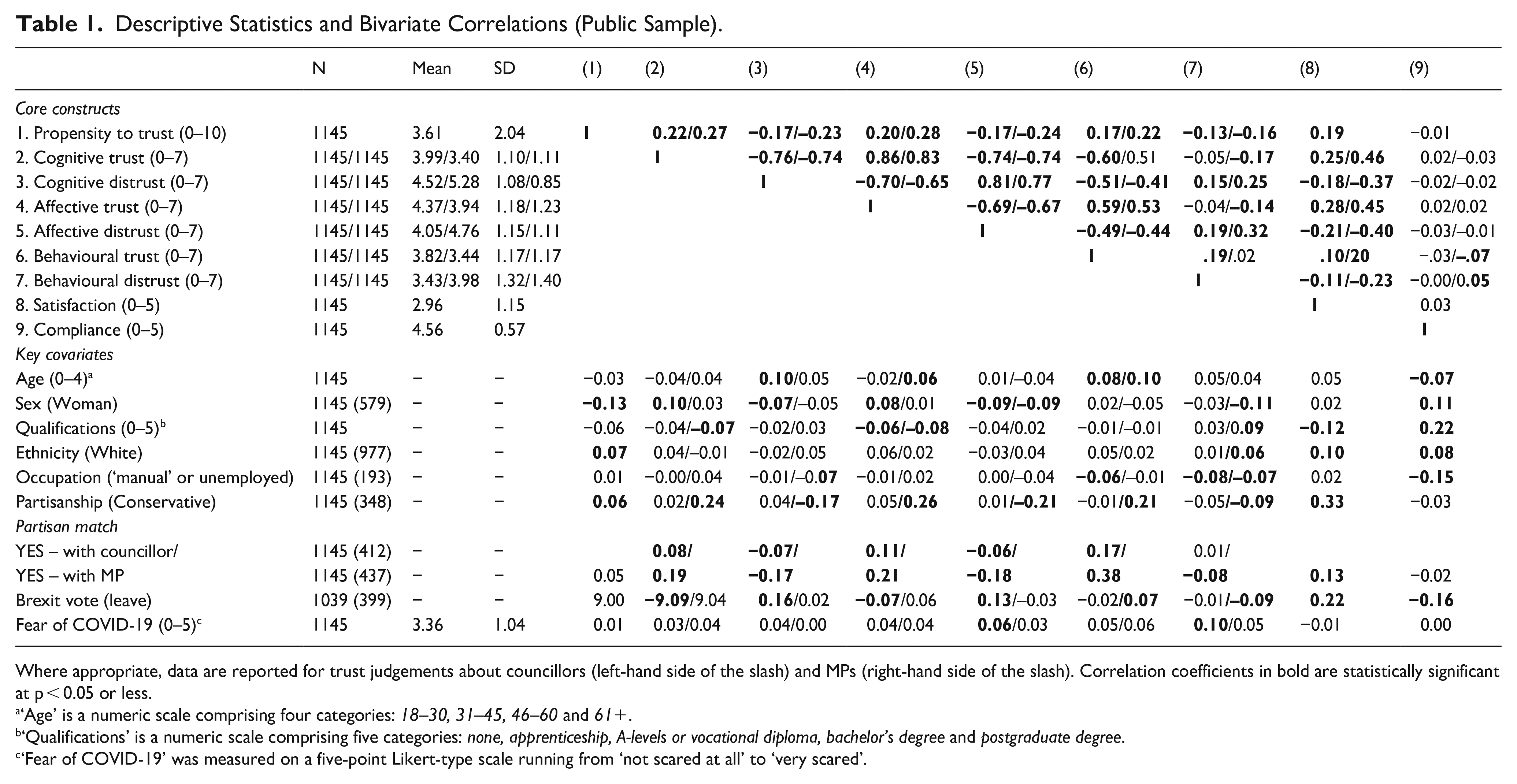
Where appropriate, data are reported for trust judgements about councillors (left-hand side of the slash) and MPs (right-hand side of the slash). Correlation coefficients in bold are statistically significant at p < 0.05 or less.
‘Age’ is a numeric scale comprising four categories: 18–30, 31–45, 46–60 and 61+.
‘Qualifications’ is a numeric scale comprising five categories: none, apprenticeship, A-levels or vocational diploma, bachelor’s degree and postgraduate degree.
‘Fear of COVID-19’ was measured on a five-point Likert-type scale running from ‘not scared at all’ to ‘very scared’.
Descriptive Statistics and Bivariate Correlations (Elite Sample).
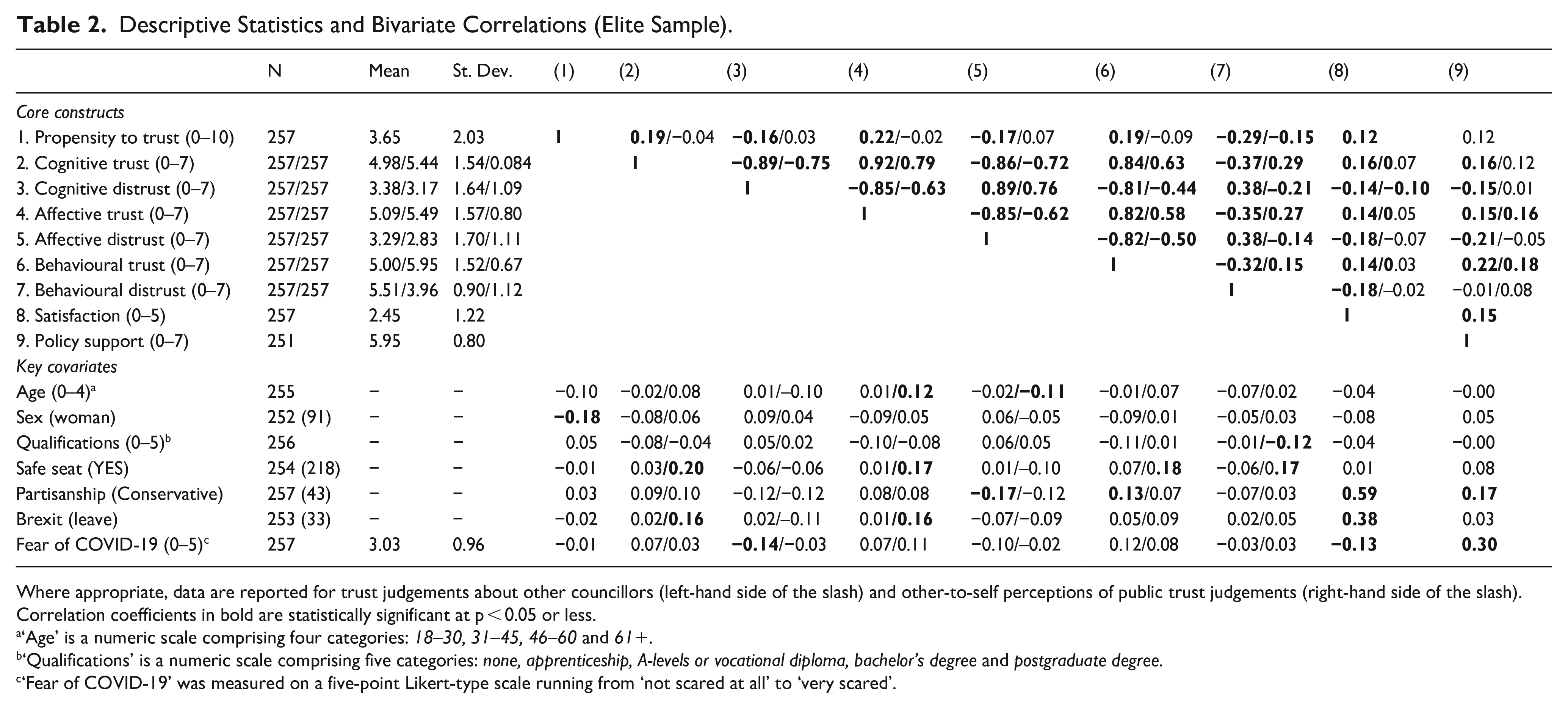
Where appropriate, data are reported for trust judgements about other councillors (left-hand side of the slash) and other-to-self perceptions of public trust judgements (right-hand side of the slash). Correlation coefficients in bold are statistically significant at p < 0.05 or less.
‘Age’ is a numeric scale comprising four categories: 18–30, 31–45, 46–60 and 61+.
‘Qualifications’ is a numeric scale comprising five categories: none, apprenticeship, A-levels or vocational diploma, bachelor’s degree and postgraduate degree.
‘Fear of COVID-19’ was measured on a five-point Likert-type scale running from ‘not scared at all’ to ‘very scared’.
Propensity to Trust and Policy Satisfaction
As discussed at length, trust/distrust or judgements thereof in any single domain of action such as politics may be grounded on (or reflective of) an individual’s generalised willingness to accept vulnerability as well as perceptions of policy performance (Figure 1). To assess propensity to trust, participants responded to the following three statements (adapted from Hamm et al., 2019):
I am open to letting others make decisions about issues that are important to me.
I am comfortable with others having control over my future.
I am willing to let others resolve problems that are critical to me, even though I cannot monitor all of their actions.
Participants rated themselves against each statement on a scale of 0–10 (where 0 = ‘not like me at all’, 10 = ‘completely like me’). Propensity to trust was then calculated as the average score given to these three items. Cronbach’s alpha coefficients suggest that the scale has strong internal reliability in both the elite sample (α = 0.81) and the mass sample (α = 0.85). To assess pre-existing evaluations of COVID-related policy performance at the time of data collection, participants were asked to report their satisfaction with the way UK politicians (at any tier of governance) had handled the coronavirus outbreak in the early days of the pandemic. Respondents answered on a five-point Likert-type scale from ‘not satisfied at all’ to ‘completely satisfied’.
Policy Compliance and Support
Public participants were asked to self-report their compliance with a range of public health policies and guidelines issued by the UK Government and devolved administrations in response to the COVID-19 crisis. Four of these guidelines had become legally enforceable at the time of the survey (including social distancing, limited outdoor excursions, a hiatus to all but essential travel and home working in a range of industries). Responses to these four items are aggregated into a single ‘compliance’ score for inferential analyses reported later in this article (see also Table 1). Participants recorded their level of compliance on a five-point Likert-type scale running from ‘not at all’ to ‘all of the time’. Three items were reverse-coded to avoid scale-based effects, and the order of items was randomised between participants.
Councillors self-reported their support for 10 policy approaches to governing through the pandemic. Seven of these, such as covering the wages of those unable to work, became official policy announcements either just before or just after this survey was issued. Responses to these seven items are aggregated into a single ‘policy support’ score in inferential analyses reported later in this article (see also Table 2). Participants recorded their level of support for each policy on a seven-point Likert-type scale running from ‘strongly disagree’ to ‘strongly agree’.
Political Trust and Distrust (Judgements)
A new 24-item battery of political trust (henceforth PTB-24) was designed a priori to capture cognitive, affective and behavioural-intentional trust judgements about politicians (Online Appendix B). The PTB-24 contains 12 items measuring cognitive judgements (4 each for politicians’ ability, benevolence and integrity with 2 in each case measuring trust and 2 measuring distrust); 6 items measuring affective judgements (3 each for trust and distrust); and 6 items measuring behavioural-intentional judgements (3 each for trust and distrust). Participants responded to each item on a seven-point Likert-type scale running from ‘strongly disagree’ to ‘strongly agree’; scores were calculated as the average response to those items measuring each facet. Exemplar items include the following:
Politicians distort the facts to make policies look good. (Cognitive distrust/Integrity focused)
You feel hopeful that politicians can improve people’s lives, including yours. (Affective trust)
You monitor the behaviour of politicians closely. (Behavioural-intentional distrust)
This survey battery was constructed in accordance with rules laid out by Cummings and Bromiley (1996: 306), insofar as (a) the items did not use the word trust (which stimulates a range of abstract and subjective connotations), (b) approximately equal numbers of items were designed for each dimension of the theoretical model, (c) items were derived from theoretical and empirical work on defining and measuring attitudes generally and (d) items were kept as simple as possible and relatable to the target population.
Mass and elite samples completed the PTB-24 twice each. Items were presented in randomised order between participants to counter order effects and survey fatigue. In each iteration of the survey tool, the target of trust or distrust (i.e. the trustee) was altered (see Online Appendix B). For the public, the target of trust differed between local politicians (i.e. councillors) and national politicians (i.e. MPs) to assess whether or not levels of trust/distrust in politicians – as well as the effects thereof – differ across tiers of governance. For politicians, the target of trust differed between fellow councillors (specifically those in leadership positions) and themselves (as perceived by the public). To test the fit of the data to the theoretical model proposed, confirmatory factor analysis was conducted in R using a maximum likelihood estimator with robust standard errors (MLR). Cognitive, affective and behavioural-intentional trust and distrust were treated as six latent and correlated factors. The results suggest a strong fit for public judgements of councillors (χ2 = 701.32, df = 237, Comparative Fit Index (CFI) = 0.97, Root Mean Square Error of Appreciation (RMSEA) = 0.04, Standardised Root Mean Square Residual (SRMR) = 0.04) and MPs (χ2 = 793.56, df = 237, CFI = 0.95, RMSEA = 0.05, SRMR = 0.04) as well as elite judgements of other councillors (χ2 = 405.24, df = 237, CFI = 0.96, RMSEA = 0.06, SRMR = 0.04) and elite perceptions of public judgements (χ2 = 333.48, df = 237, CFI = 0.97, RMSEA = 0.04, SRMR = 0.05). Cronbach’s alpha coefficients for the six latent factors also suggest strong internal reliability (ranging from 0.62 to 0.94 across all four sets of observations).
Results
This section proceeds in three parts. The first presents descriptive statistics on elite and mass policy-related attitudes and behaviours at the height of the COVID-19 crisis. The second section reports levels of cognitive, affective and behavioural-intentional trust and distrust among elites and masses. The third and final section analyses the relationship between trust/distrust and mass behavioural compliance with, and elite support for, crisis-related public policy decisions taken in the UK during the coronavirus pandemic.
COVID-19 Attitudes and Behaviours
Just 10 days after the UK’s first lockdown began, vertical coordination between the central response to COVID-19, organised by politicians and their advisors, and its on-the-ground implementation, dependent on citizen compliance, appears to have faltered (Figure 2). Just 83% of the public sample were practising social distancing ‘all of the time’ as required to stop the spread of the virus, and a substantial number of participants continued to go outside for non-essential purposes. At the same time, the public were engaging in unhelpful behaviours that directly inhibited crisis management. Almost half of the sample continued to stockpile food and household products to some extent despite official advice against such behaviours from politicians as well as retailers. And regardless of a call from Prime Minister Boris Johnson and the NHS for an ‘army of volunteers’, the vast majority of participants were unlikely to offer their time or support.
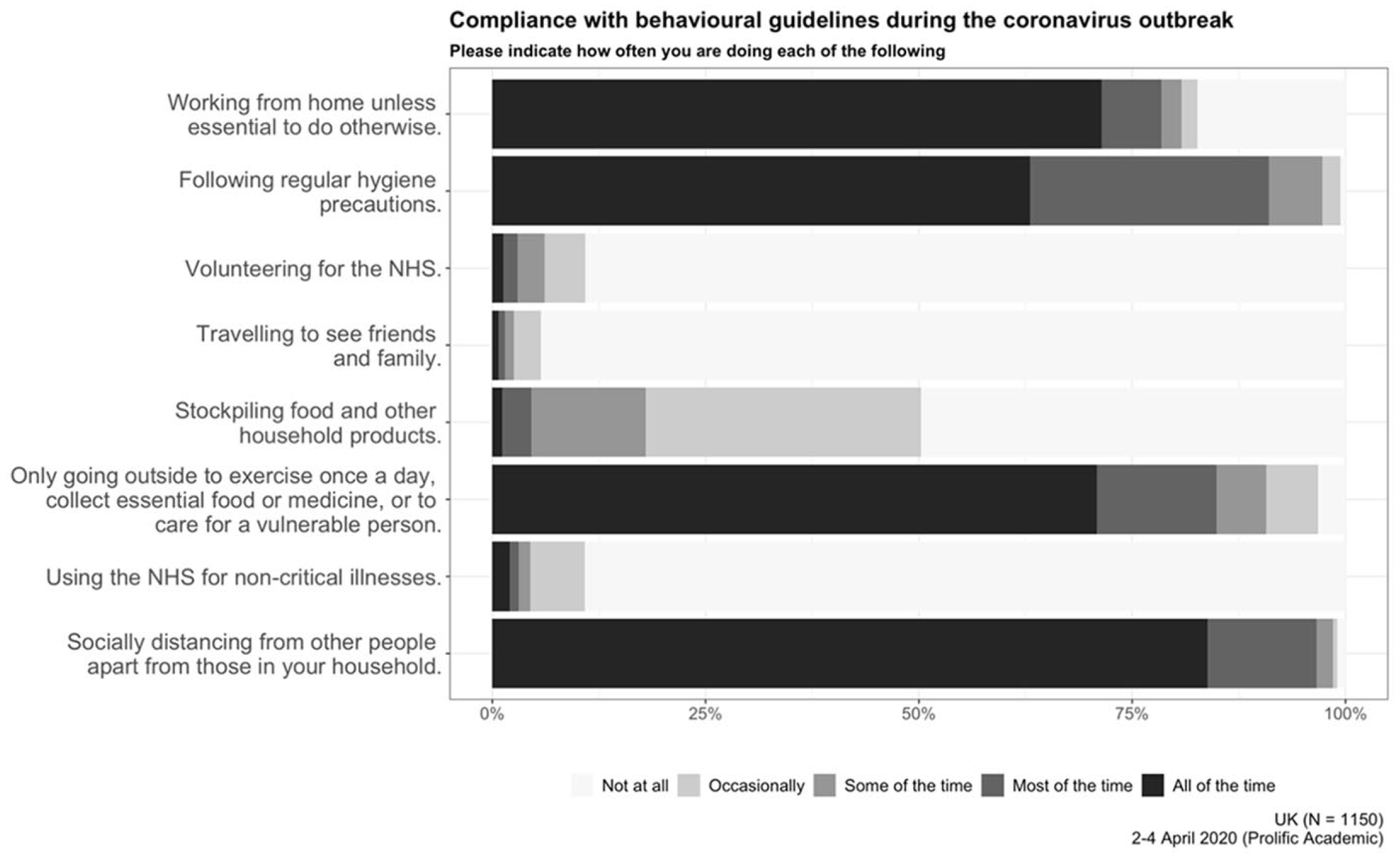
Frequency Chart of Public Compliance with Official and Unofficial COVID-19 Guidelines.
Among politicians, horizontal coordination (measured as policy agreement) also appears to have faltered along partisan fault lines (Figure 3). Some of these differences reflect long-standing ideological traditions in the UK’s political parties on the Left and Right. For instance, Conservative councillors reported higher agreement with financial packages aimed at supporting UK business. By contrast, Labour councillors reported much higher support for covering the wages of those individuals who were unable to work or those made redundant during the pandemic (81% ‘strongly agreed’ compared to just 51% of Conservatives). The largest disagreements between elected councillors occurred where policy options involved a transfer of power to the incumbent Conservative Government in Westminster. For example, more than 50% of Conservative councillors ‘strongly agreed’ with an emergency powers act compared to fewer than 15% of both Labour and Liberal Democrat councillors. Taken together, these statistics suggest that local politicians were governing without uniform consensus at the height of the COVID-19 crisis.
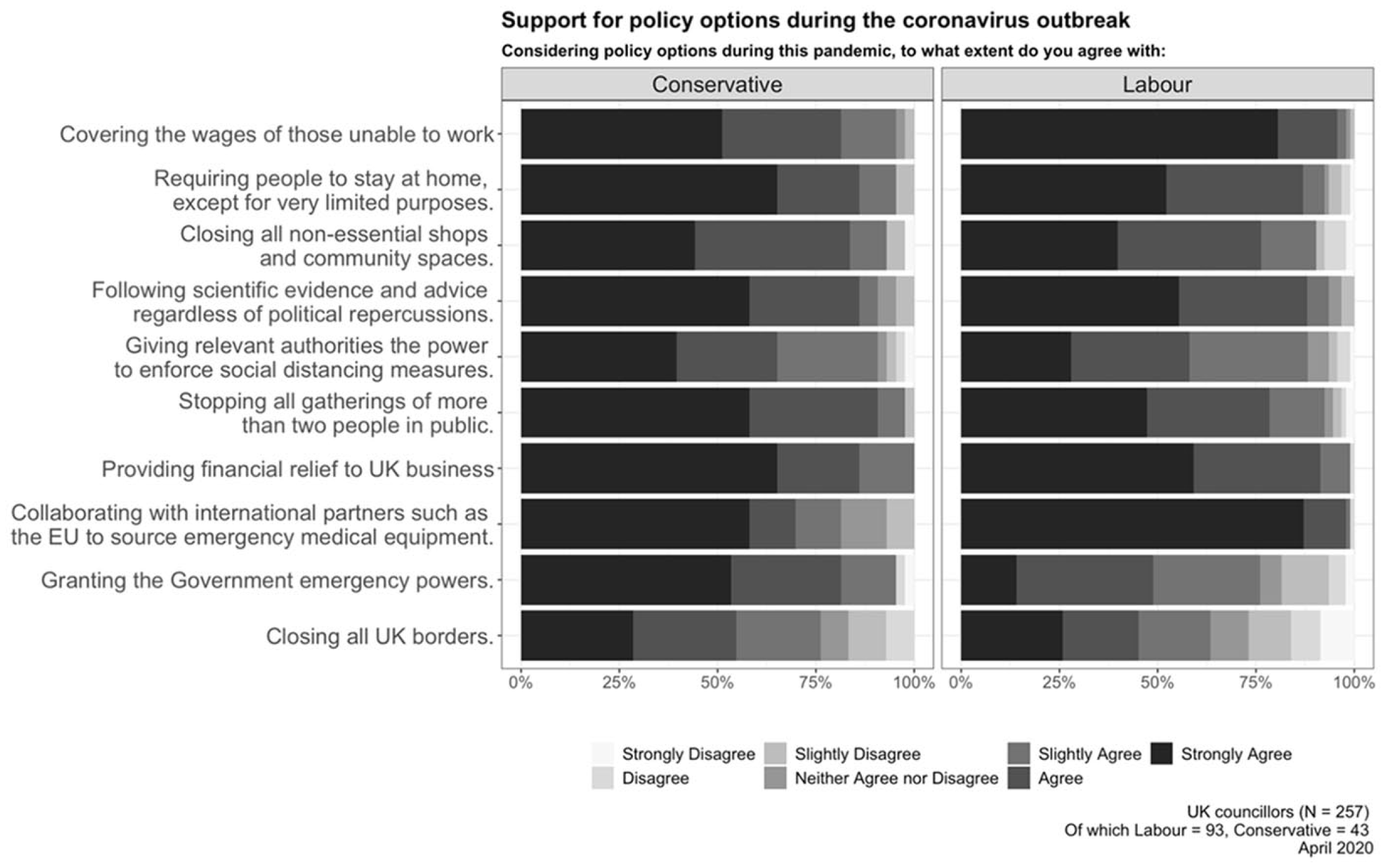
Frequency Chart of Politicians’ Support for COVID-19 Policy Options.
Political Trust and Distrust
Data collected from four iterations of the PTB-24 point to three important observations. First, public trust [distrust] was higher [lower] in councillors than MPs at the height of the COVID-19 crisis (Figure 4). The difference between the public’s cognitive trust and distrust in MPs is particularly stark, illustrating not only a lack of conscious belief in their technical ability, benevolence or integrity (i.e. trust) but also a conscious expectation of harm or betrayal across those same characteristics (i.e. distrust). Second, councillors’ perceived public trust [distrust] in themselves as politicians was actually higher [lower] at the height of the COVID-19 crisis than their own trust [distrust] in other councillors (Figure 5). This would suggest, at a broad level, that local politicians felt that the public placed more trust [less distrust] in them personally than they placed in their own colleagues.
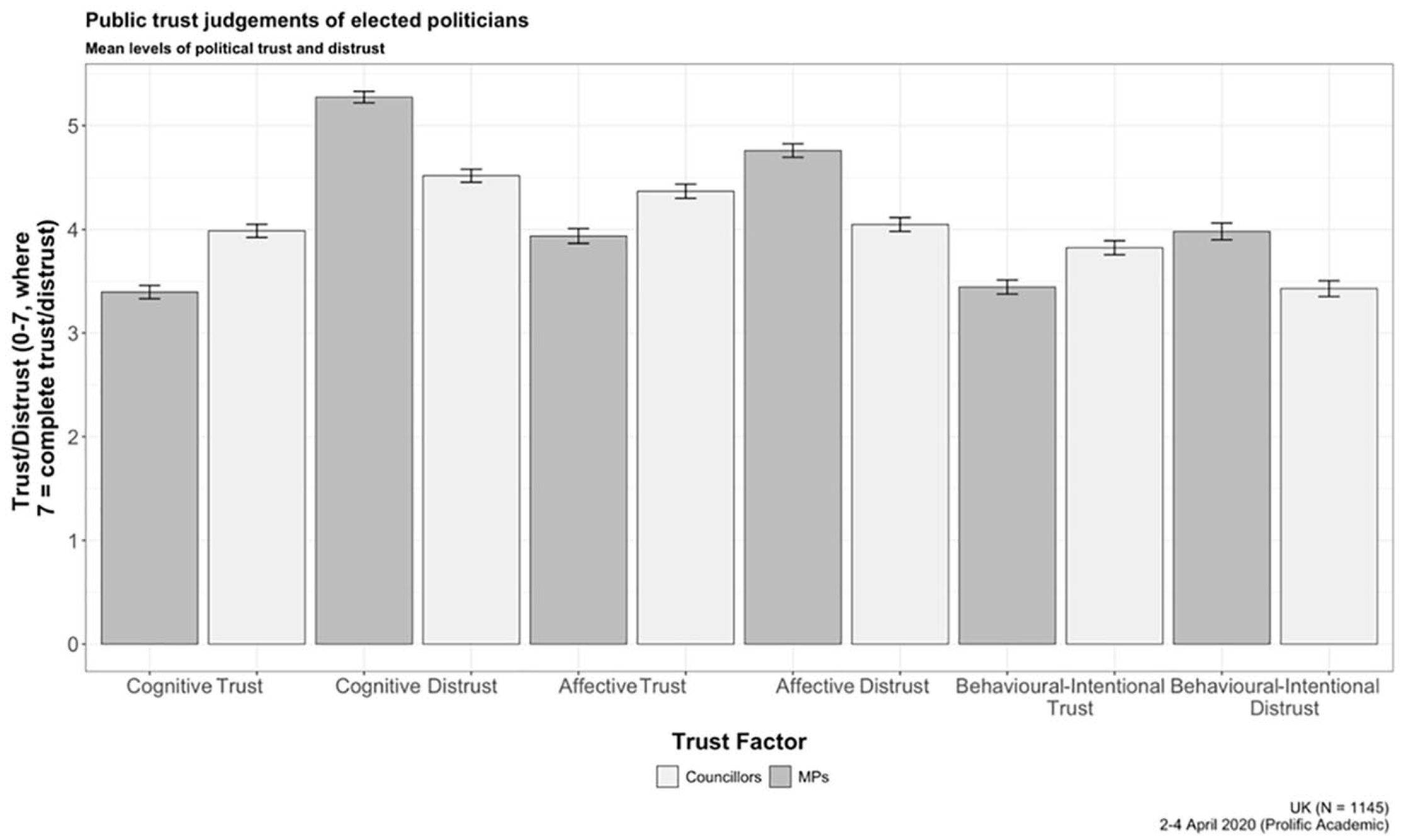
Vertical Trust and Distrust by the Public in Politicians.
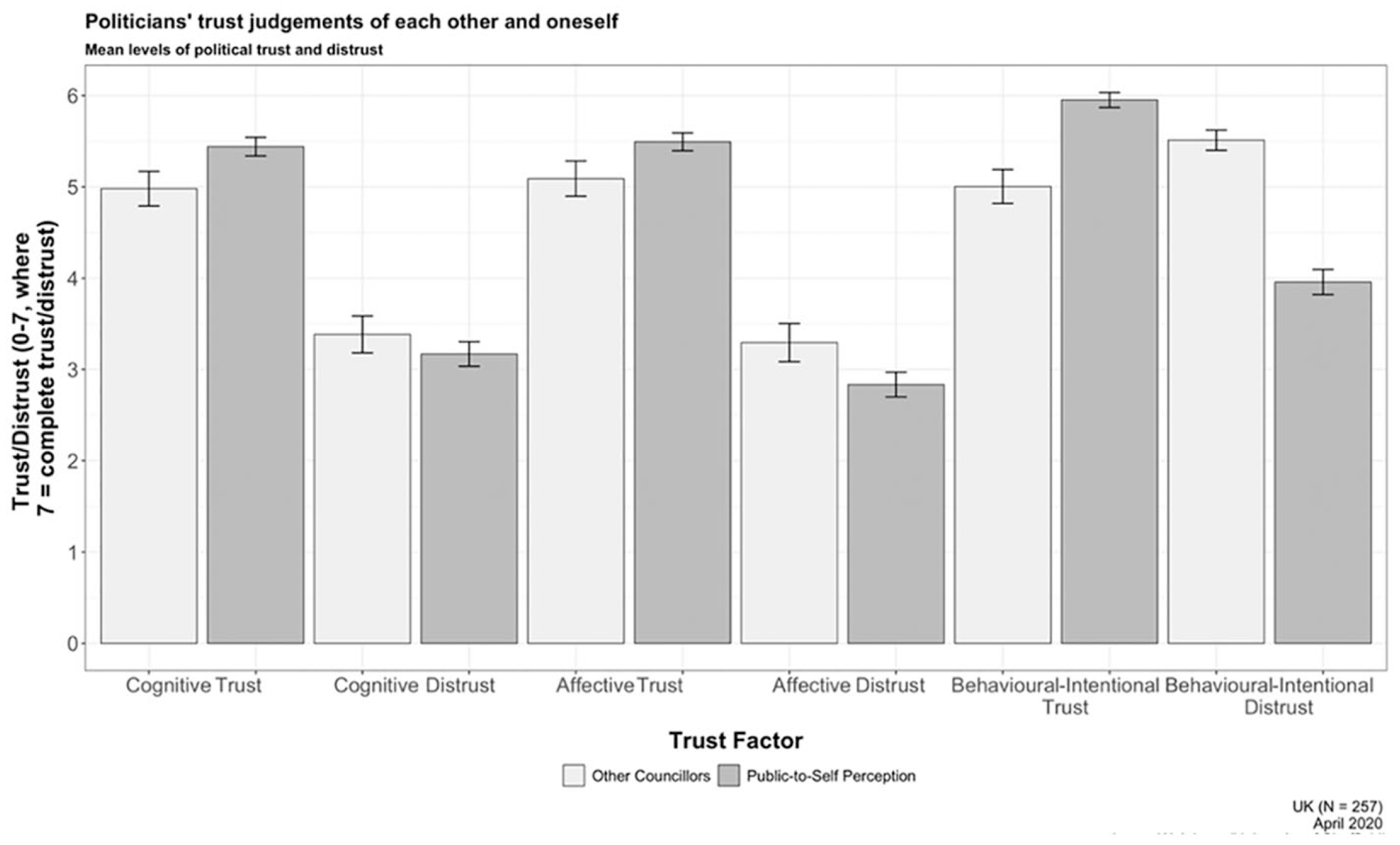
Political Trust and Distrust (Horizontal and Vertical Perceptions) among UK Politicians.
Of the different facets of distrust measured here, only councillors’ self-reported behavioural-intentional distrust in other councillors rises above the scale mid-point. This may reflect something unique about the dynamics of behavioural-intentional distrust based on monitory decisions at a horizontal level in politics. By virtue of holding political office, politicians can command responses from one another (and leaderships in particular) on key concerns via informal means (e.g. conversations over a shared lunch break) or formal avenues (e.g. written questions or committee hearings) in a way that reduces the foundations for horizontal cognitive and affective distrust while simultaneously bolstering the avenues through which to exercise horizontal behavioural-intentional distrust.
Third, councillors’ perceived public trust [distrust] in themselves as politicians was substantially higher [lower] than the public’s actual trust [distrust] in councillors at the height of the COVID-19 crisis (Figure 6). In particular, the gap between real and perceived behavioural-intentional trust is stark. This would suggest, based on items in the PTB-24, that councillors believe the public is much more likely to speak openly with them, seek help from them, or even vote for them than is the case in reality. After completing this iteration of the PTB-24, councillors were asked to describe ‘who’ they had envisioned as constituting ‘the public’ when responding to each item. An overwhelming majority (88%) claimed to be thinking about all residents in their council area, whereas just 8% pin-pointed their direct electors and only 4% highlighted the wider British public. These data suggest, on the one hand, that politicians perceive vertical trust within geographical representative blocs and, on the other hand, that they remain conscious of broader public opinion beyond their own vote base.
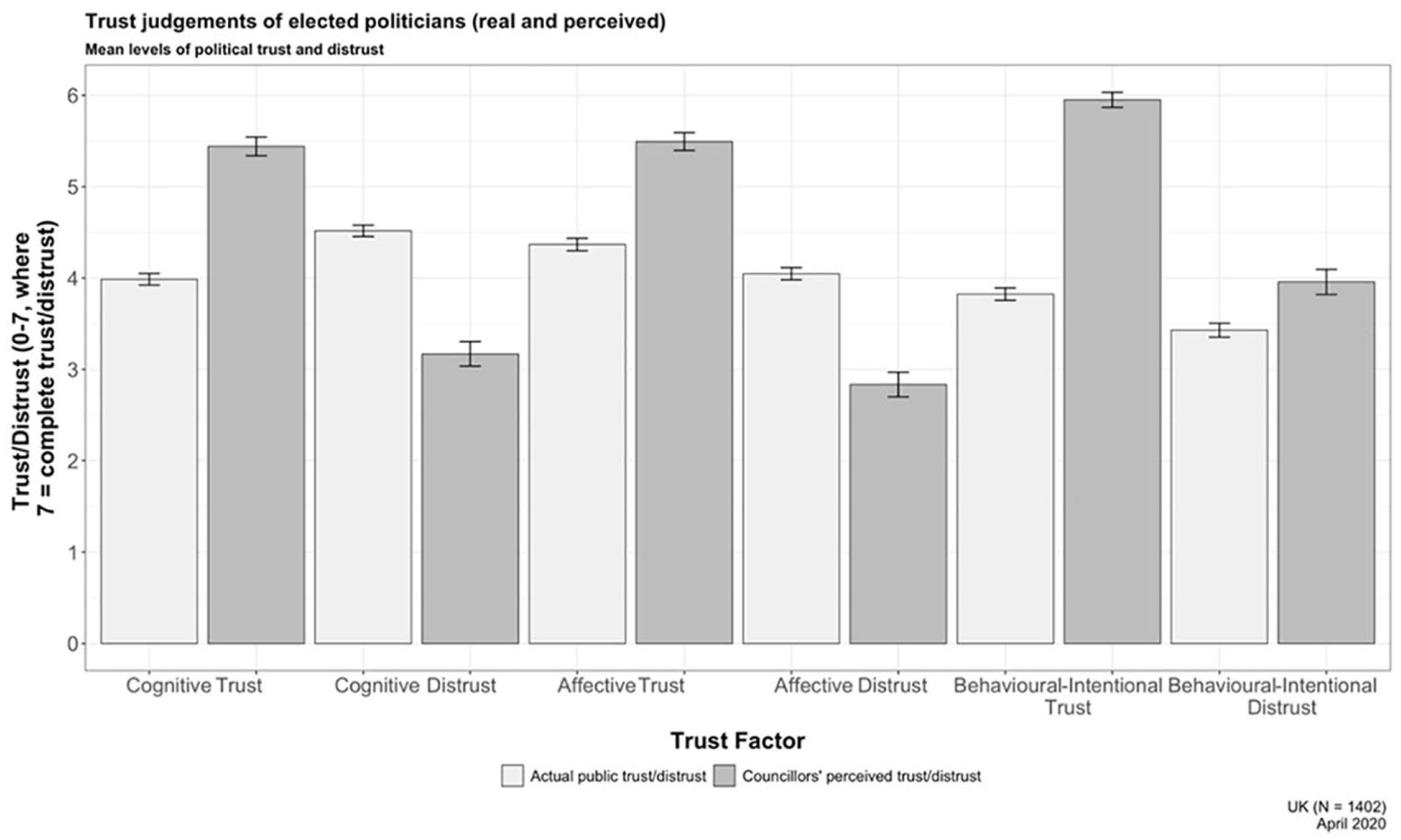
Vertical Political Trust and Distrust (Perceived and Real) between UK Politicians and the Public.
Political Trust/Distrust and COVID-19
This article now presents path analyses carried out in R using the Lavaan package to establish whether or not political trust/distrust was associated with levels of vertical and horizontal coordination at the height of the COVID-19 crisis (as per H1–H8). To be precise, (a) trust and distrust judgements were regressed on participants’ propensity to trust as well as their satisfaction with politicians’ handling of the COVID-19 crisis at the time of data collection; (b) compliance with official COVID-19 policies (mass sample) or support thereof (elite sample) was regressed on participants’ trust and distrust judgements; and (c) a constellation of salient control variables were included (as per Tables 1 and 2). Four models were calculated in total to utilise each of the four iterations of the PTB-24 completed by the sample populations. 4 All models were run using maximum likelihood estimation with robust (Huber–White) standard errors, and the six trust/distrust factors were allowed to co-vary freely. The full results can be found in Online Appendix C.
As anticipated, vertical trust in MPs shares a meaningful relationship with levels of behavioural compliance (Figure 7). In particular, those with the most affective trust in MPs complied with legal guidelines approximately 9% more regularly than those with the worst affective appraisals of MPs. Put another way, the more faith, confidence and hope that participants had in MPs generally (affective trust), the more likely they also were to abide by COVID-19 policies (H1 partially supported). Antithetically, behavioural-intentional trust shares a negative relationship with public compliance in the present sample (H1 partially unsupported). To be precise, the more that participants expressed openness towards and dependence on MPs, the less likely they were to comply. This is an instinctively anomalous result that may be confounded by variables outside of these models.
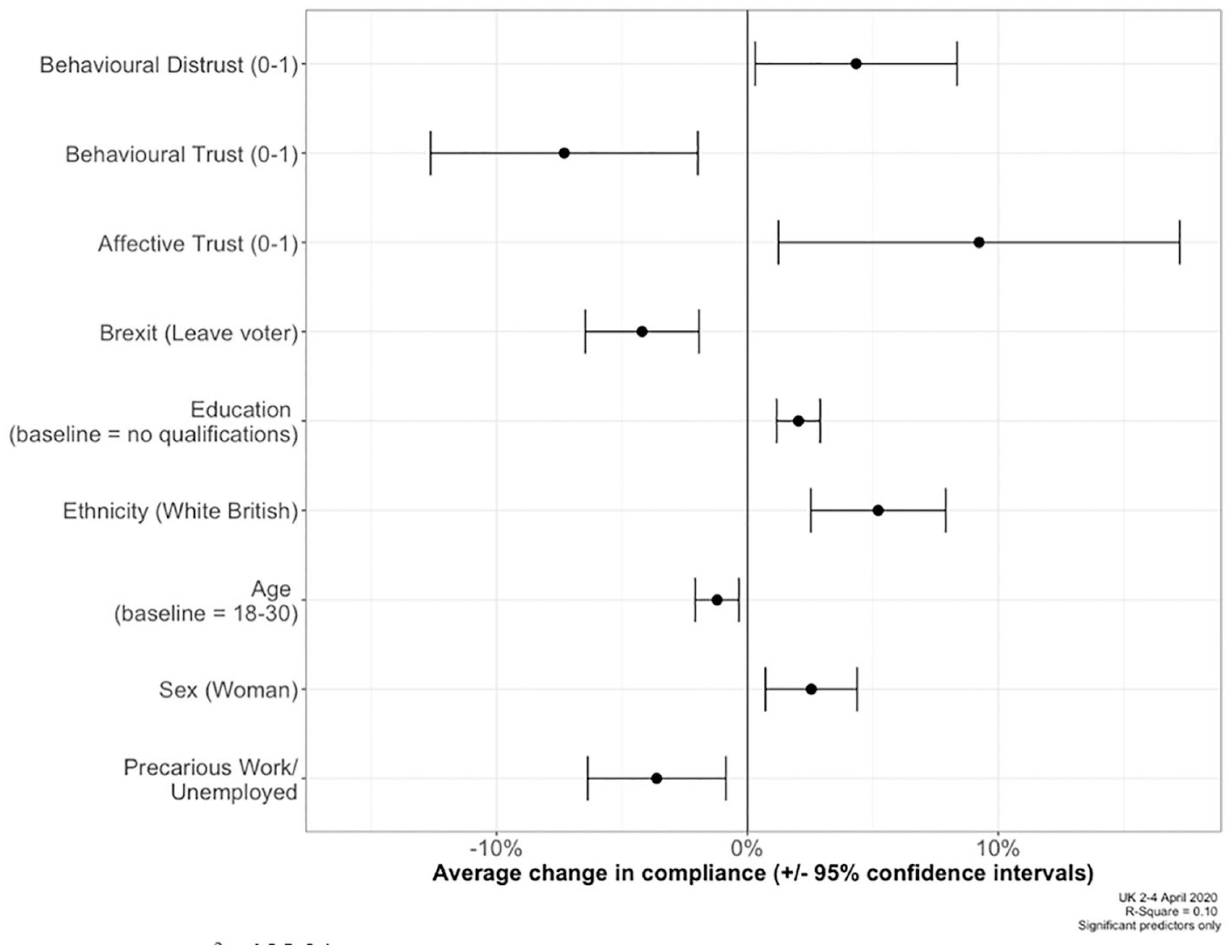
Public Trust in MPs and Compliance with COVID-19 Policies.
There is no evidence to suggest that cognitive and affective distrust in MPs was associated with lower rates of compliance during the UK’s first lockdown (H4 unsupported). Yet in line with prior expectations, behavioural-intentional distrust in MPs does share a positive association with levels of public compliance (H7 supported). At the same time, no meaningful relationships emerge between the public’s trust/distrust in councillors and their levels of behavioural compliance at the height of the COVID-19 crisis. This may reflect the saliency of trust in national politicians at a time when power was more centralised than usual, and crisis-related behavioural policies such as those tested in this study were issued directly from Westminster.
Analyses carried out on the elite sample suggest a strong association between participants’ behavioural-intentional trust in other councillors and their policy support during the first wave of the coronavirus pandemic (H2 partially supported; Figure 8). On average, councillors with the most positive behavioural-intentional trust judgements of other politicians scored 18% higher for policy support than those with the lowest levels of horizontal behavioural-intentional trust in this sample. There is no evidence, however, that horizontal distrust (cognitive or affective) correlated with lower policy support (H5 unsupported) or that behavioural-intentional distrust could have increased it (H8 unsupported). Neither did a sound empirical relationship emerge between councillors’ perceived levels of public trust/distrust and their policy support (H3 and H6 unsupported), although perceptions of both cognitive distrust and behavioural-intentional trust were statistically significant at p < 0.10. Subject to further research, these results suggest that horizontal trust may matter more for crisis management, and for horizontal coordination between politicians in particular, than strategic vertical calculations based on poll ratings or perceptions of public support.
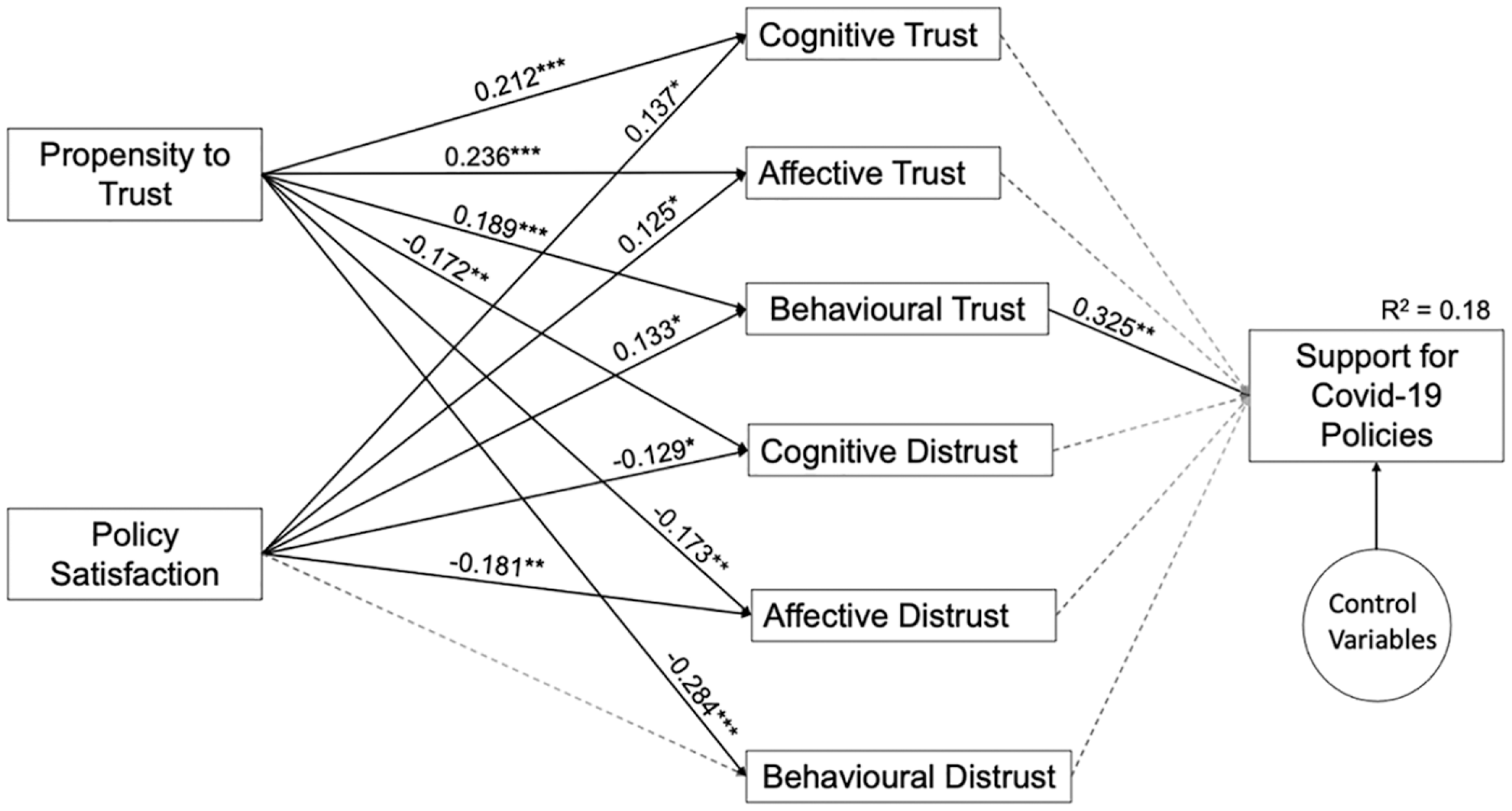
Path Analysis of Elite Trust in Other Politicians and Support for COVID-19 Policies.
For students of trust, and political trust in particular, it is worth noting that participants’ propensity to trust and policy satisfaction were, as hypothesised, strong predictors of the public’s trust and distrust in both councillors and MPs (Online Appendix C). Put simply, the higher a participant’s propensity to trust or COVID-19 policy satisfaction, the higher [lower] their cognitive, affective and behavioural-intentional trust [distrust] judgements about politicians. The same is true for councillors’ horizontal trust/distrust in other politicians (Figure 8), but the theoretical paths proposed in Figure 1 do not hold for councillors’ perceptions of public trust and distrust. It is possible that strategic electoral considerations (and associated attitudinal variables) may override politicians’ psychological propensity to trust as the basis for vertical trust perceptions. In this instance, for example, councillors’ election margins are positively correlated with higher levels of perceived cognitive, affective and behavioural-intentional trust (see Table 2).
Discussion
This article provides a 360-degree appraisal of political trust (as well as distrust) and its effect on policy success in the UK at the height of the COVID-19 crisis. From a top-down perspective, behavioural-intentional trust between politicians does appear to have improved horizontal coordination. Where politicians felt more able to speak openly with their colleagues on council leaderships or seek help from them when necessary, they were also more willing to agree with difficult policy decisions that needed to be implemented during the COVID-19 crisis. In terms of understanding the broader relationship between trust and governance, this is a positive finding that supports the institutionalisation of distrust in our democratic institutions (e.g. Sztompka, 1999; Tilly, 2005). Put simply, political disagreements and policy formulations should be channelled into the democratic media of debate and consultation within legislatures wherever possible. Such arrangements necessarily reduce the costs of entering into trust-based relationships, diminish the saliency of distrust and, in turn, may lead to improved horizontal relations in times of crisis.
From a bottom-up perspective, this article finds important links between political trust, distrust and the public’s compliance with policy measures during the COVID-19 crisis. In particular, affectively driven vertical trust by the public in politicians (specifically MPs) appears to have aided adherence to otherwise large-scale and anti-social changes to their lifestyles. As politicians make difficult decisions about how to govern second or future waves of COVID-19 successfully (or indeed other public health emergencies), they should seek to increase the affective ties inherent in trust-based relationships with those they govern. Existing research on leadership styles in both the public and private sectors suggests that politicians may heighten ‘follower’ trust by making a number of strategic decisions to signal trustworthiness (for a meta-analysis of relevant studies, see Legood et al., 2020). Examples of such decisions are provided in Table 3. As per Figure 1, these recommendations are premised on the belief that [. . .] where trust refers to the act of trusting or not trusting [such as complying with Covid-19 measures], trustworthiness entails an evaluation of those criteria that constitute trust and consequently, influences both the direction and intensity of any decision to act in a trusting manner (Bews and Rossouw, 2002: 378).
Strategies for Inculcating Policy Compliance via Trustworthiness.
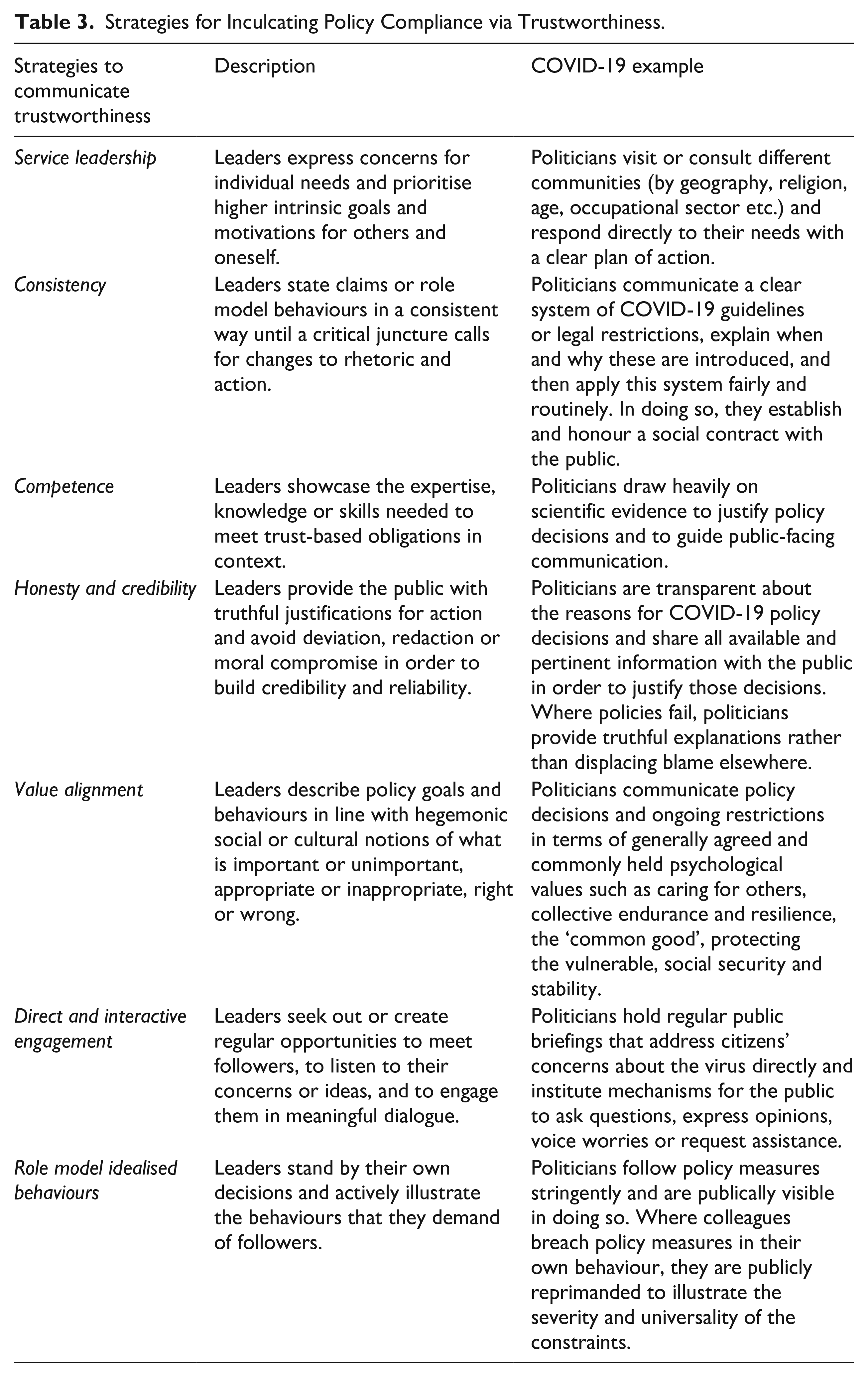
When the stakes of non-compliance are high as in the case of the COVID-19 crisis, politicians must utilise that which is in their control: that is, the characteristics they demonstrate for citizens in order to (a) inspire positive trust judgements based on hope, confidence and assurance, which then (b) invite reciprocal trust-based behaviour.
It is worth noting that the leadership strategies outlined in Table 3 are largely antithetical to a more transactional model of political leadership taken in the UK and elsewhere during the COVID-19 crisis. In particular, policy compliance and support have been incentivised using performance monitoring (e.g. numbers of cases and deaths), contingent reward (e.g. promises of lighter restrictions or more funding), blame attribution (e.g. negative coverage of non-compliance or poor performance) and corrective action (e.g. local or hyper-localised lockdowns, fines and even curfews). Such transactional modes of leadership are unlikely to build trust (see Kelloway et al., 2005) or adequately account for the range of socio-economic, demographic and political covariates that also frame when, why and how people can afford to comply (see additional results reported in Online Appendix C).
The negative association between behavioural-intentional trust and public compliance found in this study does indicate, however, that some types of trust may not always be productive. On the one hand, citizens who are high in behavioural-intentional trust, and are otherwise comfortable rescinding political control to politicians, may be (a) less likely to pay attention to political news or participate in politics generally, and therefore (b) less likely to comply with radical policy decisions that demand high levels of public input. These are contentions that require further consideration. On the other hand, behavioural-intentional trust judgements are also quite different from affective and cognitive appraisals of politicians, insofar as citizens may be cynically inclined towards representatives while still expressing high levels of behavioural-intentional trust. To be precise, citizens may vote for MPs due to partisan affiliations or seek support from MPs out of a respect for the institutional power they hold, rather than out of any genuine belief in their personal competence, integrity or benevolence. Therefore, behavioural-intentional trust may not provide the same political capital as cognitive and affective trust, which are both personalised and directly warranted, when politicians try to enact policy decisions within and without crisis scenarios. Again, these inferences should inform future research in this area.
At the same time, distrust does not appear to have harmed behavioural compliance during the UK’s first COVID-19 lockdown. In fact, behavioural-intentional distrust – which manifests specifically as political scepticism – may even have improved vertical coordination. Zmerli and Van der Meer (2017: 1) argue that mistrust ‘plays an equally important role [as trust] in representative democracy. Critical citizens are more likely to engage in political activities and to keep office-holders accountable’ (see also Dalton and Welzel, 2014). Couched in citizens’ monitory relationship to their representatives, behavioural-intentional distrust speaks to the accountability function of mistrust, which, in turn, may have led to critical yet productive policy cooperation between citizens and governments at a time when crisis-related policies were heavily couched in third-party scientific expertise. From a purely academic perspective, the asymmetric effects of trust and distrust on behaviour presented in this study point to the benefits of understanding these two concepts as theoretically and methodologically distinct.
This research does, of course, suffer from a number of limitations. For example, elite data analysed here only provide insights about policy support among local politicians. Although councillors in the UK may have been at the proverbial coalface of implementing COVID-19 policy decisions in particular loci, those policies were instigated in Westminster. To fully appreciate the role of political trust and distrust demands a closer inspection of data taken from politicians at multiple tiers of governance. It is also possible that participants (both public and politicians) over-estimated their compliance or policy support due to social desirability bias at a time when there were strong social and legal norms attached to the measures described in the questionnaire (see also Daoust et al., 2020).
Given the inherent difficulties of identifying causal effects with cross-sectional data, it is important to interpret the findings presented here as indicative subject to replication in parallel contexts. To be precise, I cannot be certain that participants’ political trust/distrust was actually exogenous in these analyses when (a) all variables were measured at the same time (and may therefore share simultaneity) and (b) unforeseen confounding variables may exist that impact both predictor and outcome variables (omitted variable bias). As such, these results should be read as correlative rather than predictive until corroborated elsewhere by appropriate panel data or instrumental variable analysis.
Notwithstanding these limitations, this article makes a number of standalone contributions to the extant study of trust and governance. Theoretically and methodologically, this article advances research on political trust by detaching trust – as a generalisable predisposition – from domain-specific trust/distrust judgements and field-testing that theory with a new measurement instrument. Substantively, this article turns a traditional research focus on public trust in politics on its head by asking how trusted or distrusted politicians actually feel and how much trust or distrust they extend to other elected representatives. Preliminary evidence presented here suggests, for example, that politicians do not make accurate appraisals of a low-trust, high-distrust civic culture and that their trust judgements of other politicians do matter for levels of horizontal coordination. These findings carry important implications for future studies of representative democracy and political behaviour.
Supplemental Material
sj-pdf-1-psx-10.1177_1049732320931430 – Supplemental material for Can Political Trust Help to Explain Elite Policy Support and Public Behaviour in Times of Crisis? Evidence from the United Kingdom at the Height of the 2020 Coronavirus Pandemic
Supplemental material, sj-pdf-1-psx-10.1177_1049732320931430 for Can Political Trust Help to Explain Elite Policy Support and Public Behaviour in Times of Crisis? Evidence from the United Kingdom at the Height of the 2020 Coronavirus Pandemic by James Weinberg in Political Studies
Supplemental Material
sj-pdf-2-psx-10.1177_1049732320931430 – Supplemental material for Can Political Trust Help to Explain Elite Policy Support and Public Behaviour in Times of Crisis? Evidence from the United Kingdom at the Height of the 2020 Coronavirus Pandemic
Supplemental material, sj-pdf-2-psx-10.1177_1049732320931430 for Can Political Trust Help to Explain Elite Policy Support and Public Behaviour in Times of Crisis? Evidence from the United Kingdom at the Height of the 2020 Coronavirus Pandemic by James Weinberg in Political Studies
Supplemental Material
sj-pdf-3-psx-10.1177_1049732320931430 – Supplemental material for Can Political Trust Help to Explain Elite Policy Support and Public Behaviour in Times of Crisis? Evidence from the United Kingdom at the Height of the 2020 Coronavirus Pandemic
Supplemental material, sj-pdf-3-psx-10.1177_1049732320931430 for Can Political Trust Help to Explain Elite Policy Support and Public Behaviour in Times of Crisis? Evidence from the United Kingdom at the Height of the 2020 Coronavirus Pandemic by James Weinberg in Political Studies
Footnotes
Acknowledgements
The author would like to acknowledge the time taken by members of the PACE peer review group to read and comment on this paper during its development.
Declaration of Conflicting Interests
The author(s) declared no potential conflicts of interest with respect to the research, authorship and/or publication of this article.
Funding
The author(s) disclosed receipt of the following financial support for the research, authorship and/or publication of this article: This research was supported by the Leverhulme Trust (ECF-2019-023).

Supplemental Material
Additional Supplementary Information may be found with the online version of this article.
Online Appendix A. Descriptive statistics (percentages rounded to the nearest whole number). Online Appendix B. Survey battery of political trust and distrust fielded to UK politicians and the UK public. The text in parentheses indicates the different targets of trust (or trustees) used for each item in each iteration of the battery that was fielded to each sample. Whether an item taps latent trust or distrust is indicated in brackets at the end of each item. Online Appendix C. Mediation analyses of political trust and policy compliance/support.
Notes
Author Biography
References
Supplementary Material
Please find the following supplemental material available below.
For Open Access articles published under a Creative Commons License, all supplemental material carries the same license as the article it is associated with.
For non-Open Access articles published, all supplemental material carries a non-exclusive license, and permission requests for re-use of supplemental material or any part of supplemental material shall be sent directly to the copyright owner as specified in the copyright notice associated with the article.
