




Abstract
The article explores the conditions under which incumbent leaders in initially competitive political systems manage to offset democratic resistance and establish an authoritarian regime. Autocratisation – the transition from a competitive political system to a regime dominated by a single political force – is a challenging effort for an incumbent and involves interventions in three ‘arenas’ to achieve (a) public legitimation, (b) institutional reforms increasing political repression and (c) mass-scale co-optation. Focusing on Slovakia and Belarus in the 1990s, where autocratisation efforts failed and succeeded respectively, the article finds that co-optation plays a catalytic role in helping the incumbent pass institutional reforms and escalate repression without risking de-legitimation. In Belarus, co-optation engulfed society and the economy whereas, in Slovakia, a socioeconomic environment with greater autonomy from government limited the scope for co-optation. The Slovak opposition was able to find the resources and supporters necessary to fight back against the incumbent.
Keywords
Introduction
Autocratisation – the transition from an initially competitive system to an authoritarian regime – is a puzzling phenomenon. Aspiring autocrats face conditions that expose them to political competition and they must grasp any opportunities they have to limit their exposure (Weyland, 2016). Policy divisions, ideological differences and socioeconomic cleavages tend to generate a degree of political contestability that threatens incumbency. This article draws on the literature on democratic backsliding that observes how populist leaders trigger a process of democratic erosion, and builds on research on authoritarian stability that identifies repression, legitimacy and co-optation as three pillars of authoritarianism (Gerschewski, 2013). My focus is on understanding the interventions that propel a successful autocratisation effort in an initially competitive system as well as the conditions that can halt it.
By comparing Belarus, a case of successful autocratisation, with Slovakia, where a failed autocratisation effort occurred in the 1990s, this article expands the theoretical framework on authoritarianism by highlighting the role of co-optation in the successful case and by exposing the limitations for a populist agenda and repression tactics in the unsuccessful case. During the 1990s, incumbent leaders in Slovakia and Belarus sought to achieve a hegemonic position in politics. Vladimir Mečiar, the leader of the Movement for Democratic Slovakia (HZDS), served as the prime minister between 1992 and 1998 with a small period in opposition in 1994. Alexander Lukashenko (Aliaksandr Lukashenka), a political outsider, was elected president of Belarus in 1994. Belarus transitioned to an electoral authoritarian regime while Slovakia developed a democratic system and later joined the European Union (EU). Lukashenko exploited the state’s dominant role in the economy for the purpose of widespread co-optation eliciting the loyalty or complacency of state-dependent social and political actors. Co-optation weakened the capacity of the opposition forces to act as an effective political contestant even when they were united to contest his rule. By contrast, Slovakia’s socioeconomic environment gave its citizens greater autonomy from the government and more freedom to openly demonstrate dissent and support for the opposition. The opposition was able to recruit enough campaign resources to run a successful campaign against the governing coalition in 1998.
The puzzle of autocratisation
Political systems can transition from initially competitive conditions to competitive authoritarianism and electoral authoritarianism (Levitsky and Way, 2002; Schedler, 2002). The current literature on democratic backsliding focuses on consolidated democratic systems in which incumbent leaders with divisive populist agendas defy established democratic norms (Bermeo, 2016; Levitsky and Ziblatt, 2018; Runciman, 2018). 1 Favourable election results serve to legitimise the incumbent’s rule and practices. Noticing that electoral fraud and coup d’états have become less common in strategies for democratic backsliding, Bermeo (2016) observed the increasing use of institutional reforms to strengthen executive powers together with electoral manipulation tactics to increase the incumbent’s chance of winning elections, such as using government funds, changing electoral rules, harassing the opposition, keeping some candidates off the ballot and hampering voter registration. These tactics create a competitive authoritarian system, with an ‘uneven playing field’ favouring the incumbent even if governments face contestable elections and the outcome is still uncertain (Levitsky and Way, 2010, 30). Autocratisation deepens as the regime successfully uses these tactics to further limit its exposure to political competition. Deepening autocratisation leads to an electoral authoritarian system, where political parties participate in elections, but the governing party never loses power because it manages to effectively manipulate the political process and the elections themselves (Schedler, 2006). At this stage, all other parties are ‘without hope of being in government’ (Ware, 1996: 159 and 165).
The end of the road can be a situation resembling what Robert Dahl described as an inclusive hegemony (1971: 6, 8, 34), a regime with a formally open structure of political participation but a low degree of political contestation where elections are held, formal political rights exist, and adult citizens have the right to vote, to run for election and to join or form political parties but citizens and organisations have few opportunities to actually contest the government. A victory for the opposition, while not impossible, would require a level of ‘opposition mobilisation, unity, skill, and heroism far beyond what would normally be required in a democracy’ (Diamond, 2002: 24).
Building an authoritarian system from an initially competitive system is a challenging process. Without a coup d’état to eliminate the political opposition, aspiring autocrats must craft a strategy to lower their exposure to political competition and neutralise resistance to their autocratisation strategy while navigating through the constraints of a competitive system. A populist and anti-elitist rhetoric can help them justify their aggressive conduct against political opponents, civil society and democratic institutions, particularly under conditions of crisis (Halikiopoulou, 2019; Levitsky and Ziblatt, 2018). However, these tactics can backfire, exposing them to criticism from the opposition and triggering social protest. The opposition can unite discontented voters, attract defecting politicians, exploit diverse political preferences, identities and dividing lines, capitalise on policy failures and economic crises, and present an appealing alternative for government (Taggart and Rovira Kaltwasser, 2016). If the aim is to win elections with a claim of legitimacy, blatant tactics of repression, such as massive electoral violence and fraud, or direct bans on political participation could trigger a political backlash and an adverse institutional response. Against this prospect, the incumbent confronts a dilemma: should they severely and massively repress protests, jeopardising their political legitimacy?
Alternatively, the incumbent can cautiously expand the menu of manipulation and carefully escalate repression to the extent that it does not trigger such a backlash. In electoral authoritarian regimes, Schedler notes, there is electoral fraud and the banning or exclusion of opposition parties but governments may primarily rely on ‘softer’ tactics of manipulation, such as restrictions to access mass media and campaign finance, formal or informal suffrage restrictions on the opposition’s supporters, and coercion or corruption targeting dissenters and attracting supporters (Schedler, 2006: 3). Similarly, in actual competitive authoritarian systems, Levitsky and Way (2002: 53) observe that ‘members of the opposition may be jailed, exiled, or – less frequently – even assaulted or murdered’. Similarly, some of these tactics are associated with what the literature observes during the early stages of democratic backsliding, such as reforms to strengthen executive power, the harassment of the opposition and the media with threats, arrests and libel lawsuits, as well as institutional reforms and the use of co-optation practices (Bánkuti et al., 2012; Bermeo, 2016; Galston, 2018; Levitsky and Ziblatt, 2018).
While the literature gives us a comprehensive description of manipulative practices, it lacks a focus on their dynamic deployment in strategies unfolding over a period of time to sustain the process of autocratisation from an initially competitive system. Because both competitive authoritarianism and electoral authoritarianism are associated with a similar menu of tactics, it is important to establish how strategic tactics are deployed over time to support efforts by incumbents to build an authoritarian system.
An autocratisation strategy aims to build the conditions that make a typical authoritarian regime stable. Gerschewski identified three ‘pillars’ of stable authoritarianism: first, repression in the form of legal sanctions and bans coupled with intimidation and harassment, second, legitimacy, defined as popular support in the form of obedience and toleration for the regime and, third, co-optation aiming to tie socioeconomic and political actors to the regime (2013). Repression requires an institutional infrastructure to control political and social organisations with the systematic use of prohibitions, legal sanctions, police raids and systematic harassment, and circumscribes the scope of permissive social and political activity to be tolerated and contained (Ghandi and Przeworski, 2007; Reny, 2019). Legitimacy involves actions by authoritarian regimes to demonstrate popular support by combining the use of ideology, such as variations of nationalism, claims of good economic performance and public mobilisation events. Co-optation in authoritarian regimes primarily refers to the capacity to attach strategically relevant actors (or a group of actors) to the regime through institutional structures for inclusion and exclusion as well as engagement in corruption and clientelism (Gerschewski, 2013: 18–23). 2 Maerz adds that autocracies make several combinations of these strategies and often exploit democratic institutions with subtle interventions that limit the free exercise of political rights (2018: 18).
Unlike established autocracies, aspiring autocrats in competitive systems have not yet established the level of repression that characterises a stable authoritarian regime. Escalating repression can involve actions that, instead of reducing the incumbent’s exposure to political contestation, can delegitimise the incumbent and raise the risk of electoral defeat. Episodes of violence and political harassment would be exploited by the opposition and exposed by the press to a concerned public. Institutions such as the parliament and the judiciary could block the progression of the authoritarian strategy. In the presence of electoral processes, co-optation must involve the use of clientelism to reward a broader range of supporters and punish those who express dissent with exclusion or sanctions, together with the direct use of state resources to influence voters’ preferences, for instance, through propaganda. Besides engaging elite groups in politics, business, the media, labour unions, civil society and academia, a larger scope for clientelism must now target voters with patronage benefits and provide ‘club goods’ to larger groups such as organised workers (Ghandi and Przeworski, 2006; Kim and Gandhi, 2010; Magaloni, 2006; Magaloni and Kricheli, 2010). Politicising government-provided goods help authoritarian political regimes reduce their exposure to political competition in the elections they stage (Greene, 2010a, 2010b; Magaloni, 2006; Levitsky and Way, 2010). The effectiveness of co-optation to elicit changes in political behaviour depends on the degree to which social and economic actors are vulnerable to state distributions and clientelist rewards because they cannot easily exit to spheres of activity relatively autonomous from this practice (Trantidis, 2014).
Drawing on this body of literature, I conceive autocratisation as an effort to build a stable authoritarian regime against the confines of an initially competitive system where political parties, civil society organisations and rule-of-law institutions build a structure of democratic resistance. The three pillars of authoritarianism become three arenas for interventions by aspiring autocrats against vigilant political opposition forces, a politically active civil society and institutions prohibiting the extensive use of typical tactics of repression such as electoral violence, fraud or the banning of candidates. In the presence of competitive elections, the incumbent should maintain high levels of popular support and win elections. Escalating repression depends on a sequence of reforms that will undermine the institutional checks and balances in place and will be approved through voting and plebiscitary processes to support a claim of public legitimacy (Levitsky and Loxton, 2013). Co-optation tactics must give the incumbent a sizable advantage in political organisation and electoral mobilisation and must secure public approval for the institutional reforms leading to higher levels of repression. Figure 1 demonstrates that, in competitive political systems, aspiring autocrats can mix strategies for legitimation, repression and co-optation to create mutually reinforcing synergies.
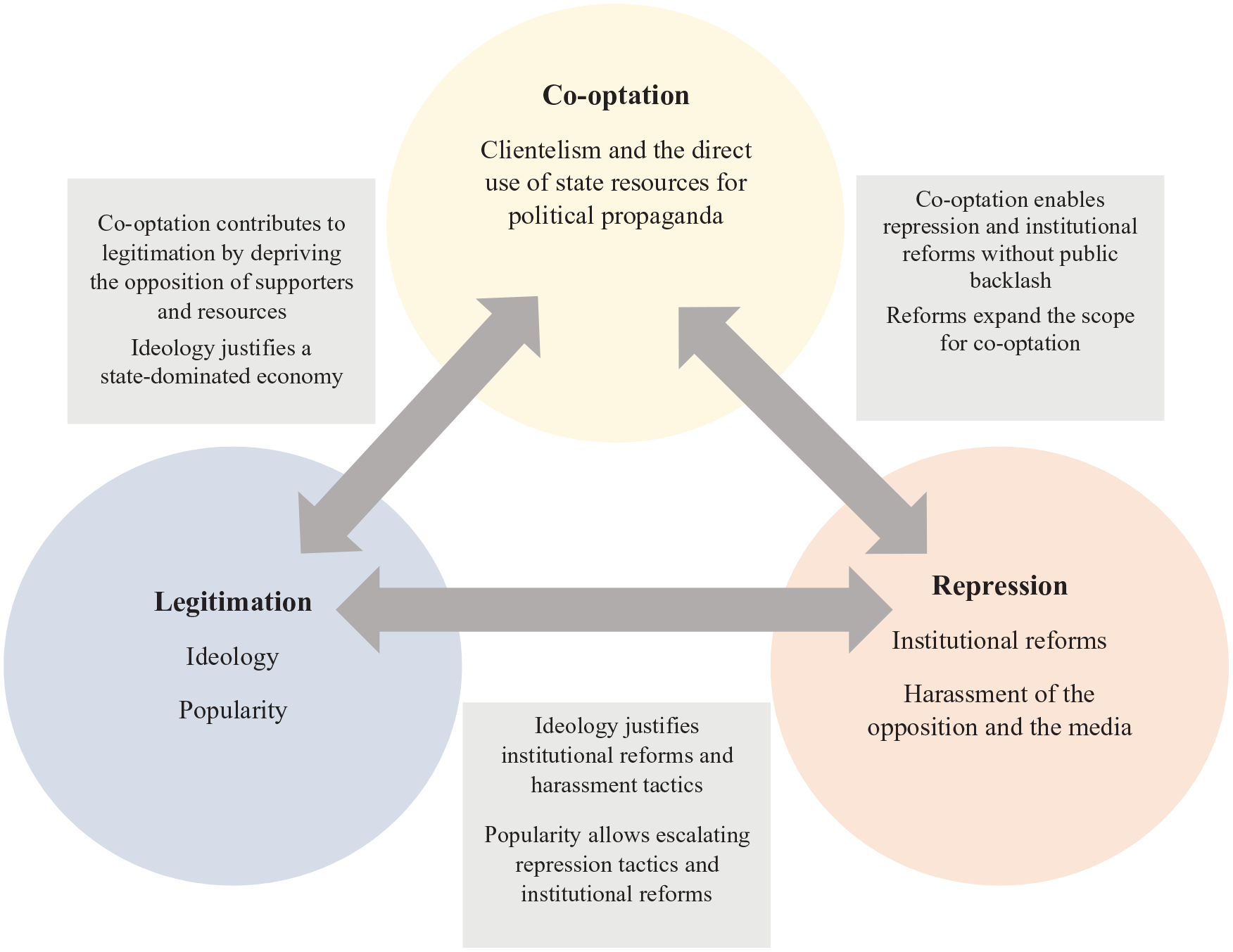
Synergies between co-optation, public legitimation and repression with institutional reforms.
Belarus and Slovakia
Belarus and Slovakia offer a comparative setting to study how interventions in the three arenas of autocratisation contributed to a process of autocratisation and how they were countered by democratic resistance. The two cases cover the widest possible variation of outcomes: successful and failed autocratisation from an initially competitive system with high levels of electoral volatility. 3 They share a similar historical background, a proximate geographical position and middle to high levels of socioeconomic development. 4 Belarus was a Soviet republic until 1991 while Slovakia was part of Czechoslovakia until 1993, a former Soviet Union’s satellite state. Soon after the collapse of communism, the two countries became independent states and embarked on a political and economic transition from a socialist economy and a one-party regime. Mečiar lost power in 1998 while Lukashenko won a series of overwhelming political victories.
Methodologically speaking, the two countries, like any other comparative set of historical case studies, cannot match the conditions of a natural experiment to offer full control over an exhaustive list of variables. However, due to a degree of similarity, they can specify a narrower set of theoretically relevant processes that accounted for their divergent trajectories (see Mahoney, 2010; Mahoney and Rueschemeyer, 2003: 3; Slater and Ziblatt, 2013: 1302, 1304). Identifying these differences highlights the explanatory pathways and processes that were causally relevant (Mahoney, 2000: 393 and 398). By tracing explanatory processes contextually and temporally to address questions of ‘how’ and ‘why’? (Yin, 2014: 7–12), research can make some analytic generalisations to previous theoretical propositions found in the literature (Yin, 2014: 20–21).
The divergent political trajectories of Lukashenko and Mečiar cannot be ascribed to differences in their political charisma and communication skills. Both leaders achieved a meteoric ascent to power and were astute enough to hold on to it for several years. Both leaders sought to develop a strong executive branch. They rejected policies of rapid economic reform at a time when Belarus and Slovakia had some of the highest approval rates of the communist economic system among post-communist countries (Rose and Haerpfer, 1996: 26). They carefully distanced themselves from the political and economic legacy of communism but appealed to public nostalgia for aspects of that era, such as socialist-style welfare protection and job security. They exploited historical memories and public sentiments to draw politically favourable divisions: in Slovakia, mistrust towards the Hungarian minority and, in Belarus, the memories of the brutal German occupation and the desire for closer association with Russia.
Explanations for why democratisation was halted in Belarus have ranged from the country’s socioeconomic model, Lukashenko’s personality cult and the repressive tactics he employed against the opposition (Marples, 2006: 356) to his political charisma and astute advocacy of state ownership in a presidential system (Ioffe, 2007: 49–54), his carefully crafted ideology for national identity and the economy (Leshchenko, 2008), the harassment of the opposition and the press, co-optation tactics, and the institutional reforms that strengthened executive power (Silitski, 2005). Some of these strategies are observed in the Slovak case too: populism built around an economic approach to reforms and national identity, the harassment of the press and the opposition as well as efforts to reform the institutions to strengthen executive power (Carpenter, 1997).
Table 1 summarises the similarities and differences in the strategies employed by two leaders to build a hegemonic political position against key strategic aspects of democratic backsliding and key characteristics of competitive authoritarianism as identified by the literature.
Strategic aspects of autocratisation and outcomes in Slovakia and Belarus.
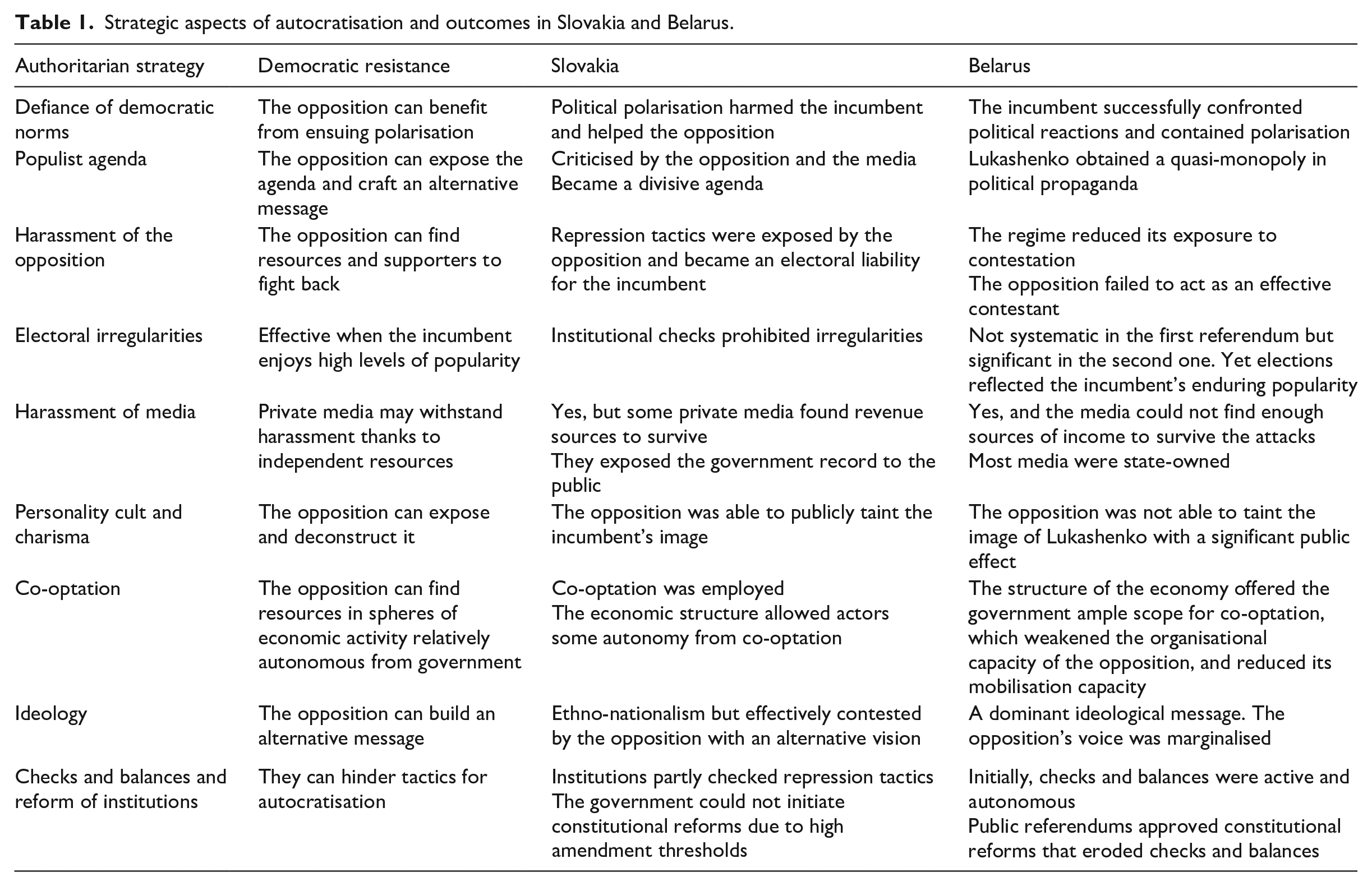
The table shows that the divergent trajectories of Slovakia and Belarus can be pinned down to differences in popularity, institutional constraints and the magnitude of co-optation. These differences correspond to the three arenas of autocratisation, namely maintaining public legitimacy, reforming institutions and engaging in co-optation. Indeed, leaders in Slovakia and Belarus took actions in each of these arenas for
Public legitimation with a populist rhetoric adjusted to reflect popular concerns during the early transition period, and an effort to delegitimise their political opponents as unpatriotic and corrupt;
Repression with an effort to centralise power, control the judiciary and undermine institutional checks and balances, besides the systematic harassment of the opposition, involving the police and the secret services; and
Co-optation, with the use of state resources and the government’s regulatory and distributional powers.
The comparative study of Slovakia and Belarus allows research to look at how interventions in each of the three arenas of autocratisation were related to one another and how their synergy contributed to the outcome in each case (George and Bennett, 2005: 18; Sayer, 1992: 106–107). The two cases stand between two distinct sets of theoretical observations on strategic aspects of autocratisation: on the one side, the literature of democratic backsliding focuses on relatively early processes of erosion with ongoing observations coming from Hungary, Turkey and Poland, and, on the other side, the literature on competitive authoritarianism observes already established regimes. Slovakia and Belarus were not consolidated competitive authoritarian regimes at the time, but they were environments experiencing the liberation of social and political forces from authoritarianism in ways that generated a competitive political system and carried the prospect of democratic consolidation for the near future. This environment allows us to observe a tug of war between new political forces centrifugal from the old authoritarian regime and those forces that were centripetal to a new authoritarianism. If the Slovak political system managed to survive an autocratisation effort under these conditions, there must be something to be found in that case compared with Belarus that can tell us how a competitive system survives.
Successful resistance to autocratisation in Slovakia
In Slovakia, the Mečiar years between 1992 and 1998 mark the time period in which an autocratisation effort unfolded and failed. Slovakia during Mečiar years was described as a façade democracy (Gill, 2002: 7), a ‘delegative democracy’ (Szomolányi, 1997: 20) a ‘democratic tyranny’ (Toma and Kováč, 2001: 304–305) at risk of becoming a ‘one-man rule’ (Pridham, 1999: 1227) and an effort to build a power monopoly similar to the model of the Mexican Institutional Revolutionary Party (Fish, 1999).
Mečiar came to power in the 1992 parliamentary election, when his party (HZDS (The People’s Party – Movement for a Democratic Slovakia)) received 37.26% of the votes and formed a government with the Slovak Nationalists. Due to the proportionality system, the government relied on a parliamentary alliance. Efforts to impose discipline in the governing party and the coalition led to defections and the loss of a parliamentary vote of confidence in March 1994. In a poll conducted by the Czechoslovak Statistical Office, 82% of the respondents opposed his removal from the post of the Prime Minister (Henderson, 2002: 40). Mečiar presented himself as victim of a political conspiracy (Toma and Kováč, 2001: 301). In the following election, his party won 35% of the vote and formed a coalition government supported by the Slovak National Party (SNS) representing 5.4% of the popular vote, and the Union of the Workers of Slovakia (ZRS) representing 7.34% of the vote. Mečiar’s opponents were ideologically diverse and split into small political parties, each of which barely exceeded 10% of the vote. The party’s dominant position in Slovak politics depended on relative popularity scores against his opponents and on keeping the governing coalition united (Kopecky and Mudde, 2000).
The HZDS had an eclectic and incoherent political message that combined elements from pre-war nationalism and post-war socialism (Carpenter, 1997; Haughton, 2001; Toma and Kováč, 2001: 304–305). During the final Czechoslovak years, the party promoted the idea of equal partnership between the Slovaks and the Czechs and political autonomy for Slovakia. After independence, it developed an ethno-nationalistic narrative pitting Slovak identity against the Hungarian minority (Deegan-Krause and Haughton, 2009; Toma and Kováč, 2001). In economic policy, the party promised a slower pace of reforms. In foreign policy, it developed the idea of ‘neutral Slovakia’ with close diplomatic and economic relations with Russia and later accepted the prospect of Slovakia’s EU accession. Throughout the years in power, the party’s authoritarian-populist rhetoric involved attacks on the opposition for allegedly ‘suspicious’ connections with the Hungarian minority and foreign actors, such as George Soros.
Earlier accounts attributed Mečiar’s success to his hybrid ideology of ‘nationalist populism’ tailored to suit the country’s political culture (Carpenter, 1997). This rhetoric was indeed intense during the 1998 election but was successfully countered by an equally vocal opposition that presented Mečiar as a threat to the democratic future of Slovakia and an obstacle to the country’s accession to the EU. Amid a polarising political scene between pro-Western political forces and Mečiar’s nationalist bloc (Wightman and Szomolänyi, 1995), the opposition, and part of civil society and the media managed to send a credible message to voters that Slovakia’s European aspiration depended on the survival of the democratic system (Fitzmaurice, 1999). Figure 2 summarises the actions the Mečiar government took to propel autocratisation and the unfavourable political and social environment it confronted.
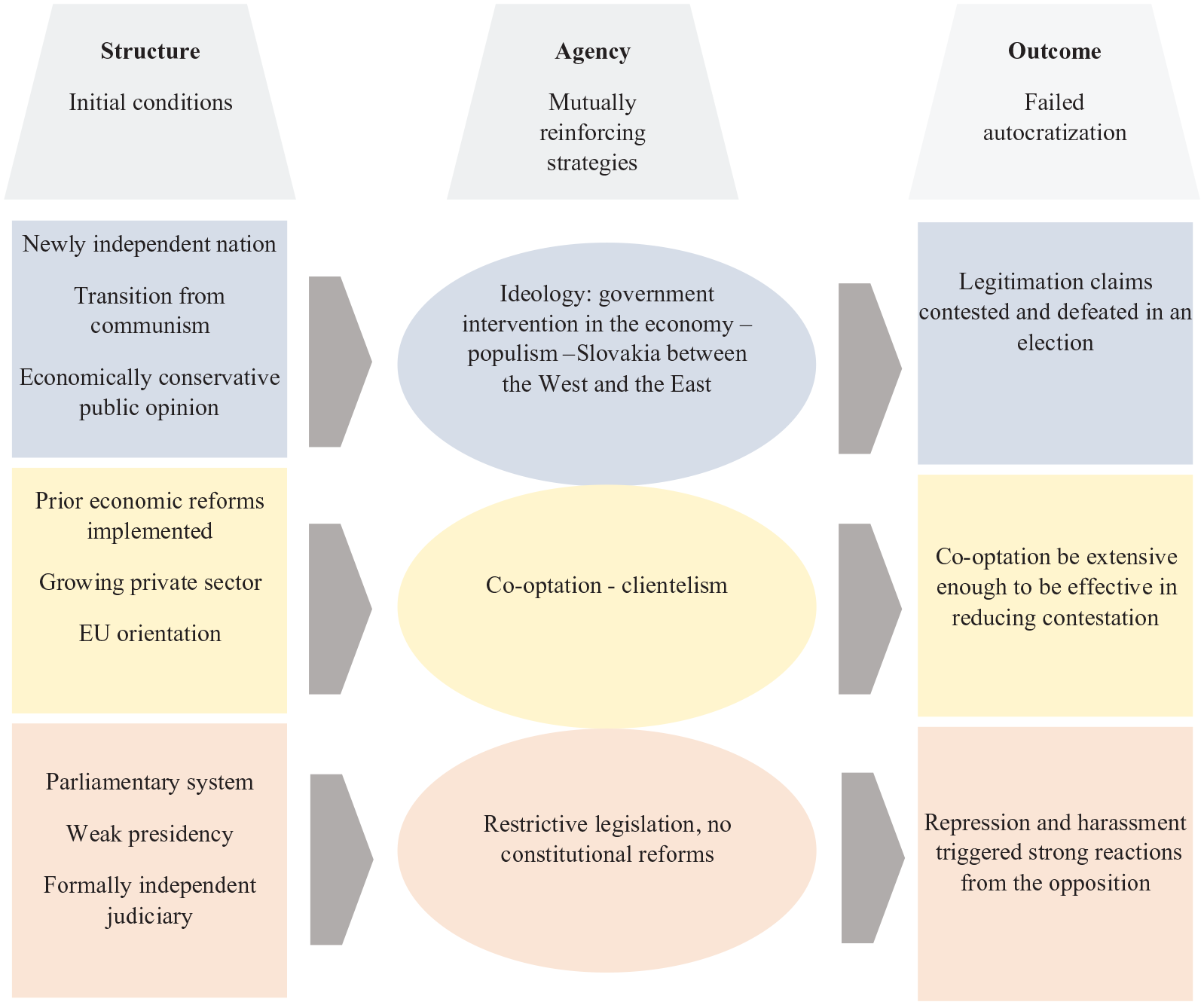
Failed autocratisation in Slovakia.
Efforts by the Mečiar government to defy democratic norms were described as a ‘struggle over the rules’ (Szomolányi, 1997: 18). The government made efforts to control the judiciary with appointments and promotions of judges loyal to the government party (American Bar Association–Central and East European Law Initiative (ABA–CEELI), 2002: 17; Schönfelder, 2005: 21). Several judges managed to assert their independence in a number of rulings that checked government actions. The constitutional court declared several acts of parliament and executive decisions unconstitutional. The ruling coalition lacked control of two thirds of the parliament to change the constitution or remove the president from office. Instead it relied on passing legislation to curtail his powers. On several occasions, the majority of the MPs in the Slovak parliament, including his coalition partners, vetoed legislative initiatives (Toma and Kováč, 2001: 285).
Using both legislative actions and financial redistribution, the Mečiar government sought to prevent the opposition from mobilising supporters. It restricted the development of an autonomous civil society in the areas under its direct control, such as universities, local governments and state-regulated foundations (Malova, 1997). Mečiar’s authoritarian-populist agenda was manifested in acts of harassment and violence targeting the opposition and civil society organisations. A series of attacks against opposition politicians and journalists implicated the secret services that operated under direct government control (Fish, 1999; Toma and Kováč, 2001: 285). The most notable case was the abduction of the president’s son in 1995. Investigative journalists and political opponents were targeted with lawsuits and were subject to illegal surveillance, threats or assaults such as car bombs, arsons and burglaries in a spiral of episodes that fuelled political polarisation (Committee to Protect Journalists (CPJ), 1997).
The government also sought to create a favourable media landscape and silence criticism with administrative controls over broadcasting and press distribution (CPJ, 1996, 1997; Šipoš, 2004: 450, 456). Legislation was drafted to restrict the amount of money private companies could spend in media advertisement, but the bill failed to pass through the parliament. In 1996, the parliament approved an amendment to the Criminal Code, making it an offence to assist the dissemination of false information that could damage the interests of the Slovak Republic. Critics pointed to a barrage of lawsuits launched by government officials in an effort to intimidate journalists about what they could write and to force them to expose their sources (CPJ, 1997).
The efforts to silence and control the media landscape had limited success (Pridham, 1999: 1227). Private media were set up in Slovakia during the late Czechoslovak years and most of them were run by entrepreneurs who were doing business in a partly liberalised economy and wanted to gain social, economic and political influence (Šipoš, 2004: 457). Private-sector advertising supported the media’s financial autonomy from the government. Private investors launched a news agency to compete with the state-run company. In this landscape, the Slovak public continued to receive information from multiple sources, including media supporting the opposition. Private media exposed the government’s record of political harassment and economic scandals, which became a liability for Mečiar’s party during the 1998 electoral campaign. 5 The government passed a final amendment to the election law right before the election of 1998, which allowed only state-funded media to broadcast activities related to political campaigns during the thirty-day official campaign period. The privately owned TV Markiza had to cancel its ‘Leaders’ programme to avoid fines and losing its licence to operate.
As part of its strategy for co-optation, the Mečiar government took steps to reinstate a top-down control over various public organisations, such as the media, the bureaucracy, and the financial system (Carpenter, 1997: 212). Through its network of appointments, the HZDS-led government gradually gained control over housing cooperatives, the healthcare system, and the state-owned industrial sector. By penetrating both political and economic institutions, it was able to increase its hold on society and create a politically friendly business class (Haughton, 2001: 749). In the state sector, it established a system of patronage with dismissals of public servants that were not loyal to the government (Carpenter, 1997: 215). It also monitored the political activity of the public employees, which it could freely hire and dismiss (Way, 2015: 137). Outside the public sector, the Mečiar government tried to create a politically friendly business class (Haughton, 2001: 749) and sought to use the privatisation programme for that purpose. In December 1994, it suspended the voucher privatisation programme despite a 90% turnout of eligible participants and cancelled the scheduled sales of firms (Carpenter, 1997: 216; Toma and Kováč, 2001: 309). The government relaunched the privatisation programme in ways in which the state would keep control over the companies for sale and with processes that the opposition criticised as non-transparent (Carpenter, 1997: 216). Privatisation favoured HZDS-connected entrepreneurs who were invited to take control of publicly owned companies with subsidised loans from state-owned banks (Gould, 2012).
Despite these practices, large sections of civil society in Slovakia remained relatively autonomous from the government. Private economic activity was growing, following the wave of economic reforms that were enacted during the late Czechoslovak years. A growing and sizable private sector created an environment in which economic activity could grow independently from the government’s co-optation structure. Moreover, business actors, particularly exporters, were looking to the EU as a promising market and a source of regulatory and political stability (Glenn, 2000). Although Mečiar declared his support for Slovakia’s membership in the EU, the opposition parties attacked his record as inconsistent, arguing that his government brought political instability in the country and created an economic environment hostile to foreign investment and economic recovery, hindering Slovakia’s EU accession. Supported by civil society organisations and the media, the opposition’s message was vocal and visible.
The resilience and success of the Slovak opposition owes much to the support it received from business and non-governmental organisations, particularly in the 1998 election (Fitzmaurice, 1999). 6 The Slovak case indicates how a socioeconomic structure relatively autonomous from the government enables key social actors to help the opposition successfully confront and abort an autocratisation strategy. The opposition was able to find funding sources and media coverage to launch an effective political campaign that exposed the government’s record to public scrutiny. Figure 3 presents this observation graphically.
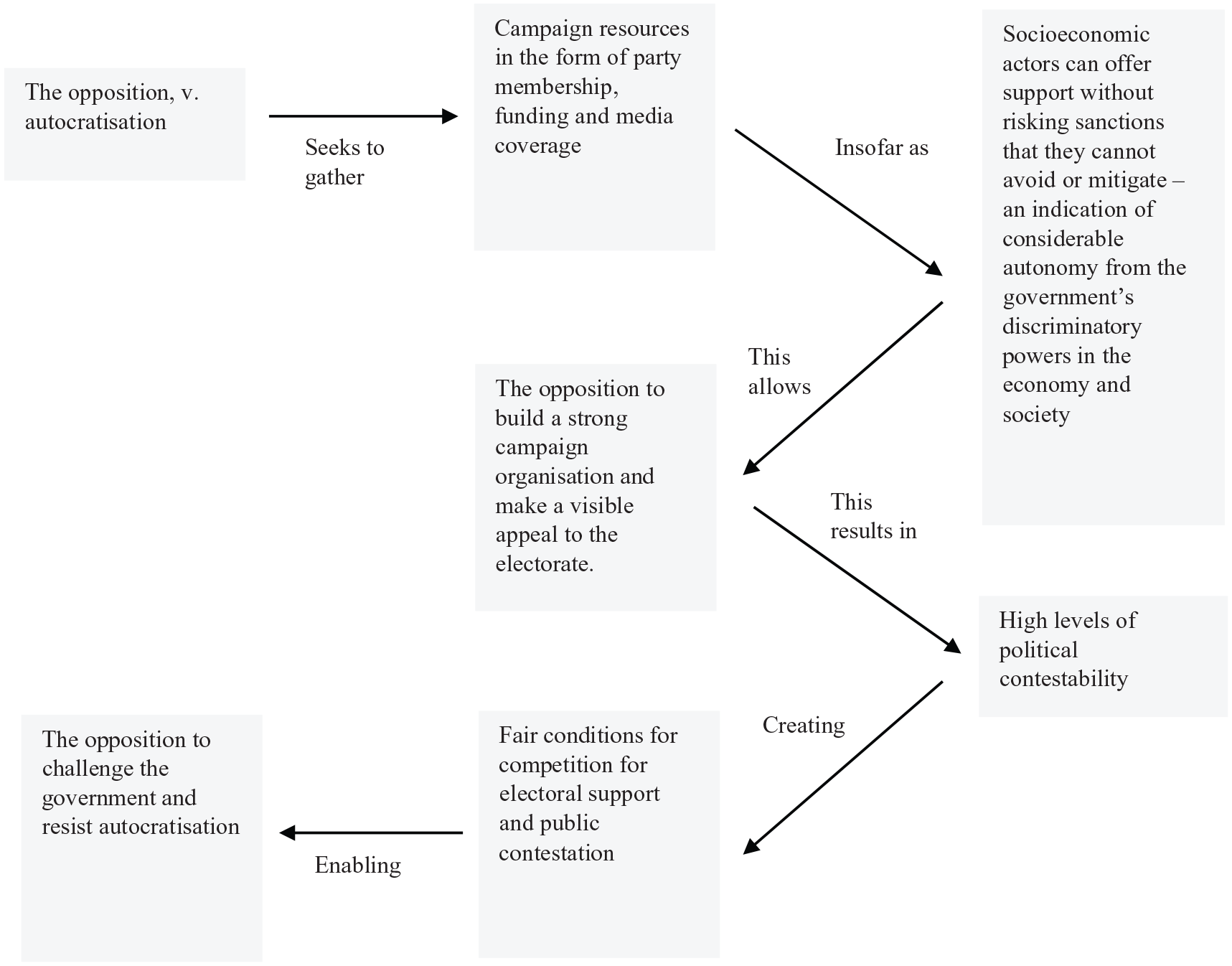
Effective resistance to autocratisation.
Successful autocratisation in Belarus
In Belarus, Lukashenko’s regime was described as a case of ‘pre-emptive democracy’ (Silitski, 2005), a ‘demagogical democracy’ (Korosteleva, 2003: 528), a ‘façade regime with a democratic scaffolding’ (Korosteleva et al., 2003) ‘autocratic’ in essence, (Beichelt, 2004: 113, 116), a case of sultanism (Eke and Kuzio, 2000; Gill, 2002), a case of ‘pre-emptive authoritarianism’ (Silitski, 2010) and, eventually, ‘the last dictatorship in Europe’ (Bennet, 2011; Wilson, 2011). These terms delineate the country’s gradual and steady descent to an electoral authoritarian regime. Lukashenko’s second electoral victory in 2001 signalled the consolidation of a hegemonic regime following two constitutional referendums.
Autocratisation occurred against a political landscape that had experienced a proliferation of political parties before Lukashenko with civil society organisations and a relatively free press (Marples, 1999: 58–56; Silitski, 2005: 86). Lukashenko won the 1994 election without the support of a political organisation (Silitski, 2005: 84). However, in the following years, the opposition forces failed to build a viable organisational infrastructure and act as effective political contestants (Korosteleva, 2000). President Lukashenko won electoral victories and constitutional referendums that strengthened executive powers and the scope for political repression (Rotman and Danilov, 2003). The opposition was reduced to the fringes of Belarus’s social life (Bedford and Vinatier, 2018; Greene, 2010a: 160). Figure 4 summarises the actions of the Lukashenko government to successfully propel autocratisation in Belarus.
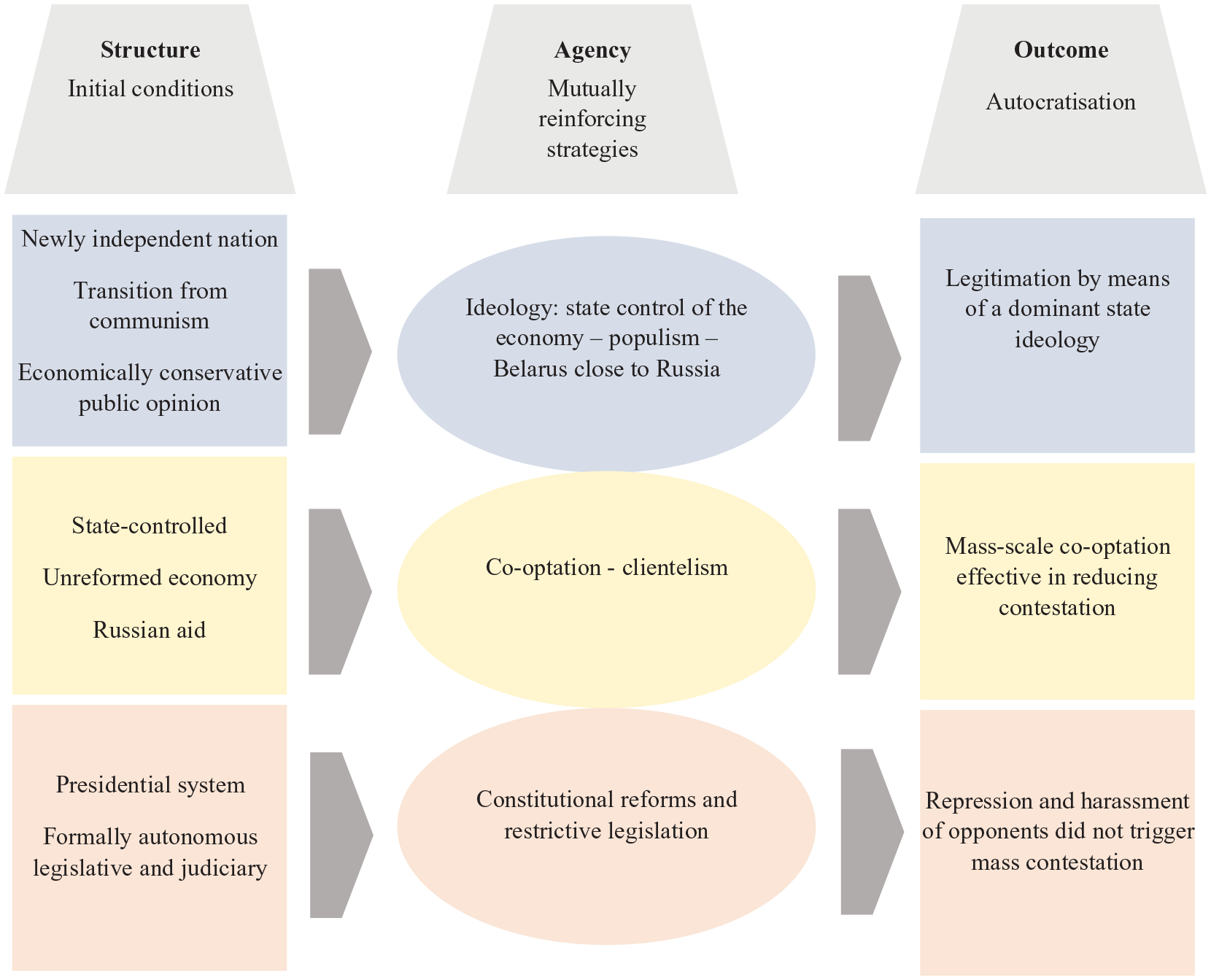
Effective interventions for autocratisation in Belarus.
The original success of Lukashenko was attributed to his populist rhetoric. As the chair of the parliamentary anti-corruption committee, he branded his political opponents as corrupt and advocated gradual economic reforms and a revamped role for the state in the post-Soviet economy to protect socially vulnerable segments of the population (White and Korosteleva, 2005). Using language accessible to the people (Marples, 1999: 103–104), he crafted a political message that appealed to the majority’s sentiments on issues of economic policy and national identity (Frear, 2019; Way, 2015: 129). A hybrid ideology of ‘egalitarian nationalism’ gave an ethnically inclusive definition of nationhood and attached it to ideas of social collectivism and solidarity (Leshchenko, 2008). Lukashenko’s rhetoric drew on Soviet-Russophone patriotism and rejected a distinctively national Belarusian identity. He advocated autonomy and close association with Russia under the vague prospect of a union of sovereign states. He built the image of a strong man who could protect Belarus from external threats and could prevent economic and social dislocation (Bennet, 2011: 289).
Facing adverse economic conditions within the first months of his presidency, Lukashenko took direct control of state institutions and state assets and began attacking companies that financed the opposition using law-enforcement and auditing state agencies (Silitski, 2005: 86). Against this backdrop, Lukashenko sought to reform the institutions to strengthen his presidential powers by calling a series of referendums in 1995 and 1996. Despite a number of irregularities, the public approval of these reforms reflected the majority’s popular consent for the creation of a new model of post-Soviet rule (Eke and Kuzio, 2000: 532). 7 A new constitution weakened the capacity of the parliament and the judiciary to act as effective veto players, limited institutional checks on presidential power and permitted the president to rule by decree over a broad range of issues, avoiding parliamentary scrutiny. The independence of the justice system was targeted. The constitution transferred the responsibility for senior judicial appointments from the parliament to the president. The president could appoint 6 out of 12 judges of the constitutional court and the judges on all other levels (UNHRC, 2005).
In the aftermath of these constitutional changes, Lukashenko faced the reaction of parliamentarians who tried but failed to impeach him. In the presidential election of 2001, the opposition parties united behind a single presidential candidate Vladimir Goncharik (Uładzimir Hančaryk) who was at the time the chairman of the Free Trade Union of Belarus. Goncharik’s political message appropriated popular elements from Lukashenko’s ideology of economic protectionism, promising an increase in welfare spending, a rise in the minimal wage and higher pensions to be paid in due time. At the same time, Goncharik criticised Lukashenko for presiding over rampant corruption and chronic poverty and for placing hindrances to entrepreneurship, a record that starkly contradicted the president’s electoral pledge 6 years earlier. Despite promoting a message that resonated with the public’s broader political concerns, Goncharik won a mere 15% of the popular vote.
The failure of the opposition’s campaign is attributed to lack of resources for a political campaign that could match Lukashenko’s propaganda machinery. The media were subjected to systematic censorship. The Belarusian Television and Radio Company (B-TR) remained a state monopoly (UNHRC, 1997). Media licences were offered to people loyal to the government while state subsidies supported politically friendly outlets. All editors of the state-supported newspapers were given the status of a state employee. In the public sector, being critical of the president or promoting the opposition’s message carried the risk of redundancy (CPJ, 1995). Harassment and violence against the opposition, journalists and protesters was rampant and escalating (CPJ, 1996; Helsinki Human Rights Watch (HHRW), 1999; UNHRC, 1997). The regime targeted independent media, journalists, advertisers, printing houses, graphic designers, and financial-services companies with official warnings, arbitrary tax inspections and the manipulation of funds for advertising from the public sector (Amnesty International, 1999; CPJ, 1996, 1999; UNHRC, 1997). Government officials filed libel lawsuits against independent newspapers in an effort to push them to bankruptcy. Independent media had to endure tax inspections, the seizure of computer equipment, the confiscation of newspaper issues, the closing of premises and the detention of journalists (see, for example, OSCE et al., 2001: 11).
In a predominantly state-controlled economy, the private press had to survive not only the direct government restrictions but also the dearth of private funding and advertising. Private companies were under pressure not to place advertisement in any critical media. With few independent media to expose Lukashenko’s political conduct, his regime could harass the opposition, the press and civil society organisations without damaging its public image. Using his advantage in political communication, Lukashenko projected an image of strength and invulnerability (Kryvoi, 2009) and cultivated a climate of suspicion against the opposition, 8 systematically labelling his political opponents as ‘enemies of Belarus’ (Marples, 2009: 760). This message was communicated to justify restrictive measures on the freedom of expression, including controls over the registration and operation of political parties (Amnesty International, 1999; HHRW, 1999). Civil society organisations were targeted with strict registration procedures, tax audits and fines. A number of judges who had allegedly refused to carry out government orders suffered disciplinary sanctions or were dismissed (UNHRC, 2005). Repression escalated with prosecutions of opponents and dissidents and with several disappearances of opposition politicians, activists and journalists that were kept hidden from public attention (Way, 2015: 137). In a climate marred with harassment against the opposition, Silitski noticed that ‘Lukashenko’s repressive tactics are not untypical for an authoritarian regime. What is remarkable is how, in spite of the scale, intensity, and visibility of the repression, he manages to retain the image of a duly elected leader’ (Silitski, 2005: 95).
Unlike in Slovakia where a relatively reformed socioeconomic system made it easier for the opposition to recruit support and build an effective campaign infrastructure, the opposition in Belarus was unable to mobilise broader support while operating in an economy that remained unreformed, state-controlled and supported by preferential access to the Russian market and direct Russian economic assistance (Kryvoi, 2009). The dominant role of the state in the economy, primarily aided by energy rents from Russia, enabled the government to proceed with large-scale co-optation (Balmaceda, 2013; Bennet, 2011: 186, 246). Socioeconomic actors were exposed to a vast system of government controls. The majority of the population worked for state or state-owned firms where the government had the power to freely hire and fire (Silitski, 2005: 92). Private entrepreneurs were subject to a highly discretionary system of government controls and had strong incentives to remain complacent about the regime (Balmaceda, 2014: 527). Credit was almost entirely supplied by government-controlled banks. Poor protection of property rights further hindered the development of an autonomous private business. The laws and institutions did not enable free competition and effective private management (Bakanova et al., 2006). State support to parochial state factories crowded out private investment and raised the cost of credit coming from private banks. This socioeconomic landscape facilitated the regime’s efforts to create a politically loyal administrative and business nomenklatura (Balmaceda, 2014, 526; Zlotnikov, 2002: 136). In this environment, occasional public protests against specific economic policies did not assume an anti-government character.
Widespread co-optation deprived the opposition of opportunities to recruit resources and supporters necessary to launch an effective political campaign. Having pre-empted any considerable political challenge, Lukashenko’s agenda for institutional reforms was approved by the electorate and contributed to a vicious circle of autocratisation, concentrating powers in the hands of the executive and weakening the parliament and the judiciary. Summarising these observations, Figure 5 presents how a wide scope for co-optation works to increase the levels of repression under favourable structural conditions.
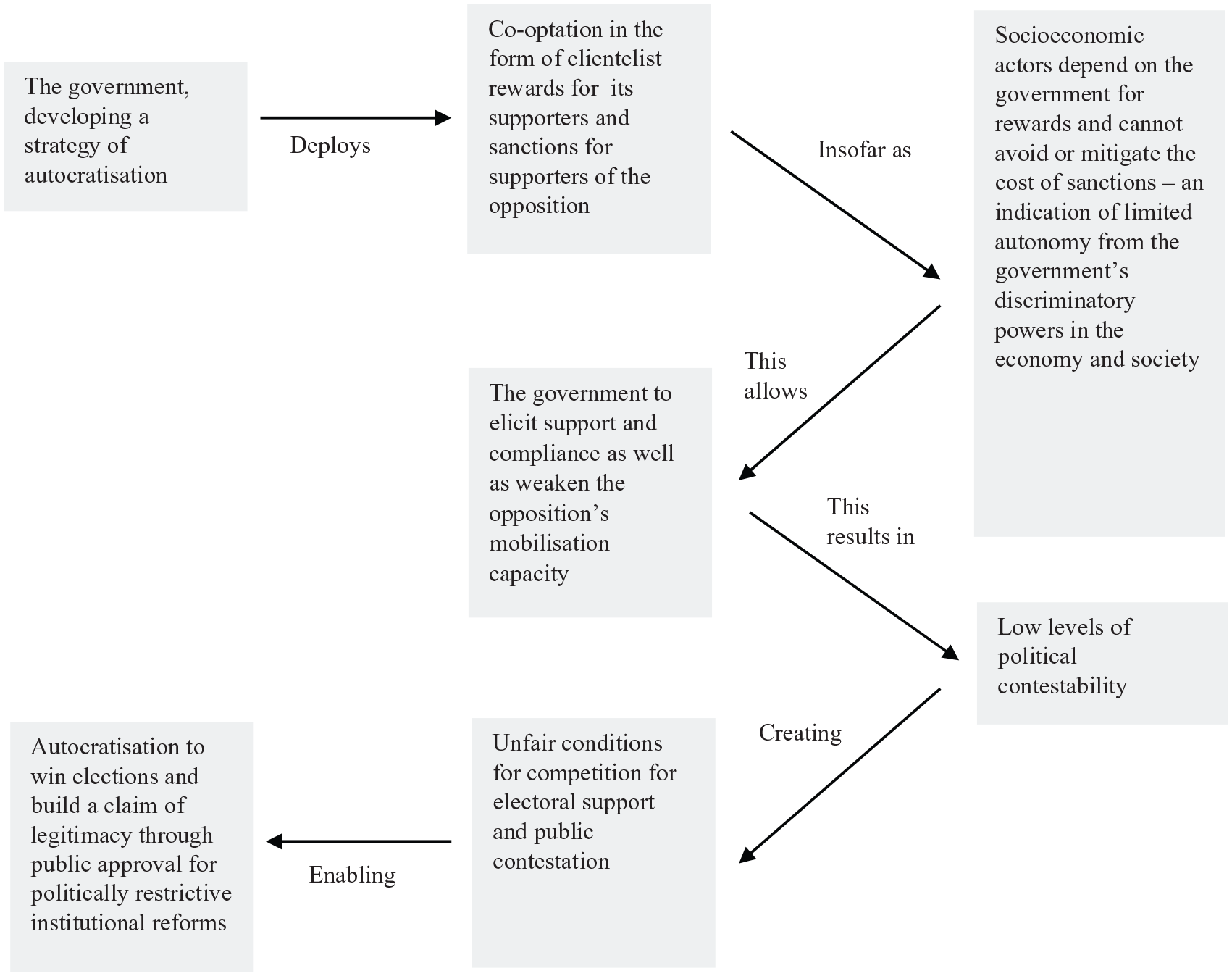
Effective autocratisation and co-optation.
Institutional determinants of successful autocratisation
Differences in the political institutions and the socioeconomic structure between Slovakia and Belarus conditioned the development of autocratisation strategies differently in each case. In Slovakia, the constitution created a strong prime-ministerial post. Compared with Lukashenko, Mečiar did not have to win an absolute majority of votes to occupy power but had to manage a government coalition with smaller parties (Haughton, 2002) and feared the prospect of a united coalition of opposition forces in the parliament. Operating within a parliamentary system, Mečiar had to turn a fragmented party system to his political advantage. During this period, Mečiar tried to introduce a first-past-the-post system that could have solidified his party’s parliamentary majority, but the coalition partners rejected this proposal fearing that it would strip them of parliamentary representation (Henderson, 2002: 46). Mečiar could not pass constitutional reforms because the amendment process required approval from a majority of two thirds in the parliament.
By contrast, in Belarus, autocratisation succeeded against an initially demanding electoral and institutional system. Before the constitutional amendments of the mid-1990s, the constitutional court declared a series of presidential decrees as unconstitutional. Several court decisions from lower ranking judges ruled against government decisions. Moreover, the presidential system separated the executive powers of the president from the legislative branch and required an absolute majority of votes for the election of a president. This was an incentive for the opposition forces to rally around a single candidate.
Lukashenko successfully passed a series of institutional reforms that strengthened his executive powers. With initially high level of popularity, Lukashenko started to build a hegemonic system of power through large-scale co-optation and the extensive scale of government control over society and the economy. Lukashenko enjoyed a quasi-monopoly in communicating a state ideology while marginalising the political opposition’s voice. Belarus’s state-dominated economic structure offered him the opportunity to limit the autonomy of business actors and civil society organisations and, consequently, stifle and pre-empt the development of effective political opposition.
Conclusion: Strategic synergies in autocratisation and the centrality of co-optation
The study indicates that autocratisation is a dynamic process by which aspiring autocrats try to limit their exposure to political contestation and marginalise the political actors and institutions that stand in the way, using strategies aiming at legitimation, repression and co-optation – the three arenas of autocratisation. The cases of Belarus and Slovakia indicate that, following the first election that gives the incumbent an initial boost of public legitimacy, the ensuing steps are to escalate repression and pass institutional reforms without triggering mass public backlash that could threaten the incumbent’s legitimacy claim. In that process, co-optation plays a catalytic role in propelling all other strategic interventions. Figure 6 summarises graphically these findings. The larger the sphere of socioeconomic activities exposed to co-optation, the fewer the opportunities socioeconomic actors have to avoid or ignore this incentives structure. In such an environment, large-scale co-optation is found to
(a) Weaken the organisational capacity of the opposition, in terms of funding, campaign activism, and media coverage.
(b) This, in turn, undermines the capacity of the opposition to recruit supporters in its campaign, expose the government’s record to public scrutiny and offer voters a credible political alternative.
(c) Subsequently, the failure of the opposition to act as an effective contestant facilitates actions by the regime in the two other pillars of authoritarianism: reforming the political institutions to allow for escalating levels of repression and claiming public legitimacy.
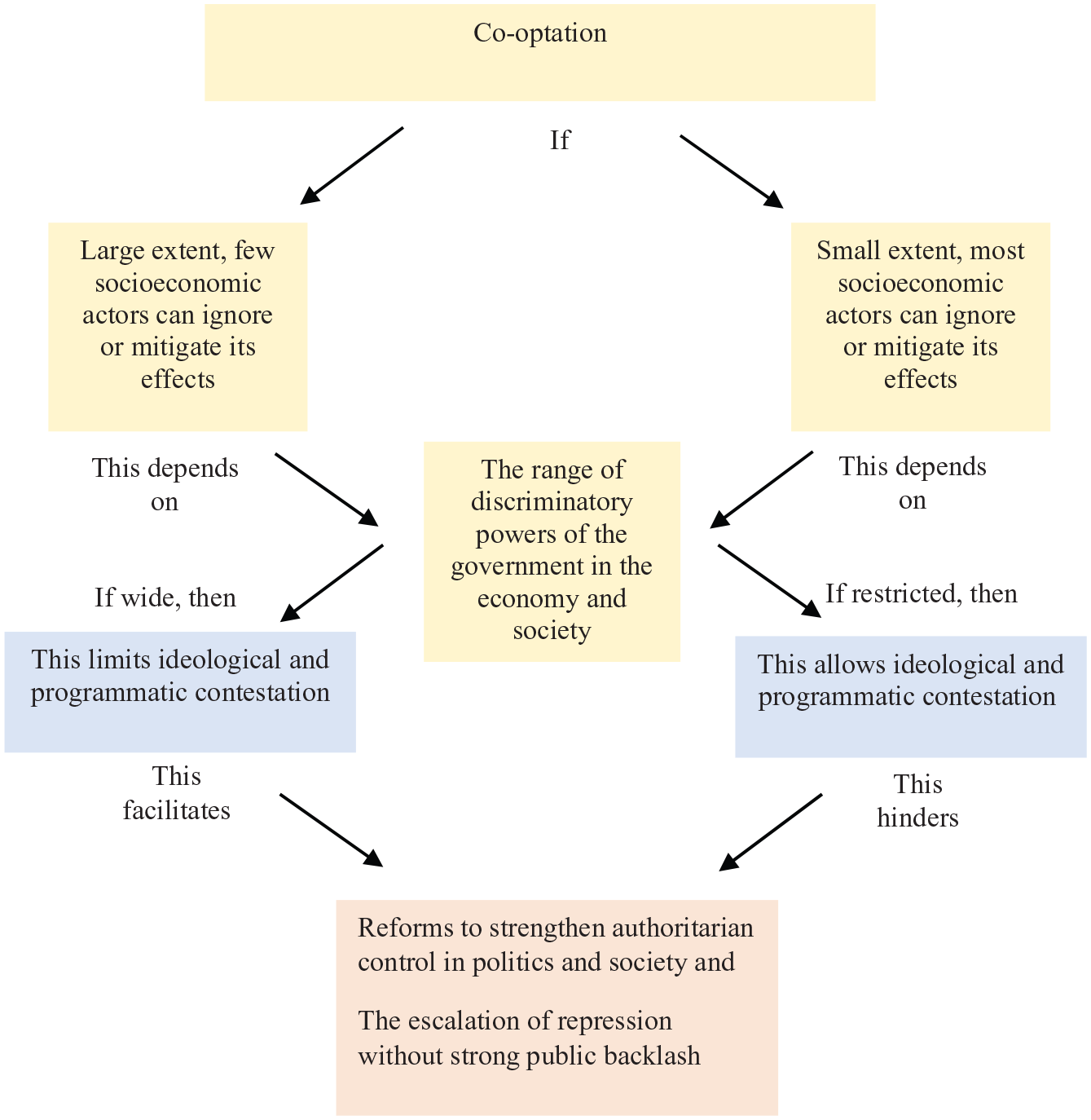
How co-optation works – two contrasting trajectories.
Co-optation, as a central component in a strategy of autocratisation, could deprive the opposition and civil society of resources for the organisation and mobilisation of political resistance. Weakening the opposition ultimately skews the voters’ exposure to political signals in favour of the incumbent. Typical means of direct control and suppression such as bans on political organisations, harassment of the independent media and electoral irregularities can then be introduced at points in which the capacity of the opposition to contest those tactics has already been weakened and protests could be contained. However, the success of co-optation tactics depends on how much control the government has over economic and social activities. The structure of the economy delineates how far co-optation tactics can go against a remaining scope for autonomous action that could sustain a free civil society and a viable political opposition. Finally, as the case of Slovakia indicates, the incumbent’s efforts to follow this strategy are constrained by economic and institutional parameters beyond the control of the government.
Footnotes
Acknowledgements
I would like to thank the participants of the ‘Personalism and Personalist Regimes’ workshop at the Joint Sessions of the European Consortium for Political Research (ESRC) held in Mons in April 2019. My special thanks to Uladzislau Belavusau and Aleś Łahviniec.
Funding
The author(s) received no financial support for the research, authorship, and/or publication of this article.
