



Abstract
Intergroup attitudes can be positively influenced by peers, but it remains unclear whether this occurs primarily through ingroup socialization or outgroup contact. Prior studies concurrently exploring both pathways have yielded mixed results. This paper introduces two key factors, ingroup identification and interpersonal dislike, as potentially moderating or counteracting the effects of these processes. We incorporate these factors into a comprehensive statistical model that accounts for various mechanisms associated with outgroup attitude change, including peer influence, ingroup and outgroup contact, ethnic and attitudinal homophily in friendship selection, and general relationship formation dynamics. Using stochastic actor-oriented modeling (SAOM), we analyze longitudinal data on coevolving networks and attitudes among 380 German secondary school adolescents. Our findings show that both outgroup contact among German adolescents and ingroup socialization significantly influence outgroup attitude change. However, interpersonal dislike and ingroup identification do not play a meaningful role in these processes.
Keywords
In increasingly diverse Western European societies, political narratives that depict immigrants or ethnic minorities as threats can damage intergroup relations (Kteily & Bruneau, 2017; Stephan et al., 2005). Such narratives often fuel negative outgroup attitudes, which can be reinforced locally through socialization—the process by which society forms and transforms individuals (e.g., Darmon, 2023), for example, as they adapt their views to align with those around them (Brechwald & Prinstein, 2011; Kandel, 1978; Laursen & Veenstra, 2021). Socialization influences prejudice and willingness to engage with outgroup members (Bracegirdle et al., 2022; Hjerm et al., 2018; Rivas-Drake et al., 2019; van Zalk et al., 2013; Zingora et al., 2020). At the same time, individuals tend to select peers with similar attitudes or traits (Byrne, 1961; McPherson et al., 2001), which can limit exposure to differing views.
This self-reinforcing dynamic interacts with outgroup contact—face-to-face interaction between groups (Allport, 1954; Al Ramiah & Hewstone, 2013; Pettigrew, 1998). Positive contact, particularly friendships, improves outgroup attitudes (Christ & Kauff, 2019; Davies et al., 2011; Pettigrew & Tropp, 2006), while negative contact can worsen them (Kros, 2020). However, existing prejudice can hinder initial attempts at contact (Binder et al., 2009; Bohrer et al., 2019; Kauff et al., 2021; Levin et al., 2003) or lead to negative encounters (Árnadóttir et al., 2018; Schäfer et al., 2021).
Although research typically examines socialization, contact, or selection separately, these processes are deeply intertwined. As one’s outgroup attitudes change through peer influence, the composition of one’s network and patterns of contact may also shift, potentially further changing whom one is influenced by. Yet, isolating the effects of these interplaying mechanisms is essential for effective interventions—for example, determining whether to facilitate positive contact or restrict negative interactions (Bell et al., 2021). Stochastic actor-oriented modeling (SAOM) can address these complexities by modeling changes in networks and behaviors over time (Snijders & Steglich, 2015; Snijders et al., 2010; Steglich et al., 2010). SAOM has been applied to study intergroup dynamics such as cross-ethnic defending behavior in bullying (Hooijsma et al., 2021), homophobic attitudes (McMillan et al., 2023), attitudes toward immigrants (van Zalk et al., 2013), and host country identification among immigrants (Leszczensky & Pink, 2019; Leszczensky et al., 2016).
However, recent studies concurrently testing the effects of socialization and contact with the help of SAOM have come to unexpected conclusions about both processes. Bracegirdle et al. (2022) and Khuu et al. (2023) examined whether socialization remains significant when accounting for intergroup contact and relationship dynamics. Both found that individuals’ attitudes aligned with those of ingroup friends, but not outgroup friends—a novel finding that contrasts with earlier work (e.g., Zingora et al., 2020). However, both of these social contexts were marked by a long history of ethnoracial tensions, which could have influenced the socialization patterns (Zingora et al., 2020). When intergroup tensions are less deeply entrenched, the impact of the socialization mechanism may critically depend on ingroup identification, that is, an individual’s sense of belonging to their group (e.g., Phinney, 1990). High identifiers are more sensitive to group differences (Jetten & Spears, 2003), show greater awareness and understanding of intergroup relations (Phinney et al., 2007), and are more likely to follow group norms (Ellemers et al., 2002; Spears, 2021). Consequently, individuals with a strong ingroup identification may be more influenced through socialization within the ingroup, while low identifiers may be more open to diverse influences, whether from within or outside their ingroup, or may be more resistant to aligning with the attitudes in their ingroup.
Notably, these and other longitudinal studies (Bohrer et al., 2019; Friehs et al., 2023; McMillan et al., 2023) did not detect the expected benefits of positive intergroup contact, contrary to the large body of intergroup contact research (Christ & Kauff, 2019; Pettigrew & Tropp, 2006). In some cases, contact effects were nonsignificant (Bracegirdle et al., 2022) or limited to majority-group members (Khuu et al., 2023). However, none of the studies accounted for negative outgroup contact, which may counterbalance positive experiences. Prior work shows that pleasant and unpleasant contact have opposing effects that can cancel each other out at the aggregate level (Laurence & Bentley, 2018; Stark et al., 2015), and exert similarly strong but opposite effects at the individual level (Kros, 2020; Schäfer et al., 2021, 2022; Stark et al., 2013).
Our study addresses the puzzle of the unexpected absence of contact and outgroup socialization effects found in recent longitudinal studies, in three ways. First, we model both positive and negative contact (unlike Bracegirdle et al., 2022; Khuu et al., 2023), and both ingroup and outgroup socialization, as processes driving the change of intergroup attitudes. Second, we theorize two potentially intervening factors that have not been accounted for in previous work: ingroup identification strength and interpersonal dislike. In a nutshell, stronger ingroup identification may dampen the effects of outgroup socialization, and interpersonal dislike may inhibit contact effects. Third, we employ the SAOM framework to analyze how intergroup attitudes coevolve with networks, thereby maintaining methodological consistency with earlier studies that reported these puzzling null findings.
Our analysis draws on three student cohorts from ethnically diverse German secondary schools (N = 380), using the “Friendship and Identity in School” (FIS) dataset (Leszczensky et al., 2022), making our study the first of its kind on these data. Several features of FIS distinguish our investigation from the previous studies (Bracegirdle et al., 2022; Khuu et al., 2023). The 9-month intervals between waves in FIS data increase the likelihood that only enduring effects be detected by the stochastic algorithm of SAOM. While intergroup contact attitudes are generally more responsive to both ingroup and outgroup friends (Khuu et al., 2023, p. 2), the FIS questionnaire employs a strict measure of group-specific attitudes. Lastly, the ethnoracial distinctions in this context are arguably less pronounced than in the aforementioned earlier studies.
All in all, we construct a comprehensive model of outgroup attitude change that integrates socialization, contact (both positive and negative), ingroup identification, friendship selection, and general relationship formation tendencies. Our extensive model specification, combined with the unique characteristics of the data, constitutes a more rigorous test of socialization and contact mechanisms than previous research has provided. By introducing two theoretically motivated yet empirically underexplored intervening factors, we aim to resolve the inconsistencies observed in earlier work. We present the results of this stringent test and propose directions for future research.
Background
Socialization and Outgroup Attitudes
During early adolescence, social learning, imitation, peer pressure, and norm adherence strongly shape behavior (Laursen & Veenstra, 2021; Steinberg & Monahan, 2007). Within valued peer groups, typically close friends, prevailing attitudes are internalized as group norms (Crandall et al., 2002; Terry & Hogg, 1996) or integral aspects of a shared reality (Cialdini & Goldstein, 2004; Hardin & Conley, 2001). Research shows that outgroup attitudes, xenophobia, prejudice, and intergroup contact attitudes are susceptible to peer influence (Hjerm et al., 2018; Miklikowska, 2017; Rivas-Drake et al., 2019; van Zalk et al., 2013; Zingora et al., 2020).
According to social identity and self-categorization theories, identifying with a social group involves adopting its norms and applying them to the self (Spears, 2011; Tajfel, 1982; Turner, 1991; Turner et al., 1987). Thus, when ethnic boundaries are salient, influence from ingroup friends may outweigh that from outgroup peers. Supporting this, Bracegirdle et al. (2022) and Khuu et al. (2023) found that only ingroup friends significantly influenced outgroup attitudes. However, Zingora et al. (2020) found no difference between ingroup and outgroup peer influence, aligning with the conventional view that socialization occurs within friendships regardless of group membership (Brechwald & Prinstein, 2011; Kandel, 1978; Laursen & Veenstra, 2021).
This study first examines whether social influence on outgroup attitudes is stronger among ethnic ingroup friends than outgroup friends, leading to the following hypotheses:
Ingroup Identification
Conflicting findings across studies may stem from differences in the salience of ethnic boundaries, which may be less pronounced in the context studied by Zingora et al. (2020) compared to the contexts examined by Bracegirdle et al. (2022) and Khuu et al. (2023). In settings with lower intergroup tension, socialization dynamics may vary depending on the individual levels of ingroup identification. Ingroup—in our case, ethnic—identification refers to one’s sense of belonging to their ethnic group (Phinney, 1990) or one’s strength of connection to their ethnic identity (Ellemers et al., 2002). High identifiers tend to have a more complex and thoughtful understanding of intergroup relations (Phinney et al., 2007), greater awareness of group boundaries (Johnston & Hewstone, 1992), especially when perceived group differences are less pronounced (Jetten & Spears, 2003), and a stronger tendency to adopt group norms (Ellemers et al., 2002; Spears, 2021). Accordingly, we suggest the following hypotheses on the moderating effects of ingroup identification:
The literature offers mixed evidence on whether and how ingroup identification directly contributes to outgroup attitudes. Intergroup threat theory suggests that high identifiers may be more prone to negative outgroup views due to heightened boundary sensitivity (Nesdale et al., 2005). Gabarrot and Falomir-Pichastor (2017) found that high identifiers exhibited more prejudice when it helped to highlight group boundaries, even when the groups were rather similar and the ingroup norm discouraged discrimination. Similarly, Pehrson et al. (2009) showed that stronger national identification, especially when tied to ethnicity, predicted greater prejudice among adolescents. In contrast, studies on minority groups suggest that strong ethnic ingroup identity is associated with better integration and increased intergroup contact (Berry & Hou, 2019). For instance, Phinney et al. (2007, Study 1) found that minority students with a secure ethnic identity reported more positive outgroup attitudes than low identifiers. However, Munniksma et al. (2015) found no direct link between minority students’ ingroup identification and outgroup attitudes. Thus, minority status may buffer the relationship between ingroup identification and outgroup attitudes, which we expect to be generally negative:
Contact
Outgroup attitudes can change not only through friends’ influence but also through direct contact with outgroup members. Foundational work by Allport (1954) and Pettigrew (1998) postulated that positive contact effects are strongest when interactions are frequent, cooperative, and characterized by equal status—conditions often met in friendships. Subsequent research supports this, showing that friendships with outgroup members promote more favorable attitudes (Davies et al., 2011; Pettigrew & Tropp, 2006). However, contact effects appear weaker or nonsignificant for ethnic minorities (Barlow et al., 2013; Binder et al., 2009; Tropp & Pettigrew, 2005), warranting separate analyses by ethnic background.
Beyond the number of outgroup friendships, a lower proportion of ingroup friendships in one’s network may also predict more positive outgroup attitudes. Dovidio et al. (2017) described a “hydraulic effect,” where increased ingroup contact limits outgroup contact, especially in the case of friendships, as time spent with friends is a finite resource. Levin et al. (2003) observed that more ingroup friendships were linked to higher intergroup bias among minorities (defined as a more favorable attitude towards the ingroup in comparison to outgroups), while more outgroup friendships reduced it. In addition, strong ingroup ties were associated with less favorable outgroup attitudes of minorities (Bobowik et al., 2022). It is therefore plausible that positive attitude change may stem not only from greater outgroup contact but also from reduced ingroup bonding.
Interpersonal Dislike
Bracegirdle et al. (2022) and Khuu et al. (2023) found no clear positive effects of outgroup friendships or negative effects of ingroup friendships on outgroup attitudes. One explanation is that these effects may be obscured by simultaneous negative contact—such as dislike, avoidance, or aggression toward outgroup members (Kros et al., 2021). While less common than positive contact, negative contact has distinct and comparably strong effects on outgroup attitudes (Kros, 2020; Laurence & Bentley, 2018; Schäfer et al., 2021, 2022; Stark et al., 2013; Wölfer et al., 2017). In particular, interpersonal dislike toward outgroup members may directly worsen attitudes or undermine the benefits of positive contact. Therefore, considering both positive and negative interactions can help to fully assess the contact mechanism.
Selection Mechanisms
Another key mechanism to isolate from socialization and contact is social selection. According to the well-established phenomena of similarity attraction (Byrne, 1961) and friendship homophily (McPherson et al., 2001), individuals tend to form friendships based on similarity. Ethnic homophily among students is well-documented across countries and contexts (e.g., Leszczensky & Pink, 2015; Smith et al., 2014). Homophily can also occur based on ingroup identification strength: For instance, high identifiers may prefer outgroup friends who are also high identifiers over low-identifying ingroup peers (Leszczensky & Pink, 2019). Additionally, propinquity effects—such as shared classroom affiliation—increase opportunities for friendship formation (Rivera et al., 2010).
Accordingly, to test whether students adopt their friends’ outgroup attitudes, we must control for selection effects, including friendship formation based on similar attitudes (Rivas-Drake et al., 2019; Zingora et al., 2020). Besides, to track attitude change following contact, one needs to account for the effect of outgroup attitudes on the propensity to form cross-group ties (Laurence & Bentley, 2018; McMillan et al., 2023; Stark et al., 2013). Thus, models must account for selection based on outgroup attitudes and several types of homophily: by ethnicity, gender, identification strength, and classroom affiliation.
Network Mechanisms
Finally, relational network tendencies intersect with other mechanisms and must be accounted for to avoid overestimating effects. For instance, friends tend to develop a dislike of whomever their friends dislike, potentially inflating the impact of mechanisms involving dislike tie formation if such network dependencies are not modeled (Pál et al., 2016; Toroslu & Jaspers, 2022). Similarly, triadic closure—the tendency to befriend the friends of one’s friends—can mediate self-selection into outgroup contact. Stark (2015) found that prejudiced majority members did not actively avoid minorities but gravitated toward majority peers who were friends with their current friends, thereby limiting opportunities for intergroup contact. Further, our model incorporates standard mechanisms in friendship network dynamics such as reciprocity, triadic closure, and other structural tendencies (Heider, 1946; Rambaran et al., 2015), which are essential for isolating the unique effects of socialization, contact, and selection.
Method
Participants
We used longitudinal data from the project “Friendship and Identity in School” (FIS), a study of ethnically diverse grade-level networks that surveyed more than 2,000 students in Germany. Data collection started in the fifth, sixth, and seventh grades of nine schools in nine towns in the federal state of North Rhine-Westphalia. In total, 29 school cohorts were surveyed, most of which consisted of three or four classrooms. There were six measurement waves with 9-month lags, which spanned between May 2013 and March 2017 (for more details about the study, see Leszczensky et al., 2022). Due to data limitations, including missing data in specific waves and insufficient variance by ethnicity, we could use 11 cohorts for further analysis.
We intended to test some processes separately for students from different ethnic groups (particularly German and Turkish), particular types of dyads (German–Turkish and Turkish–German), and include interaction effects. Consequently, to have sufficient data for our models to converge, we needed to focus on cohorts with most measurement waves and highest shares of both German and Turkish students compared to students of other ethnic backgrounds. We expected that we would need to pool the data, and therefore opted to select cohorts that would be also maximally similar to each other. We found three cohorts that satisfied all these criteria, being the fifth, sixth, and seventh grade of the same school. Two of the cohorts had six waves and one had four waves of data available. The number of students that were part of these cohorts in at least one of the waves ranged from 123 to 131 students, with a total analytical subsample of 380 (Table 1). Additional analyses were run on all 11 suitable cohorts with a total subsample of 1,204 (see Robustness Checks section).
Descriptive statistics by cohort (academic year).
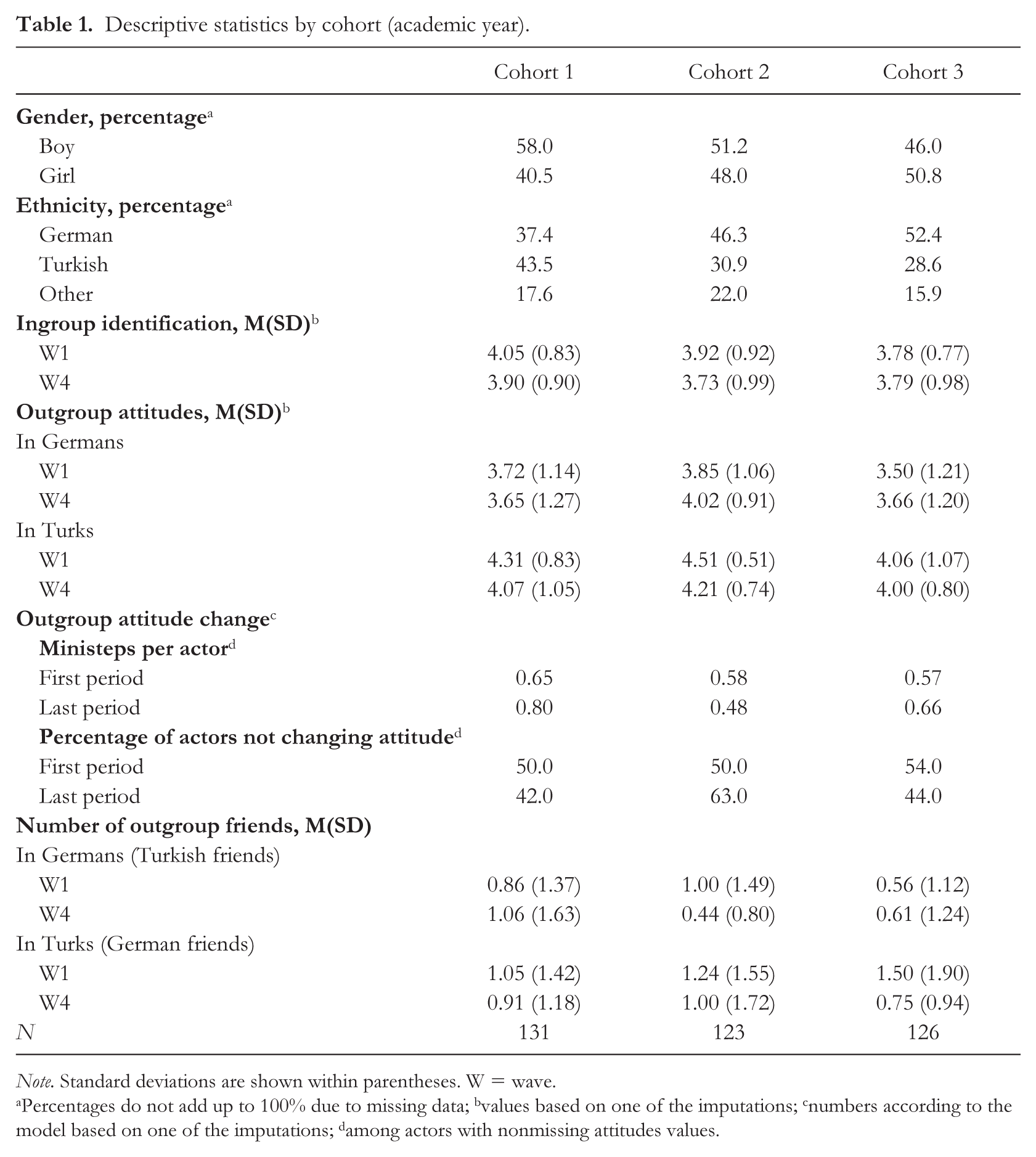
Note. Standard deviations are shown within parentheses. W = wave.
Percentages do not add up to 100% due to missing data; bvalues based on one of the imputations; cnumbers according to the model based on one of the imputations; damong actors with nonmissing attitudes values.
Measures
Background characteristics
Ethnic background was assigned by Leszczensky et al. (2022) based on the reported countries of birth of students’ parents and grandparents 1 and was harmonized between waves. While it could be argued that self-identification with ethnic groups may generally carry more psychological significance, we decided to follow the method used by the authors of our dataset for several reasons, 2 including that ingroup and intergroup contact, arguably, rely more on one’s ascribed identity than on self-reported identity (Dovidio & Gaertner, 2010). 3
For students with an ethnic minority family background who self-categorized as German-only in the survey (21.0% of minority students), we reassigned the background to be German. 4 In what follows, we used two measures of ethnicity: the generalized one—three categories of German, Turkish, and other ethnic groups,—and the original one, with assignment into 20 ethnic or regional groups such as Greek or North African. The former was used to assign outgroup attitudes and test hypotheses related to outgroup contact, and the latter, to test hypotheses related to socialization. Gender was coded as binary and also harmonized between waves.
Outgroup attitudes
All the students answered the question “How much do you like these groups?” for several ethnic and religious groups. The item was rated on a 5-point scale (1 = very much [depicted with a smiley emoji], 5 = not at all [depicted with a sad emoji]), which we reverse-coded. “Don’t know” answers were recoded as missing values. Missing values in the attitudes towards Germans and towards Turks were imputed as specified below in the Data Imputation section.
As the biggest ethnic groups in the sample were Germans and Turks, we assumed that they would see each other as the primary outgroup. For them, the outgroup attitudes measure refers to the attitudes towards the respective other group. Since we did not have a clear indication of which group would be perceived as the primary outgroup by non-Turkish minority students, we treated their outgroup attitude measures as missing data, which were not imputed (see the Robustness Checks section for other specifications).
Ingroup identification
Students answered several identification-related questions, such as “I feel like I am a part of Germany [my family’s country of origin]” (for more detail on the identity measure developed by the authors of the questionnaire, see Leszczensky & Gräbs Santiago, 2015). All students answered the questions about Germany, and students with ethnic minority backgrounds also answered them for their family’s country of origin. All items were rated on a 5-point scale (1 = totally agree, 5 = totally disagree), which we reverse-coded. Again, “Don’t know” answers were recoded as missing values and imputed together with the outgroup attitudes variable. The ingroup identification measure was built as the average of the four items expressing emotional attachment to Germany for Germans, and to the family’s country of origin for ethnic minority students: “It bothers me if somebody speaks ill about Germany [my family’s country of origin],” “Germany [My family’s country of origin] is dear to me,” “I feel strongly attached to Germans [people from my family’s country of origin],” “I feel like I am a part of Germany [my family’s country of origin]” (α = .87 and .89 for Germans and non-Germans, respectively).
Positive contact and interpersonal dislike
All adolescents saw a list with the IDs of all students within their cohort on the screen and were asked to indicate with whom they considered to be “best friends” and whom they “do not like at all.” Both questions were limited to 10 nominations. The few cases where participants reported both a friendship and a disliking relation with the same peer were coded as missing values, ensuring no student had a dislike tie to a currently nominated friend, and vice versa. We assumed that friendships with outgroup members indicated positive outgroup contact, and disliking outgroup members could point to prior negative outgroup contact with them.
Data Imputation
Across the waves, around 24.0% of outgroup attitude values and 20.0% of ingroup identification values were missing. We used the “mice” package (van Buuren et al., 2022) in R (Version 4.3.2; R Core Team, 2023) and the procedure described by Krause (2019, pp. 83–84) to simultaneously impute missing attitudes towards Germans and Turks and missing ingroup identification values. As demographic predictors, we used gender and ethnicity generalized into three categories (German, Turkish, and other). We imputed four variables composing the ingroup identification score (see the Measures section above) based on their values in all the waves, as well as demographic characteristics. The ingroup identification score was imputed as the mean of these four items, that is, the index constructed of these variables was calculated during a given imputation iteration to be used for imputing other variables during subsequent imputation iteration. To impute attitudes towards Germans and Turks, we used the resulting ingroup identification score in the corresponding wave, the number of incoming friendship nominations, average attitudes towards Germans and Turks among the senders of incoming friendship nominations, and demographic predictors. The values were imputed for all the waves. The imputation model generated 10 datasets using the predictive mean matching method. We ran the models (see below) for each dataset version and pooled the results using Rubin’s rules (Rubin, 1987).
Analytical Strategy
We analyzed how friendship and dislike networks coevolved with students’ outgroup attitudes using SAOM (Snijders et al., 2010), implemented in the “RSiena” package (Snijders, Ripley, Boda, et al., 2025; Snijders, Ripley, Boitmanis, et al., 2025). This method employs simulation-based inference, facilitating the analysis of highly interdependent network data. SAOM, which can be seen as a type of agent-based modeling, explains changes in observed ties and behaviors, helping infer which social mechanisms best account for observed changes.
Fitting a SAOM to our dataset resulted in parameter estimates related to behavioral dynamics (outgroup attitude change) and network dynamics (friendship and dislike change). We hypothesized that behavioral dynamics result from social influence from ingroup members and contact with outgroup members. 5 We also included several controls such as the effects of gender and ethnicity, as well as general attitude trends over time and tendencies to avoid “extreme” attitudes. Network dynamics involved tie creation, maintenance, or dissolution, and the processes underlying these events were assumed to differ between friendship and dislike networks.
The simulation model generates a sequence of tie and behavioral changes based on the assumption that actors in the network are most likely to make changes that yield the highest utility for them at a given time. Any change made by an actor updates the environment of all other actors. Thereby, the model accounts for the interdependence of actors, and identifies the feedback loops between network and attitude changes at the actor level. The model estimates parameters that are used to simulate data closely resembling the observed data (Snijders, 2001). The set of parameters, formed based on statistical model selection criteria, reflects how much the changes in network ties and attitudes are governed by each of the processes included in the model.
We estimated a coevolution SAOM where we combined the three cohort-level networks using the multigroup option (Snijders, Ripley, Boda, et al., 2025, p. 112). This method assumes that the combined networks do not differ from each other in key characteristics. As discussed in the Participants section, we made sure that the combined cohorts were of similar size and composition and came from the same school; thus, we did not expect large between-cohort variation in the estimated parameters. Nevertheless, we added cohort dummies to account for potential variations in baseline likelihood of developing friendships and dislike in different cohorts, as well as baseline attitudes. Further, we tested whether the results were robust to estimating models on all 11 cohorts separately and combining the results in a meta-analysis using the “metafor” R package (see the Robustness Checks section; Viechtbauer, 2010). We provide the scripts with data processing and modeling procedures in the online Supplemental Material. 6
Results
Descriptive Results
Descriptive statistics for each cohort are shown in Tables 1 and 2. Figures 1 and 2 show the ethnic composition of friendship and dislike networks.
Network descriptives at Wave 1.
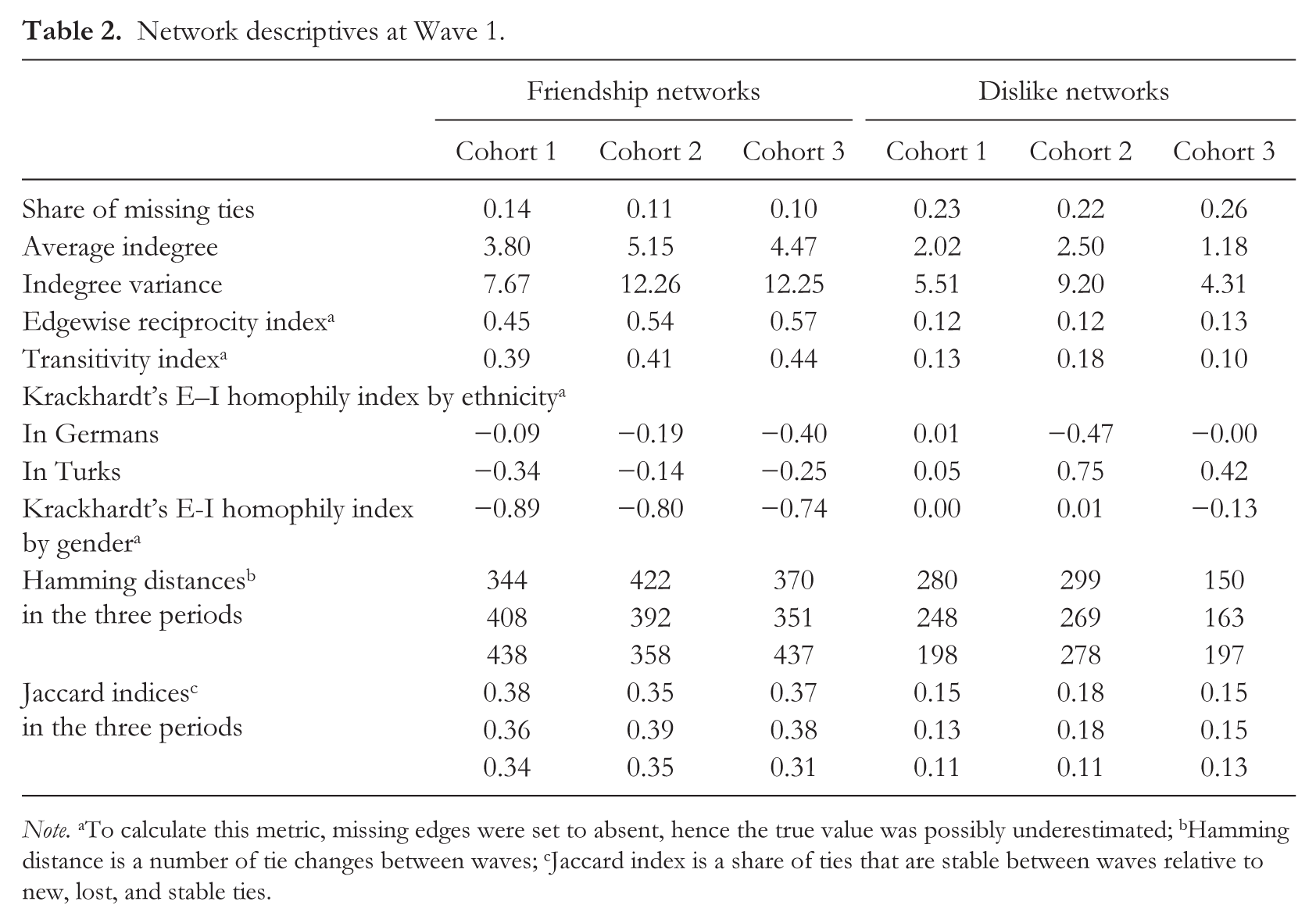
Note. aTo calculate this metric, missing edges were set to absent, hence the true value was possibly underestimated; bHamming distance is a number of tie changes between waves; cJaccard index is a share of ties that are stable between waves relative to new, lost, and stable ties.
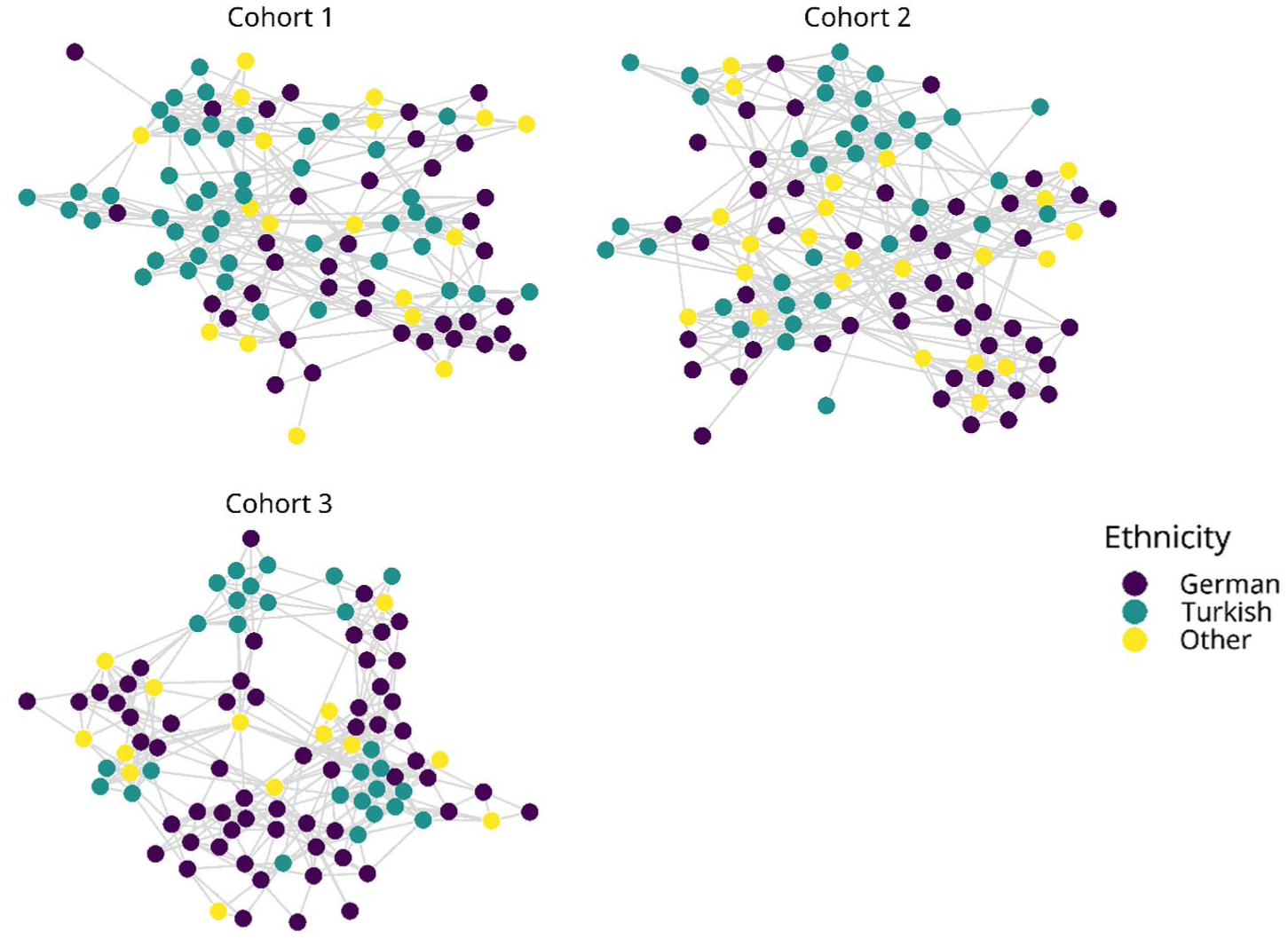
Main components of friendship networks at Wave 1.
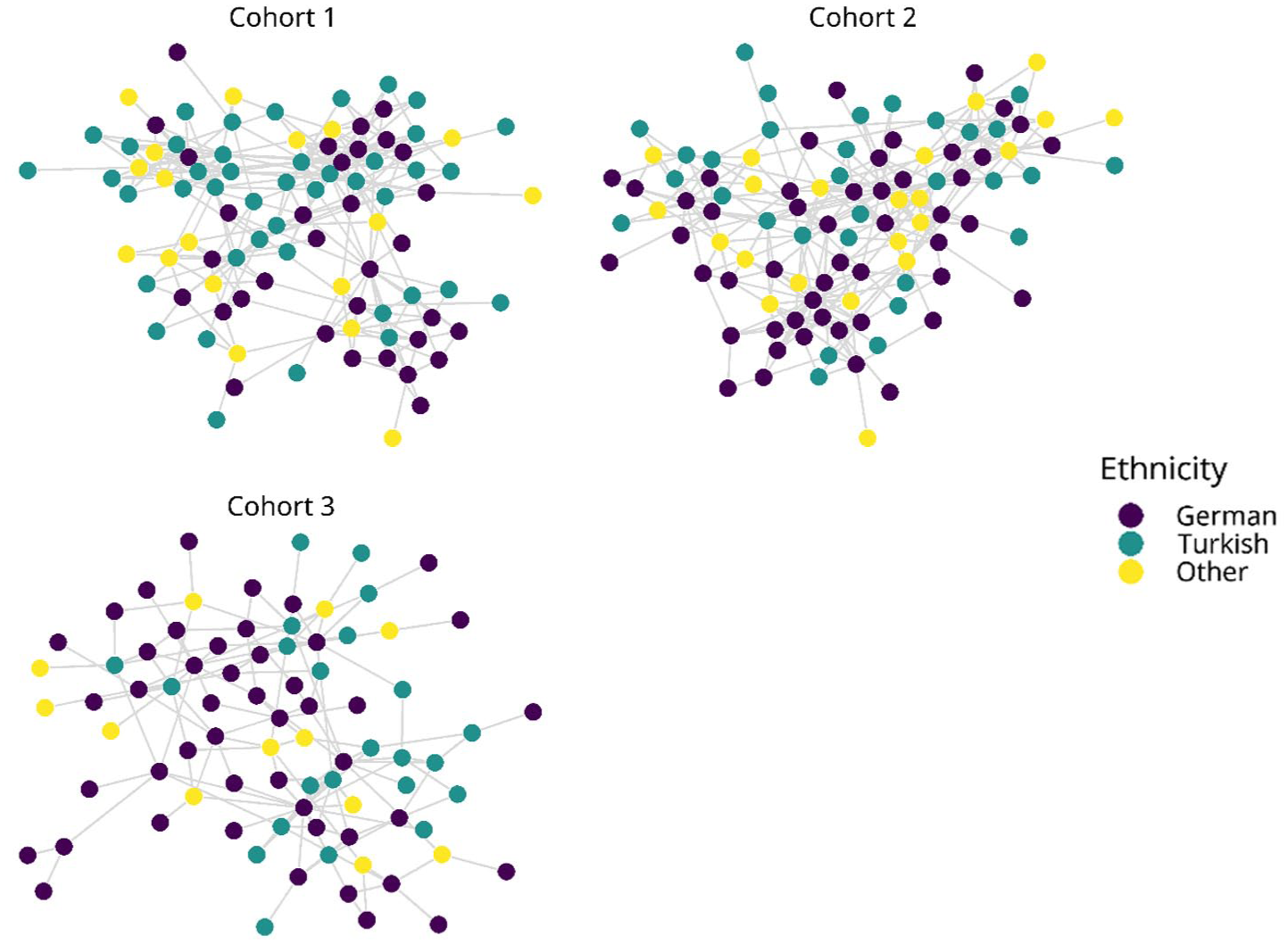
Main components of dislike networks at Wave 1.
On average, students reported moderately to highly positive outgroup attitudes (Table 1). When we disaggregated by ethnicity, it became apparent that Turks showed consistently negative change in outgroup attitudes—likely because their initial attitudes towards Germans were already very positive (4.06–4.51 out of 5). Germans were not as positive about Turks initially (3.50–3.85), with one cohort showing further decline over time.
Initial ingroup identification was high (3.78–4.05 out of 5), later declining in two cohorts and remaining stable in one.
The number of incoming friend nominations ranged from 3.80 to 5.15, while the number of incoming dislike nominations ranged from 1.18 to 2.5 (see Table 2), in line with prior findings that there is generally less negative than positive contact (Schäfer et al., 2021). On the other hand, students were also more likely to skip the question about disliked peers, which is reflected in the higher shares of missing tie data.
Only about one fifth of nominated friends were from the outgroup. In Wave 1, Germans nominated 0.56–1 outgroup friends, and Turks 1.05–1.5. By Wave 4, the number of Turks’ outgroup nominations declined to 0.75–1, while the averages either stayed similar (0.61, 1.06) or dropped (0.44) among Germans.
Krackhardt’s E–I index values (capturing relative prevalence of between and within-group ties) were negative for both groups in all cohorts, indicating a preference for ingroup friends (Knapp, 2019; Krackhardt & Stern, 1988). German students in one cohort more often disliked coethnics; in others, ethnicity did not matter. Turks more frequently disliked Germans across all cohorts.
SAOM Results
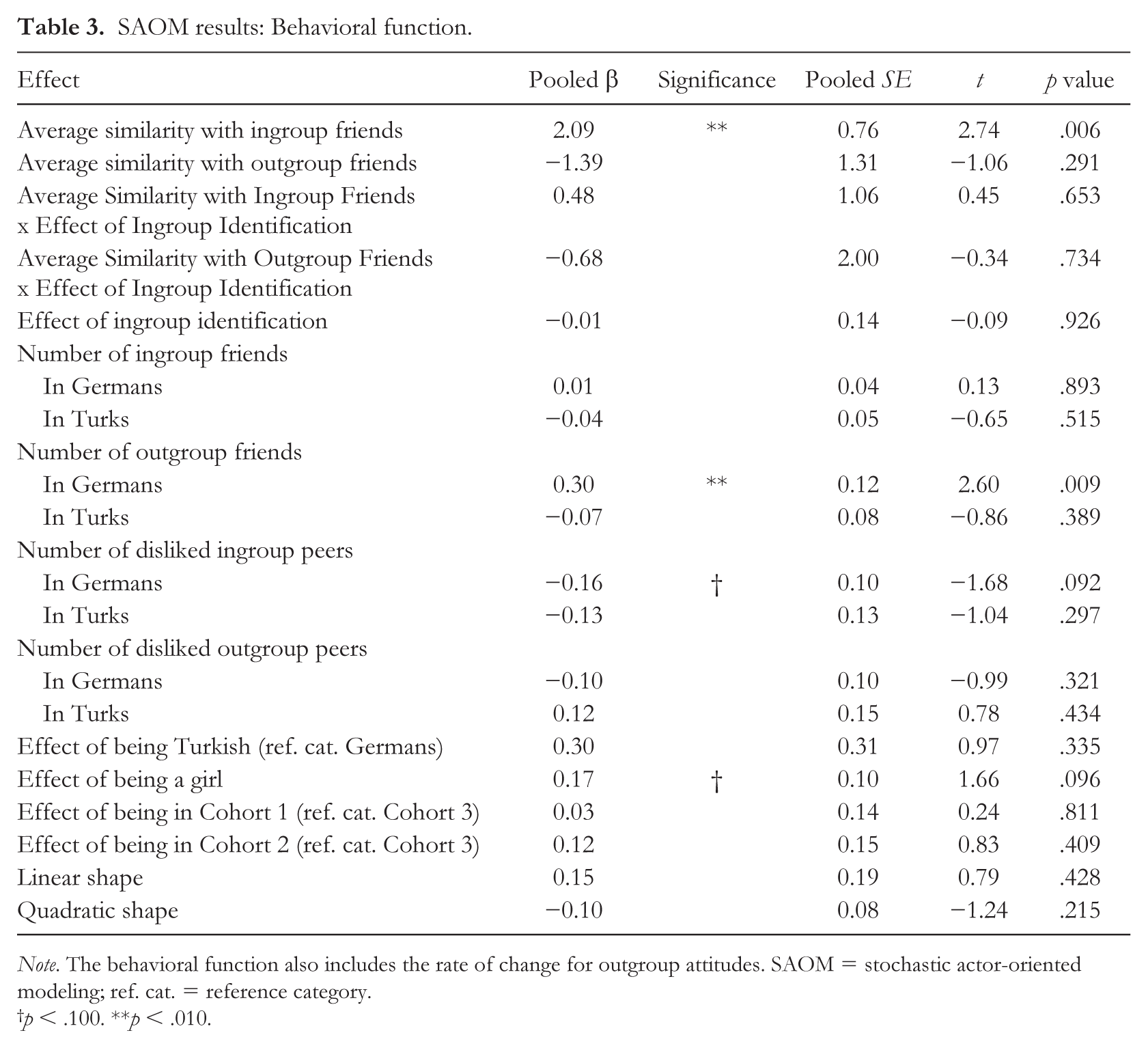
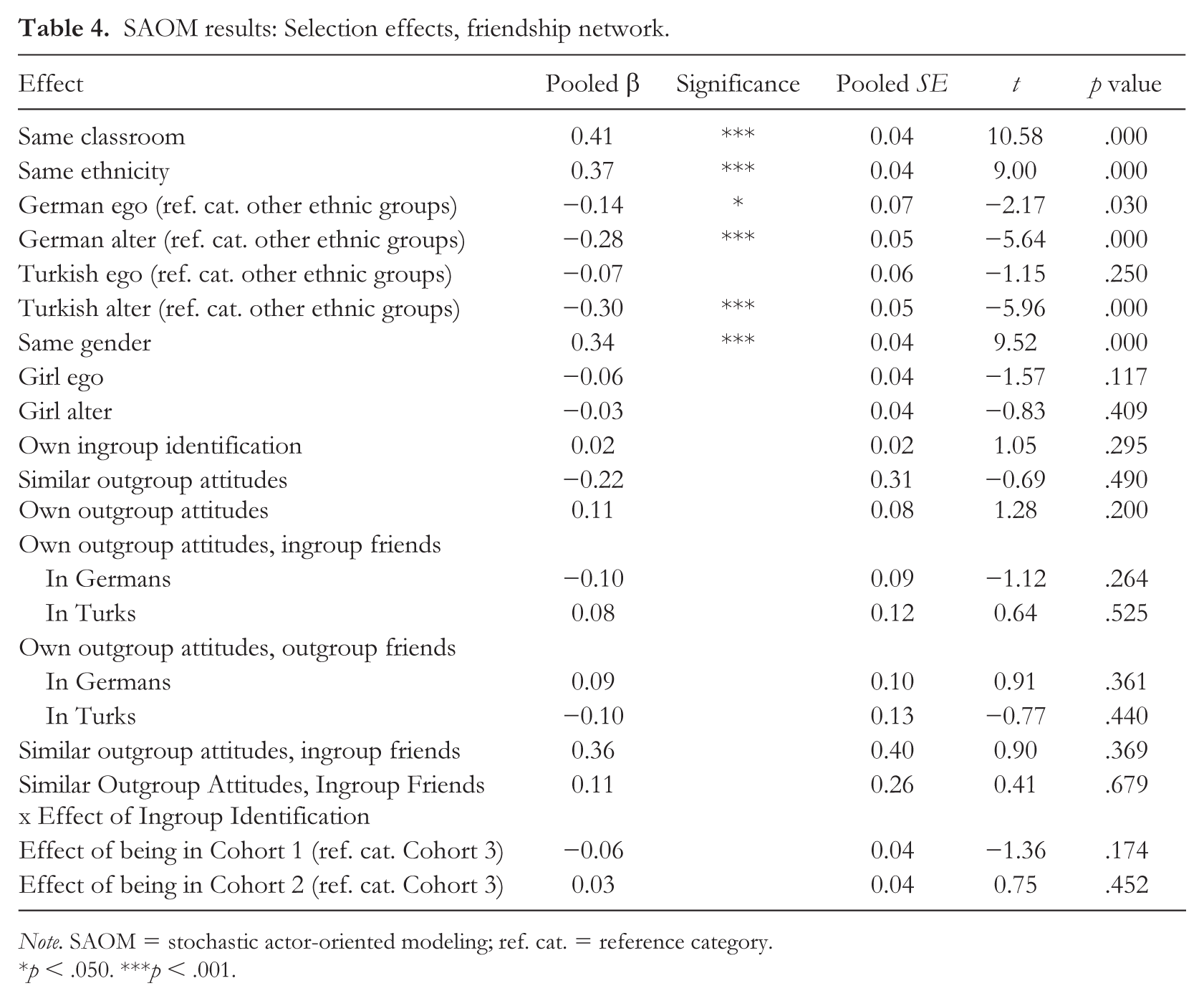
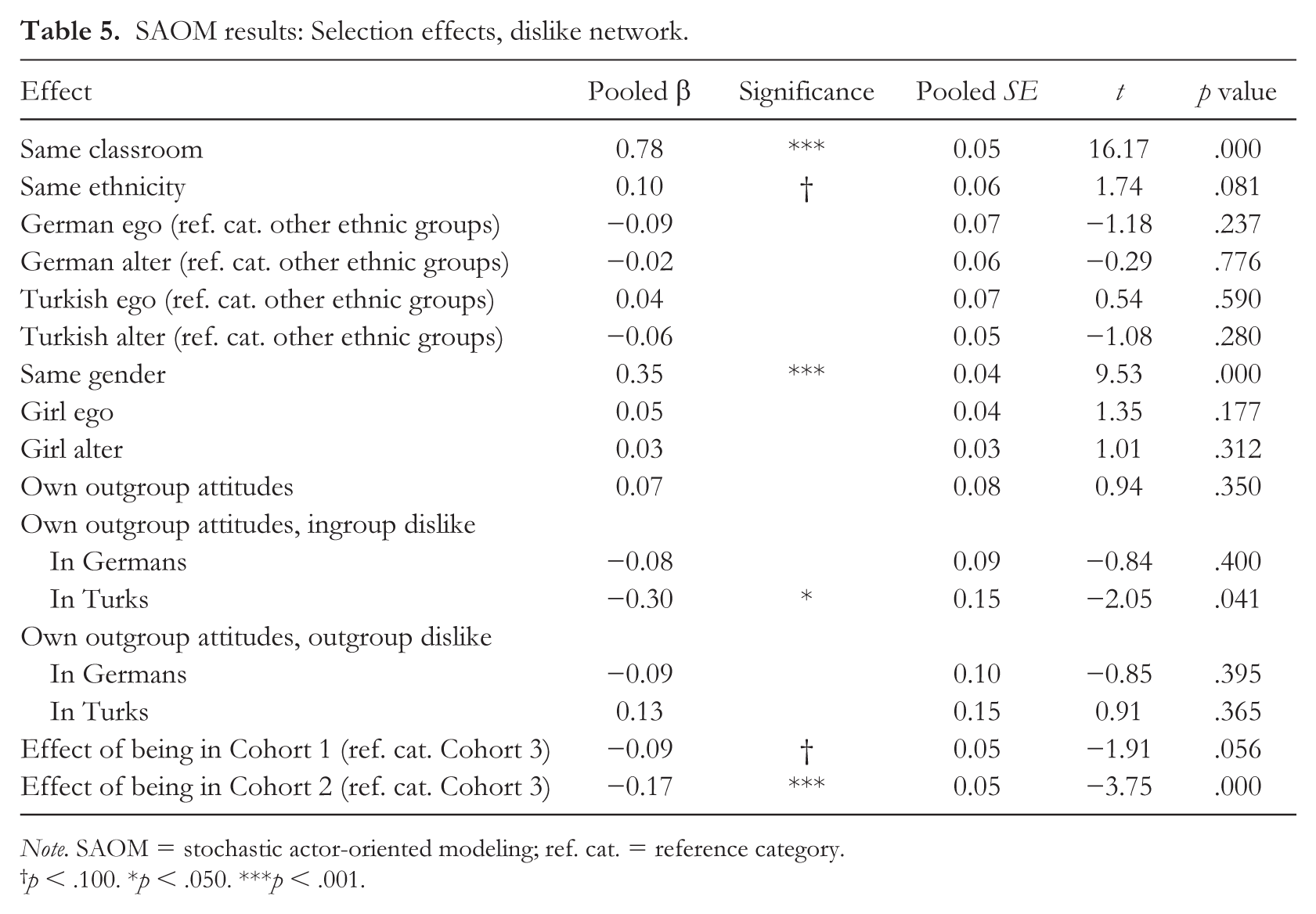
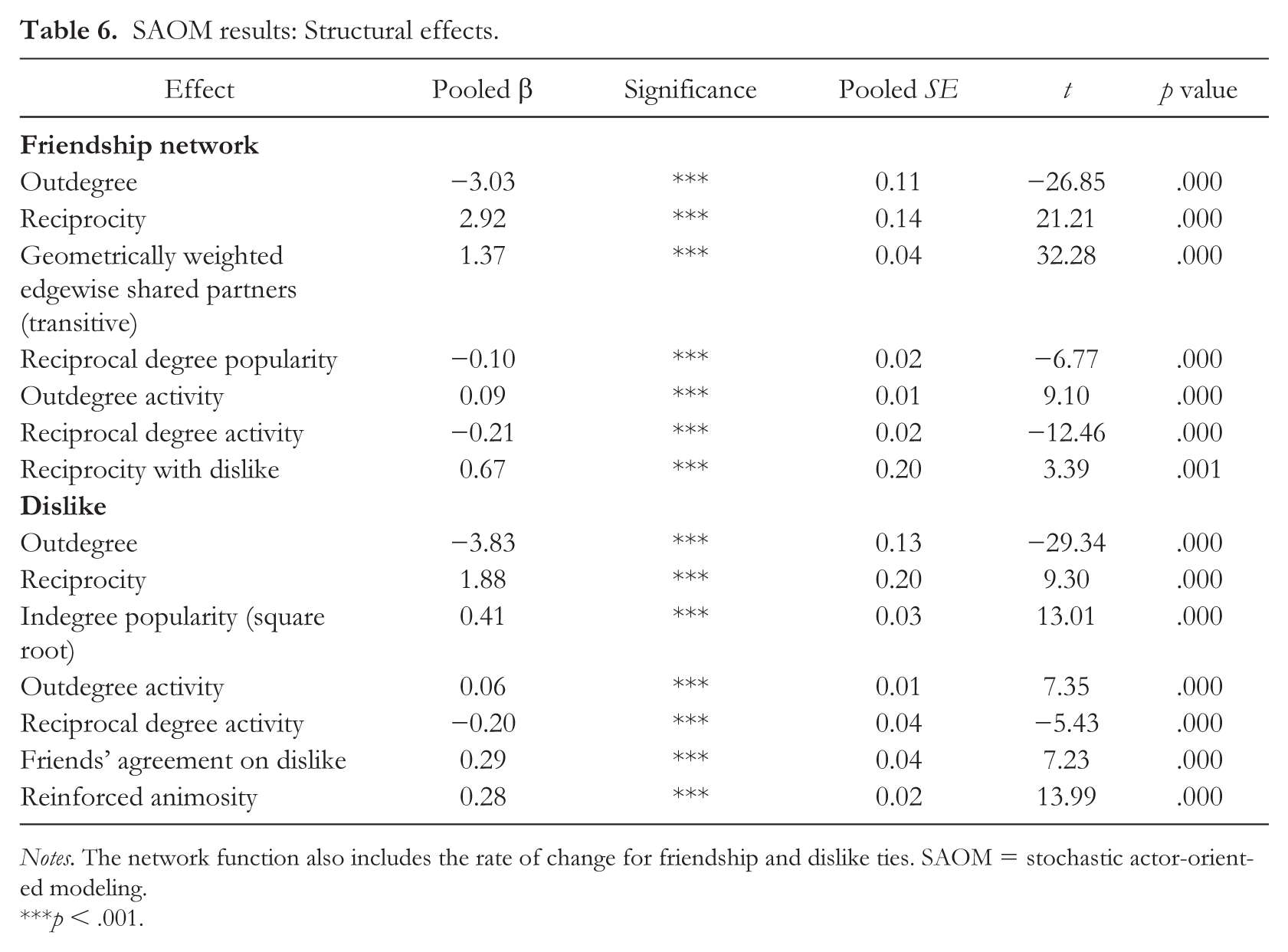
To determine whether our network model provided reliable results, we assessed convergence and goodness-of-fit indicators. Well-estimated models produce overall maximum convergence ratios smaller than 0.25, and convergence t ratios not exceeding 0.1 (Snijders, Ripley, Boda, et al., 2025). Our 10 model versions all showed good convergence, with an overall maximum convergence ratio of ⩽ 0.21, and all the t ratios being < 0.08. We conducted goodness-of-fit tests to compare the observed and simulated data with respect to four auxiliary statistics (Lospinoso & Snijders, 2019). The goodness of fit of one of the 10 model versions, which is the closest to the pooled results, is reported in Figures A1 and A2 (Supplemental Material), showing moderate fit. The pooled results of the 10 fitted model versions are summarized in Tables 3–6.
SAOM results: Behavioral function.
Note. The behavioral function also includes the rate of change for outgroup attitudes. SAOM = stochastic actor-oriented modeling; ref. cat. = reference category.
p < .100. **p < .010.
SAOM results: Selection effects, friendship network.
Note. SAOM = stochastic actor-oriented modeling; ref. cat. = reference category.
*p < .050. ***p < .001.
SAOM results: Selection effects, dislike network.
Note. SAOM = stochastic actor-oriented modeling; ref. cat. = reference category.
p < .100. *p < .050. ***p < .001.
SAOM results: Structural effects.
Notes. The network function also includes the rate of change for friendship and dislike ties. SAOM = stochastic actor-oriented modeling.
p < .001.
Influence and contact effects
Hypotheses 1.1 and 1.2 stated that students adjust their outgroup attitudes following those of their ingroup friends and their outgroup friends, respectively. The results from the behavior dynamics part of the model (see Table 3) provide support for Hypothesis 1.1. Students with an average ethnic identification tended to adapt their outgroup attitudes to those of their ingroup friends (β = 2.09, p = .006). This implies that the odds of improving outgroup attitudes, if it increased similarity to the attitudes of ingroup friends, were 1.69 times greater (exp[β / attitude range] = exp[2.09 / 4]) than of maintaining one’s current outgroup attitudes.
Results did not support Hypothesis 1.2 that outgroup attitudes are adjusted towards those of outgroup friends (β = −1.39, p = .291) when ethnic identification is at its average. Thus, ingroup (but not outgroup) friends’ outgroup attitudes were associated with one’s outgroup attitudes over time. The difference in coefficients shows that Hypothesis 1.3 that socialization effects from the ingroup are stronger than from the outgroup was supported (for students with an average ethnic identification).
Hypotheses 2.1 and 2.2 stated that students whose ingroup identification is stronger are more sensitive to ingroup or outgroup friends’ outgroup attitudes, respectively. We found no support for these hypotheses in our data. The effect was not significant, although the coefficients were positive in the case of ingroup members and negative in the case of outgroup members, as expected. Apparently, all students, regardless of ingroup identification strength, experienced social influence from friends to the same extent.
The association between one’s ingroup identification strength and outgroup attitudes was nonsignificant when included together with other model components (β = −0.01, p = .926). Thus, higher identification with the ingroup did not make one like the outgroup less, contrary to Hypothesis 3.
We found a significant positive effect of outgroup contact, in line with Hypothesis 4.1, but only for the German majority. The number of outgroup friends had a positive effect on outgroup attitudes (β = 0.30, p = .009), which means that, for Germans, the odds of improving outgroup attitudes by 1 point were 1.35 (exp[0.30]) times greater with each additional outgroup friend. The effect was nonsignificant for Turks. Thus, the expected positive outgroup contact effects were only observed for the national majority.
We did not find a significant negative effect of ingroup contact, contrary to Hypothesis 4.2. The number of ingroup friends was not negatively associated with subsequent outgroup attitudes.
The number of dislike ties to outgroup members did not contribute to less positive outgroup attitudes, contrary to Hypothesis 5. Thus, our model showed insufficient evidence for the generalization of interpersonal dislike with members of the outgroup on the level of outgroup attitudes.
Further, more dislike ties to ingroup members were associated with marginally lower outgroup attitudes among German students, while girls had marginally higher outgroup attitudes.
Selection effects
All propinquity and homophily effects were positive and significant for friendship (see Table 4). Students were likely to form same-ethnic friendships (β = 0.37, p < .001), as well as same-gender ones (β = 0.34, p < .001), and disproportionally befriended their classmates (β = 0.41, p < .001). Compared to non-Turkish minorities, all other effects being equal, both German and Turkish students were less attractive as friends, and German students nominated less friends.
There were no effects of outgroup attitude homophily. That is, students did not prefer to befriend other students of either ingroup or outgroup based on similar outgroup attitudes. This did not differ between high and low identifiers.
Students’ outgroup attitudes did not determine whether they befriended more ingroup friends, and there was no strong positive effect for outgroup friends. Students whose outgroup attitudes were more positive were not more likely to engage in outgroup contact.
For dislike ties (Table 5), we found ethnic homophily to be marginally significant, while we found gender homophily and same-classroom effects. Students of different genders and backgrounds did not differ in how many dislike ties they sent or received. We found no effect of outgroup attitudes on disliking outgroup members. At the same time, Turkish students were less likely to dislike ingroup members when they had higher outgroup attitudes.
Structural network effects
Coefficients for the structural network controls reflect well-established network processes (see Table 6). Friendships tended to be reciprocated (β = 2.92, p < .001), and students tended to befriend their friends’ friends (β = 1.37, p < .001). Dislike relations tended to be reciprocated, too. Besides, there was an interaction between friendship and dislike networks: dislike ties tended to be reciprocated with friendship over time, which possibly indicates that both dislike and friendship ties can form in the same space of close communication.
Two other cross-network effects added to the model are also significant. The first one is the friends’ agreement effect—the tendency to develop dislike towards whomever your friends dislike. The second one is the reinforced animosity effect, or the tendency to develop dislike towards the friends of people you already dislike. Both effects are in line with structural balance theory and the findings of Rambaran et al. (2015) and Toroslu and Jaspers (2022).
Robustness Checks
We tested the robustness of our model (based on the data from four waves in three cohorts) by fitting it separately to a broader set of cohorts, using all available waves for each. Due to model complexity and high share of missing outgroup attitudes values (coming from high shares of non-Turkish minorities), convergence was achieved in only six of 11 cohorts—and only when the dislike network dynamic was removed from the analysis. Therefore, we could not test Hypothesis 5 and account for the dislike ties when testing other hypotheses. Figure A3 (Supplemental Material) shows the goodness of fit for this reduced model in the cohort with the most data. Results from these six models, combined in the meta-analysis (see the Analytical Strategy section), confirmed the main findings: Ingroup socialization effects (at the average level of ingroup identification), as well as contact effects for Germans, were positive and significant, while other hypotheses were not supported (see Table B1, Supplemental Material). We also reran the multigroup model without dislike to test whether some of the effects found on the pooled data would disappear when the negative ties were not accounted for, which was not the case (see Tables B2–B4).
Above, we presented the results of the models where non-Turkish minorities were not assigned an outgroup and were not contributing to the outgroup attitude dynamics. We additionally reran the models specified such that Turks were assumed to be the outgroup for most of the non-Turkish minorities. 7 Tables C1–C4 show the outcomes of the model. This did not affect the results of our hypothesis tests.
Discussion
We aimed to explain the inconsistent findings in studies of socialization effects and contact effects. Earlier studies disagree on whether contact effects on outgroup attitudes hold once other processes like socialization or longitudinal relationship dynamics are accounted for, and whether influence from outgroup friends plays a role in outgroup attitude dynamics. To test the presence of these processes, we developed a model similar to the recent longitudinal network studies of Bracegirdle et al. (2022) and Khuu et al. (2023), and fitted it on a novel “Friendship and Identity in School” dataset (Leszczensky et al., 2022). We further theorized and tested whether the inconsistent results could be explained by two possible intervening factors: (a) negative ties, which could mitigate the effects of positive contact, and (b) ingroup identification, which could moderate the effect of ingroup socialization.
We could not reproduce the null or inconsistent findings of longitudinal research (Bohrer et al., 2019; Bracegirdle et al., 2022; Friehs et al., 2023) on intergroup contact effects. In line with intergroup contact theory (Allport, 1954; Pettigrew, 1998) and recent network research on intergroup contact attitudes dynamics (Khuu et al., 2023), we found that national majority (German) students did experience the effects of positive outgroup contact on outgroup attitudes. These results support that intergroup contact may have weaker effects on ethnic minorities (Tropp & Pettigrew, 2005).
Our hypothesis that the null effects in earlier research (e.g., Bracegirdle et al., 2022) could have been driven by the omission of interpersonal dislike was not supported. Our models included both positive contact and interpersonal dislike, given that these processes might shift the attitude dynamics in different directions (Schäfer et al., 2021; Stark et al., 2015). Still, the contact effects for the ethnic majority remained robust to inclusion or exclusion of the dislike network from the analysis.
Echoing earlier studies, we found positive effects of social influence from ingroup members but not from outgroup members. We found evidence in support of the propositions of social identity theory (Tajfel, 1982; Turner, 1991; Turner et al., 1987) and the findings of earlier research (Bracegirdle et al., 2022; Khuu et al., 2023) that social influence from ingroup members affects one’s outgroup attitudes, while that from outgroup members does not. Importantly, we had to assign ingroup and outgroup statuses for students in our sample, making the boundary less clear-cut than in earlier studies, which used arguably stronger ethnoracial distinctions—such as White versus Black/Latinx/Asian (Khuu et al., 2023) or White versus Asian (Bracegirdle et al., 2022)—and in which the two major groups comprised over 90% of the sample (Bracegirdle et al., 2022). Nevertheless, our results supported the earlier findings, therefore adding validity to the mechanism of socialization within the ingroup.
Our hypothesis that the null effects of influence from outgroup members could be explained by ingroup identification did not find support in the data. Based on the implications of social identity theory (Ellemers et al., 2002; Phinney et al., 2007; Spears, 2021), we hypothesized that high and low identifiers might be differently sensitive to ingroup peer influences, which could explain why ingroup (but not outgroup) socialization effects were found in earlier and our research. However, we did not find support for such a moderation effect, meaning that regardless of ingroup identification strength, students experienced ingroup influence to a similar extent. Possibly, such an effect did not occur due to insufficient variation in the data, as ingroup identification scores tended to be close to the upper end of the scale. Additionally, especially for the Germans in the sample, the identification-related questions might not have captured purely ethnic but also national identification, which might be less strongly associated with the effects of interethnic contact. Moreover, replicating findings of Munniksma et al. (2015) for minority students, we also did not observe in our sample a direct effect of ingroup identification on outgroup attitudes.
Negative effects of interpersonal dislike of outgroup members on outgroup attitudes did not occur in our data, in contrast with earlier empirical studies of negative contact (Kros, 2020; Schäfer et al., 2021; Stark et al., 2013). It is still possible, however, that the nonsignificant effects reflect the operationalization we used: dislike towards someone might not reflect negative experiences powerful enough to affect one’s outgroup attitudes. Therefore, we could not conclude whether the negative contact pathway contributes to negative intergroup dynamics.
We did not find that outgroup liking tended to decrease with more ingroup contact. This effect was also not observed in Bracegirdle et al. (2022), despite being found earlier for ethnic minorities (Bobowik et al., 2022; Levin et al., 2003). To the best of our knowledge, there is little theoretical explanation available for it, and we invite more research on the workings of this mechanism.
To sum up, our model showed that several mechanisms are at work, which together might lead to negative attitude dynamics. We found that students tend to prefer ingroup friends, and their outgroup attitudes are socialized within these ingroup friendships. These mechanisms are reinforced by structural network processes like reciprocating friendships, choosing friends from the pool of friends’ friends, or agreeing among friends on whom to dislike. Taken together, it opens a possibility of forming ingroup friendship circles where affective polarization might start to develop (Iyengar et al., 2019). This possibility might be especially pronounced for members of the national majority, whose attitudes towards the minority tended to be less positive initially. Whether this trajectory is indeed empirically plausible, given the positive contact effects, can be explored in future research using simulation models empirically calibrated on our data. Such studies can manipulate the strength of the involved mechanisms and show the attitude landscapes that arise in otherwise empirically realistic settings. Based on this, one could test hypothetical interventions, for instance, whether the negative dynamics can be remedied by enforcing more intergroup contact among students.
Our findings have to be viewed in light of the following limitations. First, the theoretical mechanisms that we aimed to test against each other resulted in a large number of model terms and substantial uncertainty in effect estimates; therefore, our conclusions about the processes that lead to outgroup attitude change should be seen as tentative.
Next, we were interested in outgroup liking, however, we did not have a straightforward indication of whom students considered to be their primary outgroup. We therefore assumed that German students would see Turks as the primary outgroup, and Turkish students would see Germans as such. The first assumption seemed reasonable to us, as Turks in Germany are the largest minority group, most Germans think of Turks when they think of “foreigners” (Asbrock et al., 2014), and native Germans view Turks less favorably than other immigrant groups such as Italians, Greeks, and Asians (Froehlich & Schulte, 2019). We could not find any data that would either unequivocally support or speak against the second assumption. There is evidence that in 2017, Turkish Germans were more hostile towards Syrian refugees than towards other minority groups and Germans (Hamidou-Schmidt & Mayer, 2021). However, our multigroup model is based on data up to 2015, that is, before the Syrian refugee influx. If (some) Turkish students in our sample did not view Germans as the outgroup, this could explain the nonsignificant results of the contact hypothesis tests in our models.
Further, a substantial share of students had non-Turkish minority backgrounds, and determining who would be their primary outgroup was more challenging. As our robustness checks showed, the results did not change regardless of whether we assumed their outgroup to be Turks, Germans, or missing; and the model terms estimated for other ethnicities separately (contact effect, certain selection effects) were not significant. Thus, we could not derive any sound conclusions about the dynamics of outgroup liking for students of non-Turkish minority backgrounds. We encourage further research investigating whom ethnic minorities perceive as their primary outgroup in multiethnic settings, and what affects these perceptions.
While focusing on the school as one of the most salient socialization contexts for adolescents (Bronfenbrenner, 1979), we did not control for the processes that unfold outside of school, most importantly, the possible impact of parental prejudice (Miklikowska, 2017). As the simulation model algorithm starts from the first observed data point, we also could not capture and explain how attitudes were affected by processes unfolding before the start of data collection. Outgroup contact within school might not significantly modify one’s outgroup attitudes if the prejudice socialized and reproduced within the family or during out-of-school interactions outweighs the impact of the contact experiences at school. Within-family influences might be an additional mechanism working alongside peer socialization and locking outgroup attitudes into place.
Next, contact levels before the first point of data collection might have affected sensitivity to contact during the study, as suggested by the asymptotic model of intergroup contact (MacInnis & Page-Gould, 2015; Page-Gould et al., 2022). According to this model, the first few intergroup interactions cause a sharp reduction in intergroup bias, but subsequent ones contribute relatively less to bias reduction. As we studied middle adolescents, we could not test the presence of these effects which might have occurred well before the start of data collection. This could explain why we found no contact effects in Turkish minority students, as minorities might have more early encounters with majority group members than the other way around. On the selection side, we did not control for neighborhood effects that interfere with the possibility of outgroup contact in students (Kruse et al., 2016).
Additionally, we worked with the operationalization of social influence as the impact of positive outgroup attitudes among one’s friends. It is possible that the observed behavior of friends, such as friends’ engagement in outgroup friendships, has more impact than the attitudes they hold, being a stronger and more reliable signal of the ingroup social norm. However, in a network where students have plenty of opportunities for direct contact and exhibit triadic closure tendencies, assessing the impact of extended contact (Wright et al., 1997) becomes especially challenging and possibly redundant.
These limitations and open questions notwithstanding, we showed the value of testing the workings of intertwined theoretical mechanisms. We rigorously examined intergroup contact and socialization processes, along with two factors hypothesized to explain previously observed inconsistent or negligible effects of these processes. We found that the dynamics of outgroup attitudes were driven by both socialization and contact mechanisms, reinforced by underlying network structures. However, within our comprehensive model, the two potentially intervening factors—negative contact and ingroup identification—did not enhance the explanation. This suggests that the inconsistent effects found in earlier studies require alternative explanations beyond those we tested. We therefore highlight the need for further research into when and where intergroup contact and outgroup socialization actually contribute to outgroup attitude dynamics.
Supplemental Material
sj-docx-1-gpi-10.1177_13684302251406209 – Supplemental material for Dynamics of outgroup attitudes in peer networks: Testing the effects of socialization, contact, and selection
Supplemental material, sj-docx-1-gpi-10.1177_13684302251406209 for Dynamics of outgroup attitudes in peer networks: Testing the effects of socialization, contact, and selection by Alla Loseva, Andreas Flache, Christian Steglich, Sabine Otten and Michael Mäs in Group Processes & Intergroup Relations
Footnotes
Acknowledgements
We are thankful to the three anonymous reviewers and the editors for helpful comments and suggestions.
Funding
The authors disclosed receipt of the following financial support for the research, authorship, and/or publication of this article: The authors gratefully acknowledge financial support of this research by the Dutch Research Council (NWO; Grant No. 406.18.SW.038; project “Spin-Out: Predicting and Preventing a Spiral of Mutually Negative Outgroup Attitudes [Spin-Out] in Multiethnic Classrooms).”

Supplemental Material
Supplemental material for this article is available online.
Notes
References
Supplementary Material
Please find the following supplemental material available below.
For Open Access articles published under a Creative Commons License, all supplemental material carries the same license as the article it is associated with.
For non-Open Access articles published, all supplemental material carries a non-exclusive license, and permission requests for re-use of supplemental material or any part of supplemental material shall be sent directly to the copyright owner as specified in the copyright notice associated with the article.
