




Abstract
We investigated two related mindsets about the malleable or fixed nature of socioeconomic mobility and their distinct influences on stigma toward those in poverty. Across four studies, conducted in the United States (N = 1,057), we explored mindsets about individual potential to change social class, what we called individual mobility mindsets (I_MM), and mindsets about societal opportunities for socioeconomic mobility, or societal mobility mindsets (S_MM). Although the mindsets were positively correlated, they had distinct focal points and, importantly, they differentially predicted outcomes. For example, I_MM was positively linked to individual-level attributes like grit, whereas S_MM was negatively linked to systemic attributions for social class and to beliefs that inequality is unjust. Additionally, I_MM was negatively related to stigma toward those in poverty, whereas S_MM was positively linked to it. This was largely due to the differential links to essentialism—that is, to the view that poverty is an inherent and defining characteristic. Although both types of mindsets were positively linked to blame, which is a known driver of stigma, I_MM was negatively linked to essentialism and S_MM was positively linked to it. We discuss different models of mindsets and stigma.
Being one of the world’s wealthiest countries where millions of people live in poverty earned the United States (US) the distinction of being “the most unequal society in the developed world” (Alston, 2018, p. 4). Over 37 million people, or 11.5% of Americans, live in poverty (U.S. Census Bureau, 2023). Understanding the roots that entrench and intensify poverty and inequality is a moral imperative, and psychologists are uniquely positioned to work toward this understanding (Davis & Williams, 2020). Economic inequality, after all, is a social phenomenon created by humans and can be eradicated by humans (Desmond, 2023; Piketty et al., 2019). Institutions that drive inequality are imbued with dominant ideologies, such as meritocracy, and other significant belief systems that uphold economic inequality (Piketty et al., 2019; Sidanius & Pratto, 2001). These ideologies and beliefs perpetuate inequality, in part, by shaping negative attitudes towards those in poverty and by influencing policy-making that favors individuals from affluent backgrounds over those from disadvantaged circumstances (e.g., Christandl, 2013; Hoyt, Billingsley, Burnette, et al., 2021, 2023; Hunt & Bullock, 2016; Lott, 2002).
Building on the power of beliefs to shape such judgments and decisions, in the current work, we investigate how mindsets about socioeconomic mobility relate to stigma, including affective (prejudice) and cognitive (stereotypes) components (Phelan et al., 2008). First, we illustrate that there are two independent types of mindsets that people hold about socioeconomic mobility. A review of empirical literature reveals a nuanced picture: [A]n optimistic belief in mobility can have a positive effect on young people’s outlook on life and their pursuit of life goals. At the same time, a strong belief in the opportunity for socioeconomic mobility can diminish people’s support for policies aiming to increase opportunity and reduce inequality. (Destin, 2020, p. 154)
This duality suggests that mobility beliefs operate at different levels—one centered on individual potential and the other on societal opportunities. Second, we suggest that each mindset has distinct implications for stigma-related outcomes. We build upon the robust literature on mindsets to support our theorizing.
Mobility Mindsets: Individual Potential Versus Societal Affordances for Socioeconomic Change
Early mindset research differentiated between growth mindsets, which posit that individual characteristics, attributes, and abilities are highly malleable; and fixed mindsets, which maintain that these characteristics are relatively stable (Dweck, 1999; Dweck et al., 1995; Dweck & Leggett, 1988). Although much of the mindset literature examined the impact of these beliefs on the self (for a review, see Burnette et al., 2013), another substantial body of work focused on how mindsets of people influence person perception, including stereotyping, prejudice, and discrimination (e.g., Dweck et al., 1995; Molden & Dweck, 2006). In addition, recent work has moved beyond beliefs about individual attributes and the underlying nature of people to include broader contexts such as organizations (e.g., Canning et al., 2020). Indeed, a recent systematic review of the scope of the mindset literature revealed 140 distinct mindset domains (as of 2022; Kyler & Moscicki, 2024). We seek to add to this expanding list by examining mindsets of socioeconomic mobility. Specifically, we test the contention that mobility mindsets encompass two distinct yet related types: beliefs about individual potential to change mobility (i.e., individual mobility mindsets [I_MM]) and beliefs in the societal-level opportunities to change mobility (societal mobility mindsets [S_MM]).
Individual mobility mindsets reflect the belief that individuals can succeed through their own efforts, reflecting individual agency and the potential for individual socioeconomic success through hard work, the right strategies, and support. This belief is parallel to other growth mindsets of attributes such as intelligence and reflects people’s conviction that it is feasible for individuals to change their social class (Browman et al., 2017). However, this component of socioeconomic mobility beliefs largely disregards the larger social context. On the other hand, societal mobility mindsets reflect beliefs about the extent to which society provides opportunities—what the mindset literature refers to as affordances (Walton & Yeager, 2020). These beliefs capture people’s perceptions of societal factors that either enable or constrain upward mobility (Day & Fiske, 2017).
We suggest that these two socioeconomic mobility mindsets, although positively linked, differentially impact stigma and may help to explain existing contrasting findings (Destin, 2020). For example, whereas believing in the potential for socioeconomic mobility is associated with demonstrating personal agency aimed at increasing socioeconomic status, it is also linked to a reduced likelihood of engaging in actions to address systemic inequalities. We contend that these different effects likely stem from the distinct nature of these mobility beliefs, which have not yet been effectively decoupled in the literature. Some scholars, like Browman et al. (2017), focus more on individual potential for change using a classic individual-level mindset measure assessing whether a personal attribute can or cannot change, whereas others such as Day and Fiske (2017) ask questions about whether society permits changes in social class positions. Importantly, both measures likely capture aspects of each mindset, making it challenging to separate beliefs about individual potential from beliefs about societal affordances—as well as the differential impact on outcomes.
In this work, we seek to show that while these two mobility mindsets are related, they are distinct. We predict that individual mobility mindsets will uniquely relate to beliefs about individual agency, such as grit and self-control, whereas societal mobility mindsets will be correlated with beliefs regarding systemic forces, including perceived injustice of inequality. Furthermore, our primary goal is to explore the implications of these two mobility mindsets for attitudes toward those in poverty.
I_MM: DES model
In examining the link between individual mobility mindsets and stigma, we draw from the double-edged sword (DES) model, which explains how growth mindsets about stigmatized attributes can both amplify and reduce stigma (Hoyt & Burnette, 2020; 2025). The DES model identifies blame and essentialism as key mediators. On one hand, growth mindsets suggest personal control, leading to the perception that people who do not change are personally responsible for their situation (Dweck & Leggett, 1988). The more people are seen as responsible for their stigma, the greater the prejudice directed toward them (Crandall & Reser, 2005; Weiner, 1985). This link between blame and intolerance is observed across various stigmatized contexts, from sexual orientation to weight (Crandall & Reser, 2005; Haider-Markel & Joslyn, 2008). Overall, growth mindsets of stigmatized attributes can predict greater blame and, consequently, more stigma (Hoyt & Burnette, 2020).
However, on the other hand, growth mindsets can also predict reduced stigma by decreasing perceptions of social essentialism (Hoyt & Burnette, 2025). When a stigmatized attribute is perceived as changeable, individuals are less likely to believe that people with that attribute belong to a social category with an inherent, unchangeable essence (Ryazanov & Christenfeld, 2018). Social essentialism—the belief that social group differences are rooted in intrinsic, unalterable traits—is strongly linked to increased prejudice, stereotyping, and discrimination (Bastian & Haslam, 2006; Haslam et al., 2002; Yzerbyt & Rogier, 2001). This effect has been documented across multiple stigmatized attributes, including mental illness, addiction, and weight (Bastian & Haslam, 2006; Ryazanov & Christenfeld, 2018). Therefore, the DES model also suggests that growth mindsets about stigmatized attributes are negatively linked to stigma via the negative link to social essentialism.
Overall, although blame positively links growth mindsets to stigma, essentialism negatively links growth mindsets to stigma. The dual effects are demonstrated across contexts, including weight (Hoyt et al., 2017), addiction (Burnette et al., 2024), criminality (Hoyt et al., 2022), and anorexia nervosa (Hoyt et al., 2024). In the current work, we seek to build on and extend this line of DES research in three key ways. First, we go beyond beliefs about individual potential and attributes, proposing there are also mindsets about the potential for societal change and system-level opportunities that are distinct from individual mindsets and uniquely predict outcomes. Second, we seek to build on the nascent research on the DES model in poverty (Hoyt, Billingsley, Burnette, et al., 2023) to investigate if growth mindsets of individual mobility will be associated positively with blame and negatively with social essentialism, thereby creating both positive and negative indirect effects of growth mindsets on stigma (see Figure 1). Third, we introduce the stigma-enhancing model, suggesting that societal-level mindsets, unlike individual-level ones, are indirectly and directly positively linked to stigma.
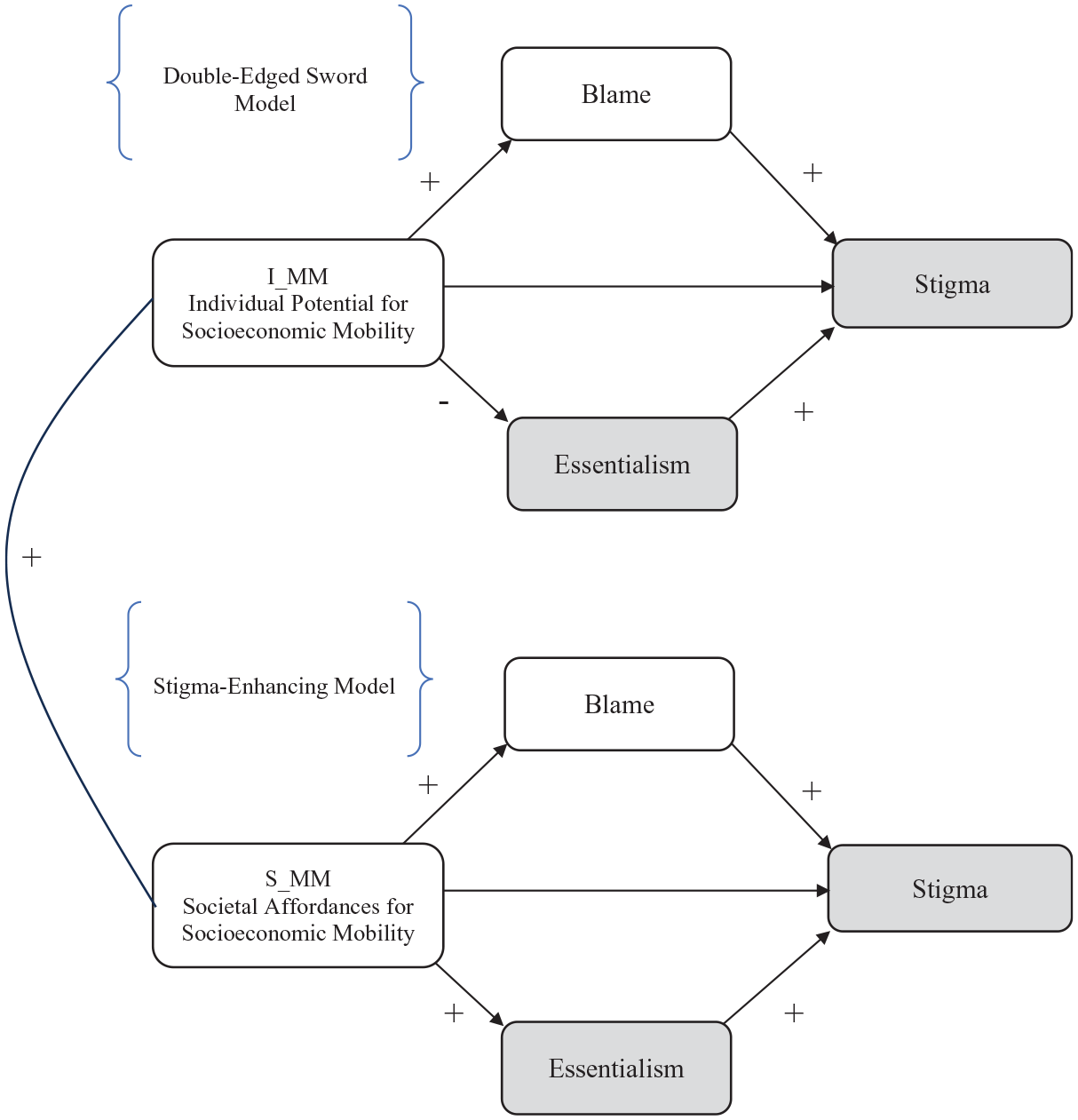
Predictions of the current research.
S_MM: A stigma-enhancing model
In the stigma-enhancing model, growth mindsets are positively linked not only to blame but also to essentialist thinking, thereby amplifying stigma. Believing that there are few systemic barriers and that society provides ample opportunity for growth can serve to justify the existing economic system (Hoyt, Billingsley, Burnette, et al., 2023; Jost, 2020). System justification theory suggests there is a robust human motivation to uphold the status quo, leading people to rationalize social inequities (Jost, 2020). Believing people have the opportunities and capacities within the social structure to change their social status speaks directly to perceptions of controllability, a critical factor in attributions of blame (Weiner, 1985, 1995). When people believe societal structures support mobility, they often blame the impoverished for their status, reinforcing negative attitudes toward them (Cozzarelli et al., 2001; Hoyt et al., 2021). Additionally, the more people believe that there are societal affordances and opportunities for change in status, the more likely they are to believe that those who remain in poverty possess an intrinsic, essential characteristic preventing them from succeeding. Thus, unlike growth mindsets of individual socioeconomic mobility, which we predict have contradictory DES effects, we predict that growth mindsets about society and its affordances will be positively associated with all three outcomes: blame, essentialism, and stigma, resulting in an overall stigma-enhancing model (see Figure 1).
Research Overview
We merge the mindsets, attribution, and essentialism literatures to understand beliefs in the individual potential for socioeconomic mobility and beliefs in societal-level affordances for it. We have three overarching goals for this research. First, we seek to develop the measures and illustrate that they are distinct, including being related to other beliefs in expected but unique ways. Specifically, we investigated if individual mobility mindsets and societal mobility mindsets load on separate factors, which we tested through post hoc exploratory factor analyses across all four studies. Second, we predicted that while the two factors would be positively correlated, each mindset would be uniquely associated with different sets of beliefs. Specifically, we investigated if mindsets of individual potential for socioeconomic mobility relate to traits emphasizing individual agency, such as grit and self-control. In contrast, we predicted that mindsets of societal affordances for socioeconomic mobility would be uniquely associated with beliefs about societal-level systemic barriers to mobility and perceptions of inequality as unjust.
Third, of primary interest are the two models linking growth mindsets to stigma. Namely, because of their distinct emphases, we anticipate that these beliefs will have important and, at times, contrary predictions when examining stigma (see Figure 1). The first model we test is the DES model. Here, we expect that individual mobility mindsets will be positively associated with blame towards those who fail to achieve mobility, but negatively with essentialism, thus resulting in a nuanced effect on stigma, given the conflicting effects on the proposed mediators. This is a replication of the DES model of growth mindsets seen in related stigmatized attributes such as weight and addiction (Hoyt & Burnette, 2020). The second model we test is a stigma-enhancing model, in which we predict that societal mobility mindsets will be positively linked to both blame and essentialism, and thus to stigma, resulting in an overall stigma-enhancement effect. 1
Our data and materials for all studies are available on the Open Science Framework (OSF; https://osf.io/3dby5/). All studies were approved by the Institutional Review Board (IRB) from the first author’s university, and we report all manipulations, measures, and exclusions in these studies.
Exploratory Factor Analyses
First, we tested the predictions that these two interconnected beliefs are distinct factors in post hoc exploratory factor analyses across all four studies. We ran exploratory, and not confirmatory, analyses, since we chose to inspect the factors after data collection. Across studies, participants responded to the two scales below.
Measures
I_MM
We assessed participants’ beliefs in the individual potential for socioeconomic mobility with a six-item measure from Browman et al. (2017). We made one slight modification—clarifying “status” as “socioeconomic status.” Three of the items were growth oriented (e.g., “No matter who you are, you can significantly change your socioeconomic status a lot”), and three were fixed-oriented (e.g., “You have a certain socioeconomic status in society, and you really can’t do much to change it”). Items were scored such that higher values represent stronger beliefs in individual socioeconomic mobility.
S_MM
Participants responded to an eight-item measure from Day and Fiske (2017) that assessed their perceptions of the societal affordances for socioeconomic mobility—that is, does the context provide affordances that allow for change? Six items were rated on a 7-point agreement scale (e.g., “It is not too difficult for people to change their position in society,” “Most people end up staying in the same social class for their entire lives [reversed scored]”), and two of the items were rated on a 7-point scale (1 = extremely difficult, 7 = extremely easy; e.g., “These days, how easy is it to change one’s social class?”). Higher values represent stronger beliefs that society affords people the opportunity to change their socioeconomic status.
Factor Analyses
We examined if individual mobility mindsets would load on a separate factor than societal mobility mindsets. We conducted exploratory factor analyses by using a maximum likelihood approach with an oblique (Promax) rotation, and examined the pattern matrix for factor loadings. Following best practices for interpreting the factors in exploratory factor analysis (Costello & Osborne, 2019), we considered item loadings above .30, aimed for few item cross-loadings (items loading at .32 or higher on two or more factors, as per Tabachnick and Fidell [2001]), and required communalities above .40. See supplemental material at OSF for factor loadings across studies.
Results from Study 1 revealed three factors: the first factor included five of the eight items of the S_MM (one item cross-loaded, one item had low communality, and one did not load), the second factor comprised the three fixed-oriented items from the I_MM scale, and the third factor comprised the three growth-worded items from the I_MM. Results from Study 2 again revealed three factors: the first factor included the same five S_MM items as in Study 1 (one item cross-loaded and two had low communalities), the second factor comprised the three fixed-oriented items from the I_MM scale, and the third factor comprised the three growth-worded items from the I_MM. Analyses from Study 3 again revealed three factors: the first factor included six of the eight items of the S_MM (one item cross-loaded and one had a low communality), including the five items from Studies 1 and 2, the second factor comprised the three fixed-oriented items from the I_MM scale, and the third factor comprised the three growth-worded items from the I_MM. Finally, results from Study 4 revealed two factors: the first factor included the six of the eight items of the S_MM as in Study 3 (one item had a low communality and one didn’t load), and the second factor comprised the three fixed-worded items. In this study, the three growth items from the I_MM loaded equally on both factors, perhaps an artifact of the experimental manipulation.
Overall, the results from the factor analyses revealed one clear factor reflecting societal-level questions and two factors reflecting the individual level, but those are likely due to opposite wording rather than distinct constructs. We computed the variables based on these factor analytic results. Across all four studies, five items from the S_MM measure consistently loaded on a single factor, so we computed the S_MM variable using these items. Analyses using all items from the S_MM scale generally yielded similar results to those reported with the modified scale (minor differences are reported in the Supplemental Material at OSF). For the I_MM scale, it is not uncommon for growth and fixed mindset items to load on separate factors due to item wording (Karwowski et al., 2019; Midkiff et al., 2018). Importantly, the growth and fixed factors were strongly correlated (Study1: r = .58; Study 2: r = .51; Study 3: r = .68; Study 4: r = .70; ps < .001), supporting growth mindset theory that considers these as opposite ends of the same continuum (Dweck, 1999). Prior work suggests that this factor separation is likely a methodological artifact (e.g., Roszkowski & Soven, 2010). In line with best practices for factor analyses when cross-loadings result from reverse coding rather than theoretical distinctions, we combined the fixed- and growth-worded items to create a comprehensive I_MM measure. This measure exhibited strong reliability and predictive utility as well as convergent validity—correlating in expected ways with related psychological constructs.
Study 1
Methods
Participants and procedure
We sought a minimum sample of 250. Analyses revealed this is roughly the sample size needed to have .90 power to detect small effects (.20; α = .05; N = 255; Faul et al., 2007), and 250 offers stable estimates in correlational research (Schönbrodt & Perugini, 2013). We slightly oversampled to account for attrition, and we recruited 300 participants from the US through CloudResearch using its Connect feature (Hartman et al., 2023). Across studies, we used three techniques to help ensure data quality and screen for careless responding (Curran, 2016). Namely, we incorporated a bot check, time spent answering questions, and attention checks. Participants were included in the final sample if they passed the bot check, spent at least 2 seconds per item (Huang et al., 2012; Wood et al., 2017), and answered the attention checks correctly. The attention check items asked participants to identify what second-year high school students are called in the US and to respond to the item “I see myself as someone who did not read this statement.” People failed the checks if they did not answer “sophomore” to the first, or if they strongly agreed to the second. In this study, 290 people remained after data screening (Mage = 40.37 years, age range = 18–80; 146 women, 144 men; 30 Black, 19 East Asian, 218 White, 16 Latino/a/x, two Middle Eastern or North African, six Native American, two Hawaiian or other Pacific Islander, four South Asian, five bi/multiracial, three other race or ethnicity).
Participants were invited to complete a brief Qualtrics survey and received US$1.50 in compensation for their time spent completing the measures. After passing the bot check and consenting to participate, they completed the measures of the individual potential for socioeconomic mobility and the societal affordances for socioeconomic mobility. Next, they completed the measures of systemic attributions for socioeconomic class, perceived injustice of inequality, blame, and social class essentialism (presented randomly), before completing the measures of stigma toward those in poverty and support for redistributive policies (presented randomly). Finally, they completed demographic measures, including a measure of grit.
Measures
Participants responded to items using a 7-point scale (1 = strongly disagree, 7 = strongly agree) unless noted otherwise. Scale reliabilities are reported in Table 1.
Means, standard deviations, scale reliabilities, and correlations among variables.
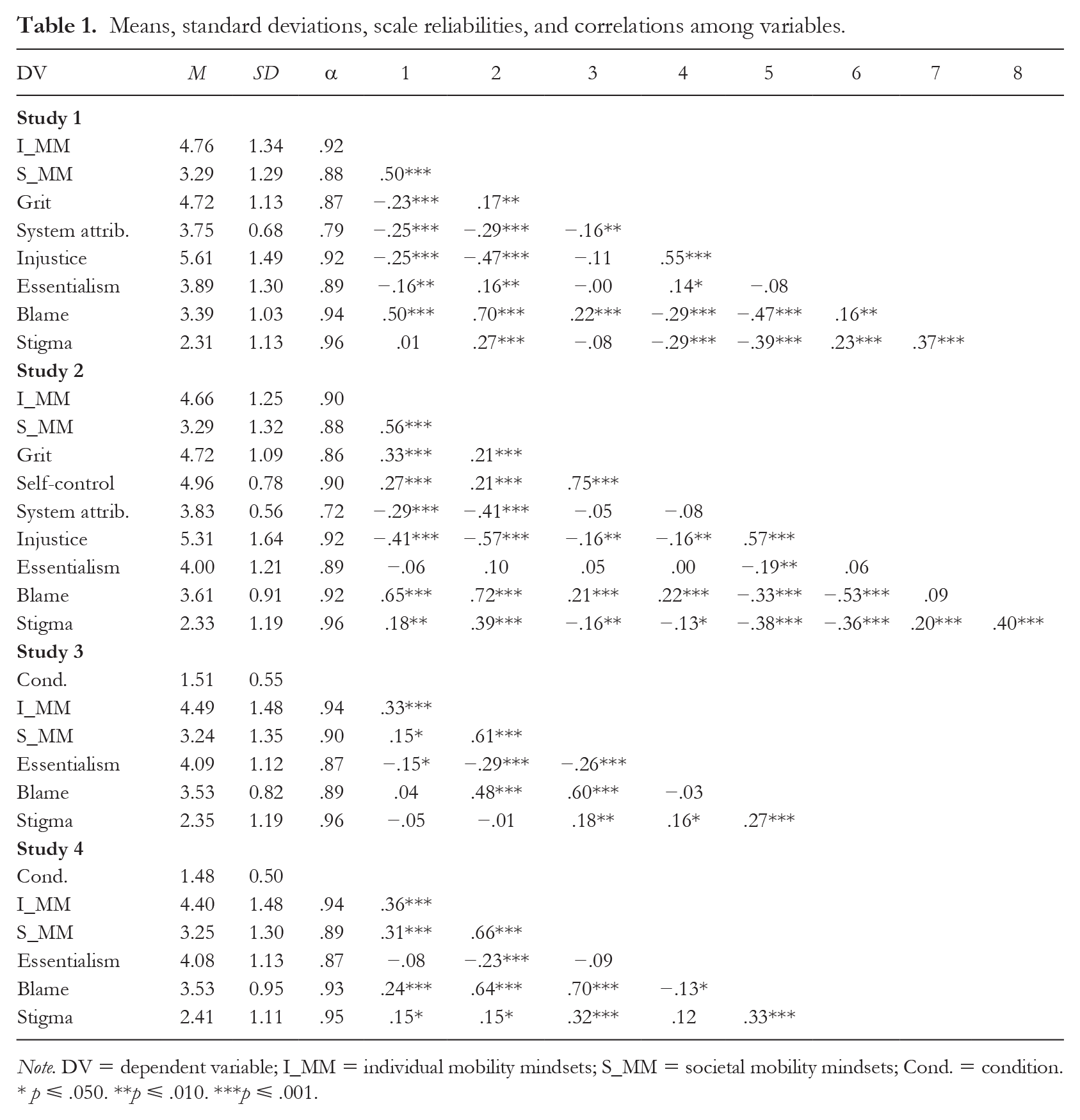
Note. DV = dependent variable; I_MM = individual mobility mindsets; S_MM = societal mobility mindsets; Cond. = condition.
p ⩽ .050. **p ⩽ .010. ***p ⩽ .001.
Grit
We assessed participants’ grit using the eight-item Short Grit Scale (GritS; Duckworth & Quinn, 2009). Items included “New ideas and projects sometimes distract me from previous ones [reverse scored].” Higher scores indicate greater grit.
Systemic attributions
We assessed systemic attributions with an adapted nine-item scale, with questions focused on societal explanations for economic inequality, including social connections (Kraus et al., 2009). Participants rated how important they believed the system-level factors were for explaining economic inequality in the US using a 5-point scale (1 = not at all important, 5 = extremely important). 2 Higher values represent greater systemic attributions.
Perceived injustice of inequality
Participants responded to the following two items to indicate the extent to which they perceive inequality and poverty to be unjust: “The level of social class inequality in the US is unjust” and “The level of poverty in the US is unjust.” Higher numbers indicate stronger perceptions of injustice.
Blame
We created a seven-item blame scale that combined dispositional individual-level attributions of economic inequality (Kraus et al., 2009) with two items assessing the extent to which individuals believe that people can control and are responsible for their socioeconomic class used in past mindset research (e.g., Burnette et al., 2017). In Study 1, these two items were measured on a 7-point scale, but were converted to a 5-point scale when combined with the other blame-related items. In the subsequent three studies, these items were assessed using a 5-point scale. Higher values indicate stronger endorsement of individual blame for economic inequality.
Social class essentialism
Participants completed Kraus and Keltner’s (2013) 10-item Essentialist Beliefs About Social Class Categories Scale. We measured participants’ endorsement of social class essentialism with the six-item Discreteness Subscale including items such as, “I think even if everyone wore the same clothing, people would still be able to tell your social class.” Higher values reflect stronger social class essentialist beliefs.
Stigma against those in poverty
We assessed stigma against those in poverty with the 14-item scale from Hoyt et al. (2023). This scale assesses negative attitudes (e.g., “I really don’t like poor people much”) as well as negative stereotypes (e.g., “Poor people have a bad work ethic”) regarding those in poverty. Higher values represent greater stigma.
Results
See Table 1 for means, standard deviations, and correlations between scales. In order to examine the distinct contributions of these beliefs in each of the models (DES and Stigma Enhancing), we ascertained the independent predictive power of each by controlling for the effects of the other belief, thereby capturing their unique variances. By isolating the effects of individual potential and societal affordances beliefs, we can gain valuable insights into the distinct importance of each belief in shaping attitudes, behaviors, and other outcomes of interest.
Prediction Set 1: Factor analyses and convergent validity
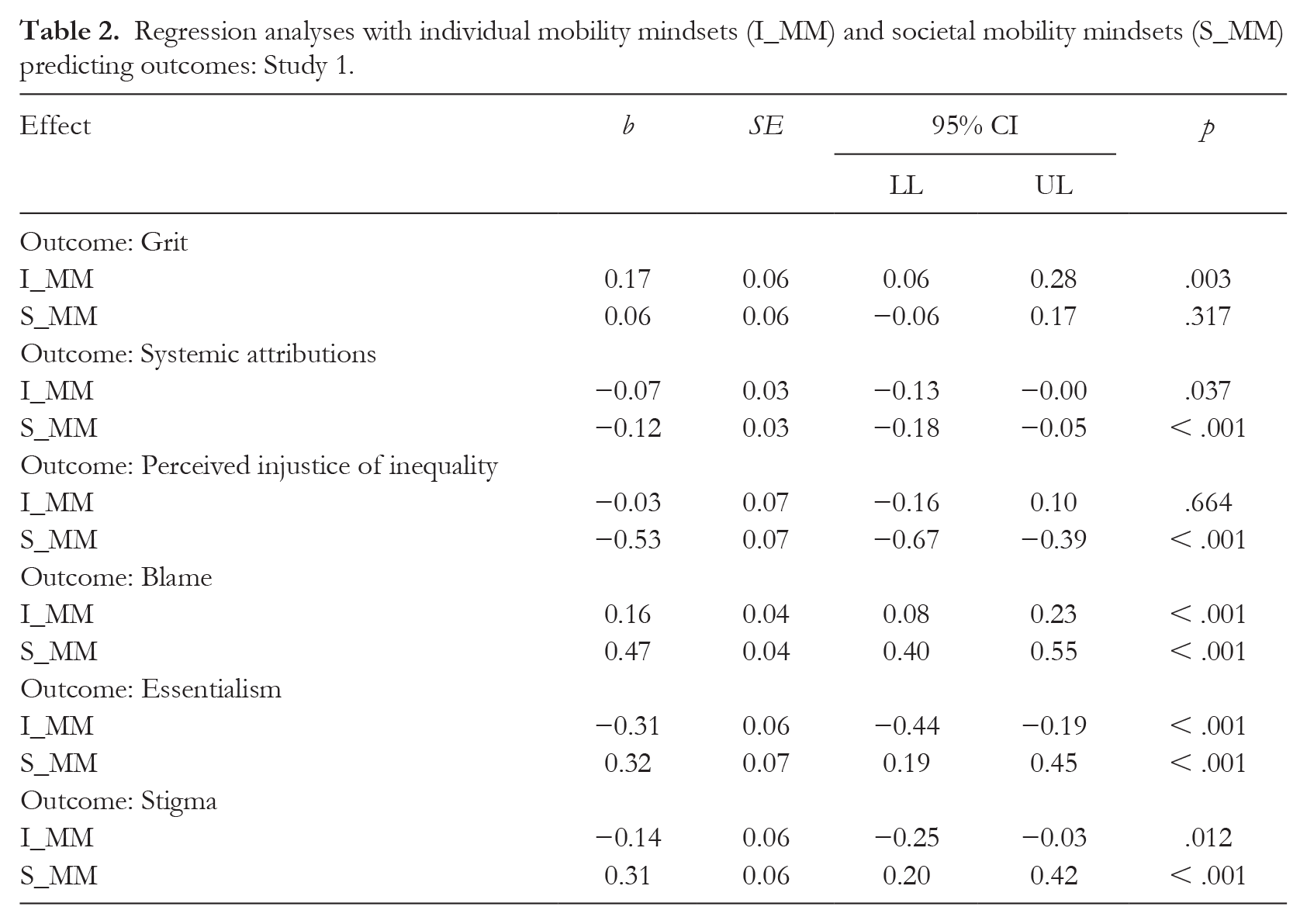
First, we tested the predictions that these two interconnected beliefs, I_MM and S_MM, are positively correlated yet distinct, and we also examined convergent validity. That is, we expected stronger correlations between individual mindsets and individual agency, and stronger correlations between societal mindsets and beliefs in systemic factors shaping socioeconomic outcomes and injustice of these systems. As predicted, the factors were positively related, r(288) = .50, p < .001 (see Table 1). Yet, psychometric best practice suggests that a correlation of .50 in conjunction with factor analyses and theory support the idea that these are separate factors. Most importantly, the I_MM and S_MM are uniquely associated with related types of beliefs (see Table 2). First, I_MM was positively associated with grit, yet there was no association between S_MM and grit. Next, S_MM was negatively related to systemic attributions and the belief that inequality is unjust. There was a weak negative association between I_MM and systemic attributions. There was no association between I_MM and perceived injustice of inequality.
Regression analyses with individual mobility mindsets (I_MM) and societal mobility mindsets (S_MM) predicting outcomes: Study 1.
Prediction Set 2: Stigma models
Next, we tested our predictions for how these two belief systems will predict attitudes toward people in poverty. First, regression analyses revealed that though both I_MM and S_MM were positively associated with blaming individuals for their socioeconomic class, the association with S_MM was stronger (see Table 2). Next, in support of predictions, the two beliefs predicted essentialism in opposite directions. I_MM was negatively associated with social class essentialist beliefs, while S_MM was positively associated with essentialism. Finally, the two beliefs predicted stigma in opposite directions, with I_MM negatively predicting stigma and S_MM positively predicting it.
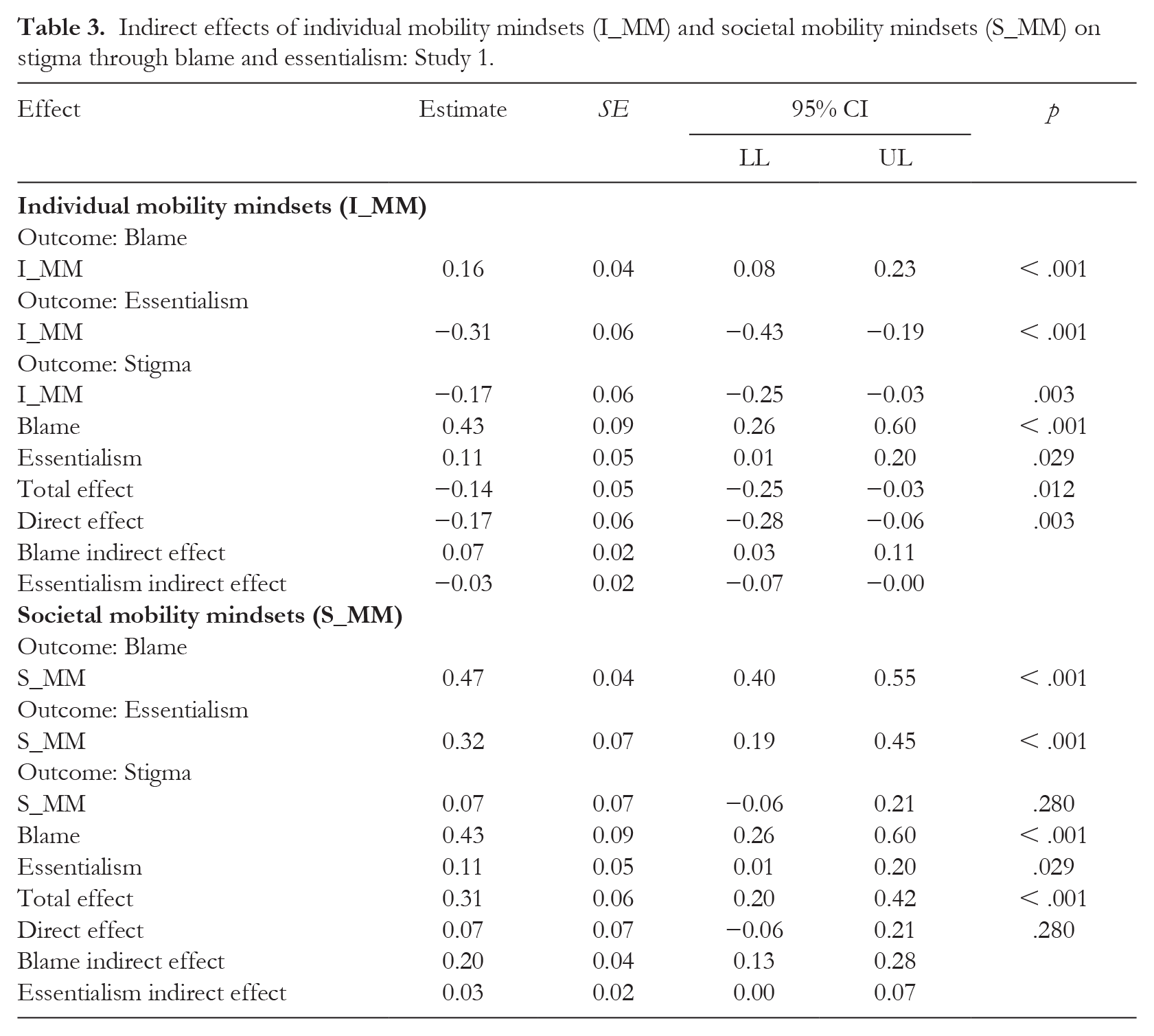
To test the DES and stigma-enhancing models, we conducted two indirect effect analyses using Hayes’s (2018) PROCESS Model 4 to examine parallel mediation effects (see Table 3). First, to test the DES predictions which outline a double-edged sword association between I_MM and stigma toward those in poverty via opposite indirect effects, we entered I_MM as the predictor, blame and essentialism as parallel mediators, and stigma as the outcome, controlling for S_MM. In this model, I_MM was indirectly and positively linked to stigma through a positive link to blame, and negatively linked to stigma through a negative link to essentialism. With both mediators in the equation, there remained a significant negative direct effect of I_MM on stigma. Second, testing our stigma-enhancing predictions in a similar manner, S_MM was indirectly and positively linked to stigma through the positive link to both blame and essentialism (see Table 3).
Indirect effects of individual mobility mindsets (I_MM) and societal mobility mindsets (S_MM) on stigma through blame and essentialism: Study 1.
Discussion
These initial correlational findings provided support for our primary predictions. The beliefs were positively correlated, yet beliefs in individual potential for socioeconomic mobility were positively associated with grit, aligning with the expectation that these beliefs would relate to traits emphasizing personal agency. These beliefs were only weakly linked to systemic attributions for social class, and not significantly linked to beliefs about the injustice of inequality. Conversely, beliefs in the societal affordances for socioeconomic mobility were not related to grit, but as expected, they were negatively linked to systemic attributions for social class and injustice of inequality, supporting the idea that these beliefs capture perceptions of broader structural barriers to mobility. These findings provide evidence that the two mindsets predict theoretically relevant psychological constructs in unique ways, reinforcing their conceptual distinction.
Next, as predicted, both mindsets were positively associated with blaming people for their socioeconomic class. However, they had opposing associations with social class essentialism and stigma. Individual mobility mindsets were negatively linked to stigma, and this was partly explained by the negative link to social class essentialism, despite a small positive indirect effect through blame. And there remained a strong negative direct effect between individual mobility mindsets and stigma. Conversely, stronger beliefs in the societal affordances for socioeconomic mobility were positively related to stigma toward those in poverty, and this effect was driven in part by the positive links to blame and essentialism. In conclusion, these initial correlational findings shed light on important distinctions between beliefs in individual potential and beliefs in societal potential for changes in socioeconomic mobility, and their associations with attitudes related to social class and poverty.
Study 2
Our goal in Study 2 was to replicate the findings from Study 1 in a preregistered study.
Methods
Participants and procedure
We recruited 300 participants from the US through CloudResearch using its Connect feature (Hartman et al., 2023) in order to ensure .90 power to detect small effects (.20; α = .05; N = 255; Faul et al., 2007) and stable estimates in correlational research (Schönbrodt & Perugini, 2013). We used the same three techniques to help ensure data quality and screen for careless responding as in Study 1. In this study, 281 people remained after data screening (Mage = 38.69 years, age range = 20–73; 139 women, 141 men, one not indicating their gender; 31 Black, 12 East Asian, 210 White, 33 Latino/a/x, one Middle Eastern or North African, six Native American, three Hawaiian or other Pacific Islander, three bi/multiracial, five other race or ethnicity).
Participants completed a brief Qualtrics survey and received US$1.50 in compensation. The procedure was similar to that in Study 1. Next, in measuring essentialism, participants only responded to the Essentialism Subscale used in Study 1 (i.e., discreteness). Lastly, we also included the Brief Self-Control Scale (BSCS; Tangney et al., 2004) in addition to the GritS. All other measures were the same as in Study 1. We also developed additional exploratory items related to beliefs about socioeconomic mobility. Although these items hold potential for future research, they fall outside of the specific focus of this study.
Measures
Participants responded to items using a 7-point scale (1 = strongly disagree, 7 = strongly agree) unless noted otherwise.
BSCS
We assessed participants’ self-control using the 13-item BSCS (Tangney et al., 2004). On a 5-point scale (1 = not at all, 5 = very much), participants responded to items such as, “I am good at resisting temptation” and “I often act without thinking through all the alternatives [reverse-scored].” Higher scores indicate greater self-control.
Results
See Table 1 for means, standard deviations, and correlations between scales.
Prediction Set 1: Correlations and convergent validity
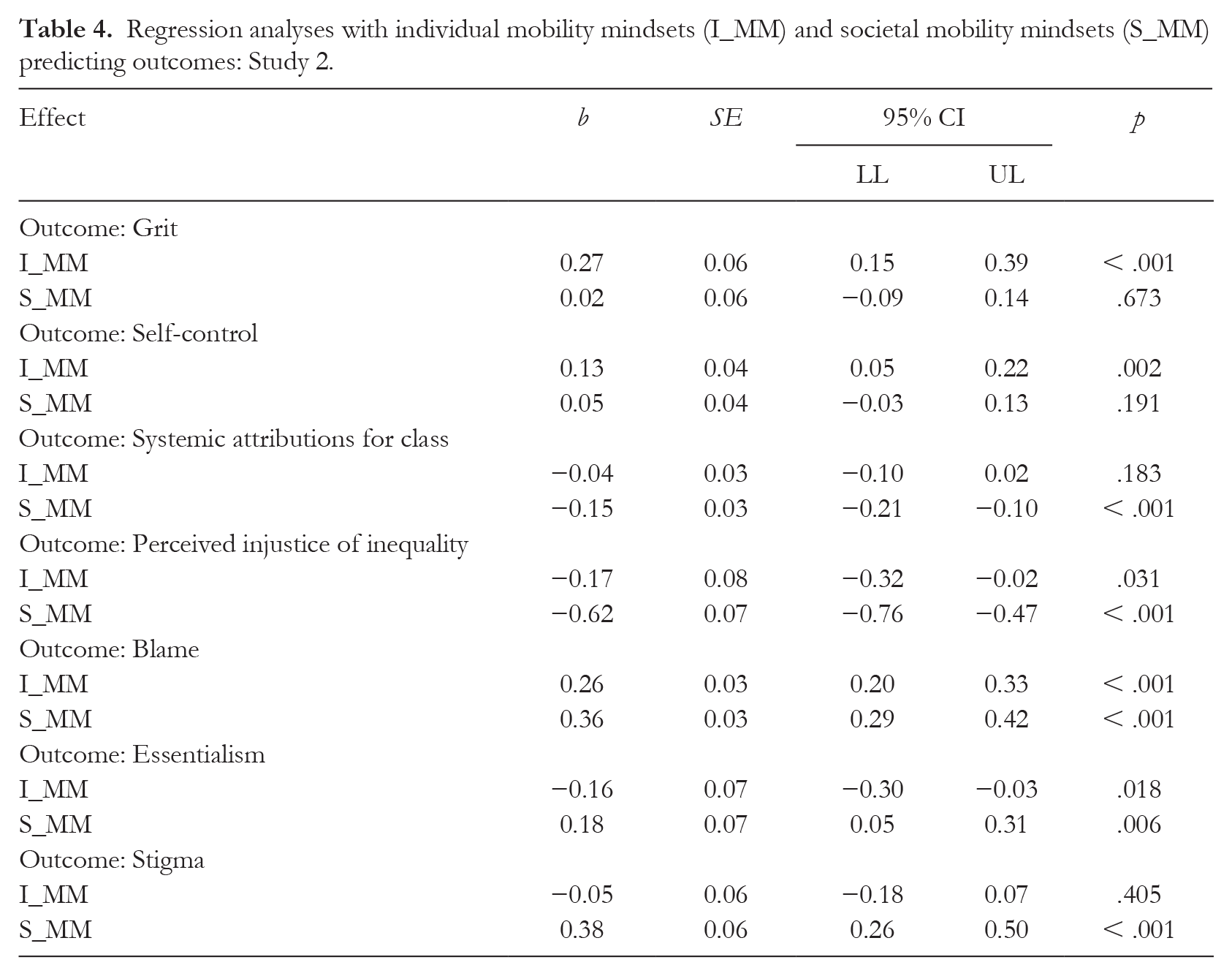
First, as predicted, I_MM and S_MM were positively correlated, r(279) = .56, p < .001, yet did not meet the typical threshold for combining factors, which is usually in the .70 range and higher (Hodson, 2021). Next, we conducted a series of linear regression analyses. I_MM was positively associated with grit and self-control, or the extent to which people reported having the capacity to override or change their own behaviors and impulses (see Table 4). There were no associations between S_MM and either grit or self-control. However, S_MM was again negatively correlated with systemic attributions and beliefs that inequality is unjust. There was a weak negative association between I_MM and perceived injustice of inequality. There was no association between I_MM and systemic attributions.
Regression analyses with individual mobility mindsets (I_MM) and societal mobility mindsets (S_MM) predicting outcomes: Study 2.
Prediction Set 2: Stigma models
Next, we tested our hypotheses for how these two belief systems would predict attitudes toward people in poverty. First, regression analyses revealed that both I_MM and S_MM were positively associated with blaming individuals for their socioeconomic class, though once again the association with S_MM was stronger (see Table 4). Next, the two beliefs predicted essentialism in opposite directions. I_MM was negatively associated with social class essentialist beliefs, while S_MM was positively associated with this construct. Finally, S_MM positively predicted stigma, whereas I_MM was not significantly associated with it.
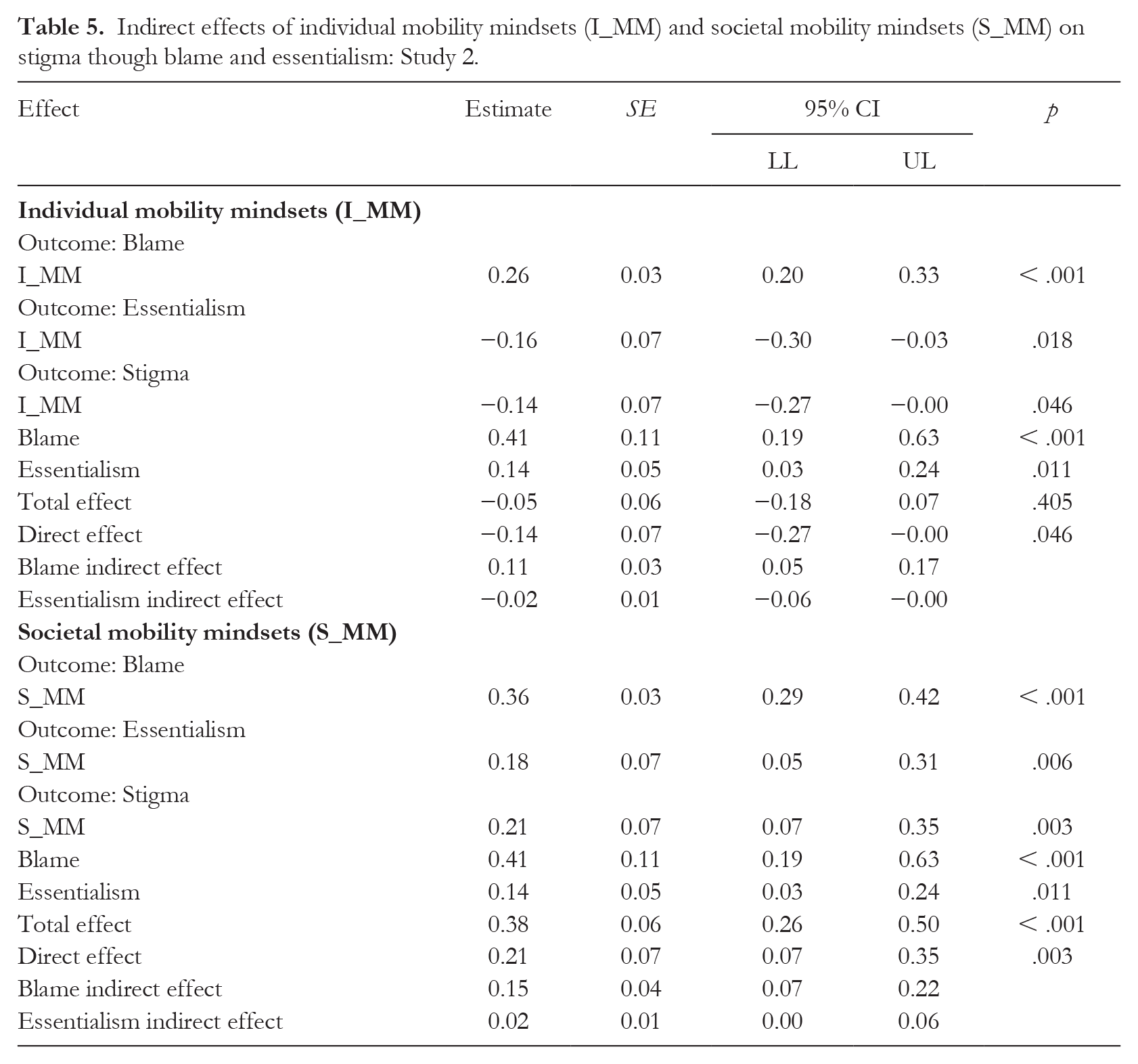
We tested our indirect effects hypotheses for how I_MM and S_MM will predict stigma (see Figure 1) using the same approach as in Study 1 (see Table 5). First, there was a double-edged sword association between I_MM and stigma toward those in poverty; I_MM was positively related to stigma via the positive link to blame, but also negatively linked to stigma via the negative link to essentialism. There was also a significant negative direct effect of I_MM on stigma. Next, S_MM was indirectly and positively linked to stigma through the positive links to blame and essentialism.
Indirect effects of individual mobility mindsets (I_MM) and societal mobility mindsets (S_MM) on stigma though blame and essentialism: Study 2.
Discussion
The findings from Study 2 largely replicated those from Study 1. Individual mobility and societal mobility mindsets were positively linked. Additionally, individual mobility mindsets were associated with grit and self-control; however, they were only weakly correlated with perceived injustice of inequality and not correlated with systemic attributions for social class. Conversely, societal mobility mindsets were negatively linked to systemic attributions for social class and to beliefs about the injustice of inequality, while not being related to grit or self-control. These findings underscore the distinction between I_MM, which is related to beliefs related to individual potential, and S_MM, which is tied to broader systemic beliefs about class and inequality.
Both I_MM and S_MM were positively associated with blaming individuals for their socioeconomic status, but they had opposing associations with social class essentialism and only S_MM predicted stigma. Testing our models, we found support for the double-edged sword effect of individual mobility mindsets on stigma. There was a negative indirect effect through social class essentialism and a positive indirect effect through blame. Additionally, individual mobility mindsets had a negative direct effect on stigma. In contrast, societal mobility mindsets were associated with a stigma-enhancing effect toward those in poverty. This effect was primarily driven by a positive indirect effect through blame and, to a lesser extent, by a positive effect through social class essentialism.
Study 3
Next, we sought to experimentally manipulate mindsets; in Study 3, we attempted to manipulate beliefs in the individual potential for socioeconomic mobility, and in Study 4, we sought to manipulate beliefs in societal affordances for socioeconomic mobility. In these preregistered studies, we focused on the impact of mindsets on attitudes toward people in poverty.
Methods
Participants and procedure
Two hundred fifty-one participants from the US completed the study using CloudResearch’s Connect feature (Hartman et al., 2023) and were compensated $1.50 for their participation. We used the same techniques to help ensure data quality and screen for careless responding as in the previous studies. Two hundred forty-six participants remained after data screening (Mage = 36.15 years, age range = 18–68; 122 women, 124 men; 41 Black, 28 East Asian, 164 White, 22 Latino/a/x, two Middle Eastern or North African, five Native American, one Hawaiian or other Pacific Islander, eight South Asian, two bi/multiracial, two other race or ethnicity).
Participants were randomly assigned to read either the changeable, growth-focused message on socioeconomic mobility or the fixed-oriented message on socioeconomic mobility. Participants were then asked to write the main message of the article in one sentence before completing the blame, essentialism, and stigma measures used in the previous studies. Finally, they completed demographic questions before being debriefed.
I_MM manipulation
We randomly assigned half of the participants to read a message entitled “Individual Socioeconomic Status Is Changeable Over Time,” and the other half were asked to read a message entitled “Individual Socioeconomic Status, Like Concrete, Is Pretty Stable Over Time.” The messages were in the form of an editorial article and framed as anecdotal rather than scientific findings. For example, the articles included statements like, “It’s obvious to most people that an individual’s socioeconomic status is changeable [fixed] over time.” We chose this approach to avoid ethical concerns about using fake data, particularly given the challenges of effective online debriefing, and to minimize the risks associated with the spread of fake news (Lazer et al., 2018).
Results
See Table 1 for means, standard deviations, and correlations. I_MM and S_MM were strongly positively related, r(244) = .61, p ⩽ .001.
Manipulating I_MM
We examined the effect of experimental condition on both mindsets with univariate analyses of variance (ANOVAs), with I_MM and S_MM as the dependent variables and experimental condition as the between-subjects factor. Participants in the growth condition reported greater endorsement of both I_MM (M = 4.97, SD = 1.21) and S_MM (M = 3.44, SD = 1.33) relative to those in the fixed condition: I_MM: M = 3.99, SD = 1.57, F(1, 244) = 30.66, p < .001, partial η2 = .11; S_MM: M = 3.04, SD = 1.35, F(1, 244) = 5.29, p = .022, partial η2 = .02. We also explored the effects of experimental condition on the outcomes by conducting ANOVAs with essentialism, blame, and stigma as the dependent variables. There was no effect on blame (p = .516) or stigma (p = .423), but there was a significant effect of condition on essentialism, F(1, 244) = 5.23, p = .023, partial η2 = .02, such that those in the growth condition (M = 3.93, SD = 1.14) reported lower levels of essentialism relative to those in the fixed condition (M = 4.25, SD = 1.07). Since we failed to isolate and manipulate I_MM, analyses by experimental condition are not informative. Instead, we focus on our preregistered linear regression analyses to replicate the effects of mindsets on essentialism, blame, and stigma.
Prediction Set 2: Stigma models
To test the link between mindsets and attitudes toward people in poverty, we conducted a series of linear regression analyses with mindsets as predictors, controlling for condition (see Table 3). First, though both I_MM and S_MM were positively associated with blaming individuals for their socioeconomic class, the association with S_MM was once again stronger. Next, contrary to predictions, regression analyses revealed that both mindsets were negatively linked to essentialism, though S_MM was only marginally significant (see Table 6). Finally, the two beliefs again predicted stigma in opposite directions. I_MM was negatively linked to stigma toward those in poverty, whereas S_MM was positively related to it.
Regression analyses with individual mobility mindsets (I_MM) and societal mobility mindsets (S_MM) predicting outcomes: Study 3.
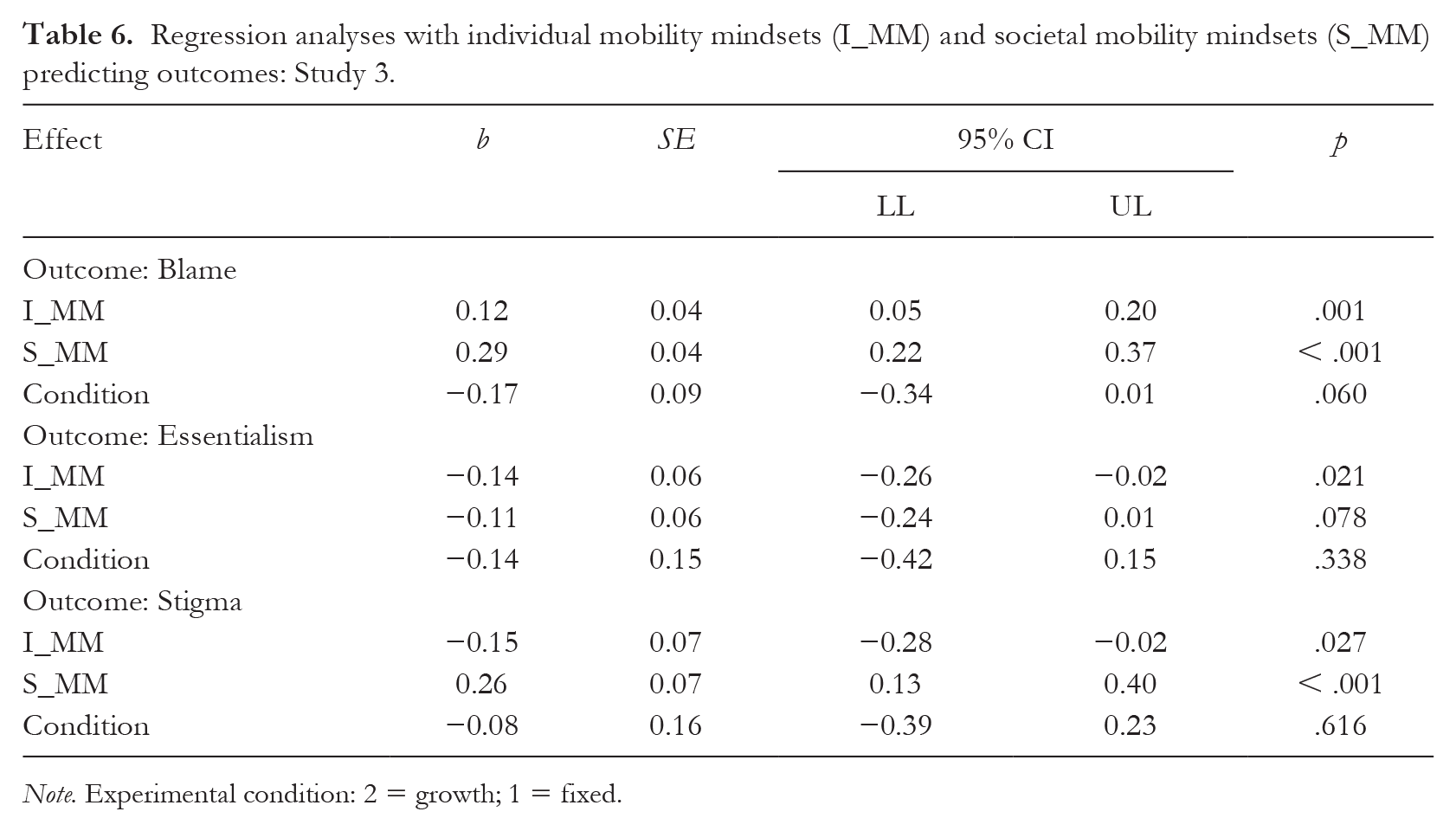
Note. Experimental condition: 2 = growth; 1 = fixed.
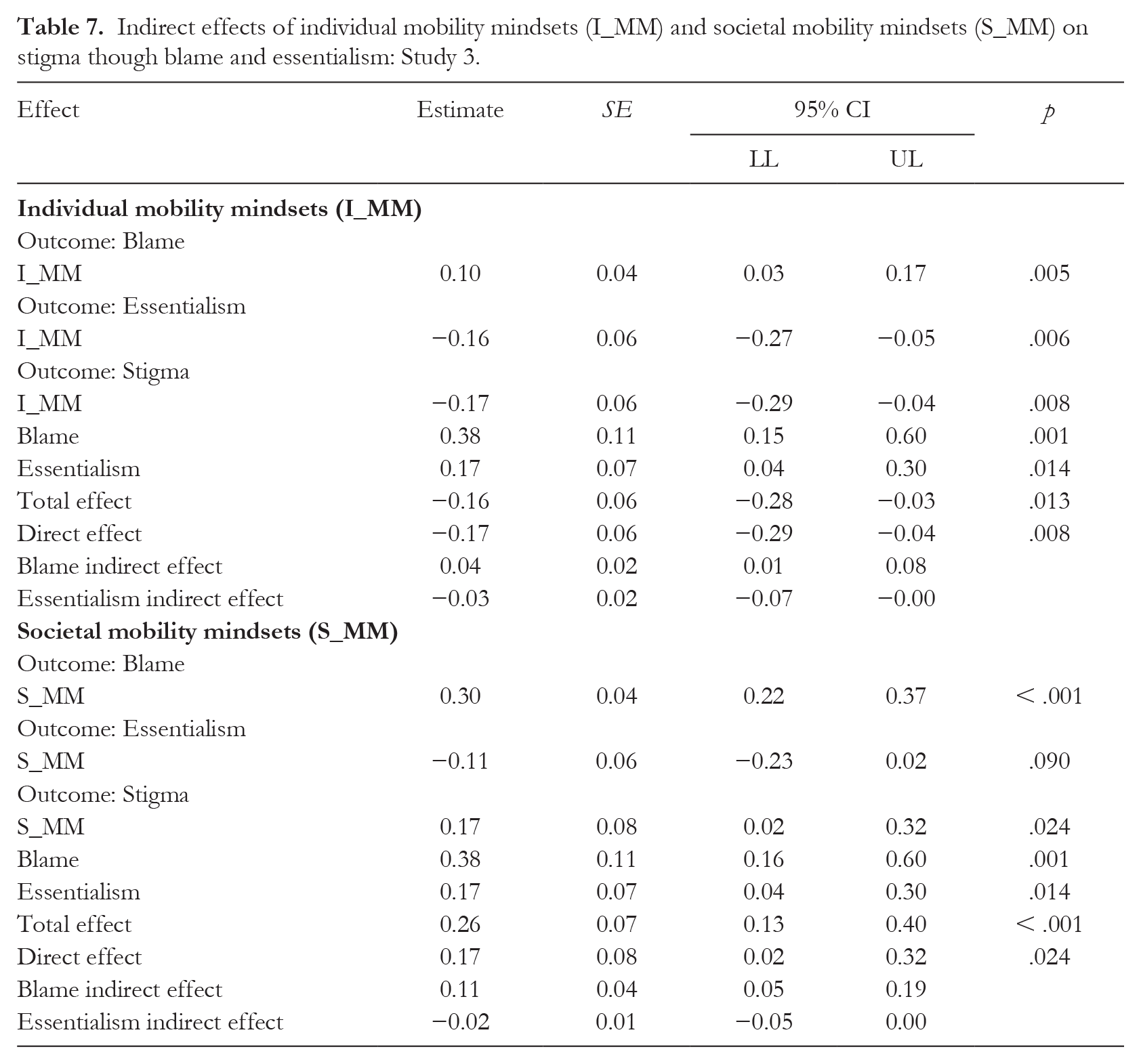
To test our DES and stigma-enhancing models, we once again conducted two indirect effect analyses to examine parallel mediation effects using PROCESS Model 4 (see Table 7), entering the mindset as the predictor, blame and essentialism as parallel mediators, and stigma as the outcome, controlling for the other mindset. First, for I_MM, there was a double-edged sword pattern between I_MM and stigma, with greater stigma through blame but lower levels of stigma through reduced essentialism, and there was a negative direct effect of I_MM on stigma. Next, S_MM indirectly predicted greater levels of stigma through blame. However, there was no indirect effect through essentialism, but there was a positive direct effect of S_MM on stigma.
Indirect effects of individual mobility mindsets (I_MM) and societal mobility mindsets (S_MM) on stigma though blame and essentialism: Study 3.
Discussion
Despite our efforts, we were unable to manipulate individual potential beliefs alone. This substantiates that the mindsets are interconnected and often co-occur, making it challenging to isolate their individual effects. It is important to note, however, that our design did not include a control condition, which would have provided a clearer baseline for evaluating the unique effects of these manipulations. The correlational findings were generally consistent with the previous studies, though there were minor differences, such as the negative relationship between S_MM and essentialism, which could be related to the experimental condition’s effect on essentialism. Individual mobility mindsets had a positive association with blaming people for poverty, a negative link to social class essentialism, and a negative relation with stigma. Societal mobility mindsets, on the other hand, exhibited a robust positive association with blaming people for poverty. The construct was also positively linked to stigma, primarily through the pathway of blame. The direct effects of both I_MM and S_MM on stigma suggest that we did not fully captured the mechanisms through which I_MM negatively predicts stigma, and S_MM positively predicts it.
Study 4
Using a similar approach to Study 3, in this study, we tried to manipulate beliefs in the societal affordances for socioeconomic mobility.
Methods
Participants and procedure
Two hundred fifty-one participants from the US completed the study using CloudResearch’s Connect feature (Hartman et al., 2023) and were compensated $1.50 for their participation. Two hundred forty participants remained after data screening (Mage = 37.33 years, age range = 19–78; 119 women, 121 men; 33 Black, 21 East Asian, 162 White, 22 Latino/a/x, two Middle Eastern or North African, three Native American, one Hawaiian or other Pacific Islander, four South Asian, four bi/multiracial, four other race or ethnicity).
Using the same approach as in Study 3, participants were randomly assigned to read either the growth-focused or the fixed-oriented message on socioeconomic mobility. They then summarized the article’s main message in one sentence before completing the blame, essentialism, and stigma measures from previous studies. Finally, they answered demographic questions and were debriefed.
Manipulation
We randomly assigned half of the participants to read a message entitled “Society Allows for Social Mobility and Socioeconomic Status Change,” and the other half were asked to read a message entitled “Society Does NOT Allow for Social Mobility or Socioeconomic Status Change.” The messages were in the form of an editorial article and framed as anecdotal knowledge rather than scientific findings. For example, the article included statements such as, “It’s obvious to most people that social mobility in society is a possibility [more myth than reality].”
Results
See Table 1 for means, standard deviations, and correlations. I_MM and S_MM were strongly positively related, r(238) = .63, p ⩽ .001.
Manipulating S_MM
First, we examined the effect of experimental condition on both mindsets. We conducted univariate ANOVAs with I_MM and S_MM as the dependent variables, and experimental condition as the between-subjects factor. Participants in the growth condition reported greater endorsement of both I_MM (M = 4.96, SD = 1.28) and S_MM (M = 3.67, SD = 1.27) relative to those in the fixed condition: I_MM: M = 3.89, SD = 1.47, F(1, 238) = 36.24, p < .001, partial η2 = .13; S_MM: M = 2.86, SD = 1.20, F(1, 238) = 25.53, p < .001, partial η2 = .10. We again explored the effects of experimental condition on the outcomes by conducting ANOVAs with essentialism, blame, and stigma as the dependent variables. There was no effect on essentialism (p = .221), but there were significant effects of condition on blame, F(1, 238) = 14.66, p < .001, partial η2 = .06, and stigma, F(1, 238) = 5.47, p = .020, partial η2 = .02, such that those in the growth condition reported greater levels of blame (M = 3.77, SD = 0.88) and stigma (M = 2.59, SD = 1.25) relative to those in the fixed condition (blame: M = 3.32, SD = 0.96; stigma: M = 2.25, SD = 0.95). Since we were once again unable to successfully isolate and manipulate S_MM, analyses by condition were not informative. Therefore, we focus on our preregistered linear regression analyses to replicate effects of both beliefs on essentialism, blame, and stigma.
Prediction Set 2: Stigma models
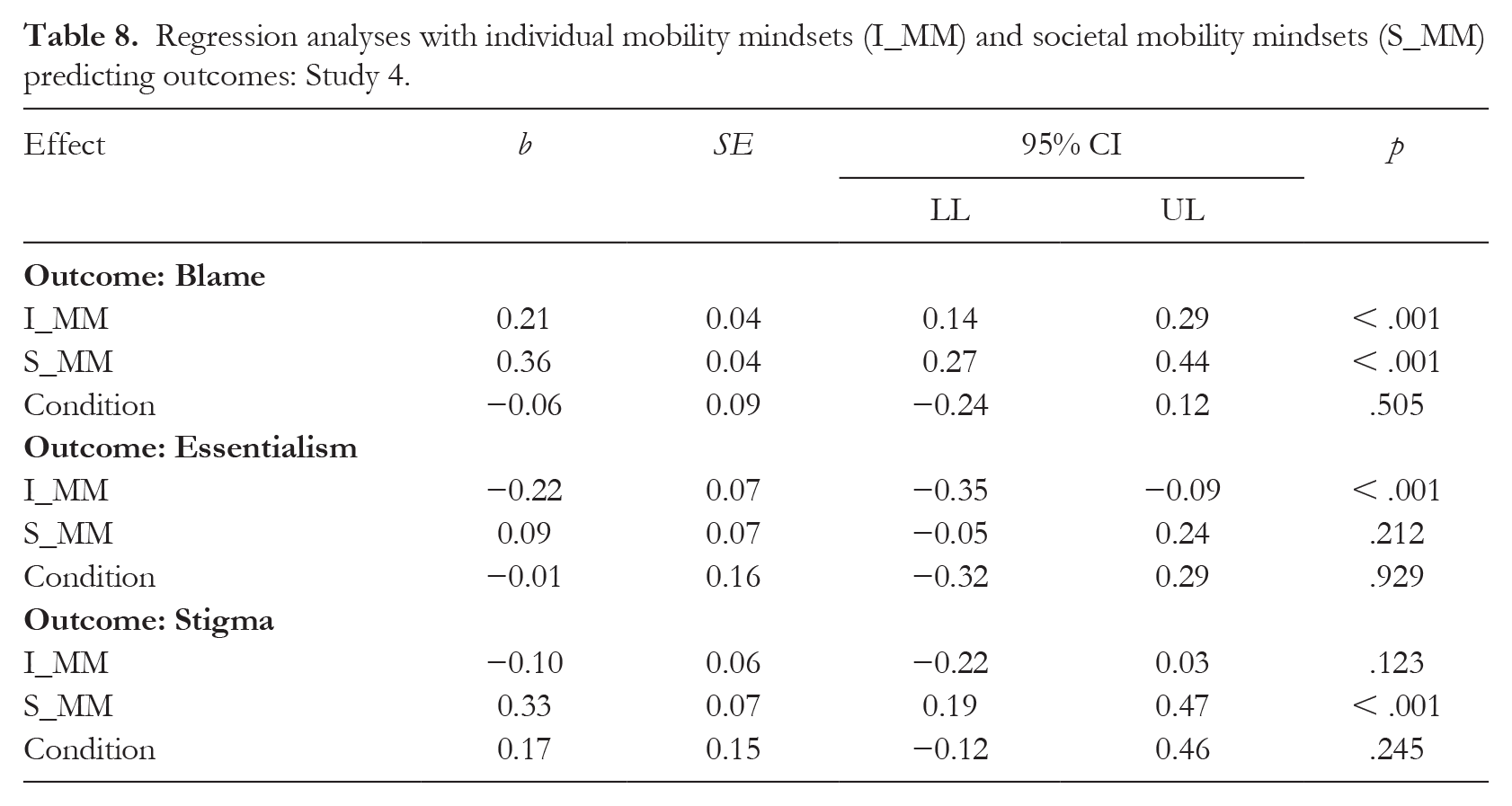
We conducted a series of linear regression analyses with both beliefs as predictors in the equation, and we controlled for condition (see Table 3). First, both I_MM and S_MM were positively associated with blaming individuals for their socioeconomic class, and the association with S_MM was once again stronger. Next, mindsets predicted essentialism in opposite directions, although the association with S_MM was not significant (see Table 8). The more people believed in the individual potential to change one’s social class, the less they believed there is an inherent essence to people based on social class. However, beliefs in the societal affordances for socioeconomic mobility were not associated with social class essentialist beliefs. Finally, regression analyses once again showed that the two beliefs predicted stigma in opposite directions, though the association of I_MM with lower levels of stigma against those in poverty was not significant, whereas S_MM significantly and positively predicted stigma.
Regression analyses with individual mobility mindsets (I_MM) and societal mobility mindsets (S_MM) predicting outcomes: Study 4.
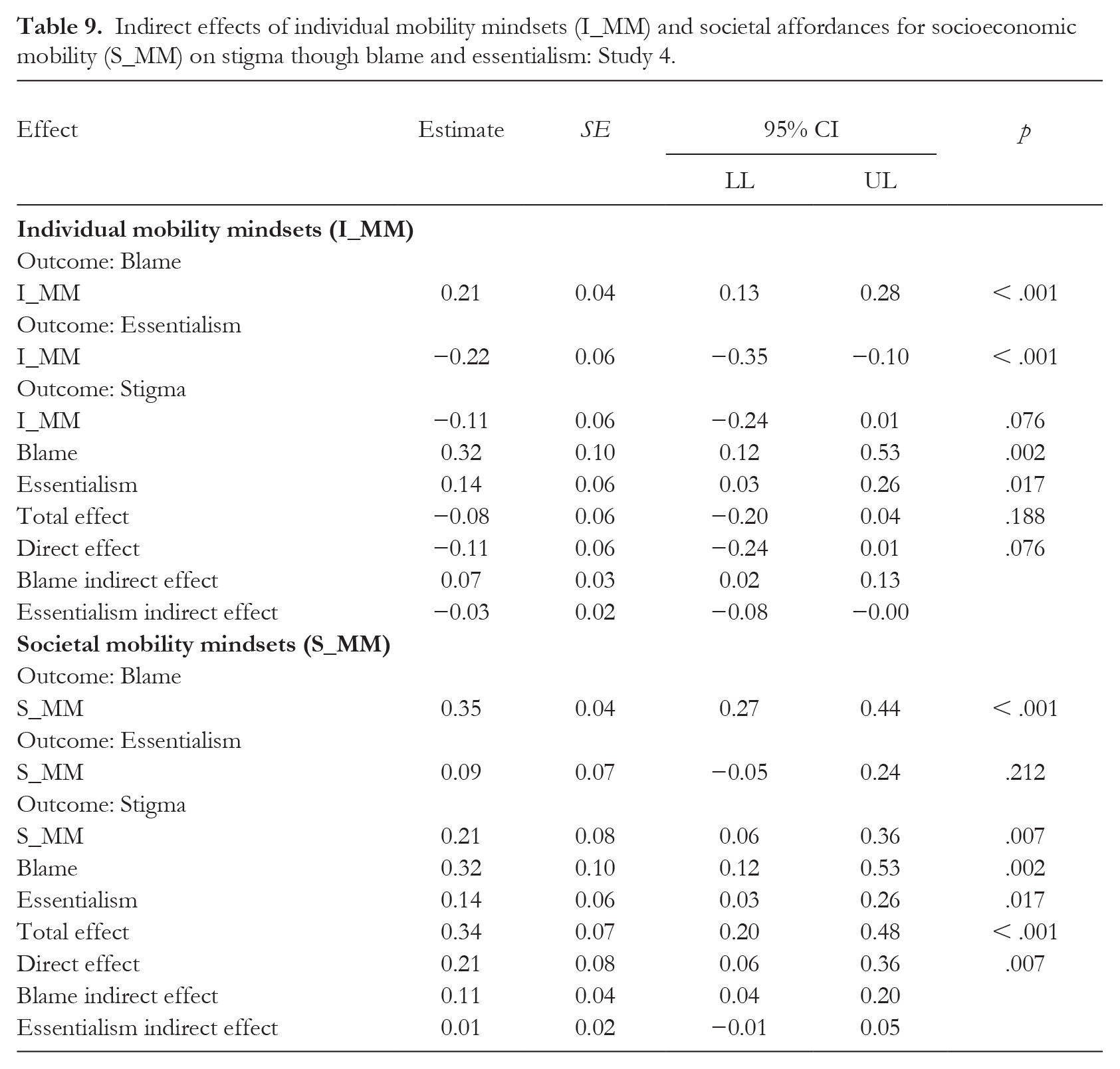
We again tested the two models using two indirect effect analyses using Hayes’s (2018) PROCESS Model 4, entering the mindset as the predictor, blame and essentialism as parallel mediators, and stigma as the outcome, controlling for the other mindset (see Table 9). First, as predicted, there was a double-edged sword association between I_MM and stigma toward those in poverty; I_MM indirectly predicted greater stigma through greater levels of blame, but also lower levels of stigma through reduced essentialism. There was also a marginally significant negative direct effect of I_MM beliefs on stigma. Second, in testing the stigma-enhancing model, S_MM indirectly and positively predicted stigma through blame. There was also a significant and positive direct effect of S_MM on stigma.
Indirect effects of individual mobility mindsets (I_MM) and societal affordances for socioeconomic mobility (S_MM) on stigma though blame and essentialism: Study 4.
Discussion
Once again, we were unable to manipulate individual potential and societal affordances beliefs separately. Again, individual mobility mindsets were positively associated with blaming people for poverty, negatively linked to social class essentialism, and negatively related to stigma. In contrast, societal affordance mindsets showed a strong positive association with blaming people for poverty and were linked to greater levels of stigma, primarily through the pathway of blame. Once again, the direct effects of both I_MM and S_MM on stigma suggest that the mechanisms linking these beliefs to stigma remain only partially explained. Finally, although our manipulation was unsuccessful in isolating individual potential and societal affordances beliefs, it is notable that it directly influenced both blame and stigma, consistent with correlational findings.
General Discussion
Believing in socioeconomic mobility has nuanced effects on self-perceptions and attitudes toward social inequality (Destin, 2020). These effects suggest that socioeconomic mobility beliefs are not a singular construct but instead reflect distinct beliefs—each with unique psychological and social implications. In this work, we explored differences between the belief in the individual potential for socioeconomic mobility and the belief in the societal affordances for socioeconomic mobility in the larger social context. First, our findings showed that these two beliefs are positively linked, yet they are distinct and have different focal points. To synthesize the relationship between these variables across studies, we conducted an internal mini-meta-analysis (Goh et al., 2016). The average positive correlation between I_MM and S_MM was strong, M r = .58, Z = 21.46, p < .001. Exploratory factor analyses captured these beliefs as unique factors, revealing different patterns of prediction. Individual mobility beliefs, emphasizing agency, effort, and determination, were positively associated with self-perceived ability to improve one’s situation through hard work and determination, as well as beliefs in self-control. In contrast, beliefs in the societal affordances for socioeconomic mobility focused on systemic factors were negatively associated with systemic attributions for social class and beliefs regarding the injustice of inequality.
Next, we explored the implications of these beliefs for attitudes toward those in poverty. Generally, individual mobility mindsets were negatively linked to stigma toward those in poverty, driven in part by reduced levels of essentializing those in poverty, despite being weakly associated with greater blame. Conversely, societal mobility mindsets were robustly associated with increased stigma, largely driven by blame and somewhat by essentialism. These findings highlight the importance of distinguishing between mindsets to better understand their nuanced effects on attitudes toward social class and poverty. While beliefs in individual potential tend to be associated with reduced stigma and essentialist views, beliefs in societal affordances are associated with negative attitudes, including blame and stigma.
This research has important theoretical and applied implications, offering the first empirical differentiation of distinct aspects of socioeconomic mobility mindsets. Factor analyses revealed that these mindsets loaded onto separate factors, supporting their conceptual distinction. Moreover, their predictive patterns diverged. I_MM was associated with personal agency traits like grit and self-control, whereas S_MM was related to systemic beliefs about class and inequality. Importantly, these mindsets had differential relationships with stigma toward those in poverty—I_MM was negatively associated with stigma, while S_MM was positively associated with it. Differentiating these two socioeconomic mobility mindsets can help explain the varying consequences of mobility beliefs observed in the literature. For example, individuals who believe in socioeconomic mobility are more likely to take actions that can lead to upward socioeconomic movement (Browman et al., 2017; Destin & Oyserman, 2010; Petrocelli et al., 2010), likely due to their belief in individual potential. However, mobility beliefs are also associated with a reduced likelihood of addressing structural causes of social inequalities (Shariff et al., 2016), a logical outcome of believing the societal affordances are plentiful. Furthermore, believing in socioeconomic mobility reinforces beliefs in meritocracy (Day & Fiske, 2017), which is strongly associated with negative attitudes toward low-status groups, such as those with low levels of education or those in poverty (Hoyt et al., 2021; Kuppens et al., 2018; Major & Kaiser, 2017). These attitudes are largely driven by a tendency to assign blame—a key mechanism identified in our research linking beliefs in societal affordances for socioeconomic mobility and negative attitudes. Our findings suggest that a nuanced understanding of socioeconomic mobility beliefs that differentiates between individual potential and societal affordances is crucial for advancing the field.
In addition to pointing to the need for greater attention to mindset measurement, the current work has theoretical implications. First, we confirmed the nuance of different beliefs and the importance of delineating the context. With the extension of mindset theory to a multitude of attributes, experiences, and more, it is critical to define and capture the distinct mindsets. Our work shows that although both beliefs are about poverty, the level matters. Assessing mindsets about individual potential is distinct from similar beliefs about the potential for larger groups of people, such as societies, to change. Second, and related, we continue to understand when growth mindsets may have costs. We mostly replicated the DES model with individual potential mobility mindsets positively linked to blame but negatively linked to essentialism. These findings are similar to research on growth mindsets related to individual economic class and opportunity (Hoyt, Billingsley, Burnette, et al., 2023). The current work further examined the whole model linking mindsets to stigma and highlighted the important negative direct link. This negative direct effect suggests more work is needed to continue to understand the mechanisms involved. Third, we introduced a stigma-enhancing model that illustrates when growth mindsets directly and indirectly enhance stigma by showing the positive link to blame, and also revealing a positive relation with essentialist thinking, which is counter to the majority of work on this topic, which highlights a negative relation (e.g., Hoyt & Burnette, 2020). Past work examining growth mindsets in the context of stigmatized attributes focuses primarily on when growth mindsets predict blame. The stigma-enhancing model proposed and tested in the current work highlights when growth mindsets may be positively related to essentialist thinking, thereby producing only costs for stigma, without the potential benefits.
Understanding these nuanced associations offers valuable insights for fostering more inclusive attitudes toward those disadvantaged by the system. Drawing from the mindset literature, we might develop messaging that maximize the benefits while minimizing the drawbacks. For example, in contexts where mindsets have double-edged sword effects, compensatory growth mindset messaging can promote growth beliefs while simultaneously reducing blame and social essentialist thinking (Burnette et al., 2017, 2019; Hoyt et al., 2019). In the context of socioeconomic mobility beliefs, future work should consider increasing beliefs in individual potential while also highlighting systematic barriers and the lack of societal affordances. This approach aligns with Destin’s (2020) arguments for leveraging the benefits of mobility beliefs to encourage proactive steps toward mobility while minimizing the neglect of the structural roots of opportunity. Destin suggests delivering messages that offer a balanced perspective “that opportunities are available, but unfair barriers exist that particularly affect members of certain groups” (2020, p. 160). Such compensatory or balanced messaging can help maintain the motivation for personal growth and action while acknowledging and addressing broader societal challenges.
Despite the potential practical and theoretical implications, more work is needed to address the limitations of the current work. First, we only offer statistical tests of mediation, as our experiments failed to successfully manipulate beliefs, and we did not incorporate experimental manipulations of the mediators. While statistical mediation offers initial theoretical insights, it does not establish causal evidence. Thus, more work is needed that both address the manipulation issues and incorporate “manipulate the mediator” designs (Pirlott & MacKinnon, 2016). Additionally, the absence of a control condition limited our ability to establish a clear baseline for the unique effects of the manipulations, highlighting the need for future work to include such a condition. Our efforts to disentangle the beliefs were challenging, likely due to their strong positive correlation, which required modeling both constructs together to account for shared variance. Future research should explore strategies for more effectively isolating these constructs. Second, the current research was conducted within the American context, shaped by dominant ideologies such as individualism and meritocracy. In the US, for example, meritocracy—the belief that success is determined by individual effort, ability, and work ethic—pervades societal values (Son Hing et al., 2011). Consequently, our findings reflect these cultural ideologies. Future research should examine whether and to what extent these findings generalize to other cultural contexts with differing dominant ideologies. Third, we used online samples. While we incorporated best practices to ensure data quality, additional work is needed that replicate effects in different samples. Fourth, we relied on self-reports; thus, considering social desirability effects are possible, more work is needed that uses a multitude of assessments. Finally, much of our work was exploratory; thus, more confirmatory, a priori testing of the proposed factors, measures, and models is needed to replicate and extend these preliminary findings. We hope this initial extension and theorizing of mindsets in the context of socioeconomic mobility offer a springboard for future scientific inquiry—one that advance both research and application.
