



Abstract
The constructive disruption hypothesis proposes that nonnormative-nonviolent protest tactics can persuade resistant advantaged groups to grant concessions by balancing disruption with constructive intentions. We extended this hypothesis from asymmetrical intergroup contexts to two issue-based domains (N = 457), animal welfare activism (Study 1) and religious blasphemy protests (Study 2). Although protest tactics did not directly affect support among resistant participants, we revealed significant indirect pathways through constructive disruption. Constructive intentions consistently predicted increased support, while disruption enhanced support among resistant bystanders (Study 1) or all participants (Study 2), even for violent protests, but decreased support among those open to change (Study 1). Response surface analyses revealed that in animal rights protests, optimal support emerged from combining high constructive intentions with moderate disruption among resistant bystanders, while religious blasphemy protests showed predominantly additive effects. These findings suggest that constructive disruption’s effectiveness varies by context and audience characteristics.
Keywords
Despite their historically high failure rates, social movements and protests continue to serve as essential catalysts for societal change (Louis, 2009; Piven & Cloward, 1979; Van Zomeren & Iyer, 2009). Major transformations, including India’s independence and the dismantling of racial segregation in the United States and of apartheid in South Africa, emerged through sustained protest movements that overcame entrenched resistance through persistent peaceful protest and civil disobedience, sometimes incorporating vandalism and physical violence (Hagemann, 2018; Quadflieg, 2005). A key question persists: What leads resistant publics or advantaged groups to accept protesters’ demands, particularly when they do not identify with the movement’s ideology or perceive direct personal benefits from its cause?
Social psychology has devoted surprisingly little attention to the mechanisms underlying protest success (Orazani et al., 2021; Thomas & Louis, 2014), despite its practical importance for activists seeking to mobilize support (Louis, 2009), a crucial factor for movement success at societal and political levels (Orazani & Leidner, 2019a; Orazani et al., 2021; Passini & Morselli, 2013; Selvanathan & Lickel, 2019). Recent research suggests that disruptive, nonnormative protests can foster support by creating social pressure for change. In movements advocating social justice within asymmetric power relations (e.g., Arabs in Israel, Blacks in the US), nonviolent yet disruptive protests can generate support even among resistant groups by balancing disruption with constructive intentions (Shuman et al., 2021). While this “constructive disruption hypothesis” provides a promising framework, its application has primarily been examined within social justice movements involving advantaged–disadvantaged group dynamics, leaving its relevance to broader progressive movements (e.g., animal rights, climate change) largely unexplored.
The current research extends this framework to issue-based social movements centered on moral and ethical concerns (e.g., environmental protection, public health reforms) rather than group-based inequalities. Through two preregistered studies examining animal rights activism and protests against religious blasphemy, we explore whether constructive disruption can foster support among the general public or uninvolved observers, particularly those predisposed to resist these causes. Additionally, we provide an in-depth analysis of how perceived constructive intentions, disruption, and their balance influence support for protest demands, aiming to enhance both the theoretical understanding of protest effectiveness and practical strategies for mobilizing public support across diverse social movements.
The Role of Violent Versus Normative Protest Tactics in Support for Concessions
Protest movements aim to secure support for policy changes and instrumental backing, such as participation or funding (Feinberg et al., 2020; Orazani & Leidner, 2019a; Shuman et al., 2021, 2022). Building on Shuman et al. (2021), we focus on support for concessions, as policy and behavioral changes often hinge on influencing the noninvolved majority (Burstein, 2003; Burstein & Linton, 2002; Monroe, 1998). For example, public support is critical for addressing climate change, where widespread behavioral modifications are essential to reducing global CO2 emissions (Goodall, 2007; Hansen et al., 2013; Moran et al., 2020).
Social movements employ tactics ranging from normative (e.g., demonstrations, rallies, petitions) to nonnormative-nonviolent (e.g., blockades, hacking, hereafter referred to as nonnormative) and nonnormative-violent (e.g., riots, vandalism), with the latter two differing in their potential to cause physical harm and public alarm (Shuman et al., 2021; Teixeira et al., 2020; Verkuyten et al., 2023). Research consistently demonstrates that nonviolent protests generate greater social and political support than violent ones (Orazani & Leidner, 2019a, 2019b; Orazani et al., 2021; M. J. Stephan & Chenoweth, 2008; Thomas & Louis, 2014), regardless of prior ideologies (Feinberg et al., 2017, 2020). Violent tactics often backfire, reducing public sympathy and instrumental support (Feinberg et al., 2017, 2020; Orazani & Leidner, 2019a, 2019b; Ostarek, Rogers, et al., 2024; Simpson et al., 2018; Vandeweerdt, 2024; Zlobina & Gonzalez Vazquez, 2018). However, a meta-analysis revealed that nonviolent methods often yield only small-to-moderate positive effects, with some research finding no significant differences across tactics (Lizzio-Wilson et al., 2022; Menzies et al., 2023; Orazani et al., 2021; Ostarek et al., 2023). The advantages of nonviolence are attributed to enhanced perceptions of morality, legitimacy, reduced distrust, and diminished negative emotions (Bruneau et al., 2017; Lizzio-Wilson et al., 2022; Orazani & Leidner, 2019a; Simpson et al., 2018). While violent tactics can heighten skepticism and bolster opposition, exceptions exist. For example, Vandeweerdt (2024) found that disruptive climate protests increased issue salience without affecting attitudes or policies.
Nonnormative protests, however, present unique dynamics. Although they risk alienating some observers (Teixeira et al., 2020; Verkuyten et al., 2023), these tactics can sometimes increase support among individuals initially resistant to the movement’s aims (Çakmak et al., 2024; Shuman et al., 2021, 2022, 2024; Teixeira et al., 2020, 2023). Resistance often stems from entrenched attitudes or group interests (Ajzen, 1991; Kraus, 1995), such as investments in advantaged positions, preferences for tradition, or efforts to preserve privileges (Çakmak et al., 2024; Shuman et al., 2021; White et al., 2020). While Teixeira et al. (2020) found that normative protests were more effective among resistant bystanders, emerging evidence suggests that nonnormative strategies may, in some cases, pressure resistant bystanders to reconsider their stance (Orazani et al., 2021; Ostarek, Simpson, et al., 2024; Shuman et al., 2021).
The Role of Perceived Constructiveness and Disruption in Explaining Support for Concessions
The effectiveness of nonnormative elements in nonviolent movements may be explained through perceptions of disruption and constructiveness (Feinberg et al., 2020; Orazani & Leidner, 2019b; Zlobina & Gonzalez Vazquez, 2018). While disruptive tactics can provoke threat perceptions and negative attitudes (Jetten et al., 2017; Piven, 2008; Rios et al., 2022; W. G. Stephan et al., 2009; Wang & Piazza, 2016), potentially justifying forceful responses (Ayoub, 2010; Earl et al., 2003; Edwards & Arnon, 2021), they also attract media attention (Amenta et al., 2009; Ostarek et al., 2023; Ostarek, Rogers, et al., 2024) and pressure authorities to engage with demands (Feinberg et al., 2020; Shuman et al., 2021, 2024).
Shuman et al. (2021) propose that “constructive disruption” occurs when perceived disruption is balanced by perceptions of constructive intentions—the belief that protesters seek improvement without harm and intend to cease actions once their goals are achieved. This balance is quantified through a formula adapted from dual identity literature (Levy et al., 2017):

In their main publication, Shuman et al. (2021) first demonstrated that nonnormative protests can increase support for concessions through constructive disruption among resistant Whites in the case of African American protests against police violence in the US (Study 1), and among resistant Israeli Jews in the case of Israeli Arab students’ protests against discriminatory policies (Study 2). In Study 3, Israeli students responded more favorably to Arab student protests employing nonnormative tactics when these tactics were perceived as both disruptive and constructive. Similarly, studies of naturally occurring protests for disability pensions (Study 4) and gun control (Study 5) revealed comparable effects, especially among individuals predisposed to reject the protesters’ demands. Other studies provide additional evidence for this hypothesis, although not directly. Feinberg et al. (2020) found that disruptive protests can garner support as long as they are not perceived as immoral. Simpson et al. (2022) demonstrated that radical factions can increase support for moderate groups by creating a contrast. In an analysis of Animal Rising’s horse racing protest, Ostarek et al. (2023) and Ostarek, Rogers et al. (2024) found that while the protest increased issue salience, it temporarily reduced support among individuals with negative preexisting views; however, these effects dissipated after six months.
Two significant gaps remain. First, the generalizability of the theory beyond group-based power struggles is unclear, as existing research has primarily focused on movements involving disadvantaged groups confronting advantaged groups. Many contemporary movements, however, face resistance rooted in moral convictions, cultural norms, or ideological leanings rather than hierarchical interests (Feinberg et al., 2020; Orazani et al., 2021). Second, while studies emphasize the importance of balancing constructive intentions and disruption (Shuman et al., 2021), the precise nature of this interplay requires further investigation. Alternative configurations may be equally effective, and these elements could operate through distinct psychological processes or interact in nonlinear ways. A deeper understanding of these complexities could help identify tailored tactics that enhance support while minimizing backlash among resistant audiences (Shuman et al., 2024).
The Current Research
Building on the gaps discussed above, the present research pursued two overarching objectives. First, we tested the generalizability of the constructive disruption hypothesis beyond advantaged–disadvantaged group dynamics. Previous work (Shuman et al., 2021, 2022) focused on social justice movements led by disadvantaged groups seeking concessions from advantaged groups. Our studies aim to broaden the constructive disruption hypothesis to issue-based movements where protest motivations revolve less around group identity and more around moral beliefs, ideological convictions, and personal values. In group-based contexts, nonactivists’ support for collective action is often driven by social identities and the emotions they elicit, such as in-group empathy or out-group threat (W. G. Stephan et al., 2009; Van Zomeren & Iyer, 2009; Van Zomeren et al., 2004, 2008). However, issue-based movements, while sometimes overlapping with group affiliation, often emphasize shared ideological or moral stances rather than solidarity rooted in advantaged–disadvantaged group dynamics. Specifically, we selected two distinct domains within this framework: animal rights activism, which transcends traditional power hierarchies (Feinberg et al., 2020; Lizzio-Wilson et al., 2022; Menzies et al., 2023; Ostarek et al., 2023; Ostarek, Rogers, et al., 2024; Simpson et al., 2018; Vandeweerdt, 2024) and where resistance often arises from moral ambivalence or cultural norms (Bard et al., 2010; Ostarek, Rogers, et al., 2024; Saucier & Cain, 2006), and protests against public depictions of the Prophet Muhammad in Germany, an issue rooted in religious and cultural values rather than intergroup inequality. While protests in the latter involve a dominant religious minority, their primary aim is to safeguard sacred values rather than to overcome systemic disadvantage (Al-Rawi, 2015; Polke-Majewski et al., 2015).
Across two studies, we examined three main preregistered hypotheses based on prior research reviewed above:
H1: Violent protests will elicit the lowest support for concessions relative to both normative and nonnormative-nonviolent protests.
H2: Among bystanders resistant to social change, nonnormative-nonviolent protests will garner greater support for concessions than normative protests. No significant differences are anticipated among open bystanders.
H3: Among those resistant to social change, the predicted advantage of nonnormative-nonviolent tactics will be explained by perceived constructive disruption, which should mediate their positive impact on support for concessions. Among bystanders open to social change, this mediated effect is not expected to emerge.
The second objective was to refine our understanding, through exploratory analysis, of how constructive intentions and disruption interact. Previous research has largely operationalized these factors as a single, integrated construct (Shuman et al., 2021). We questioned, employing multiple analytical approaches, whether alternative configurations could generate public support. Our multimodel mediation approach examined constructive intentions, disruption, and their balance as separate mediators. Specifically, we tested moderated parallel mediation models with constructiveness and disruption as separate mediators, a three-mediator model incorporating the combined constructive disruption index, and a serial mediation model to determine whether these factors function independently or through distinct mechanisms, moderated by resistance to change. This comprehensive mediation framework allowed us to isolate the unique effects of each dimension and assess whether their combination provides added explanatory power beyond individual components.
Additionally, we incorporated response surface analysis (RSA; Humberg et al., 2019; Shanock et al., 2010), a relatively new analytical tool within collective action research, as part of our exploratory efforts to clarify how perceived constructive intentions and disruption jointly predict support for concessions, regardless of protest tactics. Based on polynominal regression methods, RSA enables mapping the complex interplay between constructive intentions and disruption, identifying nonlinear patterns, congruence effects, and optimal combinations that maximize support. Unlike traditional interaction analyses, RSA can reveal whether specific alignments (e.g., equally high levels of both intentions and disruption) are especially effective or whether alternative configurations might also foster support. Thus, this methodologically advanced approach enabled us to map the nuance between constructive intentions and disruption, potentially revealing threshold effects, optimal balance points, and complex nonlinear relationships that conventional analytical methods might overlook.
Study 1
Study 1 examined perceptions of and support for three protest tactics in a hypothetical animal rights collective action advocating improved animal treatment in the U.S. meat industry. The US ranks among the highest in global meat consumption at approximately 120 kg per capita in 2020 (Kuck & Schnitkey, 2021; Marinova & Bogueva, 2019). Animal rights demonstrations in the US range from peaceful protests (e.g., Loria, 2018) to violent acts and vandalism (e.g., Graham, 2015; Hwang, 2021), with common tactics including activists liberating animals or chaining themselves to facilities to impede operations (e.g., Ahumada, 2021; Jansen, 2021; Moss, 2020; Webber, 2021).
Research on animal welfare and vegan advocacy highlights complex protest outcomes. Extreme tactics often fail to garner support and can provoke backlash (Feinberg et al., 2017, 2020; Lizzio-Wilson et al., 2022; Menzies et al., 2023; Simpson et al., 2018; Vandeweerdt, 2024). Both disruptive and nondisruptive vegan protests can reduce public identification with activists and strengthen defenses of meat consumption, suggesting that challenging entrenched cultural norms often triggers defensive reactions (Menzies et al., 2023). Feinberg et al. (2020) found that extreme tactics opposing animal testing undermined social identification and support for protesters’ goals compared to moderate demonstrations. These results align with broader research showing violent or radical tactics frequently alienate potential supporters (Simpson et al., 2018; Thomas & Louis, 2014).
However, existing research on animal rights activism has not specifically examined nonnormative tactics as a distinct pathway. It remains unclear whether balancing disruption and constructive intentions can effectively increase support for concessions in this domain. Study 1 explores whether the constructive disruption framework applies in a context shaped by moral sensitivities and deeply rooted cultural practices. Confirmation would extend the applicability of the hypothesis beyond intergroup contexts and enhance understanding of how protest tactics influence public support across diverse social movements.
Method
Participants
We recruited 278 U.S. Americans through Amazon’s MTurk. After excluding participants who revoked consent (six), failed at least one of two attention tests (eight), were vegans (14), were previous animal rights protesters (11), and those who discontinued (36, with 32 during manipulation), the final sample comprised 207 participants (Mage = 42.86, SDage = 10.78). 1 A Monte Carlo simulated power analysis (Schoemann et al., 2017) indicated that 198 participants were needed to detect a significant indirect effect with .80 power, α = .05, and a small-to-medium effect size (0.25), comparable to Shuman et al.’s (2021) mediation analysis. Participants’ economic status ranged from rather bad (25.1%) to rather good (38.2%), with 29.0% reporting neither good nor bad. Most identified as politically strong left or left (52.7%), with 26.6% identifying as strong right or right. The majority (85.0%) consumed meat at least thrice weekly.
Design
Participants joined a study on responses to news reports for US$1.50 compensation. After providing consent and information about their meat consumption and animal rights views, they were randomly assigned to one of five conditions featuring a purported recent news article.
Using materials adapted from Shuman et al. (2021), including measures of constructive intentions, disruption, and support for concessions, the reports began with identical information about U.S. meat consumption and production. The control condition only mentioned activists’ calls for cruelty-free meat production. The other conditions described different protest actions in Omaha, Nebraska: a peaceful demonstration and petition (normative); activists nonviolently halting a slaughterhouse (nonnormative); break-in and vandalism causing massive damage (violent); or an animal exhibition (creative protest, not in Shuman et al., 2021). All conditions presented identical activist demands for increased animal welfare, reduced meat consumption, and more organic meat production, and mentioned hundreds of participants.
Participants spent minimum 60 s reading the article, shared brief thoughts, and answered questions about their perceptions and support for the protesters and their cause. After completing demographic information, they were debriefed about the fictional reports and confirmed consent.
Measures
Osnabrück University’s Ethics Committee granted ethical clearance, confirming the studies’ compliance with ethical guidelines. This study’s measures were predominantly derived from Shuman et al. (2021), adapted for an animal rights protest context. Multi-item scales were computed as mean composite scores, with higher scores suggesting greater agreement.
Resistance to social change
An equivalent measure of resistance to social change in the original work (Shuman et al., 2021) was adapted for the context of animal rights. Specifically, participants were asked “How important are animal rights to you personally?” Answers were given on a 5-point scale (1 = not important at all, 5 = extremely important).
Manipulation check
Participants were asked to rate the protest depicted in the article on several dimensions on 10-point bipolar scales: (a) normativity (1 = in line with American societal norms, 10 = not in line with American societal norms); (b) peacefulness (1 = peaceful, 10 = violent); and (c) creativity (1 = uncreative, 10 = creative).
Support for concessions
Four items assessed participants’ level of support for concessions to protesters, using a 5-point scale (1 = strongly disagree, 5 = strongly agree). Examples include: “I support enacting more laws to protect the welfare of animals in the meat industry” and “Consumers should purchase more organic meat than they currently do.” Reliability indices were satisfactory (α = .82, ω = .83).
Constructive intentions
We adapted items from Shuman et al. (2021) to measure participants’ perception of the protesters’ constructive intentions. Participants rated 10 items on a 5-point scale (1 = strongly disagree, 5 = strongly agree), including: “The protesters have good intentions” and “The protesters want to convince others to voluntarily agree to their demands.” The scale demonstrated high reliability (α = .93, ω = .93).
Disruption
We evaluated participants’ perception of the protest’s disruptiveness as portrayed in the various articles. We used five items derived from Shuman et al. (2021) and Feinberg et al. (2020), utilizing a 5-point scale (1 = strongly disagree, 5 = strongly agree). For instance, “The protest disturbs the normal life in Omaha” and “The public can bear such protests over several weeks” (reverse-scored). The reliability indices were high (α = .91, ω = .92).
Constructive disruption
Finally, constructive disruption was calculated according to the formula given by Shuman et al. (2021, p. 4), which combines disruption and constructive intentions, and then subtracts the absolute difference between the two, effectively calculating a balance between the perceived disruptive aspects and the constructive intentions of the protest:

Additional outcomes
While support for concessions to protesters served as our primary indicator of social movement success influenced by protest tactics, we assessed several additional outcomes: instrumental support (e.g., “If you had the time, would you have participated in the protests?”), behavioral impact on meat consumption (e.g., “After reading the news report, how likely is it that you will reduce your meat consumption?”), interest in the movement (e.g., “Would you be interested in learning more about the activists and how they advocate for their demands?”), and support for repression (e.g., “Should the protesters be punished?”). Results from parallel analyses of instrumental and behavioral support, which represent higher threshold outcomes potentially more difficult to influence through protest tactics, are briefly summarized in the Results section. The online Supplemental Material (OSM) contains detailed results for all additional outcomes.
Transparency and openness
Both studies were preregistered, including methodologies, survey materials, sample sizes, hypotheses, and planned analyses (Study 1: https://osf.io/z3ckt; Study 2: https://osf.io/vrj9m). All deviations from the preregistered methods are discussed here. All materials from Study 1 and Study 2 are also accessible at the Open Science Framework (OSF: https://osf.io/jtd7a/?view_only=86ac2ddf11a04fb4bddc7e51e34543f2). Detailed descriptions of the analytical procedures and extended results not reported below can be found in the OSM.
Results
All analyses were conducted using SPSS (Version 26.0) and R Studio (Version 1.4.1106). Missing values on two disruption items (19 participants each, < 10%) were imputed via expectation maximization (Dempster et al., 1977). Randomization and manipulation checks, presented in the OSM, confirmed the effectiveness of these two procedures.
Descriptive statistics and correlational analysis
Table 1 shows means and standard deviations per condition. Each condition had n > 30, and with skewness and kurtosis generally acceptable (except constructive intentions in the control group, kurtosis = 3.02), we assumed normality. Pearson correlations (Table 2) indicated that constructive intentions predicted higher support for concessions, while disruption predicted lower support. Constructive disruption was not significantly correlated with support for concessions overall.
Means and standard deviations of main variables by condition: Study 1.

Note. Demo = demonstration.
Pearson correlations between main variables: Study 1.

Note. **p < .01. ***p < .001.
Preregistered analysis
A one-way analysis of variance (ANOVA) on support for concessions by protest condition (four categories, blockade as reference) was nonsignificant, F(4, 202) = 0.40, p = .808, offering no support for H1. A moderation analysis (PROCESS Model 1; Hayes, 2013) tested H2 by including dummy-coded conditions, resistance to social change, and their interactions (Table 3). Resistance negatively predicted support for concessions, but no condition main or interaction effects emerged. Thus, H2 was not supported. Figure 1 displays estimated marginal means for support for concessions by resistance level (below and above median) and condition.
The effects (regression coefficients) of protest tactics, resistance to social change, and their interaction on support for concessions: Study 1.

Note. D = Dummy (comparing conditions to reference). Significant effects are marked in bold.
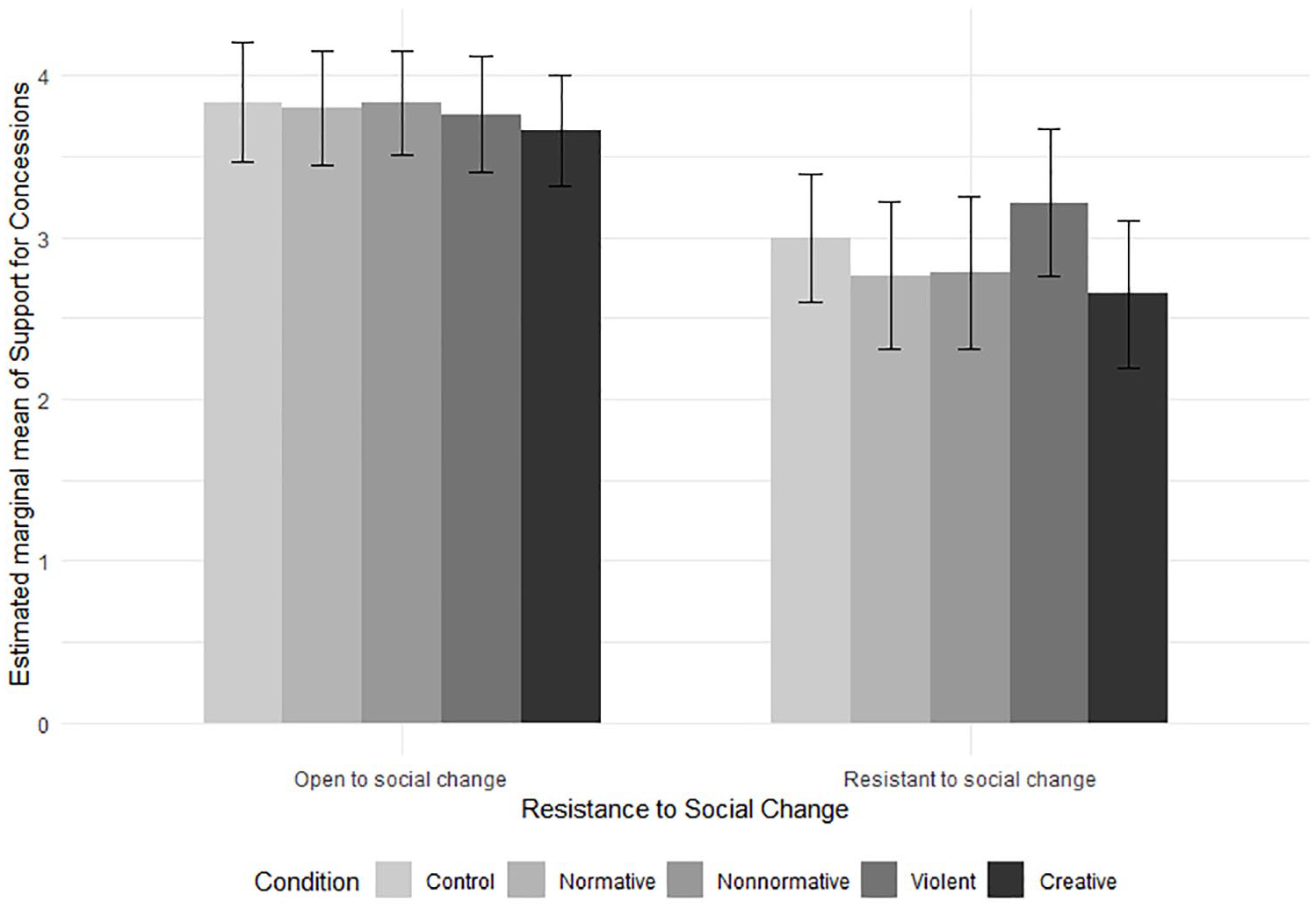
Support for concessions by experimental condition and resistance to social change.
Analysis of moderated indirect effects
Although we found no significant main effects of protest conditions or interactions with resistance to social change, we proceeded to examine indirect effects, following recommendations that absent total effects do not preclude meaningful indirect pathways (Hayes, 2009; Rucker et al., 2011). As MacKinnon et al. (2000) note, predictors may influence outcomes through multiple mediators with opposing influences that cancel out in the total effect. We conducted one confirmatory and three exploratory moderated mediation analyses (95% bootstrap confidence intervals, 5,000 resamples) to examine how perceptions shape support for concessions at varying resistance levels. Full parameters are available in the OSM.
The first moderated mediation model (PROCESS Model 15, Figure 2; Shuman et al., 2021) examined constructive disruption as the sole mediator with resistance as moderator. As shown in Table 4, all pairwise comparisons involving blockade (vs. control, demonstration, vandalism, and exhibition) yielded significant moderated mediation indices. For mid- and high-resistance participants, blockade enhanced perceived constructive disruption relative to all conditions, increasing support for concessions, partially supporting H3.
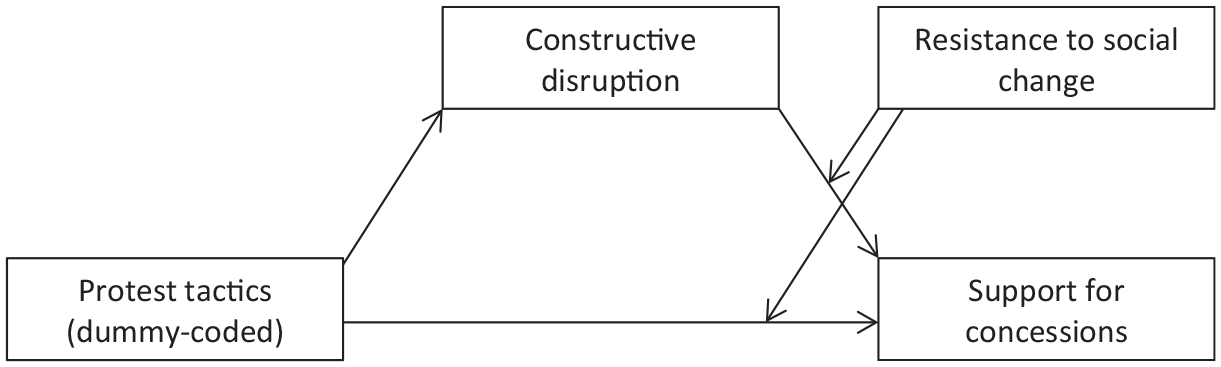
A moderated mediation model with constructive disruption as a mediator and resistance to social change as a moderator: Study 1.
Indirect effects in a moderated mediation model with constructive disruption as a mediator and resistance to social change as a moderator: Study 1.

Note. D = Dummy (comparing conditions to reference). Index of MM = index of moderated mediation (Hayes, 2018). High resistance: M + 1 SD; low resistance: M − 1 SD. Significant effects according to CIs are marked in bold.
Expanding beyond Shuman et al. (2021), we tested constructive intentions and disruption as parallel mediators moderated by resistance (OSM, Figure S2.1, Table S2.1). Constructive intentions predicted higher support at average and high resistance, while disruption predicted higher support only at high resistance. Under these conditions, blockade increased perceived constructive intentions versus vandalism, boosting support. Compared to control, demonstration, and exhibition conditions, blockade uniquely raised perceived disruption among resistant participants, increasing support. Unexpectedly, vandalism versus blockade also increased disruption, positively affecting support.
A third moderated parallel mediation model included all three mediators (Table 5). Across resistance levels, blockade elevated constructive disruption, increasing support for concessions. Here, higher disruption decreased support among low-resistance participants. Interestingly, and in contrast to the findings for resistant bystanders, we found that for those open to change, blockade compared to all conditions except vandalism reduced support through disruption, while vandalism versus blockade also lowered support via disruption.
Indirect effects in a moderated mediation model with constructive intentions, disruption, and constructive disruption as mediators, and resistance to social change as a moderator: Study 1.

Note. D = Dummy (comparing conditions to reference) Index of MM = index of moderated mediation (Hayes, 2018). High resistance: M + 1 SD; low resistance: M − 1 SD. Significant effects according to CIs are marked in bold.
Finally, we tested whether effects flowed sequentially through constructive intentions and disruption first, and then through constructive disruption in a serial mediation model, moderated by resistance (OSM, Tables S2.3–S2.5). Resistance did not moderate serial indirect effects. Blockade versus control, demonstration, and exhibition reduced constructive intentions and, in turn, constructive disruption, in significant specific serial indirect effects leading to decreased support for concessions. In contrast, blockade versus vandalism increased constructive intentions and support. Disruption alone yielded no significant indirect effects in this model.
Exploratory RSA
The constructive disruption hypothesis suggests outcomes may be optimized when constructive intentions and disruption are balanced. While traditional approaches using a single congruence index (Shuman et al., 2021) have limitations in capturing multidimensional relationships, polynomial regression and RSA allow examination of more complex patterns without imposing linear constraints (Humberg et al., 2019; Shanock et al., 2010). RSA enables visual exploration through 3D plots, showing how various combinations of constructive intentions and disruption affect support under different conditions.
Using the RSA package (Schönbrodt & Humberg, 2023), we first confirmed that associations between constructive intentions, disruption, and support varied by resistance to social change, F(3, 198) = 13.90, p < .001. Separate shifted and rotated rising ridge (SRRR) models for high- and low-resistance participants (selected for best fit indices; see OSM, Tables S4.1–S4.4) revealed distinctive patterns, shown in Figure 3. While higher constructive intentions consistently increased support across groups, disruption’s impact varied by resistance level. Among resistant participants, moderate disruption combined with high constructive intentions yielded maximum support. For those open to change, constructive intentions primarily drove support, with disruption playing a minimal role and no significant congruence effect. Congruence hypothesis tests (OSM Table S4.5; Humberg et al., 2019) confirmed that the balance between disruption and constructive intentions significantly influenced only the resistant group.
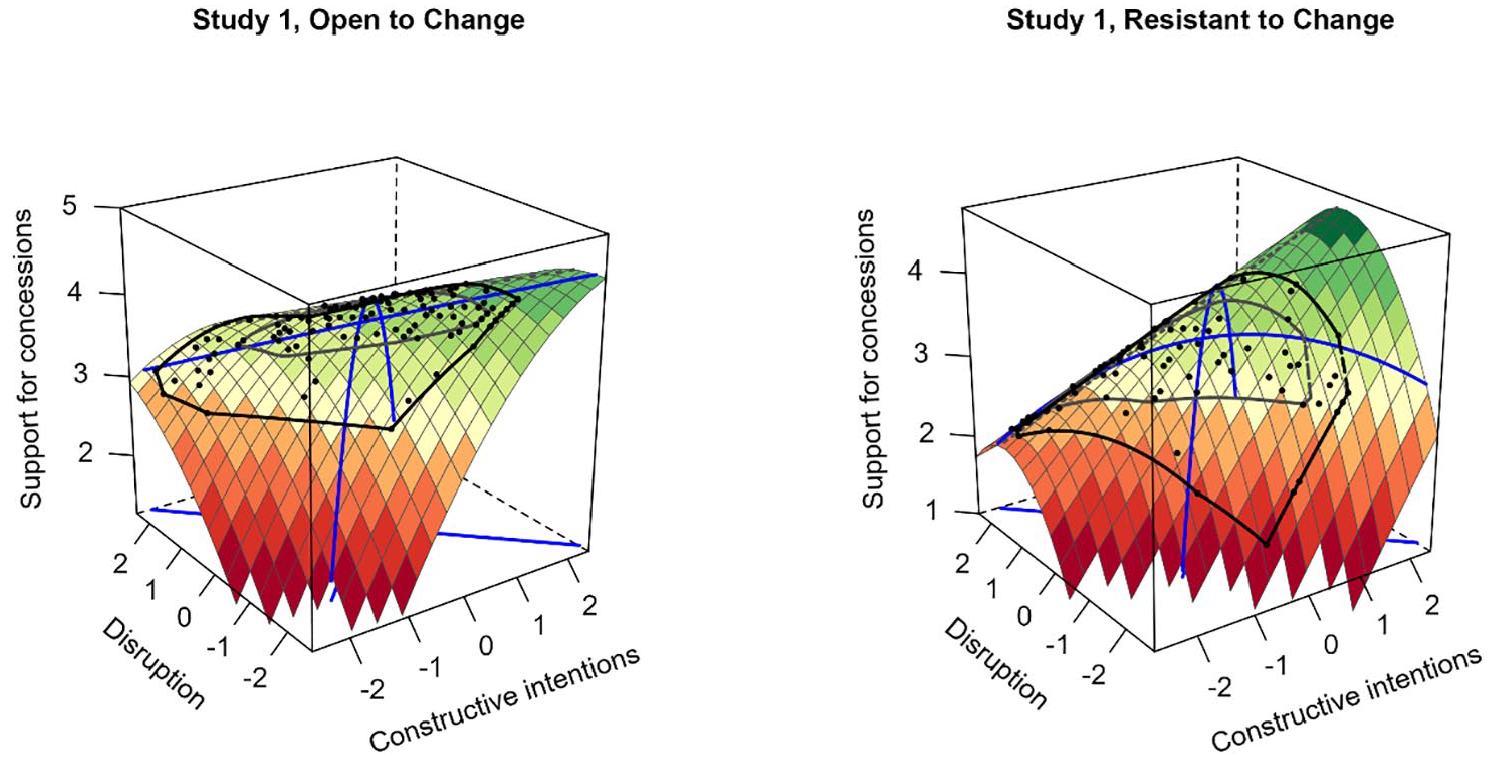
Results of response surface analysis predicting support for concessions in Study 1, SRRR model, separately for open for (left) and resistant to (right) social change.
Exploratory analysis on instrumental support and behavioral change
Regarding broader outcomes (OSM, Tables S2.6–S2.13), blockade generated higher instrumental support than violent protest. A three-mediator moderated mediation analysis revealed that blockade increased instrumental support among average- and high-resistance participants through constructive disruption, and enhanced meat-reduction intentions via constructive disruption at low and average resistance levels, compared to other conditions. Constructive intentions mediated both positive and negative effects of blockade on meat-reduction intentions, while disruption reduced instrumental support and behavioral intentions, mediating conditional effects of blockade versus other tactics.
Discussion
Study 1 investigated whether nonnormative protest tactics in animal rights activism, where cultural norms and moral beliefs about animal treatment are prominent (Simpson et al., 2018; Vandeweerdt, 2024), could enhance support for concessions. Although no direct effects of protest type or moderation by resistance to social change were found (contrary to H1 and H2), moderated mediation analyses showed that the blockade condition indirectly increased concession support among moderately and highly resistant bystanders compared to both normative and violent protests. This effect operated through enhanced perceptions of constructive disruption, partially supporting the framework’s applicability in moralized domains.
Exploratory analyses with multiple mediators revealed nuanced patterns. Constructive intentions boosted support among resistant participants following normative protests, while vandalism unexpectedly heightened perceived disruption beyond blockade’s effect, indirectly encouraging concessions among resistant bystanders. These findings challenge the assumption that violence invariably undermines public support (Feinberg et al., 2020; Simpson et al., 2018; Thomas & Louis, 2014), although no total effects emerged.
Nevertheless, disruption’s influence varied with bystanders’ resistance: it swayed resistant bystanders but backfired among those predisposed to support the cause. RSA revealed that for resistant bystanders, moderate disruption paired with high constructive intentions had the greatest impact, refining the balance notion. Conversely, among those more open to change, constructive intentions alone maintained strong support. Regarding behavioral outcomes, blockade’s positive effect on meat-reduction intentions was observed only among individuals with low-to-average resistance, suggesting constructive disruption can influence behavior among those not fundamentally opposed to the cause.
These findings extend the constructive disruption hypothesis beyond intergroup power relations to morally charged domains like animal rights. While the patterns differ from previous research, success appears to depend on balancing constructive intentions and disruption while tailoring tactics to audience segments. This highlights the importance of adaptive protest strategies and demonstrates how tactic variations can shape public support for social movements addressing culturally and ethically entrenched issues. These results set the stage for Study 2, which examines a different moralized context—religious blasphemy protests—to assess whether similar patterns emerge in other issue-based movements, particularly those that are less prototypical of progressive causes.
Study 2
Study 2 explored how different protest tactics influenced support for concessions in a new context, expanding on Study 1’s hypotheses and findings. We focused on protests against religious blasphemy, specifically demonstrations against Prophet Muhammad cartoons—a significant issue in Islamic belief. The 2006 Muhammad cartoon controversy in a Danish newspaper (Ata, 2011) sparked widespread demonstrations, economic boycotts, and violent incidents, including the 2015 Charlie Hebdo attack and the 2020 killing of a French teacher (Kuchenbecker, 2020; Polke-Majewski et al., 2015). These events have fueled ongoing debates about freedom of speech, religious sensitivity, and the integration of Islamic culture in Western societies (Al-Rawi, 2015; Klausen, 2009).
Research suggests that such protests often unite diverse Muslim sects while polarizing the broader public and exacerbating existing tensions (Özyürek, 2015). While some instances involve violence and disruption, protests against religious blasphemy in the West typically use normative and nonviolent approaches, promoting interfaith understanding and advocating legal protections (Khan et al., 2021; Klausen, 2009; Temperman & Koltay, 2017).
This context provides a unique contrast to prior research (Orazani et al., 2021) by examining support for a social movement not typically associated with liberal or progressive causes, potentially eliciting different psychological responses among observers (Feinberg et al., 2020). It also highlights the tension between two core democratic values: freedom of speech and religious tolerance. While these protests reflect asymmetrical intergroup relations between Muslims and non-Muslims, their demands center on religious respect rather than traditional social justice or equality issues. This scenario offers an opportunity to test the constructive disruption hypothesis in a context where goals and group dynamics diverge from previous studies (Shuman et al., 2021, 2024).
Method
Participants
The sample size was based on the same power analysis as in Study 1 and deemed sufficent to detect the hypothesized effects. Participants were recruited via Osnabrück university’s mailing lists, social media, and personal contacts. Initially, 289 participants consented to participate, but four revoked their consent postdebriefing, and another four failed at least one attention check. Among the remaining 281 participants, 31 discontinued their participation before or during the manipulation, leading to their exclusion from the analysis. Thus, the final sample comprised 250 participants, representing 86.5% of the initial consenters, with an average age of 27.28 years (SD = 8.90), and 67.5% being female. Except for one, all participants held German citizenship. A majority characterized their economic status as either good (67.5%) or very good (17.9%). Political leanings were predominantly left-wing (85.4%), and religious affiliation was largely Christian (80.8%), with the remainder identifying as nonreligious.
Design
The manipulation texts and the questionnaires were adapted from Study 1 to the new protest scenario and were translated into German through a standard back-translation technique. Participants were provided an incentive to join a raffle for five €100.00 prizes or course credits. Each manipulation scenario began with a Cologne-based magazine’s plan to publish Muhammad cartoons, followed by a standard section presenting Muslim objections and newspaper editors’ free speech defenses. The control condition mentioned general criticism from the Muslim community. The normative condition portrayed a peaceful Cologne demonstration. Diverging from Study 1, the creative protest condition was replaced with two nonnormative protest conditions, depicting a local strike versus a city intersection blockade. Including two nonnormative conditions enabled us to examine a potential threshold of nonviolent or nonharmful extremity beyond which bystanders’ perceptions matter less for their support (as suggested by Feinberg et al., 2020). The violent condition involved vandalism at the magazine’s offices. Participants were told these reports were recently broadcast on Cologne’s regional news.
Participants then answered questions about their perceptions of the protests and support for concessions, akin to Study 1. After completing a demographic questionnaire, they were debriefed about the study’s purpose and the fictitious nature of the reports, followed by a consent request to use their anonymized data.
Measures
Resistance to social change in the religious blasphemy context was operationally defined through two key constructs: the perceived significance of free speech and prejudice against Muslims. The perceived importance of free speech was obtained using a 5-point Likert scale (1 = completely agree, 5 = completely disagree) across two statements: “Individuals should be granted the liberty to voice all opinions, even those potentially offensive to others” and “Freedom of speech ceases when others are offended” (reverse-scored). The correlation between these items was r = .61. Prejudice against Muslims was measured using two additional items. Participants rated their general feelings towards Muslims and Islam on a 5-point scale (1 = positive, 5 = negative), showing a correlation of r = .65.
Mirroring the methodology of Study 1, participants indicated their perceptions of the protest’s normativity on a 10-point scale (1 = not at all in accordance with German norms, 10 = very much in accordance with German norms). Participants also evaluated the protest’s level of violence on a 10-point scale (1 = peaceful, 10 = violent).
Participants’ willingness to endorse the protesters’ demands was assessed using a single item. Participants answered the question “Should the magazine proceed with publishing the cartoons as planned?” on a 5-point scale (1 = very much, 5 = not at all).
Finally, participants’ perceptions of the protesters’ intentions as constructive and disruptive, as well as the compound variable constructive disruption, were evaluated using identical measures to those outlined in Study 1.
Additional outcome variables similar to Study 1 were also measured, and their results are presented briefly below, and more thoroughly in the OSM.
Results
Descriptive statistics and correlational analysis
Following Study 1’s protocol, we report the main findings (detailed results in the OSM). Tables 6 and 7 present means, standard deviations, and bivariate Pearson correlations for all main variables by condition, respectively.
Means and standard deviations of main variables by condition: Study 2.

Note. Importance of freedom of speech and prejudice against Muslims are two different operationalizations of resistance to social change. Demo = demonstration.
Pearson correlations between main variables: Study 2.

Note. Importance of freedom of speech and prejudice against Muslims are two different operationalizations of resistance to social change. Demo = demonstration.
p < .05. **p < .01. ***p < .001.
Preregistered analysis
Contrary to H1, support for concessions did not differ significantly across protest conditions, F(4, 245) = 0.39, p = .822. Figure 4 shows estimated marginal mean scores across conditions for both high and low resistance to social change, separated by perceived importance of freedom of speech and prejudice against Muslims. As shown in Table 8, no significant Condition x Resistance interaction emerged, leading us to reject H2.
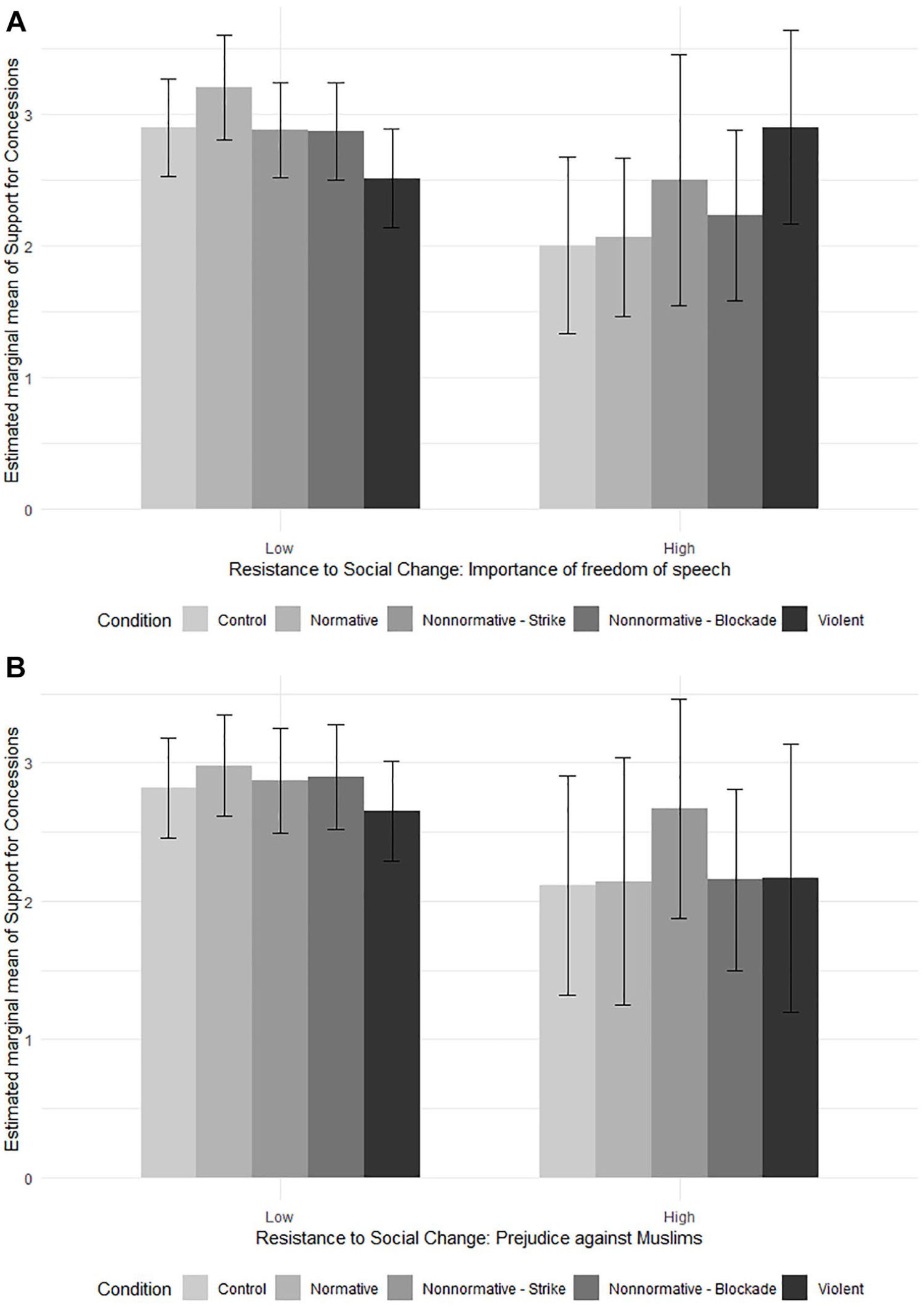
Support for concessions by experimental condition and resistance to social change.
The effects (regression coefficients) of protest tactics, resistance to social change, and their interaction on support for concessions: Study 2.

Note. D = Dummy (conditions compared to referece). Blockade is the reference condition. Resistance = resistance to social change, operationalized as perceived importance of free speech (M1) or prejudice against Muslims (M2). Significant effects are marked in bold.
Analysis of indirect effects
Initial moderated mediation models showed no significant moderation by prejudice or freedom of speech, prompting unmoderated analyses. The single-mediator model revealed that blockade versus control, demonstration, and vandalism increased perceived constructive disruption, which predicted higher support for concessions (Table 9), supporting H3. The blockade–strike contrast showed no significant indirect effect.
Indirect effects in a mediation model with constructive disruption as a mediator: Study 2.

Note. D = Dummy (conditions compared to referece). Significant effects according to CIs are marked in bold.
Two-parallel mediation revealed that blockade reduced constructive intentions compared to demonstrations, decreasing support (OSM, Table S3.1). However, blockade increased constructive disruption versus vandalism, enhancing support for cartoon prohibition. Blockade also increased disruption compared to control and demonstration conditions, raising support. Interestingly, vandalism versus blockade increased perceived disruption, leading to higher support. No indirect effects emerged between blockade and strike.
The three-parallel mediator model (constructive intentions, disruption, and constructive disruption) replicated these patterns through constructive intentions and disruption (Table 10). However, controlling for these pathways eliminated significant indirect effects through constructive disruption.
Indirect effects in a mediation model with constructive intentions, disruption, and constructive disruption as mediators: Study 2.

Note. D = Dummy (conditions compared to referece). Significant effects according to CIs are marked in bold.
Serial mediation analysis showed blockade versus control and demonstrations negatively affected support by decreasing constructive intentions and then constructive disruption, while simultaneously increasing support versus demonstrations through heightened disruption and constructive disruption (OSM, Tables S3.3–S3.4). Vandalism versus blockade showed opposing effects: decreasing support via reduced constructive intentions and constructive disruption while increasing support through increased disruption and constructive disruption.
Exploratory RSA
Moderated polynomial regression revealed significant moderation by free speech importance (but not anti-Muslim prejudice), F(3, 241) = 2.78, p = .043. RSA for both resistance groups showed best fit with the additive model (OSM, Tables S4.6–S4.8). As shown in Figure 5, resistant bystanders showed the highest support with high constructive intentions and disruption, declining sharply when disruption increased while constructive intentions decreased. Those open to change maintained high support with high disruption if constructive intentions remained strong. Finally, neither group showed congruence effects (OSM, Table S4.9).
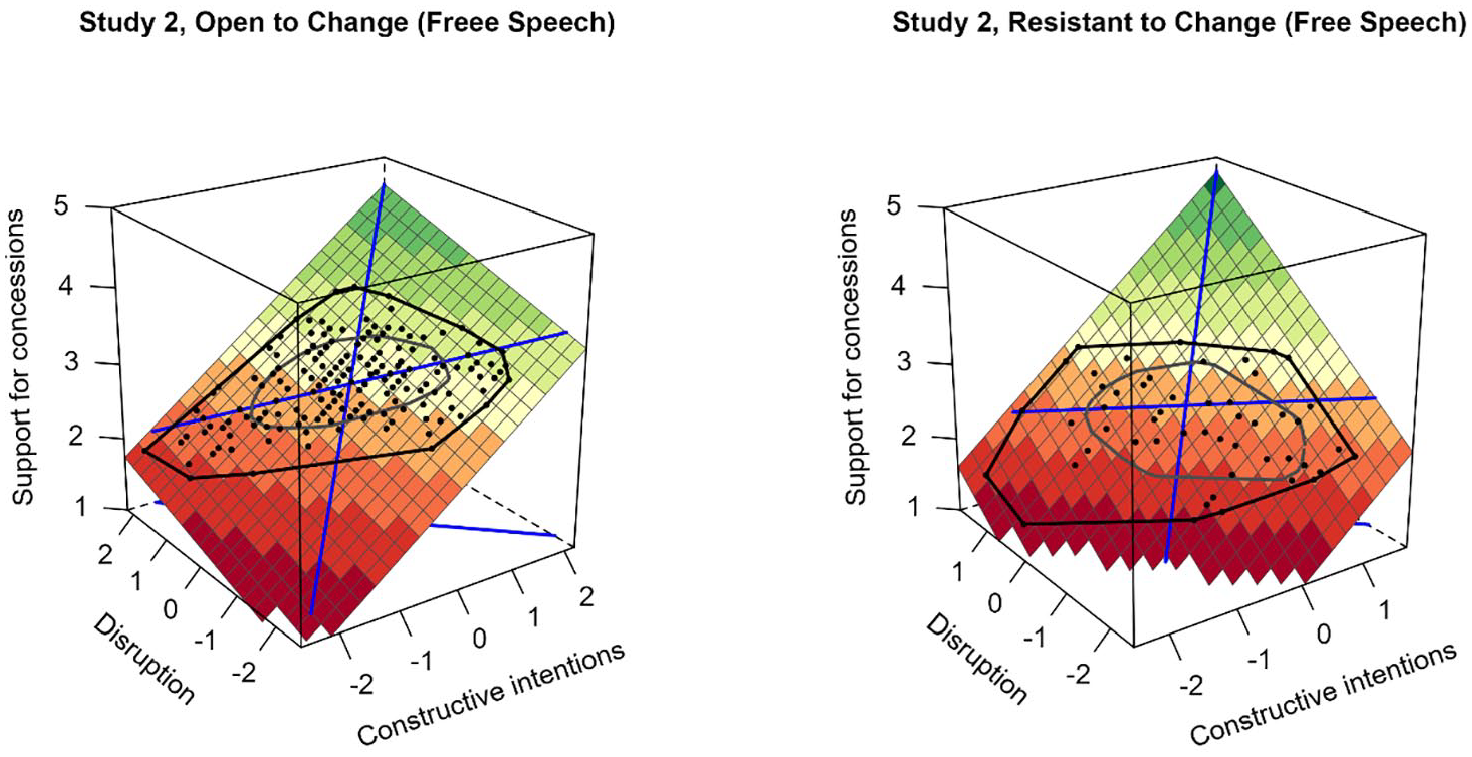
Results of response surface analysis predicting support for concessions in Study 2, additive model, separately for open for (left) and resistant to (right) social change.
Exploratory analysis on instrumental support
The analysis of instrumental support revealed distinct patterns from support for concessions, with resistance to change (anti-Muslim prejudice) significantly moderating indirect effects (OSM, Table S3.8). Surprisingly, higher constructive disruption among resistant bystanders predicted lower instrumental support, with blockade showing negative indirect effects through constructive disruption compared to all other conditions, a pattern substantially different from the parallel effects on support for concessions (OSM, Talbe S3.12). Regarding constructive intentions, blockade demonstrated mixed effects: it reduced instrumental support compared to demonstrations through lower constructive intentions, while increasing support relative to violent protest through higher constructive intentions. Disruption showed no significant mediating role in the relationship between protest tactics and instrumental support.
Discussion
Study 2 examined the constructive disruption hypothesis in protests against religious blasphemy, where public opinions are influenced by free speech considerations, liberal values, religious freedoms, and attitudes toward Muslims (Ata, 2011; Khan et al., 2021; Klausen, 2009). Similar to Study 1, we found no direct or moderated main effects of protest conditions on support for concessions, challenging assumptions that violent protests uniformly decrease support or that nonnormative-nonviolent tactics consistently outperform normative ones. However, supporting H3, the blockade condition increased perceived constructive disruption compared to control and violent conditions, indirectly enhancing support for concessions.
Unlike Study 1, where resistance to change consistently moderated indirect effects, neither the importance of free speech nor anti-Muslim prejudice consistently moderated the influence of protest tactics on support (except in RSA). Mediation patterns also differed: in the three-mediator model, controlling for constructive intentions and disruption rendered indirect effects through constructive disruption nonsignificant. This suggests that in religious blasphemy protests, the additive effects of constructive intentions and disruption may outweigh their balance, a conclusion supported by RSA findings showing no congruence effects for resistant or open bystanders.
These findings both affirm and qualify the constructive disruption framework. While blockade again indirectly increased support for concessions through constructive disruption, the absence of strong moderated effects and the reduced importance of balance configurations indicate that the framework’s effectiveness may vary substantially by context, bystander orientations, and the type of support targeted. These contextual differences and their implications for protest tactics will be further addressed in the General Discussion.
General Discussion
This research explored whether the constructive disruption hypothesis (Shuman et al., 2021) extends beyond advantaged–disadvantaged group dynamics to issue-based movements centered on moral and value-laden concerns. Through studies of animal rights activism in the United States (Study 1) and protests against religious blasphemy in Germany (Study 2), we investigated how balancing constructive intentions with disruption might mobilize support, particularly among resistant bystanders. Contrary to expectations and prior findings that violent protests typically erode support (Feinberg et al., 2020; Orazani & Leidner, 2019a, 2019b; Shuman et al., 2021; M. J. Stephan & Chenoweth, 2008; Thomas & Louis, 2014), neither study found direct effects of protest tactics on support for concessions nor effects moderated by resistance to change. These results diverge from findings in power-imbalanced contexts, where nonnormative demonstrations have encouraged resistant high-power groups to make concessions (Shuman et al., 2021, 2022). This underscores the importance of examining theoretical and methodological factors to explain these differences.
Despite the absence of resistance-moderated direct effects, both studies revealed indirect pathways for constructive disruption. Mediation analyses showed that nonnormative blockade enhanced perceived constructive disruption compared to normative and violent alternatives, predicting greater support for concessions among resistant participants in Study 1 and across all participants in Study 2. These findings highlight the mediating roles of constructive intentions and disruption, reinforcing Shuman et al.’s (2021) argument that effective tactics require a balance: disruption pressures reluctant observers, while constructive motives prevent defensiveness and backlash. This aligns with evidence that moderate disruption paired with constructive aims can prompt resistant groups to consider concessions (Shuman et al., 2024).
While prior support for this hypothesis emerged mainly from intergroup social justice movements (e.g., Black Lives Matter in the US, Arab student protests in Israel), where support is driven by social identities, group emotions, and perceptions of inequality (Van Zomeren & Iyer, 2009; Van Zomeren et al., 2004, 2008), our findings extend its relevance to morally charged, issue-based movements that lack clear advantaged–disadvantaged dynamics. Unlike group-based movements, which rely on shared identity and collective emotions like anger or solidarity, issue-based movements depend more on moral values, ideological beliefs, and individual convictions (Lizzio-Wilson et al., 2022; Menzies et al., 2023; Özyürek, 2015; Temperman & Koltay, 2017). Our findings demonstrate that movements addressing ethically complex issues, such as animal welfare and religious blasphemy, can influence ideologically resistant bystanders through strategically balanced tactics. However, the influence in such contexts may be more limited compared to intergroup movements, requiring further exploration of how constructive disruption operates in diverse settings.
Exploratory analyses revealed patterns beyond constructive disruption, demonstrating complex relationships between constructiveness and disruption across studies. In Study 1, moderated parallel mediation showed that constructive intentions consistently predicted positive outcomes among resistant bystanders, while disruption effects varied. The constructive disruption index proved especially effective for resistant bystanders, with moderated serial mediation showing constructive intentions as amplifiers. RSA confirmed this framework, indicating optimal outcomes when high constructive intentions combined with moderate disruption. Study 2 yielded different patterns: while constructive disruption showed significance in single-mediator models, its effect weakened when analyzing disruption and constructive intentions separately, suggesting that in religious blasphemy contexts, individual perceptions may better predict support for concessions than their balance. The RSA showed predominantly additive effects across resistance levels, contrasting with the congruence effects found in Study 1.
The divergent patterns between studies may reflect contextual differences in cultural, moral, and ideological environments, as well as observers’ baseline values and moral-ideological commitments. While Shuman et al. (2021) found consistent moderation by resistance to change, Feinberg et al. (2020) observed no consistent moderation by political ideologies in issue-based movements, suggesting context-specific resistance effects (Çakmak et al., 2024; Radke et al., 2020; White et al., 2020). Study 1’s animal welfare context may have involved more malleable views (Feinberg et al., 2020; Menzies et al., 2023; Simpson et al., 2022), making the constructive disruption balance more influential. Conversely, Study 2’s religious blasphemy context engaged university students with likely deep-rooted democratic values (Knight Foundation–Ipsos, 2024), leading to independent evaluations of constructiveness and disruption. The higher perceived costs of free speech concessions may have prompted more direct assessments of protesters’ intentions and actions. Cultural norms around meat consumption influence how observers interpret nonnormative tactics: those prioritizing animal protection might justify disruption, while those resistant to dietary change may require clearly constructive intentions. Similarly, in religious blasphemy protests, moral views on free speech, interfaith respect, or religious devotion shape responses to protest tactics. Individuals’ ideological commitments influence whether disruptive protest appears constructive or offensive, suggesting that nonnormative protests’ effectiveness among resistant audiences depends on the issue’s cultural significance and audience values (Lizzio-Wilson et al., 2022; Orazani et al., 2021).
Our exploratory analyses revealed distinct roles for constructive intentions and disruption beyond their balance. Across both studies (with resistance moderating only in Study 1), constructive intentions consistently mediated support for concessions, particularly when comparing normative or violent protests with nonnormative tactics, highlighting the importance of perceived moral grounding. Disruption showed more complex effects: in Study 1’s detailed models, it increased support among resistant bystanders, even in violent versus nonnormative protest comparisons, but decreased support among those open to change when controlling for constructiveness and constructive disruption. This “backfire effect” occurs when extreme tactics alienate potential supporters by threatening their moral foundations (Feinberg et al., 2020; Ostarek et al., 2023; Simpson et al., 2018). Resistant bystanders may view disruption as a pragmatic pressure mechanism (Shuman et al., 2021), while open bystanders may experience cognitive dissonance when tactics conflict with peaceful advocacy values. Through moral foundations theory (Haidt, 2012), open bystanders’ emphasis on care may increase sensitivity to harmful tactics, while resistant bystanders’ focus on authority may frame disruption as requiring pragmatic response. As these effects emerged only in complex mediation models, future research should use larger samples and refined measures to verify these relationships (MacKinnon et al., 2000).
Several factors may explain why we did not replicate the moderated effects (H1 and H2) found in prior research (Shuman et al., 2021). Theoretically, resistance to issue-based movements likely differs from resistance in intergroup contexts, potentially making it less responsive to protest tactics. In our contexts of animal welfare and religious blasphemy, deeply held principles may provoke defensive reactions even to normative protests (Menzies et al., 2023). These effects may also be influenced by limited personal relevance (Fazio, 1990) and brief measurement windows, as the impacts of protests often develop over prolonged media exposure (Chen et al., 2023; Dunivin et al., 2022). Methodologically, the effects identified in previous studies involving advantaged–disadvantaged group dynamics (Orazani et al., 2021; Shuman et al., 2021; Teixeira et al., 2020) may be smaller and more context-dependent than initially assumed. Additionally, while our manipulations affected key mediator variables, these indirect paths often operated in opposing directions, potentially canceling out overall main effects (MacKinnon et al., 2000; Rucker et al., 2011).
Our research extends constructive disruption theory (Shuman et al., 2021) beyond advantaged–disadvantaged group dynamics to moralized, issue-based movements, showing that balancing disruption with constructive intentions can influence support for concessions in contexts driven by moral values rather than intergroup inequalities. These findings align with research showing protest acceptance depends on perceived moral and institutional flexibility (Teixeira et al., 2023), demonstrating how support emerges from interactions between audience characteristics and perceived change viability. While previous work emphasized morality and legitimacy (Feinberg et al., 2020; Simpson et al., 2018), our studies show how nonviolent protests can generate support through constructive disruption principles, particularly among resistant bystanders. In animal welfare, where consumption norms clash with moral concerns (Gradidge et al., 2021; Loughnan et al., 2014), and religious blasphemy contexts, where actions prioritize interfaith respect (Khan et al., 2021; Klausen, 2009), balancing disruption and constructive intentions partially supports the constructive disruption hypothesis. However, our exploratory analyses suggest effectiveness requires calibrating both key appraisals and contextual factors. Methodologically, we contribute by employing advanced mediation models and introducing RSA (Humberg et al., 2019; Schönbrodt & Humberg, 2023) to collective action research, revealing subtle indirect effects and complex tactical relationships. For practitioners, our findings may suggest that while nonnormative protests can influence public perceptions through balanced constructive disruption, their effectiveness varies contextually. Activists may benefit from tailoring tactics to audience resistance levels, using gentler approaches for those open to change and pressure-inducing strategies for status quo defenders.
Limitations and Future Directions
Several limitations warrant consideration. First, our studies used different sampling strategies: MTurk for Study 1, and university students for Study 2. MTurk offers an accessible and diverse participant pool commonly used in research on movement strategies (Orazani et al., 2021) but raises concerns about data quality, such as inattentive responses and automated bots (Chmielewski & Kucker, 2020; Kennedy et al., 2020). To address these risks in Study 1, we included attention-check items to improve data quality by ensuring participant engagement (Berinsky et al., 2014). Future research could further enhance MTurk data validity through measures such as response time thresholds, validity indices, and stricter participant screening criteria (Buhrmester et al., 2018). The student sample in Study 2, though common in social psychological research, represents a specific demographic that may limit generalizability.
Second, our sample sizes were based on power analyses for indirect effects, following Shuman et al. (2021), which may have constrained our ability to detect the interaction effects central to our main hypothesis. Recent methodological work highlights that testing interactions often requires much larger samples than previously assumed (Sommet et al., 2023). While the samples (~200 participants) provided adequate power for indirect effects, they may have been insufficient for detecting subtle interaction patterns, suggesting that null findings regarding direct effects and their moderation by resistance to change should be interpreted cautiously. Future research would benefit from employing larger sample sizes and more stringent power analyses tailored specifically to interaction effects, ensuring a more reliable evaluation of these processes.
Third, like previous research (Feinberg et al., 2020; Orazani et al., 2021; Shuman et al., 2021; Simpson et al., 2022), we used hypothetical scenarios. Though vignettes provide experimental control (Aguinis & Bradley, 2014; Atzmüller & Steiner, 2010), field or longitudinal studies could enhance ecological validity (Ostarek et al., 2023; Ostarek, Rogers, et al., 2024; Selvanathan & Lickel, 2019; Shuman et al., 2022). Additionally, focusing solely on concession support may not fully capture responses to collective action, suggesting the need for broader outcome measures (Feinberg BBI1328269 et al., 2020; Orazani et al., 2021).
Future research should examine moral orientations (Haidt, 2012), system justification (Jost, 2020), and ideological rigidity to clarify tactical interpretations. Resistance to change could be operationalized through constructs like system justification and social dominance orientation, which relate to animal rights attitudes (Dhont et al., 2016; Hoffarth et al., 2019). Studies across cultural contexts could refine the constructive disruption framework, while panel studies or computational modeling could better track attitude evolution, media coverage, and tactical dynamics.
Conclusion
This research examined how protest tactics influence public support in morally charged domains beyond traditional intergroup power dynamics. Through studies on animal rights activism and religious blasphemy protests, we explored whether the constructive disruption hypothesis (Shuman et al., 2021) applies to movements centered on ethical and cultural values. Although direct effects of protest tactics and moderation by resistance to change were not observed, significant indirect pathways emerged: blockade tactics enhanced perceptions of constructive intentions and disruption compared to alternatives, increasing support under specific conditions.
These findings suggest that constructive disruption remains relevant beyond advantaged–disadvantaged group dynamics, but its effectiveness may depend on how protest tactics align with the bystanders’ ideologies and beliefs and the specifc social context examined. What proves effective in one cultural or audience setting may fail elsewhere, highlighting the need for tailored, context-sensitive protest strategies. Future research should investigate these dynamics across diverse movements and sociocultural contexts, focusing on how different configurations of constructive intentions and disruption shape public responses to social movements.
Footnotes
Acknowledgements
We would like to thank Eric Shuman for their valuable feedback and help in conducting a replication of their collaborative work.
Author Contributions
MS: conceptualization, project administration, investigation, methodology, formal analysis, software, supervision, writing—original draft, writing—review and editing. DL: conceptualization, project administration, investigation, methodology, formal analysis, software, writing—original draft. MvZ: resources, supervision, writing—review and editing.

Declaration of Conflicting Interests
The author(s) declared no potential conflicts of interest with respect to the research, authorship, and/or publication of this article.
Funding
The author(s) received no financial support for the research, authorship, and/or publication of this article.
Supplemental Material
Supplemental material for this article is available online.