




Abstract
Individuals who are ostracized (i.e., ignored or excluded by others) experience a range of negative emotions and show various coping behaviors. We investigated whether target attributions of warmth and competence as perceived reasons for ostracism were differently related to emotions and behavioral intentions. In Study 1, participants (N = 321) recalled a nonspecific ostracism experience. We found no evidence that warmth and competence attributions were distinctly related to emotions or behavioral intentions. In Study 2, participants (N = 294) were instructed to recall being ostracized for specific reasons (warmth vs. competence). Ostracism attributed to incompetence evoked stronger feelings of anger and less prosocial intentions. Moreover, across both studies, targets primarily felt sad and wanted to withdraw regardless of the perceived reasons for ostracism. In contrast to more explicit forms of exclusion such as rejection, responses to warmth and competence attributions of ostracism may only become more distinguishable depending on context.
Humans are a social species. Accordingly, individuals who are ignored and excluded by others suffer from loss and pain, a phenomenon called ostracism (Williams, 2009). Ostracism threatens psychological needs for belonging, self-esteem, control, and a meaningful existence (Williams & Nida, 2011). In addition, ostracism induces pain and is thought to increase negative affect (Gerber & Wheeler, 2009). While anger, sadness, and anxiety are often studied holistically as negative affect following ostracism (Williams, 2009), these emotions may relate to distinct antecedents, and different behavioral consequences based on their assumed social functionality (Fischer & Manstead, 2016; Frijda, 1986). Individuals can cope with ostracism via prosocial (e.g., Carter-Sowell et al., 2008; Maner et al., 2007) and antisocial (e.g., Twenge et al., 2001; Van Beest et al., 2011; Warburton et al., 2006) behaviors, or by withdrawing from the situation (Ren et al., 2016; Wesselmann et al., 2015; Williams, 2007). What is less well understood is when and why ostracism leads to each of these emotional and behavioral responses.
One possibility to explain the range of emotional and behavioral consequences of ostracism is by relating them to particular reasons for why a person was ostracized. Building on person perception theory (e.g., Asch, 1964; Fiske, 2018; Rosenberg & Sedlak, 1972) and previous work on social rejection (Çelik et al., 2013), targets may attribute their ostracism to a perceived lack of warmth (e.g., “They didn’t like me”) or a perceived lack of competence (e.g., “They think I can’t do it”). In the present research, we integrate theory on person perception and the functionality of emotions to investigate the extent to which perceiving warmth and competence as reasons for ostracism relates to specific emotional responses and behavioral intentions following ostracism.
Ostracism: Behavioral Responses
To cope with the immediate negative emotional and psychological consequences of ostracism, targets may adopt different coping strategies (Williams, 2009). In some cases, victims of ostracism show prosocial behaviors attempting to affiliate with others or promote (re)inclusion, for example, by donating money to charity (Carter-Sowell et al., 2008), by preferring to work with others who signaled affiliation (Bernstein et al., 2010), or by providing rewards or positive evaluations to others (Maner et al., 2007). In addition, ostracism can evoke aggressive and antisocial reactions that help targets to retaliate, feel control, or promote behavioral change in others (e.g., Bushman et al., 2001; Ren et al., 2018). To illustrate, ostracized individuals allocate more (aversively) spicy hot sauce (Warburton et al., 2006) or unappealing snacks (Chow et al., 2008) for a taste test to an unfamiliar person, or subject others to higher levels of aversive noise (Twenge et al., 2001). Finally, researchers describe withdrawal, that is, seeking solitude, as another response to ostracism (Ren et al., 2016, 2021; Smart Richman & Leary, 2009; Wesselmann et al., 2015).
Reasons for Ostracism: Warmth and Competence Perceptions
In the current research, we argue that the reasons for why a person is being ostracized affect which coping behaviors are shown. Crucially, compared to explicit instances of social rejection, the reasons why people are ostracized are not always clear or made explicit by the group (Williams, 2007), thus creating a window for subjective interpretations of the situation by those who are ostracized. Therefore, targets of ostracism need to explain why they are being excluded and ignored by others. Such explanations are usually connected to how they believe others perceive them (e.g., “I was ignored and excluded because others thought I was. . .”). How targets of ostracism fill the gap in this example could shape their emotional experiences and behavioral intentions in response to ostracism. Social perception research states that the two main dimensions that should come to mind are warmth and competence (Fiske, 2018; Fiske et al., 2007). Warmth is associated with friendliness, sincerity, trustworthiness, and cooperativeness, while competence involves perceptions of skill, creativity, intelligence, and competitiveness. In the present research, we examine the extent to which people actually use interpersonal perceptions of warmth and competence to make sense of their ostracism experience, and whether these warmth-based (e.g., “They thought I was cold”) and/or competence-based (e.g., “They thought I was incompetent”) attributions of ostracism are linked to specific emotional and behavioral reactions.
Responses to Warmth-Attributed and Competence-Attributed Ostracism
Based on social functional accounts of emotions (e.g., Averill, 1992; Ekman, 1992; Fischer & Manstead, 2016; Frijda, 1987) and previous research on warmth-based and competence-based rejection (Çelik et al., 2013), we expect that warmth-based ostracism will be primarily associated with increased sadness and prosocial responses towards ostracizers. Following the reasoning by Çelik et al. (2013), individuals who are ostracized for lacking warmth experience a sense of helplessness. Sadness can help overcome this, because it motivates nurturing responses in others (Vingerhoets et al., 2000; Zeifman, 2001). Additionally, since sadness drives the individual to (re)affiliate (Gray et al., 2011; Shaver et al., 1987), we expect warmth-attributed ostracism to be primarily associated with prosocial intentions. Prosocial responses may also directly signal friendliness, which may compensate for a perceived lack of warmth.
In comparison, we expect that competence-attributed ostracism will be primarily associated with increased anger and antisocial intentions towards ostracizers. Anger is an emotion that primarily has a social distancing function, and that serves the purpose of establishing one’s social position in terms of status and power (Fischer & Manstead, 2016). Anger follows from interference with goal pursuit or in response to (potential) physical or psychological harm by others (Fischer & Manstead, 2016; Reeve, 2018). Since others can perceive expressions of anger as a sign of dominance (Kassinove et al., 2002) that can promote behavioral change in the ostracizers (Ren et al., 2018), we expect competence-attributed ostracism to be primarily associated with aggressive or antisocial intentions. Additionally, since this type of behavior can directly signal status or competitiveness, it may also compensate for a perceived lack of competence.
Although withdrawal has been described as a third and distinct response to ostracism in addition to antisocial and prosocial responses (Smart Richman & Leary, 2009), it has received relatively less research attention (for exceptions, see Ren et al., 2016; Wesselmann et al., 2015). Feelings of anxiety may be particularly relevant when considering withdrawal and solitude seeking in response to ostracism. Like anger, anxiety mainly increases the social distance from others, and it has been described as an important negative emotion related to social exclusion (Baumeister & Tice, 1990; MacDonald & Leary, 2005). However, whereas anger can drive an approach motivation (e.g., seeking confrontation), fear or anxiety that arises from a threatening situation such as being ostracized should drive avoidance behavior from the source of anxiety as well (MacDonald & Leary, 2005). Extending the research by Çelik et al. (2013), we aim to further explore how warmth and competence attributions of ostracism are related to anxiety and withdrawal behavior.
The Present Research
In the present research, we integrated theory on social perception and the functionality of emotions to investigate (a) how often individuals perceive a lack of warmth and competence as reasons for ostracism, and (b) whether warmth-attributed and competence-attributed ostracism are differently related to emotions and behavioral intentions. In Study 1, participants recalled and described the most recent event in which they felt ostracized. We assessed to what extent participants felt ostracized because others perceived them as lacking warmth and/or competence, and their psychological needs satisfaction, experienced negative emotions, and behavioral intentions during this event. In Study 2, we investigated whether specific warmth-attributed and competence-attributed ostracism experiences were differently related to emotions and behavioral intentions. Participants were randomly assigned to either describe a situation in which they felt ostracized for a perceived lack of warmth or for a perceived lack of competence.
Study 1: Warmth and Competence Attributions in Recalled Ostracism Experiences
The first aim of Study 1 was to explore the prevalence of warmth-attributed and competence-attributed ostracism. Because there is no prior research on this question, we did not have a particular prediction on the reason to which participants would attribute their recalled ostracism experiences most frequently.
The second aim was to investigate whether warmth and competence attributions of ostracism are related to different emotions and behavioral intentions. We hypothesized that warmth attributions of ostracism would be more strongly associated with sadness (relative to anger) and prosocial intentions (relative to antisocial intentions). For competence attributions, we expected the opposite. We had no prior expectation on anxiety and withdrawal intentions in relation to warmth and competence attributions of ostracism. The preregistration of Study 1 is available on AsPredicted (https://aspredicted.org/5hz4t.pdf).
Method
Procedure
Study 1 was created using Qualtrics Survey Software (https://www.qualtrics.com). Participants were recruited via the online platform Prolific (https://prolific.co) for a 15-minute study with a compensation of £1.78. Only participants fluent in English could participate in this study. Data were collected in May 2020.
After giving informed consent, participants were first asked to freely describe the most recent situation in which they felt ostracized by two or more others. Ostracism was described to participants as “being ignored or excluded by others.” To help participants with this description, they were prompted with the following questions: “In what kind of setting were you?”; “Who ostracized you?”; “What did the others do to ostracize you?” Participants then indicated to what extent they felt excluded and ignored during the described ostracism event. After participants described their ostracism event, they completed all the measures (see below), provided basic demographic data, and were thanked and debriefed.
Measures
The measures below are described in the order in which they were presented to participants during the study.
Ostracism in daily life
At the start of the survey, the participants answered two items regarding their ostracism experiences in daily life: “Have you ever felt ostracized by others?” and “How often have you been ostracized by others throughout your life?” Answers were given on 7-point rating scales (1 = not at all/never, 7 = very much/very often).
Severity of ostracism experience
We assessed the extent to which participants felt ostracized with the following items: “I felt ignored” and “I felt excluded” (1 = not at all, 7 = very much). The items were presented in random order.
Attributions of ostracism
We assessed attributions of warmth and competence based on trait evaluation methods commonly used in person perception research. Specifically, participants answered the following question: “I was ostracized because the others thought I was [trait adjective].” The trait adjectives indicative of the warmth and competence dimensions were based on the stereotype content model (Fiske, 2018; Fiske et al., 2002) and included only the negative poles for each dimension. Warmth attributions included the trait adjectives: cold, unfriendly, unlikable, untrustworthy, dishonest, insincere. Competence attributions included the trait adjectives: incompetent, unintelligent, unskilled, inefficient, unassertive, unconfident. All items were scored on 7-point rating scales (1 = not at all, 7 = very much). The order of the two blocks was randomized, and the items within each block were presented in a random order. Both scales had adequate to good reliability (warmth attributions: α = .78; competence attributions: α = .83).
Negative emotions
Participants rated the extent to which they felt negative emotions during the ostracism event by answering the following question: “I felt [emotion].” The items included a subscale for anger (angry, irritated, annoyed) and a subscale for sadness (sad, down, lonely) based on the items used by Çelik et al. (2013). We added three items that are commonly associated with anxiety (anxious, tense, worried; Watson et al., 1988). All items were scored on 7-point rating scales (1 = not at all, 7 = very much). The order of the three blocks was randomized, and the items within each block were presented in a random order. Reliabilities of all scales were good (anger: α = .83; sadness: α = .87; anxiety: α = .83).
Psychological needs satisfaction
To assess psychological needs satisfaction, we adapted 16 items from the Need Threat Scale (Van Beest & Williams, 2006). We included four items to assess need for belonging satisfaction (e.g., “I felt disconnected”); four items for control (e.g., “I felt powerful”); four items for meaningful existence (e.g., “I felt important”); and four items for self-esteem (e.g., “I felt liked”). All items were scored on a 7-point rating scale (1 = not at all, 7 = very much). The order of the four blocks was randomized, and the items within each block were presented in a random order. Reliabilities of these scales ranged from acceptable to adequate (belonging: α = .66; control: α = .70; meaningful existence: α = .68; self-esteem: α = .79; total needs satisfaction: α = .87).
Behavioral intentions
Participants rated their behavioral intentions by answering the following question: “I wanted to [behavioral intention].” The questions included three subscales with three items for antisocial intentions towards ostracizers (e.g., “punish the ostracizers”); three items for prosocial intentions towards ostracizers (e.g., “connect with the ostracizers”); and three items for withdrawal intentions (e.g., “be alone”). All items were scored on 7-point rating scales (1 = not at all, 7 = very much). The order of the three blocks was randomized, and the items within each block were presented in a random order. Reliabilities ranged from good to excellent (antisocial: α = .90; prosocial: α = .92; withdrawal: α = .84).
Behavioral response
For potential exploratory purposes, participants were asked to freely describe how they actually responded after the ostracism situation.
Sample size justification
We performed a simulation-based power analysis with minimally interesting correlations between the measures of interest for the primary two-way interaction effects that were preregistered on AsPredicted (https://aspredicted.org/5hz4t.pdf).
We assumed the following minimal correlations for competence attributions in relation to sadness (.20), anger (.40), antisocial intentions (.40), and prosocial intentions (−.40); and for warmth attributions in relation to sadness (.40), anger (.20), antisocial intentions (.20), and prosocial intentions (−.20). 1
This resulted in a required sample size of 390 for the study. This sample size should give 80% power to detect all eight two-way interaction effects of interest. For details, see the power simulation on the Open Science Framework (OSF; https://osf.io/2jw67/).
Participants
Data from 401 participants were collected to account for potential dropouts. Seventy-two participants were excluded from analyses for not describing an ostracism situation, as indicated by three coders (deviating from preregistration, any disagreement between coders was discussed until full consensus was reached). 2 We additionally excluded eight participants who used less than 20 words to describe their most recent ostracism experience as a rough indicator of failure to adhere to the instructions to write at least five to six sentences. As a result, the final sample consisted of 321 participants 3 (51.10% female, 48.60% male, one person identified as gender fluid). The average age of the participants was 27.10 years (SD = 7.95; range: 18–63). The ethnicities of the participants were: White (83.50%), Asian (4.05%), Black (1.87%), mixed (1.87%), other (2.49%), or missing (6.24%). The most common countries of origin of participants included the United Kingdom (24.61%), Poland (11.83%), Portugal (10.28%), Greece (4.98%), Spain (3.74%), the United States of America (2.49%), the Netherlands (2.49%), other (24.92%), or missing (6.54%).
Results
Severity of ostracism experiences
Before the main analyses were conducted, we inspected whether participants recalled events where they felt ostracized. The average scores for feelings of exclusion (M = 5.64, SD = 1.40) and feelings of being ignored (M = 6.08, SD = 1.07) during the described ostracism events were above the midpoint of the scales.
Warmth and competence attributions of ostracism
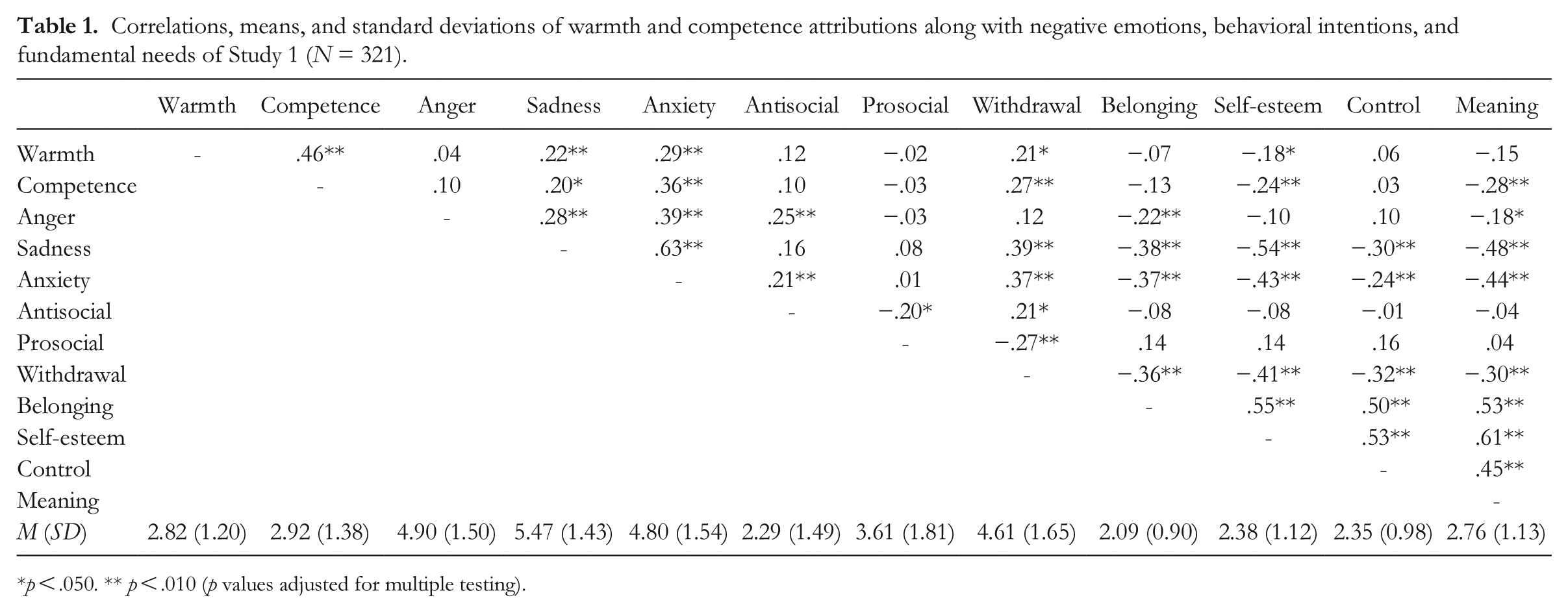
To assess the extent to which ostracism was attributed to a perceived lack of warmth versus a perceived lack of competence, we calculated a difference score for each participant between their warmth attribution minus their competence attribution. Figure 1 shows the distribution of difference scores. There was a moderate positive correlation between warmth attributions (M = 2.82, SD = 1.20) and competence attributions (M = 2.92, SD = 1.38), r(319) = .46, p < .001, 95% CI [0.37, 0.54].
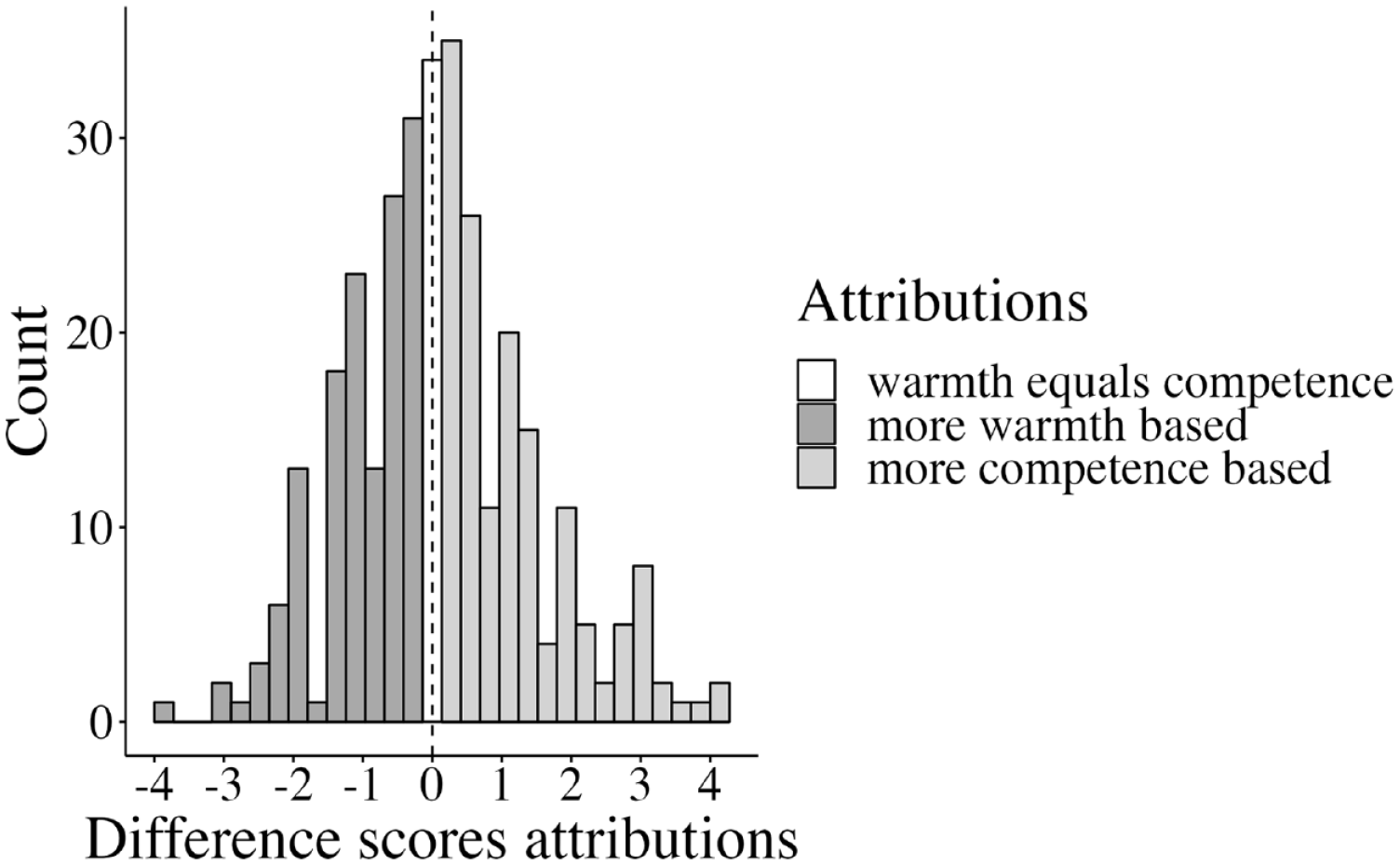
Difference scores between warmth and competence attributions of ostracism: Study 1 (N = 321).
The correlations, means, and standard deviations of warmth and competence attributions, along with different negative emotions, behavioral intentions, and fundamental needs for Study 1 are reported in Table 1.
Correlations, means, and standard deviations of warmth and competence attributions along with negative emotions, behavioral intentions, and fundamental needs of Study 1 (N = 321).
p < .050. ** p < .010 (p values adjusted for multiple testing).
Negative emotions
We performed a linear mixed effects regression using the lmerTest package (Kuznetsova et al., 2017) and tidystats (Sleegers, 2020). Attributions of ostracism and negative emotions were contrast-coded (Schad et al., 2020). Emotion responses were predicted as a function of attribution response, type of emotion (anger vs. sadness vs. anxiety), and type of attribution (warmth vs. competence). Participants were treated as a random effect (random intercept), while all other predictors were treated as fixed effects. We were primarily interested in the following two-way interactions: (H1) between attribution type (warmth vs. competence) and anger emotion response; (H2) between attribution type (warmth vs. competence) and sadness emotion response; (H3) between warmth attribution response and emotion type (anger vs. sadness); and (H4) between competence attribution response and emotion type (anger vs. sadness). The exploratory interaction effects for anxiety are reported in the online supplemental material (OSM S1).
Emotion type
We first explored whether average emotional responses were different depending on the type of emotion. Participants recalled feeling more sadness compared to anger, b = 0.58, SE = 0.08, t(1585.63) = 7.38, p < .001, and compared to anxiety (M = 4.80, SD = 1.54), b = −0.68, SE = 0.08, t(1585.63) = −8.63, p < .001. There was no significant difference between anger and anxiety, b = −0.10, SE = 0.08, t(1585.63) = −1.25, p = .213.
Attribution Response × Attribution Type
We examined whether negative emotions were differently related to warmth and competence attributions of ostracism. Contrary to Hypotheses 1 and 2, there was no significant interaction between attribution response and attribution type on anger, b = −0.04, SE = 0.06, t(1643.94) = −0.66, p = .510; sadness, b = −0.06, SE = 0.06, t(1643.94) = −1.00, p = .319; or anxiety, b = 0.01, SE = 0.06, t(1643.94) = 0.13, p = .897 (see Figure 2).
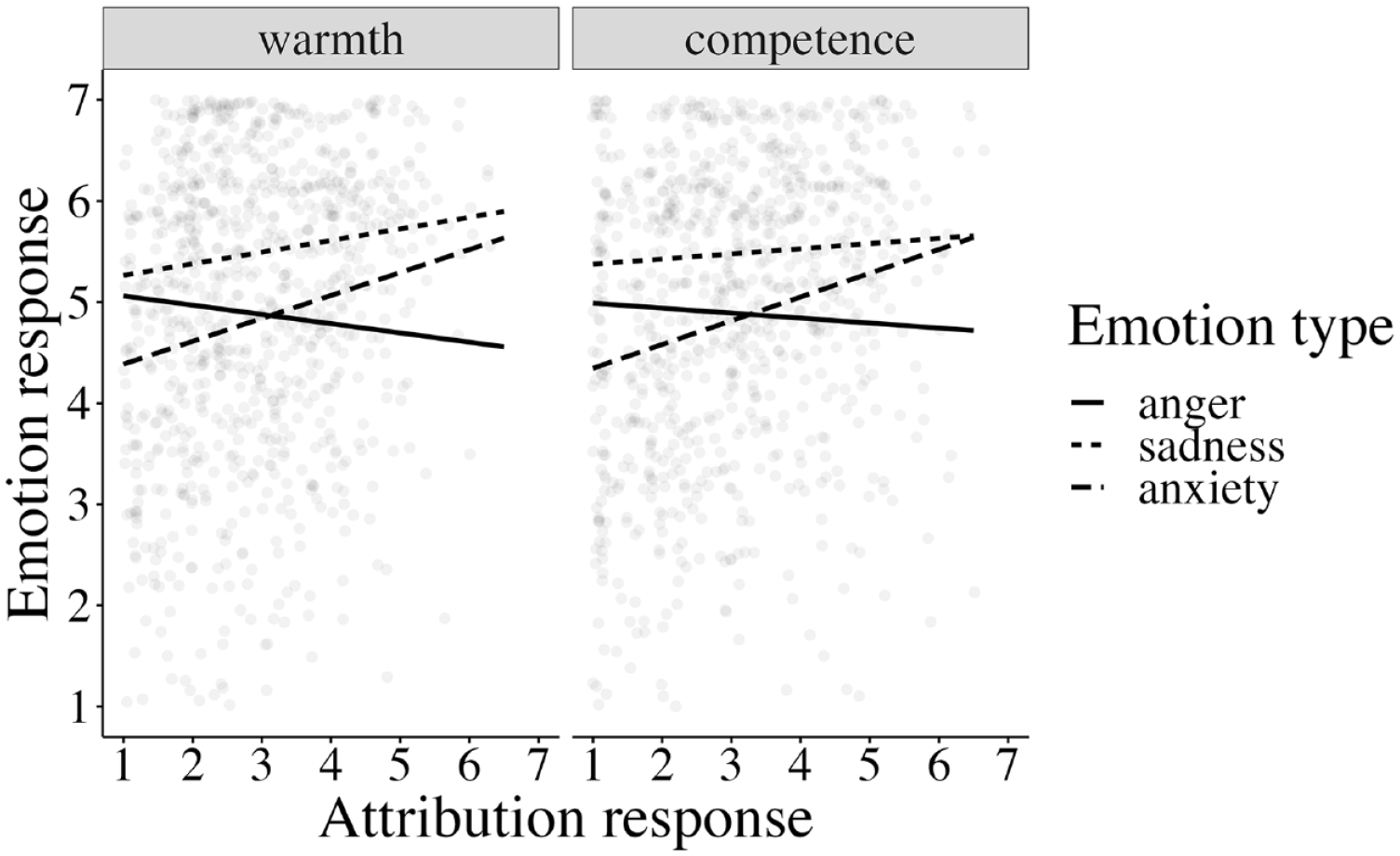
Associations between warmth attributions (left) and competence attributions (right), and emotion responses for anger, sadness, and anxiety.
Warmth Attribution × Emotion Type
In line with Hypothesis 3, the interaction between warmth attribution and emotion type was significant for sadness compared to anger, b = −0.21, SE = 0.07, t(1585.63) = −3.16, p = .002. Warmth attributions were more strongly positively related to sadness, b = 0.11, SE = 0.05, t(1839.75) = 2.14, p = .033, compared to the nonsignificant relationship with anger, b = −0.09, SE = 0.05, t(1839.75) = −1.71, p = .088 (see left panel of Figure 2).
Competence Attribution × Emotion Type
Contrary to Hypothesis 4, the interaction between competence attribution and emotion type was not significant for anger compared to sadness, b = 0.10, SE = 0.06, t(1585.63) = 1.76, p = .078 (see right panel of Figure 2).
Behavioral intentions
We performed a linear mixed effects model. Attributions of ostracism and behavioral intentions were contrast-coded. Behavioral intentions were predicted as a function of attribution response, type of behavior (antisocial vs. prosocial vs. withdrawal), and type of attribution (warmth vs. competence). Participants were treated as a random effect (random intercept), while all other predictors were treated as fixed effects. We were primarily interested in the following two-way interactions: (H5) between attribution type (warmth vs. competence) and antisocial behavior intention; (H6) between attribution type (warmth vs. competence) and prosocial behavior intention; (H7) between warmth attribution response and behavior type (antisocial vs. prosocial); and (H8) between competence attribution response and behavior type (antisocial vs. prosocial). The exploratory interaction effects for withdrawal are reported in the OSM (S1).
Behavior type
Participants recalled having stronger withdrawal intentions compared to prosocial intentions, b = 1.00, SE = 0.12, t(1591.84) = 8.21, p < .001, and compared to antisocial intentions, b = 2.32, SE = 0.12, t(1591.84) = 18.99, p < .001. In addition, they recalled having stronger prosocial than antisocial intentions, b = 1.32, SE = 0.12, t(1591.84) = 10.79, p < .001.
Attribution Response × Attribution Type
Contrary to Hypotheses 5 and 6, there was no significant interaction between attribution response and attribution type on antisocial intentions, b = 0.04, SE = 0.10, t(1777.29) = 0.46, p = .647; prosocial intentions, b = 0.01, SE = 0.10, t(1777.29) = 0.14, p = .886; or withdrawal intentions, b = 0.03, SE = 0.10, t(1777.29) = 0.35, p = .727 (see Figure 3).
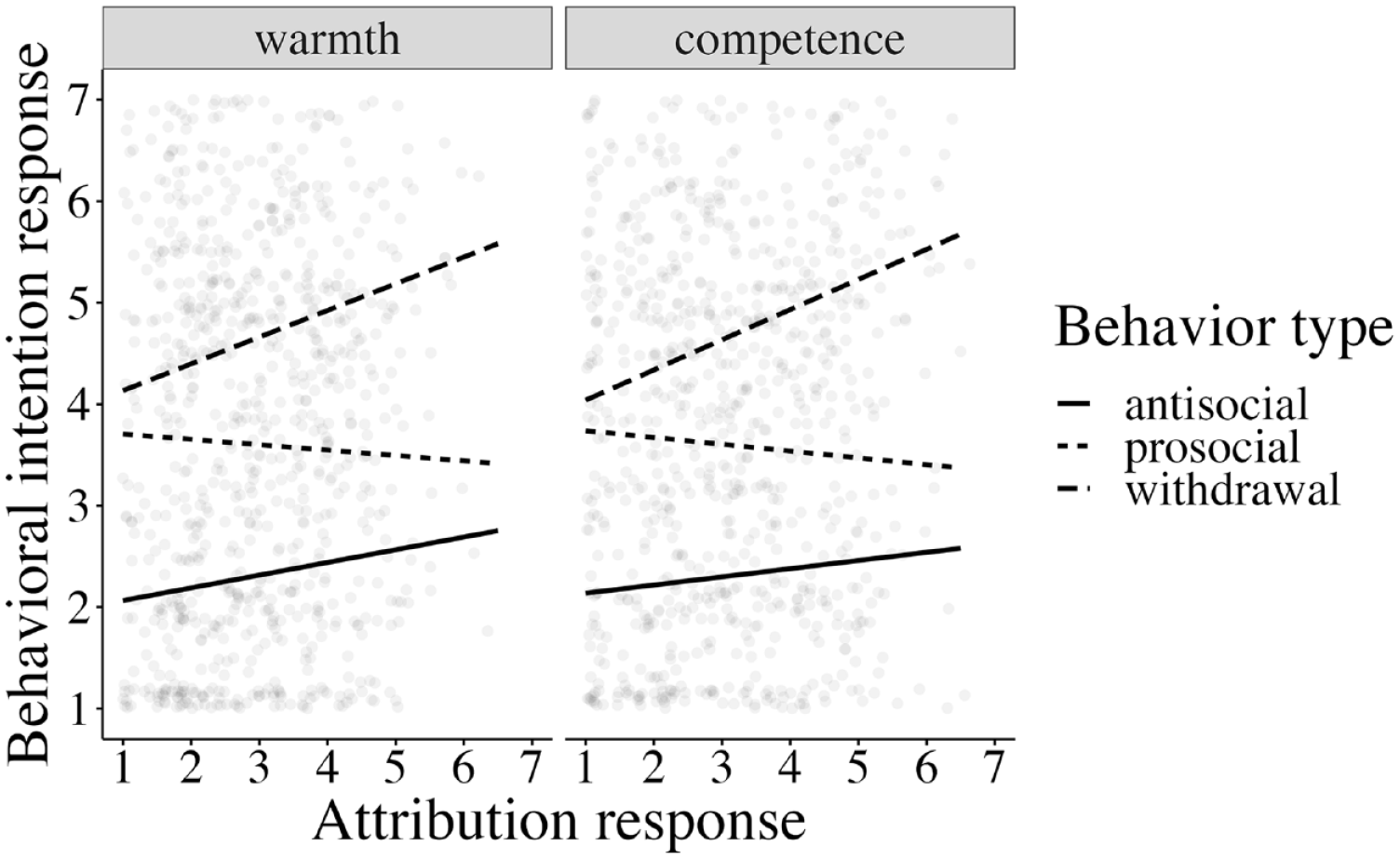
Associations between warmth attributions (left) and competence attributions (right), and responses for antisocial, prosocial, and withdrawal intentions.
Warmth Attribution × Behavior Type
Contrary to Hypothesis 7, the interaction between warmth attribution and behavior type was not significant for prosocial compared to antisocial intentions, b = 0.18, SE = 0.10, t(1591.84) = 1.75, p = .080 (see left panel of Figure 3).
Competence Attribution × Behavior Type
Contrary to Hypothesis 8, the interaction between competence attribution and behavior type was not significant for antisocial intentions compared to prosocial intentions, b = −0.15, SE = 0.09, t(1591.84) = −1.67, p = .095 (see right panel of Figure 3).
Discussion
Our first aim was to explore the prevalence of warmth-attributed and competence-attributed ostracism experiences. Based on generic recall, we found that all ostracism events involved both warmth and competence attributions simultaneously, with no events exclusively attributed to either dimension. Crucially, the results showed that warmth and competence attributions of ostracism were positively associated.
Our second aim was to assess whether warmth and competence attributions of ostracism were differently associated with specific negative emotions or behavioral intentions in response to ostracism. However, the associations between specific emotions and warmth and competence attributions turned out to be largely identical. In other words, we did not replicate the distinct pattern of emotional responses that was found between warmth and competence attributions of rejection by Çelik et al. (2013). Nor did we find evidence that warmth and competence attributions were distinctly associated with behavioral intentions following ostracism. Regardless of the perceived reason for ostracism, participants felt mostly sad and wanted to withdraw after their ostracism event.
This discrepancy between the present and previous findings could be due to the nature of ostracism compared to other forms of social rejection: Ostracism is characterized by the absence of explicit cues. Thus, compared to Çelik et al.’s (2013) study, where participants received an explicit list of reasons for why they were rejected, our participants might have had a harder time understanding the reasons for them being ostracized. In line with this, on average, both warmth and competence attributions were not particularly strong (below midpoint of the scale). Moreover, warmth and competence attributions were also positively related in the present study. This points to another explanation for this discrepancy, namely that the attribution-pure events created by Çelik et al. might not reflect the nature of the ostracism events that were captured by generic recall in our work. That is, the ostracism experiences in Study 1 seemed to involve multiple simultaneous attributions. Both reasons could have undermined our ability to detect specific signatures of warmth- and competence-attributed ostracism.
To explore these alternative explanations and to further test the specificity of warmth-attributed and competence-attributed ostracism on experienced negative emotions and behavioral intentions, we conducted a new experiment in which we randomly assigned participants to a condition in which they had to recall a more specific situation in which they felt ostracized, either because of a perceived lack of warmth or because of a perceived lack of competence.
Study 2: Specific Warmth-Attributed and Competence-Attributed Ostracism Experiences
Study 2 was designed so we could directly compare specific warmth-attributed against specific competence-attributed ostracism events and their associations with negative emotions and behavioral intentions. In an online experiment, participants were randomly assigned to recall either a warmth-based or a competence-based ostracism experience. We expected to replicate the average pattern of Study 1 in that (H1) participants would report more sadness than anger, but that (H2) this difference would be smaller within the competence-attributed compared to the warmth-attributed ostracism condition. Similarly, we expected that (H3) participants would report more prosocial than antisocial intentions, and again that (H4) this difference would be smaller within the competence-attributed compared to the warmth-attributed ostracism condition. We had no specific hypotheses about anxiety or withdrawal.
Method
Procedure
The procedure of Study 2 was identical to that of Study 1, with the following exceptions: participants were now specifically asked to describe the most recent situation in which they felt ostracized either for a lack of warmth and/or trustworthiness, or a situation in which they felt ostracized for a lack of competence and/or assertiveness. To minimize the influence of possible demand characteristics of the study, we asked participants at the end of the study whether their described ostracism event was indeed a situation that had happened to them personally. Afterwards, participants were thanked, paid (£1.80), and debriefed. Data were collected in August 2020.
Measures
The following measures were the same as in Study 1: negative emotions (anger: α = .85; sadness: α = .84; anxiety: α = .80); psychological needs satisfaction (belonging: α = .74; self-esteem: α = .80; control: α = .71; meaningful existence: α = .68; total needs satisfaction: α = .88); behavioral intentions (antisocial: α = .90; prosocial: α = .93; withdrawal: α = .79); open-ended behavioral response; attributions of ostracism (warmth: α = .79; competence: α = .87); and demographics. The measures below were newly added or altered.
Ostracism in daily life
Again, at the start of the survey, participants first answered one item regarding their ostracism experiences in daily life (“Have you ever felt ostracized by others?”). This time, the response options were “yes” or “no.”
Reasons for ostracism
Directly after freely describing their latest warmth-based or competence-based ostracism experience, participants answered one exploratory open-ended question on their perceived reason for being ostracized: “What made you believe that the others thought you were cold and/or untrustworthy [vs. incompetent and/or unassertive]?”
Personal experience check
We added the following item at the end of the study (preceding the demographic information) because we were concerned that some participants may have come up with an ostracism experience on the spot so that they could participate in the study: “The ostracism experience that I described at the beginning of this study was a situation that has happened to me personally.” Response options were “yes” or “no.”
Sample size justification
We performed a simulation-based power analysis with the minimal differences in means between the measures of interest, using a value of Mdiff = 0.50 for the assumed correlations between dependent variables. We assumed the following minimal mean differences between anger and (more) sadness within the competence condition (Mdiff =0.50) and within the warmth condition (Mdiff =1.00); and mean differences between antisocial and (stronger) prosocial intentions within the competence condition (Mdiff =0.50) and within the warmth condition (Mdiff =1.00).
A total sample size of 300 should give 80% power to detect the two primary main effects, plus the two interaction effects as specified above. For details, see the power simulation on the OSF (https://osf.io/2jw67/).
Participants
We collected data from 406 participants to account for potential dropouts. A total of 112 participants were excluded from the analyses for the following reasons. First, there were 54 participants who indicated at the beginning of the study that they had never felt ostracized by others. Another 40 participants did not describe an ostracism situation (i.e., being ignored and excluded by two or more others), as indicated by three coders. We additionally excluded six participants who used less than 20 words to describe their most recent ostracism experience (as a rough indicator of adherence to the instructions to write at least five to six sentences). Lastly, 12 participants were unable to confirm that their ostracism situation had happened to them personally.
The final sample included 294 participants (44.2% female, 55.8% male), of which, 143 described a competence-attributed ostracism experience and 151 described a warmth-attributed ostracism experience. The average age of the participants was 27.20 years (SD = 9.86, range: 18–65). The ethnicities of participants were: White (82.65%), mixed (4.76%), Asian (3.06%), Black (2.72%), other (1.36%), or missing (5.44%). The most common countries of origin included Poland (18.71%), Portugal (16.33%), Italy (10.88%), the United Kingdom (10.54%), Greece (7.14%), Spain (5.44%), South Africa (2.72%), other (23.13%), or missing (5.10%).
Results
The correlations, means, and standard deviations of warmth and competence attributions, along with the different negative emotions, behavioral intentions, and fundamental needs for Study 2 are reported in Table 2.
Correlations, means, and standard deviations of warmth and comptence attributions, along with different negative emotions, behavioral intentions, and fundamental needs (N = 294).
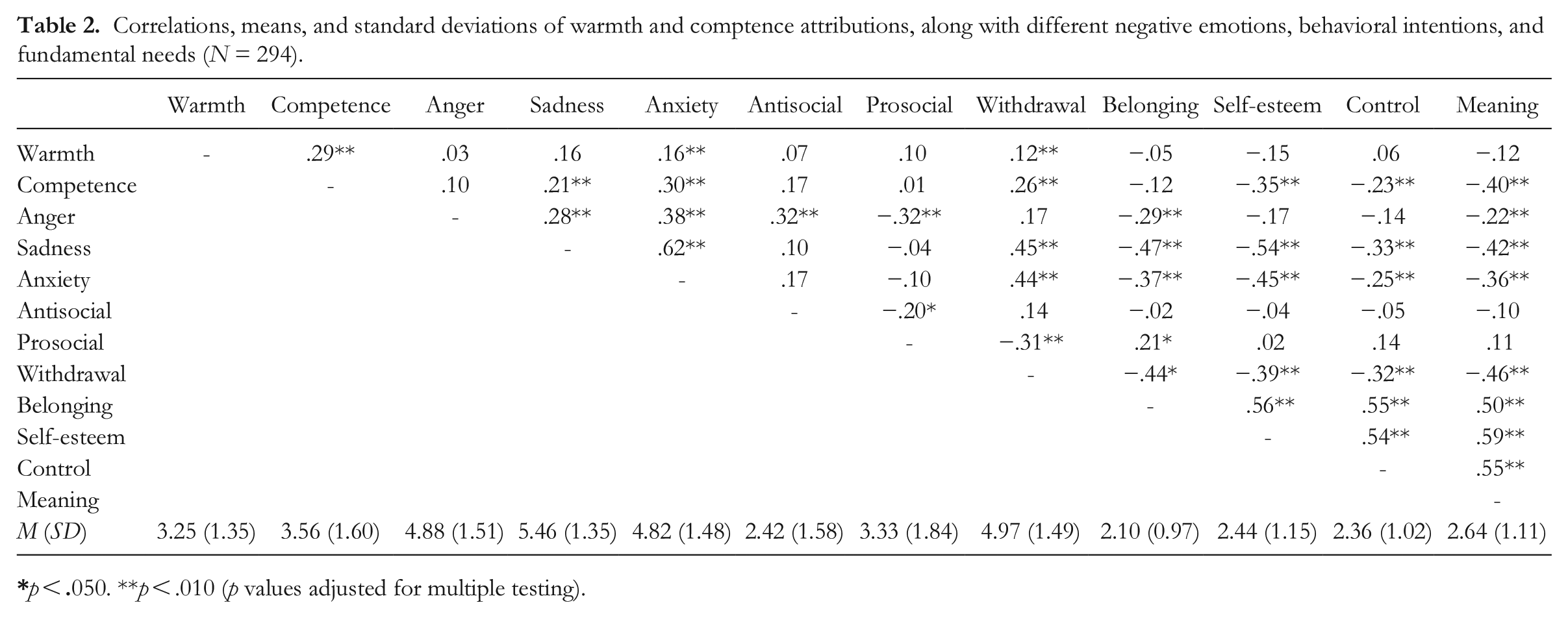
p < .050. **p < .010 (p values adjusted for multiple testing).
Severity of ostracism experiences
The average scores for feelings of exclusion (M = 5.64, SD = 1.45) and feelings of being ignored (M = 6.19, SD = 1.12) during the described ostracism events were above the midpoint of the scales. There were no significant differences in the average severity of ostracism experiences between conditions, Mdiff = −0.02, t(292) = −0.13, pexcluded = .897, d = −0.02; and Mdiff = 0.15, t(292) = 0.89, pignored = .374, d = 0.10.
Manipulation check
We performed a linear mixed effects regression. Attribution responses were predicted as a function of condition (warmth vs. competence) and type of attribution (warmth vs. competence). Participants were treated as a random effect (random intercept). Figure 4 shows the attribution responses as a function of attribution type and condition.
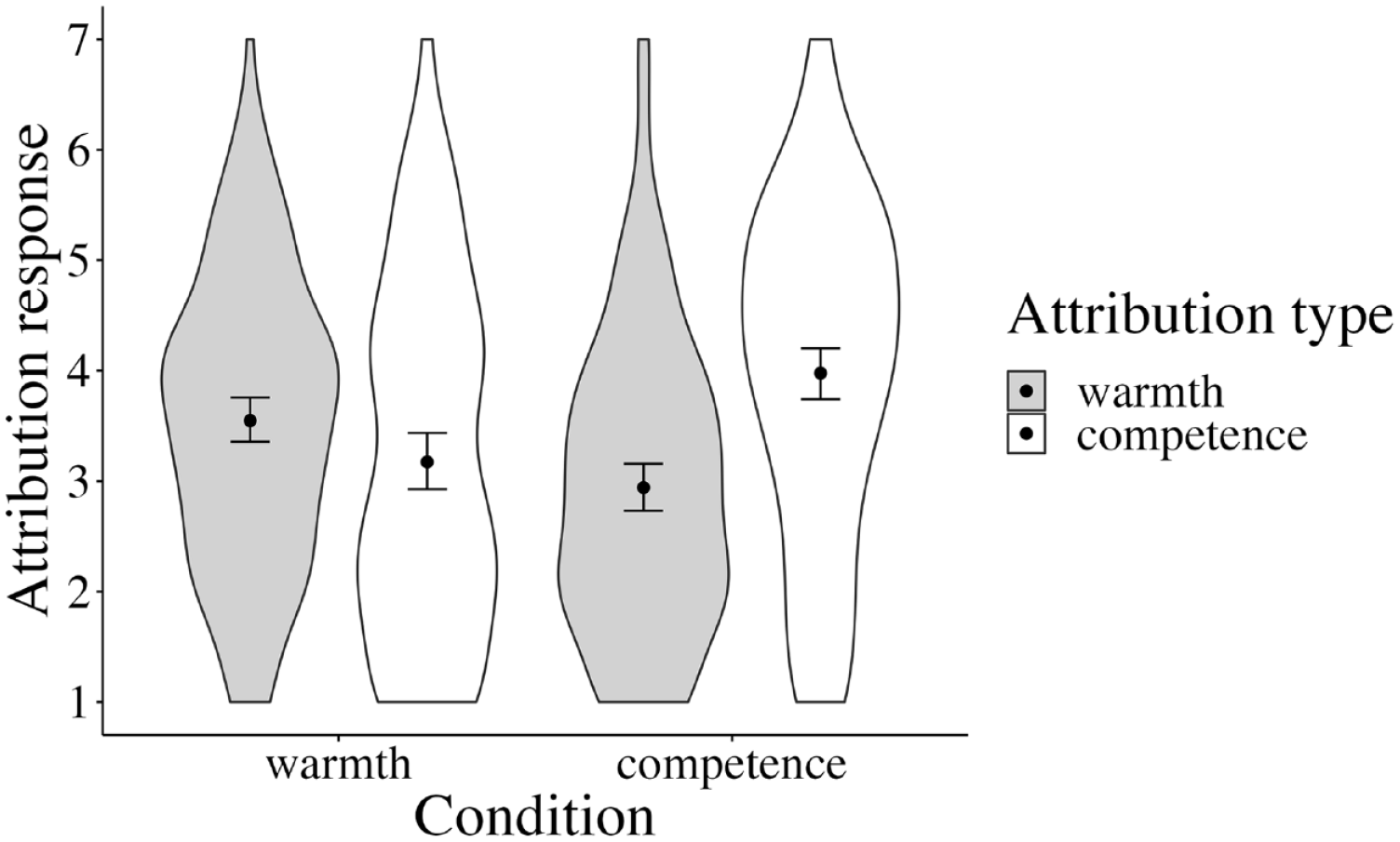
Average warmth and competence attribution responses for the warmth-based (left) and competence-based (right) ostracism conditions.
There was a significant interaction between condition and attribution type on attribution response, b = 1.41, SE = 0.19, t(292.00) = 7.47, p < .001. Competence attributions were significantly stronger in the competence condition (M = 3.98, SD = 1.51) compared to the warmth condition (M = 3.17, SD = 1.58), b = 0.80, SE = 0.17, t(515.18) = 4.80, p < .001. And warmth attributions were significantly stronger in the warmth condition (M = 3.55, SD = 1.30) compared to the competence condition (M = 2.94, SD = 1.33), b = 0.61, SE = 0.17, t(515.18) = 3.61, p < .001. Moreover, in the competence condition, competence attributions (M = 3.98, SD = 1.51) were significantly stronger than warmth attributions (M = 2.94, SD = 1.33), b = 1.04, SE = 0.14, t(292.00) = 7.65, p < .001. And in the warmth condition, warmth attributions (M = 3.55, SD = 1.30) were significantly stronger than competence attributions (M = 3.17, SD = 1.58), b = 0.37, SE = 0.13, t(292.00) = 2.84, p = .005. This suggests that our manipulation was successful.
Exploratory results of a simple linear regression model showed no significant interaction between attribution type and condition, b = −0.04, SE = 0.09, t = −0.39, p = .695. Warmth attributions and competence attributions were positively correlated both within the warmth condition (b = 0.30, SE = 0.06, t = 4.70, p < .001) and within the competence condition (b = 0.34, SE = 0.07, t = 4.92, p < .001).
Negative emotions
We performed a linear mixed effects regression. Emotion responses were regressed on fixed effects of condition (competence vs. warmth) and type of emotion (anger vs. sadness vs. anxiety). Participants were treated as a random effect (random intercept). We were primarily interested in (H1) the main effect of emotion type (anger vs. sadness), and (H2) the interaction between condition and emotion type (anger vs. sadness). The exploratory interaction effects for anxiety are reported in the OSM (S1).
Emotion type
In line with Hypothesis 1, participants recalled feeling more sadness (M = 5.46, SD = 1.35) compared to anger (M = 4.88, SD = 1.51), b = 0.58, SE = 0.09, t(586.00) = 6.35, p < .001, and anxiety (M = 4.82, SD = 1.48), b = 0.63, SE = 0.09, t(586.00) = 6.96, p < .001. There was no significant difference between anger and anxiety, b = 0.06, SE = 0.09, t(586.00) = 0.61, p = .540.
Condition × Emotion Type
In line with Hypothesis 2, there was a significant interaction between condition and emotion type (sadness vs. anger) on emotion response, b = 0.42, SE = 0.18, t(584.00) = 2.31, p = .021. To parse this interaction effect, we first compared sadness to anger responses within each condition. Sadness (M = 5.44, SD = 1.28) was significantly stronger than anger (M = 4.66, SD = 1.61), b = 0.78, t(584.00) = 6.18, p < .001, in the warmth condition; and sadness (M = 5.47, SD = 1.43) was significantly stronger than anger (M = 5.11, SD = 1.35), b = 0.36, t(584.00) = 2.79, p = .006, in the competence condition. As expected, these results indicate that the difference between sadness and anger was smaller within the competence-based condition than within the warmth-based ostracism condition. We also compared responses for each emotion type between conditions. Anger was significantly stronger in the competence condition (M = 5.11, SD = 1.35) compared to the warmth condition (M = 4.66, SD = 1.61), b = 0.45, t(644.62) = 2.66, p = .008. There was no significant difference between sadness in the competence condition (M = 5.47, SD = 1.43) compared to the warmth condition (M = 5.44, SD = 1.28), b = 0.03, t(644.62) = 0.17, p = .862. Thus, the interaction was primarily driven by differences in anger (see Figure 5).
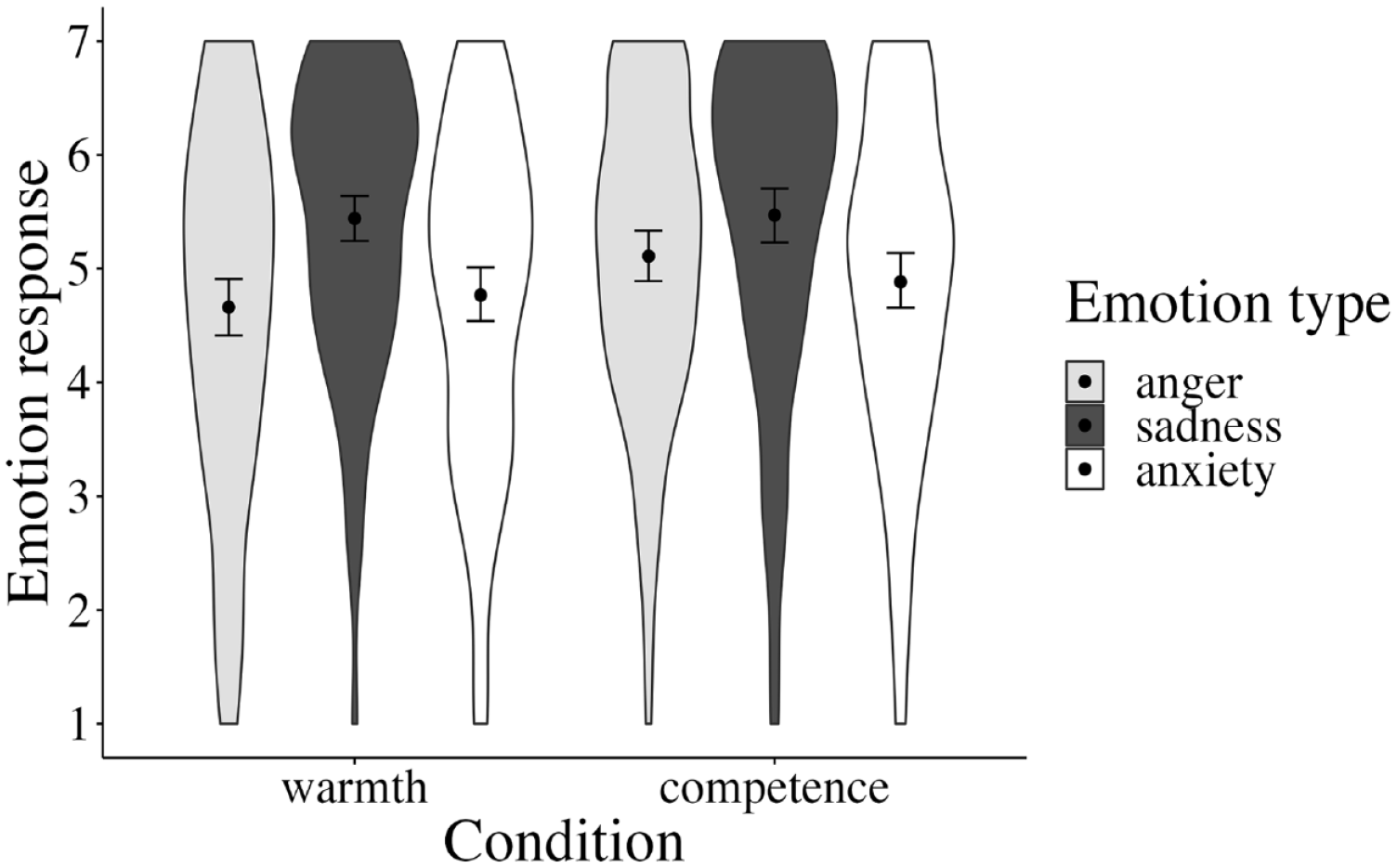
Average emotion responses for anger, sadness, and anxiety for the warmth-based (left) and competence-based (right) ostracism conditions.
Behavioral intentions
We performed a linear mixed effects regression in which behavioral intentions were predicted as a function of condition (competence vs. warmth) and type of behavior (antisocial vs. prosocial vs. withdrawal). Participants were treated as a random effect (random intercept). We were primarily interested in (H3) the main effect of behavior type (antisocial vs. prosocial), and (H4) the interaction between condition and behavior type (antisocial vs. prosocial). The exploratory interaction effects for withdrawal are reported in the OSM (S1).
Behavior type
Participants recalled having more withdrawal (M = 4.97, SD = 1.49) compared to prosocial intentions (M = 3.33, SD = 1.84), b = 1.64, SE = 0.14, t(879) = 12.10, p < .001, and antisocial intentions (M = 2.42, SD = 1.58), b = 2.55, SE = 0.14, t(879) = 18.81, p < .001. In line with Hypothesis 3, prosocial intentions were significantly stronger than antisocial intentions, b = 0.91, SE = 0.14, t(879) = 6.72, p < .001.
Condition × Behavior Type
In line with Hypothesis 4, there was a significant interaction between condition and behavior type (prosocial vs. antisocial) on behavioral intentions, b = 0.71, SE = 0.27, t(876) = 2.63, p = .009. To parse this interaction effect, we compared prosocial to antisocial intentions within each condition. Prosocial intentions (M = 3.54, SD = 1.85) were significantly stronger than antisocial intentions (M = 2.29, SD = 1.56) in the warmth condition, b = 1.26, SE = 0.19, t(876) = 6.67, p < .001; and prosocial intentions (M = 3.11, SD = 1.80) were significantly stronger than antisocial intentions (M = 2.57, SD = 1.59) in the competence condition, b = 0.55, SE = 0.19, t(876) = 2.82, p = .005. As expected, these results indicate that the difference between prosocial and antisocial intentions was smaller within the competence-based condition than within the warmth-based ostracism condition. We also compared intentions for each type of behavior between conditions. Prosocial intentions were significantly stronger in the warmth condition (M = 3.54, SD = 1.85) compared to the competence condition (M = 3.11, SD = 1.80), b = 0.43, SE = 0.19, t(876) = 2.26, p = .024. There was no significant difference between antisocial intentions in the warmth condition (M = 2.29, SD = 1.56) compared to the competence condition (M = 2.57, SD = 1.59), b = −0.28, SE = 0.19, t(876) = −1.46, p = .144. Thus, the interaction was primarily driven by differences in prosocial intentions (see Figure 6).
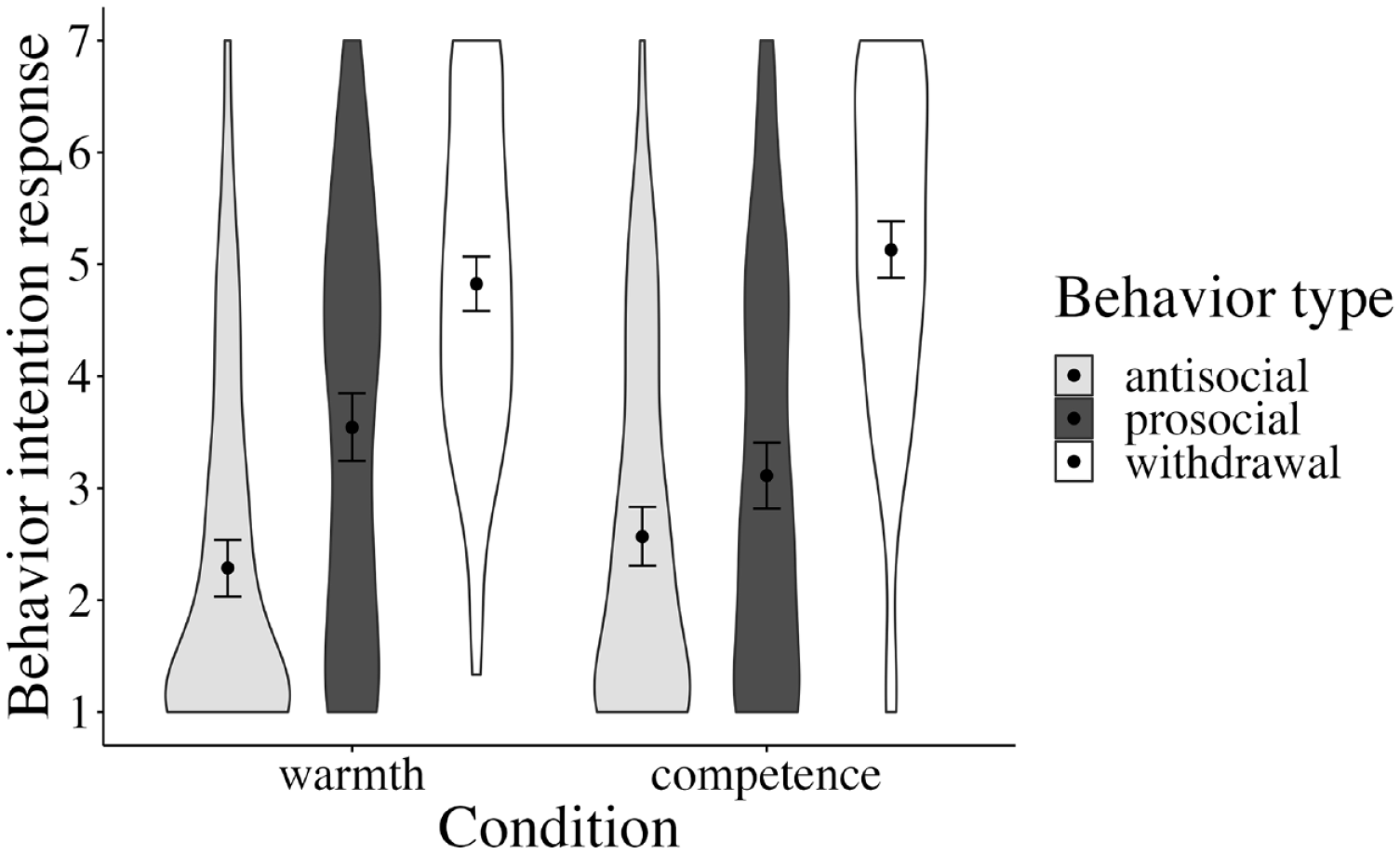
Average responses for antisocial, prosocial, and withdrawal intentions for the warmth-based (left) and competence-based (right) ostracism conditions.
Discussion
The aim of Study 2 was to further test the specificity of warmth-attributed and competence-attributed ostracism on experiences of negative emotions and behavioral intentions. Similar to the findings of Study 1, participants generally recalled feeling more sadness, followed by anger and anxiety. In Study 2, however, this pattern was attenuated by the perceived reason for ostracism. Specifically, participants who thought they were ostracized because others perceived them as incompetent recalled feeling relatively more anger than those who felt ostracized for a lack of warmth. Furthermore, and again as in Study 1, participants recalled having the strongest intentions to withdraw, followed by prosocial intentions, and the least antisocial intentions. In Study 2, this pattern was attenuated by the reason for ostracism. Specifically, participants who believed that they were ostracized for a perceived lack of competence recalled having weaker prosocial intentions than those who felt ostracized for a lack of warmth.
General Discussion
In the present research, we integrated insights from person perception theory (e.g., Fiske, 2018; Rosenberg & Sedlak, 1972; Wojciszke et al., 1998) and the social functionality of emotions (e.g., Averill, 1992; Ekman, 1992; Fischer & Manstead, 2016; Frijda, 1987) to investigate (a) the extent to which participants attributed ostracism to warmth and competence, and (b) whether warmth and competence attributions of ostracism were differently related to emotions and behavioral intentions. Specifically, we argued that a perceived lack of warmth (e.g., “they did not like me”) and a perceived lack of competence (e.g., “they thought I was incapable”) as perceived reasons for ostracism would be differently associated with negative emotions and behavioral intentions by targets of ostracism.
In Study 1, where participants could freely recall an episode of ostracism, they primarily felt sad, followed equally by feelings of anger and anxiety. Crucially, these specific emotions were not distinctly related to warmth and competence attributions of ostracism. Moreover, participants mainly recalled having withdrawal intentions, followed by prosocial intentions and antisocial intentions. Again, these different behavioral intentions were not distinctly related to warmth and competence attributions of ostracism. In Study 2, participants were directly instructed to either recall a warmth-attributed or competence-attributed ostracism experience. The analyses replicated the findings of Study 1 that participants primarily felt sadness, followed equally by anger and anxiety. Similarly, participants recalled having the strongest intention to withdraw, and prosocial intentions were stronger than antisocial intentions. In addition, the results of Study 2 suggested that competence-attributed ostracism was associated with relatively more anger and weaker prosocial intentions compared to warmth-attributed ostracism. Thus, overall, we found consistent evidence across both studies that targets of ostracism primarily feel sad and want to withdraw from their ostracism event; although, in Study 2, we also obtained some evidence that the perceived reasons for ostracism may moderate emotional responses and behavioral intentions.
Warmth and Competence Attributions of Ostracism
In the context of generic ostracism experiences (Study 1), warmth attributions and competence attributions were positively correlated. This finding is relevant for generic recall manipulations of ostracism that do not make either reason for ostracism (warmth or competence) salient. Under the assumption that reasons for ostracism affect emotional and behavioral responses, this makes such manipulations inherently somewhat ambiguous. On balance, our results suggest that the effect of the different reasons for ostracism only accentuated, but did not generally determine, the primary emotional and behavioral consequences of ostracism in the present work.
Furthermore, it is important to note that these warmth and competence attributions reflect the subjective interpretation of ostracism by our participants. Our data cannot indicate whether these interpretations correspond to the intended reasons for ostracism from a source perspective. Future studies could verify whether warmth and competence perceptions indeed drive ostracism decisions. There is already research on Big Five personality dimensions that suggests that individuals are more likely to be ostracized for being disagreeable or low in conscientiousness, especially when such personality traits are relevant given a specific social or performance-related context (e.g., Hales et al., 2016; Rudert et al., 2020, 2021). Given that agreeableness and conscientiousness are very similar to the constructs of warmth and competence, these constructs also appear to be plausible reasons to ostracize someone.
From the target perspective, however, the observed positive correlations between warmth and competence attributions raise the question of to what extent participants were able to distinguish warmth and competence attributions of ostracism. The positive associations between warmth and competence attributions in both studies may point to a linear relationship between the two dimensions and valence (Suitner & Maass, 2008). This highlights that, in lack of more specific contexts in which a certain dimension is particularly salient, warmth and competence attributions may simply reflect the perceived valence of these experiences.
The additional observation that, on average, warmth and competence attributions of ostracism remained below the midpoint of the scale may be explained by the notion that the reasons for ostracism are inherently unclear. Irrespective of warmth and competence, our findings suggest that the relative strength of attributions was positively associated with sadness, anxiety, and withdrawal intentions. A possible explanation for these findings is that stronger attributions may also reflect stronger internal attributions or self-blame. That is, if a person is more certain that their ostracism was due to their own poor performance or their own unfriendly behavior, they might consider their ostracism to be more justified and, in turn, may experience more sadness, shame, or guilt, and be less likely to expose themselves through approach behaviors (Smart Richman & Leary, 2009).
Notably, the average distinction between warmth and competence attributions seemed to be most successful for competence-attributed ostracism (Study 2). Previous research has pointed out differences in the degree of consensus in impression formation of group stereotypes and personality dimensions (e.g., Kenny & West, 2011; Koch et al., 2020). Speculating on our findings, it is possible that participants showed more consensus as to what constitutes an ostracism event based on a perceived lack of competence as compared to warmth, resulting in a starker contrast between the average strength of warmth and competence attributions within the competence condition and related outcomes. Whereas, if warmth-attributed ostracism events were more diffuse, we may have averaged out individual variability in attributions of ostracism. Moreover, competence-attributed ostracism events may occur in more narrow contexts (e.g., work or educational settings), and therefore may carry more similar effects in relation to the emotional responses and behavioral intentions following ostracism in comparison to warmth-attributed ostracism events. This could explain why were able to observe an effect of attributions of ostracism on emotional responses and behavioral intentions in Study 2 but not in Study 1.
Overall, our findings may inspire further research into warmth and competence perceptions as reasons for ostracism, and should alert researchers to the possibility that the perceived reasons of ostracism can be ambiguous and manifold depending on the particular context, which could affect emotional and behavioral consequences in different ways.
Emotional Consequences of Different Kinds of Ostracism
As it relates to the emotional consequences of ostracism, and similar to the findings by Çelik et al. (2013) on warmth-based and competence-based rejection, the differences in emotional responses between warmth-based and competence-based ostracism were primarily driven by changes in anger. However, a difference between our findings and theirs is the interaction pattern between the perceived reason and the type of emotion. Our results showed that even though anger was stronger when participants recalled competence-attributed compared to warmth-attributed ostracism, participants generally experienced more sadness than anger regardless of the perceived reasons. In contrast, the results from Çelik et al. revealed that participants who were explicitly rejected due to incompetence experienced more anger than sadness, while those who were rejected for a lack of warmth showed more sadness than anger.
A possible explanation for this difference is that Çelik et al. (2013, Study 2) manipulated warmth-based and competence-based rejection according to the so-called compensation effect (Kervyn et al., 2010). That is, participants received more explicit information on both dimensions and were either rejected because of a lack of warmth but not competence, or vice versa. Perhaps their results were thus driven by the singular reason for rejection, or by the fact that the rejected participants had more certainty on how they were perceived in terms of warmth and competence by others as compared to situations of ostracism. Given the positive correlations between warmth and competence attributions that we observed, it seems that participants did not perceive such clear-cut reasons for ostracism. Thus, our research hints at an important difference between more implicit and explicit forms of social exclusion that warrants further empirical attention.
Behavioral Consequences of Different Kinds of Ostracism
The present work highlights the importance of withdrawal responses following ostracism. Participants’ intentions to withdraw were stronger than antisocial or prosocial intentions towards the ostracizers (Studies 1 and 2). Withdrawal may be particularly adaptive if participants feel that there is no opportunity for (immediate) reinclusion or affiliation with the ostracizers. However, these findings should be interpreted with caution as we measured (recalled) intentions, which may not directly translate into the target’s actual behaviors. Interestingly, sadness was exclusively and positively associated with withdrawal intentions (Studies 1 and 2), compared to prosocial and antisocial behavioral intentions. Although we considered sadness to primarily have an affiliative function in comparison to anger, it is not at all surprising that sadness is also associated with avoidance tendencies. As pointed out by Gray et al. (2011), an alternative perspective from the appraisal literature is that sadness following (social) loss is more likely to be associated with social withdrawal and inaction (Frijda, 1986; Lazarus, 1991), instead of active efforts to reach out to others or reinforcement of social connectedness.
Further speculating about the underlying role of emotions, sadness and anxiety following ostracism may thus both lead towards avoidance behavior from the negative social situation or the source of such feelings. Crucially, the recipient of coping responses to ostracism may be especially relevant to distinguish the functional relationship between sadness versus anxiety on the one hand, and affiliative behavior versus distancing behavior on the other hand. As pointed out by Meral et al. (2021), individuals with social anxiety may, for example, be more reluctant to share their ostracism experiences with others because they anticipate more negative outcomes or further rejection (Zadro et al., 2006). Hence, we would expect that sadness, but not anxiety, is more strongly associated with behaviors that elicit connectedness (e.g., crying, seeking support) from interaction partners other than the source of ostracism.
Limitations
There are several limitations that can be addressed regarding the use of autobiographical recall. First, it remains unclear to what extent our experimental instructions might have amplified the reasons stated for ostracism. We cannot rule out the possibility that participants may have construed their ostracism experiences through the lens of the warmth-based or the competence-based instructions in a post hoc fashion (and potentially could have done so either way for the same ostracism experience), rather than recalling actual different experiences.
Second, as we did not investigate inclusion experiences, our work is limited to a relative comparison between experiences attributed to a perceived lack of warmth and competence. While we assumed that ostracism generally increases negative affect (emotional distress hypothesis; Gerber & Wheeler, 2009), it is important to note that debate exists as to whether this is indeed the case (for an overview, see Bernstein, 2016). That is, while targets may show increased negative affect following ostracism relative to inclusion, their emotional state might objectively be neutral or flat (Blackhart et al., 2009). Future research should include comparisons to inclusion to explore this question in more detail.
Third, we exclusively assessed behavioral intentions towards the source of ostracism. Crucially, previous research illustrates that prosocial responses are limited towards uninvolved others (Maner et al., 2007). Adding the receiver of coping responses to ostracism as a moderator may help to further differentiate the assumed functional relationship between emotions and coping responses to ostracism.
Fourth, we did not study actual behavioral responses to ostracism. Whether behavioral intentions correspond to real behavior may depend on the (perceived) response options that are afforded within a particular context and the costs and benefits associated with different behaviors, which remains to be investigated in future research.
Conclusion
Our work suggests that potentially due to the implicit nature of ostracism, warmth-attributed and competence-attributed ostracism experiences were only somewhat meaningfully distinguishable. Our findings suggest that while perceptions of warmth and competence moderated targets’ emotional and behavioral responses to ostracism, they did not determine the focal emotional consequences (i.e., sadness) and behavior intentions (i.e., withdrawal) of ostracism experiences captured in our studies. The fundamental dimensions of social perception may particularly provide a useful framework to examine social rejection in which such interpersonal perceptions are more certain and expressed more explicitly towards targets, while ostracism research could benefit from investigating the perceived reasons for ostracism in more specific contexts, in which specific dimensions of social perception are salient.
Supplemental Material
sj-docx-1-gpi-10.1177_13684302231212853 – Supplemental material for Emotions and behavioral intentions in response to ostracism attributed to a perceived lack of warmth versus competence
Supplemental material, sj-docx-1-gpi-10.1177_13684302231212853 for Emotions and behavioral intentions in response to ostracism attributed to a perceived lack of warmth versus competence by Anneloes Kip, Thorsten M. Erle, Willem W. A. Sleegers and Ilja van Beest in Group Processes & Intergroup Relations
Footnotes
Acknowledgements
We want to thank Erdem O. Meral for his help in coding the autobiographical ostracism experiences.
Data Availability Statement

Ethical Statement
Both studies were approved by the Ethics Review Board of the School of Social and Behavioral Sciences at Tilburg University (RP178) in May 2020.
Funding
The author(s) disclosed receipt of the following financial support for the research, authorship, and/or publication of this article: This research was funded by the Dutch Research Council Open Competition– Social Sciences and Humanities (Grant No. 406.18.GO.072).
Supplemental Material
Supplemental material for this article is available online.
Notes
References
Supplementary Material
Please find the following supplemental material available below.
For Open Access articles published under a Creative Commons License, all supplemental material carries the same license as the article it is associated with.
For non-Open Access articles published, all supplemental material carries a non-exclusive license, and permission requests for re-use of supplemental material or any part of supplemental material shall be sent directly to the copyright owner as specified in the copyright notice associated with the article.
