




Abstract
Intergroup contact is a well-established basis of prejudice reduction. However, less is known about its potential to motivate people to act in support of disadvantaged groups. We investigated the associations of both positive and negative intergroup contact with action intentions for disadvantaged groups among members of ethnic majority groups from different intergroup contexts, including non-WEIRD samples. Furthermore, we tested the role of affective processes and feelings of solidarity as psychological processes explaining these associations. In three cross-sectional studies (total N = 962) from Greece, Thailand, and Turkey, positive and negative contact experiences were associated with, respectively, stronger and weaker intended actions. These associations were particularly pronounced for positive contact. Contact measures were also related to stronger intentions to donate and distribute money in favor of the disadvantaged group (Study 3). A three-wave longitudinal study conducted in the UK (Study 4, N = 603) confirmed the association for positive contact but not for negative contact. Feelings of solidarity emerged as the most consistent mediator, followed by outgroup empathy and, to a lesser extent, group-based anger. Together, these findings show that contact can be an important factor motivating advantaged group members to act in solidarity with disadvantaged groups, and highlight the mediating factors in this process.
Recent economic and political conflicts have caused a rapid increase in migrant flows across the globe, with the world experiencing one of the most acute migration crises since World War II. A United Nations Refugee Agency review (United Nations High Commissioner for Refugees [UNHCR], 2020) estimated that since 2020, approximately 26.3 million people had left their country of origin due to recent conflicts. This migration crisis has led to fierce tension between groups of displaced people and citizens of the host countries, with many host citizens perceiving immigrants as a threat to their cultural values and political and economic systems (Çirakoğlu et al., 2021). Nevertheless, many individuals decide to help immigrants by donating money, providing food or clothes, or participating in solidarity demonstrations. Therefore, the parlous situation of many immigrants could be improved to the extent that host country members commit to actions that mitigate or overcome exclusionary public attitudes and governmental policies. However, the situational and psychological factors associated with support for action in solidarity with immigrants are poorly understood.
Taking action in support of the disadvantaged has been studied under different names, such as solidarity-based collective action, political solidarity, and allyship (Saab et al., 2015; Subašić et al., 2008). While solidarity-based collective action refers more to activism in support of the disadvantaged when common group membership is possible, allyship might be characterized by instrumental purposes (Craig et al., 2020; Droogendyk et al., 2016; Louis et al., 2019; Radke et al., 2020). To support disadvantaged outgroups, people can act collectively (e.g., joining a protest) or individually (e.g., signing a petition or donating). To capture both collective and individual elements, we refer to “intentions to engage in action in support of disadvantaged groups” (hereafter using brief terms, “action intentions” or “intended actions”) to refer to our focal dependent variable.
There is a growing body of research showing the associations of positive contact with collective action for disadvantaged groups (e.g., Reimer et al., 2017; Selvanathan et al., 2017) and policy support benefitting disadvantaged groups (Reimer et al., 2022). However, most research to date has been conducted in a limited range of intergroup contexts (i.e., using WEIRD [White, educated, industrialized, rich, and democratic] samples, Henrich et al., 2010; Rad et al., 2018; but see Hässler et al., 2020; Reimer et al., 2022 for recent exceptions), solely relied on cross-sectional samples, or failed to take into account the possible disruptive effect of negative contact. Moreover, little research has examined how intergroup contact is associated with action intentions for disadvantaged groups (Craig et al., 2020; Louis et al., 2019; Radke et al., 2020). Therefore, relying on both cross-sectional and longitudinal designs, we investigated the differential associations of positive and negative intergroup contact with action intentions for disadvantaged groups among members of majority groups in various countries. Furthermore, we tested the mediating roles of outgroup empathy, group-based anger, and feelings of solidarity as psychological processes that could explain the association between intergroup contact and action intentions.
Integration of Contact Theory and Collective Action Research
Numerous empirical studies support the theory that prejudice can be reduced by creating more positive contact between members of different groups (Allport, 1954; Pettigrew & Tropp, 2006; van Assche et al., 2023). By increasing outgroup empathy and reducing intergroup anxiety, positive intergroup contact can generate strong affective ties with outgroup members, which, in turn, can reduce prejudice (Davies et al., 2011; Dhont et al., 2012; Pettigrew, 1997; Swart et al., 2011).
By extension, a growing number of studies have shown the opposite effects (i.e., increase in prejudice) for negative contact (Aberson & Gaffney, 2008; Dhont & van Hiel, 2009), with some studies showing that negative contact can increase prejudice to a stronger extent than positive contact decreases prejudice (Barlow et al., 2012; Hayward et al., 2017). This positive–negative contact asymmetry can also differ depending on the specific outcome variable under investigation or the contact setting (Aberson, 2015; Hayward et al., 2017), and it is not yet clear whether asymmetrical effects of contact can be expected on action intentions to support disadvantaged group members.
Specifically, some scholars have criticized contact research for its restricted focus on prejudice reduction and outgroup liking, and have expressed skepticism that promoting positive contact contributes to the reduction of societal inequality and injustice (Dixon et al., 2005; Wright & Lubensky, 2009). From the perspective of disadvantaged groups, positive contact may deflect disadvantaged group members’ attention from ongoing social inequality, reducing their motivation to engage in collective action that could improve their situation (e.g., Saguy et al., 2009; Tropp et al., 2012; Wright & Lubensky, 2009). Therefore, although contact may help to achieve intergroup harmony by reducing prejudice, the instigation of “harmonious” relations can freeze societal injustice and slow down efforts toward societal change (Dixon et al., 2012; Wright & Lubensky, 2009).
However, positive contact may also relate to support for social change in other ways. Pettigrew and Tropp (2011; see also Wagner & Hewstone, 2012) argued that, among members of advantaged groups, positive contact can motivate them to support the disadvantaged group by organizing solidarity-based collective actions or joining as allies in actions of the disadvantaged. This possibility has often been overlooked by collective action models of social change (e.g., Becker & Tausch, 2015; van Zomeren et al., 2008) because of their focus on how disadvantaged groups can improve their societal position by themselves. However, precisely because of their disadvantaged position, disadvantaged groups, and particularly “voiceless” groups such as immigrants living in poor conditions, may lack the means and numbers to take influential actions to improve their societal position independently. Support from advantaged group members could accelerate successful change and amplify the voices of disadvantaged groups.
Positive contact can increase support for action for disadvantaged group members among advantaged group members, as contact likely fuels many of the psychological processes linked to collective action and may lead to increased recognition of and negative feelings about the unjust situation (MacInnis & Hodson, 2019). Supporting this idea, cross-sectional evidence demonstrated that more positive contact with disadvantaged groups is positively related to support for social change among advantaged groups as well as increased solidarity (Hässler et al., 2020; Selvanathan et al., 2017). Furthermore, Reimer et al. (2017) demonstrated, cross-sectionally and longitudinally, that heterosexual individuals with more positive contact with lesbians, gays, or bisexuals expressed stronger support for LGBT activism. The effects of negative contact seem less clear. In Reimer et al.’s (2017) studies, negative contact was cross-sectionally associated with less LGBT activism, yet no significant longitudinal associations were found. Along similar lines, Selvanathan et al. (2017) found no significant association between negative contact and willingness to engage in collective action for racial justice.
To the best of our knowledge, to date, no published study has tested the simultaneous associations of positive and negative contact with support for action in solidarity with immigrants, and only a few studies (e.g., Reimer et al., 2017) have investigated the longitudinal associations between contact and collective action. Furthermore, little is known about the psychological processes underpinning these associations.
Affective Processes and Feelings of Solidarity Between Contact and Action Intentions
One of the key psychological processes explaining how positive contact reduces prejudice is increased outgroup empathy (e.g., Dovidio et al., 2003; Hodson et al., 2013; Pettigrew & Tropp, 2008). We propose that outgroup empathy can also partly explain the association between intergroup contact and action intentions for the disadvantaged group. Indeed, positive contact with members of a disadvantaged group creates an opportunity to take their perspective and empathize with their problems and concerns (Pettigrew & Tropp, 2008; Swart et al., 2011). This may improve outgroup attitudes and facilitate altruistic tendencies and prosocial behaviors toward the outgroup (Abrams et al., 2015; Batson et al., 1997; Eisenberg et al., 2010). Moreover, higher outgroup empathy has been linked to increased intentions to participate in collective action to support minority or disadvantaged groups (Mallett et al., 2008; Selvanathan et al., 2017). Hence, given the well-established association between intergroup contact and outgroup empathy and that increased outgroup empathy can motivate people to engage in prosocial actions, it follows that outgroup empathy can be expected to mediate the associations between intergroup contact and action intentions.
Contact may also affect feelings of anger about an unjust intergroup situation, termed group-based anger. Among disadvantaged groups trying to improve their position, group-based anger is considered a key driver of collective action (van Zomeren et al., 2004, 2012). However, because contact can make advantaged group members aware of their privileged position and the structurally unjust treatment of disadvantaged groups by advantaged group members, feelings of ingroup-directed anger (hereafter referred to as group-based anger) may also emerge among advantaged group members. Such an increase in group-based anger can further elevate willingness to engage in political action in solidarity with the disadvantaged group (Leach et al., 2002; Mallett et al., 2008; Saab et al., 2015). Selvanathan et al. (2017) found cross-sectional evidence for the mediating role of outgroup empathy and group-based anger in the association between White Americans’ positive contact experiences with Black Americans and their willingness to engage in collective action for racial justice. Negative contact, on the other hand, showed negative associations with outgroup empathy and group-based anger.
Finally, contact and collective action research has shown that not only outgroup empathy and group-based anger but also feelings of solidarity are critical for our understanding of intergroup phenomena related to social change motivations (Reimer et al., 2017; van Zomeren et al., 2008, 2011). Indeed, even though advantaged group members belong to a different group than the disadvantaged group members, they can still feel psychologically connected to them (Craig et al., 2020), especially when having frequent positive contact experiences. Feelings of solidarity with the disadvantaged group are likely to motivate advantaged group members to act against the unjust situation by supporting or joining action groups that want to help the disadvantaged group or through individual actions such as donating money (Subašić et al., 2008; van Zomeren et al., 2011). Feelings of solidarity can thus be considered a mediator for the effects of intergroup contact on action intentions.
For instance, Reimer et al. (2017) showed that positive contact was positively associated with heterosexuals’ solidarity-based identification with the LGB movement, which, in turn, was associated with more collective action. Negative contact, on the other hand, was negatively associated with solidarity-based movement identification and collective action tendencies in a cross-sectional study (Study 1b) but had no significant relationship with collective action over time (Study 2b).
In sum, we aimed to provide a comprehensive test of the role of outgroup empathy, group-based anger, and feelings of solidarity as potential mediators of the association between intergroup contact and action intentions.
The Present Research
Three cross-sectional studies (Studies 1–3) and one longitudinal study (Study 4) with samples of advantaged groups investigated the simultaneous effects of positive and negative contact on intended actions in support of disadvantaged immigrant groups. 1 We expected positive and negative contact to be associated with, respectively, stronger and weaker action intentions. Furthermore, we expected that outgroup empathy, group-based anger, and feelings of solidarity would explain (i.e., mediate) the association between contact and action intentions.
Importantly, these associations were tested in countries where migration has been having a major impact on social and political events. Specifically, we collected data on a Greek island (Study 1), in Thailand (Study 2), and Turkey (Study 3) at a time when these countries were facing increased numbers of immigrants who were fleeing from severe humanitarian crises. Study 4 was conducted in the UK, where migration greatly impacted on the political and public discourse. Despite the disparities between these different countries and contextual settings, we examined the generality of our hypotheses to determine whether the relations between the variables were similar across different contexts, including in non-WEIRD samples (Henrich et al., 2010; Rad et al., 2018).
Arguably, relative to some other research areas, such an approach is even more important in intergroup relations research, given the numerous context-specific features of both intergroup contact and solidarity action situations. Establishing comparable patterns of findings across different countries would greatly contribute to the generalizability of the findings and would provide a unique contribution to both the literature on contact and on action intentions.
Another unique feature of our research program is the three-wave longitudinal panel design of Study 4. Indeed, the longitudinal test is of special importance not only because of the scarcity of longitudinal evidence for contact effects on intentions to engage in action for the disadvantaged, but also because it allowed us to investigate the extent to which support for action intentions might also be associated with intergroup contact over time. Furthermore, we were able to test for longitudinal mediation associations because of the advantages of using three waves of data collection (e.g., Onraet et al., 2014; Swart et al., 2011). Compared to cross-sectional studies, longitudinal studies provide a better indication of the direction of the relations while keeping a high degree of external validity compared to experimental studies conducted in artificial laboratory settings.
The materials and data files of all studies are available on the OSF project page (https://osf.io/v46gf/?view_only=e4154e62f977488b93a76e404070eb54).
Study 1
Study 1 sampled Greek citizens on the Greek island of Chios. The aim was to examine the associations between positive and negative contact with immigrants and action intentions in support of the disadvantaged group via feelings of solidarity, group-based anger, and outgroup empathy. Just prior to data collection for this study (January–September 2015), Chios received 30,000 to 60,000 refugees who arrived by boat, typically from Turkey (UNHCR, 2015). These newcomers from Syria and Iraq left their countries due to ongoing wars in the region. This situation created a dramatic change in terms of population on the island, which had 26,000 local citizens.
Method
Participants
One hundred thirty-five respondents were recruited in public areas during the summer of 2015 and completed a paper questionnaire in Greek. Two non-Greek participants and one participant who did not respond to the key variables were excluded from the sample, leaving 132 participants (83 women, 47 men, two did not indicate their gender; Mage = 24.48, SDage = 4.40).
Measures
All measures were translated from English by a native Greek speaker and then verified and improved by a second Greek bilingual researcher.
Positive and negative contact were measured with four items each, using 7-point scales (1 = not so often, 7 = very often; Dhont & van Hiel, 2009). An example item for positive contact was, “How often do you have pleasant contact with immigrants? (α = .86), and for negative contact, “How often do you have unpleasant contact with immigrants?” (α = .78).
Feelings of solidarity were measured with three items adapted from Leach et al. (2008), which were completed on 7-point scales (1 = totally disagree, 7 = totally agree): “I feel a bond with immigrants,” “I feel solidarity with immigrants,” and “I feel committed to immigrants” (α = .90).
Two items measured (ingroup-directed) group-based anger (Brown et al., 2008) and were completed on 7-point scales (1 = totally disagree, 7 = totally agree): “Thinking of how some Greek people deal with immigrants makes me angry” and “Thinking of the past and the problems regarding the treatment of immigrants in Greece makes me angry” (α = .82).
Two items measured outgroup empathy (adapted from Pedersen et al., 2004) and were completed on 7-point scales (1 = totally disagree, 7 = totally agree): “I empathize with the situation of the immigrant community” and “I can easily imagine how members of the immigrant community must feel” (α = .75).
Intentions to engage in action for the disadvantaged group were measured with three items, completed on 7-point scales (1 = totally disagree, 7 = totally agree): “I would like to do something in support of the immigrant community in Greece,” “I would participate in a demonstration for the rights of immigrants in Greece,” and “I would sign a petition supporting the immigrant community in Greece” (α = .87).
Results
Table 1 shows the descriptive statistics and zero-order correlations. Positive contact was positively related to action intentions, while negative contact was negatively linked to action intentions. As expected, feelings of solidarity, outgroup empathy, and group-based anger were positively correlated with action intentions. Positive and negative contact did not show a significant correlation. 2
Means, standard deviations, and correlations between variables: Study 1.
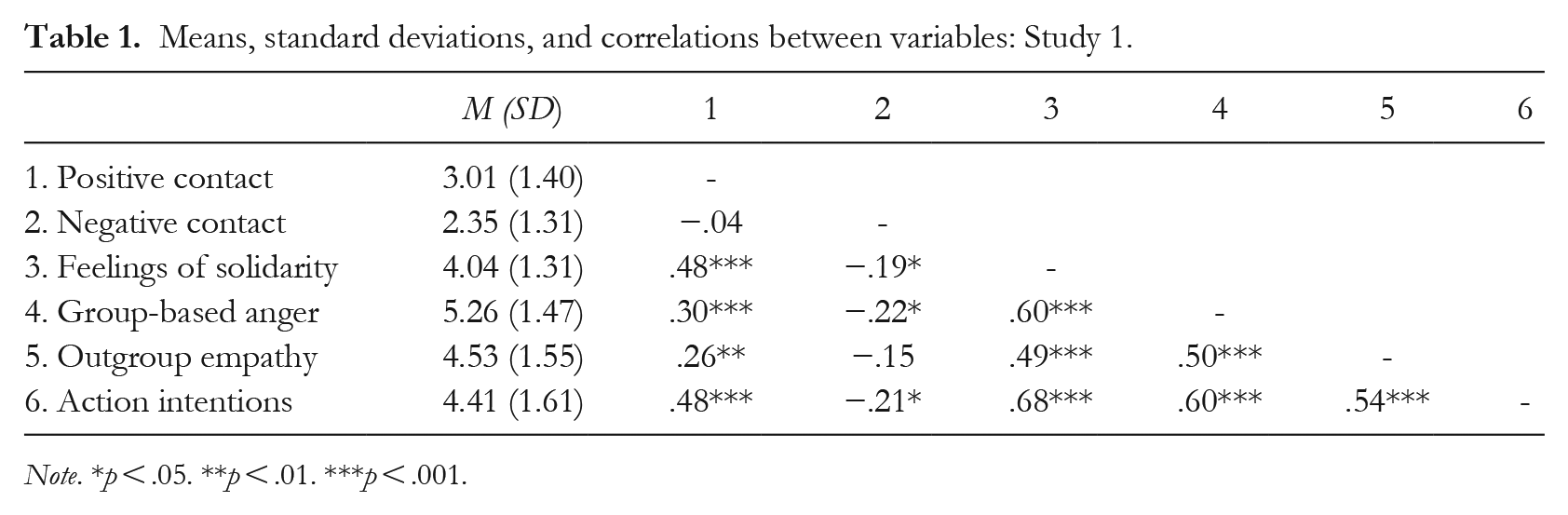
Note. *p < .05. **p < .01. ***p < .001.
We tested the hypothesized model using structural equation modelling (SEM) with observed scores in Mplus Version 8 (Muthén & Muthén, 1998–2017). We tested the model with observed scores because the current sample size is not adequate to use latent scores (Byrne, 2012; Kyriazos, 2018). 3 We included all paths from positive and negative contact to the mediators and action intentions, and from the mediators to action intentions for the disadvantaged. The model was fully saturated, resulting in a perfect model fit. Full information maximum likelihood estimation (FIML) was used to deal with missing values.
As expected (see Figure 1), positive contact was positively associated with feelings of solidarity (β = .47, 95% CI [0.33, 0.60]), outgroup empathy (β = .24, 95% CI [0.08, 0.40]), and group-based anger (β = .28, 95% CI [0.12, 0.43]). Conversely, negative contact was negatively related to group-based anger (β = −.21, 95% CI [−0.37, −0.05]) and feelings of solidarity (β = −.18, 95% CI [−0.33, −0.04]), but was not significantly related to outgroup empathy (β = −.15, 95% CI [−0.31, 0.02]).
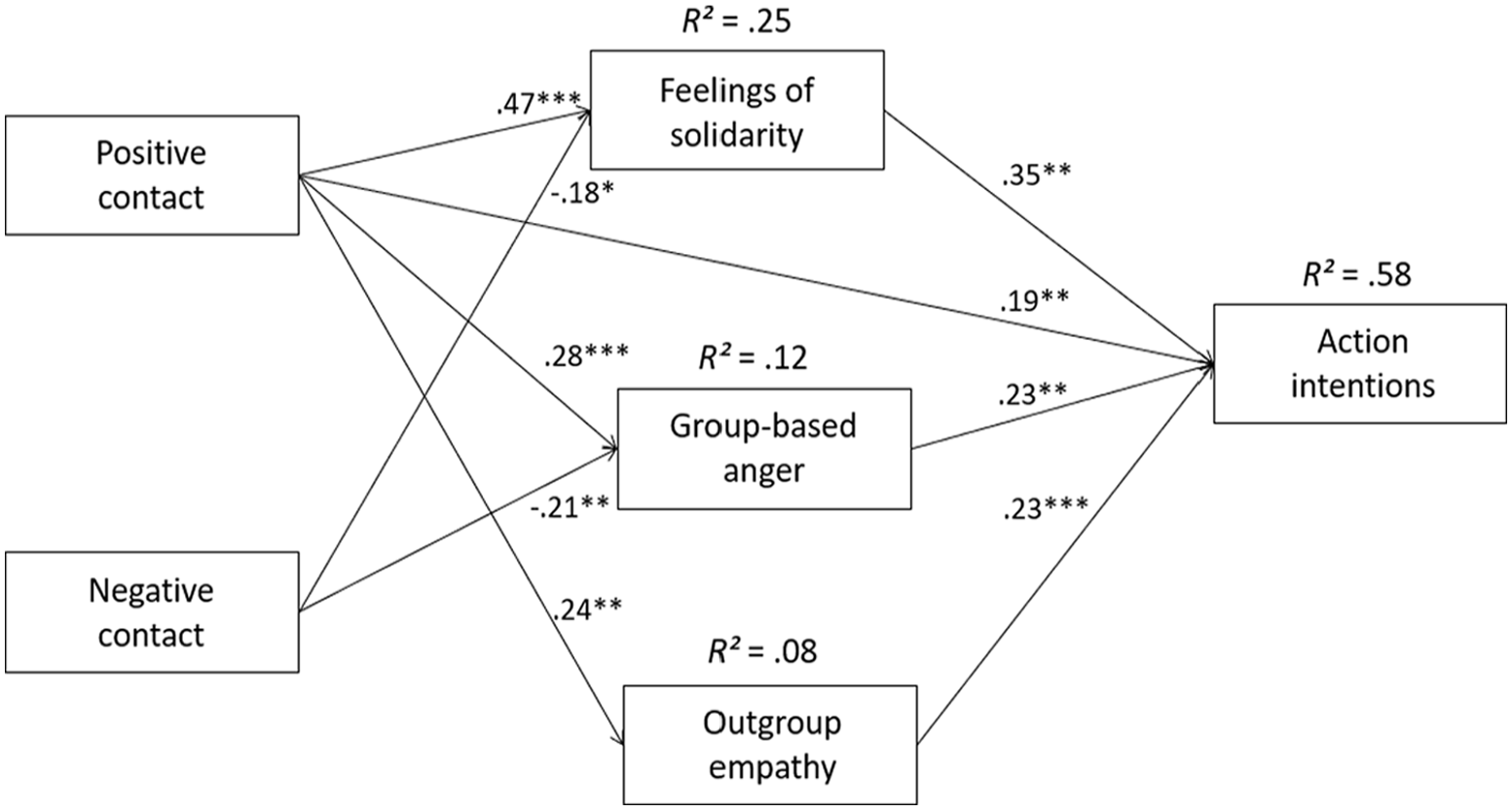
Results (standardized coefficients) of Study 1 showing the associations of positive and negative contact with affective processes, feelings of solidarity, and action intentions for the disadvantaged group.
Feelings of solidarity (β = .35, 95% CI [0.20, 0.51]), group-based anger (β = .23, 95% CI [0.08, 0.37]), and outgroup empathy (β = .19, 95% CI [0.06, 0.33]), in turn, significantly predicted action intentions. Furthermore, positive contact also showed a significant direct positive association with action intentions (β = .19, 95% CI [0.06, 0.31]), while the direct path from negative contact to action intentions was not significant (β = −.05, 95% CI [−0.17, 0.06]).
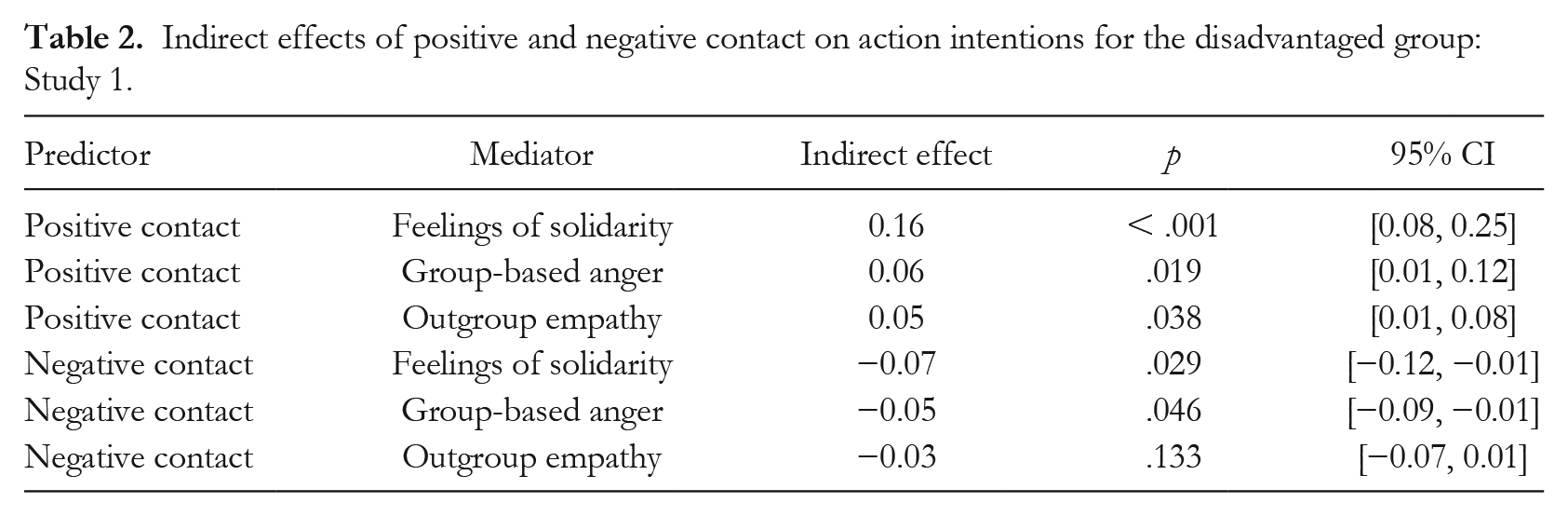
Effect decomposition analyses (Table 2) revealed that a significant portion of the association of positive and negative contact with action intentions was explained by the mediators, with total indirect effects of β = .46, SE = 0.07, 95% CI [0.33, 0.59]) and β = −.20, SE = 0.07, 95% CI [−0.34, −0.05], for positive and negative contact, respectively. Positive contact was indirectly positively associated with more action intentions through higher feelings of solidarity, group-based anger, and outgroup empathy. Negative contact showed specific indirect associations with lower action intentions via lower feelings of solidarity and group-based anger.
Indirect effects of positive and negative contact on action intentions for the disadvantaged group: Study 1.
Discussion
This study showed that positive and negative contact were significantly associated with action intentions for the disadvantaged. Specifically, positive contact was significantly indirectly associated with higher action intentions through higher feelings of solidarity, group-based anger, and outgroup empathy. Negative contact showed specific indirect associations with lower action intentions via lower feelings of solidarity and group-based anger. These findings provide evidence for the differential associations of positive and negative contact with action intentions, and the simultaneous role of both affective and solidarity processes accounting for these associations.
Study 2
In Study 2, we tested our hypotheses in a different intergroup context, where we focused on Thai citizens’ contact with, and support of, Rohingya people. As a Muslim minority in a Buddhist majority country, Rohingya people have faced social, economic, and political persecution; have been denied citizenship for decades; and have experienced episodes of violent oppression by the armed forces of Burma (Myanmar) for decades. Therefore, many fled to Thailand and other neighboring countries (McGann, 2013). Rohingya people are now the largest migrant group in Thailand. Many have settled in camps, which have often become sources of fierce tensions with the Thai (Buddhist) majority.
Method
Participants and procedure
Three hundred and five non-Muslim Thai adults (220 women, 66 men, two other, 17 did not state; Mage = 41.26, SDage = 10.12) were recruited through social media in 2017.
Measures
The survey was translated from English to Thai by a bilingual research assistant. Two other bilingual individuals verified and suggested changes to improve the translations. Similar measures as in Study 1 were used for most constructs, but the target group was “Rohingya Muslims in Thailand,” and fewer items were used (see supplemental material). Positive contact (α = .86), negative contact (α = .81), feelings of solidarity (α = .89), group-based anger (α = .81), and outgroup empathy (α = .64) were each measured with two items.
The items measuring action intentions were replaced by items that were better suited to the Thai context because many types of action (e.g., demonstrations) are repressed harshly. Hence, we asked respondents about “softer” types of action intentions than in Study 1. We asked how likely it was that respondents would engage in each of the following five actions in the future (1 = very unlikely, 7 = very likely; α = .90): “Join talks addressing the mistreatment of Rohingya Muslims in Thailand,” “Support an organization protecting the rights of Rohingya Muslims in Thailand,” “Set up a monthly donation supporting an organization seeking to improve the rights of Rohingya Muslims in Thailand,” “Participate in raising awareness online (e.g., sharing articles, engaging in discussions on social media platforms) about injustices Rohingya Muslims face in Thailand,” and “Ask your close friends to sign an online petition, calling for authorities to improve the welfare of Rohingya Muslims.”
Results
Zero-order correlations and descriptive statistics are shown in Table 3. Replicating Study 1, positive contact, feelings of solidarity, outgroup empathy, and group-based anger were positively correlated with action intentions. Negative contact, however, was not significantly correlated with action intentions. 4
Means, standard deviations, and correlations between variables: Study 2.
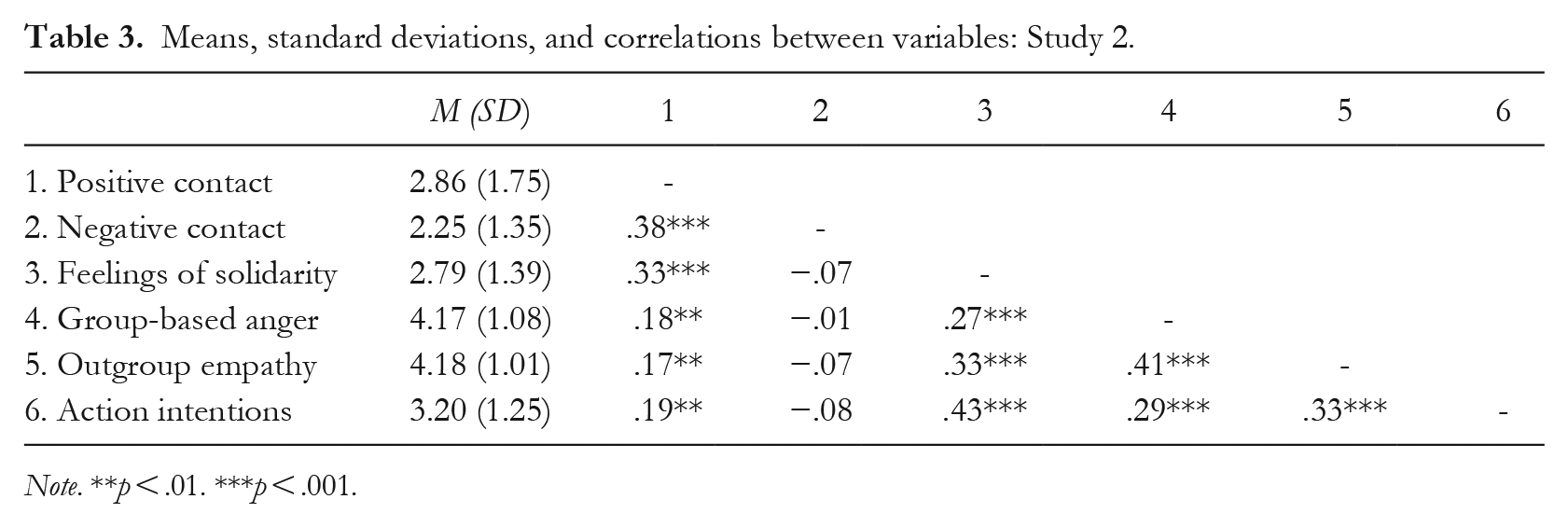
Note. **p < .01. ***p < .001.
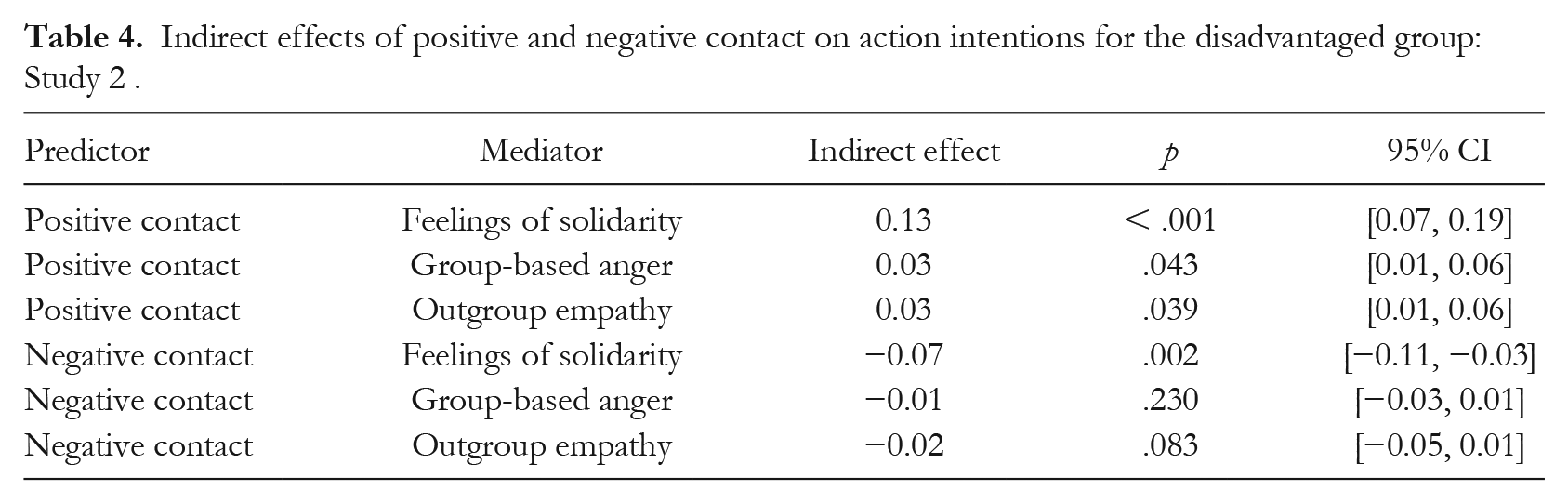
Similar to Study 1, we tested the model with observed scores rather than latent scores because our sample size was smaller than the required minimum sample size for testing a latent model. 5 We followed the same statistical procedures as in Study 1 to test the hypothesized model. As expected (Figure 2), positive contact was positively associated with feelings of solidarity (β = .41, 95% CI [0.31, 0.52]), outgroup empathy (β = .23, 95% CI [0.12, 0.35]), and group-based anger (β = .21, 95% CI [0.29, 0.33]), while negative contact was negatively associated with feelings of solidarity (β = −.22, 95% CI [−0.33, −0.11]) and outgroup empathy (β = −.15, 95% CI [−0.27, −0.03]), but not significantly associated with group-based anger (β = −.08, 95% CI [−0.21, 0.04]). Furthermore, the three mediators—feelings of solidarity (β = .32, 95% CI [0.20, 0.43]), outgroup empathy (β = .14, 95% CI [0.03 0.26]), and group-based anger (β = .14, 95% CI [0.03, 0.26])—were positively associated with action intentions, whereas the direct associations of positive contact (β = .08, 95% CI [−0.04, 0.20]) and negative contact (β = −.08, 95% CI [−0.20, 0.03]) with action intentions were not significant. Importantly, however, the association between positive contact and action intentions was fully mediated by feelings of solidarity, outgroup empathy, and group-based anger. Although negative contact did not have a significant zero-order correlation with action intentions, in the model test, negative contact had a significant total effect on action intentions, fully mediated by feelings of solidarity (Table 4).
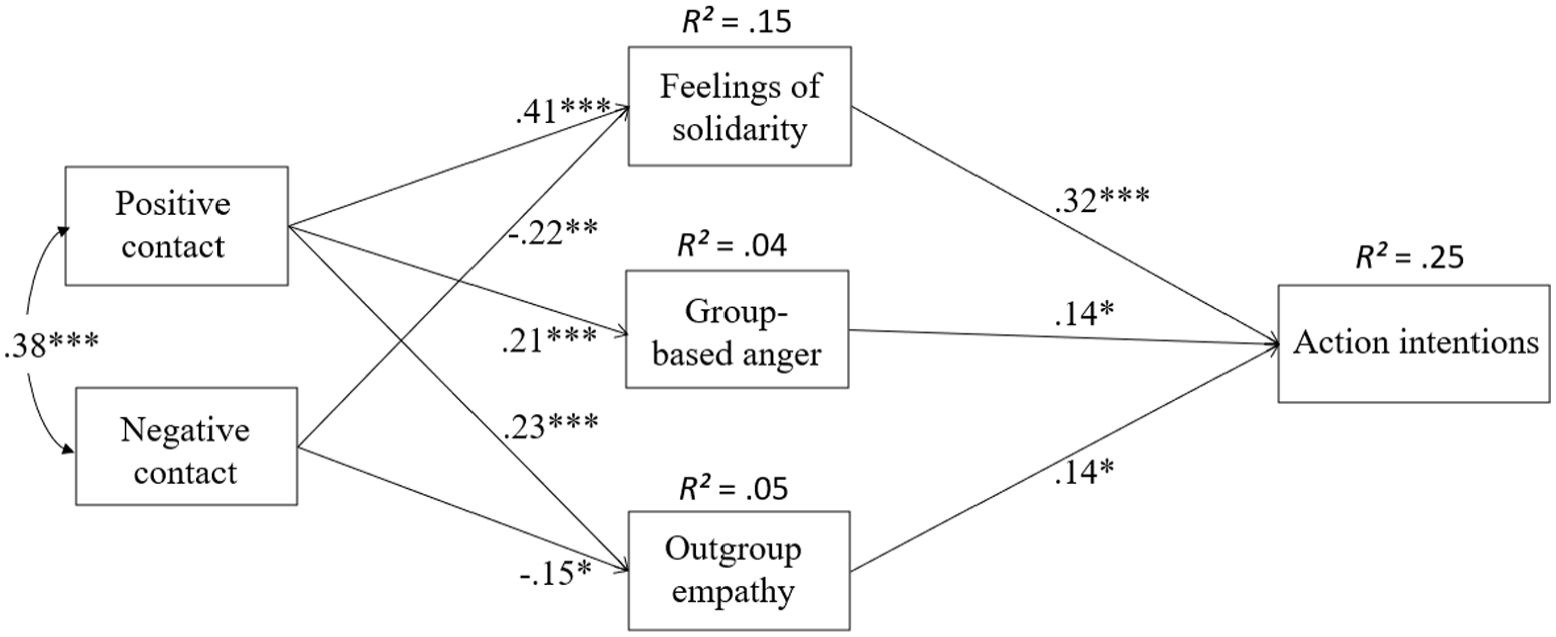
Results (standardized coefficients) of Study 2 showing the associations of positive and negative contact with affective processes, feelings of solidarity, and action intentions for the disadvantaged group.
Indirect effects of positive and negative contact on action intentions for the disadvantaged group: Study 2 .
Discussion
Consistent with Study 1, respondents who reported more positive contact with the disadvantaged outgroup felt more solidarity and outgroup empathy toward them, and felt angrier about the mistreatment and prejudice the outgroup experienced from ingroup members, which in turn was related to more action intentions for the disadvantaged group. Furthermore, the model showed that respondents who reported more negative contact with the disadvantaged outgroup felt less solidarity with them, which was further associated with decreased action intentions.
Study 3
Study 3 tested our hypotheses in yet a different context. Turkey accepted around 2.76 million Syrian immigrants (approximately 3.5% of Turkey’s population at the time the study was conducted, in 2016; UNHCR, 2020). More than 90% of them lived outside of the camps and, therefore, there were many opportunities for local citizens to interact with the Syrian population in urban and rural areas in both pleasant and unpleasant ways.
Given the marked differences in sociopolitical and intergroup contexts between Studies 1 and 2, we used different ways to measure action intentions for disadvantaged groups. Individuals can participate in political actions such as demonstrations (i.e., Study 1) or/and, instead of protesting, they may help disadvantaged groups by donating money or goods to disadvantaged group members or to organizations that defend the rights of disadvantaged groups (i.e., Study 2). However, as highlighted by Hässler et al. (2020), different types of action intentions may show differential relations with contact variables and the psychological processes that underpin them (e.g., Hayward et al., 2017; Selvanathan et al., 2017). Therefore, in Study 3, we took the opportunity to distinguish explicitly between different action intentions to examine whether and how contact is differently related to intentions (a) to join political action in support of the disadvantaged group, (b) to donate money, food, or clothes to the disadvantaged group, and (c) to allocate money to a disadvantaged outgroup member relative to a disadvantaged ingroup member.
Method
Participants
During the summer of 2016, Turkish respondents completed either an online (advertised via social media) or a paper-and-pencil (recruited in public places) survey for a prize draw of 200 TRY (Turkish lira).
Of the 605 individuals that started the survey, 80 failed to complete one or more key variables, leaving a final sample of 525 respondents (252 men, 247 women, 26 did not state their gender; Mage = 34.56, SDage = 13.28; 412 online, 113 through paper-and-pencil). 6
Measures
All measures were in Turkish, translated from English. Translations were checked by two bilingual researchers and back-translated to English to evaluate whether the translations were accurate. Positive contact (α = .92), negative contact (α = .82), and feelings of solidarity (α = .92) were measured with three items each from the scales used in Study 1, with the only difference that we specifically referred to “Syrian immigrants.”
Outgroup empathy was measured using the two items from Study 1 and one additional item: “I often feel empathy with Syrian immigrants” (α = .90).
Group-based anger was measured using four items asking participants to state to what extent they felt angry, resentful, furious, and displeased about the negative treatment and disadvantaged situation of Syrian immigrants (1 = not at all, 7 = very much so; α = .82; Mackie et al., 2000; van Zomeren et al., 2004).
Intentions to engage in political action in support of the disadvantaged were measured with two items, asking participants how likely it was they would “Participate in demonstrations showing support for Syrian immigrants” and “Join a group of activists defending the rights of Syrian immigrants” (α = .81; 1 = very unlikely, 7 = very likely).
Donation intentions were measured with three items, asking participants how likely it was they would donate (a) money, (b) food, and (c) clothes to Syrian immigrants (α = .93; 1 = very unlikely, 7 = very likely).
Money distribution intention was measured with the question, “If you had 100 Turkish liras, how would you distribute this sum between a homeless Syrian immigrant and a homeless Turkish citizen?” (1 = 100 for Turkish/0 for Syrian, 11 = 0 for Turkish/100 for Syrian). Higher scores on these measures of political action, donation, and money distribution intentions reflected a stronger willingness to engage in action for the disadvantaged.
Results and Discussion
Descriptive statistics and zero-order correlations are shown in Table 5. 7 Positive contact was positively, and negative contact was negatively, correlated with political action, donation, and money distribution intentions. Feelings of solidarity, group-based anger, and outgroup empathy were positively correlated with political action, donation and money distribution intentions. Feelings of solidarity and outgroup empathy were also positively correlated with donation intentions, while group-based anger was not correlated with donation intentions. As in Study 1, positive and negative contact were not significantly related to each other. 8
Means, standard deviations, and correlations between variables: Study 3.
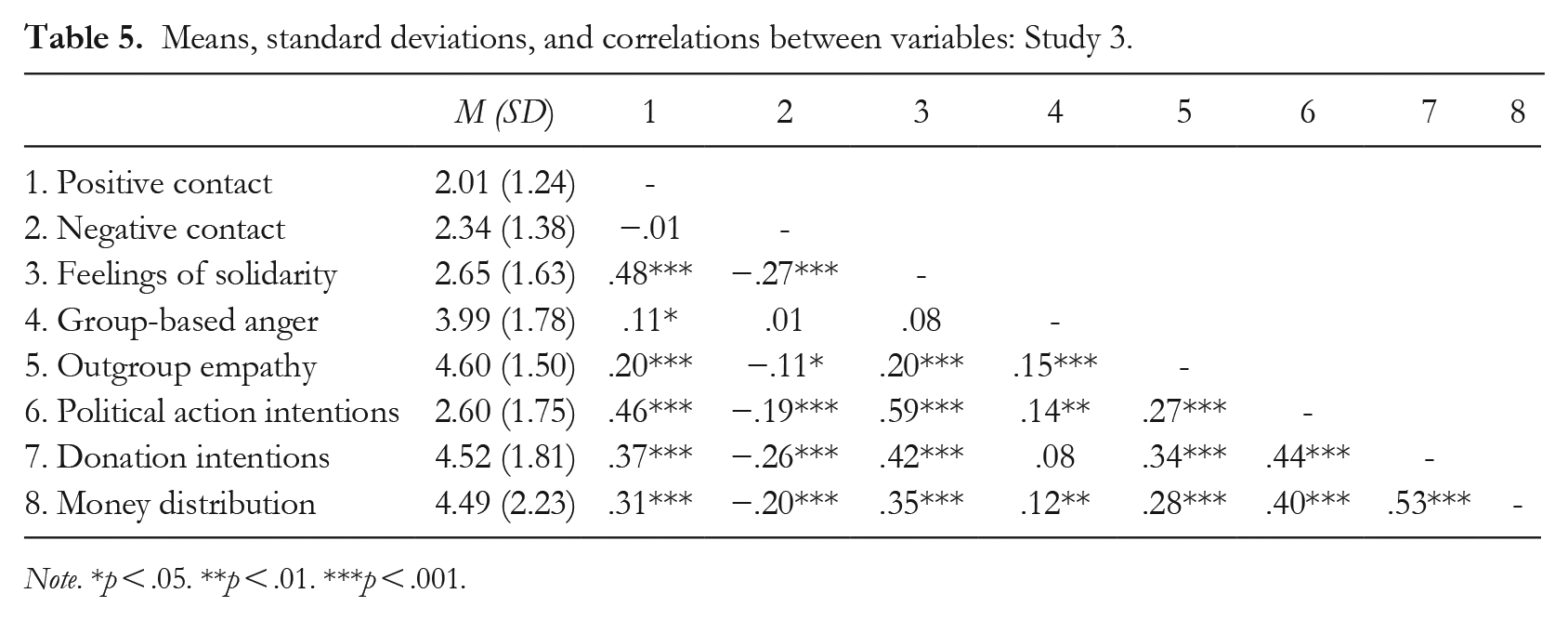
Note. *p < .05. **p < .01. ***p < .001.
A minimum of 180 participants is required to detect small effect sizes with .80 statistical power for a latent model with seven latent and 22 observed scores. Therefore, the current sample size was appropriate (Soper, 2022). Given the benefits of using latent variables, we used the observed items as indicators for latent constructs in order to test our model with latent variables (Byrne, 2012; Wolf et al., 2013). The model fit of the measurement model was good, χ²(182) = 297.97, p < .001; RMSEA = .03; SRMR = .04; CFI = .99. The model included all paths from positive and negative contact to the mediating variables as well as to political action, donation, and money distribution intentions for the disadvantaged, and from the mediators to political action, donation, and money distribution intentions for the disadvantaged.
As in Studies 1 and 2, positive contact was positively and significantly associated with feelings of solidarity (β = .51, 95% CI [0.45, 0.58]), outgroup empathy (β = .22, 95% CI [0.14, 0.31]), and group-based anger (β = .12, 95% CI [0.02, 0.21]). Negative contact was significantly and negatively associated with feelings of solidarity (β = −.28, 95% CI [−0.36, −0.20]) and outgroup empathy (β = −.10, 95% CI [−0.19, −0.01]), but not with group-based anger. Furthermore, in the model test, feelings of solidarity (β = .48, 95% CI [0.39, 0.56]) and outgroup empathy (β = .13, 95% CI [0.06, 0.21]), but not group-based anger (β = .07, 95% CI [−0.01, 0.14]), were significantly associated with political action intentions (Figure 3).
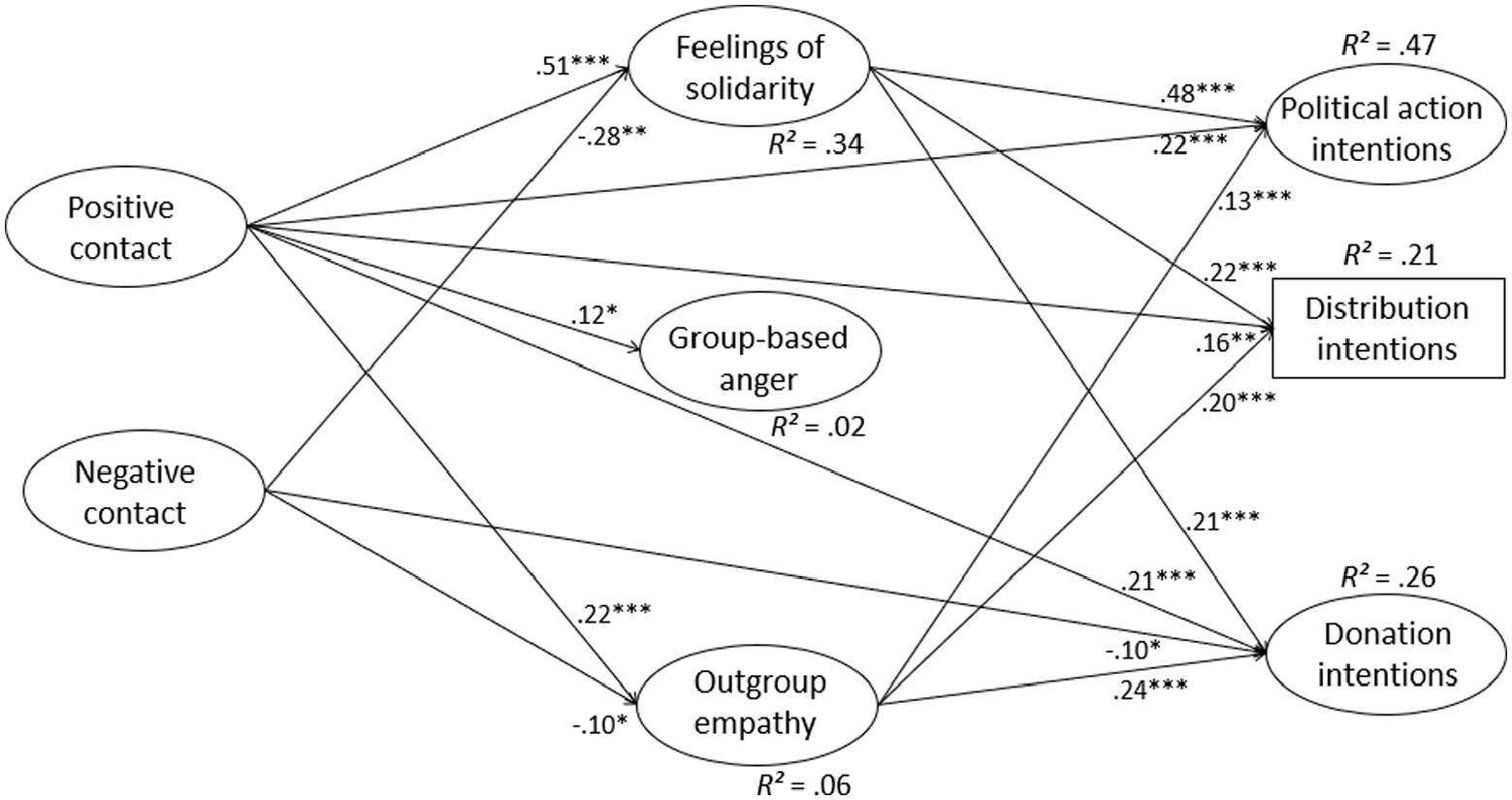
Results (standardized coefficients) of Study 3 showing the associations of positive and negative contact with affective processes, feelings of solidarity, and dependent measures.
Positive contact had a significant direct positive association with political action intentions (β = .22, 95% CI [0.13, 0.30]), while negative contact did not. Estimating the indirect associations between positive contact and political action intentions revealed a total indirect effect (β = .28, 95% CI [0.22, 0.34]), which was mainly the result of the specific indirect association through feelings of solidarity (β = .25, 95% CI [0.19, 0.30]) and outgroup empathy (β = .03, 95% CI [0.01, 0.05]; Table 6). Furthermore, there was a significant indirect effect of negative contact on political action intentions (β = −.14, 95% CI [−0.19, −0.10]) through feelings solidarity (β = −.13, 95% CI [−0.18, −0.09]). Inconsistent with Studies 1 and 2, group-based anger did not mediate the associations between contact variables and political action intentions. It is possible that this inconsistency arose because we used a different measure in Study 3, in which the ingroup was not explicitly mentioned as the target of anger.
Indirect effects of positive and negative contact on dependent measures: Study 3.
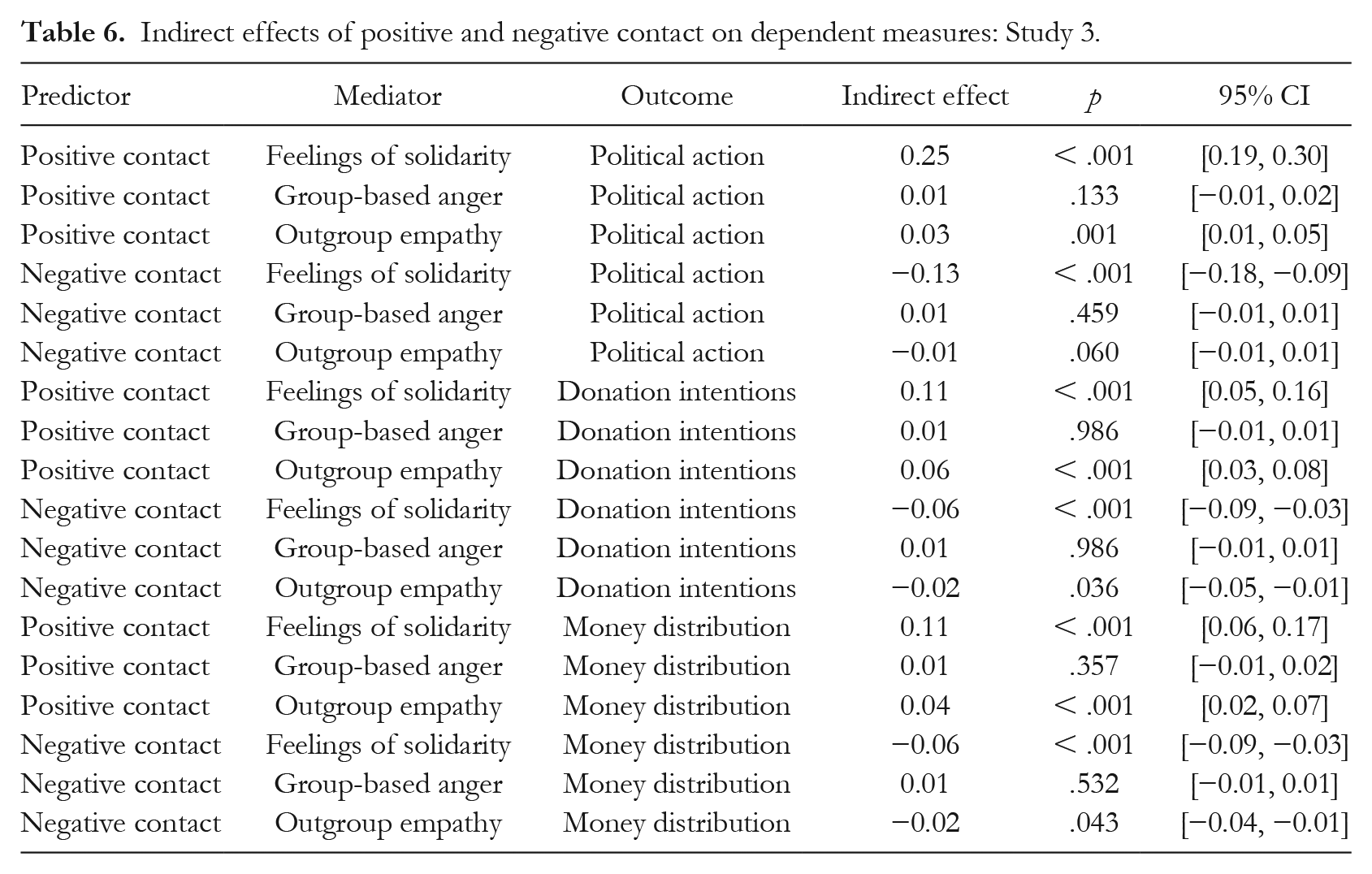
For money distribution intentions, positive contact was positively and directly associated with a higher money distribution to immigrants (β = .16, 95% CI [0.06, 0.26]), whereas negative contact was not directly and significantly associated with money distribution. Feelings of solidarity (β = .11, 95% CI [0.06, 0.17]) and outgroup empathy (β = .04, 95% CI [0.02, 0.07]) partially explained the association between positive contact and money distribution intentions, while feelings of solidarity (β = −.06, 95% CI [−0.09, −0.03]) and outgroup empathy (β = −.02, 95% CI [−0.04, −0.01]) fully explained the association between negative contact and money distribution intentions (Table 6). Even though group-based anger had a significant positive zero-order correlation with money distribution, it was not associated with money distribution in the model.
Positive contact was also positively and directly associated with higher donation intentions (β = .21, 95% CI [0.11, 0.31]), whereas negative contact was negatively and directly associated with donation intentions (β = −.10, 95% CI [−0.19, −0.02]). The associations of both positive and negative contact with donation intentions were partially explained by feelings of solidarity (β = .11, 95% CI [0.05, 0.16] and β = −.06, 95% CI [−0.09, −0.03]) and outgroup empathy (β = .06, 95% CI [0.03, 0.08] and β = −.02, 95% CI [−0.05, −0.01]). Group-based anger was not associated with donation intentions and, thus, did not mediate the associations between the contact variables and donation intentions (Table 6).
Discussion
Study 3 showed that contact was related not only to increased intentions to engage in political action but also increased intentions to donate and allocate money to the disadvantaged. These associations were also explained by feelings of solidarity and outgroup empathy but not by group-based anger. Study 3 also replicated most of the findings from Studies 1 and 2 with a larger sample in a different intergroup context.
Study 4
Social psychological research on intentions to engage in action in support of the disadvantaged has relied predominantly on cross-sectional designs, and few studies have investigated the associations between intergroup contact and collective action intentions over time (e.g., Reimer et al., 2017). Although previous research examined the mediating role of identification, outgroup empathy, and group-based anger in cross-sectional studies (Reimer et al., 2017, Study 1; Selvanathan et al., 2017), longitudinal examinations of such processes are scarce.
The observed cross-sectional associations in Studies 1 to 3 can be at least partly explained by the possibility that engaging (or the intention to engage) in more action can influence the process variables (i.e., leading to stronger feelings of solidarity and more outgroup empathy), but also likely increases positive contact experiences. Although it should be acknowledged that experimental studies may provide strong bases for causal inferences, they also risk missing crucial contextual factors or overestimating the potential for real world effects. Moreover, compared to cross-sectional designs, longitudinal studies have the advantage of testing the effects of variables over time (see Cole & Maxwell, 2003), and can give some indication of the direction of the relationships and of possible bidirectionality. Therefore, in Study 4, we conducted a longitudinal panel study with three waves of data collection to test the direct and indirect associations of positive and negative contact with action intentions through the proposed mediators.
In this study, we tested our hypotheses in a different context by focusing on British nationals’ action intentions in support of immigrants. The UK has a high number of immigrants, with 14% of the whole population having been born abroad, and a steady increase of foreign-born residents between 2015 and 2016 (Office for National Statistics, 2018). The pre-Brexit climate made the UK context a particularly interesting case to study intergroup relations. Indeed, following the 2016 Brexit referendum, there was a 57% increase in reported police incidents of hate crimes against immigrants (Yeung, 2016). However, there was also a solidarity movement to raise awareness about hate incidents, and the government was increasingly interested in finding ways to promote social integration between immigrant populations and the majority (Ministry of Housing, Communities, & Local Government [MHCLG], 2018). An important part of the approach is its advocacy of intergroup contact as a vehicle for promoting better intergroup relations. Furthermore, contributing to generalizability, the context of immigrants in the UK is a different one from those in Studies 1 to 3, and one that is highly relevant for testing our hypotheses.
Method
Procedure and participants
Respondents were recruited online using the crowdsourcing platform Prolific Academic. At Time 1 (March 2016), adult British citizens living in the UK were invited to participate in a study about attitudes toward immigrants and several social issues, and were invited again on two follow-up occasions with an interval of approximately 3 to 4 months between each response time: between June and July 2016 (Time 2) and December 2016 (Time 3). Only White participants, as indicated in the standard Prolific Academic prescreening questions, were invited to participate in the study. At Time 1, 603 respondents participated in the study (228 men, 370 women, five missing; Mage = 34.10, SDage = 11.43), with 70.72% also participating at Time 2 and 55.32% at Time 3. 9
Measures
Positive and negative contact were measured similarly to Study 1, each with three items asking, respectively, how often participants had (a) pleasant, (b) positive, and (c) friendly contact experiences with immigrants, and how often they had (a) unpleasant, (b) hostile, and (c) negative contact experiences with immigrants (1 = never, 7 = very often).
The scales measuring feelings of solidarity and group-based anger were the same as those used in Study 1. Outgroup empathy was measured with three items, including the two items of Study 1 and one additional item: “I often feel empathy with the immigrant community” (1 = strongly disagree, 7 = strongly agree).
Action intentions for the disadvantaged were measured with two items asking participants how likely it was that they will engage in the following actions in the future (1 = very unlikely, 7 = very likely): “Participate in demonstrations showing support for immigrants” and “Join a group of activists defending the rights of immigrants.” All measures showed adequate internal reliability (all α > .76) on all measurement occasions. 10
Results
Preliminary data analyses
Two multivariate analyses of variance showed that the dropout of participants after Times 1 and 2 had little meaningful effects on subsequent analyses relevant to subsequent analyses. 11 Missing values were dealt with using full information maximum likelihood procedures in Mplus (Version 8; Muthén & Muthén, 1998–2017), retaining the full sample for the longitudinal analyses. 12 See online Appendix B for longitudinal measurement invariance tests and comparisons.
Given that a minimum of 180 participants was required to detect small effect sizes for a model structure with .80 statistical power with seven latent and 22 observed variables (Soper, 2022), 603 participants was an adequate sample size for testing the structural model using SEM.
Overview of longitudinal models
To test the longitudinal models, we used SEM with latent constructs in Mplus using robust maximum likelihood estimation, with the items serving as indicators for the latent constructs. The measurement models for each time point showed a good model fit: Time 1, χ²(89) = 184.79, p < .001, CFI = .96, RMSEA = .04 95% CI [0.03, 0.05], SRMR = .03; Time 2, χ²(89) = 129.99, p < .001, CFI = .99, RMSEA = .03 95% CI [0.02, 0.04], SRMR = .03; Time 3, χ²(89) = 155.14, p < .001, CFI = .98, RMSEA = .05 95% CI [0.03, 0.06], SRMR = .03.
We first tested the longitudinal associations between positive and negative contact and action intentions (Model 1) before testing a model with the three mediators (Model 2). Both models included latent factors of the variables from all three time points, and tested all paths from Time 1 to Time 2 variables and from Time 2 to Time 3 variables. Within each wave, the variables were allowed to be correlated (Time 1) or the residuals were allowed to covary (Times 2 and 3). As such, we controlled for the stability of all variables over time (i.e., auto-regressive effects) and for the cross-sectional associations within each time. Moreover, this approach allowed us to test simultaneously the longitudinal paths from the contact variables to the mediators and action intentions, and the longitudinal paths from action intentions to the mediators and contact variables. Longitudinal mediation would be demonstrated if intergroup contact at Time 1 longitudinally predicted action intentions at Time 3, through one or more mediators at Time 2 (see also Swart et al., 2011).
Longitudinal model results
The first model (Model 1, Figure 4), with only positive contact, negative contact, and action intentions, showed that positive contact longitudinally predicted action intentions (B = 0.10, 95% CI [0.04, 0.15]) and, interestingly, also the reverse path was significant (B = 0.07, 95% CI [0.02, 0.12]). In other words, those who had more positive contact showed stronger action intentions several months later. However, those with stronger action intentions also indicated that they had more positive contact several months later, indicating a bidirectional relation between positive contact and action intentions. Furthermore, negative contact did not predict any of the variables and was not predicted by any of the other variables. The model fit of the measurement model was good, χ²(223) = 440.59, p < .001; RMSEA = .04 95% CI [0.04, 0.05], SRMR = .05; CFI = .98.
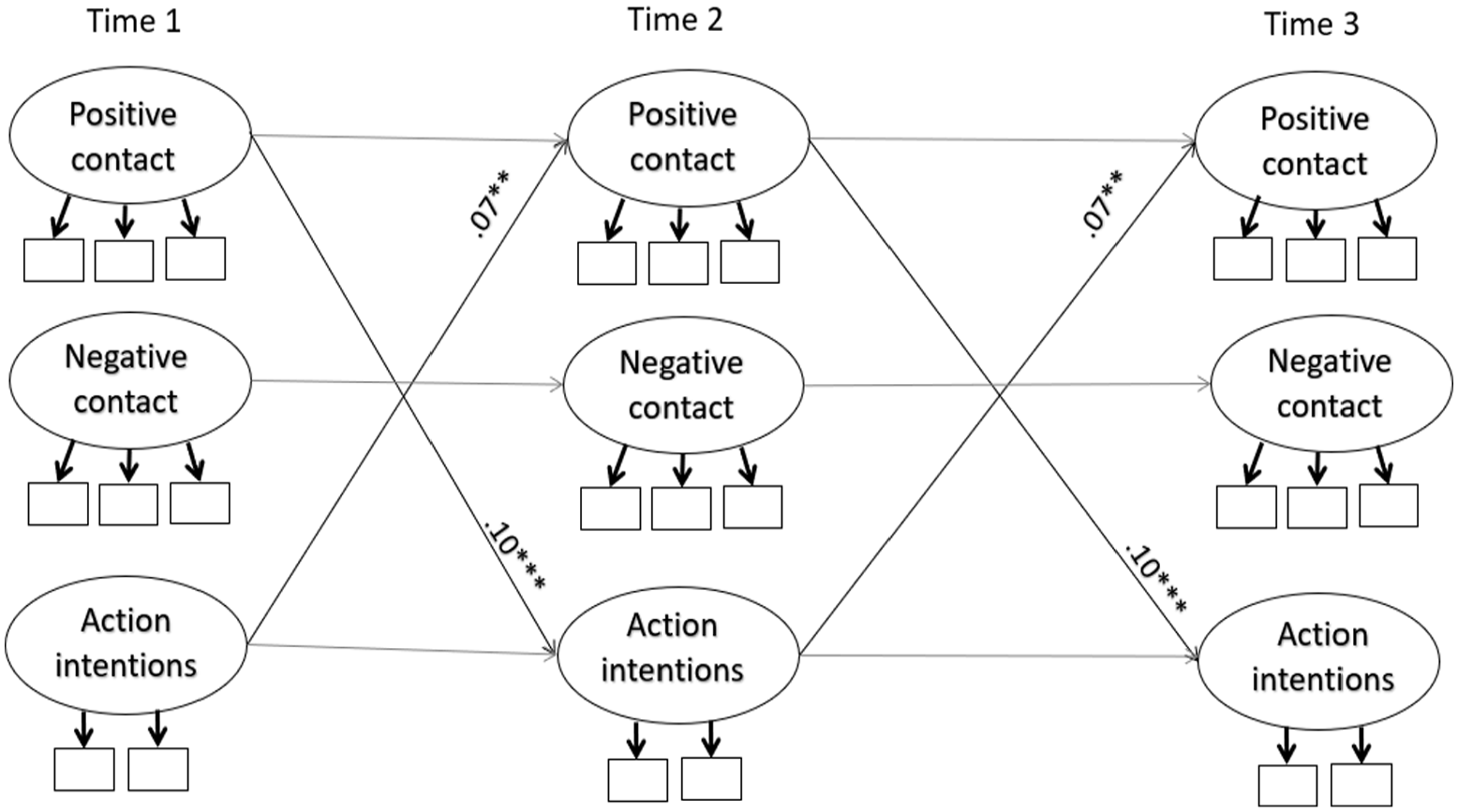
Longitudinal model (Model 1) testing the associations between positive and negative contact and action intentions for the disadvantaged group: Study 4.
Next, we tested a longitudinal model (Model 2, Figure 5) including positive and negative contact, three mediators (feelings of solidarity, group-based anger, and outgroup empathy), and action intentions, χ²(976) = 1471.50, p < .001; RMSEA = .03 95% CI [0.03, 0.03]; SRMR = .05; CFI = .97. The results showed that positive contact was longitudinally positively associated with feelings of solidarity, outgroup empathy, and group-based anger. However, negative contact did not show any significant longitudinal associations. Regarding the mediators, feelings of solidarity and group-based anger, but not outgroup empathy, were significantly associated with action intentions. Moreover, testing the indirect associations, positive contact at Time 1 was significantly indirectly related to action intentions at Time 3 via feelings of solidarity at Time 2, but the indirect association via group-based anger at Time 2 was not significant (B = 0.01, 95% CI [−0.01, 0.02]).
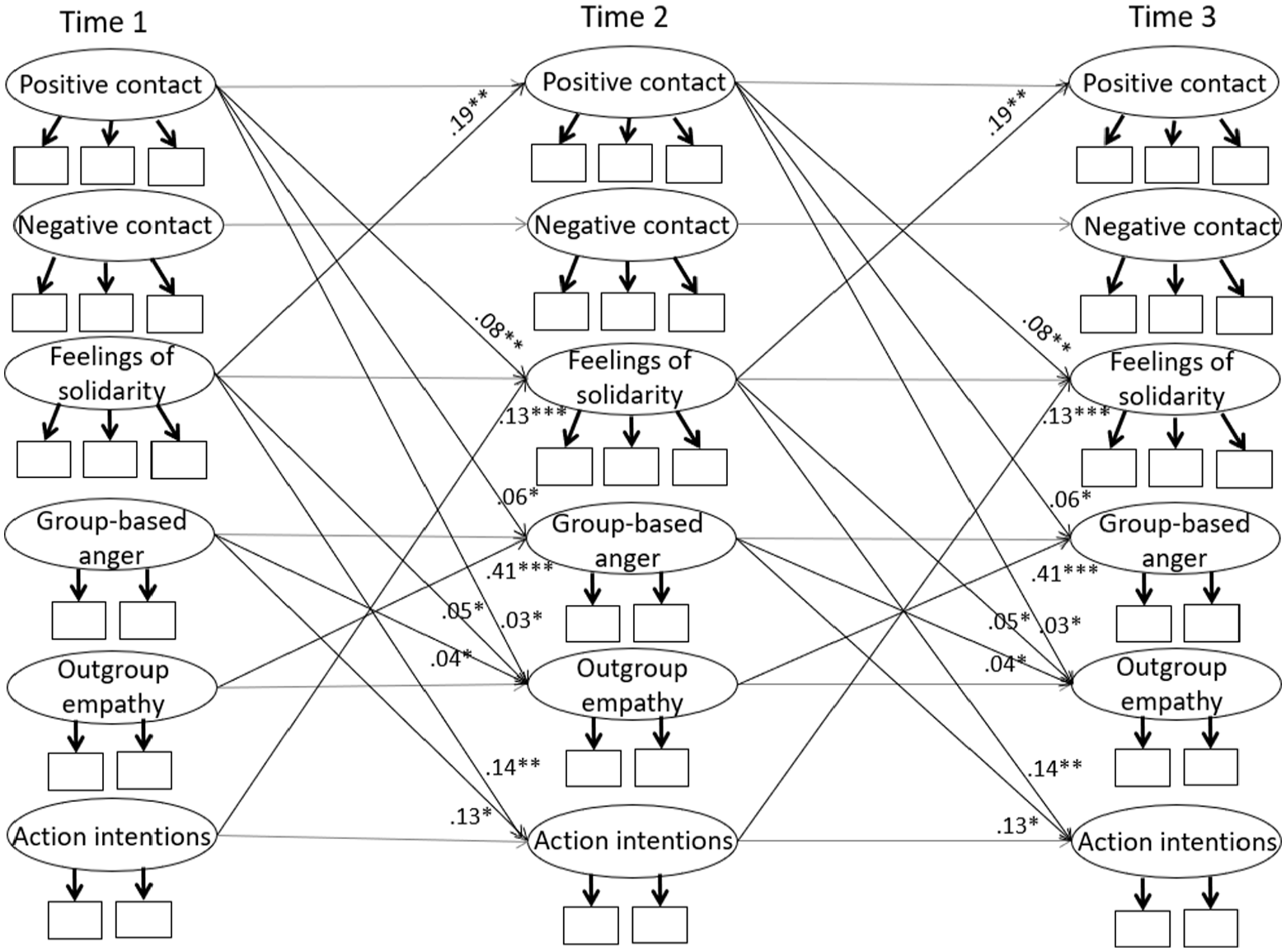
Longitudinal model (Model 2) testing the associations between positive and negative contact, feelings of solidarity, outgroup empathy, group-based anger, and action intentions for the disadvantaged group: Study 4.
Furthermore, some additional bidirectional associations were found. Specifically, outgroup empathy was related to more group-based anger over time, and vice versa. Even though outgroup empathy did not show a longitudinal association with action intentions over time, increased outgroup empathy may be indirectly related to action intentions through increased group-based anger. Indeed, the indirect association between outgroup empathy at Time 1 and action intentions at Time 3 was mediated by group-based anger at Time 2 (B = 0.05, 95% CI [0.01, 0.10]). Also, the association between positive contact at Time 1 and group-based anger at Time 3 was mediated by outgroup empathy at Time 2 (B = 0.01, 95% CI [0.01, 0.03]).
There were also bidirectional longitudinal associations between positive contact and feelings of solidarity, and between feelings of solidarity and action intentions. Specifically, previous positive contact experiences were related to stronger feelings of solidarity, and stronger feelings of solidarity were also related to more positive contact over time. Furthermore, feelings of solidarity were related to more action intentions, and previous action intentions were related to stronger feelings of solidarity over time.
Discussion
This three-wave longitudinal survey confirms the hypothesized role of positive contact in predicting more action intentions in support of the disadvantaged. However, the reverse path was also significant in the simpler model (i.e., without mediators): more action intentions predicted more positive contact over time. This finding is important because it suggests that action intentions do not necessarily have to be the end product. In other words, once people engage in action for the disadvantaged, they might be more willing to look for positive contact opportunities with disadvantaged outgroup members in the future.
Negative contact, on the other hand, did not show a significant longitudinal association with action intentions. These results complement recent research that found positive, but not negative, contact was linked to support for collective action for the disadvantaged in the context of the LGBT (Reimer et al., 2017) and Black Lives Matter movements (see also Pettigrew et al., 2011).
One of the most important contributions of this study was the opportunity to test for longitudinal mediation. Feelings of solidarity emerged as a key mediating variable. Furthermore, even though we could not establish a significant mediation effect for group-based anger, positive contact predicted group-based anger, and group-based anger predicted action intentions over time. Moreover, we found a significant indirect longitudinal association between outgroup empathy (Time 1) and action intentions (Time 3) via group-based anger (Time 2), raising the possibility of a sequential mediation effect of contact on action intentions.
General Discussion
The central aim of this research was to test the associations between positive and negative contact and people’s intentions to engage in action in support of disadvantaged groups. Three cross-sectional studies conducted in three different countries (i.e., Greece, Thailand, and Turkey) revealed that positive contact showed a pronounced positive association with action intentions, while the association for negative contact was negative (Studies 1, 2, 3) and less pronounced (Studies 1 and 3). Reinforcing these cross-sectional findings, a three-wave longitudinal study in the UK (Study 4) showed that positive contact was positively associated with more action intentions for the disadvantaged over time. In contrast, negative contact was not longitudinally related to action intentions.
These results are consistent with previous research that demonstrated the associations between positive contact and increased support for solidarity-based collective action with sexual minority groups (Fingerhut, 2011; Reimer et al., 2017), and recent cross-sectional findings from several countries and intergroup contexts showing the positive associations between positive contact and support for social change for ethnic minorities and cis-heterosexuals among advantaged group members (Hässler et al., 2020; Selvanathan et al., 2017). Extending prior research on solidarity with different target outgroups of immigrants in various contexts, we examined how this process happens.
An important aspect of this research was the use of data from four quite different countries, Greece, Turkey, Thailand, and the UK. This allows more confidence that our findings may be generalizable to different cultural contexts and populations with different religious, ethnic, and political features. In particular, across these different intergroup contexts, we consistently found that contact can motivate citizens to engage in action for disadvantaged outgroup members.
Some prior research has contended that the effects of negative contact on prejudice are stronger than those of positive contact (e.g., Barlow et al., 2012; Graf et al., 2014). However, when it comes to support for actions that help the disadvantaged, the present findings reinforce Reimer et al.’s (2017) and Selvanathan et al.’s (2017) conclusion that positive contact may prevail over time (see also Abrams & Eller, 2017; Pettigrew et al., 2011). The divergence in different studies suggests that asymmetrical effects of positive versus negative contact are likely to vary across intergroup contexts and may depend on the type of outcome variables. Of particular relevance are our findings that the correlates for negative contact were weaker and inconsistent across the cross-sectional studies, and that negative contact did not show significant associations with action intentions over time in the longitudinal study. This raises the question of both the relative salience and longevity of negative contact in its impacts on action intentions in support of disadvantaged groups.
By examining the effects of positive and negative contact simultaneously, we were also able to control for the so-called positivity bias in intergroup contact studies (Graf & Paolini, 2017; Pettigrew & Tropp, 2006). Our findings consistently reveal negative contact as having lower strength in its links to action intentions for the disadvantaged.
Affective Processes and Feelings of Solidarity in Action Intentions for Disadvantaged Groups
The second aim of this research was to investigate the possible processes through which contact and action intentions for disadvantaged groups are connected. Overall, those with more positive contact expressed stronger action intentions, which was explained by their stronger feelings of solidarity (Studies 1–4) and outgroup empathy (Studies 1–3) and, to some extent, by group-based anger (Studies 1 and 2).
The importance of feelings of solidarity and, to some extent, group-based anger is in line with research and theorizing on social identity model of collective action (SIMCA) (van Zomeren et al., 2008). Yet, most of this research on collective action focused on the factors that motivate disadvantaged group members to take part in protests to improve their own situation and, therefore, on the role of ingroup identification (including solidarity) and anger toward an advantaged group (van Zomeren et al., 2008; Wright et al., 2002). Some researchers also tested the SIMCA model among advantaged group members in the context of solidarity with the disadvantaged (e.g., Thomas et al., 2020; van Zomeren et al., 2011). Consistent with this work, we showed that part of this framework can be extended to a solidarity perspective while taking intergroup contact into account. Those reporting more positive contact showed increased feelings of solidarity and felt angrier about the injustices toward immigrants. Feelings of solidarity and group-based anger, in turn, were linked to more action intentions (except for Study 3, where group-based anger did not relate to the dependent variables), even when other affective variables were included, such as outgroup empathy.
In line with our expectations and with contact theorizing, outgroup empathy mediated the association between intergroup contact and action intentions in three of our four studies. This finding extends previous work showing that outgroup empathy not only reduces prejudice (Brown & Hewstone, 2005; Pettigrew & Tropp, 2008; Swart et al., 2011) but also can facilitate prosocial behaviors toward outgroups (e.g., Abrams et al., 2015; Eisenberg et al., 2010), including engagement in actions supporting social justice for disadvantaged others (Mallett et al., 2008; Selvanathan et al., 2017).
Nevertheless, the interconnected nature of the mediators, both cross-sectionally and longitudinally, suggests that it may be rather difficult to tease the unique effects apart from each other. As suggested by the exploratory findings in Study 4, contact may have an indirect effect on action intentions through a sequential mediating process by first increasing outgroup empathy followed by group-based anger, which in turn could increase action intentions (see also Selvanathan et al., 2017). Future longitudinal studies using more than three waves of data collection could test such sequential mediation paths.
Effects of Action Intentions for the Disadvantaged on Intergroup Variables
The longitudinal findings also revealed new insight into the reverse paths, from action intentions to the other variables. Action intentions for disadvantaged groups is usually considered the outcome variable (e.g., Saab et al., 2015; van Zomeren et al., 2008), but it can also be conceptualized as a driver of more positive outgroup relations. Action intentions were associated with more feelings of solidarity, and increased feelings of solidarity were associated with stronger action intentions, more positive contact, and higher outgroup empathy over time. Bidirectional associations were also observed between positive contact and feelings of solidarity. This could be a positively reinforcing cycle in which more action intentions on behalf of disadvantaged groups provide opportunities to interact with disadvantaged group members, thus increasing the potential for positive contact, increased feelings of outgroup empathy, and stronger feelings of solidarity. Such positive contact experiences may then lead again to more action intentions for disadvantaged groups.
These bidirectional associations suggest two possibilities. One is that ideological reasons to engage in action in support of the disadvantaged (cf. Abrams & Grant, 2012; Grant et al., 2017) might lead to a deeper consideration of the issue and stimulate efforts to have contact with outgroup members. The other possibility is that both contact and action intentions are affected by an important third variable, such as the influence of social networks on political engagement (Diani, 2000; Passy, 2001). The relational approach to collective action suggests that individuals are more likely to join collective actions when invited by a friend (van Zomeren, 2015). Therefore, social networks likely play a key role in motivating people to participate in action for the disadvantaged, both through knowing that others in someone’s network join a protest and by providing opportunities for positive indirect contact with outgroup members through ingroup friends (Wölfer et al., 2017, 2019). It would be interesting for future research to investigate such double motivating effect of diverse social networks on action for the disadvantaged.
Notwithstanding the wide range of variables considered in the present program of research, it is important to acknowledge that the drivers of actions for the disadvantaged are complex and multifaceted. Several other factors still play a role in the prediction of action intentions, including the moral motivation to protest and promote core values (van Zomeren, 2016; van Zomeren et al., 2011) as well as an identity-based ideology which has the power to drive radical change through political engagement (Abrams & Grant, 2012; Tajfel & Turner, 1986). In the future, examining the effects of social change beliefs and moral motivations on action intentions for disadvantaged groups would be valuable.
Limitations and Future Research
We acknowledge inevitable limitations of the current studies. First, the correlational designs mean we cannot rule out alternative causal mechanisms. Nevertheless, the longitudinal findings supported the hypothesized direction of the relations, increasing confidence in the interpretation of our findings and helping to rule out less plausible causal connections. They also reveal some plausible reverse paths.
As an alternative, experimental studies can establish plausible causality by independently manipulating contact, group-based anger, outgroup empathy, and feelings of solidarity. In practice, however, a huge number of experiments would be required to test all forward and reverse causal possibilities. Furthermore, it might be impractical or unethical to manipulate engagement in collective action directly. Quasi-experimental studies could address this concern and provide more information about the causal effects of contact while also preserving high levels of external validity by focusing on existing intergroup settings (Paluck & Green, 2009). Along similar lines, to be able to establish the causal assumptions underlying the hypothesized mediation model, experimental manipulations of both intergroup contact and the mediator variables are needed. Moreover, cross-sectional mediation analysis is inherently limited in that it can lead to biased estimates even under ideal conditions (Maxwell & Cole, 2007), and cannot rule out that alternative mediators are involved (Fiedler et al., 2018).
Our use of cross-lagged panel models (CLPM) to test the longitudinal associations does not distinguish between-person and within-person variance, which would require testing a random intercept cross-lagged panel model (RI-CLPM; e.g., Berry & Willoughby, 2017; Friehs et al., 2022; Hamaker et al., 2015). A recent large, seven-wave longitudinal study using RI-CLPM did not find that contact predicted increased solidarity with the disadvantaged (Sengupta et al., 2023). However, using CLPM does allow us to address our research question of whether people who have had relatively more positive contact would be more likely to support the disadvantaged group than people who have had relatively less positive contact. RI-CLPM would have addressed a different research question (Orth et al., 2021), namely whether people who had more contact than usual at one point in time would then report higher intentions to support the disadvantaged group than usual at a subsequent time.
We note that using RI-CLPM could be problematic in the study of intergroup contact because levels of intergroup contact tend to be highly stable over time. RI-CLPM captures temporal fluctuations around the individual person’s means, but it is less sensitive to persisting long-term effects (Asendorpf, 2021; Orth et al., 2021). Because we had approximately 3-month intervals between data collection time points, CLPM was deemed appropriate given our research question and the nature of the design, 13 even though the analysis did not allow for testing contact effects on a within-person level (see Friehs et al., 2022; Sengupta et al., 2023).
Lastly, we did not track individuals’ actual behavior and we are aware that measuring action intentions may not guarantee individuals’ actual engagement in behavior for the disadvantaged. However, in Study 3, we found that positive contact was positively associated with stronger intentions to donate and allocate money to benefit disadvantaged outgroup members. This means intergroup contact is related not only to political action intentions for disadvantaged outgroup members, but it is also related to other prosocial intentions, such as donations.
Conclusion
Findings from the present research highlight how positive intergroup contact can motivate action intentions for the disadvantaged. Positive contact was positively linked, and negative contact negatively linked, to action intentions, but only positive contact showed a longitudinal relation over time. This supports the contention that the power of positive contact is not limited to prejudice reduction but can also help address social injustice by motivating advantaged group members to engage in action for the disadvantaged. The finding that positive contact heightened solidarity can be a focus for intervention in various social contexts where diversity is accompanied by problematic and unequal intergroup relations. By increasing positive contact opportunities, groups may work together and act against inequalities.
Supplemental Material
sj-docx-1-gpi-10.1177_13684302231174402 – Supplemental material for Intergroup contact and intended actions in support of disadvantaged groups: The role of affective processes and feelings of solidarity
Supplemental material, sj-docx-1-gpi-10.1177_13684302231174402 for Intergroup contact and intended actions in support of disadvantaged groups: The role of affective processes and feelings of solidarity by Zafer Özkan, Kristof Dhont and Dominic Abrams in Group Processes & Intergroup Relations
Footnotes
Acknowledgements
The authors would like to thank all students that helped with data collection.
Funding
The author(s) disclosed receipt of the following financial support for the research, authorship, and/or publication of this article: The first author was supported by a fellowship from the Ministry of National Education of Turkey. Data collection for Study 4 was supported by a research grant from the Faculty of Social Sciences at the University of Kent.

Supplemental material
Supplemental material for this article is available online.
Notes
References
Supplementary Material
Please find the following supplemental material available below.
For Open Access articles published under a Creative Commons License, all supplemental material carries the same license as the article it is associated with.
For non-Open Access articles published, all supplemental material carries a non-exclusive license, and permission requests for re-use of supplemental material or any part of supplemental material shall be sent directly to the copyright owner as specified in the copyright notice associated with the article.
