




Abstract
Information about ingroup moral violations against outgroups evoke defensiveness resulting in low support for reparations to be provided to members of these groups. Yet it remains unknown if reminders of ingroup harmdoings could also enhance moral engagement rather than disengagement. In this paper, we report experimental evidence from three studies (ns = 625) set in the context of historical atrocities committed against indigenous people in Sweden demonstrating that high importance of individuals’ moral identity led to increased prosocial behaviors benefiting the outgroup (reparations and outgroup monetary donation). The positive effects of moral identity on reparations and outgroup donation were independent and remained significant after controlling for group-based guilt, which is a known predictor of willingness to provide reparations. Furthermore, our research identified a pathway of affirming individuals’ moral identity through stories of ingroup moral exemplars. Participants who learned about morally admirable behaviors performed by their ingroup fellows were more likely to endorse and engage in prosocial behaviors benefiting the outgroup. These effects were driven by an increased importance of participants’ moral identity. Establishing ways of affirming threatened moral identity and, in that way, facilitating more prosocial and moral actions is important for contexts with a history of human right violations.
Introduction
Rarity of Moral Responses in Contexts of Ingroup Human Rights Violations
Research has shown that reminders of moral violations committed by the ingroup against members of outgroups evoke defensiveness in members of perpetrator groups (Bandura, 1999). This is particular true in situations when people experience reminders of their groups’ human rights violations as threats to their social (group) identity (Leach et al., 2013). These defensive responses can include denials or justifications of atrocities (Čehajić & Brown, 2008; Roccas et al., 2006), downplaying the suffering of the victims (Leidner et al., 2010) and even blaming or dehumanizing those who have been victimized (Bilali et al., 2012; Čehajić et al., 2009). Critique of the own group and moral responses, such as feelings of guilt and endorsement of reparations to be provided to victim group members, are rare (Leach et al., 2013). At the same time, creation of positive intergroup relations in societies affected by intergroup conflict is contingent upon moral responses to ingroup moral violations. For example, laboratory and field research has established the importance of reparation offers for improving intergroup relations (Wohl et al., 2011; Zechmeister et al., 2004) through facilitating forgiveness (Čehajić-Clancy & Brown, 2019) or decreasing feelings of insult experienced by the victim group (Giner-Sorolla et al., 2010). Reparative actions such as formal apologies, social benefit programs, and financial payments, can have positive consequences for both victims and perpetrators (Maitner et al., 2006). These findings on the importance of reparation offers for promoting positive intergroup relations extend beyond hypothetical or imagined scenarios. Recent research evaluating the effects of a reparation policy aimed at benefiting former victim group members indicates that positive assessment of an actual and implemented state-level policy predicts improvements over time on a series of attitudinal and behavioral intentions variables that are considered the socio-cognitive building blocks of intergroup reconciliation (Castano et al., 2022). Serbia’s offering of free vaccination (against COVID-19) to citizens of Bosnia and Herzegovina, against whom Serbia committed grave harm three decades earlier, facilitated inter-ethnic reconciliation between former victim and perpetrator group members (Castano et al., 2022).
What social-psychological processes and conditions can give rise to such collective moral and prosocial actions (e.g., reparations) remains one of the key scientific questions in the field of social psychology. In the current research, we examine a novel approach that specifies when perpetrator group members are likely to support compensations for the victims (henceforth, compensation). In particular, our approach examines the importance of affirming threatened moral identity and its effects on prosocial intergroup behavior in the context of historic and collective human rights violations.
Importance of Moral Responses in Contexts of Human Rights Violations
Even though moral engagement with knowledge and implications of ingroup harmdoing is rare, once it occurs it can lead to many beneficial outcomes. For example, an ample body of evidence confirms that a range of moral emotions (such as guilt or shame) that people can feel on behalf of ingroup harmdoing reliably predict reparations and other prosocial behaviors aimed at benefiting victim group members (Hakim et al., 2021). In particular, feeling guilty for actions committed by ingroup members facilitates higher endorsement of reparative behaviors to be provided to descendants of those who have been victimized (Brown et al., 2008). This association between feelings of group-based guilt and reparations has been reliably established across various social and cultural contexts (Hakim et al., 2021). However, as research suggests, experiences of such moral (group-based) emotions are rare (Leach et al., 2013), and prevented by an activation of a range of moral disengagement strategies (e.g., Bandura, 1999; Cohen, 2001). Any form of defending ingroup’s immoral actions reduces the likelihood of experiencing and engaging in moral responses. Various mechanisms of moral disengagement (Bandura, 1999) allow people to maintain a positive self-image in the face of knowing about the ingroup’s immoralities and harmdoings. Importantly, Aquino et al. (2007) showed that the relationship between moral disengagement and low levels of moral responses such as guilt in the context of human rights violations is bounded by moral identity. In other words, Aquino et al. (2007) demonstrated that having a strong moral identity weakens the effects of moral disengagement strategies. This research is extremely important as it identifies psychological alternatives for providing a positive self-conception and thus decreasing the use of moral disengagement as a way to maintain positive self-image. In this research, we explored the role of moral identity for supporting reparations in the context of ingroup moral violations.
Moral Identity and Prosocial Behavior
Moral identity has been defined as a self-conception organized around a set of moral traits (Reed & Aquino, 2003). Research shows that viewing oneself as moral and good, and placing high importance on such moral traits motivates moral and prosocial behaviors (e.g., Aquino & Reed, 2002). Furthermore, research shows that self-importance of moral identity (Reed & Aquino, 2003) is a stronger predictor of moral affect, cognitions and behaviors than other identities (e.g., gender, occupation), which are less likely to be imbued with moral meaning (Aquino & Reed, 2002).
Individuals who place high importance on their own moral identity extend feelings of sympathy and affiliation toward a larger segment of humanity than someone whose moral identity is less important (Hart et al., 1998). Indeed, a meta-analysis based on 111 studies from a broad range of academic fields including business, developmental psychology, education, marketing, and sociology identified a positive relationship between moral identity and moral behaviors (Hertz & Krettenauer, 2016). Overall, this meta-analysis provides support for the notion that moral identity strengthens individuals’ readiness to engage in prosocial and ethical behaviors.
Translating these assertions to the intergroup level, four studies by Aquino & Reed (2002) provide preliminary but convergent evidence supporting the link between a highly self-important moral identity and prosocial intergroup behaviors, such as outgroup donation, moral regard for outgroups, and low support for outgroup harm. Indeed, it appears that a strong moral identity can directly influence the relationship between the self and the outgroup as those individuals, who place high importance on their moral identity, might extend their moral concern also to those belonging to outgroups.
These insights point to the effectiveness and importance of moral identity as a force against other existing human tendencies such as ingroup favoritism and outgroup derogation. The current research aimed to examine whether individuals’ moral identity can indeed evoke endorsement of reparations, in real contexts of historical atrocities, aimed at benefiting formerly victimized outgroup members. Furthermore, in this research, we aimed at experimentally affirming people’s threatened moral identity in the context of ingroup wrongdoings and collective moral violations. To our knowledge, our study extends the existing literature in two important ways. First, it examines the effects of moral identity on reparation behavior beyond the effects of group-based guilt, as the most reliable affective predictor of reparation, in a real context of historical atrocities. Second, and by experimentally affirming the importance of individuals’ moral identity, this research allows us to make more causal claims about the relationship between moral identity and prosocial intergroup behaviors by identifying ways of affirming this particular form of identity.
The Moral Exemplars Approach
With the aim to experimentally induce the importance of individuals’ moral identity, we relied on the recently introduced approach aimed at improving intergroup relations in contexts marked by human right violations by using stories of moral and courageous behaviors (Čehajić-Clancy & Bilewicz, 2021). In particular, Čehajić-Clancy and Bilewicz (2021) proposed that learning about individuals who have rescued members of relevant social outgroups at the risk of their own life (moral exemplars) can be an effective approach for enhancing more positive and prosocial intergroup outcomes (Čehajić-Clancy & Bilewicz, 2020). In the context of the ingroup’s moral violations, learning about ingroup moral exemplars could be particularly effective as it might lead to less-defensive reactions by affirming threatened moral identities (Bilewicz, 2016). Even though there is a lack of empirical evidence supporting this particular reasoning, one study conducted by Bigazzi et al. (2019) demonstrates that Hungarian participants who learned about ingroup moral exemplars were more likely to acknowledge their group’s moral responsibility for historic wrongdoings perpetrated against Jewish people during World War II. This finding suggests that information that counters reminders about the ingroup’s immorality might provide an affirmation of threatened identity and consequently lead to moral, less-defensive, intergroup responses. In this research, set in the context of ingroup moral violations, we opted to affirm individuals’ moral identity through stories of ingroup moral exemplars and hypothesized that this would evoke increased prosocial intergroup behaviors.
Stories of morally admirable behaviors performed by others often induce a sense of awe. For example, research shows that learning about others’ morally admirable behaviors can increase charity donations benefiting outgroups (Freeman et al., 2009) through inducing a sense of moral elevation (Yao & Enright, 2018), a positive emotional response of feeling awe and inspiration (Haidt, 2000). Furthermore, and relevant to our research, Shulman et al. (2021) showed that moral elevation can increase support for outgroup-favorable policies even in contexts marked by protracted conflict (Israeli–Palestinian conflict). Thus, and given these important associations between induced moral elevation and prosocial intergroup behaviors, we aimed to examine the role of moral identity beyond moral elevation expected to be induced by stories of morally admirable behaviors. In other words, and throughout our studies, we controlled for moral elevation expected to co-occur once exposed to stories of morally admirable behaviors.
General hypothesis
Based on the research reviewed above, our general hypothesis states that after being reminded of ingroup moral violations, individuals who learn about ingroup moral exemplars will report increased importance of moral identity, leading them to engage in prosocial behaviors benefiting the outgroup.
Overview of the Studies and the Context
We conducted three studies (study 1 was correlational and study 2 and study 3 employed an experimental design) to test the general hypothesis of this research. All studies were conducted in Sweden using self-identified Swedes as participants. Studies were set in the context of Swedish historic discrimination against Samis (the largest indigenous group from Sweden). Across all three studies, participants were presented with one page of information about the well-documented discrimination against Samis followed by checks of accurate understanding of the text. Following the information of ingroup moral violations and across two experimental studies, half of our participants were randomly presented with stories of Swedes rescuing a Sami person (ingroup moral exemplar stories). The other half of our participants were presented with information describing the same ingroup individuals in non-negative terms by describing their daily routines. Stories used in both conditions (experimental and control) were carefully developed and pre-tested with two pilot studies (reported below). Particular consideration was given to development of stories used in the control condition with the goal of avoiding negative depictions of ingroup individuals.
Power calculations were conducted for both experimental studies and the last study was also pre-registered. Across all three studies, and in our main analyses, we controlled for the effects of group-based guilt, as a relevant affective response to being reminded of the ingroup’s moral violations (Imhoff et al., 2012) and moral elevation, as an emotional response arising upon learning about morally admirable behaviors performed by others (Yao & Enright, 2018). All data were collected between October 2020 and December 2021 via Qualtrics and through a Swedish research platform (Accindi). All participants across all studies received a giftcard in the amount of 50 SEK. Participation was entirely anonymous and voluntary. Given that no data could be traced back to the source, and following consultations with the ethics board, it was decided that ethical reviews of the studies were not required. Furthermore, all participants were informed about the study purpose and appropriately debriefed.
Study 1
Research Design and Procedure
Study 1 employed a cross-sectional design surveying all participants using the same procedure and measures at one time point. Prior to filling out the survey, all participants were presented with a one-page-long text documenting historic discrimination of Sami peoples (the indigenous group in Sweden). The purpose of reading this information was to remind participants about their group’s moral violations. Two questions were aimed at checking whether participants had read and understood the information presented to them (see Appendix A). Participants who failed to correctly answer both questions were not included in the main analyses. After being reminded of their group’s historic moral violations, all participants were presented with three stories about Swedish individuals helping a Sami person at the risk of their own health and life (ingroup moral exemplars stories).
Development of the Moral Exemplar Stories
Stories were derived from published articles from Swedish online newspapers. They were then adapted to fit the purpose of the study by changing the name, ethnicity, age, and gender of the person performing the moral act (the moral exemplar individual). The stories were also modified in aspects of the time, place, and people involved to better fit the template and meet the conditions of an effective moral exemplar intervention (Čehajić-Clancy & Bilewicz, 2021). This process resulted in eight stories about young Swedish male individuals risking their life to save a Sami person. In addition to the story and identity information of the moral exemplar, we presented study participants with pictures of the moral exemplar individuals. Due to the length of the survey and based on results from the two pilot studies (see below) we selected three stories. The three stories, which included the moral exemplar’s behaviors that were rated as most heroic and moral were selected for the follow-up main studies (see Appendix B).
Pilot Studies
In total, two pilot studies were conducted. The first pilot study was launched to evaluate and select the pictures that were to be used with the moral exemplar stories. A total of 29 people ranked 16 pictures for each condition on the dimensions of perceived attractiveness, trustworthiness, and approachability on a Likert scale ranging from 1 = not at all to 5 = very. The mean for each picture was then calculated. The pictures with the most similar and non-significant mean differences were selected for this and follow-up studies.
In order to pre-test the moral exemplar stories (participants’ comprehension) and potentially detect technical or linguistic issues with the study, we conducted a second pilot study. A total of 64 participants participated in the second pilot study. This pilot study was essentially set up exactly as the intended main study. The difference was that participants in the pilot study were instructed to actively identify any inaccuracies and misunderstandings, along with their general opinions of the survey experience. All participants were given an opportunity to report their opinion at the end of the survey. The final design and measures were then edited according to comments received from the second pilot study.
Participants
Before being given the opportunity to participate in this study, participants had to indicate if they lived in Sweden and if they identified as Swedish. Only participants who indicated ‘yes’ to both questions took part in this study. In addition to these two pre-selection criteria, several post-exclusion criteria were applied. The following participants were excluded from the main analyses: participants who did not explicitly give consent to participate in the study; participants who were not born in Sweden; participants who did not pass two attention checks (see the measures used in this study); and participants who took longer than 25 minutes to fill out the survey. Participants were recruited through the research survey platform Accindi in Sweden from two cities (Stockholm and Uppsala). The final sample for study 1 consisted of 129 participants (95 females, 31 males, 3 unidentified) with an age range between 18 and 55 years (M = 32.55; SD = 8.33).
Measures
Moral elevation has been measured with 2 items. Participants had to indicate the extent to which they felt uplifted and inspired on a scale from 1 to 7 ranging from “not at all ” to “a great extent.” These two items formed a reliable scale with α = .94.
Individual moral identity has been measured with one item: “After reading these stories, I have a strong desire to help other people.”
Group moral identity has been measured with one item: “I consider Swedes to be good and moral people.”
Group-based guilt has been measured with 3 items adopted and adapted from Brown et al. (2008): “Although I have not personally discriminated against Sami in the past, I still feel guilty due to my associations with Sweden”; “I feel guilty about the past and present social inequalities between Sami and Swedes”; “Sometimes I feel guilty about the benefits and privileges I receive as a Swede.” These three items formed a reliable scale with α = .84.
Reparation has been measured with 5 items adopted and adapted from Brown et al. (2008): “Descendents of Sami who suffered in the past should receive monetary reparations”; “The governmnet should establish funds for scholarships and community development specifically for Sami people”; “We should learn in schools the history of Sami persecution from their perspective”; “The government should apologize for all the maltreatment that Sami people have endured”; “We should set up special programs to make sure Sami people are given every chance to have equal opportunities in employment and education.” These 5 items formed a reliable scale with α = .89.
Two attention checks were included randomly across the survey. Participants were instructed to circle a specific number using the 1–7 scale.
Results
As it can been seen from Table 1 reporting descriptive statistics across measured variables, individual moral identity and group-based guilt exhibit the strongest associations with reparation endorsement. On the other hand, group moral identity appears not to be related to individual moral identity and exhibits a negative association with reparation.
Descriptive statistics and correlations for study 1 variables.
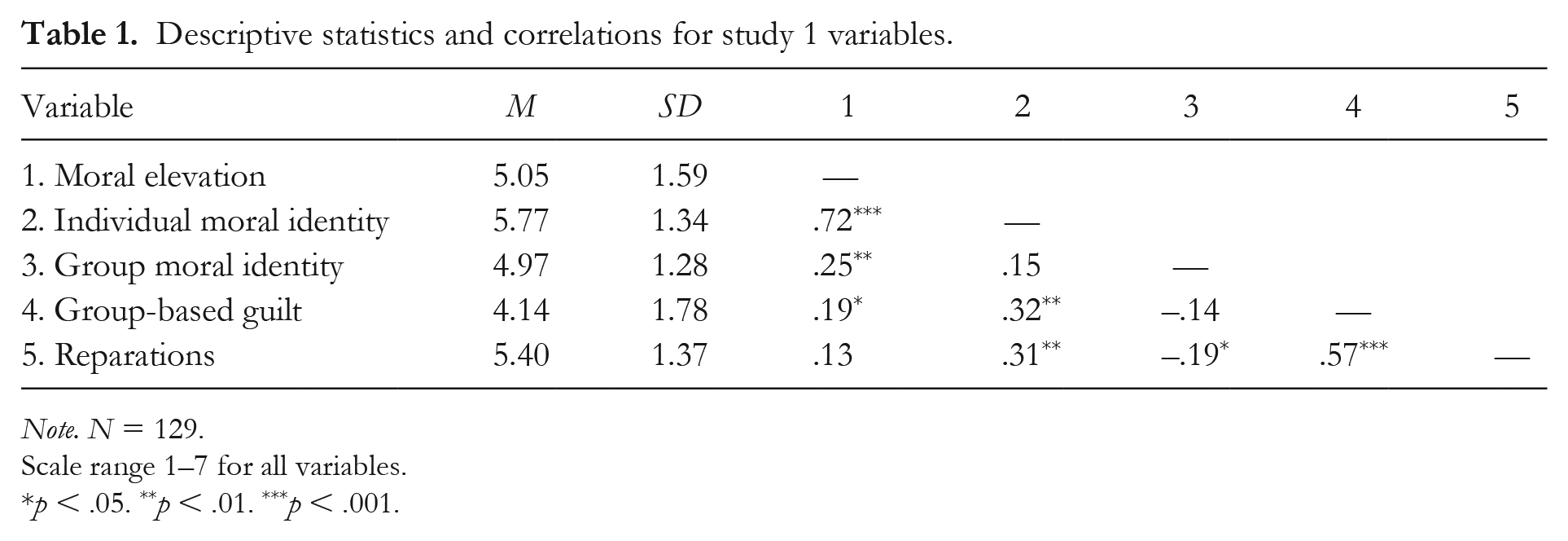
Note. N = 129.
Scale range 1–7 for all variables.
p < .05. **p < .01. ***p < .001.
In order to examine our main hypothesis of individual moral identity predicting reparation whilst controlling for affective responses of group-based guilt (which can arise from being reminded about ingroup moral violations) and moral elevation (which can arise from being presented with stories of moral exemplars), we conducted a step-wise linear regression. Collinearity diagnostics did not identify any issues of multicollinearity with all variance inflation factor (VIF) values below 2.5. In the first step we entered two main control variables predicting reparations. As predicted, group-based guilt significantly predicted reparations, B = 0.44, SE = 0.06, p < .001, whilst moral elevation was not a significant predictor, p = .83. Importantly, individual moral identity significantly improved the model, F(4, 124) = 18.82, ∆R2 = .05, B = 0.26, SE = 0.10, p < .02, 95% confidence interval (CI) [0.05, 0.48]. Group moral identity was not a significant predictor of reparation, p = .07.
Discussion
Results from study 1 confirm the significance of individual moral identity for promoting prosocial behavior tendencies at an intergroup level. This positive effect of moral identity on supporting reparations benefiting former victim group members remains significant even after controlling for one of the most important predictor of reparations: group-based guilt. However, this study suffers from several important limitations. First, the measure of individual moral identity contained only one item and exhibited a high correlation with the measure of moral elevation. Second, the design adopted in study 1 was correlational where all participants were subjected to the same procedure (being reminded of their ingroup’s moral violations followed by stories of ingroup moral exemplars as a way of affirming threatened identity). The employment of such a design prevents us from making any causal claims but merely suggests associations among variables. In study 2, we aimed at addressing both of these important limitations.
Study 2
Research Design and Procedure
Study 2 employed an experimental design with improved measures. As in study 1 and prior to random assignment to one of the two conditions, all participants were presented with a one-page-long text documenting historic discrimination of Sami people. The purpose of reading this information was to remind participants about their group’s moral violations (as in study 1). Two questions were aimed at checking whether participants had read and understood the information presented to them (see Appendix A). Participants who failed to correctly answer both questions were not included in the main analyses. After being reminded of their group’s historic moral violations, half of our participants were presented with three stories about Swedish individuals helping a Sami person whilst taking on some risks (ingroup moral exemplars stories). The other half (employing a random assignment procedure) were presented with three stories of the same Swedish individuals presented in more neutral, non-negative, terms. These stories contained neutral descriptions of daily routines and daily life of these individuals (ingroup neutral exemplars). No negative characteristics or routines were mentioned in the control stories. For more detailed information, refer to Appendix B which contains both experimental and control stories.
Participants
As in study 1, we employed the same pre- and post-exclusion criteria. Participants were recruited through the research survey platform Accindi in Sweden from Stockholm. In order to estimate the optimal sample size, we relied on G-power calculations and the effect size of 0.3 as suggested by research on ingroup moral exemplars (Bigazzi et al., 2019). Power analysis indicated that a sample size of 190 participants could detect significant effects between 2 groups with 80% power. The final sample consisted of 210 participants (151 females, 55 males) with an age range between 18 and 64 years (M = 32.24; SD = 8.88). As in study 1, we aimed at collecting data going beyond student populations and aiming at capturing a more age diversified sample. One hundred and two participants were subjected to reading the ingroup moral exemplar stories (experimental condition) and 108 to reading stories of ingroup neutral exemplars (control condition).
Measures
Measures in study 2 were improved and expanded and were measured on a scale ranging from 1 to 5 (as specified below).
Manipulation checks included participants’ assessment of ingroup individuals from the stories as “good,” “heroic,” and “moral.” Participants had to indicate the extent to which they perceived these individuals to have these traits on a scale from 1 to 5 ranging from “strongly disagree” to “strongly agree.”
Moral elevation was measured with 4 items. Participants had to indicate the extent to which they felt uplifted, inspired, and felt awe and admiration on a scale from 1 to 5 ranging from “not at all ” to “a great extent.” These 4 items formed a reliable scale with α = .92.
Individual moral identity was assessed using a measure adopted from studies conducted by Aquino et al. (2002) and used in the following way: “Please read the following characteristics: caring, compassionate, helpful, good, moral. To what extent do you agree with the following statements?” “I consider myself as someone who has these characteristics”; “Having these characteristics is important to me.” These 2 items formed a reliable scale with α = .78.
Group moral identity was measured with one item: “I consider Swedish [people] to have these characteristics.”
Group-based guilt and Reparation were measured with the same 3 (α = .87) and 5 (α = .84) items, respectively, as in study 1.
Results
Manipulation checks
In order to examine whether participants assessed ingroup individuals differently across the two conditions on three specific dimensions (Čehajić-Clancy & Bilewicz, 2021), we performed multivariate analysis of variance (MANOVA) using planned comparisons. The analyses indicated significant effects on all three manipulation checks with ps < .001. More specifically, and as expected, participants exposed to ingroup moral exemplar stories perceived those individuals to be good people (contrast difference of 0.74, SE = 0.12, p < .001), more heroic (contrast difference of 2.83, SE = 0.12, p < .001), and more moral (contrast difference of 1.8, SE = 0.13, p < .001) in comparison to participants who read more neutral descriptions about the same individuals. These results indicate that exposure to stories of ingroup moral exemplars induced specific positive perceptions of ingroup individuals on dimensions of morality and heroism.
Manipulation effects
As it can be seen from Table 2, MANOVA results indicate that the experimental manipulation successfully increased the importance of individual moral identity. Additionally, and as expected, reading about morally admirable behaviors performed by others also induced a sense of moral elevation. The effects of the manipulation on affirmation of group moral identity were not significant.
Means, standard deviations, and multivariate analyses of variance across conditions (study 2).
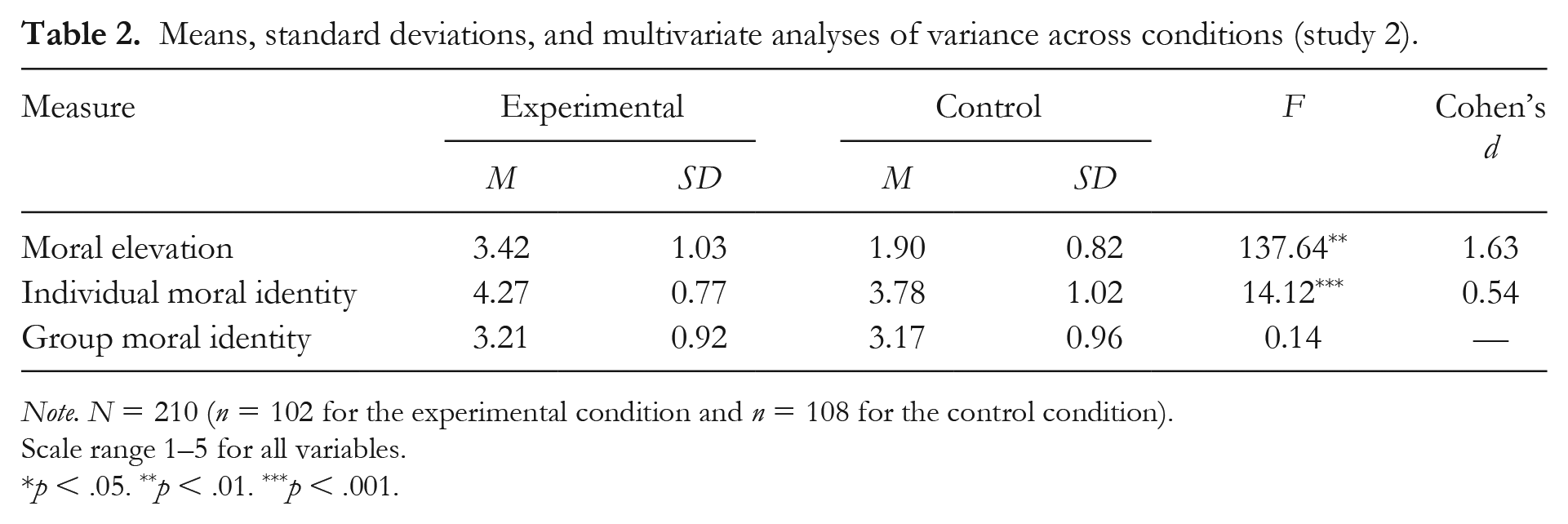
Note. N = 210 (n = 102 for the experimental condition and n = 108 for the control condition).
Scale range 1–5 for all variables.
p < .05. **p < .01. ***p < .001.
As in study 1, correlations between measures variables were in the expected direction (see Table 3). Importantly, by improving our measure of individual moral identity, the high association between moral elevation and individual moral identity was resolved.
Descriptive statistics and correlations for study 2 variables.
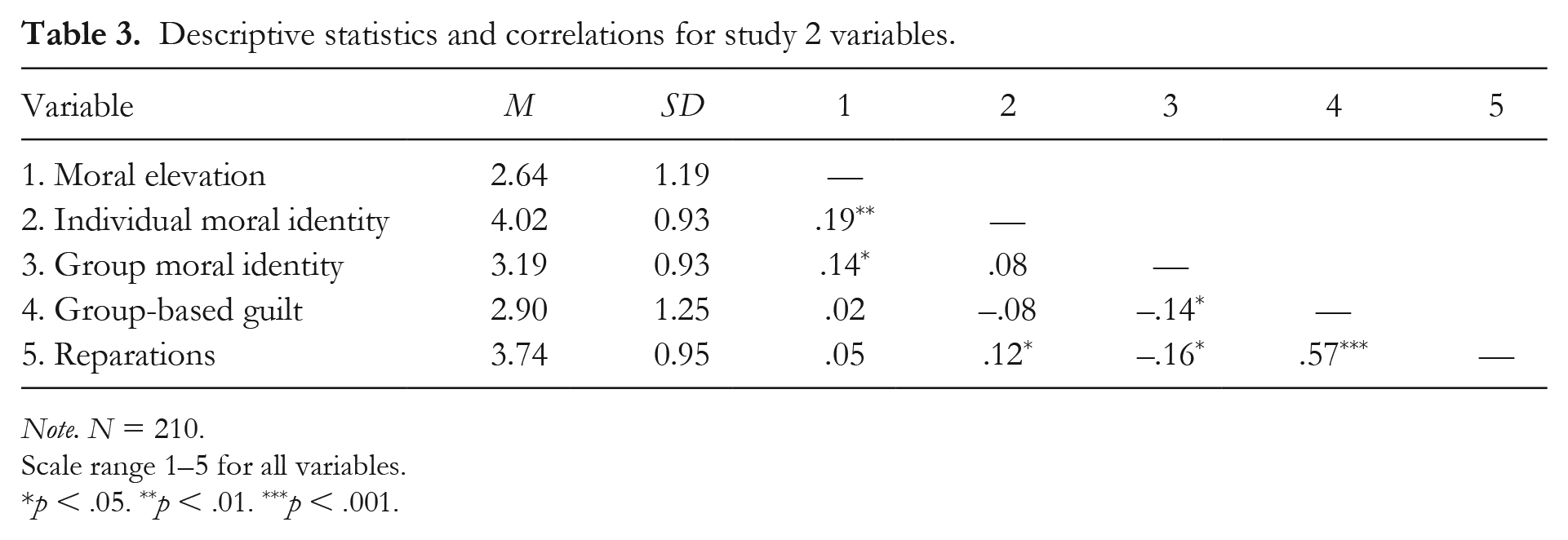
Note. N = 210.
Scale range 1–5 for all variables.
p < .05. **p < .01. ***p < .001.
Predicting reparations
In order to examine our main hypothesis of individual moral identity predicting reparation whilst controlling for affective responses of group-based guilt and moral elevation and accounting for the experimental design of this study, we conducted mediation analysis with all mediators at once using the JASP software. The experimental conditions were dummy coded (control condition with 0 and experimental condition with +1). Collinearity diagnostics did not identify any issues of multicollinearity with all VIF values below 2. The direct effect of the experimental manipulation on reparations was not significant with p = .36. However, and as predicted, the indirect effect through individual moral identity was significant, B = 0.09, SE = 0.04, 95% confidence interval (CI) [0.02, 0.17], z = 2.49, p = .01. All other indirect effects were not significant. These results indicate that learning about ingroup moral exemplars leads to endorsement of reparation policies to be provided to former victim group members but only through affirming individuals’ moral identity (see Figure 1).
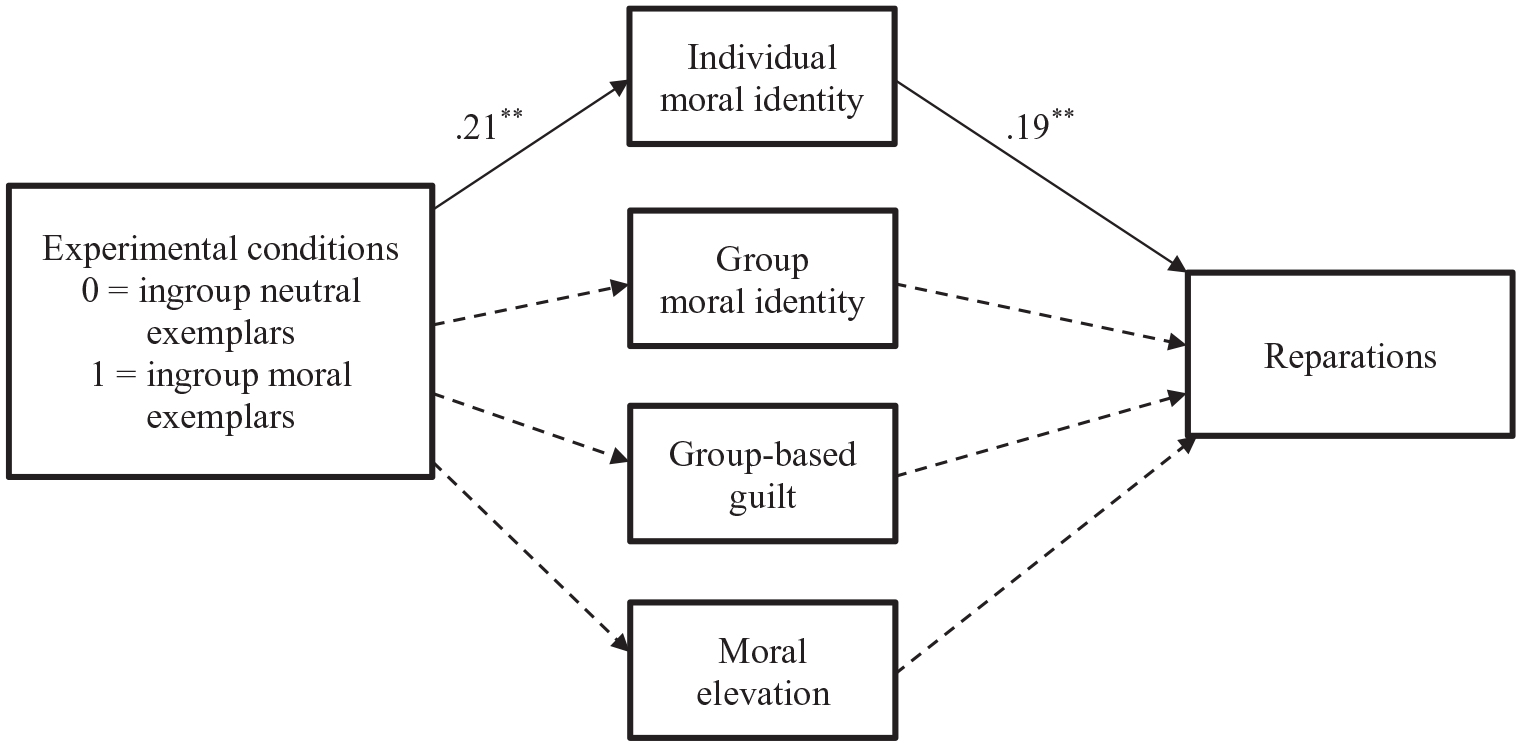
Indirect effects of ingroup moral exemplars on predicting reparations.
Discussion
Study 2 replicated and extended the findings from study 1 in important ways. First, it demonstrated the significance of individual moral identity for predicting reparations benefiting former victim group members beyond the effects of group-based guilt. Furthermore, and as in study 1, effects of group moral identity on reparations were not significant. If anything, the simple bi-variate associations revealed a tendency of group moral identity negatively predicting reparations. Study 2 replicates the findings of study 1 with improved measures. Study 2 successfully affirmed individuals’ moral identity through stories of ingroup moral exemplars. Such a successful affirmation of individual moral identity is important both for data interpretation and for practical implications. Findings ways of successfully affirming individuals’ moral identity in the context of being reminded of ingroup moral violations is important for understanding processes that could minimize activations of defensive responses and facilitate more prosocial intergroup behaviors. As indicated by this study, learning about ingroup moral exemplars has the potential to facilitate prosocial intergroup behaviors (such as reparations) but only through enhancing individual moral identity. Finally, we need to accentuate that we have only measured participants’ tendencies and willingness to support certain forms and policies of reparative behaviors. In study 3 we aimed at addressing this important limitation by measuring participants’ actual prosocial behavior aimed at benefiting former victim group members. In addition, we aimed at replicating the findings from study 2 employing the same design and using the same measures with a population outside the city of Stockholm. Study 3 was also pregistered (https://aspredicted.org/F1Z_Z2N).
Study 3
Research Design and Procedure
In study 3 we employed the exact same experimental design procedures as in study 2.
Participants
As in the previous two studies, we employed the same pre- and post-exclusion criteria. Participants were recruited through the same research survey platform, Accindi in Sweden. As in previous studies, we aimed at collecting data going beyond student populations. Data was collected from three cities (Lund, Uppsala, and Gotenburg). Power calculations suggested a sample size of 280 with 95% power. The final sample consisted of 286 participants (204 females, 80 males, 2 unidentified) with an age range between 18 and 65 years (M = 33.50; SD = 9.68). One hundred and forty-two participants were subjected to reading the ingroup moral exemplar stories (experimental condition) and 144 to reading stories of ingroup neutral exemplars (control condition).
Measures
All measures were the same as in study 2 using a 1–5 scale. Checks of reliability indicated good reliability scores above .78 for all scales. In addition, and in this study, we added a measure of actual prosocial behavior benefiting the former victim group members. Prior to participation, all participants were informed that they would receive a gift card in the amount of 50 SEK after they complete their participation (as in the previous two studies). After participants finalized their participation in this study, they were given an opportunity to donate their money (gift card) that would benefit the situation of Sami people currently living in Sweden. All participants, independently of the experimental condition they were subjected to, received this question: “Would you be willing to donate your gift-card you will receive for your participation in this study to helping improve the situation of Sami people here in Sweden?” This question was measured on a 1–5 scale ranging from “not at all” to “a great extent”. We used this measure as a proxy for participants’ actual prosocial behavior aimed at benefiting the outgroup.
Results
Manipulation checks
As in study 2, and in order to examine whether participants assessed ingroup individuals differently across the two conditions on three specific dimensions, we performed MANOVA using planned comparisons. The analyses indicated significant effects on all three manipulation checks with ps < .001. More specifically, and as expected, participants exposed to ingroup moral exemplar stories perceived those individuals to be good (contrast difference of .88, SE = 0.10, p < .001), more heroic (contrast difference of 2.25, SE = 0.11, p < .001) and more moral (contrast difference of 1.57, SE = 0.11, p < .001) in comparison to participants who read more neutral descriptions about the same individuals. These results indicate that exposure to ingroup moral exemplar stories indeed induced specific positive perceptions of ingroup individuals on the dimension of morality and heroism and that the reported effects cannot be attributed to non-negative and neutral depictions of ingroup individuals.
Manipulation effects
As in study 2, MANOVA results replicated the main effects of the experimental manipulation. Learning about ingroup moral exemplars successfully induced the importance of individual moral identity including a sense of moral elevation. The effects on affirmation of group moral identity were not significant (see Table 4).
Means, standard deviations, and multivariate analyses of variance across conditions (study 3).
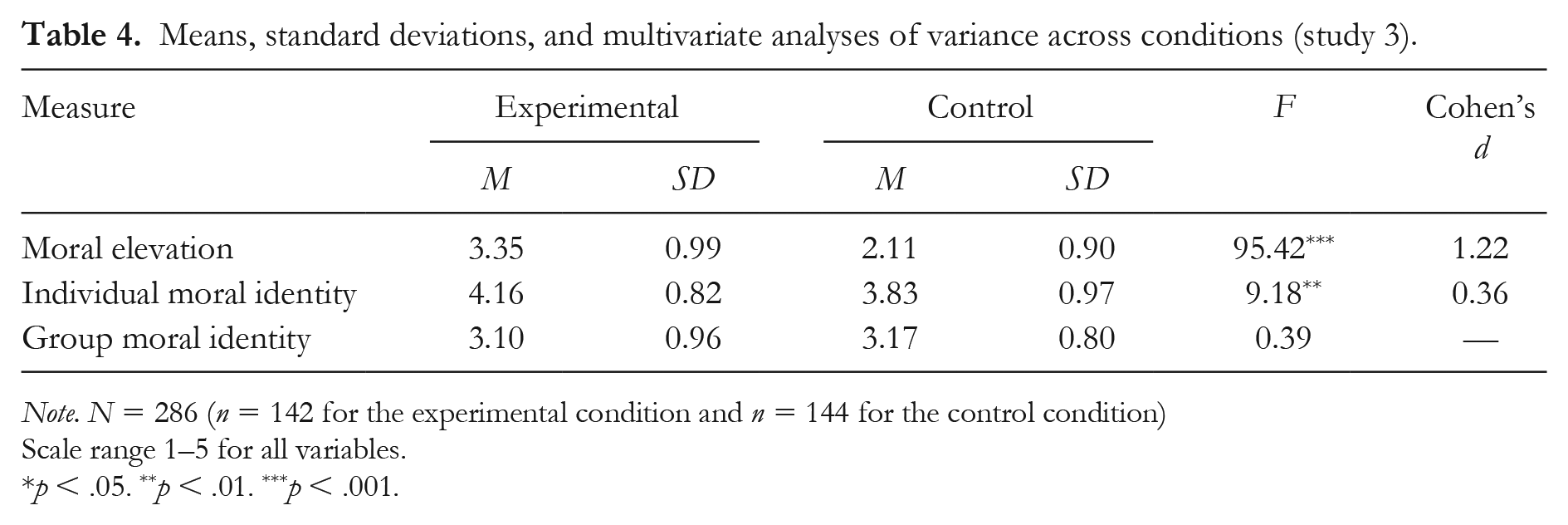
Note. N = 286 (n = 142 for the experimental condition and n = 144 for the control condition)
Scale range 1–5 for all variables.
p < .05. **p < .01. ***p < .001.
As for the associations between measured variables, those indicated the expected directions and strengths as in the previous two studies (see Table 5). Importantly, by improving our measure of individual moral identity, the high association between moral elevation and individual moral identity was resolved.
Descriptive statistics and correlations for study 3 variables.
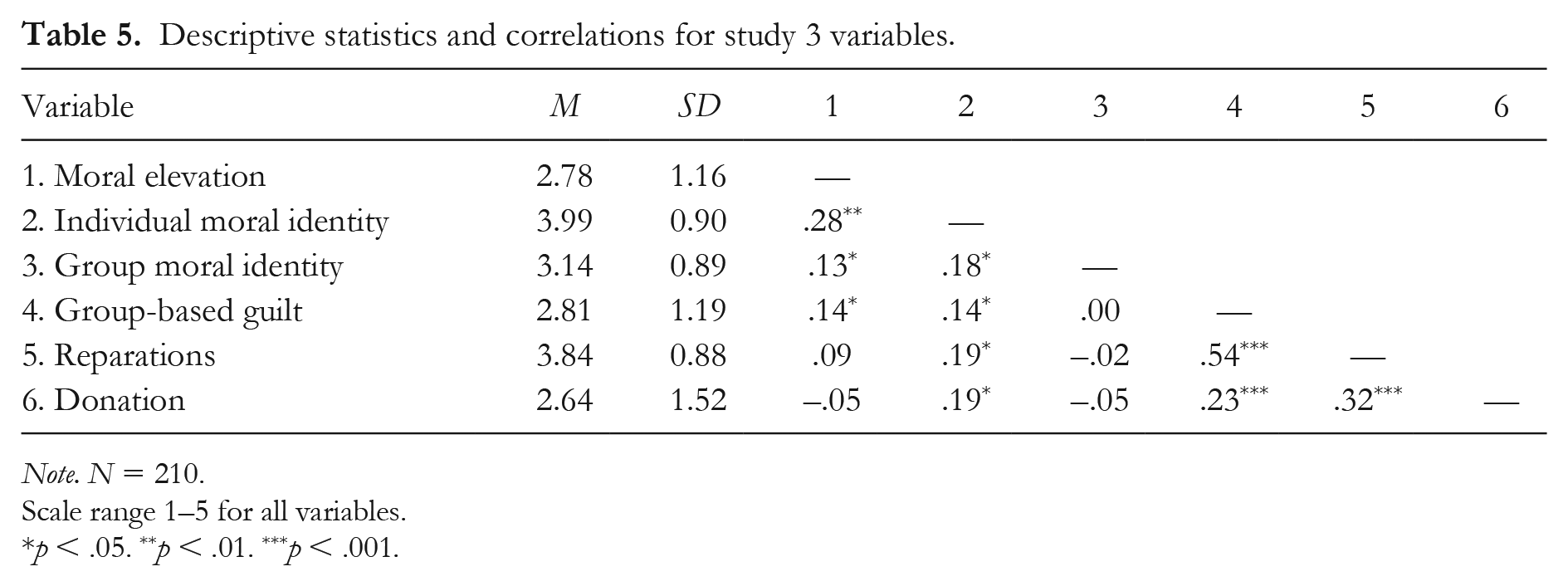
Note. N = 210.
Scale range 1–5 for all variables.
p < .05. **p < .01. ***p < .001.
Predicting reparations and outgroup donations
As in the previous two studies and in order to examine our main hypothesis of individual moral identity predicting prosocial intergroup behaviors (reparation and outgroup donation) whilst controlling for affective responses of group-based guilt and moral elevation, and accounting for the experimental design of our study, we conducted mediation analysis with all mediators simultaneously as in study 2. Collinearity diagnostics did not identify any issues of multicollinearity with all VIF values below 2. As in study 2 and in line with our predictions, only the indirect effect through individual moral identity was significant for predicting outgroup donation, B = 0.08, SE = 0.03, 95% CI [0.01, 0.15], z = 2.29, p = .02 and marginally significant for predicting reparations, B = 0.05, SE = 0.03, 95% CI [0.00, 0.09], z = 1.87, p = .06. All other indirect effects on both outcomes were not significant. These results confirm the findings from study 2 by suggesting that learning about ingroup moral exemplars might indeed lead to increased prosocial intergroup behaviors but only through affirming individuals’ moral identity. See Figure 2.
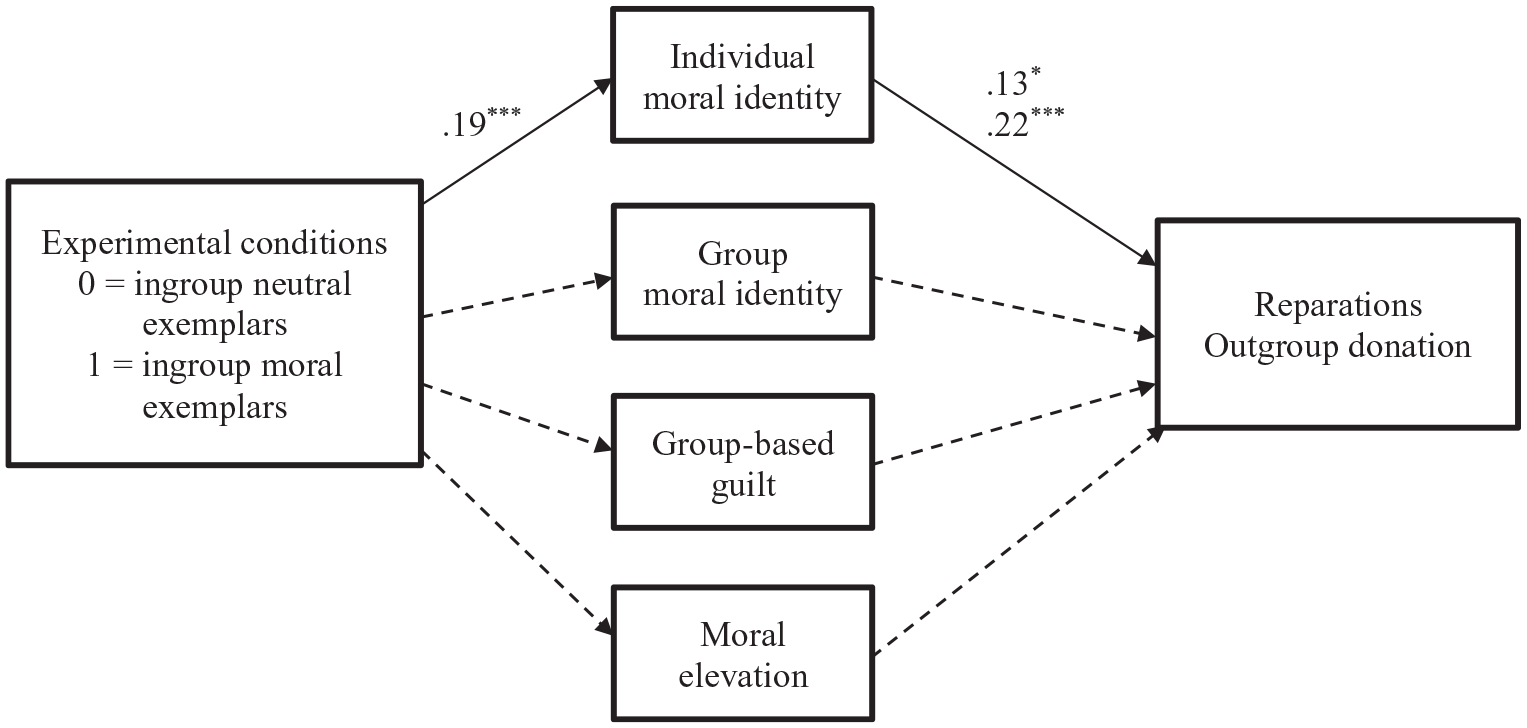
Indirect effects of ingroup moral exemplars on predicting reparations and outgroup donation.
Discussion
Study 3 replicated the findings from study 2 using an age-diversified population from across the country. Furthermore, it extended the main finding of this research by demonstrating the positive effects of individual moral identity on real-life behavior. Participants who read about morally admirable behaviors performed by other ingroup members (ingroup moral exemplars) reported an increased importance of their own moral identity and as a consequence were more likely to support and engage in behaviors benefiting former victim group members. Importantly, these effects occurred in a real context of being reminded of real historical ingroup atrocities.
General Discussion
When reminded of ingroup moral violations, such as discrimination or harming of outgroup members, most people will try to either justify such violations or minimize the extent of ingroup harmdoing. Such defensive responses have been identified across different social and cultural contexts (Leach et al., 2013). Furthermore, the activation and application of such moral disengagement mechanisms (Bandura, 1999) are not conducive to building positive intergroup relations as they prevent a variety of outcomes required for creating social cohesion, intergroup harmony, and ultimately peace. For example, any form of moral disengagement in the context of intergroup violence leads to lowered levels of moral (group-based) emotions and endorsement of reparations (Čehajić & Brown, 2008; Hakim et al., 2021). Reparations offers, in turn, facilitate important positive social-psychological changes contributing to the restoration of positive intergroup relations (Castano et al., 2022; Wohl et al., 2011).
One of the key questions in the field of research on collective atrocities and intergroup conflicts is how to create positive intergroup relations in the face of being reminded of ingroup atrocities. In other words, how can we teach people the difficult truth and minimize the tendency to morally disengage from it? In this research we offer some answers. Across three studies set in the context of reminders of real historical injustices perpetrated against an outgroup, affirming peoples’ moral identity led to increased endorsement of reparations and actual prosocial behavior benefiting former victim group members. These positive effects of individual moral identity on prosocial intergroup behavior extended beyond the effects of group-based guilt (as the widely established predictor of reparations). Our main hypothesis of this research was grounded in work by Aquino et al. (2007) which showed that the relationship between moral disengagement and moral emotions was bounded by moral identity. Furthermore, previous research has demonstrated that the moral identity motivates prosocial and moral behaviors (Reed & Aquino, 2003). Our research extends the existing literature by establishing a successful way of actually affirming peoples’ moral identity (through moral exemplars) and by examining the effects of such affirmed moral identity on reparations. Our findings are important because they suggest a pathway to bind individuals and groups together even in the context of historic human rights violations.
However, the current studies are not without limitations. Even though the effects of individual moral identity on prosocial intergroup behavior are direct and significant (even after controlling for the effects of group-based guilt), these effects are not robust. Additionally, we cannot infer whether these effects would persist over time. Albeit small, we still consider these effects important for research on social-psychological interventions aimed at improving intergroup relations in contexts affected by intergroup violence. Here, we have demonstrated that learning about ingroup moral exemplars can be an effective way of affirming identities threatened by information about ingroup moral violations and in that way lead to prosocial intergroup behaviors. Furthermore, as indicated by our data, only the indirect effects of ingroup moral exemplars, through individual moral identity, were significant. This finding suggests that exposure to ingroup morally admirable behaviors, in contexts of ingroup immoralities and atrocities, might not always and necessarily lead to the restoration of intergroup relations unless it boosts individuals’ moral identity and their desire to be a better person. Consequently, future research ought to explore the effects and implications of ingroup moral exemplars for intergroup relations whilst accounting for possible individual- and contextual-level moderators. For example, level of ingroup identification could potentially be an important moderator of the observed effects in that ingroup moral exemplars lead to increased moral identity and consequently more prosocial intergroup outcomes, but only for individuals with lower levels of ingroup (e.g., ethnic or national) identification (Ellemers, 2017). It could be argued that exposure to ingroup moral exemplars for individuals who place a high importance on their ingroup (e.g., high identifiers) might actually lead them to further disengage from immoral ingroup behavior by choosing to focus exclusively on the ingroup’s moral (vs. immoral) behaviors (Ellemers, 2017).
Finally, future research on the relationship between moral identity and intergroup behavior ought to examine processes which might explain or constrain the observed effects. For example, it could be argued that increased importance of one’s moral identity (once it occurs) leads to an expansion of intergroup boundaries leading to perceptions of more inclusive social categorizations. As suggested by Aquino & Reed (2002), a strong moral identity might directly influence the relationship between the self and the outgroup by extending the moral concern also to those who belong to outgroups. If this assertion is valid, people whose moral identity has high as compared to low self-importance should be relatively less likely to exhibit in-group favoritism and out-group hostility even in contexts affected or threatened by intergroup conflict.
Footnotes
Appendix A
Appendix B
Acknowledgements
The authors wish to thank Johannes Mogren and Sara Rajala for their assistance with pilot studies and data collection.
Author contributions
SCC developed the original idea and analyzed the data; SCC and AO designed the studies and wrote the paper. Both authors approved the final manuscript for submission.
Funding
The author(s) disclosed receipt of the following financial support for the research, authorship, and/or publication of this article: Studies reported in this paper were funded by the Swedish Research Council as part of the project “Prosocial regulation of intergroup relations through moral exemplars: From mechanism to real-life behavior” awarded to both authors of this paper with the corresponding author as the principal applicant (grant number: 2020-01674).
