




Abstract
Newcomers to a country can strongly benefit from having positive intergroup contact with host country residents. Often, however, such contact does not occur. Norms surrounding intergroup contact between newcomers and host country residents were explored over three studies. Correlational relationships among positive perceived contact norms, positive attitudes, and behavioural intentions supporting contact were demonstrated over multiple studies. Further, an experimental manipulation indicating higher (vs. lower and control) contact between host country residents and newcomers predicted behavioural intentions toward future intergroup contact through heightened intergroup contact norms and more positive attitudes toward newcomers. Implications of using norms as a means to impact intergroup relations are discussed.
When I first came to Canada, I felt very lonely and isolated. It wasn’t a language barrier so much as a social aspect. I missed the human level interactions: familiar faces, greeting people . . . What could have been done differently for immigrants? . . . I began smiling at the people I meet every day on my way into work and greeting them. This small gesture made a big impact on me and those people. I felt happier. I felt connected . . . Over time we got to know more about each other. After a while it made a big impact to the quality of my life in Canada.
In the previous quote, Selma Kiwirra, an immigrant from Sudan now residing in Canada, speaks to the power of social contact between newcomers and Canadians in facilitating the transition to life in Canada. Kiwirra’s sentiment is likely common to newcomers (i.e., immigrants and refugees within the first several years of arrival in their new country; Hynie et al., 2011) to Canada and other countries. Newcomers face a multitude of challenges, including but not limited to social exclusion and social isolation (Austin & Este, 2001; Beiser & Hyman, 1997; Hynie et al., 2011; Yakushko, 2009). In fact, emotional problems are common among recent immigrants, with 29% of immigrants to Canada indicating experiences of sadness, loneliness, and depression. Those immigrants indicating that they did not have interactions with friends in Canada or did not have friends in Canada reported significantly higher stress levels (Robert & Gilkinson, 2012). Additionally, qualitative interviews with underemployed immigrant and refugee men in Canada indicated feelings of social isolation, likely due to a lack of meaningful relationships with established Canadians (Austin & Este, 2001). Similar findings are reported for other immigrants to Western countries (e.g., Baranik et al., 2018).
Close relationships with individuals already residing in the host country can greatly facilitate newcomers’ successful transitioning (McSpadden, 1987; Robert & Gilkinson, 2012; Zhao, 2007; Zhao et al., 2010). In the Canadian context specifically, our focus for this research, some are enthusiastic about forming relationships with newcomers (e.g., Desjadins, 2017), whereas others are not (e.g., Grenier, 2015), and some less enthusiastic individuals are overtly hostile toward immigrants and refugees (e.g., http://www.immigrationwatchcanada.org). In this project, we examine the question: Why do Canadians commence relationships with newcomers and how this behaviour can be encouraged? We propose that social norms—particularly, perceived social norms about contact between Canadians and newcomers (i.e., “contact norms”)—play an essential role in Canadians’ initiation of relationships with newcomers. Specifically, if established Canadians believe that social relationships between other Canadians and newcomers commonly occur, they may be more likely to also engage in those relationships. We aim to investigate this by examining associations between Canadians’ existing social norms about intergroup contact and self-reported contact (Study 1) as well as examining whether media-induced norms about intergroup contact may influence such social relationships between Canadians and newcomers (Studies 2 and 3).
Social Relationships Between Newcomers and Host Country Residents
Newcomers to a country who have social relationships with residents of the host country tend to transition and integrate more successfully than those who do not have these types of relationships. For example, newcomers having more (vs. less) frequent personal contact with host country residents demonstrate more self-sufficiency, report greater job satisfaction (McSpadden, 1987), have lower health risks (Zhao, 2007; Zhao et al., 2010), and attain more education (Ooka & Wellman, 2003). Personal contact may also be necessary for other broad measures of success. For example, among Salvadoran refugees in Canada, social support was a key moderator in the relationship between difficult life events and life satisfaction. Increased social support resulted in the association between difficult life events and life satisfaction, reversing the relationship from negative to positive. Greater social support from members of host communities and fellow immigrants was also positively associated with quality of life among recent and established refugees (Young, 2001). Relationships with residents of the host country provide social capital that facilitates newcomer integration and more positive health outcomes (Zhao et al., 2010). Given that newcomers often face multiple barriers to forming these relationships (e.g., segregation, lack of employment, language barriers), relationships between newcomers and host country residents are ideally initiated by those already established in the host country. Often, this will begin when host country residents volunteer to help newcomers settle (McSpadden, 1987). Volunteer–newcomer relationships may become closer over time, with some becoming family-like (Tilbury, 2007). Given that these relationships may ease transitioning to life in Canada, it is imperative to encourage contact between established Canadians and newcomers through volunteering.
Theoretical Approach
This research is informed by intergroup contact literature (Allport, 1954; Pettigrew & Tropp, 2006), the theory of planned behaviour (Ajzen, 1991), and group norms theory (Sherif & Sherif, 1953). According to intergroup contact literature, intergroup contact promotes positive attitudes toward outgroup members and positive relations with people belonging to different social groups (Allport, 1954; Pettigrew & Tropp, 2006). Although many report a desire for greater intergroup contact (Shelton & Richeson, 2005), avoidance of this type of contact is typically exhibited behaviourally. People tend to prefer contact with individuals belonging to their ingroups over their outgroups (Clack et al., 2005; Dixon & Durrheim, 2003), given that contact with outgroup members can be anxiety-provoking (Stephan & Stephan, 1985). These feelings of intergroup anxiety can amplify emotional reactions, biases, and physiological stress (Blascovich et al., 2001). Unfortunately, even well-meaning, egalitarian-minded individuals tend to avoid intergroup contact (Gaertner & Dovidio, 1986, 2005). When contact does occur, however, especially when contact is intimate and in the context of close relationships, it is associated with positive outcomes such as decreased anxiety and positive attitudes toward outgroups (MacInnis & Page-Gould, 2015; Pettigrew & Tropp, 2006). The positive effects of intergroup contact have been demonstrated toward immigrants (e.g., Voci & Hewstone, 2003). Further, positive quality intergroup contact between host country residents and newcomers is associated with successful newcomer transitioning (e.g., McSpadden, 1987). An important question remains; how can we encourage intergroup contact to take place? In this study, we explore perceived social norms as a means of encouraging intergroup contact in the context of Canadian–newcomer relations.
Relations between contact norms, intentions, and intergroup contact have been explored among child and youth populations. For example, Tropp et al. (2014) examined the effects of peer norms on children’s intentions to form cross-ethnic friendships. Ingroup peer norms supporting interethnic friendships were found to be positively associated with children’s cross-ethnic friendship intentions. In addition to peer norms, effects of school norms, defined as perceptions of teachers’ or principal’s encouragement of cross-ethnic friendships, were also explored in a study by Tropp et al. (2016). Results from this longitudinal study among youth suggested a causal link between school norms at Time 1 and interest in developing cross-ethnic friendships at Time 2. Taken together, these findings highlight the importance of exploring the effects of social norms on intentions to engage in meaningful and close intergroup contact, such as cross-group friendships. However, considering the criticisms of intergroup contact research raised by Paluck et al. (2019)—such as the lack of experimental approaches to establish causal links between explored variables, or participant random assignment—we are interested in extending previous research findings by exploring social norm effects among different age groups and social contexts. Therefore, the present research includes both cross-sectional and experimental research designs to establish the relationship between social norms, intergroup attitudes, and intergroup contact among Canadian adult samples.
The theory of planned behaviour (Ajzen, 1991) highlights the role of norms in predicting behaviour. Social norms can be injunctive, prescribing or proscribing appropriate behaviours for a social group, or descriptive, indicating common behaviours among a social group. According to the theory of planned behaviour, one’s belief abo n forming relationships wit ut injunctive normative behaviours of important others (e.g., “my ingroup members are in support of intergroup contact”) directly influences one’s intentions to engage in those behaviours (e.g., intent to engage in intergroup contact), which go on to influence actual behaviour (e.g., engaging in intergroup contact). Descriptive norms surrounding contact (e.g., “my ingroup members are engaging in intergroup contact”) may also magnify the influence of injunctive norms on attitudes and behavioural intentions, depending on the context (Smith & Louis, 2008). Associations between normative beliefs and behavioural intentions have been demonstrated in various contexts (Ajzen, 2012), and experimentally induced normative beliefs also predict behavioural intentions (e.g., Sniehotta, 2009). In the context of intergroup contact, we expect norms supporting contact to predict intentions to engage in contact through more positive intergroup attitudes. This pattern of relationships differs from those proposed in the theory of planned behaviour, where attitudes, norms, and perceived behavioural control are positioned at the same level. The serial pattern of relationships we expect, however, positions norms as predicting attitudes. These relationships are consistent with group norms theory (Sherif & Sherif, 1953), which suggests that one’s ingroup’s norms largely shape attitudes toward other groups. When having contact with ingroup members, we adopt their norms toward outgroups, which in turn shape our own attitudes toward that outgroup. Thus, ingroup norms may be an important factor influencing attitudes toward outgroups, beyond actual individual experiences with the outgroup. It is well established that favourable contact norms predict more positive attitudes toward outgroup members (e.g., Christ et al., 2014), and that more positive attitudes toward outgroup members predict increased contact (Binder et al., 2009; Levin et al., 2003). Thus, we propose that the positive attitudes toward outgroup members observed as a function of social norms in favour of contact will predict higher contact behaviour intentions and hence, contact behaviour.
Intergroup Contact Norms
Social norms are acquired through socialization within one’s ingroup, and these norms govern the behaviour both within and outside group situations (Sherif & Sherif, 1953). For example, social norms about outgroup prejudice strongly predict the degree to which prejudice toward that outgroup is expressed (Crandall et al., 2002). Similarly, norms about the extent to which ingroup members support intergroup contact predict the extent to which people engage in intergroup contact. These norms develop through socialization with ingroup members. When people associate with ingroup members who engage in intergroup contact, they develop favourable contact norms (Christ et al., 2014; De Tezanos-Pinto et al., 2010; Vezzali et al., 2015). That is, they believe that contact is supported by their ingroup. Favourable contact norms are associated with more positive attitudes toward outgroup members, and positive attitudes toward outgroup members are associated with actual engagement in intergroup contact (Binder et al., 2009). Thus, real or perceived contact norms may encourage intergroup contact behaviour indirectly through favourable attitudes toward outgroup members.
Although social norms are typically acquired over time through membership in a group, they can be malleable (e.g., Paluck, 2009, 2011). For example, social norms about intergroup relations can be influenced through media. In a study conducted in Rwanda, Paluck (2009) found that presenting information about positive intergroup relations through a radio program resulted in social norms favouring positive relations between groups and cooperative behaviours. These findings from a postconflict region are promising, suggesting that norms spread through media can be influential, even when environmental conditions are rife with trauma and conflict. Vezzali et al. (2012) also demonstrated that media content, in the form of reading specific books, resulted in improved attitudes, behavioural intentions, and decreased stereotyping toward immigrants among children in Italy. They proposed that these effects were the result of the extended contact hypothesis (Wright et al., 1997), which suggests that knowing about ingroup members’ intergroup contact can reduce prejudice. Indeed, ingroup norms partially mediate the relationship between extended contact and attitudes toward outgroup members, as well as positive expectancies surrounding future contact with immigrants, even when controlling for quantity and quality of past contact with outgroups (Gómez et al., 2011). However, similar to other related studies (Tropp et al., 2014, 2016), Gómez et al.’s (2011) research was conducted with younger individuals, who were approximately 12 years of age. Group norms can be more powerful during childhood than adulthood years (McGuire et al., 2019), so it remains to be examined if social norms have similar effects among adult populations. Therefore, we will examine the effects of existing and experimentally induced perceptions of norms about intergroup contact among adult samples.
Recent theoretical advances suggest that in order for intergroup contact to produce positive intergroup outcomes, contact must be largely positive and occur on multiple occasions (MacInnis & Page-Gould, 2015). The ideal conditions for this type of contact are present in intergroup friendships (i.e., friendships between people belonging to different groups). Intergroup friendships predict positive attitudes toward outgroup members more strongly than nonfriendship contact (Davies et al., 2011). Intergroup friendships also promote the initiation of subsequent intergroup contact (Page-Gould et al., 2008). Social norms that support intergroup friendship may similarly promote positive attitudes toward outgroup members and initiation of intergroup contact. Thus, we examine both general intergroup contact norms and intergroup friendship norms.
Overview of Hypotheses
Across three studies, relationships between perceived contact norms between Canadians and newcomers, attitudes toward newcomers, and intentions to engage in contact with newcomers among adult Canadian individuals were explored. In Study 1, we examine associations between perceived intergroup contact norms, intergroup attitudes, and contact behavioural intentions among a sample of undergraduate students. In Studies 2 (undergraduate sample) and 3 (Canadian adult sample), we experimentally examine our main hypothesis: whether perceived norms surrounding contact with newcomers can change behavioural intentions and actual contact behaviours. A serial pattern was expected whereby perceived norms regarding higher contact between Canadians and newcomers would be associated with more positive attitudes toward newcomers, which would influence higher intergroup contact intentions that would go on to be associated with higher intergroup contact behaviour. Measures used in these studies, as well as the wording of our manipulations, can be found in the supplemental material.
Prior to conducting the research, an a priori power analysis was performed to provide an estimate of appropriate sample sizes. Given our intentions to conduct experiments, we computed a power analysis for F tests with three groups, with alpha of .05, power of .90, and an effect size of f = .21 (corresponding to the intergroup contact effect size of r = −.21; Pettigrew & Tropp, 2006). This provided a required sample size of 291. Rounding up, we aimed for a sample size of 300 in each study.
Study 1
Methodology
Participants and procedure
Undergraduate students (N = 316) at a Canadian university completed a 20-minute online questionnaire for course credit. Given our interest in Canadian citizens, any noncitizens (N = 29) were redirected to the end of the survey. The final sample size was 287 (82.9% women, 17.1% men; 51.9% White/European, 21.6% East Asian, 19.2% South Asian, 5.2% Middle Eastern, 4.5% Black/African American, 3.5% Hispanic/Latino/South American, .7% Aboriginal Peoples of Canada). Participants’ ages ranged from 16 to 49 years, with a mean of 20.46 years (SD = 3.77 years).
Measures
Measures were completed in the following order (see supplemental material for full measures 1 ). In this study, as well as in Studies 2 and 3, we defined newcomers as people residing in Canada who were not Canadian citizens at birth, such as immigrants and refugees.
Demographics
Age, gender, year of study, ethnicity, household income, education level, Canadian citizenship, and immigration status of the participant and their parents were assessed.
Predictor variables
Intergroup contact norms
Perceived intergroup contact norms were assessed using a three-item measure adapted from Turner et al. (2008). A sample item for intergroup contact norms is, “How much contact do you think most Canadians have with newcomers to Canada?” (1 = none at all, 7 = very much).
Intergroup friendship norms
Perceived intergroup friendship norms were assessed using a four-item measure adapted from Turner et al. (2008). A sample item for intergroup friendship norms is, “What proportion of Canadians do you think would like to be friends with newcomers to Canada?” (1 = 0–10%, 10 = 91–100%).
Outcome variables
Attitudes
Participants indicated their general attitudes toward newcomers to Canada by selecting a temperature interval corresponding to their attitudes toward that group (ranging from 0–10° to 91–100°), with warmer temperatures indicating more positive attitudes (adapted from Haddock et al., 1993).
Contact intentions
Contact intentions were assessed using a single item adapted from MacInnis and Hodson (2012): “To what extent would you like to have contact with newcomers to Canada?” (1 = not at all, 7 = very much).
Contact behaviour
Participants were provided with an opportunity to contact a variety of organizations aiding newcomers to Canada as potential volunteers. Contact behaviour was measured dichotomously, based on whether a participant made contact with an organization or not. Organizations consisted of several prominent but regionally specific refugee and immigrant serving agencies; participants were provided with links to volunteer information as well as information on whom to contact or how to sign up (see supplemental material). The opportunity to indicate their contact behaviour was limited to the questionnaire. Participants were encouraged to open another browser window, make contact (if interested), and resume the survey once finished.
Results
Computing variables and preliminary analyses
For all multi-item measures, mean scores were computed following any necessary reverse coding. Given that results were essentially identical when examining intergroup contact norms and intergroup friendship norms, and that the constructs were highly correlated (r = .72), these items were combined into a general perceived intergroup contact norms (IGCN) measure.
We examined outliers and the extent to which assumptions underlying linear regression were met. No major concerns were identified (see supplemental material).
Relations between variables
As predicted, higher perceived intergroup contact norms (i.e., perceiving greater contact between Canadians and newcomers) were associated with more positive attitudes toward newcomers and contact behavioural intentions. More positive attitudes were correlated with behavioural intentions but not with contact behaviour (see Table 1). All scales were internally consistent (including those in the supplemental material), exceeding .82 alpha reliability.
Correlations between explored variables: Study 1.
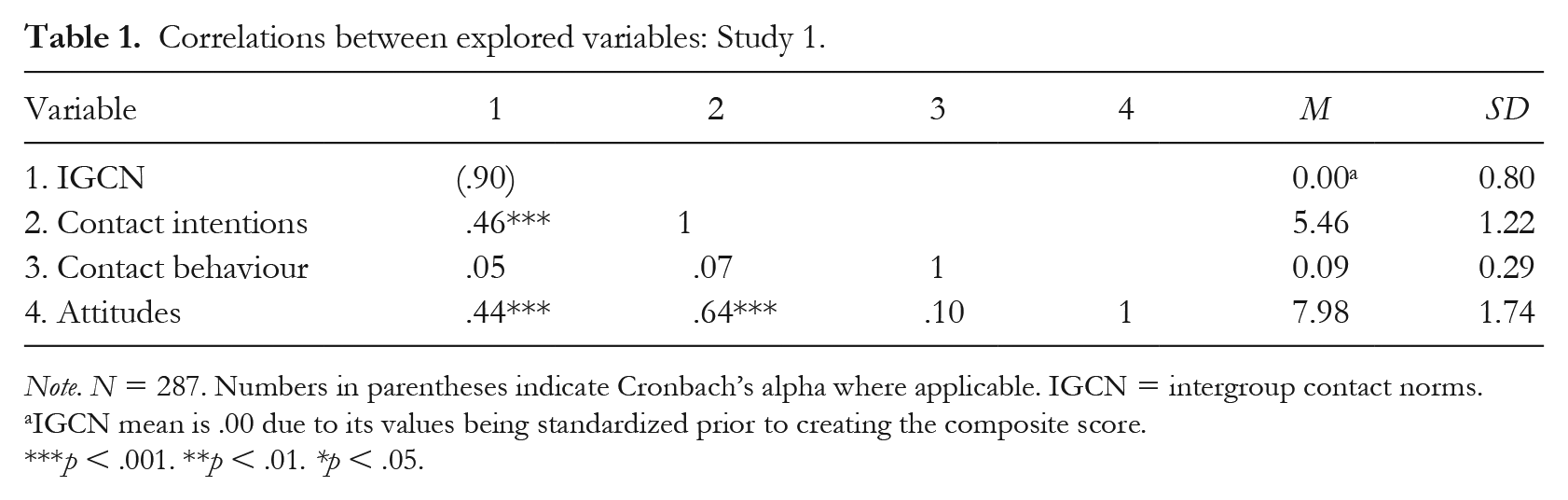
Note. N = 287. Numbers in parentheses indicate Cronbach’s alpha where applicable. IGCN = intergroup contact norms.
IGCN mean is .00 due to its values being standardized prior to creating the composite score.
p < .001. **p < .01. *p < .05.
Mediation testing
Path analysis using PROCESS (Hayes, 2018) was utilized with bootstrapping (5,000 samples) to assess the serial relationships between perceived norms, attitudes toward newcomers, behavioural contact intentions, and actual contact behaviours (see Figure 1). Perceived intergroup contact norms were strongly associated with more positive attitudes, and those attitudes significantly predicted greater behavioural intentions toward contact with newcomers. However, no significant relationships between these predictors and contact behaviour were found.
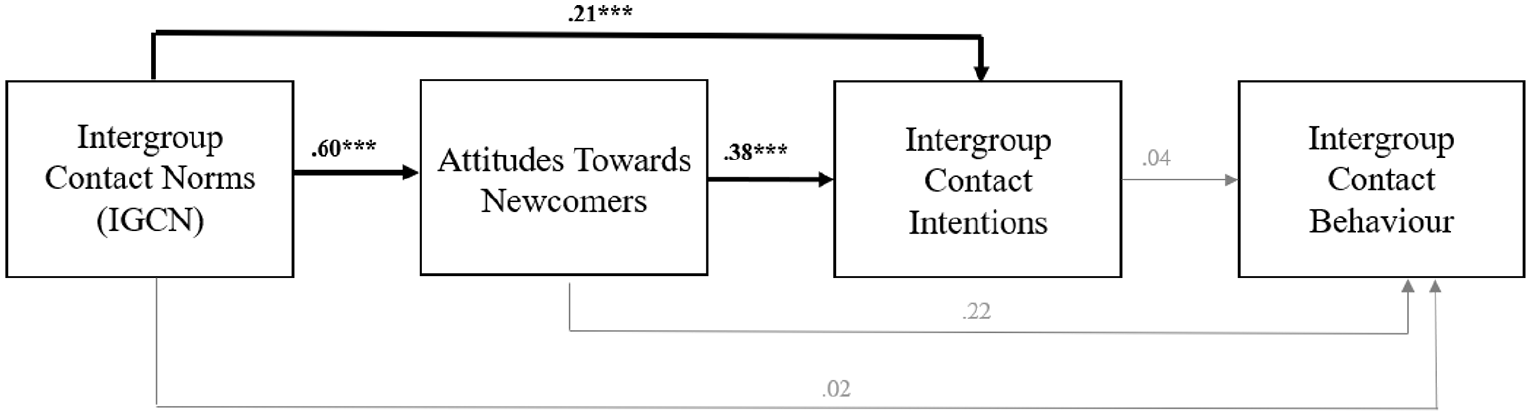
Path analysis for the relationship between IGCN and contact behaviour: Study 1.
Discussion
Study 1 provides evidence for serial relationships between perceived norms of contact between newcomers and Canadians predicting general attitudes toward newcomers, and those attitudes predicting behavioural intentions surrounding contact with newcomers. We did not find a direct relationship between intentions and volunteer behaviours, or any indirect relationships with contact behaviours through norms, attitudes, and intentions. We do provide preliminary evidence that perceiving contact norms of other Canadians as positive may lead to improving attitudes and contact intentions, but we did not see this for contact behaviours.
In Study 2, we expand our focus beyond preexisting perceptions of norms to an experimental methodology. Specifically, we sought to assess whether we could experimentally manipulate perceptions of norms surrounding contact with newcomers through written media, and if these perceived norms can influence attitudes, behavioural intentions, and actual contact behaviours. A serial pattern was expected, such that perceived norms regarding greater contact between Canadians and newcomers would be associated with more positive attitudes toward newcomers, which would influence higher intergroup contact intentions that would in turn be associated with higher intergroup contact behaviour.
Study 2
Methods
Participants
Undergraduate students (n = 330) at a Canadian university completed a 20-minute questionnaire for course credit. Any participants that did not identify as a Canadian citizen (n = 11), withdrew (n = 9), failed attention checks (n = 23), or did not reconsent following debriefing (n = 8) were filtered from final analyses. The final sample was 281 (80.8% women, 18.9% men, .4% other gender; 58% White/European, 18.1% South Asian, 17.8% East Asian, 4.6% Middle Eastern, 4.3% Hispanic/Latino/South American, 4.3% Black/African American, 2.8% Aboriginal Peoples of Canada). Participants’ ages ranged between 17 and 42 years, with a mean age of 20.31 years (SD = 3.06).
Procedure and measures
To begin, demographics were measured as in Study 1. Next, participants were randomly assigned to one of three conditions: higher contact norms, lower contact norms, or control (no mention of contact norms). All conditions involved reading an ostensible newspaper article discussing newcomers to Canada. All articles began with an identical description of who newcomers to Canada are, approximately how many arrive in Canada each year, and a brief quote from a fictitious director of a local organization describing their role in facilitating newcomer settlement in the Canadian city where participants resided. Next, for those in the higher contact norms condition, participants read that the volunteer response from Canadians had been extremely promising and that contact with newcomers had been positive. In this condition, Canadians were described as being keenly interested in forging positive relationships with newcomers, and that the organization had received many calls and inquiries offering to help newcomers to Canada. In the lower contact norms condition, participants read that the volunteer response had been poor, with Canadians’ responses to newcomers described as extremely disengaged, lackluster, and suggesting that Canadians were unwilling to have contact with newcomers. This condition also indicated that very few calls or inquiries surrounding contact came through. Finally, the control condition contained only the descriptive information described for all conditions. No mentions of Canadians’ responses to newcomers were described. For exact wording, see the supplemental material.
Attention and manipulation checks
After reading an article, participants were required to pass attention checks. The first asked, “Did the article you read mention newcomers to Canada? (yes/no). The second asked, “Did the article you read mention the Prime Minister of Canada? (yes/no). If a participant did not identify that the article mentioned newcomers to Canada or if they believed the article mentioned the Prime Minister, they were excluded from further analyses. A manipulation check was also included: “According to the article you read, to what extent are [residents of X city where participants live] interested in forming relationships with newcomers? (1 = not at all, 7 = a lot).
Participants then completed measures of attitudes toward newcomers, contact intentions, and contact behaviours, as measured in Study 1. They were then debriefed on the purpose of the study and required to reconsent.
Results
Computing variables and preliminary analyses
Variables were computed as in Study 1, and intergroup contact and friendship norms (r = .67) were combined into IGCN as in Study 1. No major concerns were identified when examining outliers and assumptions (see supplemental material). All scales were internally consistent (including those in the supplemental material), exceeding .79 alpha reliability. Similar to Study 1 findings, higher perceived intergroup contact norms (i.e., perceiving greater contact between Canadians and newcomers) were associated with more positive attitudes toward newcomers and contact behavioural intentions. In addition, contact behaviour was positively associated with both intergroup attitudes and contact intentions (see Table 2).
Correlations between explored variables: Study 2.
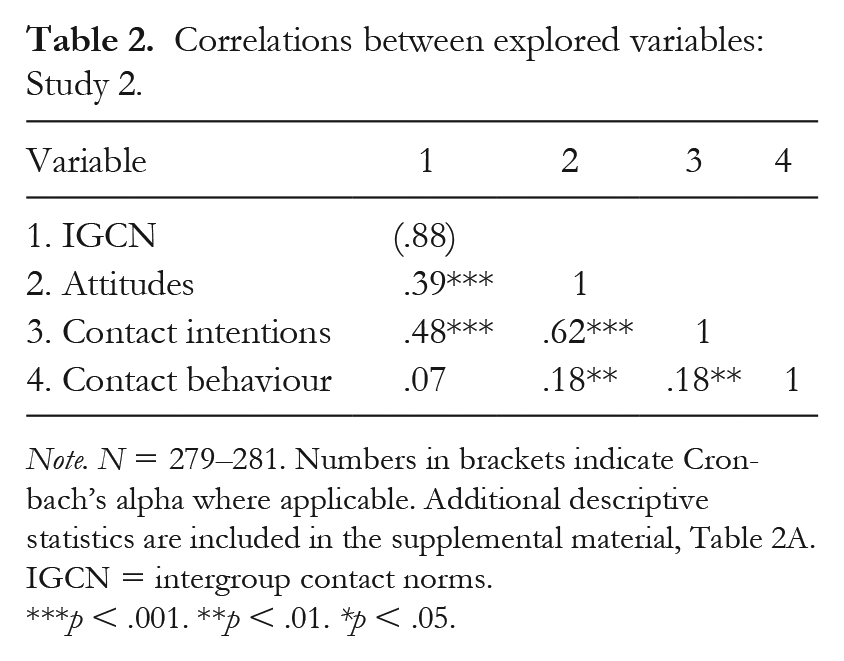
Note. N = 279–281. Numbers in brackets indicate Cronbach’s alpha where applicable. Additional descriptive statistics are included in the supplemental material, Table 2A. IGCN = intergroup contact norms.
p < .001. **p < .01. *p < .05.
Manipulation check
A one-way ANOVA of the manipulation check was conducted between conditions and was significant, F = 257.57, p < .001. Multiple pairwise comparisons, using Tukey’s honestly significant difference (HSD), identified significant differences between all conditions: higher contact (M = 6.07, SD = 1.14), lower contact (M = 2.26, SD = 1.15), and control (M = 4.82, SD = 1.24).
Direct effects of the manipulation
Orthogonal contrasts were utilized to represent the manipulation, allowing for the comparison of conditions or groups of conditions with others (Rosenthal et al., 2000). Contrast 1 (C1) compared individuals in the higher contact condition with those in the lower contact and control conditions (2/3, −1/3, −1/3). Contrast 2 (C2) compared individuals in the lower contact condition with those in the control (−1/2, ½). The direct effects of each contrast on each criterion variable were explored (see Table 3). IGCN were higher in the higher contact norms versus the lower and no-contact conditions (combined). IGCN were lower in the lower contact norms versus the control condition. Thus, the manipulation had the desired effects on participants’ perceived contact norms. Contact intentions were also higher in the higher contact norms condition (vs. lower contact and no-contact conditions combined). No other direct effects were found.
Direct effects of contrasts (C1 and C2) on criterion variables: Study 2.
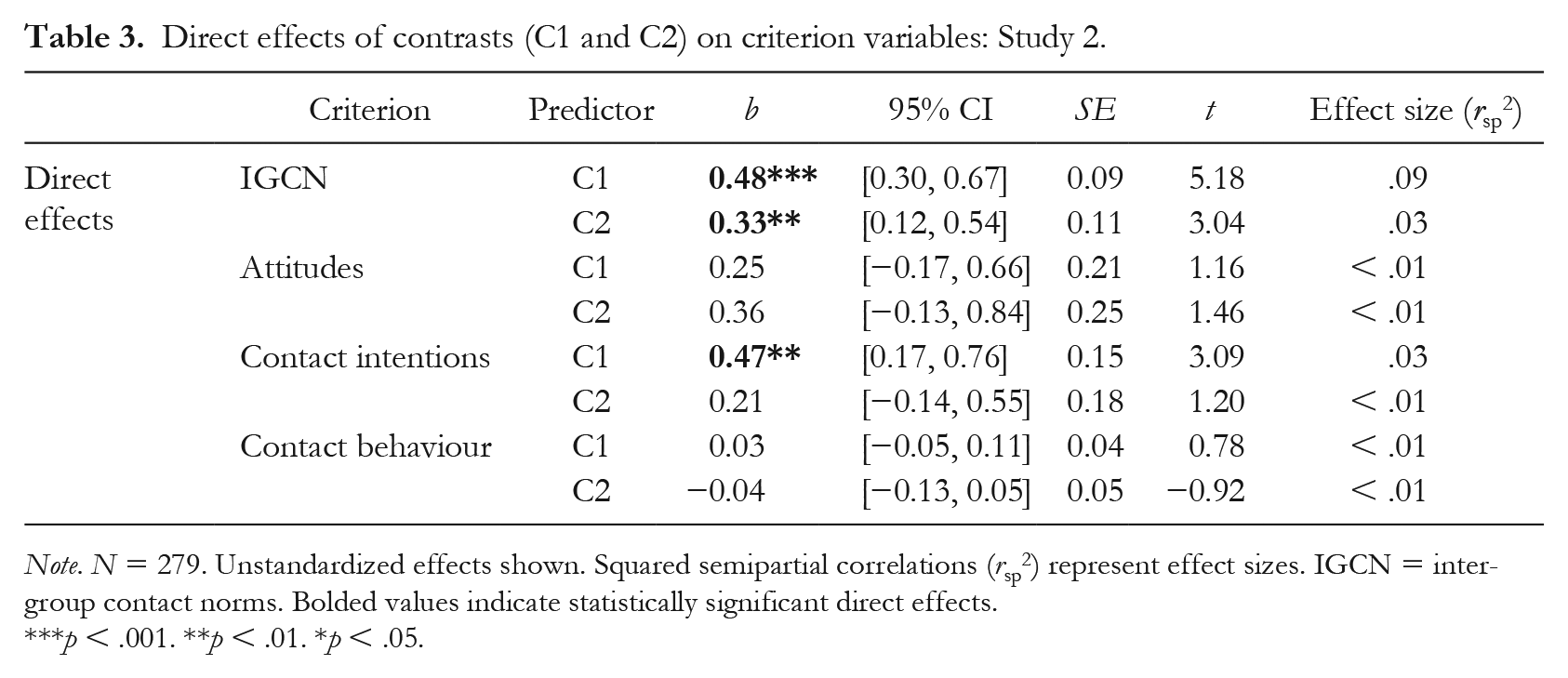
Note. N = 279. Unstandardized effects shown. Squared semipartial correlations (rsp2) represent effect sizes. IGCN = intergroup contact norms. Bolded values indicate statistically significant direct effects.
p < .001. **p < .01. *p < .05.
Mediation
Path analysis was conducted utilizing PROCESS (Hayes, 2018) with bootstrapping (5,000 samples). Consistent with our hypotheses, C1 (higher vs. lower/control) directly influenced intergroup contact norms. C2 (control vs. lower contact) also predicted IGCN. IGCN was positively associated with attitudes and contact intentions. Attitudes also significantly predicted intergroup contact intentions. Contact intentions, however, did not significantly predict contact behaviour (see Figure 2). No indirect effects were found for either contrast on behaviour through contact norms, intergroup attitudes, or contact intentions. Alternative models with both contact intentions and attitudes toward newcomers as outcome variables were also investigated. Indirect effects through perceived norms and through attitudes on contact intentions were significant for C1: b = 0.15, 95% CI [0.08, 0.24], and C2: b = 0.11, 95% CI [0.03, 0.20]. Relative indirect effects of the manipulation through intergroup norms on attitudes were found to be significant for C1: b = 0.41, 95% CI [0.23, 0.63], and C2: b = 0.28, 95% CI [0.09, 0.51].
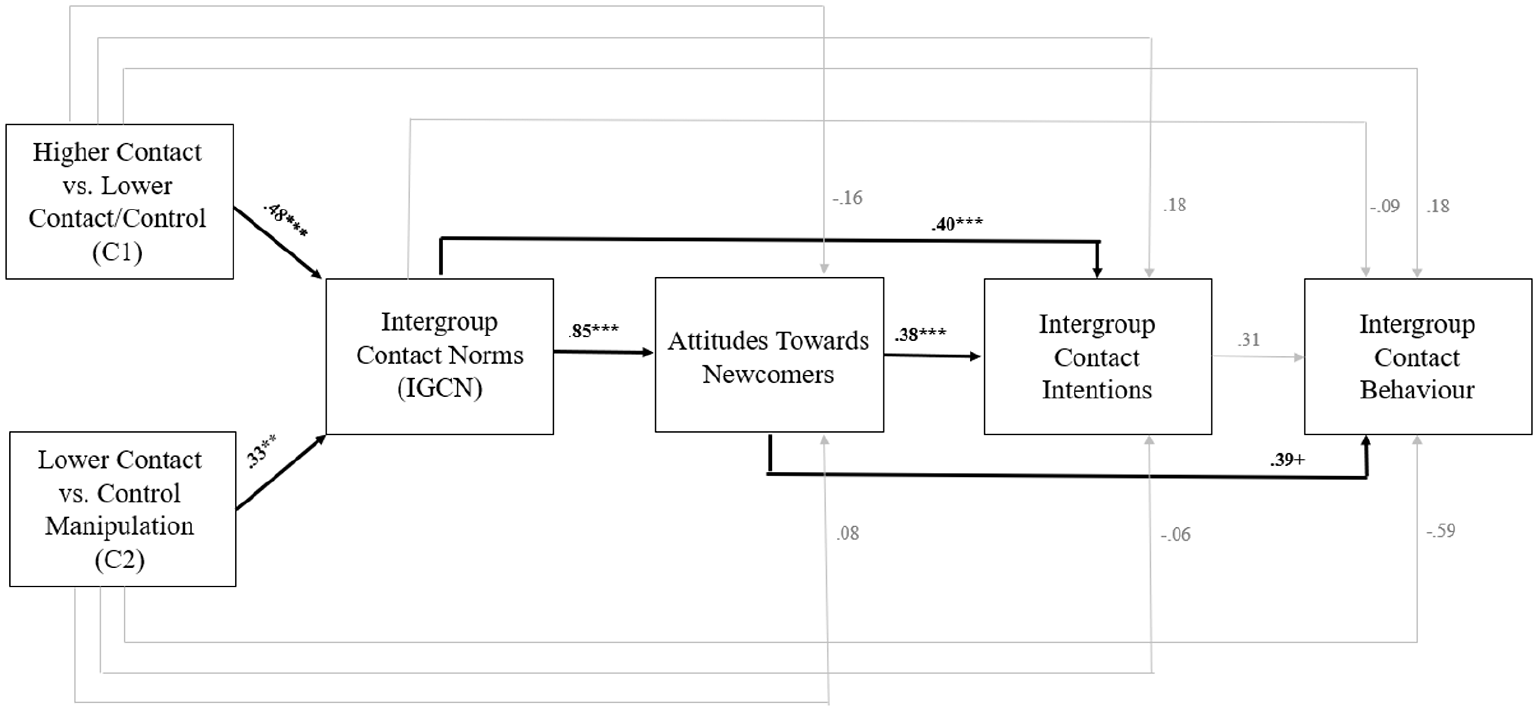
Path analysis for the relationship between IGCN and contact behaviour: Study 2.
Discussion
In Study 2, we used experimental methodology to assess causality and the serial relationships between our variables of interest. Reading a newspaper article indicating higher/positive contact between individuals residing in the participants’ local city positively influenced participants’ perceptions of norms surrounding contact between Canadians and newcomers. Similarly, reading about lower/negative contact norms of locals, negatively influenced one’s perceived contact norms. Perceived intergroup contact norms also directly influenced intergroup contact intentions, a finding consistent with theory of planned behaviour. No direct effects of experimentally manipulated norms were found on attitudes toward newcomers or intergroup contact behaviour. In addition, no indirect effects on intergroup contact behaviour were observed through any mediating variables.
In Study 3, we used a similar methodology to experimentally explore these relationships in a broader, more general sample of Canadians. Our hypotheses for Study 3 remained consistent with Study 2, such that we expected experimental media-induced normative perceptions to serially influence attitudes toward newcomers, which would then influence contact intentions toward newcomers, and ultimately influence intergroup contact behaviours.
Study 3
Method
Participants
Participants (N = 333) recruited through the crowdsourcing platform Prolific Academic (PA) completed a 20-minute online questionnaire for £2.30. Eligibility was restricted to Canadian citizens with a PA approval rating of at least 95% and having identified as willing to engage in research involving deception. Participants that exited the survey prior to attention check questions and manipulation (n = 14), and participants that failed at least one of the attention checks (n = 14) were also excluded. The final sample was 305 (41.0% women, 57.3% men, 1.3% nonbinary; 70% White/European, 18.6% East Asian, 8.5% South Asian, 4.2% Aboriginal Peoples of Canada, 3.3% Black/African American, 2.3% Middle Eastern, and 2.0% Hispanic/Latino/South American). Participants’ ages ranged from 18 to 66 years, with a mean age of 30.22 (SD = 9.45 years).
Procedure and measures
Demographics were measured as in Studies 1–2. It should be noted that minor formatting changes were required for the manipulation—removing reference to the local city and altering this to encompass Canadians as a whole (see the supplemental material for wording).
Participants were randomly assigned to one of the three conditions and completed outcome variables as measured in Study 2. Given that the sample included participants from across Canada, the manipulation saw minor wording changes, and a variety of regionally appropriate volunteering opportunities were provided for the contact behaviour measure. In most cases, contact details and information were provided for one to two different provincial-level immigrant-serving organizations, as well as several Canada-wide organizational options, notably, the Canadian Council for Refugees (see supplemental material for all organizations offered).
Results
Computing variables and preliminary analyses
As in Studies 1–2 for multi-item measures, mean scores were computed after any required reverse coding. All scales were internally consistent (including those in the supplemental material), exceeding .80 alpha reliability. Intergroup contact norms and intergroup friendship norms (r = .73) were again merged into a general measure of perceived intergroup contact norms (IGCN). No major concerns were identified when examining outliers and assumptions (see supplemental material). Similar to Studies 1 and 2, positive correlations were found between explored variables. In this study, contact behaviour was positively associated with intergroup contact norms, attitudes toward newcomers, and contact intentions (see Table 4).
Correlations between explored variables: Study 3.
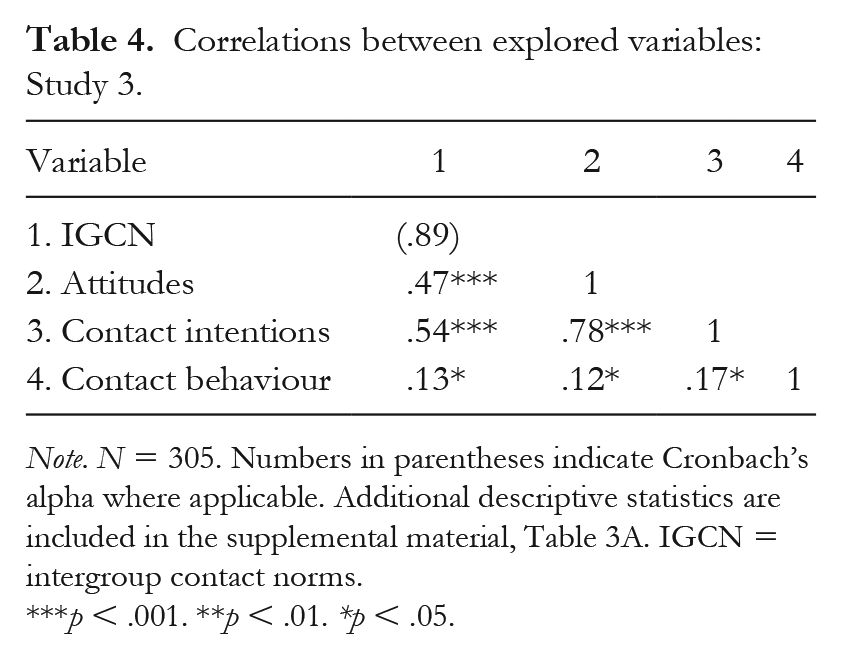
Note. N = 305. Numbers in parentheses indicate Cronbach’s alpha where applicable. Additional descriptive statistics are included in the supplemental material, Table 3A. IGCN = intergroup contact norms.
p < .001. **p < .01. *p < .05.
Attention and manipulation checks
After reading the article, participants were required to pass two attention checks, identical to those in Study 2. A manipulation check was also included (“According to the article you read, to what extent are Canadians interested in forming relationships with newcomers?”). Significant differences were found, F = 349.70, p < .001. Multiple pairwise comparisons (Tukey’s HSD) identified significant differences between all conditions: higher contact (M = 6.26, SD = 0.87), lower contact (M = 2.10, SD = 1.16), and control (M = 4.64, SD = 1.32).
Direct effects of the manipulation
Contrasts representing the manipulation were identical to Study 2. IGCN were higher in the higher contact norms condition versus the lower and control conditions (combined). IGCN were also lower in the lower contact norms condition versus the control condition. Contact intentions were also marginally higher in the higher contact norms versus the lower contact and no-contact conditions combined. No other direct effects were found (see Table 5).
Direct effects of contrasts (C1 and C2) on criterion variables: Study 3.
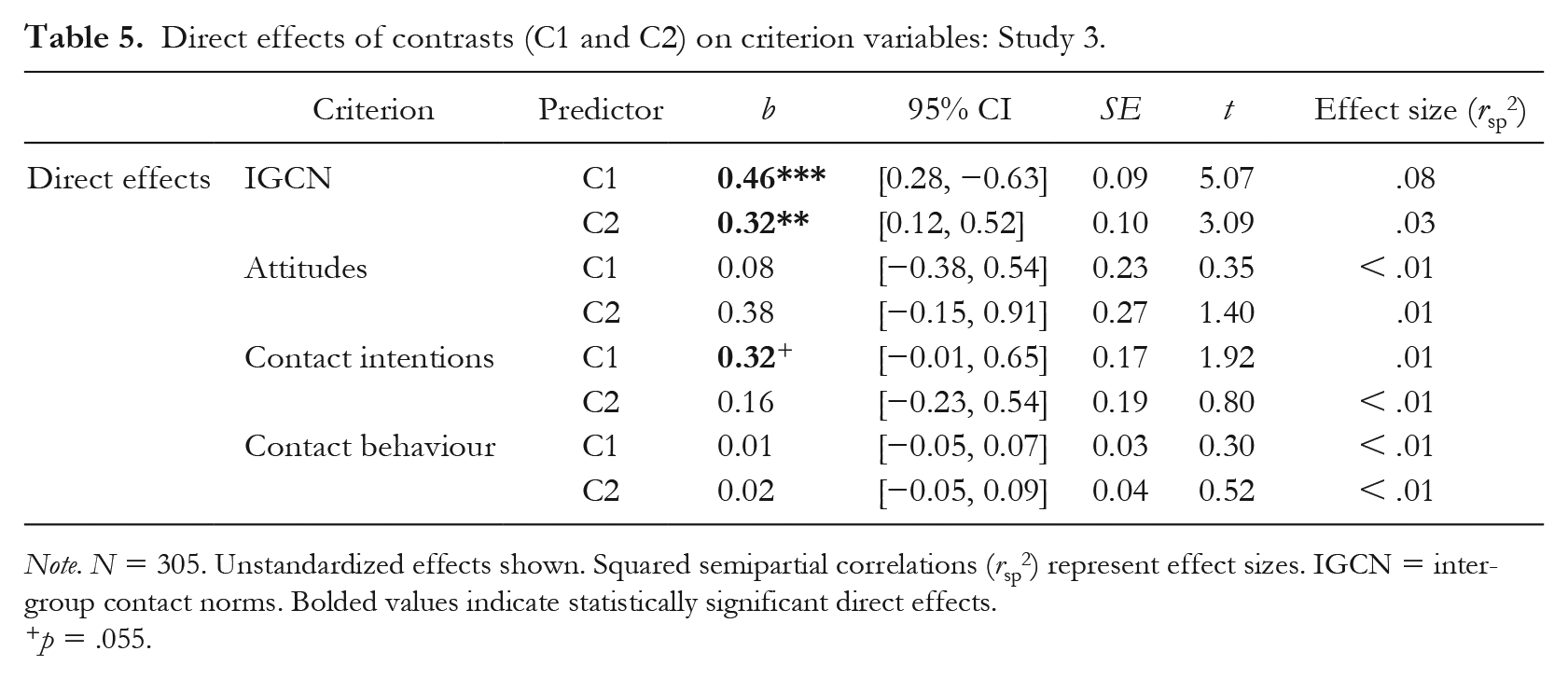
Note. N = 305. Unstandardized effects shown. Squared semipartial correlations (rsp2) represent effect sizes. IGCN = intergroup contact norms. Bolded values indicate statistically significant direct effects.
p = .055.
Mediation
Path analysis was conducted as in Study 2 (see Figure 3). C1 directly influenced perceived contact norms. C2 also impacted IGCN, such that not reading about contact with newcomers norms had a more positive impact on IGCN than reading about lower contact norms. Perceived contact norms significantly predicted attitudes toward newcomers, attitudes predicted intergroup contact intentions, and intentions predicted contact behaviour. An additional negative path emerged between C1 and attitudes once the variance from IGCN was partialled out. This suppression effect was unexpected. Indirect effects of the manipulation on contact behaviour were not significant; C1: b = 0.18, 95% CI [−0.04, 0.50]; C2: b = 0.12, 95% CI [−0.02, 0.39]. When testing alternative models, indirect effects on contact intentions through perceived norms and attitudes were significant for C1: b = 0.20, 95% CI [0.12, 0.30], and C2: b = 0.14, 95% CI [0.06, 0.25]. Relative indirect effects of the manipulation on attitudes were found to be significant; C1: b = 0.56, 95% CI [0.33, 0.83]; C2: b = 0.40, 95% CI [0.14, 0.70].
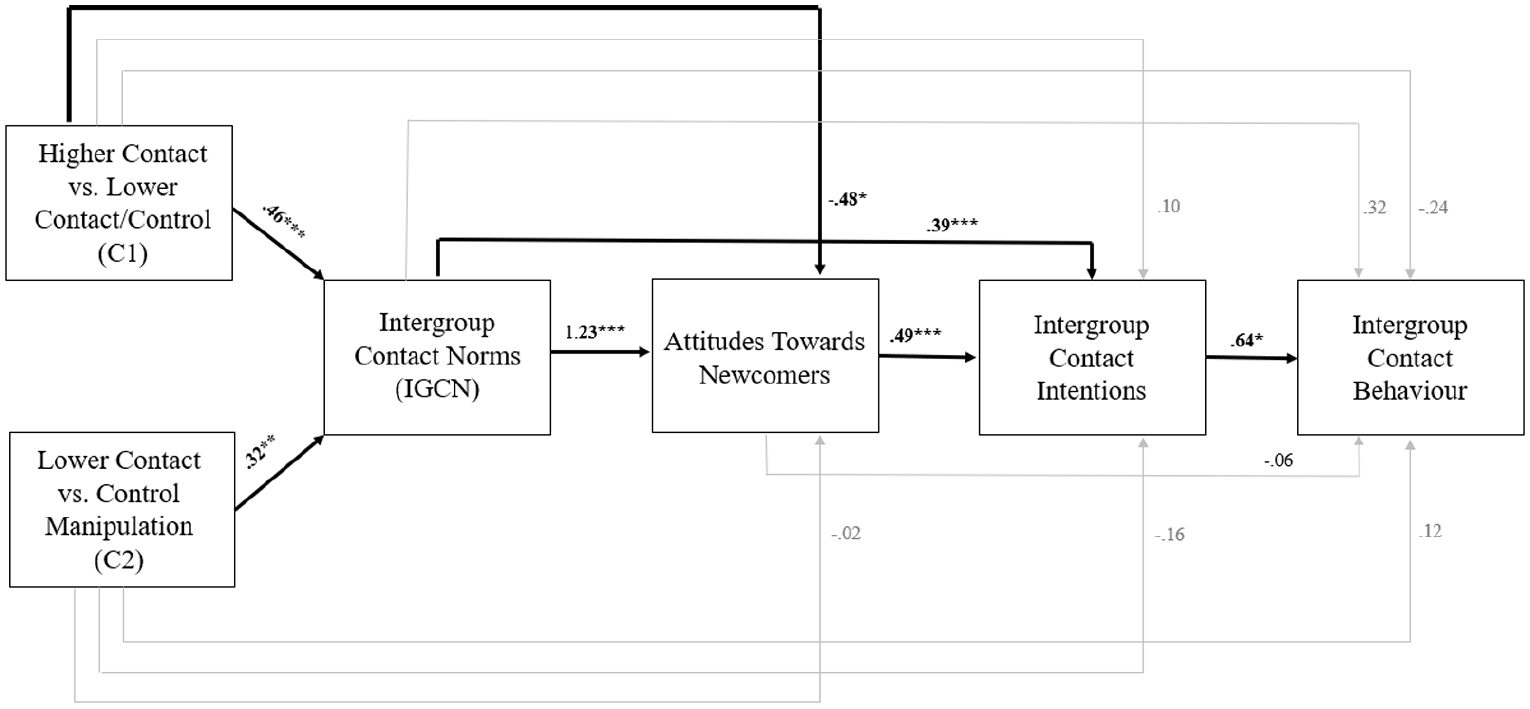
Path analysis for the relationship between IGCN and contact behaviour: Study 3.
Discussion
The serial relationships observed in Study 2 were largely replicated in a more diverse sample of Canadians in terms of gender, age, and geographic location, with a few minor differences. Promisingly, we found a marginally significant direct relationship between being in the higher contact norms condition (vs. lower contact and no-contact conditions combined) and contact intentions. Unfortunately, our manipulation did not have a statistically significant effect on contact behaviour, but, similar to Studies 1–2, it did influence attitudes and intentions. An unexpected suppression effect appeared between our higher (vs. lower and control contact) manipulation, such that, when taking into account the manipulation’s positive effect on norms, it also had a negative effect on attitudes toward newcomers. We propose that this unexpected finding is likely a statistical anomaly, and do not find this easily interpretable. The net indirect effect of reading about higher (vs. lower and control) contact norms on attitudes (and behavioural intentions) remains positive.
General Discussion
Across studies, we demonstrated that perceived norms surrounding contact between Canadians and newcomers can influence attitudes toward newcomers, and one’s willingness to engage in contact with them. These findings are consistent with the theory of planned behaviour (Ajzen, 1991), such that perceived ingroup norms and attitudes are important predictors of behavioural intentions. Our findings were also consistent with group norms theory (Sherif & Sherif, 1953), such that perceived norms were strong predictors of attitudes toward newcomers. A manipulation involving reading a single newspaper article had clear implications for the perceived norms of participants in Studies 2–3. This has implications for discussions of newcomers in the media. For example, newcomer-serving organizations seeking to attract volunteers should be careful with how requests are framed. Projecting perceptions of ingroup disinterest in or disengagement from outgroups may damage attitudes and contact intentions among individuals who might otherwise be desired volunteers. As such, it may be ideal for newcomer-serving agencies to focus on the contact that is occurring rather than on the lack of contact when seeking to attract new volunteers.
The current research addresses several criticisms of intergroup contact literature (Paluck et al., 2019) by including experimental approaches (Studies 2 and 3) in establishing causal links between social norms and intergroup contact, examining these relationships among adult populations, randomly assigning study participants to control and manipulation conditions (Studies 2 and 3), including study findings and recommendations relevant to policymakers, and including study materials in the supplemental material. In addition, our research explored the effects of social norms on Canadians’ intergroup contact with newcomers, who may or may not be members of targeted racial or ethnic groups explored in previous research studies (e.g., Tropp et al., 2014, 2016). Our findings are also consistent with the theory of parasocial contact (Schiappa et al., 2005), which posits that people can reduce prejudice not only from direct contact with different others (e.g., contact theory), but also through parasocial contact in media-rich environments such as television. Various forms of media may be useful for informing and instilling perceived ingroup norms surrounding contact with newcomers, be that real or fictitious.
It is important to note that our manipulations included both injunctive and descriptive norms surrounding contact. Although some literature suggests that injunctive norms have stronger influence on attitudes and behaviours than descriptive norms (e.g., Cialdini et al., 1990), other studies suggest that consistency between injunctive and descriptive norms may increase the magnitude of their effects on attitudes, particularly when individuals have limited knowledge on a topic (Smith & Louis, 2008). We felt that these latter findings were most likely to apply to the context we examined. Exceptions exist, of course, such as when injunctive norms may have a substantial effect on behaviour if incongruent descriptive norms are produced (e.g., “my ingroup supports a social movement, but are not currently behaving in accordance with those views”; Smith & Louis, 2008). In addition, the language used in the lower contact norms condition might have invoked experiences and feelings associated with negative contact, a type of contact found to have stronger effects on prejudice when compared with positive contact (Barlow et al., 2012), and which is also associated with future contact avoidance (Meleady & Forder, 2019). Therefore, it is possible that the Contrast 2 (C2; lower contact condition vs. control group) indirect effects on contact intentions were potentially driven by perceived negative contact. We also acknowledge that participants across studies may have had differing perceptions surrounding the origins of the newcomers in our manipulation. Both stigmatized (e.g., Syrians) and high-status (e.g., Americans) groups can be newcomers to Canada. Results may vary based on this, representing a limitation and something to be addressed in future work.
Future research could explore injunctive norms with discordant descriptive norms, prescribing or proscribing contact behaviour between ingroup members and newcomers as a means to potentially facilitate stronger behavioural changes. Alternatively, the type of norms manipulated may have stronger or weaker effects depending on the ingroup explored. For larger groups, like nationality groups, we feel that focusing on descriptive norms may be more realistic and could map more closely onto actual experiences people may have as they go about their daily lives. For smaller or more intimate groups (e.g., school classrooms, work meetings), a manipulation of injunctive norms about intergroup contact may be more plausible and may even more strongly influence attitudes and behaviours. Future research can investigate this.
Although we provide strong evidence for both existing and experimentally induced norms indirectly predicting both attitudes toward newcomers and behavioural intentions surrounding contact (i.e., Studies 2 and 3), evidence of impact on contact behaviour was limited (i.e., Study 3 was the only study to demonstrate indirect effects on contact behaviours). One potential reason for this is our means of measuring behaviour. Across studies, only about 7% to 9% of participants contacted a volunteer agency. Approximately one third of participants who did not contact a newcomer agency indicated that it was because they would like to do more research and would consider contacting the agency later. In Study 3 specifically, participants saw a countdown timer (embedded in Prolific), and therefore may not have felt that they had time to email service providers or research the organizations. Behavioural intentions may require some time to begin translating into actual behaviours, especially when behaviour is measured in this way. For this reason, we recommend future research consider employing longitudinal methodologies to assess whether such links between behavioural intentions and behaviours may manifest over time.
It is also possible that characteristics of our samples from Studies 1 and 2 versus Study 3 may have influenced the pattern of results we found. Gender may have played a driving role in our mixed results. It has been found that men may be more likely to use social norms to inform their prosocial behaviours, specifically in the form of donations (Croson et al., 2009). Indeed, gender proportions differ between Studies 1 and 2 (17.1 to 18.9% men) and Study 3 (57.3% men). Future research can explore the role that gender may play in how social norms translate into prosocial behaviours, such as contact with newcomers. Alternatively, it is also possible that the nature of the sample, which consisted of students, may have weakened potential links between behavioural intentions and behaviours. While prosocial behaviours such as volunteering have been found to be predicted by attitudes and subjective norms in student populations, perceived time constraints and financial limitations have been described as significant barriers to student volunteering (Hyde & Knowles, 2013). Indeed, it is possible that similar barriers may have weakened links between behavioural intentions and actual behaviours for our student participants (Studies 1 and 2). Contact behaviours requiring less time commitment (e.g., having a coffee with a newcomer or connecting over email/teleconferencing software) might facilitate greater contact behaviour. We also acknowledge the limitation that attitudes, intentions, and behaviours were measured with single items; we recommend the use of valid and reliable multi-item scales to assess these constructs as they are developed. Additionally, our article manipulation may not have been strong enough to induce immediate behavioural change. Future research could consider introducing multiple indicators of social norms, or other forms of media (e.g., videos, social media posts), and measuring the effects of media reflecting social norms longitudinally. Future complementary work could also measure the actual normative beliefs of specific social groups, and then collapse these perceptions into a total-ingroup norms, by which relationships with behavioural intentions and actual contact behaviours could be measured.
Although we were able to draw causal inferences from the experimental methodologies we employed for Studies 2 and 3, we cannot comment on the durability of the effects of manipulation on participants’ attitudes, intentions, and behaviours. Additionally, given the limitation that our data collection was limited to single time points, we recommend that future research implement longitudinal elements in conjunction with experimental methodologies to further understand the causal role of perceived contact norms on attitudes and behaviours toward newcomers. In addition, although in our research studies we defined the concept of “newcomers” as referring to immigrant and refugee groups, it is possible that some respondents attributed different meanings to this concept (see Spruyt & Elchardus, 2012), such as referring to international students.
Conclusion
We provide evidence that perceived social norms surrounding contact between ingroup and outgroup members can play an important role in attitudes toward outgroups and intentions to interact with these individuals in the future. Our findings are specific to the context of contact between Canadians and newcomers to Canada but may generalize to similar contexts. Our findings suggest that norm-based interventions can be a means to promote positive intergroup relations. Promoting positive norms about intergroup contact to the dominant group may be a valuable tool for increasing contact with newcomers, an important outcome given that intergroup contact can facilitate positive integration for new immigrants and refugees.
Supplemental Material
sj-docx-1-gpi-10.1177_13684302221106926 – Supplemental material for “Everybody’s doing it”: Exploring the consequences of intergroup contact norms
Supplemental material, sj-docx-1-gpi-10.1177_13684302221106926 for “Everybody’s doing it”: Exploring the consequences of intergroup contact norms by Harrison Boss, Elena Buliga and Cara C. MacInnis in Group Processes & Intergroup Relations
Footnotes
Funding
The author(s) disclosed receipt of the following financial support for the research, authorship, and/or publication of this article: The research was funded by an internal grant to the third author (University of Calgary Research Grants Committee Seed Grant).

Supplemental material
Supplemental material for this article is available online.
Notes
References
Supplementary Material
Please find the following supplemental material available below.
For Open Access articles published under a Creative Commons License, all supplemental material carries the same license as the article it is associated with.
For non-Open Access articles published, all supplemental material carries a non-exclusive license, and permission requests for re-use of supplemental material or any part of supplemental material shall be sent directly to the copyright owner as specified in the copyright notice associated with the article.
