



Abstract
Efforts to increase diversity can often be met with resistance amongst high-status groups. Despite this, little is known about majority-group responses towards increasing gender diversity, and the psychological mechanisms underlying them. Across five studies, we extended intergroup threat theory to advance understanding of resistance towards gender diversity amongst men in masculine domains (Studies 1–3 and 5) and amongst women in feminine domains (Study 4). Experimental evidence from male STEM students (Study 1) and professionals (Studies 2 and 5) revealed that realistic threats underlie resistance. Experimentally reducing realistic threat (N = 165) reduced negative reactions. Whereas realistic-threat-based resistance towards increasing gender diversity did not extend to women in female-dominated domains (Study 4, N = 105), there was a tendency for women high in ingroup identity to show a similar pattern to men. We discuss how we advance theory on diversity resistance, and discuss strategies which may effectively reduce resistance.
Recent decades have seen a push for increased gender diversity in male-dominated domains. As a result, organizations are employing a variety of gender diversity initiatives, policies, and programs in an attempt to increase the representation of women within their workforce. Despite their benefits, these initiatives and the changes they are designed to bring about are not always well received, especially by men. Such reactions suggest we need to face an uncomfortable truth: increasing gender diversity can be met with resistance amongst men, and in turn create further challenges for women who attempt to enter careers in these fields.
In the current studies, we investigate men’s resistance towards increasing gender diversity in masculine domains. We specifically focus on why there is resistance to gender diversity, for whom this resistance is strongest, and how it can be reduced. To do so, we systematically integrate, for the first time to our knowledge, intergroup threat theory (ITT; W. G. Stephan et al., 2009) within research on reactions towards gender diversity.
Resistance Towards Gender Diversity: The Potential Role of Threat
Although previous work has identified the importance of group-based threats in driving diversity resistance amongst high-status racial and ethnic group members (Craig & Richeson, 2014, 2018; Dover et al., 2016; Kaiser et al., 2013; Major et al., 2018; Outten et al., 2012), there is currently no consensus about the specific nature of the threat underlying such reactions. This is especially the case for gender; although some work has suggested that men can display negative outcomes when informed about potential changes to gender status hierarchies (Anisman-Razin et al., 2018; Kuchynka et al., 2018), little is known about the potential psychological mechanisms underlying such reactions.
Given that increasing gender diversity would challenge the current status hierarchy in masculine domains, we expect such progress to threaten men (Wilkins & Kaiser, 2014) due to said hierarchy being perceived as changing or unstable (Scheepers & Ellemers, 2018). There is some evidence that prototypicality threat (concern that one’s ingroup would no longer best represent the community as a whole) underlies resistance towards increased gender diversity amongst men in STEM (Danbold & Huo, 2017). However, as prototypicality threat is primarily identity-based (i.e., involves concerns surrounding the nature and protection of our social identities; Schmitt & Branscombe, 2001), this work does not consider the potential role of other types of concerns in driving gender diversity resistance. Indeed, Danbold and Huo (2017) themselves have called for future work to disentangle how different types of threat may account for resistance towards gender diversity.
The current research answers this call by developing and testing an intergroup threat model of resistance towards gender diversity. In doing so, we go above and beyond past work by applying a well established theoretical framework to systematically investigate gender diversity in masculine domains. This allows us to not only explicitly differentiate between two distinct forms of group-based threat and investigate their roles in driving resistance, but also investigate for whom these threat perceptions are most consequential and how they could potentially be reduced.
The ITT offers a helpful theoretical framework because it differentiates between two different types of threat: realistic, that is, threats to a group’s political power, economic resources, and general welfare; and symbolic, that is, threats to a group’s values, belief system, or culture (W. G. Stephan et al., 2009). This realistic/symbolic threat distinction has been widely used to understand negative attitudes held towards many societal groups, with meta-analytic findings (Riek et al., 2006) suggesting that negative outgroup attitudes correlate with both realistic (r = .42) and symbolic threats (r = .45). Despite this, the ITT has yet to be applied to help understanding attitudes towards women and increasing diversity in masculine domains.
In the absence of consistent research on ITT and gender, we develop exploratory hypotheses regarding the roles of realistic and symbolic threat for our first study, which we further explore and replicate in subsequent studies. In terms of realistic threat, classical theories have stressed the importance that competition over material resources has in creating intergroup conflict and hostility (realistic group conflict theory; Sherif & Sherif, 1969). Therefore, if men perceive their dominance in masculine domains as being legitimate and entitled (Carli, 1999), the prospect of more women entering the field may lead to perceptions of increased competition over the economic resources they have traditionally monopolized.
Predictions surrounding realistic threat are also derived from research on gender-based zero-sum thinking, that is, the idea that women’s gains directly correspond to men’s losses (Ruthig et al., 2017)—a tendency that correlates with sexism and reduced support for diversity policies (Kuchynka et al., 2018; Ruthig et al., 2017). Given that realistic resources are tangible, they may be more readily perceived from a zero-sum perspective in comparison to symbolic values, and thus increasing gender diversity could pose a greater realistic than symbolic threat to men in masculine domains. Finally, models of gender stereotypes that prescribe how men and women should behave (Burgess & Borgida, 1999) suggest that men’s stereotypic agentic traits (e.g., competitiveness, having business sense and leadership abilities; Prentice & Carranza, 2002) could place a stronger focus on realistic threats and, in turn, influence how men perceive increasing diversity.
Although predictions are less strong, they may also be made for the role of symbolic threat. Studies investigating gender differences in values, attitudes, and beliefs suggest that men and women may pose symbolic threats to one another (Ackelsberg & Diamond, 1987), and Danbold and Huo’s (2017) finding surrounding the role of prototypicality threat also suggests that more symbolic, identity-based concerns may underlie resistance towards increasing gender diversity in STEM.
To summarize, we propose that intergroup threat perceptions (realistic and/or symbolic) may underlie resistance towards increasing gender diversity in masculine domains. Specifically, we proposed a model in which intergroup threat mediates the relationship between increasing gender diversity and resistance towards women and gender diversity initiatives (GDIs). We believe a systematic investigation of the nature of the threat underlying gender diversity resistance is essential in order to be able to design GDIs that effectively target the relevant type(s) of threat and, in turn, successfully reduce resistance amongst men in masculine domains.
For Whom is Resistance Strongest? Ingroup Identity as a Moderator
Within ITT, ingroup identity—the extent to which one’s group membership is important to the self-concept (Ashmore et al., 2004; Luhtanen & Crocker, 1992)—tends to moderate responses to threat, such that high identifiers are more likely to both perceive and react to threats (Bizman & Yinon, 2001; Riek et al., 2006; W. G. Stephan et al., 2002). Furthermore, highly identified men are more likely to sexually harass women, display more aggressive behaviors, and hold more negative perceptions of female leaders when threatened (Dall’Ara & Maass, 1999; Dresden et al., 2018; Maass et al., 2003; Wade & Brittan-Powell, 2001), suggesting a relationship between masculine identity, threat, and negative attitudes or behaviors towards women.
We therefore proposed that gender diversity resistance may be moderated by gender identification. Specifically, we proposed a model in which increasing gender diversity has an indirect effect on resistance via perceptions of intergroup threat, with this indirect effect being moderated by ingroup identification (i.e., moderated mediation). In other words, we expected that men who were highly identified with their gender would be more susceptible to perceiving increasing gender diversity as a realistic and/or symbolic threat, which in turn would increase their resistance towards these changes (see Figure 1).
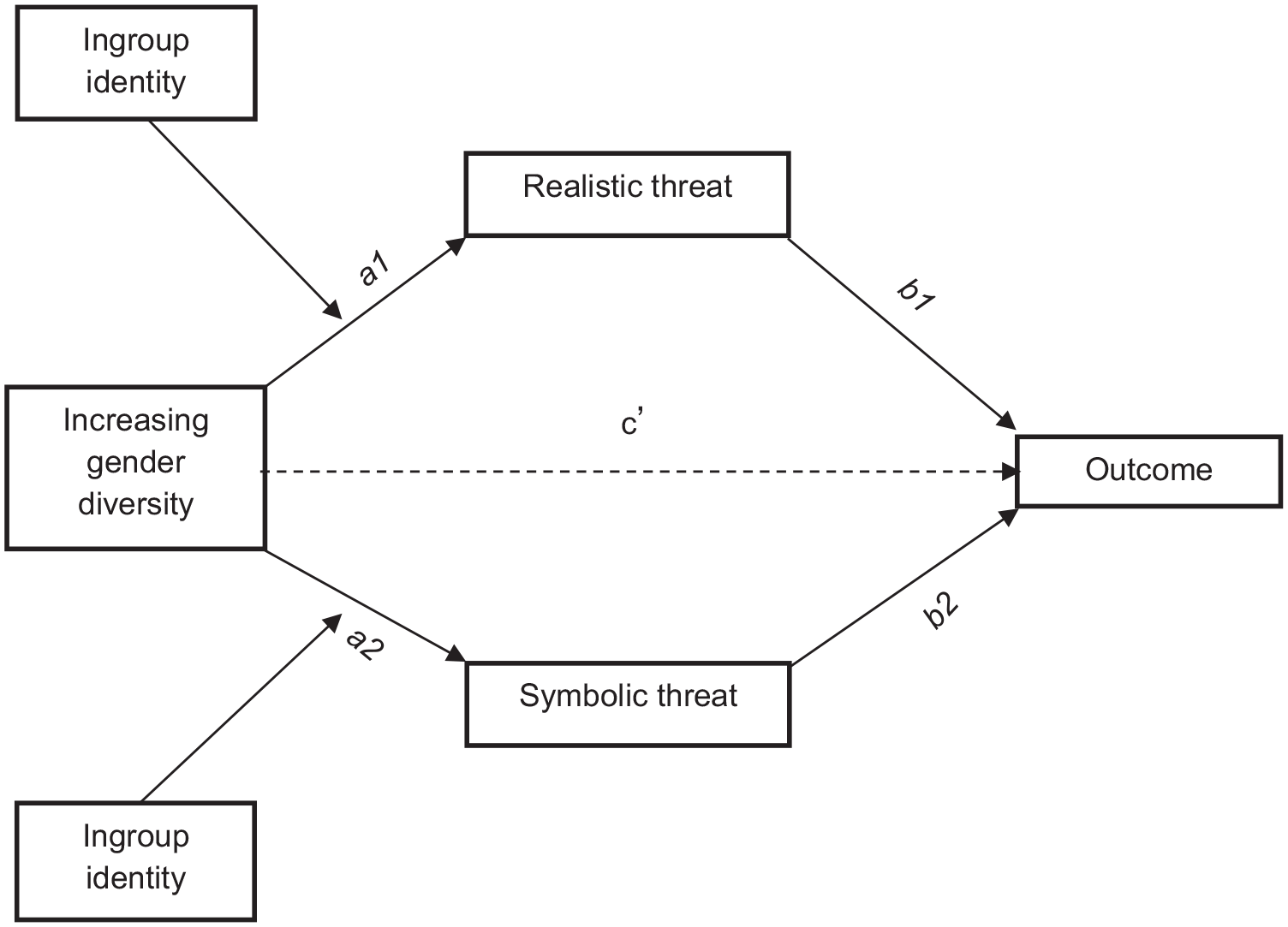
Conceptual model for predicting resistance towards increasing gender diversity.
An Effect Specific to Masculinity?
Finally, we explore gender as an individual factor by investigating whether our proposed model extends to women in the typically female-dominated area of nursing. This study addresses a larger theoretical question regarding the potential gendered nature of threat—whether the experience of threat in the face of increasing gender diversity is specific to masculinity, given men’s greater propensity to engage in zero-sum thinking (Ruthig et al., 2017) and their gender stereotypes prescribing a stronger focus on realistic concerns (Prentice & Carranza, 2002), or whether it is the product of a more general ingroup–outgroup dynamic in fields traditionally dominated by one gender.
The Present Research
We conducted five experimental studies to investigate the outlined model amongst men in masculine domains (Studies 1–3 and 5) and women in feminine domains (Study 4). We used varied samples including male STEM students (Study 1), STEM professionals (Studies 2, 3, and 5), and female nursing students (Study 4), and focused both on understanding (Studies 1, 2, 4, and 5) and reducing (Study 3) gender diversity resistance.
Our main manipulation (Studies 1–4) was modelled after Danbold and Huo (2017), and consisted of a mock online article discussing a GDI either succeeding or failing at improving gender diversity. The manipulation was not explicit either about realistic threats (participants were not told that jobs, power, or resources were directly affected as a result of the GDI) or symbolic threats (participants were not told that the values, norms, or culture of the community were affected). For a conceptual replication, we used a second experimental manipulation in Study 5, in which threat was more subtly induced via organizational profiles that either did or did not emphasize diversity values. All manipulation checks were successful and are reported in supplemental material 1.
Study 1: STEM Students
Study 1 aimed to provide an initial test of the proposed intergroup threat model. We investigated whether male students in masculine domains who perceived the number of women in their domain to be increasing would display increased resistance towards such changes, and whether this relationship would be (a) mediated by realistic and/or symbolic threat, and (b) moderated by masculine identity. We conceptualized resistance in terms of participants’ support for GDIs, and their levels of modern sexism (i.e., the belief that gender discrimination is no longer a problem)—both of which could have adverse consequences for women’s ability to enter and persist in careers in masculine domains.
Methods
Participants
A minimum sample size of 100 male students was targeted based on a power analysis of previous studies which experimentally manipulated threat (Chen et al., 2017; Danbold & Huo, 2015; Florack et al., 2003; Li & Zhao, 2012; Maddux et al., 2008; Major et al., 2018), deriving an average effect size of d = 0.88. It should, however, be noted that this power analysis was conducted for comparisons between two independent groups, and did not account for our more complex analyses. Post hoc sensitivity analyses were therefore conducted, the results of which revealed an acceptable level of power across all of the significant indirect effects obtained in the current research (see supplemental material 2).
After eliminating incomplete responses, our final sample included 178 male students enrolled in male-dominated courses at a large UK university (STEM students = 142, business management students = 36; 62.5% undergraduate, 19.7% master’s, 17.8% PhD students). Participants’ ages ranged from 18 to 48 years (M = 21.8 years, SD = 3.46). Greater detail regarding participant demographics across all studies can be found in supplemental material 3.
Procedure and design
Participants were invited to participate via email, and were told we were interested in their reactions towards an article discussing future career prospects in their subject area. Participants were randomly assigned to one of two conditions. In the prospect of diversity condition (n = 88), participants read about a successful GDI in their domain, and were told that women were expected to make up 50% (or just over) of those in UK STEM/business careers in 5 years’ time (see Appendix A). In the no prospect of diversity condition (n = 90), participants were told that the GDI was failing, and that men would therefore remain the majority group within the domain over the next 5 years (see Appendix B). After reading the article, participants completed the online questionnaire containing the study variables that follow.
Measures
Realistic and symbolic threat
The scales were adapted for gender from validated scales utilized by C. W. Stephan et al. (2000) and W. G. Stephan et al. (1999). These scales have been adapted previously to measure threats posed by immigrants (Pereira et al., 2010; Rohmann et al., 2006); political parties (Osborne et al., 2008); social policies (Clifton, 2011); international college students (Charles-Toussaint & Crowson, 2010); and different racial, ethnic, and religious groups (Aberson & Gaffney, 2009; Tausch et al., 2009; Velasco González et al., 2008). It should be noted that despite medium to high correlations between realistic and symbolic threats, the two types of threat are conceptually distinct and tend to predict different outcomes (Aberson & Gaffney, 2009; W. G. Stephan et al., 2000).
Nine items assessed the extent to which participants perceived women entering their domain as a realistic threat. Items included: “Women have made it more difficult for men to get jobs in my professional field” and “Women are taking power away from men in my professional field.” Ten items assessed the extent to which participants perceived women entering their domain as a symbolic threat, with items including: “Women should learn to conform to the rules and norms of my professional field” and “The increasing number of women in my field is undermining workplace culture.” Participants responded using a 7-point scale (1 = strongly disagree, 7 = strongly agree). Responses were averaged into a single score for realistic (α = .79) and symbolic threat (α = .87), with higher scores denoting stronger threat.
Support for gender diversity initiatives
A three-item measure originally developed by Danbold and Huo (2017) assessed participants’ support for the GDI discussed in the article. These items were: “I think efforts like the Women in STEM/Business Project are a poor use of resources” (reverse-coded), “I think the Women in STEM/Business Project is a good thing” and, “If the Women in STEM/Business Project were up for a vote, I would vote in support of it.” Participants responded using a 7-point scale (1 = strongly disagree, 7 = strongly agree). Responses were averaged into a single score (α = .92), with higher scores denoting greater support for the GDI.
Modern sexism
The eight-item Modern Sexism Questionnaire (Swim et al., 1995) was used to measure the extent to which participants believed sexism was still an issue in today’s society. Items included: “Discrimination against women is no longer a problem” and “Society has reached the point where women and men have equal opportunities for achievement.” Participants responded using a 5-point scale (1 = strongly disagree, 5 = strongly agree). Responses were averaged to obtain an overall score (α = .91), with higher scores denoting more modern sexism.
Ingroup identity
The Private and Identity Subscales from Luhtanen and Crocker’s (1992) Collective Self-Esteem Scale were used to measure the strength of participants’ gender identity. We collapsed across the subscales given that previous research conducted within similar contexts followed this strategy (Dall’Ara & Maass, 1999; Maass et al., 2003) and, additionally, in order to reduce the number of variables in the model, thus increasing its power. The measure had eight items and included statements such as, “Being male is an important reflection of who I am” and “I feel good about being male.” Participants responded using a 7-point scale (1 = strongly disagree, 7 = strongly agree). Responses were averaged to obtain an overall score (α = .80), with higher scores denoting stronger male ingroup identity.
Results
Preliminary analyses
Means, standard deviations, and bivariate correlations for all variables across all studies can be found in supplemental material 4. Analyses were performed across STEM and business domains given that there were no significant differences by domain in terms of realistic threat, F(1, 176) = 0.001, p = .86, d = 0.03, or symbolic threat, F(1, 176) = 0.21, p = .74, d = 0.06. Importantly, domain did not interact with the experimental condition to predict any of the outcome variables (all ps > .29).
Mediation models
We first tested for the presence of a mediation effect in which realistic and/or symbolic threat mediated the relationship between increasing gender diversity and resistance. This was achieved using Hayes’s PROCESS (V3.5.3; 2018) Model 4 with 5,000 bootstrapped samples to estimate 95% confidence intervals for the proposed indirect effects. The full results of the analyses can be found in Table 1.
Mediation analyses: Study 1.
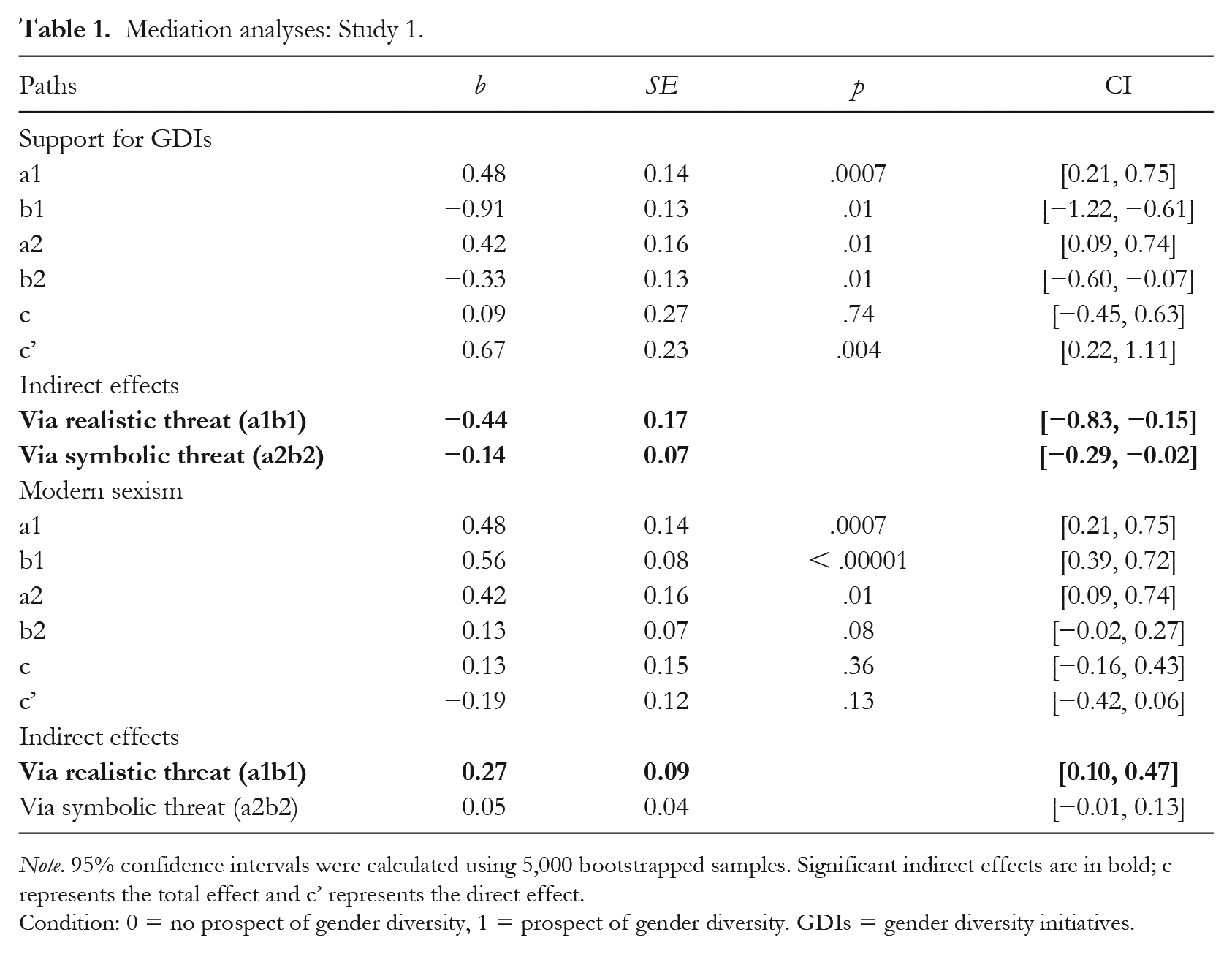
Note. 95% confidence intervals were calculated using 5,000 bootstrapped samples. Significant indirect effects are in bold; c represents the total effect and c’ represents the direct effect.
Condition: 0 = no prospect of gender diversity, 1 = prospect of gender diversity. GDIs = gender diversity initiatives.
Mediation for support for GDIs
Realistic threat acted as a mediator, b = −0.44, SE = 0.17, 95% CI [−0.83, −0.15], such that men who read about the prospect of increasing gender diversity displayed increased realistic threat, which in turn reduced their support for GDIs. Although a much smaller effect, the indirect effect of condition on support for GDIs through symbolic threat was also significant, b = −0.14, SE = 0.07, 95% CI [−0.29, −0.02], suggesting symbolic threat also acted as a mediator within the model.
Mediation for modern sexism
Realistic threat, b = −0.27, SE = 0.09, 95% CI [0.10, 0.47], mediated the relationship between condition and modern sexism; men who read about the prospect of increasing gender diversity experienced greater perceptions of realistic threat and, in turn, displayed increased modern sexism. Symbolic threat did not act as a mediator within the model, b = 0.05, SE = 0.04, 95% CI [−0.01, 0.13].
Moderated mediation models
Next, we investigated whether those high in ingroup identification were more likely to experience threat and, in turn, display resistance when primed with the prospect of increasing gender diversity in their domain. Hayes’s (2018) PROCESS Model 7 was used to test this moderated mediation model (see Figure 1 for all pathways). This rationale is consistent with previous conceptualizations and empirical work surrounding diversity resistance, which also used Model 7 to test for a potential moderated mediation effect (Danbold & Huo, 2017). The conditional indirect effects obtained from all of the moderated mediation analyses conducted across the current studies can be found in supplemental material 5.
Moderated mediation for support for GDIs
Realistic threat mediated the relationship between increasing gender diversity and reduced support for GDIs amongst those high, b = −0.48, SE = 0.23, 95% CI [−0.98, −0.09], but not low, b = −0.35, SE = 0.21, 95% CI [−0.82, 0.01], in gender identification. However, the index of moderated mediation was contained within a confidence interval that included zero [−0.35, 0.21], suggesting these indirect effects were not significantly different from one another. None of the individual conditional indirect effects or indexes of moderated mediation [−0.16, 0.10] were significant for symbolic threat.
Moderated mediation for modern sexism
Similarly to the model above, although mediation appeared to occur only for those high in gender identification, b = 0.29, SE = 0.12, 95% CI [0.07, 0.54], the index of moderated mediation indicated that there was no significant difference between the indirect effects at each level of the moderator [−0.13, 0.20]. Again, none of the individual conditional indirect effects or the index of moderated mediation [−0.04, 0.06] for symbolic threat were significant.
Discussion
Study 1 provided initial evidence for our intergroup threat model of gender diversity resistance; when men read about the prospect of increasing gender diversity in their domain, they experienced significantly higher realistic threat, which in turn predicted decreased support for GDIs and increased modern sexism. Although evidence for symbolic threat was less strong, it did predict support for GDIs, meaning its role in driving men’s resistance towards increasing gender diversity could not be conclusively ruled out at this stage and required further investigation. Furthermore, the potential role of gender identification in moderating men’s resistance was also inconclusive at this stage, and therefore required further investigation.
Study 2: STEM Professionals
Study 2 aimed to replicate the previous findings amongst a sample of male STEM professionals and investigate whether our model would extend to additional outcomes (attitudes towards female coworkers, female supervisors, and diversity hiring policies), as these are other forms of resistance which could have adverse consequences for women already in STEM careers. Furthermore, the inclusion of these measures allowed us to tap into attitudes distinct from our experimental manipulation—as well as measuring their support for the GDI discussed in the article, we also measured participants’ attitudes towards women and diversity policies in their domain on a more general level.
Methods
Participants
Male STEM professionals working full or part time were recruited using Amazon Mechanical Turk. In total, we received 190 responses. To ensure the sample was representative, we followed recent recommendations and removed responses with duplicate IP addresses (MacInnis et al., 2020). We also manually excluded participants whose job title did not fall under a STEM field, and those who self-reported they were not currently working in STEM. After excluding these participants, our final sample size was 149. Participants’ ages ranged from 20 to 63 years (M = 33.6 years, SD = 9.07).
Procedure and design
An identical procedure to that of Study 1 was implemented; participants were randomly assigned to either read the prospect of diversity article (n = 76) or the no prospect of diversity article (n = 73), after which, they completed the questionnaire containing the main study variables. As we expected that our sample would primarily contain non-UK participants, we altered the online article manipulations so that they referred to the number of women entering STEM domains on a global scale, rather than focusing solely on the context of the UK (see Appendices C and D).
Measures
In addition to the measures used in Study 1 (realistic threat: α = .81, symbolic threat: α = .93, support for GDIs: α = .81, modern sexism: α = .85, ingroup identity: α = .88), we added an adapted version of the Attitudes Towards Diversity Scale (Montei et al., 1996). The scale consisted of 27 items and three subscales measuring attitudes towards female coworkers (e.g., “I find that female workers seem to be less productive on average”; α = .86), female supervisors (e.g., “Relative to male supervisors, female supervisors seem to be less effective”; α = .92), and diversity hiring policies (e.g., “I am against hiring by quotas even when done out of necessity”; α = .82). Higher scores on each subscale correspond to more negative attitudes. Although related, the three subscales focus on different targets of men’s resistance, so we analysed them as three separate outcome variables.
Results
Mediation models
We once again tested our proposed mediation model using Hayes’s (2018) PROCESS Model 4. Given that findings were similar across outcome variables, we describe these results together. Path coefficients and indirect effects for each outcome can be found in Table 2. Realistic threat mediated the relationship between condition and each of the outcomes (with the exception of attitudes towards female supervisors), supporting predictions that it plays an important role in driving men’s gender diversity resistance. Symbolic threat did not mediate the relationship between condition and any of the outcomes.
Mediation analyses: Study 2.
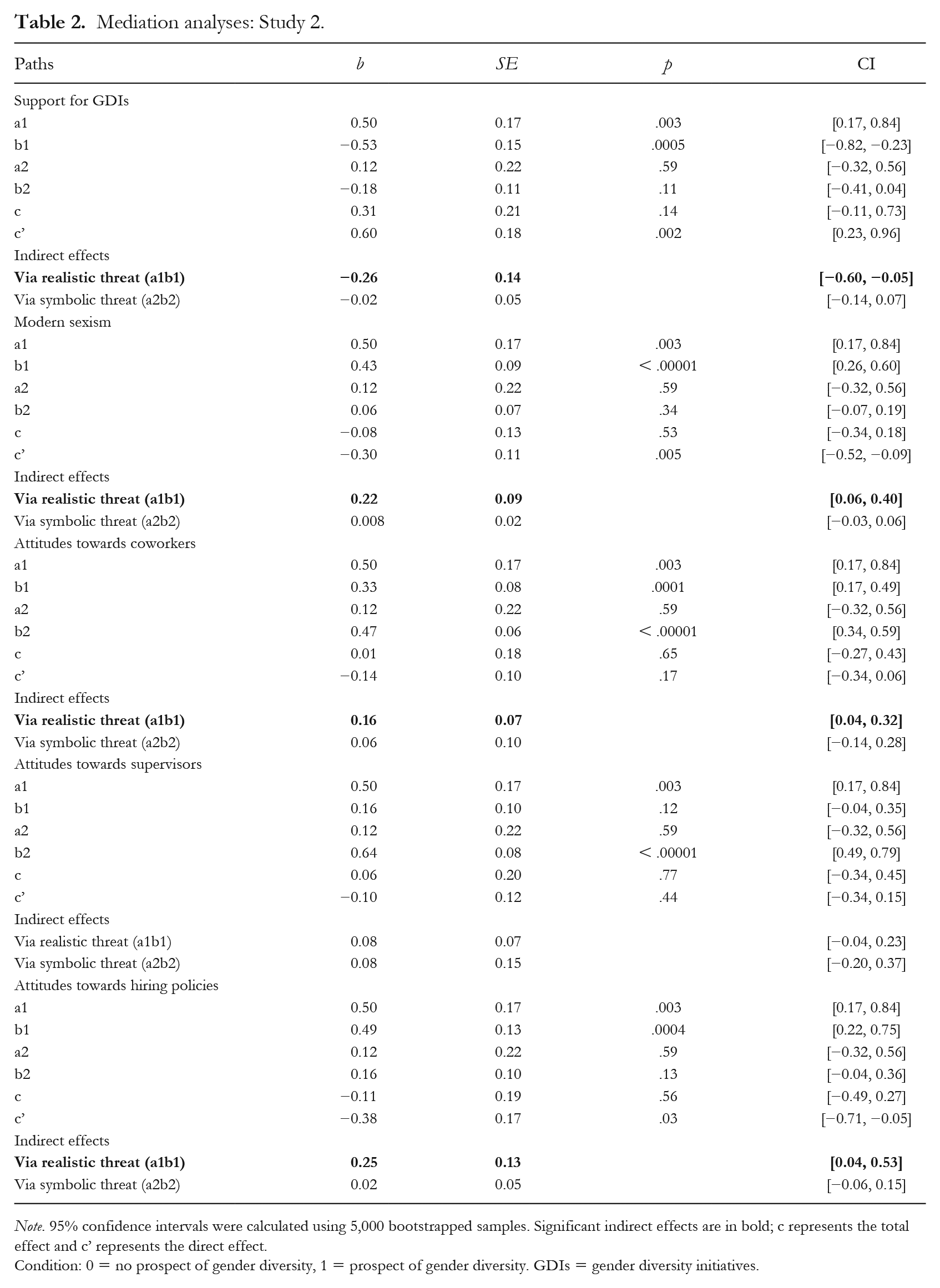
Note. 95% confidence intervals were calculated using 5,000 bootstrapped samples. Significant indirect effects are in bold; c represents the total effect and c’ represents the direct effect.
Condition: 0 = no prospect of gender diversity, 1 = prospect of gender diversity. GDIs = gender diversity initiatives.
Moderated mediation models
Moderated mediation analyses using PROCESS Model 7 revealed significant conditional indirect effects on the realistic threat pathway for all models (with the exception of attitudes towards supervisors) at high levels of gender identification. However, the indexes of moderated mediation were not significant, suggesting no significant differences between the conditional indirect effects. As in Study 1, the index for the symbolic threat pathway was not significant, and there were no individual significant conditional indirect effects.
Discussion
The findings of Study 2 provide further support for an intergroup threat model of resistance—when men learned about the prospect of increasing gender diversity in their domain, they experienced significantly higher realistic (but not symbolic) threat and, in turn, displayed decreased support for GDIs and increased modern sexism. Our findings also extended to two additional outcomes: negative attitudes towards female coworkers and towards diversity hiring policies.
Study 3: Reducing Realistic Threat for STEM Professionals
In Study 3 we sought to provide further evidence that realistic threat underlies men’s resistance towards gender diversity. If realistic threat is, as our previous findings suggest, key to understanding resistance, we proposed that experimentally reducing concerns surrounding economic resources and political power (through the addition of a third experimental condition) should reduce men’s realistic threat perceptions, and in turn reduce their resistance.
Methods
Participants
Male professionals (N = 206) working full or part time within a STEM domain were recruited using Prolific Academic in exchange for £1.70. As in Study 2, we removed responses from duplicate IP addresses, and excluded participants who self-reported they were not currently working within a STEM field, resulting in a final sample size of 165. Participants’ ages ranged from 18 to 64 years (M = 34.0 years, SD = 9.46).
Procedure and design
A similar procedure to that of Studies 1 and 2 was implemented, except that a third experimental condition was introduced. Participants were randomly assigned to either the prospect of diversity condition (n = 52), the no prospect of diversity condition (n = 52), or the (new) threat reduction condition (n = 61). In this condition, participants read about a successful GDI and were told that gender diversity in STEM was set to greatly increase over the next 5 years. However, the article also stated that, because of technological advances, the number of jobs in STEM-related fields was expected to increase exponentially, so opportunities for men in the domain would remain the same (see Appendix E). We believed this framing of increasing gender diversity would limit men’s ability to interpret it as a zero-sum game, which in turn would reduce their concerns surrounding realistic resources.
After reading the article, participants completed an online questionnaire identical to that of Study 2 (realistic threat: α = .80, symbolic threat: α = .91, support for GDIs: α = .90, modern sexism: α = .88, ingroup identity: α = .83, attitudes towards coworkers: α = .87, attitudes towards supervisors: α = .91, attitudes towards hiring policies: α = .82).
Results
Preliminary analyses
Between-subjects ANOVAs were used to assess whether our new experimental condition had a direct effect on participants’ levels of realistic and symbolic threat. The analyses indicated a significant difference between the three conditions in terms of realistic threat, F(2, 162) = 9.86, p < .001. Post hoc Bonferroni corrections found that those in the prospect of diversity condition (M = 3.36, SD = 0.86) experienced significantly higher realistic threat in comparison to both the no prospect of diversity (M = 2.70, SD = 0.80), t = −4.03, p < .001, d = 0.80, and the threat reduction (M = 2.78, SD = 0.83), t = 3.64, p = .001, d = 0.69, conditions. There was no significant difference between the no prospect of diversity and the threat reduction conditions in terms of realistic threat, t = −0.47, p = 1.00.
There was no significant difference between the prospect of diversity condition (M = 2.87, SD = 1.11), the no prospect of diversity condition (M = 2.60, SD = 1.10), and the threat reduction condition (M = 2.48, SD = 0.99), F(2, 162) = 1.94, p = .15, f = .16, in terms of symbolic threat.
Mediation models
As in previous studies, Hayes’s (2018) PROCESS Model 4 was used to conduct mediation analyses, with our independent variable (i.e., experimental condition) being multicategorical (0 = no prospect of diversity, 1 = prospect of diversity, 3 = threat reduction) and using contrast coding to include comparisons between all three levels of the independent variable within the model. Path coefficients and indirect effects for each outcome can be found in Table 3. Significant indirect effects were obtained across all outcome variables; in comparison to participants in both the no prospect of diversity and the threat reduction conditions, those in the prospect of diversity condition displayed increased realistic threat, which in turn predicted more negative outcomes. While symbolic threat was related to some of the outcomes, it did not act as a mediator within the models. Consistent with predictions, the effect of experimental condition on each of the outcome variables was mediated by realistic threat; men in the threat reduction condition showed significant reductions in their realistic threat levels (at a level similar to those who were not told about the prospect of increasing diversity), which in turn predicted increased support for GDIs, reduced modern sexism, and resulted in less negative attitudes towards female coworkers, supervisors, and diversity hiring policies.
Mediation analyses: Study 3.
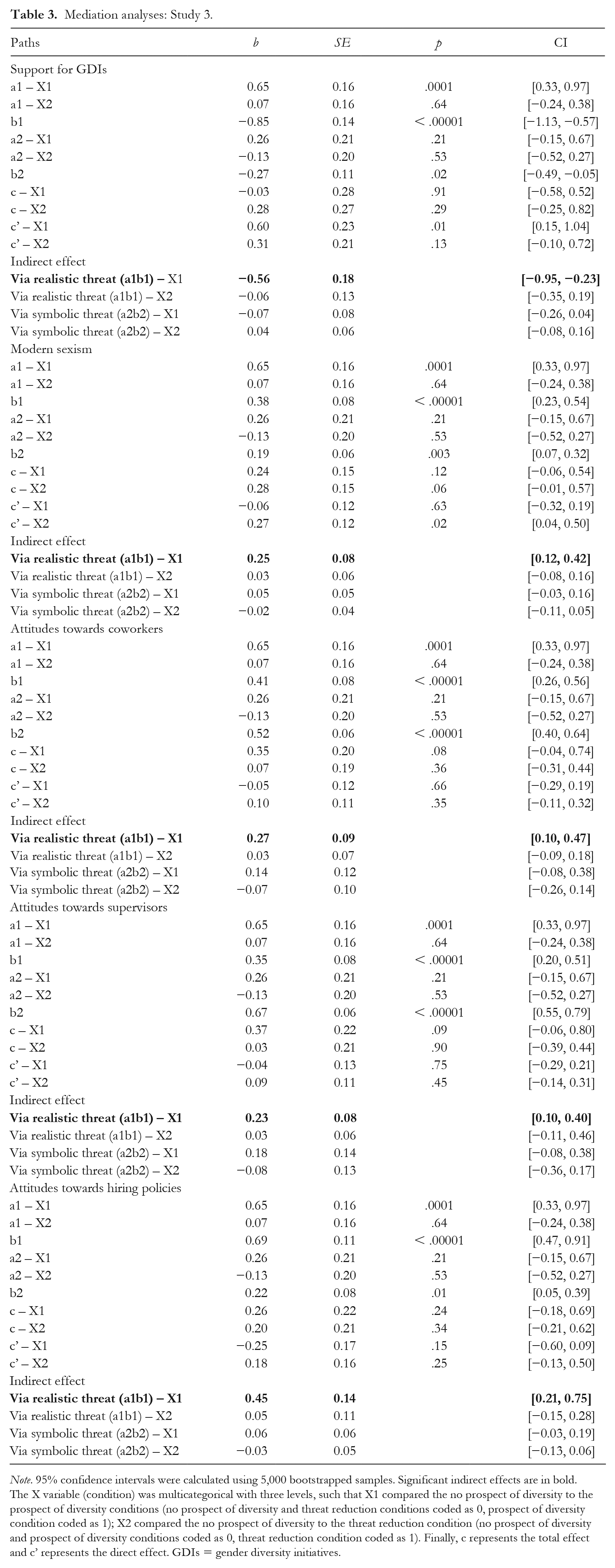
Note. 95% confidence intervals were calculated using 5,000 bootstrapped samples. Significant indirect effects are in bold. The X variable (condition) was multicategorical with three levels, such that X1 compared the no prospect of diversity to the prospect of diversity conditions (no prospect of diversity and threat reduction conditions coded as 0, prospect of diversity condition coded as 1); X2 compared the no prospect of diversity to the threat reduction condition (no prospect of diversity and prospect of diversity conditions coded as 0, threat reduction condition coded as 1). Finally, c represents the total effect and c’ represents the direct effect. GDIs = gender diversity initiatives.
Moderated mediation models
We tested whether ingroup identity moderated the indirect effect of condition on resistance via realistic and/or symbolic threat. Hayes’s (2018) PROCESS Model 7 was used and, as before, the independent variable was multicategorical. The analyses produced nonsignificant indexes of moderated mediations for all models, suggesting that no moderated mediation was taking place.
Discussion
Framing increasing gender diversity in such a way as to explicitly eliminate zero-sum perceptions successfully reduced men’s perceptions of realistic threat (regardless of their masculine identity), which in turn increased support for diversity initiatives, reduced modern sexism, and improved attitudes towards female coworkers, supervisors, and diversity hiring policies. Besides providing further evidence for our intergroup threat model, these findings point to a potential method of framing increasing diversity to ensure it is well received by men—by removing men’s ability to perceive it as a zero-sum game.
Study 4: Nursing Students
We next investigated whether the same psychological mechanism underlies women’s resistance towards increasing gender diversity in the female-dominated area of nursing. We chose to focus on nursing as we felt it would offer a suitable comparison to the masculine domain of STEM in terms of workforce representation (men make up 11% of U.K. nurses; women represent 24% of the U.K. STEM workforce; Nursing & Midwifery Council, 2020; “Women in STEM,” 2021) and in terms of average salary in the domain (£25,273 for nursing graduates and £26,023 for STEM graduates in the UK; see www.payscale.com). We felt doing so was important, given that our previous findings highlighted the role of realistic resources in driving resistance.
We proposed two competing hypotheses for the study. First, realistic threat reaction may be specific to men, given their greater propensity to engage in zero-sum thinking (Ruthig et al., 2017), as well as their gender stereotypes prescribing a stronger focus on realistic rather than symbolic threats (Prentice & Carranza, 2002). If this were the case, we would not expect to see realistic-threat-based resistance amongst women in feminine domains. Instead, based on the finding of C. W. Stephan et al. (2000)—who found that women’s negative attitudes towards men were predicted by symbolic threat—and the fact that women’s stereotypical communal traits (warm, kind, cooperative) prescribe a weaker focus on realistic threats, the prospect of increasing gender diversity could elicit symbolic threat and in turn produce resistance amongst women.
Alternatively, our intergroup threat model may be typical of most ingroup–outgroup dynamics in any field dominated by one gender. In other words, realistic-threat-based resistance may not be specific to men, but instead may be an effect seen amongst all individuals (i.e., both men and women) within domains that have traditionally been dominated by their gender group, and in which their ingroup has had a monopoly over the valued economic resources available. According to this rationale, we would predict a similar pattern for women in nursing as seen for men in STEM, such that women would experience greater resistance towards increasing gender diversity due to the perception of realistic threats.
Methods
Participants
Female students enrolled in a nursing course at a large UK university were recruited for the study. In total, we received 123 responses, but after removing incomplete ones, the final sample size was 105. Participants’ ages ranged from 18 to 50 years (M = 27.8 years, SD = 7.72).
Procedure and design
An invitation to take part in the study was sent via email and social media. An identical procedure to that of Studies 1 and 2 was implemented; participants were randomly assigned to either the prospect of diversity condition (n = 55) or the no prospect of diversity condition (n = 50), and were asked to read an online article discussing a GDI either succeeding or failing to increase the representation of men in nursing domains.
Measures
We used similar measures as those in previous studies (realistic threat: α = .73, symbolic threat: α = .76, support for GDIs: α = .87, ingroup identity: α = .75), with a few exceptions. First, items were adapted for use in the context of female students in nursing domains (e.g., “Men are making it more difficult for women to get jobs in . . .” for realistic threat). Second, we removed the Modern Sexism Scale because it was not relevant for measuring attitudes towards men, and the Attitudes Towards Diversity Scale because, as in Study 1, the current sample was made up of university students (rather than professionals) and therefore the scale was not relevant for use within this particular context.
Results
Mediation model
Analyses using Hayes’s (2018) PROCESS Model 4 (see Table 4) revealed that the relationship between increasing gender diversity and support for GDIs was not mediated by either realistic, b = −0.12, SE = 0.12, 95% CI [−0.39, 0.08], or symbolic threat, b = −0.03, SE = 0.06, 95% CI [−0.15, 0.11]. As such, the mediation pattern found amongst men in masculine domains did not extend to the sample of women in nursing.
Mediation analysis: Study 4.
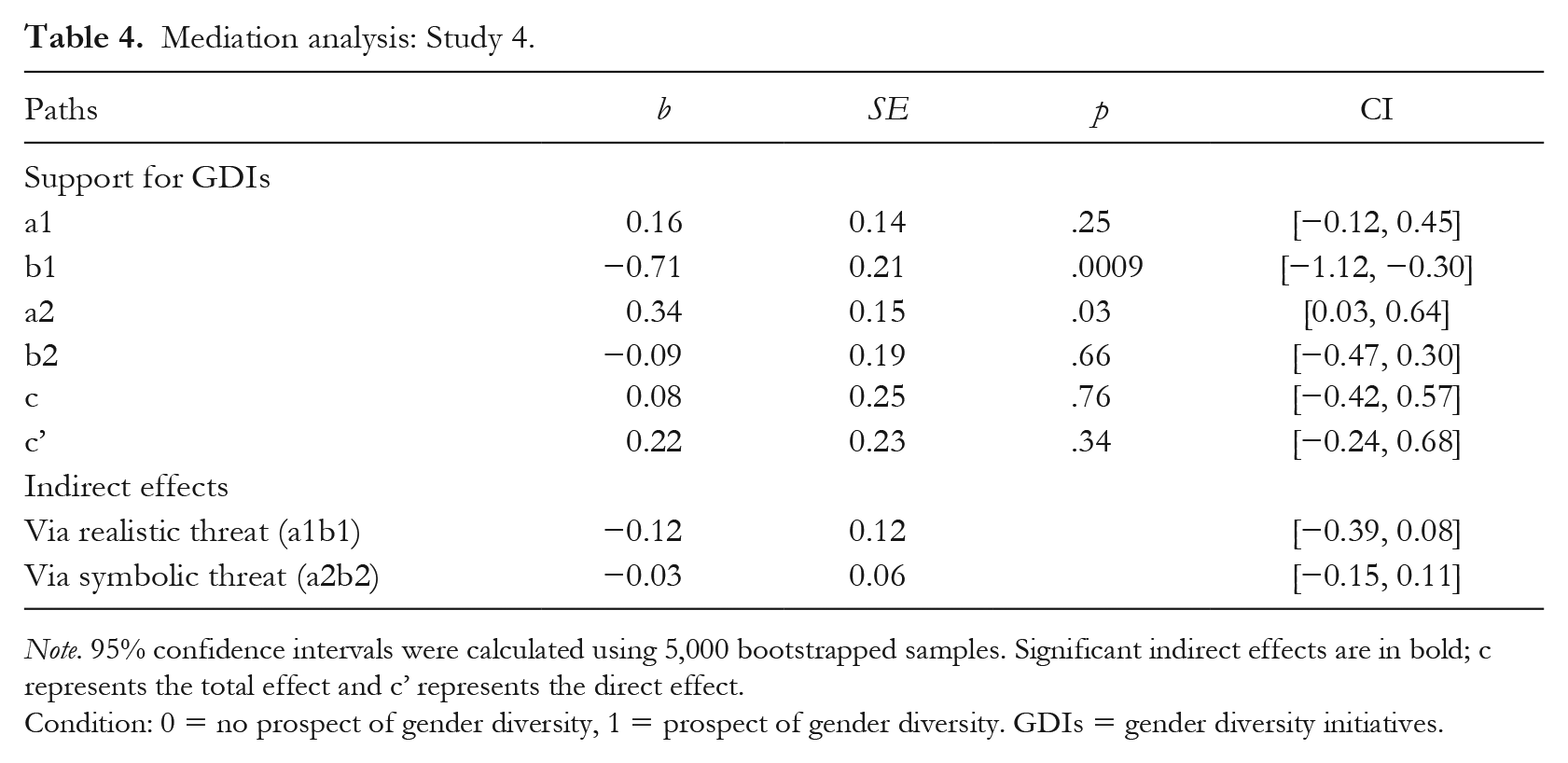
Note. 95% confidence intervals were calculated using 5,000 bootstrapped samples. Significant indirect effects are in bold; c represents the total effect and c’ represents the direct effect.
Condition: 0 = no prospect of gender diversity, 1 = prospect of gender diversity. GDIs = gender diversity initiatives.
Moderated mediation model
Hayes’s (2018) PROCESS Model 7 was used to explore the potential moderating role of gender identification amongst the female sample. As in previous studies, although the indirect effect on support for GDIs via realistic threat was only significant for high identifiers, the index of moderated mediation indicated no moderation of the mediation effect was taking place [−0.56, 0.03].
Discussion
The findings indicate that realistic-threat-based resistance towards increasing gender diversity may be an effect specific to masculinity. This is an important initial finding, as it addresses a larger theoretical question regarding the potential gendered nature of gender diversity resistance, and suggests there may be characteristics specific to men (e.g., increased likelihood to engage in zero-sum thinking, prescriptive gender stereotypes) which may result in them perceiving realistic threat and in turn displaying resistance when faced with the prospect of increasing gender diversity in masculine domains.
Despite this, although the index of moderated mediation was nonsignificant, the individual indirect effects suggested there may be a tendency for women high in gender identification to show a similar pattern of resistance to that of men. As such, further research is needed to investigate whether realistic-threat-based resistance towards gender diversity is in fact specific to masculinity, or whether it is more typical of an ingroup–outgroup dynamic in a domain traditionally dominated by one gender.
Study 5: Organizational Messages
The primary aim of Study 5 was to replicate our model using a more implicit experimental manipulation. Specifically, we aimed to investigate the effect of a manipulation which made no explicit references to demographic changes within the domain. Instead, we investigated whether the mere presence of organizational diversity messages (e.g., diversity values, awards, and initiatives) in company profiles resulted in the realistic-threat-based resistance seen across Studies 1–4.
We also included additional outcome variables such as participants’ willingness to work/apply for the company, concerns about the company’s unfair treatment of employees based on gender, and perceptions of antimale bias. Given the nature of the study, we also aimed to conduct further analyses to investigate how diversity organizational messages affect female STEM professionals. However, given that our main goal was replication of the model established in previous studies, we report the findings of these additional analyses in supplemental material 6.
Method
Participants
Male and female STEM professionals working full or part time within a STEM domain were recruited using Prolific Academic in exchange for £1.70. In total, we received 369 responses. After removing incomplete responses, those from duplicate IP addresses, and excluding participants who were not currently working within STEM, our final sample size was 263 (163 men). Participants’ ages ranged from 19 to 64 years (M = 33.8 years, SD = 9.47).
Procedure and design
A 2 x 2 between-subjects experimental design was implemented to investigate how organizational message (diversity vs. no diversity) and gender (male vs. female) affected participants’ threat perceptions and resistance. The manipulations were developed based on work by Dover et al. (2016), who successfully used company profiles to elicit cardiovascular responses to threat amongst a high-status group.
As a cover story, we told participants we were interested in their evaluations of a STEM company’s recruitment materials. Participants were randomly assigned to a condition in which they read a company profile which had either a prodiversity organizational message or which made no reference to diversity (see Appendices F and G). All participants then completed an online questionnaire similar to that in Studies 1–3 (realistic threat: α = .80, symbolic threat: α = .88, support for GDIs: α = .95, gender identification: α = .85). The support for GDIs measure was adapted slightly for use within this context; given that the company profile manipulation made no explicit reference to a GDI, the measure evaluated participants’ support towards initiatives on a more general level (e.g., “I think gender diversity initiatives in STEM are a poor use of resources”).
Results
Single moderated mediation model
Given that the sample included both male and female STEM professionals, moderated mediation analysis was conducted using Hayes’s (2018) PROCESS Model 7 to investigate whether the indirect effect of condition on support for GDIs (via realistic and/or symbolic threat) was moderated by gender.
As can be seen in Table 5, the analyses revealed that realistic threat mediated the relationship between experimental condition and support for GDIs amongst men (b = −0.25, SE = 0.13, 95% CI [−0.54, −0.01]), but not amongst women (b = 0.04, SE = 0.12, 95% CI [−0.19, 0.27]), such that men who read the prodiversity profile experienced greater realistic threat and displayed decreased support for GDIs. Symbolic threat did not act as a mediator for either men or women within the model.
Single moderated mediation analyses: Study 5.
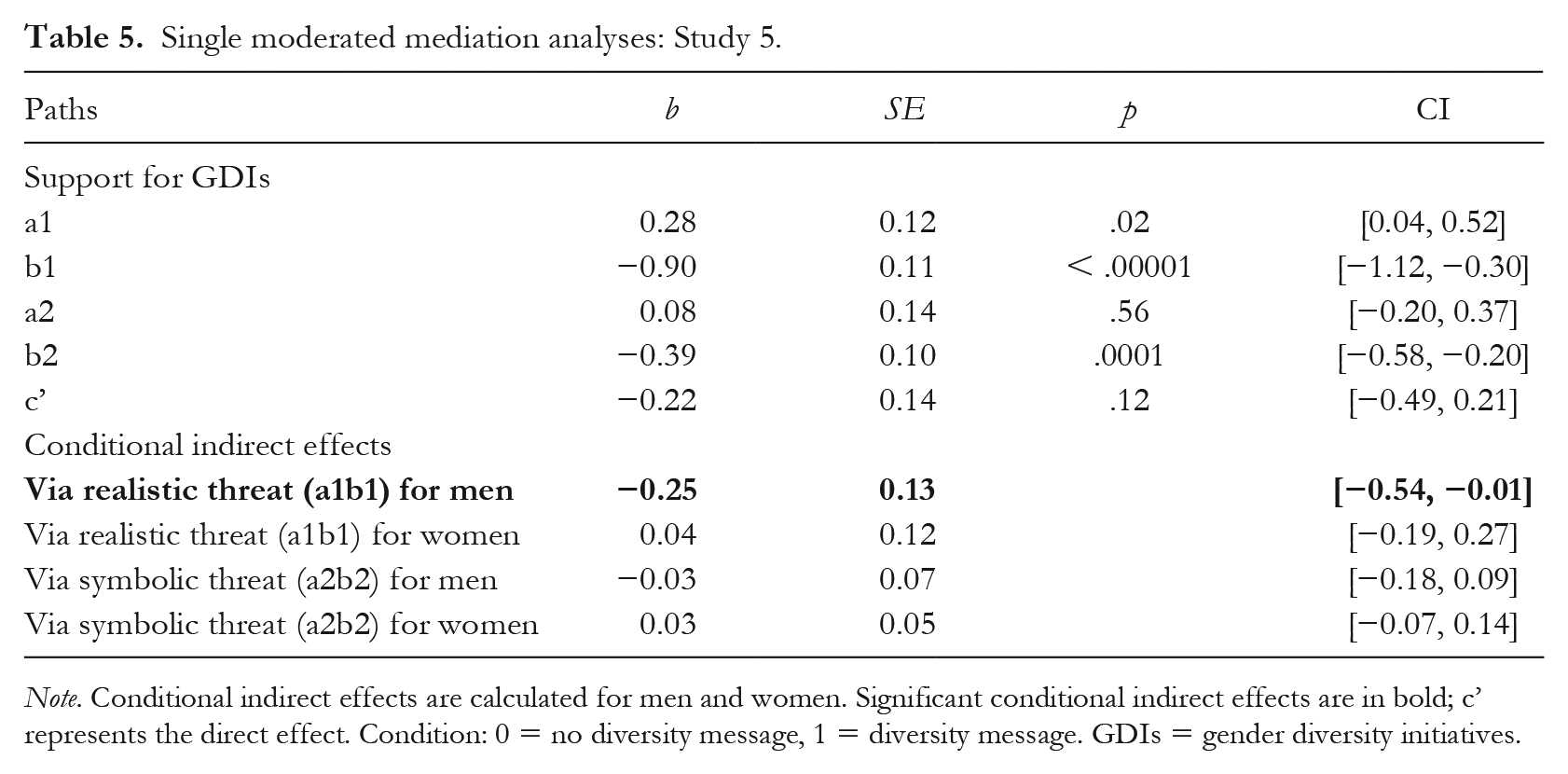
Note. Conditional indirect effects are calculated for men and women. Significant conditional indirect effects are in bold; c’ represents the direct effect. Condition: 0 = no diversity message, 1 = diversity message. GDIs = gender diversity initiatives.
Multiple moderated mediation model
Finally, as in previous studies, we investigated the potential moderating role of gender identification. As the predicted model involved a three-way interaction (Diversity Message x Gender x Gender Identification), Hayes’s (2018) PROCESS macro Model 11 was used (see Figure 2 for all pathways).
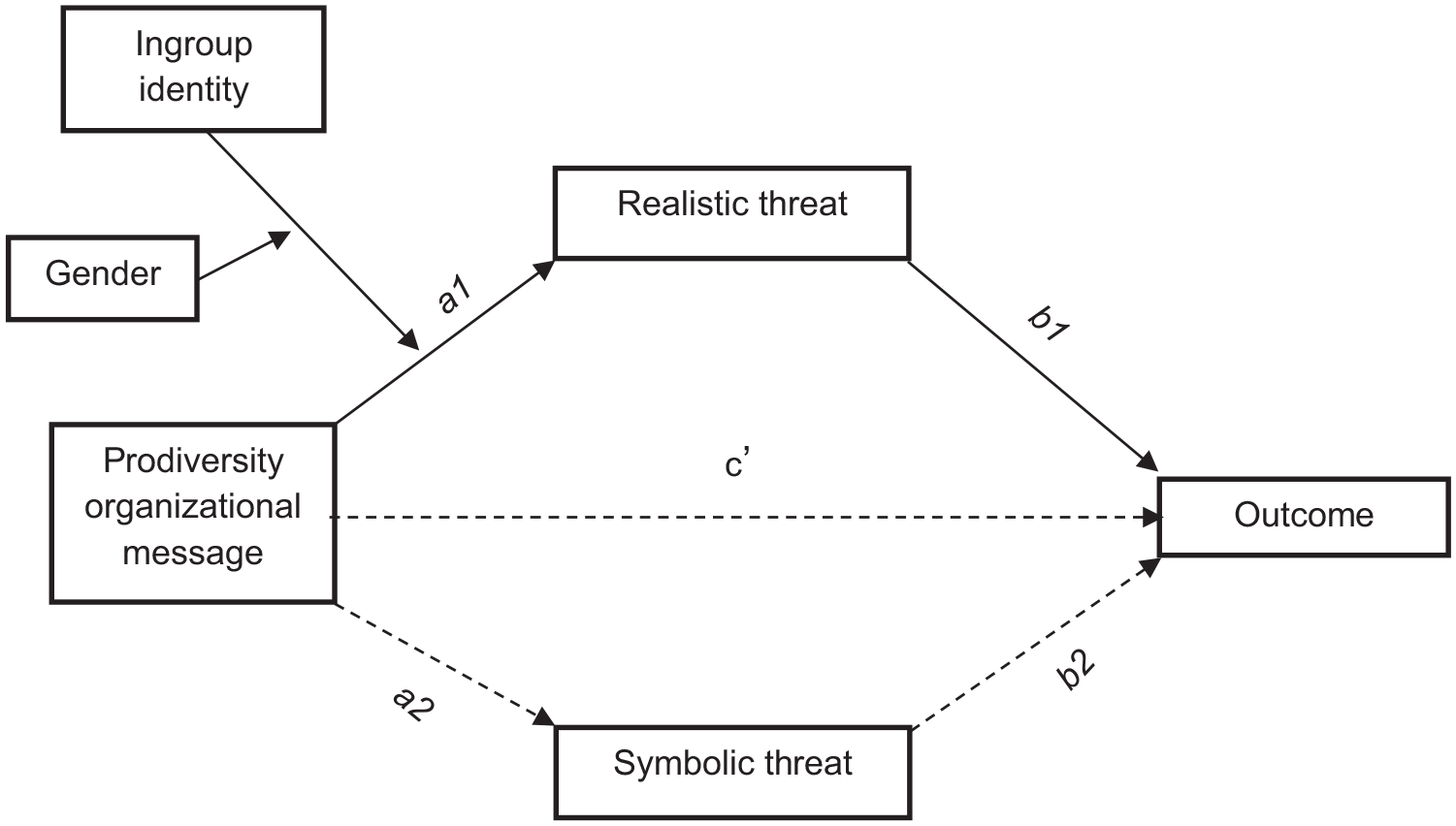
Conceptual model for all Study 5 analyses predicting support for gender diversity initiatives.
Although a significant conditional indirect effect via realistic threat was present for men high in gender identification, the index of moderated mediation suggested there was no difference between each of the indirect effects. The indexes of moderated mediation and conditional indirect effects were nonsignificant for the symbolic threat pathway.
Discussion
The use of a more implicit manipulation of diversity in Study 5 adds to the findings of previous studies and further extends our intergroup threat model of resistance. As in previous findings, analyses strongly suggested that the presence of organizational diversity structures and values at a STEM company can elicit realistic threat amongst men, and in turn increase their resistance towards GDIs.
However, it should be noted that there is a potential confound present in the manipulations—the control condition contains a picture of two White men, whereas the diversity message condition contains a photo of a Black woman alongside a White woman. Future work could address this potential limitation by ensuring the racial make-up of both company profiles are matched. Despite this, given that the pattern of findings replicates those of previous studies which exclusively focused on gender diversity, we suspect gender diversity threat played an important role in this study as well.
Summary Analyses
Finally, we conducted integrative data analysis (Curran & Hussong, 2009) to test the robustness of the effects obtained across the studies of the current work. Given our data contained unique characteristics that distinguished our participants (e.g., STEM vs. business domains, students vs. professionals), we conducted a one-step Integrative Data Analysis using a fixed effects model. Using this approach, we pooled the data for the control versus diversity prime comparison and conducted mediation and moderated mediation analyses whilst statistically controlling for study, domain, and sample. Given that no mediation or moderated mediation effects were present amongst the female sample in Study 4, it was not included in the analyses, meaning overall (conditional) indirect effects were calculated for men in masculine domains only. Support for GDIs was the only variable used across all four studies, it was the only outcome included in the IDA.
Results
Indirect effect of gender diversity primes on support for GDIs
The analyses (see Table 6) revealed a significant overall indirect effect of the gender diversity primes on support for GDIs via realistic threat, b = −0.32, SE = 0.08, 95% CI [−0.48, −0.19]. The overall indirect effect via symbolic threat was also marginally significant, although this was a considerably smaller effect, b = −0.06, SE = 0.03, 95% CI [−0.13, −0.005].
Integrative data analyses for indirect effects.
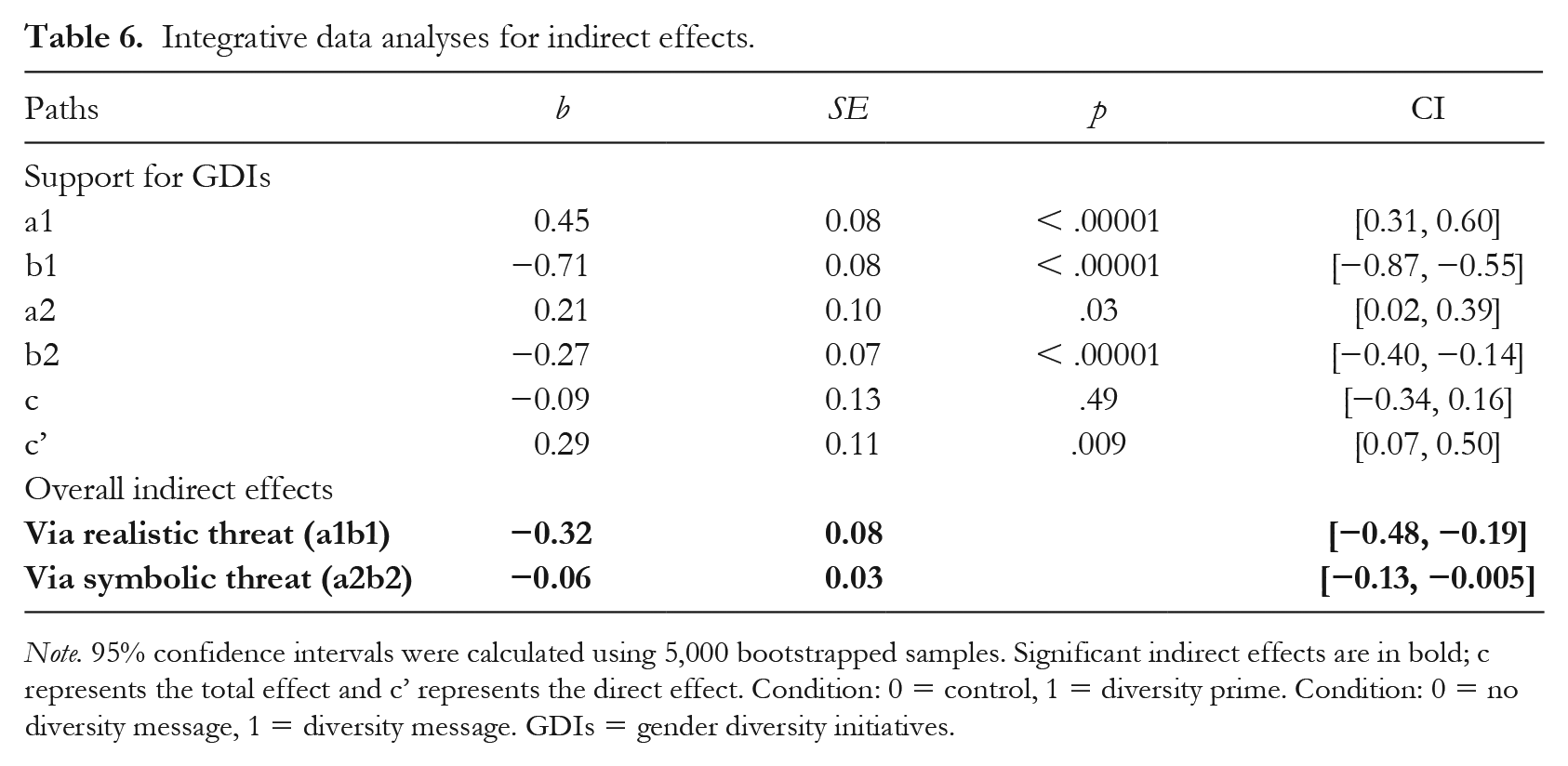
Note. 95% confidence intervals were calculated using 5,000 bootstrapped samples. Significant indirect effects are in bold; c represents the total effect and c’ represents the direct effect. Condition: 0 = control, 1 = diversity prime. Condition: 0 = no diversity message, 1 = diversity message. GDIs = gender diversity initiatives.
Conditional indirect effect of gender diversity primes on support for GDIs
The analyses (see Table 7) revealed a significant overall effect of the gender diversity primes on support for GDIs via realistic threat and at the high level of ingroup identification, b = −0.40, SE = 0.10, 95% CI [−0.60, −0.22]. The overall effect of condition on support for GDIs was also significant for the low identification–realistic threat pathway, b = −0.25, SE = 0.09, 95% CI [−0.44, −0.08], and the high identification–symbolic threat pathway, b = −0.08, SE = 0.04, 95% CI [−0.18, −0.006], although the effect sizes for these were considerably smaller than that for the high identification–realistic threat pathway.
Integrative data analyses for conditional indirect effects.
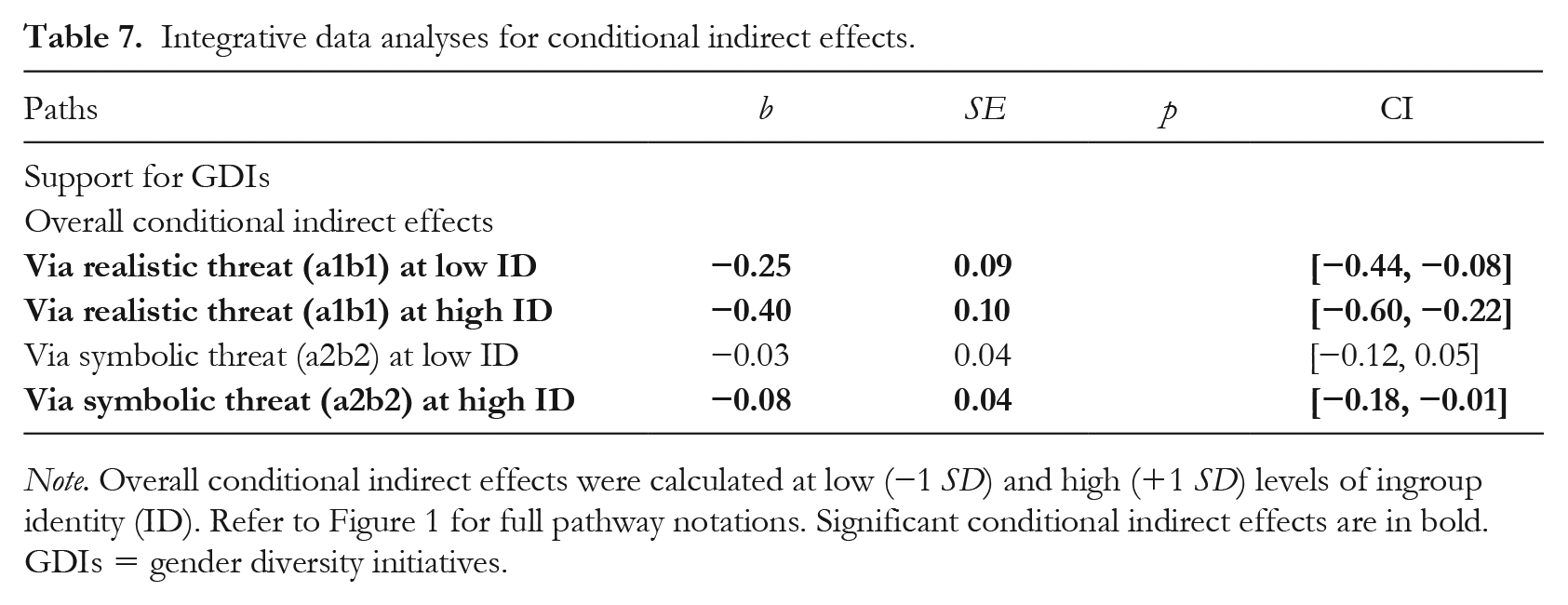
Note. Overall conditional indirect effects were calculated at low (−1 SD) and high (+1 SD) levels of ingroup identity (ID). Refer to Figure 1 for full pathway notations. Significant conditional indirect effects are in bold. GDIs = gender diversity initiatives.
However, the index of moderated mediation was contained within a confidence interval that included zero for both the realistic threat [−0.18, 0.02] and the symbolic threat [−0.08, 0.02] pathways. This suggests that there was no significant difference between the indirect effects at different levels of the moderator. In other words, the mediation effects did not depend on gender identification.
Discussion
Taken together, the analyses highlight the robustness of the indirect effects obtained across the current studies. Specifically, findings suggest that realistic threat acts as the major driving force behind men’s resistance towards GDIs in traditionally masculine domains. In addition, although the index of moderated mediation was not significant, the fact that the indirect effect via realistic threat and at the high level of gender identification was consistently significant across studies, and that this conditional indirect effect was largest in size in the IDA, is important as it suggests that highly identified individuals may have a greater tendency to display realistic threat and decreased support for GDIs when faced with the prospect of increasing gender diversity in their domain.
General Discussion
The current research took an intergroup threat approach to investigate men’s resistance towards increasing gender diversity in masculine domains. Specifically, we aimed to provide a better understanding of why resistance towards increasing gender diversity exists, for whom it is strongest, and how it can potentially be reduced. Our findings provide solid empirical support for a model in which realistic threat underlies men’s resistance towards increasing gender diversity. Although evidence was not as strong, the findings also suggest that individuals highly identified with their gender may have a greater tendency to display this realistic-threat-based resistance, however this requires further investigation.
Interestingly, the mediation model did not extend to women within a traditionally feminine domain, suggesting that realistic-threat-based resistance may be solely characteristic to men. This finding has important implications as it addresses a larger theoretical question regarding the potential gendered nature of gender diversity resistance, and suggests there may be characteristics specific to masculinity (e.g., zero-sum thinking, prescriptive gender stereotypes) which may result in men being more likely to perceive realistic threat and in turn display resistance when faced with the prospect of increasing gender diversity in masculine domains.
These findings advance theory by extending our conceptual understanding of resistance towards gender diversity. Importantly, this research systematically integrates intergroup threat theory within the gender diversity domain, and highlights the importance of realistic threat in driving gender diversity resistance. Whilst this conclusion is consistent with more general models of stress and stability of social systems, which predict that social progress can threaten high-status individuals due to them perceiving the hierarchy from which they are currently benefitting as changing or unstable (Scheepers & Ellemers, 2018), it also meaningfully extends ITT to a context it had not been applied before.
We also significantly advance theory in the field of majority-group reactions towards diversity, by investigating both men’s and women’s responses to increasing gender diversity in domains in which they have traditionally dominated—something which has previously been understudied. We answer a previous call to disentangle different types of threat (Danbold & Huo, 2017) and identify why majority-group resistance towards gender diversity may be produced.
Practical Implications
From a practical standpoint, our findings provide evidence that, when perceived as threatening by majority members of a domain, successful GDIs can produce backlash against the minority members they are designed to help, and in turn serve to maintain hostile atmospheres for minorities within these fields. Given that many women may leave STEM because of these hostile workplace atmospheres (De Welde & Laursen, 2011), this finding it important as it points to why these atmospheres exist and how they are currently being maintained.
Second, the findings of Study 3 suggest that if increasing gender diversity is framed to limit zero-sum interpretations, it can reduce backlash by ensuring that majority-group members are not threatened by potential demographic changes. Thus, when designing initiatives and discussing their success, practitioners should consider framing and explaining increasing diversity from a non-zero-sum perspective in order to attenuate majority-group concerns about losing realistic resources.
Limitations and Future Directions
As mentioned previously, given that initial power analyses were conducted for comparisons between two groups, further analyses were required to ensure studies were adequately powered for our more complex models. However, there is a general consensus in the field that power analyses for moderated mediation models are currently lacking, making such analyses difficult (SPSP Power Analysis Working Group, 2020). As such, whilst post hoc sensitivity analyses conducted using MedPower indicated that all significant indirect effects were adequately powered (see Supplemental material 2), this still did not account for potential moderation within these models. Therefore, findings should be interpreted with caution, and future research should recruit larger sample sizes to try and attenuate any concerns regarding power.
It should be noted that although findings consistently indicated that realistic (but not symbolic) threats were a key driving force behind gender diversity resistance, the scale averages for both realistic and symbolic threat across all studies were below the midpoint. Care should therefore be taken when interpreting the findings, as it may be more accurate to conclude that less agreement with the threat measures leads to less resistance, rather than greater agreement leading to increased resistance. However, this finding is still important as it suggests that even small amounts of realistic threat can have a consequential impact on men’s responses towards increasing gender diversity.
Future studies should attempt to extend this intergroup threat model of resistance by incorporating other approaches such as the biopsychosocial model of challenge and threat (Blascovich & Mendes, 2010; Scheepers & Ellemers, 2018). This would allow us to understand whether increasing gender diversity physiologically threatens or challenges men depending on their level of ingroup identification, and will also enable us to differentiate between the types of challenges (realistic vs. symbolic) that increasing diversity may bring for their domain. Doing so would be an extremely valuable endeavour, as it would serve to deepen our understanding and provide a unique insight into men’s psychological experience of increasing gender diversity in masculine domains.
Although we utilized samples of professionals and future professionals in relevant domains, further studies should replicate this model and derived interventions in organizations that have encountered actual resistance towards increasing gender diversity amongst their employees. These studies could be geared towards both existing employees and their attitudes towards women and diversity structures within their organizations, but also towards potential employees and their willingness to apply for organizations that publicly support diversity, in order to understand the role of threat and ingroup identification in the hiring and selection process.
Conclusion
Progress in achieving gender equality has been slow despite diversity initiatives and structures being in place for decades. Although uncomfortable, it is important to face the possibility that increasing gender diversity in masculine domains may result in resistance amongst men. Our findings help us understand why and for whom increasing gender diversity can create resistance, and suggest ways of reducing such resistance when framing successful initiatives in the future.
Supplemental Material
sj-pdf-1-gpi-10.1177_13684302211042424 – Supplemental material for Resistance towards increasing gender diversity in masculine domains: The role of intergroup threat
Supplemental material, sj-pdf-1-gpi-10.1177_13684302211042424 for Resistance towards increasing gender diversity in masculine domains: The role of intergroup threat by Gordon Hodson, Megan Earle, Maureen A. Craig, Amy Jones, Rhiannon N. Turner and Ioana M. Latu in Group Processes & Intergroup Relations
Footnotes

References
Supplementary Material
Please find the following supplemental material available below.
For Open Access articles published under a Creative Commons License, all supplemental material carries the same license as the article it is associated with.
For non-Open Access articles published, all supplemental material carries a non-exclusive license, and permission requests for re-use of supplemental material or any part of supplemental material shall be sent directly to the copyright owner as specified in the copyright notice associated with the article.
