




Abstract
Acculturation theorists have proposed that minority and majority members’ endorsement of the cultural integration orientation should positively impact their mutual intergroup relations. To examine this claim, the study develops and experimentally tests a vicarious intercultural contact strategy designed to promote integration endorsement among a sample of 379 British youths (aged between 18 and 21 years), of whom 172 were British Muslims and 207 were White British. In line with theoretical expectations, results revealed that integration attained through vicarious contact, relative to a control condition, reduced respondents’ negative emotions, increased their positive emotions and inclusion of the other in the self (IOS), and improved their outgroup attitudes. These effects were only present in the Muslim group. Integration effects on outgroup attitude outcomes were mediated by intergroup emotions and IOS. We discuss the theoretical and practical implications of these findings.
Introduction
Cultural diversity is one of the most engrossing and perplexing intergroup phenomena in the contemporary Western world, with social cohesion and the mutual acceptance of different groups being promoted as major goals by social psychologists and policymakers for culturally diverse societies, such as the UK. Worryingly, recent research reports a rise in anti-Muslim sentiment in the UK. Hate crimes recorded by the UK police (i.e., criminal offences motivated by racially based hostility or prejudice) went up by 10% between 2017 and 2018 (94,121 offences) and between 2018 and 2019 (103,379 offences), with hate crimes against Muslims representing 47% of the recorded cases in 2018–2019, as detailed in the Home Office’s Hate Crime report (2019). Anti-Muslim sentiment and behaviours may ultimately lead to social segregation and undermine the social inclusion of Muslims in the UK, eventually destabilising social relations between British Muslims 1 and White British people.
While there are no simplistic solutions to alleviating these societal problems, there is nevertheless a need to safeguard Britain’s multicultural values by finding ways to encourage more people to endorse the goal of cultural integration. The research reported here takes that objective as its point of departure. It integrates tenets of acculturation theory (Berry, 2017; Brown & Zagefka, 2011) and intergroup contact theory (Allport, 1954; Brown & Hewstone, 2005; Pettigrew & Tropp, 2005) to promote endorsement of an integration acculturation orientation among British Muslim and White British youths through an experimental intervention involving vicarious intercultural contact. The aim was to assess whether such an enhanced endorsement of integration would lead to more favourable intergroup attitudes. The study design sets out to address certain limitations encountered by acculturation research, as clarified in the following paragraphs.
Acculturation theorists presume that minority and majority members’ simultaneous endorsement of the integration orientation fits well with the beliefs behind multiculturalism and should benefit the mutual intergroup attitudes of both majority and minority groups (Berry, 2017; Berry & Sam, 2013; Bourhis et al., 1997; Piontkowski et al., 2002). This view asserts that more harmonious intergroup outcomes for minority and majority individuals within multiethnic societies will ideally be achieved when they pursue cultural engagement with both their heritage culture (e.g., British Muslim) and the culture of the outgroup (e.g., White British). While empirical findings in regard to the hypothesised positive relationship between integration endorsement and intergroup harmony have generally been supportive among both minority and majority members (e.g., Abu-Rayya, 2018; Berry, 2017; Bourhis & Dayan, 2004; Brown & Zagefka, 2011; Montreuil & Bourhis, 2004; Piontkowski et al., 2002; Safdar et al., 2008), previous research has mainly relied on correlational designs, making it difficult to draw cause–effect conclusions. Only experimental research designs, as the one adopted in the present study, have the capacity to actually trace causal paths and to determine whether the endorsement of an integration view has the same effects for both majority and minority members. Testing the effects of integration endorsement among both majority and minority groups is important because previous cross-sectional research indicated that majority and minority groups do not always endorse integration with equal enthusiasm. While sometimes majority groups do not seem to prefer integration, the opposite is often true for minorities (Brown & Zagefka, 2011). Contrasting the responses of both majority and minority group members to any acculturation intervention that seeks to enhance their endorsement of integration, as we designed in the present study, has the capacity to inform theory and policy more precisely. Unlike previous experimental acculturation research (e.g., Matera et al., 2011), which tested the effects of minority members’ desire for integration on majority members’ intergroup attitudes, our study manipulated integration endorsement among both minority (British Muslim) and majority (White British) youths, and tested whether this led to more favourable intergroup attitudes. Our integration manipulation depicted British Muslim and White British youths engaged in activities typical of each other’s culture.
A fundamental presumption of acculturation theory is that the quality and quantity of minority and majority members’ mutual intercultural contact will affect how far they take up an orientation to integration (Berry, 2017; Bourhis et al., 1997; Brown & Zagefka, 2011). Contact—or the wish for it—is central to theories of acculturation (Berry, 2017) and, correspondingly, measures of acculturation orientation in previous research have taken stock of respondents’ desire for contact with, and for joint social activities involving, outgroup members (Abu-Rayya & White, 2010). However, thus far, a scarcity of research has sought to combine insights gained from intergroup contact research with ideas taken from the field of acculturation studies. For instance, the geographical dispersion of groups, or physical segregation, may significantly restrict direct (face-to-face) intercultural contact between majority and minority members of society. This means that individuals’ opportunities for adopting and implementing an integration orientation prescribed by acculturation theory may be limited.
An example of this limitation may be observed in the British context. For instance, the Casey (2016) review, an independent report published by the then UK Department for Communities and Local Government, concluded that ethnic minorities in Britain exhibited a high level of social and community isolation, especially Muslims. Similarly, the Ministry of Housing, Communities & Local Government’s Integrated Communities Strategy Green Paper ( 2019) also noted high segregation levels among ethnic minorities. Moreover, although Catney’s (2020) recent analysis of data gathered between 1991 and 2011 indicated that residential segregation had steadily decreased for ethnic minority groups in the UK, segregation remains the highest for Pakistani and Bangladeshi ethnic groups. It is thus safe to claim that British Muslim minorities tend to live in quite segregated geographic areas in Great Britain, restricting the opportunities for significant intercultural contact with White British people.
Despite the recent interest in indirect (non-face-to-face) contact strategies in social psychology (Brown & Paterson, 2016; Vezzali & Stathi, 2021; White et al., 2015), such as vicarious contact, these avenues have not been explored by acculturation researchers to devise indirect intercultural contact strategies to promote and study the effects of endorsing integration views on intergroup relationships. To make a slightly different point, the mechanisms by which integration endorsement improves attitudes towards outgroups have not been determined in previous research.
The literature on intergroup contact has well established that positive contact improves intergroup relationships by reducing intergroup anxiety about interacting with outgroup members (Binder et al., 2009; Christ et al., 2010; White & Abu-Rayya, 2012). Additional intergroup emotions (e.g., anger, satisfaction) have recently been identified as mediators of the contact–prejudice relationship (Rozich et al., 2018). Yet acculturation research has rarely tested whether these and other potential factors such as inclusion of the other in the self (Turner et al., 2008; White et al., 2015) and perceived group norms (Turner et al., 2008; White et al., 2021) mediate the integration orientation–intergroup attitudes relationship among minority and majority members.
The research reported here addresses these issues directly in a British context. The study (a) uses a vicarious intercultural contact intervention designed to promote endorsement of an integration orientation among both British Muslim and White British youths; (b) applies an experimental design that evaluates the effects of the intervention on respondents’ intergroup anxiety, intergroup emotions, inclusion of the other in the self, perceived group norms, and intergroup attitudes; and (c) assesses whether the latter variables mediate the intervention’s effects on intergroup attitudes.
Vicarious Intergroup Contact
The idea that minority–majority intergroup attitudes can be improved when individuals have an experience of positive direct contact with members of another group is one of the earliest hypotheses proposed by, and tested through the interventions of, social psychologists (e.g., Allport, 1954). Although the efficacy of this direct contact approach has been supported by a large corpus of empirical evidence (Brown & Hewstone, 2005; Lemmer & Wagner, 2015; Pettigrew & Tropp, 2006; White et al., 2015), not all settings offer the opportunities for frequent or abundant direct contact between majority and minority groups (e.g., the groups may live apart from each other; Brown & Paterson, 2016; Crisp & Turner, 2010; Dixon et al., 2020; Turner et al., 2013). To address this critical limitation, recent contact research has focused on identifying indirect contact techniques to promote intergroup harmony (Brown & Paterson, 2016; White et al., 2015).
A useful such indirect contact technique is known as vicarious contact (Brown & Paterson, 2016; Dovidio et al., 2011; Vezzali et al., 2014; Vezzali & Stathi, 2021). As recently defined by Vezzali and Stathi (2021), this form of contact describes the observation of an interaction between ingroup and outgroup members that can vary in terms of the degree of closeness between the observed members and the contact experience valance. Scholars have drawn on Bandura’s (1986) social cognitive theory to hypothesise that positive vicarious contact should result in greater intergroup harmony (Dovidio et al., 2011; Gómez & Huici, 2008; Vezzali et al., 2014).
Research evidence demonstrates that vicarious contact strategies can be effective in combating prejudice (Dovidio et al., 2011; Turner & Cameron, 2016; Vezzali et al., 2014, 2019). A recent meta-analysis (Lemmer & Wagner, 2015) reported eight vicarious studies (where contact was classed as being “extended”) being effective in prejudice reduction to an even greater extent than two direct contact forms that were investigated. In a typical vicarious contact research (e.g., Mazziotta et al., 2011), German participants watched short video clips depicting a positive German–Chinese interaction. The authors found that Germans in the video-based contact condition had significantly higher self-efficacy levels, greater desire for contact engagement, and more positive and less negative affect toward the outgroup. Further studies employing the method of reading/telling stories depicting positive intergroup relationships in educational settings have also produced encouraging results (Aronson et al., 2016; Greenwood et al., 2016; Vezzali et al., 2012). Compared to direct contact strategies, vicarious contact can reach more people, and be easier and more practical to implement as a form of intervention in intergroup relations, particularly in relatively segregated communities (Brown & Paterson, 2016; White et al., 2015).
It should be noted, however, that vicarious contact research has generally focused on changing the attitudes of majority group members. Although some recent evidence suggests that group status may not moderate the effects of vicarious contact (Vezzali et al., 2019), further cross-cultural evidence of the comparative effectiveness of this strategy for majority and minority members would be welcome. Importantly, vicarious contact research has generally been implemented with story-reading or audiovisual media based on creating cross-group friendships (Brown & Paterson, 2016; Vezzali et al., 2019; White et al., 2015). No previous vicarious contact attempts have focused on promoting the integration acculturation strategy. Vicarious contact strategies tailored to promote both minority and majority members’ endorsement of the integration acculturation orientation might therefore offer an efficacious route to social-cultural psychology researchers interested in fostering intergroup harmony. The current research aimed to improve intergroup relations between British Muslim and White British youths via a story-reading form of vicarious contact developed specifically to promote endorsement of the integration acculturation orientation among both groups.
Mediators of the Vicarious Contact–Prejudice Relationship
How contact causes prejudice reduction has become the focus of contact research in recent years. As with direct contact, it is assumed that vicarious contact improves intergroup relations via four main mechanisms. By facilitating positive intergroup interactions, apprehension (intergroup anxiety) about intergroup contact can be reduced, leading to an improvement in attitudes towards outgroups (Brown & Paterson, 2016; Pettigrew & Tropp, 2008). Intergroup emotions felt during interactions (e.g., anger, satisfaction), it is claimed, mediate the relationship between contact and typical behaviours towards the outgroup, with positive emotions predicting positive behavioural tendencies (Mak et al., 2013; Rozich et al., 2018). Contact effects on intergroup attitudes may also work through a notional inclusion of the other in the self. In this process, contact facilitates a cognitive connection with outgroup members such that individuals begin to see an outgroup member as more closely associated with themselves, possibly more like them, resulting in a more positive response toward the outgroup as such (Turner et al., 2008; White et al., 2015). Lastly, interacting minority and majority members in an intergroup context serve as positive exemplars. They provide a source of reference as to how fellow members should act within the setting of intergroup contact, resulting in the perception that group norms are open to intergroup contact, which reduces prejudice (Turner et al., 2008; White et al., 2021).
Importantly, little acculturation research has been undertaken into the mechanisms by which minority and majority members’ endorsement of the integration orientation operates to promote intergroup harmony, as postulated by acculturation theory. Based on the research evidence cited before, integration endorsement arrived at through vicarious intercultural contact may affect members’ intergroup anxiety, intergroup emotions, inclusion of the other in the self, and perceived group norms; and these mediate the integration orientation–outgroup attitude relationship. This study represents a novel merging of acculturation theory and the study of intergroup contact in examining the processes that underlie the effect of integration endorsement on intergroup relationships between British Muslim and White British youths. By doing so, the study not only develops the acculturation literature but also extends the research on vicarious contact by testing the psychological mediators postulated to bring about positive attitudes towards outgroups (Vezzali et al., 2014, 2019).
Hypotheses
The conceptual framework guiding the present study is outlined in Figure 1. Derived from this framework, the study tests the following hypotheses among British Muslim and White British youths:
H1: An increase in integration endorsement will decrease intergroup anxiety and negative intergroup emotions, and will improve positive intergroup emotions, the inclusion of the other in the self, perceived group norms, and intergroup attitudes.
H2: The effects of integration endorsement will be moderated by group status (minority vs. majority). As noted before, while vicarious contact effects were not affected by group status in one recent study (Vezzali et al., 2019), there is still a need to check across cultural settings whether group status moderates the effectiveness of vicarious contact strategies in seeking to reduce prejudice. Our study is the first to apply vicarious contact to facilitate integration and, as clarified before, majority and minority members may not show similar tendencies to integration endorsement, justifying further our examination of the moderating effect of group status.
H3: Intergroup anxiety, intergroup emotions, inclusion of the other in the self, and perceived group norms will mediate the effects of integration endorsement on intergroup attitudes.
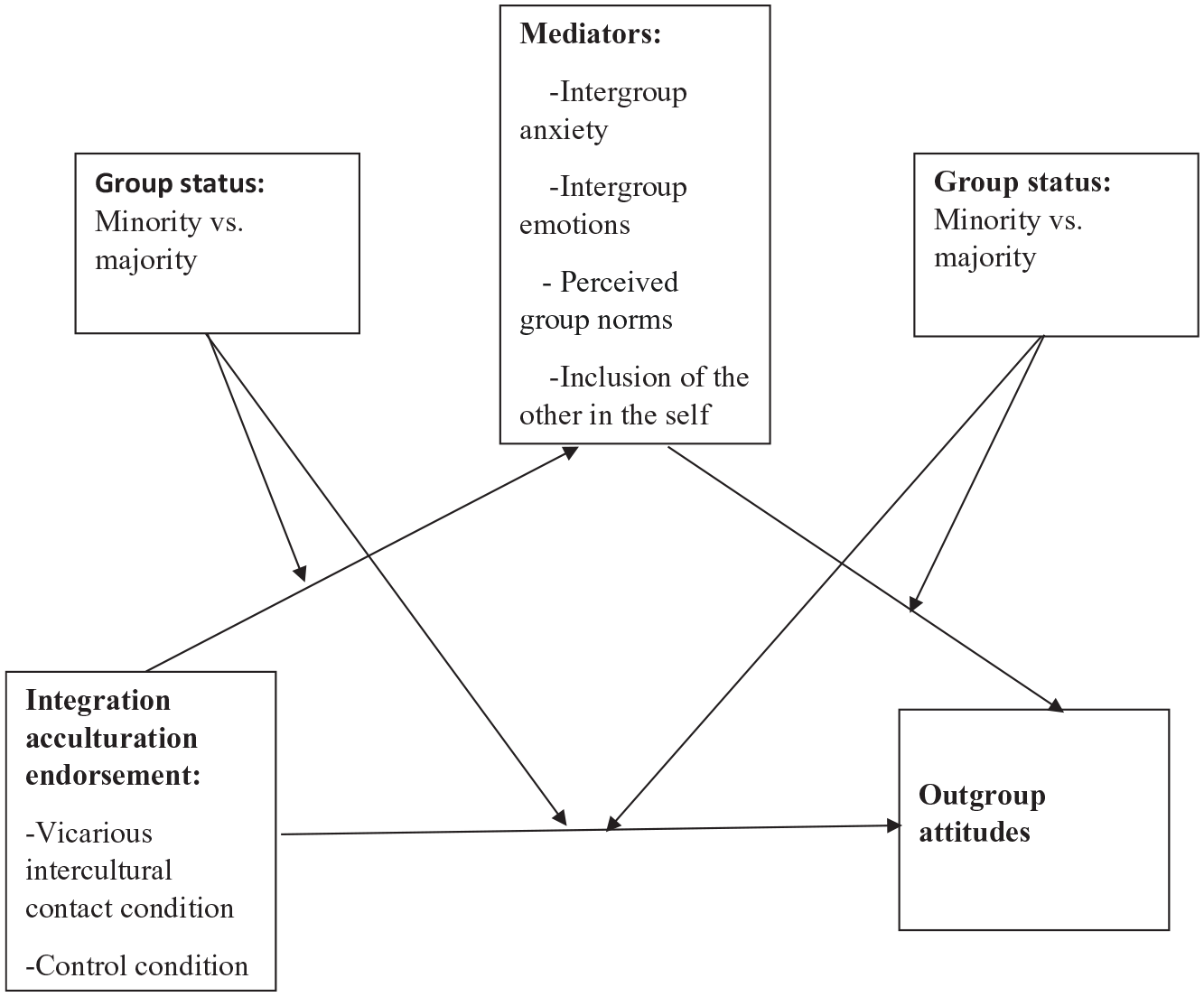
Conceptual framework: Integration endorsement effects on outgroup attitudes.
Method
Participants and Design
The sample for this study comprised 379 youths, of whom 172 (45.38%) were British Muslims and 207 (54.61%) were White British; 87 (50.6%) and 116 (56%) of Muslim and White British respondents, respectively, were female. Muslim respondents’ ages ranged between 18 and 21 years, and they were slightly younger than their White British counterparts (M = 18.50, SD = 0.78 and M = 19.73, SD = 1.43, respectively); t(377) = 10.18, p < .001. Muslim respondents represented a range of ethnic groups, with the most prevalent being Pakistani (35.5%), followed by Arab (18.6%), Bengali (15.6%), Turkish (6.4%), African (5.9%), and Afghan (3.6%). Sixty-eight percent of Muslim respondents indicated that English was the language they spoke at home. The majority (82%) of Muslim respondents were born in the UK. Three quarters of UK-born Muslims indicated that English was the language they spoke at home, compared to 38.7% of non-UK-born Muslims.
The study adopted a 2 (vicarious intercultural contact: integration vs. control) x 2 (group: minority vs. majority) posttest between-participant design. The study was conducted online via the Qualtrics platform, and respondents were randomly allocated to conditions, resulting in 86 (50%) and 104 (50.24%) of the Muslim and White British samples being, respectively, in the experimental condition. To assure that randomisation was successful, a series of chi-square tests and t tests revealed that Muslims in the experimental condition were similar in demographic terms to their counterparts assigned to the control condition: for gender: χ2(1) = 0.02, p = .88; for place of birth: χ2(1) = 1.93, p = .17; for language spoken at home: χ2(1) = 2.17, p = .14; for age: t(170) = 1.78, p = .08. White British respondents in the experimental condition were also very similar to their control counterparts in terms of gender: χ2(1) = 0.01, p = .94, and age: t(205) = 0.99, p = .32.
Measures
Unless stated otherwise, all items used a 7-point Likert-type scale (1 = not at all, 7 = very much).
Outcome variables
Attitude toward the outgroup was measured using the outgroup feeling thermometer ranging from 0° (extremely unfavourable) to 100° (extremely favourable; Haddock et al., 1993). Contact behavioural intentions toward the outgroup were assessed with eight items adapted from Rozich et al. (2018). The items measure Muslim/White British respondents’ willingness to engage in activities with outgroup White British/Muslim members, such as “be neighbour with” or “invite him/her for a meal” (Cronbach’s alpha: α = .93 and α = .97 for the Muslim and White British samples, respectively). Importance of future contact with the outgroup was gauged with three items adapted from Liebkind et al. (2014). An example item is, “Contact with White British/British Muslims means a lot to me” (α = .60 for the Muslim sample, and α = .80 for the White British sample).
Mediators
Intergroup anxiety was measured by asking Muslim/White British respondents to indicate how they would feel mixing socially with complete outgroup White British/Muslim strangers; we used six items adapted from Stephan and Stephan (1985): three positive but reverse-coded (“happy,” “confident,” “relaxed”) and three negative (“awkward,” “self-conscious,” “defensive”; α = .79 for the Muslim sample, and α = .83 for the White British sample). To assess intergroup emotions, Muslim/White British respondents were asked questions measuring the degree to which they felt a series of emotions, adapted from Rozich et al. (2018), when asked to think of outgroup White British/Muslim members. We used six negative emotions: “angry,” “contempt,” “irritated,” “nervous,” “fearful,” “worried” (α = .92 for the Muslim sample, and α = .93 for the White British sample), and five positive emotions: “pleased,” “cheerful,” “proud,” “accepted,” and “satisfied” (α = .92 for the Muslim sample, and α = .93 for the White British sample). To confirm that intergroup emotions and anxiety were distinct constructs, emotion and anxiety items were submitted to confirmatory factor analysis (CFA). Our analysis indicated that a three-factor solution had a worse fit to the data. Intergroup anxiety items were not cleanly separable from positive and negative emotions, and we thus opted to assess just intergroup emotions. Perceived ingroup norms were assessed using three items (α = .88 and α = .94 for the Muslim and White British samples, respectively) adapted from Turner et al. (2008). An example item is, “How much do you think your Muslim/White British friends like White British/British Muslim people?” Perceived outgroup norms were measured using three items (α = .88 and α = .94 for the Muslim and White British samples, respectively) elicited through questions such as “How much do you think White British people like your Muslim friends in Britain?” (asked to a Muslim respondent) or “How much do you think British Muslims like your White British friends?” (asked to a White British respondent). Inclusion of the other in the self (IOS) was measured with a single item adapted from Tropp and Wright (2001). Muslim/White British respondents were asked to select one of seven pairs of overlapping circles that best captures the nature of their relationship with White British/Muslim people. The greater the overlap between circles, the greater the IOS.
Manipulation check
To test whether the vicarious intercultural contact administered through the experiment indeed improved respondents’ endorsement of an integration orientation, we measured their cultural integration orientation using one item to be answered on a 7-point Likert scale (1 = strongly disagree, 7 = strongly agree). This required respondents to indicate their willingness, if given the opportunity, to arrange a social event or activity that would involve both the Muslim and White British cultures.
Procedure
The Sciences & Technology Cross-Schools Research Ethics Committee at the University of Sussex granted approval for this study. All respondents were recruited online to participate in a piece of research described as investigating how young people from different groups in Britain get along with each other. British Muslim respondents were recruited through invitations to join the study sent to various UK Muslim community organisations, Muslim student associations, Muslim youth organisations, and Muslim Facebook and Twitter communities. Potential Muslim respondents were also asked to spread the call for participation on their social networks, and the first author also circulated the call for participants in his social media, email lists, and through his personal social networks, asking recipients to reshare the invitation. The White British sample was recruited via an established UK recruitment agency that follows rigorous measures to assure respondents’ identity and data quality. All respondents provided informed consent via Qualtrics, and were then randomly allocated to either the experimental (vicarious intercultural contact) or control condition. In both conditions they read and reflected on two short stories, answered some reflection questions, and completed an online posttest Qualtrics survey. Progress from one step to another on Qualtrics set-up was not possible until the preceding study requirement had been fulfilled. Finally, respondents were fully debriefed as to the study design and aims on completion of their participation.
Experimental Condition
The experimental condition featured an intervention that involved an episode of vicarious intercultural contact designed to facilitate integration endorsement. Specially developed short stories (about one page long) comprised the vicarious contact intervention. The stories were prepared and written by an expert story writer in coordination with the authors, to align the stories’ contents with acculturation integration principles. One story focused on Amina (a British Muslim female) and her White British classmates. Amina’s birthday fell close to the end of the last secondary school year, and her friends used the opportunity to celebrate the event and also her birthday. They engaged in a series of consultations and plans which successfully drew Amina’s culture into the celebration, including elements of music, food, and decoration (integration). In admiration of her friends’ cultural responsiveness, the party ended with Amina reciting a poem she had written celebrating her love of British culture and her friends (integration). The other story concerned Essam (a British Muslim male) and his secondary school White British friends who got to go to the Lake District (a highly scenic part of the UK) for a few days of fieldwork. Essam’s friends found out that he was fasting on the first day of Ramadan, which coincided with the start of the field trip, and began to plan their day of joint activities taking this into account. For instance, Essam’s friends suggested that while he prayed at midday, they could eat a sandwich and then have a joint dinner at a restaurant to mark Essam’s breaking his fast (integration). Essam responded by expressing his admiration of British culture and pride in his White British friends; he then offered to make a meal with food characteristic of his culture he had brought with him. His White British friends consented to this if he let them help him with the preparation (integration). The stories used in the experimental condition are given in Appendix A of the supplemental material.
A key element in facilitating changes in attitudes towards outgroups is to give participants time to reflect on their reactions to the intervention in which they have participated (Abu-Rayya, 2017; Liebkind et al., 2014; Petty & Cacioppo, 1986). Therefore, participants were required, after reading each story, to reflect on the interaction it narrated before they could move to the next stage in the study. Reflection questions included, “What is the moral of the story? Express it in a single declarative sentence”; “To what extent are the described Muslim/White British friends in the stories culturally inclusive of White British/Muslims, do you think?”; and, You are invited by a Muslim/White British high school in Britain to talk with their students and suggest to them some ideas that they can adopt and implement to show involvement in and appreciation of the British/Muslim culture. Last year, the Muslim/White British school students arranged a Halal/Sunday roast and Yorkshire puddings to which they invited a neighbouring White British/Muslim secondary school. It was amazing, both schools said. What other ideas do you think would be exciting to propose? Can you please suggest one, at least?
Control Condition
Respondents in this condition read two short stories (one page each), “The Foolish Lion” and “The Lazy Dreamer,” made up of neutral content not connected to Muslim or White British cultures (see Appendix A). The poststory personal reflection questions included, “What is the moral of the story? Express it in a single declarative sentence”; “To what extent do you think high school students would find these stories pleasant to read and discuss?”; and “You are kindly asked to suggest a few reflection questions about each story that high school students would find useful to prepare for their group discussion of the story.”
Results
Data Analyses
Our Results section is organised into four subsections. We first conducted preliminary analyses to inspect correlations between measures and to test baseline differences among our Muslim and White British respondents. Next, a manipulation check was carried out to inspect whether respondents in the vicarious intercultural contact condition (promoting integration) indeed showed an increased integration disposition, as intended. Third, we report our tests of the first and second hypotheses in the section entitled Vicarious Intercultural Contact Effects on Intergroup Attitudes. Lastly, we address our third hypothesis concerning mediation effects. All data analyses were conducted using IBM SPSS 25 and SAS 9.4 statistical software packages.
Preliminary Analyses
Pearson’s correlation analyses were conducted for the study measures. As displayed in Table 1, Muslim and White British youth respondents’ self-reported cultural integration was consistently positively correlated with positive intergroup measures, and negatively correlated with negative intergroup measures (except for negative emotions among the Muslim sample). Additionally, the majority of intergroup measures were significantly intercorrelated in each sample.
Pearson’s correlations between the study measures.
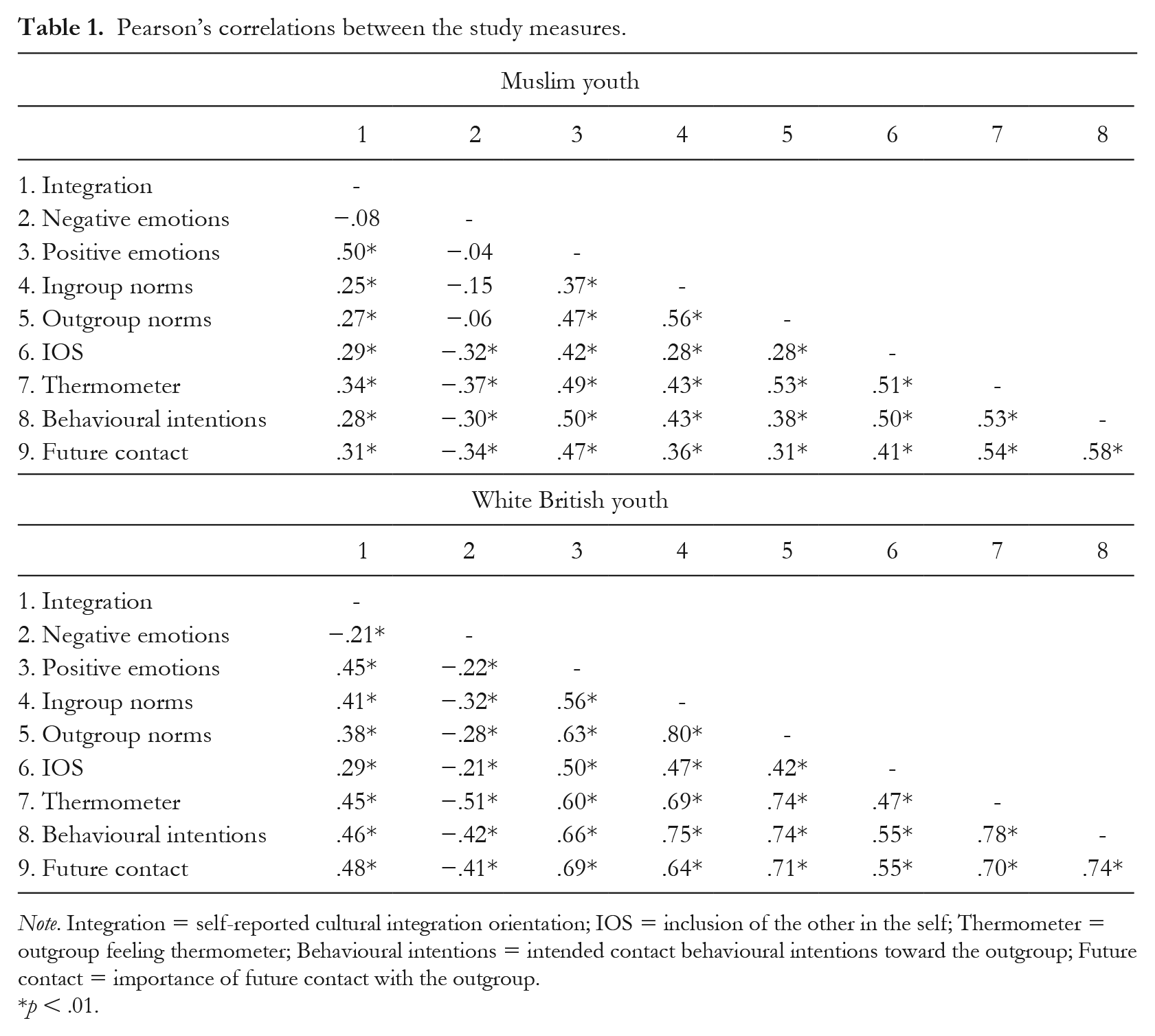
Note. Integration = self-reported cultural integration orientation; IOS = inclusion of the other in the self; Thermometer = outgroup feeling thermometer; Behavioural intentions = intended contact behavioural intentions toward the outgroup; Future contact = importance of future contact with the outgroup.
p < .01.
Drawing on data from the control group, we conducted multivariate analysis of variance (MANOVA) followed by post hoc ANOVAs, to test baseline differences in intergroup measures between Muslim and White British youth. Analyses indicated that reported intergroup indices were different between the two samples, F(9, 178) = 6.43, Λ = .76, p < .001, η2 = .24. Post hoc ANOVAs suggested that these differences were evident in three out of nine intergroup measures. In particular, Muslim youth reported higher IOS, F(1, 187) = 9.16, p = .003, η2 = .05; placed more weight on the importance of future contact with the outgroup, F(1, 187) = 17.06, p < .001, η2 = .084; and registered fewer positive outgroup emotions, F(1, 187) = 4.59, p = .034, η2 = .024. It should be noted, however, that both groups generally expressed positive attitudes towards one another, as most intergroup measures’ means fell above the relevant measure’s theoretical midpoint. Means and standard deviations of the measures are displayed in Table 2.
ANOVA results of the differences between the intervention and control conditions in measures of intergroup attitudes.
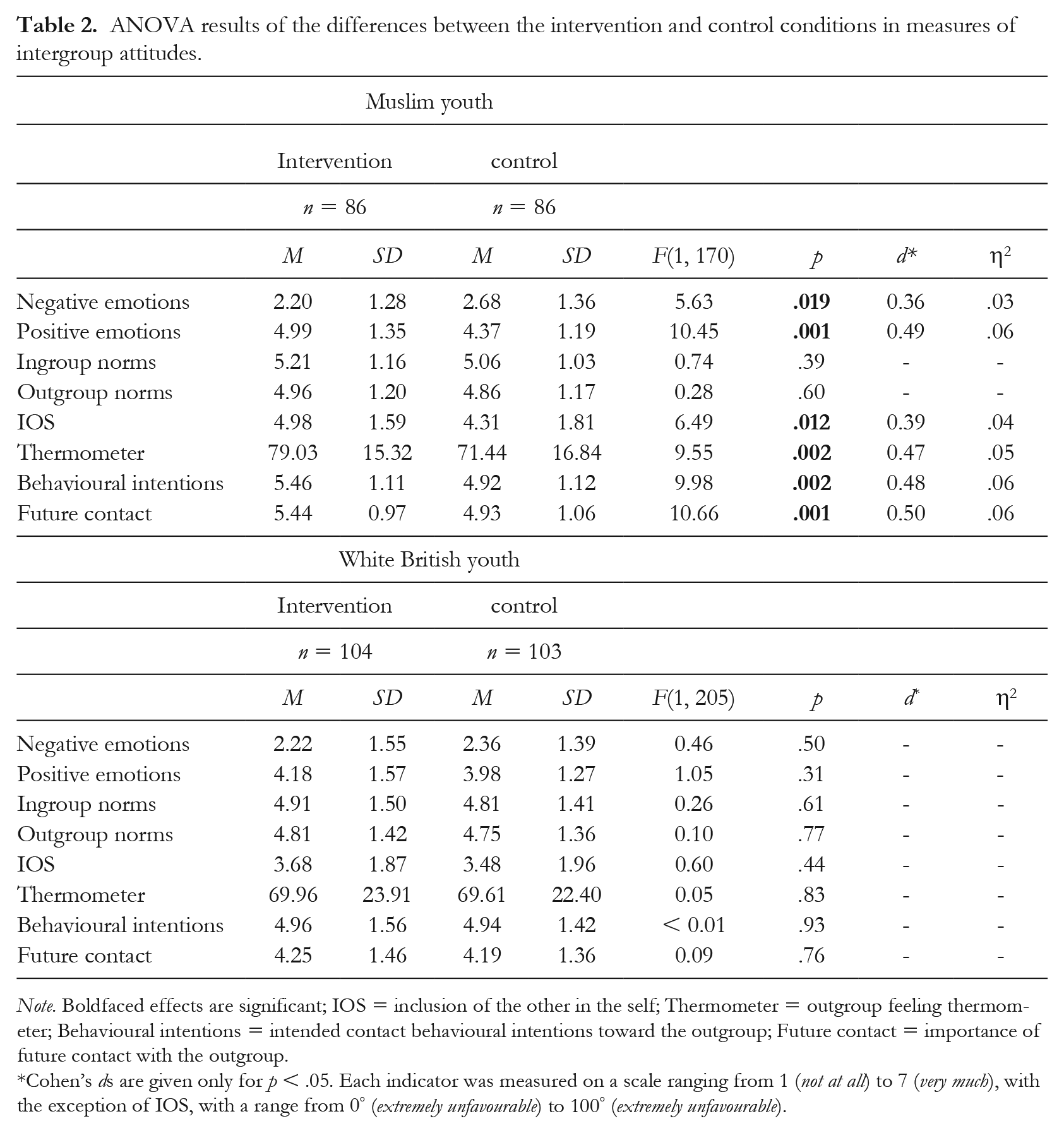
Note. Boldfaced effects are significant; IOS = inclusion of the other in the self; Thermometer = outgroup feeling thermometer; Behavioural intentions = intended contact behavioural intentions toward the outgroup; Future contact = importance of future contact with the outgroup.
Cohen’s ds are given only for p < .05. Each indicator was measured on a scale ranging from 1 (not at all) to 7 (very much), with the exception of IOS, with a range from 0° (extremely unfavourable) to 100° (extremely unfavourable).
Manipulation Check
A 2 (vicarious intercultural contact condition vs. control) x 2 (group: Muslim vs. White British) posttest ANOVA confirmed, as expected, that respondents in the vicarious intercultural contact condition reported a higher cultural integration orientation score (M = 4.27, SD = 1.86), compared to their counterparts in the control condition (M = 3.86, SD = 1.94), F(1, 375) = 5.34, p = .021, Cohen’s d = 0.22. The Condition x Group interaction effects were nonsignificant. However, on inspection of the means, it was clear that the manipulation worked just for the Muslim sample. In line with this, post hoc ANOVAs disclosed that the intervention main effects on integration were evident in the Muslim group (vicarious intercultural contact condition: M = 4.98, SD = 1.59; control condition: M = 4.31, SD = 1.81; d = 0.39), F(1, 170) = 6.49, p = .012, but not in the White British sample (vicarious intercultural contact condition: M = 3.68, SD = 1.87; control condition: M = 3.48, SD = 1.96; d = 0.10), F(1, 205) = 0.60, p = .44. In other words, our intervention facilitated Muslim respondents’ willingness to arrange a social event/activity that would involve both Muslim and White British cultures (the proxy we used to measure integration orientation), but not that of White British respondents.
Vicarious Intercultural Contact Effects on Intergroup Attitudes
Although the manipulation check indicated that the intervention did not generate the desired effects on White British youths’ cultural integration orientation, we nevertheless conducted a series of 2 (vicarious intercultural contact condition vs. control) x 2 (group: Muslim vs. White British) ANOVAs on each of the intergroup attitude measures, to determine if any significant intervention effect emerged within and across the two groups. In line with our expectations, the intervention significantly reduced respondents’ negative emotions, F(1, 375) = 4.51, p = .034, compared to the control condition, and increased their scores on positive emotions, F(1, 375) = 8.76, p = .003, F(1, 375) = 5.34, p = .021; on the outgroup feeling thermometer, F(1, 375) = 3.94, p = .048; on their behavioural intentions toward the outgroup, F(1, 375) = 4.07, p = .045; and on the importance they placed on future contact with the outgroup, F(1, 375) = 4.84, p = .028. No intervention effects were observed on perceived ingroup norms, F(1, 375) = 0.84, p = .36, or outgroup norms, F(1, 375) = 0.34, p = .56. Condition x Group interaction effects were nonsignificant on all dependent variables. However, on inspection of the means, it was apparent that all of the intervention effects were only significant in the Muslim group (d ranged between 0.36 and 0.50), as shown in Table 2. In contrast, the intervention did not appear to have any impact on White British youths’ intergroup attitude scores. Thus, our first hypothesis was largely confirmed, and our second hypothesis was fully confirmed.
Mediation Effects
Notwithstanding the absence of a Condition x Group interaction, it was clear that an examination of the mediation model guiding the study would only be possible in the Muslim sample, and then only for those measures significantly affected by the intervention (see Figure 2, Model A). Examination of these potential mediation effects (negative emotions, positive emotions, and IOS) of the intervention on intergroup outcomes (thermometer, behavioural intentions, and importance of future contact) were conducted using structural equation modelling (SEM). Goodness of fit of the mediation model was assessed using chi-square statistic, comparative fit index (CFI), root mean square error of approximation (RMSEA), and standardised root mean square residual (SRMR). A nonsignificant chi-square, values over .95 for CFI, values below .06 for RMSEA, and values below .08 for SRMR suggest an acceptable fit (Hooper et al., 2008; Hu & Bentler, 1999). Model A 2 fit the data very well, χ2(3) = 1.88, p = .59, CFI = 1.00, RMSEA = .00 (.00 to .11), SRMR = .018. Supporting our third hypothesis, the model shows that our intervention improved Muslim respondents’ outgroup thermometer scores, their behavioural intentions towards the outgroup, and the importance they place on future contact with the outgroup by reducing their negative emotions and increasing their IOS and positive emotions towards the outgroup. The intervention indirect effects on outgroup thermometer, behavioural intentions, and future contact scores were 41.15% (z = 3.73, p < .001), 38.98% (z = 3.66, p < .001), and 34.07% (z = 3.74, p < .001), respectively. The mediation effects for Model A are displayed in Table 3.
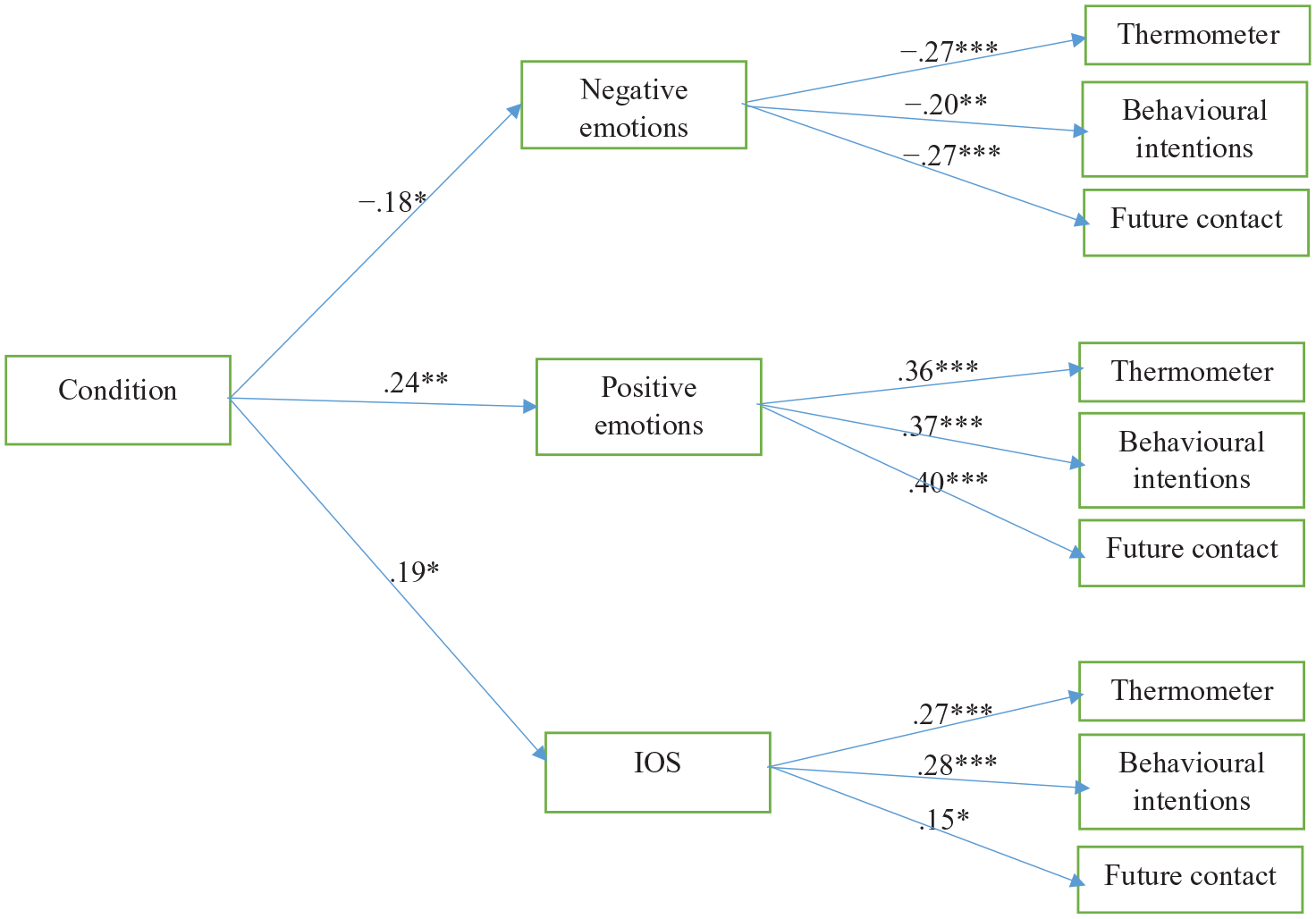
Structural equation modelling on the British Muslim sample showing the mediated effect of condition (integration vs. control) on outgroup measures: Model A.
Mediation effects for the British Muslim sample: Model A.
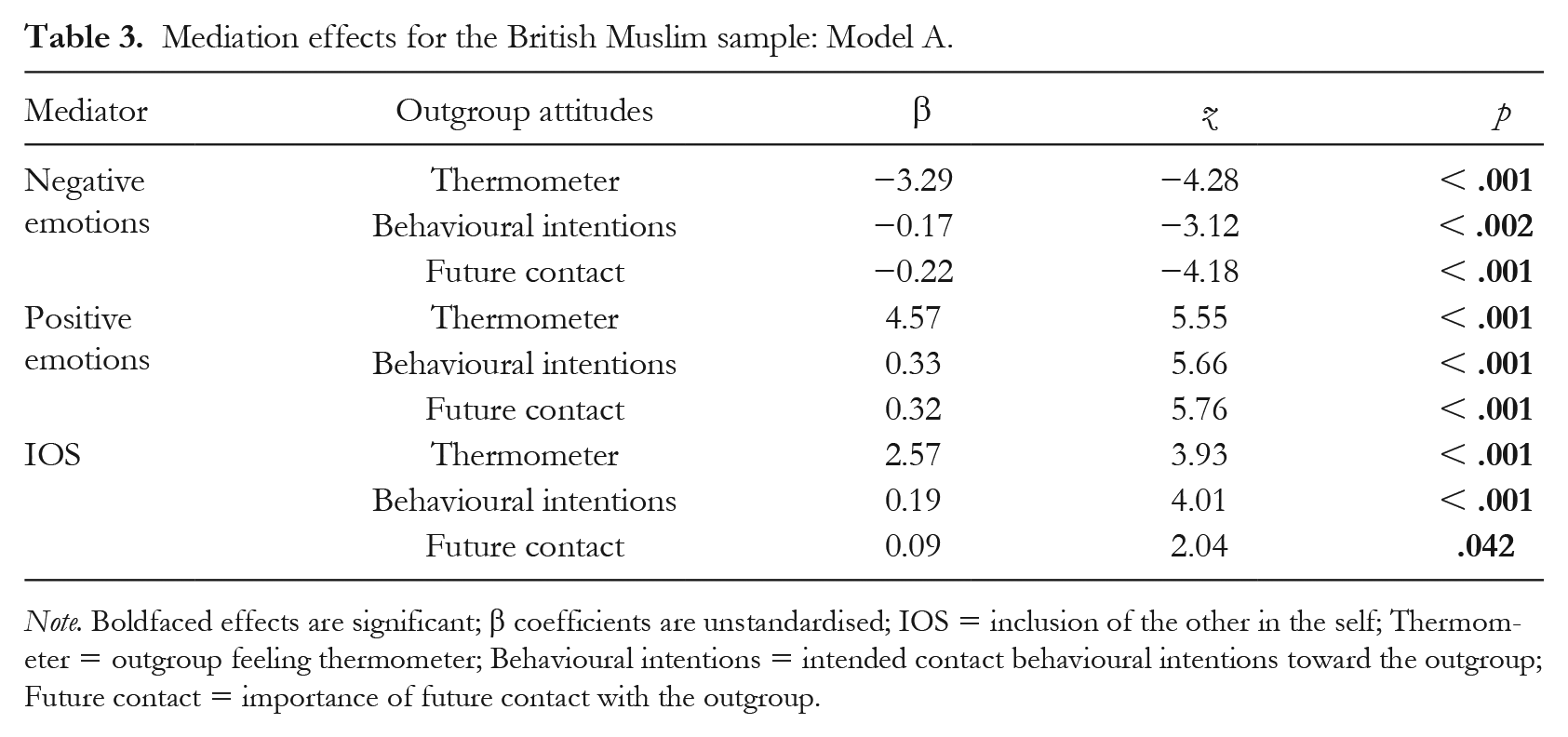
Note. Boldfaced effects are significant; β coefficients are unstandardised; IOS = inclusion of the other in the self; Thermometer = outgroup feeling thermometer; Behavioural intentions = intended contact behavioural intentions toward the outgroup; Future contact = importance of future contact with the outgroup.
Next, given that no intervention effects were observed in the White British sample, for an optimal use of the data, a cross-sectional mediation analysis was carried out on the combined White British sample using respondents’ self-reported cultural integration score as a substitute for their study condition. All study mediators (positive and negative emotions, ingroup and outgroup norms, and IOS) were entered into the SEM model (Model B). Model B 3 fit the data very well, χ2(3) = 3.18, p = .21, CFI = .99, RMSEA = .05 (.00 to .16), SRMR = .02, explaining, respectively, 68.44% (z = 6.71, p < .001), 71.18% (z = 7.15, p < .001), and 66.87% (z = 7.04, p < .001) of the indirect effects of integration on outgroup thermometer, behavioural intentions, and future contact scores. As shown in Table 4, endorsing integration was associated with lower levels of negative emotions, and consistently aligned with more positive intergroup attitudes across the three measures. Integration was also associated with higher levels of positive emotions and IOS, which were associated with more positive intergroup attitudes across the three measures. Additionally, integration was associated with more positive perceptions of outgroup norms regarding the ingroup, which was, in turn, consistently related to more positive intergroup attitudes. In contrast, the mediation role of perceived ingroup norms concerning the outgroup was modest, being significant for just one outgroup measure (behavioural intentions) out of three.
Mediation effects for the White British sample: Model B.
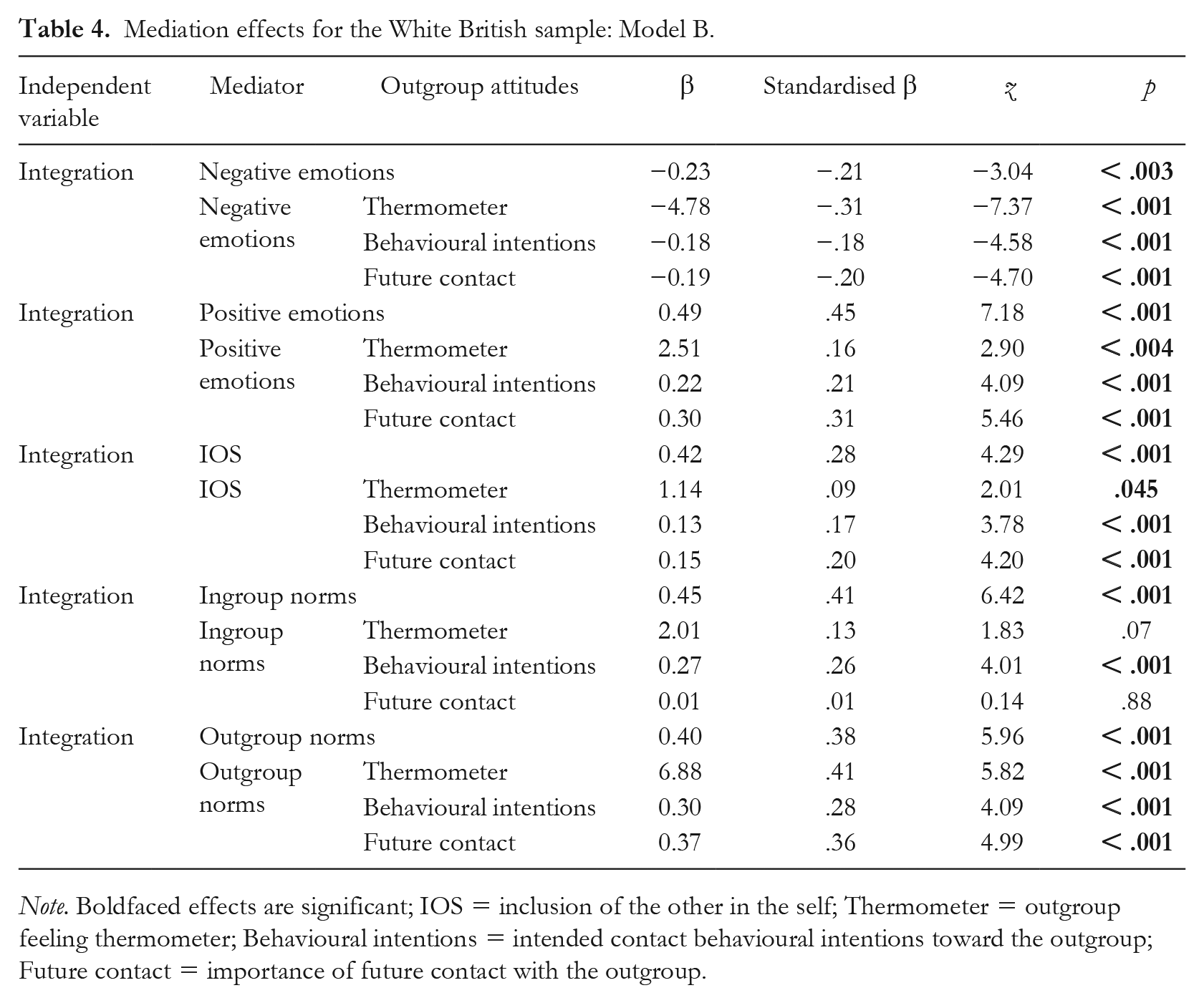
Note. Boldfaced effects are significant; IOS = inclusion of the other in the self; Thermometer = outgroup feeling thermometer; Behavioural intentions = intended contact behavioural intentions toward the outgroup; Future contact = importance of future contact with the outgroup.
Discussion
Acculturation theory posits that minority and majority members’ endorsement of an orientation towards cultural integration should positively impact their mutual intergroup relations (Berry, 2017; Berry & Sam, 2013; Bourhis et al., 1997; Piontkowski et al., 2002). Yet scarce research has investigated this claim experimentally or examined the mechanism by which this endorsement supposedly improves intergroup relations. Another challenge that acculturation theory faces relates to its application to settings characterised by the physical segregation of majority and minority groups, or their geographical dispersion, as is the case of British Muslims and White Britons in various areas of the UK (Casey, 2016; Catney, 2020). In such situations, opportunities for direct intercultural contact between minority and majority members are constrained, limiting in turn their opportunity to endorse integration and, one would assume, reap its benefits for intergroup harmony at the societal level. Therefore, such settings may benefit from interventions that involve elements of indirect intercultural contact aimed to facilitate an endorsement of integration.
Our study demonstrates that acculturation theory can potentially address these concerns and move forward by importing and integrating theory-driven ideas and methods taken from current indirect intergroup contact research (e.g., Aronson et al., 2016; Dovidio et al., 2011; Greenwood et al., 2016; Turner & Cameron, 2016; Vezzali et al., 2014, 2019). Our study represents a first attempt to develop a vicarious intercultural contact strategy to promote the endorsement of integration among British Muslim and White British youths; it experimentally tested the effects of endorsing integration on a range of intergroup attitude measures, and provides the first evidence for the various processes underlying integration endorsement effects on intergroup attitudes.
Effects of Integration Endorsement
Consistent with theoretical expectations, the results of our study confirmed that integration endorsement, relative to a control condition, reduced respondents’ negative emotions, increased their positive emotions and inclusion of the other in the self (IOS), and improved their scores on the outgroup feeling thermometer, behavioural intentions toward the outgroup, and importance they placed on future contact with the outgroup. These findings extend the currently thin experimental evidence (e.g., Abu-Rayya, 2017; Matera et al., 2011) that demonstrates a causal relationship between integration endorsement and intergroup harmony, and the extensive acculturation literature that has relied on cross-sectional designs and argued for the benefits of endorsing integration for intergroup harmony (e.g., Abu-Rayya, 2018; Bourhis et al., 2004; Brown & Zagefka, 2011; Safdar et al., 2008).
The experimental design of the present study makes our findings less susceptible to self-presentation and social desirability biases across a range of intergroup outcomes. In contrast to previous acculturation research that has addressed some aspects of intergroup attitudes but not others, our study clearly shows that integration endorsement influences affective (e.g., positive/negative emotions), cognitive (e.g., IOS), and behavioural (e.g., behavioural intentions) aspects of intergroup relations in the anticipated direction. Importantly, our vicarious intercultural intervention demonstrates that integration endorsement and its effects can be consequential even though the interacting characters in the stories were fictional and played no part in participants’ own social lives. Vicarious intercultural contact may thus be particularly useful in promoting integration endorsement in settings where direct intercultural contact may not be achievable. Moreover, our study findings contribute to the vicarious contact literature in support of this strategy as an effective way to achieve intergroup harmony (e.g., Dovidio et al., 2011; Turner & Cameron, 2016; Vezzali et al., 2019). Integration effects on respondents’ behavioural intentions and their willingness to have future contact with the outgroup support the view that vicarious contact can be a preparatory strategy for direct friendship formation later on (e.g., Vezzali et al., 2019).
However, our data suggest that the reported effects emerged only in the British Muslim group. This finding is inconsistent with available cross-sectional acculturation research showing that integration endorsement contributes to positive intergroup attitudes among both minority and majority group members (e.g., Abu-Rayya, 2018; Brown & Zagefka, 2011; Safdar et al., 2008). We should note, though, that the intercorrelations between White British respondents’ self-reported integration scores and their intergroup attitudes were in the right direction, as acculturation theory would predict. We are thus inclined to think that our vicarious intercultural contact intervention was insufficiently strong, or perhaps insufficiently plausible, to generate the desired increase in White British youths’ integration endorsement. The reason for this may possibly lie in the nature of the study stories. A retrospective analysis of the stories used indicated that White British youths were presented as being in a saliently active role in responding to their fellow British Muslim peers’ cultural needs, which may have led the latter to appreciate integration. We suspect that if we reversed the roles, we would observe similar integration effects among White British youths to those observed among their British Muslim peers. Alternatively, it may just be that White British youths differ from British Muslims on their inclination towards integration. Until further evidence proves otherwise, our findings provide no support for prior research showing that vicarious contact is equally effective for minority and majority group members (e.g., Vezzali et al., 2019), at least when it is framed in acculturation terms. In fact, our findings contradict research reporting that indirect contact strategies are less effective for minority members (e.g., Lemmer & Wagner, 2015). Our results clearly show that British Muslims are responsive to messages encouraging cultural inclusion. Given that the study procedures were identical for the Muslim and White British samples, the fact that White British youths were not affected by our intervention increases our confidence that the study findings in the Muslim group were not due to demand characteristics.
How Does Integration Endorsement Affect Intergroup Attitudes?
Our intervention affected only the Muslim group; thus, an evaluation of the mediation factors explaining the mechanism by which integration endorsement affected outgroup measures in our experimental research design was only possible for this group. The findings revealed that affective and cognitive mechanisms work together in the mediation process. Confirming our hypothesis, an endorsement of integration modified British Muslim youths’ positive emotions, negative emotions, and their IOS scores, which in turn improved their intergroup attitudes towards the White British majority. Exposure, from a safe distance, of British Muslims to vicarious interactions facilitating integration alleviates their negative emotions about interacting with the White British majority culture, and primes positive emotions, which help to improve Muslims’ attitudes towards their White British peers. Vicarious interaction facilitating a positive view on integration also makes a notional IOS possible among British Muslim youths by creating a cognitive connection with the White British majority, improving their attitudes towards White Britons and increasing their behavioural intentions and willingness to culturally engage with the majority in the future.
Beyond providing the first extended evidence of the various mechanisms explaining integration effects, our research findings complement the as yet underdeveloped vicarious contact research testing for the mediators of vicarious contact effects (e.g., Greenwood et al., 2016; Mazziotta et al., 2011; Vezzali et al., 2019).
Interestingly, perceived ingroup and outgroup norms were not affected at all by our vicarious intercultural contact, failing to support our hypothesised mediation effect of norms. The stories that our Muslim respondents were required to read and reflect on involve clearly described episodes of positive intercultural contact between British Muslim and White British youths. This should have provided noticeable information about ingroup and outgroup norms regarding the appreciation and positivity of British Muslim and White British youths in relation to themselves and to each others’ culture. We offer two possible explanations for the null effects on norms in our study. First, the single exposure to vicarious intercultural contact we relied on was possibly insufficient to promote an endorsement of integration to the degree that it could modify perceived ingroup and outgroup norms. It is possible that multiple vicarious intercultural sessions would be required to generate the desired integration effects on norms. Second, the notion of referent information influence proposed by Haslam et al. (1996) suggests that ingroup and outgroup members are more influential in intergroup settings the more prototypical they are of their respective groups. In line with this, Liebkind et al. (2014) found that the prototypicality of ingroup and outgroup exemplars involved in the vicarious contact scenario had significant effects on perceived norms. It was not practical to take account of the prototypicality factor in our vicarious intervention because we did not recruit our Muslim respondents from a specific setting (e.g., universities or schools) that could ease manipulation of prototypicality (i.e., by confidently having ingroup/outgroup exemplars from one’s own university/school).
Finally, we would like to note that a cross-sectional mediation analysis of the White British sample using respondents’ self-reported cultural integration score as a substitute for their study condition replicated the mediation effects of emotions and IOS observed in the Muslim sample. This finding tentatively indicates that the underlying mediators of integration effects might be similar for both minority and majority members. The analysis further indicated that perceived group norms played a mediation role in the British sample. This leads us to cautiously hypothesise that a replication of the current study with a consolidated methodology applying multiple sessions and taking note of the prototypicality of ingroup and outgroup exemplars involved in the intervention would confirm the mediation role of perceived norms.
Limitations and Future Directions
Our current research findings demonstrate that a prompt increase in British Muslims’ integration endorsement, benefitting in turn their attitudes towards White British people, followed on from only one brief session of vicarious intercultural contact. We consider this a strong finding, given the immediacy of the effects and given that the brief contact time left no space for other intercultural contact (i.e., direct) opportunities to intervene in the observed effects. Additionally to the significance of the study findings, we also acknowledge a few limitations.
First, the enhanced British Muslim respondents’ integration endorsement and the consequent improvement in their intergroup attitudes may be attributed to the integration attitudes displayed by Muslim youths, White British youths, or both groups in the vicarious narratives used. Future research may disentangle these effects.
Second, multiple sessions of vicarious contact might still be necessary to ensure the sustainability and long-term significance of the observed effects among British Muslim youths, and hopefully also among their White British peers, for whom one contact session was perhaps insufficiently effective. Future acculturation research could complement the current inquiry by employing a longitudinal experimental investigation of vicarious intercultural contact across multiple sessions and testing points.
Third, using a longitudinal experimental research design is vital for another reason. While the mediation effects of the affective (i.e., emotions) and cognitive (i.e., IOS) measures used in the current study contribute significantly to the acculturation and vicarious contact literatures, it should be noted that the mediators and outcome measures in our experimental design were simultaneously assessed at a single time point. A longitudinal design would thus be optimal for future attempts to replicate the mediation effects reported in this study.
Fourth, we speculate that the null effects of our vicarious intercultural contact on the White British group might be due to certain methodological limitations of the narratives used. As noted before, a new set of vicarious narratives depicting Muslims as the main actors responding to their White British fellows’ cultural needs, and potentially also taking account of characters’ prototypicality, might disclose the expected integration effects.
Fifth, external validity of integration endorsement effects would require multiple replications across multiple minority and majority groups and settings, a task that future acculturation research could undertake.
Finally, our study tested just one form of vicarious intercultural contact (storytelling) designed to promote integration. Future research may benefit from diversification and contrast of vicarious intercultural contact strategies (e.g., storytelling vs. audiovisual) to help identify which form is more effective, and for which acculturating groups (and settings).
Conclusions
This study represents a novel merging of acculturation theory and the use of vicarious contact in examining the effects of integration endorsement on intergroup attitudes and the processes that underlie these effects. Our results show that integration endorsement affects intergroup relations across a range of intergroup measures in the expected theoretical direction. It reduced British Muslim respondents’ negative emotions, increased their positive emotions and IOS, and improved their intergroup attitudes. The effects on intergroup attitude outcomes were mediated by emotions and IOS. The findings suggest, in pragmatic terms, that integration benefits harmony between minority and majority groups, and that it may be achieved through the implementation of a vicarious contact strategy. Possible reasons behind the lack of integration endorsement effects on the White British sample were speculated upon. Contributions of our findings to acculturation theory and the literature on vicarious contact were articulated.
Supplemental Material
sj-docx-1-gpi-10.1177_13684302211019471 – Supplemental material for Living together: An integrated acculturation–contact strategy to promote ethnic harmony between young British Muslims and Anglo-Britons
Supplemental material, sj-docx-1-gpi-10.1177_13684302211019471 for Living together: An integrated acculturation–contact strategy to promote ethnic harmony between young British Muslims and Anglo-Britons by Hisham M. Abu-Rayya and Rupert Brown in Group Processes & Intergroup Relations
Footnotes
Acknowledgements
This study was conducted during the first author’s fellowship hosted by the University of Sussex.
Funding
The author(s) disclosed receipt of the following financial support for the research, authorship, and/or publication of this article: This project received funding from the European Union’s Horizon 2020 Research and Innovation Programme under the Marie Skłodowska-Curie Grant (No. 785931).

Supplemental material
Supplemental material for this article is available online.
Notes
References
Supplementary Material
Please find the following supplemental material available below.
For Open Access articles published under a Creative Commons License, all supplemental material carries the same license as the article it is associated with.
For non-Open Access articles published, all supplemental material carries a non-exclusive license, and permission requests for re-use of supplemental material or any part of supplemental material shall be sent directly to the copyright owner as specified in the copyright notice associated with the article.
