



Abstract
This study evaluated the effectiveness of a vicarious contact intervention program for improving knowledge and attitudes of Jewish-Israeli secular and religious children regarding their ingroup and three outgroups: secular/religious Jews, Ethiopian-descendant Jews, and Arabs. One hundred and nine kindergartners participated in a four-week intervention, in which experimenters introduced to them four persona dolls representing the different groups. Accompanied by stories, children were exposed to the dolls’ individual and group characteristics, and to positive encounters between the dolls. A pre- and post-test battery assessed the intervention’s effects on children’s intergroup knowledge and attitudes. Findings revealed an increase in children’s knowledge of the groups, improvements in religious children’s attitudes towards Arabs, and in both secular and religious children’s willingness to sit closer to Ethiopian-descendant children. These findings highlight the potential of indirect contact for reducing intergroup bias in young children living in multicultural and conflict-ridden societies.
Societies worldwide are becoming increasingly multicultural, composed of citizens from various racial, religious, and ethnic groups (Banks, 2013). For these societies to function effectively, it is of paramount importance to achieve some degree of harmony and respect among such groups. A key challenge for achieving this goal are the deep-seated and robust intergroup biases people hold (Hewstone et al., 2002).
Developmental studies indicate that even prior to entering school, children from around the world already hold stereotypes, negative attitudes, and essentialist beliefs about various social groups, such as race (Aboud, 1988; Dunham et al., 2006), religion (Chalik et al., 2017; Smyth et al., 2017), nationality (Bennett et al., 1998; DeJesus et al., 2018), and ethnicity (Davis et al., 2007; Teichman & Bar-Tal, 2008). From a young age, children also discriminate based on individuals’ group membership: they allocate fewer resources to outgroup than ingroup members (e.g., Benozio & Diesendruck, 2015; Dunham et al., 2011), prefer not to interact with outgroup members (Feddes et al., 2009), accept their exclusion (Killen et al., 2013), and endorse biased information about outgroups (Aldan & Soley, 2019). Thus, if societies are interested in achieving intergroup harmony and respect, it is crucial to develop intervention strategies from a very young age.
Indirect Contact to Promote Positive Intergroup Attitudes in Early Childhood
Intergroup contact (originally conceptualized by Allport, 1954), in which members from in- and outgroups meet face to face, in equal standing and with common goals, has proven to be an effective strategy to reduce prejudice, both among adults (see Hodson et al., 2018; Pettigrew & Tropp, 2006, for reviews), and children (see Beelmann & Heinemann, 2014; Skinner & Meltzoff, 2019, for reviews). In fact, indirect intervention variants of intergroup contact in which face-to-face interactions do not occur have also attained some success, both among adults (Lemmer & Wagner, 2015; Zhou et al., 2019), and children (Birtel et al., 2019; Cameron et al., 2007). For instance, exposure to pictures and artifacts (Gur-Ziv, 2014), stories (Cameron et al., 2011; Vezzali, Stathi, & Giovannini, 2012), TV series (Cole et al., 2003), and cartoons (Connolly et al., 2006), which convey messages of diversity, friendships, and equality, have been shown to promote positive intergroup attitudes in children.
One particularly effective series of indirect contact interventions was led by Cameron and colleagues (Cameron et al., 2007; Cameron et al., 2006). In one study (Cameron et al., 2006), for six weeks, White British 5- to 11-year-olds heard stories involving English and refugee children in friendship situations, formulated according to one of three theoretically driven models of intervention. In the decategorization (Brewer & Miller, 1984) condition, category memberships were de-emphasized so that all depicted characters were presented as individuals. In the common group identity (Gaertner et al., 1989) condition, ingroups and outgroups were re-presented as belonging to a shared superordinate category (see also Houlette et al., 2004). Finally, in the dual identity (Gaertner & Dovidio, 2000) condition, a superordinate identity was presented but its constituent subgroup identities were maintained. The main findings demonstrated that all three intervention models had a positive effect on children’s attitudes towards refugees, but that the dual identity condition had the strongest impact.
A second set of effective interventions with children involved imagined intergroup contact. In two studies (Vezzali, Capozza, Giovannini, & Stathi, 2012; Vezzali, Capozza, Stathi, & Giovannini, 2012), fourth- and fifth-grade Italian children participated for three weeks in small group (5–6 children) sessions, in which they were asked to imagine having a pleasant interaction with an unknown immigrant child. Results showed significant improvements in children’s attitudes towards immigrants. A third study (Vezzali et al., 2015) added a further component, asking children to imagine belonging to a common group with an immigrant child, and cooperating with him/her in a competition. The results demonstrated that compared to a control condition and to the standard imagined contact condition, the common-group intervention strengthened the effects of imagined contact on intergroup attitudes.
The goal of the present study was to assess the effectiveness of an immersive indirect vicarious contact intervention, for ameliorating intergroup biases in young children living in a conflict-ridden society – namely, Israel.
The Israeli Case
Israeli citizens belong to one of two major ethnic groups, distinguished by language, religion, culture, and residential locations: a Jewish majority and an Arab minority, with the former comprising about 74% and the latter 21% of the total Israeli population. Within the Jewish population, 65% define themselves as secular (including traditional non-religious), 25% as religious, and 10% as Orthodox religious. Distributed across these three broad, “religiosity-based” categories, a distinctive Jewish cultural group – constituting 1.7% of the population – consists of Jews of Ethiopian descent. Within the Arab population, 93% are Muslims and 7% Christians (Central Bureau of Statistics, 2019a, 2019b, 2019c).
The long-lasting and violent conflict between Israel and its neighboring Palestinian territories and other Arab countries is likely responsible for the early emergence of interethnic biases. In particular, growing up in the context of intractable, bloody, and lasting conflict, and specifically being exposed to ongoing and intense threat, arguably accelerates intergroup categorization and the intensity of intergroup hostility regarding the rival (Bar-Tal et al., 2017). Indeed, recent studies have shown that already during early childhood, Jewish-Israeli children are presented with information conveying an ethos of conflict that includes shared societal beliefs that provide central orientation to the society, and thus contribute to the dominant discourse that propagates and maintains the conditions of the conflict and the image of the rival (Bar-Tal et al., 2017). Children are exposed to this conflict-based worldview in multiple contexts, such as the family, kindergartens, and the media. For example, Nasie and Bar-Tal (2020) observed ceremonies related to Jewish national days in both state secular and state religious Jewish kindergartens, and found that the teachers transmit the ethos of the Israeli–Palestinian conflict, and children internalize this ethos (see also Nasie et al., 2016). A likely consequence of such processes is that the majority of Israeli Jews perceive Palestinian Arabs who are citizens of Israel, Palestinians who are not Israeli citizens but instead reside in the West Bank and Gaza Strip, and Arabs who are citizens of Arab neighboring countries, all as one undifferentiated entity towards which they hold negative attitudes (Bar-Tal & Salomon, 2006; Bar-Tal & Teichman, 2005).
Indeed, Jewish-Israeli children, from toddlerhood and throughout early childhood, attribute positive traits to the ingroup and negative traits, behaviors, and intentions to Arabs (Bar-Tal & Teichman, 2005; Nasie et al., 2016; Oppenheimer, 2006). Biases are also manifest in children’s beliefs about the categories. In particular, both Jewish and Arab children tend to essentialize the difference between Jews and Arabs, believing the ethnic categories to be powerful sources of induction (Birnbaum et al., 2010), that membership in the category is determined by birth (Diesendruck et al., 2013), and that members of the categories are physiologically and psychologically different (Deeb et al., 2011). Clearly then, given the salience of the conflict, the negative messages children are exposed to regarding the groups, and the early emergence of negative attitudes and essentialist beliefs about Jews and Arabs, interventions are needed for remedying children’s interethnic attitudes.
One “structural” constraint on these interventions is the fact that the Israeli formal education system, from preschool till the end of high school, includes three separate main streams: state education (secular), state religious, and state Arab. One notable exception is a handful of private bilingual schools, committed to egalitarian Arab–Jewish mutual life, in which children from both ethnicities are exposed to an equal extent to both cultures’ language, values, and habits (Bekerman & Horenczyk, 2004). Research on children attending these schools has shown that, among other substantial changes, they are less likely to hold essentialist beliefs about Jews and Arabs (Deeb et al., 2011). These schools being the exception, the few interventions that have attempted to alleviate interethnic biases have focused on indirect contact strategies. For instance, Cole et al. (2003) assessed the effects of viewing a television series presenting positive interactions between Jewish and Arab characters on Israeli and Arab children. Results revealed an increase in children’s use of both prosocial justifications to resolve conflicts, and positive attributes to describe members of the other group, thus substantiating the potential of such interventions with these populations.
The interethnic conflict notwithstanding, other divisions within Jewish-Israeli society also engender intergroup biases. First, members of the two major Jewish groups – secular and religious – although socially, economically, and politically involved in Israeli life to similar extents, and comparable on demographic variables (e.g., similar levels of education), are characterized by distinct beliefs and political orientations, especially toward the Israeli–Arab conflict. Namely, whereas the secular population endorses a variety of political opinions vis-à-vis the conflict, religious Jews tend toward opposing or stalling the creation of a Palestinian state in the West Bank and Gaza Strip (Ben-Rafael, 2008; Reiter, 2010). Consistent with the above, studies revealed that Jewish religious kindergarteners were more likely than Jewish secular kindergarteners to generalize properties based on ethnicity – an index of a stronger tendency to essentialize ethnicity (Birnbaum et al., 2010; Diesendruck & haLevi, 2006). Also, teachers’ transmission of the ethos of conflict was more dominant in state religious than in state secular kindergartens (Nasie & Bar-Tal, 2020). This division of political opinions is often accompanied by generalized adversarial attitudes between members of these two groups. Nevertheless, little research in Israel, or in other countries, compared intergroup attitudes of secular and religious children, or attempted to intervene on those.
Additionally, very few studies have investigated attitudes of Israelis who belong to the majority groups towards Jews of Ethiopian descent (e.g., Ringel et al., 2005). Ethiopian-descendant Israeli citizens differ from the majority of the Jewish population mainly in terms of their skin color. They are considered a marginalized minority in Israeli society, most of them reside in proximity to each other in Ethiopian-dominant neighborhoods, and often experience racial discrimination (Abu et al., 2017; Ben-Eliezer, 2008; Mizrachi & Herzog, 2008). In the media, for example, Ethiopian descendants are often depicted as involved in crime and violence. At the same time, they are portrayed as a vulnerable, weak, and dependent minority. Whereas they are credited for their strong Zionistic emotions, doubts have been raised regarding their Judaism (Shoham, 2013). Finally, most non-Ethiopian-descendant Jewish children rarely encounter Ethiopian-descendant children in their kindergartens. Jewish majority third and fourth graders have been found to hold stereotypical views and manifest discriminatory tendencies towards Jews of Ethiopian descent (Berger et al., 2015; Berger et al., 2016). To our knowledge, attitudes of younger children have not been explored and the current study is innovative in this respect.
The Present Study
The main goal of the current study was to assess the effectiveness of an intervention for changing Jewish-Israeli children’s knowledge and attitudes towards outgroups. Given the difficulty with establishing direct contact between certain sections of the Israeli population (e.g., Jews and Arabs), and with the intent of creating a viable, affordable, and child-friendly intervention tool, we decided to use persona dolls. Persona dolls are life-like, culturally appropriate girl and boy dolls made of cloth, with unique personalities, cultural, ethnic, racial, and social class backgrounds, family situations, abilities and disabilities, fears and interests (Brown, 2008; Smith, 2013). Persona dolls have been proposed as a suitable means for exploring and changing attitudes towards diversity and bias among children as young as four years old (Brown, 2008; MacNaughton, 2001). Systematic intervention studies adopting persona dolls are scant, but have confirmed their effectiveness. For instance, Singaporean four- to six-year-olds were found to share with the dolls personal stories that conveyed their views and emotions regarding racial stereotypes and discrimination (Jesuvadian & Wright, 2011), and training early childhood teachers (in the US and South Africa) with persona dolls led to improved self-esteem, empathy, and ability to address bias among the teachers and children (Logue et al., 2011; Smith, 2013). The current study built on previous theory-driven indirect contact intervention studies and used persona dolls to adapt a program to five-year-old children in the context of Israel.
First, following the notion that it is important to familiarize children with other groups’ cultures and values, while at the same time reinforcing children’s own group culture and values, we presented the dolls as exemplars of various social categories (e.g., by presenting group-typical features and labeling the categories; see for instance, Gaertner & Dovidio, 2000). Second, categorization notwithstanding, we also wanted to ensure children’s awareness of the diversity and individuality of the characters (e.g., by presenting each character’s unique stories, characteristics, and preferences; see, for instance, Brauer & Er-rafiy, 2011; Brewer & Miller, 1984; Cameron et al., 2006; Gonzales et al., 2017). Third, we highlighted to children the similarities across characters, pointing out their common identity (e.g., similarities in hobbies; see for instance, Brown & Abrams, 1986; Reches & Feddes, 2019). A final principle incorporated into the intervention was the presentation of contact among all characters (Allport, 1954).
In addition to the uniqueness of the intervention, the study is innovative in other respects. First and foremost, we explored children’s knowledge and attitudes towards three outgroups: religious or secular Jews respectively, Jews of Ethiopian descent, and Arabs. To our knowledge, this is the first intervention study that investigates young children’s knowledge and attitudes towards three outgroups that differ in religiosity, ethnicity, or race, in a context in which all four groups share the same national identity. This is of great theoretical importance as it will illuminate, for instance, to what extent sheer group membership defines intergroup bias, whether having a common identity overcomes differences (e.g., regarding Jews of Ethiopian descent, or religious/secular Jews), and whether group status (majority/minority) affects biases. A second and related respect is that we focused on young kindergarten children, i.e., prior to their intense immersion into the different educational streams. Third, we introduced the intervention to two different groups of children: secular and religious Jews. Fourth, we examined both children’s knowledge and attitudes towards outgroups. Assessing both can provide valuable information concerning these two foundational pillars of children’s biases and prejudice.
The intervention was based on a pre- and post-test design, similar to other successful indirect contact interventions with children (e.g., Cole et al., 2003; Husnu et al., 2018). The fact that the same intervention was used with two different groups of children and with regard to three different outgroups provided a measure of control over certain potential confounds. For instance, if sheer “developmental change” was to account for potential changes in children’s knowledge of attitudes, we should see similar changes across participants’ groups and in regard to all three outgroups. Similarly, if “sheer exposure” to information about outgroups suffices to cause attitudinal changes, again the effects should be equivalent across participants’ groups and target outgroups. Any other pattern would indicate interactions between these two factors, in their responsiveness to the intervention. In particular, given the differences mentioned above between religious and secular Jewish children’s beliefs about ethnicity, we expected the intervention to differentially affect children from these two groups.
Method
Participants
Participants were 109 Jewish-Israeli children (59% female, Mage = 5.83 years, SD = 0.35, range = 4.58–6.83 years), 54 from secular kindergartens (57% female, Mage = 5.82 years, range = 5.00–6.83 years) and 55 from religious kindergartens (60% female, Mage = 5.84 years, range = 4.58–6.50 years). Participants were recruited from 10 kindergartens – five state secular and five state religious – in two middle-class cities in central Israel. The study was conducted in the children’s educational setting during regular school hours. In accordance with the Israeli regulations, the study obtained the approval of the chief scientist of the Ministry of Education, and signed parental consent prior to children’s participation.
Design
The study had a mixed design, with kindergarten religious affiliation (secular vs. religious) as a between-subjects variable, time (T0 vs. T1) and group membership of the targets (ingroup: secular/religious Jew depending on the kindergarten, outgroup: secular/religious Jew depending on the kindergarten, Arab, and Ethiopian-descendant Jew) as within-subjects variables. Social category knowledge, liking, distance, behavioral attribution, and empathy were the dependent measures.
The study lasted for six weeks: an initial meeting in which all five measures were assessed in regard to all four social groups (T0), then four weeks of intervention, and then a final meeting – a week after the last intervention day – in which, again, all five measures were assessed in regard to all four social groups (T1).
The intervention was conducted by three Jewish female experimenters (one religious and two secular) during May 2018. They were trained to deliver the sessions and were monitored for adherence to the guidelines throughout the intervention.
Materials
Stimuli
Four persona dolls (two male, two female) were used. They were designed by the initiative “Games for the Future”, a non-profit organization established to promote tolerance in Israeli society. The dolls represented children from the participants’ ingroup (a secular/religious Jew) or outgroups (a secular/religious Jew, an Arab, and an Ethiopian-descendant Jew). The dolls were about 80 centimeters tall and made of soft filled fabric (see Figure 1). Their detailed personalities, backgrounds, and appearance were developed on the basis of focus groups and discussions of the initiators, together with practitioners and experts from various disciplines (education, psychology, children’s literature, and the media), and stakeholders representing diverse communities in Israeli society. Following this preparation, the initiators drafted a description of the dolls’ personas and sent it to the above-mentioned people for review. This process was carried out with the aim to adapt the dolls and their stories to the developmental stage of the children, and to ensure the authenticity and the true representation of the groups represented by the dolls. The stimuli that accompanied the measures were eight realistic pictures of smiling children on a neutral background, four boys and four girls, matching the participant’s gender, representing children from the participants’ ingroup or outgroups.
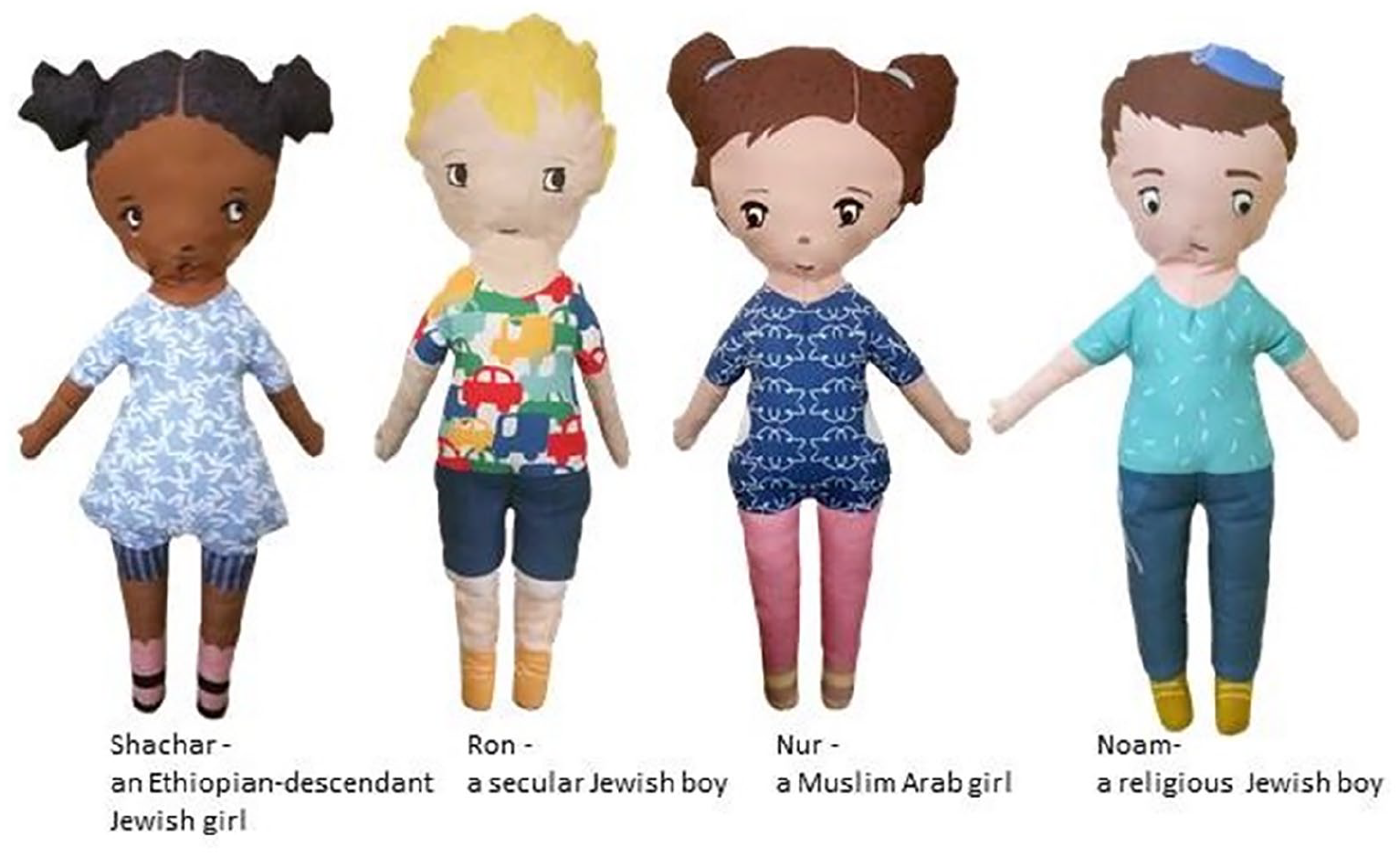
Persona dolls used as stimuli for the interventions.
Intervention Stories
The stories were written by the researchers applying components of effective indirect intergroup contact with children. Namely, each week emphasized a different crucial component: social categorization, individuation/decategorization, positive intergroup contact, and common group identity. Examples of stories about the Arab doll are presented in Appendix A in the online supplemental material.
First week: Social categorization – The goal was to introduce children to the different social groups to which the dolls belonged. The experimenter introduced one doll each day, telling his/her story, and describing him/her by name, age, place of living, family composition, and the unique cultural or social characteristics of his/her group.
Second week: Individuation – The goal was to expose children to the uniqueness of each doll, describing his/her unique individual characteristics, such as interests and preferences.
Third week: Positive contact – The goal was to expose children to a positive contact between different dolls. The experimenter introduced two dolls each day over three days: one from the ingroup (secular/religious Jewish doll, depending on the participant’s kindergarten) and one from each of the three outgroups, each day (either secular/religious Jewish doll, Arab, and Ethiopian-descendant Jewish doll). The encounters included a shared activity (e.g., feeding animals in the zoo), a common problem, and finding a solution for the problem by the outgroup member. On the fourth day, all characters met at the beach and together built a sandcastle.
Fourth week: Common identity – The goal was to highlight to children an identity shared by the dolls. The experimenter introduced two dolls each day over three days: one from the ingroup and one from each of the three outgroups. Each day, the experimenter told participants a story, describing positive intergroup encounters that involved membership in a same group with a common goal; for example, a music class during a summer camp in which the characters had to perform as a group at the end-of-camp party. On the fourth day, all characters met at an Israeli food festival, to make falafel (a national dish) together. In order to strengthen their common identity, the dolls were dressed in T-shirts of the same color and group symbol throughout the entire week.
Measures
Five measures were used to assess pre- and post-intervention knowledge and attitudes, in a fixed order, as follows.
Social category knowledge was assessed using 16 questions that targeted different aspects of social category knowledge. Six questions examined participants’ awareness of their own category membership. Each participant was asked whether he/she was a Jew, Israeli, Arab, Ethiopian, secular, or religious. For each question, participants responded either “yes”, “no”, or “I don’t know”. Six additional open questions were about general knowledge regarding the different categories, for example, “What is a Jew?”, “What is an Israeli?” (based on Bar-Tal & Teichman, 2005). Participants were then asked four questions about the national identity of the various social groups: “Are there Arabs/Ethiopians/religious/secular who are Israelis?” For each question, participants responded either “yes”, “no”, or “I don’t know”.
Liking was measured using four items (based on Rhodes et al., 2018), and was assessed four times, each time referring to one of the four targets (ingroup: secular/religious Jew, outgroup: secular/religious Jew, Arab, and Ethiopian-descendant Jew). The experimenter presented a picture of a gender-matched individual target and said for example: “Look, here is Avi, he is an Ethiopian boy. Would you like to play with Avi, the Ethiopian boy?”, or “Look, here is Peleg, a secular boy, like you. Would you like to play with Peleg, the secular boy?” (On all measures, the description of the ingroup character always included a reference to the self.) For each question, participants responded either “yes” or “no”, and were then asked a follow-up question. For example, if they responded affirmatively, they were asked, “Do you sort of want to, or really want to?” Each item received a score ranging from 1 to 4, with higher numbers meaning positive attitudes (for the full list of items see Appendix B in the online supplemental material).
Distance was assessed using a one-item scale. The scale appeared four times, each time referring to one of the four targets. For example, the experimenter presented a picture of a movie theater, with a gender-matched individual target seated on the first seat, and eight vacant seats next to him. The experimenter then said: “Let’s pretend you’re going to a movie at the cinema. Look, here is Ahmad sitting in the movie theater. Ahmad is an Arab boy. Let’s pick a seat. Where would you like to sit?” The scale ranged from 1 (the closest seat on the row) to 8 (the farthest seat) (based on Rhodes et al., 2018).
Behavioral attribution was measured using six items (adapted from Dunham et al., 2011), each time referring to one of the three outgroup targets. Participants were told that they would “hear about something that somebody did”, and they would have to decide who did it. On each trial, participants saw pictures of a pair of gender-matched targets: an individual from the participant’s ingroup (held constant) and an individual from the outgroup. A behavior with either positive or negative valence (three each, in counterbalanced order) was shortly described. For example: “Here are two children: Netanel, a religious boy, like you, and Peleg, a secular boy”. Positive items included behaviors and questions like: “Someone made cookies for all his friends. Who made cookies for all his friends? Was it Netanel, the religious boy, like you? Was it Peleg, the secular boy? Or was it both of them?”. Negative items included behaviors and questions like: “Someone broke his friend’s toy”. Participants’ responses were coded as: 1 = outgroup member, 2 = both in- and outgroup members, 3 = ingroup member (for the full list of items see Appendix C in the online supplemental material).
Empathy was assessed using six items (adapted from Albeiro & Lo Coco, 2001), and it was presented four times, each time referring to one of the four targets. On each trial, participants were shown a picture of an individual from in- and outgroups and heard a short story, with either happy or sad emotion (three each, in a counterbalanced order). For example: “Here is Avi, an Ethiopian boy, do you know what happened to Avi? He went with his aunt to the zoo, and his aunt bought him a big balloon. He was very happy. How do you feel about what happened to Avi, the Ethiopian boy? Are you happy or sad?” For each question, participants responded either “happy” or “sad”, and were then asked a follow-up question. For example, if they responded “happy”, they were asked, “Are you a little bit happy or very happy?” Each item received a score ranging from 1 to 4, with higher numbers meaning more positive feelings (that could either match or not match the story-character’s feeling; for the full lists of items see Appendix D in the online supplemental material).
Procedure
All children were seen in a quiet area of their kindergarten. The intervention stories and the measures were all delivered by a single female experimenter. The experimenter met children for a period of six weeks: an initial assessment meeting (T0), four intervention weeks, and a final assessment meeting (T1).
T0
At the first meeting with children, participants individually completed the five measures regarding all four target groups. Because of the multiplicity of measures, the experimenter engaged the child in a distractor game (“Where’s Wally”) after two measures. In addition, she told the participants that they could ask for an additional short break during the assessment. The order of presentation of targets and their corresponding questions was counterbalanced across participants but fixed across measures, such that a quarter of the participants was presented with the ingroup first, and the other quarters with each of the outgroups first, on all five measures. This assessment lasted about 30 minutes. Only a few children asked for a short break during the assessment, beyond the game break. At the end of T0, participants received a sticker in gratitude for their participation.
Intervention Weeks
A few days after T0, the intervention started. Each participant took part in 16 small-group (5–7 children) sessions, four per week, over four weeks. Each session lasted 20 minutes, with no breaks. During the sessions, the experimenter introduced to the children the four persona dolls, one per day in the first two weeks, and two/four per day in the last two weeks. The order of presentation of the dolls was counterbalanced across weeks. The dolls were introduced as friends who came to visit the children in their kindergarten and talk about themselves. The experimenter pretended that the doll whispered in her ear, and the experimenter then spoke for the doll, in her own voice (based on Brown, 2001, 2008), telling the participants what the doll had come to tell them about themselves, a particular experience, situation, or encounter. At the end of the presentation of each story, the experimenter asked all participants some open questions about it, in order to facilitate their understanding and memory. All participants were invited to answer, but did so voluntarily. Also, the experimenter summarized the story in order to reinforce its main content and message.
T1
A week after the intervention (about six weeks after T0), participants were assessed with the same materials, measures, and procedure used in T0.
Results
Social Category Knowledge
In order to assess changes in participants’ knowledge regarding own category membership, we compared the distribution of participants who answered “yes”, “no”, or “don’t know”, on each question, before and after the intervention. Table 1 displays the percentages of children, and the values of Wilcoxon signed rank tests, comparing participants’ answers for each question before and after the intervention. First, the intervention increased the secular and religious children’s sense that they were secular and religious, respectively. In addition, the intervention increased their sense that they were not of Ethiopian descendant, and among religious children the intervention increased their sense that they were not Arabs.
Changes in awareness of own category membership at T1 compared to T0 among secular and religious participants.
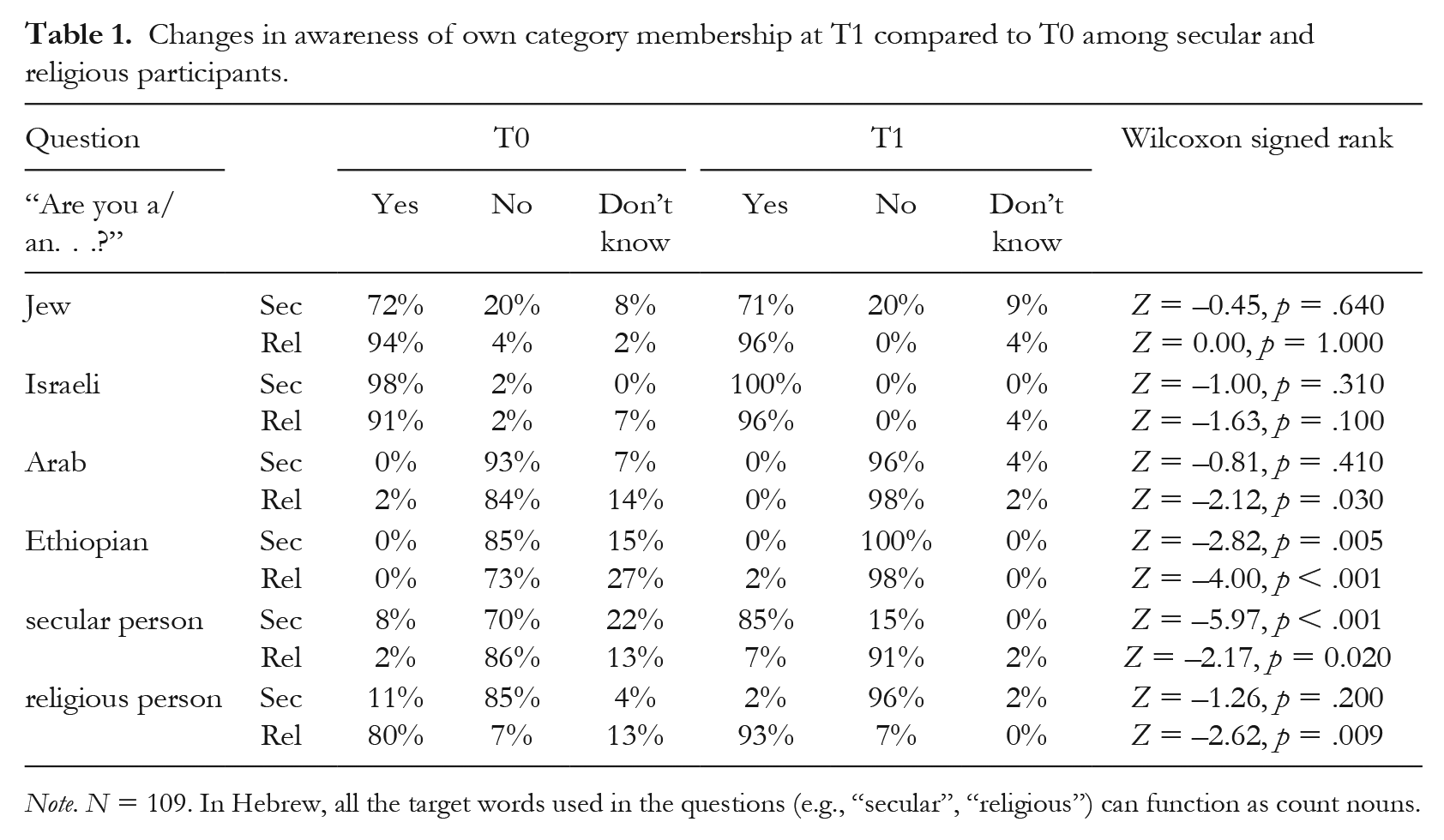
Note. N = 109. In Hebrew, all the target words used in the questions (e.g., “secular”, “religious”) can function as count nouns.
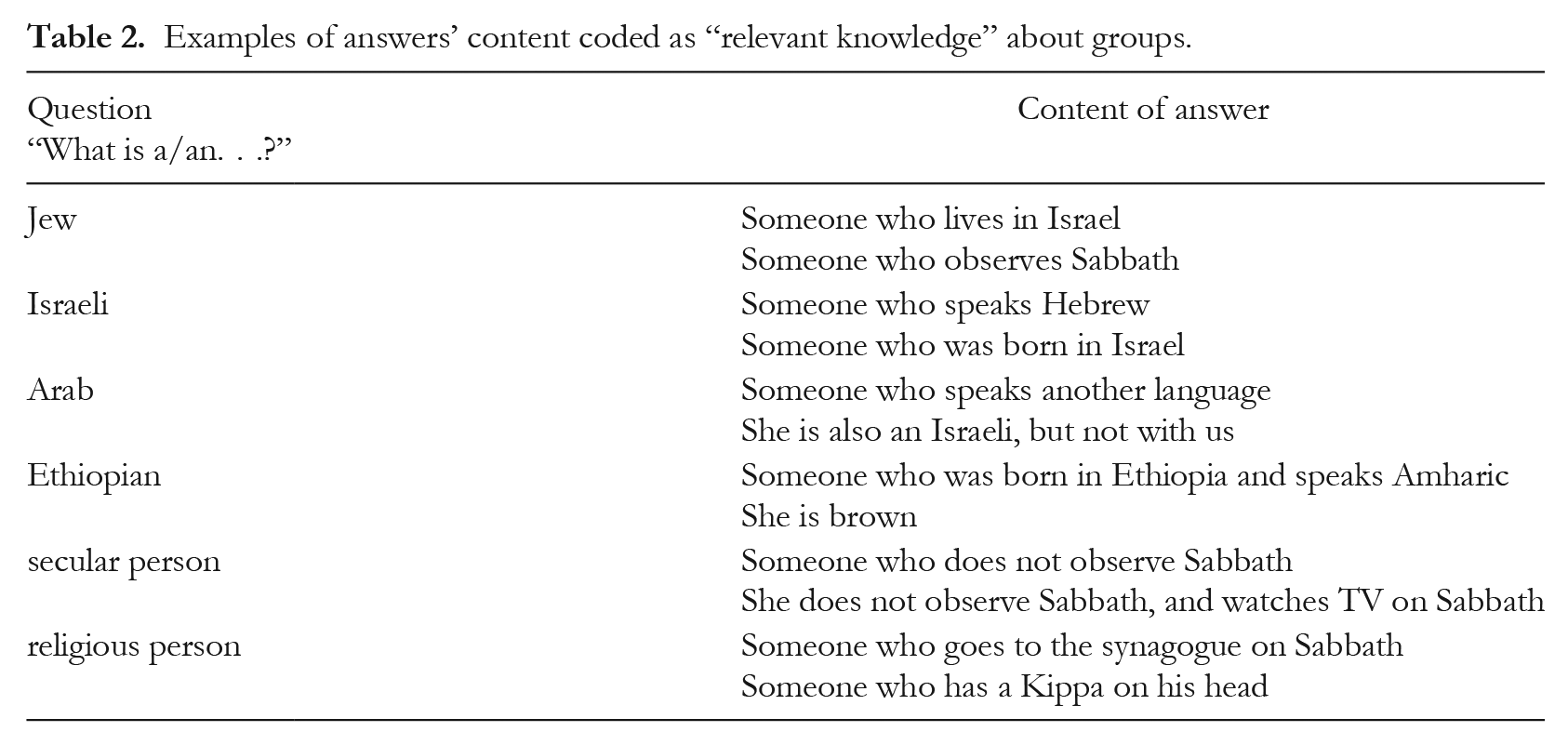
Next, in order to assess the effect of the intervention on participants’ general knowledge regarding the different categories, participants’ answers before and after the intervention were fully transcribed. Then we conducted content analysis, coding children’s answers into relevant knowledge = 1 (i.e., mentioning at least one reasonable fact about the group; see Table 2), no relevant knowledge = 0 (i.e., mentioning no reasonable fact about the group, e.g., saying that a religious person is, “someone who speaks another language”). Two independent judges who categorized all participants’ answers achieved a high level of agreement on all questions (Cohen’s κ = .98, p < .001). Due to an experimenter’s error, only a small number of religious participants answered the open questions (N = 24). Thus, we conducted analyses without separating between secular and religious participants (N = 78). Wilcoxon signed rank tests comparing participants’ answers for each question before and after the intervention, revealed significant increases in knowledge regarding an Israeli, Z = –2.55, p = .01, an Ethiopian descendant, Z = –4.96, p < .001, a secular person, Z = –6.41, p < .001, and a religious person, Z = –4.49, p < .01. There were no significant changes in participants’ knowledge regarding a Jew and an Arab.
Examples of answers’ content coded as “relevant knowledge” about groups.
Finally, regarding children’s awareness of the national identity of the various groups, we coded participants’ answers for correctness (correct = knowing the national identity of the group, incorrect = wrong at national identity). Table 3 shows that the intervention increased both secular and religious children’s sense that all the different groups are Israelis.
Changes in knowledge of the national identity of groups at T1 compared to T0 among secular and religious participants.
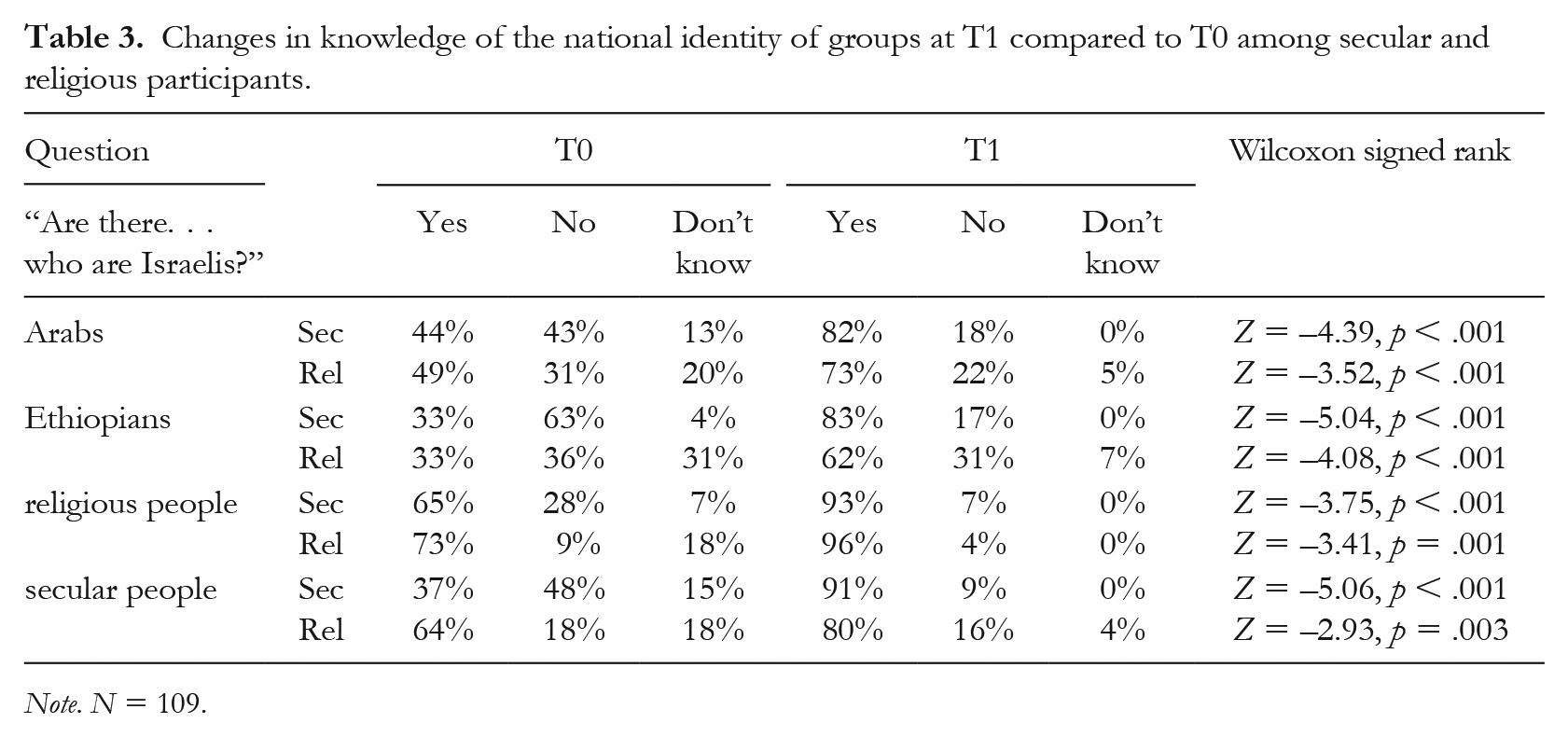
Note. N = 109.
Attitude Measures
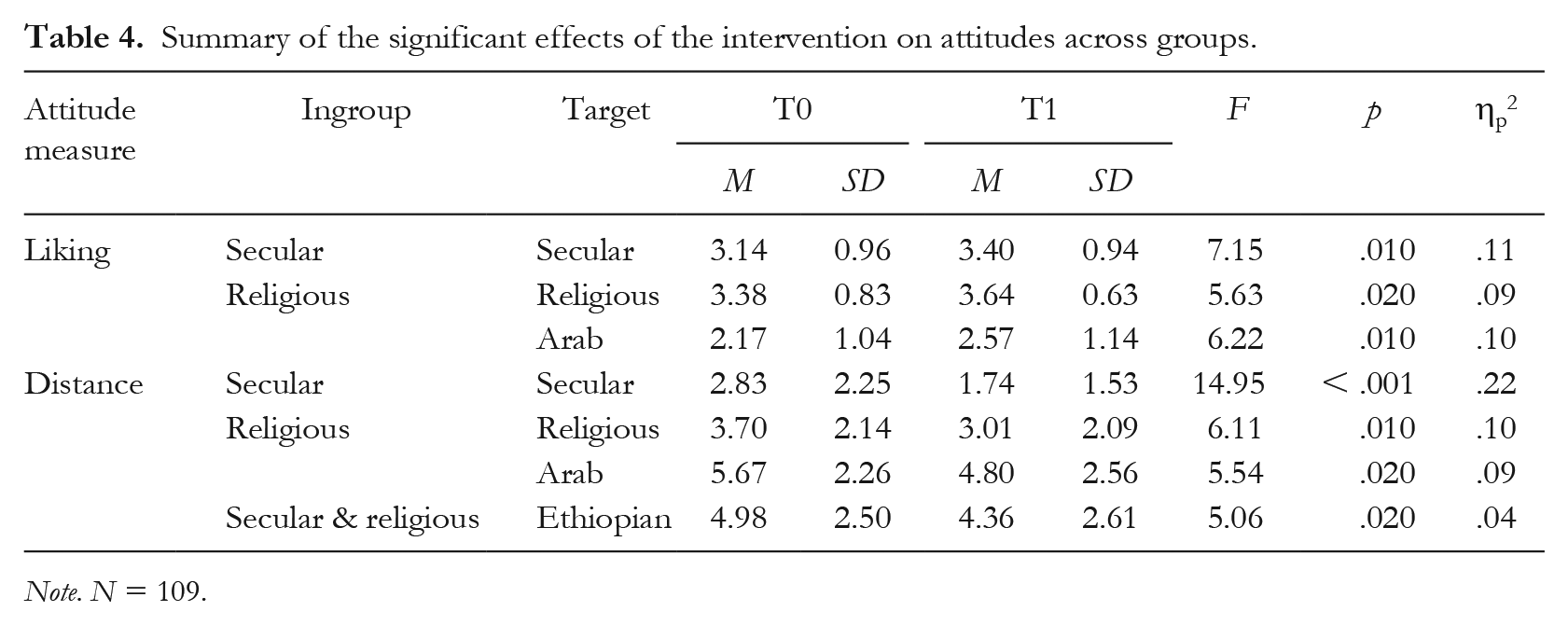
All attitude measures – except behavioral attribution (see below) – were analyzed using repeated-measures ANOVAs, with kindergarten religious affiliation (secular vs. religious) as a between-subjects variable, time and target group membership as within-subjects variables, and liking, distance, and empathy as the dependent measures. We focus our report on significant effects involving the factor “time” (see Table 4 for a summary of these). In the figures, we display and describe effects having to do with the other factors.
Summary of the significant effects of the intervention on attitudes across groups.
Note. N = 109.
Liking
The ANOVA revealed significant effects of target group, F(3, 104) = 26.38, p < .001, ηp2 = .43; time, F(1, 106) = 6.76, p = .01, ηp2 = .06; the two-way interaction between target group and kindergarten religious affiliation, F(3, 104) = 18.57, p < .001, ηp2 = .34; but most importantly, the three-way interaction among target group, kindergarten religious affiliation, and time, F(3, 104) = 4.06, p < .01, ηp2 = .10. There were no other significant effects. Given our hypotheses about potential differences on the effectiveness of the intervention within each kindergarten type and regarding each outgroup, we followed up the three-way interaction by breaking it down by kindergarten religious affiliation and target outgroup.
Among secular participants, the analyses revealed a significant effect of target group, F(3, 50) = 13.55, p < .001, ηp2 = .44 (see Figure 2). In addition, there was only one significant effect of time on liking, F(1, 53) = 7.15, p = .01, ηp2 = .11; namely, an increase in liking of the secular ingroup from T0 (M = 3.14, SD = 0.96) to T1 (M = 3.40, SD = 0.94). Among religious participants, the analyses revealed a significant effect of target group, F(3, 52) = 26.63, p < .001, ηp2 = .60 (see Figure 2). Furthermore, there were effects of time in liking regarding two social groups: (a) analogous to the finding with secular participants, religious participants’ liking of their – religious – ingroup, increased from T0 (M = 3.38, SD = 0.83) to T1 (M = 3.64, SD = 0.63), F(1, 54) = 5.63, p = .02, ηp2 = .09; and (b) liking of Arabs increased from T0 (M = 2.17, SD = 1.04) to T1 (M = 2.57, SD = 1.14), F(1, 54) = 6.22, p = .01, ηp2 = .10. In other words, the intervention significantly increased religious children’s liking towards Arabs.
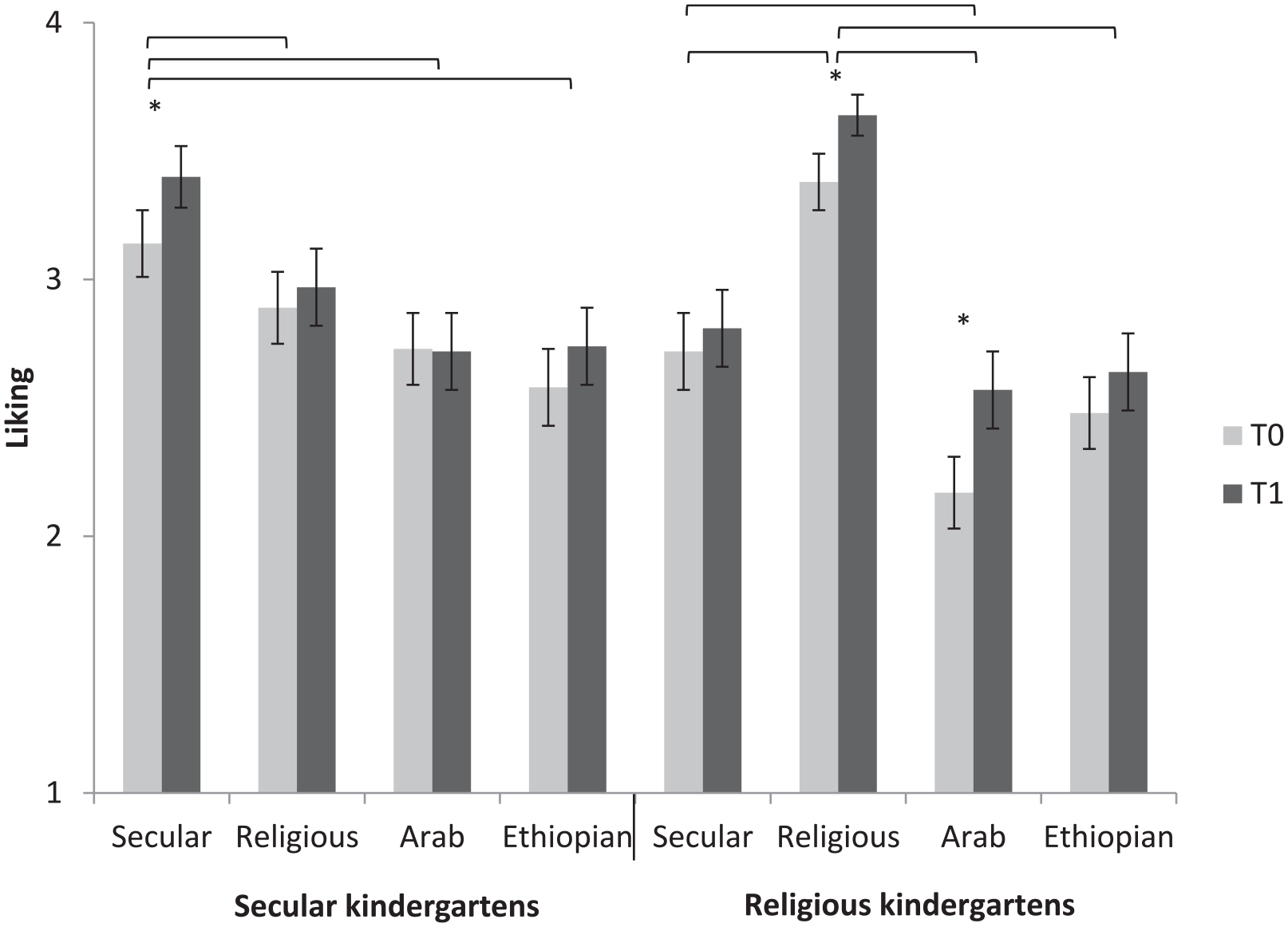
The effect of time on liking for each target group among secular and religious participants.
Distance
The ANOVA revealed significant effects of target group, F(3, 105) = 18.88, p < .001, ηp2 = .35; time, F(1, 107) = 8.67, p = .01, ηp2 = .07; kindergarten religious affiliation, F(1, 107) = 8.14, p < .01, ηp2 = .07; the two-way interaction between target group and kindergarten religious affiliation, F(3, 105) = 12.42, p < .001, ηp2 = .26; and again, the three-way interaction among target group, kindergarten religious affiliation, and time, F(3, 105) = 8.46, p < .001, ηp2 = .19. As in the case of liking, we followed up the three-way interaction by breaking it down by kindergarten religious affiliation and outgroup target.
Results here were identical to those for liking. Namely, among secular participants, the analyses revealed a significant effect of target group, F(3, 51) = 15.55, p < .001, ηp2 = .47 (see Figure 3), and only a significant effect of time regarding their own – secular – ingroup (T0: M = 2.83, SD = 2.25; T1: M = 1.74, SD = 1.53), F(1, 53) = 14.95, p < .001, ηp2 = .22. Among religious participants, the analyses revealed a significant effect of target group, F(3, 52) = 11.88, p < .001, ηp2 = .40 (see Figure 3), and two significant effects of time: (a) regarding their religious ingroup (T0: M = 3.70, SD = 2.14; T1: M = 3.01, SD = 2.09), F(1, 54) = 6.11, p = .01, ηp2 = .10; and (b) regarding Arabs (T0: M = 5.67, SD = 2.26; T1: M = 4.80, SD = 2.56), F(1, 54) = 5.54, p = .02, ηp2 = .09). That is, religious participants chose to sit significantly closer to an Arab target after the intervention.
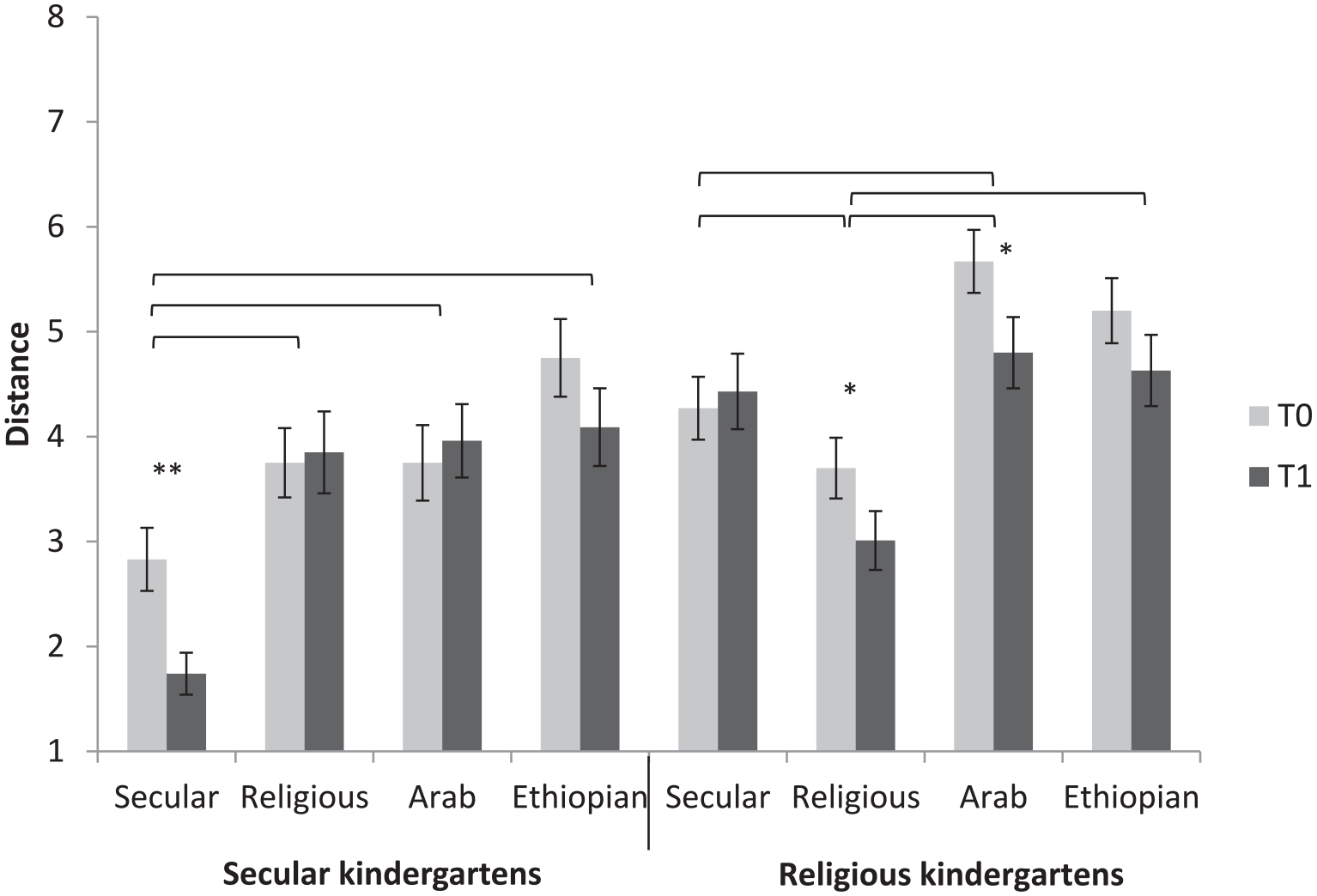
The effect of time on distance for each target group among secular and religious participants.
One final novel finding revealed by analyzing the effect of time across kindergarten type was a significant main effect of time on distance towards an Ethiopian-descendant target, meaning that taken together, secular and religious participants chose to sit closer to an Ethiopian-descendant target after the intervention (MT1 = 4.36, SE = 0.25) than before (MT0 = 4.98, SE = 0.24), F(1, 107) = 5.06, p = .02, ηp2 = .04.
Behavioral Attribution
Given the structure of this task, we conducted repeated-measures ANOVAs within secular and religious affiliation separately, with time, valence, and target outgroup membership as within-subjects variables, and behavioral attribution as the dependent measure.
The analysis among secular participants revealed a significant effect of valence, F(1, 53) = 66.94, p < .001, ηp2 = .55, subsumed under the three-way interaction of time, outgroup target, and valence, F(2, 52) = 5.94, p < .01, ηp2 = .18. We followed up the three-way interaction by breaking it down by time and by valence, using repeated-measures ANOVAs with target group membership as within-subjects variables. The analyses on T0 revealed no significant effects of outgroup target on positive behavioral attributions (ps > .8). In other words, at baseline, secular children attributed to their ingroup similar positive or negative behaviors irrespective of the outgroup that the ingroup was paired with. At T1, in contrast, the analyses revealed a significant effect of outgroup target on both positive, F(2, 52) = 3.71, p = .03, ηp2 = .12, and negative behavioral attributions, F(2, 52) = 5.21, p < .01, ηp2 = .16. As can be seen in Figure 4, in both cases, secular children’s attributions regarding religious children were more favorable than those towards Arabs and Jews of Ethiopian descent. In other words, the intervention weakened secular children’s ingroup bias regarding behavioral attributions, but only in relation to religious Jews.
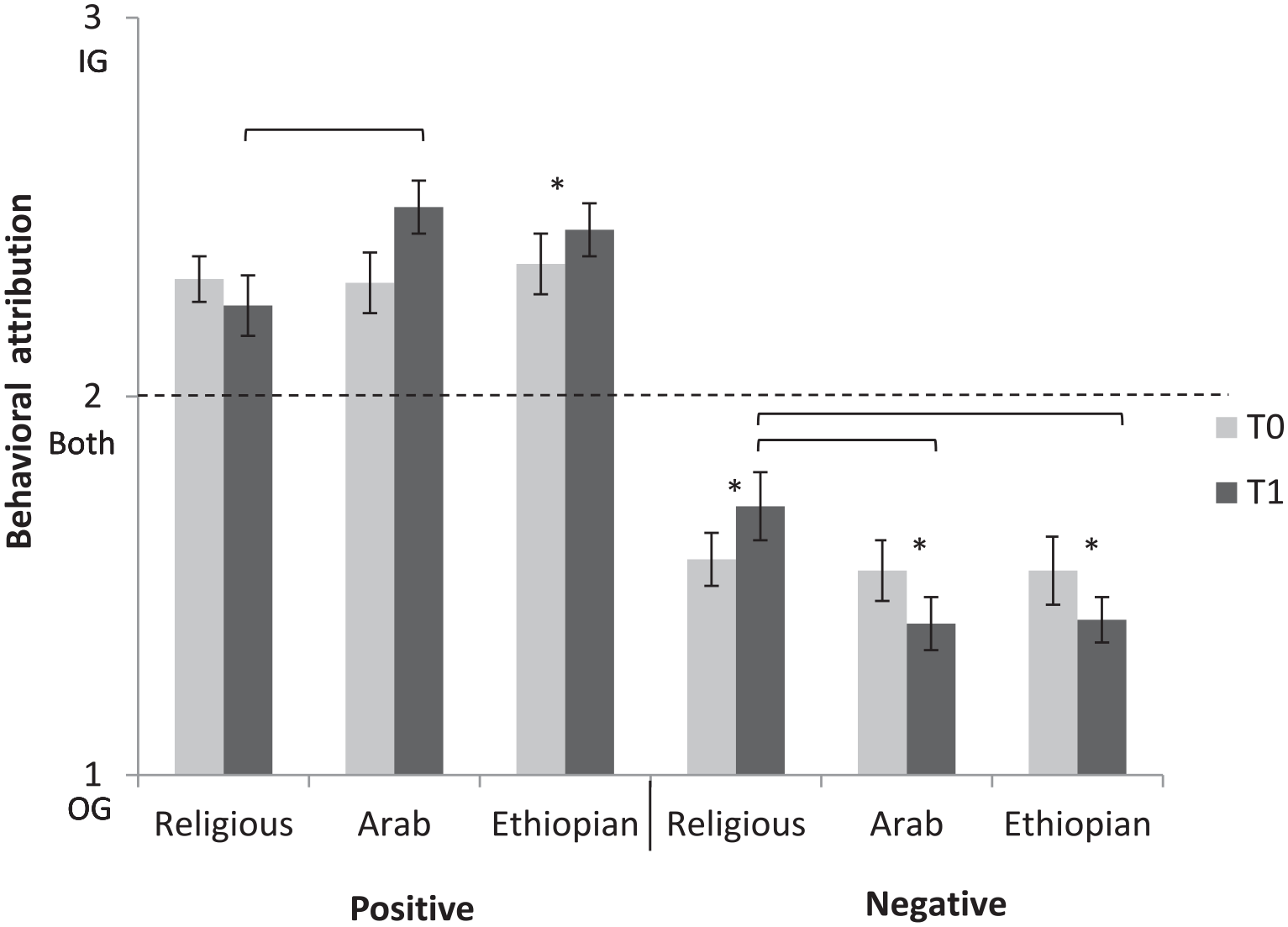
The effect of time on positive and negative behavioral attribution for each target group among secular participants.
The analysis among religious participants also revealed a significant effect of valence, F(1, 54) = 58.81, p < .001, ηp2 = .52; and a significant two-way interaction of target and valence, F(2, 53) = 4.15, p = .02, ηp2 = .13. There were no other effects among religious participants, including no effect of the intervention. Follow-up analysis on the two-way interaction revealed an overall pattern – i.e., across T0 and T1 – similar to the one found at T1 among secular children. Namely, regarding both positive, F(2, 53) = 4.96, p = .01, ηp2 = .15, and negative behavioral attributions, F(2, 53) = 3.26, p = .04, ηp2 = .11, religious children were more positively biased towards secular Jews than towards Arabs or Ethiopian descendants (see Figure 5).
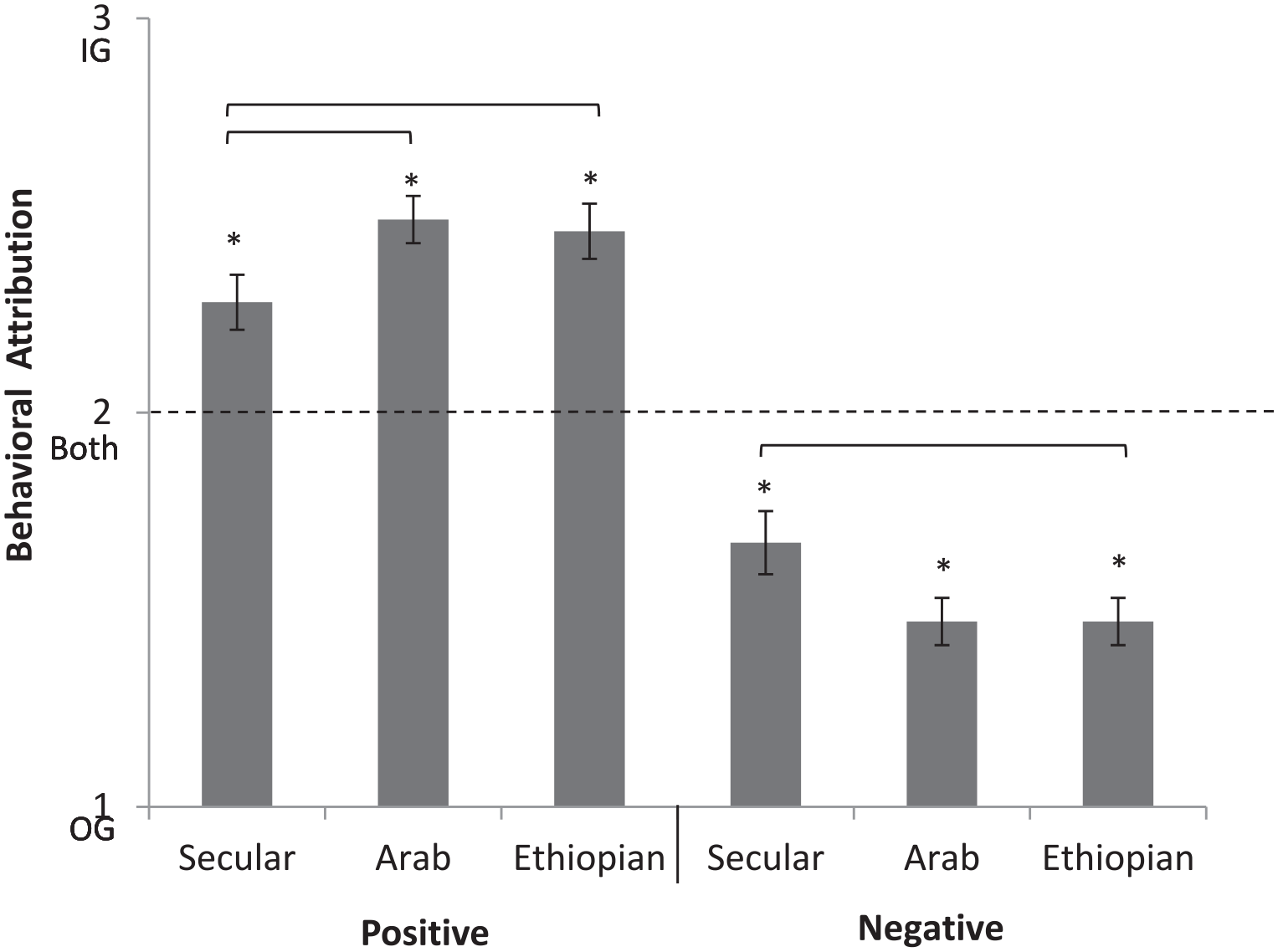
The effect of target group on positive and negative behavioral attribution among religious participants (collapsed across T0 and T1).
Empathy
The repeated-measures ANOVA on empathy revealed significant effects of valence, F(1, 107) = 7.81, p < .01, ηp2 = .06; target, F(3, 105) = 10.50, p < .001, ηp2 = .23; and the two-way interaction between target and religious affiliation, F(3, 105) = 7.61, p < .001, ηp2 = .17. There were no other significant effects, including no effects involving time. Follow-up repeated-measures ANOVAs using the average empathy score across T0 and T1, revealed significant effects of target among both secular, F(3, 51) = 4.90, p < .01, ηp2 = .22, and religious children, F(3, 52) = 8.60, p < .001, ηp2 = .33. As can be seen in Figure 6, both groups of children were more empathic towards their own respective ingroups than towards any of the outgroups. The only difference between the groups is that, whereas secular children were indiscriminate in their disregard for the outgroups, religious Jews were more empathic towards secular Jews than towards Arabs.
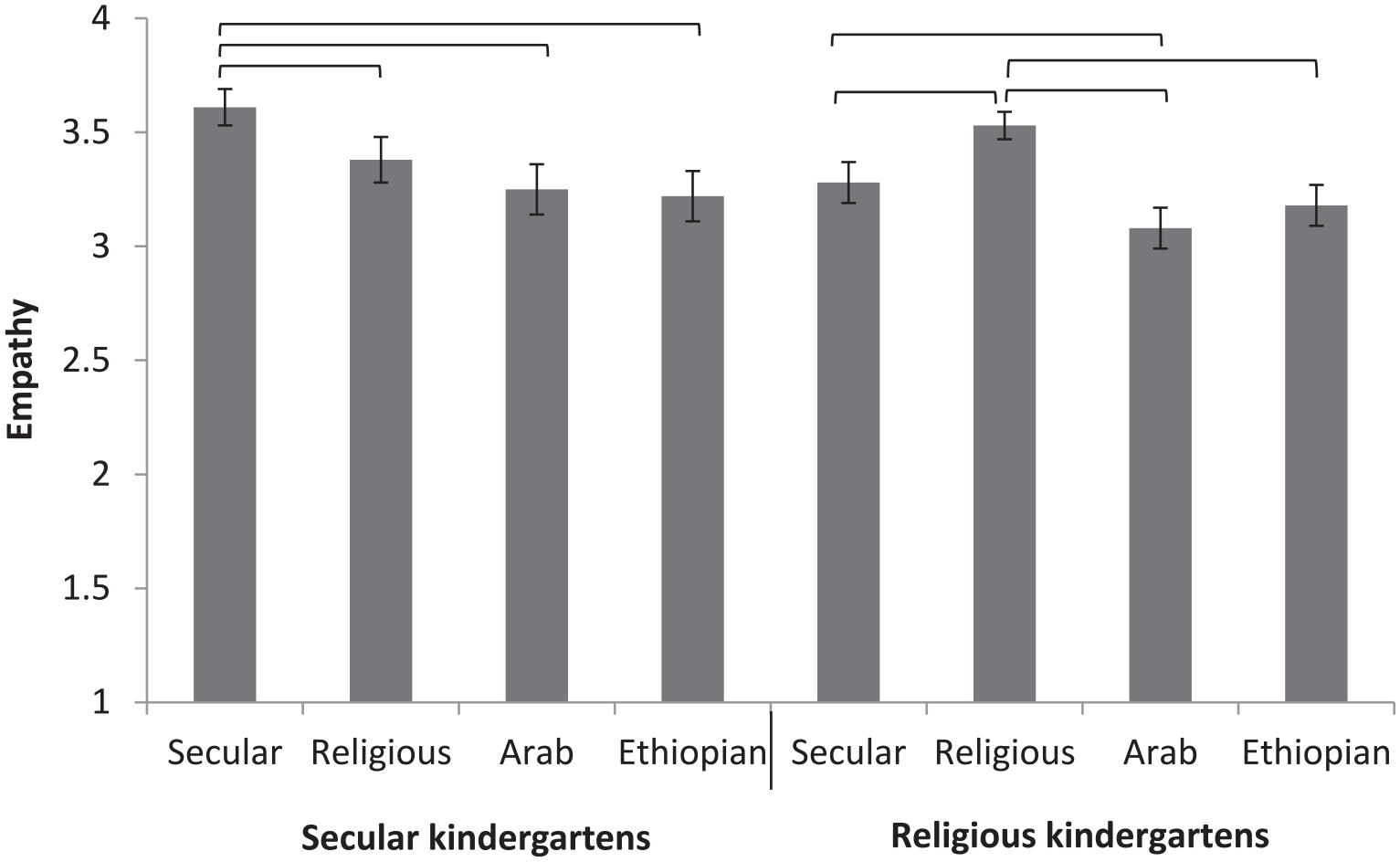
The effect of target group on empathy among secular and religious participants (collapsed across T0 and T1).
Discussion
The current study investigated the efficacy of an indirect contact intervention for improving social category knowledge and attitudes of Israeli secular and religious Jewish kindergarteners regarding their own ingroup and three outgroups: secular and religious Jews (respectively), Jews of Ethiopian descent, and Arabs. The main findings indicate first, a significant change in the participants’ knowledge about both their ingroup and the three outgroups. There was also a change in some attitude components. Specifically, there was an improvement in religious children’s liking of, and willingness to interact with, Arab children, and in both secular and religious children’s willingness to sit next to children from Ethiopian descent. In turn, there were no significant changes in children’s tendency to attribute valenced behaviors to in- and outgroups, or in children’s empathy towards the groups.
Children’s knowledge about in- and outgroups
Prior to the intervention, the majority of both secular and religious children knew that they were Israeli and also that they were Jewish. These findings reveal that children from both groups, by five years of age, are aware of two salient common social groups they belong to. Thus Israeli children seem to develop social group identity as early as, or perhaps even earlier than, children in other societies (e.g., Barrett et al., 2004; Nesdale, 2004). Nevertheless, the intervention significantly increased the number of children who were aware of these identities, and who were aware of the identities that did not pertain to them.
Children’s specific knowledge about most other social groups also increased. Specifically, after the intervention, children more frequently provided relevant answers to open-ended questions conveying recognition of the country a person was born in (e.g., An Ethiopian . . . was born in Ethiopia), their language (e.g., An Israeli . . . speaks Hebrew), appearance (A religious Jew has a kippa on his head), and typical social-cultural customs (e.g., A religious Jew goes to synagogue on Sabbath). Theorists argue that intergroup bias and negative attitudes towards outgroups often derive from ignorance (e.g., Allport, 1954; Stephan & Stephan, 1984). Thus, the fact that exposure to information about both in- and outgroups via dolls, substantially increased children’s knowledge of the groups, is of theoretical and practical importance.
These improvements notwithstanding, an important exception regarded Arabs, about whom no significant increase in knowledge was noted. This finding is in line with previous research showing that in contexts in which groups are in conflict, children are often exposed to negative messages that may cause biased processing of new information. Jewish children in Israel are exposed from an early age to conflict-supporting societal narratives and conflict-oriented information (Bar-Tal et al., 2017; Nasie et al., 2016). Furthermore, enriching children’s knowledge about their ingroup, as was done in the current study, may also impede the increase in knowledge about the conflictual outgroup (Nesdale et al., 2010). All the above vouch for the difficulty in changing children’s knowledge about a conflict outgroup. Nevertheless, Nasie and Diesendruck (2020) have recently found that when presented with a picture of an individual Arab child, and invited to ask questions about him/her, Jewish-Israeli preschoolers and kindergarteners manifested curiosity. It is thus possible that by providing opportunities for children to convey their curiosity regarding outgroups, provision of information may have a stronger impact than obtained here.
Finally, despite the absence of change in children’s knowledge about Arabs’ unique features, there was a significant increase in their recognition that Arabs are Israelis. In fact, after the intervention, most secular and religious children alike correctly said that people from all groups are Israelis, i.e., share a common Israeli ingroup identity. It is important to note in this regard that even though the intervention emphasized the dual identity of the individual persona dolls, the questions about identity referred to the groups in general. In other words, the intervention successfully raised children’s awareness of the dual and common identity of the groups. A number of scholars have emphasized the potential contribution of common group identities for changing both adults’ (Gaertner & Dovidio, 2000) and children’s (Vezzali et al., 2015) intergroup biases. The present findings are thus encouraging in this respect.
Children’s Attitudes Towards In- and Outgroups
By and large, the findings revealed that, prior to their participation in the intervention, secular and religious children alike demonstrated ingroup favoritism. They stated a preference for playing and interacting with members of their group, sitting closer to them, commonly attributed positive traits to the ingroup and negative ones to the outgroup, and empathized more with an ingroup than an outgroup member. This finding cements those of previous studies with a similar population (e.g., Bar-Tal & Teichman, 2005; Diesendruck & Menahem, 2015). The current findings show that by age five, Israeli children, like their age-mates across the globe (e.g., Dunham et al., 2006; Dunham et al., 2011; McLoughlin & Over, 2017; Nesdale, 2007), have a strong bias favoring their group.
A second noteworthy and more novel finding is that, in general, this intergroup bias was manifest to the same extent, irrespective of the outgroup used for comparison. Children favored their ingroup no matter who the alternative outgroup was, and disfavored all outgroups to similar degrees. This finding is of particular theoretical significance as it speaks to an important divide in explanations for the development of intergroup biases. Namely, according to one approach, children’s initial biases are relatively “naive”, in the sense that they reflect an intuitive response to outgroups. An alternative approach is that biases are “informed”, being a product of children’s sensitivity to cultural messages about each group.
The first explanation is consistent with at least three lines of research. First, there is evidence that even infants prefer individuals who are similar to them on some dimension (Kelly et al., 2005; Kinzler et al., 2012; Mahajan & Wynn, 2012), and have positive associations regarding members of their group (Pun et al., 2018; Xiao et al., 2018). Second, from a young age, children already manifest automatic implicit intergroup biases regarding various social groups (Dunham et al., 2006; Essa et al., 2019). Finally, a number of studies have noted that at a young age, the sheer fact that social groups are labeled and categorized seems sufficient to unleash children’s biased attitudes and concepts (e.g., Rhodes et al., 2012; Segall et al., 2015), even when groups are defined arbitrarily and with no significance to children’s lives (Dunham, 2018). It could be that our five-year-old participants were manifesting this automatic indiscriminate intergroup bias, fomented by the labeling of all outgroups, and naive to the cultural and political significance of the particular outgroups.
The second line of explanation suggests that our participants may have had “reasons” to hold negative attitudes towards each of the outgroups. This argument is particularly tenable with regard to children’s attitudes towards Arabs, as previous research in Israel has shown that Jewish children express negative attitudes towards Arabs from as early as toddlerhood (e.g., Bar-Tal & Teichman, 2005; Nasie et al., 2016). As in other conflict-ridden regions (e.g., Connolly, 2011), an ongoing conflict often exposes children both to negative messages conveyed by significant others and social structures, and to individual experiences of trauma and/or chronic stress (Sagi-Schwartz, 2012). These lead to the emergence of negative prejudice against the outgroup earlier than predicted by Social Identity Development Theory (i.e., age seven) (Nesdale & Brown, 2004). Although this evidently can explain our Jewish participants’ biased attitudes towards Arabs, it does not explain why these participants held equally biased attitudes towards the other outgroups.
To our knowledge, the current study is the first to reveal young Jewish secular and religious children’s biased attitudes towards Ethiopian descendants. The current findings reveal that Jewish secular and religious majority Israeli children may already internalize the biased attitudes towards Ethiopian descendants surrounding them (e.g., Abu et al., 2017; Ben-Eliezer, 2008) by five years of age. Alternatively, children’s biases towards Ethiopian descendants may be a manifestation of skin-color-based discrimination. Previous research has shown that children develop awareness of race already during the first year of life (Kelly et al., 2005; Sangrigoli & de Schonen, 2004). The development of biased attitudes is especially boosted when natural egalitarian encounters are rare, and de facto segregation occurs (Ellis et al., 2017; Pauker et al., 2016; Qian, Heyman, et al., 2017). Given the different circumstances, contexts, and experiences related to the Ethiopian community in Israel, these findings are particularly interesting and important, and understanding their causes is critical.
Finally, the finding that Jewish secular and religious Israeli children have biased attitudes towards each other is remarkable. As described in the Introduction, Jewish religious and secular children attend separate educational streams throughout their education. Their families significantly differ in beliefs, practices, and political orientation. In fact, for years, strong political splits and deep tension have existed between Jewish secular and religious citizens (Ben-Rafael, 2008). Whether children are exposed to messages expressing this tension, and whether this suffices to account for children’s biased attitudes as revealed here, are questions for further research.
Taken together, it seems particularly puzzling that despite substantial variance among the outgroups assessed in the study, children’s attitudes towards the three groups were nonetheless similar. This similarity is more consistent with a singularity of mechanism, such as that proposed by the naive account described above. However, it is important to note departures from this general pattern of similarity, because they may reveal precisely the workings of the groups’ particularities. Two are noteworthy here. First, in terms of willingness to interact with (liking measure), sit close to (distance measure), and empathize with (empathy measure), whereas secular Jewish children manifested equal attitudes towards all three outgroups, religious Jewish children manifested more biased attitudes towards Arabs than towards secular Jews. Previous research has shown that Israeli religious children assign a stronger essentialist status to ethnicity than secular children (Diesendruck & haLevi, 2006), and, additionally, that they hold stronger negative attitudes towards Arabs than secular children (Ben-Shabat, 2010). Arguably these are associated with religious beliefs per se (Diesendruck & Haber, 2009) or parents’ political orientations and consequent discourse (Segall et al., 2015). Second, in terms of behavioral attributions, both secular and religious Jewish children’s ingroup favoritism was stronger when the respective ingroup was paired with Ethiopian descendants or Arabs than when paired with secular/religious outgroups – groups that constitute the overall majority of the Jewish population in Israel, and whom children more likely encounter on a daily basis.
Overall then, the present findings uniquely illuminate the dynamic interaction between the two general approaches regarding the development of intergroup biases. The findings highlight that even if five-year-olds’ intergroup biases arise naively, already at this young age, ecological factors start to orient the bias towards particularly relevant groups in the child’s cultural and political environment. Interestingly, a further corollary of this interactional process can be seen in the effectiveness of the intervention.
Intervention Effects on Children’s Attitudes
One main effect of the intervention was that it boosted both secular and religious children’s ingroup preference in a number of the measures. This finding is in line with Cameron et al.’s (2006) finding, showing that English kindergarten children strengthened their ingroup positive attitudes following their participation in an extended-contact intervention. One way to interpret this finding is along the lines of Social Identity Development Theory (Nesdale, 1999; Nesdale et al., 2003). Namely, five- to six-year-olds are at the ethnic self-categorization phase, and by highlighting their ingroup identity, our intervention may have facilitated this process, leading to children’s heightened esteem of their group. An alternative interpretation is that the increase in ingroup favoritism after the intervention manifests a reaction to the highlighting of the outgroups (e.g., distinctiveness hypothesis, Turner, 1978). It would be valuable in future work to adjudicate between these possibilities.
The main findings of the intervention, however, concern the participants’ attitudes towards outgroups. First, there was a positive change in religious children’s liking of, and willingness to sit closer to, Arab children. This is particularly remarkable given that, as noted above, religious children’s initial attitudes towards Arabs were the most biased. An interesting speculation is that for these children especially, “Arabs” is an anxiety-provoking concept: unknown, yet threatening. By familiarizing these children with Arabs and thus filling their “empty concepts” with knowledge, their anxiety was assuaged (Allport, 1954). From a practical perspective, this finding shows that a developmentally appropriate indirect contact intervention that exposes children to positive cultural input about Arabs, and intergroup positive encounters, can make a difference (Deeb et al., 2011; Nasie & Diesendruck, 2020). Following an argument raised before, it is possible that, just as the especially biased attitudes towards Arabs that children develop derive from messages children are exposed to regarding this group, so may the revision of these attitudes be particularly susceptible to corrective messages.
Regarding children’s attitudes towards Ethiopian descendants, the findings indicate that secular and religious children selected a seat closer to an Ethiopian-descendant child after the intervention than before. As expounded earlier, it may be that the distinctiveness and novelty of Ethiopian-descendant children in terms of racial features affect Israeli children’s attitudes towards them. In these circumstances, exposing them to an exemplar of the category, familiarizing them with the category, and individuating the category, may have all contributed to this change in attitude (Gonzalez et al., 2017; Pauker et al., 2016; Qian, Quinn, et al., 2017). Perhaps also, emphasizing the common identity – as Jews and Israelis – was particularly important for the change in attitude towards this group (see Gaertner & Dovidio, 2000; Gaertner et al., 1993).
Finally, the only effect of the intervention on children’s behavioral attribution is that it weakened secular children’s ingroup bias, but only in relation to religious Jews. Here too, this finding may be revealing of the particular tolerance towards this outgroup, resulting from their common identity and relatively high familiarity. This finding notwithstanding, overall the intervention was not detectably effective in changing children’s pattern of behavioral attributions and empathy towards the two most prejudiced outgroups: Ethiopian descendants and Arabs.
The inconsistency in changes in children’s attitudes across different measures has been found in other studies. For example, Connolly et al. (2006) found that, following their participation in an intervention, children from Northern Ireland and the Republic of Ireland alike expressed more interest in participating in outgroups’ cultural events, but were not more willing to be inclusive of outgroup children. Similarly, among English children (Cameron et al., 2006), following participation in an intervention, there was a positive change in trait attribution related to refugees, but no change was evident in their interest to play with them. Finally, Rhodes et al. (2018) found that experimentally inducing essentialist beliefs about a novel social category led children to share fewer resources with category members, but did not lead to outgroup dislike.
Attempting to analyze these trends across studies is challenging. There seems to be no clear indication of underlying processes that can fully explain why certain attitude components are easier to change than others. Nevertheless, in our study, it seems that the measures that showed improvement after the intervention were those that asked children about their behavioral dispositions, e.g., willingness to play with outgroup members, to share with them toys, and to sit closer to them. In contrast, measures that were more resistant to change were those assessing children’s cognitive dispositions, i.e., behavioral attribution and empathy. Clearly, this issue calls for further research.
Research Limitations
The current study was the first to assess children’s knowledge about, and attitudes towards, their ingroup and three outgroups. Although this design portrayed a rich picture of children’s ingroup and outgroup attitudes regarding four central socio-cultural groups in Israeli society, it may have also taxed children’s ability to focus on each group and give their full attention to each of the groups. Future research should compare the current multiple-group design with a more focused one, in order to assess whether this may affect changes in children’s attitudes and, specifically, whether personal encounters with one outgroup persona doll will result in better attitude outcomes.
A further limitation of the present study is that it assessed the effect of the intervention only once, one week after the end of the intervention. It would be valuable to assess the long-term effect of the intervention on children’s intergroup knowledge and attitudes, by following up on the children for a prolonged period of time.
Additionally, given that this was a first attempt at assessing an intense and yet logistically simple intervention, the study was designed to maximize effectiveness, perhaps at the expense of systematicity. In particular, although the intervention incorporated theoretical insights regarding various strategies for remedying intergroup bias (e.g., individuation, dual identity), implementing one such strategy every week, it did not assess them in a systematic and counterbalanced way. Having now shown the effectiveness of the overall program, it would be valuable to start titrating the different factors.
Finally, we used a pre-test–post-test design with no control or comparison group. A control group could allow assessment of the effect of the presence of the dolls on children’s attitudes, with no teacher-mediated intervention. Other comparison interventions could allow assessment of the relative efficacy of persona dolls. This may be a valuable avenue to pursue in future studies.
Implications
Despite its limitations, the study has some important educational implications. Intervention programs aimed at enriching children’s knowledge about in- and outgroups, and at reducing children’s biases and negative attitudes should be incorporated into educational settings. This is especially relevant for the Israeli context, in which the curricula of the three separate educational systems scarcely include knowledge and positive messages about diverse outgroups (Azulay et al., 2013). Intervention studies are important in order to provide educational policy-makers with evidence-based guidelines that teachers can then sensitively apply, based on their experience and acquaintance with the children’s individual characteristics, families, and communities, and as part of their everyday educational practice. Whereas the current intervention was longer than typical intervention studies that are often criticized for being too brief (Brown & Hewstone, 2005), teachers can deliver an even longer intervention that will be better integrated into the school’s curriculum. As stated by Bar-Tal and Teichman (2005), early educational interventions should take the form of active, experiential, and intentional instruction and learning. Merely talking or exposing children from rival groups to each other’s company may not be enough to produce change. Specifically, longer interventions with persona dolls, facilitated by teachers, can allow ongoing lively conversations with children, in which they share and voice their experiences, feelings, and beliefs (Brown, 2008; Smith, 2013). The teacher has a critical role in addressing, through the dolls, important issues, such as tolerance, respect, equality, fairness, and in conveying clear value and behavioral messages. We hope the present work can provide preliminary guidelines for such programs.
To conclude, the findings highlight the potential of indirect contact through dolls as a bias- and ignorance-reduction tool among young children in multicultural societies where tensions exist between diverse groups, and where contact between young group members is limited.
Supplemental Material
sj-pdf-1-gpi-10.1177_13684302211005837 – Supplemental material for Promoting positive intergroup attitudes using persona dolls: A vicarious contact intervention program in Israeli kindergartens
Supplemental material, sj-pdf-1-gpi-10.1177_13684302211005837 for Promoting positive intergroup attitudes using persona dolls: A vicarious contact intervention program in Israeli kindergartens by Meytal Nasie, Margalit Ziv and Gil Diesendruck in Group Processes & Intergroup Relations
Footnotes
Acknowledgements
We would like to thank Anat Levi, Rotem Palachi, and Efrat Shilat for their assistance in carrying out the intervention and collecting the data. We would also like to thank Anat Levi for coding the data.
Author note
The data and the materials of this study are available on request from the corresponding author.
Funding
The authors disclosed receipt of the following financial support for the research, authorship, and/or publication of this article: The research was supported by a grant from “Atidim”, a not-for-profit Israeli organization, to “Games for the Future”, an Israeli NGO aiming to foster positive attitudes towards cultural diversity in the Israeli society.

Supplemental material
Supplemental material for this article is available online.
References
Supplementary Material
Please find the following supplemental material available below.
For Open Access articles published under a Creative Commons License, all supplemental material carries the same license as the article it is associated with.
For non-Open Access articles published, all supplemental material carries a non-exclusive license, and permission requests for re-use of supplemental material or any part of supplemental material shall be sent directly to the copyright owner as specified in the copyright notice associated with the article.
