




Abstract
This paper analyzes key psychological themes in language used by prominent conspiracy theorists and science advocates on Twitter, as well as those of a random sample of their follower base. We conducted a variety of psycholinguistic analyses over a corpus of 16,290 influencer tweets and 160,949 follower tweets in order to evaluate stable intergroup differences in language use among those who subscribe or are exposed to conspiratorial content and those who are focused on scientific content. Our results indicate significant differences in the use of negative emotion (e.g., anger) between the two groups, as well as a focus, especially among conspiracy theorists, on topics such as death, religion, and power. Surprisingly, we found less pronounced differences in cognitive processes (e.g., certainty) and outgroup language. Our results add to a growing literature on the psychological characteristics underlying a “conspiracist worldview.”
Introduction
Imagine a world in which it is not expert knowledge but an opinion market on Twitter that determines whether a newly emergent strain of [avian] flu is really contagious to humans.
The advent of social media has changed the way information is created, disseminated, and consumed, leading to heated debates about the extent to which social media is promoting the formation of “echo chambers” or homogeneous and polarized online communities (Barberá et al., 2015; Bessi et al., 2016; Del Vicario et al., 2016; Del Vicario et al., 2017; Zollo et al., 2017; but see Bakshy et al., 2015; Eady et al., 2019). Conspiracy theories, often defined as allegations that powerful people and organizations are covertly plotting to achieve sinister goals (Douglas et al., 2019; Moscovici, 1987; van der Linden et al., 2020), find fertile ground within polarized online environments (Del Vicario et al., 2016) and a growing climate of misinformation and science denial (Lewandowsky & Oberauer, 2016; Rutjens et al., 2018; Washburn & Skitka, 2017). Although most popular conspiracy theories stretch the limits of credulity and are mathematically untenable (Grimes, 2016), they are endorsed by enough people to no longer be treated as the “implausible visions of a lunatic fringe” (Melley, 2000, p. vii; van der Linden, 2013). For example, over 50% of Americans endorse at least one conspiracy theory (Oliver & Wood, 2014), and a recent YouGov poll finds that about 28% of the U.S. population (and 50% of Fox News viewers) believe that Bill Gates is responsible for the COVID-19 pandemic so that he can inject people with location-tracking microchips via mandatory vaccination (Sanders, 2020).
Existing research has mostly explored the psychological correlates of conspiratorial thinking (e.g., Abalakina-Paap et al., 1999; Goertzel, 1994; Swami et al., 2011; van der Linden et al., 2020; van Prooijen et al., 2015), or how exposure to conspiracy theories affects (anti)social beliefs and behavior (van der Linden, 2015; see Douglas et al., 2019, for an extensive review). In fact, survey-based studies examining individual differences in conspiracy ideation represent the vast majority of social psychological research on the topic (Wood & Douglas, 2013). Although a growing literature has focused on the role that conspiracies play in online networks (Bode & Vraga, 2017; Del Vicario et al., 2016; Lewandowsky et al., 2015), the intergroup nature of conspiracies and the ways in which groups express language online remain severely understudied (Douglas & Sutton, 2018; Zollo et al., 2015). This is important because analyzing online language can yield new insights into how conspiracy theorists communicate (Douglas et al., 2019), as well as the extent to which language reinforces online echo chambers (Bessi et al., 2016). Thus far, relatively few studies have attempted to analyze the psycholinguistic features of online conspiratorial content. For example, Wood and Douglas (2013) analyzed the argument structure of comments made on 9/11 blogs categorizing them either as conspiratorial or in favor of conventional explanations for the events. Lewandowsky et al. (2015) analyzed comments in the climate change blogosphere in response to their research on the psychology of conspiracy theories, and found that the comments themselves exhibited strong elements of conspiratorial thinking. Perhaps more directly relevant to the current research, Klein et al. (2019) investigated the “linguistic” precursors to involvement in Reddit’s conspiracy theory forum, and found that themes around power, terrorism, deception, and government played an important role compared to matched controls (see also Samory & Mitra, 2018). Other research has compared language use of active pro- and antivaccination users on Twitter, noting conspiratorial themes around fraud and government, as well as significantly higher ingroup language amongst users with long-term antivaccination attitudes (Mitra et al., 2016). We expand on this burgeoning line of research by evaluating the language used by actual and prominent conspiracy theorists and their followers on Twitter—regardless of topic domain—and whether conspiracy theorists, as a group, use defining linguistic features to communicate their beliefs and ideas in comparison to science advocates.
Specifically, we advance the literature by comparing the language of two groups of Twitter “influencers” and their respective followers. By “influencers” we mean prominent individuals that have the ability to affect the opinions and behaviors of their followers due to their perceived authority, knowledge, or position (Burt, 1999; Freberg et al., 2011; Turcotte et al., 2015; Watts & Dodds, 2007). Following prior research on online language use (Klein et al., 2019; Wood & Douglas, 2013), we utilize a case-control design and look at language use by contrasting two groups or online communities.
Specifically, we adopt a well-established paradigm by Bessi et al. (2015) that contrasts conspiratorial against scientific narratives on social media. This contrast is of particular theoretical interest (and has been adopted in many previous studies on social media dynamics) primarily because conspiracy and science groups form highly segregated and polarized online communities that advance distinct narratives which are at odds with one another. However, at the same time, research has shown that the manner in which information is consumed and disseminated within each online community is nonetheless very similar, so the groups are well-matched on these characteristics (see Bessi et al., 2015; Del Vicario et al., 2016; Del Vicario et al., 2017; Samory & Mitra, 2018; Zollo et al., 2017; Zollo & Quattrociocchi, 2018). For example, analyzing over 3,000,000 Facebook comments, Bessi (2016) finds that users who primarily polarize in either conspiratorial or science-based feeds are actually similarly low on common personality traits such as agreeableness and conscientiousness. The intergroup conflict arises out of the fact that whilst science influencers tend to diffuse factual and scientific knowledge, conspiracy groups disseminate unverified, controversial information usually aimed at refuting or questioning the mainstream scientific elite and official narrative (Bessi, 2016). Scientists are therefore a frequent target of conspiracy theories, from conspiracies about climate science (Lewandowsky et al., 2015) and COVID-19 (Roozenbeek et al., 2020), to vaccination and genetically modified organisms (GMOs; Rutjens et al., 2021). Popular scientists often publicly refute conspiracy theories and, in turn, conspiratorial narratives frequently inspire online harassment, attacks, and cyberbullying of outspoken scientists (Deutsch & Wheaton, 2020; Lewandowsky, Mann, et al., 2013) who are viewed as part of the conspiracy (Franks et al., 2017). Importantly, however, whilst the narratives are clearly conflicting, both groups do hold broadly similar goals, namely to diffuse knowledge and ways of thinking that are deemed to be of value to their respective audiences. Although prior research has extensively looked at the diffusion dynamics of content posted in conspiracy versus science groups on social media, it has not yet evaluated differences in how prominent conspiracy theorists and their followers express themselves online.
Building on this paradigm, this approach will therefore provide insight into (a) intergroup differences in psycholinguistic patterns among those who subscribe or are exposed to conspiratorial content and (b) the extent to which language used by influencers is shared by their followers. Ultimately, identifying stable intergroup differences in language use will inform a growing body of research exploring the psychological characteristics of “conspiracist worldviews” (Wood & Douglas, 2015) and the wider proliferation of misinformation and “alternative facts” in an increasingly online world. We analyze conspiratorial language through the Linguistic Inquiry and Word Count (LIWC) 2015 software, which includes several extensively validated dictionaries that allow researchers to make inferences about individuals’ psychological states (Pennebaker et al., 2001; Pennebaker et al., 2015). As Tausczik and Pennebaker (2010) write, “The words we use in daily life reflect who we are and the social relationships we are in” (p. 25). There are strong theoretical reasons to suspect linguistic patterns in the expression of online conspiratorial conversations, as conspiracy theories fulfill basic psychological needs (Douglas et al., 2017). Specifically, we draw on psychological themes outlined in the LIWC dictionary that are particularly relevant to conspiracy ideation, namely: ingroup versus outgroup language (e.g., we, us, vs. they, them); cognition (e.g., cause, know); negative emotions such as anger (e.g., hate) and anxiety (e.g., nervous, afraid); and several themes related to popular conspiracy theories such as narratives that revolve around power (e.g., superior), death (e.g., bury, kill), and religion (e.g., church, mosque). Although computational analyses of online language are often done in an exploratory manner (e.g., see Klein et al., 2019; Mitra et al., 2016), given the rich literature on the psychology of conspiracy theories, we offer directional hypotheses about whether the focal groups of interest (conspiracy theorists and their followers) are expected to be higher or lower on the relevant LIWC themes when contrasted to their case-control referent category (popular scientists). We did not have specific hypotheses about differences between influencers and followers, so these contrasts are exploratory. We discuss the relevance of each psychological theme in further detail below.
Ingroup Versus Outgroup
Research suggests that ingroup identification—specifically, the desire to belong to and maintain a positive image of the ingroup—plays a central role in conspiracy ideation (Douglas et al., 2017). In the context of conspiracy theories, the ingroup is classified as the believers in the conspiracy, whereas the outgroup consists of those who carry out the conspiracy (Mashuri & Zaduqisti, 2015). According to van Prooijen and van Lange (2014), conspiracy thinkers typically feel oppressed by a collective enemy or powerful outgroup, whom they accuse of secret conspiracy formation (see also Kofta & Sedek, 2005). In other words, the ingroup attributes nefarious collective intentions to the outgroup, framing them as a dangerous and deceitful enemy (Kofta et al., 2011). A prominent historical example of this is the negative portrayal of the Jewish people leading up to World War II and the rise of Nazi ideology. For example, in a 1941 essay, Joseph Goebbels, Reich Minister of Propaganda, writes, “Due to their birth and race, all Jews belong to an international conspiracy against National Socialist Germany. They wish for its defeat and annihilation and do everything in their power to bring it about” (Goebbels, 1943). This language is emblematic of conspiracy ideation, uniting the ingroup in their enmity toward a common outgroup, creating an “us vs. them” mentality (Douglas & Sutton, 2018). Although little empirical research exists on the frequency of ingroup versus outgroup language on social media in the context of conspiracy theories specifically, “most conspiracy beliefs can be framed in terms of beliefs about how a powerful and evil outgroup [emphasis added] meets in secret, designing a plot that is harmful to one’s ingroup” (van Prooijen & van Lange, 2014, pp. 238–239). Accordingly, we expect that conspiracy influencers and their followers use language that is focused more on the outgroup (as compared to popular scientists).
Cognitive Processes
Conspiracy theories also offer a reprieve from the pervasive uncertainty of world events by simplifying complex problems (van der Linden, 2013). This makes them especially attractive to individuals low in tolerance for uncertainty and high in need for cognitive closure. Need for cognitive closure, which refers to individuals’ desire for definite knowledge on an issue, has been posited to foster conspiratorial thinking when conspiratorial explanations are temporarily salient (Kruglanski & Webster, 1996; Marchlewska et al., 2017). Further research suggests that people who lack control may also be more susceptible to conspiracy beliefs due to their inclination to perceive a coherent and meaningful interrelationship among a set of random or unrelated stimuli (Whitson & Galinsky, 2008).
Part of the allure of conspiracies is that they provide causal explanations for distressing events which may in reality be coincidental and are otherwise difficult to understand and make sense of (Hofstadter, 1966; van Prooijen et al., 2018). A contemporary example is the notion that the coronavirus was intentionally bioengineered rather than the product of a random accident, an account which helps restore a sense of predictability, agency, and control (van Prooijen & Acker, 2015). Although relevant evidence from social media studies remains relatively scant, Mitra et al. (2016) found significantly higher certainty-oriented language among antivaccination (as compared to provaccination) audiences on Twitter; and Samory and Mitra (2018) also found expressions of increased certainty on the r/conspiracy forum following dramatic events such as the Boston bombing (compared to weeks before). Accordingly, we hypothesize that conspiracy-focused accounts are marked by language that is higher in need for certainty, causal explanations, and past orientation (i.e., finding explanations for past events).
Negative Emotions
Belief in conspiracy theories is strongly rooted in negative affect (van Prooijen & Douglas, 2018) and, in many cases, conspiracies gain influence by eliciting negative emotions such as fear and anxiety. A prominent example in the United States was the red scare spurred by Joseph McCarthy in the decade following World War II. Marked by fear of a threat to American political values by the Soviet Union, McCarthyism painted Communists as a dangerous “other,” constructing a culture of fear (Skoll & Korstanje, 2013). Uncertain emotions such as worry and fear may activate a need to restore order and structure through conspiratorial and paranormal thinking (Whitson et al., 2015). Another example of this phenomenon is the alt-right’s reliance on conspiratorial fearmongering about the secret and nefarious agenda of other races and religions (see StormFront, 2008). Indeed, research reveals an association between anxiety and conspiratorial thinking about other ethnic groups, such as Jews and Arabs (Grzesiak-Feldman, 2013). These emotions can be functional (van Prooijen & van Vugt, 2018) such that fear can help people avoid the suspected conspiracy, whereas anger and aggression can motivate people (online) to actively confront the conspiracy (e.g., “u stupid sheeple need 2 wake up lol”; see Wood & Douglas, 2013, p. 4). The role of negative emotion in online conspiratorial discourse has been documented in several prior studies (e.g., Klein et al., 2019), particularly anger (Mitra et al., 2016). We therefore expect tweets from conspiracy influencers and their followers to be higher in negative emotion, particularly anger and anxiety.
Power, Death, and Religion
Lastly, many conspiracy theories heavily feature narratives that play into themes surrounding power, death, and religion. For example, conspiracy theorists frequently accuse powerful elites (e.g., Bill Gates) as well as globalist organizations such as the United Nations of conspiring in secret to create a “New World Order” (Stewart, 2002). In line with this, research finds that feelings of powerlessness can increase endorsement of conspiracy theories (Douglas et al., 2019; Uscinski & Parent, 2014). In addition, many conspiracy theories follow the “mysterious” circumstances of the death of prominent individuals and celebrities, such as the conspiracy that Princess Diana was murdered, that John F. Kennedy was assassinated by the CIA, or that rapper Tupac Shakur faked his own death (Douglas & Sutton, 2008; McCauley & Jacques, 1979; Quinn, 2002). Finally, historically, religion and science are viewed as distinct narratives that are at odds with one another, and this tension has become an important aspect of the increasing politicization of contemporary science (Drummond & Fischhoff, 2017; Rutjens et al., 2018). Conspiracy theories in particular are often described as quasireligious worldviews (Wood & Douglas, 2018) in the sense that they frequently ascribe “supernormal agency to the conspirators” (Franks et al., 2013, p. 9). The few prior social media studies that have been conducted have all found an increased focus on such themes when analyzing conspiratorial content online (Klein et al., 2019; Mitra et al., 2016; Samory & Mitra, 2018). Thus, we hypothesize that tweets from conspiracy theorists feature more words relating to themes of death, power, and religion.
Methods
Procedure and Sampling Strategy
Influencers and followers
In deciding what key influencers to look at, we referred to objective indicators of popularity (i.e., the highest number of followers) of vocal UK/US-based conspiracy theorists and science communicators who are active on Twitter, resulting in a final list of five prominent individuals for each group (see Table S1 in the supplemental material). As part of our institutional ethics approval (PRE.17/24), the identities of these 10 influencers were anonymized. Tweets were also collected from the timelines of a nonoverlapping sample of followers for each group. We followed the guidelines from Murphy (2017) for conducting psychological research on Twitter using R and the Twitter Application Programming Interface (API) to (a) obtain a sample of tweets from the timelines of these 10 influencers, and (b) to obtain tweets from a random sample of followers from the two groups of interest. Tweets were collected over a span of 5 days from July 21, 2017 to July 25, 2017. The Twitter API allows both developers and researchers to use HTTP requests to query a limited part of Twitter’s database. To obtain the necessary Twitter data we relied on the open-source programming software R version 3.5.0 (R Core Team, 2020), along with the “rtweets” and “twtools” packages as detailed in Kearney (2017), as well as the API. The final sample, after deleting duplicate tweets, consisted of the then most recent 16,290 (8,112 conspiracy, 8,178 science) tweets from the timelines of 10 influencers, and 160,949 tweets (85,071 conspiracy, 75,878 science) from 1,656 unique follower accounts (875 conspiracy, 781 science).
Language use
A comparison of language use between the tweets of these two groups was accomplished with the Linguistic Inquiry and Word Count (LIWC) tool (Pennebaker et al., 2001). For a given text input, the LIWC returns output lists of percentages of words falling into each category (Tausczik & Pennebaker, 2010; Pennebaker et al., 2015). Concretely, based on the reviewed literature, we looked at the following categories: negative emotions (e.g., anger, anxiety); ingroup–outgroup language; cognitive processes (e.g., certainty, causation); time orientation; and specific themes related to conspiracy theories such as language around power, death, and religion.
Influencer timeline
In order to collect a sample of tweets from the timeline of each of the 10 public figures, we used the “get_timeline” function in the “rtweet” package to obtain up to 2,000 tweets per account. This could have resulted in 10,000 possible tweets per group, though in reality the number was lower as some individuals are less active on Twitter than others. The “clean_tweets” feature was then used to clean up the data and remove retweets, and the final sample consisted of the most recent 16,290 tweets from the timeline of influencers from the two groups. These tweets were then analyzed using LIWC, which returned a table of percentage scores for the relevant linguistic and psychological categories.
Follower timeline
Collecting the tweets from a sample of followers from each group was done using the “collect_follower_timelines” function in the “twtools” package, which allowed us to specify the number of tweets to return from the timelines of accounts that followed the 10 influencers. Due to built-in rate limits in the Twitter API, tweets were collected over a period of 5 days. Retweets were excluded using the “clean_tweets” feature, and accounts following both conspiracy and science influencers were identified and removed using the “duplicated” function in R to ensure independence of observations, resulting in a final dataset of 160,949 tweets from 1,656 Twitter IDs. 1 The means of every Twitter ID’s LIWC category value were obtained using the R “data.table” package, resulting in 1,656 sets of values.
Results
For purely descriptive purposes, we visualized the social network of our science and conspiracy followers. Because this is computationally challenging, we provide a snapshot of about 0.5% of the entire network of the 10 top conspiracy theorists and scientists on Twitter (see Figure 1). The visualization suggests that science and conspiracy followers form their own fairly homogeneous online communities and may thus also rely on distinctive linguistic patterns.
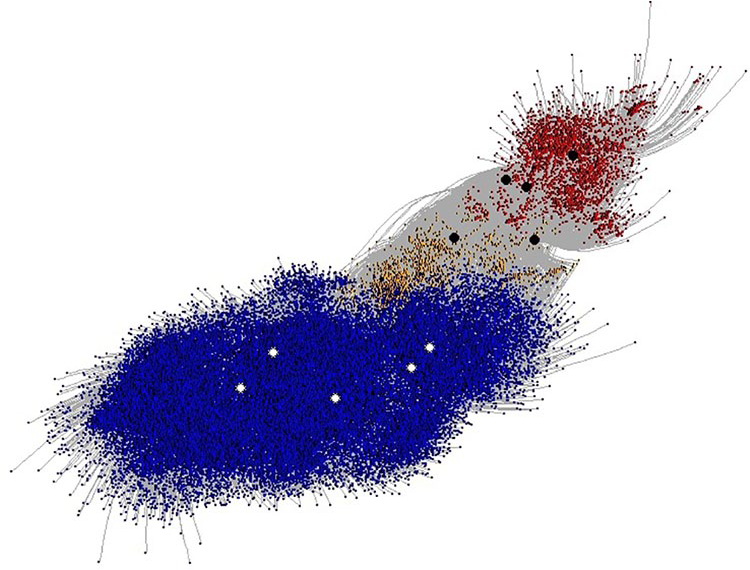
Snapshot of the Twittersphere of our top 10 conspiracy and science influencers.
We also visualize the most commonly used nouns and adjectives by the top 10 conspiracy and science influencers in a word cloud (see Figure 2). There are clear descriptive differences between influencer groups, whereas scientists focus on science and topics such as “people,” “time,” “future,” “space,” “world,” “good,” and “earth,” conspiracy theorists focus on “followers,” “trailer” (of conspiracy movies), “Trump,” “Infowars,” “Russia,” “UFOs,” and “report.”
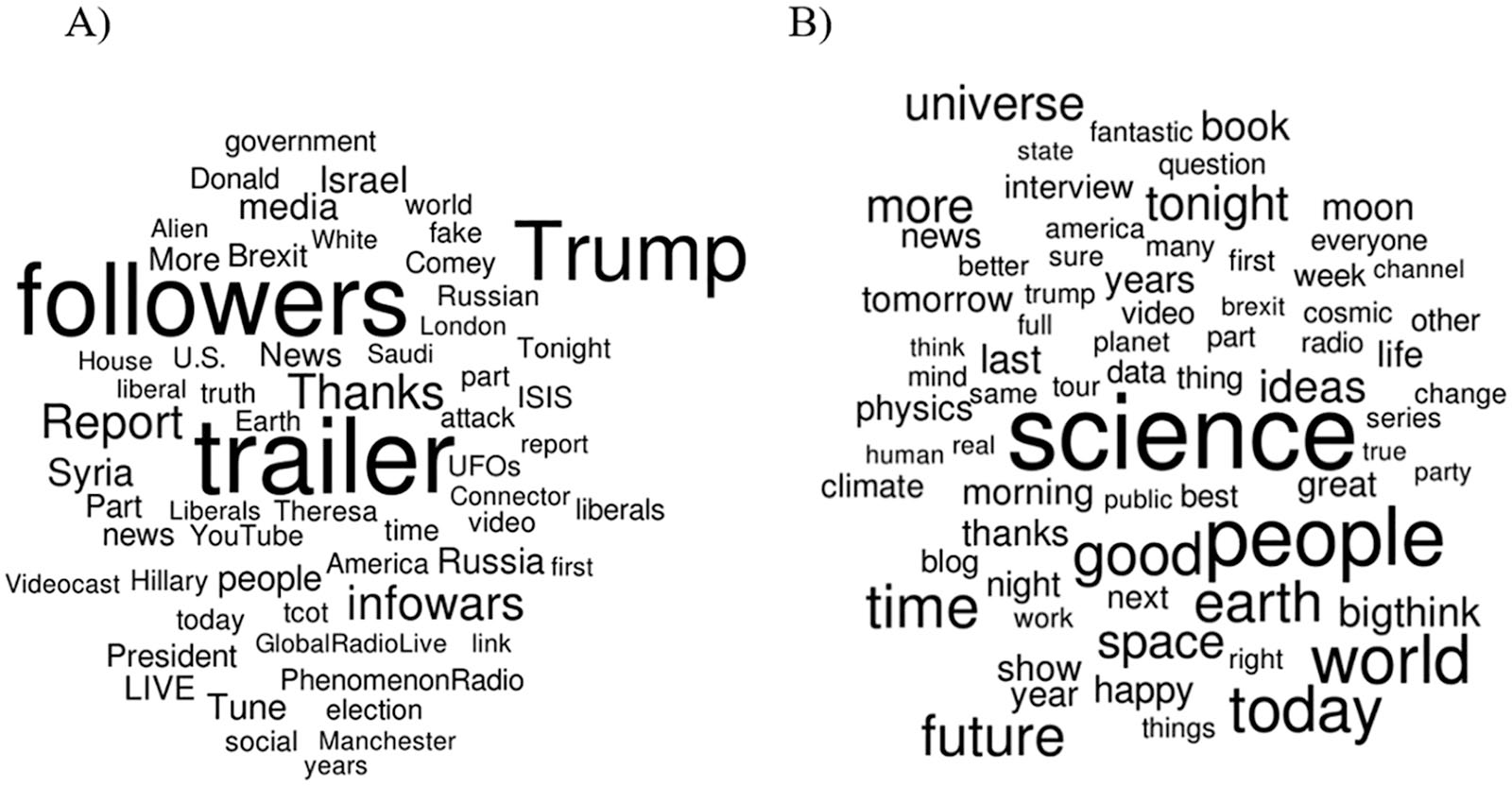
Word cloud for our top 10 conspiracy and science influencers.
Turning to the specific LIWC categories, following Mitra et al. (2016) and Klein et al. (2019), we present results comparing the groups using Bonferroni (p < .01) and unequal-variance adjusted pairwise comparisons given the nonnormal nature of the data. In addition, we reran all analyses using the nonparametric Wilcoxon rank sum (Mann–Whitney U) test; all results presented here remained significant (see Table S3 in the supplemental material).
Negative Emotions
An independent-samples t test was conducted to compare the LIWC values for words related to negative emotion, anxiety, and anger between conspiracy and science influencers. Results (see Figure 3 Panel A) indicated a significant difference in LIWC values for negative emotion (e.g., “fuck,” “shit,” “attack,” “terror”), with conspiracy influencers scoring significantly higher (M = 2.86, SD = 5.92) than science influencers (M = 1.47, SD = 4.35), t(14889) = 17.07, p < .001, Mdiff = 1.39, 95% CI [1.23, 1.55], d = 0.28. Conspiracy influencers also scored significantly higher (M = 1.28, SD = 3.75) in anger word use (e.g., “damn,” “hell,” “hate”), compared to science influencers (M = 0.41, SD = 2.56), t(14299) = 17.27, p < .001, Mdiff = 0.87, 95% CI [0.77, 0.97], d = 0.29, and the same was observed for anxiety scores (e.g., “fear,” “threat,” “horror”) among conspiracists (M = 0.46, SD = 2.17) and scientists (M = 0.20, SD = 1.29), t(13175) = 9.49, p < .001, Mdiff = 0.27, 95% CI [0.21, 0.32], d = 0.17.
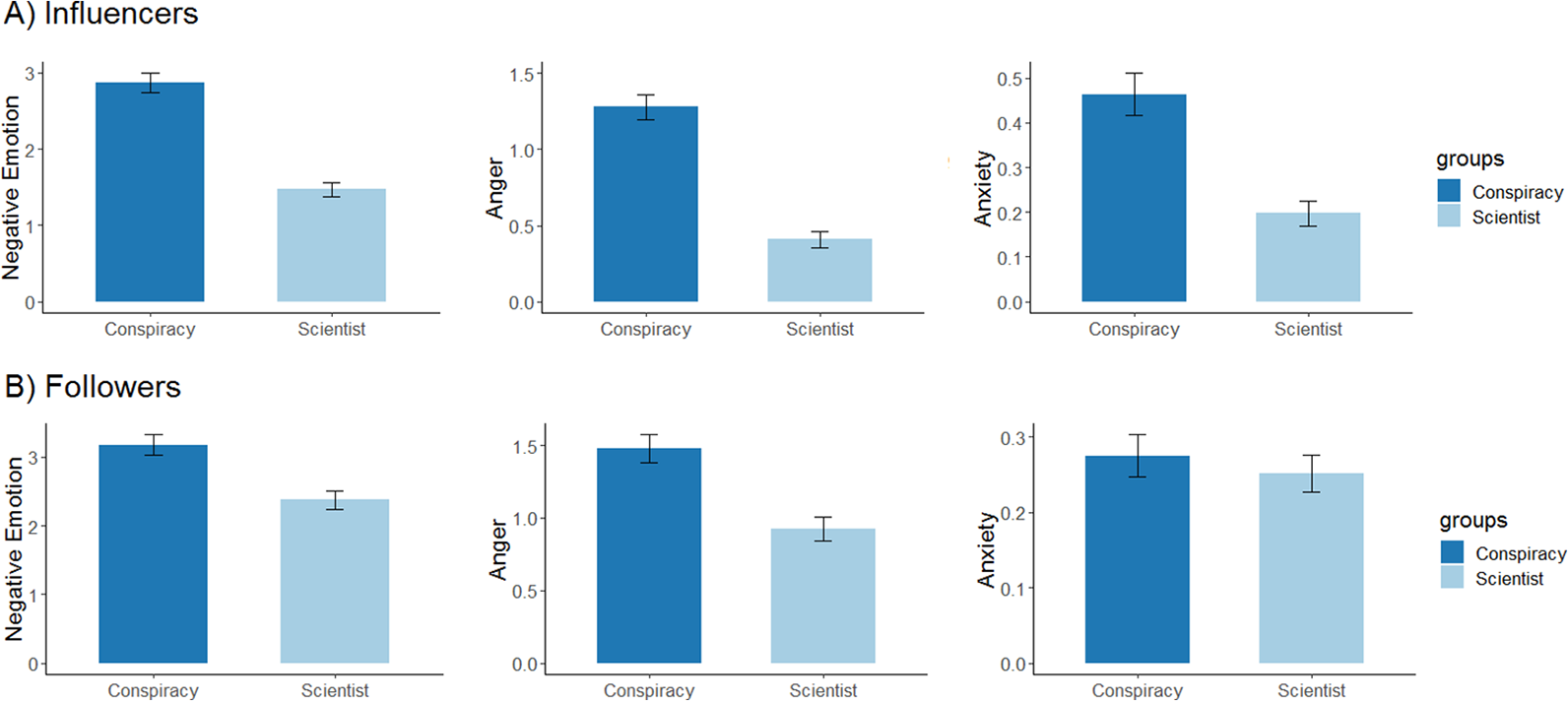
Mean differences in negative emotion between the conspiracy and science groups.
Follower data was user-averaged. Extending our analysis to the follower groups (see Figure 3 Panel B), results also indicate a significant difference in LIWC values for negative emotions between the conspiracy (M = 3.13, SD = 2.33) and science groups (M = 2.37, SD = 1.92), t(1552) = 7.16, p < .001, Mdiff = 0.77, 95% CI [0.56, 0.98], d = 0.36. In particular, conspiracy followers (M = 1.44, SD = 1.49) scored significantly higher in LIWC values for anger compared to science followers (M = 0.92, SD = 1.15), t(1522) = 7.89, p < .001, Mdiff = 0.53, 95% CI [0.39, 0.66], d = 0.40. In contrast, there were no significant differences in LIWC values for anxiety between conspiracy (M = 0.27, SD = 0.38) and science followers’ tweets (M = 0.25, SD = 0.36), t(1576) = 0.78, p = 0.43, Mdiff = 0.015, 95% CI [−0.02, 0.05], d = 0.04.
Cognitive Processes
LIWC scores for cognitive processes were lower for conspiracy (M = 6.31, SD = 8.54) compared to science influencer timelines (M = 9.93, SD = 10.96), t(15425) = −23.52, p < .001, Mdiff = −3.62, 95% CI [−3.92, −3.32], d = −0.38. However, there were no significant differences (see Figure 4 Panel A) in LIWC values for past-oriented language (e.g., “was,” “been,” “had”) between conspiracy (M = 2.33, SD = 4.32) and science influencer timelines (M = 2.21, SD = 4.79), t(16142) = 1.71, p = .09, Mdiff = 0.12, 95% CI [−0.02, 0.26], d = 0.03. 2 Unexpectedly, conspiracy influencer scores were lower (rather than higher) for certainty (e.g., “truth,” “all,” “must”; M = 0.86, SD = 2.98) compared to those of science influencers (M = 1.66, SD = 5.36), t(12828) = −11.82, p < .001, Mdiff = −0.80, 95% CI [−0.94, −0.67], d = −0.21. Similarly, contrary to our hypothesis, there were no significant differences in causality (e.g., “how,” “why,” “because”) between conspiracy (M = 1.27, SD = 3.76) and science influencers (M = 1.34, SD = 3.34), t(16038) = −1.25, p = .21, Mdiff = −0.07, 95% CI [−0.18, 0.04], d = −0.02.
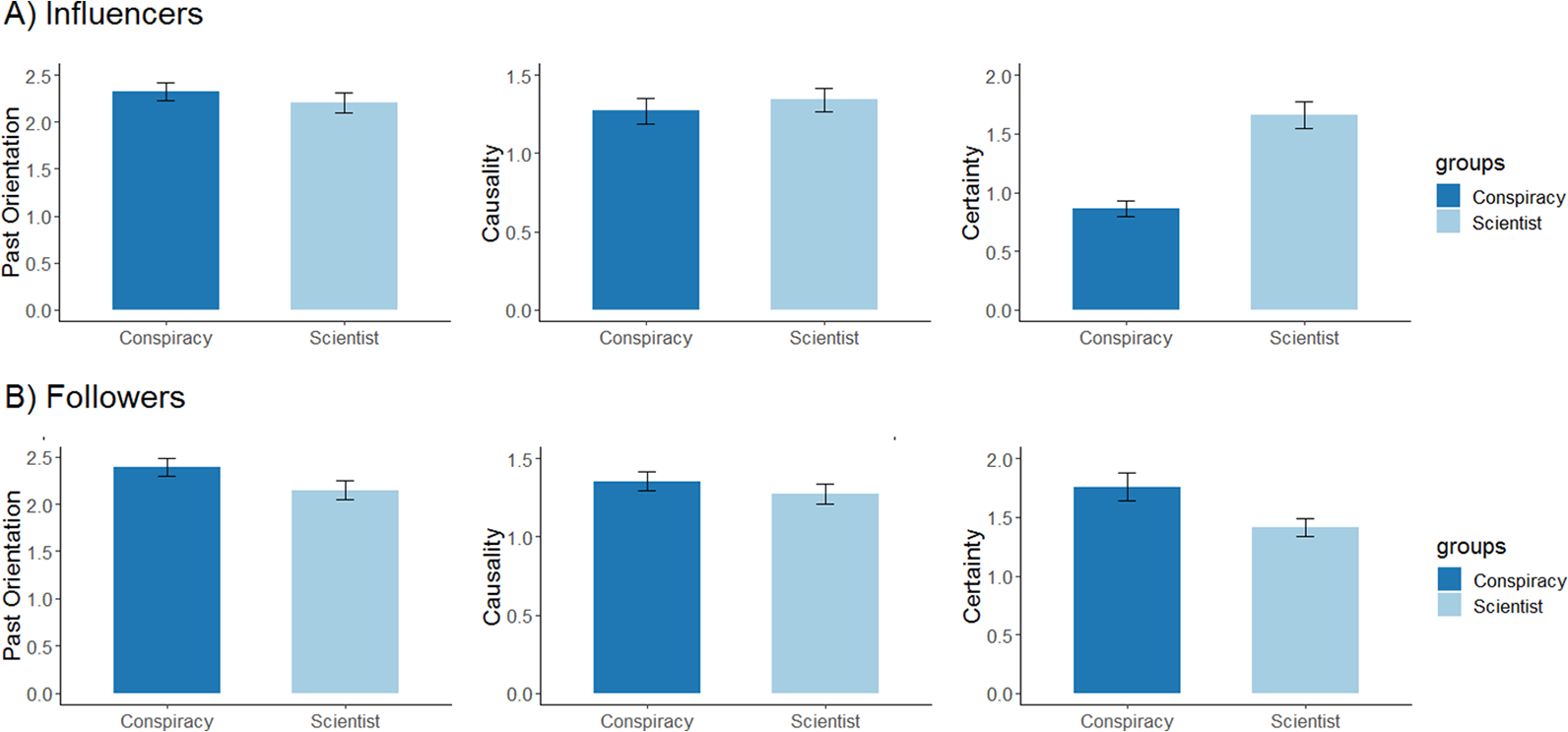
Mean differences in cognitive processes between the conspiracy and science groups.
We subsequently analyzed user-averaged follower data (see Figure 4 Panel B). In contrast to the influencer data, LIWC values for past-oriented language were significantly higher for conspiracy (M = 2.39, SD = 1.35) compared to science followers (M = 2.15, SD = 1.35), t(1654) = 3.65, p < .001, Mdiff = 0.24, 95% CI [0.11, 0.37], d = 0.18. Conspiracy LIWC values for certainty (M = 1.76, SD = 1.79) were also significantly higher than those of science followers (M = 1.42, SD = 1.07), t(1452) = 4.76, p < .0001, Mdiff = 0.34, 95% CI [0.20, 0.48], d = 0.25. Lastly, although causality scores (M = 1.36, SD = 0.97) were descriptively higher for conspiracy than for science followers (M = 1.28, SD = 0.91), this difference was not statistically significant, t(1654) = 1.73, p = .08, Mdiff = 0.08, 95% CI [−0.01, 0.17], d = 0.09.
Outgroup Language
In contrast to our hypotheses, no significant differences in LIWC values for outgroup language (e.g., “they,” “them”) were found between conspiracy (M = 0.42, SD = 1.96) and science influencers (M = 0.44, SD = 2.0), t(16288) = 0.33, p = .90, Mdiff = −0.03, 95% CI [−0.09, 0.03], d = −0.02. 3 However, an analysis of the user-averaged follower timelines indicated that LIWC values for outgroup language were indeed significantly higher among conspiracy followers (M = 0.52, SD = 0.58) when compared to science followers (M = 0.37, SD = 0.57), t(1638) = 5.19, p < .001, Mdiff = 0.15, 95% CI [0.09, 0.20], d = 0.26. There were no significant differences for ingroup language (e.g., “us,” “we,” “our”) between conspiracy (M = 0.72, SD = 1.15) and science followers (M = 0.64, SD = 0.73), t(1654) = 1.61, p = .11, Mdiff = 0.08, 95% CI [−0.02, 0.17], d = 0.08.
Power, Death, and Religion
Lastly, given the strong tendency of conspiracy theories to focus on themes related to power, death, and religion, we evaluated intergroup differences in use of these words (see Figure 5 Panel A). The LIWC values for words related to power (e.g., “president,” “government,” “military”) were significantly and substantially higher for conspiracy influencers (M = 4.79, SD = 6.71) compared to science influencers (M = 2.45, SD = 5.41), t(15533) = 24.47, p < .001, Mdiff = 2.34, 95% CI [2.15, 2.53], d = 0.39. Values for words related to death (e.g., “dead,” “war,” “killed”) were also significantly higher for conspiracy (M = 0.52, SD = 2.26) than for science influencers (M = 0.15, SD = 1.20), t(12336) = 12.99, p < .001, Mdiff = 0.37, 95% CI [0.31, 0.42], d = 0.23. Lastly, LIWC values for language relating to religion (e.g., “God,” “Jesus,” “Muslim”) were higher for conspiracy influencers (M = 0.37, SD = 2.13) compared to science influencers (M = 0.22, SD = 1.92), t(16083) = 4.67, p < .001, Mdiff = 0.15, 95% CI [0.09, 0.21], d = 0.07.
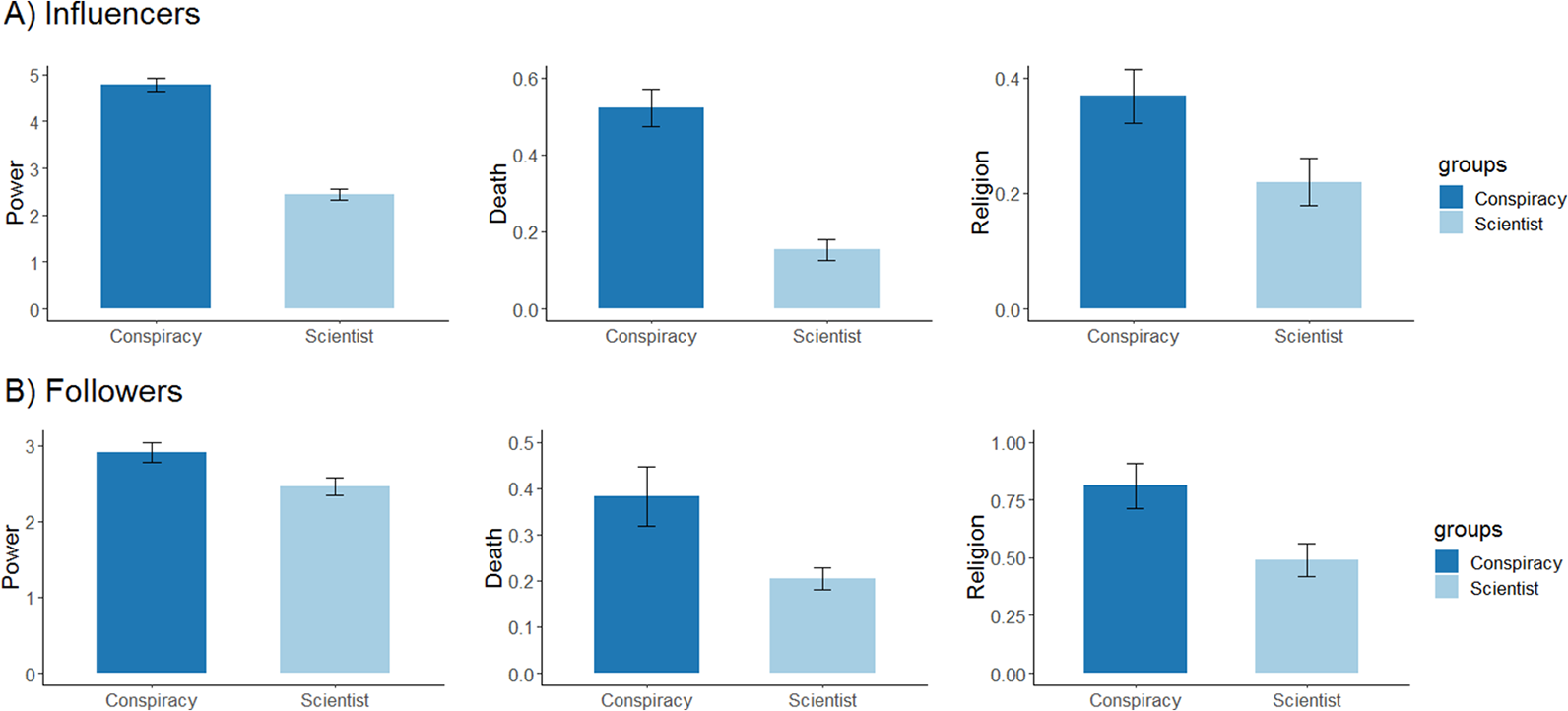
Mean differences in power and death themes between conspiracy and science groups.
Analyzing follower tweets, we found a significant difference in LIWC scores for power between conspiracy (M = 2.91, SD = 1.98) and science follower groups (M = 2.46, SD = 1.65), t(1645) = 5.07, p < .001, Mdiff = 0.45, 95% CI [0.28, 0.63], d = 0.25 (see Figure 5, Panel B). A significant difference was also found for language related to death between conspiracy (M = 0.38, SD = 0.96) and science followers (M = 0.20, SD = 0.33), t(1096) = 5.18, p < .001, Mdiff = 0.18, 95% CI [0.11, 0.25], d = 0.31. Significant differences were also found in LIWC values for words relating to religion, with conspiracy followers scoring higher (M = 0.81, SD = 1.44) than science followers (M = 0.49, SD = 1.02), t(1571) = 5.26, p < .001, Mdiff = 0.32, 95% CI [0.20, 0.44], d = 0.27.
As a robustness check, we estimated a logistic regression model predicting group membership (1 = conspiracy, 0 = science) for both influencers and followers based on the relevant LIWC language variables (see Table 1). Results replicate our findings: negative emotions, particularly the expression of anger, are predictive of membership for both influencers (OR = 1.13) and followers (OR = 1.44). The effects of cognitive processes such as causality, certainty, and past orientation were fairly small and in the expected direction for followers but not influencers (as before). Outgroup language had a strong effect amongst followers (OR = 1.50). Similarly, language surrounding religion, power, and death was strongly predictive of membership for both conspiracy influencers and their followers, with death-related language revealing the largest association (OR = 1.15 and OR = 2.45, respectively).
Logistic regression predicting group membership based on LIWC categories.
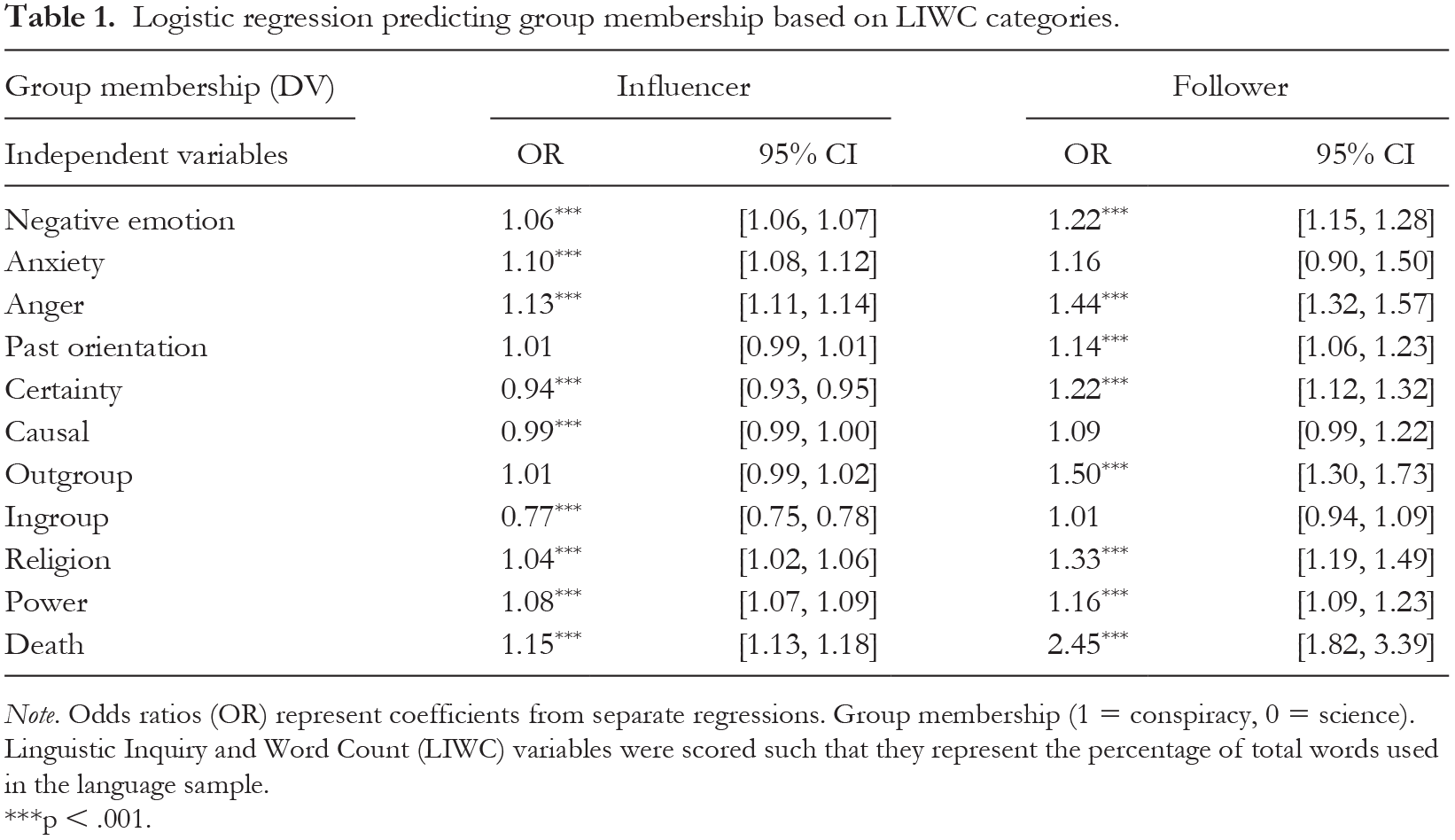
Note. Odds ratios (OR) represent coefficients from separate regressions. Group membership (1 = conspiracy, 0 = science). Linguistic Inquiry and Word Count (LIWC) variables were scored such that they represent the percentage of total words used in the language sample.
p < .001.
Discussion
A recent review identified a number of key gaps in the psychological literature on conspiracy theories, including a heavy reliance on self-report surveys from convenience or student populations. The authors argue that “big data” from social media analyses could greatly improve ecological validity as, [T]hey allow researchers to directly observe the unfolding and sharing of conspiracy theories in real time and in real life, rather than through the medium of self-report surveys and laboratory simulations . . . and [these technologies] allow access to large numbers of conspiracy believers who can be very hard to reach for survey and experimental studies. (Douglas et al., 2019, p. 22)
We advance the literature by providing exactly such evidence from a large sample of tweets from popular conspiracy influencers and their followers on Twitter. 4
Specifically, we hypothesized that different psycholinguistic patterns would emerge within the context of a polarized intergroup paradigm (Bessi et al., 2015). In line with our expectations, results indicate significant and stable intergroup differences in linguistic patterns between tweets from prominent conspiracy and science influencers and a nonoverlapping set of their followers. In particular, the use of negative emotions, especially anger, was significantly and substantially higher among both conspiracy influencers (d = 0.29) and their followers (d = 0.40) as compared to science audiences. This finding is consistent with the observation that “belief in conspiracy theories is strongly rooted in negative emotions” (van Prooijen & Douglas, 2018, p. 902; see also Sunstein & Vermeule, 2009), 5 and echoes findings from prior social media research using Facebook and Reddit data which also found that conspiratorial content carries more overall negative sentiment (Klein et al., 2019; Zollo et al., 2015), particularly around anger (Mitra et al., 2016) and following dramatic events (Samory & Mitra, 2018). The influencer–follower pattern also complements other recent findings that moral emotions such as anger and outrage can aid the diffusion of online content (Brady et al., 2017; Crockett, 2017).
Somewhat surprisingly, the findings around cognitive processes such as causality, certainty, and past orientation were more mixed. An ostensibly counterintuitive finding is that conspiracy influencers actually scored lower on certainty than science influencers. This was not the case for their followers, however, who scored higher on both certainty (d = 0.18) and past orientation (d = 0.25), which is in line with the more traditional observation that need for cognitive closure (a desire for certainty) correlates positively with belief in conspiracy theories (Douglas et al., 2019; Marchlewska et al., 2017). One potential explanation for these diverging findings is the nature of the referent group: scientists may themselves communicate in causal language or convey certainty through scientific consensus (van der Linden et al., 2019). Notably, related research has also offered mixed findings, with certainty (but not causal language) sometimes being higher among conspiracy theorists (Mitra et al., 2016) whilst at other times pointing to patterns of increasing certainty as well as doubt (Samory & Mitra, 2018).
The ingroup versus outgroup analysis also revealed partial support for our hypotheses. Although there was no marked increase in outgroup-oriented language among conspiracy influencers, this pattern did clearly emerge for their followers, consistent with the notion that conspiracy theories often embrace an “us versus them” mentality (Douglas & Sutton, 2018) and a general sense of mistrust, paranoia, and hostility towards the powerful “other” (Goertzel, 1994; Swami et al., 2010; van der Linden et al., 2020). Along with the topology of the network, these findings may serve as indirect evidence for two highly segregated online communities forming distinct science and conspiracy echo chambers (Bessi et al., 2016; Zollo et al., 2017). 6
We observed some of the largest and most consistent differences between science and conspiracy influencer and follower groups for language categories that are particularly relevant to conspiracy theories, such as themes relating to power, religion, and death (d = 0.25 to d = 0.39). Many popular conspiracies involve death-related themes (e.g., Holocaust denial, the Sandy Hook conspiracy), and these findings are in line with a large literature which details that conspiracy theories are strongly preoccupied with the death of prominent individuals (e.g., JFK, Princess Diana, Osama Bin Laden) as part of a secret plot in which powerful actors are conspiring (Stewart, 2002; Sunstein & Vermeule, 2009; Swami et al., 2010; Wood et al., 2012). Based on an analysis of letters to The New York Times from 1897 to 2010, Uscinski and Parent (2014) note that perceived power asymmetries within the context of international and domestic conflict (e.g., elections, war) can help explain the popularity of conspiracy theories. Although our data were collected prior to the coronavirus outbreak, pandemics certainly fall into this category where, once again, powerful elites (e.g., Bill Gates) or ethnic and religious outgroups (e.g., Jews) are blamed for the death of thousands (Spring, 2020; Cook et al., 2020). Looking at some of the language themes specifically in our sample, there is a focus on “war,” “terror,” and “attacks” (with relevant named “entities” such as ISIS, Russia, US, Syria, and Israel) within these categories for conspiracy accounts. Although the literature on this remains limited, this finding is surprisingly consistent with other recent research. For example, both Klein et al. (2019) and Mitra et al. (2016) found—in different contexts—relatively strong language effects for terrorism, power, war, death, and religion.
Although our findings add to the psychological underpinnings of conspiracist worldviews (Wood & Douglas, 2015), and to the emerging field of computational psycholinguistics (Sterling et al., 2020; Sylwester & Purver, 2015; Yaden et al., 2018), our research is not without limitations. First, while examining tweets from the top influential conspiracy and science influencers (and their online following) ensures greater ecological validity (Douglas et al., 2019), we cannot make causal inferences based on these data. We adopted a case-control study design and acknowledge that although we were specifically interested in language differences between conspiracy and science influencers, it is possible that inclusion of a different control group could bear on the nature of our results. Having said this, it is encouraging that despite having used different controls, several studies still converge on similar findings such as the strong role of negative emotion and themes surrounding death, power, and religion in online conspiratorial discourse. Of course, inconsistent findings, for example around group and cognitive processes, could still be due to methodological or contextual differences between studies. For example, although the short Twitter character limit restricted richer analyses of natural language, future research may want to use supervised machine learning methods (e.g., dynamic topic models) to study more complex language features in longer blogs (e.g., see Klein et al., 2019).
Second, while we have taken steps to ensure that the Twitter accounts placed into the two mutually exclusive categories did not follow individuals from both conspiracy and science profiles, it is not possible to guarantee that they do not follow or have been exposed to other conspiracy and science outlets. A third limitation is that, while we examined data from followers, following a science or conspiracy outlet does not necessarily equate to belief. Rather, what we are examining is how exposure to content correlates with language use, and how this, in turn, may relate to psychological characteristics. Although this limitation prevents us from making any causal statements regarding actual conspiracy beliefs and how they spread from influencers to followers, it does not prevent us from comparing naturalistic language use in a large dataset of over 160,000 tweets. Fourth, we note that these Twitter data were gathered during the Trump era (as evident by the fact that “Trump” is one of the most frequently used words in the sample) and may therefore have limited generalizability. Fifth, it could be argued that some findings may be idiosyncratic to the set of influencers we have selected. However, the influencers themselves were selected based on an objective metric, namely, having the largest Twitter following at the time of data collection. Furthermore, a comparison of the base rate frequencies of the LIWC categories in our Twitter sample with the LIWC2015 Twitter reference database, based on millions of observations, reveals that our sample falls well within the norm (see Table S2 in the supplemental material). Having said this, it is important to note that conspiracy influencers generally have fewer followers, and the accounts were not balanced on gender, ethnicity, or other potential criteria which in and of themselves have shown to correlate with language use (Newman et al., 2008).
Finally, while many of the statistically significant differences in language use reflect small to medium effect sizes, the frequency of influencer activity, along with the repeated sharing of viral content that is a feature of online echo chambers and social media in general, means that even small effects can have cumulative impact (Funder & Ozer, 2019). Previous studies have pointed to the sociocognitive potency of even brief exposure to conspiratorial content, such as reduced social and civic engagement, and a greater likelihood of engaging in a motivated rejection of science (Jolley & Douglas, 2014; Lewandowsky, Gignac, & Oberauer, 2013; Lewandowsky & Oberauer, 2016; van der Linden, 2015). Thus, the increasing spread and adoption of conspiracy theories call for solutions to effectively counter them (Sunstein & Vermeule, 2009). An increasing line of research has shown that people can be “inoculated” against (online) conspiratorial content by preemptively warning and exposing them to weakened doses of the arguments and techniques that are used by conspiracy theorists (Banas & Miller, 2013; Basol et al., 2020; Jolly & Douglas, 2017; Roozenbeek et al., 2020; Roozenbeek & van der Linden, 2019). We hope that our findings can help further elucidate ways to detect, counter, and eradicate the spread of harmful conspiracy theories.
Conclusion
In this paper, we examined the language of a large corpus of tweets from the top conspiracy and science influencers and their followers on Twitter. We found that there exist stable intergroup differences in language use that correlate with exposure to and engagement with conspiratorial content. Our results indicate that the language used by conspiracy influencers as well as their followers on Twitter is more likely to be characterized by negative emotions such as anger. In addition, we found that conspiracy influencers and their followers use language related to power, death, and religion more than their science-focused counterparts. Among conspiracy followers, there is also a greater focus on certainty, past orientation, and outgroup language, which reinforces the notion that demand for conspiracies is fueled by a search for certainty and an “us versus them” mentality. With some exceptions, recipients of conspiracies appear to propagate content (e.g., anger) in a similar manner, which may contribute to or reinforce online polarization.
Supplemental Material
sj-pdf-1-gpi-10.1177_1368430220987596 – Supplemental material for The language of conspiracy: A psychological analysis of speech used by conspiracy theorists and their followers on Twitter
Supplemental material, sj-pdf-1-gpi-10.1177_1368430220987596 for The language of conspiracy: A psychological analysis of speech used by conspiracy theorists and their followers on Twitter by Amos Fong, Jon Roozenbeek, Danielle Goldwert, Steven Rathje and Sander van der Linden in Group Processes & Intergroup Relations
Footnotes

References
Supplementary Material
Please find the following supplemental material available below.
For Open Access articles published under a Creative Commons License, all supplemental material carries the same license as the article it is associated with.
For non-Open Access articles published, all supplemental material carries a non-exclusive license, and permission requests for re-use of supplemental material or any part of supplemental material shall be sent directly to the copyright owner as specified in the copyright notice associated with the article.
