




Abstract
People believing in conspiracy theories question mainstream thoughts and behavior, but it is unknown whether it is also linked to lower adherence to the prosocial norms of the broader society. Furthermore, interventions targeting correlates of the belief in conspiracy theories so far are scarce. In four preregistered, mixed-design experiments (Ntotal = 1,659, Nobservations = 8,902), we tested whether believing in conspiracy theories is related to lower prosocial norm adherence and whether deliberation about the reason for the norms mitigates this relationship. Across four studies with the U.S. samples, we found that believing in conspiracy theories correlated negatively with prosocial norm adherence in the control condition, which was less pronounced after deliberation (effect size of interaction: d = 0.16). Whether the norm was related to the law or not did not moderate this effect. Results point toward possible ways of mitigating negative correlates and potentially also consequences of believing in conspiracy theories.
Conspiracy theories state that a group of powerful people secretly cooperate to pursue malevolent goals (Douglas et al., 2017; Goertzel, 1994). Examples of conspiracy theories are the belief that world leaders are actually reptiloids that took on human form and are now controlling the earth (Parramore, 2021) or that 5G caused the spread of severe acute respiratory syndrome coronavirus 2 (SARS-CoV-2) (Freeman et al., 2022). Such narratives go against mainstream explanations for events (Brotherton, 2013), and can motivate people who believe in them to take actions rejected by the majority, such as the Capitol siege on January 6, 2021 (Parramore, 2021) or the burning of telegraph poles (Jolley & Paterson, 2020).
Beyond this anecdotal evidence, research has shown that being confronted with conspiracy theories and believing in conspiracy theories increased intentions to engage in everyday crimes (Jolley et al., 2019), acceptance of non-normative political engagement like violent attacks (Imhoff et al., 2021), and reduced adherence to COVID-19 guidelines (for an overview, see van Mulukom et al., 2022). Overall, findings suggest that believing in conspiracy theories is associated with different kinds of non-normative behaviors (Pummerer, 2022). However, empirical research on how believing in conspiracy theories relates to adhering to more generalized, prosocial norms (e.g., offering a seat to a person of age) is lacking. Should this relation also be negative, it would be problematic because a shared understanding and acceptance of prosocial norms is essential for the functioning of a community, which would raise the question of whether and how norm adherence among people high in conspiracy belief can be facilitated. So far, research on how to mitigate the correlates of believing in conspiracy theories is scarce. To address these gaps, we conducted four studies investigating whether (a) believing in conspiracy theories is related to lower adherence to prosocial norms and (b) whether this relationship can be mitigated, here through the method of prompting deliberation about the functions of prosocial norms (i.e., thinking about the reasons why a behavior is normative).
Conspiracy Beliefs and Adherence to Prosocial Norms
People believing in one conspiracy theory often also believe in other conspiracy theories. This tendency, called conspiracy belief (e.g., Hornsey et al., 2022), seems to be based on a monological network of non-mainstream explanations of societal events (Williams et al., 2022). People high in conspiracy belief regularly form communities with group norms that are related to the specific conspiracy theory (e.g., Wagner-Egger et al., 2022). However, these specific group norms are not the focus in this article. The focus here is on societal norms, which are “behavioral regularities that generate social expectations” (Hechter & Opp, 2001, p. xiii) in a society. These norms are followed by a majority of the people, as individuals turn to cues to inform their behavior, such as the cue of what the majority thinks or how the majority acts (Erb et al., 1998; Nolan et al., 2008). In the current research, we mostly focus on the adherence to prosocial societal norms (e.g., not lying to a friend). People believing in conspiracy theories might orient themselves less along mainstream behaviors for several reasons.
First, research has repeatedly demonstrated that stronger conspiracy belief is connected to a higher need for uniqueness (Imhoff & Lamberty, 2017; Lantian et al., 2017), which undermines the influence of the majority (Imhoff & Erb, 2009). In addition, conspiracy belief correlates with distrust against other people (Brotherton et al., 2013; Goertzel, 1994; Green & Douglas, 2018). This distrust is especially pronounced regarding the powerful, such as the government or politicians (Imhoff & Bruder, 2014; Imhoff et al., 2018; Imhoff & Lamberty, 2018). In persuasion literature, perceived source trustworthiness (i.e., the attitudinal component of trust) is a critical predictor of social influence (Bochner & Insko, 1966; Milliman & Fugate, 1988). Thus, if people high in conspiracy belief have lower trust in other people, they should show a tendency to adhere less to societal norms. This tendency might be especially pronounced for norms that are also protected by laws, such as to “not assault people who say mean things to you.” Given that this prediction has not been tested so far, the first goal of the current research was to test whether conspiracy belief is related to a lower adherence to prosocial norms.
Deliberating About the Function of Societal Norms
Norms fulfill important functions for society as well as the individual (Cialdini & Trost, 1998). Some prosocial norms, such as washing hands after visiting the bathroom, aim for individual and collective survival through disease prevention. Other prosocial norms help establish security for members of society (Ehrlich & Levin, 2005), for example, norms guiding emergency responses or treatment of the elderly. Some norms are also part of laws, such as traffic rules, facilitating social coordination (Cialdini & Trost, 1998). Taken together, prosocial norms usually serve a societal function.
However, people might not always think about the reasons for a behavior, but rather intuitively follow norms based on fast, effortless intuitive processing. In contrast, identifying the societal and interpersonal function behind a prosocial norm might require deliberation, a thinking style based on reasoning and elaborate thought processes (Kahneman, 2011; Strack & Deutsch, 2004). Deliberation has been shown to increase normative behaviors in previous research beyond the context of conspiracy belief. Reflecting on prosocial norms, such as kindness increased the willingness to donate (Exline et al., 2012). Moreover, making a commitment—typically done after deliberation and making a conscious choice—increased normative health behaviors, such as using safety belts (Geller et al., 1989) and decreased drug use (Hall et al., 1990). Thus, when individuals do not follow a norm intuitively, deliberation can increase norm adherence when the functions of the normative behavior are desirable (Zhang & Chiu, 2012).
In sum, these findings suggest that prompting deliberation about prosocial norms leads to higher norm adherence in the general population. We argue that this effect might be even more pronounced among those high in conspiracy belief for three reasons. First, based on the arguments summarized above, namely, a higher need for uniqueness and lower generalized trust, people high in conspiracy belief might intuitively be less likely to adhere to prosocial norms than those low in conspiracy belief, leaving more room for an effect of deliberation among those high in conspiracy belief. Second, deliberating about the reasons for a behavior’s normative status should reveal arguments why this behavior might be beneficial for society. These insights could reduce narcissistic responding, to which those high in conspiracy belief are prone (Cichocka et al., 2016), thereby raising the reported frequency of showing normative behavior. Third, people high in conspiracy belief are generally more likely to be guided by intuitive rather than analytical thinking (Imhoff & Bruder, 2014; Swami et al., 2014; van Prooijen et al., 2018) and to show impulsive behaviors (compared with those low in conspiracy beliefs; Bowes et al., 2021; Swami et al., 2016). Therefore, there is also more room for deliberation to change the thinking style the higher people’s conspiracy belief. Overall, prompting deliberation on why a prosocial behavior is normative addresses tendencies specifically of individuals high in conspiracy belief and, thus, should especially increase (reported) norm adherence among people high in conspiracy belief.
Deliberation and Inoculation as Interventions Against Conspiracy Belief
There have been previous attempts to alter cognitive processing styles with the goal of intervening against conspiracy beliefs themselves (rather than their correlates and consequences). For example, Swami et al. (2014) report three studies showing that people engaging in tasks promoting analytic thinking subsequently reported lower belief in conspiracy theories than people in a control group (see also Bago et al., 2022). Similarly, providing participants with tailored arguments (Jolley & Douglas, 2017; Orosz et al., 2016) or information (Pummerer, Winter, et al., 2022) reduced agreement with conspiracy theories, especially when participants read those arguments before developing a strong opinion about the conspiracy theory (Jolley & Douglas, 2017).
Preparing individuals for potential arguments and persuasion attempts from opponents by leading them to deliberate on arguments supporting conspiracy theories is called inoculation (McGuire, 1961). Inoculation has been shown to decrease the likelihood of believing in conspiracy theories (Banas & Miller, 2013; Jolley & Douglas, 2017), likely also because it increases deception monitoring and deeper processing—in other words: deliberation (Compton et al., 2021). Overall, there is evidence that deliberation can help to reduce the development of conspiracy beliefs, specifically when applied before individuals come in contact with a conspiracy theory (Jolley & Douglas, 2017). Despite this potential, there so far have been no interventions using this cognitive process to address the correlates of conspiracy theories.
Overview of Current Research
In four studies, we tested whether conspiracy belief is related to lower adherence to prosocial norms and whether this relationship can be mitigated by encouraging deliberation about the reasons underlying the prosocial norms. We hypothesized and preregistered that higher conspiracy belief is related to lower norm adherence when not encouraging deliberation, but that this relation is smaller after deliberation (main hypothesis). To our knowledge, these are the first reported studies trying to mitigate the consequences of conspiracy belief. Results might lay the groundwork for later interventions. In addition, they might give more insights into potential underlying processes of other attempts to decrease conspiracy theories, such as inoculation.
Given that earlier research on everyday crimes and the violation of COVID-19 regulations assessed the belief in specific theories (Jolley et al., 2019; Pummerer, Böhm, et al., 2022), we also opted for a well-established measure of belief in conspiracy theories (Lewandowsky et al., 2013), rather than a measure of the (potentially underlying) readiness to believe in conspiracy theories (e.g., conspiracy mentality; Imhoff & Bruder, 2014). To prompt deliberation, participants were asked to describe the reason why a behavior is normative by choosing from different reasons (Study 1) or by writing at least two keywords about the reasons (Studies 2–4). Thus, the task was tailored to the individual, allowing individuals to provide their own view (rather than a best but superimposed answer) regarding the functions of a normative behavior.
We also examined whether the type of prosocial norm moderated the pattern predicted in our main hypothesis. More specifically, in Study 1, we distinguished between prosocial norms related (vs. unrelated) to security, expecting that the effect would be especially pronounced for prosocial norms related to security issues. This was, however, not the case. For the sake of readability, we do not report the results for this moderator in the main analysis below. We report the preregistered 1 analysis including this additional factor (security-related vs. not) in the Supplement.
In addition, we tested whether the effect of deliberation differs between prosocial norms related or unrelated to the law in Studies 3 and 4. As mentioned above, conspiracy belief is related to a negative attitude toward the government (Imhoff & Lamberty, 2018), making it more likely that people high in conspiracy belief specifically deviate from norms related to the law when deliberating—a hypothesis we preregistered for Study 3 but not for Study 4. All research materials, preregistered analyses, and additional analyses can be found in the Supplement. For transparency, we also report three additional studies in the Supplement which differ from the reported studies here by lacking an experimental manipulation (Studies S1 and S2) or using the same manipulation but for a different dependent variable (Study S3). Data as well as the analysis script are openly available under http://dx.doi.org/10.23668/psycharchives.12210 (data) and http://dx.doi.org/10.23668/psycharchives.12209 (script).
Because the study procedure and analysis were highly similar for the four studies, we report “Methods and Results” for all studies together and also conducted a merged analysis across all studies. Combining all analyses allows examining the existence and overall strength of the effects of deliberation on norm adherence while increasing statistical power.
Method
Participants
Overall, we recruited data from 2,347 U.S. workers on Amazon Mechanical Turk, who participated in short online experiments (2–8 min) in exchange for US$ 0.40 to US$1.20. We determined sample size by power calculation for an effect of f2; = .02 (Studies 1–2) or simulations using effects of earlier studies (Studies 3–4) with the aim to reach 80% power with α = .05. We excluded N = 688 participants based on preregistered exclusion criteria. Most of the participants were excluded on the grounds of failed attention checks or not following instructions. For the attention check, participants in Study 1 had to remember the last norm they were asked about; and participants in Studies 2 to 4 were asked to follow a subtle prompt at the end of a question block (Berinsky et al., 2014). To check whether participants followed the instructions, research assistants blind to the hypotheses rated all responses to open questions regarding their consistency with the instructions. This was done for all conditions in Studies 3 and 4, as participants in the control condition participated in the same writing task, but after rating the adherence to all norms, so that, the same exclusion criterion could be applied to all conditions. In Studies 3 and 4, we also excluded participants with high scores on a six-item social desirability scale (Kruglanski et al., 2000, e.g., “I believe one should never engage in leisure activities,”α = .86–.89), given that reporting norm adherence in the legal context might be sensitive to social desirability. Participants with a mean score above 5 on a 6-point scale were excluded. For an overview of the exclusions, see participant’s flowchart (Figure 1).
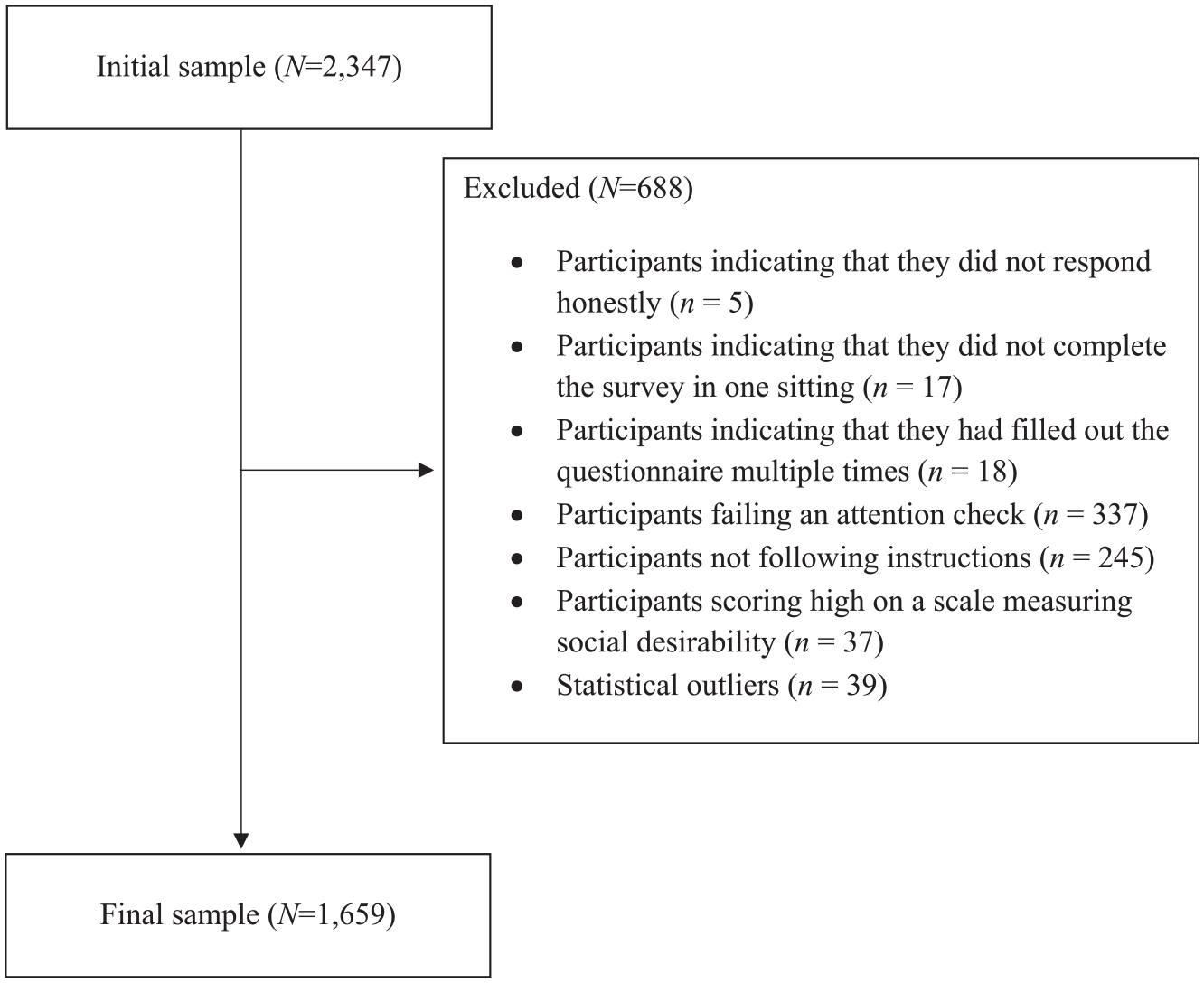
Participant’s Flowchart. All Exclusions Followed Preregistered Criteria.
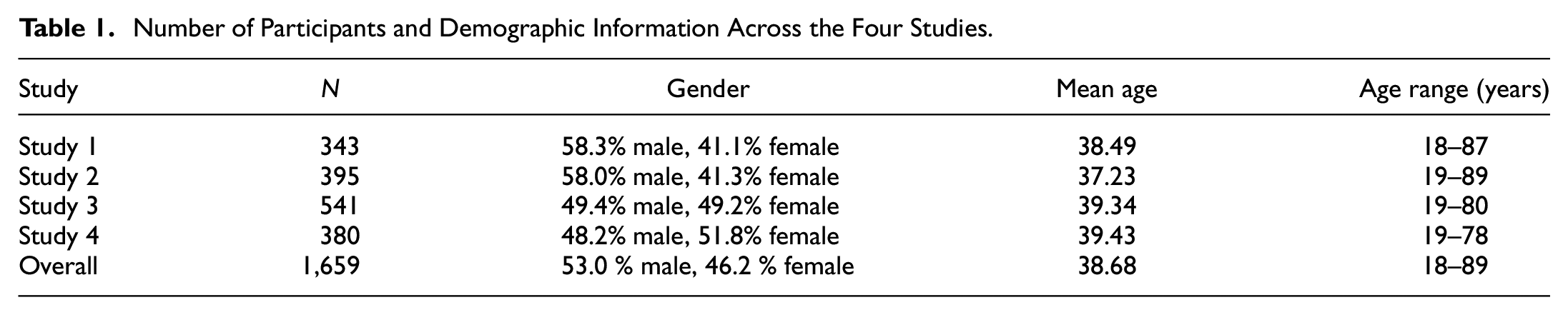
As a considerable number of participants in Study 3 had to be excluded for not following the instructions for the writing task, we conducted a screening for Study 4. Here, participants had to write about one positive and one negative events of the last week. Participants were only invited to participate in the study if they followed the instructions in this task and wrote meaningful phrases. Participants knew that the successful screening was a prerequisite for their participation in Study 4. This led to decreased exclusions but potentially also altered the expectations with which participants approached the main study, which may have affected the effect of the manipulation (for a detailed consideration, see the “Discussion” section). The final sample consisted of N = 1,659 participants (for demographic information, see Table 1). Participants rated their adherence to four (Studies 3 and 4), six (Study 1), or eight (Study 2) prosocial norms, leading to overall 8,902 observations.
Number of Participants and Demographic Information Across the Four Studies.
Procedure
Each norm was shown to participants on a separate page. Participants in the control condition directly indicated to what extent they adhere to the norm. Participants in the deliberation condition did so only after responding to the question: “What is the reason this behavior is considered normative?.” In Study 1, participants could choose between “providing safety,” “making the world predictable,” “showing respect to other people,” or “other,” providing them with a text box to write their own reason. To increase the time and depth of people deliberating about the reasons why a behavior is normative, we changed the answer format after Study 1. For Studies 2 to 4, participants were asked to write at least two keywords mentioning reasons why the respective behavior is considered normative.
To rule out differences due to exclusions or the length of the survey, participants in the control condition were given the task of choosing reasons (Study 2) or the same task of writing about the reasons (Studies 3 and 4) why the behavior is normative toward the end of the study and, thus, after they had indicated their norm adherence for all norms. After the norm adherence measure, participants filled out measures assessing conspiracy belief (for details on additional exploratory measures, see the Supplement).
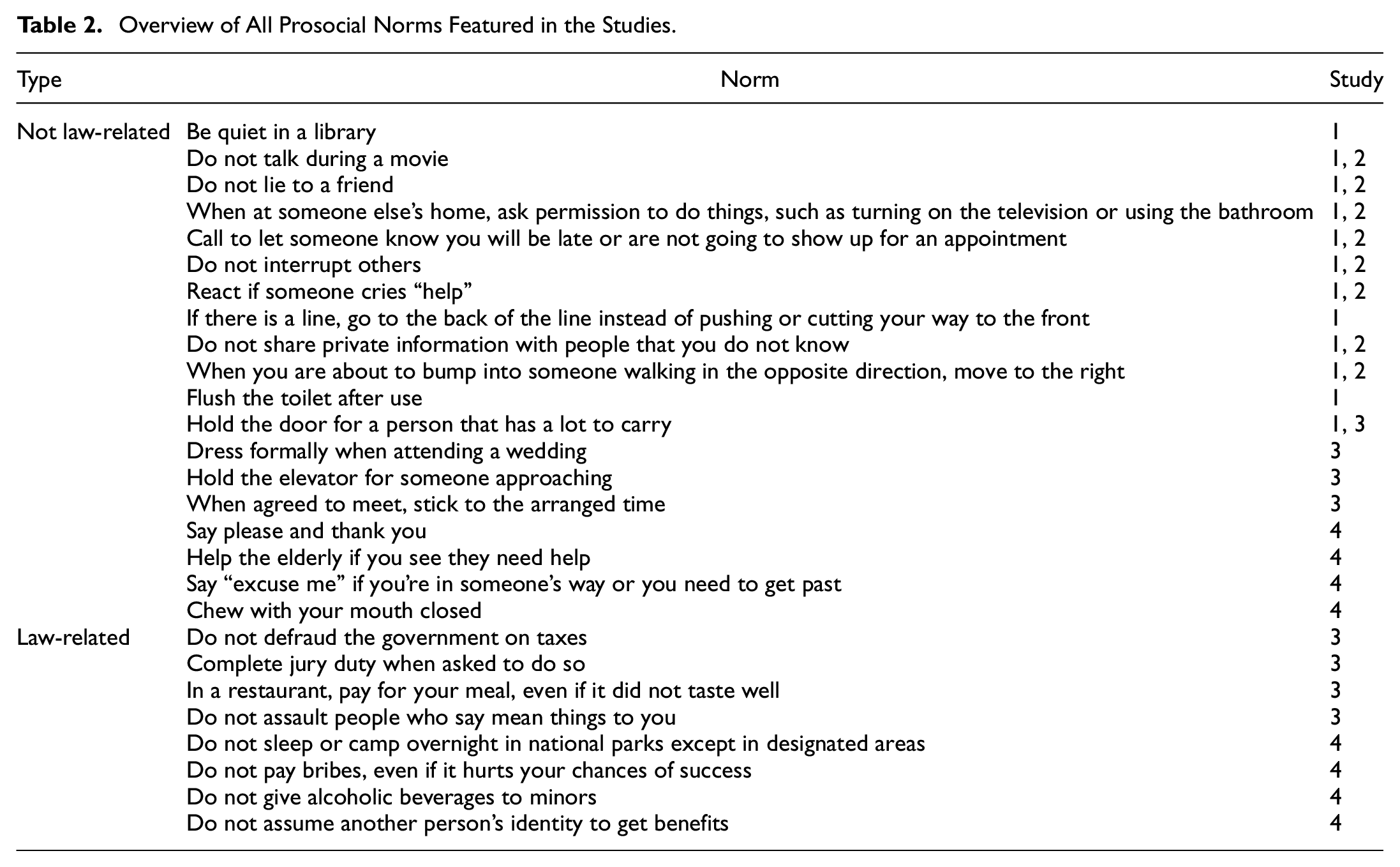
In Studies 3 and 4, we additionally manipulated whether the norm was related to the law. More specifically, half of the participants received prosocial norms that in a pilot study were rated as not being related to the law (M = 4.75, SD = 3.72 for norms of Study 3; M = 4.70, SD = 3.83 for norms of Study 4, 1–11 point scale from totally disagree to totally agree, sample item: “Hold the elevator for someone approaching”), whereas the other half read prosocial norms rated as related to law (M = 9.02, SD = 1.70 and M = 8.93, SD = 1.76, sample item: “Do not give alcoholic beverages to minors”). For a list of all norms, see Table 2.
Overview of All Prosocial Norms Featured in the Studies.
Measures
Norm Adherence was measured on an 11-point scale from 1 = never to 11 = always for the statement “I show this behavior.” Each participant rated four to eight items depending on the study. We had originally preregistered to conduct a linear multiple regression analysis, with the mean adherence score per participant as criterion. However, the internal consistencies across norms within each study were unsatisfactory (Cronbach’s alpha ranging between .48 and .69). Thus, we deemed it more appropriate to conduct a linear mixed model with adherence to each norm as criterion and participant and norm as random factors. Results for the linear mixed models do not differ from those of the linear multiple regression analyses (see the Supplement). The mean and standard deviation per subsample and item type are reported in Table 3.
Means and Standard Deviations of the Variables.
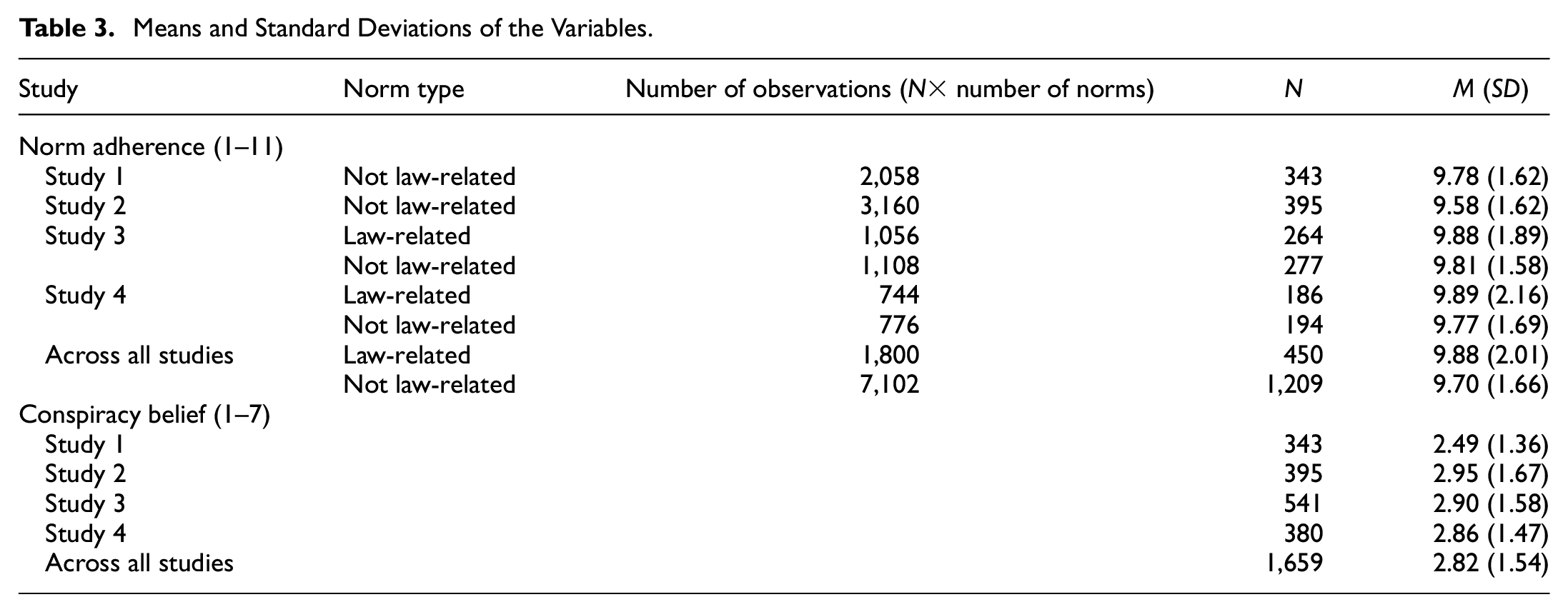
Conspiracy belief was assessed with six items measuring the belief in existing conspiracy theories, adapted from Lewandowsky et al. (2013). Each conspiracy theory (sample item: “The Apollo moon landings never happened and were staged in a Hollywood film studio”) was rated from 1 = strongly disagree to 7 = strongly agree. Here, the mean rating for each participant across those six items was calculated and entered into the analyses (alpha = .87–.91). Means and standard deviations overall and per study are reported in Table 3.
Results
To test whether conspiracy beliefs correlate negatively with norm adherence, but less so after deliberation, we conducted a multilevel model. The dependent variable was norm adherence. Conspiracy belief (mean-centered per study), deliberation (–1 control, 1 deliberation), norm type (–1 not law-related, 1 law-related), as well as their interactions were entered as fixed factors. Norm and participant were entered as random factors. The final formula took the form of: adherence ∼ Conspiracy Belief × Deliberation × Norm Type + (1|Norm) + (1|Participant). Analyses were conducted in R (R Core Team, 2020), using the package lme4 (Bates et al., 2015) for regression analyses and the package reghelper (Hughes & Beiner, 2021) for simple slopes.
In all studies, norm adherence was negatively related to conspiracy beliefs, and higher in the deliberation than in the control condition (for statistical details, see Table 4). Both main effects were qualified by the predicted Deliberation × Conspiracy Belief interaction, which was significant in Study 2, B = 0.06, SE = 0.03, p = .042, d = 0.21, and 3; B = 0.11, SE = 0.03, p < .001, d = 0.35, and similar in size but only marginal due to the smaller sample size in Study 1, B = 0.06, SE = 0.04, p = .067, d = 0.20. In Studies 1 and 2, conspiracy belief negatively predicted norm adherence in the control condition, B = −0.13, SE = 0.05, p = .010, d = −0.28 and B = −0.14, SE = 0.04, p < .001, d = −0.38, but the negative correlation disappeared when participants were prompted to deliberate (S1: B = 0.00, SE = 0.05, p = .936, d = 0.01; S2: B = −0.02, SE = 0.04, p = .556, d = −0.06). The same pattern was seen in Study 3: Conspiracy belief negatively predicted norm adherence in the control condition, B = −0.34, SE = 0.04, p = < .001, d = −0.76, but the negative relationship was weaker in the deliberation condition, B = −0.11, SE = 0.04, p = .009, d = −0.23. In Study 4, the predicted Deliberation × Conspiracy Belief interaction was not significant and, if anything, there was a trend in the opposite direction, B = −0.03, SE = 0.04, p = .530, d = −0.07, which is discussed below.
Multilevel Regression Analysis per Study Predicting Adherence to the Norms by Conspiracy Belief, Deliberation Condition, Norm Type and Their Interactions.
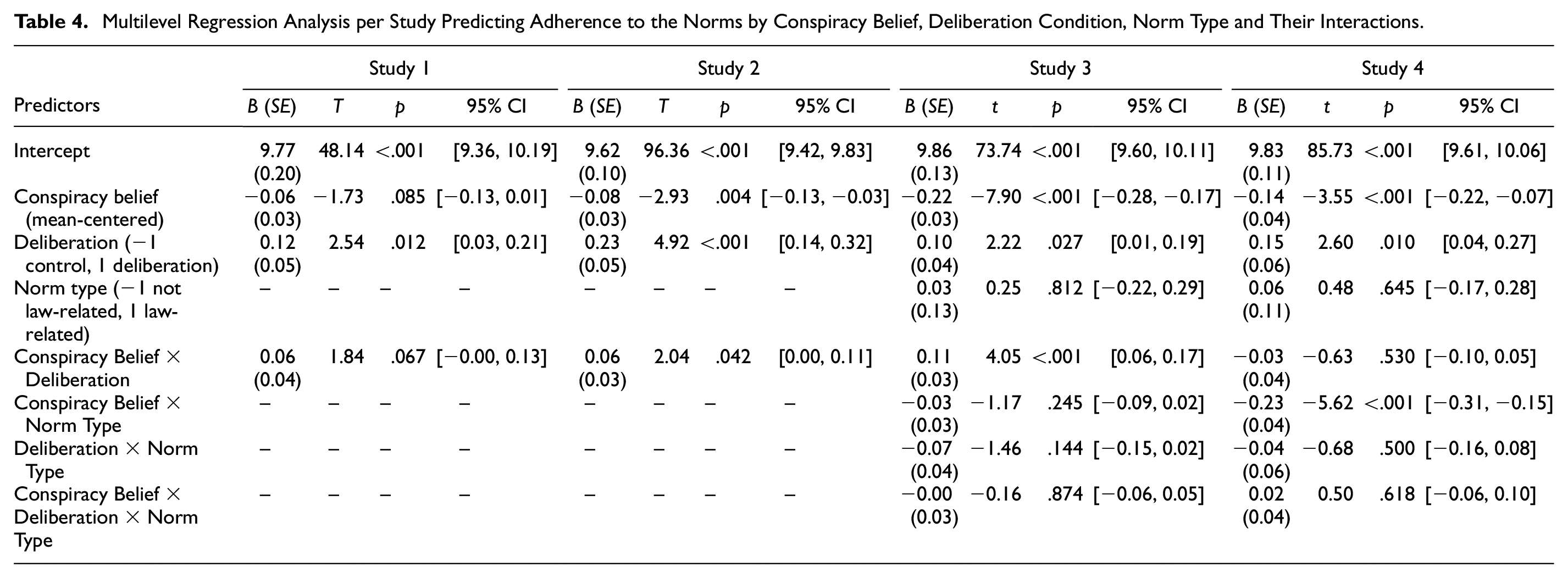
Studies 3 and 4 also tested whether the Deliberation × Conspiracy Belief interaction was weaker for prosocial norms related to the law than norms not related to the law, which was not the case in both studies. There was, however, a Conspiracy Belief × Norm Type interaction in Study 4, B = −0.23, SE = 0.04, p < .001, d = −0.58. Conspiracy belief negatively predicted norm adherence when norms were related to the law, B = −0.37, SE = 0.06, p < .001, d = −0.66, but not when they were not related to the law B = 0.08, SE = 0.06, p = .140, d = 0.15, underlining the difference of this study from Studies 1 to 3.
Discussion of Differences Between Studies
One likely reason for the divergent findings of Study 4 (compared with the other studies) is the different recruitment procedures. In this study, we screened participants and only included those who closely followed the instructions in the screening questionnaire (i.e., who wrote a reasonable text in response to two open questions), of which participants were aware. Given that the screening questionnaire required participants to deliberate on past events, this might have led them to expect that careful deliberation would also be essential in the main study. In other words, our recruitment procedure might have inadvertently prompted systematic processing among all participants instead of only those in the deliberation condition. This is in line with the finding that conspiracy belief did not correlate negatively with adherence to norms not related to the law in the control condition, B = 0.13, SE = 0.08, p = .097, d = 0.17, which is different from the previous studies. Overall, there are good reasons to assume that the screening procedure might have affected the results in Study 4. However, this interpretation is speculative, and the differences might also be an outcome of the regular variation of effect sizes. Therefore, we report the findings from Study 4 and consider them as regular effects. Given the differing effect sizes between studies, we decided to conduct a merged analysis across all studies to estimate the overall effect size.
Merged Analysis
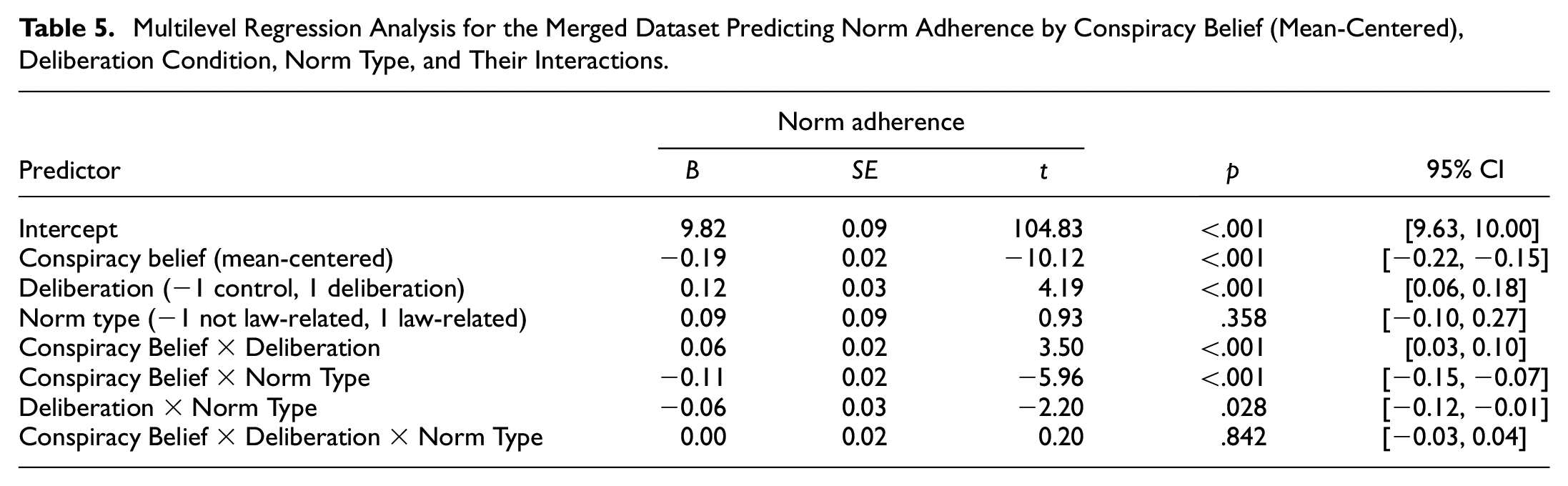
To calculate the overall effect size, we conducted a merged analysis by entering all studies into one multilevel model. Norm adherence was predicted by conspiracy belief (mean-centered), deliberation condition (–1 control and 1 deliberation), norm type (–1 not law-related and 1 law-related), as well as their interactions as fixed factors, and norm and participant as random factors. Study did not account for any variance when entered into the model. The analysis revealed that norm adherence was negatively predicted by conspiracy belief, B = −0.19, SE = 0.02, p < .001, d = −0.47 and positively by deliberation, B = 0.12, SE = 0.03, p < .001, d = 0.19 (for statistical details, see Table 5). Supporting our main hypothesis, the main effect was qualified by a Conspiracy Belief × Deliberation interaction, B = 0.06, SE = 0.02, p = .001, d = 0.16. Conspiracy belief negatively predicted norm adherence in the control condition, B = −0.25, SE = 0.03, p < .001, d = −0.46, but this effect was mitigated when participants were in the deliberation condition, B = −0.12, SE = 0.03, p < .001, d = −0.21. For a visualization, see Figure 2. There was no three-way interaction between conspiracy belief, deliberation, and norm type. However, there was a Conspiracy Belief × Norm Type interaction, B = −0.11, SE = 0.02, p < .001, d = −0.28, such that the negative link between conspiracy belief and norm adherence was stronger for norms related to the law B = −0.30, SE = 0.03, p < .001, d = −0.41 than norms not related to the law B = −0.08, SE = 0.02, p < .001, d = −0.22. There also was a Deliberation × Norm Type interaction, B = −0.06, SE = 0.03, p = .028, d = −0.10 such that deliberation for all individuals (independent of conspiracy belief) only increased norm adherence regarding norms not related to the law B = 0.18, SE = 0.03, p < .001, d = 0.34, but not regarding norms related to the law, B = 0.06, SE = 0.05, p < .253, d = 0.05. The main effect of norm type was not significant, p = .358.
Multilevel Regression Analysis for the Merged Dataset Predicting Norm Adherence by Conspiracy Belief (Mean-Centered), Deliberation Condition, Norm Type, and Their Interactions.
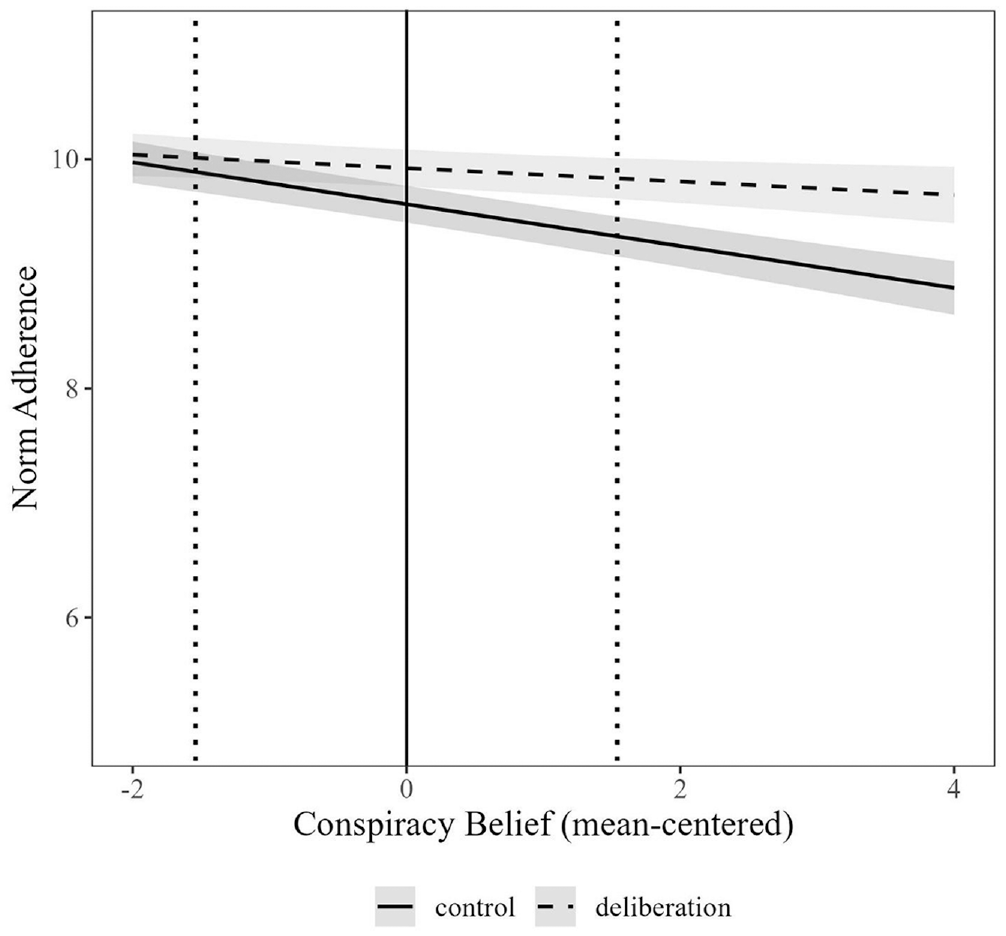
Norm Adherence Predicted by Conspiracy Belief (Mean-Centered, M = 2.82) and Deliberation Condition (Merged Analysis).
Discussion
Findings and Open Questions
Across four studies, we examined the relationship between conspiracy belief and adherence to prosocial norms. We found strong empirical evidence for a negative relationship between conspiracy belief and prosocial norm adherence, hereby being the first to provide empirical evidence for this relationship. We further showed that this negative correlation can be mitigated by asking participants to deliberate on why a behavior is normative. The overall effect size of this manipulation was small (d = 0.16), but the effect did hold across different norm types (i.e., related vs. unrelated to law). The fact that the reliabilities for norm adherence per individual were between alpha = .48 and .69 forced us to deviate from the preregistration by running multilevel models rather than multiple regression models, but it again speaks to the fact that the prosocial norms covered in the studies were quite heterogeneous and that the reported effects apply to a wide range of prosocial norms (for an overview of all norms, see Table 2).
Deliberation mitigated the negative relation between conspiracy belief and norm adherence with a similar effect size in all studies except Study 4. This study was different as conspiracy belief was not negatively related to norm adherence in the first place. This renders an intervention against the detrimental effects of conspiracy beliefs obsolete and prevented the expected Deliberation × Conspiracy Belief interaction from occurring. In all studies in which conspiracy belief was negatively related to norm adherence, however, we consistently found that prompting deliberation weakened this detrimental effect. This suggests that it is a starting point for interventions against the negative correlates of conspiracy belief, even though the effect is small.
In the introduction, we proposed that deliberation helps to connect the behavior at stake to a norm’s function, which those high in conspiracy belief do not spontaneously consider. Thus, for the manipulation to work, it might require that deliberating about the normative behavior elicits a focus on prosocial values (rather than intuitive uniqueness striving or spontaneous aversion against anything dominant or normative). Alternatively, the effect might be fueled by (a reduced) narcissism, which is correlated with conspiracy beliefs. Further research should test these possible underlying mechanisms.
Limitations
A limitation of the current studies is that we measured norm adherence with self-reports rather than behavior. This is common in research on conspiracy belief across domains (see, for example, Bierwiaczonek et al., 2020; Hornsey et al., 2021; Imhoff et al., 2021; Jolley & Douglas, 2014; Jolley et al., 2019). However, it leaves open whether deliberation would also lead to actual changes in behavior. One might argue that participants higher in conspiracy belief are easily affected by experimental manipulations, given that they generally tend to process information more superficially (van Prooijen, Cohen Rodrigues, et al., 2022), but this should apply to self-reports as well as actual behavior. Notably, we found no evidence or increased socially desirable responding in our deliberation condition (for details, see the Supplement).
All our studies were conducted with U.S. samples of Amazon Mechanical Turk. We chose a U.S. sample, as believing in a conspiracy theory might carry different implications if the distrust is directed at one’s own (vs. a different) government (van Prooijen, Spadaro, & Wang, 2022) and most of the conspiracy theories of the conspiracy belief scale concerned U.S. events. While there are systematic differences between samples of Amazon Mechanical Turk and other sample types (Keith et al., 2017), they do not seem to moderate effects found in previous research examining conspiracy beliefs (Stojanov & Halberstadt, 2020), suggesting that our findings should also apply to other samples in the United States. Nonetheless, future studies need to test whether our findings generalize to other countries and conspiracy theories.
Another open question is, up to what degree of conspiracy belief the current findings hold. Our samples mainly consisted of people not or only moderately believing in conspiracy theories (MOverall = 2.82, SD = 1.54 on a 1–7 scale). These people might be more open to engaging in deliberation tasks than individuals very high in conspiracy belief. Asking those who strongly believe in conspiracy theories to think about reasons why a behavior is normative might backfire because prompting deliberation among these people might also lead to thoughts about reasons not to adhere to norms. This might also be the case when asking about norms that are directly related to conspiracy theories. As a result, individuals believing in such conspiracy theories who are asked to deliberate on the reasons might deviate only more from the mainstream (cf. Supplement Study S3).
Implications and Conclusion
To our knowledge, this is the first reported study trying to mitigate the correlates of conspiracy belief rather than the conspiracy belief itself with a cognitive manipulation. As prosocial norms are not part of conspiracy theories and, thus, not part of the argumentations preventing attitude change among those strongly believing in conspiracy theories, an external prompt here can be successful even in cases where individuals already believe in conspiracy theories. The current results, thus, point to potential interventions tackling the correlates and consequences of conspiracy beliefs—an endeavor that so far has not been undertaken. Our manipulation was pretty straightforward and easy to implement: Asking participants to name the reasons for the norms was enough to mitigate the negative relation between conspiracy belief and norm adherence. Future research—ideally involving also field experiments—should test whether similar prompts can be used to mitigate other correlates of conspiracy beliefs, such as distrust or detrimental health behaviors, as long as those are not connected to the conspiracy theories themselves.
To conclude, the current research sheds light on the relation between conspiracy belief and adherence to prosocial norms governing everyday behavior: In line with their tendency to go against the grain, people high in conspiracy belief report less adherence to prosocial norms. However, once prompted to deliberate about the functions of norms, this negative relation is mitigated. By providing support for this effect, we pave the way for interventions against (potentially harmful) correlates of conspiracy beliefs.
Supplemental Material
sj-docx-1-spp-10.1177_19485506221144150 – Supplemental material for Think About It! Deliberation Reduces the Negative Relation Between Conspiracy Belief and Adherence to Prosocial Norms
Supplemental material, sj-docx-1-spp-10.1177_19485506221144150 for Think About It! Deliberation Reduces the Negative Relation Between Conspiracy Belief and Adherence to Prosocial Norms by Lotte Pummerer, Lara Ditrich, Kevin Winter and Kai Sassenberg in Social Psychological and Personality Science
Footnotes
Acknowledgements
The authors thank Annika Scholl for comments on an earlier draft of the manuscript. The research presented here has been carried out as part of the first author's doctoral dissertation.
Handling Editor: Christopher Federico
Declaration of Conflicting Interests
The author(s) declared no potential conflicts of interest with respect to the research, authorship, and/or publication of this article.
Funding
The author(s) received no financial support for the research, authorship, and/or publication of this article.

Supplemental Material
Supplemental material for this article is available online.
Notes
Author Biographies
References
Supplementary Material
Please find the following supplemental material available below.
For Open Access articles published under a Creative Commons License, all supplemental material carries the same license as the article it is associated with.
For non-Open Access articles published, all supplemental material carries a non-exclusive license, and permission requests for re-use of supplemental material or any part of supplemental material shall be sent directly to the copyright owner as specified in the copyright notice associated with the article.
