




Abstract
This article explores how nostalgia may represent a culturally creative force in contemporary cities by examining the case of Athens. Since the beginning of the economic crisis of the 2010s, Greece has witnessed a nostalgic wave looking back to the late 20th century. A prominent expression of this nostalgia was the creation of nostalgic groups on Facebook that expressed yearning for a better and bygone past. Simultaneously, nostalgic locations flourished in the Greek capital. The article examines nostalgic initiatives that attracted significant media attention (three museums, one shop, one café-bar and one exhibition on the mass culture of the 1980s) and discusses how they have contributed to cultural life. Drawing on personal observation, invisible observation of social media, semi-structured interviews and an analysis of articles in the press, the article argues that nostalgia expressed through these initiatives differs from nostalgia on social media. These nostalgic initiatives do not promote yearning-driven nostalgia. They invigorate a form of creative cultural connectivity not particularly aligned with the market and tech-focused post-1990s discourses on creativity, profit from the solidarity that marked the crisis, and strengthen communication among generations through interest in contemporary history.
Introduction
The Greek Arcade Museum (GAM), started by collector Ilias Tsintavis in 2024, hosts about 100 arcade machines and 60 game consoles, and attracted media interest before its opening. This collection is appealing for the ‘coin-operated Greeks’ of the 1980s and 1990s who feel nostalgic for their youth. 1 As in the United States (Kocurek, 2015) or the United Kingdom (Wade, 2018), video gaming was popular then, especially among males (Zestanakis, 2017: 89–92). GAM adds to a wave of nostalgia-driven initiatives, which started in the early 2010s almost simultaneously with the financial crisis, and includes museums, bars, shops, exhibitions and social media groups.
This article analyzes nostalgic institutions in Athens. Expressions of nostalgia appear on various occasions in the Greek capital. Indicatively, attempts to restore and maintain buildings built before the en masse construction of large apartment buildings from the 1960s is an expression of nostalgia for the low-rise Athens. The nostalgic initiatives examined here are related to the pop culture of the late 20th century and have a bottom-up character: they start from individuals or small groups of people. The nostalgic scene of Athens is based on small schemes, unlike major nostalgic projects such as the Guinness Museum in Dublin or the widely-advertised Jack the Ripper Tours in London. The nostalgic cultural creativity of Athens draws on the marketization of nostalgia in contemporary societies but also expresses the solidarity that blossomed in crisis Greece, does not seem to have commercial profit as an unconditional target, and is not particularly connected to the city’s touristic economy. This phenomenon can be approached as a (post-)crisis culturally creative boom, which includes the materialization of small-scale ‘nostalgic dreams’ in times of persisting uncertainty. It can also be read as a return to the years before the transformation of creativity under market ideology since the 1990s, when the concept became largely detached from intellectual and artistic imagination and was increasingly linked to techno-economic innovation (see also Mould, 2018).
The article discusses nostalgia in interaction with the crisis of the 2010s, the previous more prosperous decades, and selected post-crisis developments. The crisis is an analytically crippled term, as the uses of the word have proliferated to the extent of eviscerating it of meaning (Bryant, 2016: 20). Still, it is difficult to ignore that in the 2010s Athens became an urban laboratory where hard austerity policies were experimented with and implemented. The crisis overturned expectations for improving life and promulgated temporal thoughts, provoking people to rethink their relationship to time. The past was re-fashioned under contracting economic horizons, as people tended to contemplate their present conditions and potential futures in terms of the (recent) past (Knight and Stuart, 2016).
The analysis discusses nostalgia as an emotion that can motivate cultural creativity. It approaches nostalgia-driven cultural creativity as a procedure through which some Athenians engaged in nostalgia-driven ideas, practices or expressions that influenced the city’s identity toward historically sensitive, playful and pleasant identities. Mould (2018) approached creativity as a nebulous concept. Being creative is more than the ability to create something from nothing in response to needs. It is not simply an ability to produce products or services, but a proactive power able to blend knowledge, agency and things that do not exist, thereby driving societies into new worlds of living. In the last decades, creativity has gone from being a socialized and collective behavior to a tradable individualistic characteristic. Being creative is a character trait much sought by governments or the market; it has an exchange value to be exploited. This shift took place mainly during the 1990s: in the United Kingdom, New Labour (a period when the Labour Party ideologically rebranded itself, shifting its ideological center and accepting elements of market economics) caused structural shifts in the socioeconomics of creativity. It moved the economy from post-industrial services to the proliferation of knowledge-based work, and rendered possible the rhetoric of creativity as having an economic value, thus forging a growth agenda based on knowledge, entrepreneurship and innovation. The creative industry was championed as the UK’s flagship sector, and not even the financial crisis of 2008 curtailed this growth. Many countries have replicated similar vocabularies of creativity in their politico-economic narratives. Kostas Simitis, socialist prime minister of Greece between 1996 and 2004, and a politician who shifted the agenda of The Panhellenic Socialist Movement (PASOK) in a more market-oriented direction, titled his 2005 book Politics for a Creative Greece, 1996–2004 (Πολιτική για μια δημιουργική Ελλάδα, 1996–2004) (Simitis, 2005). Since the 2000s, the infatuation of urban governance with the ideologies of creativity led many cities to be branded as ‘creative cities’; however, this policy drive has been problematized as a neoliberal agenda that, critics argue, contributes to the gentrification of cities. Reactions include community-oriented initiatives. This ‘tactical urbanism’ has become a noticeable movement for people who wish(ed) to reconfigure cityscapes without governmental involvement (Mould, 2014). Cultural creativity can blend established cultural referents with ingenious thinking, to create trends and allow people to adapt to changing circumstances and incorporate international influences. Culturally creative long-term processes carry the dynamics of improvisation, take time, and represent collective exercises (Hallam and Ingold, 2007). Creative individuals tend to be credited with powers of intellect or charisma. As we will see, nostalgic projects affect the creators, but also the nostalgic audiences who live in the projects and support them continuously.
In Athens, this creativity is less pursued through (re)connections with local heritage and tradition and more through linkages with successful and imported consumption trends (e.g. videogames), which have affected the city’s collective memory since the late 20th century. Nostalgic institutions profited from evocative visions of the past, which flourished during the crisis and benefited from crisis-generated developments such as the expansion of solidarity, and transformed these visions into a creative power. Solidarity can emotionalize public space, infusing it with shared feelings such as care or hope, rendering life more alive. Nostalgic institutions rendered Athens a city where nostalgic and culturally creative initiatives could succeed, and designated contemporary history as a tool for intra-generational communication and well-being. This nostalgia focuses on the late 20th century, a period that many Athenians see as prosperous and safe yet lost (Zestanakis, 2016, 2025b). The crisis created a culture of yearning for the late 20th century that is visible in social media (Zestanakis, 2025b). Still, as this article argues, nostalgic places such as museums, cafés and shops are largely organized around positive emotions, such as joy.
The analysis is inscribed in the ‘affective turn’ and explores interplays between changes in thinking and emotions, highlighting nostalgia. Affect is perceived in terms of the human body and in relation to technologies that allow subjects to see and produce affective bodily capacities even beyond the body’s organic and psychosocial constraints (Ticineto-Clough, 2017: 2). The affective turn expresses a configuration of bodies, technologies and matter, which can be an object of nostalgia, as people are nostalgic for such configurations in the past (e.g. contact with old devices), but it also generates current nostalgic activities, such as visits to nostalgic places where such configurations are in a sense revived.
Culture and emotions are connected through sentimental experiences and social norms. Since the late 2000s, when the crisis appeared on the horizon, emotional resonances have been driven by the visualization of emotions, charged self-reflection on the past, political polarization or post-crisis cultural vibrancy (see, e.g. Basea, 2016; Kornetis, 2010). Florida (2002) saw creativity as a core engine of economic growth, a set of activities generating innovation and competitive advantage. From this viewpoint, in Europe, cultural creativity is concentrated in capital cities, with exceptions in Austria, Germany, Italy, the Netherlands and Sweden (Montalto et al., 2018: 173). Athens hosts about 40 percent of the population of Greece, attracting the lion’s share of cultural activity. The city’s vibrant cultural life attracts about 6.5 million tourists annually. Still, nostalgia-driven cultural creativity appears all over Greece: nostalgic Facebook groups about smaller cities, such as Ioannina and Larissa, abound. The Toys Museum of Greece on Rhodes hosts a large collection of old games. The Naxos Game Center, where visitors play retro games, also demonstrates that nostalgia-driven cultural creativity has an impact on outlying regions (see Zestanakis, 2025b).
The analysis revolves around the Greek Museum of Information Technology (GMIT) established in 2013 by informatician Georgios Tsekouras, the Athens Pinball Museum (APM) established in 2018 by entrepreneur Panagiotis Bitarchas (which did not reopen after the COVID-19 lockdowns) and GAM. The analysis is mostly historical and sociological (and only sporadically museological) and has a connective character, bringing these three museums in dialogue with other nostalgic initiatives, especially the café-bar ‘Superfly’, established by two friends in 2011, and the shop ‘Retrosexual’. Established in 2011 by designer Joe Petropoulos, ‘Retrosexual’ specializes in furniture, but also sells old electronic devices (e.g. analog cameras, televisions and telephones) and other retro objects such as wall decoration and typewriters. 2 The article also draws on the nostalgic exhibition ‘GR80s: 1980s Greece in Technopolis’ (henceforth: GR80s), which was organized in January–March 2017. I selected these initiatives because they were much discussed in the public space. They intrigued even international media, while their social media attracted several thousand followers.
The analysis has six sections. The first discusses the history of nostalgia and its ability to explain sociocultural phenomena. The second section explains the methodological choices. The third section discusses nostalgic creativity in ‘GR80s’ and museums. The fourth part explores ‘Superfly’ and ‘Retrosexual’. The fifth part discusses nostalgic bonds among visitors to nostalgic spaces. The sixth part presents concluding thoughts on how nostalgia marks the city’s cultural identity.
Nostalgia
Nostalgia is a fluid, contradictory and multi-layered emotion that depends on representations of the past in the present (Berger, 2019: 38). The term was coined in the 17th century to describe an ailment or illness identified among mercenaries stationed away from home (Hviid Jacobsen, 2020: 7–8). Then, nostalgia became a pain associated with the forced disconnection from the social environment (Fuentenebro de Diego and Valiente Ots, 2014). In the 19th century, nostalgia was seen as melancholy or a disease (Clarke, 2007). Since the late 20th century, nostalgia has increasingly preoccupied research. Two approaches that have maintained analytical vigor through time are those by Davis (1979) and Boym (2001). Davis identified three forms of nostalgia: first, simple nostalgia, which sees the past as better; second, reflexive nostalgia, which explores past ‘truths’; and third, interpretative nostalgia, which elucidates different meanings of nostalgia. For Boym (2001), nostalgia is a yearning for a ‘slower’ and different time. Boym identifies two kinds of nostalgia. First, restorative nostalgia is a quest to return to a lost condition. Those experiencing restorative nostalgia see themselves as pursuing truth. Second, reflective nostalgia is the longing and aching associated with remembrance and the idea that multiple pasts exist and compete. Reflective nostalgia does not search for truths about the past, but involves considerations of the passage of time and how individual recollections are shaped (Boym, 2001: 42–57; Hviid Jacobsen and Wilson, 2021: 92–93). Restorative nostalgia is often connected to nationalism, colonialism and imperialism, while reflective nostalgia engages more critically with the past (Boym, 2001: 41). Nowadays, the term has accrued a positive psychological status, pervading culture as a gentle diversion, and is often seen as a provider of a sense of life meaning and a source of reinforcement able to integrate the self when faced with difficulties (Routledge et al., 2012; Scanlan, 2004; Weiss and Ranjan Dube, 2021). Nostalgia can explain political and cultural phenomena and interactions among senses and memories, being a cultural power with various significances able to carry transformative and progressive impulses (Becker, 2018; Pickering and Keightley, 2006). Nostalgia is also a lucrative concept in marketing and entertainment (Bowman and Wulf, 2023; Hartmann and Brunk, 2019).
In contemporary Athens, nostalgia for pop culture contributed to the cultural regeneration of the city after the crisis. The analysis approaches nostalgia as a pop culture-related emotion that was strengthened by the affective environment of the crisis and that can explain (re)visions of the recent past, or more simply, as a cultural response to the crisis. Culture is a set of values, assumptions, beliefs, orientations to life, behaviors and procedures shared by communities of people (Matsumoto and Juang, 1996: 5–9; Spencer-Oatley, 2008: 3). Cultural responses reflect how people interact with phenomena and express enduring transformations. In our case, the imprint of the crisis is clear in how nostalgic initiatives benefited from the spirit of togetherness and solidarity that characterized the period (see, e.g. Cabot, 2016).
Methodology
The methodology combines personal observation, oral interviewing, invisible observation in social media and the examination of articles in the press (print and electronic). The nostalgic initiatives discussed have attracted considerable media attention. It is impossible to discuss all media coverage of the phenomenon in an article-length analysis; hence, I excluded material from radio and television. The analysis brings findings in dialogue with historical developments from the 1980s to the present. Historicized content analysis permits the analysis of emotions, enabling researchers to challenge established conventions, make valid inferences and create information from textual, visual or acoustic material. These inferences can be about senders, audiences and the messages themselves. This analysis discloses differences in communication content; compares levels of communication and media; audits communication content against objectives; identifies the intentions and features of the communicators; determines the psychological state of groups or persons; describes attitudinal responses to communication; reflects cultural patterns of individuals, groups or societies; reveals the focus of individual, group or societal attention; and describes trends in communication (Weber, 1990: 9).
The idea of writing this article came to me when I visited ‘Superfly’ for a birthday party in November 2017 and observed how people were touched by the retro decoration. Earlier this year, I visited GR80s and noticed how the exhibited items generated interaction among visitors. Since then, I have visited the places examined at least once and observed interactions between people and spaces, keeping notes and asking for interviews with the creators. I returned to the project in spring 2024 when I visited GAM. Personal observation allowed me to collect data firsthand and capture non-verbal cues, including body language and interactions, which are crucial for understanding social dynamics and behaviors that are often not conveyed through words. Such observations are made in real time, and this minimizes the recall bias associated with interviews, where respondents may forget and misreport events.
I conducted four semi-structured interviews with creators of nostalgic spaces in the first half of 2019, and one in April 2024, to delve into their motives and learn more about how they were inspired to create their projects, information on the profile of the visitors and what obstacles they faced. I interviewed three creators of nostalgic museums (Panagiotis Bitarchas on 10 May 2019; Georgios Tsekouras on 20 March 2019; Ilias Tsintavis on 1 April 2024), one of the two creators of ‘Superfly’ (Dimitris Koltsidason on 7 May 2019), and the creator of ‘Retrosexual’ (Joe Petropoulos on 6 May 2019; see Table 1). Taken after the formal end of the bailout agreements era in 2018, these interviews do not express the very pessimistic first crisis years, but come at a slightly more optimistic juncture. Still, in all interviews, the crisis, whose shadow was still strong (indicatively, capital controls introduced in 2015 were reduced but still in place until September 2019), had loomed over the narratives. Most of the interviews lasted between 60 and 90 minutes, but the one with Bitarchas lasted only about 20 minutes, as he was very busy. Informal conversations (10–20 minutes) preceded all the recorded interviews. In GAM, I chatted with the staff, including the museologist Eleni-Marietta Rizakou-Papastavrou (on 1 April 2024), and had short follow-up chats with Tsintavis on WhatsApp (on 11 and 12 July 2024). I conducted digital ethnographic research using invisible observation on the Facebook accounts of the projects, prioritizing this platform as the most influential social medium in Greece. 3 Invisible observation involves the examination of Internet sites by researchers but does not entail discussions with users (see also Kozinets, 2002). I observed the Facebook accounts of GMIT (ca. 32,000 followers in April 2025), APM (8,800), GAM (4,100), ‘Superfly’ (10,000) and ‘Retrosexual’ (50,000). Regarding GAM, I also observed its TikTok account (1,800 followers in April 2025) as Tsintavis argued that GAM prefers this medium to attract young visitors.
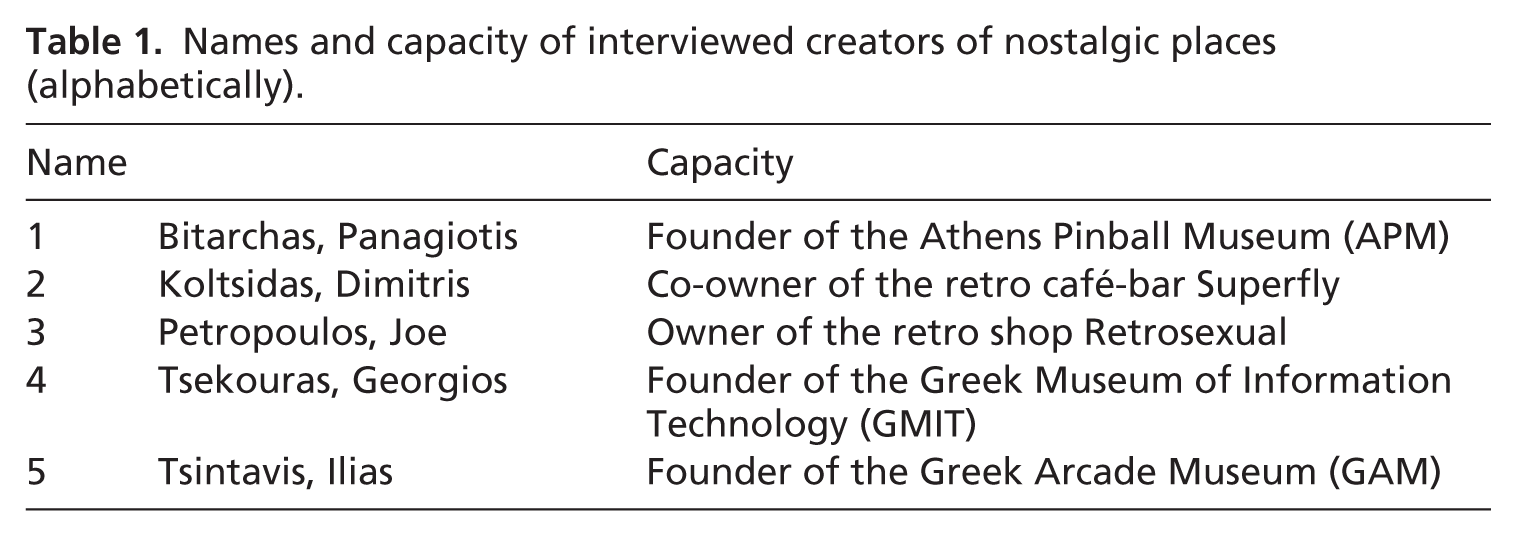
Names and capacity of interviewed creators of nostalgic places (alphabetically).
Nostalgic museums and cultural creativity
We often consider nostalgia a passive emotion, believing that nostalgic people reminisce about a lost and better past, thinking that their lives are now worse. In a sense, we identify the term with Davis’s ‘simple nostalgia’ or Boym’s ‘restorative nostalgia’. This is more unsurprising for societies in crisis, which may become more introverted and less future-oriented. Passive emotions are experienced as reactions to external circumstances, such as worsening life standards, and feel like they are happening to subjects, rather than being something that the subjects generate: they lead to withdrawal or trigger stress. As pessimism prevails, such nostalgia becomes mainstream during a crisis, as demonstrated by the proliferation of nostalgic groups on Facebook in Greece (Zestanakis, 2025b). This nostalgia survived after the formal end of the bailout agreements era in 2018, as many people believe(d) that the pre-crisis prosperity would never return in the country. Some large nostalgic groups were established in the early 2020s, when the newly elected conservative government argued that the country had returned to a post-crisis normality (κανονικότητα). Greece is now one of the fastest-developing economies in the Eurozone – the GDP grew by 2.3 percent in 2024, following on from Malta (6.0%), Croatia (3.8%), Cyprus (3.4%), Spain, (3.2%) and Lithuania (2.8%) (World Bank Group, 2025), but this improvement is not clearly visible in society, as the cost of living has skyrocketed (Bali, 2023). In 2023, young people were pessimistic about the future (Oikonomikos Tachydromos, 2023). Very popular nostalgic Facebook groups, such as ‘80s nostalgia’ (80s νοσταλγία; about 244,000 members in October 2024, and 310,000 in April 2025), where users discuss the past, usually motivated by old audio(visual) stimuli, are full of people yearning for a better life in the past. This life is associated with higher living standards and simplicity: members feel nostalgic for the pre-Internet society where communication was based on in-person interaction and people were warmer. The pre-smartphone social organization is illustrated as offering healthier sociability, authentic entertainment and romantic flirting. These groups invest nostalgic energy to create repetitive media content, and pessimism characterizes discussions (Zestanakis, 2025b).
Νot all nostalgic people behave in the same way. Nostalgia boosts cultural creativity, and nostalgic museums or happenings demonstrate that this trend is vibrant in Athens. This boost can hardly be measured quantitatively but is evident by its impact on initiatives that started from people without big budgets or state support. To materialize their projects under conditions of economic pessimism, these people became inventive and culturally creative. This energy was clear in GR80s. 4 GR80s attracted about 80,000 visitors, preoccupied the media, and provoked debates on politicized uses of nostalgia, as some intellectuals perceived GR80s as describing the 1980s as the period when people in Greece got used to living above their means, and castigated the redistributive politics of the then socialist governments (see, e.g. Zenakos and Natsis, 2017). GR80s drew on a dictionary of the Greek 1980s edited by two sociologists (Vamvakas and Panagiotopoulos, 2010). This dictionary was a massive venture by Greek publishing standards, including 264 entries and 770 documents, and intrigued academics and the media, and saw a second edition in 2014. After all this success, the editors organized ‘GR80s’, drawing on the personal collections of people from Athens and elsewhere who loaned items.
The Municipality of Athens and sponsors financed the project, which was much promoted by the media. The budget was limited and curators worked for a symbolic remuneration. 5 Historiographically, the GR80s spoke about a period and topics, such as the history of consumption, that were marginal in Greek historiography. 6 The exhibition contained stands on politics, housing and public space, mass culture, fashion, disco culture, cinema, audiovisual culture, popular and working culture, youth cultures, artistic activity, technology, mass media and communication, vehicles and mobility, language and a reading room with books and magazines from the 1980s. The project included talks with intellectuals, artists and celebrities and parties. The creators aimed at an emotional narrative focused on joy and amusement. This was clear in a room where visitors played old arcade games (Figure 1). They also organized parties in collaboration with the Onassis Stegi, popular bars such as Six Dogs and emblematic DJs of the 1980s including Petros Bratakos from Barbarella, likely then the hippest Athenian disco. The immersive environment transported visitors to the 1980s, establishing and strengthening bonds among nostalgic communities in the city. Indicatively, the GMIT lent material to GR80s and its founder encountered other nostalgic contributors. GR80s demonstrated that nostalgic cultural creativity could sway the city. The following years witnessed the strengthening of nostalgic groups on social media.
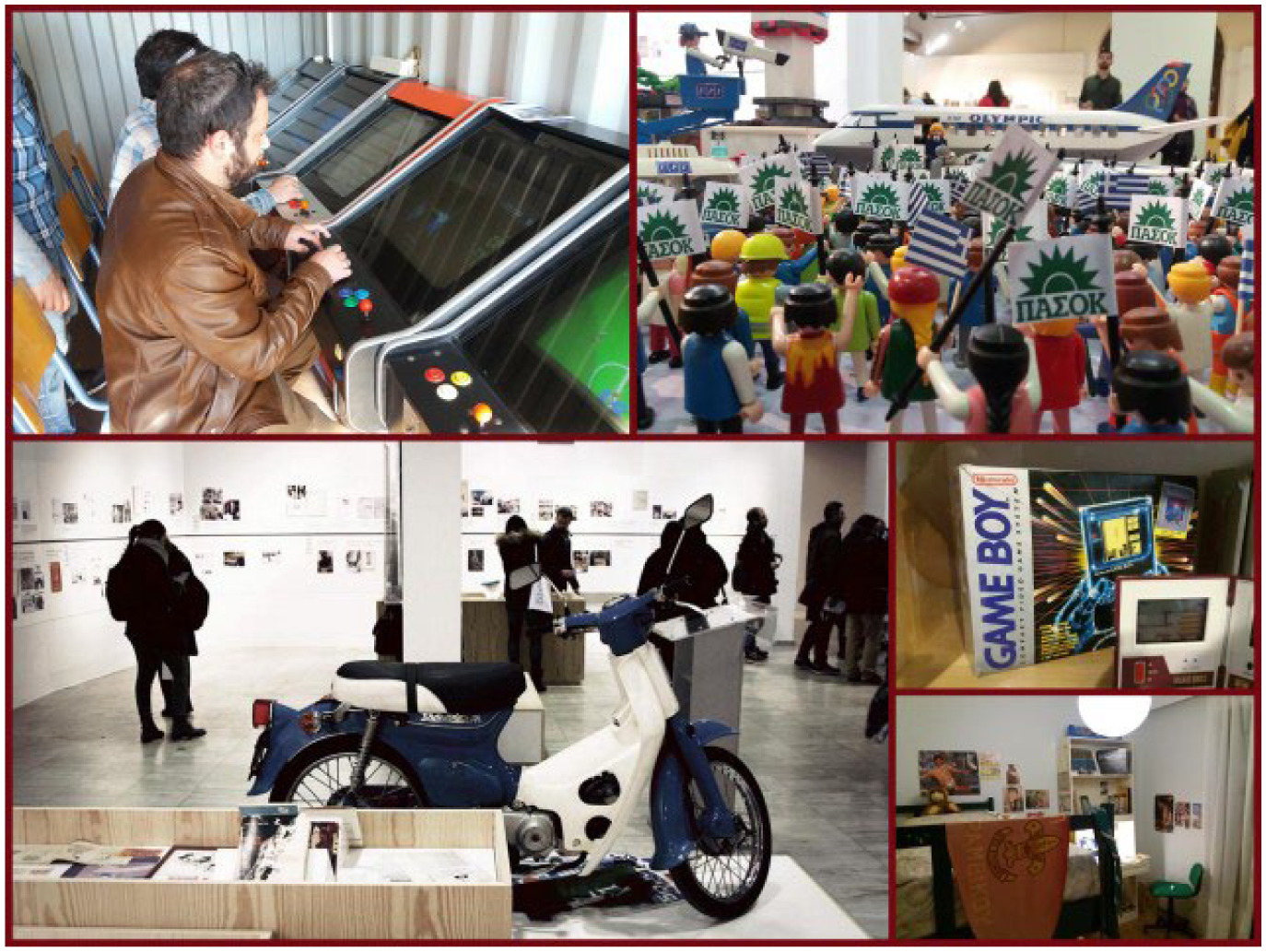
‘GR80s: 1980s Greece in Technopolis’ (January–March 2017).
Nostalgia can inspire affective environments, communities and lifestyle consumption (Barnes et al., 2006). Cities develop distinct profiles to attract consumers, and one means used to attain distinction is to brand the city through emotions (Johnson and Kocatkiewicz, 2011). For Bitarchas, Athenian projects are original and demanding. In 2019, APM had 12 staff members, including three technicians, and about 100 functional pinball machines, seducing even prestigious international media such as Euronews (Johnstone, 2019) and Reuters (Kyvrikosaios, 2019). Tsekouras also noted the demanding character of such projects. They often drew on the enthusiasm of the creators and their networks. In a sense, this cultural creativity featured a pre-1990s collective spirit and was characterized by volunteerism. For this reason, as Bitarchas argued, they could more easily deviate from established museological narratives and combine historical knowledge with pleasure and joy. Indicatively, in APM and GAM, performance has been disconnected from cost. In the past, players had to insert coins into the machine to play, and experienced frustration when losing. Playing for a flat rate reduces the profit margin but infuses nostalgia with a positive sentimental aura, removes frustration and creates a more playful environment to which visitors want to return.
Nostalgic cultural creativity emerged as a cultural response to the crisis. Informal networks, shared experiences and collaborative efforts mark this creativity. As funding was limited, people from Tsekouras’s networks (e.g. IT experts and university professors) offered legal and other advice to GMIT pro bono. GMIT’s followers on social media have helped the museum to expand its collection or resolve technical issues (Zestanakis, 2020). This spirit of solidarity and generosity culminated in 2023, when GMIT assisted students in Thessaly (an area in central Greece), which was devastated by severe flooding: GMIT gathered donations of more than 130 laptops, and Tsekouras gave them to schools in person (Magnisianews.gr, 2023). In this spirit, GAM’s guided tour is gratis to visitors who only want to learn about videogaming without playing arcade games. 7 Tsintavis connected this choice with the crisis, arguing that the situation is difficult and education should be free. This is also declared on the museum’s website.
Beyond museums: ‘Retrosexual’ and ‘Superfly’
This spirit of togetherness is central to the ‘Retrosexual’ project, which started with a Facebook page selling objects and led to the creation of a shop in Monastiraki, the famous flea market in the heart of Athens. For Petropoulos, the project succeeded because it provided an informal network of people who profited from nostalgic socialization to make their routines more pleasant, reacting to the stress that the crisis generated. In this narrative, nostalgia is designated as a relieving emotion. The Greek GDP fell by nearly one fifth, from US$297.12 billion in 2010 to US$242.03 billion in 2012, and stress skyrocketed at that time. Petropoulos did not see the crisis as an obstacle, believing in the project’s potential. The project’s low-budget character makes it comparable to nostalgic initiatives, such as the small independent shops that boosted nostalgia for vinyl records internationally in the 2010s (Amos, 2019) or small secondhand and vintage shops in many European cities, such as Stockholm, where locals find vintage objects including used clothes or furniture (Visitstockholm, 2024). However, ‘Retrosexual’ was not only a shop, but also the basis for a nostalgic community. This rendered it different from shops elsewhere and permitted it to blossom in years when consumer power shrank and stores selling decorative objects closed one after another. The initiative became known by word of mouth and through social media; this led to gatherings and workshops where nostalgic Athenians socialized. When I visited ‘Retrosexual’ in May 2019 to ask the owner for an interview, I found customers chatting among themselves and with staff in a very friendly way. This interactivity corroborates the potential of nostalgic culture to be a bridge between the past and the present, and an emotion capable of establishing bonds between people in crises. 8
Nostalgia is the force behind the café-bar ‘Superfly’ in Pangrati, a project that started in 2013 and ended in 2024. It was started by two friends and collectors of vintage items – mostly toys – who wished to make their lives more joyful, sharing personal moments with other nostalgic Athenians. Some people view crises as opportunities to grow, and the owners are such a case. Koltsidas stressed that ‘Superfly’ started from the idea that in the crisis, ‘it was anywise tough to make big money’ and the realization that their previous jobs were boring. ‘Superfly’ did not require a large investment. The area was selected because of personal retro memories, as both friends had enjoyed the vibrant nightlife of Pangrati in the 1990s and believed that this legacy could render ‘Superfly’ known among people of their generation, an age category that they targeted. Some media, such as the newspaper Lifo, boosted the experiment by characterizing ‘Superfly’ as ‘a bar full of memorabilia from past decades which will awaken memories of children’s parties with Fofico 9 and weekends overwhelmed in the photo romances of Manina’, 10 encouraging its readers to visit it (Rokou, 2015). The items displayed come from the collections of the two friends and their friends. Some items were purchased, often from ‘Retrosexual’, a detail demonstrating how people engaged in the nostalgic scene of Athens’ built networks. The owners decorated the café-bar themselves. Trying to fully revive the 1980s and 1990s, they also considered a café-bar without Wi-Fi, but realizing how important this was for some customers, they abandoned this idea.
‘Superfly’ demonstrates nostalgia’s ability to attract young people. During my visits, my impression – which Koltsidas confirmed – was that most customers were young or middle-aged, that the café-bar was equally appealing to men and women and that it was an LGBTQ-friendly environment. I also had the impression that in ‘Superfly’, nostalgia is part of a hipsteric narrative attractive to youth. Hipsterism is a subculture characterized by affinity for alternative lifestyles and non-mainstream music, vintage fashion, artisanal products and progressive politics; it is commoner in cities and is characterized by enthusiasm for niche experiences. 11 Simultaneously, hipsterism contributes to the commodification of nostalgia by turning elements of the past into consumable trends that can be marketed and branded. Hipster culture recontextualizes vintage items, such as those hung on ‘Superfly’s’ walls (see Figure 3), not for their original function but for their symbolic and stylistic value. This curation of nostalgia makes the past feel stylish and authentic, making it ripe for repackaging. A hipster approach to culture engages with the past with some irony, and this detachment, which often happens in low-budget environments created by nostalgic people, such as ‘Superfly’, can allow bigger brands to reintroduce old trends, broadening appeal and marketability. At any rate, ‘Superfly’s’ DIY environment fostered a sense of community and belonging, was cost-effective, and brought accomplishment to the creators. This DIY environment was compatible with the crisis, which pushed people to make things themselves when possible. In GMIT and GAM, this DIY character is also clear. Tsekouras started GMIT alone, and the place has his personal touch. Tsintavis decorated GAM without professional help, assisted the technicians who repaired the arcade machines, and even installed the windows for the exhibition of the game consoles by himself. Nostalgia-driven cultural creativity implies micro-creativity, small-scale creative thinking and problem-solving: this creativity is not groundbreaking and contrasts with the dominant rhetoric on big creativity (Mould, 2018) but still involves adaptive and resourceful thinking. This micro-creativity is everyday, informal, situational, personal and cumulative, as small acts create and transform nostalgic spaces, modifying the city’s identity in the long run.
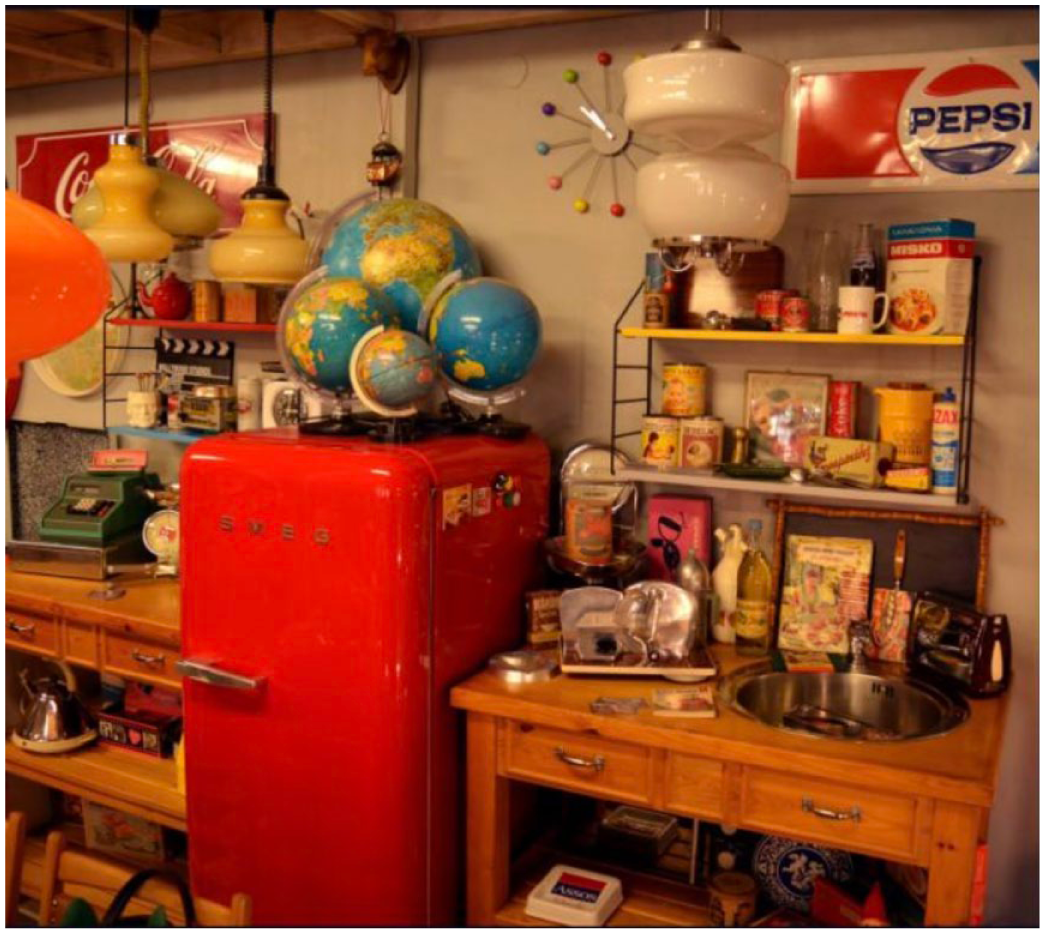
‘Retrosexual’ shop (late 2010s).
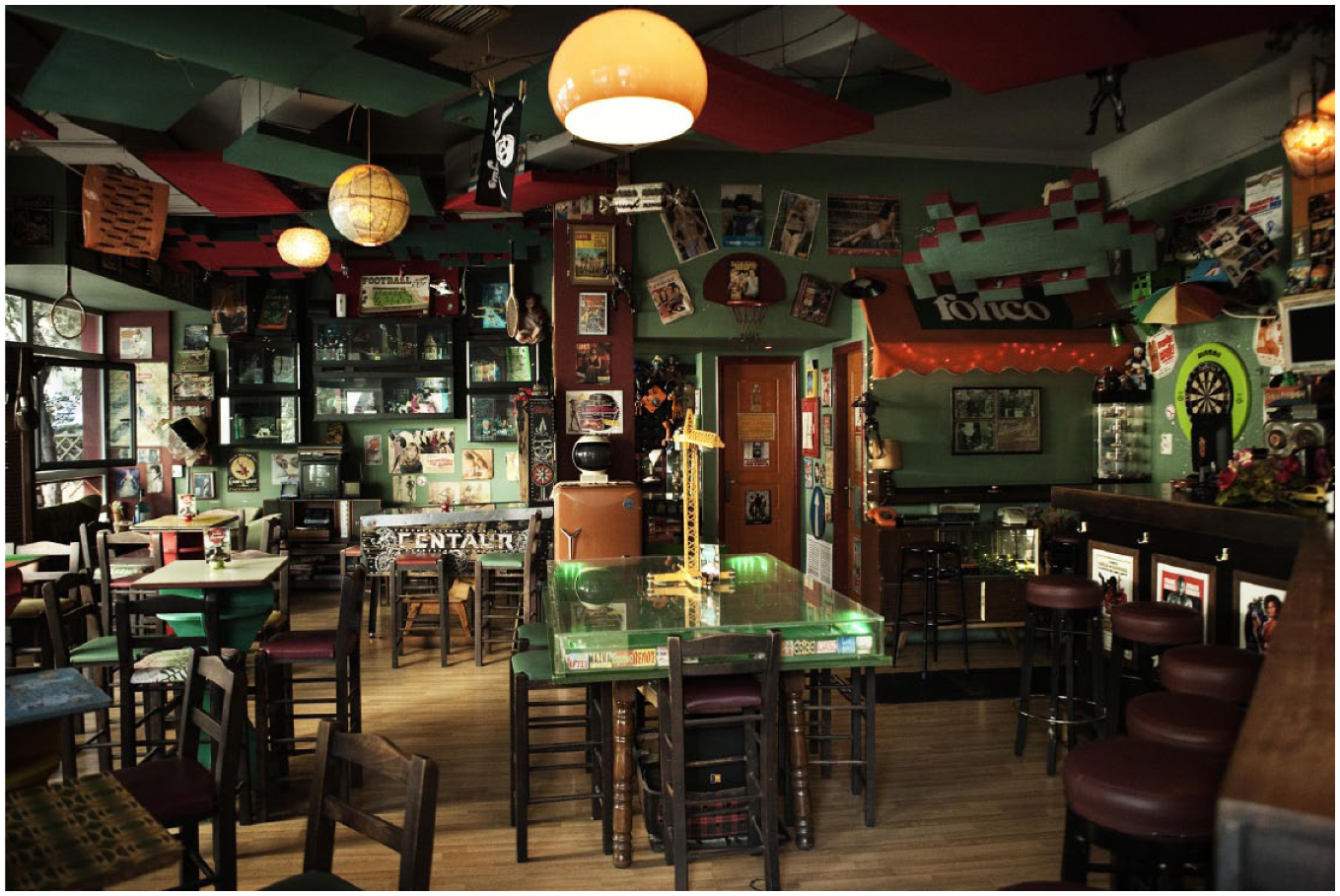
‘Superfly’ café-bar (2019).
The centrality of games in ‘Superfly’s’ narrative is justified by games’ ability to produce experiences (Banfi, 2022). Customers share experiences based on gaming, and this brings people closer. Initially, ‘Superfly’ mostly touched the generation of the 1980s and 1990s, who used the exhibited items as stimuli to strike up conversations and to play. After some time, ‘Superfly’ started attracting younger Athenians. The Internet concentrates our perception of what is new but also gives us ways to revisit the old. Nostalgia is an emotion that most people need and is nowadays usually seen as a positive feature of one’s personality: young people see engagement in nostalgic activities positively (Lyne, 2016). During the crisis, this attitude became stronger as the late 20th century has been identified with prosperity, and young people are touched by its mythology and feel unlucky for not having lived in this age. They are exposed to this nostalgia through social media, cinema and television. Indicatively, the successful TV show Our best years (Τα καλύτερα μας χρόνια; Kritikos, 2020–2023), a Greek short version of the legendary Spanish blockbuster Tell me how it happened (Cuéntame cómo pasó) which was screened between 2001 and 2023 in Spain, viewed the late 20th century through rose tinted glasses. The 1980s is identified with redistributive politics, which assisted the weaker strata and the middle class (Moschonas, 2001: 16). This nostalgia has appeared in several surveys in the last twenty years. 12 Nostalgia for the 1980s excited a generation that reached adulthood during the crisis, when life was synonymous with insecurity (Triantafyllou, 2017; see also Zestanakis, 2024).
Nostalgia teaches pop culture to young people, and this knowledge bridges generations. As Tsintavis mentioned, in GAM, 40 percent of visitors are young people. This age group is a target for GAM, as is clear from its social media strategy, which pays attention to TikTok, a medium specializing in short-form video content that caters to the shorter attention spans and quick consumption preferences of younger users. In the social media of GAM, we find some promotional videos showing young gamers playing. The activities are promoted on TikTok using slang words popular among young people, such as ‘χαμούλης’ (little mess), and contemporary hits such as ‘Simple Life’ by Lexy Pantherra, although one would expect older songs as more nostalgic choices. Young visitors are the main target of the GAM, and its social media connect GAM’s nostalgic content with contemporary pop culture. Scouts and university students visit GAM, while the Athens University of Economics and Business co-organized with GAM a Tedex event on technology and education. Schools often visit APM, GMIT and GAM. Tsintavis stressed that these visits are organized by professors who see nostalgia as a vehicle for discussing contemporary history with students. According to Tsekouras, these visits are crucial for the project’s viability; in GMIT’s social media, positive feedback from students and professors is displayed to promote it. Nostalgic museums offer guided tours for young visitors using contemporary experiences (e.g. the performance of modern electronic devices in juxtaposition with those of the late 20th century) as comparative references to lure young audiences. In GAM, the tour is specially designed by Rizakou-Papastavrou in collaboration with Tsintavis, a detail conveying interest in young people as potential nostalgic audiences (see also Zestanakis, 2025a).
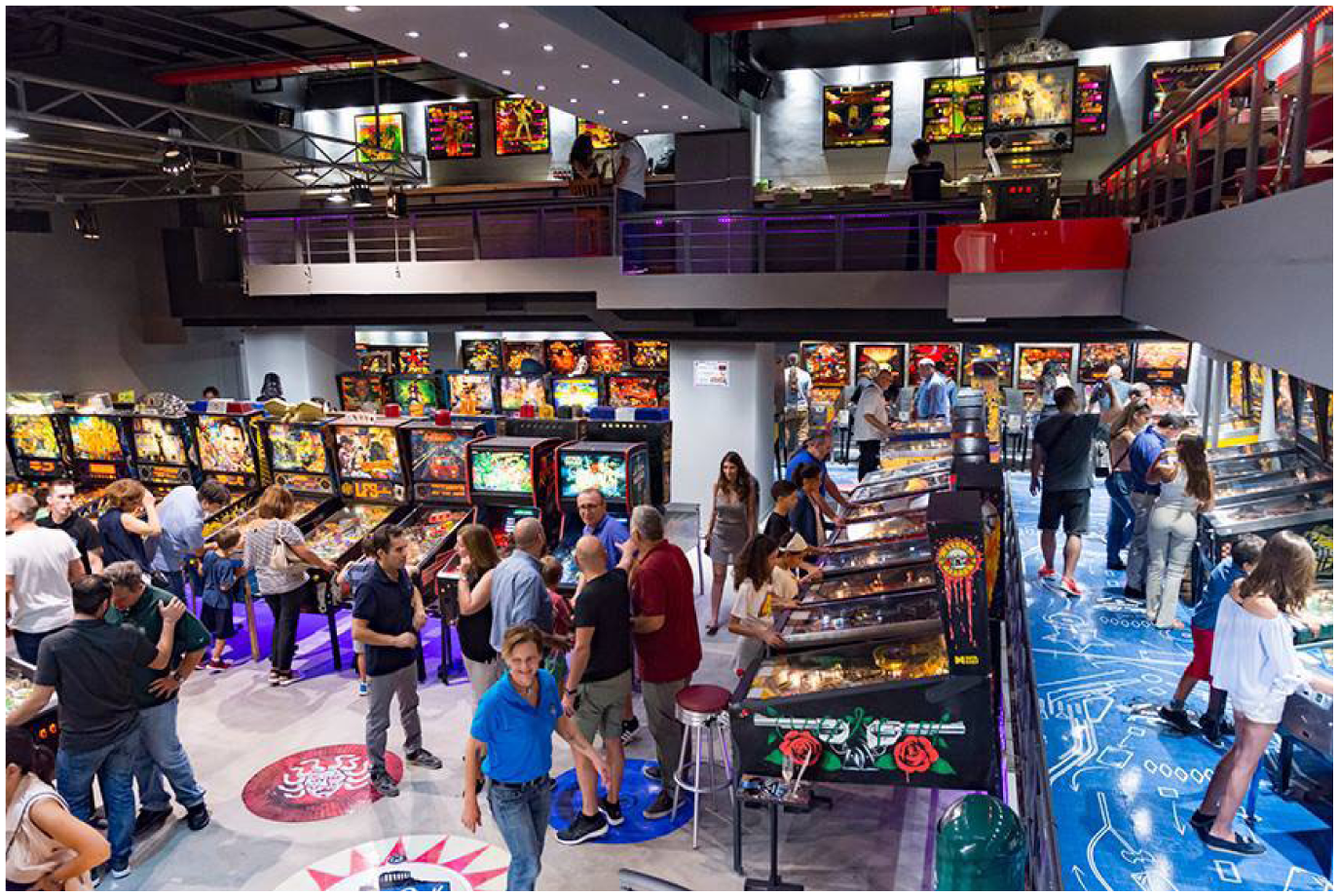
The main hall of the APM (2019).
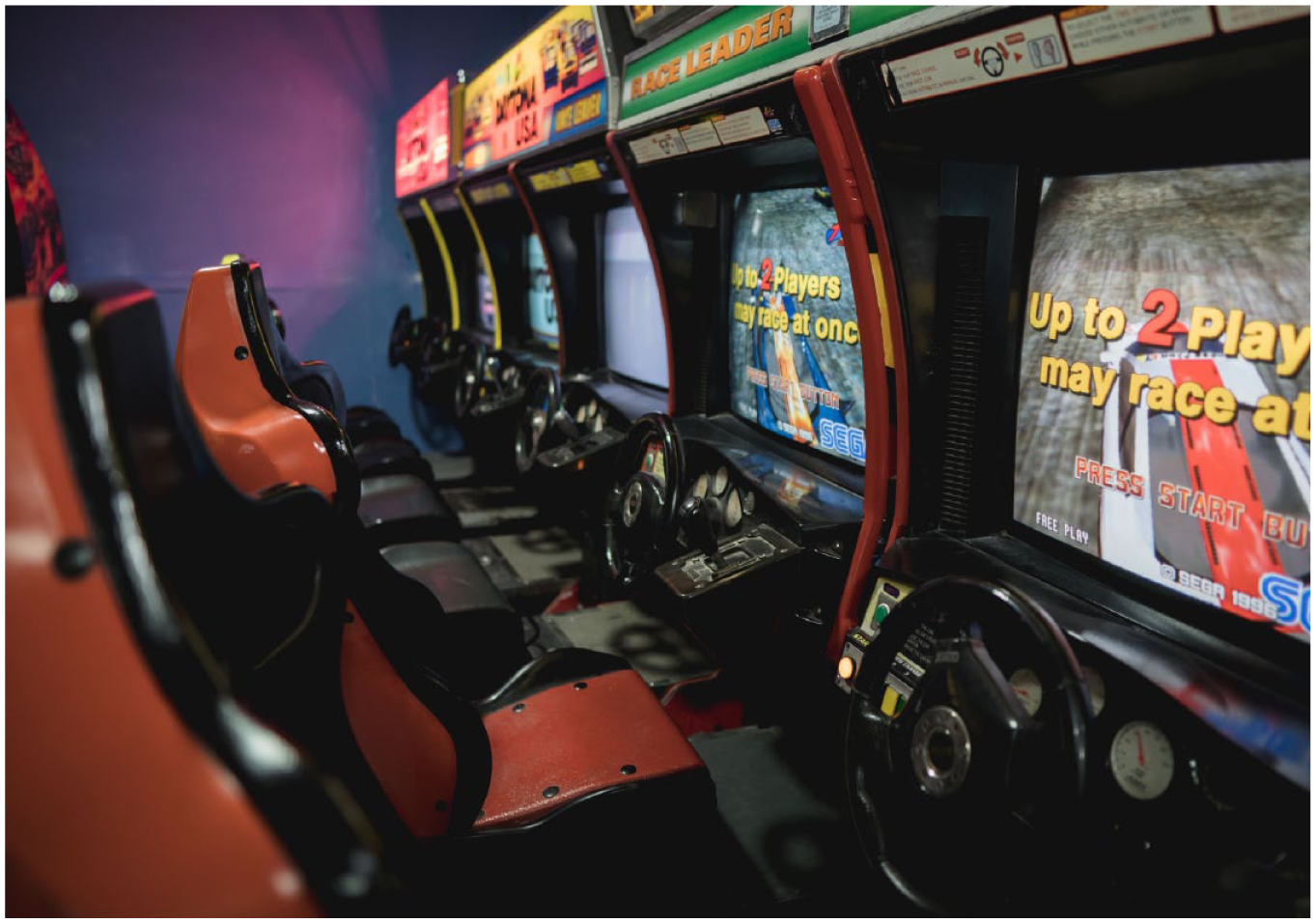
Arcade machines in the GAM (2024).
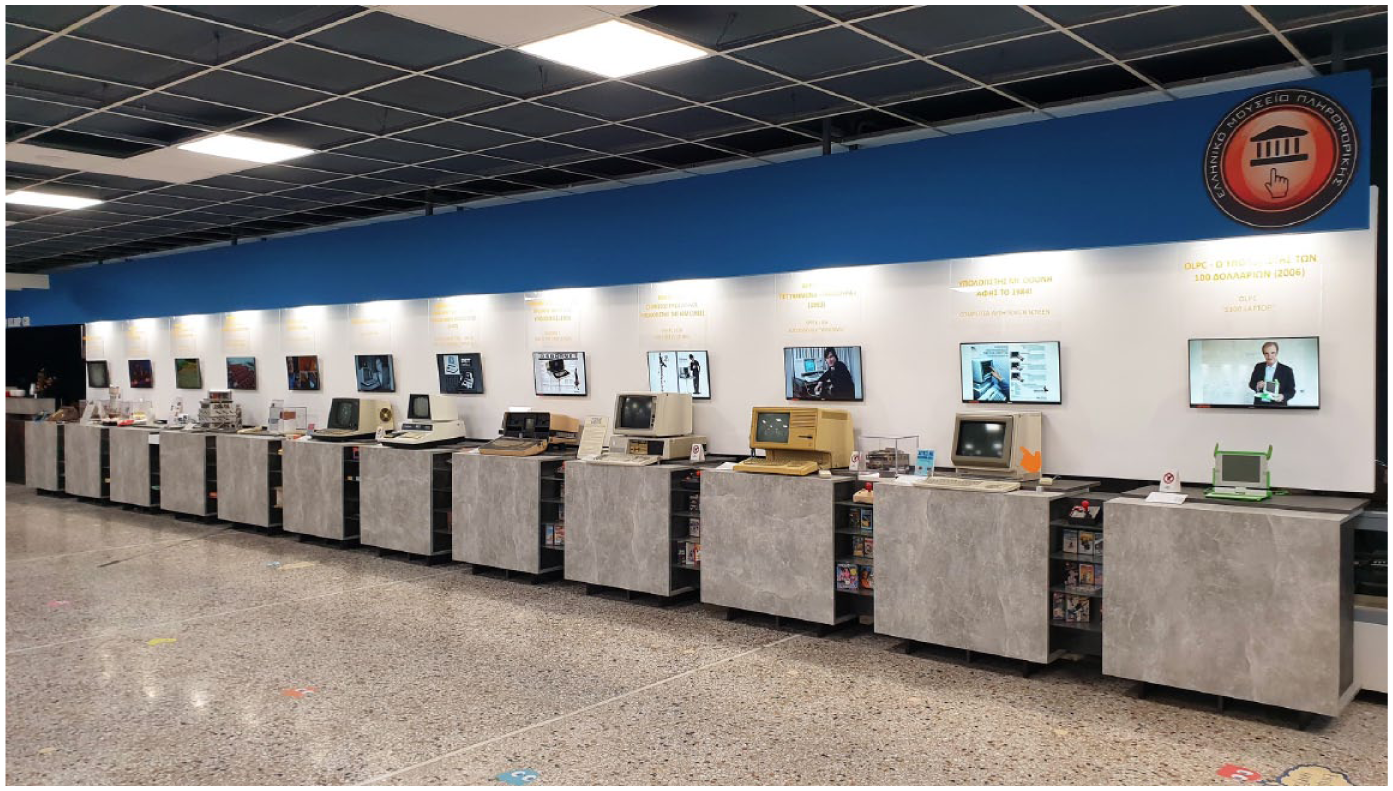
Part of the main hall of the GMIT (2023).
Building bonds
These initiatives build intra-generational bonds through joy. Emotions are inscribed in spaces, and museums are increasingly sensed (Miller, 2008). Relations with history concern the senses (and not only the mind), and emphasis on the senses is crucial to examine how the past affects the present (Smith, 2017). Senses-driven interactivity regenerated museums since the 1990s, as they were thrust into competition for the public’s time with branches in the leisure industry, such as commercial theme parks. Visitors are no longer satisfied by only gazing at displays; they want to touch the objects and be involved with the exhibits, learning and being entertained. This upsets the stability of the museums. Interactive displays transformed museums and maximized the potential of nostalgic projects. The hands-on approach encourages broader visitor bases, bringing additional revenue (Caulton, 1998).
Nostalgia mobilizes resources to protect lifestyles that are threatened by technological change (Smith and Cambell, 2017). The interactive character of GAM and APM encourage(d) a nostalgia-driven sociality. The emphasis on touch is critical in this effort. Similarly, in ‘Superfly’, the owners put the objects close to the tables, encouraging customers to touch them. In GMIT, visitors can browse some old magazines and activate old modems to hear noises going back to the first Internet days. Touch is a strong sense, as it involves the skin, which contains receptors that can detect pressure, temperature and texture. Touch stimulates younger generations, as curiosity for the past draws on sensual differences between then and now. Bitarchas argued that touch excites young visitors when they experience how slow the gameplay of flippers is by today’s gaming standards. According to Tsintavis, the arcades excite young visitors, despite basic gameplay and poor graphics . GAM gives them the chance to fondle buttons or sticks, rendering comparisons between today’s videogaming and the amusement arcade (oufadika; ουφάδικα) era possible.
Analyzing the phenomenon from a gender perspective, women share this nostalgia, although their participation in some phenomena that are now nostalgically remembered – especially in tech culture – was limited in the 1980s and 1990s. Then, interest in information technology and videogames was a largely male phenomenon (Zestanakis, 2017: 92–93; 224–5). However, after the 1990s, women’s interest in technology increased. If the 1980s noted a pessimism about the inherent masculinity of technology, the 1990s witnessed optimism about the liberating potential of technology for women (Watchman, 2007). Female characters in videogaming proliferated, rendering videogames more attractive to women (Mikula, 2003). In the meantime, technology offered diverse career opportunities that attracted women in Greece. At GMIT, about 35 percent of visitors were female, in the late 2010s. In 2024, about 40 percent of messages received by GAM’s social media come from women; more than half of reservations are made by women, who visit GAM with friends or families, or gift tickets. GAM’s guided tour discusses videogaming in relation to gender issues, explaining, for example, gender representations in classic videogames, such as ‘Double Dragon’, a beat ‘em up arcade game released by Technōs Japan in 1987. This detail demonstrates that the designers of the tour have considered the relationship between gender and technology. Gender representations in this videogame preoccupied specialized magazines in the 1980s (Zestanakis, 2017: 222–3).
The nostalgic scene in Athens strengthens intergenerational communication, especially through interest in contemporary history. Social networking gameplaying provides a relaxed environment for intergenerational family members to stay connected, but cannot replace face-to-face communication (Chen et al., 2012). The face-to-face communication between parents and children is disrupted by technology, a condition that can damage children’s behavior (McDaniel and Radesky, 2018). The uninterrupted communication of the past has evolved into an object of nostalgia. This nostalgia blossoms on Facebook, where simpler communication is applauded as characterizing a warmer life which was ravaged by the Internet (Zestanakis, 2025b). When Internet-mediated communication prevailed, people realized that social disengagement is often associated with poor quality of life, while in-person social involvement with friends and family brings happiness more often. Face-to-face communication can predict quality of life (Lee et al., 2011). The oufadika expressed an emotional gaming culture, and their revival in GAM represents a cultural response with resisting dynamics. As Tsintavis and Bitarchas mention, parents and grandparents show their children the games of their own youth. Nostalgic institutions offer older generations opportunities to explain how the world was, and likely relief from the embarrassment that they feel when facing changes. When I visited GR80s, I noticed many parents explaining to their children what they were seeing. Parents want their children to understand the context in which they themselves grew up, believing that children appreciate the advancements that occurred over time, to gain a broader perspective on culture and history. According to Bitarchas and Tsintavis, who regularly observe(d) such interactions in APM and GAM, this understanding can bring children closer to their parents. The nostalgic initiatives create pleasant emotional auras, producing places and bonds, to improve intra-generational communication.
Somehow, ironically, these initiatives benefited from the platformization of cultural production and consumption. Platforms ease the circulation of commodities, forms, practices and objects, visibilizing their affective sign and emotional value, creating in turn facts that ‘offline’ producers, such as museums, can capitalize on (Poel et al., 2021). Indicatively, there would not be the same ‘value’ for arcade games without the trans-communicational capacities that endorse these cultural objects as ‘cult’ and still trendy. This platformization of cultural economy adds to the emotional and aesthetic satisfaction that traditionally derives from consumer experiences (Featherstone, 1990: 6); it reminds older consumers of pleasures of the past, tacitly inviting them to re-sense them with younger people in the nostalgic places where they are still available. Not coincidentally, the nostalgic initiatives examined constantly use Facebook, the most appealing social medium among middle-aged and older people. 13 This communication strategy is not only the outcome of the crisis, as the budget for other forms of promotion was unavailable, but also of the realization of the potential of the platform for cultural economy.
Instead of conclusion: how does nostalgia affect Athens?
All the initiatives examined exemplify nostalgia’s cultural creativity. The crisis overturned decades of improving living standards. Nostalgia expressed a reaction to a deteriorating life. It favored yearning in the social media (Zestanakis, 2025b), but also generated a positive cultural response through enthusiasm about history, especially in marginal areas for historiography, such as the history of technology and consumption. In nostalgic spaces, history can be consumed, studied and discussed. ‘Retrosexual’ organized workshops where nostalgic customers discussed retro fashion and design. GMIT had more than 500 books and 1,300 volumes of old IT magazines (about 40 titles) in 2019. This material came from donations and is open to researchers and the public upon demand. GMIT started an oral history project, collecting interviews from the first IT professionals in Greece. GMIT’s hall hosts public history events with a capacity of about 150 persons. Such events have included nostalgic meetings among pioneers of online dating in the 1990s. GAM plans to create a space for public history events. Such initiatives boost interest in history, contributing to a more informed society and cultural resilience. Athens confirms that museums have evolved from public consumption spaces where visitors benefited from aesthetic appreciation, escapism and education through visual consumption, to sociocultural hubs that bring vibrancy and meaning to people’s lives (Jafari et al., 2013: 1729–1730).
History, and other genres of the historical, have grown in the cultural artifact, discourse, product and focus. History as leisure is booming, and nostalgic historical narratives draw the media (De Groot, 2008; Niemeyer, 2014). Nostalgia largely defines which periods are offered for historical consumption. The centrality of the 1980s and 1990s in the nostalgic scene of Athens is not accidental. As we saw, the 1980s coincided with popular political changes, and nostalgia for this decade is clear in surveys. The 1990s was a more financially disciplined era, but saw the incorporation of technology in everyday life, a culturally pluralistic taste in music and fashion, and a more inclusive pop culture, especially regarding gender. The 1990s are an object of nostalgia not so much as a prosperous decade (as the 1980s were), but as a period signifying the passage to technology-driven lifestyles and the internationalization of culture (Spanoudaki, 2023). Nostalgic interest in the material culture of the 1980s and the 1990s is vibrant, and there have been attempts to revive elements of this culture, such as electronic devices, and make them known to younger generations (Gounari, 2023). The Athenian nostalgic scene is a vibrant one; projects such as ‘Superfly’ coincided with nostalgic café projects in metropolises such as London (Kaur, 2013), foreshadowing a globally powerful trend. To use one more example, the Athens Retro Festival, with music and dance events and workshops, and happenings on retro hairstyle, makeup and barbering, has been supported by companies, the media, the Ministry of Tourism and the Municipality of Athens, showing the strength of this nostalgic dynamic. Festivals provide connectivity to visitors, offering engagement and discussion (Picard and Robinson, 2006: 1), and this festival brought nostalgic Athenians closer as people interested in old music, dance, kitchen, hairstyle or makeup met in workshops. The talks, parties and other parallel events of the GR80s worked in a similar direction. Generally, such initiatives took nostalgia out of the yearning-centered digital domain (Zestanakis, 2025b) and brought it to the city as a ‘touchable’ experience.
Touch is a form of non-verbal communication that is able to convey emotions, meanings or intentions; determines bonds that foster intimacy with persons and objects and, in a sense, goes against the culture of connectivity (Van Dijck, 2013). As more and more of our existence is being lived at a distance through digital communications, touching becomes a ‘retro sense’ (Kearney, 2021: 4). We move toward a world in which we sense things less directly. Nostalgic institutions profit from the platformization of culture and strengthen its activeness on platforms, but simultaneously express resistance, providing spaces where physical touch still plays a key role and where younger people can feel its value. Athens confirms that nostalgia lies at the heart of a culture of rediscovery, expressing desires for the recovery of earlier, yet still modern, periods at a fast rate (Guffey, 2006: 8). This demonstrates that nostalgia can blossom under austerity, which does not discourage the creators of nostalgic spaces. The nostalgic scene of Athens is not based on the pervasive creativity that has inspired political vocabularies since the 1990s. It added to the small-scale marketization of nostalgia, and confirmed that nostalgic material fascinates the media (Niemeyer, 2014), but also profited from the solidarity and togetherness of the crisis, maintaining a visibly amateur character. The nostalgic initiatives discussed render(ed) nostalgia as a power able to (re)claim a playful and more positive identity for Athens, and a generative force extending toward the future, instead of a passive retreat to the past. Ultimately, this nostalgia is focused less on the past per se and more on the interplays between the past and the present, as people seek to tell themselves about their history in new ways (Jameson, 1991: 283). In our case, this (re)telling is charged by the crisis, which generated positive visions toward the comparatively safer and more playful 1980s and 1990s. Nostalgic initiatives express this search, draw on joyful memories and offer channels of historical storytelling, bringing different generations closer. Nostalgia links the digital with the non-digital world, drawing from the culture of connectivity (Van Dijck, 2013), but simultaneously rupturing into it. Joyful reminiscences can determine memories of everyday pleasure expressed through pop culture (Trošt, 2019). The case of Athens corroborates the interconnections between nostalgia and joy. Nostalgia-generated joy is largely produced through social connectedness based on shared interest in contemporary history (especially regarding underanalyzed areas in Greece, such as the history of consumer culture), emerges as a parameter of well-being counteracting stress, and is an important emotion for the post-crisis capital of an unhappy European society (World Population Review, 2024). By provoking joy, nostalgia can strengthen social connectivity and resilience, improve communication, inspire cultural creativity, and ultimately make life more interesting, if not a bit better.
Footnotes

Funding
The authors disclosed receipt of the following financial support for the research, authorship, and/or publication of this article: Research for this article was funded by the Fritz Thyssen Foundation and the European Commission (MSCA grant 101108725).
Declaration of conflicting interests
The author declared no potential conflicts of interest with respect to the research, authorship, and/or publication of this article.
Data availability statement
Data sharing not applicable to this article as no datasets were generated or analyzed during the current study.