




Abstract
The COVID-19 pandemic gave rise to an unprecedented circulation of online humor, an important part of which referred to politics and politicians. In the current study, we analyzed a sample of such humorous items (N = 361) across five European countries to find out how pandemic humor represented political leadership. We argue that COVID-19 political humor both politicized and depoliticized the figure of the politician. Pandemic political humor went beyond criticizing those in power by presenting them as iconic yet relatable personas, who were equally stunned by the magnitude of the task of crisis management. Our findings reveal the broader trends of humor depicting politics as a spectacle.
Keywords
Introduction
The unprecedented interventions in people’s lives at the onset of the COVID-19 pandemic gave rise to the circulation of online humor about this transnationally shared experience. Even though, overall, the first wave of pandemic humor was not necessarily political (Boukes et al., 2024), previous scholarship has drawn attention to the importance of such humorous items referring to politics and politicians (Murru and Vicari, 2021; Nørgaard Kristensen and Mortensen, 2021) as forms of ‘mundane political culture’ (Merelman, 1998). In reflecting the norms, values and conflicts permeating public opinion, and in contributing to ongoing debates in the public sphere (Kuipers, 2011), political humor becomes an important weapon, with social and political consequences that require further unpacking (Nieuwenhuis and Zijp, 2022). Thus, besides provoking laughter, political humor can also produce potent forms of criticism, make politics more accessible and generalize cynicism in formal politics (Holm, 2017; Meyer, 2000). Furthermore, laughter coexists with generating and/or deepening overlapping social divisions (Tsakona, 2020). In this sense, political humor can simultaneously build community and polarize the social body (Mortensen and Neumayer, 2021).
Informed by broader calls for a cultural studies approach to studying political humor (Kuipers, 2011; Nieuwenhuis and Zijp, 2022), this article investigates the transnational representation of political leadership across online political humor circulated during the first stage of the COVID-19 pandemic (early 2020). As a global crisis, the COVID-19 pandemic affords a unique milieu within which political humor focuses on the same thing across different geopolitical contexts. This made it possible to capture and compare vernacular articulations of politics across different countries. The political humor of the COVID-19 pandemic was ambiguous in its stance: while some items emphasized the universal and shared nature of the pandemic experience, other items foregrounded the divisive nature of political decision-making, for instance by juxtaposing pandemic management decisions with normative claims to the ‘right’ way to manage the crisis.
Where previous scholarship on political humor during the pandemic has focused on populist politicians (Nørgaard Kristensen and Mortensen, 2021) or single-country studies (Murru and Vicari, 2021), this article focuses on the representation of leadership in COVID-19 political humor items across five European countries with different general levels of trust in politics (i.e. Belgium, Estonia, Italy, the Netherlands and Romania). After an initial quantitative mapping focused on form and content, a qualitative analysis uncovered the construction of and values attached to the depicted political actors, as well as their role in the production of humor.
We have found that COVID-19 political humor both politicized and depoliticized leadership, going beyond criticizing those in power by presenting them as iconic yet relatable personas that are equally stunned by the magnitude of the task (i.e. crisis management). In our study, politics emerges as a spectacle, with ‘the politician’ increasingly seen as a comic figure. Such representations challenge top-down understandings of authority and leadership, reinforcing skepticism toward the ability of political elites to come up with solutions to big problems. At the same time, celebrity politicians remain interesting in the ‘mundane political culture’ due to either personal quirks or political brands. While celebrity-status engages citizens emotionally, potentially mobilizing political interest in the context of everyday life, the spectacularization of political leadership largely benefits the increasingly normalized populist rhetoric in the European context (Murru and Vicari, 2021; Nørgaard Kristensen and Mortensen, 2021).
Theoretical framework
As a communicative act oriented toward the production of laughter, humor entails the interaction between the content and context of the joke, the availability of shared cultural codes, and the identity of and relationship between the participants (Palmer, 1994). Kuipers (2009) outlines five ingredients of humor: incongruity (the creation and subsequent frustration of an expectation), non-seriousness, pleasantness, transgression and aggression. These ingredients can be combined with various humorous genres (e.g. jokes, puns, insults, self-deprecation, etc.), communicational modalities (e.g. text, audiovisual, embodied expressions, etc.) and power hierarchies (e.g. class, gender, ethnicity/race, etc.). This generates a wealth of humorous sub-categories, ranging from news cartoons and literary humor to mundane jokes. The affordances of digitalization have also led to forms of humor specific to digital cultures such as image macros and memes. Also present in our sample, these forms of digital humor are characterized by the ease of production, intertextuality (borrowing heavily from popular culture), templetability, remixing, visuality and (potential) virality (Shifman, 2013).
The ambivalence of political humor: (de)constructing political leadership
Political humor has always been a means of criticizing politicians and their activities. In carnivals and satire, citizen laughter at politicians and political activities has been praised as an irreverent challenge to authority and propaganda, and thus as a ‘form of liberatory politics’ (Holm, 2017: 15). Ongoing professionalization and personalization dynamics in political communication are transforming (some) politicians into celebrities in their own rights (Van Zoonen, 2004). In this context, a politician’s traits, behaviors or statements can gain transnational iconicity; in turn, such iconicity lends itself to ridicule (Xenos et al., 2011). By drawing from the personalization and celebritization of politics, humor can become a gateway to political awareness and participation (Laineste et al., 2022; Molé, 2013; Sørensen, 2016; Xenos, 2015).
On the other hand, humor can also ‘reinforce dominant values and views on politics’ (Tsakona and Popa, 2011: 2). By foregrounding politicians as corrupt, inept or self-interested, humor can also (re)produce negative perceptions of political leadership and foster generalized cynicism (Meyer, 2000; Xenos, 2015). Even when combining ‘amusement and criticism’ (Marques, 2021: 205), the focus on conflictual politicians, political statements or events re-legitimizes shock-value as a core political value, contributing to the broader spectacularization of politics. Constant fun-making can ultimately communicate that ‘laughing about politicians . . . is a sufficient form of political engagement’ and, in so doing, it can foreground vernacular forms of political cynicism as ‘a mark of intelligence’ (Switek, 2021: 77).
Not surprisingly, this ambivalence is reflected by current scholarship on COVID-19 political humor. While news journalism in the first phases of the pandemic was largely supportive of governments (i.e. rally-around-the-flag dynamics; e.g. Hayek, 2024), politicians and other authorities may have been targeted more often in humorous genres for their alleged ineptness and inability to manage the situation (Nicholls, 2020; Torres et al., 2020), their corruptness and deceitfulness (Unuabonah and Oyebode, 2021) and lack of transparency (Lotfy and Soliman, 2021). De Saint Laurent et al. (2021) noted that politicians were portrayed both as persecutors and fools in COVID-19 memes. COVID humor also signaled distrust in the political establishment and dissatisfaction with the suppression of freedoms, which was associated with restrictive policies during the pandemic (Meder, 2021; Murru and Vicari, 2021). As a result, humor during the pandemic often juxtaposed ‘us’, that is, ordinary citizens, versus ‘them’, that is, politicians (Norstrom and Sarna, 2021).
However, COVID-19 humor also showed that politicians and their policies are not necessarily criticized or ridiculed in the jokes that feature them – they might just be a convenient reference point to create humor about more general circumstances of the pandemic (O’Boyle, 2022). Our article reflects on both sides of political COVID-19 humor – the critical one and the one employing the iconicity of politicians – to show how they are interconnected and how they are related to the broader political culture of different European countries from which our data originates.
The politics of political humor
In addition to targeting political leadership, humor itself can be political. This is often the case with humor that ‘is bound up with social hierarchies and relationships of power’ (Kuiper, 2011; Nieuwenhuis and Zijp, 2022: 343; also, Billig, 2005). Under the guise of being entertaining, some forms of humor rely upon foregrounding and naturalizing existing social divisions (Pickering and Lockyer, 2005). Tsakona (2020) goes even further by placing antagonism at the heart of the production of laughter, as (political) humor plays upon the rift between joke teller and intended target; between the ‘culturally literate’ who can understand the joke and those who cannot; and between those who align ideologically with the butt of the joke and those who do not.
Humor not only has subversive, but also conservative, potential (Billig, 2005). In poking fun at identities, values or behaviors, humor works in a disciplinary manner that often reproduces the hegemonic codes of social behavior. Not surprisingly, this form of humor thrives upon essentialist constructions of gender, ethnic or religious identities and the like (Harlow et al., 2020; Shifman and Lemish, 2010).
Scholarship has also drawn attention to the affinity between populist styles and humor. As a political communication style (Jagers and Walgrave, 2007), populism thrives on the antagonistic framing of ‘us’ versus ‘them’, overlapping with the antagonistic rifts humor uses to generate laughter, as discussed earlier (Tsakona, 2020). Furthermore, populists seek emotional arousal by employing a wide array of rhetorical devices that include ‘blunt, crass, direct, harsh, emotional, colloquial language – that supposedly reflects the “people’s voice”’ (Switek, 2021: 76). These features can easily take humorous forms, often using mockery and sarcasm to attack political opponents and their values. The process of othering that lies at the core of populist discourse can be rhetorically constructed via humor; furthermore, populist politicians often rely on humorous rhetoric to mask their own inconsistencies or ambiguities. As such, populism and humor both create meaning and emotional engagement through the elusiveness of their rhetoric (Weaver, 2021). The intersection between populist rhetoric and humor is most visible today in online far/alt-right spaces, where humor’s playfulness and ambiguity help normalize hate speech and anti-democratic ideas (Askanius, 2021; Chagas, 2023).
Such politics of humor, arguably, also played out during the pandemic. In their study, Murru and Vicari (2021) identify a shift in the tone of political memes in Italy. At first, such memes were more about the shared experience of the pandemic (i.e. ‘we are in this together’). As the pandemic lingered, the memes became prescriptive, focusing on ‘good citizenship’ and ‘good leadership’. Informed by such discussions, our article approaches pandemic political humor with an eye to both its ambivalence and the interpretations of (democratic) politics it recommends (Nieuwenhuis and Zijp, 2022).
Research design
The empirical data for this project consisted of pandemic political humor across five European countries: Belgium, Estonia, Italy, the Netherlands and Romania. While working together toward common political, economic and legal frameworks as part of the European Union, these countries represent a heterogeneous mix of cultural expectations around political leadership and pandemic management strategies. This enables us to trace commonalities and differences in pandemic humor across different geographical and cultural areas of Europe, while accounting for different political histories (some of them have longer continuous traditions of democracy while others lived under communist regimes till the 1980s–1990s) and varying levels of trust toward politicians (OECD, 2021). Our team had the linguistic and cultural competencies required for the analysis of humorous mechanisms in relation to the wider cultural context. The data came from a larger international humor-collection effort consisting of over 12,000 humorous items collected by researchers during the first wave of the COVID-19 pandemic (March–July 2020) (Boukes et al., 2024). The items in this database captured the variety of humor that circulated via social media at the time: professional cartoons, drawings, textual jokes, video parodies, image macros, and so on.
To create the sample for this project, we first identified all political items across the five selected countries. We looked at the humorous data collected in these countries, selecting items that contained a visual and/or verbal reference to a politician, a policy related to pandemic management (e.g. measures, rules and regulations, along with implementing institutions) or a polity (understood as references to political communities on national, supra-national and international levels). This process resulted in N = 361 humorous items (Table 1). The number of items per country, however, depended on the total number of humorous items submitted per country. This was very much shaped by the personal preferences of the people who submitted the items to the collection campaign. Due to the specificity of the research design, the original corpus of pandemic humor does not represent the entire population of humor on this topic. Furthermore, our sample does not claim to be representative. However, the sub-set of political humor was large enough to permit in-depth interpretation, but also to encounter saturation both within and across the country specific datasets.
Frequency distribution of humorous items about formal politics.

In this article, we focus on the representation of politicians and politics. While the production of these humorous items ranges from user-generated to institutionalized contexts, their circulation by social media users transforms them into forms of everyday political talk (Kim and Kim, 2008). We thus approach these items as an expression of ‘mundane political cultures’ (Merelman, 1998). Whenever relevant to the analysis, we engage with the production context of a humorous item.
To answer our research question about how pandemic humor represented political leadership in the pandemic period, we first mapped the humorous items in our sample by recording their form (written text, drawing, photograph, sound, moving image) and content (national/international political actors and issues; targets of the item; and whether the political actor/issue was criticized or not). Subsequently, we engaged in a qualitative analysis of humorous items per country, informed by semiotic/discourse analysis practices (Machin and Mayr, 2012) and humor analysis (Chłopicki and Brzozowska, 2021; Kuipers, 2009; Palmer, 1994; Tsakona, 2020). We thus analyzed the construction of meaning through the choice and juxtaposition of signs, connecting chains of signification to the broader political context, as well as the impact (or lack thereof) of the political contexts on the humorous content and format in the five countries.
This effort was underpinned by three specific questions that facilitated the subsequent cross-country comparison and the clustering of the results: (1) Which aspect of the political actor was emphasized? (2) Which values were attached to them? And, (3) how were political actors involved in the production of humor? We worked inductively, comparing the country-based results of these analyses with a focus on similarities and differences across countries. This led to the development of the two clusters presented next: depoliticized laughter about the pandemic, and critical challenges to political leadership.
Findings
This section starts with an overview of our sample based on the quantitative mapping performed in the first stage of the analysis. Then, we present the results of the cross-country comparative qualitative analysis organized along two clusters: humor using idiosyncratic aspects of politicians (e.g. looks) to craft depoliticized laughter about the pandemic; and sarcastic humor that is critically challenging political leadership.
Quantitative mapping of political pandemic humor
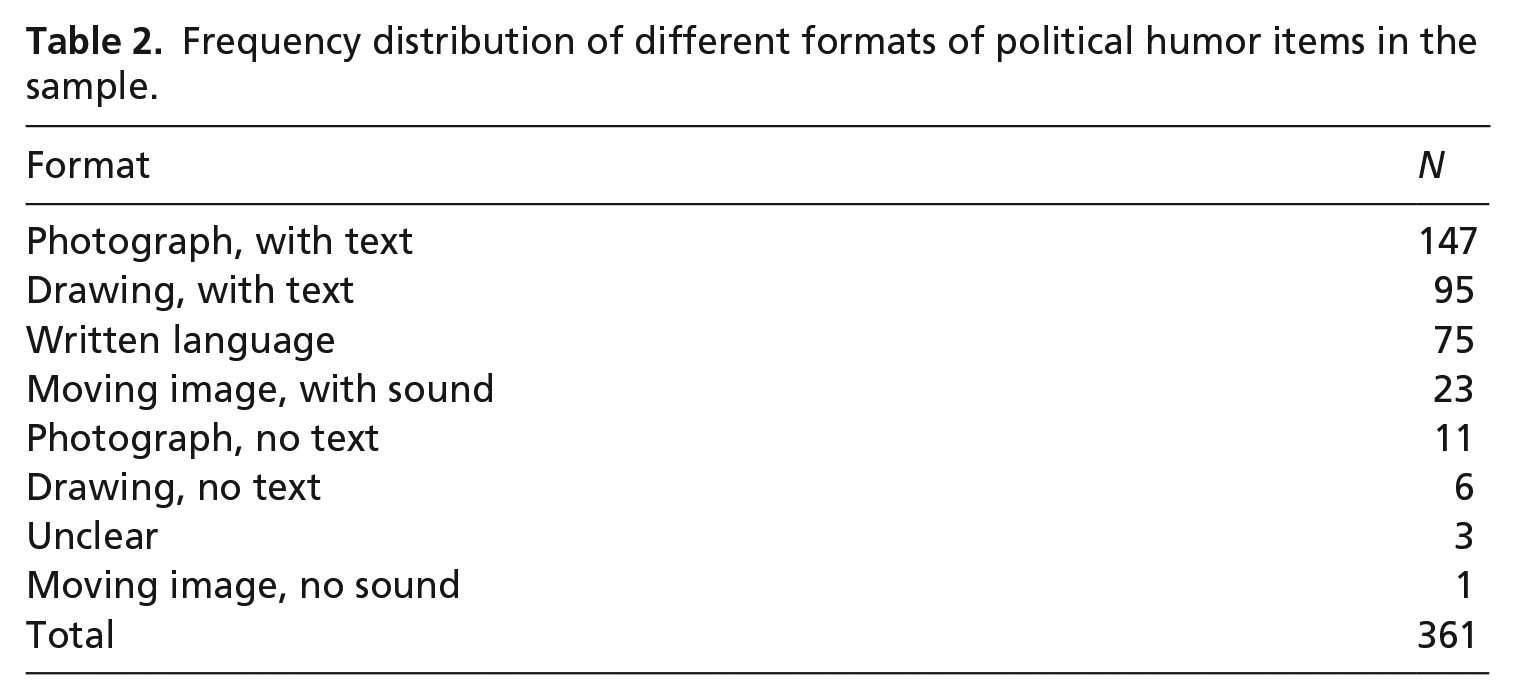
Corona humor mostly engaged with the consequences of the pandemic in everyday life, with occasional explicit references to politicians (Boukes et al., 2024). Most of the jokes took the form of a photograph with text, suggesting the dominance of image macros format in this dataset. The popularity of this format across all the countries in our sample showed that the choice of the format depended not on the political context but rather on the trends in online humor where such a format is widespread (Laineste et al., 2024). Drawings accompanied by captions and written jokes – often against a colorful background decorated with laughing emojis – came next (Table 2).
Frequency distribution of different formats of political humor items in the sample.
Political humor engaged primarily with the national political context (Table 3). The international context was signaled through the presence of political actors from other countries, such as Donald Trump and Barack Obama, Emmanuel Macron, Jair Bolsonaro, Angela Merkel, Viktor Orban, Alexander Lukashenko, Boris Johnson and the UK royals. Such politicians already had a transnational memetic-celebrity status (i.e. were characters who appeared in memes across different cultures, languages and countries, cf. Chiaro and Lobanov, 2021) even before the pandemic; in that sense, their presence across the five countries included here reflected the dynamics of digital (political) cultures. Yet, this transnational memetic-celebrity status also reflected a European/western imaginary: the politicians represented in our sample came from Europe, the US, the UK and Brazil. China, as the point of origin of the pandemic, and the EU as a political institution influencing country-level politics, were also targets of humor in the sample (Table 3).
Frequency distribution of humorous items by political actor, policy or polity across the sample.
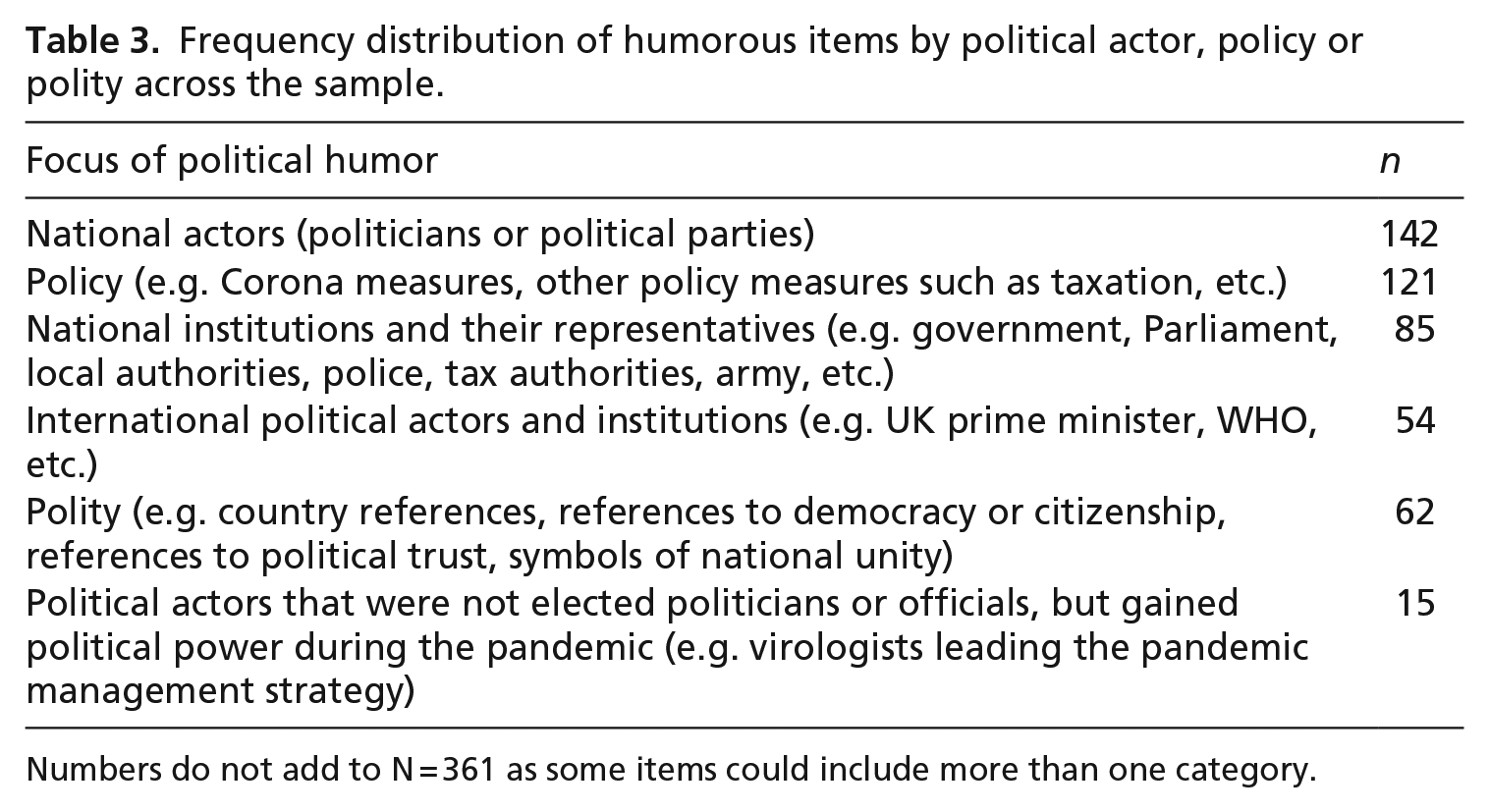
Numbers do not add to N = 361 as some items could include more than one category.
Depoliticized political humor
Humorous items in this cluster fit within two distinct sub-categories: (1) poking fun at the charismatic authority associated with pandemic management that some politicians had gained and (2) playing upon politicians’ appearances to illustrate the pandemic’s consequences. Overall, the tone in this cluster is politically light-hearted, as humor is devoid of political criticism. This type of humor plays upon some politicians’ iconic reputation on the domestic level, with little notable differences across the various political contexts in this study.
Saviors of pandemic management
The first sub-set features politicians and public figures (such as health officials) who emerged at the helm of pandemic management in their respective countries. Such humorous items foregrounded the power derived from crisis management, often memetizing the formal setting of press conferences. The representation of these figures was deeply embedded in the countries’ political context: while in some countries (the Netherlands, Estonia), humorous items hinted at the further empowerment of already prominent politicians, in other countries humorous items featured new names and faces. In Italy, prime minister Giuseppe Conte moved from being an almost unknown political figure to becoming the public face of pandemic management (Figure 1). His regular and ritualistic appearances on television to announce the new measures became a rich reservoir of catchy slogans for the textual parts of memes, while Conte himself became a fan-object online (Campus et al., 2024). Memetized from a ‘romantic’ angle, Conte’s image accompanied by his public statements and catchphrases from his regular speeches, such as ‘everything’s going to be alright’ and ‘we’ll beat this together’, were embellished with hearts, flowers or bunnies.
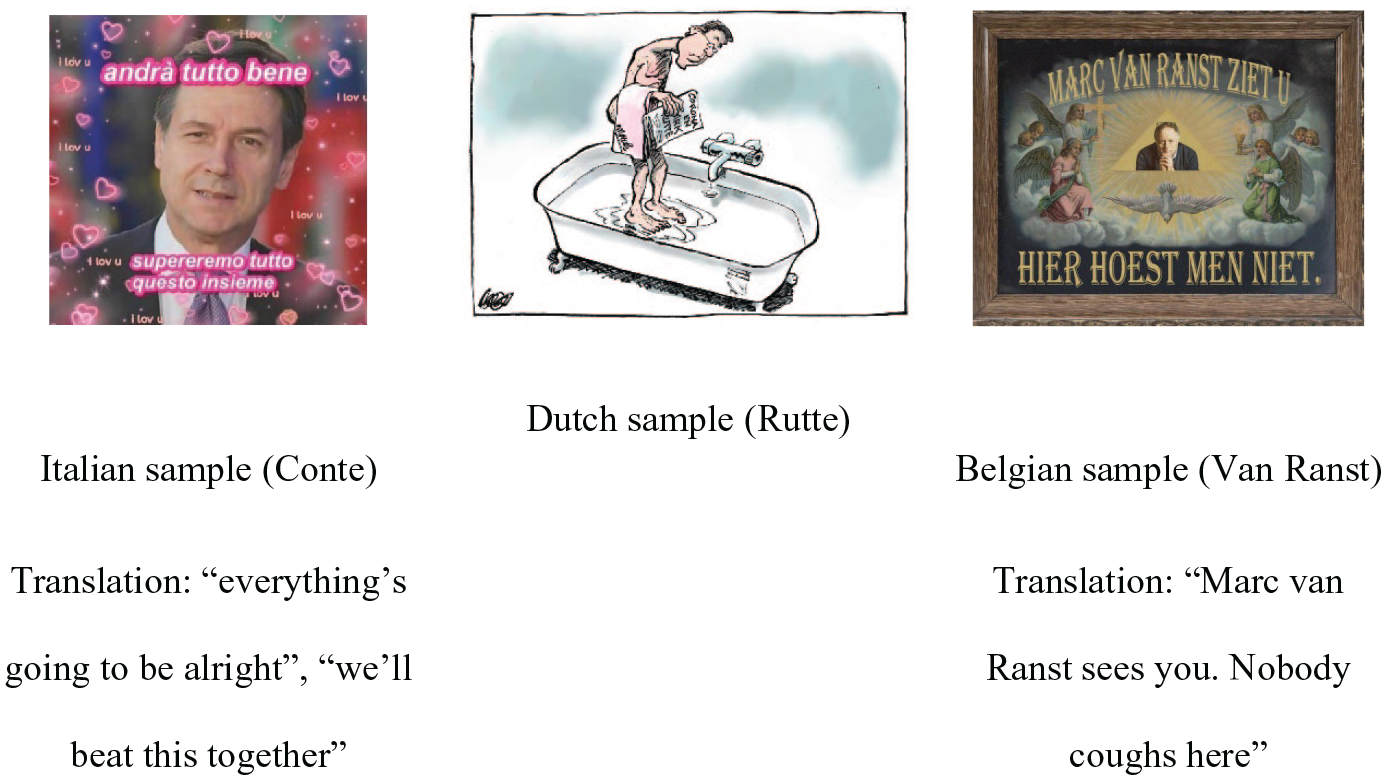
Humorous items exaggerating political authority.
In the Dutch and Belgian samples, humorous items poked fun at politicians and public figures by exaggerating their authority derived from leading the country’s pandemic management. Some humorous items reworked political authority into religious themes, depicting politicians as leading figures of Christianity (Dutch, Italian and Belgian samples). In the Belgian sample, virologist Marc van Ranst (in charge of the pandemic management) was depicted as an all-encompassing God’s eye, seeing everyone and everything (Figure 1). The caption (‘Marc van Ranst sees you. Nobody coughs here’) conveyed the idea that Van Ranst can see when people do not follow the social distancing measures. This idea, however, can also invoke the trope of surveillance to convey the frame of excessive (application) measures. In the Dutch sample, prime minister Mark Rutte appears taken by surprise by his own ability to walk on water, evoking the Christian figure of Jesus (Figure 1). The cartoon reflected on Rutte’s sudden domestic popularity in the early stages of the pandemic.
In other items, however, the religious frame of omnipotence leads to ambiguous representations of political authority. This is the case for another cartoon depicting Mark Rutte as Moses leading the people through the Red Sea; here, however, the Dutch prime minister appears to be unable to get God to part the waters and thus save his people (Figure 7). While our dataset did not capture temporal shifts, this interpretation is consistent with Murru and Vicari’s (2021) results from Italy, where pandemic political memes appear to have changed from an emphasis on social solidarity in the beginning of crisis to a polarized struggle over ‘good leadership’ as the crisis lingered.
Ambiguity regarding political authority was also expressed across a few humorous items using the frame of the politician as superhero. As with the previous sub-group, these remain light in tone; and, while bringing up the idea of excessive pandemic management measures, this is not done in a caustic or damaging way. In the Italian sample, Vincenzo De Luca, at the time governor of the southern region of Campania, turned memetic for the mix of his strong Neapolitan regional accent coupled with the polite yet threatening tone of his pandemic management. Re-using his verbal aggressiveness and authoritarian persona, one item depicted De Luca as a Rambo-like figure, on the ground in sniper position. The caption suggested he was ready to shoot people not wearing a mask: ‘Let’s shoot their teeth out of their mouths and then see if they don’t put them (their masks) on’ (Figure 2). The frame of snipers targeting citizens who do not follow the measures was also present in the Romanian sample, but there it was not associated with a particular politician. In the Dutch sample, the idea of political authority as a superhero was conveyed in a more generic manner, with a man donning a suit and a briefcase (representing the government), flying over the city in an iconic Superman posture. The caption, presumably comments from the people below, remixed the original 1966 musical based on the comic book character Superman: ‘It is a bird! . . . It is an airplane!! . . .It is the government!!!’ (Figure 2). Where the incongruity created by the expectation of Superman’s physique and costume, and the bureaucrat wearing a face mask produces laughter, the political commentary remains light. The superhero lens creates humor by constructing an unrealistic comparison between political leadership and the Savior myth, without critically challenging political authority.
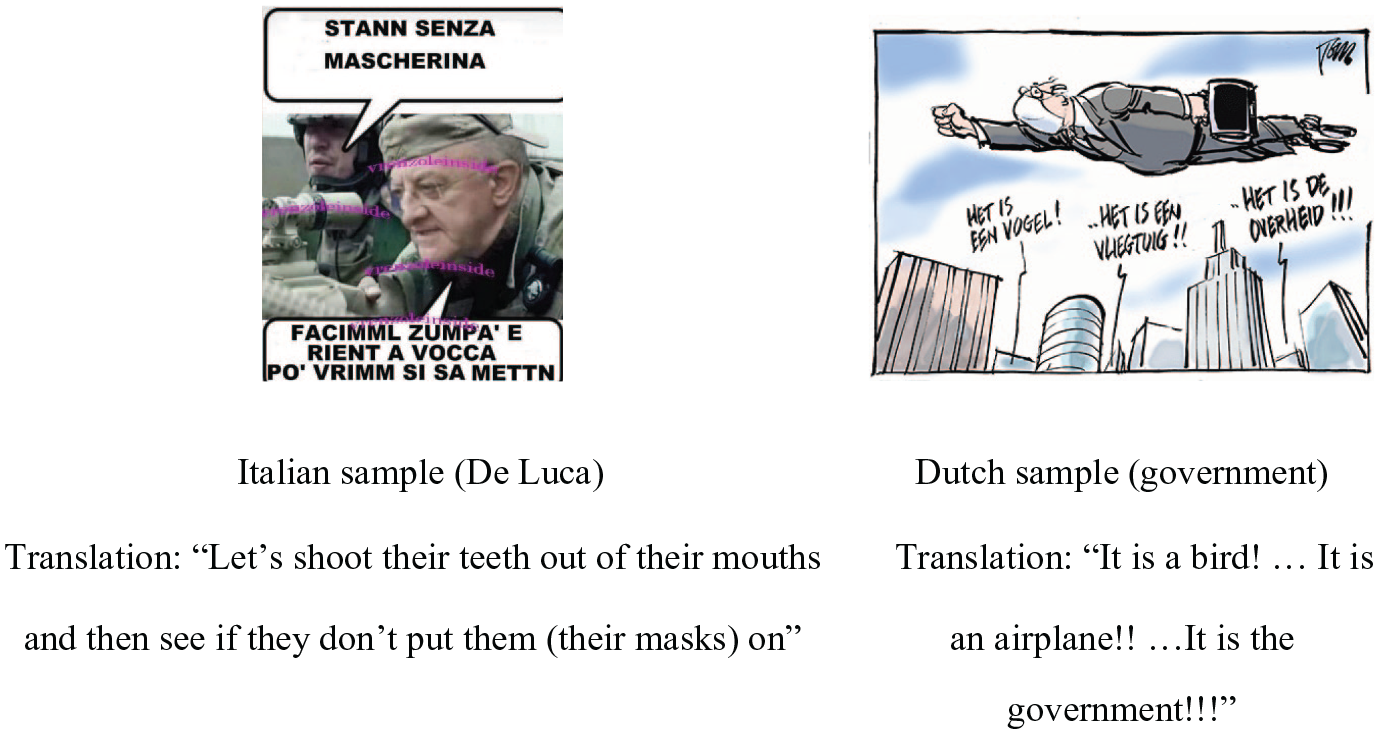
Political authority as a superhero.
The fun-capital of celebrity politicians
The second sub-set in this cluster of non-critical political humor played upon politicians’ appearances to illustrate the problems of pandemic management. In the Romanian, Dutch and Estonian samples, a few politicians were targeted for their political longevity and controversial legacy. Longevity is semantically related to the idea that pandemic management will require a long time, suggesting the public needs to get used to the ‘new normal’. The frame of the politician retaining power for a long period of time thus turned into a funny reminder of the life cycle of a pandemic. Several humorous items in the Romanian sample used the image of former president Ion Iliescu, known for being the first president after the fall of communism and for holding this position on and off for 10 years. A remix of the poster of the blockbuster film I Am Legend altered the main character by pasting Iliescu’s face, as well as the film’s title, by replacing the word ‘legend’ with an informal diminutive of Iliescu’s first name (Nelu) (Figure 3). The film’s original reference to a post-pandemic, post-apocalyptic context casts the politician as a survivor, alluding to his longevity.
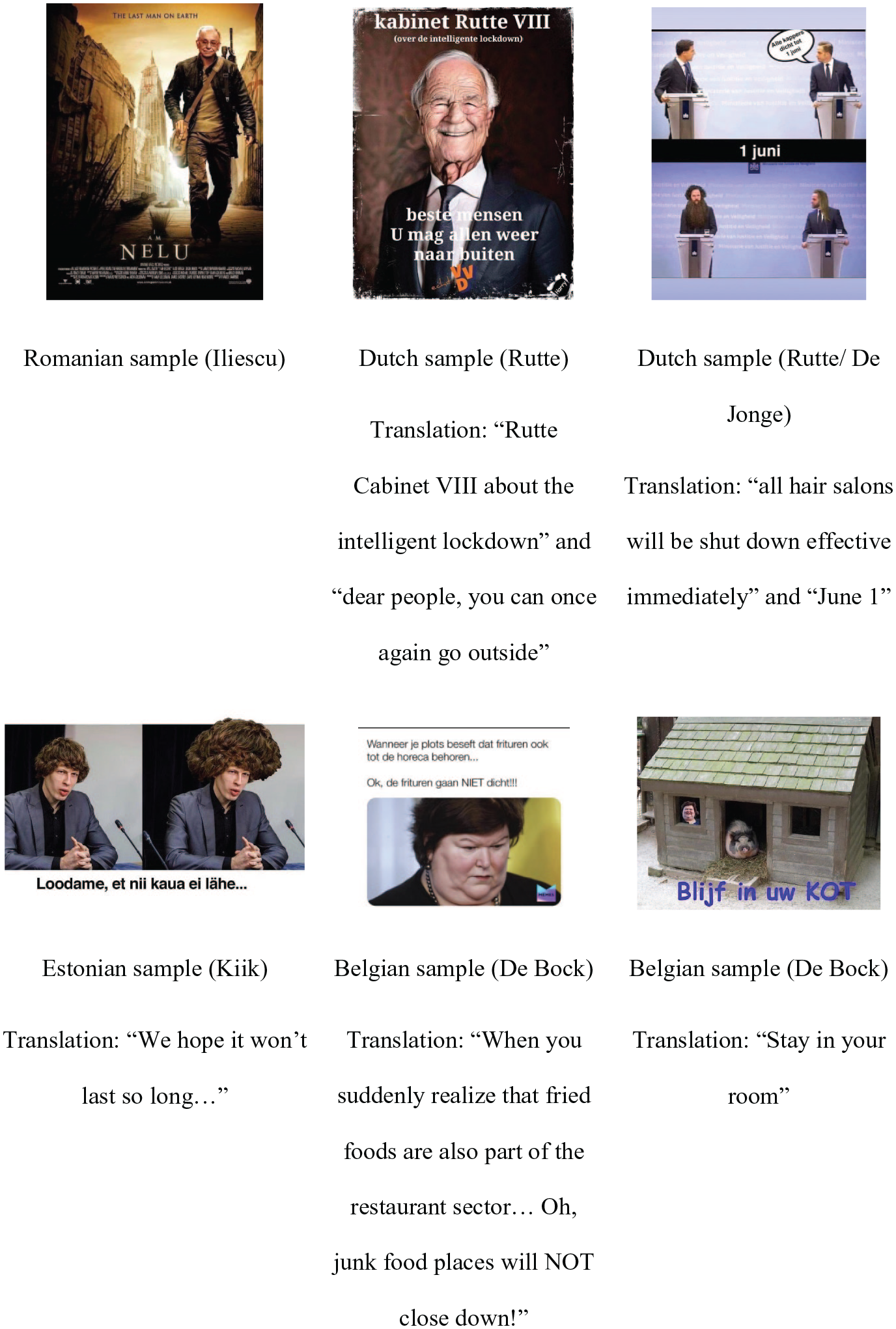
Politicians’ personal features as a source of pandemic humor.
Longevity was evoked in another set of memes that occurred in the Romanian, Belgian and Dutch samples. Using artificially aged images of current politicians or public figures, these memes suggested that the public health measures would last for much longer than anticipated. One item in the Dutch sample depicted an exaggeratedly aged prime minister Mark Rutte smiling at the audience. The captions read: ‘Rutte Cabinet VIII about the intelligent lockdown’ (top) and ‘dear people, you can once again go outside’ (Figure 3). Since the Rutte Cabinet III was in power at the time, the reference to Cabinet VIII evoked a long-lasting pandemic but also a resilient Rutte who had managed to stay in power all this time. Rutte’s reputation as a politician able to hang on to power regardless of mistakes and crises thus gave new critical valences to the meme.
The temporal dimension of the pandemic was also signaled via the effects of the lockdown on other aspects of daily life, such as not being able to visit hair salons. In the Dutch sample, a two-panel meme re-appropriated the locally iconic weekly press conferences led by prime minister Mark Rutte to announce the new pandemic management rules and regulations (Figure 3). Next to Rutte, the First Deputy Prime Minister and Minister of Health, Welfare and Sport, Hugo de Jonge, announces that all hair salons will be shut down effective immediately. The second panel captioned ‘June 1’ sees both politicians in the same setting but with rugged, overgrown beards and hair. In the Estonian sample, a similar item builds upon the pre-pandemic domestic reputation of Tanel Kiik, Minister of Social Affairs, for his lush hair (Figure 3). The item produced laughter by creating an incongruity between the caption ‘We hope it won’t last so long’ (in reference to the pandemic) and the politician’s extremely long hair, suggesting the hair saloons were still not open and thus the pandemic was lasting longer than anticipated.
Where the politicians in the Estonian, Dutch, Italian and Romanian samples were all male, the ridiculing of female politicians in the Belgian sample took a more personal, insulting stance. Maggie De Bock, Health Minister at the time, had already been fat-shamed prior to the pandemic. Where the appropriation of hairstyles and longevity was often done in a light manner, in De Bock’s case, bringing her physical appearance and the pandemic together was done in an insulting, demeaning way. Humor ridiculing De Bock often made use of standard techniques of political cartooning (primarily, the exaggeration of physical features). In one meme, a concerned De Bock is framed by the text: ‘When you suddenly realize that fried foods are also part of the restaurant sector . . . Oh, junk food places will NOT close down!’ (Figure 3). The production of humor here built upon the implied reasoning that the Minister loves fried food, which is why she is overweight – and that she is so addicted to junk food that she will go against her own lockdown measures only to satisfy her craving for it. The same frame of excessive eating (as a reason for being overweight) was invoked in another unsophisticated meme cropping De Bock’s face next to a pig and the caption: ‘Stay in your room’, a reference to De Bock’s statement that students should stay in their room if sick with the virus. De Bock’s use of the Flemish word ‘kot’ – which can translate to student room, but also to a small cabin – is re-appropriated here in relation to a pen for farm animals. Interestingly, the fact that the Belgian sample is the most gender-biased in our dataset correlates with the political context of this country: compared to Estonia, the Netherlands, Italy and Romania, Belgium has the lowest gender equality level by positions in central government (OECD, 2021: 107).
This type of pandemic humor re-appropriated political and public figures as funny based on their personal features. In most of these cases, their actual leadership became a source of romantic attraction or an exaggerated effort to protect the citizenry.
Incompetence and corruption: the inherently untrustworthy politician
Humorous items in this cluster build upon and convey an overall image of politicians as either (1) clueless and incompetent or (2) deliberately making decisions that are not in the public interest. In both cases, politicians seem inadequate to deal with the pandemic and, as such, inherently untrustworthy.
The politician as incompetent
Across all countries in our sample, cluelessness and incompetence were invoked by depicting pandemic management as exaggerated or chaotic but also by casting politicians as unable to follow simple measures (such as wearing facemasks). One item from the Belgian sample used the memetic template of the regular press conference at the beginning of the pandemic, framing it as a scene from The Muppet Show (Figure 4). The image of Kermit the Frog facing the viewer and holding a clipboard, presumably with directing instructions, already invokes chaos – as was often the case in the show. The incongruity caused by the formal setting of the press conference (the speakers’ arrangement and formal attire, the flags behind them) and the puppet show is humorous in intent. Yet, for local audiences, it could also evoke the widespread framing of national politics as disastrous.
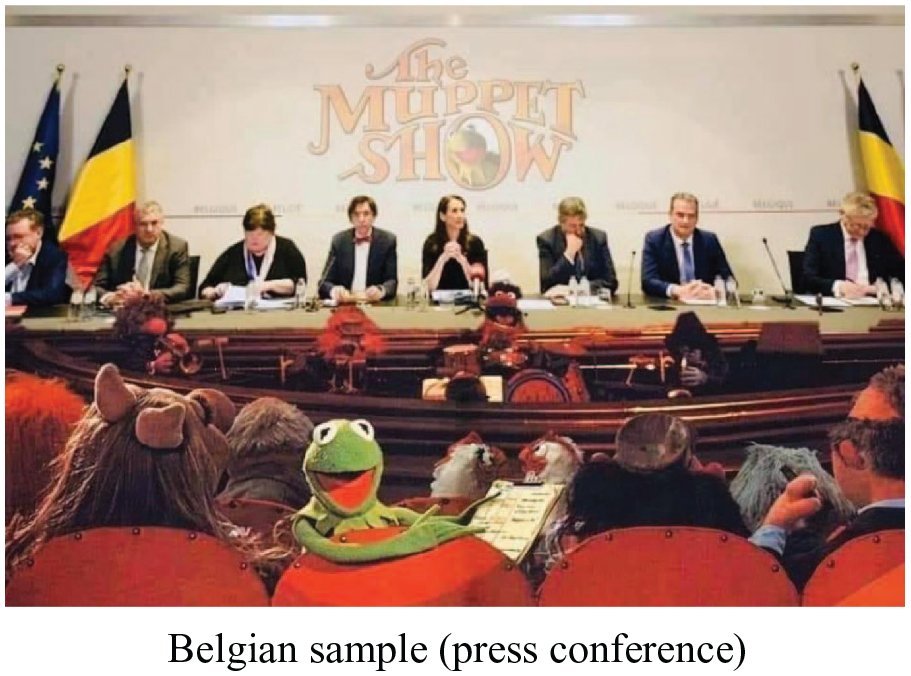
Humorous item portraying the pandemic management as chaotic and confusing.
Other items in our sample also took the idea of the political management of the pandemic as disastrous to the extreme, suggesting it will ‘sink’ the country (Figure 5). In the Belgian sample, an altered poster for the feature film Titanic conveys this idea by altering Di Caprio’s character holding Kate Winslet’s against the wind with the faces of De Bock and Wilmès (Belgium’s prime minister at the time). The film title had been changed to ‘Pandemic’, while the bottom caption read: ‘The incredible shipwreck of a nation’.
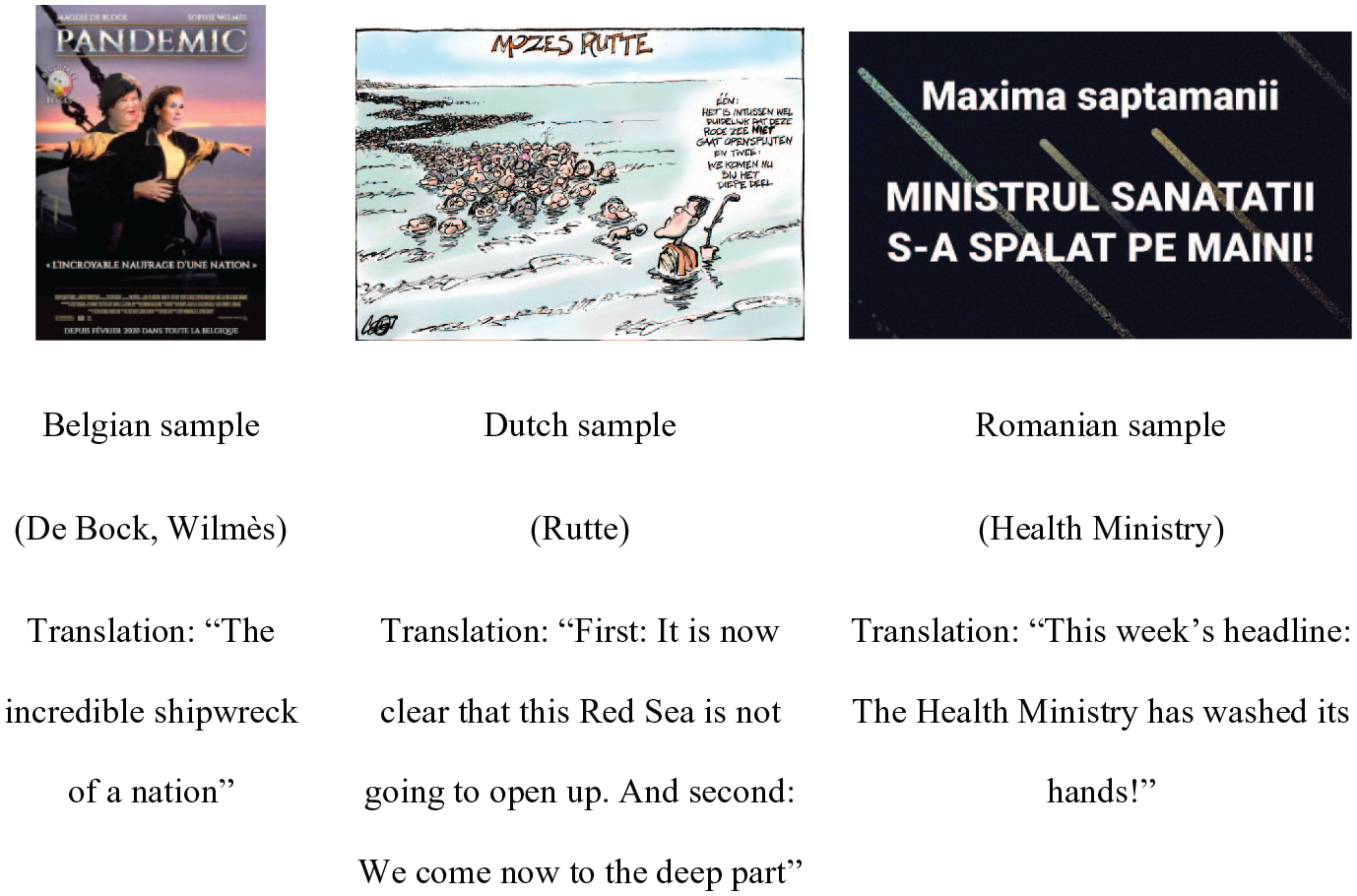
Humorous items warning of the failure of pandemic management.
Similarly, a cartoon in the Dutch sample depicted Rutte as a Moses unable to part the waters for his people, captioned: ‘First: It is now clear that this Red Sea is not going to open up. And second: We come now to the deep part’. The message across both cartoons framed the ruling political class as leading the country to its doom during the pandemic. In the Romanian sample, the ruling political elite was faulted for doing too little about pandemic management. One textual joke read: ‘This week’s headline: The Health Ministry has washed its hands!’. Where frequent hand-washing was a core measure to contain the spread of the virus, the framing here echoed the long-standing Christian trope of hand-washing as a symbolic refusal to take responsibility for not stopping a crime – or, in the pandemic context, for not doing more to stop the spread of the virus.
Incompetence was also conveyed by exaggerating the social distancing measures announced by politicians to emphasize their inadequacy. In the Italian sample, this was already alluded to in the memetic use of snipers targeting ‘misbehaving’ citizens. Another item portrayed De Luca as a Santa Claus violently punishing a child for their wish ‘Tomorrow, I want to go out without the face mask’ (Figure 6). For local audiences, the disproportionate punishment (i.e. killing a child for such a wish) could be read in relation to De Luca’s threatening tone during public appearances related to pandemic management, foregrounding his authoritarianism and the excessive application of restrictive measures. The same idea of excess was also present in the Estonian sample, as exemplified through the text-based meme reading: ‘Don’t go to pubs! Don’t meet your friends! Don’t come home if you are infected with the virus! Am I the only one who thinks the Jüri Ratas is starting to sound like my wife?’ (Figure 6). Tapping into gendered humorous joke sub-genres, the meme compares the Estonian Prime Minister of the time to a nagging wife trying to constrain her husband’s freedom.
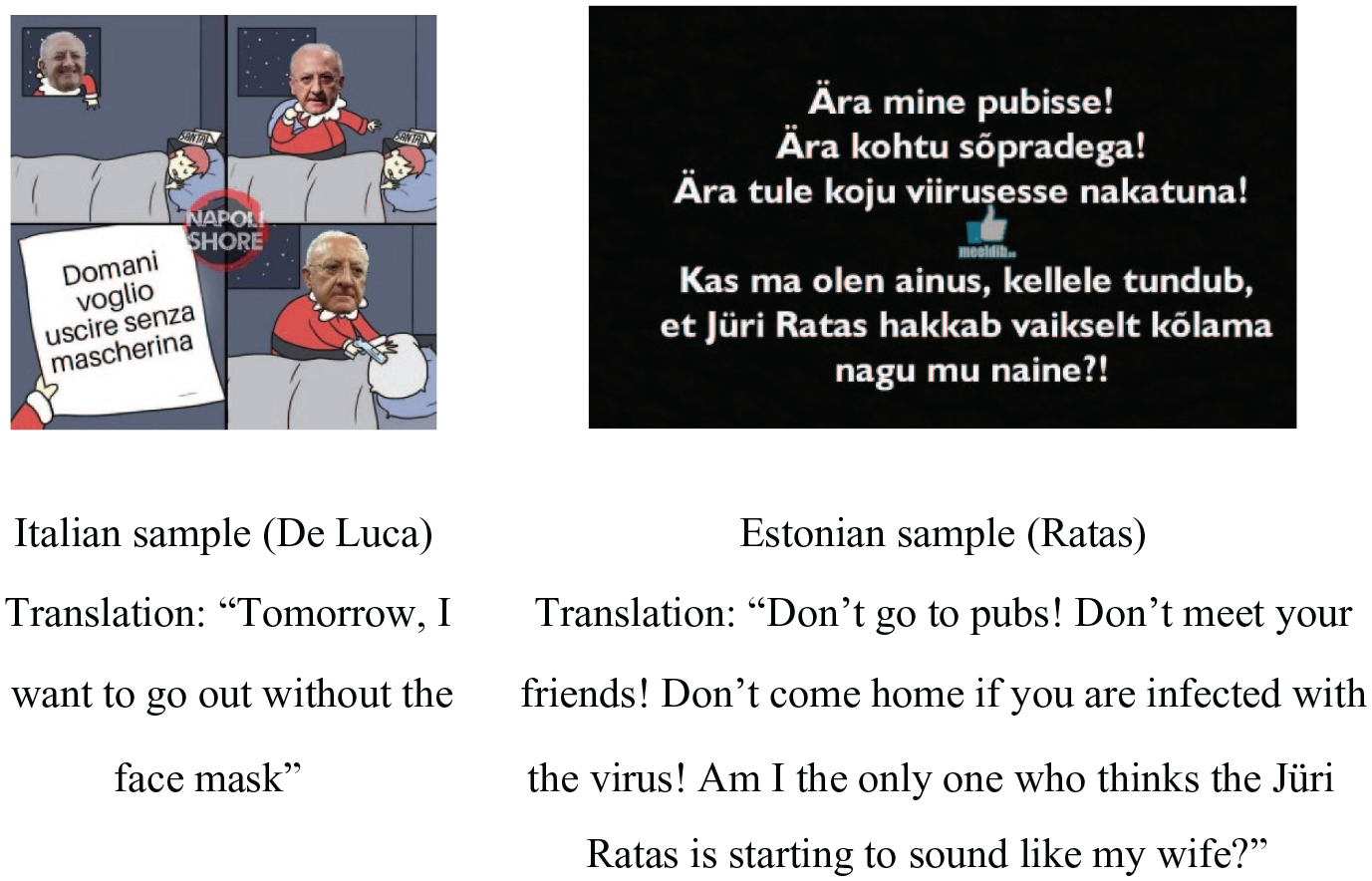
Humorous items portraying pandemic management as exaggerated.
Incompetence was also linked to the idea that the measures themselves were communicated inadequately. One item from the Estonian sample (Figure 7) used the impactful facial expression (despair) conveyed by famous Hong Kong actor Jackie Chan, flanked by two captions. At the top, the politicians’ message: ‘Go home!’ (referencing the social distancing measure to stay at home). At the bottom, the teachers’ message: ‘Go out!’ (referencing the importance of outside play for children). Where Jackie Chan’s expression indexed citizens’ confusion around the right thing to do, the meme also framed politicians as disconnected from other specialists (i.e. what teachers thought should be prioritized). Such items depicted the measures as political rather than informed by scientific evidence.
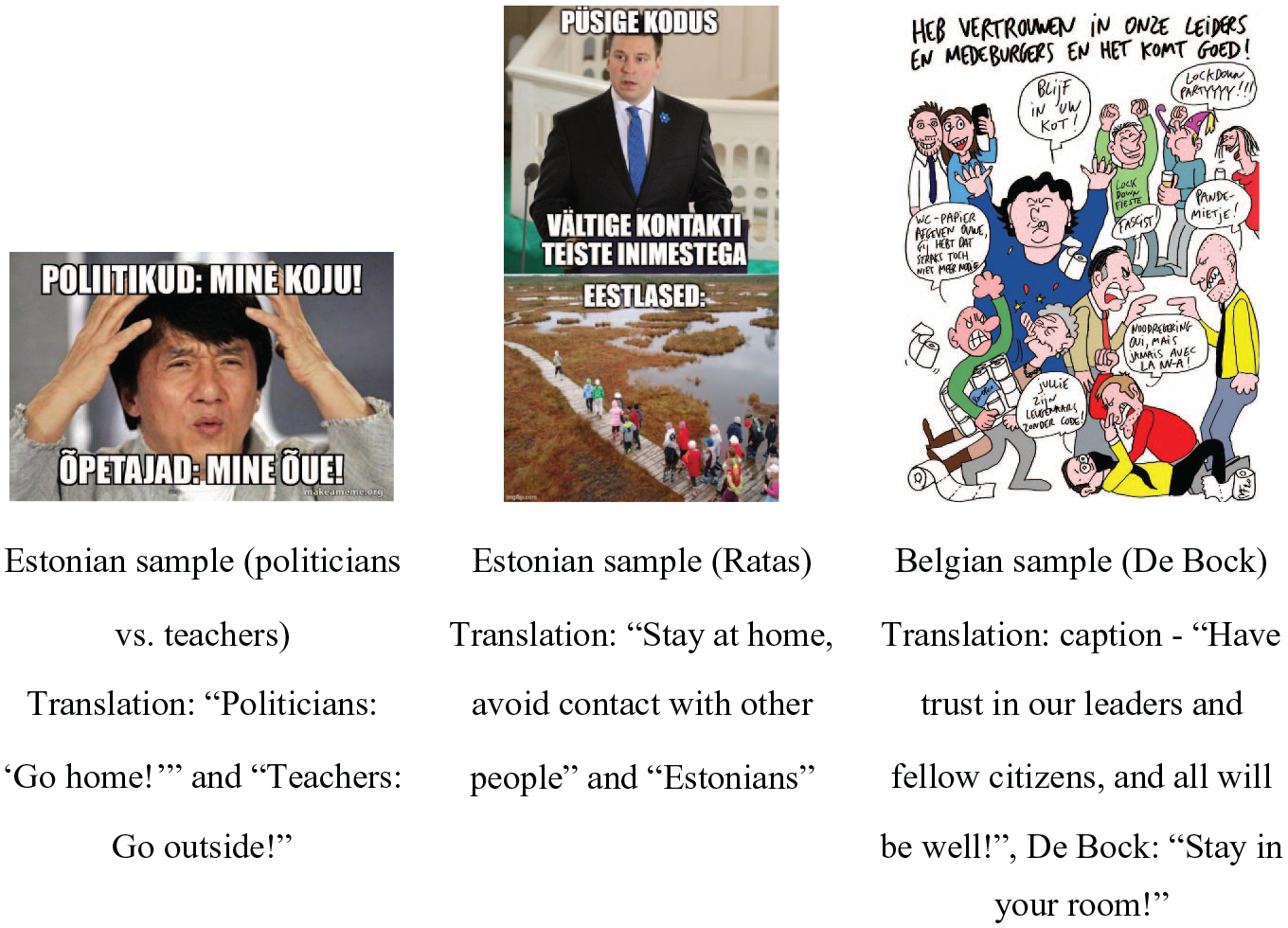
Humorous items depicting confusion and disregard for the pandemic measures.
In other humorous items, political measures were depicted as disconnected from citizens’ own behavior. Such items were often ambiguous, as they could be construed as criticizing both the political class and the citizens who flaunt the rules. In a two-panel meme from the Estonian sample, the top frame used a picture of the prime minister (presumably in a press conference setting) captioned ‘stay at home, avoid contact with other people’ (Figure 7). The bottom panel, simply captioned ‘Estonians’, showed a bunch of people hiking through a bog, inviting a reading of the image as citizens disregarding what the prime minister had just told them. The same politicians-citizens disconnection was conveyed in a cartoon from the Belgian sample (Figure 7), where an angry (if not exasperated) De Bock (Health Minister) shouts: ‘Stay in your room!’ (a statement that, as we have already seen, gained memetic potential). Around her, citizens appear to completely disregard the distancing rule (e.g. partying, taking selfies, panic-buying toilet paper, etc.). Tellingly, the cartoon’s caption read: ‘Have trust in our leaders and fellow citizens, and all will be well!’.
Regardless of the ambiguity of the target of criticism, such items cast politicians in an unflattering light as, at the very least, citizens seem to neither understand nor listen to politicians. This reinforces the idea of a damaged relationship between politicians and citizens. Another set of items in this cluster adds to this idea by representing politicians as either flaunting, or unable to apply, their own rules. Given the timeframe of our data collection, this was primarily illustrated in relation to facemasks, leaving audiences to interpret politicians’ wrong use of the facemask as either an abuse of power or a sign of incompetence (Figure 8). In the Italian sample, a collage of several images showed Attilio Fontana, then Governor of the Lombardy Region, playing around with the facemask. In the Estonian sample, a meme depicted Mart Helme, then Minister of Interior, misplacing the mask over his eyes and nose (Figure 8). The caption, in English, framed the mask’s misuse as childish and irrational.
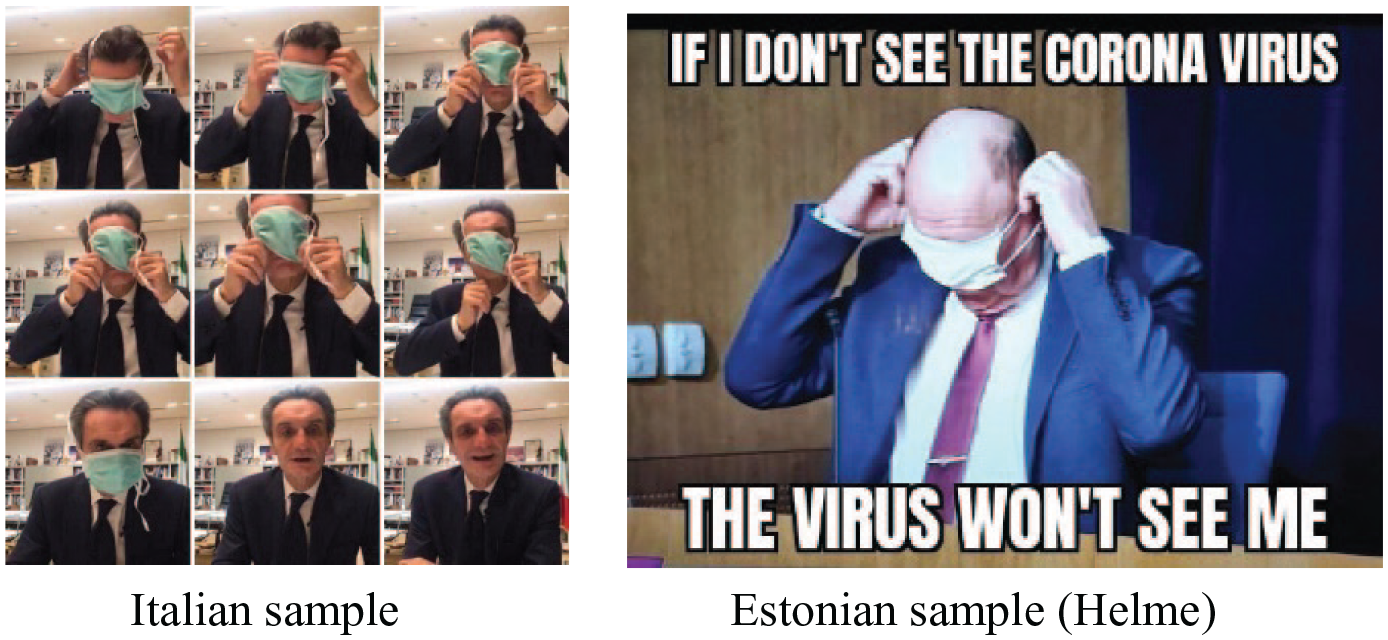
Humorous items depicting politicians’ misuse of the mask.
The self-interested politician
The pandemic also provided an opportunity to criticize politicians for past deeds or prior ideological leanings (Figure 9). While not directly criticizing pandemic management, this humor reused pandemic tropes to poke fun at political opponents and represent them as working against the public interest. A meme in the Romanian sample played upon the locally relevant theme of political corruption. It used an image of Liviu Dragnea, a contentious figure in Romanian politics (jailed for corruption at the time), with the caption: ‘This model-citizen has been locked up for 293 days. If he can do it, you can as well!’. The meme’s message supported pandemic measures by invoking the broader idea of corruption.
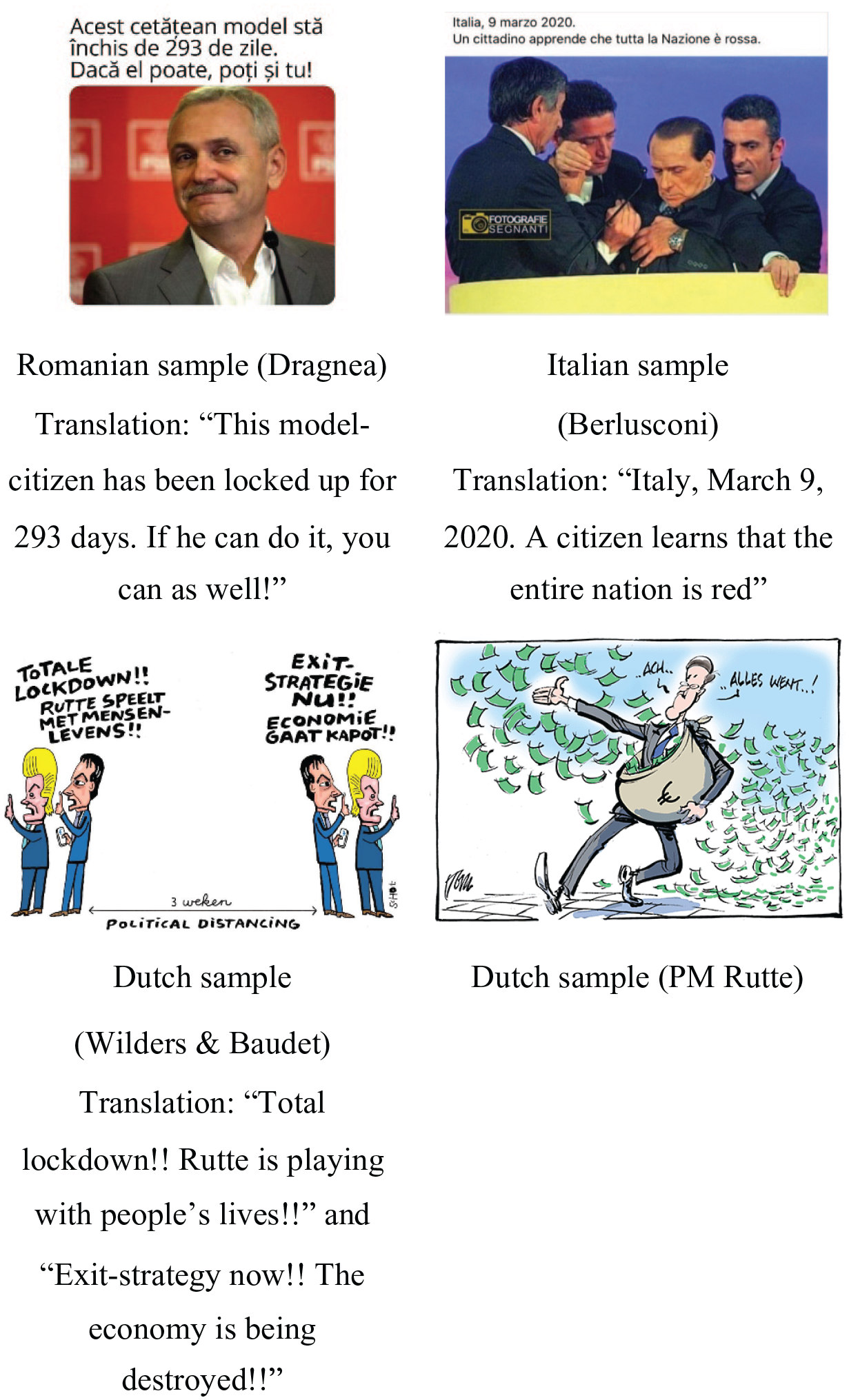
Humorous items playing upon local political tropes.
In Italy and the Netherlands, the local forms of right-wing populism became an opportunity to rehearse the image of the self-interested politician. One meme from the Italian sample depicted a fainting Berlusconi supported by aides (Figure 9). The caption, linking the image with the time when infections had peaked across the country, reads: ‘A citizen learns that the entire nation is red’. The reference to ‘red’ provoked laughter by mixing its pandemic-related meaning (Italy used a three-color zones system to implement the social distancing measures, with red symbolizing total lockdown) with the ideological connotation of ‘red’ as a symbol of communism. Given Berlusconi’s populist anti-left rhetoric, the image of him fainting became reframed as a reaction to both lockdown and communism.
In the Dutch sample, politicians were also criticized in relation to their ideological stances. In our sample, these attacks targeted far-right populist politicians for their hypocrisy, but also the government for its fiscal policy. This, however, was done by professional news cartoons, which probably explains their more direct engagement with daily local political events. For instance, one item engaged with the government’s fiscal policy during the pandemic – a concern that was well-represented in the Dutch sample but completely absent in the other countries. In this case, however, the then Prime minister Mark Rutte is depicted as sprinkling money, in reference to fiscal decisions during the pandemic (Figure 9). Such an image stood in sharp contrast with Rutte’s well-known financial conservatism, possibly suggesting out-of-character – and thus problematic – decisions.
Ideological criticism was even more straightforward when it came to the depiction of far-right politicians. One Dutch cartoon depicted the leaders of the most populist far-right parties, Geert Wilders and Thierry Baudet, as ideologically fickle (Figure 9). Over a period of 3 weeks, they changed from saying ‘Total lockdown!! Rutte is playing with people’s lives!!’ to ‘Exit-strategy now!! The economy is being destroyed!!’. The shift in their discourse rehearsed the larger political commentary that the far-right populists lack an actual policy, opportunistically latching onto the events of the day to instigate anti-government sentiment.
This second cluster politicized pandemic humor representing politicians, targeting their ability to govern and ideological stances. In most cases, this type of humor rehearses the frame of politicians/citizens divide, further casting doubt on politicians’ leadership competences.
Discussion
The cross-country comparison of pandemic humor in our sample has uncovered two dominant figures of the politician: the politician-as-celebrity was used to craft depoliticized humor about the pandemic, while the incompetent/untrustworthy politician was re-appropriated when critically challenging the political steering of the pandemic. The depoliticized cluster used politicians who had become iconic either for their visibility at the helm of pandemic management or who had already been iconic prior to the pandemic for personal features. In fact, such politicians may have become ‘comic tropes’ in their own rights (Chiaro and Lobanov, 2021), in the sense that that their mere presence (without any further commentary) could trigger humorous responses. Such humor brought up and exaggerated political authority without critical scrutiny. In centering the politician-as-celebrity, this form of pandemic humor reflects the increased centrality of individual politicians in Western democracies, orienting citizen attention toward politician’s personal features and fame (Garzia, 2011). As with other forms of entertainment, pandemic humor also engages in the ‘emotional constitution of the electorate which involves the development and maintenance of affective bonds between voters, candidates and parties’ (Van Zoonen, 2004: 49).
The politicized cluster, on the other hand, was explicitly critical of politicians, portraying them as inherently untrustworthy. This was achieved in various ways – politicians were depicted as clueless or incompetent, creating chaos with measures that they themselves flaunted. Consequently, some items brought up the idea that citizens are not listening to what politicians are saying anyway – a further dent in their political authority. Other jokes in this cluster used the pandemic as an opportunity to further criticize a politician’s already known ideological orientation. Perhaps unsurprisingly, corruption and right-wing populism were preferred topics in the construction of humor. Yet, the message remained the same: politicians are fickle and ideologically-motivated (as opposed to serving the public interest). The common denominator across this cluster, then, was distrust as norm.
Despite the different political cultures (including different levels of trust in politics) in our sample, the political pandemic humor was surprisingly similar in its representation of politicians. References to local political cultures did, of course, produce variations, but the overall picture remained strikingly similar. One notable difference seemed to be caused by gender: in the case of the Belgian sample, humor targeting the female politician played upon negative stereotypes around her weight, transforming her into a monstrous and abject female body (Creed, 1993; Kristeva, 1982). This is not surprising given the backlash against women in general, and female politicians in particular, within some digital subcultures (Drakett et al., 2018; Harlow et al., 2020) and the tight connection between the women’s appearance and their status as comedians or comic characters (Mizejewski, 2014). Indeed, the use of weight to provoke laughter stems from a patriarchal vision where ‘both fatness and looseness are violations of codes of feminine posture and behavior’ (Rowe, 1990: 413).
Overall, then, our findings add further support to ongoing discussions about the spectacularization of Western democracies, where visibility attracts further visibility. Visibility here refers to some politicians’ personal capacity to generate laughter and to become memetic. Yet, while this visibility can be productive (in the sense of generating and boosting the circulation of political humor), its consequences for citizen political engagement are more problematic. Politics as a spectacle can be energizing, but it is unclear whether it is energizing in relation to the pleasure of consuming entertaining cultural content or energizing in relation to motivation to further engage with political content. Overall, the dominant frame of pandemic humor was that of politicians as inherently untrustworthy. To what extent this can serve as a motivator for further political engagement remains open-ended. However, in the context of the increased political popularity of far-right populism, it is hard to ignore the dual affinity between, on the one hand, the memetic/iconic potential of populist rhetoric and, on the other, the casting of politicians as inherently untrustworthy and the central populist trope of the ‘corrupt elites’.
Conclusion
This article has examined the representation of politicians during the first wave of the COVID-19 pandemic in Europe. Echoing ongoing debates about the ambiguity of political humor, our findings also demonstrated the use of both depoliticized and politicized jokes about politicians. Iconic politicians became ‘comic tropes’ (Chiaro and Lobanov, 2021), with their idiosyncrasies reused for their recognizable and funny qualities. From bad hairstyles to verbal aggression, such politicians were stripped of their politics and used to poke fun at the pandemic itself. Across the pandemic humor in our sample, this image co-existed with two inter-related ones: the incompetent politician whose pandemic management was going to ‘sink’ the country; and, the self-interested, ideologically-driven politician. The striking similarity of the construction of the political figure across the five countries in our sample speaks to the normalization of politics as spectacle. Further research could further examine whether the framing of politics as a spectacle is any different outside of non-crisis situations.
One limitation of our study derives from the data-collection procedures. The international dataset we drew from was organically generated as researchers around the world came across and recorded humorous items during the pandemic. While these limitations are discussed elsewhere in more detail (Boukes et al., 2024), this dataset was partly shaped by the individual digital networks and consumption practices of the individuals who submitted the humor items. One consequence, for instance, may be the (relative) lack of alt-right or crude humor across the countries included in our study. However, the transnational similarities in our sample suggest that such organic datasets can still capture relevant cultural dynamics.
Where Murru and Vicari (2021) bring up the playful engagement of pandemic political memes, seeing them as opportunities for citizens to manifest their civic subject in a playful way, we draw attention to the need to examine the complicated intersection between such political humor and power structures. Our study echoes previous concerns over how pandemic political humor bears a close affinity with populist rhetoric (Murru and Vicari, 2021; Nørgaard Kristensen and Mortensen, 2021). Further attention to this intersection between political humor (in terms of both representation and politics) and power structures is warranted.
Finally, exaggeration was a common humoristic strategy in the political pandemic humor we have studied, often achieved via comparisons with either popular culture characters (e.g. Superman) and religious figures (e.g. Jesus Chris, Moses), or with artificially aged versions of politicians themselves. The humorous items in our sample were diverse in terms of genres, with memes and professional cartoons circulating across digital networks. In such digital networks, the previous distinctions between the production contexts of humor are secondary to the circulation of these items. Without discarding this production context, we propose that networked circulation marks these diverse humorous items as an expression of ‘mundane political cultures’ (Merelman, 1998). In that sense, the production of political humor is increasingly spread out across various actors, from professional cartoonists to meme-generators, and unknown authors.
Footnotes
Acknowledgements
The authors would like to thank Guilherme Giolo Rego for his contribution to building the literature review and to contextualizing some of the items in the Italian sample, and Thi Anh Thu Dinh for data cleaning and data management.
Data availability statement
Research data associated with this article can be made available upon request to the corresponding author.
Declaration of conflicting interests
The author(s) declared no potential conflicts of interest with respect to the research, authorship, and/or publication of this article.
Funding
The author(s) disclosed receipt of the following financial support for the research, authorship, and/or publication of this article: Anastasiya Fiadotava would like to acknowledge the support of the Estonian Ministry of Education and Research through the grant EKKD III-5 ‘Patterns of emotional development in Estonian culture’; and of the Estonian Literary Museum through the grants EKM 8-2/20/3 and EKM 8-2/23/5 ‘Contemporary crises and their online humorous representations’. Mark Boukes would like to acknowledge support from the Netherlands Organisation for Scientific Research (NWO) through a VENI grant under project number 016.Veni.195.123. Giselinde Kuipers would like to acknowledge support by KU Leuven with a starting grant (3H220150).
Ethical approval
This article did not require ethical approval as the humorous items submitted to the international database were anonymized, with the exception of professional news cartoons which were already published in newspapers.
