




Abstract
This article takes inspiration from feminist sociologist Nirmal Puwar’s conception of ‘space invaders’, to examine the gendered dynamics within a billiards hall in suburban Shanghai. Drawing upon insights obtained via participant observations in the hall and interviews conducted with members of the college billiards society affiliated with the hall, the article not only identifies the nuanced forms of sexism operating within/through the billiards space, but also explores how the arrival of new types of bodies can introduce new dynamics to the landscape and engender possibilities of change. Ultimately, it outlines three interconnected dimensions or ‘moments’ of spatial mutation – positional displacement, embodied transgression and ontological disruption of the subject. Considering that existing critiques on gendered relations in billiards are limited to media releases, this study marks the first scholarly attempt to analyse the gender power dynamics within the realm of billiards.
Introduction
Billiards sports, also known as cue sports, are a wide variety of games played with a cue stick that is used to hit balls on a table covered by cloth and surrounded by cushions, such as pool, snooker and Carom billiards (Olympic Council of Asia, 2023). As a precision sport with a key emphasis on skill, tactics and techniques (Everton, 2014), billiards have been managed and promoted as ‘fully inclusive and open to players of any gender’ at organisational levels in the past decade (World Women’s Snooker, 2022, see also World Confederation of Billiards Sports, 2021). While in professional games women are starting to be allowed to play against men with the rules of handicapping significantly eased or completely removed (World Women’s Snooker, 2022), the gender barriers in grassroots-level billiard halls, which have obstructed generations of women from accessing the sport and realising their potential in the formative years of playing, remain largely unaddressed and underexplored (Betway Insider, 2019). Given that current critiques on the gendered relations in billiards are presented solely in the form of media releases (Gaynor, 2017; Horsburgh, 2019; Wilson, 2019) and blogs (Ali, 2023; Cluster of Reds, 2018), this article stands as the first scholarly exploration of the gender power dynamics in the billiards space.
With the aim of not only uncovering the nuanced forms of sexism within a suburban Shanghai billiards hall but also exploring the potential for transformation, this article employs feminist sociologist Nirmal Puwar’s (2004: 1) conception of ‘space invaders’, which addresses the arrival of historically excluded bodies as ‘an illuminating and intriguing paradox’: On one hand, the co-existence highlights the remaining hierarchical distinctions between ‘space invaders’ and the established ‘inside proper’; on the other hand, the presence of the newly arrived initiates changes and represents a change in itself. Particularly, to elucidate moments of transformation, the research further incorporates Judith Butler’s (1990) discussion of subversive bodily acts and Sara Ahmed’s (2006) theorisation of (dis)orientation. Three interlinking aspects or ‘moments’ of spatial mutation have been identified, concerning, respectively, dimensions of space, body and subjectivity, namely: positional displacement, embodied transgression and ontological disruption of the subject. Despite changes, it is crucial to acknowledge that women in the researched billiards hall still face unwanted attention, uninvited instructions/comments and even harassment. Moreover, there is a noticeable persistence in relying on traditionally masculine problem-solving approaches, which can perpetuate the entrenched masculine order within the hall.
This research seeks not only to ignite scholarly dialogues concerning gendered cultures in billiards across China, Europe and beyond, but also to stimulate additional scholarly inquiries into more implicit and nuanced forms of sexism within sports, particularly those ostensibly presenting themselves as gender-neutral or gender-inclusive. Before presenting the research findings and analysis, I will begin by offering an overview of the existing literature on implicit sexism in sports, emphasising the significance of adopting a spatial lens. Following this, I will provide a comparative examination of the gender histories of cue sports in the West and China, aiming to underscore the nuanced and ambiguous gendering dynamics of billiards in China. This comparison will serve to justify the utilisation of Puwar’s (2004) concept of ‘space invaders’ in the subsequent analysis. Then, I will proceed to illustrate the theoretical framework encompassing the three interconnecting moments of spatial mutation, drawing upon the works of Puwar (2004), Butler (1990) and Ahmed (2006). Finally, I will outline the method employed in data collection.
Implicit sexism in sport: a spatial perspective
Modern sport, founded upon stereotypical notions of male and female distinctions, has been predominantly dominated by men since its formation in the mid-19th century, to the present day (Hargreaves and Anderson, 2014). Although the past several decades have seen female participation in sports activities significantly increase in many parts of the world thanks to legal advancements and cultural transformations (Dong, 2014; Smith and Wrynn, 2014; Travers, 2008), more implicit and nuanced forms of sexism remain unchallenged (Fink, 2016). Following the spatial turn in sports sociology, many scholars of physical culture studies have called attention to the effectiveness of spatial analysis in examining the less explicit forms of gender(ed) exclusion in sport (Caudwell, 2007; Jeanes et al., 2021; Marfell, 2019; Van Ingen, 2003). Drawing on the conceptions of social space (Lefebvre, 1991), they have demonstrated that sports spaces are not neutral, indifferent and value-free ‘containers’ of sporting bodies and sports activities. Rather, the courts and fields examined are not only the ‘site for the maintenance and reproduction of complex power relations’ within sport (Van Ingen, 2003: 206), but they are also constantly in the process of formation propelled by social relations of power in the world of sport (Van Ingen, 2003). In other words, they are the ‘spatial forms’ of social relations in the sports realm (Van Ingen, 2003: 202).
To reveal the gender(ed) relations ‘contextualised and made concrete’ (Van Ingen, 2003: 204) in spaces of sport, sports sociologists find it particularly useful to interrogate the gendered spatial practices (Lefebvre, 1991) within sports fields, including both the physical form of the place and the routine use of the place (Friedman and Van Ingen, 2011). For example, in their spatial analysis of a seemingly mixed-gender Australian football and netball community sports club, Jeanes et al. (2021) notice that despite the development of gender equity policies, the club continues to privilege conventionally male sports and prioritise heterosexual men’s teams through unequal distribution and division of playing areas and facilities. It is observed that while the main oval and the central clubhouse were given exclusively to the male senior football team, women’s football teams could only use the back oval alongside the Under-19s boys; although the netball court, conventionally considered as women’s spaces, was taken up entirely by women, it was located farthest from the centre of the club and received minimal attention (Jeanes et al., 2021). Apart from the hierarchical spatial organisation, Vertinsky (2004) pointed out in his research into the War Memorial Gymnasium in Vancouver, Canada that the architectural design of the sports centre, ‘hard-edged with stark lines, flush walls, right-angled corners and bold geometric patterns’ (p. 17), was itself an embodiment of rationalist modernist values that were distinctively masculinist. Despite equal access, as Vertinsky (2004: 18) put it, the style of the building could provide a ‘sense of place’ to women and sexual minorities that the gym was not built for them. Even the perception of the gender ratio imbalance can be indicative of the male dominance of the sport, which can work to deter people of different gender identities from breaking through, as feminist geographer Doreen Massey (1994) insightfully noted, invoking her childhood perception of football and rugby pitches as ‘barred, another world’ (p. 183).
Although there is a considerable body of literature that uses a spatial perspective to analyse gendered relationships in sports, the majority of these studies have concentrated on sports categories traditionally linked to masculine images of power, aggression, violence, risk-taking and physical dominance; for example, combat sports (Carlsson, 2017), action sports (Thorpe and Olive, 2016) and contact team sports such as rugby (Gill, 2007) and football (Caudwell, 2007). In contrast, sports that prioritise factors other than physical strength and appear more gender-neutral receive significantly less scholarly attention. A typical example of such is the sport of billiards. Known as games of accuracy, techniques and tactics (Everton, 2014), billiards sports have been promoted as gender-inclusive, with snooker and Chinese eight-ball pool being among the few mixed-gender sports in the world (World Confederation of Billiards Sports, 2021; World Women’s Snooker, 2022). However, as many sports reporters (Gaynor, 2017; Wilson, 2019) and bloggers (Ali, 2023; Cluster of Reds, 2018) have demonstrated, subtle means of exclusion such as ‘sexualising, underestimating, discouraging, unsolicited instructing, and gawking’ (Ali, 2023) are still common in billiards halls, which make women feel out of place. The perception that billiards halls are predominantly male-dominated spaces, often exclusively occupied by and catering to men, continues to discourage women from entering the realm (Cluster of Reds, 2018).
The complex gendering context of billiards in China versus the West
In both the West and China, billiards is widely recognised as a predominantly male domain (Ali, 2023; Cluster of Reds, 2018; Hong Kong Free Press, 2018). However, as I will elucidate in this section, the gendering context of billiards in China is characterised by greater complexity, ambiguity and nuance compared to its Western counterpart, owing to different historical and cultural backgrounds.
In its Western origins, women’s participation in cue sports has historically been limited due to class and ideological barriers. Despite the fact that billiards emerged as a gentleman’s game and was dominated by male royalty and aristocracy (Polsky, 1967; Shamos, 1995a), evidence shows that some noble women not only had access to the sport but were also enthusiastic participants (Shamos, 1995b). A notable example is Mary, Queen of Scots, who insisted on having a billiards table even during her imprisonment awaiting execution in 1587, and her decapitated body was later wrapped in a billiards cloth (Richler, 2010). The game’s expansion to working-class clubs and pubs in the UK and the US during the eighteenth and nineteenth centuries did not alleviate gendered access, as these venues exclusively served men, aligning with the separate spheres ideology (Doughan and Gordon, 2006) and functioning as ‘major gathering places for the sporting fraternity’ (Polsky, 1967: 28). Even in the last century, when cue sports became a mass phenomenon in Britain and North America, women pioneers of English billiards, snooker and pool primarily came from bourgeois backgrounds and/or families with a rich tradition of involvement in the sport, such as owning billiards halls or having family members who were regular players. 1 In the UK, it is noteworthy that it was not until April 2007 that the all-male rule of Working Men’s Club and Institute Union (CIU) affiliated clubs was officially abolished (The Newsroom, 2018).
In contrast, in China, such explicit and formal class barriers and ideological restrictions on women’s participation in billiards never existed. Although billiards was initially introduced as a gentlemen’s game by Western expatriates in the late nineteenth century, the sport underwent a significant transformation during the socialist revolution in the 1950s, with privately owned billiards spaces and equipment being transferred to state ownership and installed in workers’ clubs (Shanghai Billiards Association, 2020). Alongside the radical removal of the sport’s class label, there has also never been a formal gender-based restriction on access to billiards rooms, neither in terms of membership nor attitude. This can be attributed to the state feminism during the Maoist era, which encouraged women to participate in public affairs as equal subject constructors of the nation (Li, 2021). Nowadays, following China’s market reforms and particularly Ding Junhui’s success in World Snooker tournaments, the number of billiards halls has proliferated nationwide (see Image 1), with an average hourly price ranging from 30 RMB to 40 RMB in Shanghai.

Results displaying the numbers and locations of ‘台球馆’ (billiards halls) on Baidu Map. However, it is important to note that the numbers do not indicate the exact count of billiards halls in each location, as they are only results matched by keywords.
While it should be acknowledged that billiards sports remain a male domain in China, women are welcome in billiards halls at all levels. However, the welcoming gestures in halls are often questioned and problematised by women. Many female recreational players have shared with me that they have never encountered outright exclusion from the game. Instead, as women, they seem to be more likely to receive ‘better care’, such as more enthusiastic, proactive and patient instruction, greater tolerance for mistakes and discounts or even waiver of competition registration fees or table fees. While these gestures may appear positive, they also evoke feelings of being sexually differentiated, condescended to and inauthentic (Olive et al., 2013). It is also not uncommon to find female billiards fans in China hesitant and wary to play the sport in public halls, considering the possibility of receiving unwanted attention and approaches from heterosexual men, as discussed on China’s popular question-and-answer platform Zhihu (2022).
Hence, it is clear that while women in Western billiards culture have been facing class and ideological barriers, the gendered dynamics of billiards in China are more ambiguous and implicit, often masked by an appearance of inclusivity and hospitality. Instead of formal exclusion, gender discrimination in billiards halls in China is often articulated as subjective, embodied experiences – a felt exclusion, a sense of being out of place. In the following section, I will demonstrate how Puwar’s (2004: 8) conceptualisation of ‘space invaders’ as bodies existing inside space but ‘out of place’ is effective in analysing the nuanced gender power dynamics within a billiards hall in a Shanghai suburb – a circumstance that is both constraining and enabling.
‘Space invaders’ and spatial mutations
‘Space invaders’, as theorised by Nirmal Puwar (2004), encapsulates a paradoxical condition of newly arrived but historically excluded bodies, being ‘both insiders and outsiders’ and ‘insiders as outsiders’ (p. 8). While they are present within, ‘space invaders’ are often still ‘marked out as “different” and as “other” in a negative way’ (Puwar, 2004: 150), in contrast to those that can always ‘pass as the invisible, unmarked and undeclared somatic norm’ (Puwar, 2004: 8). Researching into practices and processes of differentiation during co-existence can reveal nuanced and subtle forms of exclusion (Puwar, 2004).
The application of Puwar’s (2004) work is evident across other male-dominant sports and pastimes (Adjepong, 2017; Ratna, 2013). Significantly, considerable scholarly attention has been devoted to highlighting the differentiated hierarchies within groups of ‘space invaders’ (Adjepong, 2017; Ratna, 2013). In this article, the intersectional dynamics of identity will not be discussed due to the limited scope of the original research, which was conducted as a master’s thesis (see Note 2). Nonetheless, this research intends to incorporate another aspect of Puwar’s (2004) contribution, concerning particularly the moments of spatial mutations prompted by the arrival of new bodies and the enactment of bodily practices.
According to Puwar (2004), it is imperative to recognise that ‘space invaders’ do exist on the inside, whose occupancy, albeit precarious, sheds light on the fragile nature of the constitutive socio-spatial boundaries. As Lefebvre (1991) famously noted, ‘(social) space is a (social) product’, (p. 26) and the dynamics of social space can be constantly mobilised by introducing novel and ‘non-normative social and spatial practices’ (Kinkaid, 2020: 182). Building upon Puwar’s (2004) notion of spatial mutation, further illuminated by Butler’s (1990) conception of subversive bodily acts and Ahmed’s (2006) theorisation of ‘(dis)orientation’, I propose three interconnected dimensions or ‘moments’ of change in spatial transformation that involve positional displacement, embodied transgression and ontological disruption of the subject.
Positional displacement refers to the immediate physical and environmental alterations of the space, when the previously outside moves inside. For example, Puwar (2004: 3) has illustrated in the opening chapter of Space Invaders how the imperial landmarks of London, despite remaining in their locations, were ‘produced anew’ during the huge gathering against the military attack on Afghanistan: the foreign sounds of namaz generated a completely distinct reverberation questioning the authority of the Western voices; the bodies of a multiply diverse crowd contested the homogeneity of the imperial landscapes.
Embodied transgression is bodily comportments and acts deviating from socially constructed somatic norms and thus generating alternative bodily spaces. Butler’s (1990, 2004) calling for undoing gender based on her conception of gender as a product of repetitive bodily performances of certain ‘acts, gestures and desire’ over others is inspiring (p. 185), regarding this moment of embodied transgression. In this article, I will demonstrate how feminine dressing as a ‘subversive bodily act’ (Butler, 1990: 107) can challenge the conventional association of femininity with weakness, passivity, lack of competitiveness and confidence (Krane et al., 2004), and concomitantly carve out an alternative billiards space.
Ontological disruption of the subject is a moment of self-loss when one’s ‘subjective fantasy’ of their ‘coherent’ superior identity is interrupted by the (often unexpected) presence of some embodied Other(s) (Puwar, 2004: 28). This phenomenon is profoundly explored by Puwar (2004: 13) exemplifying Winston Churchill feeling threatened by the presence of the first woman Member of Parliament entering the House of Commons. Using spatial terms, Puwar (2004) identifies what Churchill experienced as a ‘boundary loss’ (p. 28): while the presumed solidity of the somatic norm’s physical territory is breached, his inner space, where he constructs a superior self-image, is also disrupted and revealed to be merely a fantasy; Churchill thus was ‘left fragmented and disoriented’ (p. 28), lost in a state of ‘ontological anxiety’ (p. 17). Ahmed’s (2006) application of phenomenological concepts to (dis)orientation also offers valuable insights into the moment of ontological disruption: while being oriented entails having directions or ‘landmarks’ to navigate effectively (p. 1), disorientation occurs when the ‘ground’ (p. 157) or ‘anchoring points’ (p. 1) upon which we used to dwell falls away and ‘we lose our sense of who it is that we are’ (p. 20). It is this moment of loss that is crucial for breaking the taken-for-grantedness of a certain order of the world and ways of being, and enabling ‘the possibility of changing directions and of finding other paths’ (Ahmed, 2006: 178).
Method
The data presented in this article was gathered through participant observations conducted in a billiards hall in Shanghai, China. The hall is in a commercial complex in a suburban district. It is a bit worn but generally in good business. It welcomes everyone with an affordable hourly service charge of 30 to 40 RMB per table. The majority of the hall’s customers are residents of the town and students from the university located metres away. There have been no reports of criminal activities occurring there, and the place is generally very safe. I chose the hall because it was where my journey as a ‘space invader’ (Puwar, 2004) in the realm of billiards began. Having been a fan of snooker but having had no time to play in high school, I went to the hall immediately after I was enrolled in the university next to it. However, in my undergraduate years, I was reluctant to play because I felt uneasy once I stepped into the hall. Similar to Massey (1994), ‘with more nerve and some consciousness of being a space-invader’ (p. 185), I can now cope with the uneasiness and enjoy the time practising in any billiards space, but I cannot forget the feeling of being out of place and I am still sometimes troubled by it when playing in the public. To proceed, I return.
To understand the production of the billiards space and social relations operating on and through bodies within it as well as to explore the possibility of change, I undertook detailed observations at the hall in May and June 2021. To capture the different dynamics of the space and gain a profound understanding of them, I deliberately chose to observe in different time periods. I played while observing, alone and with friends of different genders. I played all three types of billiards games available in the hall, including American nine-ball pool, Chinese eight-ball pool and snooker. The length of stay ranged from 1 to 3 hours.
Particularly, I took part in weekly practice sessions of the university’s billiards society, which were held in the hall every Tuesday and Thursday, from 19: 00 to 22: 00. Before participating in the society’s activities, I contacted the responsible persons of the society, who were also students, by utilising the open information on the society’s online profile. I told them that I was an ex-student of the university interested in billiards sports and I was conducting research on women’s experiences in billiards halls. They were all happy to help and they introduced me to other members of the society. Through the society activities, I built personal relationships with members of the club, including five female students and three male students. I conducted informal interviews like casual conversations with all of them while we were playing. The goal of this approach is to ‘get out of the way of the participants or informants and let them talk’ as the events were ‘naturally unfolding’ (DeWalt and DeWalt, 2011: 137). To develop a deep understanding of the socio-spatial relations in the hall, I also undertook four semi-structured interviews with female regular players of the society. We talked about our history of playing, experiences in this and other billiards halls and ideas about gender equality in billiards sports. It is important to clarify that I do not in any sense assume that the behaviour and perspectives of the billiards society members are representative of those of all players in the hall. I interacted extensively with them because the research was designed to focus on the behaviour and thoughts of relatively regular players, and the students are probably the most approachable community of billiards concerning our similar educational background.
Findings and analysis
The male space
The feeling that I was not the ideal figure of billiards sportsmanship subtly arose as the hall came into my view when I was approaching it – a long, large piece of grey glass wall unfolded before my eyes, on the other side of which, as far as I could see through from one end to the other, were tens of dim male figures moving about in the shadow of the pale white lights (see Image 2). There was occasionally one woman or two, but they seemed like spectators or students of men in most cases. It was men who dominated the tables. The scene reminded me of Massey’s (1994) recollection of the sports fields she used to pass by but never entered due to the overwhelming sense of sheer maleness. Although the physical boundaries of the sports fields (which in this case was the glass wall) served in fact no more than a sign of demarcation, they reflected the entrenched social boundaries, which distinguished the embodied other from the ‘somatic norm’ (Puwar, 2004: 8).
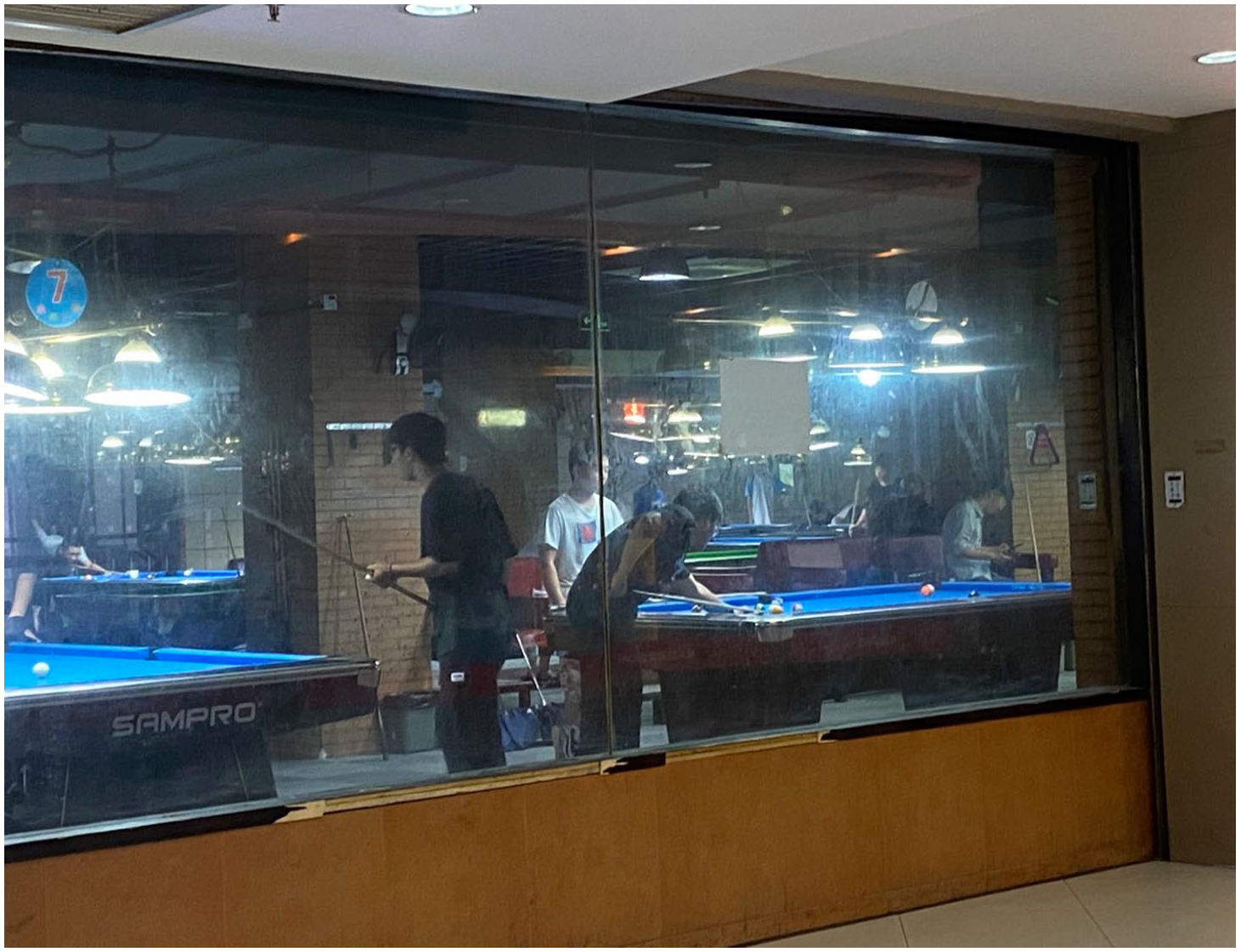
The glass wall and male figures.
The spatial arrangement of different types of billiards tables further indicated the gender hierarchy in the space. While the larger snooker tables, requiring additional precision, skill and practice compared to pool and conventionally believed to be more suitable for men, were positioned nearest to the entrance and the bar counter (see Image 3), the American nine-ball pool tables – often seen as more gender-neutral and suitable for women, were placed at the farthest corner of the hall (see Image 4). Despite the appearance of openness in the entire billiards space, we could perceive that women were ‘spatially othered’ from the hall’s ‘main business’ (Jeanes et al., 2021: 1). Moreover, two nuanced practices of exclusion were identified. Initially, I was struck by the predominantly male ambiance of the snooker zone upon entering the hall. Several heads turned simultaneously, conveying an apparent surprise at my presence. Accompanying the pressing looks were the resounding voices of men – fluxes of cheers and curses amid the heavy sounds of billiards breaks. I suddenly felt like a flat-footed alien straying into the territory of a sophisticated species and my enthusiasm for playing snooker suddenly dampened. Second, even in cases where our preferred game was pool, we had to pass through the snooker zone taken over by men to reach the pool area. This could further reinforce the perception that the billiards hall was a male space.
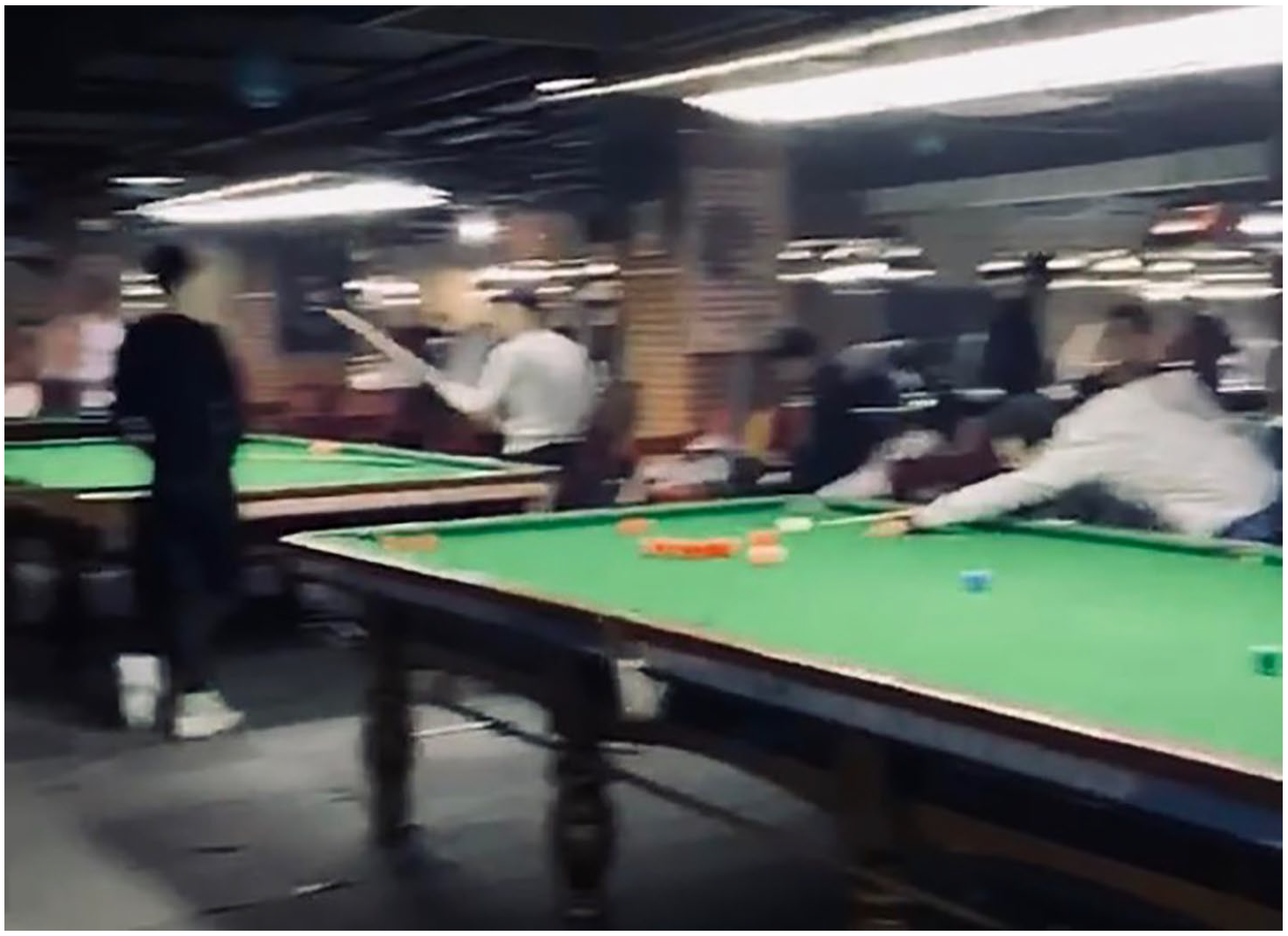
Snooker tables and male figures at the entrance.
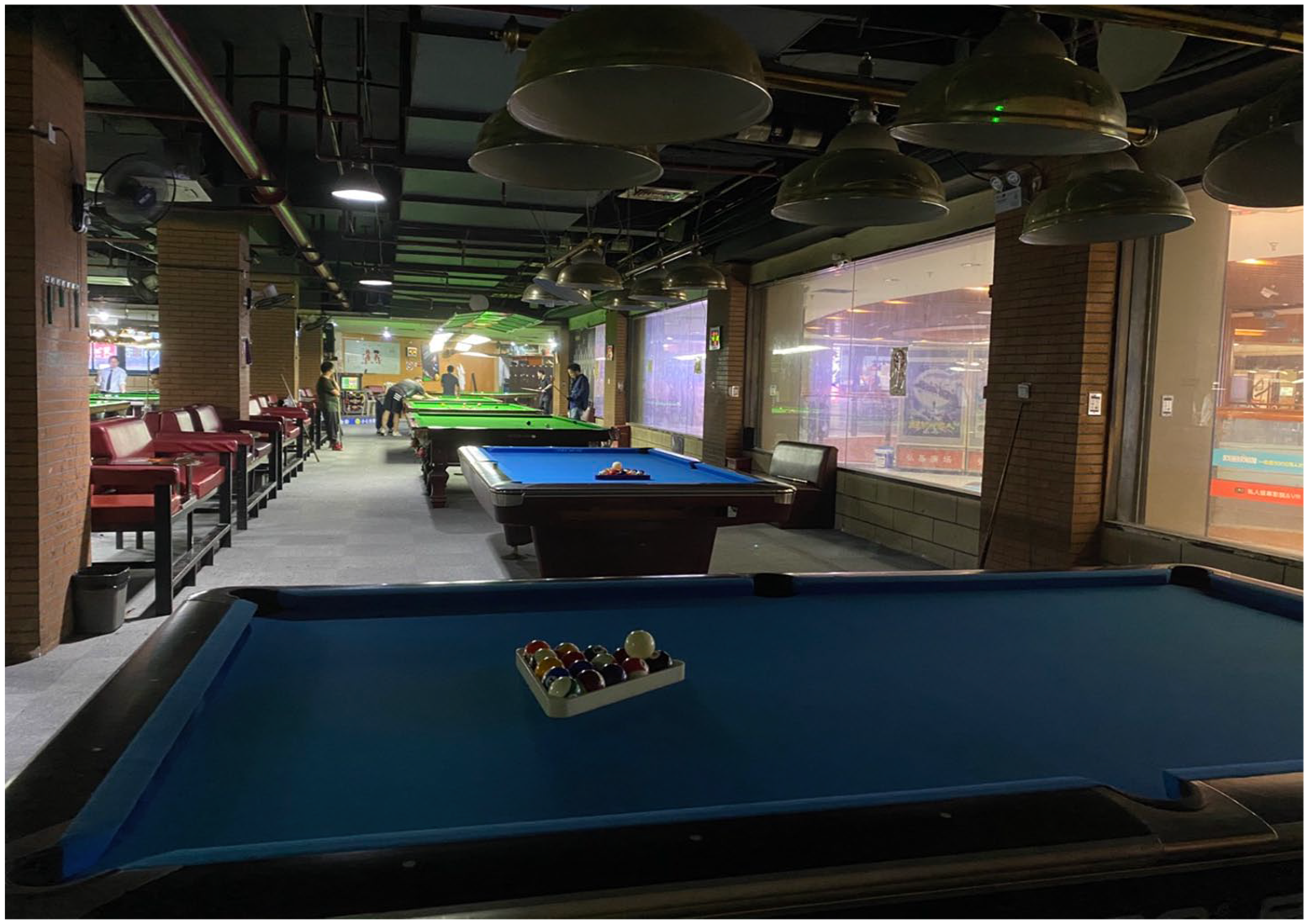
Snooker tables and American pool tables.
To delve deeper into why women students seem to prefer pool over snooker, I interviewed four female members to gather their thoughts on snooker. During the practice session, I also intentionally allowed them to choose the game they wanted to play. Interestingly, only a graduate sociology student exhibited a strong enthusiasm for playing snooker when I invited her. Although she was curious about the game, she had never seriously considered trying it, as she explained that the boys who introduced her to the sport encouraged her to play pool instead, which was ‘easier’. The female head of the society also expressed an interest in snooker, but she felt it too ‘hard’, as it took her an hour to finish one frame. The other two interviewees, despite being proficient in their playing skills, only engaged in snooker with male students when there were no pool tables available. The responses suggest that the preference for pool may stem from a combination of stereotypical guidance and lack of support, along with the feeling of being out of place.
The aesthetic style and decorations of the hall were furthermore a clear statement of its embrace of masculine culture. It could be recognised that the design of the hall space, including the use of light, the colour scheme and the aesthetics of furniture, was in accordance with Western popular ideas of a ‘man cave’ (see Image 5), which is a personal sanctuary for men where they can enjoy their own time without being ‘bothered’ by women, or with women simply as another accompanying pleasure (Hoops, 2019). According to Hoops (2019: 191), a typical old-style man cave features a ‘dark, dank room’ with stylish decorations such as ‘racing flames’. This is exactly how the billiards hall was perceived (see Images 6 and 7). In my later interviews with female members of the college billiards society, many informants complained to me about the gloomy atmosphere of the hall. While I did not mention my initial perception of the hall in the interviews, one female informant echoed this perception when describing how she ‘spent time getting accustomed to the environment’. She depicted the ‘strong feeling’ that the hall was ‘more like a guy’s recreation space’ rather than a place for everybody to ‘do sport’. She had to ‘reassure’ herself that she was just ‘thinking too much’ and tried to ‘focus on practising and get used to it’. Another revealing comment was from a woman student wondering ‘why the hall is not designed like any gym?’ In her view, a sports space should be bright and refreshing, but the hall was ‘so gloomy and stuffy’. In a more straightforward manner, interestingly, the male head of the college billiards society noted, ‘For some guys, the hall is just a place to show off to their girlfriends. They don’t come here to play. In fact, they play poorly, and they just shoot with great power which ruins the billiards table cloth’. The male student’s comment implies that the hall was a men’s space not only because it prioritised men’s needs, but also because it was utilised by men to demonstrate their heterosexual masculinity.
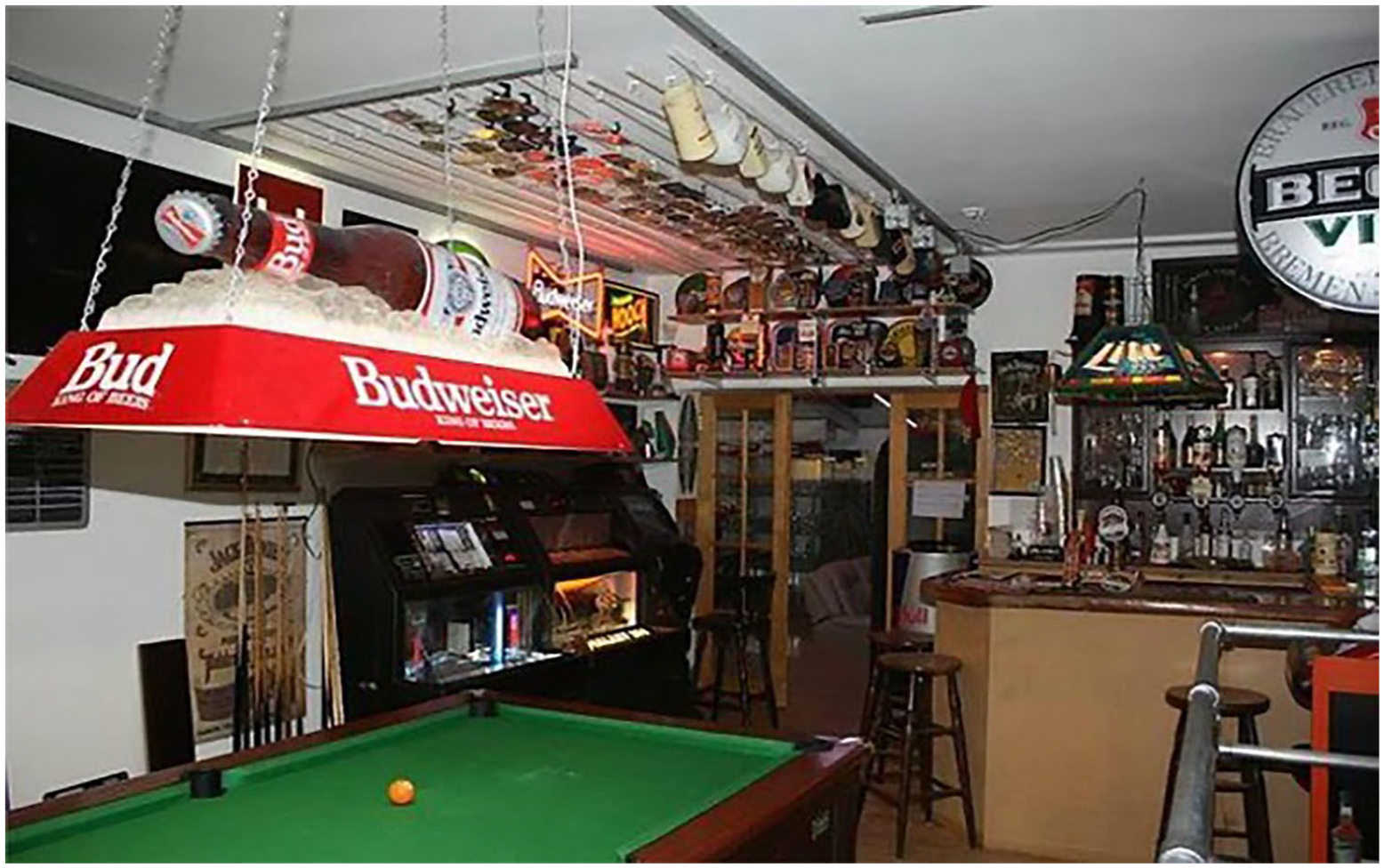
2016 Britain’s best man cave (Home Leisure Direct, 2016).
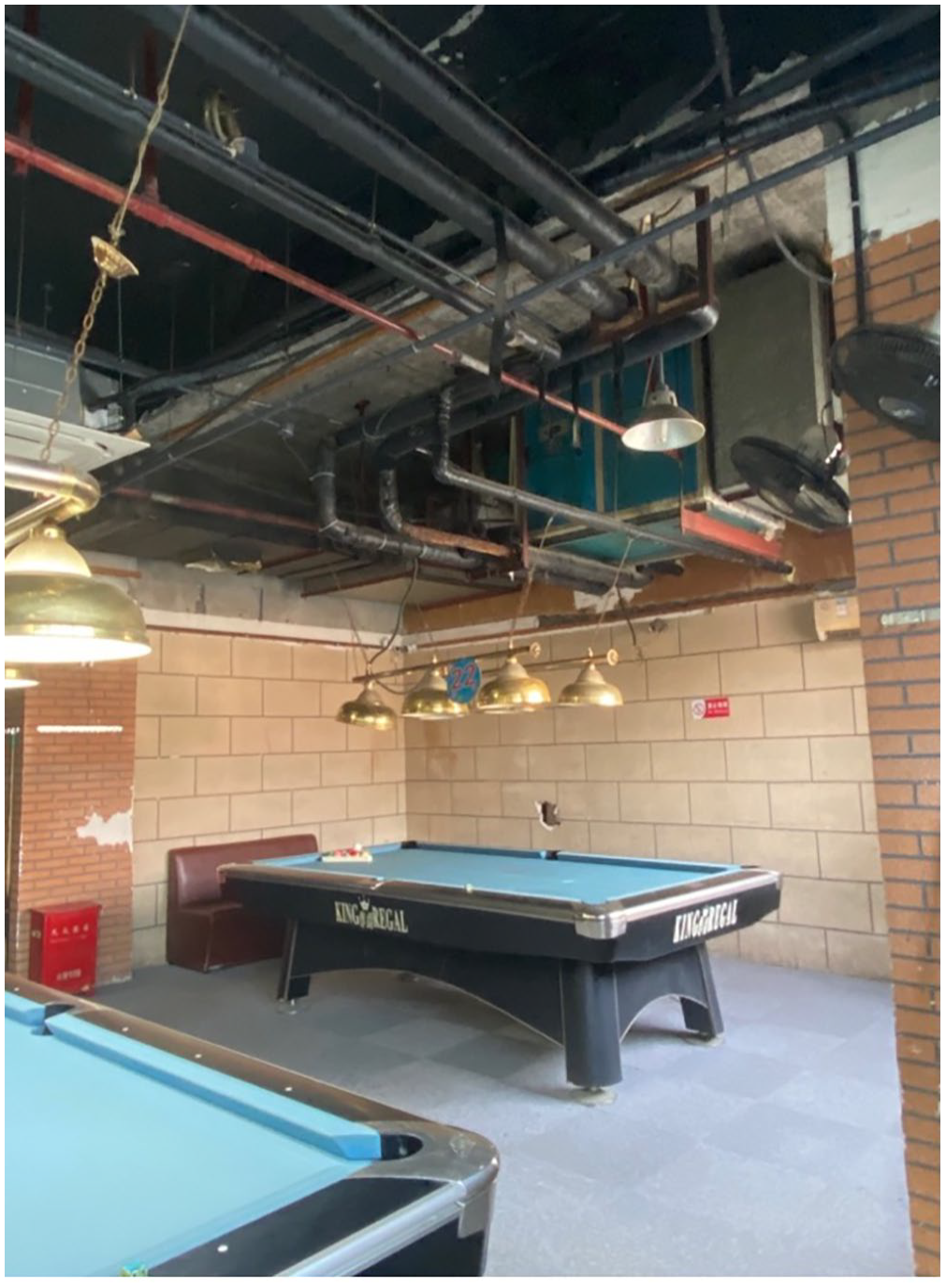
A corner of the hall.
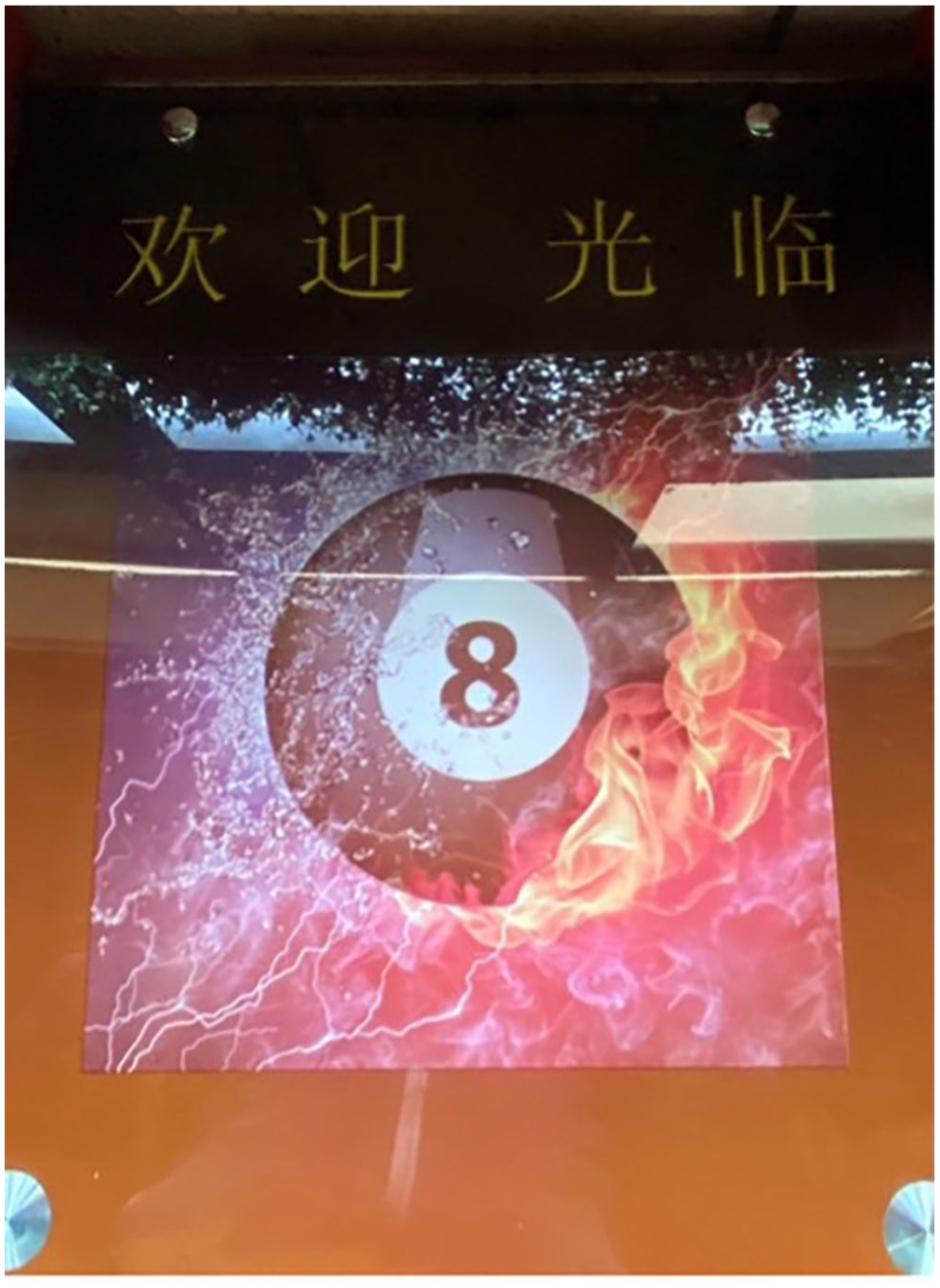
The decoration on the tea tables in the hall.
From the analysis above, it becomes evident that despite the hall’s apparent openness and inclusivity, the perpetuation and normalisation of male dominance within the space were achieved through spatial practices including gendered decoration, organisation and utilisation of the area. However, as Puwar (2004: 1–2) illuminatively suggests in her theorisation of ‘space invaders’, Even the most historically protected spaces can’t be contained. They remain dynamic and open to other possibilities. Space is not a fixed entity. ‘It moves and changes, depending on how it is used, what is done with and to it, and how open it is to even further changes’ (Grosz, 2001: 7).
Moving beyond the spatial codes that reinforce dominant and restrictive gender relations, I will seek to outline three interconnected dimensions or ‘moments’ of spatial mutation, drawing from my participant observations of the college billiards society activities conducted within the hall. I will demonstrate how these ‘moments’ observed unpack the spatial dynamics at play within the hall, which disturb the status quo and open up the possibility of change.
The three moments of change
Positional displacement
I can still clearly remember how stunning it felt the first time I conducted participant observation within the women’s practice group of the billiards society: We took over a pool table at the centre of the hall – four female members of the society and me. We made our noises, cheered for ourselves and gazed back the male gazes. Tao, the girl who wore a pink coat and a Qi-pao style dress, made a powerful shot. The rack was smashed wide open, and two balls were potted. ‘Wow!’ We broke into rapturous applause. ‘You can make a total clearance!’ said Dan, female vice president of the club. Tao laughed humbly but admitted that she aspired to accomplish that before graduation. She continued potting and we all yelled encouragement at her. We applauded every shot she made and gave her sincere compliments. In the subsequent observations, I noted that some women had developed a habit of choosing tables in more open areas. On a separate occasion, I intentionally asked a female student to pick between a table in the corner and one in the centre. She chose the latter because she did not want to feel ‘stuck’. There were also instances where our women’s group occupied two tables at the centre of the hall – one for competitions and another for practice. We moved between different tables and utilised them as we pleased.
Although as long as we looked around, we could immediately grasp the fact that we were still surrounded by male players and we remained the gendered ‘minority’ of the space, it is undoubted that our presence in the central area of the billiards hall, or positional displacement of the masculine somatic norms, directly changed the hall’s physical environment. There were two aspects of transformations identified. First, the spaces that were previously occupied by men were now filled by women – the displacement of male figures with women’s figures. Second, from a macro perspective, now that there were women entering the spaces, the sheer maleness of the central playing areas was disrupted. The perceived homogeneity of the space was replaced by a juxtaposition of both the masculine somatic norm and alternative body types. Worth noting, the altered moment was engendered not only by the visible presence of women, but also by the sounds women made. As Gaffney and Bale (2004) note that, ‘Sound occupies space and gives fullness to experience. Sound connotes volume, distance and meaning’ (p. 28), we argue that the cheers, sighs and voices of mutual encouragement among women players worked to contest the hitherto male-dominated soundscape of the billiards hall. The women’s sounds formed a distinctive auditory atmosphere indicative of an alternative space.
Embodied transgression
The second aspect of spatial mutation concerns the women players’ disruptive bodily performances including the non-normative comportment and dressing styles. During my fieldwork, I noticed that the women society members embraced distinctly feminine and edgy styles, donning outfits such as short leather skirts, low-cut tops, translucent lace shirts, Qi-pao style dresses and exaggerated accessories, often accompanied by delicate makeup. They confidently embraced their femininity and meanwhile demonstrated precise aiming, smooth cue action and sufficient shooting strength on the billiards tables. As Dan, vice president of the college billiards club explained to me in detail, I deliberately chose this outfit, the leggings and the heavy make-up. I just want to look bright, and this can uplift other female players. You look at them, their clothing. We dress differently in the weekly gathering in the hall compared with our everyday clothing at college. We are just happy to do this. We cherish that. If you joined our club earlier you could meet a girl, the previous president of the club, who looked very queer and cool. She has now graduated . . . I am not a lesbian, but I almost felt I was in love with her . . . I mean that her look was very attractive. So, I mean in the club time we dress as we want. We enjoy doing this.
It can be indicated from Dan’s explanation that women in this club celebrated and advocated different styles of dressing, including both the typically feminine ways and perhaps also the queer ones. In addition, their showy attire and makeup challenged the traditional ideals of feminine beauty in China, which should be ‘modest, retiring, virtuous’ (Man, 2016: 48). Their powerful and determined shots meanwhile dismantled Iris Young’s (2005) framework of ‘throwing like a girl’ which underlined the constrained feminine comportment, mobility and spatiality.
Instead of interpreting their seemingly contradictory embodied behaviours as an effort to find a balance between athleticism and hegemonic femininity (Krane et al., 2004; Marfell, 2019; Musto and McGann, 2016), I argue that the dressing styles and athletic behaviours are ‘subversive bodily acts’ (Butler, 1990: 107) of ‘undoing gender’ (Butler, 2004) that deconstruct the traditional dualistic associations of masculinity with athleticism and hyper-femininity with weakness and passivity. Resonating Beaver’s (2016) findings on roller derby uniforms, I suggest that these women billiards players actively chose hyperfeminine attire ‘as a playful and pleasure expression’ (p. 639) of their ‘agency’ (see Note 3). They played with their bodily appearances, mobilised their bodies and redefined femininity. They were opening up a ‘Thirdspace’ that was not confined in any established scheme, but allowed for ‘a constantly shifting and changing milieu of ideas, events, appearances and meanings’ (Soja, 1996: 2).
Ontological disruption of the subject
Occasion 1: returning the gaze
Our girls’ practice group attracted the attention of male players at the neighbouring table. A man passed by our table and accidentally bumped into Tao who was dressed in a low-cut camisole. Tao immediately gazed back. The man moved his eyes away evasively.
Michel Foucault (1980: 186) has pointed out that an inspecting gaze is a disciplinary spatial practice that presses on and ‘penetrate[s]’ the body of the overseen ‘in depth’. Extensive research has detailed the constraining effects of the male gaze in sports (James, 2000; Waitt, 2008), including the internalised gaze (Evans, 2006). However, instead of passively enduring the male gaze, the female player powerfully reversed it. Rather than simply viewing this as a power contestation in which the young woman triumphed over the man, I would suggest that the evasion was a result of what Puwar (2004: 19) conceptualises as unexpected ‘refluxes’. Citing Irigaray (1985a, 1985b), Puwar (2004: 19) contends that while a man as a Subject often seek to assure His ‘ontological importance’ through projecting His expectations, desires and ideals onto women, the intruding presence of an unexpected and outlaw female body can in return interrupt the coherence of his fantasies. This ‘interruption’ leads to ‘an ontological disruption of the subject’, questioning the very essence of the subject and leading to a moment of self-loss (Puwar, 2004: 17). The man’s desire to scrutinise women was not only unsatisfied but also overwhelmingly reflected back to him – through an upwards but nonconforming, feminine stare.
Occasion 2: the man disorientated
The male leader of the society proposed a mixed-gender competition and invited me along with three other girls to compete against him. He seemed confident about his playing skills, but once the game commenced, he struggled to maintain his form. He was keen to comment on every shot we made, but he himself missed a few easy shots. Soon, he fell behind the girls’ team. ‘Why the hell can’t I just play now?!’ the male student wondered aloud.
In a similar vein, the male student who ‘forgot’ how to play may also be undergoing a period of what Puwar (2004) describes as ‘disorientation and ontological anxiety’ (p. 13). His behaviour indicated that he used to consider himself as superior to the women players and believed he had the authority to pass judgement on them. However, the truth was that, as evidenced by his paradoxical loss in confidence, the male bodily capacity and masculine superiority in sports were mere fantasies that needed constant affirmation. This affirmation, as argued by Irigaray (1985a), is often achieved through appropriating women as his ‘mirror’ to which ‘he projects a something to absorb, to take, to see, to possess . . . as well as a patch of ground to stand upon, and therefore to ‘catch his [desired] reflection’ (p. 134). Thus, when the reflection did not align with his expectations (the women played well), he became disoriented and lost his sense of who he was (Ahmed, 2006). This moment of ontological disruption of the masculine Subject unsettled the taken-for-granted centrality and authority of men in the space of billiards. Out of His expectation and control, mutations arise.
Further interrogation: moments away, troubles remain
It should be noted, I adopt the terms ‘moment’ and ‘mutation’ throughout this article to underscore that the changes observed in the billiards hall are uncommon and unusual. In Puwar’s (2004: 3) words, they are ‘fleeting’ moments. This is obvious as unwanted attention and uninvited instructions/comments alongside the changes persist. Tao, the girl who loves to wear pink dresses, shared with me her experience of being harassed by a stranger intending to play with her: You are a girl, you play alone, and there will often be some men asking you to play with them. I used to think this was fine. But there was one time when a man insisted on requesting my phone number and he kept sending me strange things. I became more careful after that.
The male student who lost his form playing against women also expressed his concerns for the troubles women players may encounter. However, interestingly, his response emphasised how he and other male society members ‘helped’ women get rid of the problem. ‘Yes, that’s awful. Last time when Tao and another girl were playing there, some guys came and bothered them. We male students intervened, telling them to leave the girls alone! They saw us and they left’. The solution, mirroring the heroic narrative in which men save women from other men using men-driven methods, once again reflects the ingrained masculine hierarchy within the billiards space. Despite women occupying central positions in the hall, men continue to dominate the space and dictate its rules.
Conclusion
Drawing inspiration from Puwar’s (2004) notion of the paradoxical co-existence between the previously excluded ‘space invaders’ and the established insiders or ‘somatic norms’, this study illustrates that while women in the billiards hall continue to be spatially marginalised and the hall remains predominantly male-dominated, the influx of new types of bodies has sparked alternative spatial dynamics or ‘moments’ of spatial mutations. Regarding the entrenched spatial inscription of gender norms, the article reveals how hypermasculine-characterised architectural designs, differential arrangement of facilities and hierarchical gender interactions, such as male gazes and men adopting the sports space to showcase their masculinity to women, can perpetuate the inferior positioning of women within the space.
Nevertheless, in light of Butler’s (1990) discussion of subversive bodily acts and Ahmed’s (2006) theorisation of (dis)orientation along with Puwar’s (2004) conception of ‘space invaders’, this article also identifies three aspects or ‘moments’ of change pertaining to positional displacement, embodied transgression and ontological disruption of the subject, focusing, respectively, on the interlinking dimensions of space, body and subjectivity. Positional displacement concerns the immediate alteration of the physical environment brought about by women’s occupation of the ‘privileged’ areas of the billiards hall. Embodied transgression took place when the women players actively performed gender beyond the traditional binary understanding of masculinity and femininity. Ontological disruption of the subject occurred when men failed to find affirmations of their capacity and sovereignty in relation to women; for example, when male gazes were confronted with direct eye contact from women, and when men realised that winning over women was not as straightforward as anticipated. Despite the fleetingness of the moments of change, they initiated possibilities for destabilising the sedimented gender norms within the hall.
Footnotes
Funding
The author(s) received no financial support for the research, authorship, and/or publication of this article.
Data availability statement
The data that support the findings of this study is available on request from the corresponding author, Yichen Zhang. The data is not publicly available due to it containing information that could compromise the privacy of research participants.