




Abstract
In light of the Russian–Ukrainian conflict, this study explores the transformation and resilience of Ukrainian coworking spaces amid significant social disruptions, contrasting war-driven changes with those prompted by other exogenous shocks like the coronavirus disease (COVID-19) pandemic. Utilising problem-centred interviews and co-constructed autoethnographic narratives, we probe the evolving roles and organisational shifts these spaces undergo. Despite adversity, they have showcased resilience, adaptability and in most part remained functional. This research illuminates the transformative nature of community-based work environments, paving the way for the development of innovative coworking models resilient to diverse social disruptions.
Introduction
Since our complex societies are highly susceptible to interferences and accidents, they certainly offer ideal opportunities for a prompt disruption of normal activities.
During periods of social disruption, local communities may suffer a myriad of adverse effects, such as diminished income, business interruptions and social dislocation. Drawing from Jürgen Habermas’s debate with Jacques Derrida and Giovanni Borradori (2013 [2003]), our understanding of modern societies’ complexity reveals their vulnerability to rapid and unexpected disruptions. This complexity provides ample opportunities for interference, leading to social instability. In parallel, Leonard’s (2021) ‘age of unpeace’ suggests that our globalised connections bind us and ignite new-age conflicts beyond traditional battlefields, such as in technology and finance. This notion resonates with Habermas’s debated insights on social vulnerabilities, underscoring the importance of society’s preparedness and ability to handle such disruptions, ensuring stability and continuity.
Addressing these challenges necessitates a deeper understanding of community-driven models that can enhance relationships, establish support networks and maintain relevance among community members. Community-driven hubs prioritising local needs and engaging members in co-creating solutions become crucial during disruptions like natural disasters or war (McShane and Coffey, 2022). The recent Russian–Ukrainian conflict, a manifestation of this ‘age of unpeace’, has cast a profound ripple effect, presenting immense challenges across sectors, including energy, housing and food security (Rosenberger and Snow, 2023). Recognising communitarian principles’ role in fostering resilience, empowering local communities and rebuilding society is essential in this backdrop.
Community centres offer essential support in conflict zones, addressing needs like healthcare and education (Anckermann et al., 2005; Frederico et al., 2007). These centres, by fostering relationships and social equity, play a pivotal role in social reconstruction (McShane and Coffey, 2022; Orel et al., 2022). Investigating their impact in Ukraine can shape strategies for community resilience. Notably, research has overlooked informal social settings, such as coworking environments, which promote supportive networks and individual wellbeing, while offering the space for collaborative work between independent workers and teams (Morisson, 2019). Coworking spaces harness connectivity as manifestations of the modern knowledge economy (Gandini, 2015), which might be crucial during conflicts and societal disruptions.
In parallel, recent studies have suggested that coworking spaces can positively impact local communities by opening physical spaces, fostering local connections, boosting commercial activities, and supporting creative production clusters (Mariotti et al., 2017; Nakano et al., 2020). In that manner, coworking models have gained popularity in recent years, with many individuals and organisations seeking shared workspaces to facilitate social connectivity among independent knowledge workers or teams (Howell, 2022; Spinuzzi et al., 2019). Besides, a recent study by Merkel (2023) discusses coworking spaces as social infrastructures of care, illuminating coworking’s affective, emotional and embodied dimensions and contributing to coworking research. Yet, a glaring gap persists: coworking spaces’ adaptability and response mechanisms amid swift social transformations, especially in conflict zones, are not adequately charted or understood. How do coworking spaces adapt to the social disruptions instigated by war? And how are these coworking spaces reconfiguring their organisational structures to support knowledge workers amid the disruptive events?
In line with these considerations and emerging questions, the central argument here is that community-driven coworking spaces can be pivotal in offering resilience and support during times of social disruption, such as wars or natural disasters. This research is particularly pertinent as it delves into the dynamic ways these spaces (of work) morph and respond to crisis situations, specifically focusing on the Ukrainian scenario in the wake of the Russian invasion and the subsequent war. The presented argument underlines the importance of these spaces in nurturing relationships, building robust support networks, and promoting social equity. The latter is crucial, as it contributes to a broader understanding of how societies can better prepare for and navigate through disruptions, thereby ensuring their stability and sustained continuity.
Considering this argument, the article is methodologically structured to examine the Ukrainian coworking ecosystem amid the disruptions caused by the Russian invasion in 2022 and the subsequent transformation of local coworking models. Initially, we contextualise the increasing importance of coworking spaces within the framework of the modern knowledge economy. This is followed by an exploration of their inherent adaptability features. Building on this groundwork, the article delves into the specific responses of these spaces to the challenges presented by the social disruptions, highlighting their critical role in supporting local communities, knowledge workers and businesses. Through a detailed empirical analysis, we uncover coworking environments’ transformative roles and resilience in the face of adversity. Our findings culminate in actionable insights, emphasising the potential of these community-centric spaces to serve as robust pillars of support during periods of social disruption, particularly within Ukraine’s unique context of war with Russia.
Literature review
Coworking and the community perspective
Coworking spaces serve as community-based workplaces that promote collaboration among independent professionals, geographically dispersed teams, and remote workers (Howell, 2022). Their potential to boost productivity is attributed to proximity mechanisms and curated mediation tools (Orel et al., 2022). These shared workspace environments often embrace communitarian values, nurturing supportive networks fostering user knowledge exchange and collaboration (Gandini and Cossu, 2021; Merkel, 2023). Coworking environments thus aim to weave together diverse professionals in a work environment through knowledge sharing, mentorship, education and, most importantly, community building. This collaborative focus often expands beyond the physical space, intertwining coworking’s ‘community of work’ (Rus and Orel, 2015) with local communities (Bouncken et al., 2020), thereby engendering a sense of group identity and setting coworking spaces apart from other non-coworking alternatives.
However, as per Bandinelli and Gandini (2019) and De Peuter et al. (2017), forming these communities is not without contradictions and complexities. Often, the said communities are purposefully engineered, emphasising the commercial aspect of coworking spaces. This instrumental approach towards coworking sociality can sometimes create an ambiguous environment, promoting collaborative individualism that could lead to conflicting objectives and outcomes. Coworking spaces afford users a high degree of autonomy, with minimal formal hierarchies or legitimation systems, resulting in a flexible and open membership model (Bouncken et al., 2020). The social context and interactions can induce the development of shared behavioural models among users, largely due to direct interaction and colocation (Orel and Alonso Almeida, 2019). These spaces’ dense networks and users’ similar professional backgrounds can lead to converging forces, fostering an informal cooperative institutional framework (Bouncken et al., 2020; De Peuter et al., 2017).
Coworking spaces can cultivate communities within their tangible environment, determined by the coworking space’s location, the provider’s rules and user interaction (Howell, 2022). These communities can support local cultural development and individual wellbeing through various inclusive activities (Merrell et al., 2021), embodying a human-centred approach in their organisational and physical design. Coworking environments typically empower users to cultivate and experience informal and work-related relationships, while promoting an inclusive and collaborative organisational culture that respects users’ ideas, cultural backgrounds and perspectives (Orel and Alonso Almeida, 2019). Coworking spaces can serve as critical community hubs and contribute to neighbourhood revitalisation (Brown, 2017). They function as community gathering spaces and form connections between residents and professional communities. Yet, Nakano et al. (2020) also point out that coworking spaces may inadvertently reinforce precarious work relations and accelerate gentrification. Despite these potential downsides, coworking spaces can anchor localised, small-scale creative production in urban neighbourhoods (Brown, 2017) and rural localities (Merrell et al., 2021).
The transformative nature of coworking spaces
The rather fast development of coworking spaces cannot be disentangled from the broader socio-economic context from which they emerge. Remarkably, their very inception can be traced back to situations of crisis. For instance, the birth of the first coworking space in San Francisco in 2005 was a direct response to the fallout from the dot-com boom and bust, when many knowledge workers found themselves self-employed and in their freelancing roles, seeking a shared workspace (as opposed to working from the isolation of their homes) (Rus and Orel, 2015; Spinuzzi et al., 2019). Further corroborating this connection, Yates et al. (2024) argue that many coworking spaces have traditionally sprouted in regions affected by economic downturns, often occupying spaces left behind by deindustrialisation or the aftermath of property bubbles collapsing. Such origins highlight the adaptive nature of the inceptive coworking model, leveraging crises as a catalyst for transformation and community-building.
Building upon the classification proposed by Orel and Bennis (2021), which categorises coworking spaces into Individual-Purposed, Creation-Purposed, Group-Purposed and Startup-Purposed coworking spaces, it is pivotal to appreciate the nuanced roles these spaces assume in varying social contexts. Each category, from spaces supporting individual endeavours to those fostering startups, is equipped to cater to specific needs that may arise or intensify during disruption. However, a common thread weaving through these diverse spaces is the ethos of community-driven engagement and a collaborative organisational climate (Mayerhoffer, 2020). Such a collaborative spirit has been particularly salient in the backdrop of the coronavirus disease (COVID)-19 pandemic, as illustrated by Yates et al. (2024), where coworking spaces evolved not just as places of work but as hubs of community resilience and adaptability. While many coworking spaces initially closed their doors due to the health risks posed by the pandemic and shifted to virtual workspaces, the return to relative normalcy post-pandemic has seen these spaces reopening their physical locations and reverting to their original models, often accompanied by virtual counterparts (Phillips and Donhauser, 2023) (Figure 1).
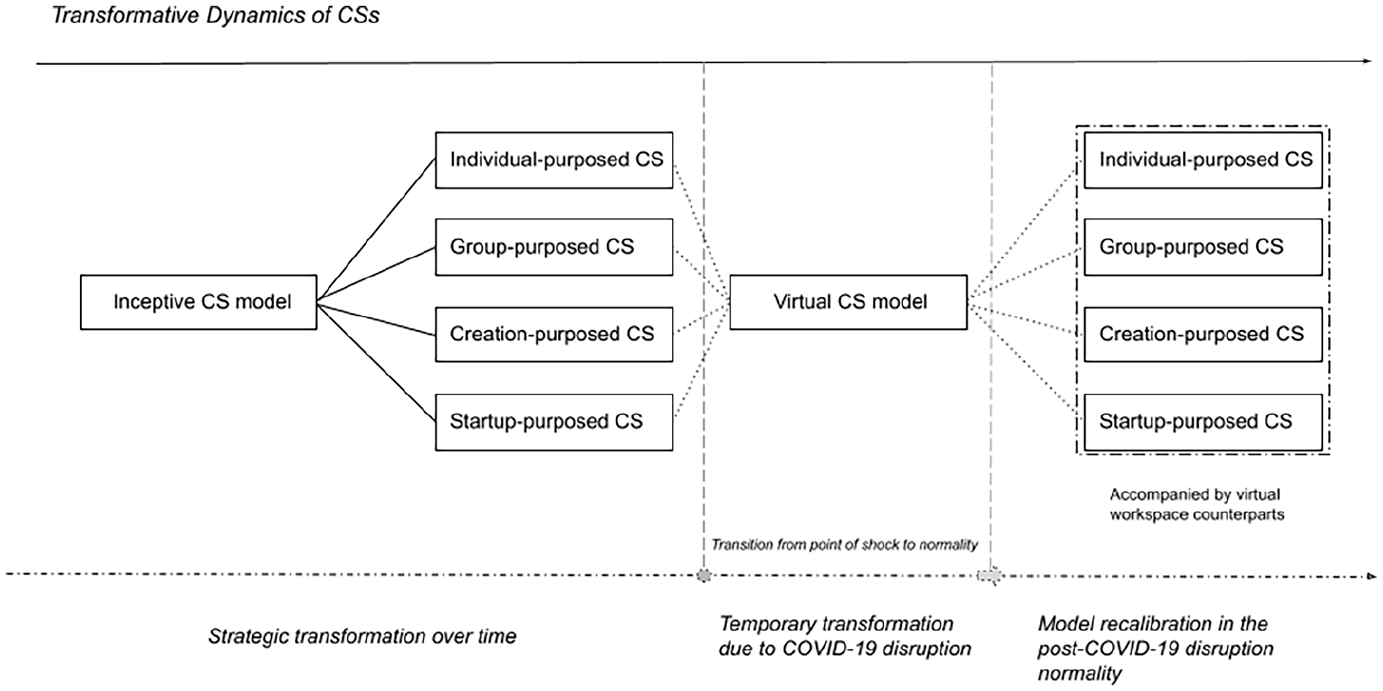
Transformative dynamics of coworking spaces.
Coworking spaces, while transformative in crises like the pandemic, embody a duality: they foster community and productivity, yet prioritise commercial viability. This dual nature implies their benefits can be both genuine and transactional. Drawing parallels to the Ukrainian context, particularly the ongoing conflict, this perspective underscores the need to view coworking spaces not merely as passive responders to crises but as entities moulded and continually reshaped (and not necessarily transformed back to the pre-disruption model as proposed by Figure 1) by the broader socio-economic dynamics and disruptions. Their existence and transformative nature, in many ways, epitomise the sentiment expressed in Plato’s ‘Republic’ – ‘our need will be the real creator’ (Jowett and Campbell, 1894) – which over time has been encapsulated by the English adage, ‘necessity is the mother of invention’. Whether it is the aftermath of a financial bubble, a pandemic, or the war-driven disruption, we can reason that coworking spaces exemplify how communities can innovate, adapt, and thrive amid adversity. However, a further enquiry into the context is needed, especially to understand the model’s transformation during the war-driven social disruption.
Coworking in the regional context of Ukraine
The development of the coworking industry in Ukraine can be traced back to 2012 when the first coworking space, Chasopys, an individual-purposed coworking space, was opened in Kyiv. Ukraine’s first coworking spaces such as Chasopys initially hosted freelancers and local information technology (IT) communities, with the coworking industry seeing a more substantial growth by 2018 as more businesses recognised its value. The pandemic, while presenting challenges, cleared the market of short-term operators, making room for long-term businesses (Zhurbas et al., 2021). New entrants, including corporate clients and startups, sought flexible spaces and optimised budgets. Though the pandemic initially caused a dip in occupancy, demand rebounded from September 2020 and continued until the Russian invasion, reflecting broader European trends in coworking adaptation (Mayerhoffer, 2020).
In 2021, around 100 coworking spaces were operational in Ukraine, with 40 percent concentrated in the capital, Kiev (Figure 2). During the COVID-19 pandemic, the coworking spaces which remained open became pivotal, especially for IT professionals, enabling them to work remotely in compliance with health guidelines. The dominant type was the Individual-Purposed Coworking Space, primarily catering to independent workers and local IT communities. These spaces, emphasising community and support for solo workers and small teams, play a crucial role in attracting talent and benefitting localities (Garrett et al., 2017). While Orel and Bennis (2021) classify them as primarily individual-centric, Ukraine also hosts other models, including Group-Purposed spaces favoured by corporates and Creation-Purposed and Startup-Purposed spaces, albeit in smaller numbers. While the presence and classification of Ukraine’s coworking spaces are evident, there remains a gap in understanding their (expected) transformation in the face of war-driven social disruption. Specifically, it is vital to understand how these spaces could have pivoted, and whether they continue to foster collaborative work environments and support community development amid the prevailing challenges of war.
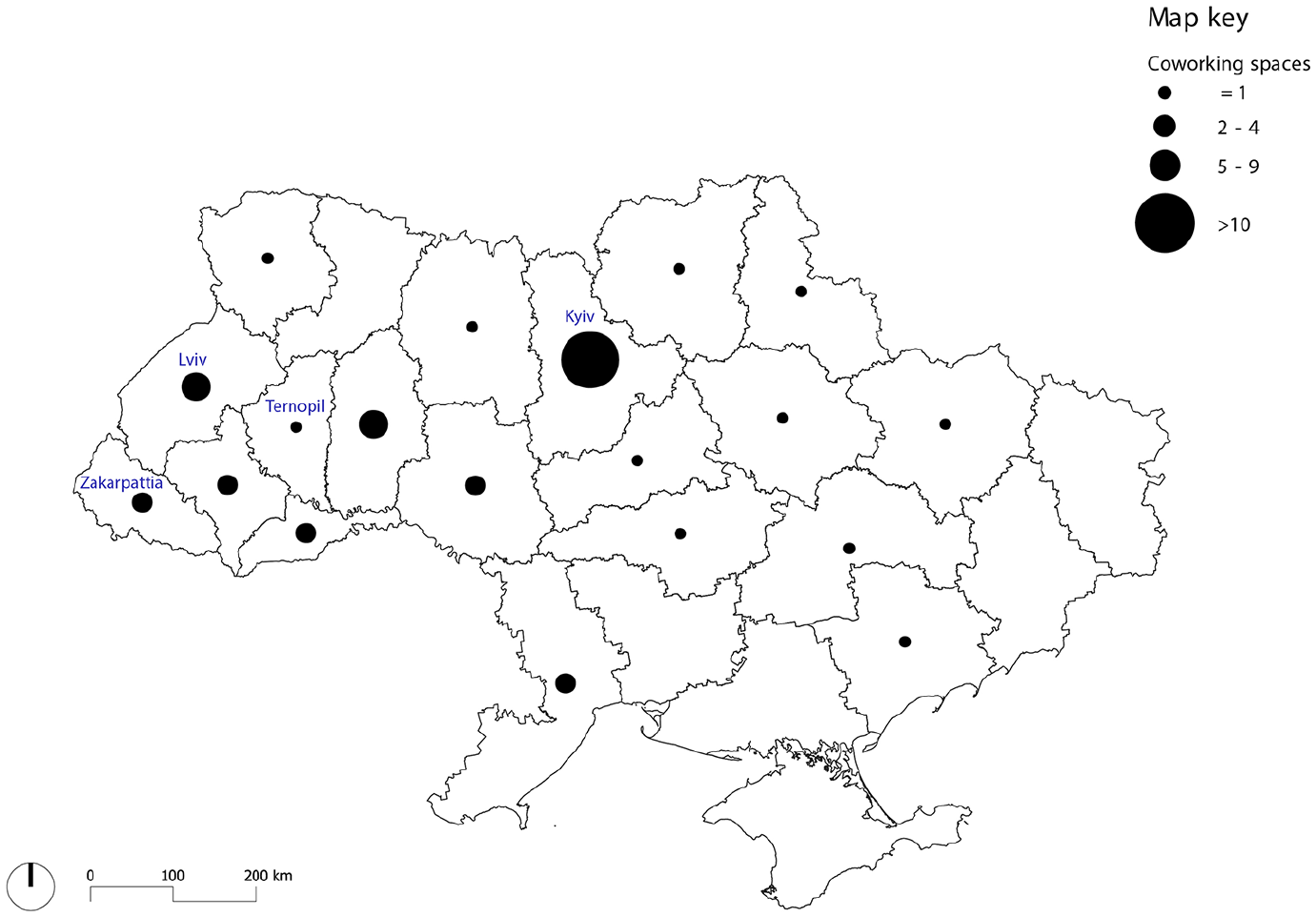
Coworking spaces in Ukraine in 2021.
Contextualising the social disruption
Social disruption serves as a prism through which we can discern alterations, dysfunctions, and disintegrations within communities, offering a framework to understand changes driven by societal forces. This study delves into how coworking spaces, subjected to the exogenous shock of war, undergo organisational transformation and impact local communities, all within the purview of social disruption theory. Traditionally, this theory posits that societies experience profound and often swift transformations spurred by incremental changes (Moralli and Allegrini, 2021; Vollmer, 2013), emphasising gradual shifts that challenge deep-rooted beliefs and norms (Grzanka and Cole, 2021). It highlights pivotal factors such as community dynamics, social hierarchies, and the role of community-driven institutions in shaping responses and recovery processes. Our study, however, leverages this theory to explore the impact of significant social disruptions – those not emerging from gradual change but from sudden events like wars, revolutions, pandemics and other forms of upheaval (Arnold, 2012).
Social disruptions, particularly from wars, profoundly affect individuals and communities, altering family dynamics, employment, and necessitating adaptation to new environments. These disturbances impact emotional and physical wellbeing (Elder et al., 1994) and have far-reaching effects on organisations, often leading to societal fragmentation. Displacement triggers ongoing social and economic instability (Rosenberger and Snow, 2023), yet in this context, war can also be a catalyst for reintegration and transformation. Community-based workspaces may evolve from conventional occupational sectors to spaces facilitating survival, rehabilitation, and resilience. Consequently, the adaptive capacity of individuals and communities becomes a vital determinant of post-disruption recovery and restoration, with support from entities like non-governmental organisations or government programmes enabling collective efforts towards community resurgence and rebuilding.
Employing this nuanced theoretical framing of social disruption and the concept of ‘events’ or ‘happenings’, we aim to examine social changes, dysfunctions and disintegrations within communities struck by an exogenous shock of war. We acknowledge that the social disruption theory has been critiqued for inadequately explicating the causes of social change and potentially underestimating the role of individual agency in shaping these changes (Weeks, 2015). Despite these limitations, we maintain that it offers a valuable framework to decode the intricacies of social transformations and their enduring impact on individuals, their community and community-driven organisations. However, to complement this theory, we propose integrating the concept of ‘events’ as conceptualised by Sewell (2005) and Wagner-Pacifici (2010). This augmentation will better equip our framework to address the abrupt, event-based changes induced by war and invasion.
With that, we draw from both theory and recent events to delve into the transformative role of coworking environments amid social disruptions. Coworking models have faced disruptions like the COVID-19 pandemic, leading to shifts from face-to-face interactions to hybrid models, impacting operations and community ties (Gandini and Cossu, 2021; Mariotti et al., 2023). These spaces have showcased resilience, with ‘community-making’ going beyond physical settings (Spinuzzi et al., 2019), resulting in digital settings and, finally, – as discussed before – reverting back to the inceptive models. However, the effects of war-driven disruptions on coworking spaces might differ significantly from those of pandemic-driven ones, necessitating a further exploration of the subject.
Methodological approach
This study aims to explore the function of coworking spaces in urban landscapes amid times of crisis, specifically focusing on their capacity to adjust to war-induced disruptions, support knowledge workers and businesses, and aid local communities in sustaining a semblance of normalcy. The study employs a dual methodological approach to investigate these areas of interest: problem-centred interviewing and co-constructed narratives.
Problem-centred interviewing
Guided by three research questions, this study attempts to discern: (RQ1) the degree of adaptability exhibited by coworking spaces in urban localities, particularly in Ukraine, to the social disruptions resulting from war, (RQ2) how coworking spaces can modify their organisational structures to support knowledge workers during disruptive circumstances, and (RQ3) the strategies implemented by coworking spaces to assist local communities in navigating the challenges arising from the disturbances caused by war and the disruption of daily life.
The research methodology is bifurcated to address these research questions effectively. Initially, the study adopted a longitudinal design, with data collection carried out during two distinct periods, April–May 2022 and November–December 2022. This strategy was employed to understand the responses of Ukrainian coworking spaces to the new social reality instigated by war.
Problem-centred interviewing, a method involving the collection and reconstruction of issue-specific knowledge from an expert’s perspective via discursive methods (Witzel and Reiter, 2012), was chosen as the primary data collection technique. This approach facilitated an understanding of the impacts of war on the coworking landscape in Ukraine. Sixteen coworking spaces, represented primarily by their managers, were chosen as the study participants. The interview guide was segmented into three sections, focusing on adaptability and creativity, the shift in organisational models due to disruptions and the communal role of these spaces within their local environment. However, the second data collection phase was hampered by the large-scale military attacks in the fall of 2023 that impeded the ability to conduct all the initially planned interviews. Consequently, the study had to adapt its methodological approach, substituting interviews with shorter text-based conversations or voice messages reflecting current circumstances.
Co-constructed narratives
Due to the data collection gap resulting from the crisis, the research incorporated co-constructed narratives as a secondary methodological approach. This method allowed for understanding participants’ experiences and perspectives, even with limited data from the crisis period. Co-constructed autoethnographic narratives (Ellis, 2004) allowed capturing the meanings of relational experiences. In particular, this approach was instrumental in synthesising and making sense of fragmented narratives that may arise due to a lack of data or possible trauma (Ellis et al., 2011; Ramsey and Ricket, 2020), and offers a means for collaborating researchers to reflect on the tempo, uncertainty and complexity of research relationships that intersect with more personal spaces (Given, 2008).
This research’s shared experience lies in the mentorship relationship between the two academic authors and a third author – a Ukrainian industry researcher – and this dynamic’s ensuing collaboration and mutual learning process. The process of co-constructing narratives was facilitated through joint activity structures, with the third author engaging in unstructured exchanges (via messages or voice recordings) with the interviewees and then summarising them through written and visual notes (i.e. photos, social media captures, etc.). These co-constructed narratives served as a valuable instrument for understanding and interpreting complex research insights that would otherwise remain concealed, thus facilitating knowledge production.
Finally, it is vital to note that we have followed strict adherence to the ethical guidelines of (auto)ethnography throughout the data collection shift in the study’s second phase. Following Parker’s (2007) debate on the relationship between ethics and method, we remained committed to the foundational ethical principles of doing good, avoiding harm and safeguarding the autonomy, wellbeing, safety and dignity of all participants throughout the (auto)ethnographic process (e.g. protecting anonymity by blurring faces and location markers). Objectivity was maintained to circumvent ethnocentric biases, and any potential deception was minimised.
Results
Data analysis
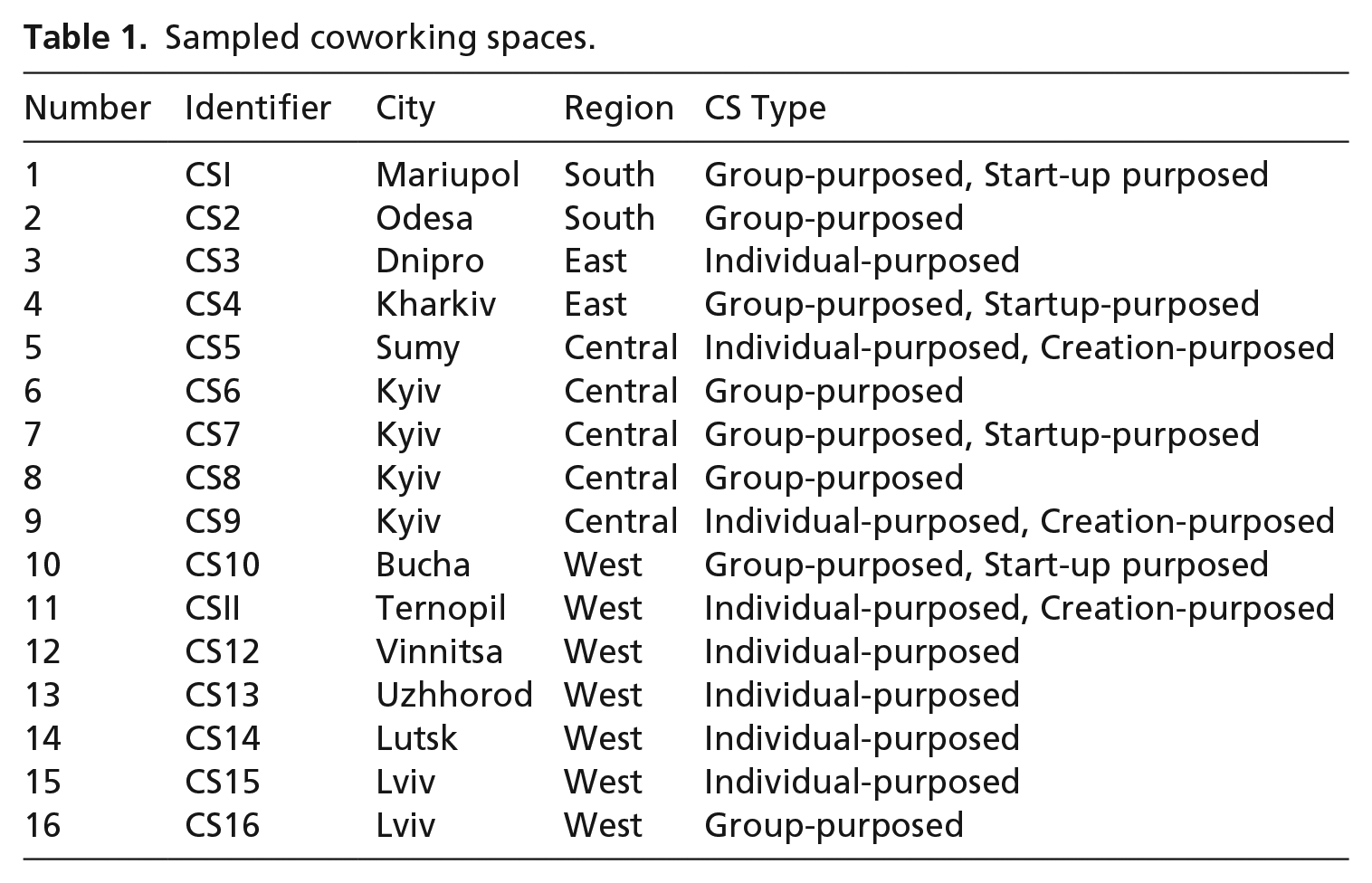
The first data analysis stage incorporates problem-centred interviews conducted within coworking spaces across Ukraine. A purposive sampling strategy was used, targeting coworking spaces across four geographical regions of Ukraine and catering to either individual or group needs or a combination, further classified typologically as start-up or creation-purposed. Anonymity has been maintained for the sampled coworking spaces, labelled with identifiers and categorised based on regional positioning (Table 1).
Sampled coworking spaces.
Interviews, primarily conducted in Ukrainian or Russian, averaged around 30 minutes. They were subsequently transcribed and translated into English to facilitate joint analysis. Our interview guide was structured into three sections. The first section, ‘Factors of the Changing Role’, explored the current state and influential factors on coworking spaces’ operations. The second section, ‘Transformative Nature’, aimed to understand the adaptations coworking spaces underwent in the initial months of the conflict and the perceived impact of these transformations. The final section, ‘Impact on the Local Environment’, sought to understand the coworking spaces’ influence on their local environments and communities before and after the invasion.
As noted, due to exogenous shocks (e.g. drone attacks, bombardments, etc.) affecting energy infrastructure that periodically made interviewees unavailable, a second round of interviews was not completed. Therefore, we turned to the co-constructed narratives approach, observing coworking spaces through exchanged memos, visuals, conversations and narrated stories, some also gathered through social media accounts and chat channels. These fragmented data were interwoven with the data from the problem-centred interviews, facilitating sense-making and connecting it with relevant theoretical framing.
Thematic analysis was adopted to decipher the data, extracting themes from transcriptions. Our six-step process included familiarisation, coding, theme generation and refinement, with an inductive ‘open coding’ approach guiding theme creation. This iterative method aimed to reduce bias, identify patterns and integrate themes into theoretical models while discussing theoretical implications.
Comprehending the analysed data
Impact of war on coworking spaces
One of the dominant themes has been the war’s adverse effects on coworking spaces, particularly in Ukraine. It disrupted the usual operations and communication lines and caused physical damage to the facilities. For instance, coworking space CS1 describes the destruction and occupation of its location. Similarly, CS10 narrates the occupation of their centre amid the war, resulting in the complete destruction of their complex, including broken windows and damaged equipment: The location is destroyed and occupied. (CS1) On the first day of the war, February 24, there were strong explosions. During the next day, rockets flew, and troops concentrated. It became possible to leave it only two days later. In the second half of March, they occupied the centre’s neighbourhood. The Internet was cut off then, so there is no evidence of when our centre was occupied. There were also interruptions in communication, with light, water, gas, and CCTV cameras not working. However, some witnesses saw that the occupiers entered the centre and damaged many things. The windows in the complex were broken, and there were missiles. The office nearby was destroyed. (CS10) Interestingly, some coworking spaces have served as temporary shelters for displaced Ukrainians. For example, CS15 converted their offices into temporary shelters for displaced residents and their families: After the beginning of the war, the co-working space became a shelter for internally displaced Ukrainians for a certain time. At the request of the residents, we also converted their offices into a temporary shelter for their relatives and friends. (CS15)
Operational changes in coworking spaces
The war has caused significant operational changes in coworking spaces. Safety concerns, the influx of internally displaced persons, and decreased income from events and membership payments have negatively impacted their operations. CS14 mentions that the constant threat of attack deters IT specialists and freelancers from using their space, thereby hindering its normal growth.
The threat of an attack from the direction of Belarus prevents normal development. On the one hand, the war influenced the creation of this coworking space, but the constant threat of attack does not allow enough IT specialists and freelancers to come here. (CS14)
A significant consequence of the war has been the lack of residents, as highlighted by CS8, which required flexibility in the operational rules and the introduction of discounts.
The main change is the complete absence of residents. It is too early to talk about change as something permanent. We live just today – we are changing the rules and giving discounts under the current situation. We can talk about change as permanent and irreversible only after the victory. Currently, there are almost no residents. (CS8)
CS4 mentions how, despite the locations not being damaged, attendance decreased due to security concerns and financial issues. They had to rely on technology and smartphone applications to facilitate user access and automate processes, reducing coworking employees’ workload.
[. . .] The locations are not damaged and working in the same mode as before the military operations. [. . .] The attendance has decreased. Of course, the only situation that affected this was the war. This is both a matter of security and money. Now if you have to choose whether to work in a beautiful place or save money and stay at home, people will still choose the latter. (CS4)
Throughout observed cases, coworking spaces needed to be flexible in negotiating with property owners and offer their users tailored conditions, discounts, and flexible offers. The data from co-constructed narratives shown that they also need to diversify their services, adapt to the needs of local residents and create new services to survive and progress. The data from conducted interviews confirm the latter.
Many of our regular customers are currently on the front lines, affecting attendance at our coworking space. Another factor that has impacted our operations is the decrease in income from events, as they are now rarely held compared to pre-war times. Cultural and entertainment events have been replaced by charitable fundraising for internally displaced persons and purchasing equipment for the Ukrainian Armed Forces. (CS12)
Adaptation and flexibility in coworking spaces
The war necessitated adaptation and flexibility within coworking spaces. This involved anticipation, resource accumulation and financial management to withstand unforeseen circumstances. Negotiations with property owners were also needed, as indicated by CS3.
[. . .]
What is currently happening requires maximum flexibility within coworking spaces. It was necessary to anticipate this and accumulate resources and finances to withstand unforeseen circumstances. Flexibility should not only come from us, but also from the property owners with whom we need to negotiate. (CS3)
A crucial adaptation strategy involved providing unique conditions for customers, offering discounts, flexible membership plans and diversifying services as per the local residents’ needs, as explained by CS7 and CS13: We are already working on it; we offer unique conditions for our customers, discounts, very flexible offers, for example, membership cards. We also offer discounts to our customers, for co-working spaces. (CS7) Our operations won’t be the same anymore. [. . .] We needed to diversify services, adapt to the needs of residents, and create new services. (CS13)
Transformative roles of coworking spaces
Coworking spaces have emerged as social support systems during the war. CS12 converted their coworking space into a shelter for displaced persons and collected and distributed humanitarian aid. This social assistance extended to hosting programmes for children’s development and entertainment, especially those displaced.
When it comes to an understanding the transformative nature of Ukraine’s coworking environments after the initial shock regarding the local population, the spaces have adapted to meet the changing needs of their communities, providing regular services such as health aid, legal and psychological assistance, and actively supported the volunteer work. They have also played a vital role in assisting internally displaced people and companies in relocating to new areas. [. . .] We then focused on supporting mothers and children aged 0 to 6 years, mainly through collecting and distributing humanitarian aid. (CS12)
Other coworking spaces have been used for workshops and programmes supporting children’s development and entertainment, especially for those internally displaced. Businesses and associations were involved in supporting these initiatives, demonstrating a collaborative approach to collective social issues that the population endured during the opening months after the invasion.
We understand our transformative character now as help-centred. If earlier business was just business and few of the managers and owners of businesses somehow paid attention to charity, now we help people, collect wastepaper, help children and families. (CS7)
In addition, coworking spaces were transformed into work-purposed shelters, ensuring users’ safety and work continuity, supporting the retention of highly skilled workers in the area. A deeper dive into the data obtained from the co-constructed narratives profiled a more comprehensive picture of the situation. Most of the coworking environments provided shelter in the form of accommodation. However, some coworking spaces in larger metropolitan areas (e.g. Lviv and Kyiv) that have been more prone to the aerial attack or bombardment have also set up temporary work-purposed shelters that enable users continue their work (see Picture 1). With that, the role of coworking spaces has not been solely to ensure the safety of their users and shelter the local (or displaced) population but also to ensure an uninterrupted workflow that supports the retention of highly skilled workers in the area.
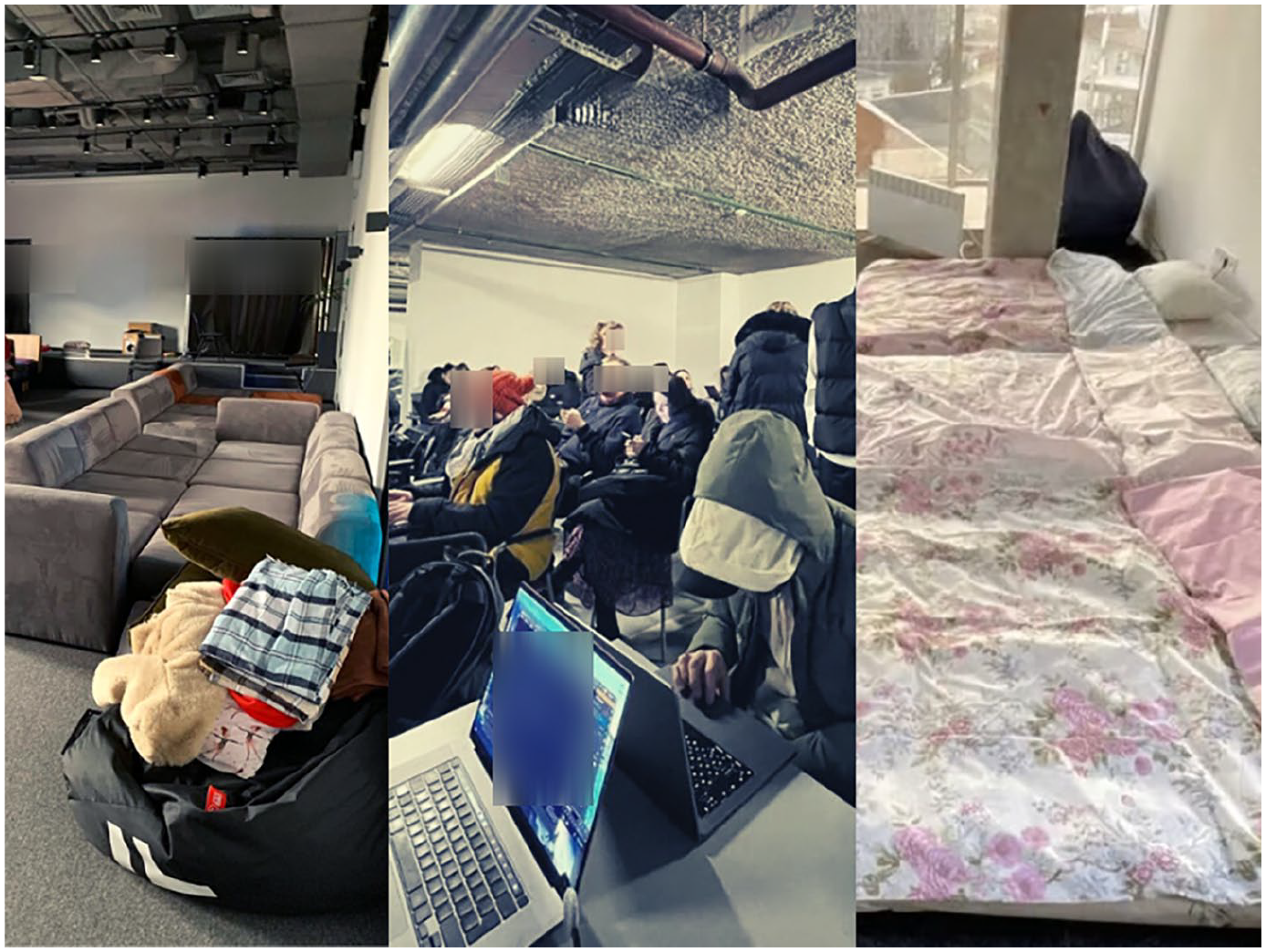
Sheltering in the (work)space.
However, some group-purposed coworking spaces, such as CS6 located in high-risk areas, have been more cautious about their role in communal transformation and have prioritised the safety of their members. The latter indicated that there were likely two organisational transformation streams, with the first one following a somewhat active transformation and redesigning their services to cater for local needs, while the second transformation has been more of a passive one, with the coworking model staying similar to the pre-war model.
The role of our coworking spaces should also involve a degree of leadership. Specifically, during times of war, we will not put our residents and ourselves at risk. This includes actively transforming our locations into volunteer centres, for example. I do not want a missile to hit us later, and I do not want to take responsibility for the lives of hundreds of people. (CS6)
Employment opportunities and behavioural changes
Some coworking spaces provided employment opportunities for internally displaced persons, reflecting a commitment to social responsibility. CS14, for instance, employed displaced persons from Donetsk, Dnipro as well as central and eastern Ukraine.
In the place where our coworking space was opened, there used to be a rather large coffee shop, which closed with the beginning of the war. We decided to expand the coworking space there. [. . .] We reopened in a new format, and now we have more than 12 employees, half of whom are internally displaced. We help them with work. We employ people from the Donetsk region, the Dnipro, and the centre and east of Ukraine. (CS14)
The war also brought about a change in the coworking users’ behaviour. As explained by CS15, before the war, users would typically opt for at least a month’s workspace. However, due to uncertainty, users now prefer shorter-term membership subscriptions.
The main change in the typical behaviour of our new customer was the short duration of subscriptions. Before the war, residents often chose a workspace for at least a month. Today, many people do not have a clear understanding of where they will be tomorrow, so the demand for weekly/bi-weekly season tickets has increased significantly. (CS15)
Community influence and support
Coworking spaces also stepped up to provide networking opportunities for members, promote collaborations between creative professionals and organise charity events. For example, CS16 provided workspace for those who passed their startup programmes, and they also hosted various educational events.
We had startup programs. We met people who passed these programs and provided them with workplaces so that they could work and develop their businesses in our coworking space. We also cooperated with public youth organisations and gave them space to hold various educational events. It is difficult to say what will happen next. (CS16)
Furthermore, coworking spaces played a role in rebuilding local and regional societies post-war. CS11 and CS14 explained how they provided space for workshops and held meetings to do something useful for the local community. They believed their active networking would contribute to new community creation.
We are sure that coworking residents from IT companies will strengthen the Ternopil IT cluster. There are also regular events for other groups, such as dentists, who will generate their community. There are ideas for involving the cycling community of Ternopil in improving the local infrastructure. In general, the active networking that takes place in a coworking space will contribute to the creation of new communities. (CS11) We provide space for workshops. For example, we held a master class for local craft producers. We also have regional leadership meetings and try to do something useful for the local community. (CS14)
Although quantifying the exact impact of coworking spaces on post-war societal rebuilding is challenging, evidence suggests that they play a significant role. Coworking spaces in Ukraine not only support economic growth and development but also foster community building. They provide essential services such as workshops and educational programmes, thereby aiding in the economic and social recovery of their local communities.
We are more focused on improving the emotional health of our next generation so that children can forget about this horror, live everyday life, and rebuild Ukraine. We are currently working on a charity event. (CS7) All the efforts that will now be concentrated in our project are how to avoid the scenario of depressive development and focus on the transformations. The main goal is to rebuild and revive the region, attract creative people, and restore the city’s quality space. (CS10)
Discussion and theoretical contributions
This study deepens our understanding of coworking spaces’ transformative role and resilience under significant social disruption, like war, providing substantial theoretical contributions to the literature on social disruption and social innovation in a specific regional context. The Southern and Eastern coworking spaces demonstrated dynamic resilience by adopting automation and cost-efficiency measures, thus counteracting the devastating impacts of the war. Central spaces innovated their business models, offering flexible conditions and special discounts to sustain operations while extending support to war-affected communities. Western coworking spaces, while also demonstrating adaptability, made a shift towards socially beneficial initiatives, supporting displaced persons and launching projects for vulnerable populations. In highlighting these shifts, our analysis underscores coworking spaces’ significant role as socio-economic institutions in crises. Their adaptability, resilience, and contributions to community building and recovery project an optimistic future contingent on post-war recovery and security guarantees. That said, we can delve further into the findings.
First, the data uncover the dynamism of coworking spaces as they adapt and evolve in response to social disruption. They illuminate how these spaces undergo a temporal transformation, primarily influenced by the changing social networks associated with them, driven by creativity and innovation in response to local exigencies. This is a notable contribution, providing insights into the plasticity of coworking spaces under distressing circumstances.
Second, the study reinforces the concept of ‘social innovation’ within coworking spaces. It shows how these spaces transition from being mere work-centric entities to potent social institutions that significantly contribute to rebuilding, empowering and nurturing their local communities amid crises. It emphasises the shift in the sense of community from a confined space-oriented perspective to a broader one, encompassing the local population and extended networks. This transformative potential of coworking spaces provides a critical lens to understand the role of workspaces beyond economic functionality.
Third, the findings resonate with the theory of social disruption (Ketokivi, 2009), wherein disruption can strengthen community bonds and foster social innovation (Moralli and Allegrini, 2021). Under the strain of war, the coworking spaces exhibit resilience and actively rebuild local communities and provide social support and can to some extent be viewed as the epicentres of rebuilding the post-war economies across various Ukrainian regions (Martin, 2021). This reflects the spaces’ sense of social responsibility and a strategic shift towards a common cause and goes in line with Sutton and Arku’s (2022) findings that suggest regional centres that are one of the driving forces behind regional economies undergo changes that generally result from uncoordinated, collective action in an attempt to be resilient to exogenous shocks. This significant aspect extends our understanding of the transformative power of coworking spaces under disruptive circumstances.
Fourth, the study bridges the research gap by examining how coworking spaces respond and adapt to significant social disruption. The findings align with April et al. (2019), who suggest that actors often make creative decisions during a process leading to transformative breakthroughs. This aligns with the observed transformation of Ukrainian coworking spaces in response to the disruption caused by war (Figure 3). Further research may delve deeper into the mechanisms and factors enabling this creative decision-making process and change in communal spaces.
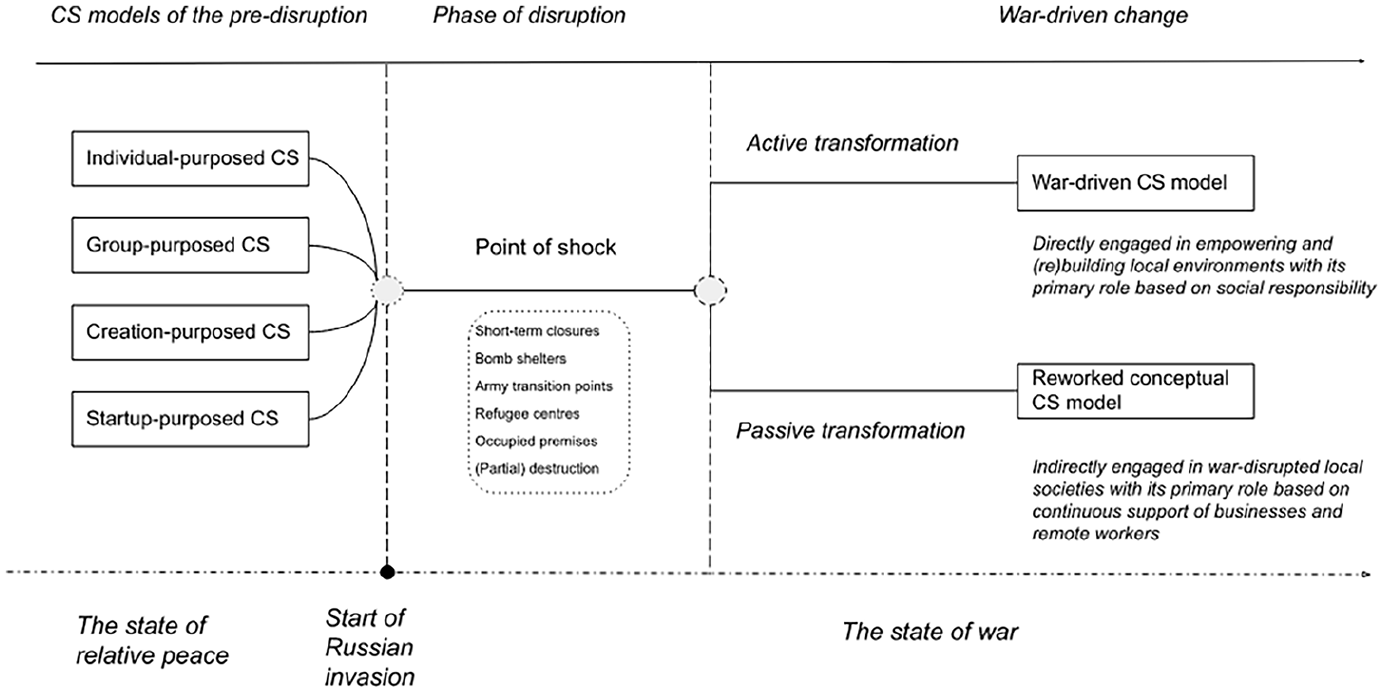
The war-driven transformation.
The analysis indicates that coworking spaces react differently to social disruptions, regardless of their type. Initially, they focus on security and support, and then evolve into active or passive models. Individual and creation-purposed spaces tend to be more active, directly aiding community recovery, while group and start-up-purposed spaces adapt their core functions to the new context. These variations are influenced by social responsibility, community empowerment goals and the need to maintain operations for local businesses and workers.
A standout revelation from this study is the temporal and evolving nature of coworking space transformations in war-affected Ukraine. Driven by dynamic social networks anchored in creativity and innovation (Perry-Smith and Mannucci, 2017), these spaces epitomise the adaptability potential during social upheavals, channelling their energies to uplift local communities. The community ‘spirit’ evolves from space-centric to populace-oriented, fostering deeper ties with localised communal networks. Echoing April et al. (2019), our findings suggest that these spaces underwent transformative spurts through innovative decision-making in the face of war-driven social disruptions. While the COVID-19 pandemic and war have uniquely shaped coworking spaces, their combined impact offers rich theoretical insights. The pandemic nudged a global pivot to remote work, temporarily sidelining coworking spaces. Despite this, spaces recalibrated, adopting safety measures, and catering to a dispersed workforce. In juxtaposition, the Ukrainian conflict accentuated the role of coworking locales as community anchors, resiliently operating amid the turmoil, underscoring their quintessential community-centric ethos. With that being said, the key finding is the demonstration of coworking spaces’ inherent resilience and their pivotal role in community-strengthening during crises.
Conclusion, limitations and future research implications
In this study, we have delved into the resilience and transformation of coworking spaces amid the profound social disruptions caused by the war in Ukraine. Our exploration, anchored around the adaptation typology presented earlier, reveals how these spaces have transcended their traditional roles and shifted their models. Far from being mere hubs for independent workers or teams, Ukraine’s coworking spaces have evolved into bastions of community strength, united by a common purpose in the face of adversity. The findings, now framed by our theoretical model, illustrate two distinct types of coworking spaces and their adaptive strategies, spotlighting their roles as active agents rather than passive recipients in times of crisis. These spaces have become crucibles for communal bonds and collective resilience, fostering a shared sense of duty that propels both social and economic contributions.
That being said, revisiting the theoretical underpinnings of our study, it becomes evident that coworking spaces, particularly in the context of disruption such as the Russian–Ukrainian war, represent a microcosm of societal resilience and adaptability. These spaces, as theorised in our research, transcend their conventional roles as mere workspaces, emerging as critical social infrastructures that dynamically respond to and evolve amid significant societal disruptions. This research contributes to the coworking literature by highlighting the role of these spaces in fostering community resilience, underscoring their importance in sustaining, and revitalising local communities during times of crisis. Therefore, coworking spaces in Ukraine, amid the war-driven upheaval, epitomise the very essence of communal resilience and innovation, embodying a practical manifestation of theoretical concepts in social disruption and community-driven adaptability.
With that, the Ukrainian case presents an unparalleled opportunity to examine coworking spaces’ capacity for communitarian engagement. The adaptive strategies observed offer valuable insights into the theoretical discourse on communal resilience and innovation in coworking practices. Yet, the study has a set of limitations. The main limitations include its focus on a specific geopolitical context – that may not be generalisable to coworking spaces in different cultural or political environments. The study’s timeframe – although spanning throughout most of 2022 – may not capture the long-term effects of the war on coworking spaces and their communities. Finally, while rich in detail, the reliance on qualitative methods limits the ability to measure the impact of disruptions quantitatively.
Future research should expand upon the insights from Ukrainian coworking spaces, exploring how these community-driven environments function under various social disruptions. Comparative studies across different geopolitical contexts could elucidate the role of cultural, economic, and political factors in shaping the resilience and adaptability of coworking spaces. Longitudinal studies, for example, could assess the long-term impacts of crises on coworking models and community dynamics. Investigating the interplay between coworking spaces and state/policy mechanisms would also provide a deeper understanding of how public policy can support or hinder the transformative potential of these spaces in times of social disruptions. Last but not least, there is a need to explore the psychological and social wellbeing of individuals within coworking communities during disruptions, providing a more human-centric perspective on the coworking phenomenon.
Footnotes
Funding
The author(s) disclosed receipt of the following financial support for the research, authorship and/or publication of this article: This research was supported by the COST Action CA18214 ‘The Geography of New Working Spaces’.

Data availability statement
Data sharing not applicable to this article as no datasets were generated or analysed during the current study.