




Abstract
This article aims to explore an under-researched area of the entanglements between festivals and individual/collective identities by focusing on the material culture of festival fandoms. We start by conceptualizing festival fandoms as communities of people who attend the same festival or a similar festival type on a repeated basis. Our research focuses on how these recurrent festival attendees materially express their belonging to such communities, and how they claim being a fan as part of their identity. The core of the article starts with three conceptual sections. There, we discuss the existing literature in different related areas of research, which we link together utilizing Bourdieu’s forms of capital. First, we look through the theoretical lens of social capital at how various types of festivals foster identity communities and contribute to their visibility. Second, we explore the function of festival merchandising from the perspective of both event managers and festival attendees within economic capital frameworks. And third, we explain that fans use derived products to mark their status and belonging to a community of taste as related to cultural capital conceptualizations. The following sections of the article are based on auto-ethnographic approaches. Through reminiscence and in-depth interviews with each other, we recount personal narratives of reflective practice and situate our lived experiences within the aforementioned conceptual contexts. As a conclusion, we state that investigating the material cultures of festival fandoms has the potential to contribute to future evolutions of event management.
Introduction
Research into festival cultures has been developing for the past few decades as part of the ‘critical turn’ in event studies. Critical event studies draws upon cross-disciplinary literatures and methodologies from broader social sciences and humanities subjects to apply such frameworks and approaches to special event environments. Festival scholars explore the social world; this includes the socio-cultural, economic, political and, more recently, environmental and spatial dimensions that are constructed by societal influences of a time and place. As Finkel and Platt (2020, para. 1) state, ‘Festivals have often been bridges between people and places, linking personal geography with collective experiences. The symbolic and affective dimensions of festivals can provoke the re/negotiation of individual and group identity and place-based heritage through representational displays of meaning’.
This article seeks to explore an under-researched area of the entanglements between festivals and individual/collective identities by focusing on the material culture of festival fandoms. Historically, during festivals, a sense of community was often defined by place, local culture, rituals, performances, or other symbolic and physical factors. More recently, festivals attract interest beyond these traditional reasons, and create and gather communities of taste (Bourdieu, 1989). Quinn and Wilks (2013: 17) suggest there is a need for ‘a more holistic investigation into the kinds of social connections built up in the course of festival activity’. The dearth of previous studies focusing on the materiality of festivals demonstrates that this is an area which would benefit from greater investigation. In addition, there is a paucity of research regarding festival fans, who we conceptualize as those who attend the same festival or a similar festival type (e.g. punk rock festivals, book festivals, classical music festivals) on a repeated basis. Through analysing consumer behaviour of festival fans, we seek to understand the symbolic meanings of tangible merchandise. We explore how recurrent festival attendees materially express their belonging to such communities, and how they claim being a fan as part of their identity. Here, we do not understand identity as an essentialist concept but as a ‘strategic and positional one’ (Hall, 1996: 4). Identities are socially constructed as they
emerge within the play of specific modalities of power, and thus are more the product of the marking of difference and exclusion, than they are the sign of an identical, naturally-constituted unity – an ‘identity’ in its traditional meaning (that is, an all-inclusive sameness, seamless, without internal differentiation). (Hall, 1996: 5)
Throughout the article, we analyse the consumption of festivals’ merchandising as part of the process of the identity construction of the festival fan. Yet, we also claim that this fan identity intersects with other identities. In our analyses, we mostly draw on gender and sexual identities, but similar analyses of race, class or religious identities could, for instance, constitute approaches to be further explored.
Based on autoethnographic approaches which recount personal narratives of reflective practice, we situate lived experiences within the conceptual contexts of festivity, fan studies and material cultures to contribute epistemic meaning to interdisciplinary study. This has wider practical implications for festival management and lifecycle sustainability as well as progress, and critical thinking about the concepts of status, identity and culture and how they intersect in festival landscapes. We begin by examining the linkages between festivals and community identity, considering how merchandising and material culture become the physical manifestation of a specific sense of self, which is also emblematic of ‘tribal’ belonging.
Festivals and community identities
Bennett et al. (2014: 1) suggest, ‘In a world where notions of culture are becoming increasingly fragmented, the contemporary festival has developed in response to processes of cultural pluralization, mobility and globalization, while also communicating something meaningful about identity, community, locality, and belonging’. Thus, the questions of community and identity have been central to the understanding of contemporary festivals. Jepson and Clarke (2015: 1) support this by demonstrating how deeply embedded events are in societal culture, generating ‘community values, customs, and particular types of behaviour’. The emphasis on community celebration to reinforce shared values and strengthen self-identity has led many scholars to make the connection between festival experiences and social capital. Putnam (2001), one of the leading social capital theorists, sets out that
social capital refers to connections among individuals. These social networks and the practices that arise from them are closely related to ideas of civic virtue . . . Social capital consists of active connections among people built by trust, mutual understanding, and shared values and behaviours that bind the members of human networks and communities and make co-operative action possible. (Finkel, 2010: 276)
Within this framework, Wilks (2011) and Arcodia and Whitford (2006) have analysed social capital as it relates to festival attendees and motivations for attendance due to building community cohesion through collective celebration. However, as Sadd (2010: 268) suggests, ‘community does not always have to be just residents, as communities of place arise through linkages and commonalities of place as well as communities of associations, interest, and attachment’. It is the latter type of communities that we explore here, the communities of festival fans. These are individuals who share a collective interest and attachment to certain cultural festivals and express their fandom through objects related to these festivals, which, in turn, strengthens their social capital within their communities.
Although there is an ongoing growing body of scholarly work surrounding community festivals (e.g. Clarke and Jepson, 2011; Derrett, 2014; Duffy et al., 2018; Finkel, 2006; Getz and Frisby, 1988; Sharpe, 2008; Walters and Insch, 2018), the current literature is scarce in its inquiry concerning the materiality of community celebrations and festivities. This requires more in-depth exploration of how festival attendees materially express their belonging to such communities, the association between objects and social capital, and what this may mean in terms of identity creation and expression. Drawing from performance studies, Howell (2013) investigates these ideas with regard to community ritualistic traditions, specifically examining costumes and food. She argues that there is an ‘exteriorization of place embodied in performance, costume, and masque in festival enactments. There is a sensate physicality in what the [Badalisc] festival represents, through specific foods, costumes, sounds, and traditions’ (Howell, 2013: 45). During these festivals, a sense of community is defined by place, local culture, traditions and ‘folklore’, and the costumes, food and embodied traditions all serve the purpose of expressing this externally to reinforce the significance of belonging.
During festivals, especially cultural festivals, the role of objects is integral to the creation of community lore and often demonstrates community belief systems and values. More often than not, this is gendered in a binary, heteronormative manner. Festivals can reinforce gender norms within a society even through temporary inversions during the festivities, which validate the norm by allowing for a transitory reversal (Stallybrass and White, 1986). Bakhtin and Iswolsky (1968) in his seminal work, Rabelais and His World, describes the carnivalesque as typified by the concept of the world upside down, poking fun against social norms under the guise of fantasy before the community makes a sober return to normalcy after the temporary period of festivity. Gilmore (2014) explores this with regard to carnivals and processions in Spain. Through costumes and ceremonial artefacts, power dynamics are performed and reproduced by community actors. This involves men and women cross-dressing in a clownish manner, which effectively upholds heteronormative narratives of the codes of traditional Mediterranean masculinity and feminity by showing the absurdity of what happens when gender norms are transgressed. Another example of this is the Up Helly Aa fire festivals on the Shetland Islands, located off of the northern coast of Scotland. Based on a re-imagined past involving Viking ancestry, Up Helly Aa’s all male participants tend to express exaggerated masculinities (Finkel, 2010) through the materiality of animal representations. For example, bears, wolves or stag antlers on helmets; feathered headdresses; fake fur and wild animal paw prints on tunics; ravens or other birds of prey on shields; all culminating in the burning of a wooden replica Viking longship with a dragon rising from its bow (see Figure 1). These symbolic material exchanges of the festival experiences help to maintain the social structures of the community.
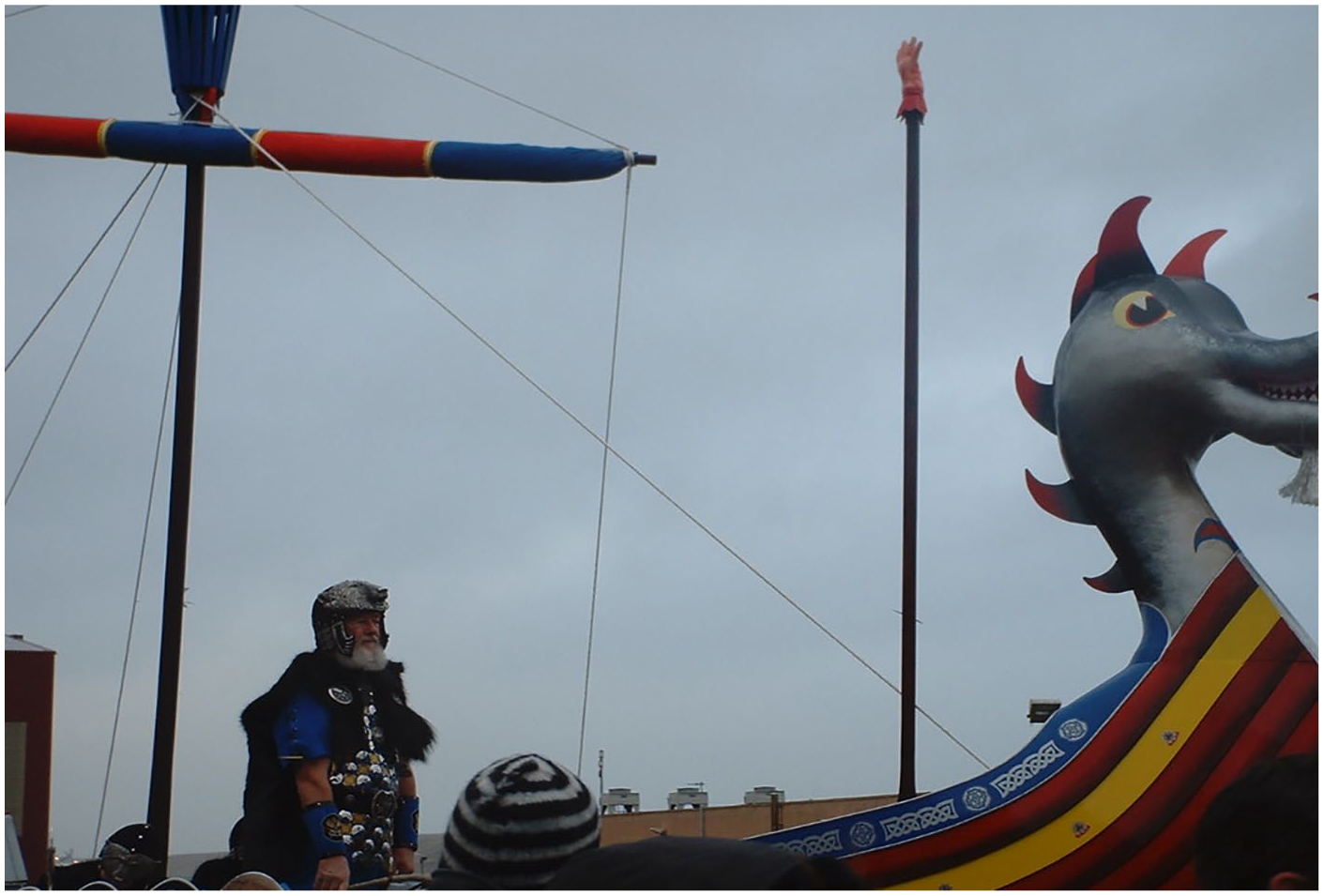
Up Helly Aa in Lerwick, Shetland (2007).
In addition, the materiality of Texas rodeo preserves traditional gendered beliefs mainly through colour-coding merchandise – the classic blue for boys and pink for girls as well as a more contemporary camouflage print/glitter sparkle divide (see Figure 2). This involves gender segregating the classic material culture of the ‘Wild West’, such as cowboy boots, cowboy hats, belt buckles and checked shirts. Not only does this demonstrate the commodification of an imagined and glorified past based on masculine dominance and violence, it also legitimizes the gender order in this festival environment whose audience outreach is targeted at families (Danby and Finkel, 2018). Framed in Bourdieu’s (1998) conceptualizations of male domination and symbolic structures in social life, these case studies exemplify the role of cultural heritage festivals as mechanisms which reinforce the reproduction of male-dominated narratives (Knox and Hannam, 2007) and gendered identities through material culture and objects.
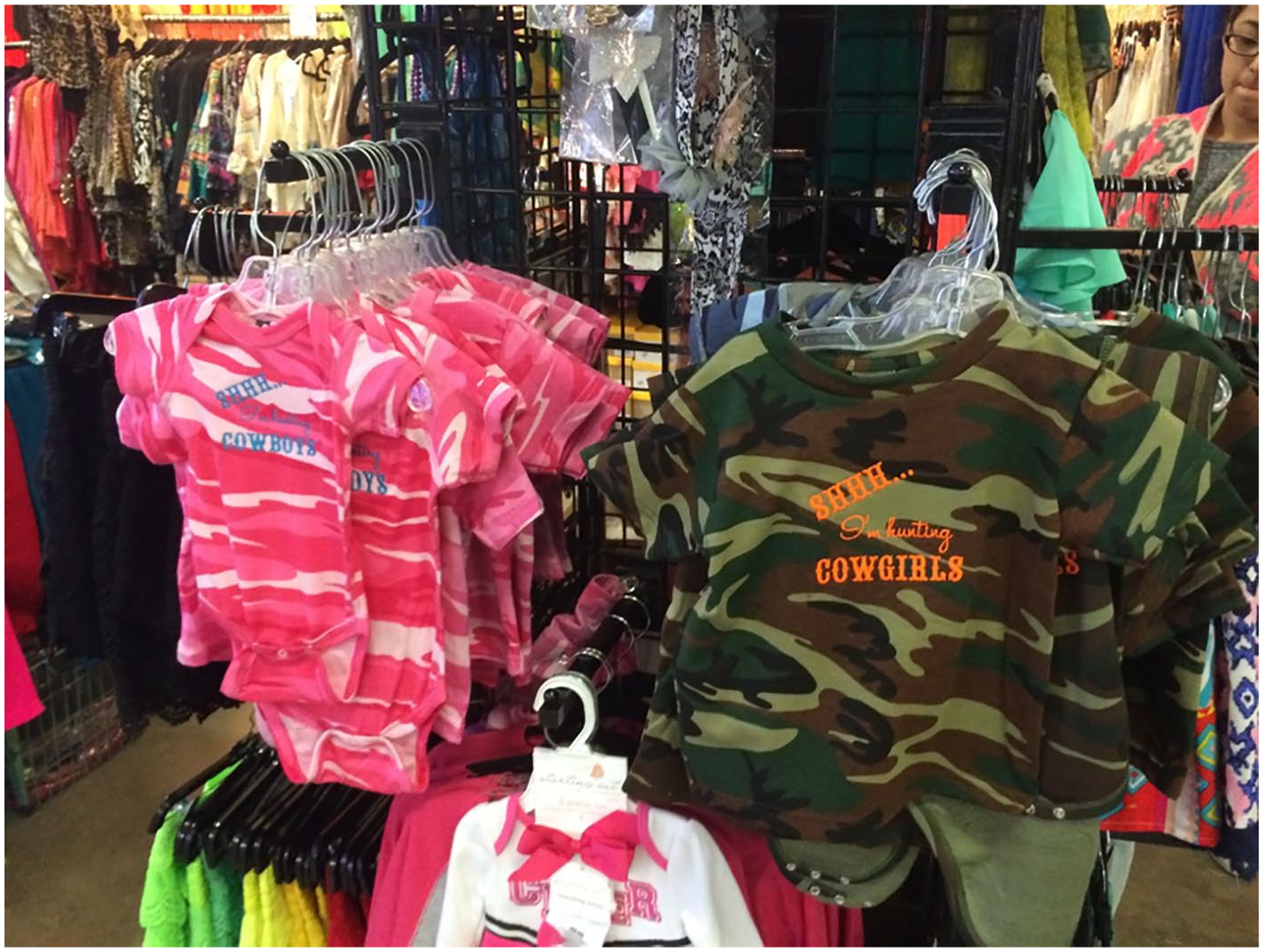
Selection of gendered merchandise at Star of Texas Fair and Rodeo in Austin, Texas, USA (2015).
However, it is worth stating that such displays of individual and collective identity through ritualistic objects do not only exist at heritage festivals; indeed, this can be seen at any type of festival where a community is fostered which connects on some level to identity formation and sense of self in relation to a group. Ritually, repeated celebrations no longer simply revolve around religious feast days or long-established holidays. In this contemporary ‘society of the spectacle’, so criticized by Debord (1994), almost all festivals have the potential to develop communities centred on shared passions, along with shared ‘things’ to signify participation, and, in many cases, belonging. For example, Barrière (2019) found that some queer_feminist punk festivals ask attendees to fill in and wear a ‘name and pronoun tag’, that is, a small piece of adhesive paper that displays your chosen name and pronouns (see Figure 3). These ‘name and pronoun tags’ are very small objects; yet, they are considered very important in the queer (punk) culture because they may help attendees claim non-binary identities and experiment with personal gender. This kind of visible symbol of awareness, tolerance and respect has a kind of a distinct value by connecting individual identity with collective identity at these events. This way, these festivals seek to distinguish themselves from the male-dominated mainstream punk rock scene by empowering participants through creating safe spaces for expression and engagement.
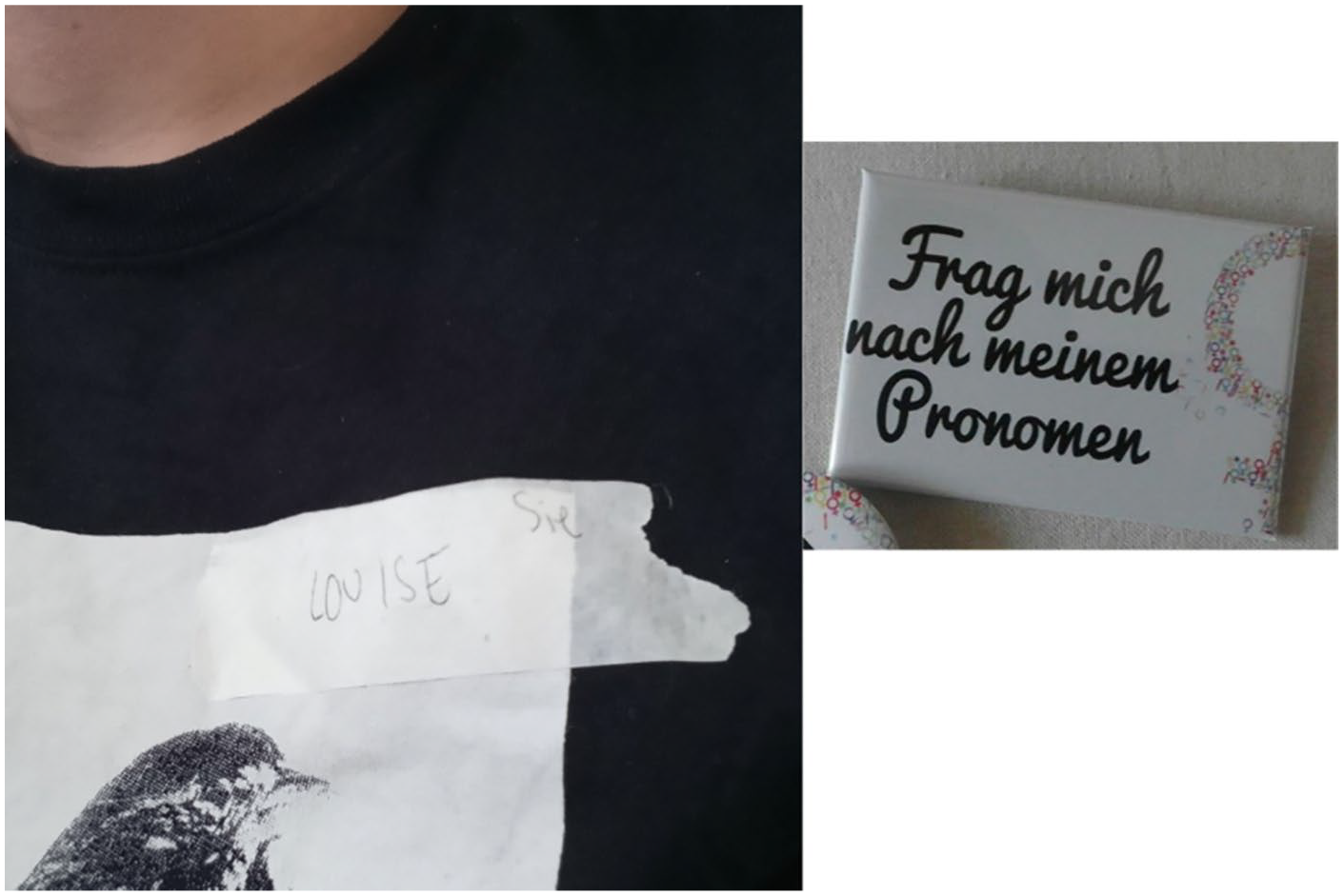
Examples of ‘name and pronoun tags’ from German queer_feminist punk festivals. On the left, ‘Sie’ refers to the German feminine pronoun. On the right, the text means ‘Ask me for my pronoun’.
Although more recent festivals are implementing add-on aspects, such as the above, to create a certain type of experiential environment, the material culture of the majority of festivals is still primarily based on merchandise. The following section explores this in more detail in terms of symbolic meanings for consumers and management implications for producers.
Festivals and merchandising
The cultural commodification which permeates almost all aspects of contemporary everyday life also extends to festive periods, and festival participants have become consumers not only of experiences, but also of their selfhood through the acquisition of tokens, souvenirs and merchandise. For example, Doyle (2012: 160) explores merchandising and retail in special events. He relies on the example of the wedding to analyse the role of the merchandise and its consumption:
Certain aspects of the merchandise may be consumed in situ, whereas others, such as the favours and the album, may serve as remote reminders of that experience. Favours and other transportable merchandise represent a ‘tangible memory’ of the wedding in the same way that a holiday souvenir provides a ‘tangible memory’ of another place.
In comparing event-related merchandise with tourism practices, the event takes on an escapist or liminal quality, where a physical memento acts as a reminder of the experiential encounter even if long-distance travel was not necessary. ‘Souvenirs help . . . recall a certain time, experience, and place and allow to move from the normal, ordinary state to the sacred, extraordinary state’ (Way and Robertson, 2013: 121). Given the symbolic meanings assigned to such souvenirs, it could be argued that the actual object may not be as important to many people as the memories it evokes of the experience. As Collin-Lachaud and Kjeldgaard (2013: 286) state, ‘The motivation is not in the “product” itself, but rather the emotions, communion, and experiences’. This, then, creates an affective retail opportunity for festival and event producers.
Thus, according to Doyle (2012: 163–164), there are six main purposes of merchandise:
Income generation
Reward
Brand/product awareness
Integral component
Experience enhancement
Experience memory
Indeed, different stakeholders will have different purposes for offering merchandise (Doyle, 2012). Some of these purposes are specifically related to the organizers’ motivations (e.g. income generation, brand/product awareness); others are more relevant to the participants’ perspective (e.g. reward, experience enhancement, experience memory).
However, in festival studies, merchandising is often mentioned solely as a source of income for the organizer. As Doyle (2012: 160) suggests, ‘There are a number of players with an interest in the merchandise . . . . The interaction that each player has with the merchandise will vary according to their roles’. For instance, in a study on the evolution of the management of the Australian Wintersun Festival, Mules (2004) observes that international visitors have been identified by the festival’s director as a group more likely to invest in souvenirs and merchandise consumption (p. 98). They thus have a higher impact on the festival and the local economies.
Yet, there are limitations to viewing festival merchandise entirely through an economic lens. Bourdieu (1986: 241) distinguishes between three forms of capital: economic capital, cultural capital and social capital. In many respects, merchandising represents entanglements of capital. Although economic capital is important to festival organizers in a pragmatic financial sense, such gains are not possible without the social and cultural capital the merchandise holds for the fans. Fans purchase these objects mainly for their symbolic value. They attain cultural capital in their fandom networks by owning these objects as markers of status. They acquire social capital in their fandom communities by displaying these objects to convey a shared sense of identity. In this way, although the objects are commercialized, they still have meaning for fans and are considered valuable beyond monetary worth.
Pride parades are another example of the commercialization of identity in a festival space. However, Pride merchandise and symbols are argued to convey political support in addition to commercial motivation. And, as such, due to the political nature of Pride parades, the overt commodification of LGBTQ+ activism through rainbow decorated merchandise has been widely criticized. Sponsors of Pride parades, especially retailers, are seen to capitalize on the trendy nature of rainbow products for their own private profit. Dashper and Finkel (2020: para 19) discuss that
this commercial imperative can limit some of the disruptive potential for these events to nurture creative ways of doing gender and effective ways of undoing or redoing gender due to the emphasis on commoditization of lifestyle and related material culture.
However, another viewpoint is that rainbow flags and other related articles of Pride are a way for people to show solidarity and support with this cause, not only for those to communicate that they belong to these communities, but also for others to convey that they are allies. For example, a rainbow flag in the window of a shop or restaurant connotes a safe space for LGBTQ+ individuals. Therefore, although there is a definite commercial element to merchandising, in this instance, there are also political messages being framed in Pride material texts.
Similarly, Taylor (2014) discusses this political versus commercial tension within which the material culture of Pride parades and festivities is embedded. She considers Pride parades and their attributes as part of both the formation of temporary public queer spaces and of their growing commodification. Yet, she also addresses the development of alternative queer events, such as the Gay Shame Festival or the Queeruption Festival. These festivals indeed foster their own material culture, rendered as the avatar of a struggle against mainstream homonormativity; this includes clothes,
1
media materials (flyers, posters, zines, see, for instance, Figure 4), food and so forth. In such a context of a fight against commodification, material ‘do-it-yourself’ articles are to be considered as their very own symbols of the resistance (Taylor, 2014: 37–38):
Symbolic of a counter-discursive challenge to what they see as the commodification of pride, hand-sewn banners and the consumption of communally prepared vegan food, for example, are pitted as ‘ethical’ alternatives to Budweiser and ‘sweatshop-produced rainbow flags’ (Bernstein Sycamore, 2008).
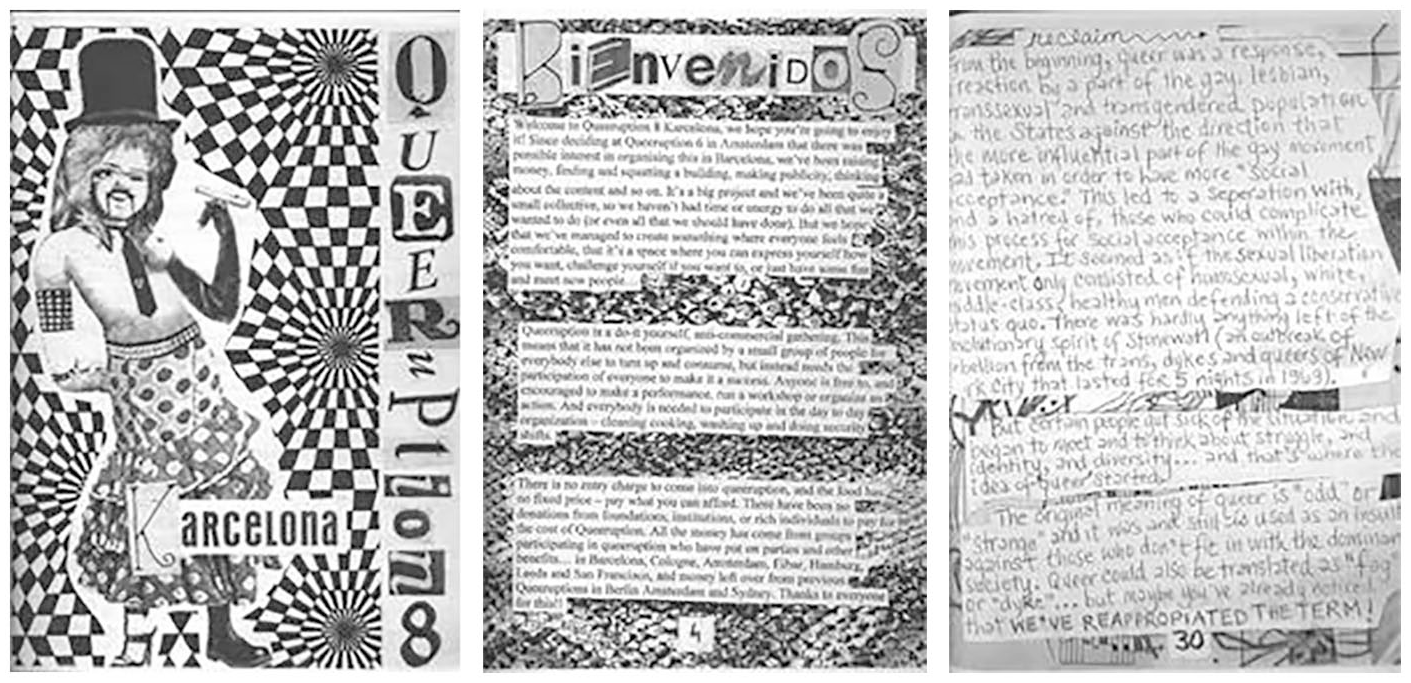
The ‘Queeruption Barcelona’ zine displays a DIY punk-inspired aesthetic as well as illustrations of an alternative and underground queer culture. As a low-cost amateur micro-media practice, making a zine also stands as a way to resist the mass mediatization of mainstream Pride festivities.
Furthermore, Way and Robertson (2013: 118) explore attendees’ behaviours at the American Bike, Blues and BBQ (BBB) Festival to ‘[improve] the shopping aspect and structure of the festival industry’. Drawing on studies on tourism and souvenir shopping, their field investigation suggests that the tourists attending the event particularly appreciate the souvenir T-shirt, which has become a ‘collector’s item’ for both regular attendees and newcomers.
By comparing consumption of festival official merchandise with souvenir shopping in tourism businesses, Way and Robertson (2013) are making a move towards the understanding of the relationship of fans with merchandise. Indeed, this case study shares similar features with the functions of merchandising products in fan studies. The ‘sacred’ is a central concept in fan studies research. Hills (2000) specifically elaborates on the use of a vocabulary referring to cult and religion, which he calls ‘neoreligiosity’ in media fan studies. The next section joins up at the crossroads of identity, materiality and fandom.
Fan studies, community status and merchandising
As Sandvoss (2005: 3) asserts, ‘Fandom still mirrors the conditions of popular culture, consumption, and their academic analysis. It has become impossible to discuss popular consumption without reference to fandom and fan theory’. According to fan studies, the consumption of merchandise products has indeed a very prevalent role in the development of a fandom and in the construction of the fan’s identity. It is a way to affirm one’s own tastes and exhibit their participation in a community. This is in keeping with Bourdieu’s (1989: 6) argument that tastes function as status markers, and, as such, ‘taste classifies, and it classifies the classifier’. Although the narrative that we present here does not refer specifically to social class as Bourdieu (1989) intended, his theories on distinction through symbolic capital are relevant here: ‘Symbolic goods, especially those regarded as the attributes of excellence, [. . .] and also the ideal weapon in strategies of distinction, that is, as Proust puts it, “the infinitely varied art of marking distances”’ (p. 66). If we apply this to popular culture and festival contexts, the acquisition and exhibition of merchandise marks a consumer as a fan with distinctive tastes in accordance with community habitus, which Bourdieu and Wacquant (1992) define as the physical embodiment of cultural capital.
There can be seen to be two parts to fan habitus – the personal and the collective. Hein (2011: 3) therefore considers the fan as, first, a consumer, who is particularly craving merchandise and derived products (e.g. T-shirts, pins, stickers, posters, hats, keychains, etc.) as an affirmation of self. He suggests that the identity construction of the fan goes through not merely an internal and individual process, but also through an external process of self-affirmation and exposure. Seeking inclusion and differentiation, the fan who wears, say, a rock band T-shirt affirms their belonging to a community of tastes and distinguishes themselves from other social groups. As an inclusive signifier of group identity and ‘othering’ of those not belonging to the community, the derived product becomes a ‘totem’ that contributes to the feeling of communal belonging, facilitates recognition and interaction between peers and keeps the lay public away (Hein, 2011: 3).
Hein’s (2011) writing is keen to show both the ‘sacred’ dimension – he considers people who are not part of the fandom as ‘profanes’ – and the communal dimension of merchandise consumption within communities of fans. Sandvoss (2005: 8) supports this by stating that objects of fandom encompass ‘all forms of consumption in which we build and maintain an affective relationship with mediated texts and thus share fundamental psychological, social, and cultural premisses and consequences’. In this way, the article of fandom acts as a collectively understood status symbol between those within the community as well as a taste signifier for those outside of the fan circles.
However, Collin-Lachaud and Kjeldgaard (2013: 287) propose festival fans prioritize collective engagement more than individual fulfilment due to repeated behaviour and ritualized performances, which they suggest nurtures an emotional attachment to the festival and the communities associated with it. They argue, ‘In the context of annual festivals and their ritualized meanings for consumers, loyalty appears as, 1) social rather than individual; 2) outcome of a social evaluation of emotional experiences rather than individual satisfaction; 3) temporally; and, 4) spatially structured’. This may apply more fully to certain boutique festivals, such as Burning Man, which emphasize the communal nature of the festival society in an effort to realize more ephemeral ‘transformational’ experiences through building relationships rather than standard popular music festivals. This often is more transactional by incorporating more mainstream commercialized elements, such as merchandise/ souvenirs, as status symbols.
While the neoreligious aspect of music festival fandoms show links with tourism shopping, as analysed by Way and Robertson (2013), the concept of community is also similar to that employed by Bennett et al. (2014) when exploring the festivalization of culture. Yet, if Hein (2011) is specifically interested in popular music fans, the same can be applied to sport fans, as Derbaix et al. (2002) and Derbaix and Decrop (2011) explained in their studies of material possessions of football (soccer) fandoms. Football merchandising is not only consumed during games, but also in ‘profane everyday life’ (Derbaix et al., 2002: 511). In both studies, the authors start by recalling that sport merchandising generates a large amount of money. Then, they look at the fans’ perspectives. Why do football fans acquire products in the colours of their favourite teams? Their findings are similar to Hein’s (2011) and many other fan studies research: merchandising consumption is a matter of affect, distinction, community and identity. Merchandised products may be financially lucrative to producers, but they also have a sacred dimension to consumers and are engaged as memories of experiential moments by fans. The subsequent sections examine this further through reflective ethnographic lenses of empiric research.
Methodological approaches
We employ autoethnographic approaches to recount personal narratives which illustrate key points raised in the conceptual sections of this article. Autoethnography is increasingly becoming recognized as an effective qualitative method for situating lived experiences into social scientific investigation for greater understanding of cultural meanings (Jones et al., 2013). Through self-reflection and writing to explore personal experiences, researchers can gain insight into self, other and culture (Chang, 2009). Yet, autoethnography has also been highly criticized and depicted as a narcissistic or ‘intellectually lazy’ methodology. Griffin and Griffin (2019: para 29) provided a defence of this approach. They particularly advocate for autoethnography as a reflexive research methodology that ‘recognises the role of the researcher [. . .] in the production of knowledge and development of the process’. They argue for an ethical, analytical and theorized use of autoethnographic methods, which is some advice we specifically followed while working on this piece, as we explain below.
Given the affective and personal experiences evoked by this topic, we decided this was the most appropriate method to apply, with an eye to developing innovative methods to this under-researched area. In this article, Author 1 is 25 years old, French and a punk and rock music festival fan. Author 2 is 44 years old, American and British, and a cultural festival fan, including those which feature popular music. Because we are from different generations and nationalities, and have varied interests and attend different festivals, we bring diverse perspectives and experiences to this research. We seek to embed our own practical fandoms into the conceptual context of festival material cultures by drawing on our own lived experiences and emotional attachments. Through conversations on Twitter and other collaborative online spaces, we reflected on and drew out each other’s festival fandom stories and discussed items of festival merchandise and materiality. Storytelling is an effective method when examining cultural norms and differences in social environments because stories function as a vehicle to pass on knowledge in a social context (Andrews and Hull, 2009). Our online discussions were part reminiscence and part in-depth interview, evoking a reflexive approach to the research process (Braun, 2017). We learned about each other’s festival cultures, which we have been immersed in separately throughout our lives; yet, we still found common experiences and could relate to one another’s narratives. This illustrates that festival experiences and associated tangible ‘things’ are often universal and do, indeed, reflect our shared social worlds.
Building bridges between festival studies and fan studies: personal narratives
In terms of merchandising products found at most standard music festivals, T-shirts, tote bags, baseball caps and magnets are the most popular items on sale worldwide. However, there are a few other objects, such as festival wristbands and plastic cups/water bottles that can be kept by the participants after the event has ended. They are not exactly sold as merchandising, and they are usually not advertised as such, because they generally are an integral component of the festival experience. People use them and take them home with them, perhaps as part of a collection. Author 1 reminisces:
I remember that when I attended my first music festival with my mom in 2012 (I was 17 at the time), she kept some festival’s beer cups and one year later, when I moved into my first apartment, she gave them to me as some kind of souvenir from that experience. It was a cheap souvenir of the festival (not as expensive as a T-shirt for example), but still, it works as a ‘sacred object’ that helps [in] remembering a special event.
This illustrates that it is the memory that is truly valued, as Collin-Lachaud and Kjeldgaard (2013) suggested, rather than necessarily the actual object from the festival. However, the object becomes ‘sacred’ because it is the representation of the memory, which is how it too becomes valued.
Another item that can be considered a souvenir rather than a piece of merchandise are ticket stubs. Although no longer available at most festivals now due to environmental concerns and the ease of electronic tickets on mobile phone apps, ticket stubs were once a popular collector’s item for festival fans. The change in ticketing processes is an example of how technology has shaped the materiality of festival fandoms, and how the progression of material culture through time is influenced by advancements in wider society. Author 2 explains how there are multiple shoe boxes in her loft filled with these stubs from the 1980s and 1990s that she cannot bear to throw away due to their symbolic value based on nostalgia and memories even though she never looks at them or does anything with them. Author 1 also has had a similar experience:
I used to collect them [ticket stubs] for a bit as well! I was in my late teens at the time (in the French countryside, a lot of venues experienced that ‘digital turn’ less than 10 years ago, and I obviously had to stop afterwards). I later gathered flyers from the local underground music scene that I used to pin on my bedroom walls of my room to decorate (I lost a lot of them as I moved though). Now I mostly keep flyers of the festivals I visit as my PhD fieldwork, but they kind of have a double status of both archives and personal souvenirs.
The festival flyer is a souvenir that is still in circulation. The Edinburgh Festival Fringe, for example, is notorious for flyering during the month of August. Almost every city space is covered in flyers, which could be viewed as a recurring urban art project, displaying the festival materiality for that annual edition all over the urban landscape. Those who make an annual pilgrimage to the Fringe each summer can collect posters, tote bags and other official merchandise; however, it is the free flyers that tend to be the most collected keepsakes from locals and tourists alike. As Author 2 explains the ritualistic nature of festival flyering:
I play this game at the beginning of the Edinburgh Fringe each year to see if I can
Berkers and Michael (2017: 3) discuss another festival ritualistic item: the wristband. They suggest that, as a sacred object, the festival wristband
functions as an emblem of group membership, prolonging the feeling of being part of the greater whole. If you’re recognized for wearing a particular wristband, chances are you’ll receive a friendly smile from fellow attendees. Wristbands also act as batteries during everyday life. If you’re feeling bored or annoyed by school or work, festival bracelets can provide memories of a great and almost sacred experience.
As much as ticket stubs, wristbands are not sold to the audience per se; they are synecdochical symbols of what is actually being sold to the audience, that is, the (access to the) festival experience. Ticket stubs and wristbands are still integral components of the festival’s experience, as they grant the participant access to the festival terrain. Attendees who keep their wristbands or ticket stubs after the end of the event tie emotional links with these objects, and consider them as memories of the time spent at the festival. Here, the sacred objects are not conceived to generate any income. Yet, they encompass two different functions of special event merchandises: they are ‘integral components’ and memories of the festival experience (Doyle, 2012: 164). Such examples highlight that the social functions of a ‘sacred object’ are not necessarily tied to its economic function.
Berker’s and Michael’s analysis is indeed at the intersection of the question of memory, mentioned by Doyle (2012) and Derbaix and Decrop (2011: 280), who declare that such things provide ‘memories of a great and almost sacred experience’, and fan identity, as analysed by Hein (2011: 4), who states it is ‘an emblem of group membership’. It also links the temporal and affective dimensions of festivals and fandom, as defined by Hills (2003), who states music fans are very emotionally invested in their fandom even if this does not persist over time, as it is intensely felt. Therefore, we argue that, for fans, standard festival merchandising holds a similar function as aide-memoires, emblems of identity and representations of deep emotions. Yet, it can often be a personal decision about how much weight someone affords group status versus individual taste. For example, Author 2 states:
I like to buy a T-shirt at a festival, but I hardly ever wear them. Where would I wear it to these days? I like to have them even though I don’t use them for their intended function as an item of clothing. I know some people like to wear their festival T-shirts to show, ‘I was there’. And that can be impressive when it’s a particularly well known or famous festival. I guess I haven’t been to a festival that I would consider historically significant yet. So, possessing the memento is enough for me. It evokes happy memories.
Selling T-shirts seems to generate income, specifically because the object functions as a ‘memory experience’ for the audience. The consumption of festival t-shirts illustrates ‘the juxtaposition of income generation with the desire of the audience to acquire some souvenir of the event, emphasizing an element of exchange stressed in the definition of product’ (Doyle, 2012: 164). According to Doyle, in such a situation money is exchanged for a memory.
In addition, the authors have identified people wearing similar or previous years’ T-shirts to the current year’s concert or event, rather than a newly purchased one, and this has connoted a like-minded individual and a recognition of fandom. There is a respectful element involved with this recognition. How vintage the festival/band being displayed on the T-shirt is increases the respect and acknowledgement of the wearer as a hard-core fan and not someone who has jumped on the bandwagon of popularity. There is a cultural capital element to this as a marker of status in relation to fans’ habitus (Bourdieu, 1986).
Another interesting function of festival’s merchandise that Author 1 recounts:
On my sofa, I have a pillow that comes from a theatre festival. It’s quite an interesting merchandise product since it seems to me that it’s somehow uncommon for festivals to sell pillows. Yet, this theatre festival is held at an old all-wooden theatre in the Vosges (a mountain region in North-Eastern France, also known for its former textile industries). Every summer, the festival presents one play that gathers professional actors and amateurs from the local area. All plays include an opening of the huge doors located at the back of the stage, leading the forest to become the background of the play. All plays are generally some hours long, and the seats are hard to sit on. Hence why regular visitors generally come to the festival with their own pillow – to make sitting more comfortable. But the festival has also started to sell pillows designed at the image of the event and of the region. What is also noteworthy about such an example is that the pillow is a merchandise product, but it is also linked to the history of the region, which is known for the textile industry. All pillows sold at the festival are embroidered with a picture that recalls the local traditions and has its own role to play in the spectator’s experience (i.e. making the experience more comfortable) and might later be seen as a ‘sacred souvenir’ of the festival.
The links to place evident in this example can be seen to escalate the symbolic capital of the festival merchandise by imbuing it with added meaning. It is no longer merely an item of comfort, but rather takes on an extra layer of symbolism by connecting the participant with the festival and the place. According to Finkel (2013: 123), ‘It can be argued that once a festival loses its connection to place and people, it loses its originality and meaning, thus becoming predictable and unimportant to people’s lives and greater sense of self’.
Thus, there are examples in these cases which indicate that the collected merchandise at festivals are integral components of the experience by enhancing the experience (e.g. cushion), being part of product awareness (e.g. flyers) and related to memories (e.g. T-shirts) as well as income generation. In this way, commercial objects are not only mechanisms for economic capital; they also are enacted with social capital due to their significance for community recognition and networking as well as cultural capital as markers of taste associated with the festival (Bourdieu, 1989). These examples also can be seen to relate to Wilks and Quinn’s (2016) application of Foucault’s (1971) concept of heterotopia to festivals. Their theory sets out the festival as a sacred space linked to the building of social and cultural capital, which can lead to transformative social relations. The transformation from festival attendee to festival fan must be nurtured both by festival communities which create welcoming shared spaces for interaction as well as within the festival space through meaningful engagement, which often involves material culture.
Along these lines, for Hein (2011: 5), fans are also crafters and producers; ‘Frequently, when there are no merchandise products available on the markets, fans craft their own derived products’.
2
Author 1 supports this with personal experience (see Figure 5):
During the punk-feminist festivals I observe for my PhD, there are often DIY crafting workshops, around screenprinting for example, during which the attendees are encouraged to make their own ‘merchandise’ products of the festival (mostly T-shirts, bags, patches, or posters). They bring their own clothes, pieces of fabric or paper and print logos and designs recalling the festival on them. It probably enhances the affective dimension of the product, because fans have been directly involved in its conception. They also have learned a new (DIY) technique during the process of crafting their own souvenir of the festival, which might increase their subcultural capital and their agency within DIY music scenes.
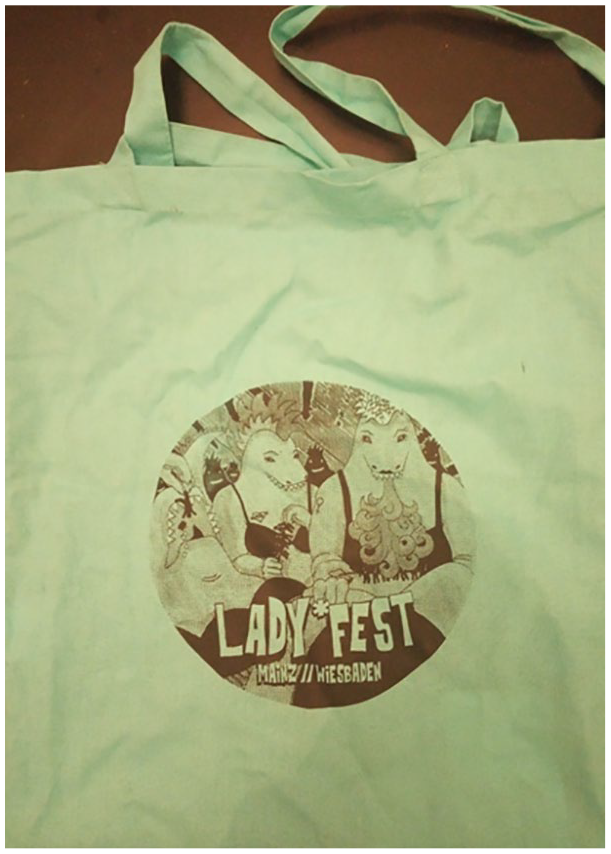
A Lady*Fest Mainz/Wiesbaden tote bag, screenprinted by Author 1 during the festival (October 2019).
And Author 2 has found this to be the case as well:
Co-creating merchandise is becoming more popular in some music festivals I’ve been to lately, especially with families. It’s not just band after band anymore. Kids can make cool things, and there are craft workshops and experts to help. This never had been my experience before, where festivals were more passive and commercial merchandise was the only option. It may be a reaction to consumer culture and audiences wanting more interactive engagement and less of a corporate feel now. It seems to be very popular and a big draw for festivals to motivate people to attend and attend repeatedly, which is a bonus in a more crowded and competitive marketplace. Most mainstream music festivals have the same line-ups due to the music industry, so they need to make it value for money and have add-on value activities. I have friends with kids who go camping at the same music festivals year after year for these reasons.
In a more extreme level of festival fandom, Author 1 recalls observations from heavy metal festivals, where many of the attendees had the logo of their favourite festival tattooed on their skin. This way, they permanently carry their ‘sacred souvenir’ of the festivals. By embodying fandom, tattoos are like part of a permanent costume, displaying people’s adhesion to a specific community of tastes.
Conclusion
What makes a festival attendee into a fan? Collin-Lachaud and Kjeldgaard (2013) stress the importance of the emotional experience as a reason why festival-goers keep attending the same event over the years. Also, this links to the aforementioned temporal and affective dimensions of fandom (Hills, 2003). In addition, official festival fan clubs are a way for festival organizers to maintain a link with their audiences during the rest of the year. Fan clubs keep the festival fandom ‘alive’ even when the festival is not happening. Ritualistically, repeated actions and consistent communication are effective; furthermore, we argue that the material culture of festivals also play a part in fuelling fandoms. Even something as simple as a T-shirt can be symbolically charged, as each year there is a different design for each festival edition, and festival fans can wear them over the years in embodied displays of taste and status, and, thus, identity as part of a fan community.
More informed understanding of the ways in which material culture is rooted to the identity constructions of attendees to the extent where they can be considered fans of a festival has multiple benefits for event managers. This certainly includes economic benefits from merchandise sales; additionally, it also includes benefits in terms of lifecycle sustainability for festival futures (Jordan, 2013). As more audiences become dedicated to attending the festival, and, thus, showing off the status of their participation through community-styled sacred objects, there is more scope for festival growth and continued success. In this way, the symbolic capital generated by merchandise also contributes to the economic capital of the festival. However, there needs to be a balance, as over-commercialization can disenchant fans and lead them to pursue other forms of entertainment. Innovative strategies which are currently implemented by some forward-thinking festivals, such as an emphasis on co-creation of merchandise instead of only offering commodified merchandise, has the potential to shift the material culture of the festival from being solely transactional to becoming more transformational. This can be more meaningful to individuals and, thus, has the potential to develop more fervent festival fan communities. These kinds of communal approaches as opposed to top-down managerial applications may be a helpful future direction for festival practices as the experiential marketplace continues to saturate.
In terms of future research directions, the creative intersection of festival studies, fan studies and material culture studies has hardly been explored. There is extensive scope for further critical analysis of the materiality of affective experiences to further understanding of how these subjects cross-fertilize to inform conceptualizations of identity, culture and sacred objects and re/produce symbolic social meanings.
Footnotes
Funding
The author(s) received no financial support for the research, authorship and/or publication of this article.
