




Abstract
Aims and objectives:
This scoping review aims to provide an overview of empirical research on young students learning German as a Foreign Language (GFL) in primary school settings.
Methodology:
A systematic search was conducted across six databases in November 2023, following established scoping review methodology. The search included peer-reviewed empirical studies published between 1990 and 2023 in English or German, focusing on children aged 5–12 learning GFL in non-German-speaking regions.
Data and analysis:
After screening 2,188 articles according to predefined inclusion and exclusion criteria, 28 articles (26 studies) were included for data extraction and synthesis using a narrative approach incorporating thematic analysis and thematic synthesis principles.
Findings:
The review identified three thematic dimensions of research on primary school GFL: instructional formats and settings, language skills and competences, and affective factors. Materials emerged as a mediating element intersecting with these dimensions. Most studies were conducted in Europe geographical Europe (n=23), with case studies (n=11) and experiments (n=10) dominating the research landscape. The synthesis highlighted the importance of further developing curricula, fostering multilingual awareness, incorporating intercultural learning, and using authentic materials to support GFL learning. The review also revealed a need for more rigorous methodological approaches and the exploration of underrepresented topics.
Originality:
This is the first scoping review to systematically explore the empirical research landscape on young students learning GFL in primary school contexts.
Significance:
As interest in incorporating modern foreign languages into primary school curricula grows, expanding research beyond English language learning is crucial. This review maps the current state of primary school GFL research, identifies gaps and guides future investigations to advance evidence-based practices and policies supporting young learners’ language development and intercultural understanding in primary education.
Introduction
Learning a foreign language at a young age provides numerous cognitive and social benefits for children (e.g., Hayes, 2022). As global interconnectedness increases, the ability to communicate across cultures and understand diverse perspectives becomes ever more crucial. While English is often the first foreign language taught in primary schools, German represents a valuable option, given its cultural heritage and economic relevance (Ammon, 2019; Stevenson, 2018). However, research on the specific approaches, challenges, and results associated with learning German as a Foreign Language (GFL) in primary school contexts remains limited. This scoping review aims to provide an overview of empirical research on young students learning GFL in primary school settings. In this review, GFL refers to the teaching and learning of German outside the German Sprachraum [German-speaking regions], which include Germany, Austria, Belgium, Liechtenstein, Luxembourg, Switzerland, and South Tyrol, within an educational school setting, and for learners without substantial prior exposure to German language and culture. The review explicitly excludes German as a Second Language (GSL) contexts, where learners use German in their daily lives within the German Sprachraum (Ahrenholz, 2013; Altmayer, 2022; Rösler, 2021).
To date, no review of empirical research on GFL in primary education has appeared in peer-reviewed academic journals. A two-part review on GSL by Eckerth et al. (2009) and Eckerth and Tschirner (2010) provides a useful starting point for situating the field. The first part (Eckerth et al., 2009) surveys research on GSL acquisition, with attention to individual learner characteristics such as motivation and learning strategies. It includes a brief section on primary education, discussing learning a language other than the home language, assessment practices, and support for children from ethnolinguistic minorities in Germany. The authors advocate for revising curricula to better reflect learners’ linguistic profiles. The second part (Eckerth & Tschirner, 2010) examines how contextual and pedagogical factors shape learning conditions and outcomes, including oral proficiency and digital media use, but does not cover primary education. It also highlights the limited international visibility of GSL research, partly attributing this to a reluctance among German-speaking scholars to publish in international journals. While this two-part review does not examine GFL research or systematically focus on primary-level foreign language learning, the themes it addresses offer conceptual guidance and underscore the need for a dedicated review of GFL research in primary education.
GFL in primary education can be found on all continents, including countries such as Canada, Brazil, Australia, Ivory Coast, Turkey, Sweden, and Russia (Ammon, 2019; Krumm, 2011; Oomen-Welke, 2013). In some central European countries, for example Poland and Hungary, GFL has historical roots due to past migration patterns (Stevenson, 2018) and the prestige associated with the language (Darquennes & Nelde, 2006; Kegyes et al., 2014). German is often learnt as the second foreign language after English (Hufeisen & Neuner, 2003; Neuner et al., 2009). GFL is commonly taught as a separate school subject through foreign language lessons, but also delivered via various school-based bilingual education formats, such as immersion and Content and Language Integrated Learning (CLIL). While typically linked to second language acquisition, immersion is also employed in foreign language contexts. In GFL immersion programmes, German serves as the medium of instruction for selected subjects within mainstream education. These programmes aim to increase exposure to the language and support both language acquisition and content learning. Design and implementation of school-based bilingual education formats vary considerably, shaped by local and regional language education policies, institutional capacities, and historical trajectories (Baker & Wright, 2021; García et al., 2017; Tedick & Lyster, 2020).
Our scoping review focuses on empirical studies involving children aged 5 to 12, which corresponds to the most common definition of primary school age. It also includes research with secondary school students within this age range. To guide our exploration, we established the following research question:
What is known about empirical research on young students learning German as a Foreign Language in primary school?
This review contributes to a nuanced understanding of GFL in primary school and provides an evidence base to inform future educational practices and policies. A preliminary search for previous scoping and systematic reviews on the topic was conducted in September 2023.
Methods
The review process adhered to the nine-step JBI (Joanna Briggs Institute) approach (Peters et al., 2020), which extends the foundational work of Arksey & O’Malley (2005) and Levac et al. (2010) and was further refined by Peters et al. (2020). We report our methods and results following the PRISMA-ScR (Preferred Reporting Items for Systematic Reviews and Meta-Analyses Extension for Scoping Reviews) statement (Tricco et al., 2018). Citavi (Version 6.17) was used for literature management, Covidence (Veritas Health Innovation, 2023) for record screening and data extraction, and Microsoft Excel for data analysis. The objectives, inclusion criteria, and methods for this scoping review were peer-reviewed using the PRESS (Peer Review of Electronic Search Strategies) checklist (McGowan et al., 2016), specified in advance, and documented. The protocol was registered prospectively with OSF (Open Science Framework) on November 22, 2023, and can be openly accessed under https://osf.io/bsj32/?view_only=c0f1b6d6e94744babdf93986660997ba.
Study eligibility
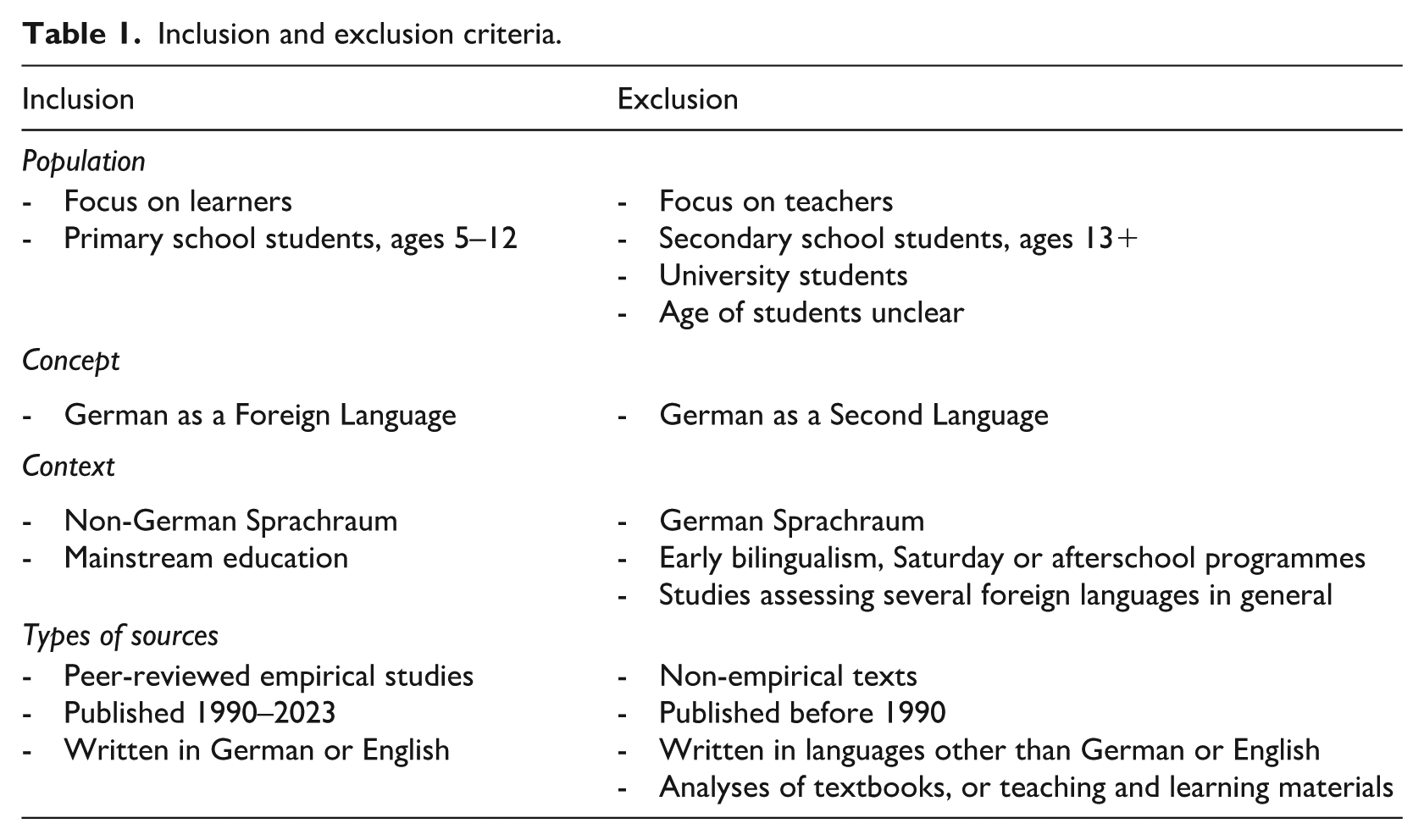
The eligibility criteria for the inclusion of studies (Table 1) are based on the PCC structure (population, concept, context) as suggested by Peters et al. (2020):
Inclusion and exclusion criteria.
Search strategy
The first author led the search, collaborating closely with faculty librarians to create a comprehensive search strategy. The formulation of search terms and Boolean operators followed an iterative approach, starting with identifying high-level concepts derived from pilot searches and prior knowledge of potentially relevant studies. These concepts provided a foundation for uncovering synonyms and related keywords, resulting in a refined search query. The pilot search in November 2023 led to further adjustments, such as the decision to expand the search from ‘primary school’ to ‘school’ and manually exclude studies involving students over 12 years old. We ultimately defined the following search string: (student OR pupil OR learner OR class* OR lesson) AND (school OR kindergar?en OR ‘early years’) AND German AND ( ‘additional language’ OR ‘second language’ OR ‘foreign language’ OR ‘non-native language’ OR ‘target language’ OR ‘modern language’ OR L2 OR L3 OR bilingual* OR multilingual* OR plurilingual*)
Search settings:
Language: English and German
Time frame: 1990 onwards
Content type: Peer-reviewed articles, reports, and academic journals
NOFT (Search Fields): Search anywhere except full text; search in title, abstract, keywords
Databases:
Linguistics and Language Behavior Abstracts, LLBA
Academic Search Premier
Education Research Complete
Scopus
Educational Resources Information Center, ERIC
FIS Fachportal Pädagogik
The search string and settings for the German database FIS Fachportal Pädagogik (Fachinformations-System Bildung, 2023) required adjustments due to its limited search options, including the inability to use a search string and the limitation to five search boxes. Therefore, we omitted the term ‘Schule’ as different types of schools are typically denoted by affixes in German. The search settings were restricted to ‘Zeitschriftenaufsatz’ [journal article] and the time frame of 1990–2023.
The adapted search was entered as follows in the FIS Fachportal Pädagogik:
Titel: (‘Deutsch als Fremdsprache’ UND Schüler*) ODER
Abstract: (‘Deutsch als Fremdsprache’ UND Schüler*) ODER
Titel: (‘Deutsch als Fremdsprache’ UND Lern*) ODER
Schlagwörter: ‘Deutsch als Fremdsprache’ und Schüler*
The database search was carried out in November 2023, using Covidence.
Source selection
The studies were selected based on established criteria and uploaded to Covidence with duplicate removal. The first author screened titles and abstracts, while the co-authors oversaw the process. A generous inclusion approach automatically advanced ‘Maybe’ articles to full-text screening to reduce the risk of omitting potentially valuable sources. All authors participated in full-text screening, with the first author examining the selected articles. Articles of unclear eligibility underwent independent, blinded screening by a co-author. Disagreements were resolved through consensus discussion, with exclusion rationales documented. In addition, we conducted forward and backward citation searches and hand searches of relevant journals, yielding three additional studies.
Data extraction
Data extraction was carried out in Covidence. The first author compiled an extensive charting table based on the JBI Manual for Evidence Synthesis (Peters et al., 2020), aligned with the research objective and question. The team reviewed and piloted the table to ensure comprehensiveness and reliability. The first author performed the initial data extraction while co-authors independently verified the extracted information. Disagreements were resolved through team discussion and consensus. Data were exported from Covidence to MS Excel for synthesis. The complete data extraction table is available online as Supplemental Material.
Analysis and presentation of results
Consistent with our scoping review objective, we aimed to provide a comprehensive descriptive overview rather than a synthesis with systematic review certainty. Following the lead author’s analysis, the team discussed and refined the results to ensure a shared understanding. We characterised the studies included in the review by presenting key information in tables and graphs with narrative descriptions. The narrative synthesis approach draws on thematic analysis (Braun & Clarke, 2022) and thematic synthesis (Thomas & Harden, 2008) principles as suitable for addressing the review questions and available data.
Results
Search results
We identified 2,186 studies, of which 2,073 were excluded during the title and abstract selection phase according to the predefined inclusion and exclusion criteria (Figure 1). The remaining 113 studies underwent a rigorous full-text assessment, resulting in the final selection of 28 articles representing 26 unique studies. Articles reporting on the same study were merged and treated as a single entity to avoid overrepresentation. For example, Reder, Marec-Breton, et al. (2013) and Reder, Daigle et al. (2013) were combined into one study, as were Iluk and Jakosz (2017) and Jakosz (2018). In the following analysis, we use the term ‘articles’ when referring to individual publications and ‘study’ when describing a research project as a whole.
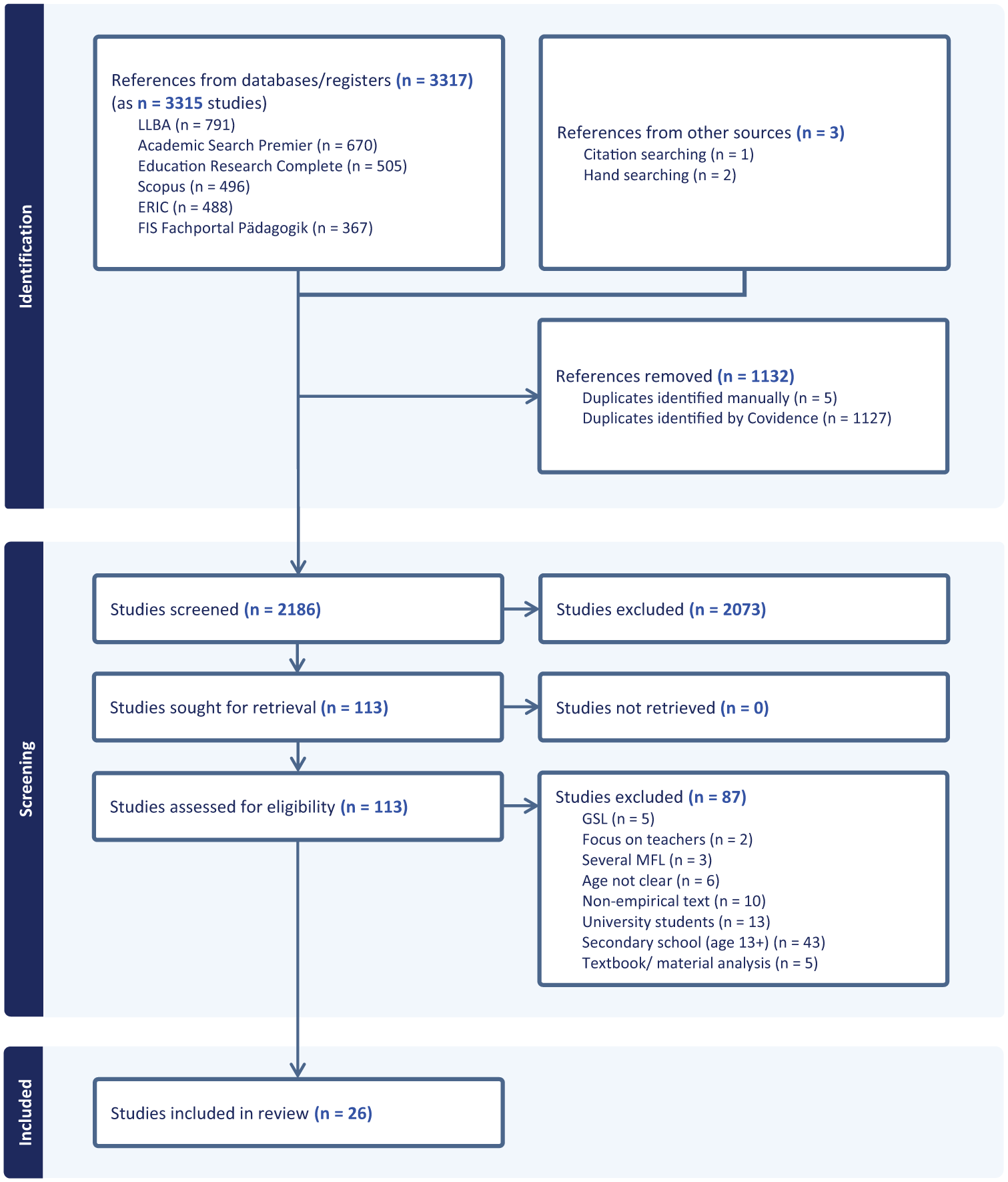
PRISMA flowchart for article selection.
Characteristics of sources of evidence
The studies were carried out in 16 countries (Figure 2). While most studies took place in geographical Europe (n=23), none were conducted in South America, Africa, or Asia.
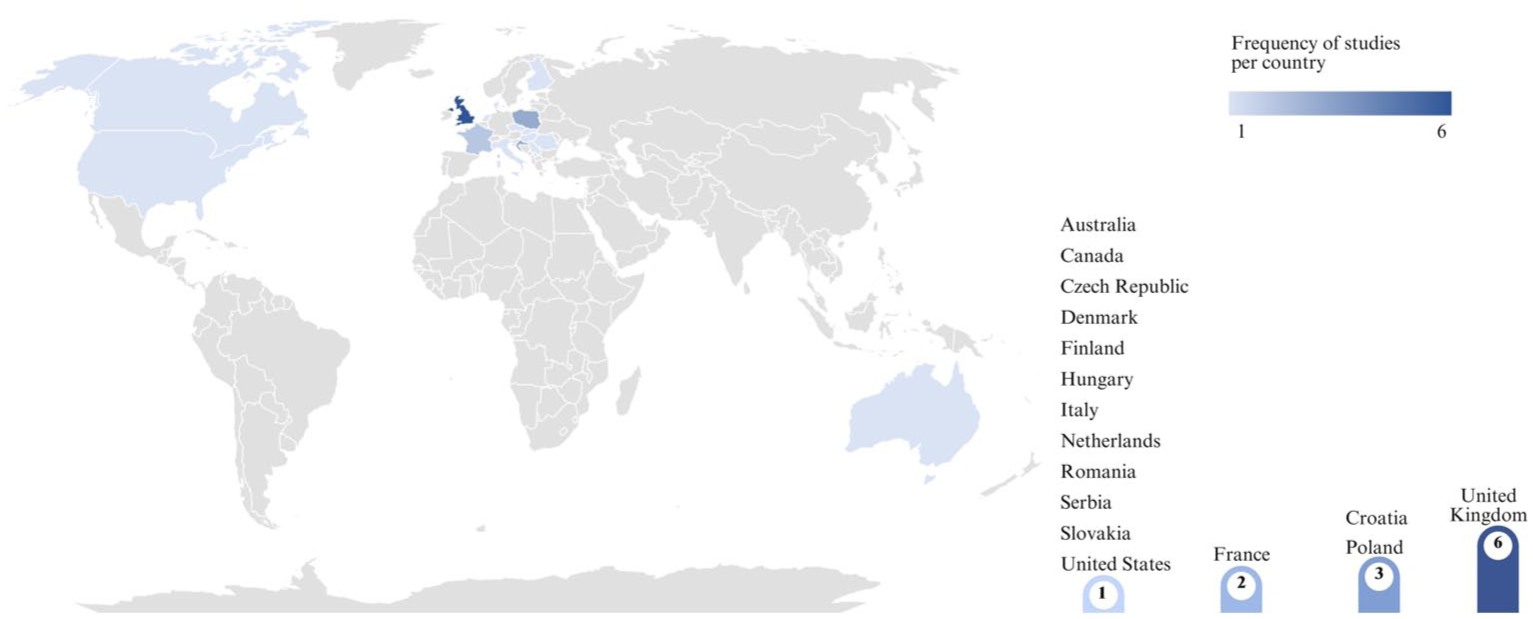
Geographical distribution of research settings.
The publication timeline (Figure 3) illustrates an almost consistent pattern of publications since 2012, with the first eligible article dating back to 1994 and the last to 2022. Among these publications, 20 were written in English, seven in German, and one was bilingual in English and Croatian (Troha et al., 2020). In terms of abstracts, 18 articles had single-language abstracts, 17 in English, and one in German. Ten articles featured bilingual abstracts in English and another language. The 28 articles appeared in 24 different peer-reviewed journals.
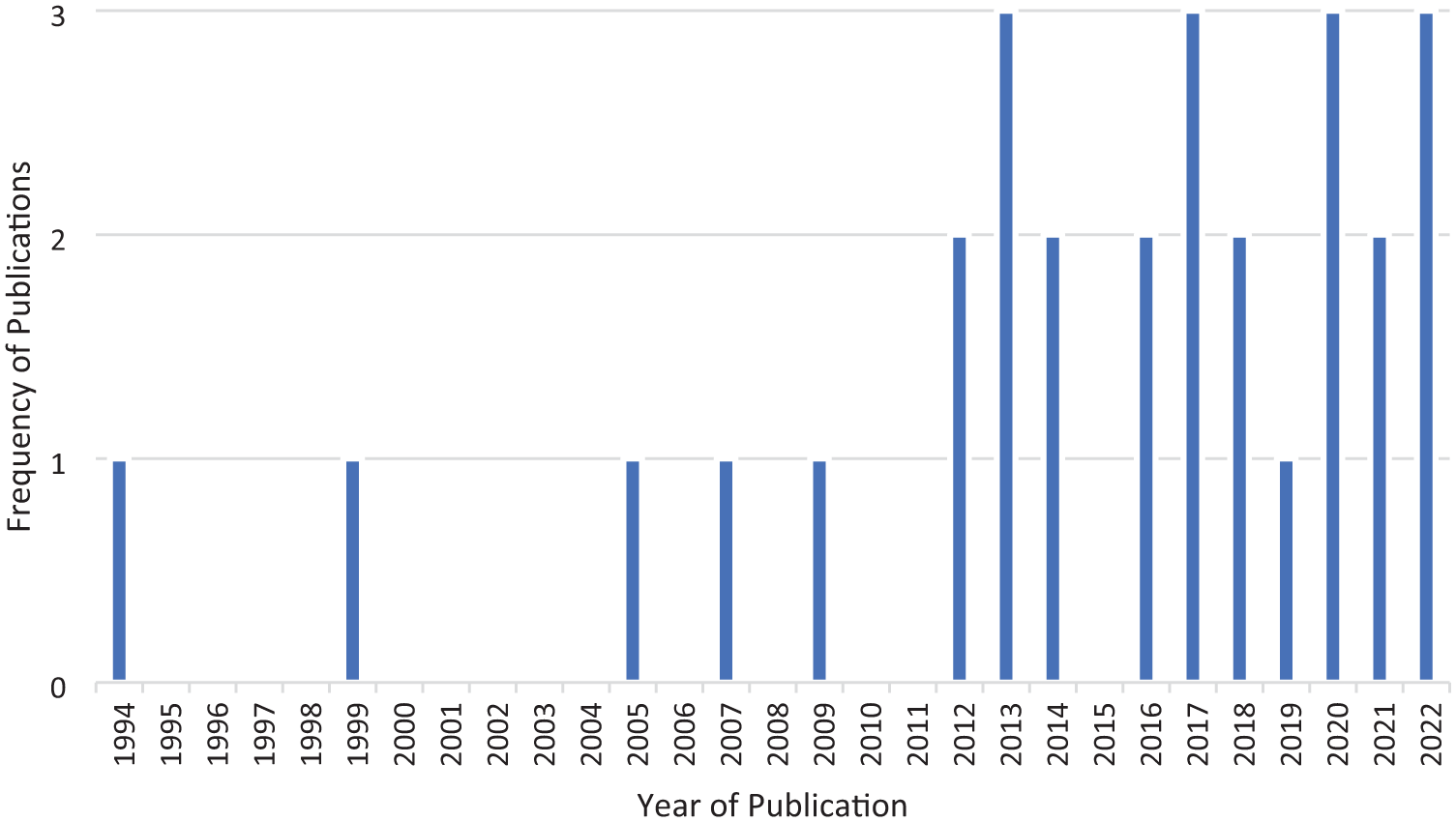
Frequency of publications by year.
To classify research designs, we drew on the inner layers of Saunders et al.’s (2023, p. 177) ‘research onion’ model, focusing on methodological choice, research strategy, time horizon, and procedures and techniques. We did not include the outer layers, consisting of philosophy and approach to theory development, as most articles provided only limited information on these aspects. The model was selected for its structured typology, which supported the consistent classification of research designs across the studies. Our analysis of the studies’ methodological choices revealed a preference for qualitative multi-method ones over mixed-method complex ones (Figure 4).
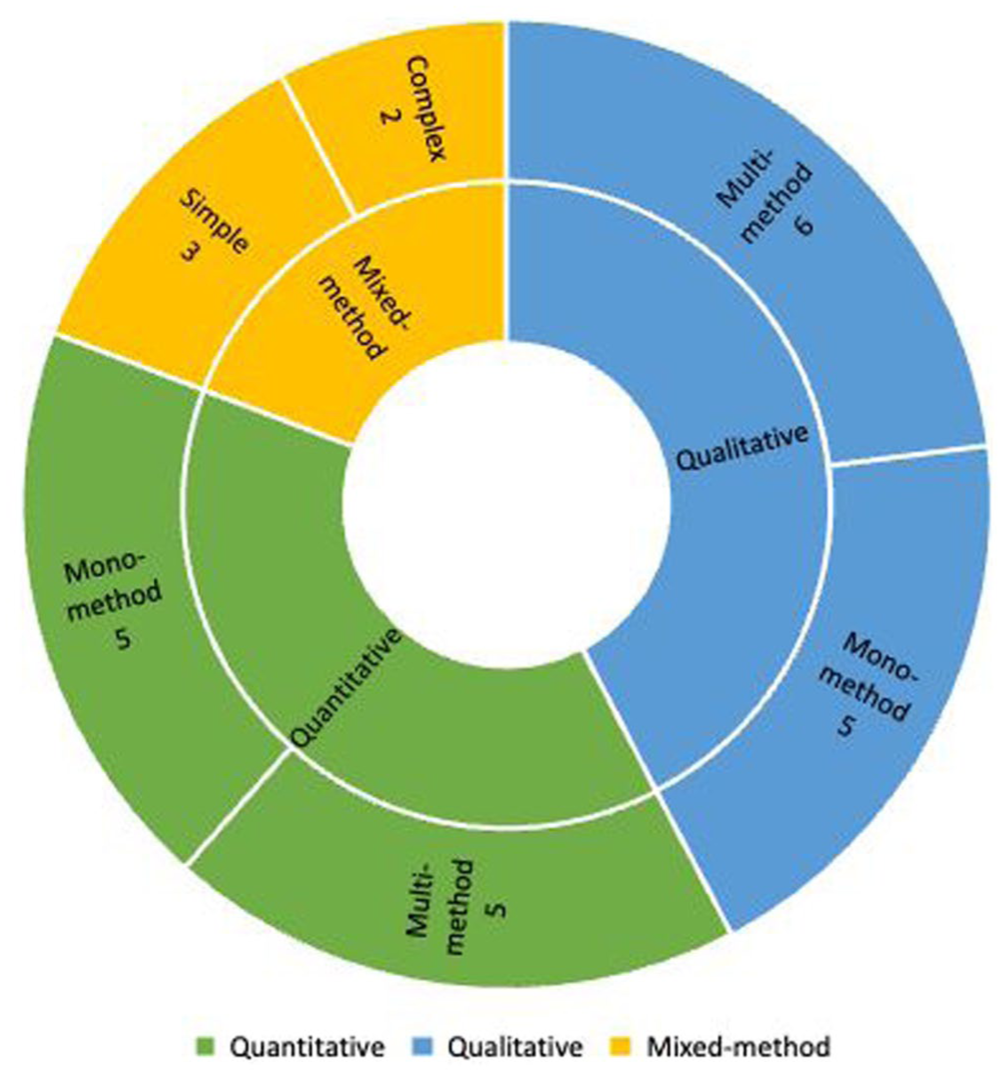
Distribution of methodological choices.
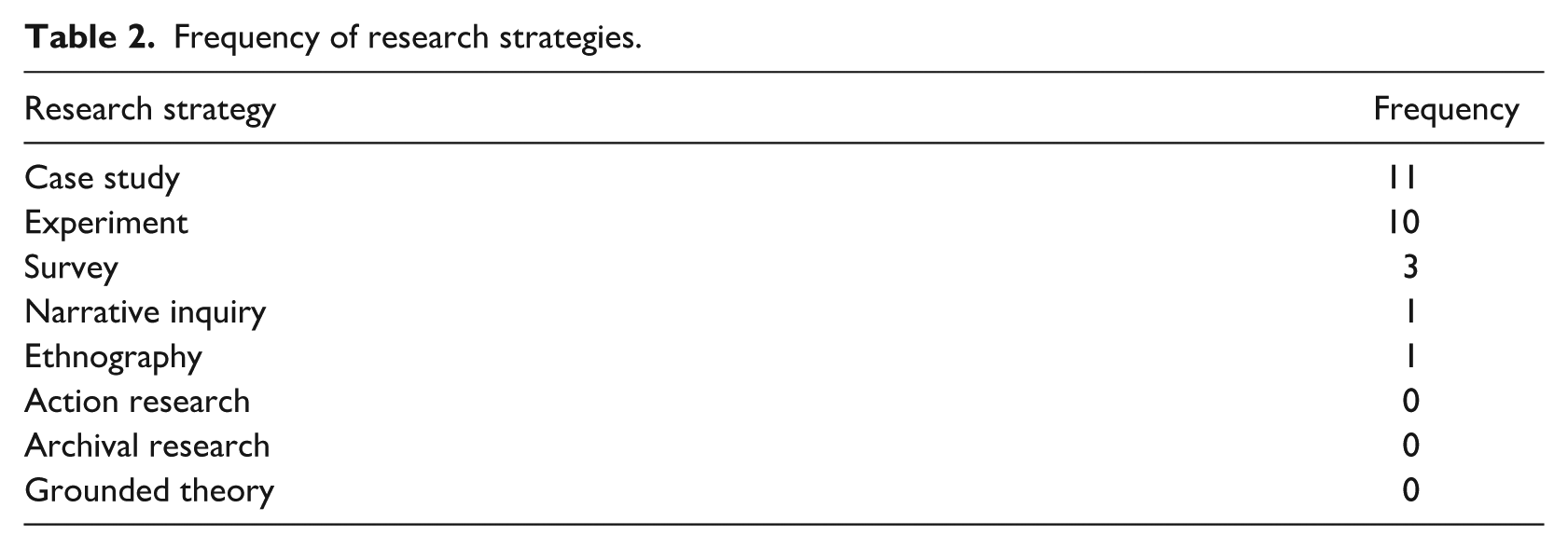
Regarding research strategy, case studies and experiments emerged as the most popular (Table 2). We classified only one study as ethnography (Akcan, 2005) and one as narrative inquiry (Dressler, 2014), although both could also be considered case studies. Based on Saunders et al.’s (2023) framework, we found no instances of grounded theory, action research, or archival research among the 26 examined studies. Half of the studies followed a longitudinal time horizon.
Frequency of research strategies.
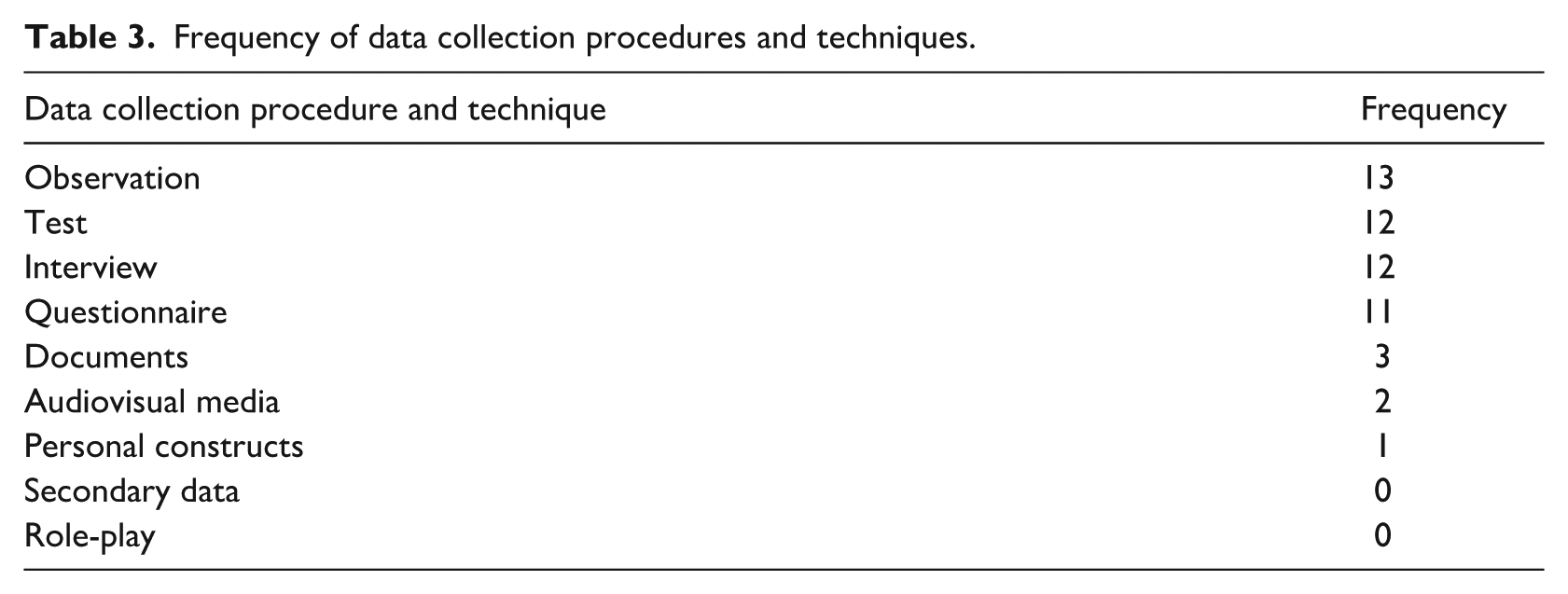
Data collection procedures and techniques were classified according to Cohen et al. (2018) to allow for a more nuanced understanding of how empirical data were generated and used across the studies. Multi- and mixed-method choices inherently combine different techniques and procedures. The most frequently employed were observations, tests, interviews, and questionnaires (Table 3). Observation typically referred to classroom observations. Most tests followed quasi-experimental designs of varying complexity, ranging from post-tests only without control group procedures (Iluk & Jakosz, 2017; Jakosz, 2018) to pre-test with delayed post-test procedures (Kasprowicz & Marsden, 2018). Nearly all interviews were semi-structured and audio-recorded. The analysis of documents, such as student artefacts (Dressler, 2014), teacher lesson materials (Kirsch, 2016), or school curricula (Sebestyénné Kereszthidi, 2012) were less common, as was the analysis of employed audiovisual digital media, including learning software (Müller, 2021) and computer-based learning environments (Günther-van der Meij et al., 2022). Only one study used personal constructs (Stančeková, 2017), and none drew on secondary data or role-play.
Frequency of data collection procedures and techniques.
Regarding the sampling procedures, we found that participant recruitment descriptions often lacked specificity. Even when considering the specified research and educational contexts described in the articles, the recruitment procedure remained unclear in 15 studies. We classified the remaining 11 studies as follows: purposive (n = 9), random (n = 1), and voluntary (n = 1) sampling.
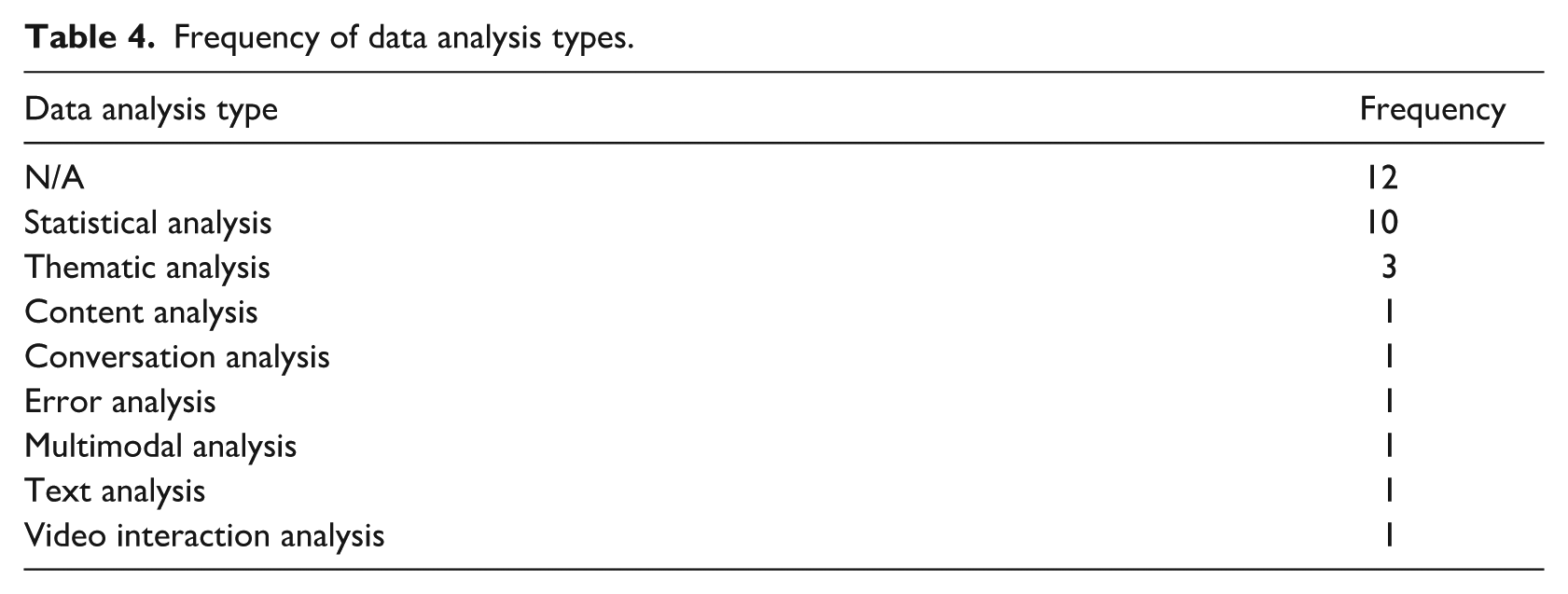
A similar phenomenon occurred when we examined how the study data were analysed. In 12 of the 28 articles, the data analysis type was not clearly described or named (Table 4). In ten articles, some form of statistical analysis was described, of which two combined this with qualitative techniques (Kirsch, 2016; Troha et al., 2020). While thematic analysis was used three times, others were only employed once, that is, ‘conversation’ (Janík, 2017), ‘content’ (Troha et al., 2020), ‘error’ (Chłopek, 2020), ‘multimodal’ (Dressler, 2014), ‘text’ (Kirsch, 2016), and ‘video interaction analysis’ (Wild, 2020).
Frequency of data analysis types.
Synthesis of results
In line with the aims of scoping reviews, this subsection synthesises the studies’ results. We identified three thematic dimensions of research on learning GFL in primary school and summarised the pedagogical recommendations reported by the authors in four main areas.
Thematic dimensions in research on learning GFL in primary school
Initially, we aimed to identify the main research themes by examining the articles’ research questions. However, as only 14 of the 28 articles stated these explicitly, we based our analysis on the research aims. We derived three key dimensions: instructional formats and settings, language skills and competences, and affective factors. While materials appeared consistently as an influencing factor, they were rarely the central focus. We therefore conceptualised materials as a mediating element intersecting with the three key dimensions.
The dimension of instructional formats and settings describes the structural contexts in which GFL was delivered, encompassing two main approaches: bilingual education formats and foreign language lessons. Foreign language lessons refers to contexts in which the language was taught as a separate subject, usually with one to three lessons per week. Bilingual education formats serves as our umbrella term encompassing total and partial immersion, bilingual programmes, and CLIL, as featured in the articles included in the review. The terminology associated with these bilingual concepts is not always clearly defined and may vary across contexts, with overlapping or contested meanings (e.g., Cenoz et al., 2014; Dalton-Puffer et al., 2014; Tedick & Lyster, 2020). To account for this variability, we retained the terminology employed by the authors of each article and adopted ‘bilingual education formats’ as an overarching label since no author used this specific term.
Our findings revealed that most GFL research occurred within foreign language lessons (Figure 5). Seven studies were conducted within various bilingual education formats, including partial immersion programmes in France (Reder, Daigle, & Demont, 2013; Reder, Marec-Breton, et al., 2013; Salomé et al., 2022) and Australia (Tisdell, 1998), total immersion in the USA (Akcan, 2005), bilingual programmes in Hungary (Sebestyénné Kereszthidi, 2012) and Canada (Dressler, 2014), and a CLIL setting in the Netherlands (Günther-van der Meij et al., 2022). The studies we reviewed suggest that research on these two approaches tends to be exclusive to specific geographical locations. No country featured research on both bilingual education formats and foreign language lessons. Six of the 26 studies considered the relationship between first and second foreign languages (L2–L3), including the scenarios German after English (Chłopek, 2020; Janík, 2017; Salomé et al., 2022; Tonzar et al., 2009; Troha et al., 2020), English after German (Troha et al., 2020), and simultaneous learning of English and German (Wild, 2020).
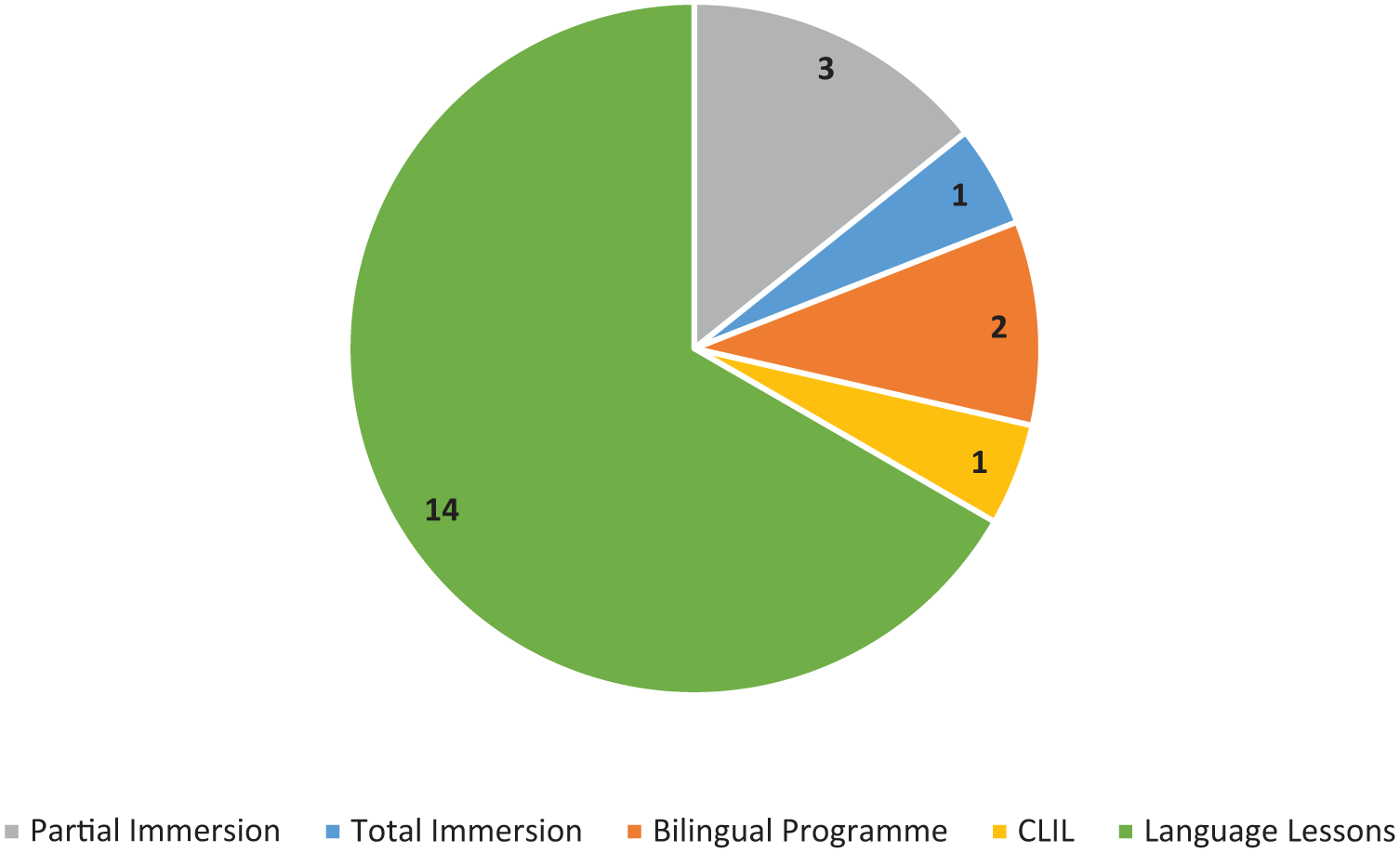
Distribution of research across instructional formats and settings.
The second prominent dimension centres on language skills and competences, encompassing aspects such as receptive and productive skills, metalinguistic awareness, and intercultural competence. Seventeen of the 26 studies investigated one or more of these aspects. These encompassed enhancements in listening comprehension (Iluk & Jakosz, 2017), pronunciation (Woore, 2007), writing (Bärlund, 2012), spelling (Müller, 2021), grammar (Kasprowicz & Marsden, 2018), vocabulary (Kirsch, 2016; Tonzar et al., 2009), multilingual awareness (Troha et al., 2020), intercultural competence (Golub, 2014), and digital competence (Müller, 2021).
The third dimension concerns affective factors, for example, students’ attitudes towards learning German (Fisher, 2013; Stančeková, 2017), beliefs about German culture (Günther-van der Meij et al., 2022), and motivation (Chambers, 1994). This dimension comprised 10 studies.
Regarding the evolution of research interests over the years, we found that research on language skills and competences has been prevalent, while interest in affective factors gained momentum from 2012. In addition, the interplay between German and English as foreign languages started gaining scholarly attention in 2017, marking a newer area of research focus.
Pedagogical recommendations in the articles
In 23 of the 28 articles, authors provided explicit pedagogical recommendations based on their findings, ranging from concise one-sentence remarks to detailed instructions. For example, Tonzar et al. (2009) offered specific guidance on leveraging Italian-German language similarities and differences in German vocabulary learning. We synthesised four areas of recommendation for supporting GFL learning in primary schools:
1. Developing GFL curricula and training:
Prioritising student progress with seamless transitions between primary and secondary education (Chambers, 2019; Sebestyénné Kereszthidi, 2012), establishing cooperation between schools across municipalities to offer German to more students (Bärlund, 2012), carefully planning the curriculum sequence of multiple foreign languages (Troha et al., 2020), providing specialised teacher training in bilingual and multilingual education (Sebestyénné Kereszthidi, 2012; Wild, 2020) and intercultural competence (Golub, 2014), and improving IT infrastructure (Dociu & Mihuț-Kert, 2021)
2. Fostering multilingual awareness:
Systematically exposing learners to tailored input to enhance cross-linguistic and metalinguistic awareness (Tonzar et al., 2009; Troha et al., 2020; Woore, 2007), strengthening learners’ linguistic identities and awareness (Dressler, 2014), and using more flexible language mechanisms and managing language switches in the classroom (Janík, 2017; Wild, 2020)
3. Incorporating intercultural learning:
Addressing stereotypes and prejudices in an age-appropriate manner (Chambers, 1994; Golub, 2014), learning about a country’s neighbour languages and cultures in CLIL contexts (Günther-van der Meij et al., 2022), and prioritising teaching of ‘European awareness’ if language instruction is challenging (Chambers, 1994, p. 18)
4. Using authentic materials and multimedia:
Incorporating high-quality pedagogical multimedia (Dociu & Mihuț-Kert, 2021; Đorđević, 2022; Günther-van der Meij et al., 2022; Müller, 2021), providing excellent resources for bilingual programmes (Sebestyénné Kereszthidi, 2012), and employing authentic materials and interactive literacy activities, such as stories and poems (Iluk & Jakosz, 2017; Kirsch, 2016; Woore, 2007)
This Results section presented the search results, characterised the studies included, and synthesised key research foci into three thematic dimensions and authors’ pedagogical recommendations. The following Discussion interprets the thematic dimensions in relation to each other.
Discussion
Building on the synthesis of results, this Discussion adopts a relational perspective to examine how instructional formats and settings, language skills and competences, affective factors, and materials interrelate within and across studies. The relationships (summarised in Figure 6) varied in frequency and consistency, with some described as positive throughout and others receiving limited attention or presenting mixed patterns. Each set of relationships is considered in turn, beginning with bilingual education formats.
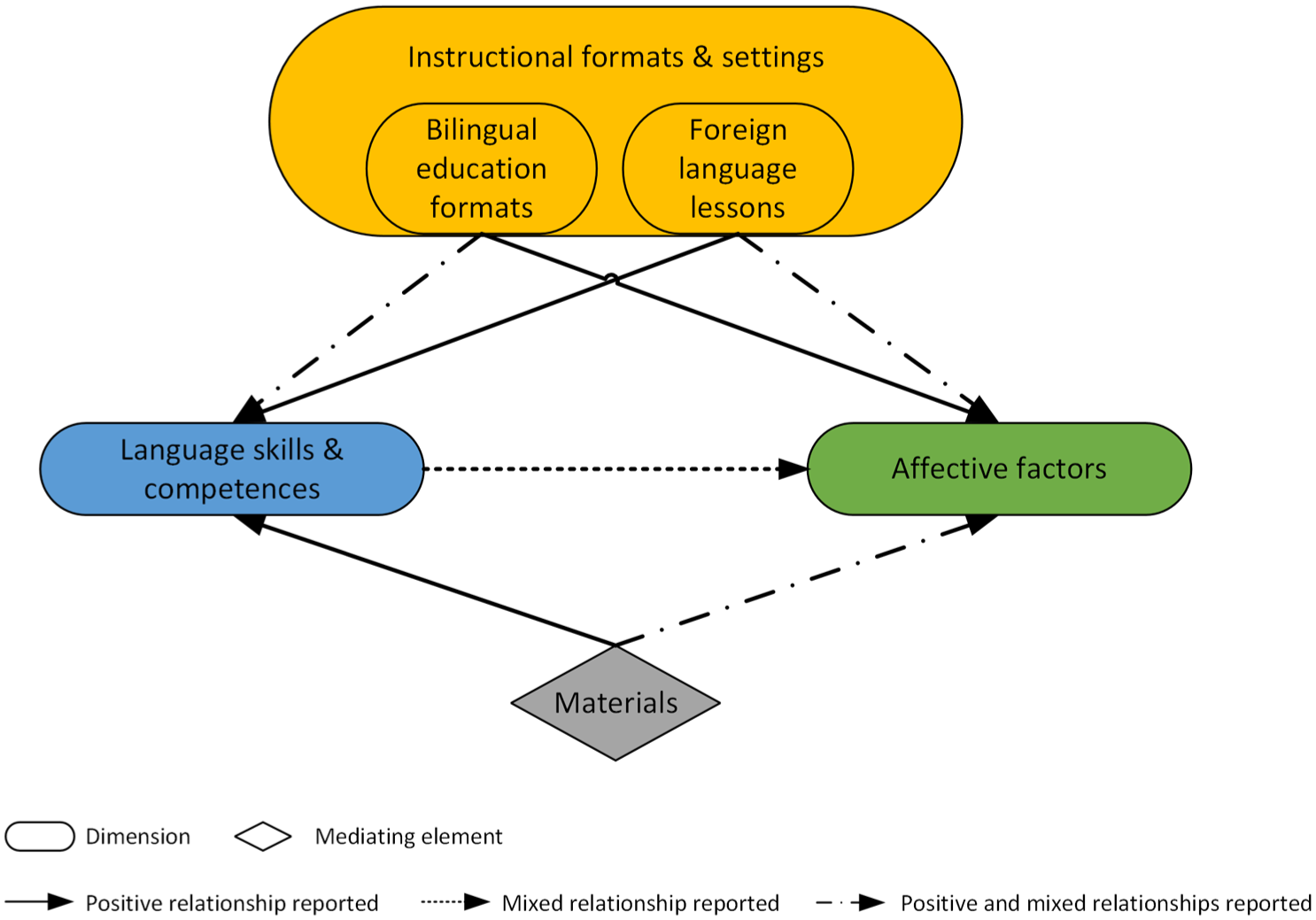
Relationships between dimensions in research on learning GFL in primary school.
Bilingual education formats featured prominently in relation to learners’ language skills and competences. Studies reported both positive and mixed associations. Some evidence suggests that children in bilingual settings develop enhanced phonological awareness and metalinguistic abilities (Reder, Daigle, & Demont, 2013; Reder, Marec-Breton, et al., 2013; Salomé et al., 2022), particularly when subject learning includes explicit language awareness elements (Tisdell, 1999). At the same time, limitations were noted. Tisdell (1999) pointed to insufficient oral input, while Sebestyénné Kereszthidi (2012) highlighted how teacher-led discourse limited learners’ opportunities to speak German. These findings suggest that stronger language competences cannot be assumed based on a programme label alone. Instead, attention should be directed towards the specific pedagogical practices and the extent to which they provide meaningful, sustained opportunities for language use and development.
The emotional dimension of bilingual learning featured in a few studies, where learners expressed interest in the German language and culture (Günther-van der Meij et al., 2022). Visual and verbal data in Dressler (2014) further revealed children’s affective attachments and language preferences, highlighting how such engagements can be meaningfully expressed when classrooms foster learner reflection. While these studies focused primarily on learners’ engagement with a specific language, affective affiliations may also play a role in shaping multilingual identities, particularly when supported through reflective and emotionally responsive pedagogical practices. Such practices, including those that scaffold confidence and encourage meaningful language use in supportive environments (Akcan, 2005), may help sustain learners’ emotional investment in language learning. Bilingual education formats that cultivate this kind of engagement may thus function not only as spaces for language learning but also as environments that support multilingual identity processes.
Foreign language lessons were more frequently linked to affective factors. Interactive activities, especially storytelling, were associated with enjoyment, curiosity, and motivation (Ciepielewska-Kaczmarek, 2016; Iluk & Jakosz, 2017; Kirsch, 2016). Such findings point to the importance of emotionally engaging tasks, particularly in contexts where instructional time is limited. However, not all emotional responses were positive. For instance, Đorđević (2022) noted children’s difficulties in connecting with the language when digital tools were inaccessible or poorly designed, highlighting the significance of technological usability and instructional coherence.
Regarding language skills and competences, language use in foreign language lessons was portrayed as dynamic and resourceful across several studies. Learners drew on multiple languages to support understanding and to construct meaning in interaction, often relying on English or their first language to navigate German tasks (Chłopek, 2020; Janík, 2017). Janík (2017) observed that such multilingual strategies emerged even without explicit pedagogical encouragement, highlighting learner agency in contexts where classroom policies did not clearly support or discourage cross-linguistic practices. Wild (2020) documented spontaneous language switching, suggesting that fluid movement between languages forms a natural part of young learners’ communicative repertoires. Collectively, these findings challenge monolingual assumptions and underscore the value of pedagogical approaches that recognise and nurture emergent multilingualism.
The relationship between affective factors and language skills and competences was directly addressed in only one study. Stančeková (2017) found that higher-achieving students tended to report both stronger motivation and greater anxiety, suggesting that performance pressure may accompany positive attitudes. In contrast, lower-achieving students often expressed reduced motivation but experienced less anxiety. These findings complicate assumptions about a linear relationship between emotional engagement and language learning success, pointing instead to a more complex interplay in which both positive and negative emotions may shape learners’ trajectories in different ways. Notably, no study examined the reverse relationship, how affective factors influence language development over time, which highlights the need for longitudinal and process-oriented research.
Materials were usually not examined as a standalone focus in the studies but emerged as a mediating element across affective and linguistic dimensions. Both digital and analogue resources were described in terms of their pedagogical contributions. Picture books, poems, and similar materials were associated with oral and receptive language development (Akcan, 2005; Ciepielewska-Kaczmarek, 2016; Kirsch, 2016; Woore, 2007), while authentic, learner-relevant content appeared to support creative expression and engagement (Bärlund, 2012). Digital tools, when well-integrated into instruction, were also linked to positive outcomes (Günther-van der Meij et al., 2022; Müller, 2021). However, affective responses to materials varied. Game-based online tools were often engaging (Dociu & Mihuț-Kert, 2021), but when technological challenges or limited usability arose, learners’ motivation could be undermined (Đorđević, 2022). These findings suggest that the impact of materials depends more on pedagogical use than on their format or delivery mode.
Taken together, the relational perspective employed in this review reveals important asymmetries in the field. Relationships between bilingual formats and language skills and competences were more consistently examined than, for example, those between affective factors and language learning outcomes. Similarly, while affective responses were frequently explored in foreign language lessons, few studies analysed how instructional formats and settings shape both emotional and linguistic dimensions. These imbalances point to the need for more integrative research designs that trace multiple dimensions simultaneously. Mixed-method and longitudinal studies may be particularly suited to uncovering how instructional formats and settings, affective factors, and language skills and competences interact and evolve over time. By conceptualising GFL learning in primary education as an interconnected area shaped by diverse influences, this review offers a foundation for future work that is both contextually sensitive and learner-responsive.
Limitations
While every effort was made to ensure a comprehensive and rigorous review, some limitations remain. Despite an extensive search strategy, it is possible that not all empirical studies were captured, as evident from the manual searches identifying more articles. The limited number of eligible studies restricted our review to primarily narrative insights without quantitative analysis. Additional databases, publications in languages beyond German and English, as well as other sources, like books, edited volumes, or theses, could have offered further insights into GFL in primary schools. Our analysis may also reflect the insufficient study descriptions provided in some articles and the inherent subjectivity in our decisions. However, we did not perform a critical appraisal of study quality, as this is not typical for scoping reviews. Although we prioritised transparency and reproducibility, identical procedures by another team may yield different results. Despite these limitations, this review is an important initial step in mapping existing research on GFL learning in primary schools. Future research could broaden the search scope and consider critical appraisal to foster a comprehensive understanding of this field.
Future directions
While the studies reviewed concentrate on learners’ language skills and competences, affective factors, and instructional formats and settings, several avenues remain unexplored. Future research could investigate topics such as assessment, differentiated instruction and learning, classroom dynamics, and the use of games and the arts in GFL. In addition, under-researched subthemes within previously identified dimensions, such as school partnerships and virtual exchanges, pragmatic competence, or the interaction between students’ home languages and GFL learning in school, could yield deeper insights into existing findings. Moreover, researchers could employ diverse methods beyond case studies and experiments, such as action research or grounded theory, to provide new perspectives. Incorporating secondary data sources and involving children as researchers could offer unique insights (Coyne & Carter, 2018; Prasad, 2021). Furthermore, it is crucial to diversify participant profiles to include varied linguistic, socio-economic, and cultural backgrounds for a nuanced understanding of GFL learning. Offering clear details on data collection timeframes, analysis procedures, and study limitations would enable meaningful comparisons between studies. Expanding research beyond Europe could provide valuable perspectives from other regions (Ammon, 2019; Krumm, 2011; Oomen-Welke, 2013). Future research should also aim to improve discoverability and accessibility (Eckerth & Tschirner, 2010) by incorporating bilingual abstracts and relevant keywords into metadata. Addressing these directions can significantly contribute to understanding GFL in primary education and benefit all stakeholders.
Conclusion
This scoping review provided the first systematic overview of empirical research on learning GFL in primary school. By synthesising 28 articles across three thematic dimensions – instructional formats and settings, language skills and competences, and affective factors – the review highlights both frequently researched areas and notable gaps. Materials were identified as a mediating element that shaped learner experiences across these three dimensions, though they were rarely the primary focus of investigation. Adopting a relational perspective, the review reveals asymmetries in the field, such as the limited attention to how affective factors interact with language development or how instructional contexts shape both emotional and linguistic outcomes. These findings underscore the need for more integrative, methodologically transparent studies, along with greater inclusion of diverse learner profiles and research settings beyond Europe. Addressing these gaps can support the development of more context-sensitive, learner-responsive GFL pedagogies. As multilingualism becomes increasingly central to global education, strengthening the evidence base for GFL learning in primary schools is essential for informing educational practice and fostering intercultural understanding.
Supplemental Material
sj-xlsx-1-ijb-10.1177_13670069251384467 – Supplemental material for Young students learning German as a Foreign Language in primary school: A scoping review
Supplemental material, sj-xlsx-1-ijb-10.1177_13670069251384467 for Young students learning German as a Foreign Language in primary school: A scoping review by Catharina Weiss, Alice Chik, Emilia Djonov and Sílvia Melo-Pfeifer in International Journal of Bilingualism
Footnotes
Acknowledgements
We would like to thank the faculty librarians at Macquarie University for their support in designing a literature search strategy.

Ethical considerations
This article presents a review of previously published literature and does not involve new primary research with human participants or animals conducted by the authors. The review was performed in accordance with established standards for academic integrity and transparency.
Author contributions
Funding
The authors disclosed receipt of the following financial support for the research, authorship, and/or publication of this article: The lead author received the Macquarie University Cotutelle-iMQRES scholarship and doctoral funding from the German foundation Stiftung der Deutschen Wirtschaft.
Declaration of conflicting interests
The authors declared no potential conflicts of interest with respect to the research, authorship, and/or publication of this article.
Supplemental material
Supplemental material for this article is available online.
Author biographies
References
Supplementary Material
Please find the following supplemental material available below.
For Open Access articles published under a Creative Commons License, all supplemental material carries the same license as the article it is associated with.
For non-Open Access articles published, all supplemental material carries a non-exclusive license, and permission requests for re-use of supplemental material or any part of supplemental material shall be sent directly to the copyright owner as specified in the copyright notice associated with the article.
