



Abstract
Aims and objectives:
The existing literature indicates that shared book reading is associated with benefits in children’s home language development. Parents play a significant role in shaping children’s language outcomes. The purpose of this study was to investigate the relations among the quality of parents’ shared book reading, children’s language output, receptive vocabulary, and expressive vocabulary outcomes in the home language of dual language learners (DLLs) to inform book reading practices that can support DLLs’ early home language development.
Methodology:
36 Mexican American (43–67 months) and 31 Chinese American (38–70 months) DLLs and their mothers, who were home language dominant, were recruited from Head Start programs, which are federally funded programs that provide early childhood education to low-income children, in Northern California.
Data and analysis:
Utterances produced by the parents during parent–child shared book reading were coded for cognitive demand levels. DLLs’ home language expressive vocabulary and receptive vocabulary and information about parents’ demographics and parent–child shared reading frequency were collected. Correlations and hierarchical regression analyses were computed.
Findings/conclusions:
The findings demonstrated possible cultural differences in mothers’ book reading quality regarding cognitive demand. Although maternal statements and questions were not significantly associated with DLLs’ home language receptive and expressive vocabulary for both groups, asking yes/no, referential, and inferential questions were more likely to evoke more language output from DLLs.
Originality:
This study extends the literature on home language development of low-income DLLs during parent–child shared reading, as only a few studies have investigated the significance of shared reading in the home language.
Significance/implications:
The findings of this study yield important implications for parents’ shared reading practices with low-income DLLs. Using all levels of cognitively demanding speech and encouraging DLLs to talk during shared reading may benefit their home language development.
Keywords
Introduction
The population of dual language learners (DLLs) 1 , who are acquiring their home and second language simultaneously (Espinosa, 2013), has grown rapidly and makes up one-third of the young children population in the United States (Migration Policy Institute, 2021). Most of these children were born in the United States, and more than 70% come from immigrant families or have at least one foreign-born parent (Park et al., 2018). The Pew Research Center reported that the two largest immigrant groups in the United States in 2018 were Mexican and Chinese, accounting for 25% and 6% of the 11.2 million United States immigrants, respectively (Budiman, 2020). Since DLLs from immigrant families in the United States grow up in an English-dominant society, the process of maintaining the home language of these second-generation children can be challenging and complex.
Book reading activities play a significant role in the development and maintenance of home language oral language skills, particularly vocabulary for DLLs (e.g., Curdt-Christiansen & La Morgia, 2018; Shen & Del Tufo, 2022; Zhang & Koda, 2011). Shared book reading provides opportunities for language exposure as well as various levels of cognitive demands to occur in the conversations between the parent and child based on Sigel’s (2002) Psychological Distancing Model. Through conversations during shared book readings, children can be exposed to inferential language, prompting them to process the story content at a deeper level by connecting it to their personal lives, predicting story content, and making inferences about the characters’ internal states. A number of studies have argued that challenging children with a high level of cognitive demand can promote vocabulary development (Dunst et al., 2012; van Kleeck, 2006). Yet, only a few studies have examined the parental language used during shared book reading with immigrant families (e.g., Luo & Tamis-LeMonda, 2017; Rodríguez et al., 2009). Furthermore, previous research has suggested potential cultural differences in book-sharing styles measured by story components and cognitively demanding conversations, particularly between Mexican American and Chinese American mothers (Luo & Tamis-LeMonda, 2017). More research is needed to understand these potential differences and how they may influence children’s vocabulary development. The primary focus of this study is to investigate the relationship between the different levels of cognitive demand in parents’ shared book reading and DLLs’ home language vocabulary, particularly with Mexican American and Chinese American families, to inform home practices that can support DLLs’ early home language development.
Home language maintenance
Multiple terminologies have been used in the existing literature in the field of multilingualism, addressing the languages that bilingual individuals speak, such as home language, heritage language, minority language, and first language. For the purpose of this study, home language is used to refer to the language that the parents and the bilingual children speak at home, following the definition provided by Eisenchlas and Schalley (2020) that home language is defined as the language of communication in the family and does not have ideological underpinning.
DLLs in the United States have a significant diversity of linguistic backgrounds (National Academies of Sciences, Engineering, and Medicine, 2017). Some parents and DLLs speak only their home language, some speak both their home language and English interchangeably, while some speak mostly English. The language proficiencies in the home language and English vary widely across individuals (Cha & Goldenberg, 2015). DLLs’ parents’ attitudes toward language acquisition and bilingualism play a role in children’s home language development (e.g., Mak et al., 2023; Ronderos et al., 2022; Wilson, 2021). Much of the past literature has focused on DLL’s English development, but given the benefits and lack of studies in home language maintenance, it is imperative to examine DLL’s home language development.
Shared book reading
Shared book reading is an activity where an adult shares or reads a book with a child individually or in groups (Noble et al., 2019). The majority of the previous studies in parent–child shared book reading was examined in the societal language, English, in the United States (e.g., Dexter & Stacks, 2014; Mol et al., 2008; Mol & Neuman, 2014; Tompkins et al., 2017). To address the gaps in the literature, the present study focuses on using home language within immigrant families. Research has indicated that shared book reading is positively linked to a wide range of language skills, such as vocabulary knowledge (e.g., Hindman et al., 2008; Sénéchal et al., 2008), narrative skills (e.g., Gámez et al., 2017; Lever & Sénéchal, 2011), and phonological awareness (e.g., Chow et al., 2008; Lefebvre et al., 2011). In particular, parent–child shared book reading plays a significant role in the development of children’s oral language skills and vocabulary knowledge (e.g., Hindman et al., 2008; Zevenbergen & Whitehurst, 2003). Adults can expose children to words they often do not use in daily conversations and explain the meanings of novel words with the help of book content and illustrations during book reading activities (Snow, 1991; Wasik & Bond, 2001). Parents can transfer their knowledge and literacy skills to their children during shared book reading (Dexter & Stacks, 2014). Moreover, children’s vocabulary learning is enhanced when adults ask children questions to promote comprehension and target vocabulary words (Leech et al., 2013; Walsh & Rose, 2013; Wasik et al., 2016).
Asking children questions during shared book reading promotes active participation and language production. This technique stems from the dialogic reading approach (Whitehurst et al., 1988). Whitehurst and colleagues (1988) explained that adults encourage children to take on an active role by prompting them for responses when using a dialogic reading approach. Valdez-Menchaca and Whitehurst (1992) used the dialogic reading approach for low-income Spanish-speaking preschoolers with below-average language skills. The intervention resulted in language gains in those children and demonstrated the potential applications of dialogic reading for DLLs. Other studies have also found a positive relationship between the dialogic reading approach, vocabulary, and early literacy skills in young children (e.g., Brannon & Dauksas, 2014; Brannon et al., 2013; Kim & Riley, 2021; Lever & Sénéchal, 2011; Simsek & Erdogan, 2015). In particular, Lever and Sénéchal (2011) found that dialogic reading is associated with gains in expressive vocabulary in the first language among English-dominant kindergarteners. Brannon and colleagues (2013) observed an increased conversation between the parents and their preschool-age DLLs as well as increased questions asked during the conversation during a dialogic reading intervention. They concluded that dialogic reading was effective in promoting English expressive language overall. Furthermore, dialogic reading was found to have an ongoing influence on early language and literacy skills in preschool-aged children even after the intervention period (Kim & Riley, 2021). These findings suggest that encouraging preschoolers to talk and participate actively during shared book reading is crucial as it can lead to potential gains in early language development, particularly expressive language skills.
As high-quality shared reading experiences between parent and child significantly impact children’s language development, the quality of shared book reading is important (Blewitt et al., 2009; DeTemple, 2001; Noble et al., 2019). During picture book reading, parents are able to engage their children in discussions related to concepts that are rarely mentioned in daily life and expose them to novel vocabulary that is not frequently used in day-to-day conversation, which can promote preschoolers’ vocabulary and emergent literacy skills (Hindman et al., 2012). Adult talk is more complex during shared book reading than free play (Fletcher & Reese, 2005), and parents of young children tend to label pictured objects more frequently (Dowdall et al., 2020; Fletcher & Reese, 2005). Both parents and children may also discuss concepts not directly represented in the pictures, for instance, characters’ intentions and causes of different events (DeTemple & Snow, 2003; Murray, 2014). Engaging children in decontextualized talk, representing the abstract language removed from the current context, allows children to be exposed to novel ideas and vocabulary (DeTemple & Snow, 2003). Decontextualized talk is challenging as it requires children to have a higher level of cognitive capacity and vocabulary knowledge (Snow et al., 2001). Some typical examples of decontextualized talk during shared reading include asking children why certain events happen in the story and what they think may happen in the future.
Theoretical framework
Sigel’s (2002) Psychological Distancing Model identifies three levels of verbal cognitive demands that occur in a conversation between an adult and a child especially seen during book reading contexts. Direct or indirect, open-ended or close-ended questions or statements can be represented by one of the three levels of cognitive demands. Level 1 cognitive demands require “minimal demands on the child to separate self from the ongoing present and involve minimal representation” (p. 197), such as labeling and describing. These types of questions (e.g., What is this? Can you point to the dog?) might be directly related to the book and the pictures. Level 2 cognitive demands request “mental extension beyond the perceptual field to make inferences from the observable to the nonobservable and to use propositional and hypothetical thinking” (p. 197), such as making inferences based on objects in view and recounting past experiences. This level of questions (e.g., Why do you think the boy did that?) requires the child to think beyond the pictures, including thinking about a character’s intentions or relations between objects or characters. Finally, Level 3 cognitive demands require the highest level of distancing demand upon the child and “[foster] the development of [the child’s] representational competence and activate a more comprehensive mental reorganization” (p. 203), such as making inferences without props present and generalizing. This level of questions (e.g., What will happen next?) involves abstract thinking, problem-solving, and reasoning without any pictures. Young children may be unable to engage at a higher level of cognitive demands, so parents may have to adjust the cognitive demands based on their child’s current level of understanding and cognitive capabilities.
Mother’s role in shared reading
Mothers traditionally have more extensive contact with their children, so they particularly have a significant impact on their children’s home language learning and development (Kondo, 1997). Research has demonstrated a long-term effect of a mother’s speech on children’s language development (Hoff, 2006). Lewis and colleagues (2016) have found that maternal language use and frequency of mother–child reading predicted Spanish–English DLL preschoolers’ Spanish oral comprehension after controlling for maternal education. A study with Chinese American DLLs from low-income households found that exposure to the Chinese language during shared reading promoted growth in DLLs’ receptive Chinese skills (Chen & Ren, 2019). Research also supported the use of dialogic reading techniques, involving techniques like providing feedback and scaffolding, that yielded gains in Chinese literacy and receptive vocabulary (Chow & McBride-Chang, 2003). Luo and colleagues (2022) concluded that mothers’ low level of cognitively demanding questions in English, identified by the use of yes/no and referential questions when their English-dominant children were 2 years old, predicted their children’s English receptive vocabulary 1 year later. The effect of maternal referential questions on child receptive vocabulary was more profound among low socioeconomic households (Luo et al., 2022).
Other research suggests that high levels of cognitive demands demonstrated in maternal inferential or decontextualized input predict a child’s receptive and expressive vocabulary growth (DeTemple, 1995, 2001; Dunst et al., 2012; Fletcher et al., 2008; Hindman et al., 2008; Reese, 1995; Tompkins et al., 2017; van Kleeck, 2006). The children participants in the aforementioned studies were enrolled in early childhood programs, ranging from 24 to 58 months old. Both the children and their mothers were English-dominant speakers. Rather than simply labeling and describing pictures in the book, inferential language allows children to process the story content at a deeper level by connecting it to their personal lives, predicting story content, and making inferences about the characters’ internal states. Rowe and Snow (2020) suggested that providing inferential language to preschoolers can foster their language development.
According to the Psychological Distancing Model (Sigel, 2002), parents may calibrate the cognitive demand of their speech to a level their child can understand. Children with lower proficiency in the home language may be unable to understand or comprehend more cognitively distancing home language, such as inferential discussion. As a result, parents may reframe their less cognitively demanding speech to ensure their DLL children can comprehend the home language and respond. This demonstrates that both lower and higher levels of cognitively demanding language may be related to young DLLs’ language outcomes.
In addition, there may be a reciprocal relationship between child language and parent language during shared book reading (Luo & Tamis-LeMonda, 2017). They found significant bidirectional associations between maternal questions and child narrative contributions in preschoolers from low-income African American, Dominican, Mexican, and Chinese households. This suggests that parent language can be influenced by their children’s language and responsiveness and vice versa. Thus, considering the parental influence on children’s vocabulary learning (e.g., Hindman et al., 2008; Reese, 1995; Wasik et al., 2016) and the potential children’s influence on parent language (Luo & Tamis-LeMonda, 2017), it is relevant to investigate how immigrant parents engage in shared reading with their children to support their children’s home language vocabulary learning and development.
Cultural differences in shared book reading
Only a few studies have examined cultural similarities and differences in shared book reading practices. Luo et al. (2014) found that low-income Mexican, Chinese, African, and Dominican American mothers predominantly provided statements for story content rather than asking their children questions. Mexican and Chinese mothers elaborated less frequently on story components compared with the other two cultural groups. Mexican mothers referred to more story components, suggesting that they might be more comfortable and proficient in telling stories using picture books. Mexican mothers also talked about the protagonist’s goals and emotions more frequently than Chinese mothers, while Chinese mothers mentioned the negative consequences of inappropriate behavior more frequently. In a follow-up study, Luo and Tamis-LeMonda (2017) found that Chinese mothers asked more questions than Mexican mothers. Of the questions asked, both groups tended to ask more referential questions than behavioral or inferential questions. These findings suggested potential cultural differences in Mexican American and Chinese American mothers’ book-sharing styles.
Other studies that looked only at Mexican American families found that Mexican American mothers asked yes/no questions and provided descriptions and positive feedback most frequently but rarely provided elaborative statements and questions (Rodríguez et al., 2009). Another more recent study demonstrated that Mexican American mothers focused more on providing story content than prompting their children or responding to children’s questions (Escobar et al., 2017). More research is needed to further examine possible cultural differences in shared book reading practices among different cultural groups.
Present study
Investigating the interactions between parents and DLLs can reveal informative aspects of their language practices at home and possibly the values and knowledge that the parents socialize their children into. Given the lack of studies examining home language outcomes, this study can aid our understanding of parents’ affordances in their efforts to maintain their children’s home language skills. The concept of affordance is defined as “the user-specific relation between an object or event and an animal of a given kind” (van Lier, 2004, p. 597). In this study, affordance ties parents’ perceptions of their children’s home language skills with actions to maintain their language skills. The present study examines the quality of shared book reading between low-income immigrant mothers and their dual language learning children, characterized by the level of cognitive demand required based on Sigel’s (2002) Psychological Distancing Model and its relation with DLLs’ language output, receptive and expressive vocabulary in their home language.
Our research questions are as follows:
What are the differences in the types of maternal statements and questions used during shared book reading between the Mexican American and Chinese American groups? We expected that there would be cultural differences in the types of maternal statements and questions used during shared book reading between Mexican American and Chinese American groups.
What is the relationship between the cognitive demand level of maternal questions and DLLs’ home language output as measured by children’s number of utterances during shared book reading? We expected that a higher cognitively demanding level of maternal questions would significantly contribute to DLL’s home language output based on the literature with English-dominant DLL and monolingual English-speaking children (e.g., Dunst et al., 2012; Luo & Tamis-LeMonda, 2017; van Kleeck, 2006).
What is the relationship between the cognitive demand level of maternal statements and questions during shared book reading and DLLs’ receptive and expressive vocabulary in the home language? We expected that providing statements and asking questions with higher cognitive demands would be positively associated with DLLs’ home language receptive vocabulary and expressive vocabulary.
Method
Participants
A total of 45 Mexican American and 43 Chinese American DLLs and their families were recruited from Head Start programs in Northern California. Head Start centers are federally funded programs that provide early childhood education to children from birth to age 5. Children whose families meet the federal poverty guidelines are eligible to enroll in Head Start programs (U.S. Department of Health and Human Services, 2023). After excluding parent participants whose dominant language was not Spanish or Chinese, 36 Mexican American and 31 Chinese American families remained in the present study. DLL participants had to meet the following screening criteria to be included in the study: (a) aged between 3 and 5 years, (b) enrolled in a school-based Head Start program for at least 3 days every week, (c) understood both English and home language (Spanish or Cantonese), (d) did not have language delays or were not receiving speech therapy, and (e) had both parents who identified as ethnically Mexican or Chinese.
The Mexican American children’s ages ranged from 43 to 67 months (M = 54.09; SD = 6.81). The per capita income for Mexican American families ranged from US$1,071 to US$24,166 (M = US$4,650; SD = US$4,210); 41.67% of the Mexican American children were girls, and 58.33% were boys. Mexican parents’ formal education level ranged from 0 to 18 years (M = 11.05, SD = 5.97). The Chinese American children’s age ranged from 38 to 70 months (M = 52.16; SD = 7.47). The per capita income for Chinese American families ranged from US$1,071 to US$18,125 (M = US$5,454; SD = US$3,275); 64.52% of the Chinese American children were girls, and 35.48% were boys. Chinese parents’ formal education level ranged from 0 to 18 years (M = 11.39, SD = 3.86).
Measures
Expressive vocabulary
Children’s home language expressive vocabulary was collected with the Spanish version of the Picture Vocabulary subtest, Vocabulario Sobre Dibujo, from the Woodcock-Johnson III Tests of Oral Language (Schrank et al., 2005). Children were asked to name pictured objects. The published median test reliability for Spanish at age 4 is 0.89 (Wendling et al., 2019). The Spanish version was translated into Chinese and verified by language experts to assess the Chinese expressive vocabulary of the Chinese American group (Chernoff et al., 2021). The Spanish and Chinese scores were evaluated together as the scores of the two groups were not significantly different, which has been done in previous studies (e.g., Chung et al., 2019; Mak et al., 2023; Uchikoshi et al., 2022). Raw scores were used as there were no standardized scores for bilingual Chinese populations in the United States. The alpha reliability in Chinese for our sample was .91.
Receptive vocabulary
Children’s home language receptive vocabulary was collected with the Test de Vocabulario en Imágenes Peabody (TVIP) for Spanish (Dunn et al., 1986) and the Peabody Picture Vocabulary Test-Revised in Chinese (Lu & Liu, 1998). The reported split-half reliability is .91 for the Spanish norms (Dunn et al., 1986). The reported split-half reliability from the norms for native Chinese-speaking children is .95 (Lu & Liu, 1998). For each question, children were asked to choose one of the four pictures that best described a word provided by the examiner. Raw scores were used.
Shared book reading coding
Parents were asked to read a wordless picture book, Frog, Where Are You?, by Meyer (1969). Parents’ language dominance was demonstrated by having 80% of their utterances in the home language (Spanish or Cantonese; Bedore et al., 2012). An utterance unit is defined as an independent clause or an isolated phrase (Crookes, 1990). Only parents with home language dominance were included in the present study. The average child language output in the home language was 87.85%. Audio-recorded shared reading interactions were transcribed by Spanish or Cantonese speakers and coded using a coding scheme adapted from Luo and Tamis-LeMonda (2017). Their coding scheme was adapted from Sigel’s Psychological Distancing Model framework (Sigel, 2002).
In this study, each maternal utterance, including statements and questions, was coded into four levels: yes/no, referential, behavioral, or inferential. Yes/no utterances belong to Level 1 cognitive demands as parents produce information immediately available in the book. Utterances describing the objects’ name, feature, or location were coded as referential, which was at Level 2 of cognitive demands (e.g., “This is a frog.”). Utterances describing characters’ actions were coded as behavioral (e.g., “The bees are chasing the dog.”) at Level 3 of cognitive demands. Utterances that require inferences, interpretations, internal states, manufactured speech, or deductive thinking were coded as inferential (e.g., “It is very dangerous to play with glass containers.”). These utterances are at the highest level, Level 4, of cognitive demands. Utterances that were not coded as any of these categories were coded as “other” (e.g., utterances unrelated to the story).
Child language output was indicated by the children’s total number of story-related utterances during shared book reading with their parents. Due to the low frequency of child utterances in each cognitive demand level, all child utterances were combined into child language output. Child utterances that did not fall into one of the cognitive demand levels were coded as “other” and were not counted as part of the child language output.
One Spanish-speaking research assistant coded the transcripts of Mexican American families, and one Cantonese-speaking research assistant coded the transcripts of Chinese American families. Both coders demonstrated interrater reliability by coding 20% of the Mexican American transcripts translated into English. When disagreements occurred, they discussed their codes and mutually decided on an appropriate code for these translated transcripts. Cohen’s kappa was used to measure interrater reliability (κ = .767).
Shared reading frequency
The shared reading frequency was collected through a questionnaire adapted from Hammer et al. (2003) provided for the parents. The parents reported the shared book reading frequency with their children in the home language on a 5-point Likert-type scale (0 = never, 1 = once a month, 2 = 2–4 times a month, 3 = once a week, 4 = 2–3 times a week, 5 = every day).
Data analysis
Shapiro–Wilk tests were run to check for the normality of maternal utterances’ different cognitive demand levels and control variables. All the levels of utterances, except for referential and behavioral statements, were not normally distributed. Therefore, Mann–Whitney tests were used to compare the non-normally distributed utterance levels of the Mexican American and Chinese American groups. Independent samples t-tests were used to compare the referential and behavioral statements of the two groups as they followed a normal distribution. Kendall’s correlations among the control variables and different cognitive demand levels of maternal utterances were conducted.
Hierarchical regression analyses were performed to illustrate the associations between different cognitive demand levels of maternal utterances and child language output and home language vocabulary outcomes, measured by home language expressive vocabulary and receptive vocabulary. Ethnicity, child age, and shared reading frequency were added to the base model, with child home language expressive vocabulary and receptive vocabulary as the dependent variables. Culture and child age were added to the base model for predicting child language output. Each type of maternal statement or question was added to the base model separately to avoid multicollinearity. Maternal statements were used to predict child home language receptive vocabulary, while maternal questions were used to predict child home language expressive vocabulary. Furthermore, each type of maternal question was added to each hierarchical regression model, with child language output serving as the dependent variable. Child home language expressive vocabulary was controlled for in the base model.
Results
Table 1 presents descriptive statistics of the study variables. Child age did not differ between the Mexican American and Chinese American groups. On average, parents engaged in shared book reading with their DLL children in the home language at 3.88 (SD = 1.33), which translates to roughly two to three times a week. There were variations in reading frequency, with some parents never reading to their child in the home language and some reading in the home language daily. During shared book reading, mothers were predominately leading the conversation with an average of 76.94 utterances, while the DLLs only spoke an average of 13.55 utterances. DLLs had a mean raw score of 27.34 in receptive vocabulary (SD = 15.04, range = 7–88) and a mean raw score of 15.85 in expressive vocabulary (SD = 4.49, range = 4–23) in their home language.
Descriptive statistics for study variables.
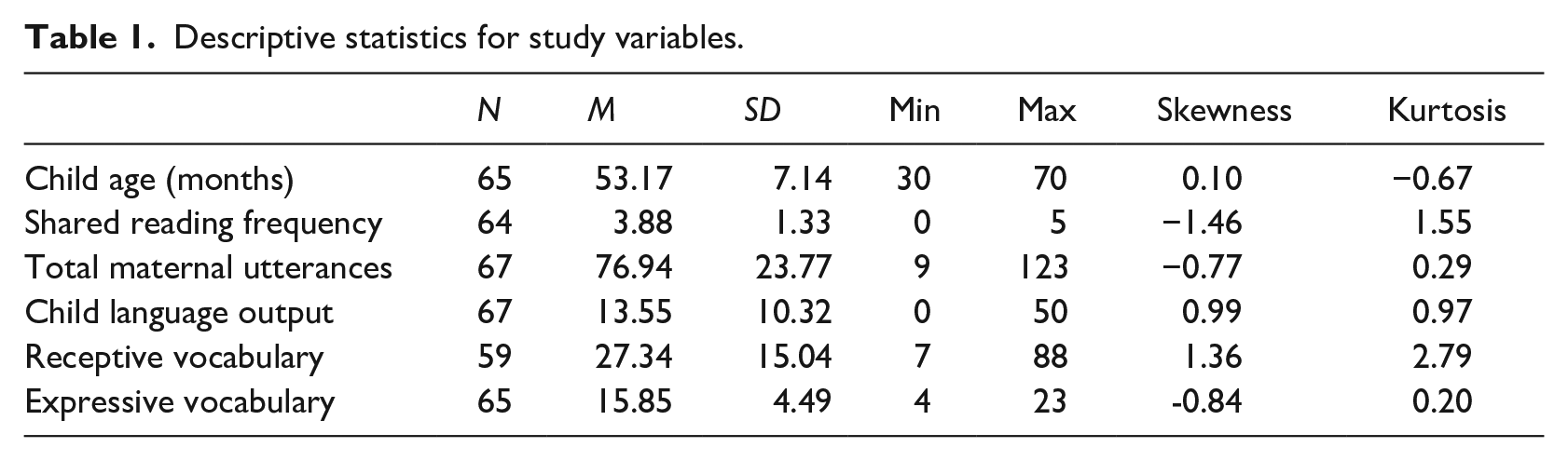
Table 2 presents the raw count and proportion of the different cognitive demand levels of maternal utterances and total child utterances across the Mexican American and Chinese American groups. The Mann–Whitney test showed no significant difference in the total number of utterances spoken by the mothers (U = 545.5, p = .88) and children between the two cultural groups (U = 625.5, p = .40). The types of maternal utterances that were significantly different between the two cultural groups include yes/no statements (U = 313, p < .001), inferential statements (U = 804, p < .01), yes/no questions (U = 291, p < .001), and referential questions (U = 343, p < .01). Specifically, Chinese American parents used more yes/no statements, yes/no questions, and referential questions. In contrast, the Mexican American parents used more inferential statements. The Mexican American group had a higher shared reading frequency than the Chinese American group (U = 699.5, p < .01). DLLs’ language output was not significantly different by culture/language groups (U = 625.5, p = .40). Similarly, no differences were found in child receptive home language vocabulary (U = 411, p = .79) and expressive home language vocabulary (U = 529.5, p = .98) by culture/language groups.
Descriptive statistics for maternal shared book reading coding across cultural groups.
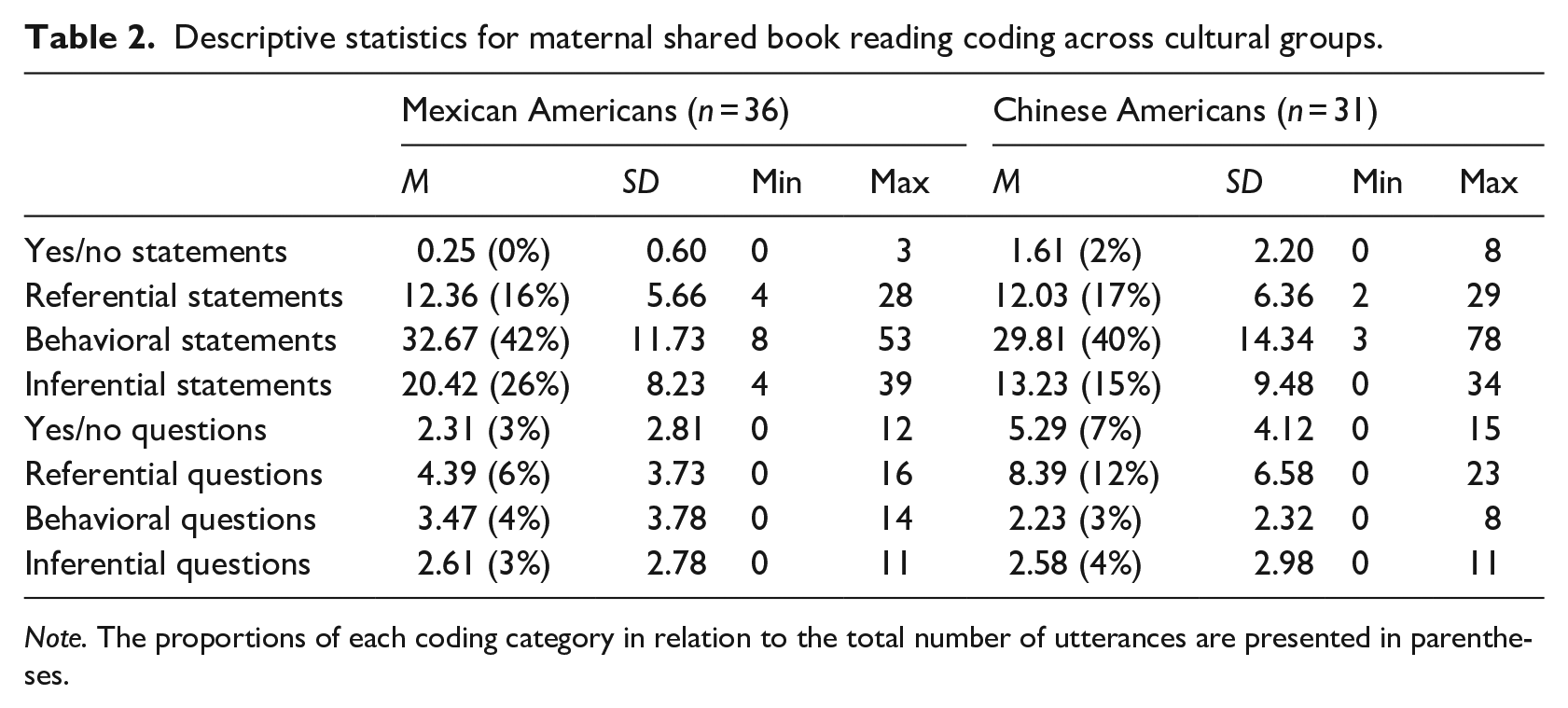
Note. The proportions of each coding category in relation to the total number of utterances are presented in parentheses.
The correlation coefficients of all study variables for the full sample are displayed in Table 3. For the full sample, Kendall’s correlations showed that child age was significantly correlated with child home language receptive vocabulary (r = .27, p < .01) and maternal behavioral statements (r = −.21, p < .05). Parent-reported shared reading frequency in the home language was positively correlated with child home language expressive vocabulary (r = .31, p < .01), maternal behavioral questions (r = .29, p < .01), maternal inferential questions (r = .32, p < .01), and maternal inferential statements (r = .21, p < .01). Child language output was correlated with child home language expressive vocabulary (r = .20, p < .05), maternal yes/no questions (r = .19, p < .05), maternal referential questions (r = .27, p < .01), maternal behavioral questions (r = .25, p < .05), and maternal inferential questions (r = .40, p < .001). Child home language expressive vocabulary was positively correlated with maternal behavioral questions in the full sample (r = .23, p < .05). Similarly, child home language receptive vocabulary was positively correlated with maternal behavioral questions (r = .22, p < .05). The four cognitive demand levels of maternal questions were moderately correlated with one another.
Correlations of all study variables for the full sample.
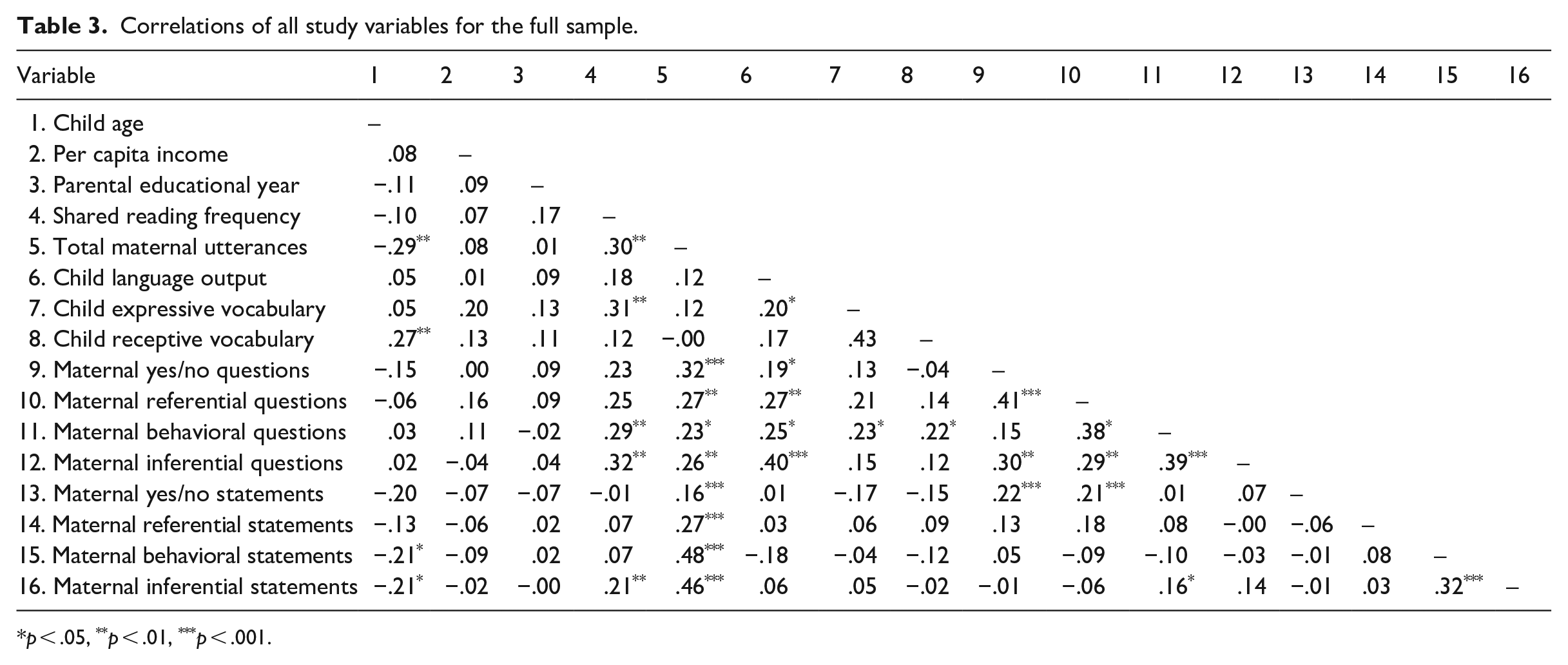
p < .05, **p < .01, ***p < .001.
The correlational coefficients of all variables for the Mexican American and Chinese American participants are displayed in Table 4. Mexican American DLLs’ home language expressive vocabulary was positively correlated with maternal behavioral questions (r = .46, p < .01). Mexican American DLLs’ language output during shared reading was positively correlated with maternal referential questions (r = .41, p < .05) and maternal inferential questions (r = .38, p < .05). For Chinese American DLLs, child home language expressive vocabulary was significantly correlated with maternal yes/no statements (r = −.40, p < .05), and child home language receptive vocabulary was significantly correlated with maternal behavioral questions (r = .45, p < .01). Chinese American DLLs’ language output during shared reading was positively correlated with maternal referential questions (r = .50, p < .01), maternal behavioral questions (r = .37, p < .05), maternal inferential questions (r = .46, p < .01), and maternal referential statements (r = .35, p < .05).
Correlations coefficients of all study variables for Mexican American and Chinese American participants.
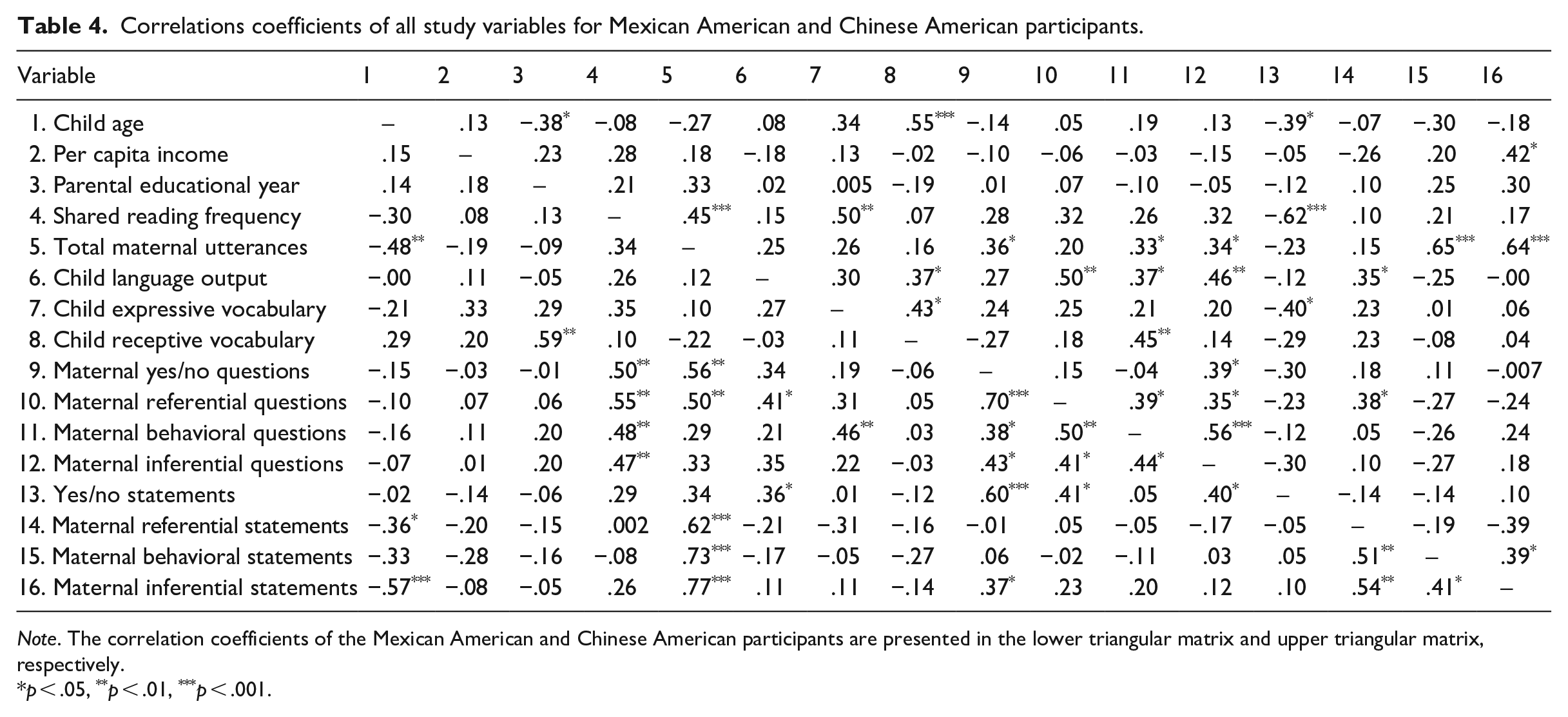
Note. The correlation coefficients of the Mexican American and Chinese American participants are presented in the lower triangular matrix and upper triangular matrix, respectively.
p < .05, **p < .01, ***p < .001.
Hierarchical regression analyses were used to examine the relationships between different types of maternal utterances and DLLs’ language outcomes, measured by expressive vocabulary, receptive vocabulary, and language output. The results are displayed in Table 5. Maternal yes/no questions, referential questions, behavioral questions, and inferential questions were not found to be associated with child home language expressive vocabulary when ethnicity, child age, and parent–child shared reading frequency in the home language were controlled for. Similarly, with the same control variables, maternal yes/no statements, referential statements, behavioral statements, and inferential statements were not associated with child home language receptive vocabulary. After controlling for child expressive home language vocabulary, the results showed maternal yes/no questions, behavioral questions, and inferential questions were uniquely associated with child language output (see Table 5, Models 12, 13, and 15).
Hierarchical regression analyses predicting children expressive vocabulary, child receptive vocabulary, and child language output.
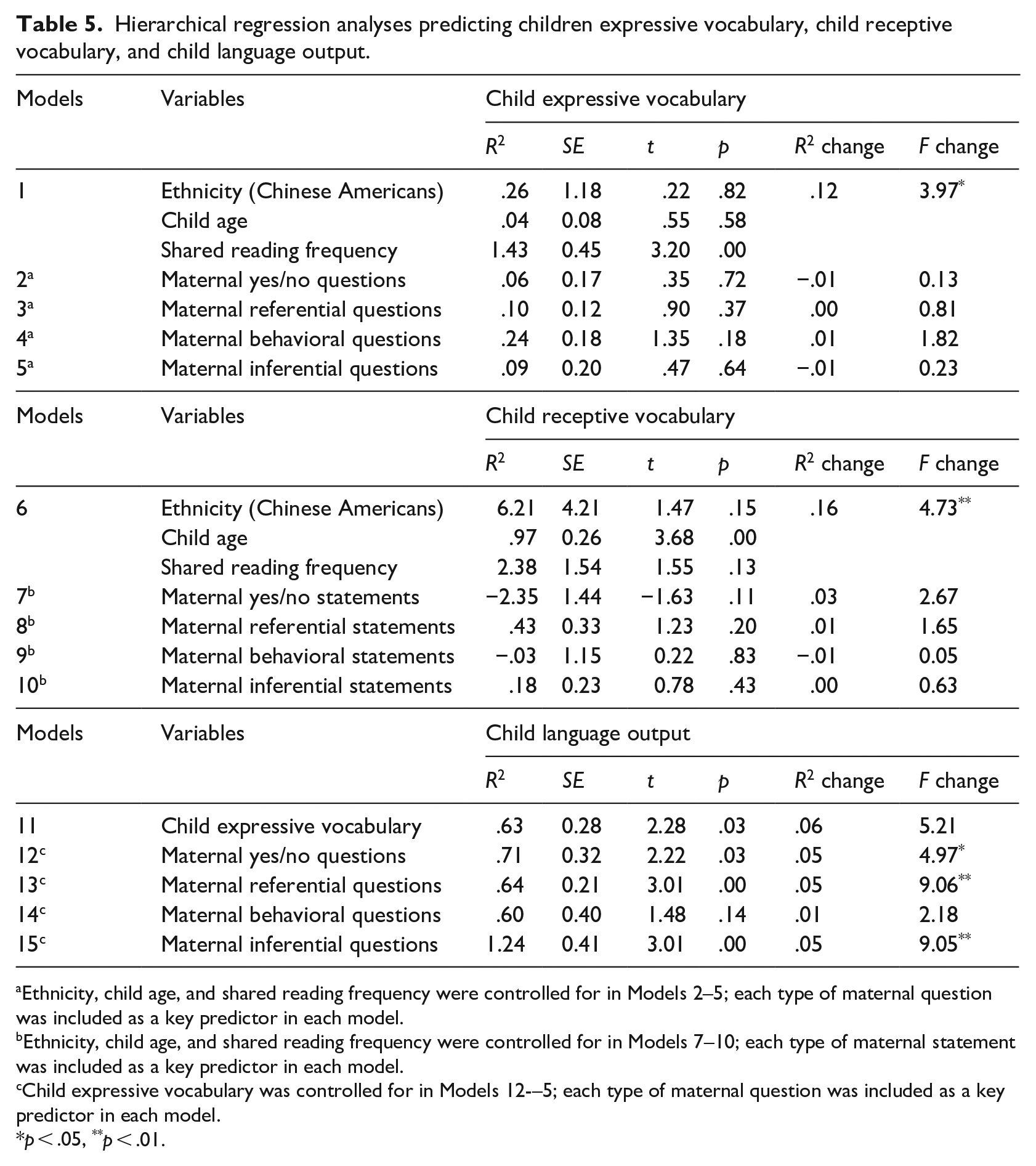
Ethnicity, child age, and shared reading frequency were controlled for in Models 2–5; each type of maternal question was included as a key predictor in each model.
Ethnicity, child age, and shared reading frequency were controlled for in Models 7–10; each type of maternal statement was included as a key predictor in each model.
Child expressive vocabulary was controlled for in Models 12-–5; each type of maternal question was included as a key predictor in each model.
p < .05, **p < .01.
Discussion
The current study aimed to extend the current literature on the effects of cognitive demand in shared book reading on language production and home language vocabulary to low-income immigrant families with DLL preschoolers. The existing literature suggests that encouraging children’s language production is beneficial (e.g., Kim & Riley, 2021; Lever & Sénéchal, 2011) and that challenging children with a higher level of cognitive demand can promote receptive and expressive vocabulary development (e.g., Dunst et al., 2012; van Kleeck, 2006). Engaging children in inferential discussions is particularly recommended as children are being challenged by quality language input (Rowe & Snow, 2020).
Regarding the first research question, the current study uncovers some similarities and differences in the quality of shared book reading between the Mexican American and Chinese American groups. The results showed that both groups did not differ in the length of their storytelling. Looking at the proportion of different types of statements in Table 1, both cultural groups followed a similar pattern where they focused on providing behavioral statements the majority of the time, followed by inferential and referential statements during shared book reading. The mothers of Mexican American families gave fewer yes/no responses but provided more inferential statements than Chinese American mothers. It is possible that the Chinese American DLLs might have asked more yes/no questions than Mexican DLLs, leading to the Chinese American mothers responding in yes or no more often. However, this study did not examine DLLs’ utterance types, so this hypothesis was not confirmed.
Regarding question types, both the Mexican American and Chinese American mothers mainly asked their children referential questions, which aligned with Luo and Tamis-LeMonda (2017). When comparing the two cultural groups, Mexican American mothers asked fewer yes/no questions and referential questions than Chinese American mothers. The findings of this study suggest that the Mexican American and Chinese American mothers in this study used a variety of cognitively demanding questions and statements during shared book reading with their DLL preschool children. The mothers from both cultural groups produced more statements than questions, as expected, since they were instructed to tell a story to their children. The findings of question types did not align with Luo and Tamis-LeMonda’s (2017) findings, where the Mexican American mothers asked more behavioral and less inferential questions than Chinese American mothers.
Mother–child dyads of each cultural group hold distinctive and unique expectations and norms regarding the roles of the mothers and children during shared book reading. While the participating mothers in the present study share similar demographic characteristics with the mothers in Luo and Tamis-LeMonda (2017), it is possible that there were differences in the children’s contribution to the narrative exchange that resulted in the differences in the maternal questions asked. The reciprocal influences in parent–child narrative elaborations are documented in previous studies (e.g., Danis et al., 2000; Escobar et al., 2017; Luo & Tamis-LeMonda, 2017). The types of children’s contributions during shared reading may elicit different types of parental questions. However, as the cognitive demand level of the DLLs’ contributions was not examined in this study, it was not possible to confirm that the differences observed in mothers’ question types compared with Luo and Tamis-LeMonda (2017) were due to DLL children’s contributions. Nevertheless, there are potential cultural differences and preferences in the types of statements and questions Mexican American and Chinese American mothers choose to utilize during shared book reading.
In terms of the second research question, DLLs’ language output was not significantly different between the Mexican American and Chinese American groups. The correlation results showed that all levels of maternal questions were correlated with DLLs’ language output during shared book reading from the full sample. Furthermore, the hierarchical regression analysis revealed that maternal yes/no questions, referential questions, and inferential questions were associated with increased DLLs’ language output. These findings align with the dialogic reading approach in which parents’ active prompting when reading a book can promote children’s responses (e.g., Justice et al., 2002; Valdez-Menchaca & Whitehurst, 1992; Whitehurst et al., 1988). Therefore, asking all levels of cognitively demanding questions rather than only providing statements or comments will likely elicit DLL preschoolers’ responses. This finding is consistent with previous literature recommending engaging children in inferential discussion (e.g., DeTemple & Snow, 2003; Dunst et al., 2012; Lewis et al., 2016; van Kleeck, 2006). Furthermore, the current study suggests a positive role of engaging preschool-aged DLLs at all levels of cognitively demanding questions to elicit more responses from this population during shared book reading.
The DLLs from both cultural groups had similar home language vocabulary scores. On average, they had higher home language receptive vocabulary scores than home language expressive vocabulary scores. This suggests that DLLs may lack the opportunity to produce their home language but may be good at listening to parents talk during shared book reading. Moreover, the current literature suggests that asking preschool children open-ended questions and providing statements improve vocabulary skills (e.g., Barnes & Dickinson, 2017; Cristofaro & Tamis-LeMonda, 2012; Walsh & Hodge, 2018). Therefore, for the third research question, we expected that higher cognitive demanding statements would be positively associated with DLLs’ receptive vocabulary while higher cognitive demanding questions would be positively associated with DLLs’ expressive vocabulary. However, the findings of this study failed to support this hypothesis. The four types of maternal statements were not associated with DLLs’ home language receptive vocabulary. Despite the significant positive correlation of behavioral questions with DLLs’ home language expressive vocabulary, the hierarchical regressions failed to demonstrate statistical significance in the association between maternal questions with home language expressive vocabulary, which did not correspond with extant research findings. DLLs’ home language skills could affect parents’ book reading style with regard to the cognitive demand level of utterances the parents chose to utilize. Higher cognitive demanding utterances usually contain more complex concepts and vocabulary that are less commonly used in young DLLs’ daily conversations with others. As a result, parents may adjust the complexity of their utterances to accommodate their children’s language and comprehension skills. It is also plausible that significance was not observed due to the small sample size.
Limitations and future directions
Several limitations of this study should be taken into account. First, the small sample size might have decreased the statistical power of the regressions. Future research should recruit a bigger sample size and explore the possible relations between parent language input, child language output, and child vocabulary outcomes using path analyses. In addition to linking parent language input and child vocabulary, there might be a possible relationship between child language output during shared reading and vocabulary outcomes. Second, the cognitive demand levels of child utterances should be examined to understand further the relationship between maternal language input and child language output during shared book reading. The cognitive demand of child-directed speech may vary contingent on the child’s language skills and responsiveness. Recognizing what level of maternal cognitive demanding language input would lead to more cognitively demanding languages from the child will inform parent–child shared book reading practices. Third, other literacy-related activities at home should be considered in future research to better understand DLLs’ home language environment and its impact on dual language development. Finally, there is a need for more rigorous vocabulary measures for non-English languages in the context of the United States. It would be more accurate and reliable to use measures that are standardized for particular language learners in a particular context.
Conclusion
High quality of shared book reading experiences positively impacts children’s language development (DeTemple, 2001; DeTemple & Snow, 2003; Hindman et al., 2012; Murray, 2014). According to the aforementioned studies, high-quality shared reading is characterized by using inferential or decontextualized language and asking questions to encourage children’s contribution. For this study, particularly, high-quality shared reading practices are represented by parents using various cognitively demanding languages, including yes/no, referential, behavioral, and inferential. This study concluded that Mexican American and Chinese American mothers followed a similar overall pattern in shared book reading practices, providing primarily behavioral statements and asking referential questions. However, there were a few potential cultural differences in the types of statements and questions they chose to use. In addition, asking yes/no, referential, and inferential questions when reading a book is more likely to elicit DLLs’ responses, thus promoting language development.
Despite the limitations, the findings of this study provide some implications for shared book reading practices with low-income Mexican American and Chinese American DLLs. A gap often exists between academic research findings and advice given to parents. When low-income immigrant parents with DLLs engage in shared book reading, they should know that not only the more cognitively demanding language and inferential language input (e.g., asking children to connect stories to personal experiences, predict future events, or infer characters’ emotions) is valuable but even lower level of cognitively demanding speech (e.g., labeling objects) would encourage children to produce and practice using the target language. Furthermore, parents should allow their DLL children more opportunities to talk in their home language by asking frequent questions during reading sessions.
Footnotes
Declaration of conflicting interests
The author(s) declared no potential conflicts of interest with respect to the research, authorship, and/or publication of this article.
Funding
The author(s) disclosed receipt of the following financial support for the research, authorship, and/or publication of this article: This research was supported by the UC-Berkeley Institute of the Study of Societal Issues (ISSI) Faculty Research Grant.
