




Abstract
Purpose:
This study examines the extent to which language skills of adult speakers of heritage language (HL) English in a Hebrew-speaking society are affected by individual HL input patterns and cross-linguistic influence.
Methodology:
Adult HL-English speakers who grew up in families with one (N = 22) or two (N = 25) English-speaking parents were compared to a baseline group of native English speakers who emigrated to Israel as adults (N = 20).
Data:
Proficiencies in morphosyntactic and lexical domains were measured based on formal test performance and error types and frequencies in narratives. Detailed histories of speakers’ linguistic input were documented.
Findings:
Results showed near-ceiling performance across the three groups in the morphosyntactic domain, while significant differences were observed between the baseline and HL groups in the lexical domain. No differences were found between HL-English speakers who grew up in families with one or two English-speaking parents. Individual HL input patterns explained a larger proportion of the variance in the lexical abilities, compared to morphosyntactic ones. Evidence of cross-linguistic influence from Hebrew was not detected in the morphosyntactic domain, but only in the lexicon, in the form of minor lexical production errors and calques.
Originality:
The HL examined here was English which, unlike other HLs, is heard and used in a variety of contexts outside the home. In most previous studies on HLs, English was the dominant societal language.
Implications:
The results suggest that morphosyntactic divergences, unlike lexical divergences, are not necessarily found in all HLs—morphosyntactic structures acquired in childhood, reinforced periodically in the societal environment, may be well-maintained because of the language’s ubiquity and relatively sparse morphology.
Introduction
The trajectory of a heritage language (HL), the first language a child is exposed to at home when it is different from the dominant language of the outside societal environment (the “SL”) has been extensively studied (for a review, see Montrul, 2016; Montrul & Polinsky, 2021; Polinsky, 2018). The normal course of monolingual language acquisition, derived initially from inputs at home and subsequently from the “outside world,” is disrupted by a different societal language, and this cross-language influence, coupled with different input patterns (HL input superseded to some extent by SL input) typically causes a measurable deviation in HL speakers’ proficiency, both as children and subsequently as adults, compared to the “baseline” of their monolingual counterparts. The novelty of the current research is that the HL examined is English, which has been less frequently studied and is unique for the reasons described below. We will investigate to what extent potential mechanisms previously documented for other HLs are extendable to HL-English.
End-state HL proficiency by domain: morphosyntax and lexicon
Deviation from the monolingual baseline has been shown in morphosyntactic and lexical domains to varying extents for different HL-SL dyads, and at different ages. Often these studies reveal greater divergence in a particular domain or in specific aspects of the morphosyntactic domain. Examples include agreement in gender and/or number, case morphology, verb morphology, relative clauses, preverbal subjects, and copula use (see Montrul, 2016; Montrul & Polinsky, 2021; Polinsky, 2018 and studies cited there). In all these cases, acquisition tends to occur at a particular age, relative to the onset of bilingualism. Armon-Lotem et al. (2021), for example, examined HL-English bilingual children (aged 5–6; 5) and found the gap in proficiency between HL children and monolinguals to be correlated with age, such that “younger heritage language speakers had more advanced outcomes than their older peers on all subtests” (p. 83). They attributed this to the fact that the older HL-speaking children receive HL input primarily from the home environment (schooling is in the SL), while their monolingual peers are learning the SL in a school environment as well. In other words, the effect is related to the age of the onset of bilingualism.
In the lexical domain, research has consistently shown (e.g., Bialystok et al., 2010) that from an early age bilingual children tend to have smaller vocabularies in at least one of their languages, as compared to their monolingual peers. This has often been linked to the nature of the inputs. New words on various topics are routinely learned in schools, but the home environment tends to provide words only for objects and actions occurring at home, and these tend to be more limited (Blake & Zyzik, 2003; Montrul, 2016 and others). As a result, HL speakers may have a vocabulary that sounds more “childish,” or at least more limited to words associated with the home environment and with a child’s interest. Several studies have examined not only the size of the lexicon of the HL speaker, but also its “lexical richness” (also referred to as lexical diversity), sophistication (use of uncommon words), density (ratio of “content” words to “function words”), and the frequency of errors, to compare performance between HL speakers and their monolingual peers. Results consistently revealed significantly greater diversity and sophistication among the monolinguals, irrespective of HL inputs and sociolinguistic parameters (Gharibi & Boers, 2019; Treffers-Daller, 2009).
HL-English in Israel
Most of the previous research on HLs has concentrated on immigrant communities where the child has little motivation for gaining proficiency in his or her HL since the language is not particularly prestigious or advantageous in the surrounding community. English as an HL has been less frequently studied because emigration from English-speaking countries to non-English-speaking countries is relatively rare (however, see Armon-Lotem et al., 2021; Polinsky, 2018; Scheidnes & Tuller, 2016). Yet, English has at least three properties that make it unique and interesting in that role: It is ubiquitous—heard in movies, television, and the internet; it is prestigious—believed to facilitate advancement so its use is encouraged; and in many countries (including Israel, where this study took place), it is formally taught in schools from a young age.
Israel is a unique environment for exploring English as an HL. Unlike most non-English-speaking countries, it has a significant (though far from dominant) population of immigrants from English-speaking countries, who tend to bear and raise children. Since the establishment of the state in 1948, out of approximately 3.3 million immigrants, about 5% have come from English-speaking countries. This population tends to be relatively well-educated, with a high socio-economic status (Joffe, 2018), often providing private English tutoring in addition to the standard English language curriculum of the national educational system.
Meir et al. (2021) provide a detailed review of HLs in Israel (including English) and point out that despite the fact that it is not an “official” language, its prominence is reflected in the fact that it is one of the four compulsory subjects for secondary school matriculation exams, and proficiency at the BA and MA levels is required at all universities. According to a study by Levine (1982), 97% of immigrants who arrived in the 1970s reported speaking English at home. Among those with children, only 23% spoke to them exclusively in Hebrew, while almost 32% spoke exclusively in English (the remainder used both languages). Given the increase in globalization and the prominence of English since then, it is not likely that these numbers have declined.
There is very little research on English as an HL, and it is not clear to what extent the mechanisms previously suggested to shape other HLs in contact situations can be extended to English.
Factors shaping HLs: input patterns and cross-linguistic influence
Two mechanisms that potentially drive the divergences seen in the HL trajectory and attainment are HL input patterns and sources and cross-linguistic influence (CLI).
HL input patterns and sources describe the quantity, timing, and content of the child’s exposure to the HL (which of course is related to exposure to the SL, to the extent that it replaces input to the HL). This exposure influences the trajectory of the child’s linguistic development (e.g., Flores, 2010; Montrul, 2008, 2010). Diminished exposure (less time at home and in the company of fellow HL speakers) means less input, less chance of hearing and internalizing rarer grammatical constructions, limited vocabulary restricted to particular areas of experience, and less opportunity to practice producing those grammatical constructions and lexical items (see Montrul, 2016; Polinsky, 2018).
The effect of input patterns is influenced by several factors. For example, Gagarina et al. (2014) and others, have examined evidence on the effect of other background factors (parental education, birth order, and family size). “Family Type” factors (language spoken by mother, father, and siblings) were also found to be related to the child’s HL proficiency (De Houwer, 2007; Yamamoto, 2001). Previous research consistently demonstrated that HL development and maintenance were hindered in families in which only one parent was the speaker of HL (De Houwer, 2007; Rodina, 2017). In general, previous research reported that parental input was much more significant than sibling input, and the effectiveness of parental input was significantly greater when both parents were native speakers of the HL. But some research has shown that family position (oldest sibling or only child vs younger siblings), which manifests itself as variations in input patterns from siblings, can also be significant. See for example, Flores et al. (2017), who compared HL proficiency (as evidenced by use of the subjunctive mood) in HL-Portuguese-speaking children in Germany among different family types, and found that the level of input from older siblings tended to predict greater proficiency. This is often explained by the fact that the oldest sibling (in families where both parents speak the HL) hears the HL more frequently and sometimes even exclusively, while younger siblings tend to also hear the SL (from older siblings) from an earlier age, even if “family language policy” dictates otherwise. They write: “[S]econd-born children tend to acquire the majority language at a younger age than their older brother or sister, and use it more frequently earlier” (p. 810). Greater HL exposure leads to greater proficiency.
An important aspect of the HL input patterns is the age of onset (AoO) of exposure to the SL. This determines the length of uninterrupted exposure to the HL, and the timing of the input of particular morphosyntactic constructions relative to the critical age when they can be internalized (Tsimpli, 2014). Because morphosyntactic proficiency generally develops at an earlier stage, while lexical enrichment continues past the “critical age” (and continues to develop throughout the child’s schooling years and beyond), the influence of the language heard at home is likely to be stronger in the lexical domain. Some of the observed divergences in specific areas may be due to the fact that they are generally only acquired in a schooling environment, which is not usually available for the HL (see Rothman, 2007). But HL-English is different in this respect since it is a mandatory school subject in many countries (sometimes from an early age), including in Israel.
Besides the timing and the quantity, there is also a qualitative aspect to the input patterns. Because the child’s parents (and certainly older siblings) are subject to influences of the SL and some impoverishment of lexical input in their native language, the HL speaker’s input tends to deviate qualitatively from his or her monolingual peers in the home country.
CLI (often called “interference” when referring to a negative influence leading to deviation from the baseline) describes the effect of the dominant surrounding SL on the trajectory and attainment of the HL (see Polinsky, 2018). Weinreich (1953) referred to this as “deviation from the norms of either language which occur in the speech of bilinguals as a result of their familiarity with more than one language” (p. 1). In the morphosyntactic domain, CLI effects from the SL on the HL have been extensively documented for various phenomena (e.g., gender/number agreement, use/omission of copula, plurality, and tense markings). A recent meta-analysis by Van Dijk et al. (2021) investigating the presence of CLI in child language acquisition demonstrated that the magnitude of CLI is stronger from the SL to the HL, compared to its effect in the opposite direction. CLI can also be observed in the lexical domain (where the terms “lexical interference” or “transfer” are sometimes used instead) in both semantics and pragmatics (e.g., Brehmer, 2021 for Slavic languages. For example, CLI can be seen in the form of “calques,” in which a literal (and infelicitous) translation of an SL phrase is uttered in the HL, or in which the morphosyntactic influence of the SL is clearly seen in an HL utterance. A number of examples of calques in the lexical domain were recorded in a study of HL-Russian/SL-English (Rakhilina et al., 2016).
In summary, both HL input patterns and CLI have been shown to drive the trajectory of HL development and its end-state attainment, and they are not mutually exclusive (Daskalaki et al., 2019, 2020; Meir & Janssen, 2021). We might say that CLI is language-dependent, and its effect is observed more in particular dyads and less in others, while the influence of HL inputs is affected by individual variability in the timing and intensity of exposure. In this study, we examine both effects (input and CLI) on adult HL-English proficiency, which has thus far been less extensively investigated.
Research questions in the current study
This study examines the HL-English proficiency of adult bilinguals (English-Hebrew) in the morphosyntactic and lexical domains and attempts to find associations between these domain-specific proficiencies, and characteristics of their childhood and adult linguistic environments. We first investigate whether adult HL-English speakers differ from baseline English speakers quantitatively and qualitatively in each of these domains. Assuming they do, the study is designed to elucidate the mechanisms driving these divergences.
Research Question 1 asks to what extent group and individual variability in input patterns (one or two English-speaking parents, level of parental, sibling and peer input, formal and informal educational environments, and current adult linguistic environment) may predict end-state (adult) proficiency in the morphosyntactic and lexical domains.
Research Question 2 asks whether the morphosyntactic and lexical errors produced by HL-English speakers can be traced back to CLI (i.e., from the dominant SL-Hebrew).
Method
Participants
Sixty-seven adults living in Israel participated in the study in three groups. Two of the groups consisted of HL-English speakers who were born in Israel (or who immigrated before the age of one). These groups, labeled HLE-1P (N = 22) and HLE-2P (N = 25), respectively, differed a priori only by whether one or both parents were native English speakers. A third group served as a baseline, consisting of 20 native-born English speakers who grew up in the United States or the United Kingdom and immigrated to Israel as adults.
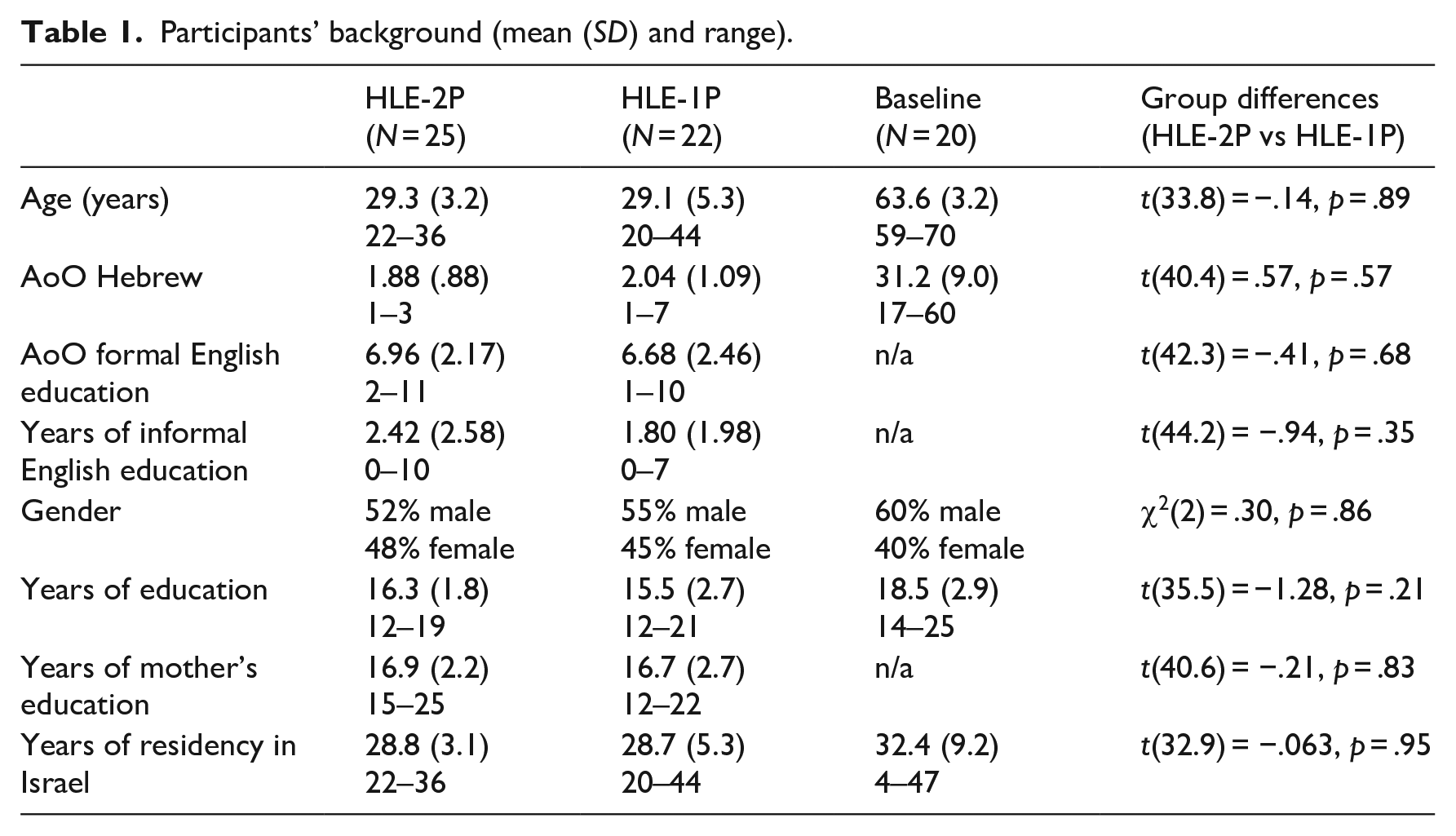
As Table 1 shows, all three groups were balanced with regard to gender, and the two HL-English speaker groups were similar in the distribution of age, education, and SES (as suggested by “years of mother’s education”). It should be noted that the baseline speakers in the study were significantly older on average than the HL-English speakers (approximately the age of their parents, who provided the primary input for their HL). It is possible that this age difference may have confounded the results to some extent, particularly in the lexical domain where vocabulary may increase with age. However, it was felt that the alternative of using an age-matched group of recent immigrants or monolinguals in the home country as the baseline has a more significant drawback: they may reflect more recent changes in the language that the HL-speakers were not exposed to (from their parents) and this would be misrepresented as a “deviation” from their inputs. See section “Discussion” for further consideration of this point.
Participants’ background (mean (SD) and range).
Based on participants’ self-evaluation (all claimed fluency in both languages), we can classify all the participants as bilinguals, with the HL-English speakers being early childhood bilinguals expressing a preference for Hebrew, and the Baseline group being bilinguals expressing a preference for English.
To obtain indices of child and adult HL-English use, HL-English speakers were also asked to indicate which language they used as children in conversation with parents, siblings, and peers, as well as their current language use as adults (1 = Hebrew only, 2 = mostly Hebrew, 3 = half and half, 4 = mostly English, 5 = English only). For the purpose of group comparisons, these responses were combined into a set of indices shown in Table 2, which also indicates the levels of significance for between-group differences.
Language use and linguistic environment (mean (SD) and range).
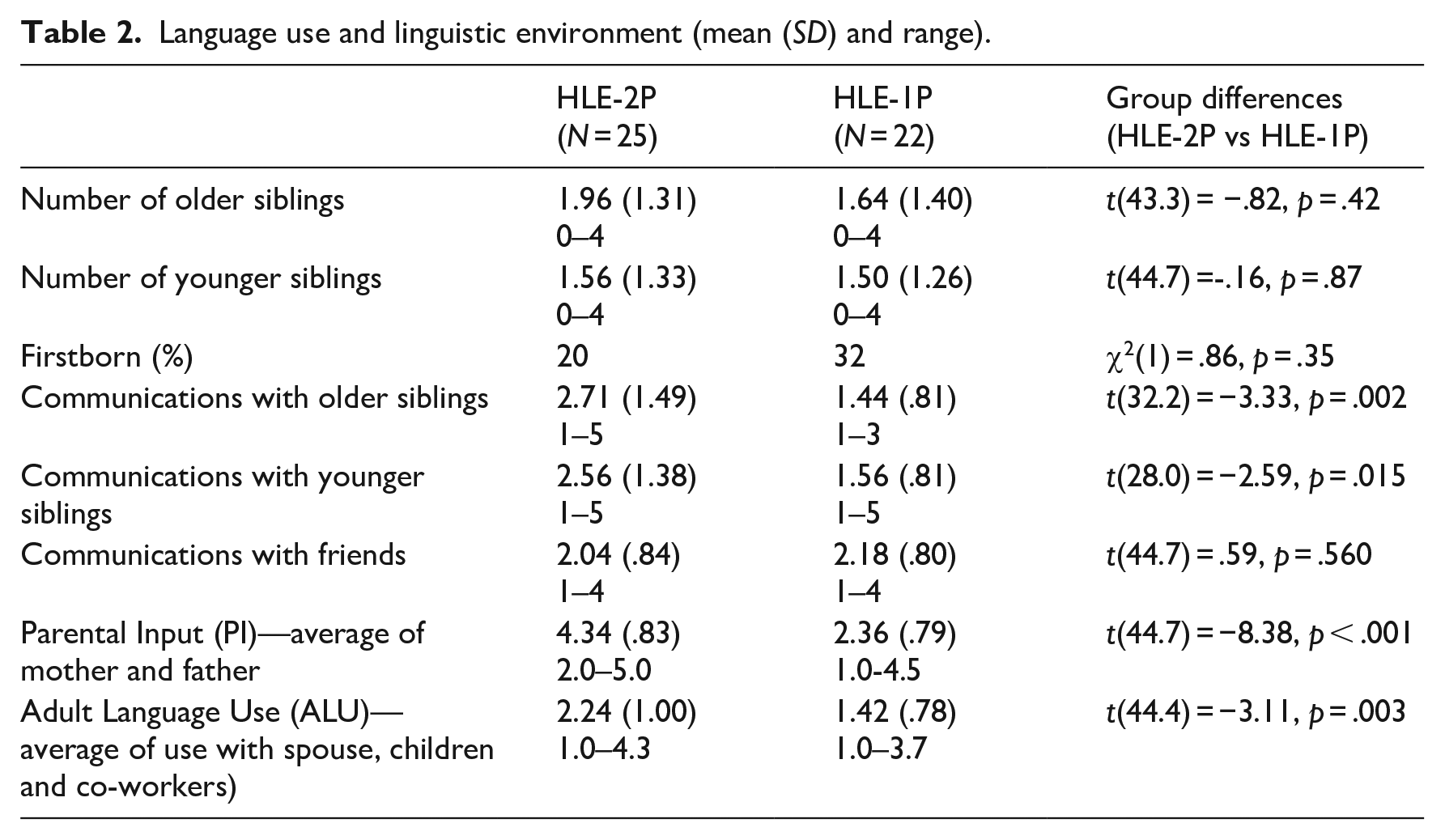
Table 2 shows significant between-group (HLE-1P vs HLE-2P) differences in the reported language use both as children and as adults, except with regard to communication with friends as children, in which there were no significant between-group differences.
Tasks
Three tasks were used to evaluate morphosyntactic and lexical abilities of the participants:
A Grammaticality Judgment Test (GJT) developed for this study was used to evaluate morphosyntactic proficiency. Participants listened to a set of 54 grammatical and ungrammatical sentences and were asked to indicate (by clicking on the appropriate button) if the sentence was grammatical or not. The sentences were evenly divided into three groups of morphosyntactic constructs which were themselves subdivided into more specific areas: verbal morphology (past tense, subject-verb agreement, use of infinitives), syntax (question formation, weak object pronoun placement, predicate order) and use of articles (omission of indefinite article (“a”), omission of definite article (“the”), use of appropriate article by context). Some of these constructions, as described in section “Discussion”, were hypothesized to trigger CLI in the use of morphosyntactic and morphosemantic phenomena. The PCIbex platform was used to develop and host the online test and record the results. Scores were calculated as the ratio of target answers (“correct” for grammatical sentences, and “incorrect” for ungrammatical sentences) to total questions. For each test administration, half of the sentences heard were grammatical and half were ungrammatical, so 54 sentences were heard in each test administration. The choice of which version of the sentence was heard was randomized. See Table 9 in Appendix 1 for the entire list of the stimuli sentences used in the current study.
The Boston Naming Test (BNT) (Goodglass et al., 1983) was used to obtain an index of lexical proficiency. Participants were asked to name 60 displayed objects as best they could (or to “pass” if they did not know the word). No time limit was enforced for providing the answer. Scores were calculated as the ratio of answers matching the target to the number of objects shown.
Spontaneous narratives were elicited from each participant, in which they described a dramatized accident in a parking lot, as displayed in an on-line video (for a description, see Wiese et al. (2021); video available at https://osf.io/szfhd). The narratives were recorded, transcribed, and coded according to the CHAT transcription format, and quantification analysis was performed using the CLAN (Computerized Language ANalysis) tool. For the recorded narratives, the number of tokens and types (and their ratio) was calculated, along with metrics for speech rate, morphosyntactic and lexical errors (including calques and non-native formulations), and disfluencies such as repetitions, and vocalized and unvocalized pauses. The metrics were calculated as a ratio to the number of tokens to control for the variability in narrative length across individual participants.
Procedure
The study was approved by the IRB of Bar-Ilan University. Participants first completed an online questionnaire which included an explanation of the nature of the experiment and the participant’s rights, and were asked to affirm their consent to participate. Subsequently, testing was performed remotely in a single session on Zoom, and the session was audio-recorded.
Sessions were conducted entirely in English, and most sessions were completed within 45 minutes. Sessions began with an informal discussion of the participant’s childhood linguistic experiences (for the purpose of establishing rapport with the participant, as well as completing any missing information from the questionnaire). Following that, the Boston Naming Test was administered, followed by the video and elicited narratives, and finally the Grammaticality Judgment Test. Narratives for 3 of the 67 participants (one in the HLE-2P group and two in the Baseline) were not successfully recorded for technical reasons and were not included.
Inter-rater reliability
The transcription and encoding of the elicited narratives, including the annotation in CHAT format of disfluencies (repetitions, vocalized, and unvocalized pauses) and lexical/morphosyntactic errors, was performed by the first author of this paper.
The second author independently checked the transcription and annotation of disfluencies on a sample of 30 narratives (randomly selected out of 128 narratives from all three groups). The average inter-rater reliability over all the narratives was 98.7% (SD = 2.1%; Range = 92%‒100%).
A research assistant (who, like the first author, is a native English-speaker) evaluated the same narrative samples for lexical and morphosyntactic errors. The average inter-rater reliability over all the narratives for errors was 99.7% (SD = 0.5%; Range = 98%‒100%).
Analysis and results
GJT and BNT: between-group comparisons
Figures 1 and 2 present the distributions of scores achieved by the three groups in the morphosyntactic domain (as evidenced by the GJT) and in the lexical domain (as evidenced by the BNT), respectively.
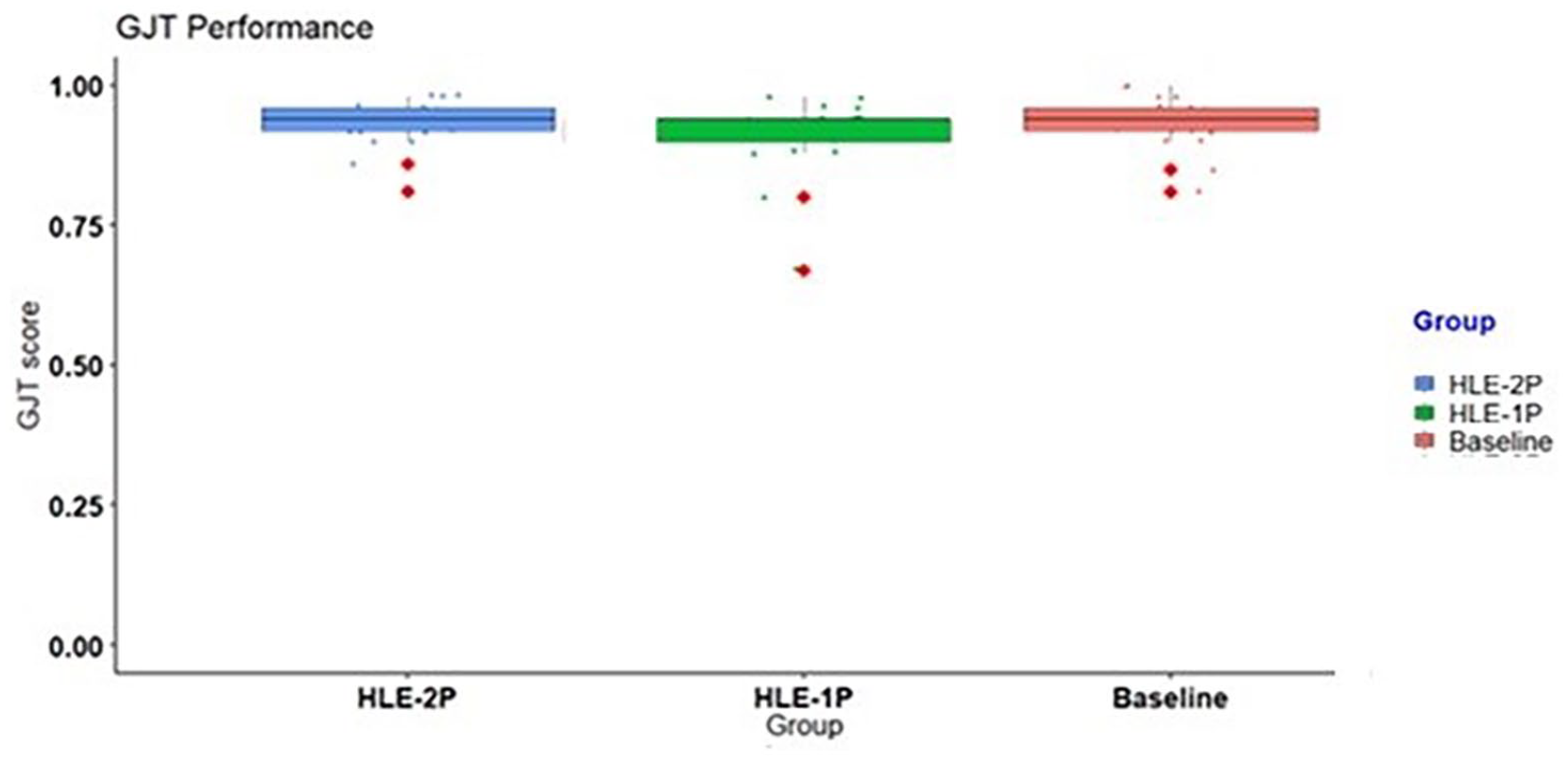
Proficiency in morphosyntactic domain per group (by GJT test scores).
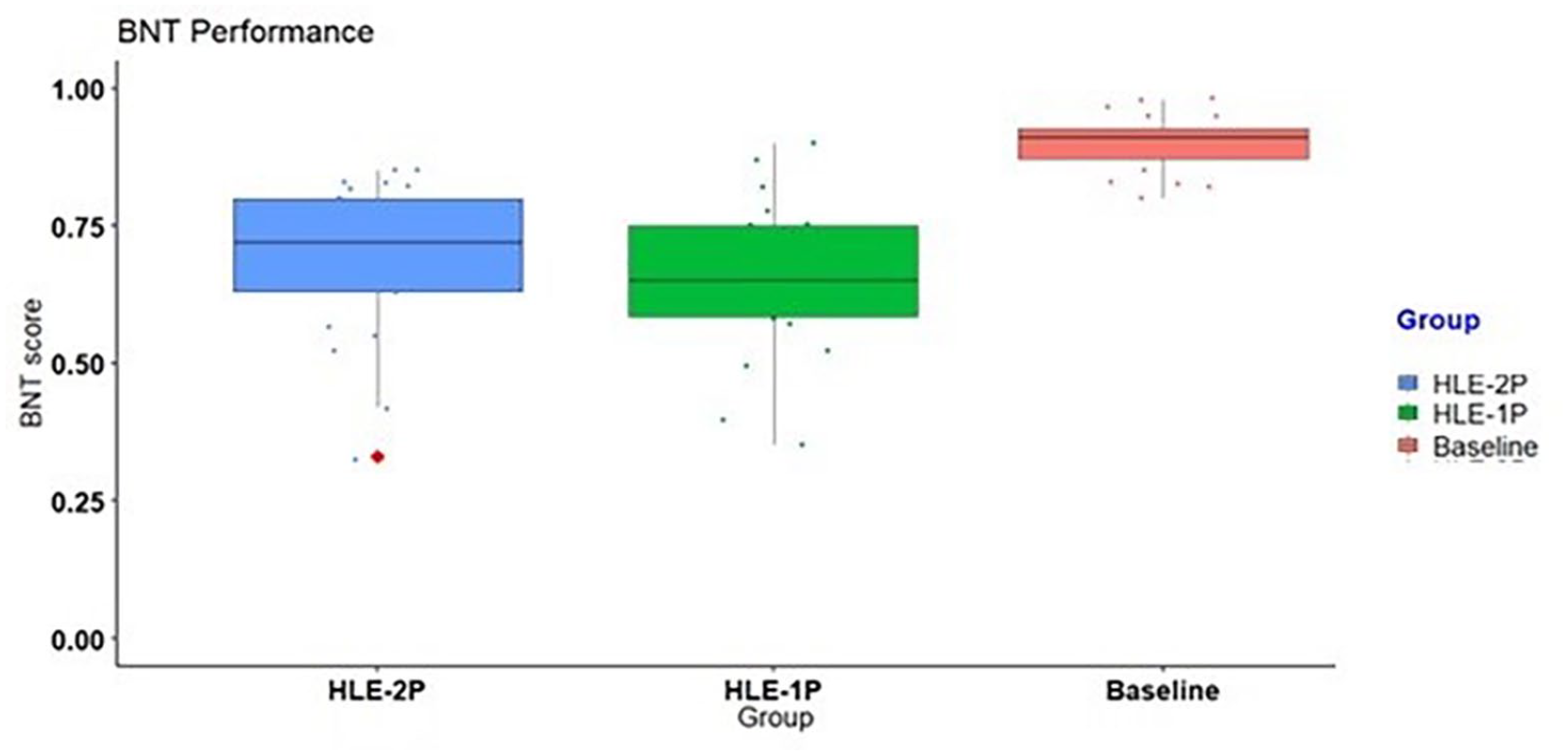
Proficiency in lexical domain per group (by BNT test scores).
There is some within-group variance in the results recorded, especially on the BNT scores. For the GJT, one-way ANOVA showed no significant difference between the Baseline and the HL-English Groups (F(2,39.0) = .92, p = .40). For the BNT, however, one-way ANOVA indicated significant differences between the three groups (F(2,37.4) = 45.31, p < .001, η2 = .44). Pair-wise comparisons using post hoc Games-Howell tests showed significant differences between the Baseline group and the two HL-English groups (p < .001 for both) but no differences were observed between the two HL-English groups (p = .54).
Narrative production: between-group comparisons of morphosyntactic and lexical proficiency
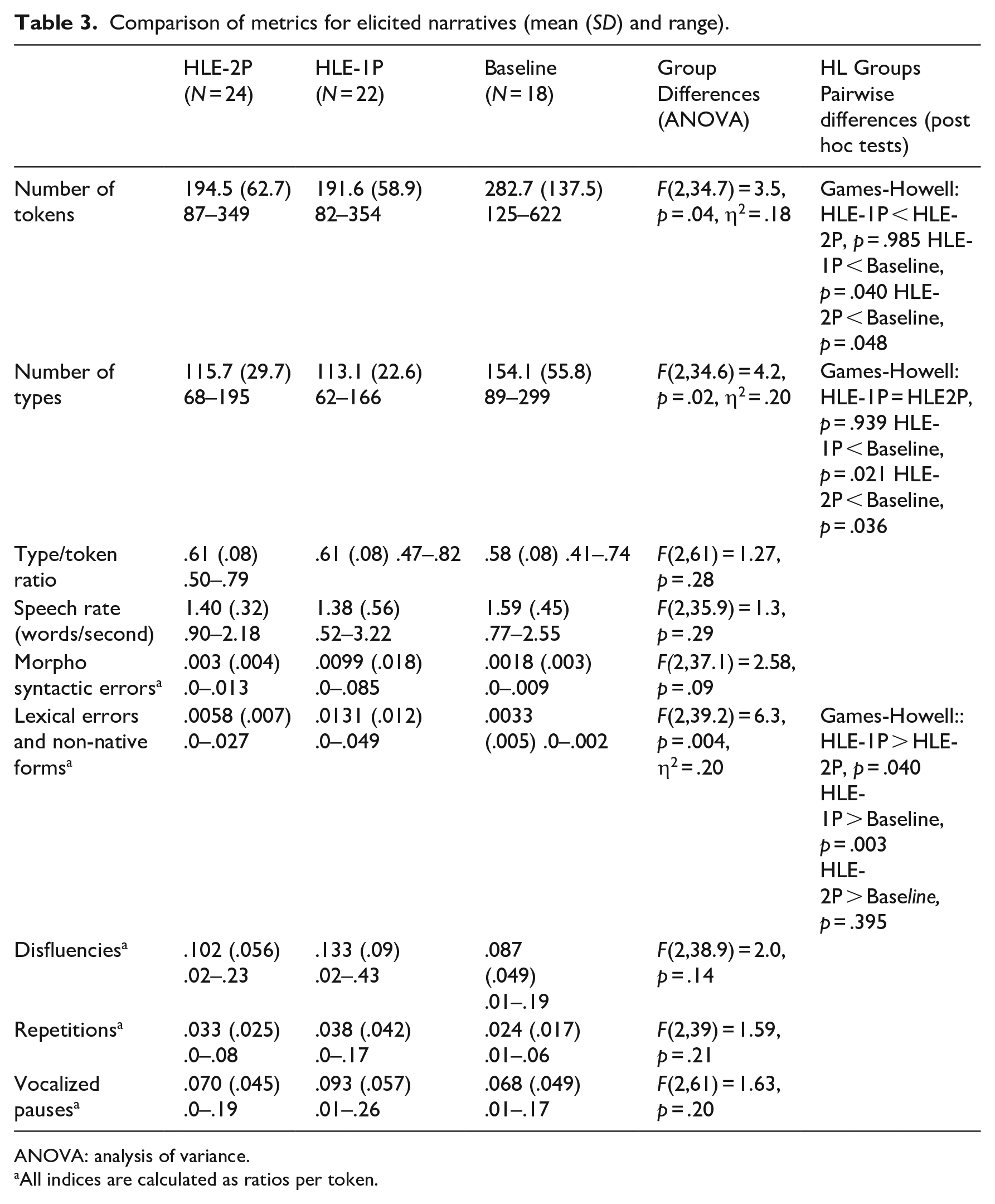
The results for narrative production indicated significant between-group differences in the metrics for the number of tokens, number of types, and percentage of lexical/non-native errors (and not for the type/token ratio, speech rate, morphosyntactic errors, or any disfluencies), as determined by one-way ANOVAs (see Table 3). The Baseline group produced a significantly higher number of both tokens and types than either of the HL-English groups, showing a greater verbosity. Furthermore, both the Baseline group and the HLE-2P group produced significantly fewer lexical errors than the HLE-1P group (in ratio of errors/token).
Comparison of metrics for elicited narratives (mean (SD) and range).
ANOVA: analysis of variance.
All indices are calculated as ratios per token.
There were no significant differences in the type/token ratio or speech rate between the groups. There were no significant between-group differences in disfluencies of any kind between any of the groups. There were also no significant pairwise differences between any of the groups in the ratio of morphosyntactic errors produced per token.
The effect of individual childhood and adult input factors on morphosyntactic and lexical skills in adult HL-English speakers
Correlation and regression analyses were run to determine what patterns of the childhood and adult linguistic environment, besides the number of English-speaking parents, might be predictive indicators of the adult participant’s proficiency in the morphosyntactic and lexical domains. The results of the Spearman correlation tests are illustrated in Figure 3. Only correlations with p-value of < .05 are shown.
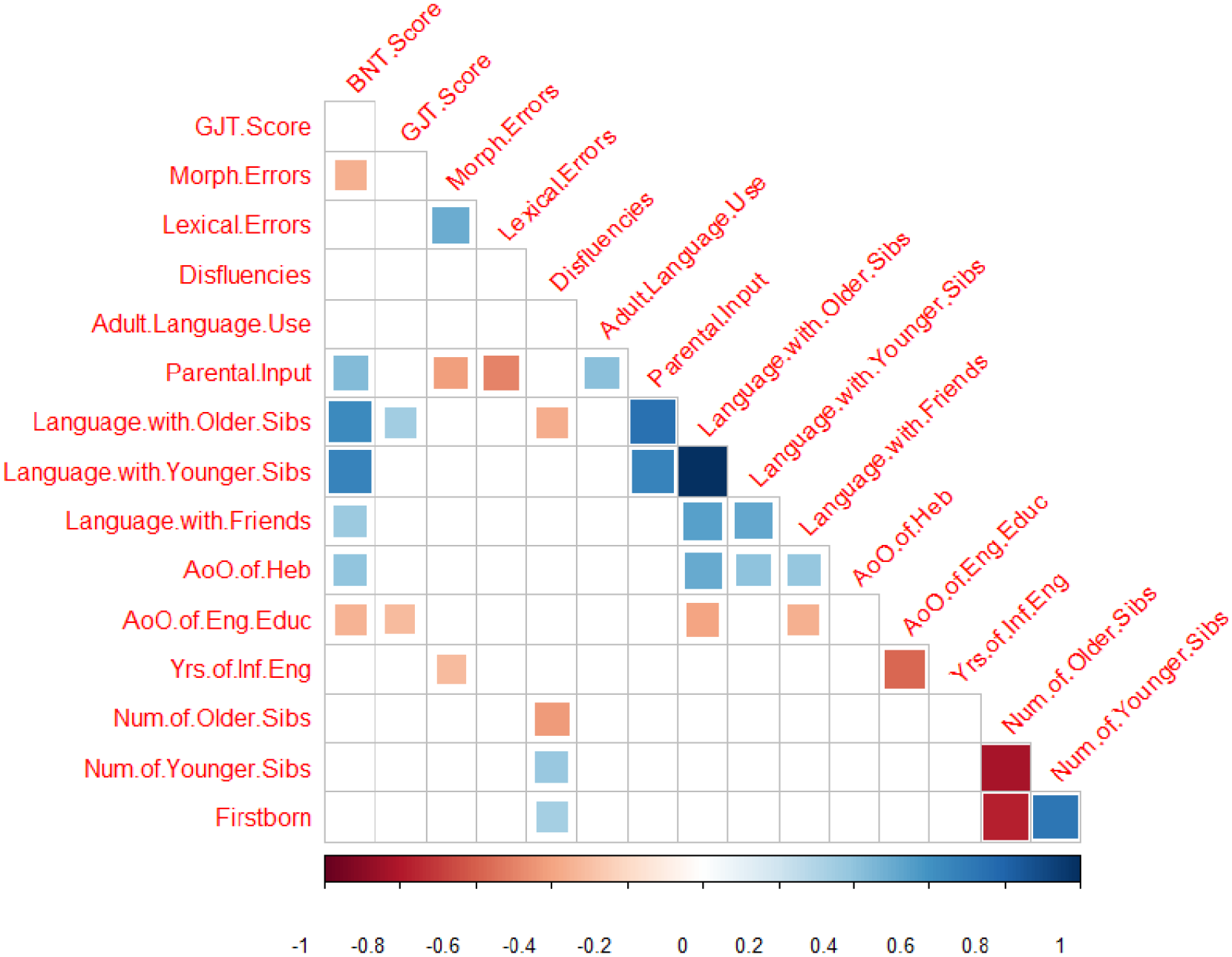
Spearman test results for correlations between input patterns and performance.
With regard to lexical proficiency, Figure 3 shows that all of the childhood input patterns from family members (parents, siblings), are moderately or strongly correlated with the scores in the BNT (i.e., the more that English was the primary means of communication, the higher the BNT score). A significant but slightly weaker correlation with the test scores was also seen for the language of communications with friends, and for the AoO of SL-Hebrew (the later the better for HL proficiency). The AoO of formal English education (in school) also correlated significantly (negatively—the later that English schooling began, the lower the score tended to be). The percentage of lexical errors in the narratives correlated only with parental input.
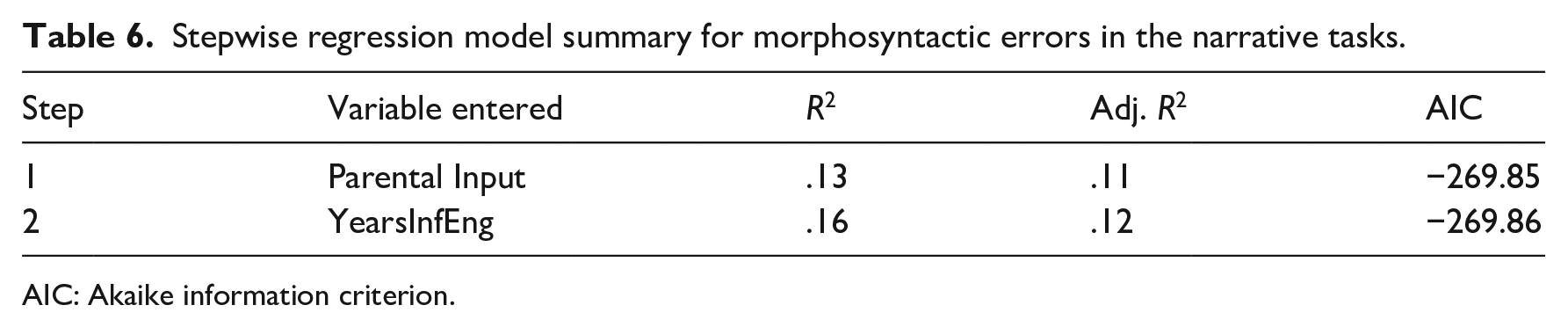
For morphosyntactic proficiency, in contrast, none of these independent variables correlated significantly with the GJT, except for the AoO of English education and communications with older siblings. However, morphosyntactic errors, like lexical errors, correlated moderately with parental input.
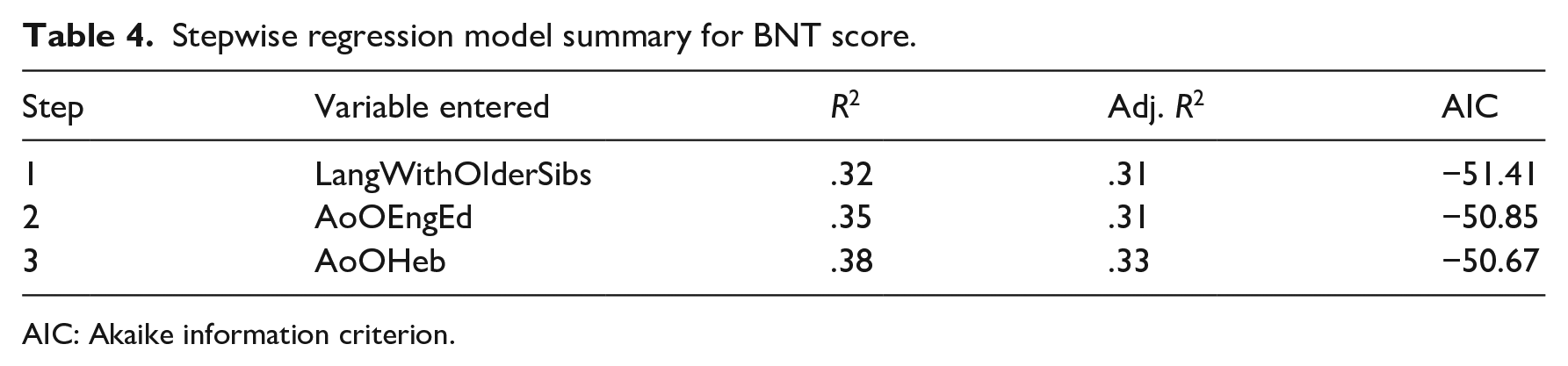
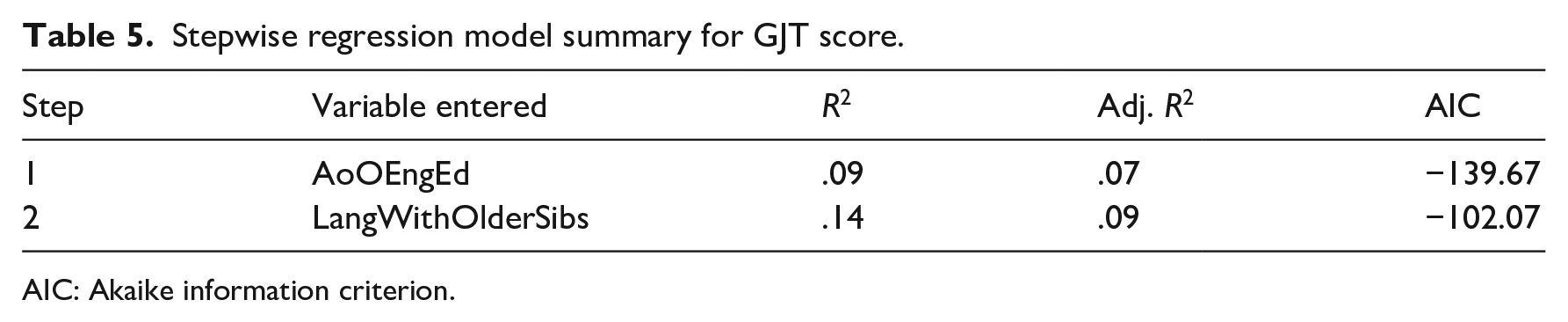
A stepwise model for regression analysis on the BNT (Table 4) shows that 32% of the variance on the BNT was attributable to communication with older siblings and an additional 3% each was due to the AoO of formal English education, and AoO of SL-Hebrew. Table 5 shows the stepwise regression analysis for the GJT, indicating the effects of the AoO of formal English education, and of communications with older siblings, with these two variables explaining only 14% of the variance.
Stepwise regression model summary for BNT score.
AIC: Akaike information criterion.
Stepwise regression model summary for GJT score.
AIC: Akaike information criterion.
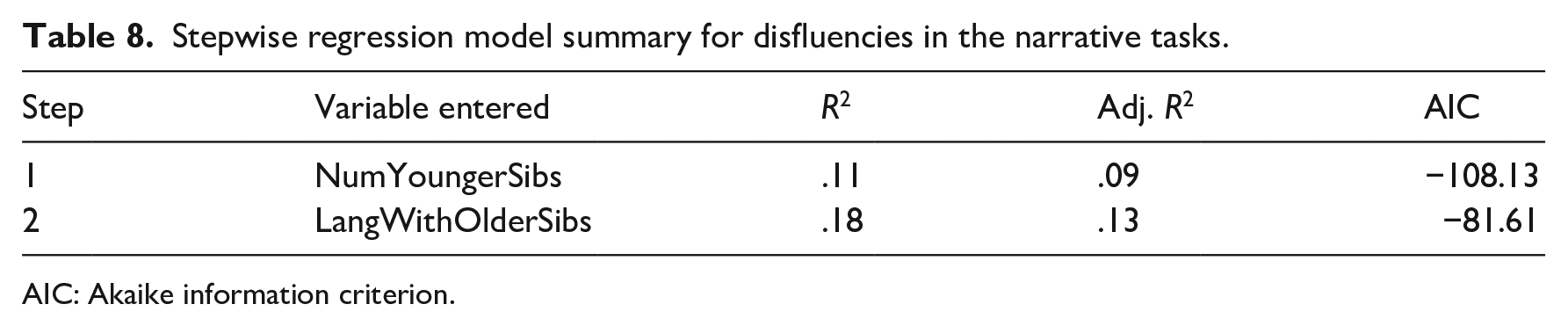
Tables 6 to 8, respectively, show the results of stepwise regression analysis of models for morphosyntactic errors, lexical errors, and disfluencies, in the unstructured narratives.
Stepwise regression model summary for morphosyntactic errors in the narrative tasks.
AIC: Akaike information criterion.
Stepwise regression model summary for lexical errors in the narrative tasks.

AIC: Akaike information criterion.
Stepwise regression model summary for disfluencies in the narrative tasks.
AIC: Akaike information criterion.
In summary, the results of the regression analyses between input factors and language proficiency showed some significant effects for all input factors in the lexical domain (both in formal testing and in the percentage of errors in an elicited narrative, the latter primarily due to parental input). As for the morphosyntactic domain, correlations were seen only for the percentage of errors and only for parental input and informal English education. Furthermore, input patterns explained a larger proportion of the variance in the lexical abilities, as compared to morphosyntax (compare R2 across different tasks in Tables 4 to 8).
Error patterns
We also noted error patterns to shed light on the effect of cross-linguistic influence from Hebrew. Although there were no significant group differences with respect to morphosyntactic errors, such errors were occasionally observed, for example, article omission ((1) below) or confusion between definite and indefinite articles (2), and subject/verb or copula agreement usually related to number (3).
(1) which was [#a] very strange coincidence
(2) a couple walking with #the carriage
(3) the car in front stopped because there #was obstacles in its way
Quantitative analysis indicated group differences with respect to lexical non-native formulations. Qualitative analysis indicated that utterances in which the wrong preposition was used (e.g., (4) below) were the most common form of lexical errors, but we also found a number of incorrect pluralizations (e.g., (5)) as well as calques (incorrect idioms, usually literal translations), which, despite their fluency, mark the speakers as “non-native.” In (6), for example, the speaker translates a Hebrew idiom (“from here to there”) which is used as a vocalized ellipsis, and in (7) a speaker mistranslates the word “asa” as “made” rather than “caused” or “had.”
(4) I’m in the parking lot #in forty-one street (preposition)
(5) I think the dog ran into the #streets
(6) . . . was going to help his wife with her groceries, anyways from here to there he just ran into the road
(7) #made the accident
There were a small number of cases where participants inserted a Hebrew word or phrase as part of their narrative (borrowing and code-switching), see (8) and (9). In some cases, this was a Hebrew word in such common use among Israelis that the Hebrew term seems to be expressed automatically, without searching for the English equivalent. In other cases, the speaker was clearly looking for the English phrase, (sometimes this was indicated by a long vocalized pause) and couldn’t retrieve it so used the Hebrew term in its place.
(8) walking with their baby and the agala (baby carriage)
(9) it was meva’es (it was a bummer)
Interestingly, there were very few cases of Hebrew interjections like “naxon” (correct) or “ken” (yes) or “zehu” (that’s it, indicating end of utterance).
Supplemental Tables S1 and S2 containing all of the utterances with lexical or morphological errors, indicating the group to which the participant who made the error(s) belongs, are available on https://osf.io/zt9u8/?view_only=be0f3a0715f54c2aaa97ec0c0f84b2b6. The different types of errors can be found in all the groups, though not necessarily with the same frequency. The variation in specific types of errors is interesting, but, as shown above, significant between-group differences occurred only for lexical errors and only for the higher rate found in the HLE-1P group. We note also that many of the errors, particularly in the baseline and HLE-2P groups, are of a type that may be attributed to performance errors that naturally occur even in the speech of native speakers. Yet, overall, we tend to see in many of the examples (as shown above) some level of cross-linguistic influence from the Hebrew in the form of non-native formulations.
Discussion
The aim of this study was to examine the English language proficiency of Israeli adult HL-English speakers in the morphosyntactic and lexical domains, to answer two research questions: First, what, if any, deviations from the baseline in adult HL-English proficiency (assuming they are detected) can be predicted by individual childhood input patterns and family environment? Second, are these deviations traceable to cross-linguistic influences from SL-Hebrew?
Group differences: HL-English vs baseline speakers
We first briefly discuss group differences between the baseline group (bilinguals who are dominant in English), and HL-English speakers who grew up in Israel to one or two English-speaking parents.
For morphosyntax (as measured by the GJT), no significant differences were observed between the Baseline and either of the HL-English groups in the morphosyntactic domain, as all groups performed very close to ceiling levels. HL-English speakers showed high sensitivity to ungrammatical sentences, some of which were specifically designed to tap into cross-linguistic influence from Hebrew (see Table 9 in Appendix 1). For example, there were ungrammatical sentences in the GJT which misuse the infinitive in a form similar to the way it is used in Hebrew (“*He must to think before he speaks”), or order question formation to conform to the order in Hebrew (“*What she is doing now?”), or omit the indefinite article which doesn’t exist in Hebrew (“*I saw great movie yesterday”). Such a deviation from the baseline could also be expected due to input patterns, and yet despite this, no such between-group differences were observed either in the GJT results or in the narratives.
For the lexical domain, differences between the Baseline and each of the two HL-English groups were detected in both a structured modality (the BNT) and an unstructured modality (elicited narratives). Furthermore, there were also significant differences in the number of lexical errors produced in the unstructured elicited narratives between the Baseline and the HL-English groups, and between the HL-English groups themselves.
Proficiency in the lexical domain can be evaluated not only by vocabulary size but also by metrics of fluency, verbosity, and speaking confidence. Most of the metrics for unstructured elicited narratives showed no significant between-group differences. The type/token ratio (TTR), which is generally a good measure of the richness and sophistication of the narrative, was fairly consistent not only between groups but even among the individual participants, with a small variance. This reflects the fact that their vocabulary was “good enough,” even if smaller than that of the baseline speakers, to allow them to express themselves in a rich variety of words. HL-English speakers do not “need” the less frequent words measured in the BNT to express themselves in most situations.
Measures of speech rate and disfluencies—repetitions with and without corrections, and vocalized pauses—all showed no significant between-group differences. This also reflects the nature of the task, in which the speakers spoke in their own “comfort zone” and were not challenged to speak in a higher register or on a subject whose vocabulary they were less familiar with (“strategy of avoidance”).
The only metric that showed significant differences between the groups was the length of the narrative (as measured both in tokens and types, so the ratio stayed more or less the same). No differences between the two HL-English groups in this metric were observed, but the Baseline group showed significantly higher values (the mean was about 50% higher in the number of tokens). This finding is consistent with the findings of Viswanath and Polinsky described in Polinsky (2018) which showed a difference of a similar magnitude in the “number of content words” between HL-English subjects (children) and their monolingual counterparts (47% more words uttered by the monolinguals). What does this higher level of verbosity of baseline speakers signify? The relative reticence of the HL-English speakers might indicate that despite their proficiency in English, there is some reluctance to speak at length. An alternative explanation is cultural—the increased verbosity may be an aspect of the pragmatics associated with the baseline group, differing from that of the HL-English speakers. It may also reflect other factors such as age, level of education, and “social position” for which the baseline and HL-English speakers were not matched.
As noted above, the baseline speakers in the study were significantly older on average than the HL-English speakers and the motivation for this was explained in section “Method”, We recognize however that this age difference, along with other factors such as level of education, AoO Hebrew, and cultural differences, could explain some of the performance variations (including, for example, verbosity). Controlling for these differences should be considered in future studies.
Similarly, as discussed in section “Introduction”, there may be qualitative differences in the input from the parents of the HL speakers (particularly in the lexical domain), stemming from their position as long-time residents in a non-English speaking country, which may have led to some diminishment in their own English vocabulary (passed on to their children). To the extent that such a factor can be operationalized (short of testing or interviewing the parents, it would need to be based on parental historical data unreliably provided by the participants), this is a constraining factor that needs to be considered. Our assumption is that at the group level rather than the individual level, the baseline group, which is the subject of the comparison, consists of participants whose linguistic history is similar to that of the parents of the HL speakers. For more details on the appropriate baselines in HL research, see Chapter 3 in Polinsky (2018).
In summary, the current study shows that in the morphosyntactic domain HL-English speakers’ proficiency matches that of baseline speakers, while in the lexical domain, differences are observed. Surprisingly, our data did not reveal any significant differences between the two HL-English groups in any of the metrics (i.e., based on “family type”). This runs counter to the results shown in a number of studies cited above for child HL development which reported a strong advantage to HL speakers with two HL-speaking parents. In the next subsection, we will discuss the relationship between morphosyntactic and lexical skills and individual HL input patterns and suggest some possible explanations for the lack of “family-type” between-group differences (contrary to many previous studies).
HL-English and individual input patterns
The first research question addressed the effect of input on HL-English formation across the two linguistic domains. In discussing these effects, we must consider the unique input patterns for HL-English.
We found no differences between adult HL-English speakers who grew up in families with one or two English-speaking parents (as described in the previous subsection). However, our analysis showed that individual HL input patterns contributed to HL proficiency beyond the family type. The results indicated that individual HL input factors explained a larger proportion of the variance in lexical, compared to the morphosyntactic, proficiency. Only the AoO of formal English education predicts sensitivity to ungrammaticalities. This does not mean that HL input at home is not essential to morphosyntactic proficiency. Rather, the finding can be attributed to the fact that almost all the participants performed at near ceiling level, so we expect correlation indexes to be weak or nonexistent. However, the fact that there is a correlation with the AoO of formal education in English implies that for (simpler) morphosyntactic structures which are acquired in early childhood, there is constant reinforcement in English from other sources even after the child is no longer exclusively subject to the English heard at home. Thus, the acquisition is not susceptible to divergence in the morphosyntactic domain. For more complex structures (e.g., relative clauses) which are acquired later, these sources are supplemented by formal education in school and other English-speaking frameworks. This may explain why some of the previous studies in HL-English produced different results compared to those observed in the current study. Viswanath and Polinsky (2012) tested children of pre-high school age (to evaluate them before the intense English education that high schoolers in Israel experience), and Armon-Lotem et al. (2021) tested preschoolers, whereas the participants in the current study were all adults who had completed a comprehensive formal English education. Self-reported data showed that the HL speakers were from a high socio-economic status with most having university educations.
Thus, one explanation for this finding is that most previous studies examined childhood proficiency, while this study examined adults. The relative “disadvantage” of HL speakers with only one HL-speaking parent is to a large extent compensated for by increased exposure to English, particularly at the high school and university level (in future studies, it might be worthwhile to examine adult HL speakers from a lower SES to see if this influences the results). It is also worth comparing these results to adult HL speakers in other language dyads. Unfortunately, the number of studies that deal with the role of exposure variables in adult HL ultimate attainment is very small.
Perhaps more importantly, the study concerned itself not with the “nominal” family type (how many native English-speaking parents), but with the actual frequency of language of communications as reported by the participants. We believe this to be a more reliable metric, since it reflects the actual “Family Language Policy,” which in some cases consists of parents purposely using their “non-dominant” language, to enhance the child’s linguistic proficiency in either the HL or the SL. Armon-Lotem and Meir (2019) discuss at length how exposure needs to be measured both quantitatively and qualitatively, and not just by the classification of family members. For more extensive discussion of the effect of parents who are native or non-native speakers, see Place and Hoff (2016). In this regard, we note that Family Language Policies are not always implemented as planned, and the testimony of individuals to the actual frequency of use of each language with different family members is probably more accurate.
Regression analyses revealed that by far the greatest contributor to lexical abilities (as measured by the BNT) was the language of communication with older siblings, while the (late) AoO of SL-Hebrew and the AoO of formal English education also contributed, but to a smaller extent. Similarly, lexical errors in narratives were also largely predicted by the amount of parental input: HL-English speakers with less parental input were more likely to produce more non-native formulations. Montrul (2008, p. 269) summarized as “trivial” the fact that “input plays a fundamental role in language acquisition,” but of course, it is not always easy to accurately assess the nature of the input. These results seem to imply that input from any source contributes to some extent to the increased lexicon. In fact, the more widely varied the sources are, the more the lexicon might be expanded, so this includes siblings and peers. The AoO of SL-Hebrew also correlated significantly with performance on the BNT, which is consistent with the consensus of a number of previous studies cited above, that the later the AoO, the smaller the observed divergences.
Differentiational effects of HL input on the different domains are consistent with the assertion put forth by Unsworth (2013), who showed that different domains are affected by the types of inputs in child HL development. Not surprisingly, analysis also showed that parental input correlated with adult language use. Increased childhood inputs seemed to make it more likely that subjects would use English with their spouse, children, and co-workers, but adult language use alone did not predict proficiency in either of the domains tested.
HL-English and cross-linguistic influence effects
The second research questions asked about the effects of cross-linguistic influence on HL-English. Previous studies investigating HL formation have pointed to CLI as one of the potential mechanisms driving changes in child and adult HL in the domains of morphosyntax and lexicon. In the current study, effects of CLI on HL-English were detected neither for the GJT task which was specifically designed to tap into cross-linguistic influence nor in grammatical error production in narratives. These results do not corroborate the findings reported in other studies cited above for HL speakers of other languages for various aspects of the morphosyntactic domain. One factor that may mitigate against the cross-linguistic effect in the morphosyntax of HL-English in an SL-Hebrew context is that there is a general morphological poverty of English in some cases (sparse nominal and verb morphology), which minimizes the overlap. For example, we did not observe ungrammaticalities with respect to word-order and null-subject use, which potentially might be predicted since in Hebrew word order is relatively freer, and null-subject is licensed. Similarly, few errors were detected in the domain of article use. But more research is needed to assess the effect of cross-linguistic influence in a more rigorous experimental paradigm.
However, instances of cross-linguistic influence were detected in the form of calques and non-native formulations, most often in the form of improper use of prepositions and literal translations of idioms familiar only to Hebrew speakers. The appearance of calques and non-native formulations is evidence of SL-Hebrew CLI even in otherwise proficient HL-English speakers. It is interesting to note that these errors appeared (albeit to a significantly lesser extent) in the Baseline group as well, suggesting that this aspect of cross-linguistic influence from the SL affects even adult native English speakers, whose lexical proficiency is already well established. The latter is surprising, yet has been previously reported in immigrant speakers who show very little knowledge of SL (Baladzhaeva & Laufer, 2018).
In summary, our study produced little evidence of cross-linguistic influence in HL-English formation. In the domain of morphosyntax, no effects of cross-linguistic influence were detected, while very minor traces of the influence from SL-Hebrew were observed in the form of calques.
Limitations and future directions
Although we believe the study makes a significant contribution to the mechanisms shaping HL-English proficiency, it is not without limitations. The morphosyntactic testing employed in this study was limited in scope and did not sufficiently use more complex syntactic structures which might better differentiate between levels of proficiency (e.g., relative clauses [particularly with resumptive pronouns], conditionals, structures with inversion, and use of prepositions—particularly in complex structures such as pied-piping). A special emphasis should be placed on areas that are more likely to be affected by cross-language influence. The lexicon testing did not measure differences in response times between the Baseline and the HL groups, which might have revealed even greater divergences. Also, the set of words comprising the BNT may not accurately reflect proficiency in the lexicon relevant to the needs of most speakers. The self-selection of the participants, and the fact that most participants grew up in neighborhoods where many other HL-English speakers resided, may have skewed the results toward more proficient English speakers than is seen on average among the HL-English population.
As discussed above, future research in this area should consider selecting a baseline group, possibly from an English-speaking country, which matches the HL speakers in areas where the current study did not. Mitigating these limitations in future studies might sharpen the results seen here.
Conclusion
The results of the current study support the assertion that HL morphosyntactic structures acquired in childhood can be maintained when sufficiently reinforced in the societal environment in formal and informal frameworks. Differences in lexical proficiency were more apparent in specific lexical domains but did not significantly impair the ability of most HL-English speakers to express themselves fluently and confidently.
No differences between adult HL-English speakers who grew up in families with one or two English-speaking parents were found. However, effects of individual childhood input patterns, particularly parental and sibling input on lexical proficiency were detected. We found little evidence of the cross-linguistic influence of SL-Hebrew on HL-English, other than the occasional use of calques, and a number of non-native formulations that showed the influence of SL-Hebrew. This study contributes to the literature on HLs by showing that patterns and trajectories that were once considered the hallmark of all HLs, are not necessarily so with regard to HL-English.
Supplemental Material
sj-csv-1-ijb-10.1177_13670069231155775 – Supplemental material for English as a heritage language: The effects of input patterns and contact with Hebrew
Supplemental material, sj-csv-1-ijb-10.1177_13670069231155775 for English as a heritage language: The effects of input patterns and contact with Hebrew by Sidney Gordon and Natalia Meir in International Journal of Bilingualism
Supplemental Material
sj-csv-2-ijb-10.1177_13670069231155775 – Supplemental material for English as a heritage language: The effects of input patterns and contact with Hebrew
Supplemental material, sj-csv-2-ijb-10.1177_13670069231155775 for English as a heritage language: The effects of input patterns and contact with Hebrew by Sidney Gordon and Natalia Meir in International Journal of Bilingualism
Footnotes
Appendix 1
Table 9 contains the sentences used in the GJT. For each test administration, half of the sentence heard were grammatical and half were ungrammatical, so 54 sentences were heard in each test administration. The choice of which version of the sentence was heard was randomized. A “#” indicates that the results for that sentence were discarded because of ambiguity or other problems revealed in posttest analysis. If the target response was achieved by less than 20% of the Baseline participants, it was discarded.
Declaration of conflicting interests
The author(s) declared no potential conflicts of interest with respect to the research, authorship, and/or publication of this article.
Funding
The author(s) received no financial support for the research, authorship, and/or publication of this article.

Supplemental material
Supplemental material for this article is available online.
Author biographies
References
Supplementary Material
Please find the following supplemental material available below.
For Open Access articles published under a Creative Commons License, all supplemental material carries the same license as the article it is associated with.
For non-Open Access articles published, all supplemental material carries a non-exclusive license, and permission requests for re-use of supplemental material or any part of supplemental material shall be sent directly to the copyright owner as specified in the copyright notice associated with the article.
