




Abstract
Aims:
This study explores how home language(s) are used in bilingual family members’ daily digital or non-digital interactions to demonstrate their emotions and affections for each other. The study investigates linguistic features and situated-language use of home language(s) in emotional negotiations between family members. In addition, it explores how multimodalities and languages are mixed to contribute to the interactional dynamics underlying ‘family talk’ and how children and adults position themselves emotionally in moment-to-moment interaction of family life.
Methodology:
This study involves six families from two transnational communities (Chinese and Polish) and it employs an ethnographic research design for data collection.
Data and analysis:
Data sources include recordings of mealtime conversations, daily WhatsApp/WeChat texts, and digital-mediated family talk recorded by the families themselves. Affective repertoire is used as an analytical framework.
Findings and conclusions:
The following five key features are identified in online or offline family talks regarding expression of emotionality: emojis, terms of endearment, diminutives, declaration of love and situated emotive language use.
Originality:
Unlike recent studies of emotions in bi-multilingual families, this study does not rely on surveys, memoirs, or interviews. Few studies have investigated how family members present their emotional expression in their daily communications, what role home/heritage language(s) actually play in communicating their emotional needs, and how these emotional expressions are manifested in their lived experiences and socialisation practices.
Significance and implications:
The findings contribute to FLP literature by looking into how emotions are involved in the practices of family life and the construction of familyness. Emotions, as a key factor in FLP, are directly related to parents’ perceptions of and investment in their heritage language. Although these perceptions are linked to the powerful societal languages that often represent educational possibilities, when it comes to emotional expressions, the primacy is given to the first language/heritage language.
Introduction
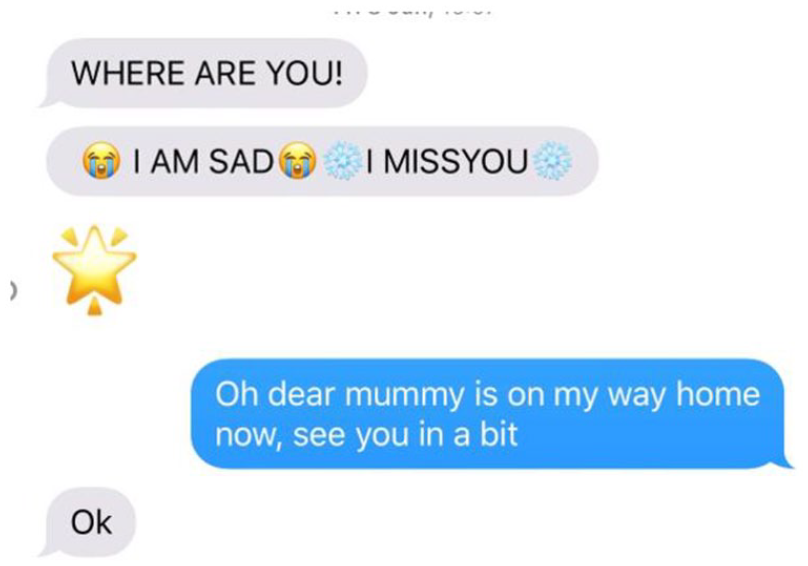
This WhatsApp text captures the emotional exchanges between Wei (7 years) and Mrs W (mum), a Chinese mother and her daughter, living in the United Kingdom. Using emojis, capital letters and expressive discourse, Wei expressed her longing for her mother and indirectly requested Mrs W’s return to home. In response, Mrs W reassured her daughter that she would be home very soon.
In family domains, the way a language is spoken, by whom and to whom, is not just a perennial sociolinguistic phenomenon, but a complex sociocultural engagement involving emotions and identity negotiations between family members. Family language policy (FLP), either implicit or explicit, thus plays an instrumental role in strengthening the emotional ties between family members and in developing relationships between generations in family domains (Curdt-Christiansen, 2009; Curdt-Christiansen & Huang, 2020; De Houwer, 2020; Sevinç, 2020). In transnational contexts, FLP is particularly important, because making decisions about whether or not to develop a heritage language can have critical implications for transnational families, not only with regard to enriching their children’s linguistic repertoire, but also with regard to establishing a close relationship with each other in the process of ‘doing family life’ (Kędra, 2021).
This paper presents an on-going study of emotional needs in a FLP project in the United Kingdom. It explores how home language(s) are used in family members’ daily digital and non-digital interactions to demonstrate their emotions and affections for each other. Involving two transnational communities in the United Kingdom, the Chinese and the Polish, the study focuses on emotion-related language practices of three families in each community. We focus on these two communities because of their distinctive differences in culture and language socialisation. These differences, according to cultural psychology, can have a strong influence on people’s emotional expressions (Jack et al., 2012; Wierzbicka, 2009).
While recent studies of emotions in bi-multilingual families have shown that L1 is often used by immigrant parents and grandparents to convey intimacy when making an affective stance (e.g., Dewaele, 2004, 2010; Ladegaard, 2018; Pavlenko, 2004, 2008; Sevinç & Backus, 2019), these studies tend to rely on surveys, memoirs and interviews. Fewer studies have investigated how family members present their emotional expression in their daily communications, what role home/heritage language(s) actually play in communicating their emotional needs, and how these emotional expressions are manifested in their lived experiences and socialisation practices. To address this research gap in FLP studies, our paper seeks to answer the following questions:
What are the linguistic and digital (emoji) features of the emotional expressions underlying the interactional dynamics of ‘family talk’?
In what ways do implicit family language policies influence the choice of emotional expressions when family members convey their emotions to each other?
FLP and emotional communication
Recent studies in FLP have demonstrated that emotion is one of the key factors that influence parental decisions on what language to use and practice at home (Curdt-Christiansen, 2016, 2018; Curdt-Christiansen & Huang, 2020; Curdt-Christiansen & Sun, 2021; De Houwer, 2020; Sevinç, 2020). Central to the emotional factor in FLP is the concern about the role of home language in maintaining or breaking close family bonds and intimate relations. Because many first and second-generation immigrants grew up and were socialised into cultural and social norms in their home language (L1), this language has a particular emotional and cultural significance in their life. Pavlenko (2004) points out that the loss of L1 is a ‘reality that underlies the plight of many immigrant parents and grandparents who feel that they are losing the emotional connection to children who grow up in a language different from their own’ (p. 201).
Research into the relationship between language and emotion from sociolinguistic and psycholinguistic perspectives has long established that children acquire social norms, cultural taboos and feelings of emotion and embarrassment through primary socialisation associated with L1 (Bond & Lai, 1986; Dewaele, 2016; Pavlenko, 2004, 2012) argues that emotional development takes place in two parallel processes during primary language socialisation. The first process is related to perceptual development, where children’s conceptualisation of emotions is established through all sensory modalities including visual, auditory, tactile and visceral. The second one involves linguistic affective conditioning where children develop linguistic associations with emotionally charged experiences and memories. It is in these processes through implicit socialisation that words and vocabularies take on different connotations related to emotional experiences and begin to have deep personal meanings, in that some become related to love, others linked to feelings of shame and embarrassment, and other again linked to taboos. As a result, using the primary language (L1) can invoke deep emotional reactions and make family members feel closer to each other in their daily communication. Dewaele (2004, 2016), for example, reported that swearing was significantly easier in L2 than in L1. In other words, the emotional force of swear-taboo words is less intense in L2 than in L1. In her study of emotions in bilingual family talk (n = 141), Pavlenko (2004) also found that parents perceived emotional communications in L1 as natural and ‘right’ whereas emotional connections in L2 were perceived as artificial and fake.
Although emotion is an important factor influencing FLP, only limited attention has been paid to language practices and emotional communications in bilingual/multilingual families (Curdt-Christiansen, 2009, 2016; De Houwer, 2020; Sevinç & Backus, 2019; Smith-Christmas, 2018). In these limited studies, parents are often found to use their heritage language for endearment, discipline and scolding. Wierzbicka (2004, 2009) argues that people who live their lives through two languages describe their emotional experiences differently in their two languages. Emotional words in different languages have different intensities and ‘are linked with different cultural models and different emotional scripts’ (Wierzbicka, 2004, p. 97). Polish diminutives, for example, have no matching equivalents in English; therefore, using English for endearment will not convey the same level of emotional intensity or personal emotional involvement. Similarly, Chinese endearment lexicons across different Chinese language varieties or dialects may have very different meanings. For example, 娘 (niang), in central China, is a colloquial endearment for mother. But in Northern China, it is a term of endearment for a young girl.
In recent years, studies of FLP have found that some families tend to use heritage languages for endearments (Curdt-Christiansen, 2016; Schecter & Bayley, 1997; Smith-Christmas, 2018) while others use them for disciplining, reprimands and scolding (Luykx, 2003; Zentelle, 1997). Importantly, the language of emotions, as argued by Pavlenko (2012), can provide a cultural frame through which emotional expression is presented, evaluated and interpreted within a system of sociocultural norms and power relations in a given context and community. The emotional expressions that are considered appropriate or inappropriate, the kinds of implicit meaning that certain expressions can entail, and the relations that the emotional words can assume offer new ways to understand intergenerational relations within FLP studies.
Emotional expressions are traditionally conveyed through different languages, usually accompanied by non-verbal cues such as facial expressions, intonation, and gestures. But recent studies have shown that emojis play an important role in many people’s digital practices and have infiltrated daily communications through social media (Bai et al., 2019). While the use of emojis has been reported to facilitate communication and interaction in different disciplines including psychology (e.g., Riordan, 2017) and communication (e.g., Sampietro, 2019), there is a paucity of emoji research in FLP. How emojis are used in daily digital practices in relation to FLP, by whom and for what purposes, is an under-researched topic.
Research in communication has identified that emojis can serve as tools for social and emotional expressions. Riordan (2017), for example, explored the functions of emojis in emotion work. Examining how different emojis were interpreted by her participants, her study confirmed that while emojis can convey high levels of affective expression such as joy and excitement, they can also soften negativity. Kelly and Watts (2015) found that emojis can express intimacy by showing informality or playfulness. Similarly, in their Digital Media Practices in Households research project, Hjorth and her colleagues (2020) found that emojis can function as a form of paralinguistics, as they provide not only playful and creative ways of deliberating emotion work, but also provide communication tools for sustaining intergenerational intimacy and binding together family members from near and far. These studies suggest that the time and effort involved in using emojis may help maintain and enhance social relationships (Kędra, 2021).
Given the fast development of digital tools in social media, it is important to understand how digital practices in families enable them to carry out emotional communications through different forms of digital practices, and how their emotions are manifested in their linguistic repertoire online and offline. Emotions, as a key factor in FLP, are directly related to parents’ perceptions of and investment in their heritage language. These perceptions are linked to the powerful societal languages that often represent educational possibilities (Curdt-Christiansen, 2016; Curdt-Christiansen & LaMorgia, 2018), and economic and social motilities (Curdt-Christiansen, 2018, 2020). The competing forces presented in the duality of minority versus majority, heritage language versus societal language, and monolingual versus multilingual have become key elements in understanding how some children become bilinguals while others become monolinguals despite similar home linguistic environments.
The ideological convictions underlying FLP decisions can have critical implications for transnational, Indigenous and minority-language speaking families. For some families, the loss of a heritage language causes profound emotional pain, shame and regret (Curdt-Christiansen, 2016; Lane, 2010; Sevinç, 2016; Tannenbaum, 2012). De Houwer (2009) studied a bilingual Dutch-English girl (Lauren) in Belgium. Lauren had limited English language production, which was interpreted by her English father as an emotional ‘rejection’ of him. De Houwer argues that by not speaking the parent’s language, a child may affect the harmonious relationship in a family. Similar cases have also been reported by other scholars where parents feel guilty for not passing on their heritage language (Curdt-Christiansen, 2016; Okita, 2002). Curdt-Christiansen (2016), in her study of Singaporean families, illustrated the parents’ conflicting emotions and regrets for not passing on their heritage language. Sevinç’s (2016; Sevinç & Dewaele, 2016) studies of Turkish immigrants in the Netherlands demonstrated that inadequate heritage language development can lead to emotional anxiety and conflicts such as shame, fear, panic and anger. The above-mentioned studies as well as research conducted by Lane (2010) in Norway, and Tannenbaum (2012) in Israel, all point to the important role of home/heritage language development in contributing to harmonious and cohesive family relationships.
The centrality of emotional aspects in FLPs offers a different perspective on children’s multilingual development and linguistic experience. Although studies have illustrated how parents and children use different discourse strategies to inform each other of their emotional engagement, interactional studies have been under-researched. To understand how language preference and use underlie home language maintenance and shift, it is imperative to locate the ways in which individuals express, process, perform and experience emotions within family domains.
The study
Situated in the context of the United Kingdom and involving two transnational communities, the Chinese and the Polish, this study is part of a large research project investigating FLPs in transnational families. While the overall objective of this project is to examine how FLP is shaped, established and negotiated in daily interactional and digital practices, this paper reports on how emotions, as part and parcel of family life, are reflected through lived experiences involving language practices. Although our data sets include family interactions between family members near and far and consist of different issues and matters, we choose only those that contain emotion-related multilingual practices through digital devices or face-to-face conversations.
The participating families
Six families were involved in the study, three from each community. The reason for choosing these six families is that they represent different family types in the two communities regarding family size, educational level of grandparents and parents and the different language repertoires of the family members.
As a common characteristic across the Chinese community, the family is a unique, closely knit concept, in which grandparents are often involved in childrearing (Curdt-Christiansen, 2013, 2016). The three participating families are no exception, in that the grandparents are, either physically or virtually, closely involved in their grandchildren’s life. In the Polish community, the three participating families are nuclear families, whereby the grandparents are relatively less involved in family talk. The families’ profiles are presented in Table 1.
Participating family profile.
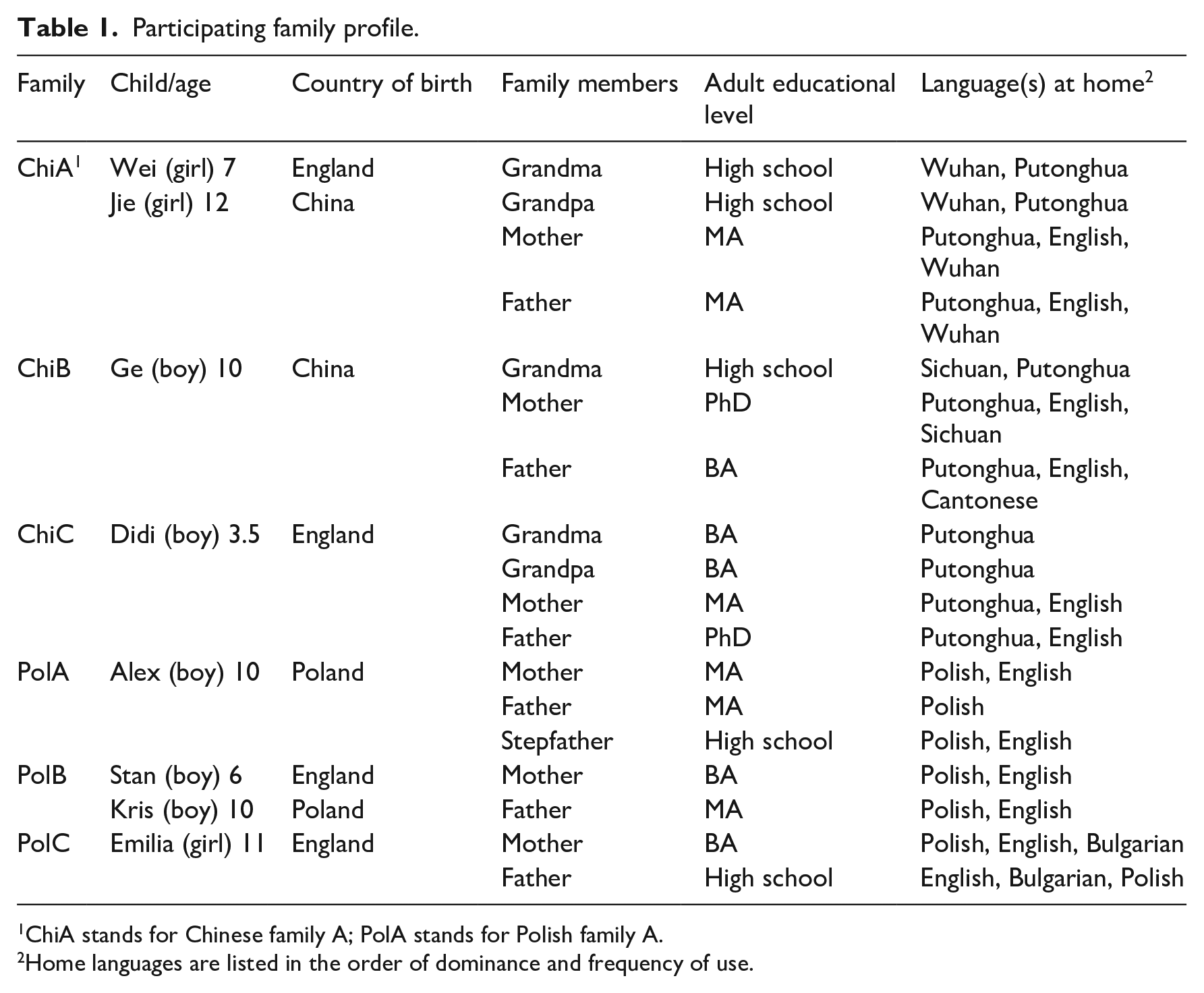
ChiA stands for Chinese family A; PolA stands for Polish family A.
Home languages are listed in the order of dominance and frequency of use.
As can be seen from the table, the children from these families were born either in their home country or England. Biographic interviews with and observations in the families indicate that children born in the United Kingdom tend to use English with their siblings and parents, whereas those born in the home country still use their heritage language with other family members. Observations in families are consistent with the general trend shown by migration studies, where the first and second generations still use home language in family domains (Fishman, 2001; Li Wei, 1994), but the third generation shows a clear shift from home language to English.
Data sources
Data for this paper were collected over the period 2018–2020 through ethnographic observations, conducted to capture the language practices in online and offline situations. Two sets of data were included in this project: (1) screenshots of online chats and (2) audio (offline) and video-(online) recorded family talks in various situations (mealtime, walking to/from school, play time).
One of the key features of the ethnographic approach to data collection is the immersion of the researcher in communities for an extended period of time. Observing families can be a rather intrusive undertaking in which researchers may find themselves in an ethical dilemma when having to decide what to include and what to exclude as part of the data sources (Dockett et al., 2009; Lareau & Rao, 2020). As conversations and messages in families often contain private matters, we decided to ask the families to send us their daily WhatsApp/WeChat messages and calls which they felt comfortable to share with us. With regard to the screenshots, we asked the families to record all the exchanges in a given conversation. The captured messages could be of any length, from one to four shots. In addition, we asked them to record and select at least four episodes of family interactions through video (online) or audio (offline) recording. While no length limit was required for these recordings, they generally lasted 10–30 minutes. For each of the recordings we received, we asked them to explain any unclear utterances and missing information about the contexts in which the conversations took place. In total, we collected rich data, as shown in Table 2.
Data inventory.

Data coding
Data analysis was guided by affective repertoires as the analytical framework (Pavlenko, 2004). Affective repertoires refer to linguistic means for emotional expression offered by a particular language. We adapted this framework to include non-linguistic modalities (e.g., emojis, picture captures) as part of the affective repertoires to locate emotion-related expressions in both social media messages and interactions. We first reviewed the video and audio recordings, then transcribed them (both authors are L1 speakers of the two languages involved). Subsequently, we repeatedly read the transcripts and the screenshots to identify different types of linguistic and non-linguistic features of the affective expressions. We then examined how these affective features were linked to any specific languages in the family members’ linguistic repertoires. In this paper, we do not focus on the frequencies of the linguistic or non-linguistic means, but on the features that family members used to convey their affections, as each family used different means in their emotional expressions. Some families did not use digital apps in their daily communication and others used a few terms of endearment in their conversation, despite demonstrating intimate ties between each other. In what follows, we illustrate how family members projected their emotional meanings and positions with regard to cultural and social norms as well as expressions of self. The findings are organised based on three aspects that emerged from the data: features of emojis, features of linguistic expressions and situated language use in context.
Findings
Data analysis revealed that each family had their unique way of showing their emotions for each other in the process of developing intergenerational relationship. Table 3 shows the different means that were used by each of the families.
Visual and linguistic features related to expression of emotions.
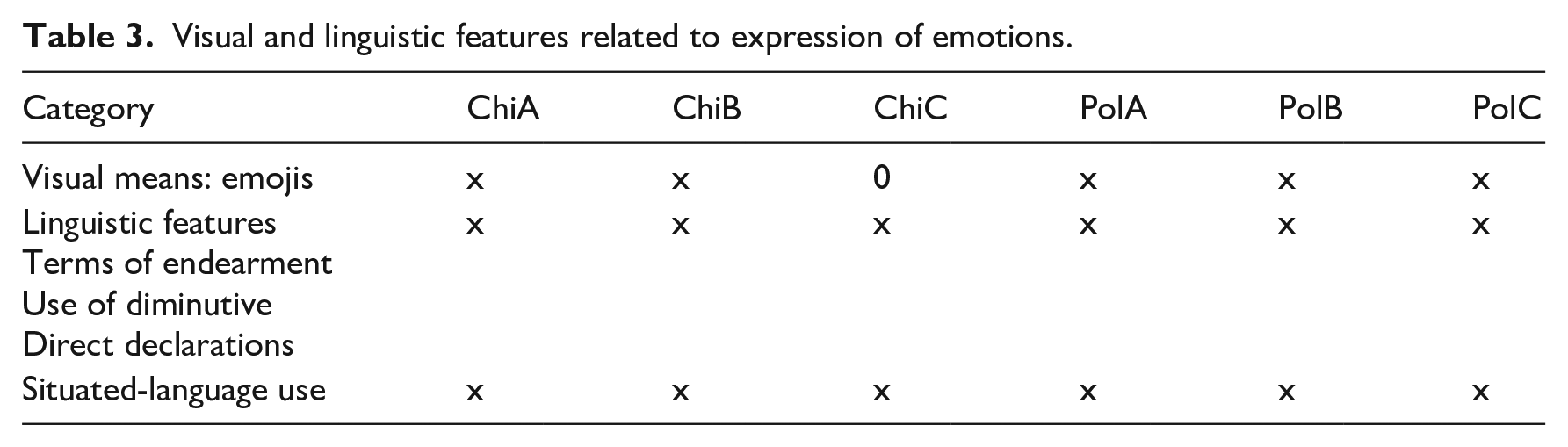
Visual means were largely represented in emojis but also included pictures. Linguistic features include terms of endearment, diminutives and direct declaration. Situated-language use in this context refers to communications without involving emotional related linguistic discourse markers such as terms of endearment, nick names and diminutives. In what follows, we demonstrate how these visual means and linguistic means are used in family communications.
Visual means in family communications: emojis
Across all families, with the exception of ChiC, emojis appeared in their daily communications. With regard to the Chinese community, ChiC showed 0 emojis in their interactions between Didi and other family members because of Didi’s tender age (3.5 years). But in ChiB, the use of emojis was also rare, because the parents restricted Ge’s access to a mobile device as they believed, like many other Chinese parents, that mobile devices would distract him and could interfere with his education (Curdt-Christiansen& LaMorgia, 2018). In the rest of the families, emojis were not only frequently used, they also played an important role in the communications. There are, however, differences in the type of emojis used in families with boys and girls. In ChiA and PolC, emojis such as hearts and kisses were used by both parents and the girls, whereas in ChiB, PolA and PolB, emojis of hearts or kisses were rarely seen. Below are some of the examples from the two types of families.
(All screenshots are presented on the left side of the display, the translation is placed on the right).
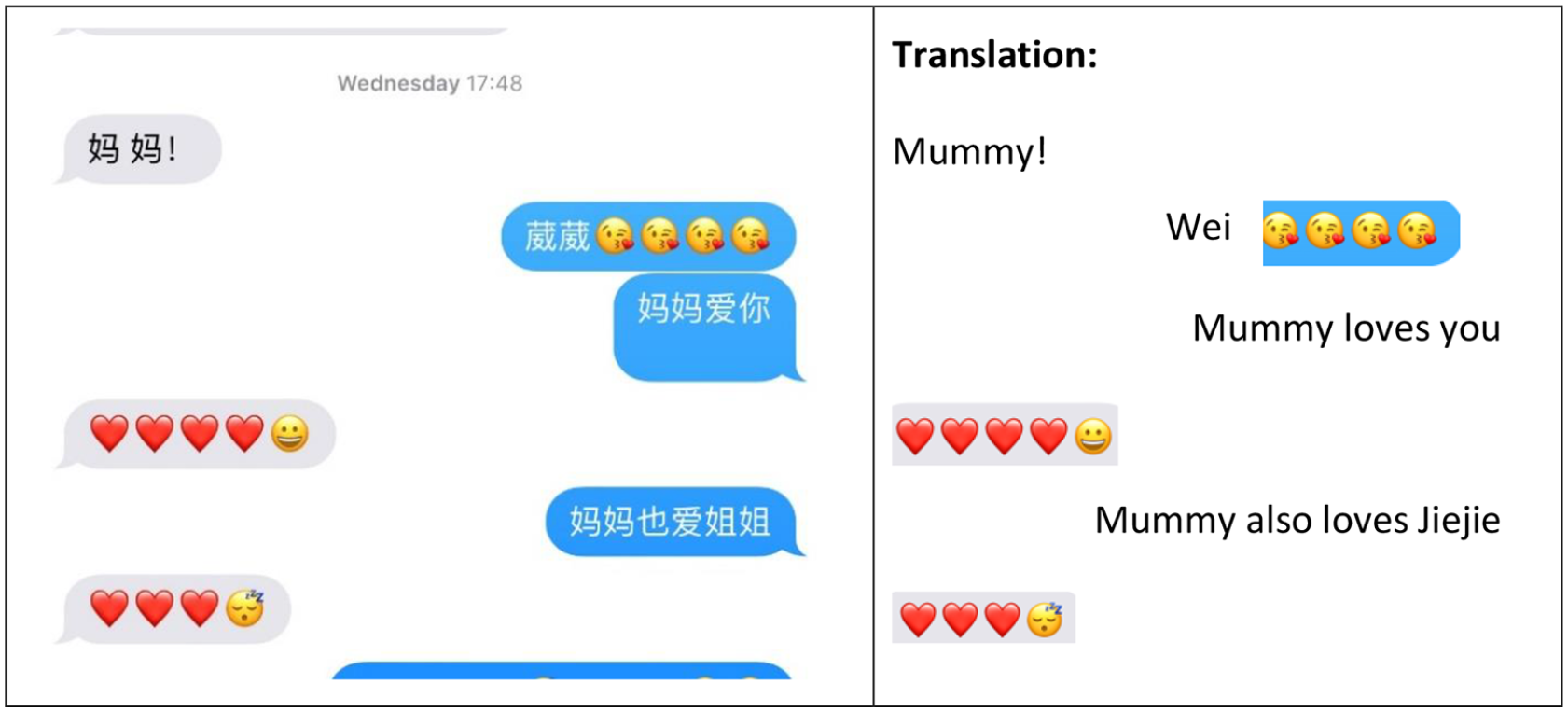
This WhatsApp interaction took place when Wei’s mother (Mrs W) was away at work. Wei often sent texts to her mother. These texts reflect a typical contemporary social media practice in the family where emojis of hearts and kisses were used to intensify their expression of love for each other. Wei frequently used emojis accompanied by words in her texts to convey her emotions (the illustrational example in the beginning of the paper).
Similarly, media practices between Emilia and her parents in PolC also contained these emojis.
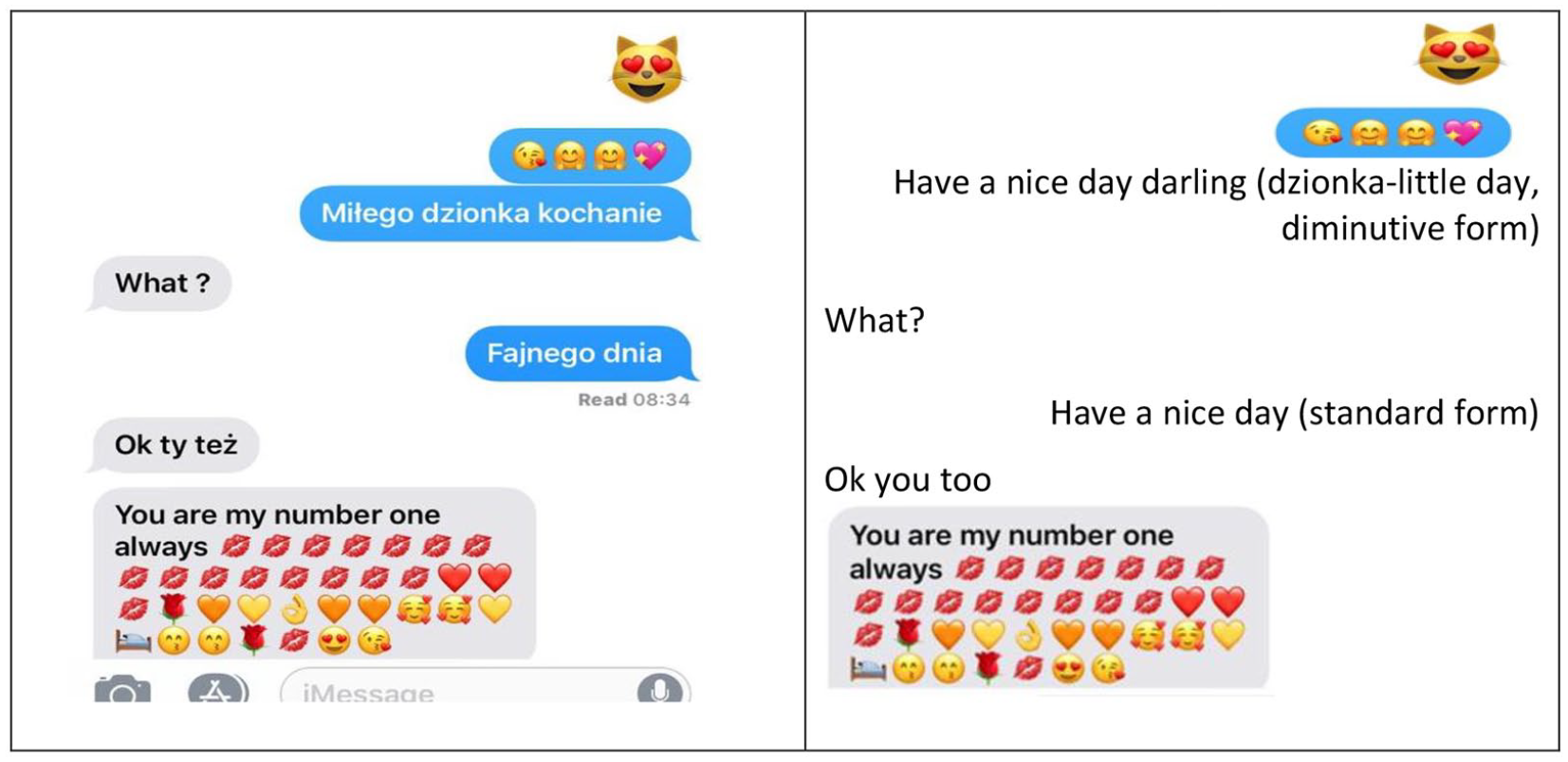
This interaction took place on a Saturday when Mrs E was at work and Emilia stayed at home with her dad. In this media exchange, both Emilia and her mother, Mrs E, used hearts and kisses to show their affections for each other. Like in many translanguaging families in Pavlenko’s (2004, 2006) study, language emotionality was clearly demonstrated through L1 by Mrs E. But different from these earlier studies, Mrs E’s affective repertoires also included emojis of kisses and hugs. With regard to Emilia’s affective repertoires, we noticed rich varieties of affective emoji expressions, from kisses and hearts to roses and heart-love faces as well as English and Polish text.
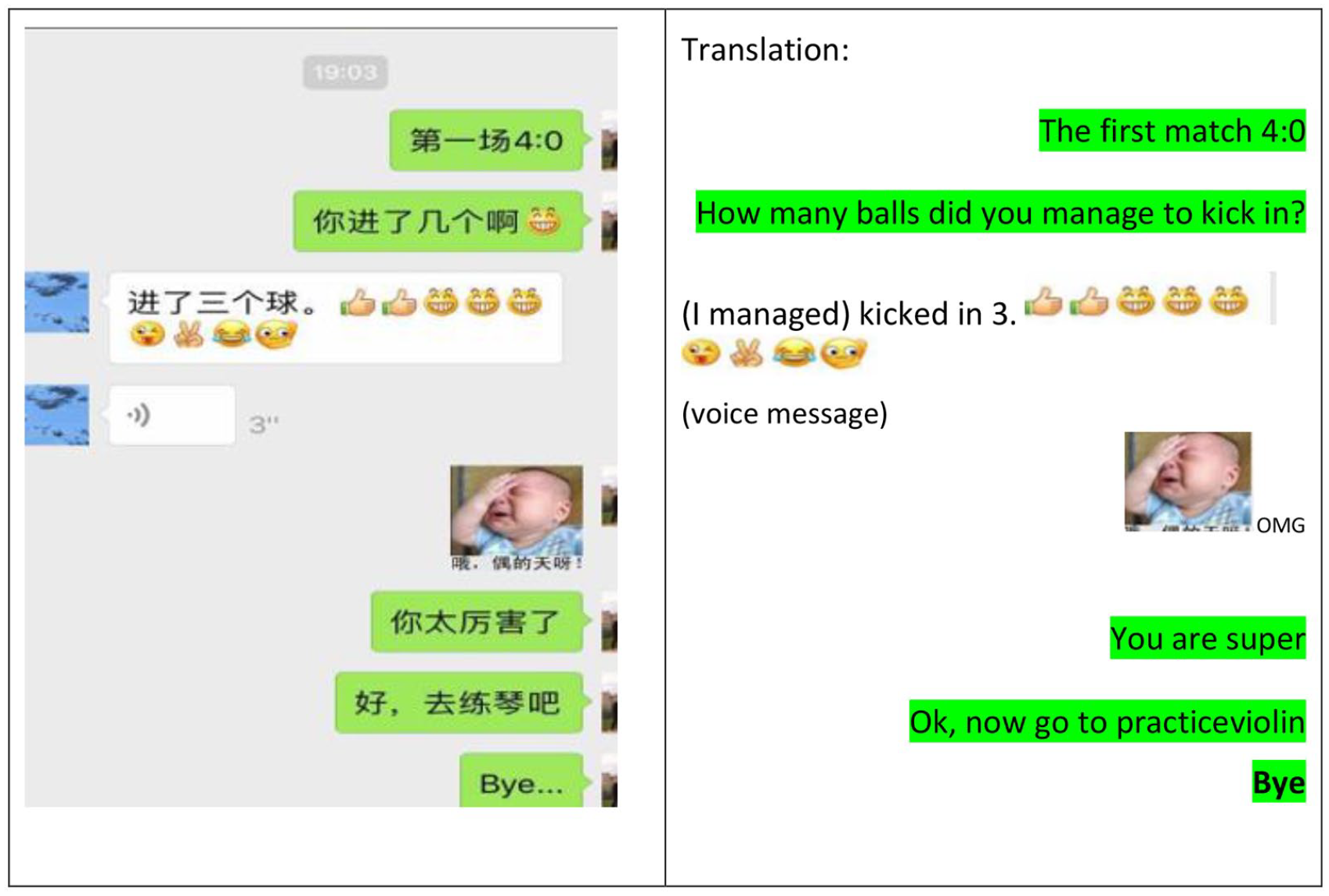
The hearts and kisses emojis, however, were not often used by the families with boys. The exchanges between boys and their parents tend to be more fact-prone as illustrated in the following examples.
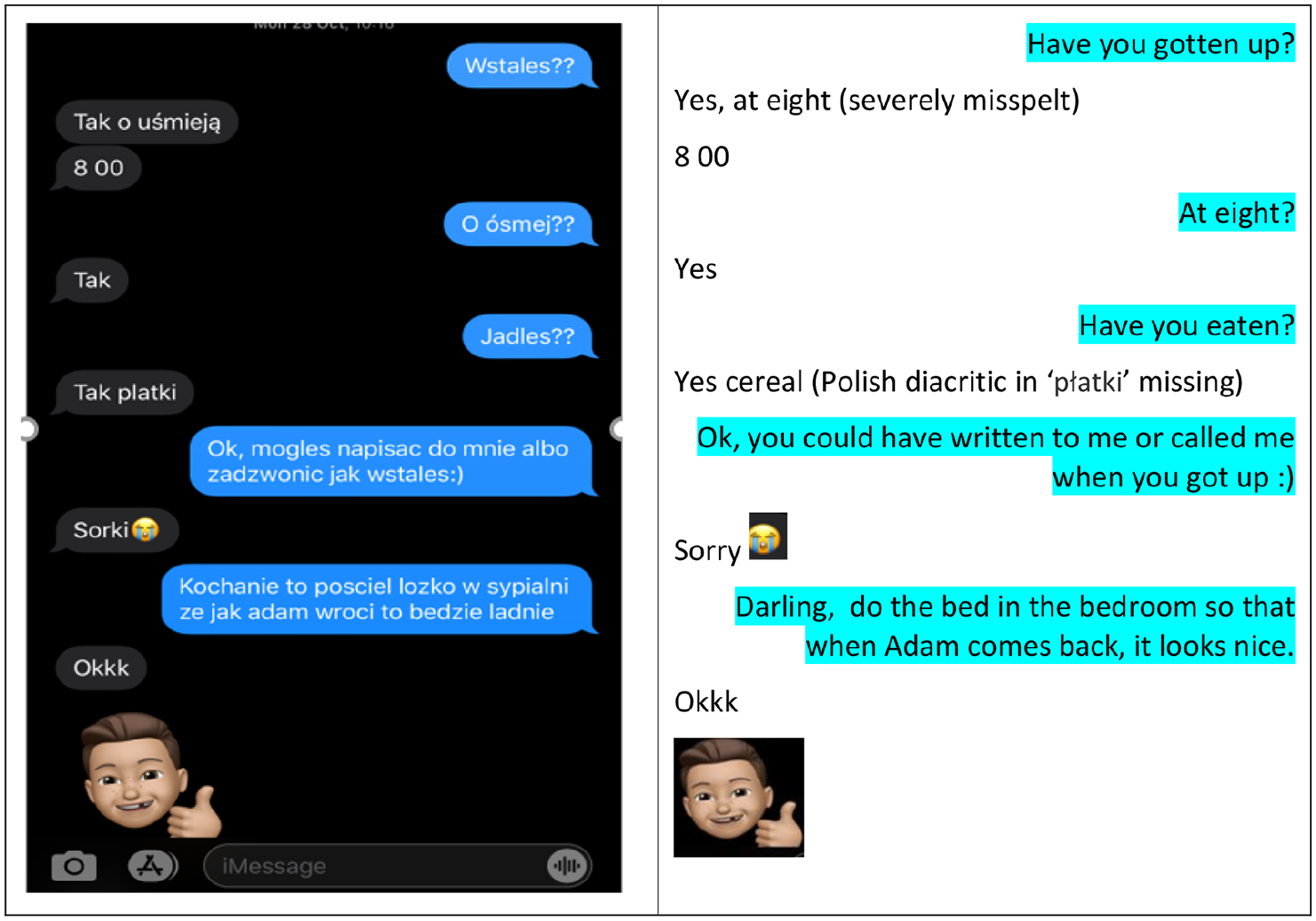
(Kris’ room is upstairs. Kris and mum often send messages to each other when mum is downstairs).
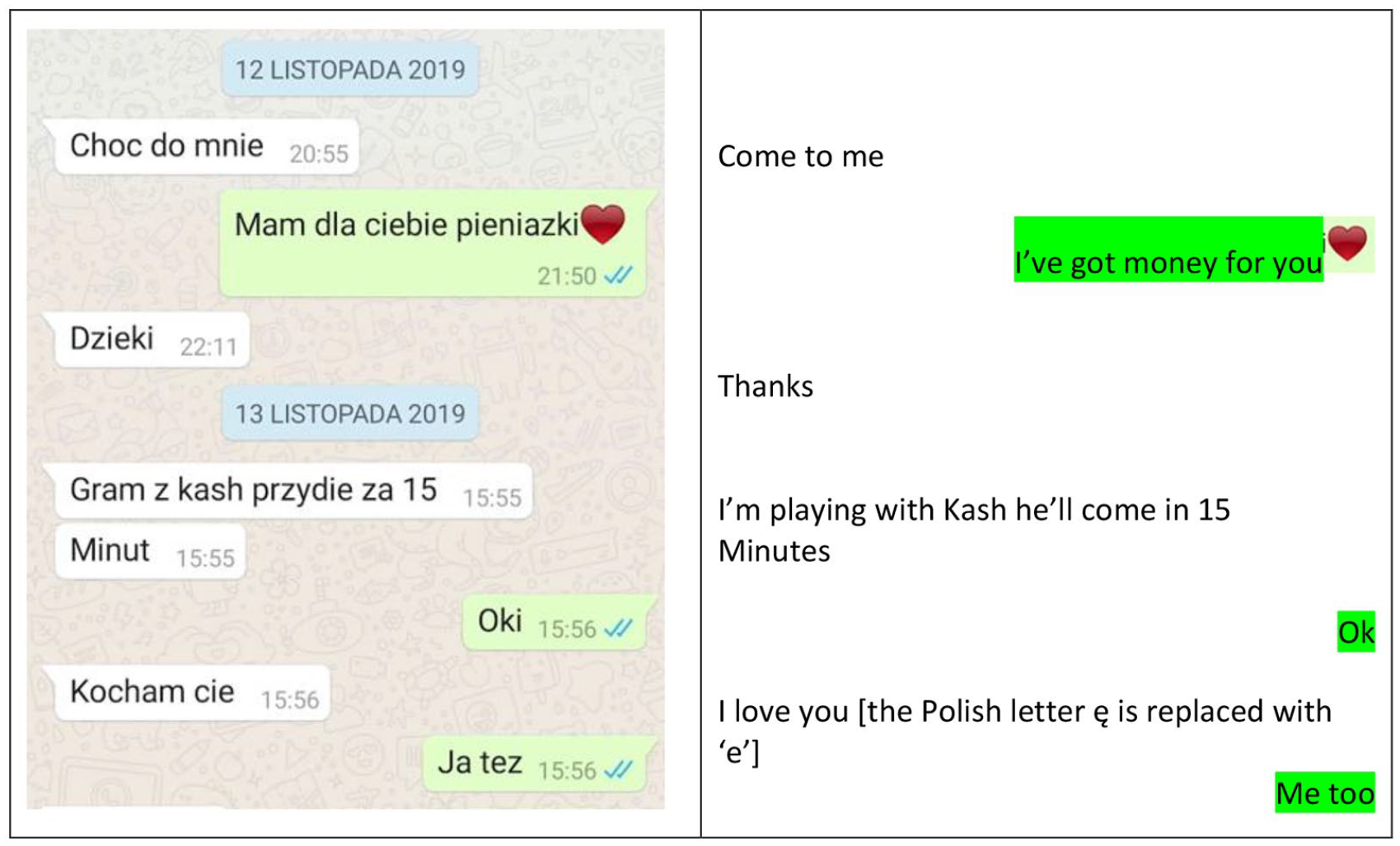
As illustrated in Excerpts 3–5, the media interactions in the three families used not only fewer emojis, but also fewer kisses and hearts emojis. Except in Excerpt 5, where Mrs K used a heart, the remaining digital interactions showed few kisses and hearts. This interesting phenomenon could be explained by the following two factors: the age of the boys (9–10 years) and culture-specific expressions of emotionality.
At the age of 9–11 years, boys tend to show their independence from their parents and begin to form stronger peer relationships. One way to demonstrate their independence is to use less emotional expressions. Regarding cultural practices, research has demonstrated that different cultures embrace a specific conceptual framework of beliefs and values, which could exert powerful influence on emotional expressions (Jack et al., 2012; Wierzbicka, 2009). In China, for example, parents and children do not traditionally show affections through explicit verbal expressions such as ‘I love you’, but through implicit ways of behavioural display such as facial expressions and physical contacts (pad on the shoulder, holding hands). Parents tend to convey their affections through both positive and negative discouragements as illustrated by Mrs G ‘you are super’ and ‘now go to practise violin’. In contrast to Ge in Excerpt 4, Kris expressed his affections towards his mum directly by saying ‘kocham cie’ (I love you). The contrast was a result of cultural differences in the way of showing emotionality, consistent with findings in cross-cultural studies which indicate that Chinese culture tends to encourage emotional suppression (Chiang, 2012), whereas Polish culture encourages ‘showing’ openly how one feels (Szarota et al., 2015).
Linguistic features of emotional expression
Terms of endearment
The interactional data across all families indicate that different terms of endearments were used from parents/grandparents to children. While there are differences in cultural practices of emotionality, families in both communities showed expressive use of endearments. As a part of their implicit FLP, these terms of endearment appeared predominantly in adults’ L1, occasionally in their L2 (English).
In the Chinese community, terms of endearment appeared in the ways that parents and grandparents addressed their children. The specific way of addressing children can be interpreted as an act of sociocultural practices acquired from their primary language socialisation (Ochs & Schieffelin, 2017). At the same time, it is also an implicit decision on the default language choice in the families. In the speech acts, language socialisation experiences were reproduced in the context of family communication, illustrating the continuity of sociocultural reproduction in intergenerational transmission. In what follows, we use a few excerpts to illustrate the process of such cultural reproduction.
(All texts are reproduced in original language, Codeswitch in italics, and translation is directly under the original text).
(Grandma-Gran was helping Mrs G making a dress, Dad had just finished cooking. Dinner was ready and the dining table was about to be set up. Terms of endearment are highlighted in underlines).
唉,你不要把那个布。。。别个在吃饭的嘛,
ugh, don’t put the cloth material . . . don’t do it when you are eating, yaoer (darling)
踢远点 (Ge kicking mum’s slipper)
kick it away.
奶奶说踢
granny said to kick
嗯,奶奶说(笑)
well, Granny is joking
你从来没得这么听话过,喊你做坏事你就听话了,喊你做好事情的时候你不。。。呃,xx,去把那个灯关了,幺儿,把那个。。。
You have never been so obedient, asking you to do something bad, you do it obligingly. But asking you to do something nice, you will not. . .you, Ge, go to turn off the light, Yaoer, go and. . .
Ge,//你再在我这里费(同“吵闹”)哈//
Ge, //you, stop troubling me//
//把那个厨房那个灯关了//,幺儿,快点儿,乖
//turn off the light in the kitchen//, Yaoer, go, guai
In this excerpt, we notice that mum, Mrs G, used幺儿 (Yaoer) three times to address Ge despite the fact that Ge was not behaving himself. Yaoer is a term of endearment used in Sichuan dialect for children, especially boys. As a language-specific endearment, the term has a unique conceptual connotation implying not only love and affection but also care and concern. It can be translated literally into English as ‘baby’, which, however, does not match the intensity of emotionality the term has in Sichuan dialect. For Chinese people from Sichuan province, the term evokes a much deeper meaning and indicates a closer relationship between mother and child.
Another noticeable term of endearment, used in this context, is 乖 (Guai), which can be literally translated as ‘well-behaved’ or ‘obedient’. Guai is often used when talking to children and pet animals, followed by ‘听话tinghua’ (listen to me). It can be interpreted as ‘sweetheart’, but it is only used by adults to children or pets. It has an authoritative and evaluative undertone when an adult appraises a child for his behaviour. In this context, Mrs G was trying to persuade Ge to turn off the light, instead of directly demanding Ge to do so, she softened her request by adding the word ‘
Baby, can you translate Mr Bull for grandpa in Chinese?
This excerpt shows the explicit affective terms used in the Chinese families. The endearment term of 宝贝 (baby) was used almost in all utterances throughout Didi’s family (ChiC) communications unless Didi was reprimanded for something. ‘
Data across the Polish families indicate that parents and children also used different types of terms of endearment in their daily communication. This has been demonstrated in some of the earlier excerpts. These terms of endearment provide culturally shaped emotional concepts that can be understood through the ‘natural semantic metalanguage’ (Goddard & Wierzbicka, 2004), which refers to language that has been ecologically developed with specific semantics that are accessible to cultural insiders.
O
Milego dzionka
Have a nice little
No hej
Hi
Dobrze.
Good.
These terms of endearment seem to be a universal feature across different languages and cultures. In PolA, Alex’s mother used ‘darling’ when requesting him to tidy up the bedroom which softened her demand for him to do mundane housework. Again, she used ‘darling’ when she was concerned about Alex’s wellbeing, showing her care and love for her son. In PolC, Emilia’s mum used ‘darling’ often to show her loving and close relationship with her daughter. Although different families may adopt different ways and rules regarding when and how to use these terms of endearment to express emotions (Matsumoto et al., 2008), they are evidently the most commonly used expressional language of emotionality that may reflect their emotional experiences in L1 socialisation, contextualised and embedded in their implicit FLP.
Diminutives
Our data indicate that diminutives are also commonly used in both Chinese and Polish communities. This universal feature, often directed at children and primarily emphasising that their size is small, is a culturally shaped way to express affections and emotions.
Ok, mogles napisac do mnie albo zadzwonic jak wstales :) (PolA: screenshot)
Ok, you could have written to me or called me when you got up :)
It’s not s . . ., I feel like my hair sticking up like doing up but it isn’t.)
Ooo,W nie wiem
. . . A co mieliście na
Ehmm,
Poczekaj
Wait
A opowiadałeś
And did you tell
O brzydkim kaczątku, wiesz
About the ugly duckling, did you know
tak wiem wiem, ciekawe kim jest słoń?
Yes, I know I know, I’m wondering who is the elephant?
A na co będa te
And what will the
Na ten, no na chór, na ten autokar bo w chórze to tak kosztuje i tak . . . .For this, for the choir, for the coach because it’s a cost for the choir and . . . .
Na autokar, aha, ok, żeby wspomóc ten wasz wyjazd. Gdzie wy to jedziecie? For the coach, I see, ok, so to suport you with your trip. Where are you going?
In the Chinese culture, a caring and loving relationship between an adult and child is commonly dominated by diminutives. As illustrated in (1), the Wei’s family demonstrated their affective pattern not only by using ‘darling’, but also diminutives. Grandfather used a nominal prefix ‘小’ (which literally means little); the duplication of the name Wei, as in 薇薇 (Weiwei), is a form of diminutive, used to convey the sense of endearment. The nominal prefix ‘小’ as well as reduplications are often used in China to produce an intimate relationship between an adult and a child. With the nominal prefix and reduplication, the diminutive functions as a nick name for a child while, at the same time, also acting as a display of loving affection. In addition to the use of diminutives, Wei’s grandpa also firmly declared his love for Wei. Such declarations were not commonly seen in the past, indicating a cultural change in display of affective expressions and experiences (Jack et al., 2012; Nisbett & Masuda, 2003).
In Polish, diminutives can be in various forms showing different degrees of affection. In (2), Alex used ‘sorki’, the diminutive form of ‘sorry’, which was less formal, to indicate that the transgression was not severe. At the same time, the use of ‘sorki’ also indicates that he was mummy’s boy and wanted her to forgive his wrongdoing. In (3), Stasiu, Krzysiowi and Krzysiu are diminutives of the boys’ names. Attaching different suffixes to Stan and Kris, the diminutives function as nicknames. These diminutives/nicknames are not only creative linguistic manipulations but also symbolic connotations of a cultural life reflected in the close and affective relationships in the Polish families. In (4), ‘A na co będa te pieniażki?’ the diminutive form of pieniażki (money) was primarily used to convey her affection towards Emilia by Mrs E, despite the fact that ‘money’ is not directly linked to Emilia. Second, the form indicates that the amount is small and is used to dispel any negative connotations that might suggest that this money is unlikely to be used for a good purpose.
In sum, these different forms of diminutives provide linguistic evidence of different cultural norms and values. These excerpts illustrate that in the process of mundane family life, children acquire tacit sociocultural practices through an ‘unconscious’ heritage language choice, turning FLP into a routinised habitus of heritage language use.
Direct declaration of love
The third feature of linguistic expression of emotionality is the direct declaration of love.
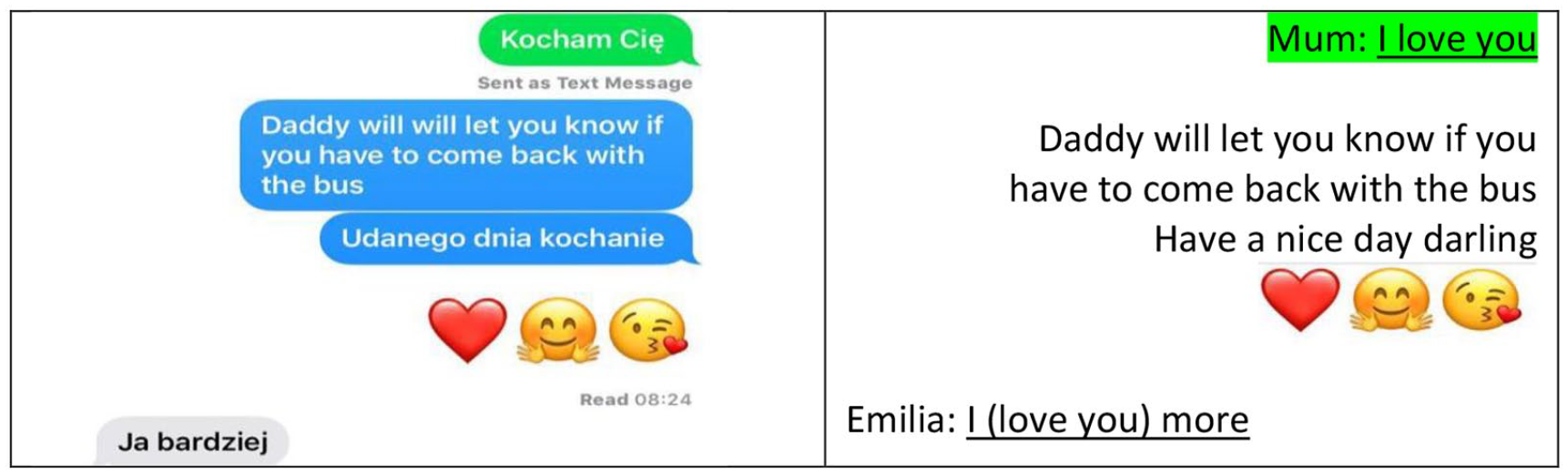
1. (PolC: Emilia and her mum texted to each other)
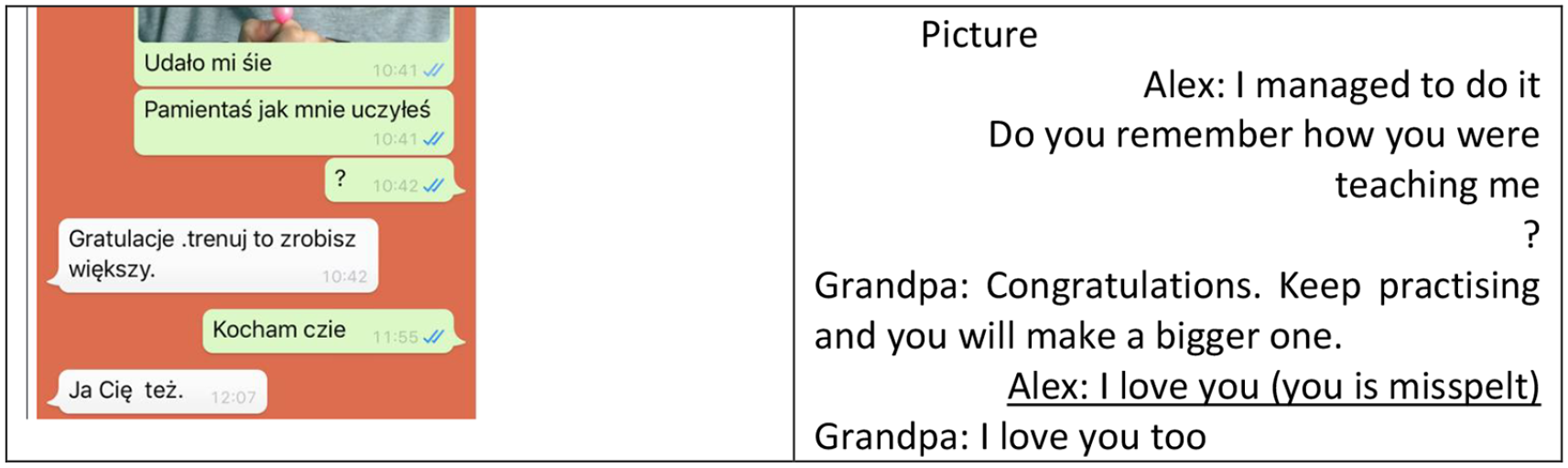
2. (PolA: Alex wrote the following in a text to his grandparents after spending a summer holiday with the grandparents)
3. (PolB: Kris’s text to his mom – see also excerpt 5)

While terms of endearment and diminutives are often used in both communities, the same cannot be said about the direct declaration of love. In the Chinese community, we see few examples of direct declaration except in ChiA family (see Excerpts 1 and 10[1]). Research has long established that individualistic versus collectivist cultures may adopt different display mechanisms to demonstrate how and to whom emotions are expressed (e.g., Hofsted, 2001; Matsumoto et al., 2008). Although collectivist cultures encompass many varieties of subcultures and Chinese culture is not homogeneous, in Chinese culture, direct declaration of love is rare. Such practices, as established in cultural psychology, have been strongly influenced by Confucianism in which controlling emotions and not displaying affections are part of the cultural script in Chinese society. Any behaviours and discourses demonstrating affections in public are considered inappropriate and embarrassing (Jack et al., 2012).
However, in the case of ChiA (excerpt 1), love was expressed by both the mother and the grandpa, indicating a localised culture internalisation. Their use of direct declaration suggests that second language socialisation may have influenced their language and cultural practices in the family (our observation shows that use of English was frequently found in the family). The findings are consistent with studies conducted by Dewaele (2016), Pavlenko (2004), Said and Hua (2020) where multilinguals use more than one language to express their emotions in context-specific situations.
In contrast, the direct declaration of love was found across all families in the Polish community as illustrated in Excerpt 10. These expressions of positive affections were conveyed not only from parents/grandparents to children, but also from children to adults. Most interestingly, they were all expressed in Polish. In (1), we see the warm and affective relationship between Mrs E and Emilia through their text messages. Mum initiated the exchange by declaring ‘I love you’ and reinforced her affection with three  love emojis, which Emilia responded with ‘I (love you) more’. The mutual affection frames their strong relationship through Polish language in their everyday ‘family talk’. For Mrs E, this may suggest that first-language socialisation has a deep-rooted cognitive bearing ingrained in her lived experiences which may come out naturally in Polish. For Emilia, the use of Polish may have a particular interpersonal meaning, reinforcing the strong relationship between her and her mother and considering that she is an offspring of parents from a Polish and Bulgarian intermarriage.
In (2) and (3), it was the children who initiated the declaration of love which elicited responses from the adults with similar intensity of positive affection. Alex’s declaration of love for his grandparents and Kris’ love for his mum signal an implicit cultural model of family language practices for which Polish played an instrumental role in their family life. For Alex, Polish was the only language that could maintain a close connection between him and his grandparents. For Kris, Polish was a default choice to show his appreciation and love for his mum (see Excerpt 5). As Polish is a default language choice in these families, Polish socialisation has been internalised by the children despite of their multilingual abilities and experiences of using English and other languages (e.g., Bulgarian in PolC). Our data suggest that emotional experiences may not only affect language choice in a family (Pavlenko, 2008), but language use embodies emotional experiences.
Situated-language use with emotionality
The last emotional expression that emerged from the data are the situated-language use. Although linguistic-related features are not found in these situated communications, emotionality is embedded in and permeated every utterance. Below are examples from two families, one from each community.
This WeChat conversation took place during the COVID period in family ChiC. Grandparents used to come to England for an extended period each year. This year, Grandma came alone and could not return as planned because of COVID. Didi was on WeChat with grandpa while having meal with the rest of the family.
姥姥就要飞机【回去】照顾你了。 姥姥的飞机马上就到了,你别难受啦,爷爷。
Grandma is
好好,快吃饭吧。不要讲话了。
Ok, ok, eat your dinner. Don’t talk too much.
少喝点酒啊。
Don’t drink too much, ha.
This short but very affectionate exchange between Didi and grandpa is an illustrative example of situated emotional language use in everyday family interaction. Didi used several emotive words and phrases in his utterances when comforting his grandfather. For example, in the first line, he used the adverbial particle
In PolC, Mrs E had just started a new job which required her to be away during weekends. She had hardly seen Emilia since she started the new job. Managing to come home earlier because she was not feeling well, she and Emilia had the following conversation.
No ok, chodź sobie podsumujemy nasz weekend, który był fajniejszy dłuższy. Ja dalej chora jestem więc nie za ciekawie. A powiedz mi teraz co tam u ciebie przez ten weekend się wydarzyło?
Ok, let’s sum up our weekend, which day was best, longest. I’m still sick so not so much fun. But tell me how was your weekend?
Dobrze, no, ymm
Good
W sobotę miałaś taki ciężki dzień, prawie cały dzień byłaś sama no to co robiłaś?
On Saturday you had such a hard day, you were on your own almost the whole day, what did you do?
From a surface level, the exchanges between Mum and Emilia involved no terms of endearment and diminutives. However, the conversation was filled with emotionally charged concerns and care. The mum initiated the conversation by asking Emilia about her weekend. Emilia gave a simple answer: ‘good’. This simple answer was obviously not sufficient to sweep away her sense of guilt as she remarked ‘you had such a hard day; you were on your own almost the whole day’. Mrs E fore grounded Emilia’s hardship by highlighting that Emilia was alone for the entire day. The lexical choices of ‘such’, ‘hard day’ and ‘on your own’ were loaded with emotional struggles. This seemingly mundane family conversation about each other’s weekend embodies a rich array of emotional expressions that are not restricted to or limited by terms of endearment or diminutives or declarations of love. It reflects how language can be used in subtle but emotive ways conveying family members’ affection for one another. At the same time, these emotion-charged family talks also reinforce FLP in almost invisible ways.
Conclusion
In this article, we explored how emotions as everyday practice were communicated in transnational families in the United Kingdom. Involving two transnational communities, we demonstrated how emotionality is conveyed through language choice and also embodied in family life. Five key features were identified regarding expression of emotionality in either online or offline family talks: emojis, terms of endearment, diminutives, declarations of love and situated-language use.
The use of emojis in digital texts, as found in some of the recent studies (e.g., Bai et al., 2019; Hjorth et al., 2020; Riordan, 2017), has become part and parcel of affective repertoires in family communication. The digital data suggest that different types of emojis are frequently used in ‘family talk’ to accentuate the intensity of affective expressions. Our findings contribute to the theory of affective repertoires by expanding its linguistic features to include non-verbal modalities such as emojis. In the process of doing emotion work, these non-verbal modalities serve as paralinguistic elements, similar to gestures in face-to-face communications, signifying nuanced meaning and intensity of emotionality in building relationship between family members. These non-verbal modalities are far-reaching in their effects as they are independent of language choice in emotion work. However, they are only tools that facilitate emotional communications; they cannot replace the role of language in sustaining intergenerational intimacy.
Our study also identified the universal features of linguistic emotionality expressed in diminutives and terms of endearment irrespective of language. While these findings may not be new, they nonetheless provide new understandings of how these affective expressions are part of the interactional dynamics that underlie family talk and enrich children’s emotional experiences. These rich affective repertoires have also contributed to the establishment of FLP as part of language and cultural socialisation. As illustrated by the different use of direct declaration of love in the two communities, our data suggest that children acquire tacit knowledge of social and cultural norms through exposure to and participation in family talks. The children in the Polish community tend to initiate direct declaration of love when expressing their emotions and appreciations to their loved ones, the families in Chinese community used much fewer direct declarations in their communications. The culturally shaped language socialisation practices indicate that making decisions about FLP involves more than intergenerational transmission of language; they shape children’s understanding of the world in nuanced cultural shades and contribute to the construction of their identity.
Our study illustrates the power of implicit FLP in the form of socialisation through family interactions. Past studies have focused on perceived language emotionality in relation to language choice (e.g., Dewaele 2004; 2010; Ladegaard, 2018; Pavlenko 2004, 2006, 2012; Sevinç & Backus, 2019), whereas our study looked at how emotions are expressed and conveyed in the act of family life. It enriches the existing FLP literature by revealing the process of emotional exchanges that contribute to the construction of ‘familyness’ and family relationship, either through emotion-related linguistic discourse or emotive language use.
Our study is consistent with findings in studies of the perceived language emotionality (Dewaele, 2010; Pavlenko, 2004) whereby emotional primacy is given to the first language. Although most children in our study were bilinguals in English and their respective heritage language, we found that the majority of emotional expressions were in heritage language, regardless of the children’s language competence in their two languages. This may indicate that our data set was not all encompassing, as we have almost exclusively focused on conversations between adults (parents and grandparents) and children. Language use between the children or with other conversational partners may yield different emotional expressions that involve more English.
This may also indicate that intimate language use is largely carried out in families through parents’ L1 expressions. Children only acquire these emotional expressions from their parents/grandparents through parents’ L1. To make sense of their emotional experiences, they tend to use heritage language but not English to convey their affections. Although researchers argue that children and parents may have different essential/emotional perceptions of heritage language thus leading to different preferences in language choice and conflicts in language experiences (e.g., Little, 2017; Zhu, 2008), our data demonstrate that heritage language is the preferred language of emotionality for both parents and children in their family talk. In Bourdieu’s (2000) sense, the intimacy/affective discourse in L1 is an inheritance which is passed on to the next generation, used and appropriated by the children and thus turned into habitual practices. In relation to FLP, the emotional aspect of language preference and socialisation has contributed to minority-language maintenance and development.
Emotionality may affect language choice in a family. While we argue that emotionality and FLP (language choice) are co-constitutive and influence each other in the construction of familyness, we also acknowledge that the study has several limitations. Firstly, as the data were selected by the families themselves, they may not reflect the dynamic interactions between different conversational partners within the families. As a result, we see few exchanges between the children and their friends or other adults who speak more English. Secondly, since the nature of our (audio) data does not include paralinguistic features accompanying the communications, we may have misinterpreted some of the emotional expressions. Finally, our dataset is relatively small and focuses only on two communities, a larger and more diversified dataset involving different language communities and conversational partners might yield different findings. In particular, future studies would be necessary to establish the prevalence of the different features of emotional language in bilingual and multilingual families.
Footnotes
Declaration of conflicting interests
The author(s) declared no potential conflicts of interest with respect to the research, authorship, and/or publication of this article.
Funding
The authors disclosed receipt of the following financial support for the research, authorship, and/or publication of this article: The data presented in this study came from the project Family Language Policy: A Multi-level Investigation of Multilingual Practices in Transnational Families, funded by the Economic and Social Research Council (ESRC) of Great Britain (ES/N019105/2).
