



Abstract
This study aims to contribute to research on whether bilinguals show increased creativity in a verbal task when compared to monolinguals. In line with previous research, creativity is linked to divergent thinking, and a particular focus is laid on figurative associations among the monolingual and bilingual speakers. To investigate potential differences in figurative associations, participants completed a meaning interpretation task of novel English compounds. The task was carried out with 117 monolingual and bilingual New Zealanders, who were split into three comparable groups of Māori–English bilinguals, English monolinguals, and a control group of bilingual speakers in English and a language that is not Māori. The written meaning interpretations are analyzed in two steps. First, a close description is given of the range of associative strategies that participants relied upon when giving meaning to the novel compounds. Second, conceptual metaphor and metonymy theory is applied to tease apart potential differences in the participants’ figurative associations. With the exception of a few figurative processes, the results demonstrate that monolinguals and bilinguals perform similarly in terms of the overall number and diversity of figurative associations. However, a clear contrast between the bilinguals and the monolinguals emerges in the associative strategy of analogical meaning interpretations. Thus, the bilinguals show a significant preference of associating to existing idiomatic expressions and homophones that are related to some of the compound constituents. These findings are discussed for their implications on bilingual creativity. Since the results are based on a comparison of monolingual and bilingual meaning interpretations, the current study offers a new methodological take on investigating the connection between bilingualism and verbal-associative creativity. The study bears further methodological significance as it applies insights from cognitive linguistics to the study of bilingualism.
Introduction
Ever since Peal and Lambert’s seminal study (1962) fundamentally disputed beliefs on bilingual cognitive disadvantages, research on bilingualism and multilingualism has maintained a concern for describing bi- and multilingual cognitive skills compared to monolingual speakers. Some of the major differences that have been replicated in a number of studies are summarized in Bialystok (2009). In general, it has been acknowledged that bilingual speakers perform less well on verbal fluency tasks (Bialystok, Craik, & Luk, 2008; Gollan, Montoya, & Werner, 2002; Kaushanskaya & Marian, 2007), most likely due to parallel activation of their lexical systems (see Kroll, Gullifer, & Rossi, 2013), while they tend to show better results on executive control (Bialystok, 1999, 2001; Carlson & Meltzoff, 2008; Garbin et al., 2010), have a higher tolerance for ambiguity (Bialystok & Shapero, 2005; Dewaele & Wei, 2013), and have more thoroughly developed metalinguistic skills (Aronin & Singleton, 2012; Bialystok, 1993; Cromdal, 1999). One issue has remained particularly controversial in the literature since it is by its very nature difficult to define. This is the notion of creativity, which has given rise to varied results.
As succinctly discussed in Lasagabaster (2000, pp. 215–217), research in the second half of the 20th century has highlighted a tendency towards bilingual advantages in creative abilities, although some studies have also reported mixed results (see Ricciardelli, 1992 for an overview). A range of methods has been employed to measure creative skills, such as the number of ideas expressed while telling a story (Doyle, Champagne, & Segalovitz, 1978), the generation of scientific hypotheses according to their quality, syntactic complexity, and use of metaphors (Kessler & Quinn, 1987), as well as different verbal and non-verbal standardized tests. Among the latter, the Torrance Test of Creative Thinking (Torrance, 1990) has been used most frequently to assess the characteristics of fluency, flexibility, originality, and elaboration. Lasagabaster (2000), for example, used the verbal part of this test in order to investigate the influence of different school models (monolingual, bilingual, and immersion strands) on bilingual creativity scores in the context of the Basque country. He found that pupils in the bilingual and immersion schools significantly outperformed their peers in monolingual programs on the traits of flexibility and originality, while there were no differences in verbal fluency (2000, p. 223). Similarly, a more recent study by Leikin (2012) investigated the potential influence of bilingual and monolingual educational environments on creative abilities. He compared monolingual Hebrew children with bilingual Russian and Hebrew children attending monolingual and bilingual immersion kindergartens. Performance on a pictorial multiple solution task and a creating equal numbers task showed significantly better results for bilingual children on measures of originality and creativity, while fluency and flexibility remained indifferent between the groups. His findings emphasize that, at this early stage of language development, effects of bilingual vs. monolingual educational models do not significantly influence the performance of bilingual children. In another fairly recent study, Kharkhurin (2010) found advantages of bilingual (Russian and English-speaking) college students over their monolingual English-speaking peers on non-verbal components of the Abbreviated Torrance Test for Adults, whereas the monolinguals performed better on the verbal tasks. This study is another example of research demonstrating mixed results on bilingual creative skills in comparison to monolingual speakers (also see Simonton, 2008, for an overview).
While the investigation of creativity and bilingualism is far from being a straightforward matter and attempts at measuring creativity have encountered criticism (see Kharkhurin 2012), previous research on bilingualism and creativity has shed some light on individual cognitive aspects which can be related to this complex notion. One of these potential indicators of creativity is the capacity of divergent thinking, as originally introduced by Guilford (1967). The potential for a bilingual advantage in divergent thinking is outlined in Cummins (1976), who ties advanced capacities in divergent thinking to bilinguals’ experiences in different languages and cultures, to their ability to switch between languages, and to their enhanced objectification of language (i.e. their metalinguistic awareness), which allows them to consciously compare and contrast their language systems. In his monograph, Kharkhurin (2012) discusses the important role of divergent thinking in research on creativity and bilingualism. He succinctly defines divergent thinking and mentions its importance in the field when he states that:
All reviewed cognitive models of creativity converge on at least one important property of creative thought – ability to establish distant associations that link concepts from distant categories. The communication between concepts is assumed to be an unconscious process during which the activation is propagated throughout the conceptual network. This property constitutes a key mechanism of divergent thinking, which is perceived by many researchers as one of the major components of creativity (2012, p. 7).
For Kharkhurin, the activation of knowledge from associatively distant domains in bilingual speakers can be explained by the model of language mediated concept activation (2012, pp. 81–84), which schematically describes how the activation of conceptual content and corresponding lemmas can spread in the multilingual mind.
As one particular process of divergent thinking, Kharkhurin (2012) stresses the use of metaphors following observations put forward in Ward, Smith, and Vaid (1997). Metaphors are widely believed to emerge from a selective projection of knowledge from one domain onto another domain, i.e. a partial comparison of associatively distant domains. This cognitive process of projection (or mapping) which generates new associative bonds can thus be an indication for a creative process of divergent thinking.
Similarly, in her extensive discussion of the cognitive and socio-cultural relations between creativity and plurilingualism, Furlong (2009) highlights Boden’s (1996) observations, according to which creativity is tied to the capacity of associatively combining two previously unrelated concepts. In addition, Furlong (2009) chimes in with earlier evidence that reports an increased use of metaphors among bilinguals compared to monolinguals (cf. Neufeld, 1993).
In light of these indications that bilingual speakers can be prone to showing higher rates of metaphorical associations as a sign of more divergent thinking, the current study aims to provide new evidence on whether this aspect of bilingual creativity is indeed different to monolingual performance. Thus, the study focuses on bilingual associations and their figurative language use. A meaning interpretation task of novel English compounds is at the core of the investigation. This verbal task has been designed to stimulate creative associations and their expression in language. As described in the next section, the task and the methods of data analysis are informed by insights from the field of cognitive linguistics. This makes the current study an example of research that strives to combine cognitive linguistics with the areas of language contact and bilingualism (cf. Backus, 2014; Zenner & Kristiansen, 2014).
Methodology
Compounding, the combination of two or more lexemes to form a new lexeme (Bauer, 2003, p. 40), is a pervasive process in many of the world’s languages. One of the most intriguing issues is related to the fact that such complex lexemes combine the meanings of their constituents in novel and very often not fully predictable ways. To take a simple example, consider how the meaning of the constituent terms fire and dog add up to the overall meaning of the compound firedog as:
…one of a pair of metal supports for firewood used on a hearth and consisting of a horizontal bar mounted on short legs, one in the rear and two in front, an often ornamented vertical shaft usually surmounting the front end (Merriam-Webster, n.d.).
The conundrum of the (non-)compositionality of compound meaning has already been noted in the structuralist tradition of word formation research (see for example Marchand, 1969), and it continues to spawn a large body of research in different linguistic domains. In psycholinguistics, for example, research on conceptual combination has explored the type of semantic relations that can hold between the modifier and the head of a compound (see Libben & Jarema, 2006). A similar concern has been pursued in cognitive linguistic research (Onysko, 2010; Ryder, 1994). Furthermore, cognitive linguistics has investigated what Benczes calls “creative compounds” (2006), i.e. compounds that encapsulate figurative meaning, as in the example above. Acknowledging the underlying existence of conceptual metaphors and conceptual metonymies, figurative compounds have also been analyzed in the framework of conceptual blending, highlighting the emergent nature of compound meaning (Benczes, 2006; Fauconnier and Turner, 2002; Nerlich, Evans, & Koteyko, 2011; Sweetser, 1999).
In the context of the current study, the unpredictability and complexity of compound meaning is the starting point for a methodological approach that investigates differences between meaning associations given by bilingual and monolingual speakers. Of particular interest are figurative associations that might emerge in the meaning interpretations to a set of novel, invented compounds. Accordingly, the quality and the amount of figurative meaning interpretations will be taken as a comparative measure for the monolingual and the bilingual participant groups. Conceptual metaphor and metonymy theory will be applied to describe the figurative nature of the participant replies. The different components of this approach are outlined below. They comprise the set-up of the task, the participants, and the data analysis. Overall, the task is designed to investigate two related hypotheses. Firstly, whether there are differences in the types of associative strategies employed by the monolingual and bilingual participants when giving meaning to the novel compounds. Secondly, and as one indicator of creativity, whether bilingual speakers in the participant sample show a higher incidence of figurative meaning associations than monolinguals.
The meaning interpretation task
Compounds established in a language usually come with their conventionalized range of meanings, which is why speakers of that particular language will not engage in a process of associatively deriving the meaning of such terms. If, on the other hand, a speaker encounters a new compound for the first time and there are no contextual clues that help in assigning an intended meaning of the complex term, the speaker will typically construct the meaning of the compound by relying on his/her knowledge of the constituent terms and how they could fit together. In line with an encyclopedic view of meaning (see Evans & Green, 2006), speakers’ experiences (i.e. their knowledge) of the constituent terms vary. On top of that, the combination of two concepts allows for different possibilities, which increases the expectation that novel compounds will stimulate different meaning interpretations in a population of speakers.
Based on these observations, the author and a colleague (see Onysko & Degani, 2012, 2014a) have invented a set of novel English noun–noun compounds with the intention of stimulating a range of associations in their meaning interpretations. Since an investigation of figurative associations is one major aim of the study, we constructed the test items according to the following principles: (a) the constituent terms of the compounds should be simple and widely known to monolingual and bilingual speakers of English in New Zealand, where the study was conducted; (b) the combination of the constituent terms should result in unusual constructions which would call for figurative interpretations. In addition, we aimed at grounding the test items in frequent semantic domains of English compound constituents as described in Maguire, Wisniewski, and Storms (2010). In this way, we proceeded to invent a total of 12 novel compounds, two each for six domain combinations. Table 1 illustrates the test items and their underlying domain combinations.
Test items of novel noun–noun compounds.
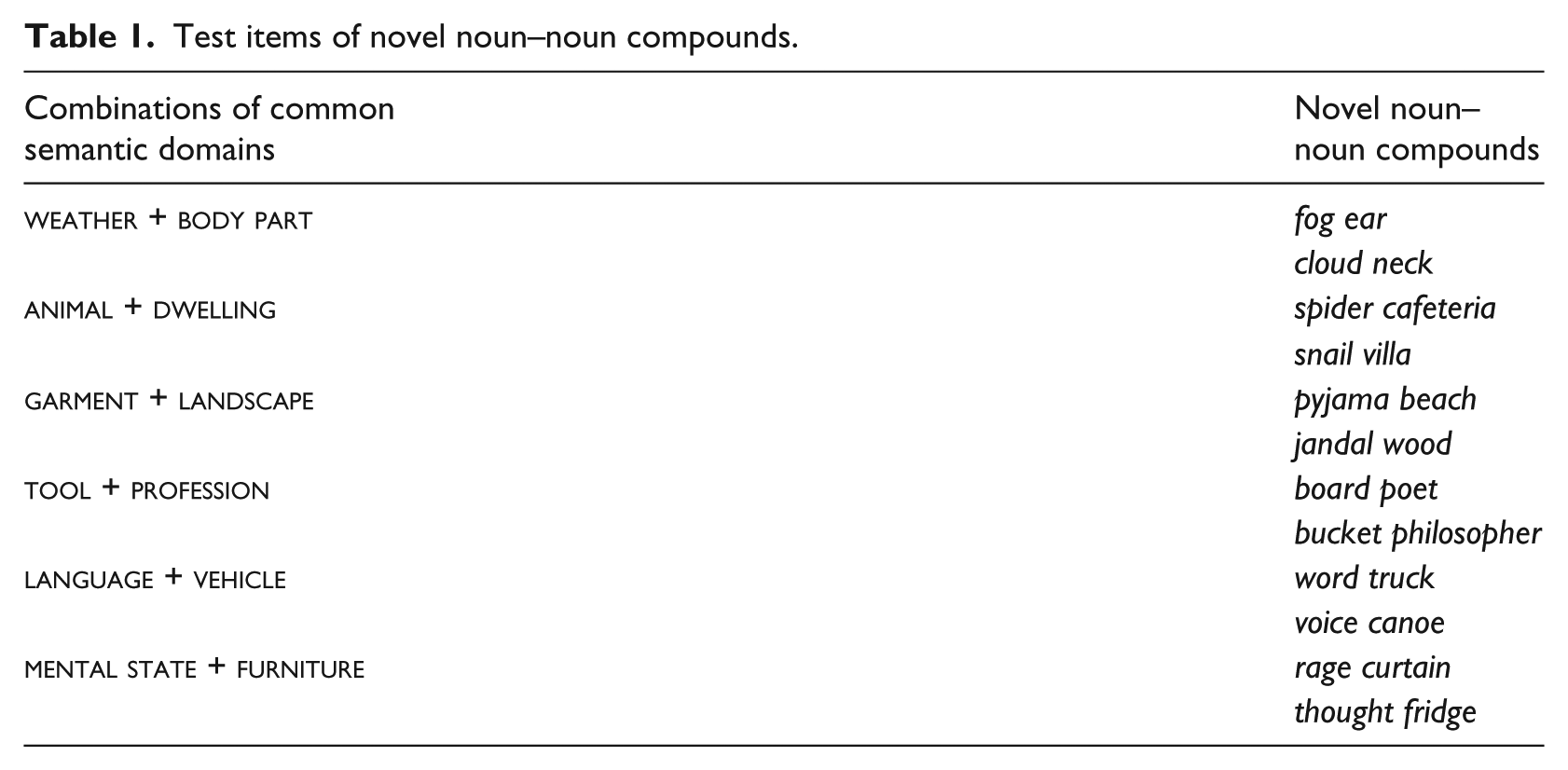
As Table 1 shows, each of the constituent terms of the novel compounds are generally known words in English. This is also true for the regionally marked expression of jandal, which is a widely used New Zealandism denoting a beach sandal.
After their creation, each of the novel compounds was checked in major reference sources of the English Language – Oxford English Dictionary online (Oxford English Dictionary Online, n.d.), Merriam-Webster Unabridged Dictionary online (Merriam-Webster, n.d.), and Oxford Dictionary of New Zealand English (Orsman, 1997) – and Google® searches for the exact word strings confirmed that these words were not in use as established English compounds at the time when the study was carried out (January to August 2011). To avoid a potential meaning bias among our Māori–English bilingual participants, each of these terms was translated literally into Te Reo Māori and their absence from the Māori language was ascertained by a search in the Māori broadcasting corpus (Boyce, 2006) as well as on the Internet.
The 12 invented compounds were mixed with six established English compounds (bank holiday, field day, garage sale, lump sum, role model, and roller coaster), which functioned as filler items to mask the task and to provide some safe associative ground for the participants when engaging in the meaning interpretations. The task was carried out at the University of Waikato in Hamilton, New Zealand, with a total of 140 monolingual and bilingual students at the university (see next section). The meaning interpretations were elicited in individual sessions from written replies to four randomly arranged lists of test and filler items. At the beginning of the task, the same prompt was given to every participant: “Here is a list of English terms. Please write down what you think each of these terms mean. In case you are not familiar with one of these terms, don’t worry, just guess what you think it could mean.” On top of the list, the example compound head start was given together with its meaning of “starting earlier into a race than your competitor.” No time restriction was imposed as participants gave their meaning interpretations. Any questions about the nature of the task or its test items were answered afterwards.
Participant profiles
The participants for the study were selected in two steps. During a stay as visiting scholars at the School of Māori and Pacific Development at the University of Waikato, we were able to visit different classes catering for students of Māori language and culture, linguistics, and communication studies. Since participants would engage in a verbal task of meaning interpretation, we wanted to restrict the range of students to those that showed an interest in language, linguistics, and communication by virtue of their subject choice. During the visits, we handed out a questionnaire to gather data on knowledge and use of languages other than English. As a second step, we selected participants from the pool of questionnaires which would potentially fit our target groups of (a) Māori–English bilinguals (MB), (b) Māori monolingual speakers of English (MM), (c) Pākehā (i.e. non-Māori) bilinguals in English and a language that is not Māori (PB), (d) Pākehā (i.e. non-Māori) monolingual speakers of English (PM). A differentiation between Māori bilinguals and non-Māori bilinguals was important as previous findings on meaning diversity (e.g. Onysko & Degani, 2014b) indicated a possible influence of biculturalism, which could overlay a clear effect of bilingualism. The Pākehā bilinguals (PB) thus function as a control group for testing the factor of bilingualism.
The questionnaire that helped to establish how our participants fitted into one of the target groups was designed on a model that was used in other research involving bilingual speakers of Māori (see Harlow, Keegan, King, Maclagan, & Watson, 2009) and consisted of questions relating to self-evaluation of language skills, age and environment of acquisition, frequency and contexts of use, and exposure to the language. These factors were weighted in a hierarchical fashion: self-rating > age and environment of acquisition > frequency of use > contexts of use > exposure. The weighting was achieved through points given to the various possible responses, which were summed up to calculate a bilingualism index based on the participant replies (see Onysko & Degani, 2014b). 1 Answers to the questionnaire showed that a state of true monolingualism (i.e. 0 points on the bilingualism index) was very rare. Many of the university students declared knowing at least a few words and expressions in other languages, emphasizing the fact that pure monolingualism was an exceptional state among the adult participant population. The results of the bilingualism index rather indicated a continuum of states ranging from minimal bilingual experience to nearly balanced bilingualism in English and Māori or other languages. This is why the differentiation between bilingual and monolingual speakers was established according to a numerical difference of 20 points on the index scale (see Onysko & Degani, 2014b). 2
Since many of the Māori participants were engaged in the study of Māori language and culture, a number of their scores fell in between the monolingual and the bilingual groups. Thus, a separate group called Māori weak bilinguals (MBw) had to be set up as well. Altogether, from the total of 140 participants, the answers of 117 people were considered as they formed a comparable age group of adult monolingual and bilingual speakers. Table 2 provides a breakdown of the participant cohort.
Overview of the participant groups.
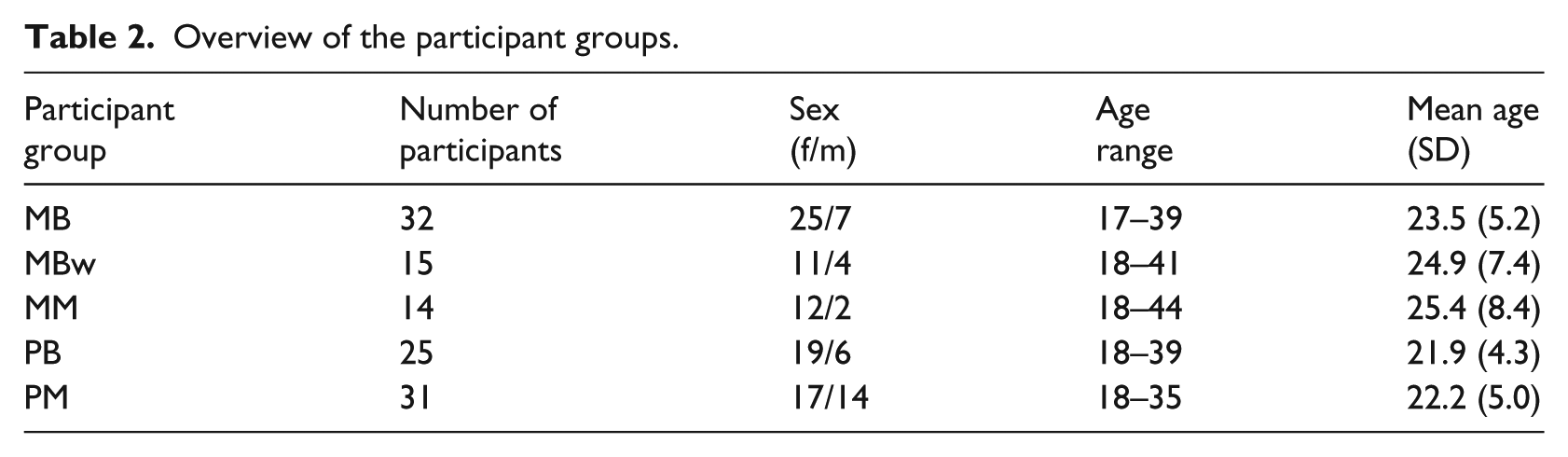
In terms of participant numbers, Māori bilinguals (MB), Pākehā bilinguals (PB), and Pākehā monolingual speakers of English (PM) show a comparable number of respondents. The number of Māori weak bilinguals (MBw) and of Māori monolingual speakers of English (MM) is markedly lower. Therefore, the analyses of associative strategies and of figurativity will only be based on a comparison of the three main groups of MB, PB, and PM. 3 As the proportion of female and male speakers is not the same in the groups, some of the data analyses have to be controlled for gender as a possible factor influencing participant replies (see results).
For all the participants, proficiency in the task language English is at an advanced level due to the fact that (a) they are university students in an English-speaking instructional environment; (b) they have been living in New Zealand since birth and have acquired the dominant language English from an early age on; (c) in the case of migrants, they have been residing in New Zealand for at least five years and have acquired English as part of the New Zealand school system before continuing on to higher education in English.
In general, almost all speakers of Māori in New Zealand today are at least also fully fluent in English. Thus, the bilingual Māori–English participants in our study, who have declared to be highly proficient, to have learnt the language from a young age, and to use the language on a daily basis, can be regarded as role models that represent successful examples of upholding the Māori language (and usually also Māori culture). 4 Many of them represent the so-called kōhanga reo (“language nest”) generation, who grew up speaking the Māori language as a first (or “second first”) language in immersion educational environments. This group thus comes closest to the ideal of balanced bilinguals in Māori and English, even though a better expression might be parallel bilinguals in this particular case as the Māori language and English frequently represent different cultural realities and are used in different contexts.
By contrast, the group called Pākehā monolinguals consists of students who have declared having very little knowledge of languages other than English. These participants are mostly New Zealanders of New Zealand European ethnic identity who have grown up speaking English and do not use any other languages in their daily lives.
Finally, the third major group of Pākehā bilinguals comprises a mix of ethnically non-Māori people who have come to New Zealand as migrants and who still maintain their first language in the family but have lived in New Zealand for a substantial amount of time. In addition, New Zealand-born English-speaking people are also considered who have acquired a high level of proficiency in a second language that is not Māori, mostly due to prolonged stays in a country where this language is spoken, and who continue to use it.
Data analysis
In line with the hypothesis of potential associative differences expressed in the meaning interpretations of the monolingual and bilingual speakers, the data is analyzed from two perspectives. First of all, the meaning interpretations are related to general types of associative strategies. This is followed by a close investigation of all figurative associations.
When solving the problem of finding a meaning for the novel English compounds, participants relied on a range of strategies. They interpreted the compounds literally, figuratively, by way of analogy to existing expressions, as names or jargon, or they associated only loosely to the complex lexemes. Sometimes, they relied on two strategies at the same time. Examples for each of these types of interpretations are given below.
Literal vs. figurative interpretations
The analysis of literal and figurative meaning descriptions is based on an empirical procedure of metaphor identification in language (Pragglejaz, 2007; Steen et al., 2010). This method revolves around the question of whether the usage of a linguistic unit in context coheres to the basic meaning of this unit or not. If the answer is yes, the linguistic unit is used literally; if the answer is no, there is evidence for a figurative use of language, and the analysis can proceed to describe the type of figurative conceptualization according to conceptual metaphor and metonymy theory. While the identification of metaphorically used language in terms of basic meanings has given rise to some controversy and is not equally applicable in all contexts of figurative language use (see Gibbs, 2010), the current task provides a straightforward setting for the classification of figurative meaning interpretations. Thus, the constituent terms of the novel compounds denote concepts that are generally known to the speakers of English in the experiment, and their decontextual, basic meanings are well-described in major dictionaries of the English language. Crucially, the data analysis was concerned with checking whether the basic, literal meanings of the compound constituents were represented in the meaning descriptions or not. If one of the constituents was not interpreted in its literal meaning, the meaning description was labeled as figurative (if no other strategy applied, as explained below). Table 3 shows a few examples of meaning interpretations and their categorization as literal or figurative.
Examples of meaning interpretations and their classification as literal or figurative.
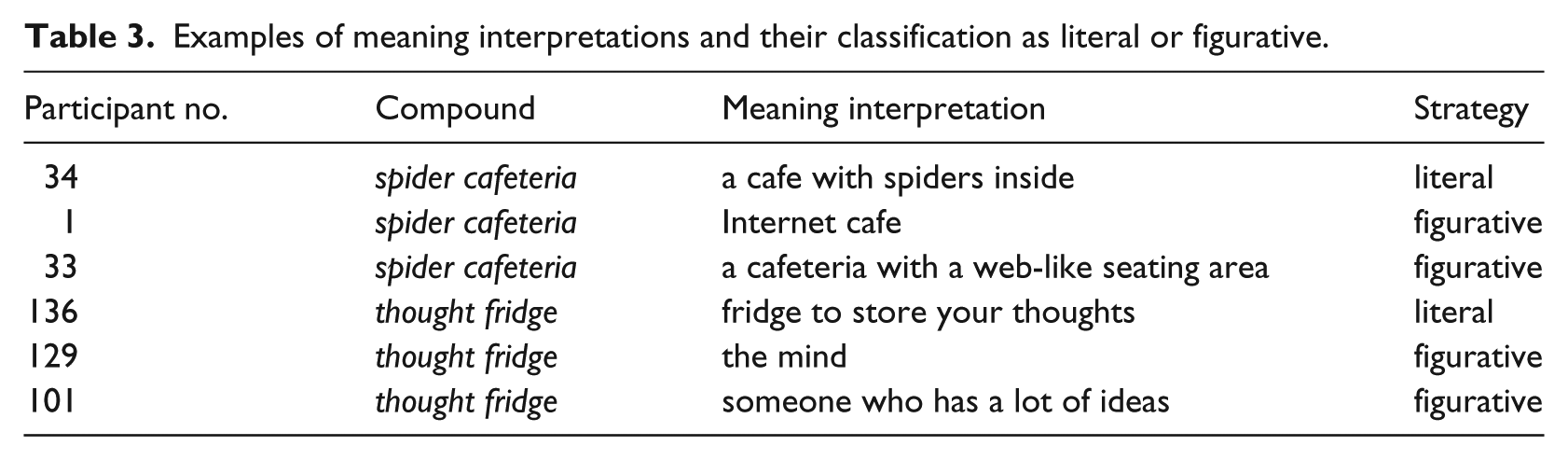
The selection of examples highlights that the analysis of the meaning interpretations focuses on the relation of the constituent terms to the overall meaning description of the compound. This is why the meaning of thought fridge as “fridge to store your thoughts” is rated as a literal interpretation since the participant combines the same terms in his/her description, and there are no textual clues that the interpretation goes beyond the literal meanings of thought and fridge even though the intended referent is not possible in the real world. The meaning of “someone who has a lot of ideas,” on the other hand, is an example of a figurative association, which involves a metonymic mapping from the container (i.e. fridge) via its size to quantity (“a lot”) and a metaphoric personification of the fridge as a person, which is stimulated by the human trait of thought encoded in the modifier.
Analogical interpretations
Apart from literal and the bulk of figurative interpretations (see results), another recurrent strategy relies on associations with existing English terms and expressions. These are usually triggered by one of the constituent terms. In such cases, the interpretation is not constructed from the interaction of the constituents, but the meaning of the compound is derived from an associative mapping to other items in the lexical network of the speaker. This type of association is categorized as analogical interpretation. Table 4 provides a few examples of this type of meaning interpretation.
Analogical associations in meaning interpretations.
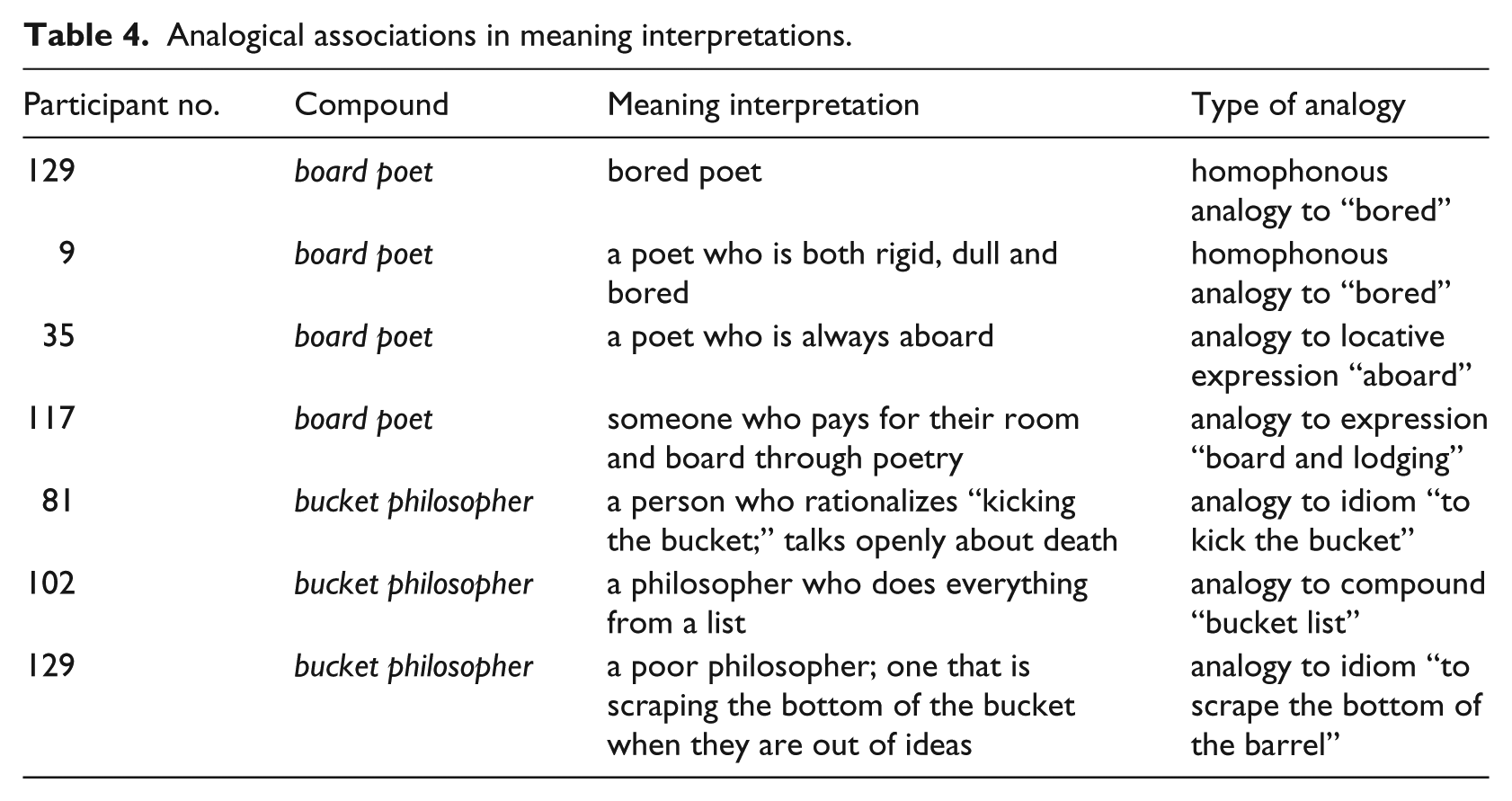
The examples in Table 4 have been selected to provide an overview of the different types of analogical associations that occur in the data. Basically, these associations can be triggered by (near) homophones or by compounds, fixed expressions, and idiomatic phrases that make use of one of the constituent terms. The associations of participants (9) and (81) exemplify a mixture of analogical and figurative strategies. In (9) the properties of a board as hard and inflexible are used as characteristics of the poet in addition to his/her state of being bored. In (81) the analogical interpretation of the idiomatic expression “to kick the bucket” is accompanied by a metonymical mapping from the agent (“philosopher”) to a typical activity (“rationalizing”). In the data analysis, such instances of mixed associations have been counted separately for each associative process.
Naming/jargon and loose associations
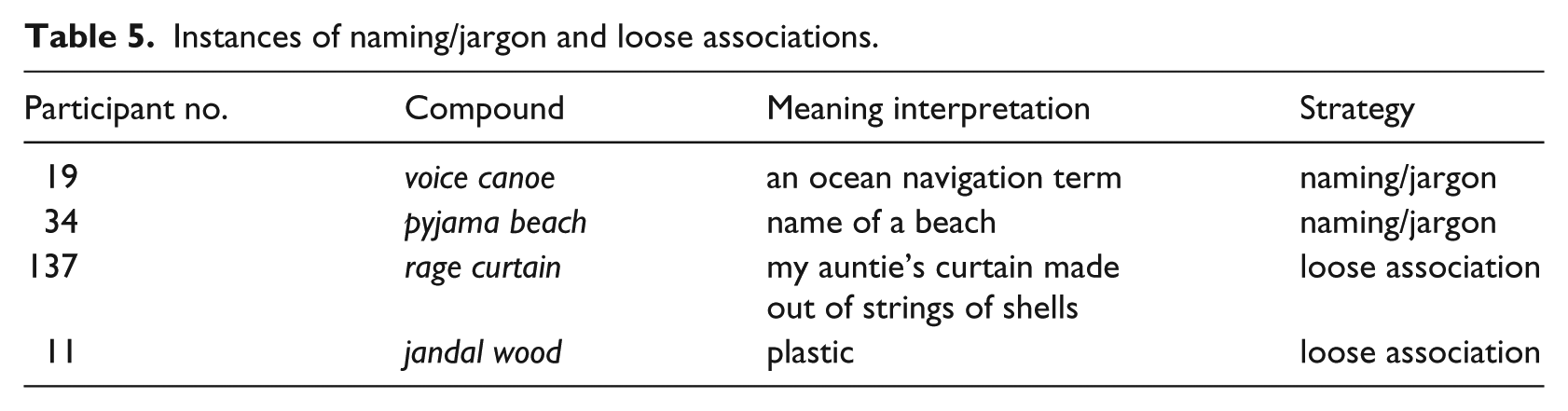
More rarely, participants interpreted the novel compounds as a name or a technical term (jargon), or they provided very personal and loose associations, for which it was difficult to retrace a meaning relation to the compound constituents. A few examples are shown in Table 5.
Instances of naming/jargon and loose associations.
After having assigned all the meaning descriptions to one or more of these associative strategies, the data analysis proceeded with a close assessment of the figurative meanings. This part of the analysis was based on the following principles:
In line with proposals in cognitive linguistics (see Croft & Cruse, 2004, p. 216; Evans & Green, 2006, p. 313), a basic distinction between conceptual metaphor and conceptual metonymy was drawn according to whether the mapping happened within the same domain of the compound constituent (i.e. metonymy) or from the domain of a compound constituent to a different domain (i.e. metaphor). 5
The description of figurative interpretations moved from the less associatively complex process of conceptual metonymy to the more associatively complex process of conceptual metaphor (see Taylor, 1995) aiming at the minimally necessary description of a figurative meaning interpretation.
The conceptual notation of metaphors and metonymies proceeded both deductively and inductively (see Steen, 2007), which allowed the postulation of new domain labels for specific metaphors and metonymies while relying on already established figurative descriptions when appropriate.
Applying these basic guidelines throughout the analysis caused different types of figurative conceptual processes to emerge from the data. An overview is given in Table 6.
Examples of different types of conceptual processes in the figurative meaning interpretations.
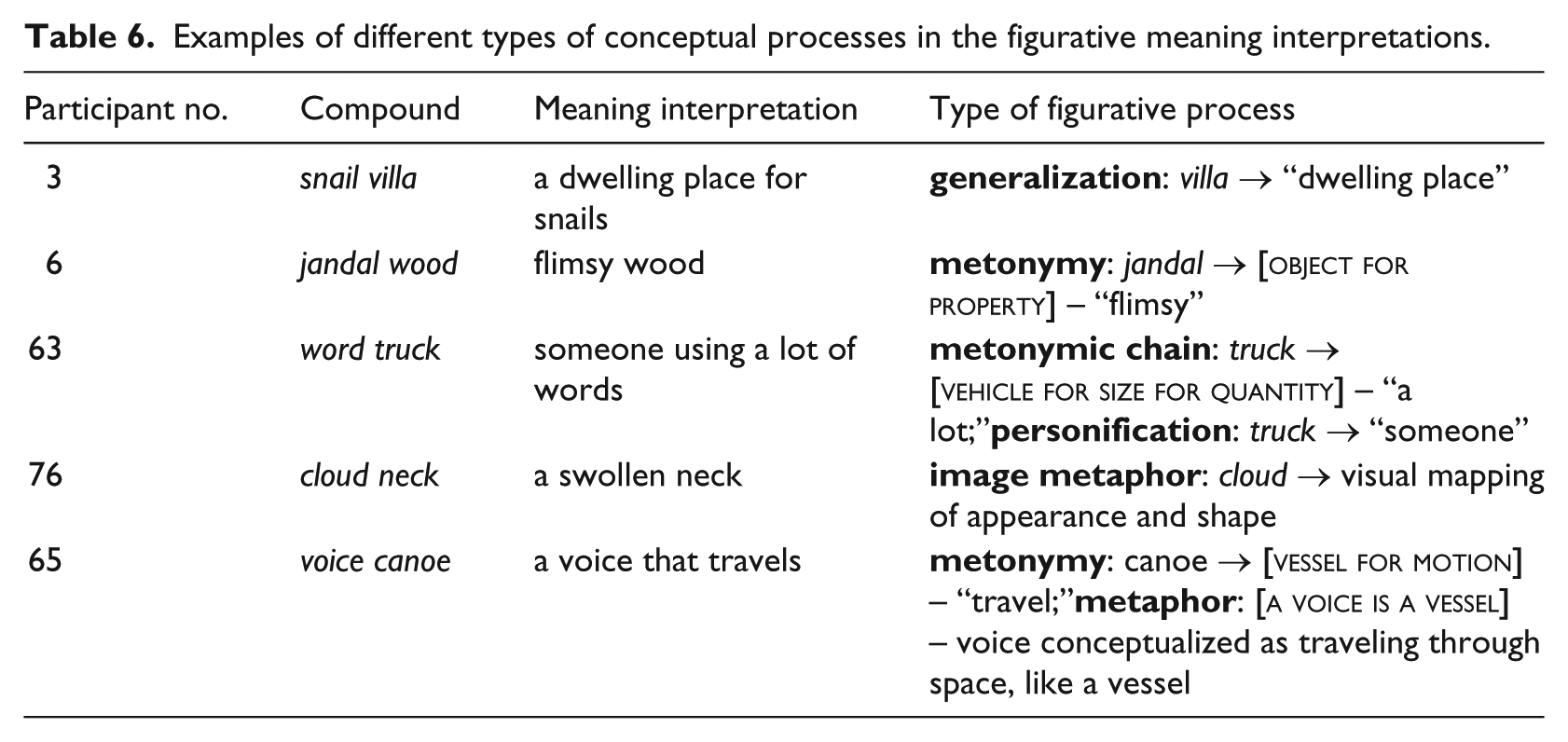
As highlighted in Table 6, generalizations, metonymies, metonymic chains, personification, image metaphors and conceptual metaphors were distinguished among the participant answers. The process of metonymy not only underlies metonymy but also generalization and metonymic chains. Strictly speaking, generalization stands for a [
The detection and description of figurative language use by means of conceptual metaphor and metonymy theory is a complex process of interpretation which is subject to inconsistency and individual variation. In addition, it has to be emphasized that the notation of conceptual metaphor and metonymy is a descriptive shorthand for reconstructing possible associative pathways from language use. Thus, they cannot be taken as direct evidence of what actually goes on in the mind of a speaker when giving meaning to the novel compounds. In order to reduce inconsistency in the analysis, the total of 1402 meaning interpretations were analyzed in three waves. First, the author and his colleague independently described the figurative processes. The results were compared and differences discussed until a common solution was found. After that, the author worked through the meaning descriptions two more times, reassessing the conceptual construals and streamlining the analytic descriptions (e.g. making sure that similar domain mappings are labeled by the same domain names).
The next section will present the results of the data analysis for both associative strategies and figurative processes. This will allow the testing of the initial hypothesis of whether monolingual and bilingual speakers show any associative preferences when giving meaning to novel compounds.
Results
As mentioned in the section “Participant profiles,” the results on associative strategies and figurative processes are based on a comparison of the major groups of Māori bilinguals (MB), Pākehā bilinguals (PB), and Pākehā monolinguals (PM). Scores of the participant answers are shown in order to make statements on general associative behavior across all compounds used in the task. To start with, Table 7 summarizes the number of associative strategies per participant group.
Number of associative strategies among Māori bilinguals (MB), Pākehā bilinguals (PB), and Pākehā monolinguals (PM) for all test items.
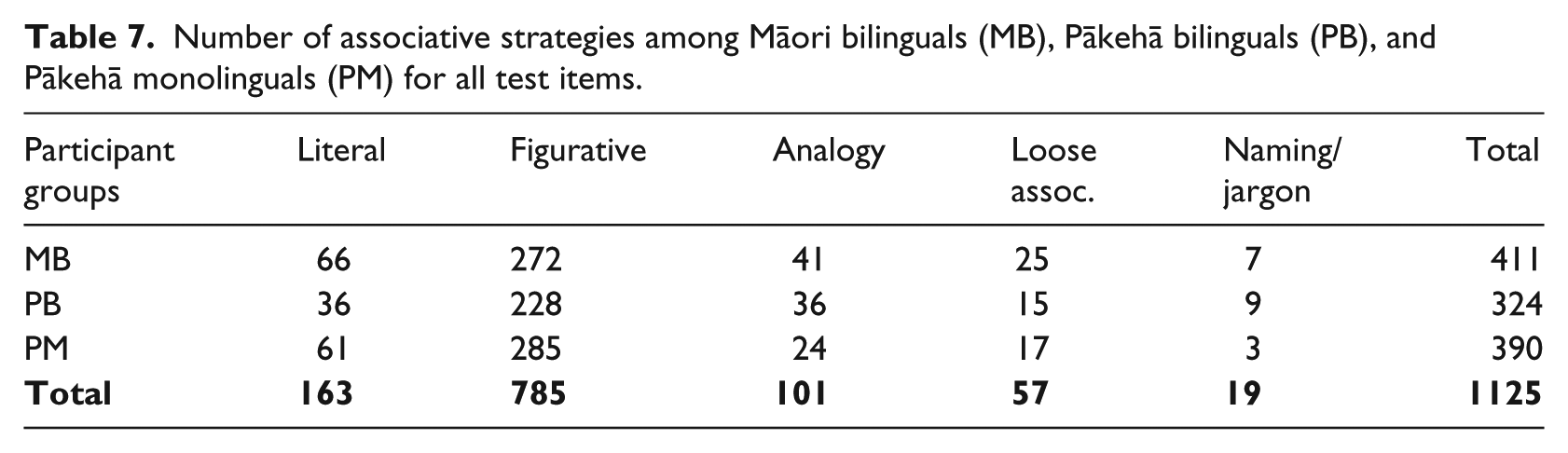
It is obvious from Table 7 that figurative interpretations are by far the most frequent strategy that all the participants relied upon when giving meaning to the novel compounds. This generally demonstrates that the test items were successful in stimulating figurative associations. Looking at the individual compounds, figurative interpretations are dominant in all constructions with the exception of jandal wood, whose proportion of literal interpretations (50.8%) exceeds figurative ones (36.1%) (see Onysko, 2014). Performing X2 tests of independence for the four most frequent types of figurative, literal, analogical, and loose associations in the three participant groups yields a significant difference (X2=19.4, df 6; p=0.004). Further, X2 calculations prove significant when comparing Pākehā bilinguals with Pākehā monolinguals on the four most frequent strategies (X2=8.00; df 3, p=0.046) and Māori bilinguals with Pākehā monolinguals, crossing figurative, analogical, and loose associations (X2=6.06, df 2; p=0.048). A comparison of both bilingual groups (MB and PB), on the other hand, does not show significance for the same combination of strategies. These findings point to a difference in the meaning associations between bilingual and monolingual participants. Interestingly, when isolating the contribution of the individual strategies to the significant X2 values, analogy appears as a major factor. It is responsible for 69.8% of the X2 value of PB × PM and for 80.9% of MB × PM. This calls for a closer look at the individual strategies. Figure 1 gives an overview of the proportional amount of the types of associations for each group.
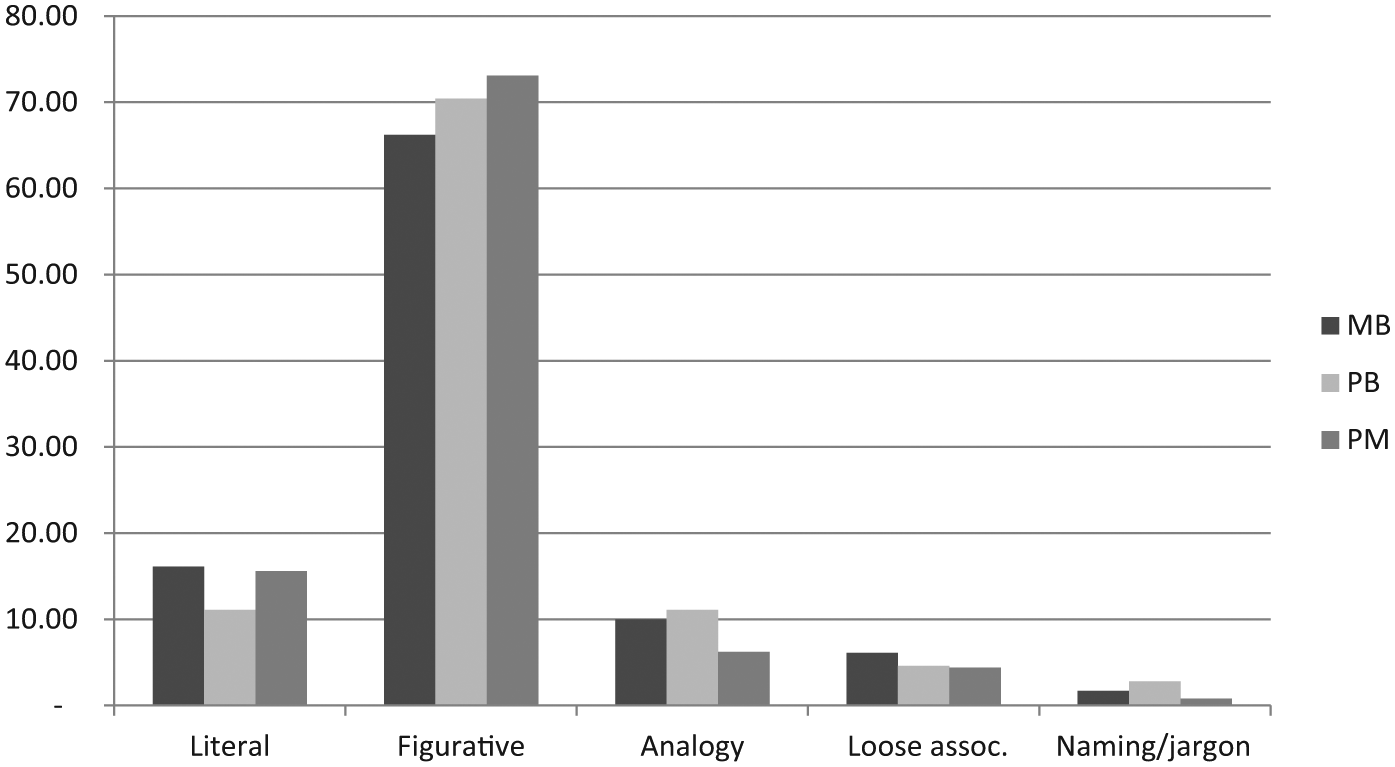
Percentages of associative strategies for Māori bilinguals (MB), Pākehā bilinguals (PB), and Pākehā monolinguals (PM).
Interestingly, Figure 1 highlights that Pākehā monolinguals display the highest amount of figurative associations. Apart from that, literal interpretations seem equally prominent for MB and PM, while PB shows a lower rate. The bilingual groups of MB and PB appear to team up in their rates of analogy, leaving PM behind. No real trend emerges in the numerically smaller categories of loose association and naming/jargon. To follow-up on these observations, two-tailed z-tests for two population proportions were carried out to compare the relative number of each of the strategies in the three constellations of comparison. This test confirmed a significantly higher rate of analogy at p<0.05 for each of the bilingual groups when compared to the monolingual group (MB/PM: z-score=1.98, p=0.048; PB/PM: z-score=2.38, p=0.017). The results on figurativity showed a mixed picture. On the one hand, the constellation of MB/PM yielded a significantly higher rate of figurative associations for the monolingual speakers (z-score=2.12, p=0.034). On the other hand, the difference between PB/PM (z-score=0.800, p=0.424) and PB/MB (z-score=1.21, p=0.226) remained insignificant, disproving a significant preference for figurative interpretations among the monolingual speakers. No other strategies were significantly different among the groups.
In order to control that the significant results for a bilingual preference of analogy are not due to individual participants, all the analogical associations were counted out in MB and PB. From 32 bilinguals in MB, 23 used an analogical association at least once and no participant used this strategy more than three times. In PB, 19 of 24 speakers associated analogically to the novel compounds and only one person used analogy four times in the task situation. Apart from making sure that analogical associations are sufficiently dispersed in the groups, participant gender also needs to be controlled. A comparison of the actual rate of female and male use of analogical interpretations with the expected rate (according to the relation of female/male speakers in each group) denies a potential influence of gender on analogical associations. In MB, the gender distribution in analogical answers is 79.2% female and 20.8% male compared to expected 78.1% female and 21.9% male. In PB, the distribution of gender is 78.9% female/21.1% male, close to the expected rates of 76.0% female/24.0% male. This is a further indication that the higher number of analogical associations among bilingual speakers is related to their state of bilingualism.
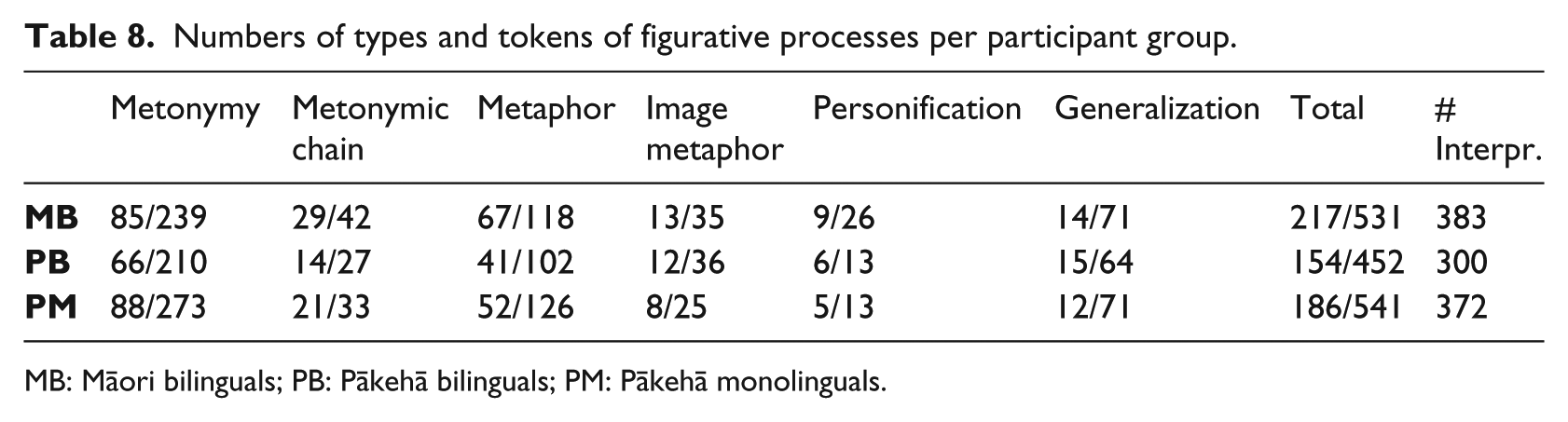
Since the figurative interpretations account for almost 70% of all strategies employed in the meaning descriptions, their detailed investigation becomes necessary. In addition, a comparison of the groups will show whether there are any monolingual or bilingual effects in figurativity. Table 8 provides the numbers of types and tokens per figurative process and participant group across all novel compounds.
Numbers of types and tokens of figurative processes per participant group.
MB: Māori bilinguals; PB: Pākehā bilinguals; PM: Pākehā monolinguals.
Table 8 should be read in the following way. The first number in a cell indicates the total number of different types of the figurative process. The second number in each cell represents the total number (i.e. tokens) of the figurative process. The sum of all types and tokens is given in the column called “Total” and the number of all meaning descriptions per participant group is displayed in the right-most column of the table. If the numbers of types and tokens are related to the overall number of meaning descriptions, the proportions of figurative processes can be compared among the monolingual and bilingual speakers. This is portrayed in Figures 2 and 3.
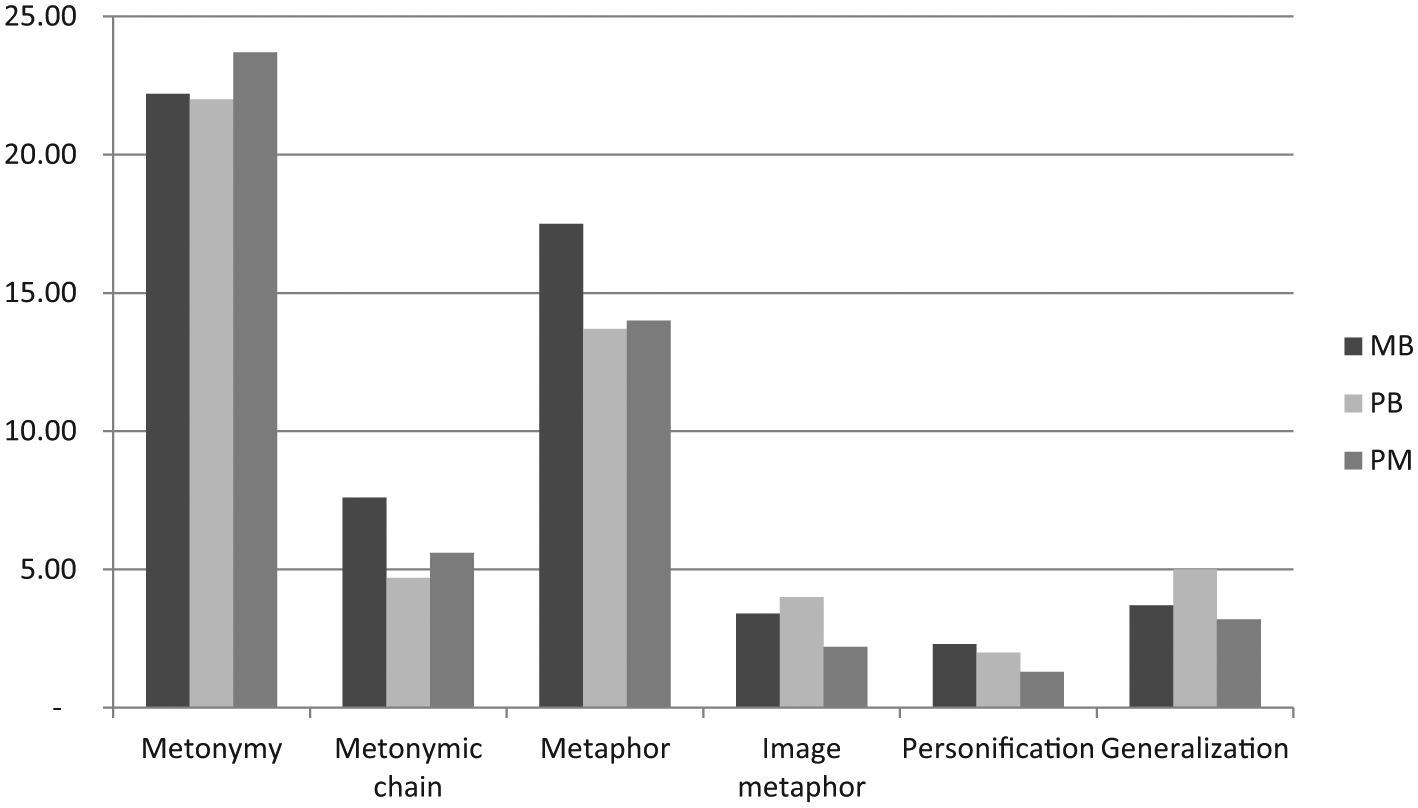
Percentages of types for each figurative process and participant group.
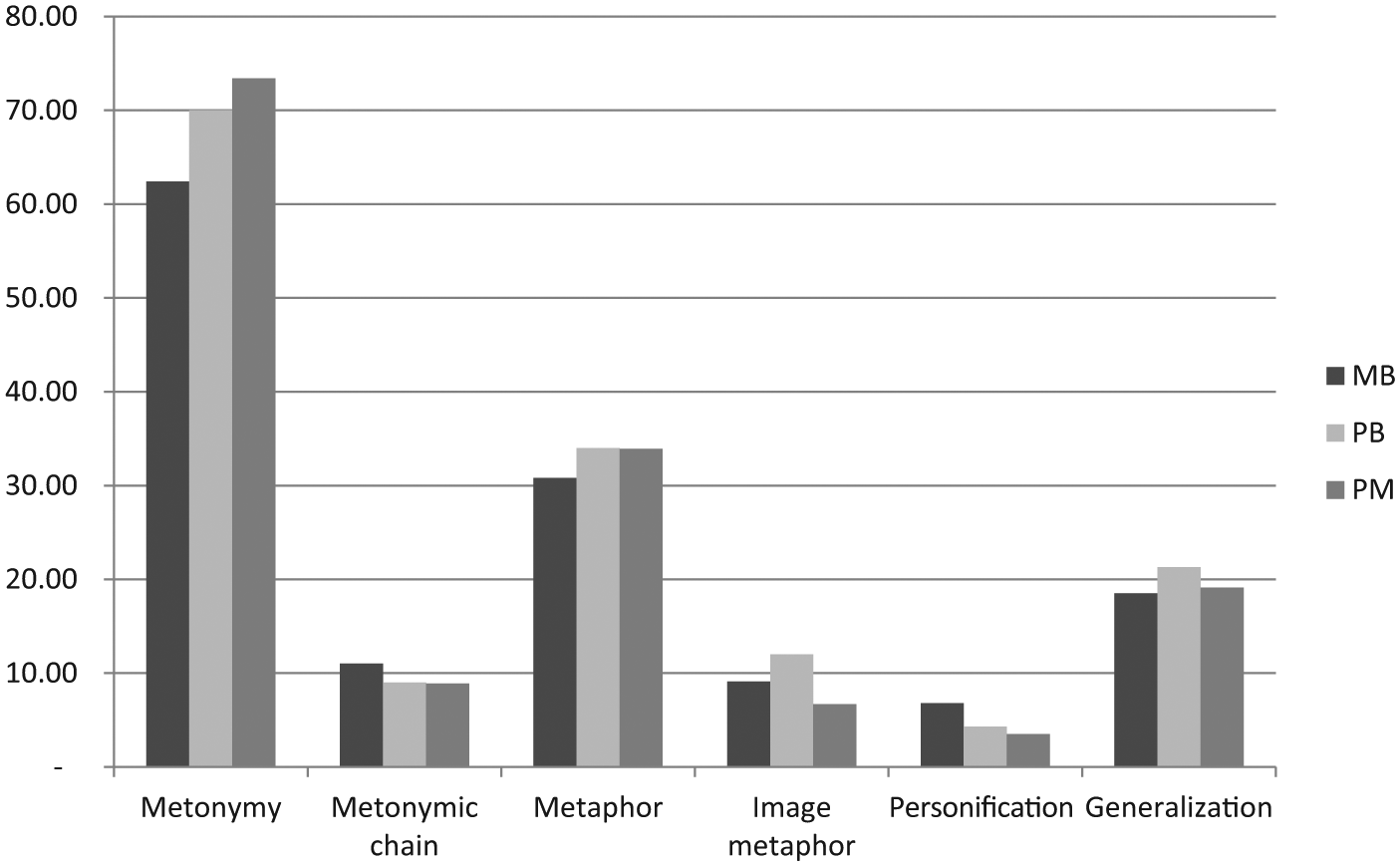
Percentages of tokens for each figurative process and participant group.
Two-tailed z-tests on the proportions of all figurative types for MB, PB, and PM do not show any significant differences at p<0.05. However, the number of different figurative types among the Māori bilinguals is close to being significantly higher than that of the Pākehā monolinguals (z-score=1.833, p=0.067). This is interesting as it runs counter to the previous finding that Pākehā monolinguals use significantly more figurative strategies than Māori bilinguals when giving meaning to the novel compounds. The comparison of figurative types thus indicates that Māori bilinguals tend to use more different types of figurative associations, i.e. they are more diverse in their figurative associations.
When comparing the proportions of tokens of the individual figurative processes illustrated in Figure 3, a few significant differences emerge. The number of metonymies is significantly higher for both Pākehā bilinguals (z-score=2.077, p=0.038) and Pākehā monolinguals (z-score=3.23, p=0.001) compared with the Māori bilinguals. Image metaphors have been used significantly more often among Pākehā bilinguals (z-score=2.37, p=0.018) than Pākehā monolinguals. However, no significant differences are found between the Māori bilinguals and the Pākehā participants. Finally, Māori bilinguals apply personification to a significantly higher extent than Pākehā monolinguals (z-score=2.04, p=0.041). Again, no significant difference in the amount of personification appears when the Pākehā bilinguals are compared with the Māori bilinguals and the Pākehā monolinguals. No other significant differences in both types and tokens can be found for the remaining figurative processes of conceptual metaphor, metonymic chains, and generalizations. The next section will discuss the results on associative strategies and figurativity for their implications on bilingual creativity.
Discussion and conclusion: are there indications of enhanced bilingual creativity in compound meaning interpretation?
Overall, the results on associative strategies and figurative meaning descriptions emphasize that the performance of both bilingual and monolingual speakers are fairly similar in this particular task of interpreting the meaning of novel English compounds. At the same time, a few significant differences emerge from the data both in terms of associative strategies and figurative associations. A clear bilingual preference is found for analogical associations. In detail, both Māori and Pākehā bilinguals more frequently associate to existing English terms and expressions when describing the meaning of a novel English compound. As shown in Table 4, analogical associations mostly arise between constituent terms of a novel compound and homophones or between the constituent terms and their use in existing compounds, phrases and idiomatic expressions. This bilingual characteristic in the compound meaning interpretation task can be seen as a generally increased associative flexibility, which is perhaps related to an overall higher level of activation in the speakers’ lexical networks. Crucially, this activation is not restricted to two or more language systems (see Kroll et al., 2013), but also seems to involve strengthened associative lexical links in the task language itself. For future research, it would be interesting to consider this finding for cognitive models of lexical activation in bilingual and multilingual speakers, such as Kharkhurin’s proposal of language mediated concept activation (2012).
As far as figurative associations are concerned, the significantly more frequent use of figurative interpretations among Pākehā monolinguals compared with Māori bilinguals runs counter to expectations of increased figurative meanings in bilingual speakers. However, the data also show a non-significant difference between the Pākehā monolingual and bilingual participants, which demonstrates that there is no difference in the number of figurative interpretations in this particular task. Interestingly, when looking more closely at the figurative processes, Māori bilinguals demonstrate a tendency to apply more diverse types of figurative associations than Pākehā monolinguals. Since this tendency only reaches borderline significance, and due to the fact that comparisons with Pākehā bilinguals do not exhibit any significant differences, there is no clear evidence for a monolingual vs. bilingual contrast in the overall diversity of figurative associations. Similarly, the analysis of individual figurative processes does not provide unanimous support for a disparity in monolingual and bilingual performance either. Bilingual participants show significantly increased uses of image metaphors and personification compared to the monolinguals. However, this effect only holds for the Pākehā bilinguals (for image metaphors) and the Māori bilinguals (for personification). While the higher rate of personification might be culturally motivated, no plausible explanation can be given for the predilection of image metaphors among Pākehā bilinguals. Altogether, the results on figurative meaning interpretations and particularly on metaphoric associations do not support the hypothesis that these processes are subject to a bilingual preference. Thus, the findings in this task do not support previous claims that bilingual speakers use more metaphoric language (see Furlong, 2009, p. 363), at least according to the analysis of conceptual metaphors and metonymies applied in this study.
In line with the initial discussion and hypotheses, the question arises of what the current findings mean in terms of bilingual creativity. If the process of analogical meaning interpretation is considered an example of divergent thinking (see Kharkurin, 2012), then the bilingual participants in this study have a creative edge over the monolinguals for this particular strategy of meaning interpretation. A case can be made for regarding analogical associations as instances of divergent thinking as the meaning descriptions that draw on analogies are fairly rare in the data and diverge from the more prototypical interpretations for each of the compounds. By contrast, figurative meaning interpretations, which on the outset were hypothesized as showing a bilingual advantage, did not live up to that expectation despite some individual peaks for one of the bilingual groups in single figurative processes. On the other hand, the compound meaning interpretation task did not demonstrate a monolingual benefit either.
Finally, the results of this study give rise to further research on the nexus of bilingualism and creativity. In particular, the relation between analogical associations and divergent thinking calls for attention. For example, studies on bilingual lexical access could investigate whether the lexical networks of the task language in a monolingual setting are differently activated in bilingual and monolingual speakers. In the future, an exploration of figurative language use should try to factor in not only a bilingual but also a bicultural component in the analysis (see Grosjean, 2014). Previous research on meaning diversity on the same dataset (Onysko & Degani, 2014b) has provided some indications that effects of bilingualism can actually be overlaid by cultural differences and by typological differences between the languages of a bilingual speaker. In general, the application of cognitive linguistic tools provides a promising but as yet sparsely explored addition to the budding field of research into bilingual and multilingual cognition.
Footnotes
Acknowledgements
I would like to thank two anonymous reviewers for their comments on earlier versions of this article. I would also like to express my gratitude to Marta Degani for extended discussion and help with the data analysis. Further thanks are given to scholars at the School of Māori and Pacific Development and in the Linguistics Program at the University of Waikato as well as to all participants in the study.
Declaration of Conflicting Interests
The author(s) declared no potential conflicts of interest with respect to the research, authorship, and/or publication of this article.
Funding
The author(s) received no financial support for the research, authorship, and/or publication of this article.