Abstract
In Spring 2020, schools in many countries had to close in response to the COVID-19 virus pandemic and move to remote teaching. This paper explores the views of pupils, parents/carers and teachers of ‘home-school’ in one Norwegian municipality, gathered through parallel online surveys in April 2020 during the peak of the COVID-19 lockdown period. It finds that adaptation happened very quickly and that home-school was well received by pupils and parents. There was more creative learning, better progress, more useful feedback and greater student independence. School leaders reported that they wanted to implement changes based on the experience of remote learning enforced by the lockdown, so that the crisis has become an opportunity for grassroots innovation.
Education during the school lockdown in Spring 2020
In Spring 2020, schools in many countries faced unprecedented challenges resulting from the COVID-19 virus pandemic. School closures at short notice created severe disruption, and headteachers had to mobilise staff to teach remotely with little preparation or training time. Concern about the impact on pupil progress was widespread, with fears that home-schooling would widen the attainment gap between children from poor homes and those from more affluent backgrounds. Research (Cullinane & Montacute, 2020) found that children from the poorest families were the least likely to have access to the devices needed and internet access at home.
School leaders were faced with the task of handling crisis situations beyond any existing scope of their role. They had to be a source of support to parents, governors, staff and their senior leadership teams, and were put in the position of making decisions, and giving advice and guidance, even when they had limited information and solutions were in any case unclear. The change that the pandemic caused has affected and impaired the systems and processes that school leaders are accustomed to use in order to lead and manage organisational performance, and it has created barriers to existing mechanisms for providing moral, social, personal and professional support and motivation (Alevizou, 2020) to their staff. Many teachers voiced concerns about the pressure that had been placed upon them (Comanducci, 2020). They were concerned about difficulties caused by their unfamiliarity with how to deliver high quality teaching and learning remotely, without the immediate verbal and non-verbal feedback that the classroom offers.
The Education Endowment Foundation (EEF)’s rapid evidence assessment on remote learning (2020), albeit largely based on other (non-pandemic) situations, concluded that:
Teaching quality is more important than how lessons are delivered
Ensuring access to technology is key, particularly for disadvantaged pupils
Peer interactions can provide motivation and improve learning outcomes
Supporting pupils to work independently can improve learning outcomes
Different approaches to remote learning suit different tasks and types of content
The sudden shift from classroom-based to remote learning had a significant effect on the uses of educational technology in schooling (Patel et al., 2020), requiring swift adaptation by teachers and pupils to the features of the digital platforms thrust upon them (Education Endowment Foundation, 2020; Global Education Monitoring Report, 2020). National and local education systems with a technology focus established home learning and virtual learning environments quickly. Those who already utilised digital learning platforms had fewer barriers to remote education compared with schools that had formerly made little use of technology or where pupils did not have devices and the internet at home (Petrie et al., 2020). Research in England (NFER, 2020) concluded that schools which had already established a virtual learning environment had higher student engagement levels than those without, especially for disadvantaged children.
Pupils should be co-participants in their own education (Bourke & Loveridge, 2018). Democracy and participation are among the core principles in the 2020 Norwegian national curriculum, which states that ‘children should experience that they are listened to in the daily life of school, that they have real influence and that they can affect that which concerns them’ (UDIR, 2019). Research on student participation (Jones & Bubb, 2020) found that teachers found it hard to involve pupils fully, particularly in issues impacting on school improvement. Research for the OECD found that ‘an increase in the autonomy of pupils to manage their own learning’ was an unexpected benefit of home-school (Reimers & Schleicher, 2020, p. 18).
Research in Norway, as in many places, found positives in the crisis. Gudmundsdottir and Hathaway (2020, p. 244) reported teachers being positive and ‘willing to go the extra mile’. A national survey (Federici & Vika, 2020) found that the majority of teachers reported that they had been able to continue providing teaching and learning, that they had good contact with pupils and parents, and that 85% of municipalities reported that they had been able to continue to provide a good and safe learning environment. A survey of primary school teachers (Larsen, 2020) showed that 73% had more time to plan lessons. To our knowledge, there has not been other research in Norway which has involved all the different stakeholders at the same time during the home-school period and has sought the views of pupils of all ages, including the youngest. It is this gap that our research aims to fill.
There is a potential for good things to be achieved in response to the pandemic. As Schleicher suggests, ‘it is about looking seriously and dispassionately at good practice in our own countries and elsewhere to become knowledgeable about what works’ (Reimers & Schleicher, 2020, p. 5). It is in this spirit that we share research about home-school that was conducted in Norway and contributes something particularly interesting: rather than seeing home-school as a deficit model, our research considers what can be learned and taken forward.
Context
The research took place in a municipality in the Norwegian fjords, which has eight schools: five primary (barneskole for pupils aged 6 to 12), one lower secondary (ungdomsskole for pupils aged 12 to 16) and two all-through schools. As part of the national lockdown response to the global COVID-19 pandemic, schools in Norway were closed to all but keyworkers’ children from 13 March, with pupils in Grades 1 to 4 returning from 27 April and Grades 5 to 10 from 11 May 2020 (year-groups are referred to as Grades 1 to 10, corresponding respectively to ages 6 to 16). This early return was possible because infection levels were low by international standards.
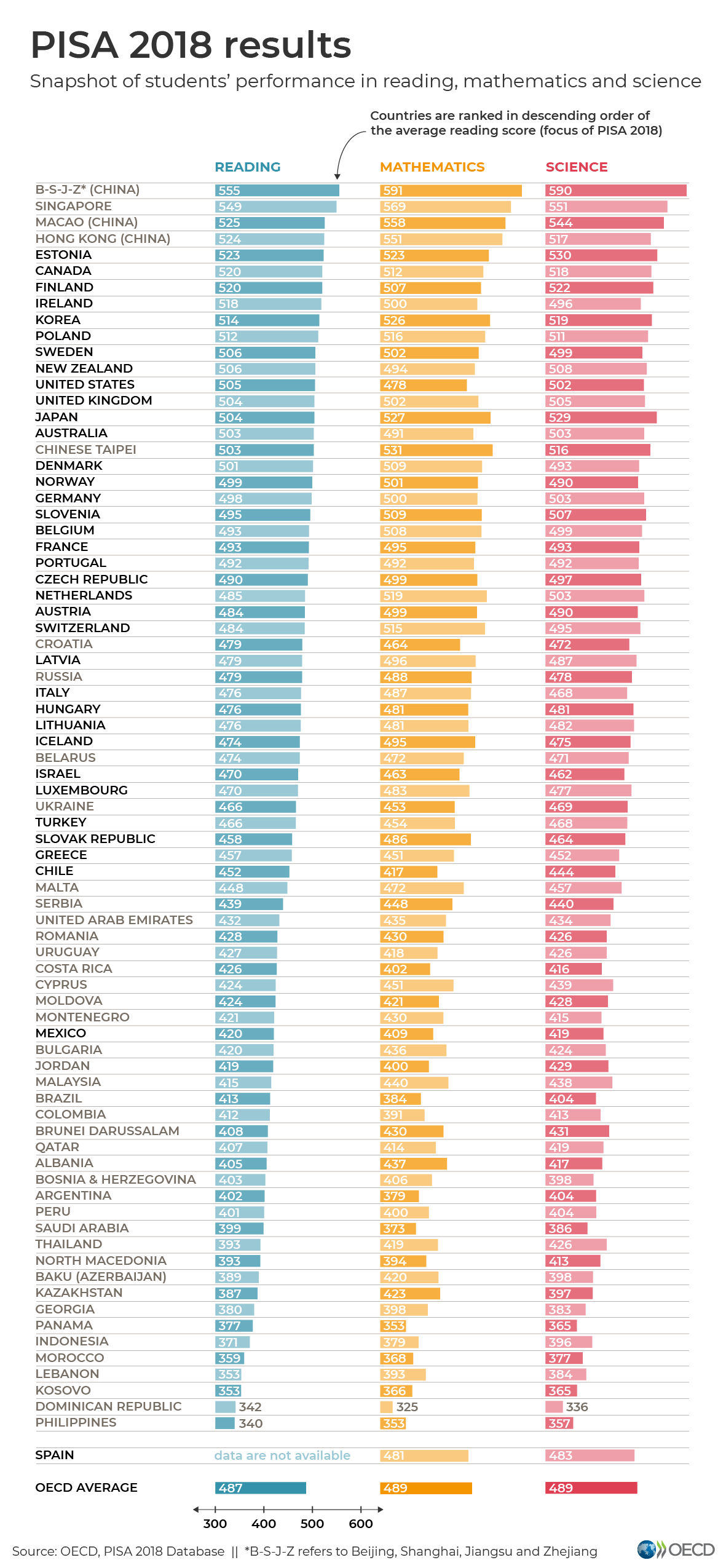
Norway, per capita, is one of the richest countries in the world. It is the second highest spender on school education in the OECD (2020), but it is only middle ranking in PISA tables (OECD, 2018). This is not to suggest that Norwegian schools are inadequate by international standards; many would argue that PISA does not reflect the breadth and qualities of the Norwegian curriculum and education system. However, achievement in the municipality where the research took place hovers at or just below average in Norway’s national tests and examinations. In general, Norway’s schools were better equipped with technology than many other countries: 93% of Norwegian pupils attended ‘digitalised schools’ compared with the EU average of 35% (European Commission, 2019).
The research was initiated by Sara Bubb, who had supported school development in the municipality as a freelance consultant from London for several years to help them raise student achievement. She had conducted a survey of all pupils in Grades 3 to 10 at the start of the academic year (September 2019), which showed that many of their views about school were negative: just over half disliked lessons in most subjects, finding them boring, text-book driven, slow-paced and teacher-dominated. To address this, she helped the schools implement some project-based learning. Evaluations showed that pupils liked this: they felt more engaged when learning outdoors, working in a cross-curricular way, and doing real-world and purposeful activities – all widely valued in the new Norwegian national curriculum to be implemented from August 2020, which placed an increased emphasis on creativity, participation and student voice.
However, the fear was that the progress in more creative teaching that had been made between September and March would be halted by the move to remote learning. It was in this context that the suggestion of rapidly conducted research that gathered opinions from pupils, parents/carers and teachers found strong support. The survey proposal was agreed, funded and links sent out by the municipality: the data were owned by Sara Bubb and the views expressed in this paper are exclusively those of the authors. Mari-Ana Jones collaborated on the research. An English and Norwegian speaker based at the Norwegian University of Science and Technology in Trondheim, she was able to appreciate the subtleties of the survey comments and brought understanding of the policy context.
Methodology
The aim of the research was to find how parents, teachers and pupils (1st–10th Grade, ages 6–16) in a Norwegian municipality experienced home-school and what, if anything, they wanted to continue with after schools reopened. Our research questions were therefore:
How did pupils, parents/carers and teachers experience home-schooling?
What did school leaders plan to change as a result of the home-schooling experience?
Key areas that related to ongoing work in the municipality were probed by asking participants to respond to statements with agreement ratings using a four-point Likert scale from ‘strongly agree’ to ‘strongly disagree’; each had space for optional comments. The areas were digital learning; creative learning; pupil participation; progress; achievement; feedback; groupwork; parent-teacher relationships; and parents’ ability to help children.
The approach was to involve as many individuals as possible, rather than to select any sample (Fowler, 2009). It was important to gather views of all the key stakeholders within the schools to see the how their views compared and related to each other so we designed four surveys: one for parents, one for teachers and two for pupils. We considered it important to give all year groups the opportunity to participate. Younger children might be considered too immature to answer a digital survey (Lumby, 2012), but we were keen to include their views, particularly as one might imagine that they would be worst affected by the move to remote learning. To limit the demands on the younger ones, we designed a shorter survey for pupils in Grades 1 to 4, with eight questions. There were 14 questions for pupils in Grades 5 to 10, teachers and parents.
Much thought was put into survey construction (Stoop et al., 2010). The questionnaires were designed to be easy and quick to complete in Norwegian, to help maximise the response rate. A key intention was to produce data which could be compared between groups so analogous statements were tailored as appropriate for each of the different groups. For instance, pupils in Grades 1 to 4 were asked how much they agreed with the statement, I’ve become better at using an iPad/computer when I’m doing schoolwork; and those in Grades 5 to 10, I’ve become better at using digital tools when I’m doing schoolwork. Parents/carers were asked how much they agreed with the statement, My child/children have become better at using digital tools. Teachers were asked to say how much they agreed with the statement, I have become more adept at using digital tools during home-schooling. In each case, a four-point Likert scale was used, ranging from ‘totally agree’ to ‘totally disagree’. Furthermore, respondents were given the option to comment on each statement, and many took the opportunity to do so. Teachers, parents and pupils in Grade 5 to 10 were also asked one open question, which was ‘What lessons can schools learn from the experience of home-school?’.
Ethical issues were carefully considered and addressed. We were particularly sensitive to making demands at a time when people were anxious about the Covid-19 virus and the lockdown. Although the number of cases and deaths in Norway was comparatively small, at the end of April the impact in the UK and neighbouring Sweden was devastating. Adults were under new pressures including the demands of working from home, while supervising their children’s education. To ensure that all respondents felt comfortable in completing them, all surveys were anonymous and voluntary. The only demographic data asked for from pupils and parents/carers were the name of their school and year group; teachers were asked to identify the school they worked in and which of three broad age bands (Grades 1–4, 5–7 and 8–10) they taught.
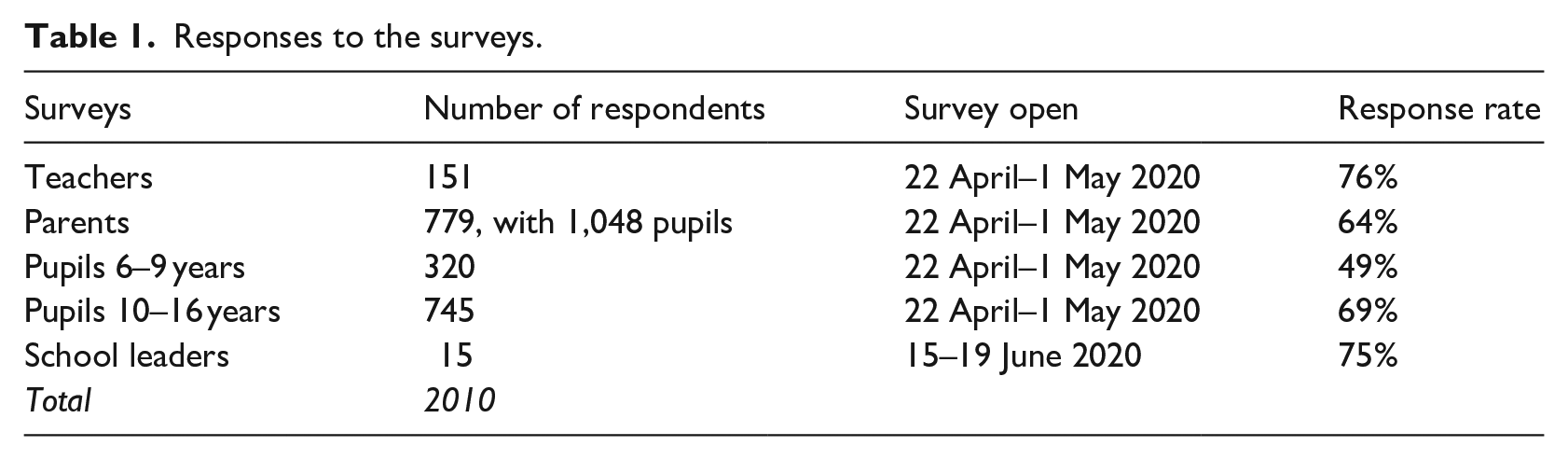
The whole process met the requirements of the General Data Protection Requirements (GDPR). Sara Bubb sent links to anonymous online questionnaires to the municipality who then passed them via heads and teachers to all pupils, their parents/carers and teachers. The surveys were completed over 9 days from 22 April to 1 May 2020, while schools were closed to all but the children of keyworkers: that is, after a little over 1 month of home-school. After data cleaning there were 1,995 responses (see Table 1). Engagement with the questionnaires was impressive, and respondents demonstrated that they had a lot to share.
Responses to the surveys.
The data were analysed by question to evaluate the extent to which percentages in each group agreed or disagreed with each statement, and we analysed the comments to help us to understand the reasons. Translation software was used, with its output reviewed by Mari-Ana Jones. We compared the analogous questions across groups and age ranges to see how the perspectives of pupils, parents/carers and teachers varied. The comments were analysed thematically within each grade on the Likert scales: this gave a deeper insight. For instance, we found that most of the respondents who disagreed that parent-teacher relations have improved had done so because they felt that relationships were already very good; that is, a superficial cause for concern was in fact a very high satisfaction rating.
The initial findings were explored in online meetings with the municipality and school leaders and summarised in a written report (Bubb & Jones, 2020). After the schools re-opened, we sought the views of school leaders about what changes they might make arising from the home-schooling experience. This was done through a survey, which was open within a short window of 15 to 19 June 2020, after pupils had been back at school for about a month. It was sent by the municipality to all those people with any leadership role in the eight schools; there were 15 responses. It gathered no demographic information such as the name of the respondent’s school, to ensure anonymity for this small group of prominent local people.
Findings
Technology
The municipality had invested heavily in technology and all schools had already established some digital learning before the home-school period began. All pupils had a tablet or laptop, and were used to using them in lessons. Teachers had laptops and had received training and support in the use of digital resources. Microsoft Teams video-conferencing software had started to be used before the coronavirus crisis and proved to be a popular platform for online learning as well as for meetings.
Two-fifths of teachers and pupils agreed that they had become better at using digital tools during the home-school period. Those who did not agree commented that this was because they already had strong skills. The claimed improvement was greatest amongst the younger pupils: 88% of pupils in Grades 1 to 4 either agreed (35%) or strongly agreed (53%) that they had become better at using technology for learning. This aggregate total of 88% compared to 77% of pupils in Grades 5 to 10.
Similarly, 54% of teachers strongly agreed, and a further 26% agreed, that they had become better at using technology, with the biggest improvement coming from those who taught the youngest pupils. One teacher reflected on how challenging it had been at first:
The start-up was really hard with high expectations and pressure from all sides. We were overwhelmed with suggestions for apps, links, websites, etc. That made me feel like I wasn’t doing anything well enough and that everyone else was doing something much better and more modern.
There was support from advisers and technicians at the municipality, who organised extra equipment and fixed problems, so that by the time of the survey, pupils, parents/carers and teachers had experienced how digital solutions could facilitate everyday school life, such as daily online class meetings as well as one-to-one contact with pupils. Teachers and school leaders held meetings and training online, and this was considered to be an efficient use of time because there was no time spent in travelling.
School leaders completed a further survey in mid-June, 5 weeks after schools reopened, about their plans. All wanted to continue the progress made in using technology, and specifically to undertake the following:
Digital meetings with staff, parents/carers and other agencies
Use of digital tools in student feedback
Use of digital tools for differentiation in teaching
Increasing digital competence among teachers and pupils
Using digital tools for vulnerable pupils and those who cannot attend school.
They were each at a different stage of implementing changes, with most saying that they had started making them, and some having already established them. As one leader said, ‘We use digital tools in every year group, but it’s important to think about when it’s useful and when other methods are more useful’.
Creative teaching
Given the emphasis in the municipality on improving teaching and motivating learners, we wanted to find out whether pupils had experienced any creative activities. As Figure 1 shows, about 70% of pupils agreed that more creative tasks had taken place at home-school than normal, with most enthusiasm being shown by the youngest pupils. Digital escape rooms, migratory bird photography and experiments in science were mentioned by pupils as some of the activities they enjoyed. One cross-curricular task was to go outside and mark out the dimensions of a Bronze Age longhouse (about 7 × 20 m), mark the fireplace in the middle, and share photographs of the results by uploading them. We were surprised that teachers were able to facilitate more creative tasks than usual during the home-schooling period. A teacher explained: ‘I have much more time to plan, create relevant tasks, and to provide feedback’. Less time was spent on class management.
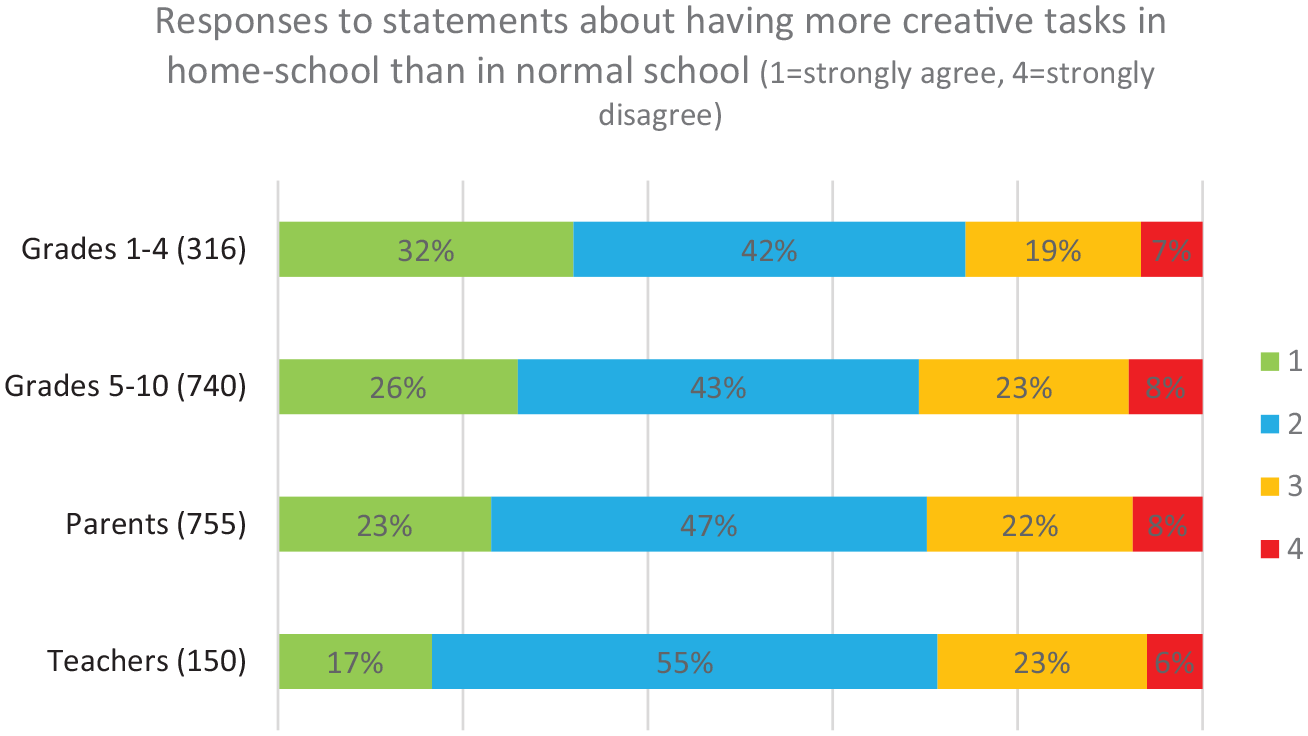
Responses from pupils, parents/carers and teachers about creative tasks in home-school.
Leaders agreed that in the future they wanted pupils to experience more creative and practical tasks within and across subjects; exploratory teaching methods and assignments; use of nature and outdoor areas; and more student involvement in ways of working. They were at different stages of implementing the changes for this: a third were already making more use of outdoor learning.
Feedback
We wanted to know about pupils’ experiences with feedback from their teachers: it was easy to assume that it might be severely limited without classroom contact. This was not borne out, however. Pupils in Grades 5 to 10 were asked to rate how much they agreed with the statement, ‘Feedback from teachers has helped me more than ususal’ in three subjects, Norwegian, English and Mathematics. Two-thirds agreed or strongly agreed that they received feedback in each subject that helped more than usual. Several said they felt teachers had more time for feedback.
Digital communication seemed to provide new opportunities for all pupils to be seen and heard. One student said, ‘teachers get to see how good all the pupils are, and not just those who always raise their hands in class’. Parents/carers were also positive about feedback from teachers, although many said that they found it hard to know how much was given normally. Just over half of the teachers also agreed that they gave more useful feedback than usual. One said ‘I have probably commented on more assignments per student than normal. I have probably also divided my attention more fairly between the pupils, as all pupils are now “shouting” equally loudly’.
Progress
We were interested in whether progress would be made by pupils during home-school, or whether they would be merely kept occupied, so we gave pupils the statement, ‘I’ve learned a lot of new things at home school to rate (1 = totally agree, 4 = totally disagree)’. The majority of pupils agreed or strongly agreed that they had: 79% of pupils in the 1st to 4th Grades and 65% of pupils in the 5th to 10th Grades. Some examples that they gave were ‘Getting better at reading in both Norwegian and English’, ‘I have learned to measure and cook good food’ and ‘Flowers, insects, getting better at reading’. However, 34% of pupils in Grades 5 to 10 and 21% in Grades 1 to 4 believed that they had not learned many new things, some saying that tasks were simple and repetitive.
We asked whether pupils did more schoolwork at home than they usually did at school: 62% of pupils in Grades 5 to 10 agreed that they had (Figure 2). Reasons given were that they could concentrate better at home. Some pupils said they received more work and were expected to complete it. Those who thought they had done less work said they were more motivated at school. Teachers thought that pupils’ work varied depending on parental support and monitoring. One said, ‘The difference between pupils’ learning outcomes has been greater than in normal school’.
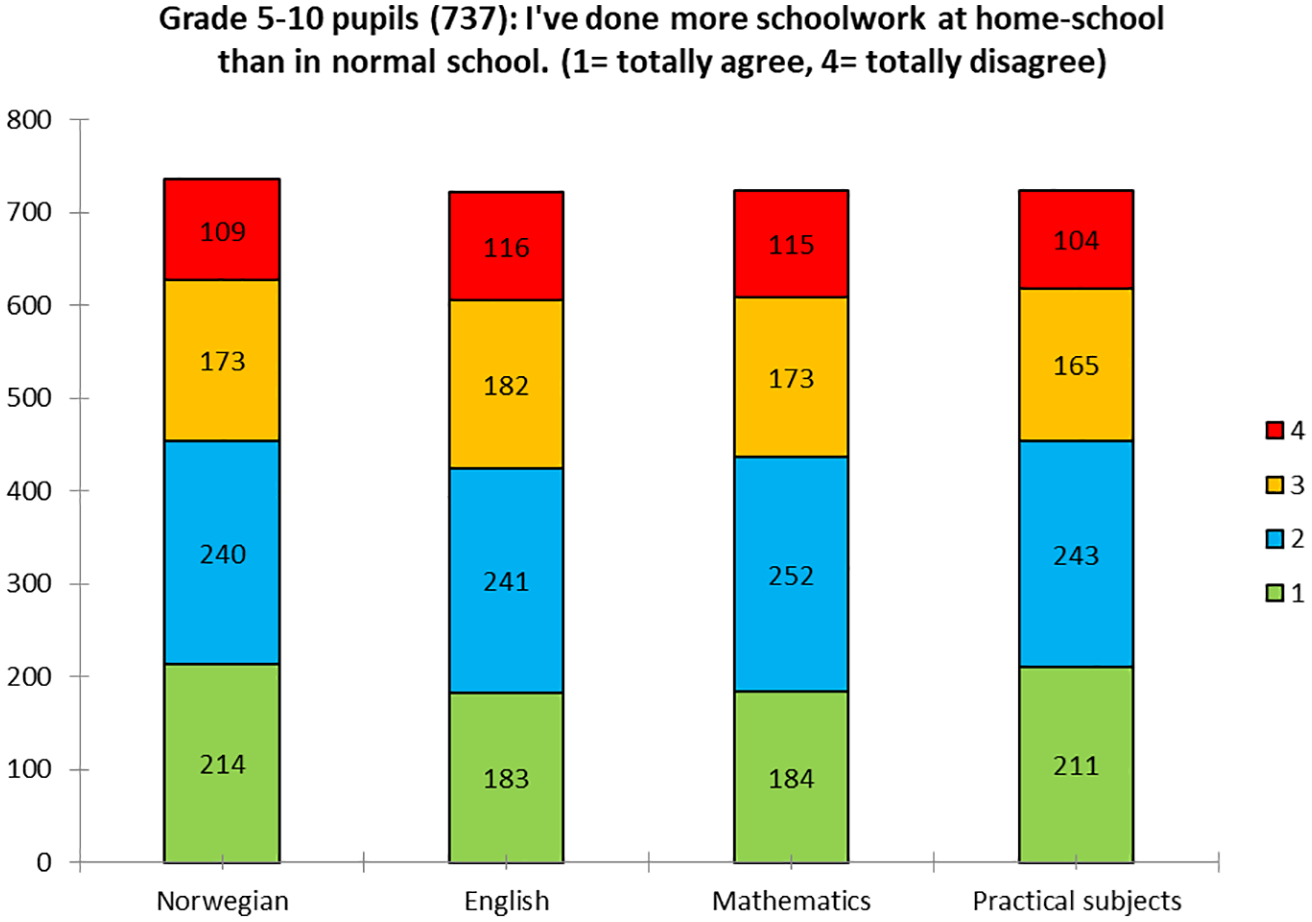
Pupils’ views about whether they had done more work in home-school than normal.
As in many countries, there has been particular concern about vulnerable pupils during home-schooling (Andrew et al., 2020; Green, 2020; Outhwaite, 2020). In our survey, 90% of teachers considered that they had catered well for this group. One teacher wrote,
We have done A LOT to adapt for the vulnerable. Some pupils have received video meetings several times a day. Teachers have been available to both pupils and guardians from 08.00-15.30 every day, and at times far beyond working hours. Children who have expressed too little follow-up at home have been contacted specifically every day. Children with multilingual homes have been contacted every day and have had all the information read as audio files.
Another said that vulnerable pupils ‘have never received such close follow-up:-)’. Teachers spoke of having a great deal of contact with parents/carers, as well as with colleagues and relevant services. Parents/carers and teachers reported that many vulnerable pupils performed better at home than with the distractions of the classroom.
Pupil independence
In our research, 63% of pupils in Grades 5 to 10 said that they experienced more influence over their learning in home-school. The explanations from pupils included the suggestion that they had more choices in their ways of working and ordering assignments. They reported increased influence in how they organised their learning and the ways in which they solved tasks. However, one said, ‘In gym we get to do what we want to do, so that’s good, but we don’t get to decide things in other subjects’.
There was consensus among the groups that pupils became more independent during home-school: 74% of teachers, 64% of parents, 71% of Grade 1 to 4 pupils and 78% of Grade 5 to 10 pupils agreed. They described experiencing a sense of ownership and increased motivation by taking responsibility for their own routines and their own learning. One said, ‘I’ve been able to manage by figuring things out and fixing things’. Another said, ‘Yes I have! There’s no teacher hanging over your shoulder and telling you what you’re going to do. When it’s home-school, you decide quite a lot yourself. What you want to do and stuff and how much you put into it’. Comments from pupils who disagreed said that they had been independent even before home-school. A small number of parents/carers commented however that their children had become overly dependent on them. Some teachers were particularly worried about this: one said, ‘when I look at spelling and sentence structure, it’s not the student’s work’.
Parents
Parental involvement increased during home-school. They gained more knowledge about their children’s learning, and they had opportunities to play a more important role than before. Two-thirds of parents/carers reported gaining more insight into their children’s learning: as Figure 3 shows, this was across all year groups, although most positive with the younger pupils, with 87% of parents/carers with children in Grade 1 agreeing. It is interesting that 64% of parents/carers of the oldest pupils also agreed that they had more insight, when the pre-conception might be that Grade 10 pupils would be less inclined to involve their parents/carers in their learning. One said, ‘as parents, we have been able to contribute insights, reflections and good discussions in the various subjects. And to some extent helped to achieve the best possible result on the submission tasks’. Another parent said, ‘This is one of the things we’ve appreciated the most. Now we know so much more and it’s awesome positive!’ Over half felt that they were in a better position to help their children with schoolwork.
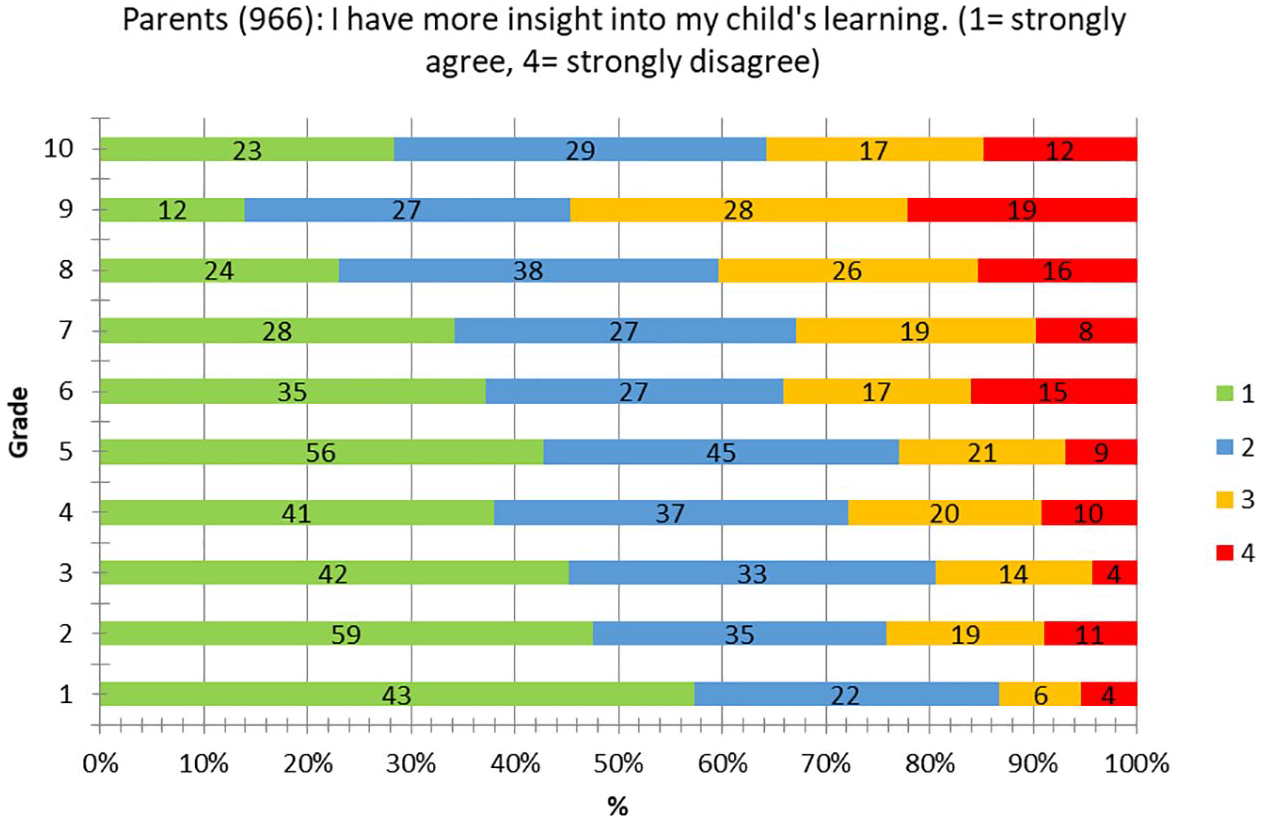
Parents’ increased insight into their children’s learning, by grade.
Comments suggested that parents/carers had good relationships with teachers already, but about half believed that this improved during home-schooling. This was particularly true of parents/carers with younger children. One said, ‘Fantastic teachers in this class who are just a phone call away if we as guardians are wondering about something! Can’t praise them enough! They are also always available to pupils via chat and video, and respond quickly to all inquiries’.
Teachers also thought relationships with parents/carers were better: 72% of the teachers of the younger pupils (Grade 1–4) agreed that they had improved, compared with 38% of the older ones (Grade 8–10). Many teachers said that relations were good already. One teacher wrote, ‘I experience GREAT gain in that we have had a unique dialogue with guardians. They are much more engaged, showing more understanding of the child’s challenges, ability to concentrate etc and some have actually realised the child masters much more than they had envisioned’. All the school leaders who responded to our survey planned to have more regular communication with parents/carers about pupils’ learning and to use digital tools to do so.
Discussion
As we explained in the context section, the concern was that the progress in more creative teaching that had been made between September and March would be halted by the move to remote learning. However, the results show that this did not happen: indeed, there was an acceleration in the move to make learning more motivating for pupils.
Our research agreed with the EEF’s rapid evidence assessment on remote learning (2020). The thorough work on the introduction of digital tools and training that the municipality had done prior to COVID-19 was crucial to the success of home-schooling, which found favour with pupils of all ages, parents and teachers. It cannot be said whether the new learning delivery mechanisms led to better or worse progress, but the most salient observation is the degree to which rapid adaptation to a comprehensive e-learning environment was possible. Following the lockdown, in June 2020 the Norwegian government announced increased funding for schools to continue developing digital competencies among teachers and pupils (Ministry of Education and Research (Norway), 2020). In contrast, school systems without such advanced digital technology policies have ‘left many children without the tools they need to access and benefit from remote learning’ (Turvey & Pachler, 2020).
Some unforeseen dividends arose. For example, some teachers reported a reduction in some aspects of their workload, enabling them to devote more attention to pupils; students felt they gained a fairer share of teacher attention; and feedback improved. Our research has differed from the EEF’s in that it has shown the important part that parents/carers played and in giving them a deeper insight into their child’s learning. With even better relationships with teachers, parents/carers are in a much stronger position to contribute to pupil learning. Many vocalised greater admiration for teachers and that can be a force for school improvement.
The schools studied had the foundations in place to manage this unusual situation, and perhaps even more importantly have the resources necessary to build on their positive experiences in the future. They were well-resourced; local government and education administrators were able to play a constructive part; and there was a high degree of digital literacy and good online infrastructure in the area. The technology was a vital foundation stone, but our research suggests that teachers raised their game during the home-schooling period. Many teachers planned creative activities that engaged pupils, and thus established a good starting point for the new Norwegian national curriculum, which refers to the ‘joy of learning’ created through the connection between creativity, learning and development (UDIR, 2019). Education was personalised in a way that it had not been in the classroom.
Teachers’ feedback was seen as more useful during home-school than normal, which is an important but surprising finding given that one would assume there would be severe practical obstacles in setting up the necessary dialogue to constitute effective feedback. These pedagogically desirable interactions seemed to work better than ever, which was unexpected. Parents/carers made a considerable contribution to learning, not only by helping their children but also by being an additional audience for the teachers’ feedback, which might have motivated the latter yet further. The survey responses from the school leaders about their future plans were overwhelmingly positive, indicating that they felt motivated to make lasting changes to continue to improve feedback to pupils and keep parents/carers better informed.
The considerable response rate, together with the detail provided in many of the comments, has provided rich insights into the experience. Whilst one reason for the high response rate may be because of Sara Bubb’s role as a known outsider, the level of detail in the optional comments indicates that people had things to say and wanted to be heard. Completing the survey away from school may have contributed to pupils and teachers feeling freer to express their views (Qvortrup, 2017).
The research is original because it gathered the views of those involved in home-schooling within a municipality: school leaders, teachers, pupils and parents. Other research which has so far been carried out in Norway has had a broader focus, although arguably more superficial. A survey conducted on behalf of the Ministry of Education (Federici & Vika, 2020) targeted selected groups of teachers and school leaders from 200 schools across Norway. Research by Gudmundsdottir and Hathaway (2020) was of 574 teachers. Slettemeås and Storm-Mathisen (2020) surveyed a randomly selected cross-section of society about digital homelife during the pandemic. Roe et al. (2020) surveyed 4,500 parents.
Our research sought the views of pupils of all ages, from 6 to 16. Few other surveys in Norway included pupils at all. Nordahl (2020) surveyed students aged 10 to 16 in one county but only after they had returned to school (11–20 May). Von Soest et al. (2020) surveyed 12 to 16 year olds in the Oslo area during the home-school period, but this was about their quality of life, not their education. To our knowledge, there has not been other research in Norway which has included the youngest children, nor any which has involved all the different stakeholders at the same time during the home-school period.
In Norway’s national student survey (UDIR, 2020) the category of student democracy and participation is among those receiving the lowest score in the municipality. It was therefore of particular interest to be able to study the views of pupils to a rapidly changed situation. Their many ideas for improving schools included video meetings, weekly schedules and opportunities for pupils unable to attend school to receive digital lessons. Pupils at every age reported that the best thing about home-school was being at home and organising their own day. However, 11% of those in Grades 5 to 10 said they were pleased to be away from teachers and 7% away from fellow pupils (the figures for the younger respondents was 4% and 2%, respectively). Although this is a minority, it is still of concern.
There are limitations to our research, however. It was conducted in a municipality that has just eight schools; although this may seem small, it is approximately the 100th largest in population out of the 356 municipalities in Norway. The research was based on surveys: interviews and focus groups would have enhanced our findings, but this would have been hard to justify at a time of stress with the spread of the virus across the world. As with any survey, one does not know how seriously respondents completed it or how they interpreted the statements. However, the quantity and quality of the comments suggest that the survey was clearly understood; people responded in earnest and sometimes with passion.
Conclusion
This study makes a distinct contribution to learning. It records the experiences of a unique period, from the separate perspectives of pupils, parents, teachers and school leaders in one municipality. Even though the municipality was well-equipped with digital communications infrastructure, it was still a shock for an entire schooling experience to be taken out of the existing physical infrastructure and delivered remotely using internet technology to a degree that was unprecedented for an entire school-age cohort across the whole of a municipality.
It shows how much can be gained from asking the views of pupils and parents, as well as teachers. There was much similarity in the views of the different groups. The differences were most pronounced where pupils considered that they had learned more and done more work at home than at school than the teachers thought. Both pupils and parents/carers were positive about teachers’ efforts, both in setting creative tasks and in maintaining contact with pupils. As Moss et al. (2020) found, the COVID-19 crisis has underlined the vital role schools play in caring for children, as well as helping them learn.
There is also much to be taken further. How schools can build on improved digital skills, how learning activities can be organised, and how homework can be changed are all relevant considerations. Many pupils reported positive experiences with flexible school days when they organised their own daily routines, worked at their own pace and experienced independence. It will be interesting to explore how schools develop this in the future.
The pandemic has given an opportunity to rethink education and focus on the ‘what, how, and where of learning’ (Zhao, 2020), including the relationship between teachers and parents (Wrigley, 2020). It is a time for countries to learn from and help each other; to see what was achieved during remote schooling and listen to pupils and parents/carers to improve schools. The municipality studied in this paper is in a strong position to do this, not least because they have the evidence from research in a report (Bubb & Jones, 2020). Not all countries or localities may be able to emulate them, but those which do have the necessary resources should consider seriously and urgently how they might do so. Remote learning is an important part of our armoury against a pandemic or similar threats, but it requires preparation. Whether such preparation is a cost-effective investment at a time of economic challenges is a political decision, but concerns about feasibility of public acceptance by teachers, pupils and parents/carers should not be used as an excuse for failing to do so. The experience that we have recorded tells us that the changes required in a crisis can be made quickly and accelerate sustained school improvement.
The World Bank has emphasised the need for ‘building back better’ strategies, which include developing ‘more equitable and resilient post-COVID education systems that enable children to learn continuously both in schools and at home’ (Azevedo et al., 2020). The research explored in this paper has made a contribution to that endeavour.