




Abstract
By supporting children with disabilities, learning and support assistants have become an essential component of inclusive education in regular schools. Assistants in European countries have various levels of vocational training, but they do not consider themselves to be adequately qualified for what are often highly demanding duties. In an attempt to raise standards, five web-based knowledge boxes have been developed within the Erasmus+ project, ‘Improving Assistance in Inclusive Educational Settings II’. The knowledge boxes are available open access through a learning platform and focus on different aspects of inclusion and disabilities. Learning and support assistants, as well as children from five different European countries, participated in the creation of this tool for professional development. In addition, the knowledge boxes are to be evaluated by assistants, parents, teachers and students in order to assess the impact of the knowledge boxes on the competencies in inclusive education of assistants.
Keywords
Introduction
The UN Convention on the Rights of Persons with Disabilities (UNCRPD) highlights the importance of respecting human diversity and of strengthening the participation of persons with disabilities. Particularly, article 24 of the convention emphasises the importance of developing the talents, personality and abilities of people with disabilities within an inclusive school system (United Nations, 2006). The concept of inclusive education is much wider than those concerning disabilities and special learning needs. An inclusive educational system values diversity and allows all children and young people equal participation in education, regardless of gender, socio-economic background or special education needs (SEN). Booth and Ainscow (2002, p. 3) argue, ‘Inclusion involves change. It is an unending process of increasing learning and participation for all students’. Increasing learning and participation for all students means providing additional support to students who are vulnerable to exclusion (Ainscow et al., 2003). One measure already employed in schools is the use of learning and support assistants. These play a vital role in enabling students with disabilities to engage in compulsory and post-compulsory education (Blatchford et al., 2009; Fraser & Meadows, 2008; Giangreco & Doyle, 2007).
Learning and support assistants in inclusive education
Learning and support assistants accompany children with disabilities who need individual support in learning, behaviour, communication, medical care and/or in coping with everyday school life (Dworschak, 2012). The terms used to describe such personnel vary from country to country. They may be referred to as teaching assistants (Webster et al., 2010), school assistants (Dworschak, 2012) or paraprofessionals (Giangreco, 2003). The legal regulations defining the duties of such assistants also vary throughout Europe. In Bulgaria and Slovakia, for example, the tasks of the assistants include communicating with teachers, parents, and other professionals, in addition to providing support for children with disabilities (Breyer et al., 2020). In Austria, the assistance services are regulated at state level and the legal regulations in Styria, for example, state that learning and support assistants are only allowed to provide care or offer ancillary services in the support of children with SEN and physical disabilities in school. In other words, pedagogical duties are not defined as being part of the assistant’s role (Rechtsinformationssystem des Bundes, 2014). Similar regulations apply in other European countries such as Germany, Portugal and UK (Breyer et al., 2020).
However, several studies have shown that quite often the daily tasks of assistants do not in fact correspond to the legal regulations. In many countries, the daily tasks of learning and support assistants range from supporting children with disabilities in basic care activities, to improving children’s learning environment and fostering peer interactions (Bacher et al., 2007; Fegert et al., 2016). During lessons, assistants support children’s active participation, they work with the child individually or in small groups, and support the child in reading, writing and mathematics. Moreover, assistants sometimes prepare teaching materials or plan lessons (Carter et al., 2009; Dworschak, 2012; Sharma & Salend, 2016). Additionally, exchanging information with teachers and parents is also an important part of their work.
Such findings open the door to several areas of criticism. Although, for many children with disabilities, the support of learning and support assistants represents the only possibility of attending a regular school, the fact that this (educational) support is sometimes provided separately, or away from classmates, may lead to the exclusion of those children it is intended to benefit (Dworschak, 2012; Sharma & Salend, 2016). Moreover, sometimes the assistants are not qualified for the tasks assigned. In many countries (Austria, UK, Germany, etc.), there are no legal qualification requirements or training programmes for assistants (Bacher et al., 2007; Carter et al., 2009; Fegert et al., 2016; Sharma & Salend, 2016). Thus, children with disabilities often receive support from unqualified assistants, who assume tasks and responsibilities that should in fact be carried out by well-qualified teachers (Dworschak, 2012).
Impact of learning and support assistants in school settings
Ever since scholars have recognised the important role of assistants in supporting children with disabilities (Fraser & Meadows, 2008), various studies have been undertaken to analyse the impact of this support measure on the academic and social development of the children and on their educational environment. From the teacher’s perspective, learning and support assistants have a positive influence on job satisfaction in that they help lower teacher stress and workload. Teachers feel supported and relieved, they have more time to teach and disruptions in class are reduced (Webster et al., 2010).
Further studies have indicated the importance of a strong collaborative relationship between the teacher and the assistant in providing high-quality education for all students, especially for students with disabilities (Biggs et al., 2016; Giangreco, 2003; Meyer, 2017). However, research has also shown that there is often a lack of time for meaningful exchange between assistants and teachers so that collaboration between them often remains rather limited (Biggs et al., 2016). In Austria, for example, learning and support assistants are responsible for supporting an individual student for a certain number of hours. Time for exchanging information or joint lesson planning is not foreseen (Breyer et al., 2020). This means that exchange between assistants and teachers often occurs before or after class and is considered extra voluntary work (Biggs et al., 2016). Such restrictions on multi-professional collaboration may hinder the creation of secure working conditions, and by thus reducing the level of certainty in the assistant’s role, help prevent the creation of a beneficial environment for all participants (Biggs et al., 2016; Devlin, 2008). Being a more integrated part of the school staff would mean receiving constructive feedback from teachers, and also mean having time for lesson planning, reflection and engaging in collaborative problem solving regarding difficulties in class (Biggs et al., 2016).
Researchers have also examined experience with assistants from the viewpoint of the assisted students. Retrospective interviews with young adults with intellectual disabilities concerning their experience with assistants have shown that these young adults perceived their assistants in several different roles. Some of the respondents viewed their assistants as friends while others saw them as protectors, for example, in cases of bullying. Students also remarked that assistants knew the children very well and were aware of their needs in critical situations, such as in cases of conflict with other students. Additionally, the interviewed students described the assistants as being important members of the school or class community, and perceived them as performing a useful role in different areas of learning and communication support (Broer et al., 2005). Of course, negative perceptions and role attributions were also reported by the students. For example, some of them perceived their assistants as being their main teacher or even as their mother (in the case of female assistants). The authors assumed that these negative attributions resulted from the unusually close relationship between the children and their assistants, as the latter interacted much more with them than their teachers did. This close relationship could impede not only the academic development of students with disabilities, but also the development of social self-awareness, which is important for social-emotional maturation (Broer et al., 2005; Schulze, 2017). The presence of assistants who focus exclusively on a specific child could have an obstructive effect on the social development of the assisted child (Böing & Köpfer, 2017) as well as on interaction with peers. It was found that the assisted children did not initiate interactions and also that classmates sought less interaction with them, as they felt uncomfortable with the constant presence of an adult (Lindmeier & Ehrenberg, 2017). Interviews with children supported by assistants revealed that assistants often provide too much support, even when the children do not need it or ask for it. Moreover, those students with disabilities who were interviewed expressed a desire for more independence during the school day (Asbjørnslett et al., 2014).
Further critical results have been reported by Webster and colleagues (2010) who found that assistants spend over half of their day in a direct individual educational role interacting with the assisted child inside and outside of the classroom. Teachers support children with disabilities less often than do assistants. It is apparent that assistant interaction with students increases as the level of student needs rises. This leads to a separation of students with disabilities from the teacher and – in some cases – from their classmates (Schulze, 2017; Webster et al., 2010). Moreover, the study by Webster and colleagues (2010) found that assistant support negatively impacts the academic progress and learning outcomes of the assisted students. Here, student’s academic progress in core subjects (English, mathematics and science) was examined over the course of one school year. Concerning the impact on results, it was shown that in 16 out of 21 cases the effects of assistant support on student academic progress were in a negative direction. It is particularly striking that, for assisted students, no positive effects on academic progress could be found. These findings can be attributed to the nature of the interaction between assistants and students. This is often characterised by the presence of inaccurate explanation by the assistants as well as by a focus on completing a task by the assistant rather than supporting the child to understand. Thus, what is intended to be a meaningful support measure in promoting greater student inclusion, in actual practice, often becomes a mechanism leading to the separation of students with disabilities.
Several studies attributed such negative or critical findings to the very low level of qualification, or rather, to the lack of specific (pedagogical) competences on the part of the assistants. Since assistants in many countries do not need any qualifications, they often have to work beyond their expertise. Due to this, students with disabilities and those with the greatest learning challenges, often obtain instruction and support from the least qualified members of staff (Biggs et al., 2016; Carter et al., 2009; Giangreco, 2003). Assistants themselves, have also stated that they do not feel sufficiently qualified for supporting children with disabilities (Bacher et al., 2007) or for implementing inclusive education (Sharma & Salend, 2016). This provided the motivation for the project IMAS I (University of Graz, 2018), as well as for several other studies (e.g. Dworschak, 2012; Webster et al., 2010), in investigating the current state of assistants in five European countries. It was clearly found that training for assistants is needed in order to provide a more inclusive educational environment, one that succeeds in taking care of all children (Dworschak, 2012; Webster et al., 2010). As a result, the project ‘Improving Assistants in Inclusive Educational Settings’ (IMAS II), was developed in order to address the need for the adequate training of assistants and to prepare them for their work on the inclusion of children in regular schools. The aim of IMAS II is to develop and evaluate five web-based knowledge boxes so as to provide a flexible tool for professional development. The present article presents the concepts behind these knowledge boxes in an attempt to offer greater insight into what appears to be a unique initiative in improving inclusive practice.
Web-based knowledge boxes for learning and support assistants
The diverse and often critical findings outlined above indicate that there is an urgent need for more adequate qualifications for learning and support assistants (Broer et al., 2005; Webster et al., 2010), within the Erasmus+ project IMAS II, co-funded by the European Union under grant [2018-1-AT01-KA202-039302]. As a result, five web-based knowledge boxes, focussing on relevant topics of assistants’ daily work have been developed and evaluated. The aim of these knowledge boxes is to provide assistants and further educational staff with an opportunity to expand their knowledge about different kinds of disabilities, to help them learn about strategies for dealing with challenging situations when supporting students in school, and to provide them with practical advice on implementing inclusive education. At the end of the project, the boxes will be available as an open access resource in five different languages (English, German, Portuguese, Bulgarian and Slovak). The knowledge boxes are time and location-independent, are free, and provide assistants with a practice-oriented further education opportunity. They are designed to expand knowledge and to improve the skills needed in supporting all children. In this way assistants across Europe will have a tool to help them in their job development and strengthen their competencies in inclusive education.
To achieve these aims, the concept of the knowledge boxes was developed in collaboration with three universities (University of Graz, Austria; University of Trnava, Slovakia; Centre for Social Studies, Portugal), the European Association of Service providers for Persons with Disabilities (EASPD) and five social services providers for persons with disabilities (Chance B, Austria; ARCIL, Portugal; Agency VISION, Bulgaria; CSIE, UK; TENENET, Slovakia). These organisations are characterised by their expertise in inclusive education and their specific emphasis on supporting students with different kinds of disabilities. Additionally, experienced assistants from all partner countries were actively involved in the development process. This participatory co-production approach enabled us to develop a concept that addresses the various aspects deemed necessary for assistants. According to the relevant literature, these comprise the development of basic knowledge concerning different kinds of disabilities (Carter et al., 2009), the creation of a positive learning environment and class climate (Mitchell, 2008), and the enhancement of assistant collaboration with teachers (Biggs et al., 2016). Moreover, the diversity of the partner consortium allowed us to consider practical aspects and useful tips needed by support assistants in their daily work with children with disabilities, for example, how to employ visual aids in order to support the learning of students with Down syndrome.
Knowledge boxes incorporate several different components. There are theoretical sections with evidence-based materials, sections providing specific insights into the given topic, sections focussing on self-awareness, sections of a more reflexive character, sections covering observation tools and questions concerning the perception of disabilities and finally, sections dealing with policies of intervention. In terms of content, a theoretical basis is provided for questions concerning symptoms and diagnostics, case studies are reported upon, and above all, the possibilities for intervention and support are discussed and the practical options for supporting children are shown. Use is made of specially designed new content as well as of existing materials and this is augmented by the practical expertise of partners and assistants. The knowledge boxes also employ a variety of didactic methods, such as online-based webinars, experience reports, case studies and short video sequences illuminating the options available in critical situations.
The materials of the knowledge boxes have been developed in collaboration with all project partners and draw on the active involvement of experienced assistants, as well as that of students with and without disabilities. Based on their respective area of expertise, individual partners were assigned the main responsibility for a specific knowledge box. Additionally, in order to ensure both theoretical soundness and practical relevance, the materials were developed in ‘tandems’ consisting of a university and a social service provider from different countries. Various feedback loops were organised so as to enable all partners to give relevant feedback. This serves to enrich knowledge box content and development, and ensures that different transnational perspectives are taken into account.
In addition to the involvement of experienced learning and support assistants, students with and without disabilities from all countries were also involved in the developmental process. By using the method of participatory research with the children, students were trained to become co-researchers. The students’ views regarding their inclusion in class and the work of the assistants were reviewed with them. Moreover, conversations with the children were conducted during the developmental process in order that their views are taken into account (Unger, 2016).
Content of the knowledge boxes
The topics of the knowledge boxes were selected based on previous findings showing that assistants most often support children with autism (79.2%), cognitive disabilities (74.8%), emotional disturbance (74.8%), disorders in speech or language (59.7%) and multiple disabilities (59.7%) (Carter et al., 2009). These findings sustained the creation of the knowledge boxes covering the topics ‘Inclusion and Perception of Disabilities’, ‘Cognition and Learning’, ‘Behaviour’, ‘Communication and Interaction’ and ‘Physical and Sensory Impairment’.
It is worth mentioning that the knowledge boxes cover the basic knowledge and practical skills needed for working as an assistant in school. They provide information on the required tasks and roles of assistants, information which is very often lacking (Schmidt, 2017). The knowledge box ‘Inclusion and Perception of Disabilities’ covers general content on inclusion and inclusive education, as well as providing the fundamental practical knowledge needed in working with all children. Such knowledge is essential for working in inclusive settings (Ainscow et al., 2006). The knowledge box ‘Learning and Cognition’ covers mild intellectual developmental disorders, while the box ‘Communication and Interaction’ focuses on autism spectrum disorders. The knowledge box ‘Behaviour’ emphasises attention deficit/hyperactivity disorders in children, and the box ‘Physical and Sensory Impairment’ concentrates on the support of children with multiple disabilities.
Structure and methodological aspects of the knowledge boxes
All five boxes have a similar structure and include similar didactic methods. Each box is divided into the same topics, as shown for the knowledge box Cognition and Learning in Figure 1. The first topic provides initial insight into the content, clarifies relevant terminology, provides key definitions and covers the necessary theory and approaches behind the topic. The second topic covers difficulties in learning, behaviour, communication and the challenges met when dealing with sensory and physical impairment. In addition, the causes of such difficulties and the typical characteristics associated with the related disabilities are explained according to ICD-11 or DSM-V. This more theoretical information is presented in the form of introductory texts, short video sequences and power-point presentations. The theoretical information on symptoms, diagnoses, causes and approaches for intervention is divided into three different levels of complexity. These different levels are designed to take account of the interests and previous knowledge of the participants (Bacher et al., 2007). First, the basic level of complexity introduces the topic with a short description of the respective disability. This is followed by further definitions and information from different disciplines, including psychology and medicine. Finally, scientific open access articles are available for a more thorough engagement with the topic. Links to further literature, videos and materials are also provided.
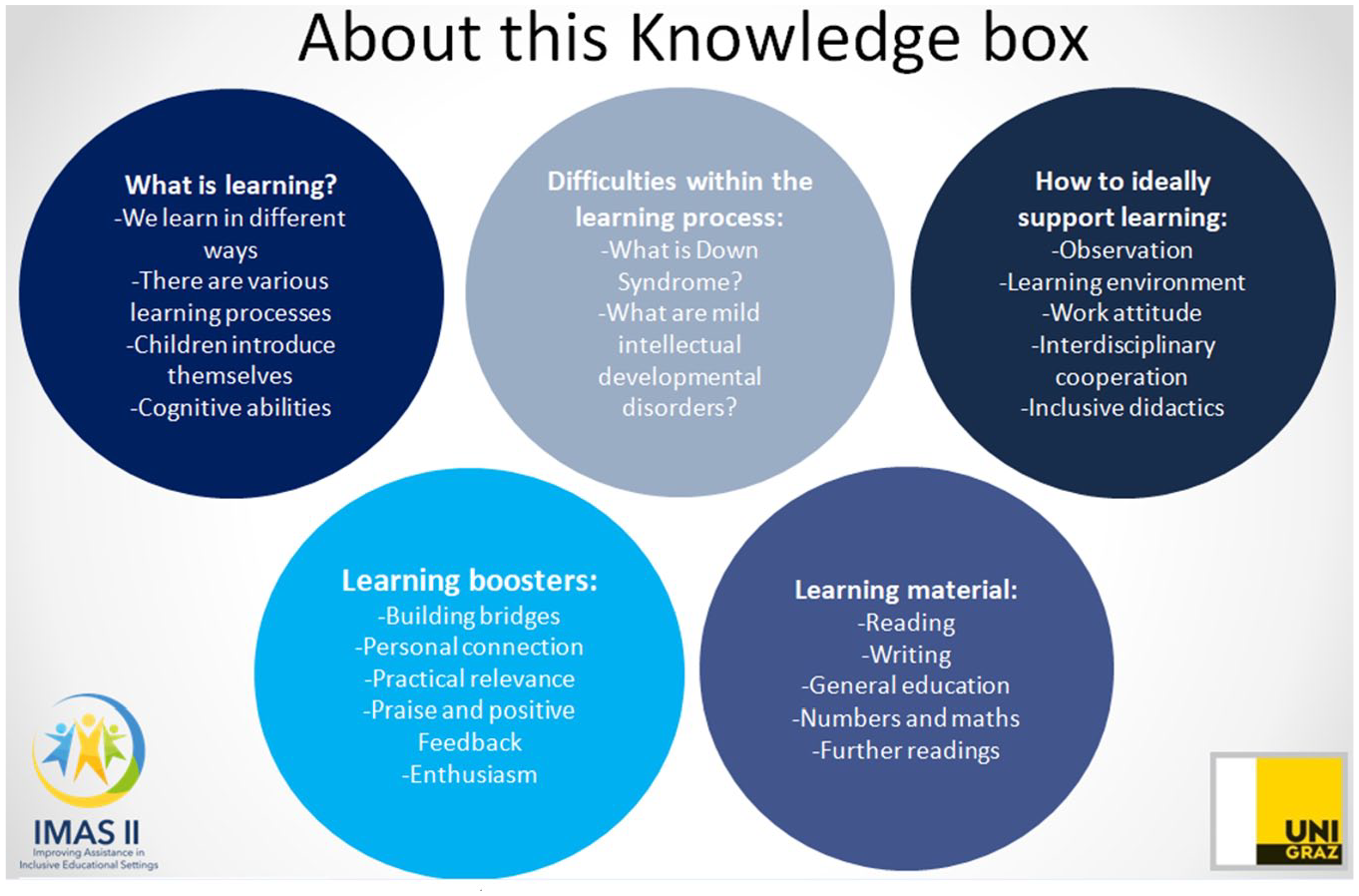
Overview of the structure of the knowledge box Cognition and Learning.
The third topic offers assistants useful tools and information to facilitate the provision of adequate support to children with different disabilities and to help in the practical implementation of inclusive education (Carter et al., 2009). The topic begins by focussing on the observational and diagnostic possibilities and offers various practical tools for use in diagnostic methods. The use of targeted observations during lessons, of short questionnaires or interviews with students, teachers or parents, is intended to help assistants identify the strengths and weaknesses of the child. Furthermore, how the findings are to be interpreted is also discussed, as are their implications for child support. In addition to providing the knowledge and methods needed by assistants in identifying and understanding children’s talents and difficulties, this process also enables assistants to derive concrete and personalised support measures for their further work with all children (Heimlich, 2016; Werning & Lütje-Klose, 2012).
Practical information, and the strategies and advice for dealing with challenging situations are also shown. This entails addressing various situations from assistant’s daily work as well as demonstrating how these situations may best be handled. Users of the knowledge box can also access interviews with assistants, teachers and parents if they wish to gain deeper insight into various perspectives. Furthermore, in order to enhance the competencies needed by assistants when implementing inclusion in their daily work, descriptions of case studies and best practices are also presented. These are specifically addressed in topics four and five. Finally, by means of various quizzes, users are invited to assess their understanding of knowledge box content.
Inclusion and perception of disabilities
The box Inclusion and Perception of Disabilities stresses the meaning of inclusion for the development and joint learning of children with and without disabilities. In this box definitions of the terms ‘inclusion’ and ‘disability’ with reference to the UNCRPD (United Nations, 2006) are provided. The historic development and the definitions of exclusion, integration and inclusion are also discussed (Ainscow et al., 2003). Additionally, examples of good practice in inclusion are shown in videos, images and texts, revealing how children with disabilities are included in lessons in regular schools. The experiences of parents, students with and without disabilities and of teachers are also explained. Various support models of learning, participation and independence are discussed. To visualise the terminology, cartoons and short video sequences are used and links to articles, films and other materials are provided.
Since the success of the inclusion of students in school depends on the collaboration between teachers, special educators, families and the school community (Giangreco, 2003), the box emphasises various forms of cooperation between assistants and teachers, parents and other educational staff. A respectful exchange is demonstrated with communication and feedback advice, and the importance of common planning and problem solving is stressed (Gerzel-Short et al., 2018). Finally, the roles of assistants are critically discussed and the importance of supporting the independence of the assisted child is highlighted (Webster et al., 2010).
Cognition and learning
The knowledge box Cognition and Learning is divided into five topics concerning the learning of children with mild intellectual developmental disorders (ICD-11: 6A00.0; World Health Organization, 2018). In order to offer insights into the complexity of learning processes and sensitise assistants to the various difficulties arising in children’s learning processes, the knowledge box starts with theoretical aspects of learning and learning processes.
The second topic focuses on the difficulties found in children’s learning and the relevant causes. Definitions of mild intellectual developmental disorders and Down syndrome are explained with respect to different scientific disciplines (medicine, sociology, psychology). Parents, teachers, assistants and children describe their experiences with children with a mild intellectual developmental disorder or with Down syndrome in videos and short texts. Moreover, children with disabilities describe themselves. In this way, different views are taken into account and the strengths of the children are highlighted (Heimlich, 2016). In addition, the causes of difficulties in learning and diagnostic measures are examined. In the presentation of diagnostic measures, interpretations of the observations are discussed in order to identify and understand difficulties in learning as well as to derive specific support measures adapted to the individual.
This is followed by presentation of various approaches to strengthening a child’s participation in class, and by practical advice on how to create a stimulating learning environment that promotes collaborative learning (Mitchell, 2008). This box also shows material for supporting children in reading, writing, mathematics and other subjects. In particular, child-specific, and visual materials are taken into account, which can be supportive for all children, particularly for children who have difficulties in learning (Werning & Lütje-Klose, 2012). As shown in Figure 2, the knowledge box points out visual materials that are available in most classrooms or materials that can be easily made by the assistant, together with the child, and without incurring additional costs. These materials can be used for example to support counting from 1 to 10. In this way, the child can develop a personal relationship to the self-made materials, which can strengthen a child’s motivation and increase his or her joy in learning (Heimlich, 2016).
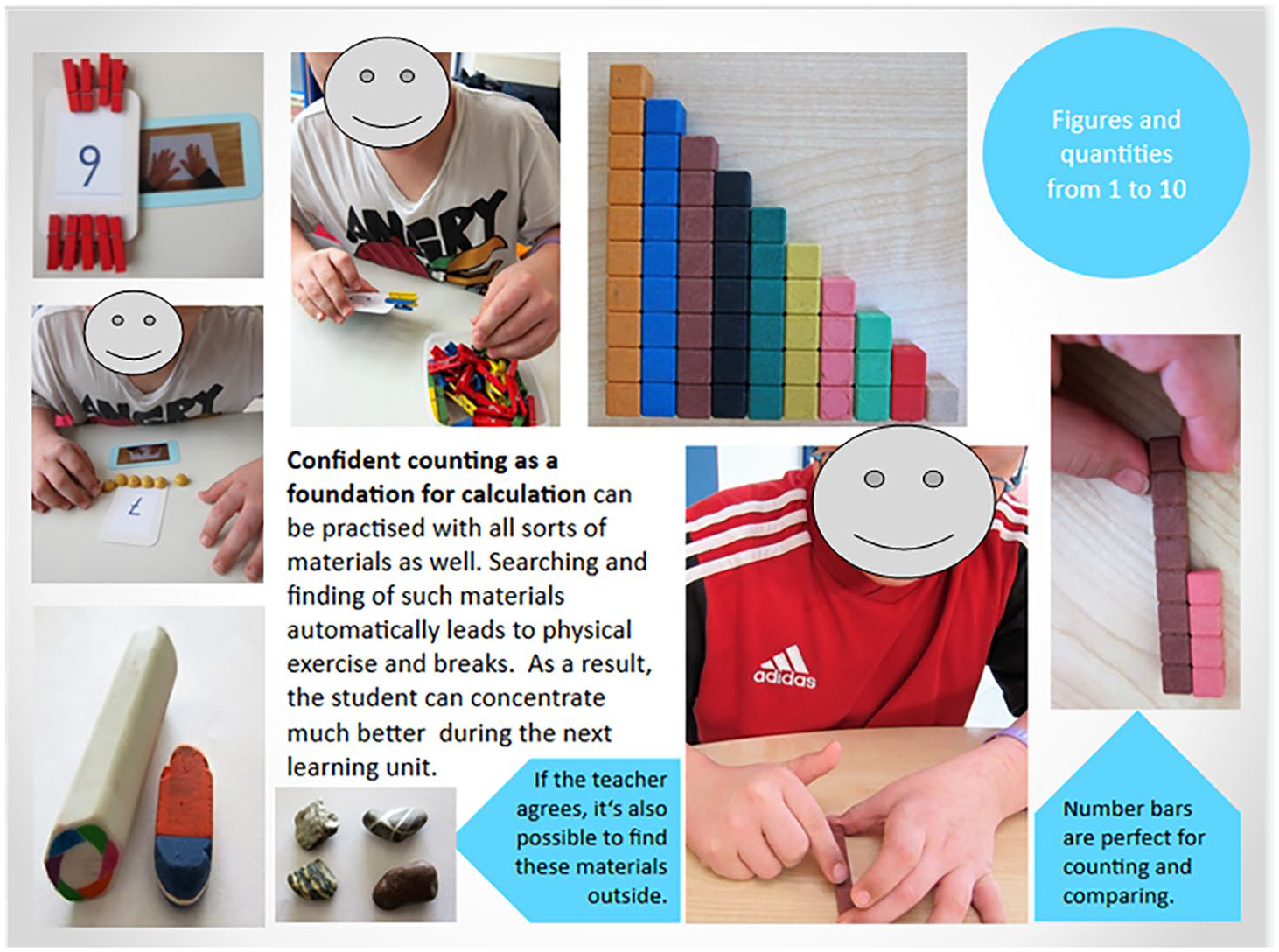
Visual materials to learn counting from 1 to 10.
Behaviour
The knowledge box Behaviour is also divided into several elements. In the first, the terms ‘Emotions’ and ‘Behaviour’ are introduced by texts for self-study and videos.
The second topic focuses on externalised behavioural disorders. Attention deficit hyperactivity disorder, oppositional defiant disorder or anxiety disorder are described in introductory texts and short videos. Definitions are provided, as is advice on the causes of these disorders and how best to deal with the term ‘disorder’ (American Academy of Child & Adolescent Psychiatry, 2019). Parents, teachers, assistants and children describe children with behavioural disorders in videos and texts. This helps the user gain deeper insight into various positions and types of experience. In addition, observational tools, as well as guidelines on their interpretation, are offered. Various approaches and strategies for supporting children with behavioural disorders are discussed through case studies, interviews with assistants, teachers and parents. There are also videos showing examples of good practice in critical situations, such as in the case of temper tantrums or aggressive behaviour. As students with behavioural disorders need more specific responses concerning their social interaction in the classroom (DuPaul & Stoner, 2014), self-management and feedback programmes, adapted to the individual child (see Figure 3), are also shown.
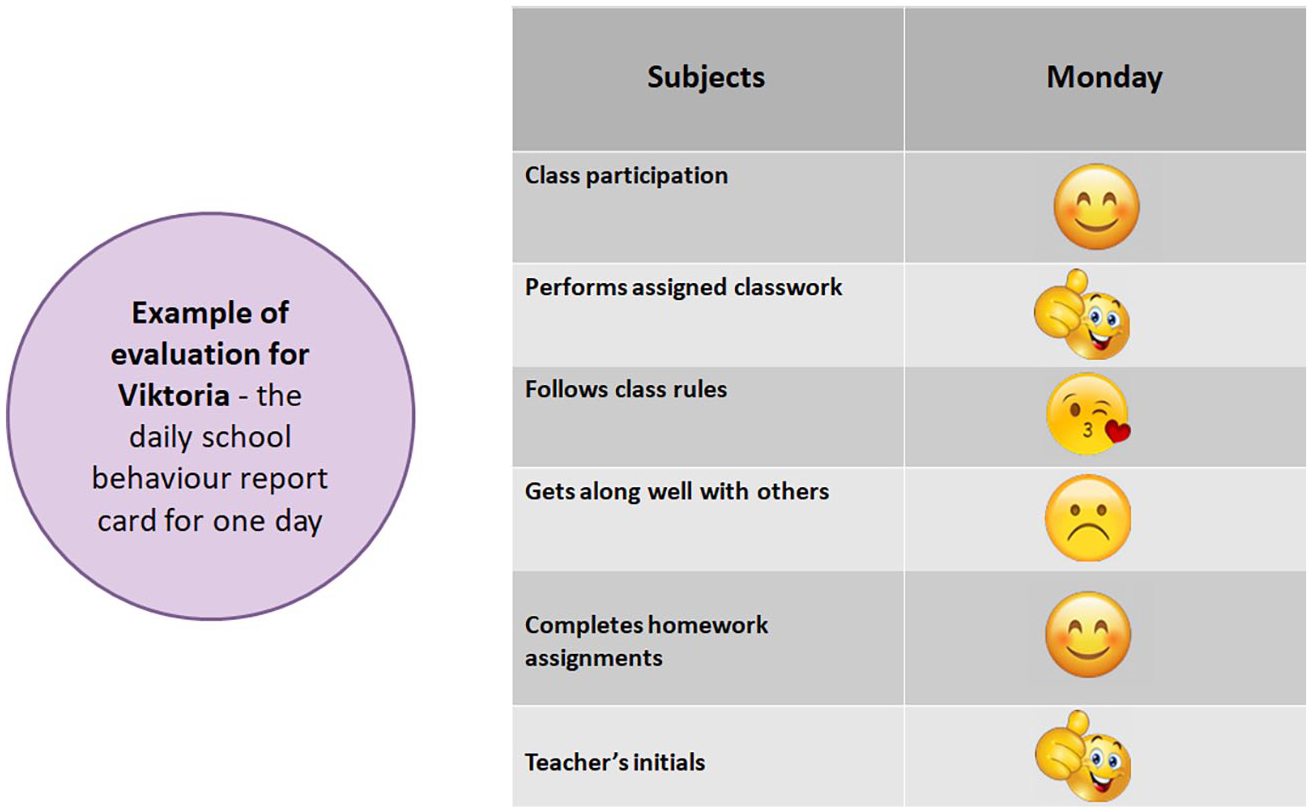
Feedback programme for children with behavioural disorder.
Communication and interaction
This knowledge box focuses on theoretical input and on practical examples relating to Communication and Interaction. The first topic discusses the differences between the terms ‘communication’, ‘language’ and ‘speech’ (Lüdtke & Stitzinger, 2015), and this is linked to additional relevant literature, open access articles and videos. Furthermore, different forms and functions of communication are described.
Owing to the various forms of communication used, difficulties and misunderstandings may easily arise. These difficulties are described in the second topic by means of power-point presentations and short articles. These explain how difficulties such as autism spectrum disorders, stammering, cluttering, selective mutism, articulation and phonological disorders, as well as expressive language disorders (Grohnfeldt, 2009), all influence the communication skills of children. This serves to strengthen assistants’ understanding of the problem and thus help them provide more appropriate support for the children. It is pointed out that while there are different ways of communicating, all forms of communication are equally valid and important (Department of Communities, Child Safety and Disability Services, 2011). Evaluation tools needed in identifying the specific form of communication used by the child, and in assessing the child’s communicative abilities, are also provided. Here, the focus is placed on the child’s engagement, and on his or her understanding of the conversational content and of the perspective of the conversation partner. Another evaluation tool is employed to assess gesture, facial expressions and body movements. These evaluation tools can help assistants observe difficulties in communication and thus allow them to respond appropriately (Werning & Lütje-Klose, 2012). The final topic describes important aspects of good-quality communication: creating a quiet environment with minimal background noise, using symbols, pictures or sign systems. Figure 4 shows an example of how visual support may be used to enhance communication. The result of a student’s participation in a class painting activity is also demonstrated. With a very simple table for communication, the student is able to choose the type of materials she/he wants to use (pencil, crayons or markers), to indicate the colour she/he wants to use, and to express the action she/he intends to perform (paint, draw or erase).
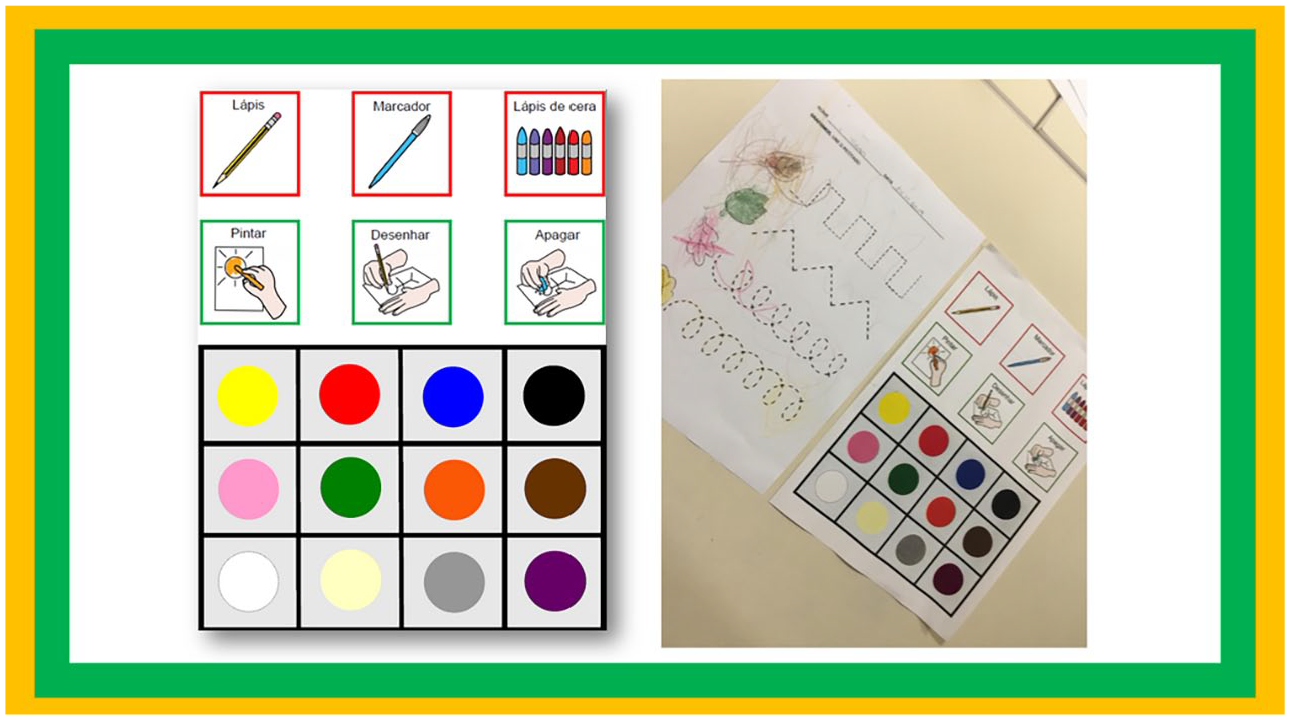
Practical example of using a visual support opportunity in a painting activity.
Physical and sensory impairment
The box Physical and Sensory Impairment initially provides definitions and descriptions of physical and sensory impairment. Thus, texts and articles for self-study are provided, as are links to further information on the diverse forms of such disabilities, their symptoms and their causes. The purpose here is to provide an introduction to the requisite terminology, and to the various types of physical and sensory disabilities, such as cerebral palsy, multiple sclerosis, Prader-Willi syndrome and congenital and acquired deafblindness. In addition, hearing impairments, such as deafness and hearing loss, are also explained.
The second topic provides advice on supporting children with physical and sensory impairment. This entails the use of relevant case studies, success stories and articles on the strategies needed to support the inclusion of children with physical and sensory impairments in regular schools. This topic contains useful practical tips on how to engage in respectful interaction with students with disabilities as well as advice on how to communicate with such children. The different possibilities for the use of assistive technology, such as apps or computer programmes, are listed and described. For example, it is pointed out that an assistive programme needs to allow for access to any curriculum, to provide decoding support, and to increase reading fluency.
In addition, the different learning styles for students with physical and sensory impairment are also discussed. The topic also explains how important it is to offer relevant new materials continually, materials which are tailored to fit the needs and interests of the child (Stahl, 2002). Furthermore, the knowledge box also uses video material (see Figure 5) to illustrate practical support measures, such as movement techniques, which may be used to strengthen the mobility of children with physical impairments.
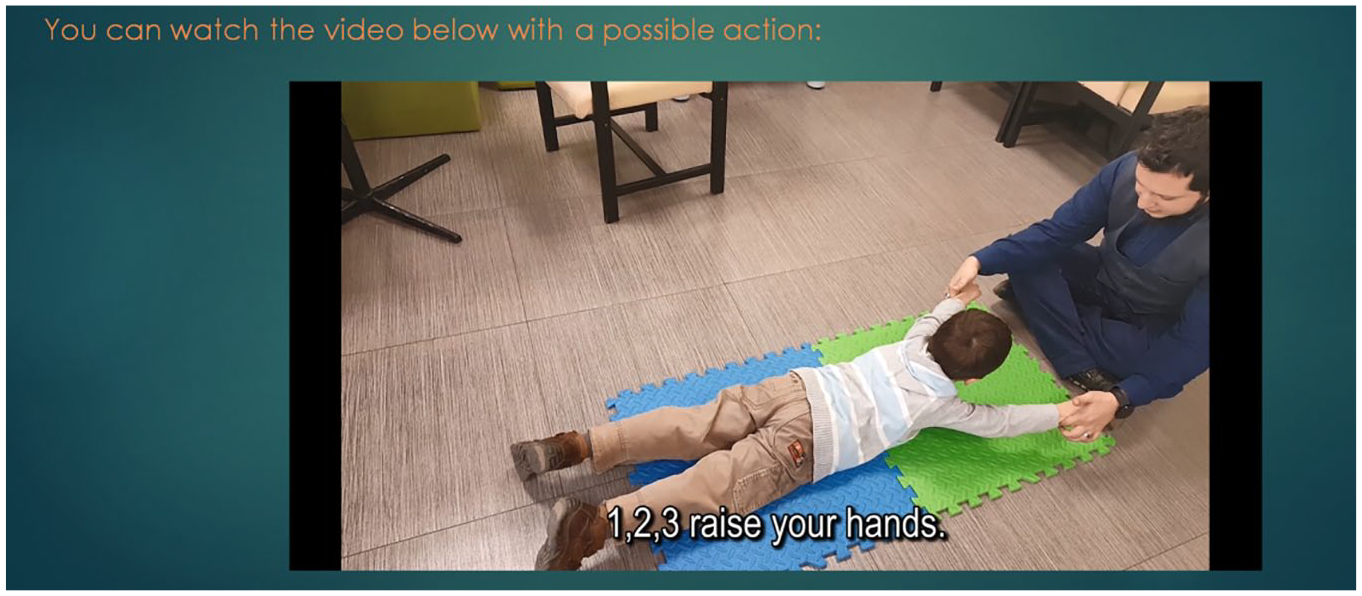
Video about possible activities for strengthening children’s mobility.
Current evaluation and expected results
After the knowledge boxes were completed, they were uploaded to an open access platform (D-Lot). They are now available for assistants across Europe and are to be evaluated in the near future. This allows us to investigate the impact of the knowledge boxes and, if necessary, to make targeted adaptations to their structure and the content.
In order to evaluate the impact of these boxes on the abilities and competencies of learning and support assistants, about 50 assistants per country will be asked to use the five web-based knowledge boxes in their learning activity and to implement their newly acquired knowledge and skills in their daily work. A quantitative evaluation by those assistants, who have made use of the knowledge boxes, by teachers working with these assistants and by the parents of children receive support, is planned in autumn 2020. This evaluation, from the perspective of assistants, teachers and parents, will allow for an assessment of the changes needed in the practical work of assistants. This applies not only to their interaction with students with disabilities, but also to their associated collaboration with teachers and parents.
In order to make such an evaluation possible, the participating universities have developed online questionnaires for the participating groups. The respondents are asked to give specific feedback concerning the content of the knowledge boxes and how use of the latter influenced daily work practice. The questionnaires also include standardised scales, such as ‘Teachers self-efficacy in inclusive education’ (adapted version by Breyer et al., 2019), the ‘My Thinking About Inclusion’ scale from Miesera and Weidenhiller (2018), the ‘Questionnaire on Teamwork (FAT)’ by Kauffeld (2004), and the scales relating to ‘Experiences with new media’ by Paechter et al. (2007). Several studies have shown that all these factors have a major impact on the support given to the assisted child (e.g. Bacher et al., 2007; Carter et al., 2009; Breyer et al., 2019; Webster et al., 2010).
All questionnaires have been translated into the five national languages of the partner countries and a sample of about 500 persons will assess the impact of the knowledge boxes from different perspectives. The social service providers will ensure that the requisite number of sample participants is reached. They employ various assistants in different schools who work with the teachers and parents of those children receiving support.
We expect that this evaluation will show that the use of knowledge boxes by assistants will expand the latter’s knowledge concerning the different kinds of disabilities and that it will help them improve their skills with respect to the inclusion of all students in regular schools. With respect to teachers, we expect to find an improvement regarding their collaboration with assistants and that they will perceive assistants as being more competent in supporting students. Finally, we also expect that parents will see assistants as being more competent in supporting their child. These results will contribute to the further development of the knowledge boxes and allow us to tailor their content more closely to the needs of children and assistants.
Conclusion
Learning and support assistants play a vital role on the path towards an inclusive educational system by supporting students with disabilities. Given that previous findings have shown that assistants can have a negative impact on the academic progress of students with disabilities (Webster et al., 2010) and that they can hinder peer interaction (Lindmeier & Ehrenberg, 2017), there is a clear and urgent need to provide adequate assistant training. The Erasmus+ project IMAS II has been designed to address this need and aims to prepare assistants for their work with children with different kinds of disabilities. With the development of five web-based knowledge boxes, we intend to expand assistant’s knowledge and to enhance their practical competencies in inclusive education. The boxes provide a flexible training opportunity, cover topics needed by assistants in their daily work and cover a variety of issues, such as the theoretical knowledge concerning disabilities as well as the practical advice needed when working with students. Four boxes relate to various forms of disabilities and one box contains general information about inclusive education and children’s right to education. Since assistants’ often lack appropriate knowledge concerning a number of disabilities (Carter et al., 2009), all boxes offer theoretical input as well as practical information.
In this context, it must be noted that the support of children by assistants is not intended as the be-all and end-all of inclusive education. In fact, ideally, an inclusive educational system should provide a supportive learning environment for all children without the need for additional persons to be assigned to a one child with disabilities. The process of transformation towards an inclusive educational system thus requires changes in school organisation and structure. Due to a lack of resources and appropriate qualifications teachers do not feel that they are sufficiently prepared for teaching students with different kinds of disabilities. Currently, learning and support assistants are seen as an important factor in granting all children equal access to education (Heinrich & Lübeck, 2013). It is hoped that the use of an open access tool for professional development will serve to support assistants in their daily work of helping children with disabilities in various tasks. It should also help promote classroom inclusion in such a way that children with disabilities are no longer excluded from their classmates and that they are strengthened in their learning process. Thus, the knowledge boxes described here may be viewed as a tool for improving inclusive education and thus as a means of ensuring the participation of all children in regular schools.
Before concluding, a few limitations and methodological constraints have to be mentioned. The knowledge boxes provide a complimentary and voluntarily training opportunity. The fact that training is not obligatory means that there is no guarantee that the knowledge boxes will in fact be used by assistants. In addition, in most countries, assistants do not have extra time for activities not directly related to the assisted child (Biggs et al., 2016). Thus, use of the knowledge boxes requires that assistants are willing to sacrifice some of their free time. In practice, this could serve to undermine the successful dissemination of the tool. Moreover, as the knowledge boxes only focus on specific topics, they may fail to cover other important issues.
Finally, the knowledge boxes still have to be evaluated thoroughly in order to investigate whether they are really helpful for the assistants, whether the content is sufficiently understandable, and whether further explanatory material needs to be supplied.