




Abstract
This paper explores the significant role of lived experience in shaping mental health advocacy and research initiatives in Indonesia, both now and in the foreseeable future. It offers a comprehensive examination of the author's journey as a mental health advocate, encompassing local and global contexts. The author's ongoing projects and their role as an advisory board member for various groups are discussed, highlighting the valuable insights gained from lived experience. Their roles include active participation in mental health user organizations, peer support, and mental health non-governmental organizations (NGOs). The paper also underscores the presence of mental health user movements and the active engagement of multiple organizations dedicated to advocating for mental health issues in Indonesia. These movements and organizations collectively work to address and enhance mental health concerns across the nation. Despite their valuable contributions, these mental health movements and NGOs face financial challenges due to the scarcity of government funding and the shortage of mental health professionals in Indonesia. The paper emphasizes the need for greater recognition and financial support for these organizations to strengthen the country's mental health services and advocacy.
I was born in Tulungagung, a remote district in East Java, as the youngest child in a poor family. 1 The regency, which has the same name, is mostly rural and houses just over a million people. In April 2024, Dhoho airport near Kediri, a neighboring city, started operating; it has several daily flights to Jakarta and other cities in Indonesia. Previously, one had to fly to Surabaya followed by a 5-h drive to reach Tulungagung. I attended elementary and high school in my hometown. I had always dreamed of becoming an English teacher and worked very hard to earn enough money to be able to afford the tuition fees at the local teacher's college. Even though my tuition fees were not high, it was still a struggle to earn enough money to be able to pay them. To make ends meet and to be able to attend classes, I worked night shifts at a paper factory—I attended classes during the day—which eventually left me in utter exhaustion. For some time, I was not able to do anything anymore. I became convinced that I would never be able to realize my dreams, which made me deeply depressed. Several neighbors told my parents that poor people like us should not cherish unrealistic dreams, because those dreams are inevitably thwarted. I was soon labeled “crazy”—my worst experience—and everybody in my village avoided me and no longer considered me human. One neighbor shouted the word “crazy” in my face. Soon after, I ran away from home, deeply embarrassed, but carried my sadness, depression, and stigma with me. Once I had become completely desperate and no longer knew where to go or what to do, I contacted my parents who came to pick me up.
When I returned, I was handcuffed by one of my neighbors who was both a close relative and a police officer. I was put in jail for three days, which was probably done to prevent me from running away again. Upon release, I was transferred to one of the local community health centers (puskesmas), where I was chained up for one month (see Figure 1). I was shocked and completely shattered: my dignity had been taken away. A local physician misdiagnosed me with schizophrenia without a proper medical examination. I felt deeply ashamed of being labelled crazy; it was deeply humiliating and disheartening and led to my condition becoming much worse. Later, when I had a manic episode, I ran away from home again, only to be shackled once again when I was admitted to the same primary health care center.
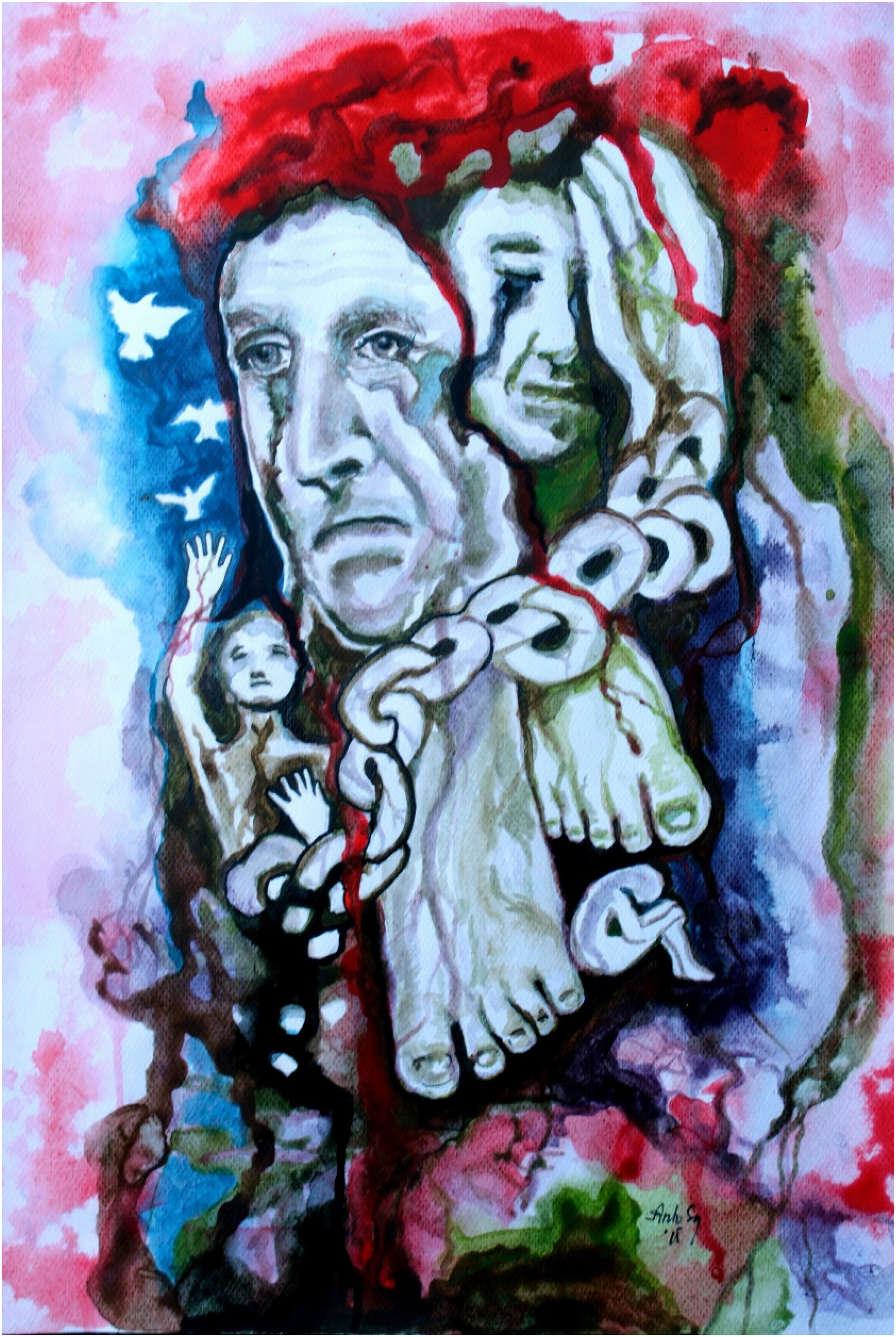
Pain in Shackles. My pasung experience was excruciating, torturing my body and soul. The pain was overwhelming, and I struggled to breathe under the weight in my heart. Freedom felt unattainable, and my cries for help went unnoticed. I conveyed these emotions in a painting, feeling utterly hopeless. Painting by Agus Sugianto, 2016.
Pasung
In Indonesia, the practice of restraining individuals with severe mental illness by chaining, shackling, or by placing their feet in large wooden blocks is called pasung. It is still practiced, mostly by people in small rural villages who might not be aware that their family member has a mental illness. Villagers generally put relatives in pasung to hide them from public view and to prevent occasional outbursts of violence and property damage. Unfortunately, chaining is still practiced in some hospitals, community health centers, and rehabilitation centers [panti rehabilitasi], which house homeless people. Pasung deprives people of their liberty and is a human rights violation. A report by Human Rights Watch (2016, 2018) entitled Living in Hell provides disturbing details. It estimated that 57,000 Indonesians have experienced pasung at least once in their lives, while over 18,000 individuals were in pasung that year even though the practice has been outlawed since 1997. In 2010, the Indonesian Ministry of Health launched the Indonesia Free from Pasung initiative [Menuju Indonesia Bebas Pasung] which has led to a reduction of pasung, but the practice still persists (Colucci, 2015).
Most people associate pasung with poor and remote villages inhabited by functionally illiterate people who have only received basic education or none at all. My experience demonstrates that this impression is wrong: pasung is practiced in health care facilities but also in the rehabilitation centers run by the Ministry of Social Welfare; unfortunately, there are no statistics available about its prevalence there. To me, being placed in pasung was deeply traumatic; it motivated my subsequent involvement in mental health advocacy (Colucci & Sugianto, 2020). Starting in 2010, I became actively involved in mental health advocacy and volunteer work through several mental health support groups, which had been founded in the previous decade and became increasingly active at that time (see Pols et al., 2019, pp. 211–277). In 2010, few people had the courage to discuss their experience with mental illness publicly, voice their concerns about the state of mental health services in Indonesia, and become mental health advocates based on their lived experience of severe mental distress and the treatment (or the lack thereof) they received. Today, in contrast, many individuals, especially younger ones, share their personal experiences of both through social media and by other means without much embarrassment. Despite the pervasive stigma associated with mental health issues in Indonesia (Hartini et al., 2018) which at times is exploited for political purposes (Prastyani, 2019), individuals with lived experiences are becoming increasingly present by sharing their personal narratives and advocating for change.
Eradicating pasung remains a significant challenge in Indonesia. The central government and most regency health departments are committed to eradicating the practice, although this commitment is not consistently translated into effective interventions. In some areas, mental health advocates working together with local health professionals have been able to make significant progress. For example, in Kebumen regency west of Yogyakarta, traditional healers (dukun) still use pasung. Until recently, local traditional healer mbah [grandfather] Marsio led an informal institution where inmates were chained. Unfortunately, there was a need for this institution, as people arrive continuously to drop off family members. In 2017, psychologist and anthropologist Ninik Mahar initiated several collaborative projects to support the inmates of mbah Marsio's institution (Hunt et al., 2023; Hunt & Guth, 2017), which included providing adequate food and medication, and releasing individuals from restraint. In addition, local government health workers and professionals associated with the local Department of Social Affairs have set up a partnership to end pasung in the region. Finally, an official institution has been established recently to house the former inmates of mbah Marsio's institution. The collaboration between health professionals and their colleagues in social welfare, the Department of Psychology at Gadjah Mada University, and various civil society groups was crucial in addressing and resolving this troubling situation.
Unfortunately, the Indonesian government's interest in and support for mental health remains inadequate. Over the last decade, Indonesia's Ministry of Health has allocated less than 1% of its annual budget to mental health; during the COVID-19 pandemic, there were voices to abolish its Directorate of Mental Health (Hunt et al., 2022). Because of the decentralization policies introduced after the fall of Suharto's dictatorship in 1998, the responsibility to provide health services has now been delegated to the Departments of Health in the regencies; there are no data available to indicate national mental health spending.
Art, recovery, and advocacy
Art has played a central role in my recovery. Starting in 2010, I have attempted to express my experiences and emotions to myself and the world by painting, writing poetry, and keeping a journal. It took some time, but I recovered, assisted by my family, village, friends, and colleagues. Physicians prescribed me the right medication for my condition, and I had psychotherapy. Of decisive importance was my willingness to accept my condition as an individual with a mental disorder. I came to accept my life as it was, despite being unable to realize my dreams. Over the course of a decade, I have persevered and realized my own recovery, which has been a long and challenging journey with many steps forwards, several setbacks, and the wonderful support of my family, friends, and other supporters. In my journal, in paintings, and in poetry, I have detailed my journey to recovery (Sg & Colucci, 2015), including how I struggled with mental disorder, battled stigma (see Figure 2), and was able overcome both and to embrace my life again. In 2016, I received the Jim Birley scholarship of the Federation Global Initiative on Psychiatry, which allowed me to travel all over Indonesia for my advocacy work. My first initiative was to organize a symposium on mental health in my hometown in September that year, the day after my graduation as an English teacher.
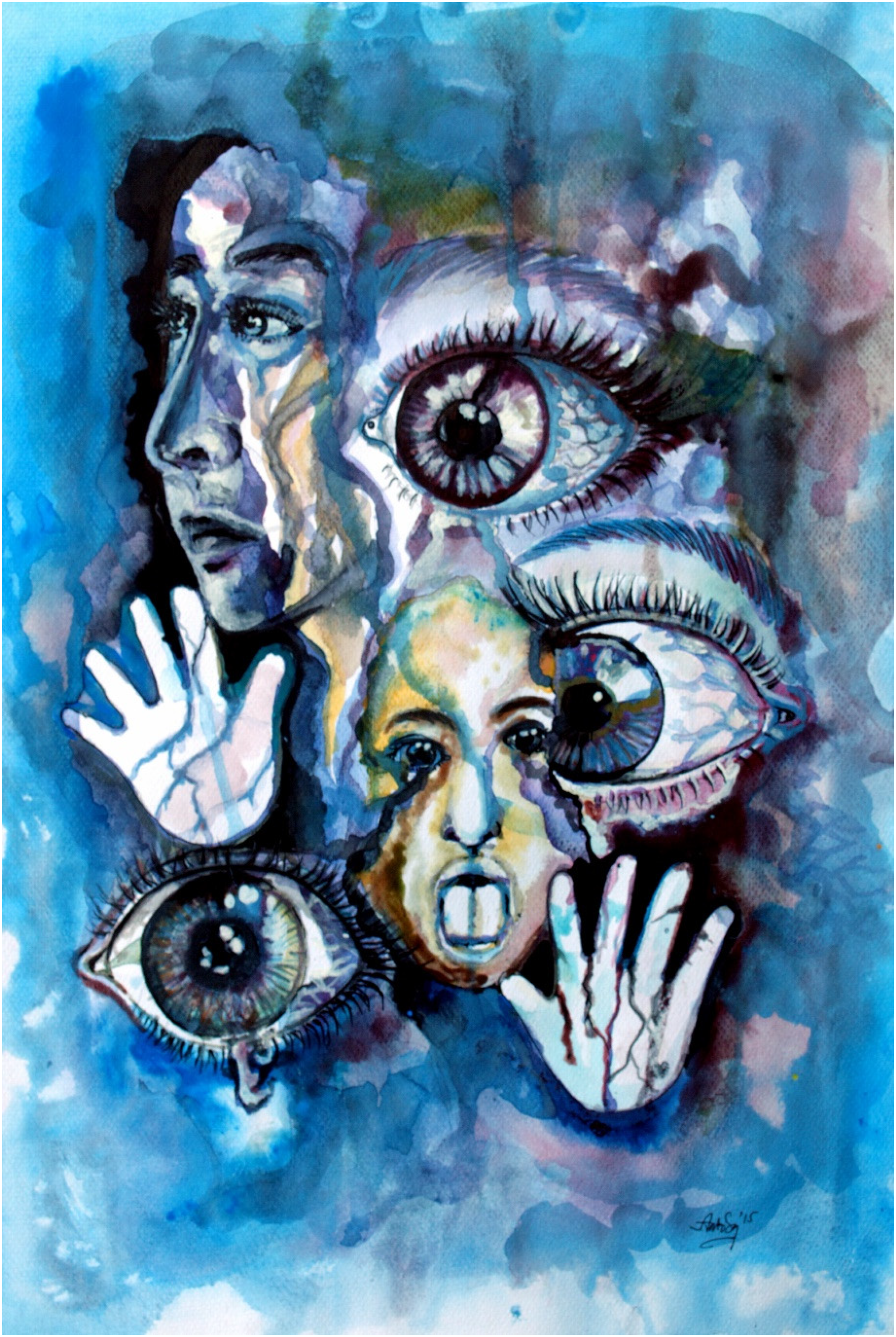
Stigma and Rejection. Painting by Agus Sugianto, 2016.
In 2014, I had invited the head of the district health service in my hometown to become involved in a mental health campaign. As a result, I was invited to speak to general practitioners and nurses, and shared my story of battling with mental illness, stigma, and recovery. They were very surprised that I had recovered, received my bachelor’s degree, paint, make batik, work as a mental health advocate, and have studied abroad, as they thought that people with mental illness never recover. I explained to them my bitter and difficult road to recovery, which resulted in them being able to see me as living proof that recovery is possible. This provided insights into the nature of mental illness and reduced their stigma towards it. Today, I am their partner in mental health education; we are currently planning several projects together.
Mental health advocates still have a lot of work to do in Indonesia. Many individuals who have experienced severe mental distress still experience being stigmatized. I have often felt embarrassed when sitting in the waiting room to see a psychiatrist: people have often given me strange looks. Someone once told me: “I am so sorry that you are crazy.” Most of us have to deal with this every day. At times, even health professionals utter unhelpful comments and express negative attitudes. The number of skilled and dedicated mental health professionals in Indonesia is very limited. Many general physicians—who work in puskesmas—do not know very much about mental illness and its treatment. I have visited several primary health care centers to meet physicians and nurses, which always turns out to be interesting. Many have thought that I had a psychosomatic disorder or schizophrenia, and asked me: “Do you still hear voices?” I was never diagnosed with schizophrenia. When I mentioned bipolar disorder, most did not know anything about it.
Over the past 25 years, several people with mental illness and their carers have banded together to establish groups to support individuals with mental illness, provide information about the nature of mental illness, advocate the cause of people with mental illness, and fight stigma. I became involved in several of these groups, in particular the Indonesia Schizophrenia Care Community (Komunitas Peduli Skizofrenia Indonesia; KPSI) and Bipolar Care Indonesia (BCI). I am also associated with mental health non-governmental organizations (NGOs) in Yogyakarta, Malang, Surabaya, Jakarta, and several other cities. Being involved in the activities of these groups requires considerable effort, partly because most of them have very small budgets and do not receive any support from the central and regency governments. These organizations aim to combat the stigma associated with mental health issues, support each other, and organize activities. Sharing personal stories is central (Lim, 2015). Undoubtedly, the lack of mental health professionals and mental health services and the stigma associated with mental health issues remain formidable obstacles to recovery, which affect individuals who have personally experienced mental health conditions (Putri et al., 2021).
Indonesian mental health advocacy groups
Over the past three decades, people with mental health issues and their carers have established several groups, associations, and non-government organizations to support each other and to advocate for expanded, better, and more accessible mental health services in Indonesia. I mentioned the KPSI and BCI above; three other ones are Into The Light Indonesia (ITL), Mother Hope Indonesia (MHI), and the Indonesian Mental Health Association (Perhimpunan Jiwa Sehat; PJS). These organizations work together with psychiatrists, mental health nurses, social workers, psychologists, academics, and many others to provide information and organize events. Near the end of 2022, Indonesia only had 1,212 registered psychiatrists, 3,189 clinical psychologists, and 1,014 mental health nurses for 270 million people (Hunt et al., 2022). Because of the severe shortage of mental health personnel, these mental health groups fulfill an essential role in supporting individuals with mental health issues. In Indonesia, 90% of people who experience mental health problems are unable to access the medical services they need, either because of shame or due to the absence of such services. The most important criticism that Indonesian mental health advocates have of psychiatry and mental health services is that there are not enough of them and that it is difficult to access them.
KPSI was founded by Bagus Utomo around 2001, after his family had dealt with the often difficult and challenging behavior of his brother who has schizophrenia (Utomo, 2019). After he searched for information about this condition on the internet, which was still in its early stages of development at that time, he found several websites founded by mental health support groups in the United States. In 2001. After translating the information he found into Indonesian, he set up a Yahoo email address and a website. Many people responded. As the community grew, it transitioned to a Facebook group in 2009. Members started to organize meetings, which fostered a strong sense of camaraderie and support. Today, there are local KPSI groups all over Indonesia with a total of around 90,000 members (Pols et al., 2019).
KPSI advocacy for a new legislative framework for mental health had far-reaching results. The Indonesian Mental Health Law was passed in August 2014 (Pemerintah Pusat RI, 2014) following extraordinary efforts by Nova Riyanti Yusuf, psychiatrist and at that time a member of Indonesia's legislative body, several professional associations in the field of mental health, and several mental health groups (Yusuf, 2014). KPSI's dedicated efforts and advocacy played a crucial role in recognizing and addressing mental health within the country's legal framework. This milestone has positively impacted mental health services and additional support systems, and brought greater awareness and improved services to those in need. The 2014 Mental Health Law has since been rescinded as it was superseded by the Omnibus Mental Health Law (Pemerintah Pusat RI, 2023), which was passed in 2023. It is not possible to ascertain the consequences of this new law on mental health as most additional regulations, which detail how it should be implemented, have not yet been formulated.
Vindy Ariella and Igi Oktamiasih, both survivors and fellow mental health advocates, founded BCI on May 27, 2013 with several likeminded friends (Ariella, 2017). Through its website, activities, and publications, BCI provides information about the nature of bipolar disorder and argue—and demonstrate—that individuals with bipolar disorder can live rewarding lives (see, for example, Panggabean & Rona, 2015). BCI organizes meetings and support groups, where members can connect and support each other. It emphasizes lived experience and survivorship; the group is run by individuals who have personally faced the challenges that are associated with bipolar disorder; they come together to share their journeys and provide understanding and encouragement to each another. This focus on peer support makes BCI a valuable and empowering community (Ariella, 2019). BCI organizes a large annual event on World Bipolar Day, which is held on March 30, the birthday of Vincent van Gogh who most likely had bipolar disorder. It also organizes events focusing on art and artistic expression.
I am actively involved with BCI. I already knew Vindy Ariella, one of BCI's founders, before this group was established. I have provided support for various peer activities organized by BCI; I was mainly engaged with BCI support groups in Yogyakarta and Surabaya. Vindy and I share a keen interest in drawing, painting, and other forms of artistic expression. Together, we have participated in several art exhibitions, art projects, and workshops that were held as part of broader mental health campaign projects. I have been invited as a guest speaker at several BCI events, which are normally held on World Bipolar Day and World Mental Health Day (October 4) to educate the public about the nature of this condition and to help erase the stigma associated with mental health issues.
In 2013, Benny Prawira and Reverend Stephen Suleeman, well known for his work with marginalized populations and his willingness to address broader social issues, organized a seminar on World Suicide Prevention Day (September 10) at the Jakarta Theological Seminary (Prawira, 2019). At the end of the seminar, attendees agreed that the issue of suicide needed to be addressed and support provided to individuals who were contemplating suicide. ITL was founded soon after as a youth-based community focusing on advocacy, research, and education on suicide, suicide prevention, and mental health. It has trained many volunteers through its Rise and Shine program; upon graduation, these volunteers are called Light Bringers. ITL has collaborated with various universities, local communities, NGOs, ministries, and other national and international organizations that share similar concerns. In 2019, it organized meetings with journalists and the Indonesian Press Council to change the rather sensationalized way that suicide was covered in the media. This led to several workshops during which the Press Council formulated guidelines on how to report on suicide (Prawira, 2020).
There still is much misunderstanding around suicide in Indonesia. Individuals whose suicide attempts were unsuccessful are often stigmatized, portrayed as attention-seekers, or perceived as lacking faith and courage. Furthermore, the reporting of suicide cases in the media often reinforces these misconceptions. Consequently, families affected by suicide are left to contend with unwarranted blame and harsh judgments. ITL's pioneering efforts in suicide prevention and education aim to challenge these prevailing misconceptions and provide support to individuals and families affected by suicide. Through advocacy, education, and community outreach initiatives, ITL strives to promote empathy, understanding, and effective support mechanisms for those impacted by suicide.
I became acquainted with ITL when I met Benny Prawira, its founder, when we both participated in a mental health advocacy leadership training program by the Indonesia Psychiatric Association and the University of Melbourne in 2015. Our roles in mental health activism became more deeply aligned when both of us became members of the lived experience advisory committee of an international collaborative project: the Research for Equity in Mental Health in the Asia Pacific—Digital (REMAP-D) Research Cluster of the University of British Columbia, Vancouver, Canada. This research project aims to advance community-engaged research, innovative approaches to knowledge exchange, and best practices for equitable mental health by focusing on digital technology (for one of the outputs, see Murphy et al., 2024). ITL has consistently highlighted the significance of research to guide prevention and support efforts, which I have come to appreciate myself.
In 2008, Yeni Rosa Damayanti founded PJS. It was the first organization in Indonesia founded and led by women with psychosocial disabilities. The group's primary goal is to advocate for the rights and well-being of individuals with psychosocial disabilities. It prefers to associate itself with various disability movements in Indonesia rather than with consumer movements in mental health. PJS addresses discrimination in the workplace, the right of everyone to vote, social housing, pasung and other human rights violations in both health services and mental health services. PJS has a national presence and has extended its reach nation-wide by establishing branches across Indonesia. Its commitment to promoting the rights and empowerment of individuals with psychosocial disabilities has made them a significant force in the country's disability advocacy landscape.
PJS and KPSI have collaborated on several campaigns—many PJS members are actively involved in KPSI as well. Together, they have seized numerous opportunities to advocate for mental health issues to the Indonesian government, engaging in meetings with the Ministry of Health and advocating to the Indonesian Parliament. Both organizations share common interests in mental health advocacy. PJS primarily focuses on policy advocacy, policymaking, and legal matters, while KPSI is deeply engaged in grassroots efforts aimed at supporting families, and individuals with mental illness and their caregivers, while advocating for better services, underscoring KPSI's unique role in Indonesia.
Consumer organizations have played and continue to play essential roles mental health advocacy, fighting stigma, and raising mental health and disability issues, thereby fostering greater awareness, support, and improved services for those in need. Their dedication and collaboration with universities, NGOs, and civil society groups have had many positive effects, leading to better mental health services and improving the human rights of individuals with psychosocial disabilities. KPSI and ITL have collaborated with universities to advance knowledge in the field. Indonesian academic institutions are starting to acknowledge the importance of involving lived experience voices in research and other activities, which is leading to more inclusive and comprehensive research efforts in the realm of mental health (see, for example, Brooks et al., 2019; Irmansyah et al., 2020; Susanti et al., 2024).
Unfortunately, these mental health advocacy groups lack sufficient funding, both from various levels of government and the private sector, which hampers their ability to carry out their essential activities. The recognition and financial support required by these NGOs remain elusive. One contributing factor to this predicament is the country's scarcity of mental health professionals. The shortage of qualified mental health experts has persisted for an extended period, presenting a significant challenge to establishing adequate mental health services. Consequently, the prevailing low-cost approach to mental health advocacy and support may further impede the government's allocation of substantial financial resources.
MHI was founded by Nur Yanayirah (Yana), an Indonesian pioneer in maternal mental health advocacy (MHIN, 2024; Tan, 2024). Yana has frequently shared her deeply personal journey of hope and resilience, which commenced when her dream of experiencing motherhood was shattered when she delivered a stillborn baby in 2011. This highly traumatic experience, compounded by the insensitivity of healthcare professionals, scarred her. Nightmares, flashbacks, and panic attacks plagued her subsequent pregnancy, which was fraught with several complications. Balancing these health challenges with her professional responsibilities became overwhelming. After the birth of her second child, motherhood did not deliver the joy she had anticipated; instead, she suffered from postpartum depression. Tears, sleeplessness, and a loss of appetite became her daily companions, driving her into isolation as she struggled to cope with feelings of inadequacy and despair.
Yana overcame these challenges and dedicated herself to providing support for women with similar experiences. In 2015, she trained with Postpartum Support International and founded MHI, which aims to support women and families affected by Perinatal Mood and Anxiety Disorders (PMADs) by providing safe spaces for discussion, assistance in accessing resources, and connections to health professionals.
Throughout her advocacy journey, Yana has encountered numerous obstacles. Traditionally, mothers are expected to be overjoyed after having given birth to their child; the stigma of reacting in a different way is huge. These personal challenges inspired the mission of MHI: it aims to provide hope and support while advocating for policy changes within the medical system and fostering awareness of post-partum depression. MHI has a substantial online presence; its Facebook page boasts over 58,000 members. The organization is currently supported by 200 dedicated volunteers from various educational backgrounds, including midwives and mental health professionals. It receives financial support from Postpartum Support International, the Indonesian Ministry of Health, local communities, and NGOs focusing on mental health. MHI has collaborated with mental health professionals, gynecologists, and midwives to develop training modules, videos, and posters. They have initiated several projects focusing on maternal mental health, which emphasize the involvement of fathers in parenting, men's mental health, family mental health, and the support that midwives can and should provide (see, for example, Ayunda et al., 2022).
Yana has been a member of the Global Mental Health Peer Network since 2021 and served as its chairperson for Oceania from August to December 2023. She is also the national coordinator for Postpartum Support International and has attended several training sessions focusing on developing social support networks and PMADs as components of care. She currently serves on the Steering Committee for the Global Health Research Group STAND Indonesia for Depression and Anxiety with the University of Indonesia. Yana's efforts have been recognized internationally.
Mental health advocacy, research, and training
One year after graduating (see Figure 3), in 2017, I joined the Center for Public Mental Health, which is part of the Faculty of Psychology at Gadjah Mada University in Yogyakarta. I worked there as a research assistant and continued my activities as a mental health advocate. I have been invited many times to give lectures, lead seminars, or run workshops at Indonesian colleges and universities. When I inform the audience that I have experienced pasung and that I am a person living with bipolar disorder, they are generally very surprised: they assume that all individuals with mental health issues are poorly dressed, unhygienic, irrational, and unable to make much sense. Very few believe that recovery is possible—once mentally ill, always mentally ill. Most consider us individuals with mental health issues as deeply troubled and very sick, and do not expect that our condition will ever change. Not surprisingly, many are deeply embarrassed about using medication to manage a mental health condition. Many people still think that mental health issues are the outcome of a lack of faith or a lack of gratitude towards God, thereby blaming affected individuals for their condition. In my presentations, I reiterate that this idea is wrong, harmful, and stigmatizing. Because stigmatizing ideas about mental illness are still very common in Indonesia, mental health campaigns and public health education programs continue to be urgent. This is one reason why I continue to be dedicated to my work as a patient advocate.

Agus Sugianto graduates as an English teacher from the Teacher’s College in Tulungagung in September 2016. Photo: Hans Pols.
In 2018, I received a highly competitive Australia Award Scholarship which enabled me to enroll in the Master of Health Promotion program at Deakin University in Melbourne, Australia from 2019 to 2021. The resources and insights I have acquired there have enriched my activism and mental health advocacy. I established meaningful connections with academics and mental health advocates from Australia and also gained a deeper insight into Australian culture. Geographically, Australia and Indonesia are close neighbors, yet it continues to surprise me that both countries know little about each other and that scientific, cultural, and other forms of exchange are minimal. During my study in Australia at Deakin, I was part of several international events and collaborative endeavors. For example, I became a member of the advisory group for an interdisciplinary research project entitled Together for Mental Health, which was initiated by Dr. Erminia Colucci who is at Middlesex University London (Colucci, 2018). This project uses visual methods to explore how health professionals, families, and both traditional and religious healers collaborate to enhance mental health, address mental health issues, and diminish coercion and restraint. It explored those issues in Ghana and Indonesia.
When I returned to Indonesia in 2021, I worked at KPSI's headquarters in Jakarta and further extended my advocacy efforts internationally. I realized that, in Indonesia, the marginalized voices of individuals with lived experience of mental health issues are still overlooked by mental health activists, and that hardly any mental health research takes their perspectives into account. Because I am convinced that initiatives in community mental health and mental health advocacy need to be based on research, and that this research needs to take the perspectives of individuals facing mental health issues into account, I realized that I needed to further enhance my research skills. I therefore resolved to pursue a PhD. I applied for a PhD position and was accepted at the University of Manchester, which also funds my studies. The PhD program at the University of Manchester has embarked on an innovative joint project with Universitas Indonesia, focusing on the critical research topic of mental health, specifically depression and anxiety in Indonesia. I enrolled in this program in 2023 with the aspiration of completing my PhD, driven by the hope of making significant contributions to mental health advancements, not only in Indonesia but also in global mental health advocacy.
Local, national, and international mental health advocacy
There are several international organizations that bring individuals who have had acute experiences of mental distress together for mutual support and mentoring, and to build capacity, strengthen their advocacy, and encourage research. One of these, the Global Mental Health Peer Network, was founded in 2018 by Charlene Sunkel in South Africa (Sunkel, 2021; Sunkel & Sartor, 2022). This network has become an international organization led by individuals with lived experiences of mental health conditions and promotes a recovery framework and person-centered approaches to mental health care. It is based on a human rights perspective, and advocates an integrated, holistic approach to mental health care, which takes medical, social, and cultural factors into account (for Indonesian conceptions of recovery, see Cohen et al., forthcoming; Stratford et al., 2014; Subandi, 2015; Subandi & Safitri, 2024). There is hardly any mental health research in Indonesia that takes the perspectives of individuals with mental health issues, such as Suryani et al. (2022). I first learned about this network through its founder, who had received the Jim Birley Award in 2015, a year before I did, and was invited to join in 2020 when studying in Australia. A year before I joined, Benny Prawira had become a member; later, Yana joined as well. The three of us have become global mental health advocates, working to promote awareness and support for those affected by mental health conditions. Through this network, I had several opportunities to contribute to several international mental health congresses.
Mental health advocacy groups in Indonesia have taken significant steps to advocate for mental health issues and to support individuals with mental health conditions (see Figure 4). Despite their important work, they face challenges, including the persistence of pasung and the lack of government funding. Recognizing the importance of mental health and providing financial support to these groups can help build a more substantial mental health infrastructure which will improve the well-being of those affected by mental health issues. Recognizing and funding these groups will bolster mental health services and contribute to reducing the overall burden on the country's healthcare system. One compelling reason for supporting these organizations is Indonesia's severe shortage of mental health professionals, which will persist for an extended period, thwarting attempts to establish sufficient mental health services (Irmansyah et al., 2020). Supporting them is cost-effective. As mental health services often require substantial financial resources, the low-cost approach adopted by these organizations proves to be an effective and efficient means of delivering support and advocacy.
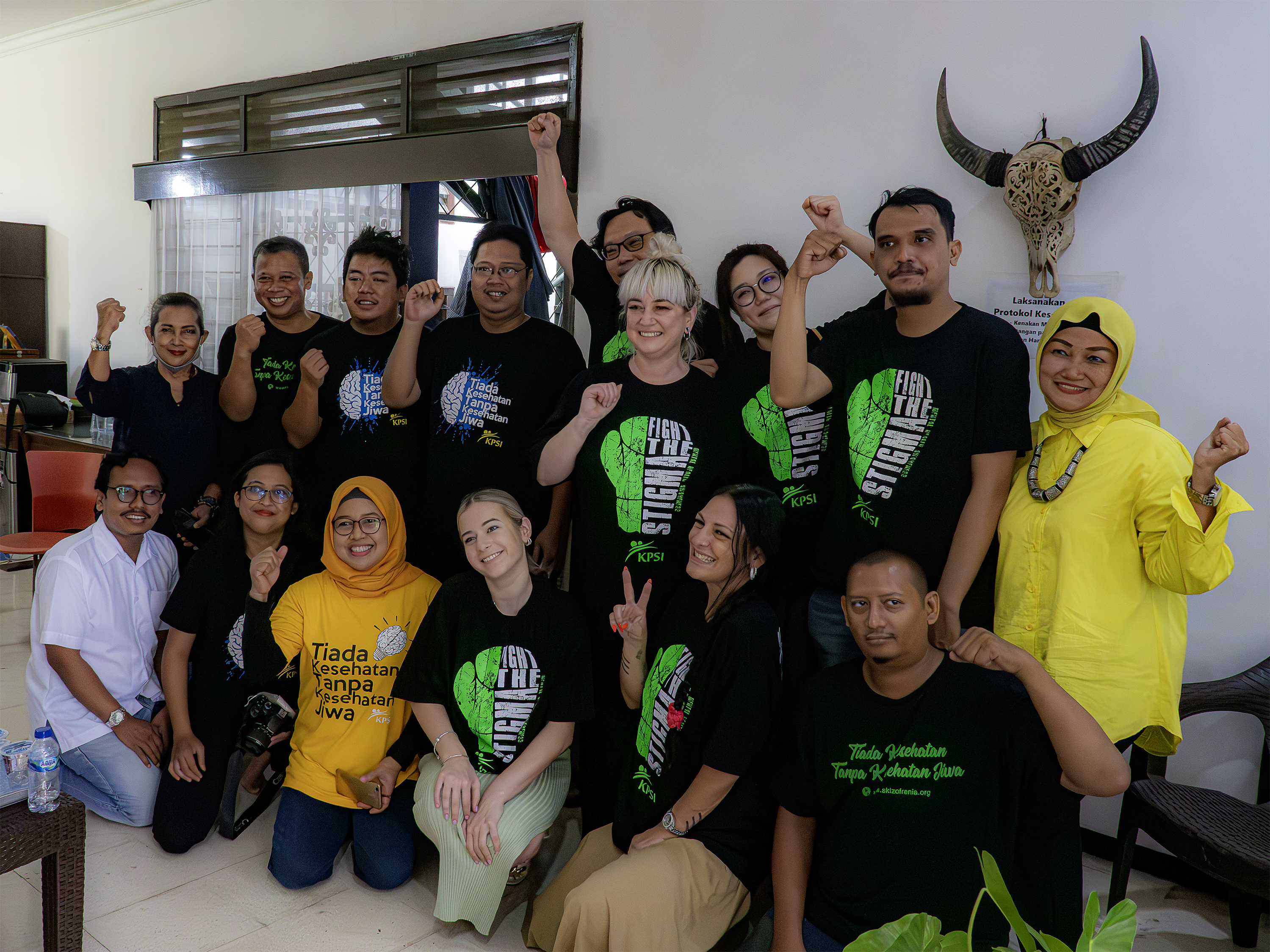
Four consumer advocates from Australia visited the headquarters of the Indonesia Schizophrenia Care Community in October 2022. On the left, in a white shirt and sitting on the floor: Agus Sugianto. The second person from the left standing up is Bagus Utomo. Photo: Hans Pols, 2022.
Conclusion
My own experience of recovery, combined with my active involvement with mental health advocacy and peer support groups in Indonesia, has enabled me to develop a deep understanding of mental health issues within real-life contexts in Indonesia. Many individuals experiencing mental illness and their families, friends, and other supporters lack adequate information and support to help them address these mental health challenges. Central to my aspirations has always been reducing the pervasive stigma associated with mental health issues. Individuals who have faced mental health issues and have recovered can provide powerful testimonies. Those who were once labeled and stigmatized can now confidently articulate their experiences, demonstrating that recovery is possible. For this reason, lived experience must play a central role in mental health advocacy (Brooks et al., 2019). People with a lived experience have learned immensely valuable lessons. When I decided to share my own experiences, I intended to help others. This enabled me to recover and preserve my dignity by acknowledging the unique challenges I have faced, demonstrating how my insights can benefit others in meaningful ways (Sartor, 2023).
My advocacy journey has been profoundly rewarding, but my personal life has brought even greater joy and fulfillment. In 2021, I met my life partner Siti, and we embarked on a beautiful journey together, culminating in our marriage. Our union was blessed with the arrival of our precious daughter Ziya, who has become the center of our world. This newfound completeness fills me with profound happiness and gratitude.
Footnotes
Declaration of conflicting interests
The author declared no potential conflicts of interest with respect to the research, authorship, and/or publication of this article.
Funding
The author received no financial support for the research, authorship, and/or publication of this article.
