




Abstract
Despite the universal nature of suffering, few studies have examined how Indigenous ethnic minorities in non-western regions understand and respond to adversity. This study explored the epistemology of suffering among the Temiar ethnic group of Peninsular Malaysia using participant observation and semi-structured interviews. Interview transcripts of 43 participants were coded through inductive thematic analysis and a consensual qualitative approach. Three-tier themes were defined and named after subsequent analysis of core ideas and domains in the data. Major adversities reported included a lack of basic needs, lack of land-rights and unjust treatment from authorities, destruction of the forest environment and livelihood, and lack of accessibility and facilities, which were attributed to authorities’ negligence of responsibilities, increasing human–animal conflict, environmental threats and imposed lifestyle changes. Faced with adversity, the Temiar endeavoured to survive by working crops and gathering forest resources. They utilized resources from family, fellow villagers, external agencies and spiritual–religious traditions. Theoretical mapping of attribution styles into the Ecological Rationality Framework revealed predominantly external-focused and concrete–perceptual rationalities privileged by strong-ties societies. These findings pointed to the resilience of a strong-ties community while adapting to the systemic suffering and risk factors stemming from a rationality mismatch with modernization and globalization trends. To conclude, we advocate for culture-sensitive mental health and psychiatric practices, as well as sustainable development for the well-being of Indigenous communities locally and globally.
Introduction
Globally, Indigenous minority groups experience unique challenges, such as land dispossession and displacement, as well as higher infant mortality and health risks compared with the general population (Arnold et al., 2014, Bailie & Wayte, 2006; Khor & Shariff, 2019). Given their culturally distinct and unique experiences, Indigenous worldviews and knowledge related to suffering may differ significantly from mainstream populations (Hart, 2010). Thus, exploring the cultural worldviews and knowledge of suffering of Indigenous peoples remains a fundamental aspect of effective mental health intervention design, implementation and psychological research (Kirmayer et al., 2016; Ting & Sundararajan, 2018).
As an intersubjective experience, suffering is a defining characteristic of the human condition in which individuals or groups endure or undergo burdens, troubles and wounds to body and spirit. However, the cultural meanings of suffering and how it is experienced differ across cultures and societies (Kleinman & Kleinman, 1991). Kleinman et al.'s (1978) explanatory model approach proposed that individuals hold culturally mediated beliefs regarding misfortune, illness and health. Although some mental health literature (Armenta et al., 2016; Brown et al., 2012) has studied the hardships experienced by Indigenous peoples in terms of the western framework of the Diagnostic and Statistical Manual of Mental Disorders (5th ed.; American Psychiatric Association, 2013), fewer studies have explored Indigenous worldviews related to suffering on their own terms (Vukic et al., 2011). Most studies of Indigenous worldviews have taken place with Canadian, American, Australian and New Zealand populations, and there is a paucity of research with Indigenous minorities in South East Asia. (Stephens et al., 2005; Thong et al., 2021). This is problematic because Indigenous cultural understandings of suffering are essential to inform current psychiatric understandings and the development and implementation of culturally safe and tailored psychiatric programmes and services.
Culture, worldview and mental health
Mental health is more than the absence of ‘mental illness’ or psychiatric disorder, and includes holistic well-being and the ability to cope with life stressors, work productively, realize one's abilities and contribute to one's community (World Health Organization , 2018). Given that culture is inextricably linked to mental health and well-being (American Psychiatric Association, 2013), it is vital to understand the distinctive experiences of mental health and illnesses of different ethnocultural groups (Marsella & Yamada, 2000). For instance, some studies have documented Chinese associations of ‘well-being’ with multisystem harmony and ‘disorders’ with relationship dysfunctions (Lam et al., 2012; Marsella & Higginbotham, 1984). Furthermore, culture-specific syndromes, such as Hikikomori in Japan (extreme social withdrawal) (Takenaka, 2020), highlight the importance of local categories, and concepts in the experience and expression of mental well-being.
To capture this diversity of experience, researchers have proposed the use of protocols involving semi-structured interviews and open-ended questions to eliciting of stories/narratives. Tools like the Cultural Formulation (Mezzich et al., 2009) and the McGill Illness Narrative Interview (Groleau et al., 2006) have emerged as methods to capture the language of suffering beyond the symptoms focused models of psychiatric diagnosis.
Worldview, which can be described as a collection of attitudes, expectations, values and stories concerning the world around us (Gray, 2011), plays a crucial role as a key mediator between cultural narratives and mental illness. Johnson et al. (2011) proposed six components of worldview, each influenced by culture: epistemology (what is known and how one may reason); axiology (values, morals); teleology (purpose/goals and the afterlife consequences of action); praxeology (social norms and sanctions of behaviour); ontology (existential beliefs); and semiotics (language and symbols utilized in describing the world).
Although past literature has explored Indigenous epistemological perspectives (Gélinas & Bouchard, 2014; Hart, 2010), few authors to our knowledge have discussed Indigenous praxeological concepts as represented in culture-normative, sanctioned actions and practices. This remains a gap in existing research, especially on the behavioural displays and embodiment of mental illnesses evident among many Indigenous groups (Kirmayer & Sartorius, 2007). In light of this gap, this study looked at the epistemology and praxeology of suffering within a particular hunter-gatherer Indigenous group in Peninsular Malaysia. We aimed to offer a starting point to systematically analyse their distressing experiences through a holistic biopsychosocial approach (Santos et al., 2018).
All cultures have an epistemology and corresponding knowledge systems (Okere, 2005). In the current study, epistemology was examined through the ways in which suffering is perceived and explained in the context of local knowledge systems. Praxeology (the typical practices, norms and sanctioned behaviours in a community; Fiske et al., 2002; Johnson et al., 2011) was explored by examining how help was sought in response to suffering. Previous literature has suggested that hunter-gatherer groups hold worldviews, including views about mental health and well-being, that may differ widely from dominant cultural worldviews held among western societies (Little Bear, 2000; Pichette et al., 1999; Walker, 2004). For instance, Little Bear (2000) pointed out that many Indigenous knowledge systems are holistic with an emphasis on action and process-oriented language. Meanwhile, from a praxeological standpoint, studies have suggested that Indigenous groups may maintain traditional cultural practices and philosophies that continue to guide their understanding and behaviour when faced with suffering (Poonwassie & Charter, 2001). The study of Indigenous perspectives of suffering, therefore, contributes to the documentation of varied ways of knowing and modes of wisdom in healing traditions. Exploring the diversity of worldviews around illness and suffering remains an unfinished task, particularly among Indigenous groups in South East Asia (Thong et al., 2021). Hence, the current research engaged in an emic study of the understanding of suffering in a hunter-gatherer group in Malaysia, with considerations of implications for global psychology and mental health practice.
Context of this study: The Orang Asli of Peninsular Malaysia
The Indigenous populations of Peninsular Malaysia are referred to as ‘Orang Asli’ (Indigenous people) and are considered the earliest dwellers of Peninsular Malaysia (Masron et al., 2013). With a population estimate of 146,412, the Orang Asli constitute three primary tribal groups – the Semang (Negrito), Senoi and Proto Malay (Aboriginal Malay) – and include 18 ethnic groups with varied ways of life and occupations (JHEOA, 2002; Rambo et al., 1988). Whereas most continue to practice their Adat (the local term used to collectively describe their traditions and spiritual beliefs), in which familial spirits are channelled through Sewang (song and dance ceremonies) for healing and blessing purposes (Roseman, 1993), some communities have embraced world religions, with approximately 20% converting to Islam and 10% to Christianity (JAKOA, 2018).
According to available statistics, approximately 76.9% of Orang Asli remain below the poverty line despite government poverty-reduction attempts, with 35.2% categorized as ‘hardcore poor’ (Department of Statistics Malaysia, 2010). Typical health issues include being underweight and stunting among children, with obesity and weight issues increasingly prevalent among adults (Khor & Shariff, 2019). Resettlement schemes and development have also led to lifestyle changes for the Orang Asli, affecting their livelihood, diet and culture (J. Abdullah et al., 2015). Thus, the Orang Asli of Peninsular Malaysia, similar to Indigenous peoples worldwide, endure an accumulation of problems with legal, health, religious, moral and welfare issues inflicted upon them by social, political, institutional and economic forces.
Although various health problems prevalent among Orang Asli have been documented in the medical literature (M. F. Abdullah et al., 2021; Chandren et al., 2015; Mohd Rosman et al., 2020), there remains a paucity of information regarding Orang Asli mental health and well-being. Although epidemiological data noted a national prevalence of depression at 2.3%, an equivalent of about half a million Malaysian adults (Malaysian Institute for Public Health, 2019), there is no mental health information specific to Orang Asli. Nevertheless, it is likely that the underutilization of various mainstream health-related services documented in other Indigenous populations (Alford, 2015; Wong et al., 2018) and issues of the cultural relevancy of mainstream mental health interventions are important issues (Vigil-Hayes et al., 2021).
Research aims and questions
This study aimed to explore illness experience among the Temiar (Masron et al., 2013). We addressed the following research questions:
What are the common ‘suffering events’ (as understood by participants) among Temiar people in this region? How do they explain their suffering events? What do they do to help themselves during suffering events?
Given that participant narratives of their suffering events were of primary interest in this study, consultations were held with Temiar cultural informants in the development and translation of interview questions; particularly in translation of the term ‘suffering’ to Bahasa Melayu, the local and common language of Malaysia. After initial consultations, the term kesusahan (suffering, hardships, difficulties) was deemed closest in terms of semantic and conceptual equivalence. Bahasa Melayu was used primarily as the common language between the research team and interviewees for engagement. The use of a shared language in the interviews enabled effective rapport-building and communication in the data collection process. However, for interviewees who preferred to speak in the traditional Temiar language, a local Temiar interpreter assisted interviewers with translation.
Method
Researcher's reflexivity and epistemology
I (the first author) initially acquainted myself with this study as a research assistant and subsequently as a doctoral candidate with research funding from a grant. As a female Malaysian of Chinese ethnicity, I started this research project feeling like an ‘outsider’ in initial interactions with the Temiar. This was also reflected in the pronouns that the Temiar used in our conversations in the first few field trips, such as the frequent use of ‘kamu semua’ (all of you people) to refer to ‘outsiders’ and ‘kami’ (us) to refer to themselves. Being a fully female interviewer team (consisting of the first, second, third authors and a research assistant) in a traditionally patriarchal society was helpful in giving the interviewers access to the women in the village who were typically very shy toward outsiders. Being Christian increased rapport with Christian Orang Asli. However, more typically I made repeated recordings in my journal describing the way in which many local people (particularly among the Traditional villages) looked upon our group somewhat warily, only venturing to speak if one of us initiated a conversation. These dynamics, however, improved over the duration of the study as our team became aware of a shift in relationship. The gap between us, as ‘outsiders’ slowly reduced. We were welcomed into houses to share meals during which villagers would initiate conversations on their own. Further on, during member checking sessions, we noticed that interviewees expressed themselves more openly and with less reservations, while other community members gave us gifts.
Listening to their stories, I (the first author) found myself looking for tangible means of helping through action and advocacy. This sentiment was shared by my research team. Realizing that Orang Asli parents struggled to purchase basic need items such as diapers and food for their children upon hospital admission, we partnered with a local organization to supply diapers for Orang Asli children at the local government hospital. The second author and I also connected food relief, hygienic kits and donations to these villages and families affected by the government-enforced COVID-19 lockdowns. We thus came to notice signs of mutuality in being accepted and began to gain access to the ‘insider’ perspectives of this community.
Ethical considerations
Ethics approval for this research project was obtained from Monash University Malaysia's Human Research Ethics Committee. Permission was also received from the Department of Orang Asli Development (JAKOA), the local Malaysian government agency entrusted to oversee the affairs of the Orang Asli. Given that most interviewees were unable to read or understand English, the explanatory statement regarding the research project was translated to the common Malay language and verbally presented by interviewers. Verbal permission was obtained for participation as well as for audio or visual recording. Permission to display interviewees’ faces in video recording was sought, with some faces being obscured to protect privacy and ensure confidentiality. These recordings were used for transcription of the interviews and for the purpose of member checking (Busetto et al., 2020) with the local community during the debriefing session. We created a brief 10-minute debriefing video to summarize the findings in concrete language and shown to the interviewees, featuring their voices. Then, to increase the trustworthiness of the qualitative coding, we invited them for input by asking questions: ‘Which part of this is most interesting to you? Why?’; ‘Any part of the video surprises you? Why?’; ‘Do you agree with our themes for your stories?’; or ‘Is there any part of the result you would like to change/add/remove?’. Their answers were then recorded in focus group. to help us reflect on the findings and amend them.
Setting and participants
The study took place between 2018 and 2020 over seven field trips in the Pos Kemar Resettlement area in Ulu Perak (Figure 1). Participants were from the Temiar subethnic group, one of the largest of the Orang Asli ethnic groups in Peninsular Malaysia who reside in the remote interiors of the Perak, Pahang and Kelantan states (JAKOA, 2018).
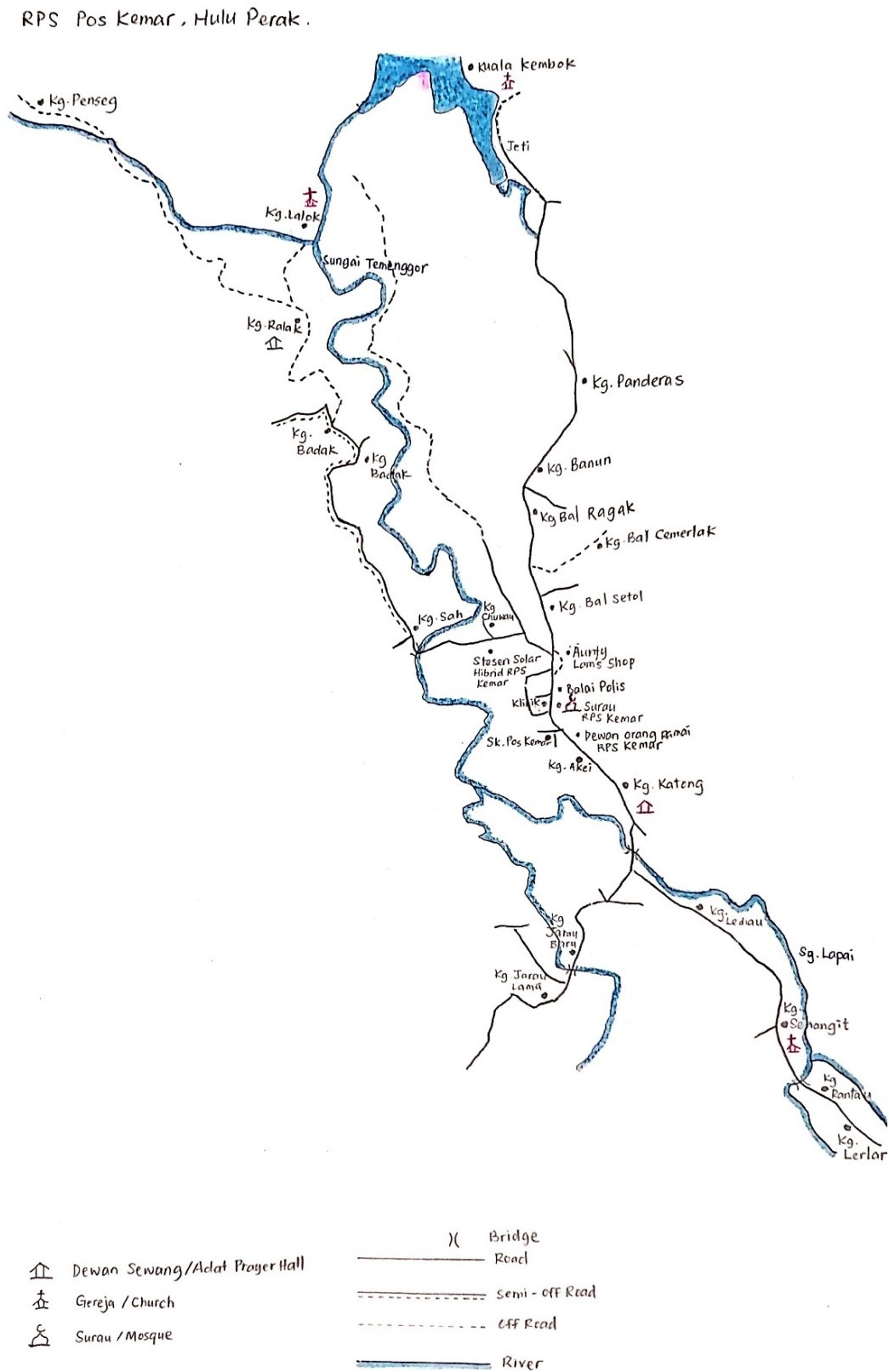
Authors' hand-drawn map of the fieldwork community.
Procedure
We adopted a qualitative anthropological and psychological methodology, emphasizing first-person viewpoints and narratives in the exploration of local suffering experience (Kral, 2014; Ting & Sundararajan, 2018). We also used participant observation, maintaining a journal of personal experiences during and immediately after fieldwork. Initial field visits and cultural immersion enabled researchers to identify cultural informants (three local Temiar individuals) and provided researchers with avenues for rapport-building. Following initial field visits, three main religious communities (Traditional spirituality, Christian and Muslim) were identified among the villages in Pos Kemar. Hence, these religious populations were taken into account during the recruitment of representative participants for this study.
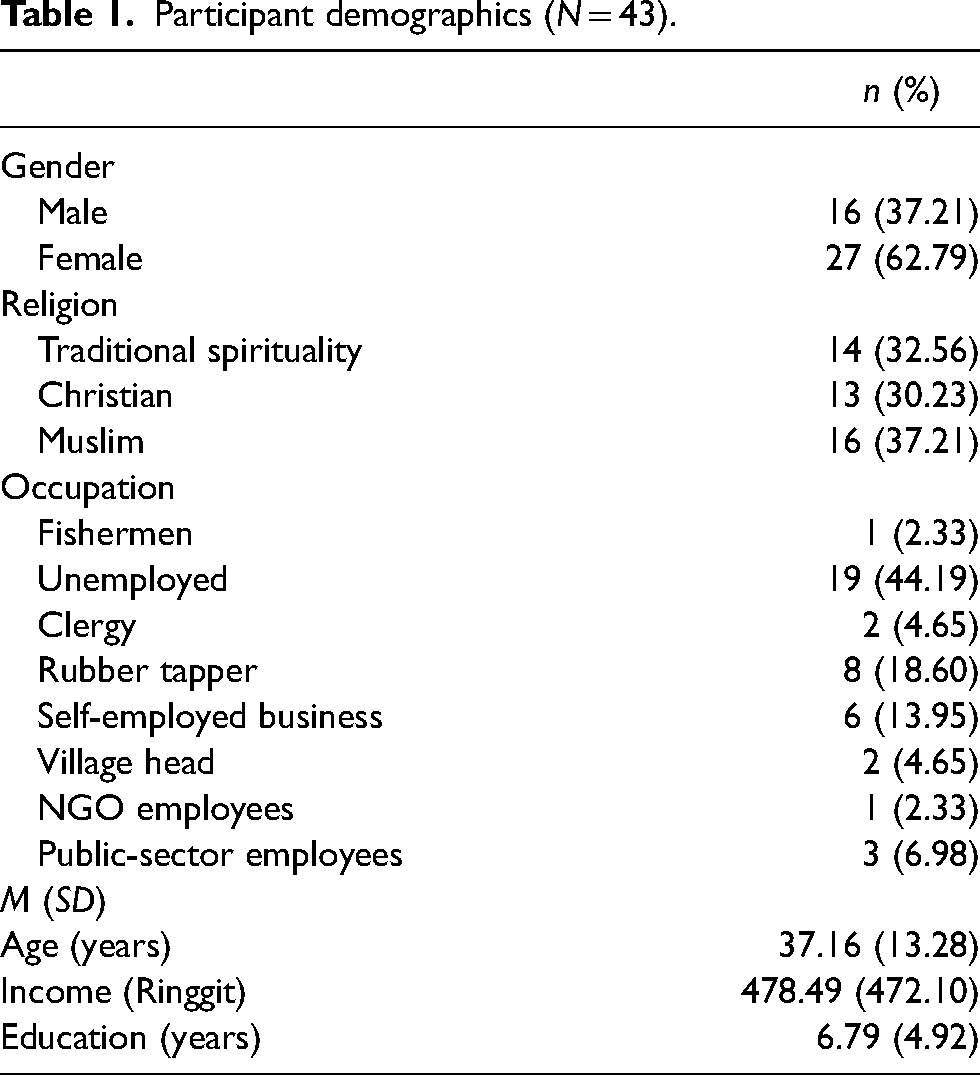
Semi-structured interviews were conducted with 43 individuals (for demographic information, see Table 1 below) recruited through snowball-sampling or introduced to us by our local cultural informants who were identified during our initial visits to the field. To build rapport and trust, we approached interviewees through first sharing a summary of the research project and our interest in their viewpoints in the local language. Interviewees who were Temiar, 18 years old and above, and were able to tell a story of personal suffering (past or present) were recruited. The following interviewer guide with open-ended questions was developed based on consultations with cultural informants:
Could you share a story of suffering or adversity that you have gone through (or are going through right now)? Prompts: What happened then? What happened next? What other events did you experience? How long ago was this? Anything else you can think of? What might be an explanation for this suffering/adversity? (What other explanations/reasons?) Prompts: Why did this happen? What might have caused it? Anything else you can think of? What did you do to help yourself? Prompts: Who was helpful for you? What else helped? How was that helpful to you? What else did you do at the time?
Participant demographics (N = 43).
Interviews were administered by the first and third authors (assisted by a research assistant) who were fluent in Malay, the common national language. Interviewers were trained in semi-structured interview techniques. Interviews were 20–60 minutes in duration and conducted in locations according to the interviewee's requests. In the interest of being led by the interviewee's narratives, interviewers also allowed for extra time to listen to interviewee's elaborations of their narratives.
Table 1 shows that the average household income was RM478.49 per month (equivalent to roughly 110 USD) and hence categorizable under ‘hardcore poor’ according to Malaysia's national poverty standard (below RM 1,169 per month, equivalent to roughly 263 USD) (Department of Statistics Malaysia, 2019). The average education was less than 7 years, with most interviewees having left school before secondary education. Interviewees were selected from the three primary religious communities in the resettlement area, representing Christianity, Islam and Traditional spirituality.
Data analysis
The same interviewers also acted as coders for the transcripts (first and third authors with help from a research assistant). We followed a consensus coding process with further evaluation by an auditor (RTSK, second author) for internal consistency. Interview transcripts were coded through inductive thematic analysis (Braun & Clarke, 2022) and consensual qualitative approach (CQR) (Hill et al., 1997) as represented in the phases of qualitative coding as follows:
Familiarization of data: data was read several times by the three independent coders (repeated reading technique; Braun & Clarke, 2022). Initial coding: generation of multiple viewpoints from the three independent coders. Search for themes: consensus among the three judges in reaching unified judgements on the meaning of the data. Any disagreements were resolved through further discussion and evaluation between the three coders and the auditor. Review of themes: evaluation by an auditor for the purpose of internal consistency. Definition and naming of themes: cross-analysis of domains and core ideas in the data (Braun & Clarke, 2022). Reporting: development of thematic tables and analytic report.
Member checking was used to confirm our findings’ credibility regarding interviewee narratives (Creswell & Miller, 2000). Considering the low literacy of our interviewees, member checks were done via the presentation of debriefing videos, produced by the research team, based on themes generated (with interviewee excerpts) from each of the religious groups. After showing the video, additional information was solicited from the interviewees (e.g. agreement with themes, which themes should be emphasized, and any further comments). The following findings were confirmed based on their feedback.
Findings
According to thematic analysis, personal events associated with suffering were summarized in seven categories: (a) lack of money for basic needs; (b) a lack of land-rights with unmet government welfare promises; (c) destruction of their forest environment and livelihoods; (d) lack of accessibility and facilities; (e) death and physical illnesses; (f) family and marital issues; and (g) interpersonal difficulties (Table 2).
Themes of suffering events (N = 43).
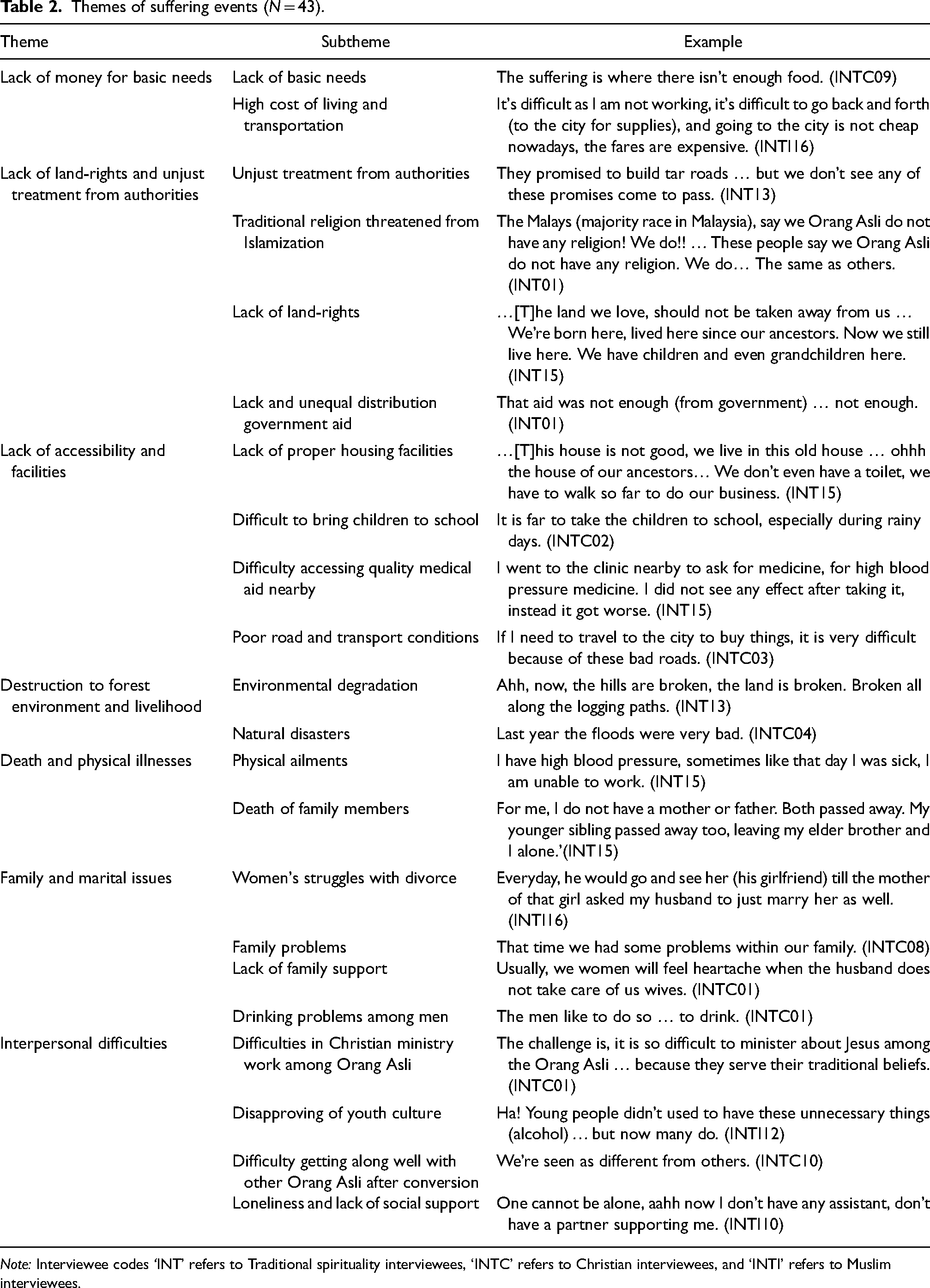
Note: Interviewee codes ‘INT’ refers to Traditional spirituality interviewees, ‘INTC’ refers to Christian interviewees, and ‘INTI’ refers to Muslim interviewees.
Explanations of suffering
Explanations of suffering included: destruction of forests leading to environmental threats; human–animal conflict and lack of resources; authorities’ neglect of Orang Asli land-rights; development and welfare; lifestyle and value changes; insufficient work and economic opportunities; spiritual reasons; and personal weaknesses (Table 3). The top ranked themes that were reported by more than 50% of participants are described in subsequent sections.
Themes of explanations of suffering (N = 43).
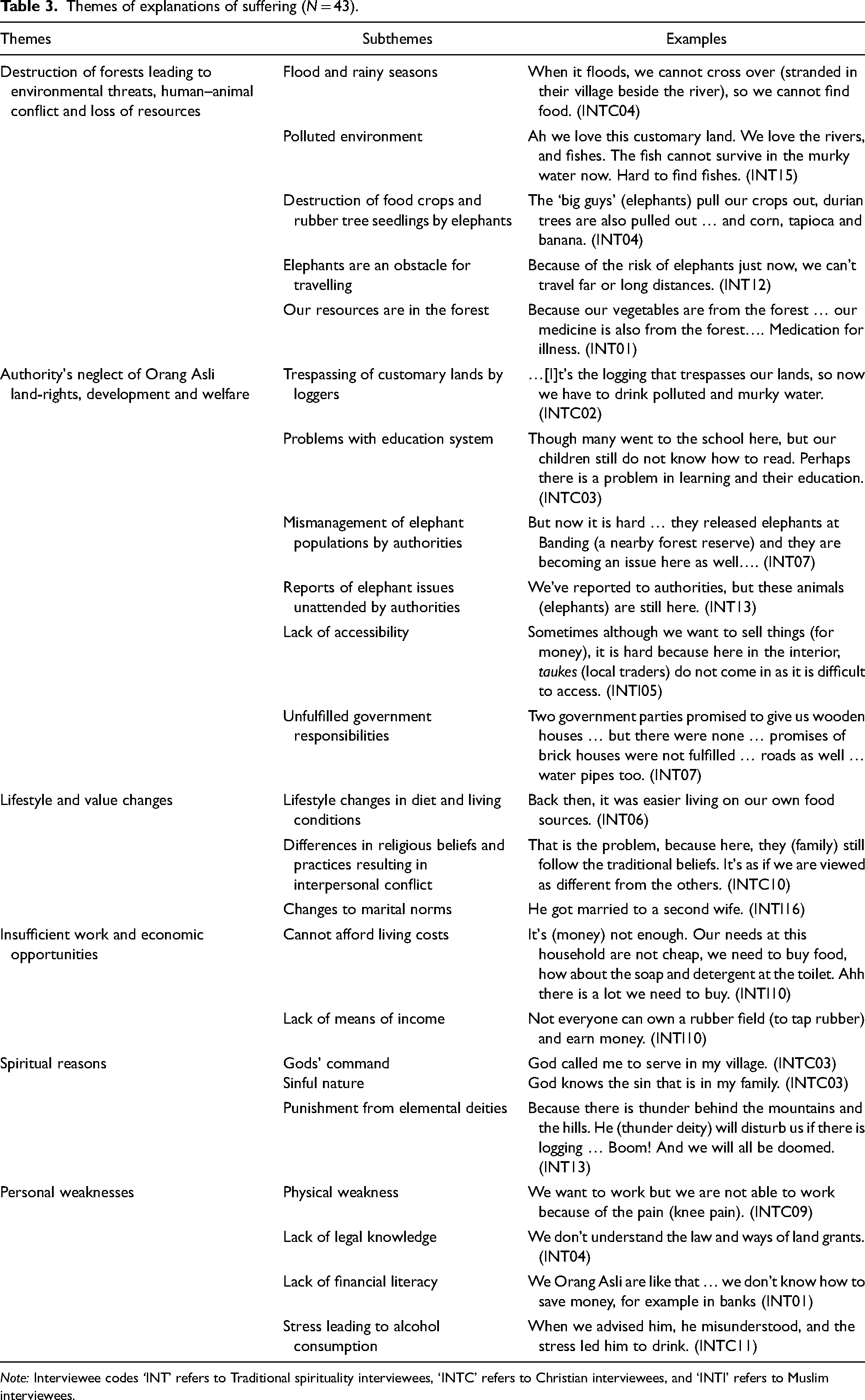
Note: Interviewee codes ‘INT’ refers to Traditional spirituality interviewees, ‘INTC’ refers to Christian interviewees, and ‘INTI’ refers to Muslim interviewees.
Destruction of forests leading to environmental threats, human–animal conflict and loss of resources
Participants explained their suffering through the destruction of their forests, which in turn led to environmental threats, human–animal conflict and the loss of their traditional forest resources, ‘Because our vegetables are from the forest … and our medicines are also from the forest … medications for illness’ (INT01). Many described how their livelihoods were deeply impacted by environmental pollution: ‘Ah we love our customary land. We love the rivers and fishes. The fish cannot survive in the murky water now. So, it is hard for us to find fishes now’ (INT15). This included problems with pollution of drinking water, ‘Murky, the water is now all murky. This is the river that we drink from, it flows from the top of the hills’ (INT15). Participants also described a vulnerability to environmental threats such as flooding and extended rainy seasons, ‘When it floods, we cannot cross over (stranded in their village beside the river), so we cannot find food’ (INTC04). Daily hardships were also explained by the increasing human–elephant conflict, ‘The “big guys” (elephants) pull all our crops out, even durian trees are pulled out … and corn, tapioca, and banana’ (INT04). Elephants in particular, often invaded villages for food, ‘The thing is, these elephants, these elephants take everything, how then can we eat? (INT06). Another referred to his loss of 20 precious rubber seedlings to elephants, ‘Yes, we work. Plant and sow! But no, it is all eaten up … Then we replanted everything … And yet again nothing is left, everything gets eaten up … This is a true story. Back then, we were able to eat … but now, it is all just useless labour’ (INTI11).
Authority's neglect of Orang Asli land-rights, development and welfare
Among participants, suffering was mainly explained through government and local authorities’ neglect of responsibilities and unfulfilled promises regarding the development and welfare of the Orang Asli. ‘We are not satisfied with the promises about the development of us Orang Asli … they promised us wooden houses, brick houses and water pipes, all these promises were not met with’ (INT09). The lack of proper housing, roads and other basic facilities were also linked to a dereliction of government responsibilities and incomplete projects, ‘About these promises [from the government] we feel dissatisfied. It is difficult for us to progress. Two government parties promised us wooden houses … but there were none … promises of brick houses were not fulfilled … roads as well … water pipes too’ (INT07) and ‘Here we were supposedly allocated 30 houses, but these 30 houses were never built, so it was our loss’ (INT09). Many others shared similar sentiments, particularly those who recollected government-initiated resettlement plans, which had been enforced with promises of development and welfare aid for the involved Orang Asli communities.
Explanations for the sharp increase in human–elephant conflict included mismanagement of elephant populations by local authorities with an influx of ‘newcomer’ and ‘foreign’ elephants believed to have been released by wildlife agencies in nearby forests. ‘But now it is hard … they’ve been releasing elephants at Banding (a forest reserve close by to the Orang Asli resettlement area) and it is becoming an issue….’ (INT07). Others referred to unattended reports and complains, ‘In the past, during our ancestors’ time there were none of such elephants. There were only a few (elephants), but those were local and lived in the hilly areas. However, now the animals have run out and are all over the hills and mountains… We have already reported this to authorities, but these animals are still here’ (INT13).
Participants also described obstacles for education including the lack of geographic accessibility to schools. For instance, many Orang Asli have to walk or take motorcycles with their children to school early in the morning. Interviewees reported the additional challenge of fearing to leave their houses too early in the morning due to the risk of encountering elephants. ‘If close to 4, 5, 6, 7 in the morning, sure we are afraid that these beasts will still be out and about; at the roads there are many’ (INT13). The poor condition of existing roads also often makes it dangerous to attempt the route to school during rainy days. Others noted that education at schools tended to be ineffective for their children as many children were still unable to read and write, ‘Many went to school here, but our children still do not know how to read, maybe there are problems in learning and education’ (INTC03).
Lifestyle and value changes
Temiar have experienced notable shifts to their lifestyle and values such as changes in their marital norms and religious practices. Participants also attributed their kesusahan to changes in diet and living conditions. In narrating his struggle with lack of money for basic food needs, an interviewee explained: Back then, we didn’t eat this white rice, no we ate tapioca … jungle tapioca, that is what we ate. Then now as we develop … now we eat rice … this is difficult … the government, if they left us to live like we did in the past, it would’ve been easier, wouldn’t have been as hard for us … we could plant tapioca, sweet potato, that is what we ate. Nothing more, that was our life, no salt, no sauce, no onions … just like that we ate just about anything…. Back [in that] time we didn’t even eat oil. (INT06)
Changes from a nomadic lifestyle to a sedentary one were also linked with physical illnesses and death through vulnerability to the spread of illnesses. For example, if one family in a particular village fell ill, many others in the same village would also later experience similar symptoms. Back then when any of us fell sick, we would just move to a new location to live. There we would stay for a year or two perhaps, before moving back to our old location. If we fell sick, then we’d leave the old village to a new one. This was our past, but now we just live here permanently. That is why the illness stays with us … it remains with us here. (INT13)
Help-seeking behaviours
Interviewees survived and thrived during their suffering through being self-reliant and hardworking, seeking help from family, community, external agencies such as non-governmental organizations (NGOs) and government agencies, and spiritual–religious resources (Table 4). Top ranked themes reported by more than 50% of interviewees are elaborated upon in subsequent sections.
Themes of help-seeking (N = 43).
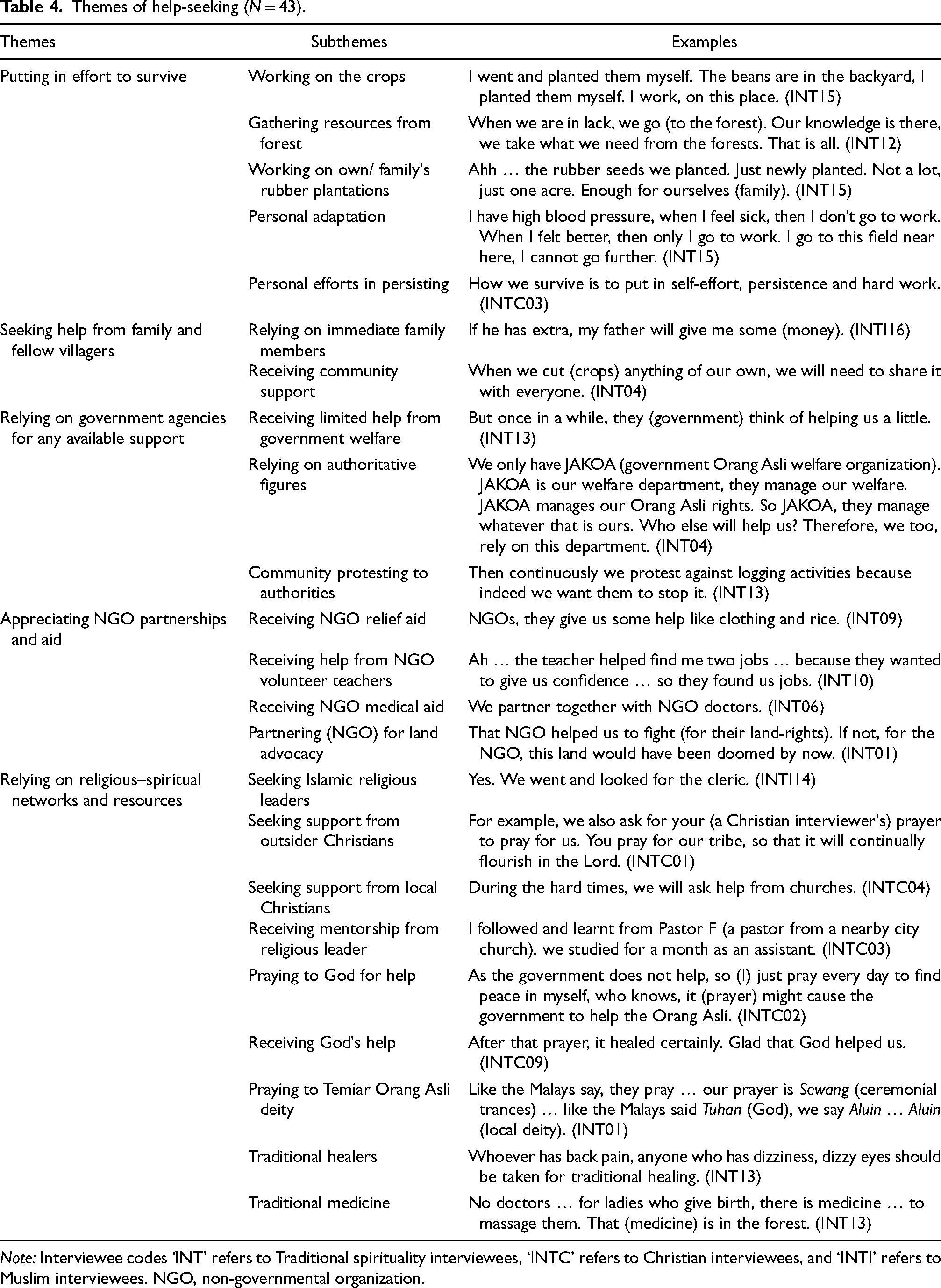
Note: Interviewee codes ‘INT’ refers to Traditional spirituality interviewees, ‘INTC’ refers to Christian interviewees, and ‘INTI’ refers to Muslim interviewees. NGO, non-governmental organization.
Putting in effort to survive
As reflected in Table 4, the majority of interviewees made efforts to cope with adversities and strive for survival by working on crops and gathering resources from the forests. Their persistence in subsistence activities reflected ancient practices and worldviews, as illustrated by the following interviewee excerpt: ‘We just think about surviving … When we are in lack, we go (to the forest). Our knowledge is there, we take what we need from the forests. That is all’ (INT12). Others planted crops for food (e.g. yams) or cash crops such as rubber trees, ‘There … I went there, a little corn was left. I went and planted it myself. The beans are in the backyard, I planted them myself. I work, on this place’ (INT15). Some also found ways to adapt to their situations through adapting by eating moderately and relying on available food such as tapioca when they ran out of rice, ‘Rice, we try to not eat so much of it, just eat moderately. People say, not until you are so full’ (INTI08).
Seeking help from family and fellow villagers
Seeking help from family and other villagers was also mentioned by more than half of participants. One woman who had recently returned to her village following two years of factory employment in the city said: ‘I returned to this village where my parents live, because they always encourage and support me’ (INTI14). Others reported receiving financial aid from their parents: ‘If he has some extra, my father will give some (money)’ (INTI16). Interviewees also described community support through the sharing of food resources and crops: ‘Ah we just give to each other as such, because when we are suffering, sometimes they help … when they are at ease they buy things for us, in turn when they are in trouble, we help as well. It is as such’ (INTI05); ‘Yes, it is our customary ways of the Orang Asli … when we cut down a field, even if it's just one person who cuts, you share with everyone … It is as such’ (INT04).
Relying on government agencies for available support
A majority of interviewees (more than 60%) also sought help from government authorities as a way of alleviating suffering. Because the killing and hunting of elephants is prohibited by law (Wildlife Conservation Act, 2010), locals cannot defend themselves from elephant attacks and lack resources to protect themselves in other wats. Thus, they turn to governing bodies to manage elephant populations. Many hoped for help from their stipulated government welfare organization, the Department of Orang Asli Development (JAKOA): ‘We only have JAKOA. JAKOA is our department, they manage our welfare. JAKOA manages Orang Asli rights. So JAKOA, they manage all our matters. Who else will help us? Therefore, we too, rely on this department’ (INT04). Interviewees also described communal protests to authorities particularly regarding logging and their land-rights issues: ‘We continue to fight against these logging activities because we want them to stop’ (INT13).
Discussion
The themes identified in this study resonated with previous research on South East Asian Indigenous peoples’ ongoing struggle with deforestation, displacement and logging, contextualized by a deep-rooted connection with and reliance on their customary lands (Singer et al., 2015; Tacey, 2013). In terms of seeking help to respond to suffering, interviewees utilized strong-ties networks (e.g. family and local villagers) as well as weak-ties networks (e.g. government authorities and NGO aid). The importance of tapping into strong-ties networks and community resources was also found in past research on community-based resilience among Orang Asli (Chua et al., 2019). Meanwhile, a reliance on weak-ties networks (Granovetter, 1973), such as authorities and NGOs, potentially emerged through resettlement-related ecological changes promoting dependence on government development and other external aids. Participants also appeared to rely heavily on direct efforts to earn their livelihood through working on crops, plantations and gathering resources in the forests. Thus, the Temiar appear to use a praxeological frame of knowledge anchored in daily experience through actively interacting and manipulating their external environments.
The impact of the sociopolitical landscape on Orang Asli
The findings indicated that experiences of kesusahan (the Malay termed chosen to describe suffering, hardships and difficulties in this study) were grounded in a landscape of sociopolitical problems among Temiar communities. This observation aligns with a history of land-rights issues, forced resettlement and current encroachment of commercial interests, such as logging companies (J. Abdullah et al., 2016; Hisham et al., 2015). Legislation, such as the Aboriginal Peoples Act 1954 of Malaysia, leans in favour of the government's right to revoke land (Sections 6(3) and 7(3)) or remove Orang Asli from their forest lands (Section 10(3)). As of 2006, a mere 13.9% of customarily Orang Asli territories have been titled as Orang Asli reserves (Alias et al., 2010). Many participants expressed a sense of respect, reverence and dependence on their customary forest lands. However, their veneration has turned into fear amid environmental degradation and pollution resulting in more natural disasters, such as floods.
Meanwhile, a growing dependence on a cash economy stands in stark contrast to the level of economic opportunities available. As such, our findings highlight tensions associated with lifestyle changes following a rapid transition to neoliberal economies; this poses challenges for Orang Asli populations that have largely retained the livelihood strategies of hunger-gatherers (e.g. capitalizing on strong-ties network in sharing of forest resources and crops). Moreover, increasing urbanization, environmental degradation and encroachment into their customary forest lands have impacted the ecosystem of what was once their primary source of food and livelihood. The increased reports of human–animal conflict among communities that once were self-sustaining since ancient times is alarming. For example, elephants that are unable to find sufficient food in the forests are driven to seek food sources in human villages for survival. The vicious cycle of deforestation has a profound impact on the mental well-being of the Orang Asli which, will be further elaborated from a cultural psychology perspective in the following section.
Conceptualizing Indigenous worldviews through ecological rationality
According to Beal's (2019) hierarchy of moral cognition, worldviews such as beliefs and value systems are considered downstream factors. Thus, exploring upstream ontological framings of cognition that gives rise to downstream variables (e.g. beliefs, tendencies of behaviour, values) are important for the purpose of finding cross-cultural pattern of Indigenous knowledges. In this study, we mapped our findings onto the Ecological Rationality Framework (Sundararajan, 2015, 2020), aiming to expand global psychology's norm of rationality through the Temiar's worldview.
Integrating concepts of ecological rationality (Todd & Gigerenzer, 2012) and Granovetter's (1973) social-network theory, Sundararajan (2015, 2020) developed a culture-cognition scheme of strong and weak-ties rationalities to conceptualize cultural differences in mentalities from a relational perspective. Strong-ties societies refers to societies with low mobility, which are founded upon close-knit, intimate relationships with kin and close friends. By contrast, weak-ties societies refers to groups with higher relational mobility (Yuki & Schug, 2020; the degree of flexibility in interpersonal relationship) thus relying on and cooperating with unfamiliar or unrelated others (Sundararajan, 2020). As proposed by Sundararajan (2015), a strong-ties ecology would call for concrete–perceptual type mentalities, orienting individuals toward the navigation of the external environment; by contrast, a weak-ties ecology would call for abstract–conceptual mentalities, orienting individuals toward internal mental processes. Studying the influence of culture on perceptions of suffering, Ting and Sundararajan (2018) found that Yi minorities in China, who followed the traditional Bimo religion, used primarily agencies or events located in the environment (e.g. ghosts) to explain their suffering events. Meanwhile, those who had converted to Christianity used more abstract and existential explanations. Thus, the different mentalities espoused in strong-ties and weak-ties societies (Sundararajan, 2015) may inform the impact of modernization on Indigenous communities in Malaysia.
After mapping the subthemes of suffering explanations into the Ecological Rationality Framework (Ting & Sundararajan, 2018), the Temiar epistemological worldviews appeared to mainly fall into the external–concrete, experiential quadrant of Figure 2 (e.g. polluted environment, elephants mentioned as an obstacle to travelling). These findings align with Thong et al.'s (2021) systematic review, which found that Indigenous peoples in South East Asia capitalized on external-oriented mental strategies and cognitive styles, and supplements the repertoire of evidence of the characteristics of strong-ties rationality found in many Indigenous tribal groups that have been long overlooked by western psychology. Similar to recent research on cultural differences in cognitive styles among different religious Indigenous groups (Thong et al., 2023), the mentalities espoused by the Temiar traditional group (adat) overall resemble that of holistic thought, with an attentiveness to perceptual and external environmental forces.
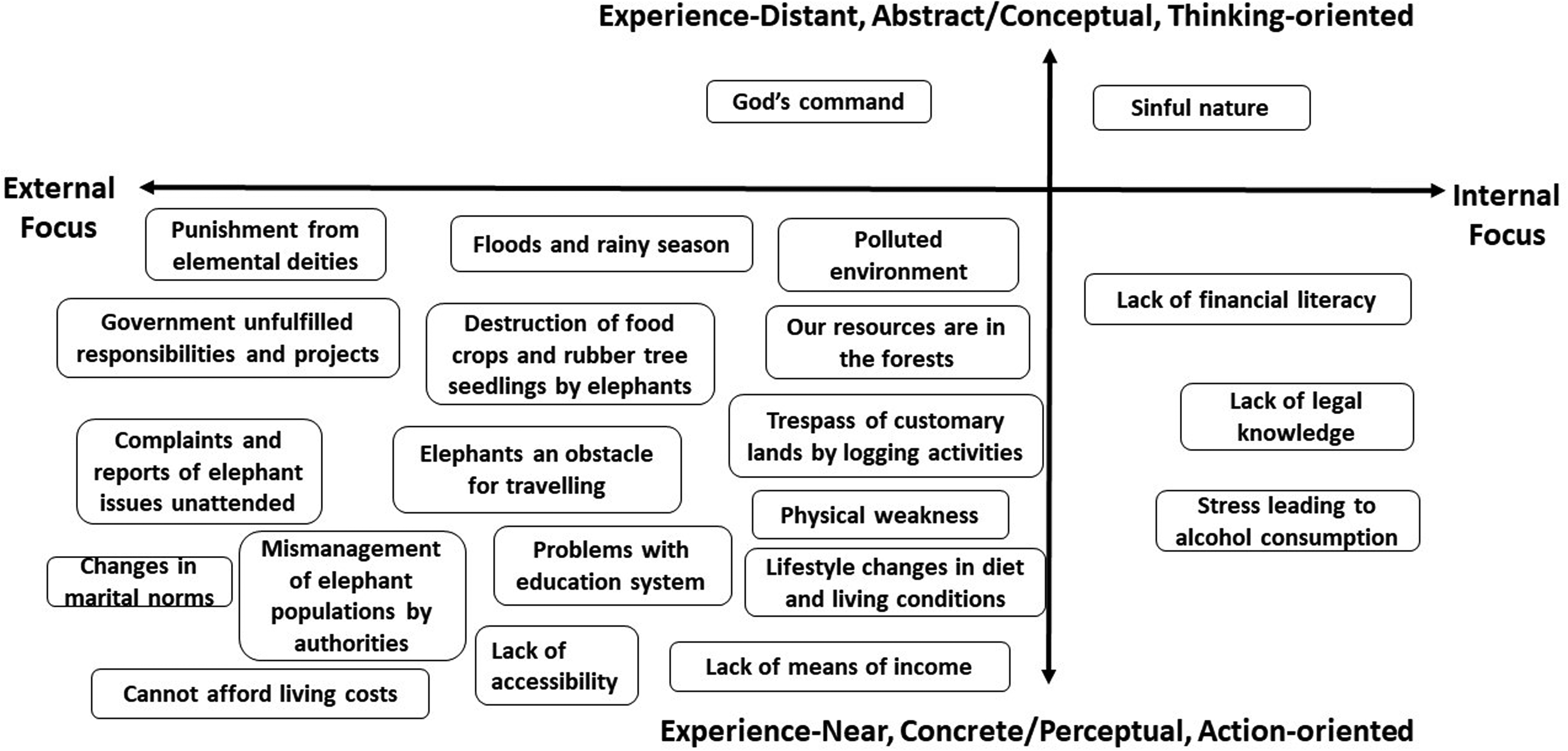
Axes of cognition according to the adapted Ecological Rationality Framework for subthemes of suffering explanations.
In view of the above, our findings support the notion that mental health and well-being among strong-ties Indigenous societies such as the Temiar are closely embedded within the flourishing of their external environment, including that of their traditional forests and environmental resources. This has implications for state policymakers regarding the legalization of land-rights in promoting self-determination and contextualizing development (the extent to which the Temiar exhibit self-determining agency in relation to their development, forest lands and resources). Studies have also identified physical and mental health benefits from engaging in cultural land-care among Australian Aboriginals (Taylor-Bragge et al., 2021). The orientation of well-being and mental health towards external ecological systems prevalent among Indigenous people in Asia and Canada (Kirmayer et al., 2011; Ting et al., 2021) stands in contrast to trait-based or internally oriented psychological models of resilience.
Implications for mental health promotion and services in a hunter-gatherer ecology
The promotion of mental health ‘involves actions to create living conditions and environments that support mental wellness across the lifespan and allow people to adopt and maintain healthy lifestyles’ (World Health Organization, 2016). In marginalized communities such as the Orang Asli, a model of effective mental health service would therefore involve advocacy against the various barriers faced with regards to their well-being. This study thus seeks to inform culturally sensitive mental health and healthcare among Orang Asli who have historically encountered barriers in the utilization of modern health services (Wong et al., 2018). For example, the use of strong-ties networks and community-embedded resources in help-seeking among the Temiar indicates the importance of community-based or family-centred mental health promotion (see Kirmayer et al., 2016). This presents another contrast to the individual psychotherapy models dominant in western psychiatric services. Because healing rituals also reflect their externally oriented cognition, partnerships between mental health providers and traditional healers or community elders could be emphasized to promote accessibility and inclusivity of mental health and well-being programmes. The current research also highlights the importance of Indigenous traditional resources and wisdom embedded in the day-to-day lives of the Orang Asli as they navigate suffering and adversity. Furthermore, this underlines the role of the mental health professional in rebuilding and reconciling cultural identity among the Orang Asli who face the erosion of their kinship-based cultural structures from modernization and imposed lifestyle changes.
Given that suffering was often contextualized by disruptions to their ecology, such as elephant intrusion and water pollution from logging activities, our findings also suggest that wellness initiatives could benefit from involving strategies to shelter the community from livelihood and ecological disruptions. For instance, the facilitation of psychological well-being through collaborative multidisciplinary approaches (e.g. the inclusion of medical personnel, social workers and legal practitioners) focused on protecting the communal resilience embedded in their traditional environments, biodiversity and lands.
Limitations and future research
Because this is an exploratory study among the Temiar within one resettlement area, these findings may not represent narratives across all Orang Asli peoples. Furthermore, there were limitations related to the overrepresentation of female participants, exceeding 60%. Because our interviewers consisted of an all-female team, it is plausible that this may have increased the likelihood of our being accepted by female interviewees during the snow-balling recruitment process. Hence, it is unsurprising that one of the suffering issues – ‘family and marital issues’ was only reported by female interviewees, which could reflect gender roles and struggles among the Orang Asli who have come in contact with and internalized male-dominated cultures over the past few centuries (Endicott et al., 2006). Future researchers may consider delving deeper into potential gender differences in Orang Asli suffering experiences. Further, a number of interviewees spoke in their traditional Temiar language during the interview and some nuances might have been lost in translation, although we tried to minimize this loss by having a native speaking Temiar translator examine our audio-recordings and translations for accuracy. Future studies should also consider prolonged fieldwork and the inclusion of Temiar cultural experts in the research team.
Conclusion
Overall, the exploration of worldviews of suffering among the Temiar reveals social injustice issues stemming from sociopolitical complexity. The reduced viability of the ancestral forest environment and means of subsistence resulting from environmentally damaging economic activities have led to collisions between the Temiar peoples’ pre-existing rationalities and an imposed subscription to the ‘modern’ ways of life. Efforts to alleviate suffering among the Orang Asli need to be cognizant of these conflicts in cultural worldviews.
As discussed above, this study has both theoretical and practical implications for cultural psychiatry and mental health on the topic of human suffering. Recognizing the rationalities that inform local cultural worldviews in populations that have experienced recent modernization, highlights the importance of culturally based values and practices for the survival of communities.
Footnotes
Acknowledgements
We would like to acknowledge the efforts of “our” research assistant Frances Lim, and our NGO partner Hubert Thong for their assistance in the fieldwork. We also want to thank all of our interviewees for their narratives and contribution to our research topic.
Declaration of Conflicting Interests
The authors declared no potential conflicts of interest with respect to the research, authorship, and/or publication of this article.
Funding
The authors disclosed receipt of the following financial support for the research, authorship, and/or publication of this article: This work was supported by the Fundamental Research Grant Scheme, Malaysia Ministry of Higher Education, (grant number FRGS/1/2020/SS0/MUSM/02/2).
