




Abstract
The well-being of Indigenous peoples continues to be affected by intergenerational effects of numerous harmful government policies, which are considered root causes for bullying and cyberbullying that exist in some communities. Despite ongoing stressors, Indigenous youth demonstrate resilience, which often appears grounded in connecting to their cultural identities and traditional practices. However, few studies have tested the direct and stress-buffering role of various aspects of culture in relation to well-being among First Nations youth. Analyses of the 2015–16 First Nations Regional Health Survey (RHS) revealed that bullying and cyberbullying were associated with increased psychological distress among youth aged 12–17 living in First Nations communities across Canada (N = 4,968; weighted = 47,918), and that these links were stronger for females. Feelings of community belonging were directly associated with lower distress and buffered the relationships between bullying/cyberbullying and distress. Among youth who experienced cyberbullying, those who participated in community cultural events at least sometimes reported lower distress compared to those who rarely or never participated. Those who disagreed that traditional cultural events were important reported the highest levels of distress, but perceived importance of such events failed to buffer the associations between bullying/cyberbullying and distress. These national data highlight the importance of certain culture-related variables as key factors associated with the well-being of youth living in First Nations communities across Canada.
Indigenous peoples experience numerous health inequities compared to non-Indigenous populations. These have been linked to direct and intergenerational impacts of various historical and contemporary economic and social challenges rooted in colonialism, such as poverty, food insecurity, racism, and lateral violence (e.g., Allan & Smylie, 2015; Bombay et al., 2014a, 2014b). The well-being of Indigenous youth in Canada continues to be disproportionately impacted by these stressors, reflected in higher distress levels and suicide rates compared to non-Indigenous youth (e.g., Crawford & Hicks, 2018; Truth and Reconciliation Commission of Canada [TRC], 2015). Indigenous youth in some contexts experience high rates of bullying (Do, 2012), which has been suggested as resulting from racism from outside the community, as well as lateral violence within Indigenous communities tied to harmful colonial policies (Bombay et al., 2014b). Despite these challenges, many Indigenous youth show resilience, which may be grounded in connections to their traditional practices and cultures (Chandler & Lalonde, 1998; Rasmus et al., 2014).
Depending on the specific population and context, certain aspects of culture and identity can be protective and promote well-being for Indigenous peoples (Brown et al., 2016; Chandler & Lalonde, 1998). However, few studies have assessed the direct or potential stress-buffering roles of different culture-related variables in relation to well-being in specific Indigenous populations. Thus, in a nationally representative sample of youth living in First Nations communities across Canada, the current study examined the direct associations of certain culture-related variables (i.e., community belonging, participating in community cultural events, and perceived importance of participation in traditional cultural events) in relation to psychological distress, and in buffering the links of bullying to distress.
Psychological distress in relation to historical and ongoing stressors
In 2015–16, 17.4% of adults and 23.4% of youth living in First Nations communities reported high levels of psychological distress (First Nations Information Governance Centre [FNIGC], 2018, pp. 77, 84). High distress in First Nations communities in Canada and elsewhere have been linked to numerous historical and ongoing stressors that are the result of colonialism (Bombay et al., 2014a, 2014b; Evans-Campbell, 2008). One government policy in Canada that resulted in extensive harmful intergenerational effects was the Indian Residential School (IRS) system (TRC, 2015). Not only have negative effects of IRS attendance been documented among Survivors, but familial IRS experiences have been linked to poor well-being in subsequent generations (FNIGC, 2018). First Nations adults and youth with parents and/or grandparents who attended IRS, but did not attend themselves, reported higher levels of distress, suicidal ideation, and suicide attempts compared to those with no familial IRS history (Bombay et al., 2014a; McQuaid et al., 2017). Given that many children were victims of abuse and bullying at IRS, these experiences have been suggested to be significant root causes for the continued lateral violence, including bullying, that exists in some communities (Bombay et al., 2014b; Lemstra et al., 2011).
Bullying and cyberbullying
Among youth living in First Nations communities across Canada in 2015–16, 27.9% reported experiencing bullying and 17.9% reported cyberbullying in the past year (FNIGC, 2018). However, given the diversity of First Nations cultures and experiences, these statistics can vary significantly according to community (Brownlee et al., 2014; Lemstra et al., 2011). While in some communities reports of bullying were virtually absent, over half of youth reported some form of bullying in studies in other communities. For instance, 35.8% of youth living in their First Nations community in Saskatchewan reported experiencing physical bullying at least once or twice in the previous four weeks, with 59.3% reporting verbal bullying, 47.5% social bullying, and 3.3% cyberbullying (Lemstra et al., 2011). Concerningly, a greater proportion of First Nations youth who experienced bullying reported feeling depressed compared to those who were not bullied (FNIGC, 2012). Similarly, cyberbullying has been linked with negative psychological outcomes among young Indigenous populations (Brownlee et al., 2014; Lemstra et al., 2011). In fact, cyberbullying victimization among Indigenous adolescents in Canada has been associated with self-reported anxiety and distress, beyond the contribution of traditional bullying experiences (Broll et al., 2017).
Culture-related factors: Community belonging and engagement with traditional culture
Inherent strengths in traditional Indigenous cultures may promote well-being and be protective against the negative impacts of stressors like bullying (Thunderbird Partnership Foundation, 2015). Among Indigenous (Anderson et al., 2016; Jones & Galliher, 2007) and non-Indigenous populations (Hystad & Carpiano, 2012; Ross, 2002; Shields, 2008), feelings of belonging to one's community and/or cultural group have been associated with improved well-being. Cultural pride and belonging was associated with increased self-esteem and social functioning, as well as well as reduced delinquency and drug use in a sample of Navajo youth (Jones & Galliher, 2007). Similarly, American Indian adults living in tribal communities in California who felt connected to their community reported reduced suicidal ideation compared to those who did not feel such connectedness (Hill, 2009). Although belonging is considered to be a key factor for mental wellness by First Nations peoples in Canada (Thunderbird Partnership Foundation, 2015), we are not aware of studies that have assessed links between mental health outcomes and community belonging in First Nations samples.
Specific facets of enculturation and cultural engagement have also been found to be protective in relation to mental health for Indigenous populations (Bals et al., 2011; Mohatt et al., 2011). In a sample of American Indian adults, participation in traditional cultural practices was associated with reduced depressive symptoms (Whitbeck et al., 2002). Likewise, Native American youth living in or near their community who had higher enculturation (traditional activities, cultural identity, and spirituality) reported lower suicidal ideation (Yoder et al., 2006). In a sample of First Nations youth in Canada, a measure assessing engagement in various aspects of traditional culture, cultural exploration, and connection to one's community was positively associated with self-efficacy, sense of self, school connectedness, and life satisfaction (Snowshoe et al., 2017).
In addition to direct associations with well-being, culture-related variables might also be protective by buffering the negative effects of stressors. Qualitative data suggested that for some First Nations youth, traditional ceremonies and beliefs were not important to them until they were in a crisis (MacKay, 2005). Although few quantitative studies have examined this, engaging in traditional practices buffered the negative effects of discrimination on depressive symptoms in Native American adults (Whitbeck et al., 2002). Among Navajo youth, embeddedness in and connection to Navajo culture buffered against the negative effects of discrimination experiences on social functioning, but this effect was only found for males (Galliher et al., 2011).
Although there are many examples in which culture-related variables have been linked to positive outcomes, this has not consistently been the case. For example, participation in Indigenous spiritual practices was associated with negative psychological outcomes in a sample of youth from four Native American and four First Nations communities that share common cultural traditions and languages (Walls et al., 2016). That said, these relationships between traditional spirituality and adverse psychological outcomes were attenuated when perceived discrimination and historical losses were added to the statistical models (Walls et al., 2016). Among First Nations adults from across Canada, those who more strongly considered their cultural identity to be central to their self-concept reported greater depressive symptoms, which may be due to the strong links between identity centrality and perceived discrimination (Bombay et al., 2010, 2014a). Thus, more research is needed to identify how different aspects of culture and identity are related to well-being and/or moderate the links between specific stressors and well-being in various contexts.
The current study
We examined associations of bullying and cyberbullying with psychological distress in a nationally representative sample of youth aged 12 to 17 living in their First Nations communities in Canada. The potential direct and stress-buffering effects of specific culture-related variables (i.e., strength of feelings of community belonging, frequency of participating in community cultural events, and perceived importance of participation in traditional cultural events) were also assessed in relation to distress. Lastly, potential differences by gender were considered to inform gender-specific and culturally relevant health and wellness programming and interventions.
Methods
Participants and procedure
Data from the 2015–16 youth First Nations Regional Health Survey (RHS) were analyzed. Participants comprised 4,968 (weighted = 47,918) youth aged 12 to 17 (Mage = 14.80 years; 95% CI [14.71, 14.89]) living in First Nations communities across Canada (male: n = 2,514; 5.6%; female: n = 2,454; 49.4%). The RHS had a stratified 2-stage sampling design based on the 2014 Indigenous and Northern Affairs Canada Registry count. The first stage involved the selection of specific communities, determined by region, subregion, and community size. The second stage involved selecting individuals within each community using band membership lists. The RHS meets the First Nations principals of OCAP® (Ownership, Control, Access, and Possession) and is governed by the First Nations Information Governance Centre's (FNIGC's) Board of Directors. FNIGC approved this study and was given the opportunity to review the manuscript. That said, the analyses and interpretation do not necessarily reflect the views of FNIGC. Ethical approval was obtained at Dalhousie University (REB #2018-4585) and the Royal Ottawa Institute of Mental Health Research (REB #2018-020).
Measures
Gender and sex
Participants were asked if they were “male” or “female”, although the question did not specify if it was asking about gender identity or assigned sex at birth. Throughout the remainder of the article, we use the term gender when referring to this variable, but it should be noted that it is unclear if participants answered in terms of their gender identity or sex.1
Psychological distress
Psychological distress was assessed using the 10-item Kessler scale (K10; Kessler et al., 2002) which is calculated by summing responses to 10 items asking about symptoms of anxiety and depression in the past month. Items were assessed on a scale of 1 (none of the time) to 5 (all the time), with possible scores ranging from 10–50 and higher scores indicating higher distress. Scores for those who were missing only one or two K10 items were calculated by replacing those missing values with the mean of the remaining items for that participant. Those who had missing responses on three or more items were excluded from the analyses. The K10 has shown strong reliability within First Nations and other Indigenous populations (Bougie et al., 2016; FNIGC, 2018).
Bullying and cyberbullying
Participants were asked whether (Yes) or not (No) they had been bullied in the past 12 months, alongside the following definition: “Bullying is an act that is done on purpose. Bullies use their power (physical size, age, social status, etc.) to threaten, harass, or hurt others. Bullying happens over and over to one person or to a group of people. Bullying happens in four basic ways: physical (hitting, kicking, stealing, etc.); verbal (teasing, name-calling, etc.); indirect (spreading rumours, excluding people, mean gestures, etc.); and cyberbullying (covered in next question)”. Respondents were also asked whether (Yes) or not (No) they had been cyberbullied in the past 12 months, which was accompanied by a note describing bullying as “the use of a computer or other electronic device to engage in bullying”.
Culture-related variables
Community belonging
Community belonging was measured using an item that required participants to rate their sense of belonging to their local community using one of the following responses: “very strong”, “somewhat strong”, “somewhat weak” or “very weak”. Given some of the categories were endorsed too infrequently and therefore not released or marked as unreliable,2 the response options were dichotomized by collapsing those with “very” or “somewhat” strong feelings and those with “somewhat weak” or “very weak” feelings of belonging.
Participation in community cultural events
Participation in community cultural events was measured using an item that required participants to rate how often they took part in their local community's cultural events. Participants had the following response options: “always/almost always”, “sometimes”, “rarely” and “never”. Because some responses were suppressed or labelled unreliable due to infrequent responses, the response options were dichotomized, collapsing those who selected “always/almost always” and/or “sometimes”, compared to those who selected the response option of “rarely” or “never”.
Importance of traditional cultural events
Importance of traditional cultural events was measured with an item that inquired whether youth participants “strongly agree”, “agree”, “neither agree nor disagree”, “disagree” or “strongly disagree” with the statement “Traditional cultural events are important in my life”. This statement was accompanied by the following note: “Traditional cultural events vary, but may include powwows, sweat lodges, and community feasts”. The response options were categorized into those that 1) agreed or strongly agreed, 2) neither agreed nor disagreed, and 3) disagreed or strongly disagreed.
Statistical analyses
Analyses were carried out using the Complex Samples Module of SPSS version 20 to produce estimates based on weights and specifications of the RHS complex design and sampling. Analyses of covariance (ANCOVAs) controlling age within the general linear model assessed the proportion of variance in psychological distress accounted for by the predictor variables. In complex samples, the sampling design degrees of freedom are based upon the sampling design and represent the difference between the number of primary sampling units (i.e., 242 communities) and the number of strata in the first stage of sampling (i.e., 98). For each analysis, participants with missing data were excluded from that analysis. Because of the association and multicollinearity between bullying and cyberbullying, they were tested separately in their own respective models. All three-way interactions between each of the culture-related variables with gender and bullying/cyberbullying were initially tested but were not included in the models presented because they were not significant. The final models include all two-way interactions between bullying/cyberbullying, gender, and the specific culture-related variable being assessed. Due to the fact that there were six different ANOVAs that were run, a Bonferroni correction was applied (p < .05/6) and rendered the critical level for significance to p < .008.
Results
Descriptive statistics
The mean level of psychological distress was 18.86, with females reporting higher distress (M = 21.10; 95% CI [2.36, 21.83]) than males (M = 16.71; 95% CI [16.29, 17.14]; t(144) = -11.17, p < .0001; n = 4,511).3 Just over a quarter of the sample (27.9%; 95% CI [25.5, 3.33]) experienced bullying, and just under one in five (17.9%; 95% CI [16.2, 19.7]) experienced cyberbullying (n = 4,664). Compared to males, a greater proportion of females reported bullying (females: 33.9% vs. males: 22.1%; χ2 = 81.97, p < .001) and cyberbullying (females: 25.9% vs. males: 1.1%E; χ2 = 199.15, p < .001).4
About three-quarters (76.6%; 95% CI [74.5, 78.6]) of youth described their sense of belonging to their community as being very or somewhat strong (no gender difference; χ2 = .51, p = .56; n = 4,258), and 71.3% (95% CI [69.5, 72.9]) participated in community cultural events always/almost always or sometimes (no gender difference, χ2 = 9.00, p = .14; n = 4,905). Most agreed or strongly agreed that traditional cultural events were important to them (80.2%; 95% CI [78.5, 81.8]), and 16.0% (95% CI [14.6, 17.6]) neither agreed nor disagreed (no gender difference, χ2 = 6.32, p = .26; n = 4,789).5
Multivariate analyses predicting psychological distress
Community belonging
Model with bullying
The model including all two-way interactions between community belonging, bullying, and gender accounted for 21.9% of the variance in distress (n = 3,865).6 Age was associated with increased distress, F(1, 144) = 71.90, p < .0001, and females reported higher distress, F(1, 144) = 95.26, p < .0001. Those who were bullied reported higher distress, F(1, 144) = 175.76, p < .0001, and those with a somewhat or very strong sense of belonging reported lower distress, F(1, 144) = 37.76, p < .0001. The interaction between belonging and gender was not significant, F(1, 144) = 3.25, p = .074. The interaction between gender and bullying was significant, F(1, 144) = 28.87, p < .0001; simple effects analyses revealed that the difference in distress among those who were versus were not bullied was greater for females (mean difference = 8.57; F(1, 144) = 159.26, p < .0001) compared to males (mean difference = 3.60; F(1, 144) = 24.04, p < .0001; Figure 1A). The interaction between bullying and community belonging was significant, F(1, 144) = 14.47, p < .0001; simple effects analyses revealed that the difference in distress between those who were versus were not bullied was greater for those with weak belonging (mean difference = 9.56; F(1, 144) = 108.51, p < .0001) compared to those with a strong sense of belonging (mean difference = 5.45; F(1, 144) = 68.46, p < .0001; Figure 1B).
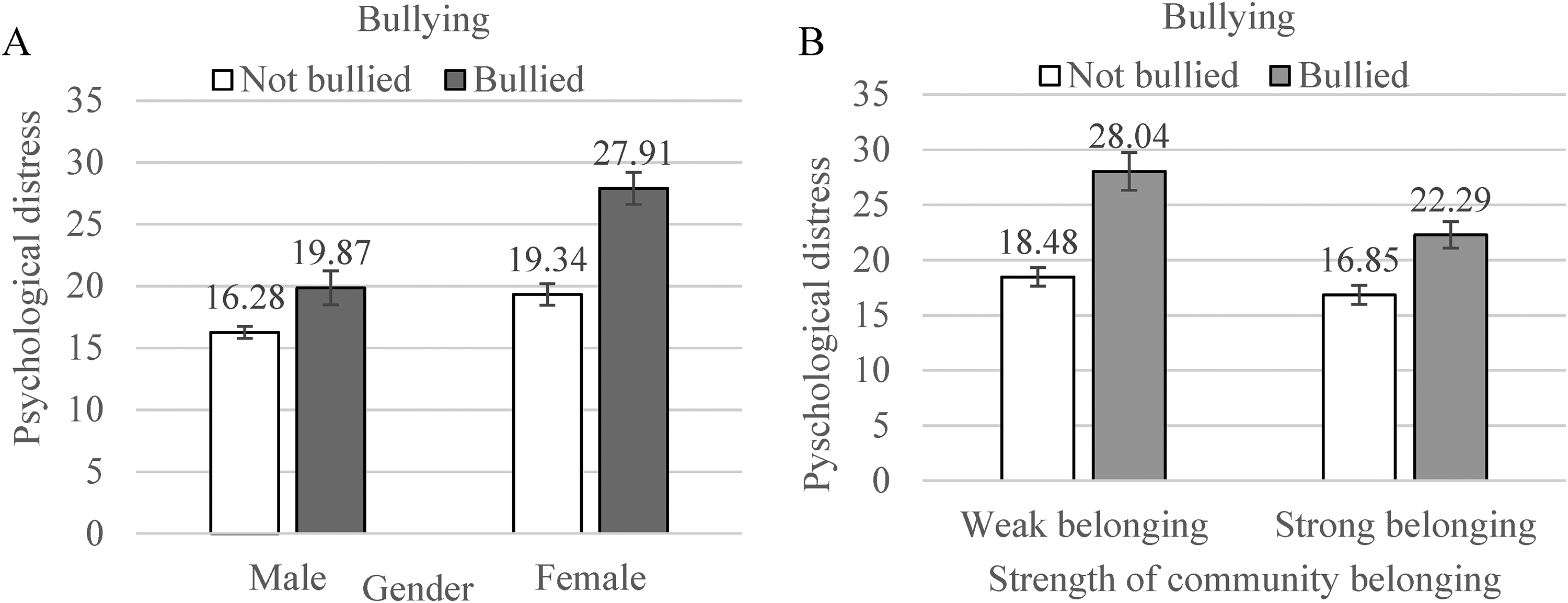
Mean levels of psychological distress among those bullied versus not bullied according to gender (1A) and strength of community belonging (1B).
Model with cyberbullying
The model that included all two-way interactions accounted for 20.2% of the variance in distress (n = 3,850).7 Age was associated with increased distress, F(1, 144) = 41.60, p < .0001, and females reported higher distress, F(1, 144) = 5.62, p < .0001. Those who were cyberbullied reported higher distress, F(1, 144) = 84.91, p < .0001, and those with a somewhat or very strong sense of belonging reported lower distress, F(1, 144) = 3.55, p < .0001. The interaction between belonging and gender was not significant, F(1, 144) = 1.14, p = .29. The interaction between cyberbullying and gender was significant, F(1, 144) = 12.57, p = .001; simple effects analyses revealed that the difference in distress among those who were versus were not bullied was greater for females (mean difference = 8.66; F(1, 144) = 112.90, p < .0001) than males (mean difference = 3.51; F(1, 144) = 5.36, p = .02; Figure 2A). The interaction between cyberbullying and community belonging was significant, F(1, 144) = 1.23, p = .002; simple effects analyses revealed that the difference in distress between those who were versus were not bullied was greater for those with weak feelings of belonging (mean difference = 1.54; F(1, 144) = 75.15, p < .0001) compared to those with strong belonging (mean difference = 5.83; F(1, 144) = 28.16, p < .0001; Figure 2B).
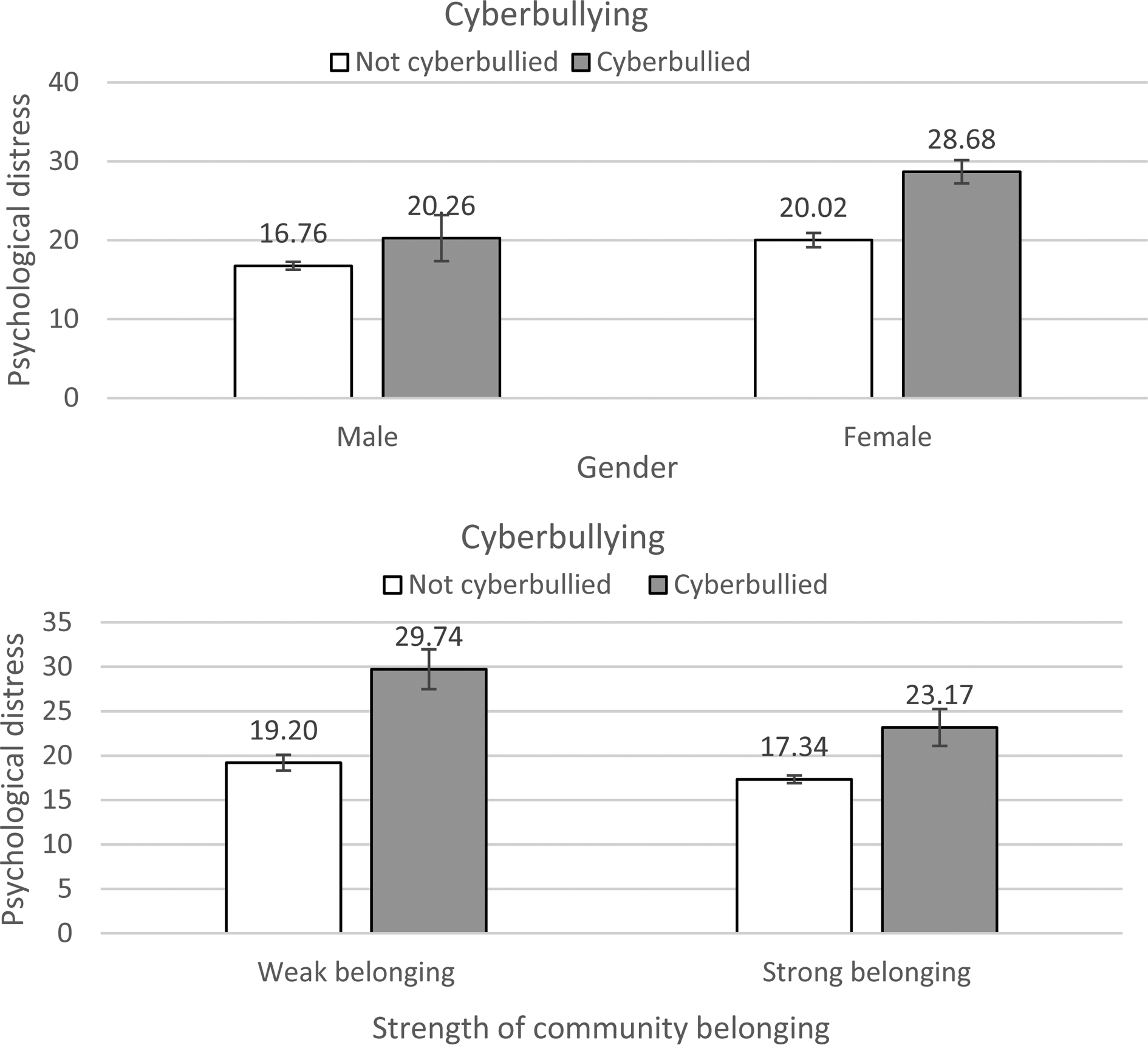
Mean levels of psychological distress among those cyberbullied versus not cyberbullied according to gender (2A) and strength of community belonging (2B).
Participation in community cultural events
Model with bullying
The model that included all two-way interactions accounted for 19.9% of the variance in distress (n = 4,295).8 Age was associated with increased distress, F(1, 144) = 86.64, p < .0001, females reported higher distress, F(1, 144) = 89.13, p < .0001, and those who were bullied reported higher distress, F(1, 144) = 144.22, p < .0001. There was no main effect of frequency of participation in community cultural events, F(1, 144) = .13, p = .72. The interactions between participation in community cultural events with gender, F(1, 144) = .38, p = .54, or with bullying, F(1, 144) = 1.60, p = .21, were both not significant. Mirroring the pattern depicted in Figure 1A, the interaction between gender and bullying was significant, F(1, 144) = 25.48, p < .0001; simple effects analyses revealing that the difference in distress among those who were versus were not bullied was greater for females (mean difference = 8.63; F(1, 144) = 162.56, p < .0001) compared to males (mean difference = 3.61; F(1, 144) = 26.91, p < .0001).
Model with cyberbullying
The model that included all two-way interactions accounted for 18.2% of the variance in distress (n = 4,290).9 Age was associated with increased distress, F(1, 144) = 54.49, p < .0001, females reported higher distress than males, F(1, 144) = 48.23, p < .0001, and those who were cyberbullied reported higher distress, F(1, 144) = 95.56, p < .0001. There was no main effect of frequency of participation in community cultural events, F(1, 144) = 1.88, p = .17. Paralleling the pattern presented in Figure 2A, the interaction between gender and cyberbullying was significant, F(1, 144) = 9.46, p = .003; simple effects analyses revealed that the difference in distress among those who were versus were not cyberbullied was greater for females (mean difference = 8.35; F(1, 144) = 104.10, p < .0001) than males (mean difference = 3.57; F(1, 144) = 26.91, p = .02). In contrast to the model with bullying, the interaction between cyberbullying and participation in community cultural events was significant, F(1, 144) = 8.41, p = .004; simple effects analyses revealed that the difference in distress between those who were bullied versus not bullied was greater for those who reported less frequent participation (mean difference = 1.46; F(1, 144) = 53.55, p < .0001) compared to those with more frequent participation (mean difference = 5.79; F(1, 144) = 32.35, p < .0001; see Figure 3).
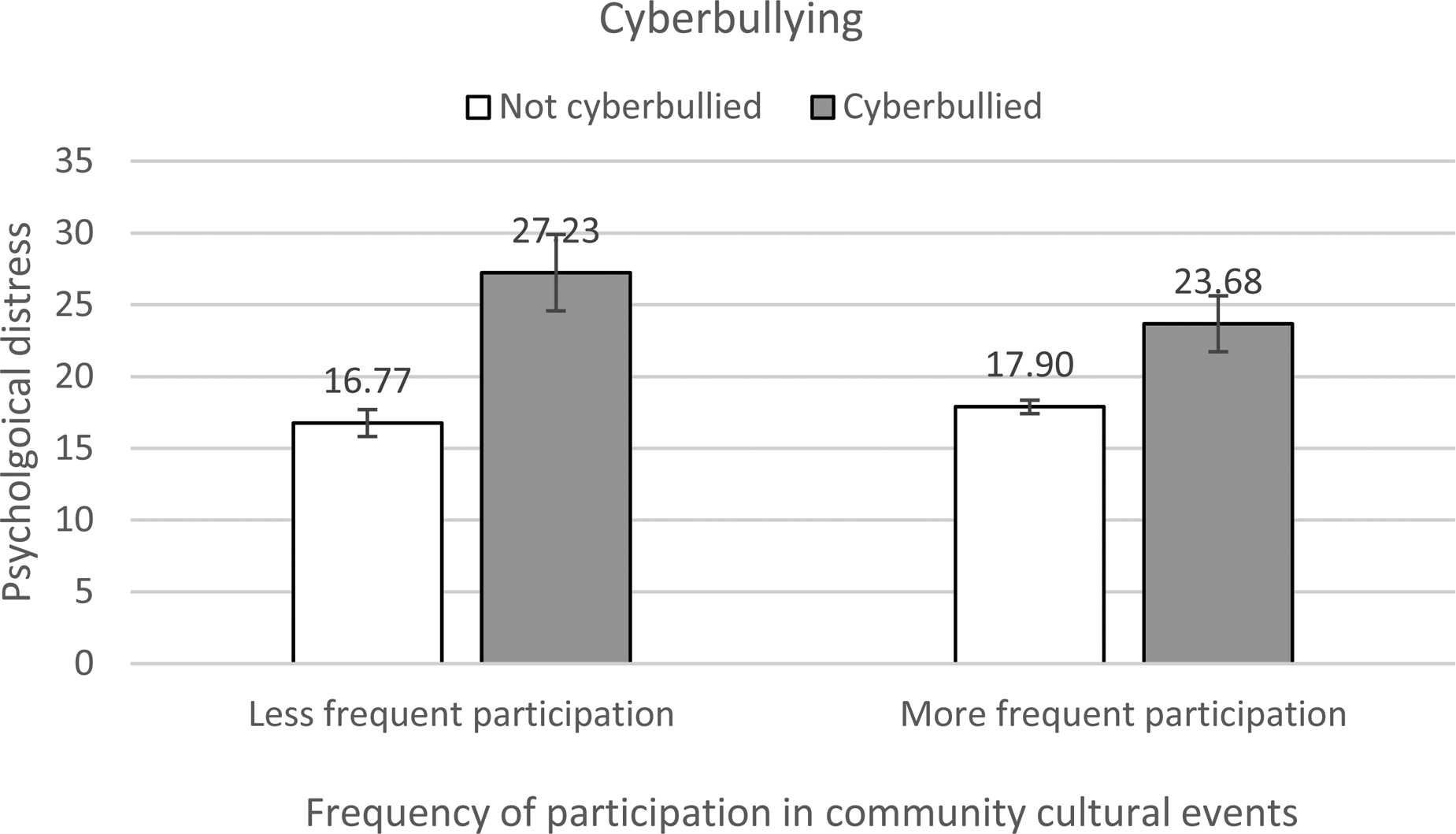
Mean levels of psychological distress among those cyberbullied versus not cyberbullied according to frequency of participation in community cultural events.
Importance of traditional cultural events
Model with bullying
The model that included all two-way interactions accounted for 21.0% of the variance in distress (n = 4,208).10 Age was associated with increased distress, F(1, 144) = 81.63, p < .0001, females reported higher distress, F(1, 144) = 33.04, p < .0001, and those who were bullied reported higher distress, F(1, 144) = 55.10, p < .0001. The importance of traditional community cultural events was significant, F(2, 143) = 13.05, p < .0001. Follow-up contrasts revealed that those who perceived such events to be unimportant (i.e., disagreed or strongly disagreed; M = 23.37; 95% CI [2.62, 26.12]) reported the highest distress scores, but when considering the correction for multiple comparisons, there was no significant difference compared to those who perceived them as important (i.e., agreed or strongly agreed; M = 2.19; 95% CI [19.61, 2.77]), F(1, 144) = 4.88, p = .03. Those who were ambivalent (i.e., neither agreed nor disagreed) reported the lowest distress levels (M = 17.86; 95% CI [16.91 to 18.81], which differed significantly from those who disagreed or strongly disagreed they were important, F(1, 144), 13.99, p < .0001, and from those who agreed or strongly agreed that they were important, F(1, 144) = 18.62, p < .0001.
The interaction between gender and bullying was significant, F(1, 144) = 23.49, p < .0001; simple effects analyses revealed that the difference in distress among those who were versus were not bullied was greater for females (mean difference = 8.19; F(1, 144) = 157.59, p < .0001) than males (mean difference = 3.54; F(1, 144) = 26.45, p < .0001).The interaction between gender and perceived importance of traditional community cultural events was not significant, F(2, 143) = 1.09, p = .34, nor was the interaction between bullying and importance of traditional community cultural events, F(2, 143) = 1.68, p = .19.
Model with cyberbullying
The model that included all two-way interactions accounted for 20.0% of the variance in psychological distress (n = 4,201).11 Age was associated with increased distress, F(1, 144) = 48.43, p < .0001, females reported higher distress, F(1, 144) = 3.69, p < .0001, and cyberbullying was associated with higher distress, F(1, 144) = 58.48, p < .0001. The perceived importance of traditional cultural events was significant, F(2, 143) = 9.87, p < .0001; follow-up contrasts revealed that those who disagreed or strongly disagreed such events were important reported the highest distress levels (M = 24.08; 95% CI [21.54, 26.62]), which differed significantly from those who agreed or strongly agreed (M = 2.65; 95% CI [19.70, 21.59]), F(1, 144) = 6.30, p = .01). Those who neither agreed nor disagreed that traditional cultural events were important reported the lowest distress levels (M = 18.35, 95% CI [17.15, 19.54]), which differed significantly from those who disagreed or strongly disagreed, F(1, 144) = 16.45, p < .0001, and from those who agreed or strongly agreed, F(1, 144 = 9.40, p = .003).
The interaction between gender and cyberbullying was significant, F(1, 144) = 10.81, p = .001; simple effects analyses revealed that the difference in distress among those who were versus were not cyberbullied was greater for females (mean difference = 8.37; F(1, 144) = 113.96, p < .0001) compared to males (mean difference = 3.18; F(1, 144) = 4.95, p = .03). The interaction between gender and importance of traditional community cultural events was not significant, F(2, 143) = 1.15, p = .32, nor was the interaction between cyberbullying and importance of traditional community cultural events, F(2, 143) = 2.58, p = .08.
Discussion
The current study revealed that bullying and cyberbullying were positively related to psychological distress among First Nations youth living in their communities from across Canada. Not only did females report greater levels of distress and greater likelihood of experiencing bullying/cyberbullying victimization, but the association between bullying and cyberbullying in relation to distress (which was significant in males and females) was also stronger in females. This is in line with reports that bullying victimization is strongly associated with depressive symptoms in North American Indigenous adolescents (Melander et al., 2013), as well as reports that bullying and cyberbullying in First Nations, Métis, and Inuit youth were associated with heightened feelings of anxiety and stress (Broll et al., 2017). Being correlational, these data do not necessarily imply a causal connection between bullying and distress (as youth who are depressed or anxious might be stigmatized, and hence more vulnerable to being bullied). Nevertheless, these findings point to the possibility that interventions aimed at reducing bullying and cyberbullying could be beneficial for the wellbeing of First Nations youth, especially females.
The current analyses also provided support for the direct and stress-buffering effects of certain culture-related variables among First Nations youth living in their communities. First, feelings of community belonging were directly related to lower distress, and buffered the negative effects of bullying and cyberbullying. Specifically, strong community belonging was associated with lower distress levels when experiencing bullying or cyberbullying compared to youth who reported a weak sense of belonging. These findings are consistent with prior results among Native American adults where having a sense of belonging to one's home community was negatively linked with suicidal ideation (Hill, 2009). Moreover, among Indigenous peoples across Canada living outside of their home communities, a sense of belonging to the community where they were living buffered the negative effects of educational or financial factors on depressive symptoms and suicidality (Clarke et al., 2008). Together, these data are very much in line with the First Nations Mental Wellness Continuum Framework that characterizes mental wellness as emanating from a combination of belonging, meaning, purpose, and hope, with culture being the foundation of mental wellness for First Nations peoples (Thunderbird Partnership Foundation, 2015). Ultimately, the current findings provide empirical evidence that community belonging among First Nations youth living in communities across Canada is linked with positive mental wellness both directly and by buffering the negative consequences of certain social stressors.
Unlike the findings related to community belonging, participation in community cultural events was not directly associated with psychological distress. Although research in other Indigenous populations has shown such direct associations between participation in cultural events and well-being (Whitbeck et al., 2002), this is not always the case. For example, participation in traditional activities was not associated with decreased alcohol use or dependency in a sample of Native American youth (Yu & Stiffman, 2007). In examining the stress-buffering effects of participation in community cultural events, although there was no interaction with bullying, there was a significant interaction with cyberbullying such that those who reported more frequent participation had lower distress compared to youth who reported participating rarely or never. Consistent with these findings, embeddedness in and connection to Navajo culture buffered against the negative effects of discrimination experiences among youth (Galliher et al., 2011). The current study cannot speak to why participating in community cultural events appeared to buffer the adverse effects of cyberbullying and not traditional bullying. Speculatively, it could be that such active participation is associated with less time spent interacting on the internet, and greater time spent engaging with a broader supportive social network in the community.
The analyses assessing the associations between the perceived importance of traditional cultural events revealed no stress-buffering effects in relation to distress but did reveal a direct association: those who did not perceive such traditional events as important reported the highest levels of distress. That said, those youth who were ambivalent (neither agreed nor disagreed that traditional events were important) reported the lowest levels of psychological distress, which were higher compared to both youth who agreed and those who disagreed that such events were important. While the reduced distress levels among those who disagreed that traditional events were important suggests a protective effect, paradoxically, those who indicated that they were important reported higher distress compared to those who were ambivalent. One possible explanation for higher distress levels among those who perceived such events as important could be that youth who had been negatively affected by historical trauma may have been more likely to turn to traditional spirituality and cultural activities as a way of healing and achieving wellness (FNIGC, 2018; TRC, 2015). Indeed, some First Nations youth qualitatively reported that traditional ceremonies and beliefs only became important to them when they were in a crisis (MacKay, 2005). Alternatively, it is possible that the centrality of traditional practices might have rendered these youth more sensitive to past and present discriminatory practices that increased their value and associated distress relative to youth who were more ambivalent about the importance of cultural practices (Bombay et al., 2010).
To delineate the direction of relationships between various aspects of cultural identity, coping with stressful situations, and psychological distress, longitudinal studies will be needed. In addition, strong identification and feeling connected to the culture may be necessary to benefit in terms of improved mental wellness. Further to this, it may be essential to consider the interplay between cognitive aspects (e.g., importance of traditional events) and behavioural aspects (e.g., participation in traditional events) of cultural identity, as it may be that participation is only beneficial to those who view it as important or central to their identity and/or well-being. As noted earlier, the protective effects of culture-related factors may differ across communities, varying in terms of the value the community places in traditional cultural events. Indeed, communities differ with respect to their traditional cultural practices and may have been differentially impacted by colonialism in relation to how they view and practice different aspects of their traditional culture. For example, more frequent participation may be protective in communities that did not lose significant parts of their traditional cultural practices, or that are in the process of reclaiming and increasing such engagement, but engagement but may be not protective in contexts where other religions and western values prevail.
In the present study a large proportion of youth, between 70–80%, reported a sense of belonging to their home community, participated in community cultural events, and agreed that traditional cultural events were important to them. In essence, most youth aged 12–17 years who live in First Nations communities across Canada are connecting in various ways to their cultural identities and traditional cultures. Furthermore, gender differences were not apparent across any of the cultural variables assessed in terms of their interactions with bullying or cyberbullying in predicting distress. That said, because of the limitations in how gender was measured in the RHS, the current analyses did not consider gender identities beyond male and female. Given more recent recognition of other gender identities and their unique experiences, as well as the historical traditional valuing of those who are two-spirited in First Nations communities (Robinson, 2020), gender analyses need to be broadened in future work.
A significant limitation of the current analyses includes the cross-sectional nature of the RHS that precludes the determination of causality or the direction of the relationships. These data were also retrospective, allowing the possibility of the current subjective states of participants to impact responses. For example, if participants were highly distressed at the time of the survey, they might remember and report more experiences of bullying than if they were experiencing low distress at the time of survey completion. Additionally, the RHS uses primarily single item measures, including those assessing bullying and cyberbullying and the cultural variables, introducing potential measurement error relative to multi-item measures of these constructs. Moreover, it would certainly be germane to know who the perpetrators of the bully/cyberbullying were and whether they were from inside or outside of the community to determine the extent to which such experiences involve lateral violence and/or discrimination experiences from members of other cultural groups. Finally, while there are many strengths of using national data, First Nations communities differ according to their cultures, traditional practices, and experiences, and consequently in pooling data across communities for national analyses, important variations across communities may be lost.
Conclusion
The current findings emphasize the negative impacts of social stressors, such as bullying/cyberbullying, on the mental wellness of youth living in First Nations communities across Canada. The findings also highlight that young First Nations females appear to be at greater risk for distress and for experiencing these social stressors compared to males. Despite these challenges, having a strong sense of belonging to their home communities and participating in community cultural events were associated with diminished relationships of bullying and/or cyberbullying with distress among youth, and strong belonging had a direct association with reduced distress regardless of bullying/cyberbullying. In line with research with other Indigenous populations around the world (MacDonald et al., 2013; Usher et al., 2021; Wexler, 2014), these national population-based data highlight the importance and efficacy of certain culture-related variables for the resilience and well-being of First Nations youth living in their communities and can be used to inform culturally based supports and services.
Footnotes
Declaration of conflicting interests
The author(s) declared no potential conflicts of interest with respect to the research, authorship, and/or publication of this article.
Funding
The author(s) disclosed receipt of the following financial support for the research, authorship, and/or publication of this article: this work was supported by the Institute of Aboriginal Peoples Health, (grant number 161347).
