




Abstract
Negative misconceptions about the inevitability of declining physical health and cognitive functioning in old age abound in society and in literature on autistic ageing. But there is a paradox of ageing: most older adults in the general population experience increases in life satisfaction and emotional wellbeing in later life that are associated with quality of life and indicative of successful ageing. Parallel patterns of later-life improvement in psychosocial functioning and emotional wellbeing have been found in attention deficit hyperactivity disorder and schizophrenia, which raises the tantalising question: could the paradox of ageing be true for older autistic adults too? Contemporary gerontological research that reconciles the contradictions inherent in this paradox from a lifespan developmental psychology perspective also informs global public health initiatives. These promote healthy successful ageing as a process of recovery, adaptation and growth in later life for people of all abilities. By contrast, there has been relatively little examination of autistic ageing from this perspective. Drawing on analyses of both gerontological and autism literature, this gap is addressed. Lifespan psychology’s potential relevance to the developmental trajectory of autism is explored, and an evidence-based theoretical framework to guide future autism research and clinical practice aimed at promoting successful autistic ageing is proposed.
Lay Abstract
Despite experiencing physical and mental losses as they age, most older people are satisfied with life. They have more positive than negative emotions, and this is related to wellbeing and improved quality of life. According to lifespan psychology, this unexpected pattern is evidence of successful ageing. By contrast, the potential for successful ageing in autism is not well understood. Even though it informs the World Health Organization’s guidelines on healthy ageing, there has been relatively little consideration of lifespan psychology in relation to autistic ageing. The researchers’ aim was to address this gap.
This article provides a novel approach to understanding and promoting successful autistic ageing. It describes lifespan psychology and associated models and theories and how they relate to autistic experience. It also explains how and why positive outcomes like quality of life and life satisfaction are realistic goals for older autistic adults.
Lifespan psychology offers an evidence-based framework for guiding future research, policy and clinical practice to help older autistic adults achieve positive life outcomes, productivity, personal growth and wellbeing. Future research should test whether autistic older adults experience the same improvements in social and emotional wellbeing in later life as other groups in the population. This will help to make sure that health policy and clinical support are not based on negative assumptions about autistic ageing that do not reflect real-life experiences. Most importantly, this article shows that by thinking about ageing differently, there are opportunities for all autistic adults to enjoy healthy successful ageing.
Keywords
Background
Negative social stereotypes of ageing in today’s world emphasise decline rather than the potential for growth in later life. While it is true that some loss and decline are inevitable with ageing, negative misconceptions that old age is overwhelmingly a time in life limited by impairment, loss of autonomy, loneliness, depression and an overall poor quality of life are common (Staudinger, 2015). This is even the case among health professionals who are informed by traditional medical models which couch ageing in terms of burden and disease (Bowling & Dieppe, 2005). Many of these negative stereotypes are also associated with autism. It is unsurprising then that international autism researchers have identified an urgent need to investigate autistic ageing. Both navigating co-occurring autism-specific and age-related challenges (Sonido et al., 2020) and determining how best to ensure quality of life and wellbeing for older autistic adults are of critical concern (Edelson et al., 2021; Graham Holmes et al., 2020; Howlin, 2021; Roestorf et al., 2019).
Ageing is more complex than just biological or cognitive decline and loss; it is also a period of psychosocial development, striving and contentment (Baltes and Carstensen, 2003; Eendebak & World Health Organization [WHO], 2015; Pruchno, 2021). Paradoxically, in the general population, older age is associated with higher self-rated successful ageing, characterised by psychological factors including resilience, optimism and wellbeing, despite declines in physical health and cognitive functioning (Jeste et al., 2013). Indeed, the majority of non-autistic older adults are quite satisfied with life and may experience a peak in emotional wellbeing well into their 60s and 70s (Carstensen et al., 2011), although whether this trend extends to advanced old age, when there is a higher prevalence of physical frailty and cognitive decline, is less clear (Pachana & Wahl, 2017). Nonetheless, global public health responses are shifting towards greater understanding and promotion of successful ageing (Jeste et al., 2013) with the focus as much on promoting healthy ageing through recovery, adaptation and growth in later life as it is on addressing losses (Eendebak & WHO, 2015).
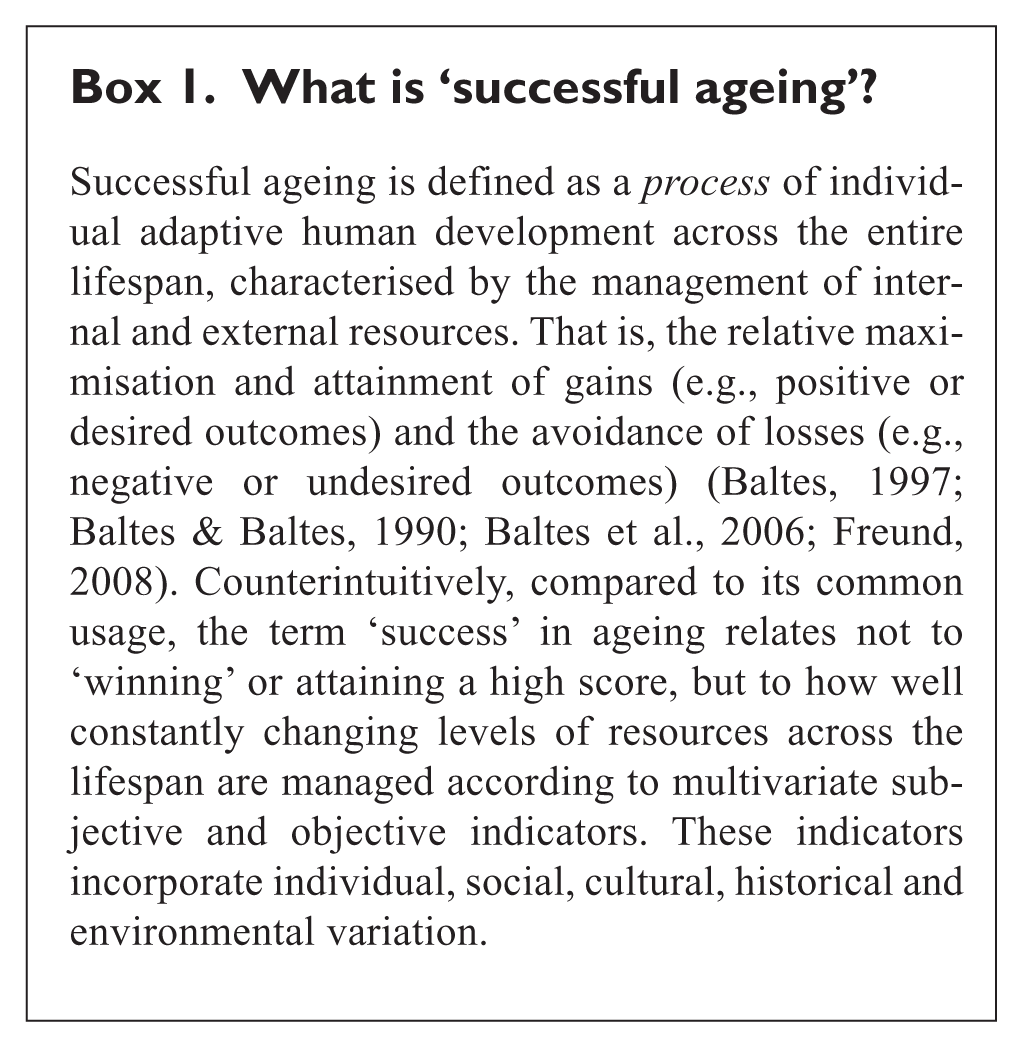
It is now understood that while preventive and medical care are important aspects of maintaining health and longevity in later life, they are not enough to ensure quality of life. Strength-based psychosocial factors such as resilience, optimism and wellbeing noted above, as well as wisdom, are also important (Bowling & Iliffe, 2006; Jeste et al., 2013; Van Patten et al., 2020; WHO, 2020). Accordingly, the WHO defines healthy ageing as ‘the process of developing and maintaining the functional ability that enables wellbeing in older age’ (WHO, 2020, p. 28). Intrinsic capacity (i.e., the ‘physical and mental capacities’ an individual can draw on) as well as environmental factors (e.g., emotional and relational supports, system-level services and attitudes) together determine an individual’s functional ability ‘to be and to do what they have reason to value’ (WHO, 2020; p. 12). Intrinsic capacity is comprised of interrelated domains, including psychological and cognitive capacity, which play a role in older adults’ ability to learn, grow and make decisions in ways that enhance social and emotional growth and provide a sense of control in the pursuit of personally meaningful goals. What and how people are motivated to go about pursuing those goals constitutes the process of successful ageing (Freund et al., 2021) which in turn is closely aligned with quality of life (Chappell, 2017). Successful ageing is a lifespan developmental psychology 1 term synonymous with the WHO’s conception of ‘healthy ageing’ (Freund et al., 2021; see Box 1 for a definition). In contemporary gerontological theory and research, successful ageing is a natural progression of lifespan development and adaptation characterised by a process of gains and losses at every stage and age (Baltes & Baltes, 1990; Pruchno, 2021; Riffin & Löckenhoff, 2017; Wahl et al., 2017). This article’s discussion of the potential for successful autistic ageing is based on this lifespan psychology conceptualisation.
What is ‘successful ageing’?
A lifespan developmental approach to successful ageing
From a lifespan developmental perspective, successful ageing is multidirectional and multidimensional. It is broad enough to encompass losses in physical, psychological and social functioning, disease and disability and mental health problems (Bowling & Iliffe, 2006; Jeste et al., 2011; Tesch-Römer & Wahl, 2017) as well as gains derived from adaptive coping strategies and life experiences (Baltes & Carstensen, 2003; Baltes & Baltes, 1990). Personal meaning and goals, the culmination of an individual’s unique development, experiences and social conditions, are the index for successful ageing (Bowling & Dieppe, 2005). As such, healthy ageing ‘success’ may or may not align with ideal or statistical norms but rather may represent unique functional or personal aspirations that have meaning and value to the individual (Baltes & Carstensen, 2003; WHO, 2020). This conceptualisation, and recognition of the potential value of subjective measures in assessing successful ageing across cultures and population subgroups (Jeste et al., 2013), is consistent with calls from autistic adults, advocates and researchers for a strengths-based approach to exploring autistic outcomes that evaluates autistic people’s life goals, personal experience and needs rather than objective outcomes prescribed and measured by others (Pellicano et al., 2022). It is also flexible enough to accommodate calls for consideration of the considerable diversity in autistic individuals’ functioning, social, cultural and environmental life contexts (Bottema-Beutel, 2024; Howlin, 2021; Hwang et al., 2020; Lord et al., 2022; Mailick et al., 2025; Pellicano et al., 2022; Shattuck et al., 2020; Woodman et al., 2016). This is of particular significance to autism research because it is implicit in a lifespan developmental approach that successful ageing may look different across the broad range of autistic developmental profiles. That is, it is comprehensive enough to encompass interindividual as well as intraindividual differences in intellectual functioning and language impairment, support needs, environmental strategies and resources and life goals as they evolve over the lifespan (Tesch-Römer & Wahl, 2017).
Thus, we can see that while the labels might be different, the tenets of WHO’s functional ability and intrinsic capacity described above, and the concept of successful ageing, align with the goals of autism research, as well as autistic community and individual goals. Furthermore, lifespan psychology endeavours to encompass objective and subjective measures that reflect a biopsychosocial and contextual approach to understanding and promoting successful ageing (Martin et al., 2015; Pachana & Wahl, 2017). This approach is consistent with the WHO’s International Classification of Functioning Disability and Health (ICF) Core Set for ASD, a framework for guiding holistic autism research and practice that encompasses the diversity of autistic functioning (Bölte, 2023; Bölte et al., 2021). Indeed, lifespan developmental psychology has informed much of contemporary gerontological research, as well as the WHO’s public health response to ageing. However, although lifespan psychology principles underlie some adult autism research they have not been consistently applied, and a comprehensive theoretical framework for understanding and investigating the developmental trajectory of autistic ageing has not been described.
Current approaches to understanding autism and ageing
There is not yet a unifying framework (e.g., one that encompasses individual, socio- and bio-cultural, environmental and temporal contexts) in autism research within which to understand autism in adulthood (Shattuck et al., 2020), let alone successful autistic ageing, although many have been proposed. Orthodox biomedical frameworks have been criticised for their focus on functional deficits and failure to capture – or enhance – flourishing in autistic lives (Pellicano et al., 2022). For example, Rowe and Kahn’s model of successful ageing (Rowe & Kahn, 1987, 1997), arguably the most popular in biomedical research (Bowling, 2007), has been recommended by some autistic researchers and advocates for its focus on active engagement and relationships (Perkins, 2016), but it has also been criticised for failing to flexibly encompass self-reported autistic strengths associated with successful ageing (Hwang et al., 2020). Similar concerns have been raised about its biomedical approach to understanding and supporting successful ageing in the general population. For instance, Rowe and Kahn’s model fails to accommodate ageing in individuals who are socially isolated, have chronic disease, functional impairments or disability and care needs (Tesch-Römer & Wahl, 2017). It also underestimates the value of older adults’ psychological resources to effectively cope with the inevitable challenges of old age (Bowling, 2007; Bowling & Iliffe, 2011; Tesch-Römer & Wahl, 2017).
Autism (and autistic ageing) has also been analysed from a diverse range of sociological, philosophical, cultural and activist theoretical frameworks and discourses in the past decade or so. These include (but are not limited to) social identity theory (Cooper et al., 2017, 2021; Perry et al., 2021); a positive disability identity framework (Smith & Jones, 2020); socioecology (Edelson et al., 2021; Wright, 2016; Wright et al., 2019); self-determination theory (Webster & Garvis, 2020); Nussbaum’s capabilities approach (Pellicano et al., 2022); the social model of disability (den Houting, 2019) and other sociological and social psychological perspectives which draw heavily on this model (Milton, 2014, 2012). Many of these frameworks focus on deficits and disability even as they advocate for a neuro-affirmative conceptualisation of autistic adulthood. Indeed, fundamental to a neurodiversity approach to autism research, but often lacking, is the consideration of context (Bottema-Beutel, 2024; Mailick et al., 2025). There are concerns that there is too much focus on impairments associated with individual characteristics, with interventions and treatments designed to ‘change the individual’, rather than targeting the broader social and environmental contexts that prevent autistic people from reaching their full potential (Pellicano et al., 2022). Furthermore, none adequately address the likely heterogeneity of autism in older adulthood (Hong et al., 2023) and, as autistic people themselves are concerned to know, whether ‘autistic individuals may have different developmental and prognostic trajectories associated with variable patterns of strength and abilities as well as challenges and vulnerabilities, any and all of which may evolve differentially over the life course’ (Edelson et al., 2021, p. 384).
Autistic adults are particularly vulnerable to negative life experiences which may seem inconsistent with the notion of successful ageing. Research shows that autistic adults’ experiences of unemployment, financial hardship, homelessness, and physical and emotional abuse are associated with mental health problems (Griffiths et al., 2019), and for some, there is an increased likelihood of self-harm, suicidality and reduced life expectancy (Hand et al., 2020; O’Nions et al., 2024). Case studies of late-diagnosed autistic adults confirm the unique vulnerabilities of older autistic adults when faced with critical life turning points such as loss of a life partner or retirement (James et al., 2006; Mukaetova-Ladinska et al., 2012; van Niekerk et al., 2011). But they also highlight that despite sometimes significant interpersonal and social difficulties, many of these people were able to negotiate life’s challenges relatively successfully up until these life crises. While still more prevalent than in non-autistic adults, mental health difficulties in older autistic adults seem to abate (Lever & Geurts, 2016), a finding that has been described as perhaps a result of the ‘healthy survivor effect’ (Tse et al., 2021). Yet, from a gerontological perspective, a decline in mental health issues in later life is not unexpected; there is the same pattern of lower levels of depression and anxiety in older than younger people in the general population (Blazer & Hybels, 2005; Hoertel et al., 2013; Remes et al., 2016). It is essential that autistic individuals’ vulnerabilities and susceptibilities to poor outcomes are investigated and understood. But could there be a flipside? Could it be that the ‘paradox of ageing’ – a phenomenon in the general population characterised by improved psychological wellbeing despite inevitable age-related losses (Carstensen, 2021) – extends to autistic ageing as well?
Developmental trajectories: similarities, differences and opportunities
There is potential for adaptive change in autism (Frith, 2004) – the notion is, after all, inherent in its label as a neurodevelopmental condition – but this has not been as widely recognised or acknowledged as it should be (Lord et al., 2022). Likewise, similarities in life goals and experiences between autistic adults and adults in the general population have been largely overlooked (Clarke et al., 2024). This contrasts with research on the developmental trajectories of other conditions such as attention deficit hyperactivity disorder (ADHD) and schizophrenia, which are both prevalent in autistic individuals (Vohra et al., 2017). Although these conditions are extremely heterogeneous, there are similarities too: ADHD is one of the most commonly co-occurring conditions with autism (Rosen et al., 2021), and both ADHD and schizophrenia are strongly genetically correlated with autism (Lee et al., 2019; Thapar & Rutter, 2021). Identifying parallels with other conditions can benefit autism research (Rutter, 2005), so it is worth considering that older adults with ADHD report a better quality of life in the psychological health domain than do younger adults with ADHD, are better able to engage in effective emotion regulation strategies and report a decline in the effect of ADHD symptoms in later life with the help of positive reappraisal and coping strategies (Michielsen et al., 2018; Thorell et al., 2019). Similarly, individuals with schizophrenia experience improvements with age in psychosocial functioning, wellbeing and mental health (Jeste et al., 2011; Van Patten et al., 2020), and for many, there is the perception of successful adaptation to their condition through positive coping strategies including selective engagement in supportive social networks (Cohen et al., 2020; Jeste et al., 2011).
It seems logical then to explore opportunities suggested by similarities in the developmental patterns outlined above to recent findings in autism research. For instance, a higher self-rated social quality of life in older than younger autistic adults (Yarar et al., 2022) and a strong correlation between subjective wellbeing and objective psychosocial functioning in autistic adults, both of which improved with age (Scheeren et al., 2022). However, highlighting the heterogeneity of autism, longitudinal studies suggest a more complicated story, with gains in daily living activities and social interaction from adolescence to midlife followed by deterioration in older adulthood despite improvement across the lifespan in autism symptoms (Hong et al., 2023) and no improvement in mental health or quality of life over time (Roestorf et al., 2022). Even so, there are challenges associated with longitudinal designs in autism research, ranging from sample and measurement diversity to the use of different outcome measures and analyses (Hus Bal et al., 2025). There has also been less consideration of the influence of contextual than individual factors on the developmental trajectory of autism (Mailick et al., 2025). A coherent theory-driven framework within which to position future research might help to identify common developmental patterns and processes that contribute to successful autistic ageing.
A lifespan developmental perspective has already been identified as vital in autism research (Thapar et al., 2017) because it helps identify key transition points from childhood through to adulthood that might contribute to meaningful outcomes for autistic adults (Lai & Szatmari, 2019). We argue that applying such a perspective, within a systematic framework, to understanding how older autistic adults have navigated life’s journey – the types of interpersonal relationships, environments and opportunities that have helped them do so with relative success – is an opportunity to illuminate our understanding of autistic ageing and the factors that contribute to positive outcomes or otherwise across the lifespan and into later life.
Reframing autistic ageing from a lifespan developmental perspective
Lifespan developmental psychology is represented by a broad meta-theoretical framework formulated over many years by Paul Baltes and colleagues (Baltes, 1987, 1997; Baltes & Baltes, 1990; Baltes et al., 2006) to conceptualise successful ageing in the context of adaptive change over the lifespan. Adaptive processes and strategies are informed throughout life by factors such as resilience, wellbeing and experiences of emotional distress that promote successful ageing (Charles & Carstensen, 2010) while also accommodating individual and environmental variation (Baltes & Baltes, 1990). The concept of adaptation is not new to autism and stretches as far back as Kanner’s follow-up account of the ‘social adaptation’ in adulthood of many of his original cases (Kanner et al., 1972) and Asperger’s observation that ‘adaptation to the social environment’ was evident in the majority of his cases who had developed ‘compensatory abilities to counterbalance their deficiencies’ (Asperger, 1944/1991). These early perspectives foreshadowed the relatively recent shift in autism research to framing autism as an example of human variation (Lai et al., 2020), whereby negotiating ecological barriers that inhibit or fail to accommodate diverse abilities presents challenges for autistic individuals, even if at times those challenges are not immediately discernible to others (Baron-Cohen, 2017; den Houting, 2019). This shift has given rise to an orientation away from narrow and problematically labelled ‘normative’ assessments of autistic outcomes and quality of life in later life (Edelson et al., 2021; Pellicano et al., 2022; Roestorf et al., 2019) in favour of a balance of subjective and objective benchmarks that more fully capture the heterogeneity of autism (Lord et al., 2020).
Understanding and developing approaches to successful ageing from a psychological perspective offers flexibility to accommodate aspects of ageing across a range of abilities and care needs (Tesch-Römer & Wahl, 2017), such as those represented by the autism ‘spectrum’, and is far more predictive of improving and maintaining quality of life than biomedical or health approaches (Bowling & Iliffe, 2006). For these reasons, framing the experiences of older autistic adults in the context of lifespan developmental psychology has several advantages. It can offer robust evidence-based theoretical interpretations of emerging research on autism over the lifespan and in later life; highlight multidisciplinary avenues of research to broaden our approach to understanding autistic ageing; and help identify novel clinical and support opportunities to enhance the potential for positive outcomes – successful ageing – for autistic individuals across the lifespan and into old age. We propose that lifespan psychology provides a framework that is relevant to autistic ageing because it takes account of variation in individual and interindividual developmental trajectories across the entire lifespan as well as the influence of biopsychosocial and environmental contexts on individual opportunities, constraints and capacity for adaptation (Baltes et al., 2006; Springstein et al., 2022).
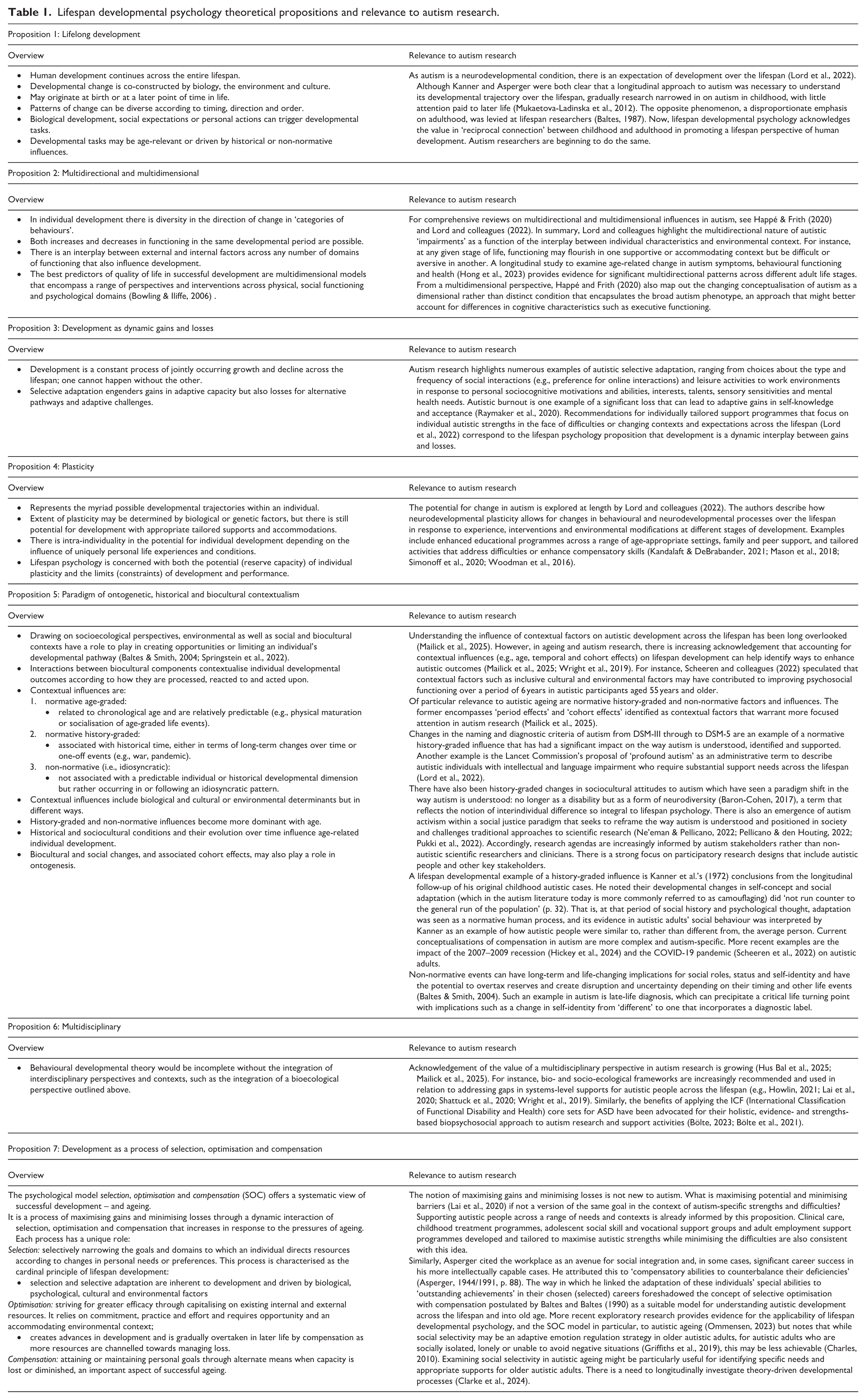
According to this framework, mastery of changing developmental opportunities and constraints – that is, building and enhancing resources and capabilities – in early and middle life is critical to maximising gains and minimising losses throughout adulthood and, ultimately, successful ageing (Baltes & Carstensen, 2003; Ebner et al., 2006). It is supported by seven theoretical propositions that set out an overarching view of the nature of development and culminate in the proposal of a psychological model that outlines a systematic approach to understanding human development: the effective coordination of selection, optimisation and compensation (Baltes, 1987; Baltes et al., 2006). 2 These propositions are summarised in Table 1. Relevance to autism research, including germane (but not exhaustive) examples and evidence, is also noted to highlight parallels between autism and each proposition.
Lifespan developmental psychology theoretical propositions and relevance to autism research.
Lifespan developmental models and theories and their relevance to autistic ageing
Lifespan conceptual models and theories such as selective optimisation with compensation (SOC) and socioemotional selectivity theory (SST) build on Baltes’ lifespan developmental perspective of successful ageing as a process of adaptation and are supported by extensive theoretical and applied work in the broader field of gerontology. As outlined in Table 1, SOC (Baltes & Baltes, 1990) proposes that older adults adapt to developmental losses in later life by selectively prioritising goals (selection) that are personally meaningful and realistically attainable, often at the expense of less important goals. Abilities, strengths and expertise are optimised (optimisation), but when this is not possible, compensatory strategies (compensation) are used to maintain adaptive functioning and achieve life goals. Thus, the dynamic interplay of these three processes facilitates the maximisation of individual gains and minimisation of developmental losses. According to SST, a lifespan theory of motivation (Carstensen, 2021; Carstensen et al., 1999), perceived time left to live influences the selection and pursuit of social and emotional goals. That is, in response to diminishing time horizons, older adults are increasingly motivated by present-focused rather than future-oriented or knowledge-related goals and relationships. Older adults selectively narrow their social networks and interactions, and activities are structured according to emotional meaningfulness to promote stability and predictability and to minimise or avoid negative experiences and conflict. Counterintuitively, these smaller and more emotionally meaningful social networks correlate with older adults’ emotional wellbeing despite the inevitable losses associated with old age – another feature of the ‘paradox of ageing’ (Carstensen, 2021; Charles & Carstensen, 2010).
Lifespan developmental psychology also acknowledges that individual differences in, and responses to, life experience may influence ageing. Successful development depends on an individual using knowledge, gained from life experience, to decide whether a particular context (e.g., relationship or environment) is aversive or rewarding and allocating resources accordingly. However, the benefits of this form of selectivity in later life may be less possible for people who are socially isolated or lonely or who are unable to avoid negative situations (Charles, 2010; Sims et al., 2015). Social isolation and loneliness are also risk factors for older adults whose social network is too small (Charles & Carstensen, 2010), particularly if they do not have a nuclear family or at least a few close relationships (Sims et al., 2015). Chronic and pervasive life stressors, such as living with an abusive partner or a functionally limiting health condition, can also be problematic for older adults because they disrupt their ability to engage in age-related adaptive social behaviours that promote emotion regulation (Charles, 2010). As detailed above, these scenarios and other vulnerabilities are particularly relevant to autistic people (Griffiths et al., 2019).
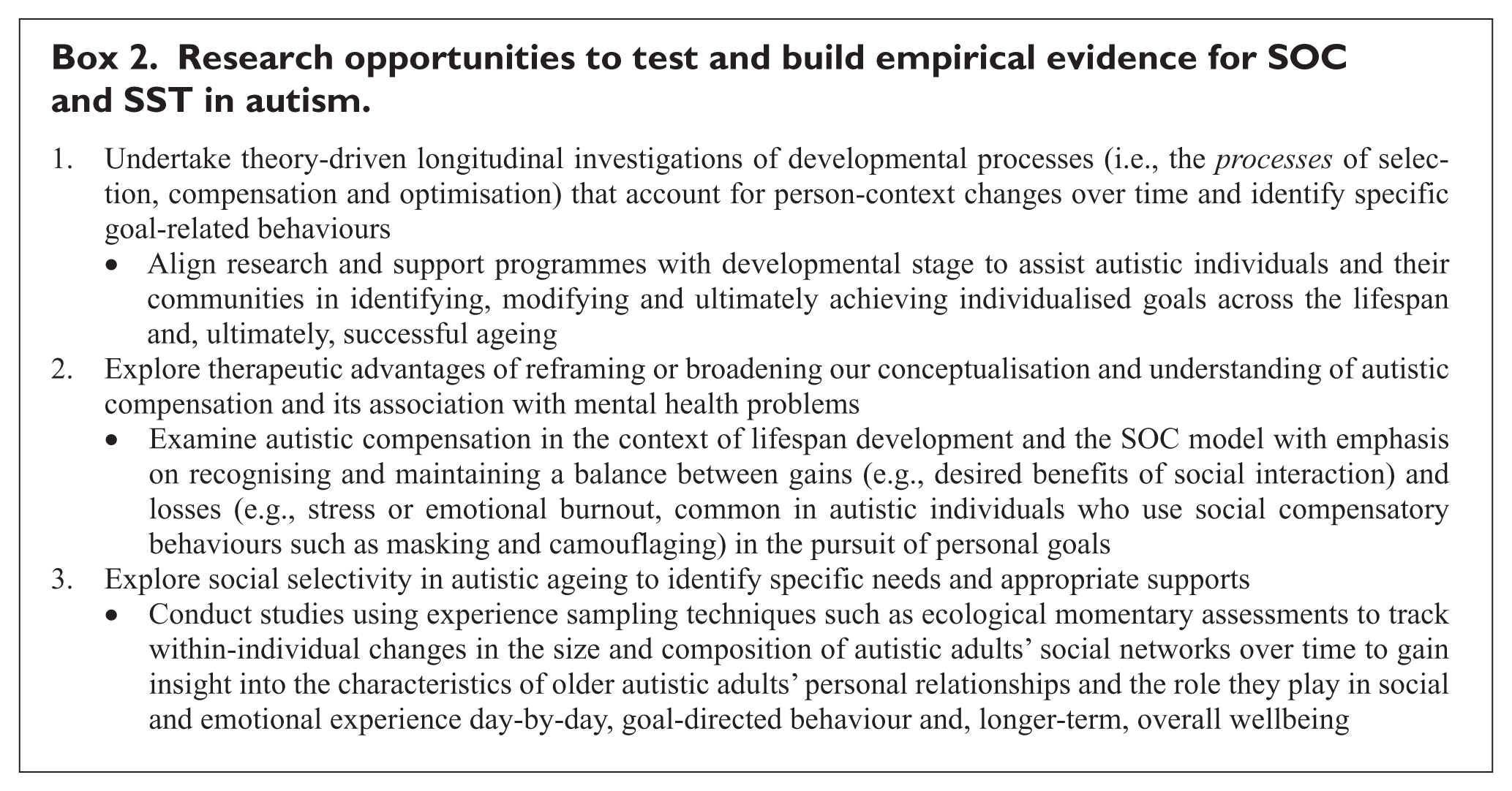
Could SOC and SST within the broader lifespan psychology framework be compatible with understanding and promoting successful autistic ageing? Explorative qualitative research on social and emotional ageing in older autistic adults provides tentative evidence for their relevance (Ommensen, 2023). Insights from this work with autistic adults (aged 50 years and over) suggested older age brought with it resilience, relative stability in social and emotional functioning, and a generally positive outlook on life raising the tantalising possibility of a paradox of ageing in autistic adults similar to that seen in non-autistic adults. Focussed research is needed to test and build empirical evidence for SOC and SST in autism. Suggested areas of research are outlined in Box 2.
Research opportunities to test and build empirical evidence for SOC and SST in autism.
Conclusion
In closing, why consider examining autism from a lifespan developmental perspective? What is to be gained from doing so, and how does it contribute to current research endeavours? There are a number of reasons. First, it is vital in scientific research, including autism research, to explore new theoretical perspectives that might open up ‘blue skies’ or new lines of investigation (Happé & Frith, 2020). As autism is a lifelong neurodevelopmental condition, it seems logical then to explore different theoretical frameworks that take a lifespan approach. Lifespan developmental psychology is such an approach. We believe that lifespan psychology, and the extensive body of evidence-based research on SOC and SST, have the potential to inspire new and more relevant avenues of autism research than biomedical models of successful ageing offer. Indeed, lifespan psychology might be useful in understanding autism not just in old age but also across the lifespan.
Second, lifespan developmental psychology is not autism-specific; therefore, there are no preconceived assumptions about functioning, ability or stereotypes. Its flexibility means it can accommodate the heterogeneity of autism and the notion that everyone is on their own developmental trajectory. As Table 1 sets out, it proposes that lifespan development is multidimensional and multidirectional and that there is the potential for change, plasticity and the possibility for both increases and decreases in functioning in the same developmental period. It characterises development as a constant interplay of gains and losses that require selective adaptation of alternative pathways to meet life challenges. It accounts for the influence of historical, sociocultural, biological and other environmental contexts on life experience and, in turn, on ontogenesis. And importantly, it echoes the catchcry of neurodiversity by acknowledging diversity as a fundamental aspect of development.
Third, lifespan psychology recognises that development does not take place solely in the childhood years. It continues beyond, and may be informed by, ‘the aftermath of childhood’ (Baltes et al., 2006, p. 644). This is highly relevant to autism research, where historically there has been proportionately less investigation of adulthood relative to the large scope of work focused on the early years (Henninger & Taylor, 2013; Howlin, 2021). It is clear there is much more work to be done here, and lifespan developmental psychology might offer a useful guiding framework within which to do this.
Fourth, diagnosis alone is not basis enough for the development of efficacious support strategies and programmes. Consideration of contextual and developmental factors is critical in both research and clinical practice to capture and best accommodate patterns of development (Mailick et al., 2025; Thapar et al., 2017). For instance, resilience is a recurring characteristic cited in autism research, but its potential importance in development is never given much prominence (Lai & Szatmari, 2019; Szatmari, 2018). Given its strong association with relatively good life outcomes and wellbeing in old age, it requires further investigation. As is the case for ageing research on other conditions such as schizophrenia (Van Patten et al., 2020), a focus on positive psychological characteristics such as resilience but also optimism, wisdom, happiness and positive self-appraisal in older autistic adults could be useful to our understanding of and ability to promote quality of life and successful autistic ageing.
Finally, there is a need to reframe negative stereotypes about old age in autism literature. Negative beliefs about ageing can be self-fulfilling and adversely shape the ageing process (Rothermund & de Paulo Couto, 2024), but they are modifiable (Huxhold & Henning, 2023). It is important to ensure that expectations about ageing are not focused only on anticipated decline and losses but also reflect the opportunities for positive life outcomes, productivity, growth and wellbeing that successful ageing can bring for all people albeit with the appropriate targeted support (Huxhold & Henning, 2023). It is proposed that lifespan developmental psychology provides an evidence-based theoretical framework to guide research and clinical practice aimed at the promotion of healthy and successful autistic ageing.
In conclusion, lifespan developmental psychology is optimistic about all human development: its primary goal is the examination and promotion of successful development, a universal goal for all individuals and necessary for ensuring quality of life. As such, the underlying theoretical propositions of lifespan psychology, and the associated models and motivational theories of SOC and SST, offer a novel approach to autism research that is consistent with the WHO’s conceptualisation of healthy ageing for people of all abilities, including older autistic adults. We propose that lifespan developmental psychology represents a relevant psychological framework for conceptualising successful ageing in autism and informing future research in this area.
Footnotes
Acknowledgements
The authors most gratefully acknowledge the older autistic adults who consented to participate in the broader programme of work of which this theoretical analysis forms a part. Their positivity was inspirational and (theoretically) inspiring.

Ethical Considerations
Not applicable.
Consent to participate
Not applicable.
Consent for publication
Not applicable.
Author contributions
Funding
The authors received no financial support for the research, authorship and/or publication of this article.
Declaration of conflicting interests
The authors declared no potential conflicts of interest with respect to the research, authorship and/or publication of this article.
Data availability statement
Not applicable.