




Abstract
There is a critical lack of exploration into the firsthand experiences of autistic children in the psychological literature. We sought to address this using baseline data from a wider mixed-methods study. A total of 136 autistic children (mean age = 10.35) completed an online questionnaire. Questions explored children’s understanding of autism, their feelings about being autistic in different contexts and challenges experienced. Quantitative data revealed limited autism knowledge and understanding for some. Challenges included talking about being autistic and self-advocating for needs, especially with non-family members. Children generally recognised both strengths and challenges of being autistic, although concerns about feeling/being different were widespread, and masking common. Strikingly, although most children felt positive about being autistic at home, significantly fewer felt this to be true when around peers or teachers. Using reflexive thematic analysis, four main themes were developed: (1) overwhelming experiences, (2) unsafe people, (3) sanctuary and (4) autistic identity. Overall, the children felt safest at home with family and/or with autistic/neurodivergent/understanding friends, but most unsafe at school with their teachers and neurotypical peers, where victimisation was rife. These findings offer valuable insights into the lives of autistic children, and demand we explore how places of education can be transformed into safe spaces for autistic children.
Lay abstract
Autistic children are rarely asked directly about their own experiences. In this study, 136 autistic children (ages 8–14) shared their views through an online questionnaire. They were asked what being autistic means to them, how they feel about it and what challenges they face in different environments. Many said they knew little about autism, and most did not have the words to talk about being autistic or feel safe doing so. Talking was especially difficult outside the family; while over 60% felt comfortable with family, only 16.5% felt this way with other people. Children also told us how overwhelming everyday life can be. Noisy, crowded or unpredictable environments often caused distress or shutdown. Many described how strong emotions, especially anxiety, build up in these moments. Some lost the ability to speak, and tasks like decision-making or emotional regulation became especially hard and exhausting. School was often named as a major source of overwhelm. Children showed deep insight into the people around them. They were highly attuned to whether others, for example, friends, family, teachers or professionals, felt safe or unsafe. Feeling unsafe often meant being misunderstood, ignored or bullied. School peers were commonly described as sources of victimisation, and teachers as making children feel unsafe by not listening or misunderstanding their needs. When children did not trust those around them, they masked their autistic traits to avoid judgement. This came at a cost: many described exhaustion, loneliness or feeling like they had to hide who they really are. By contrast, home and trusted relationships, especially with neurodivergent family or friends, offered sanctuary. Children felt freer to be themselves, ask for what they need and talk about autism. Emergent positive autistic identities were evident in some children. These findings show autistic children are thoughtful, perceptive and deeply affected by their environments while simultaneously shining a bright light on the challenges growing up autistic in a neurotypical world. Their voices offer vital insights and a call to make schools and services safer, more respectful spaces.
Keywords
You see, you start pretty much from scratch when you work with an autistic child. You have a person in the physical sense – they have hair, a nose and a mouth – but they are not people in the psychological sense. One way to look at the job of helping autistic kids is to see it as a matter of constructing a person. You have the raw materials, but you have to build the person.
Background
Autistic people frequently report feeling misrepresented, stigmatised, dehumanised and ultimately harmed by traditional autism research (for discussions, see Botha & Cage, 2022; Gernsbacher & Yergeau, 2019; Rose, 2020; for wider context, see Silberman, 2017), and the opening quotation exemplifies this dehumanisation. While the inclusion of autistic people’s firsthand accounts of their own lived experiences could mitigate against this (Botha & Cage, 2022; Saunders, 2018), autistic people have long argued that this does not happen (Holt et al., 2022). This perceived silencing of autistic voices in research has caused enduring mistrust between the autistic and academic communities (Chown et al., 2017; Milton & Bracher, 2013; Milton, 2014; Pellicano et al., 2014), raised ethical and epistemological concerns (Milton & Moon, 2012) and ultimately produced an autism literature that is perceived by autistic people to lack depth and authenticity (Gillespie-Lynch et al., 2017). By situating our study against the above historical backdrop, we aim to address these harmful legacies by deliberately centring autistic children’s voices.
This is because the voices of autistic children have been notably absent in the literature. Indeed, a 2016 meta-synthesis found only four peer-reviewed publications centred on firsthand experiences of autistic children (DePape & Lindsay, 2016). Although autism researchers are now increasing efforts to include the voices of autistic youths, their voices are often overshadowed by adults in stakeholder studies, with themes often principally or solely generated from parent, not youth, data (Horgan et al., 2023; E. I. Williams et al., 2019) and professional voices often dominating, due to their privileged role offering summary accounts of autistic behaviours (Petty & Clegg, 2025).
Hearing, and properly listening to, the broad and varied lived experiences of autistic children is important to help stakeholders, including researchers, parents, teachers and clinicians to move from neuronormative narratives, which are discordant with experiences and priorities of autistic people (Leadbitter et al., 2021), and towards an understanding of autism as ‘a way of being which is complex and dynamic’ (Phung et al., 2021, p. 11).
Rationale for study
Only a small number of qualitative studies have explored autistic young people’s self-perception and interpretation of their diagnosis. Early findings reported that autistic young people (aged 9–16 years) seek to distance themselves from their diagnosis, avoid finding out more about their diagnosis, demonstrate a preference for non-disclosure of their diagnosis with others for fear of being singled out as ‘not normal’ and struggle to identify any benefits to having a diagnosis in the first instance (Ruiz Calzada et al., 2012).
More recent studies exploring the views of autistic adolescents reveal a more nuanced picture, with participating adolescents often appreciating their autistic strengths and perceiving autism as integral to their identity while simultaneously describing autism-related challenges and a personal feeling of disconnection from the world (Berkovits et al., 2020; Trew, 2025).
Moreover, wider societal stigma surrounding autism, and the assumed incompetencies by others, have been described as negatively influencing autistic adolescents’ interpretation of their diagnosis, their self-understanding and their self-perception (J. L. Jones et al., 2015; Mogensen & Mason, 2015; Trew, 2025). It is also clear that autistic young people often assimilate how others perceive their autism into their emergent identities and, as they are keenly aware of teachers’ and school peers’ often negative perception of autism (Billington et al., 2024; Cohen et al., 2022; Horgan et al., 2023; Humphrey & Lewis, 2008; E. I. Williams et al., 2019), they form inherently negative autistic identities such as perceiving oneself as ‘retarded’, as ‘a freak’ or as having a ‘bad brain’ (Humphrey & Lewis, 2008; see also E. I. Williams et al., 2019). This is concerning, given findings from the adult literature that a positive understanding of autism can help buffer the effects of stigma (Botha et al., 2020), support the development of a positive autistic identity and serve as a protective factor against mental health difficulties (Cooper et al., 2017, 2023).
Not understanding one’s own autism diagnosis, and having insufficient information and knowledge about autism, can make autistic young people reluctant to share their autism diagnosis and their autistic experiences with others, including with their friends (Crompton et al., 2023; Ruiz Calzada et al., 2012). It likely also impedes sense-making of personal lived experiences by denying children the opportunity to better understand themselves and their differences in an informed way (Crane et al., 2021; Oredipe et al., 2023), ultimately resulting in deep suffering (Davidson & Henderson, 2010; Prince-Hughes, 2005).
Aims of the study
Against this backdrop, we report baseline data from a larger repeated-measures study that sought to explore potential benefits of autistic-led autism psychoeducation courses for autistic children. We include qualitative and quantitative data from 136 autistic children (aged 8–14 years) prior to commencing the psychoeducation course. A mixed-methods approach was used to explore the children’s understanding of their autism, their feelings about being autistic, talking about being autistic and self-advocating for their needs, and whether these feelings and experiences differ across different environments (i.e. at home, when out and about with friends, and at school). Although primarily designed to assess how these parameters changed following engagement with the course, the study’s design provided access to a large and uniquely uncircumscribed dataset (i.e. the baseline dataset), offering insights into broad, dynamic, diverse and complex lived experiences of autistic children currently growing up in the United Kingdom.
For reasons described above, we anticipated that participating children would have limited knowledge and understanding of autism and hold either negative or ambivalent views about being autistic. In line with the social model of disability, we posited that context would likely shape autistic children’s understanding of their autism and, ultimately, their sense of self.
Because much of children’s daily feedback about what it means to be autistic is experienced within social and educational contexts, we expected that interactions with peers and teachers would play a particularly influential role in shaping these self-perceptions.
We expected that many children would report challenges in their peer relationships and may report loneliness, based on previous findings showing that autistic children are often excluded by their peers from an early age (Stagg et al., 2023) and report lower-quality friendships than their non-autistic peers (Bauminger & Kasari, 2000). However, we acknowledge that loneliness and connection must be interpreted with care, as autistic young people may experience belonging in ways not always captured by conventional measures (Lisboa White et al., 2024).
Given consistent findings that autistic students face significant sensory challenges within school settings (Connolly et al., 2023; E. K. Jones et al., 2020) and informed by findings that teachers often perceive autistic students as more problematic and report less warmth and closeness in these relationships (Blacher et al., 2014), as well as by reports of routine invalidations and hostilities by teachers (Billington et al., 2024), we also hypothesised that the children would report difficulties in their relationships with teachers. We further anticipated that these challenges, combined with peer rejection, could shape how children feel about being autistic within the school environment.
We were unsure, however, whether school and peer-specific experiences would generalise to children’s broader self-concept as autistic individuals, or whether context-specific differences would emerge in how they feel about being autistic. Just as experiences within school and peer settings may influence children’s emerging autistic self-concept, so too might experiences within the home, where acceptance, communication style and family advocacy are likely to play equally formative roles. Given the limited research exploring autistic children’s experiences within the home, we made no specific predictions regarding how they would describe their feelings about being autistic – or about discussing or advocating for their needs – within family settings but sought to explore potential contrasts with both school and peer contexts.
Methodology
Participants
Participants were recruited as part of a wider study evaluating usefulness of an autistic-led autism psychoeducation course (NeuroBears) that aims to provide post-diagnostic support for autistic children and families. This study had three phases: Baseline phase (where knowledge of autism and feelings about being autistic were assessed prior to engaging with NeuroBears), Course phase (where participants accessed the NeuroBears course) and Post-NeuroBears phase (where baseline questions were repeated, with additional questions specific to NeuroBears). This article presents data from the children’s Baseline responses only.
In total, 141 autistic children (with safe adults) volunteered to participate. A safe adult was defined as the adult the child felt safe completing NeuroBears with. In all cases, this was the child’s parent(s). Data from five children were excluded, four due to completing <50% of the baseline questionnaire and one for falling outside the remit of the study, leaving a total of 136 participants (for full details, see Supplemental Material File 1: Figure S1).
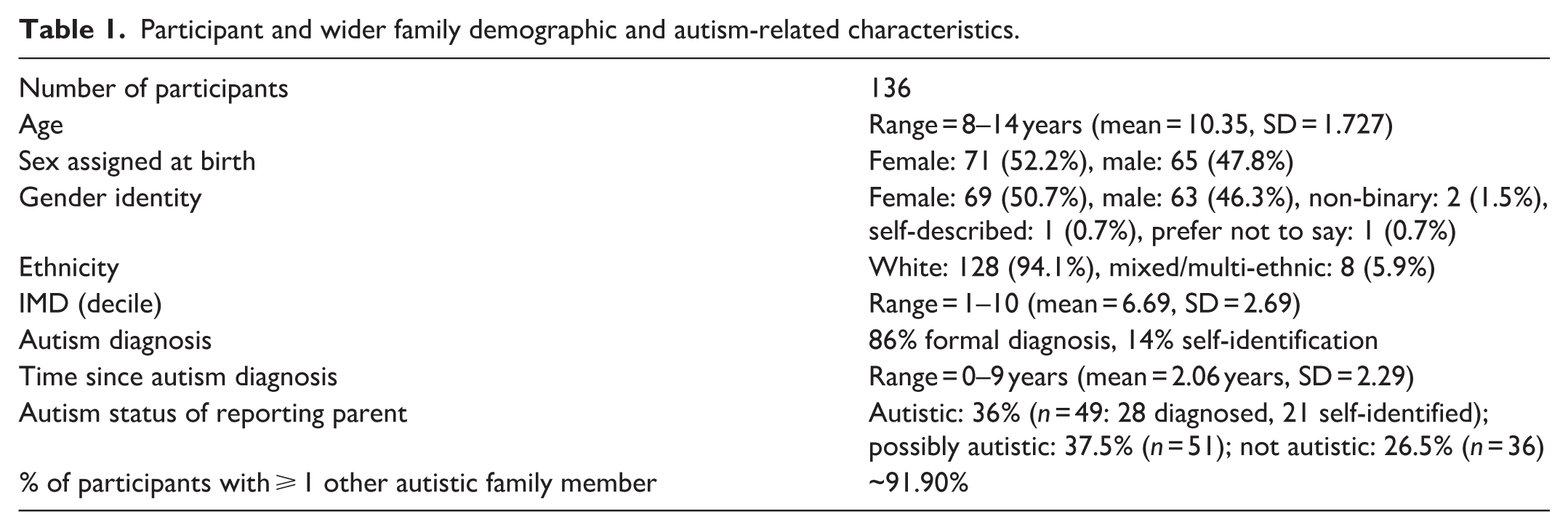
Children were aged between 8 and 14 years (see Table 1 and Figure 1(a)). All participants were current residents of the United Kingdom (Figure 1(b)). Socioeconomic status (SES) of the children was interpreted using the Index of Multiple Deprivation (IMD) (Noble et al., 2019), that is, area-based deprivation indices based on a combination of seven different types of deprivation (which ranks the population from most to least deprived). The mean IMD decile was less deprived than the UK average (see Table 1 and Figure 1(c)).
Participant and wider family demographic and autism-related characteristics.
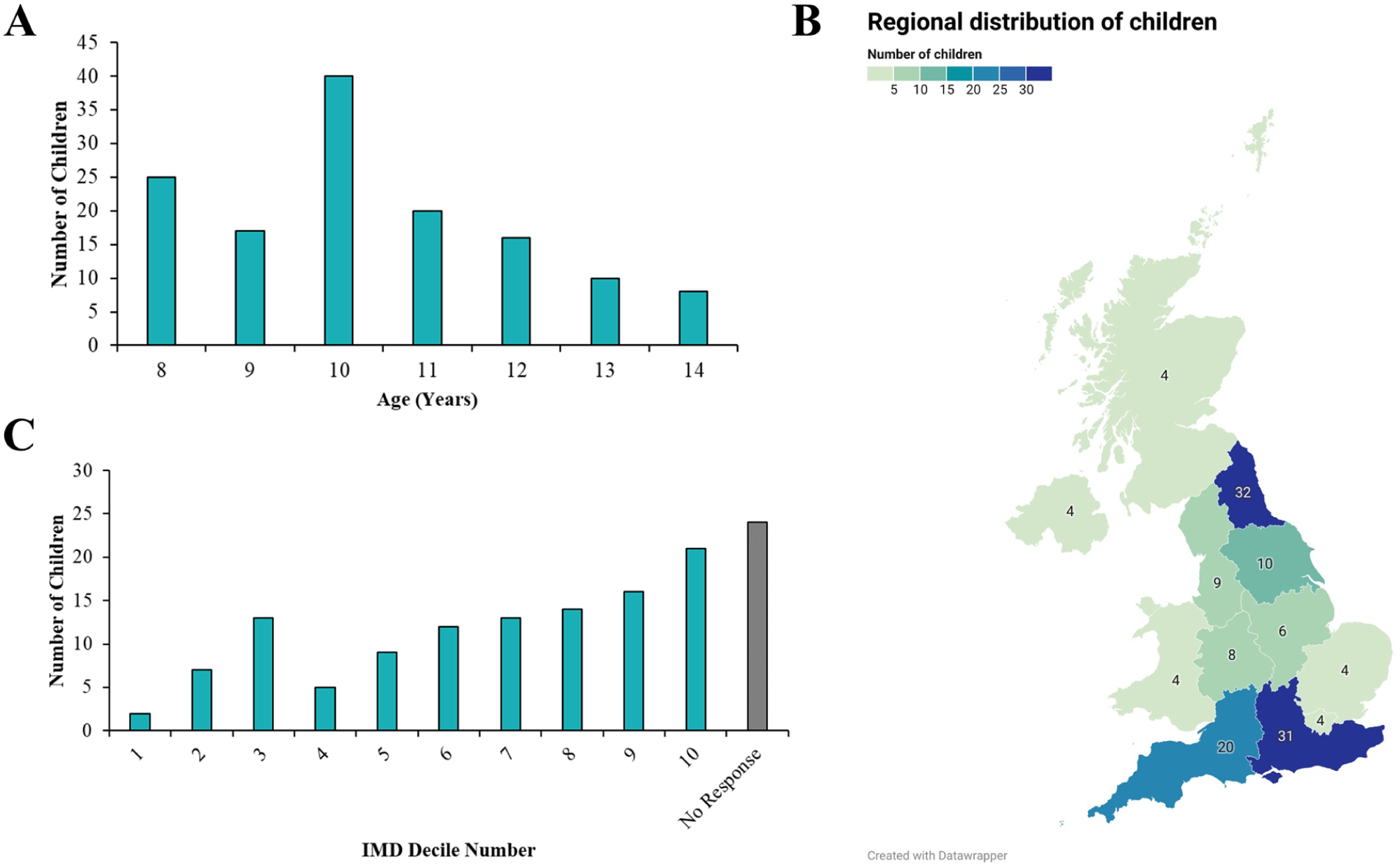
(a) Age distribution of children (n = 136). (b) Regional distribution of children (n = 136). (c) Index of multiple deprivation (IMD) deciles and socioeconomic status (SES) overview for participants residing in England.
As per inclusion criteria, all children were autistic and co-occurring conditions were prevalent (see Supplemental Material File 2: Table S1). Given autism’s high heritability (Sandin et al., 2017), we gathered information on whether the children had other autistic family members. About 73.5% of parents stated they were either autistic or possibly autistic (see Table 1). Of the 26.5% (n = 36) of the parents who are not autistic, 69.4% (n = 25) stated it was possible someone in their child’s family was. Hence, it was likely that 91.9% of the cohort had at least one other autistic family member.
Research ethics and language
This study was approved by the Faculty of Medical Sciences Research Ethics Committee, part of Newcastle University’s Research Ethics Committee. Consistent with endorsements from autistic adults in the United Kingdom (Kenny et al., 2016), we use identity-first language within this article (e.g. ‘autistic child’ rather than ‘child with autism’). However, as the children’s words have been reproduced, some quotes include the use of person-first language and/or contain grammatical errors.
Design
The study used a concurrent embedded mixed-methods, within-participants design, in which both qualitative and quantitative data were collected from both the children and their safe adults, both before and after they engaged with NeuroBears (see Supplemental Material File 1: Figure S1 for further details). As this article centres on the child’s voice, all data from safe adult questionnaires will be reported elsewhere. Moreover, as this article focuses solely on children’s lived experiences and opinions prior to commencing the NeuroBears course, only the baseline child data are reported here, alongside demographic and health information (provided separately by consenting parent/guardian).
Materials
Questions and response options were developed by researchers at Newcastle University (S.L.M., S.E.C., H.C., A.E.W., C.C.E., with advice from N.K.). Questionnaires were distributed via Qualtrics. The child baseline (i.e. pre-NeuroBears) questionnaire focused on children’s understanding and feelings about being autistic, how they communicate with others about their autistic experiences, how they feel when doing so and how brave they feel to self-advocate (see Supplemental Material File 3). Free text comments informed qualitative analysis. Summary and formal statistics are reported here for key quantitative questions. For details on NeuroBears (www.pandasonline.org), see Supplemental Material File 1: Figure S2.
Procedure
Participants volunteered by responding to recruitment posts on PANDAS online social media pages and the Newcastle University Cognitive Development Lab’s Facebook page. Parents received initial questionnaires by email, which children could complete online, either independently or via a video call with researchers. The video call option supported children who might struggle with the literacy demands of the online format or preferred to respond verbally. Independent completion was available for those who might find live interaction with unfamiliar adults challenging. This flexible, choice-based approach was advocated by autistic parent-researchers and aligns with emerging evidence supporting individualised methods to enhance autistic children’s participation in research (McGregor et al., 2025).
Children were also invited to use alternative communication methods, although none chose to do so. In video sessions, the researcher shared their screen and read each question and response option aloud. All children in these sessions chose to respond verbally, with answers transcribed in real time by the primary researcher. A second researcher attended all sessions to ensure accurate documentation of both responses, and any clarifying dialogue initiated by the child. In total, 13 children completed the questionnaire via video call and 123 completed it independently online.
Community involvement statement
NeuroBears was developed independently by autistic parents of autistic children, in collaboration with autistic young people, to address the lack of non-stigmatising post-diagnostic support for autistic children and young people. Its co-creator (N.K.) initiated a research collaboration with the lead author (S.L.M.), leading to the co-construction of research aims and methods alongside clinical advisors (J.R., S.W.), research assistants (A.E.W., C.C.E., S.E.C., H.C.) and co-creator K.R.. Hence, the research team consisted of autistic advocates and educators, alongside autistic, neurodivergent and neurotypical academics and clinicians. Multiple members of the research team are parents to autistic/neurodivergent children and all members of the research team, including the creators of NeuroBears (NK and KR), share authorship on this article.
To centre participant voice in the interpretation and dissemination of findings, a live online ‘results watch party’ was held via Zoom (19 April 2024). All child participants and their families were invited via email. S.L.M., A.E.W. and C.C.E. presented child-friendly findings using slides, with space for questions, discussion and a movement break. Discussion topics raised by the children and their families included naming NeuroBears characters (children), expanding the animal cast (children), the act of assigning positive or negative valence to certain emotions (family), dissemination plans (both) and future research directions (both). Following on from this session, a draft of the manuscript was emailed to all families who took part in the research. All child feedback was incorporated into dissemination plans and into an updated version of NeuroBears (2.0). Parent feedback on language choices, dissemination places and future research directions will guide future writings and research plans.
Data analysis
Quantitative data
Bar and radar charts summarise key quantitative child data. Wilcoxon signed rank tests were used to explore the difference between responses to those questions repeated across two contexts. Related-samples Friedman’s analysis of variance by ranks with Dunn-Bonferroni post hoc tests were used where more than two contexts were compared.
Qualitative data
We used Braun and Clarke’s (2006, 2021) style of reflexive thematic analysis (RTA) to analyse children’s free-text responses. RTA was selected to prioritise depth of meaning and attend to participants’ underlying experiences and interpretations. Code and initial theme names were generated at a semantic level, meaning that the surface meaning of what the children told us was taken at face value. A critical realist paradigm was subsequently adopted during the theme development and analysis stages (Fletcher, 2017), providing a framework that acknowledges both the reality of participants’ experiences and the interpretative role of the researcher. Hence, this added explanatory depth by permitting the researchers to make inferences about underlying social structures which may have influenced the children’s shared experiences. By integrating semantic coding with critical realism, we therefore sought to respect the children’s voices while also seeking to explore underlying patterns in the data, interpret meaning, uncover mechanisms and engage with multiple, subjective perspectives. All members of the research team consider autism, and neurodivergence more widely, in a manner consistent with the neurodiversity paradigm in which all neurotypes are equally valued (Chapman, 2019). This, and our collective lived experiences, inevitably influenced our critical realist interpretation and final theme refinement. For further information on the analysis process, see Supplemental Material File 4.
Data availability
Data supporting the study findings are available from the corresponding author upon reasonable request.
Results
Quantitative data
Figures 2 to 4 illustrate distribution of responses to key questions answered by the children (for completeness, see also Supplemental Material File 1: Figures S3 to S8). As evident from these figures, there was considerable distribution of responses across the cohort. However, clear patterns were also evident.
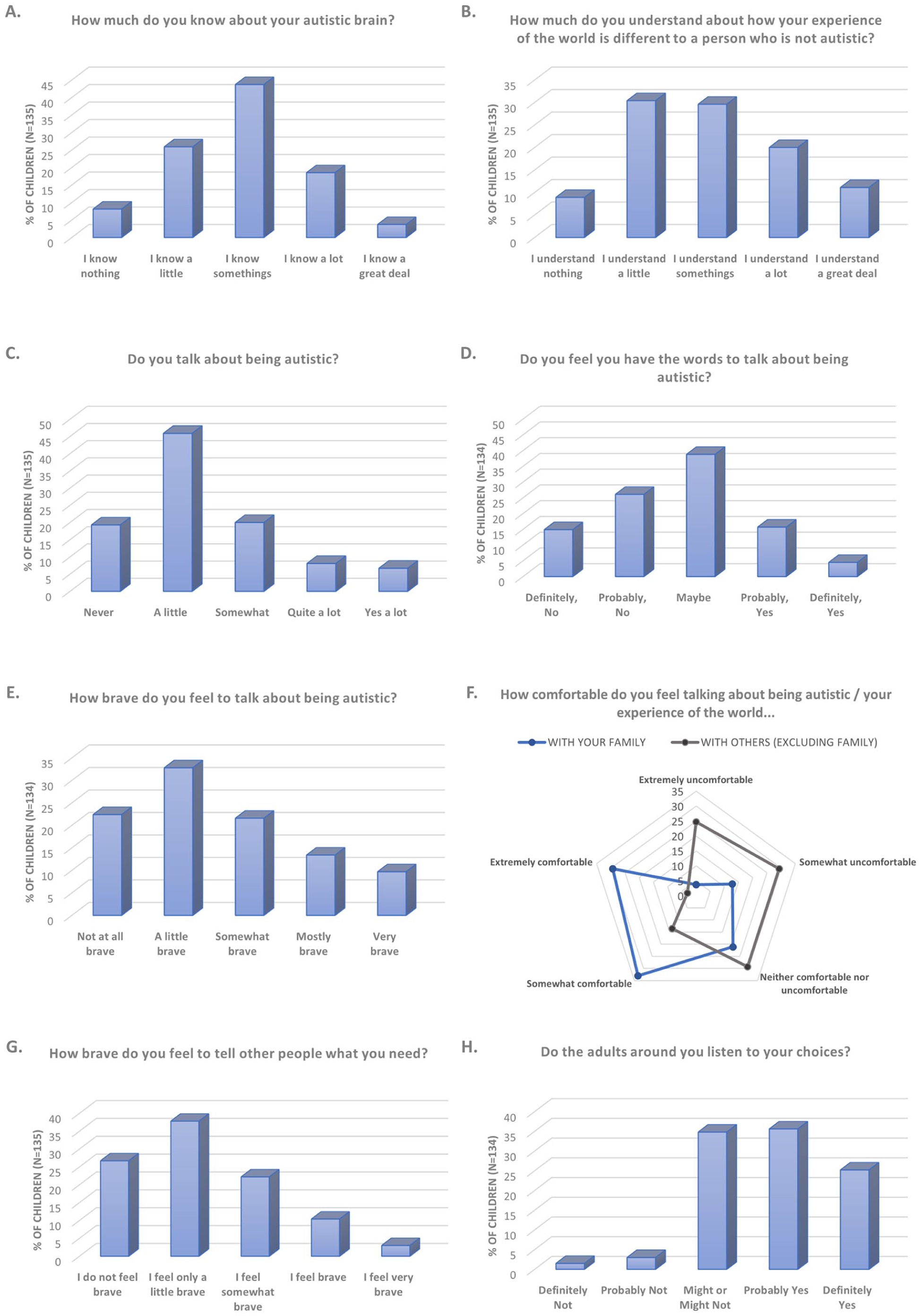
Distribution of the children’s responses to the individual questions.
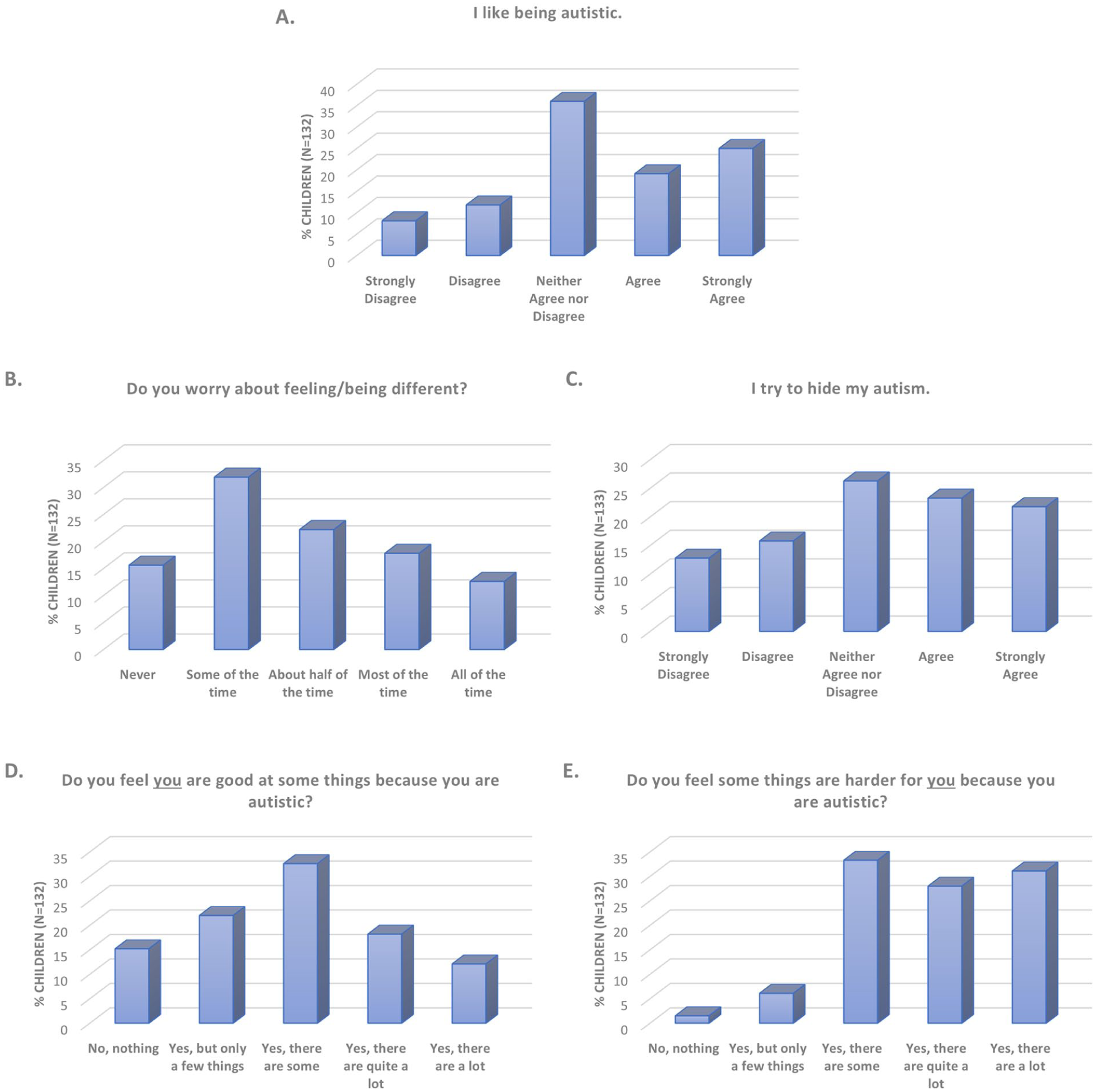
Distribution of the children’s responses to the individual questions.
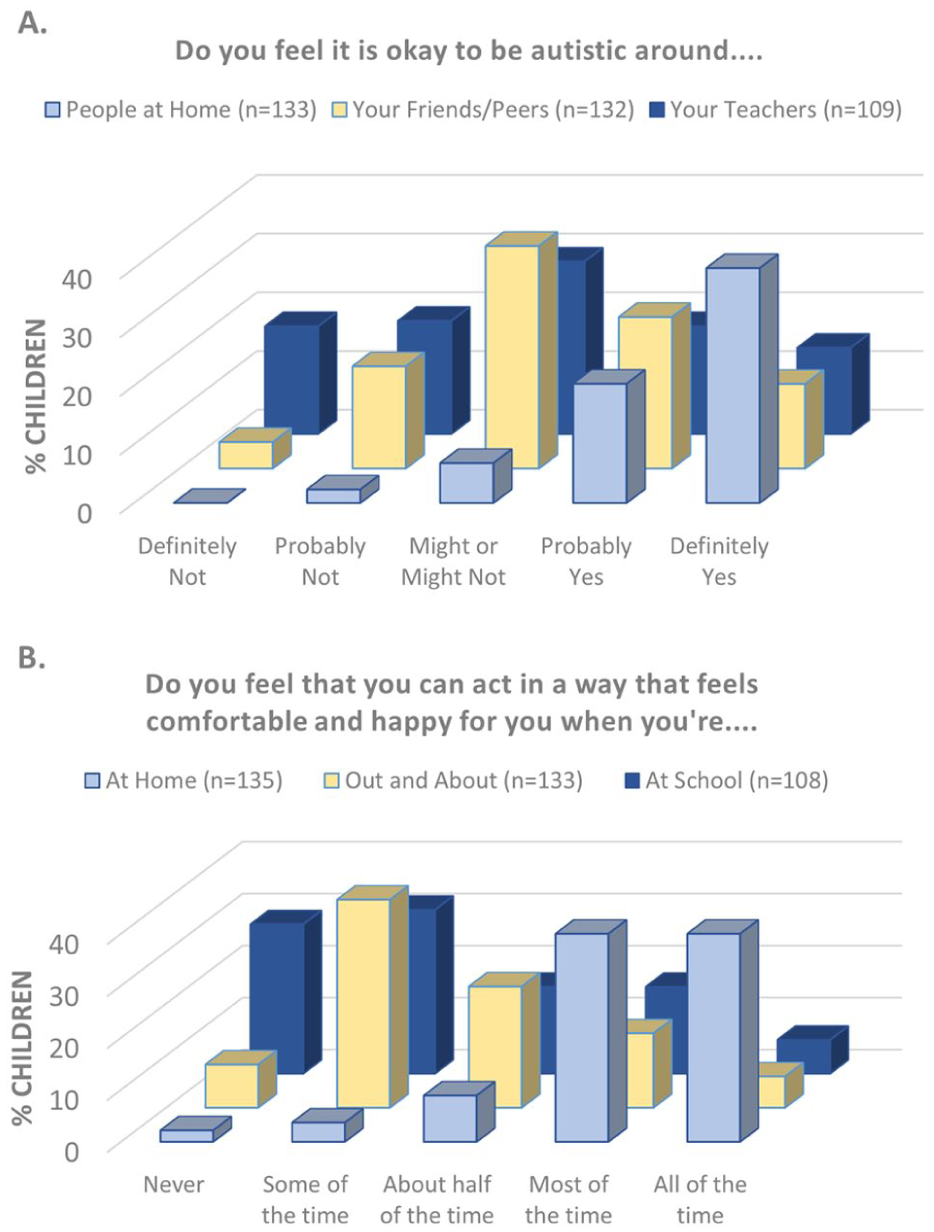
Impact of context on children’s perceptions of (a) whether it is okay for them to be autistic, and (b) whether they feel they can act in a way that feels comfortable and happy for them.
Considering children’s understanding of autism – few children reported knowing ‘a lot’ or ‘a great deal’ about being autistic and over one-third reported knowing ‘nothing’ or ‘a little’ (Figure 2(a)). Similarly, 39.3% of children reported understanding ‘nothing’ or ‘a little’ about how their experiences of the world differed from those who are not autistic (Figure 2(b)). Only 14.8% of children reported talking ‘a lot’ or ‘quite a lot’ about being autistic (Figure 2(c)), and only 4.5% of children reported feeling that they ‘definitely’ have the words to talk about being autistic in the first instance (Figure 2(d)).
Talking about being autistic with others appeared to be something that the children found particularly difficult – with less than 10% of children reporting feeling ‘very’ brave when talking about being autistic (Figure 2(e)) and almost one quarter (23.1%) of children stating that they ‘never’ feel safe or able to talk to others about their autistic experiences (Supplemental Material File 1: Figure S5). Moreover, 43% of children selected ‘anxious’ to describe their feelings when talking about being autistic, 31.9% selected ‘nervous’, 19.3% selected ‘scared’ and 14.7% selected ‘panicked’. Comparatively, words such as ‘excited’ (2.2%), ‘engaged’ (4.4%) and ‘accepting’ (4.4%), ‘happy’ (5.2%) and ‘calm’ (8.1%) were endorsed less, although 22.2% of children selected the more neutral adjective ‘okay’ and 14.1% endorsed feeling ‘comfortable’.
Importantly, it mattered who these conversations were with. With family, most children (62.4%) reported being ‘somewhat’ or ‘extremely’ comfortable talking about being autistic or their experiences, but this reduced to just 16.5% when these conversations engaged non-family members (Figure 2(f)). This context difference was significant (Z = −8.311, p < 0.001).
Self-advocating needs were also difficult for the children – with only 13.3% of children feeling either ‘brave’ (10.3%) or ‘very brave’ (3%) to tell other people what they need (Figure 2(g)). This was despite the majority of children (60.8%) noting that adults around them either ‘probably’ or ‘definitely’ listen to their choices (Figure 2(h)).
Children’s responses to questions about how they feel about being autistic revealed a complex status quo, whereby, more than double the number of children responded positively to the statement, ‘I like being autistic’ relative to those who responded negatively (44.1% relative to 19.9%; Figure 3(a)), most worried about feeling/being different at least ‘some of the time’ (83.8%; Figure 3(b)) and almost half reported masking their autism (45.1%; Figure 3(c)). Similarly, while most children (84.9%) recognised they were personally good at things because they are autistic (Figure 3(d)), almost all children (98.5%) also stated things are harder for them because they are autistic (Figure 3(e)).
Children’s responses to the questions of whether they believe it is ‘okay to be autistic’ around people at home, around friends/peers and around teachers also captured complexity, with 91% of children ‘probably’ or ‘definitely’ agreeing with this statement in the home context, but just 40.2% and 26.8% agreeing when around friends/peers or around teachers respectively. This between-context difference was significant (χ2(2) = 81.79, p < 0.001), with post hoc tests indicating that the children feel it is significantly more acceptable to be autistic around people at home relative to around friends/peers (p < 0.001) or with their teachers (p < 0.001) (Bonferroni adjustments applied) (Figure 4(a)). There was no significant difference between ‘friends/peers’ and ‘teachers’.
Significant contextual patterns were also observed when the children rated whether they could act in ways that feel comfortable and happy for them when they are at home, ‘out and about’ or ‘at school’ (Figure 4(b)) (χ2(2) = 85.95, p < 0.001). Post hoc tests found that the children rated home significantly more favourably than either ‘out and about’ (p < 0.001) or ‘at school’ (p < 0.001), but ‘at school’ and ‘out and about’ did not differ.
Quantitative data summary
Across this large cohort of children, feelings about being autistic and understanding of autism varied. However, several clear patterns emerged. For instance, although more children reported liking being autistic than disliking it and many recognised strengths linked to autism, a majority also worried about being different and almost all children reported that things are harder because of their autism. In addition, the majority reported having limited knowledge about autism, and about how their experiences of the world may differ from a person who is not autistic. Moreover, few children felt they had the language to discuss their autistic experiences with others, and talking about being autistic was generally difficult – with many children expressing feelings of anxiety, nervousness or fear, and only a minority feeling brave or safe discussing their experiences and to self-advocate. Finally, context was very important, with children feeling significantly more at ease talking about being autistic with family than with non-family members and believing that it is significantly more acceptable to be autistic (or to act in ways that feel comfortable and happy) at home than around their teachers or their peers.
Qualitative data
Overarching theme: growing up autistic in a ‘neurotypical world’
Throughout the children’s narratives, there was a strong sense of not fitting into the ‘neurotypical’ world, of their challenges being poorly understood, and finding those things difficult. In the words of Child 121 (age 8, male), ‘I know people see the world different to me and I find it difficult’. Within this overarching theme, we constructed four main themes. Theme 1 (‘Overwhelming Experiences’) and Theme 2 (‘Unsafe People’) encompassed the challenges that the children described to us, including a loss of felt safety in particular contexts, while Themes 3 (‘Sanctuary’) and 4 (‘Autistic Identity’) encompassed what the children told us about their search for safety and their developing autistic identities (see Figure 5 for Thematic Map). It was clear in many children’s responses that the children were aware that the challenges they face in everyday life are not typically experienced by those around them, particularly by their peers. The children were also aware that these challenges were poorly understood by the neurotypical people in their lives.
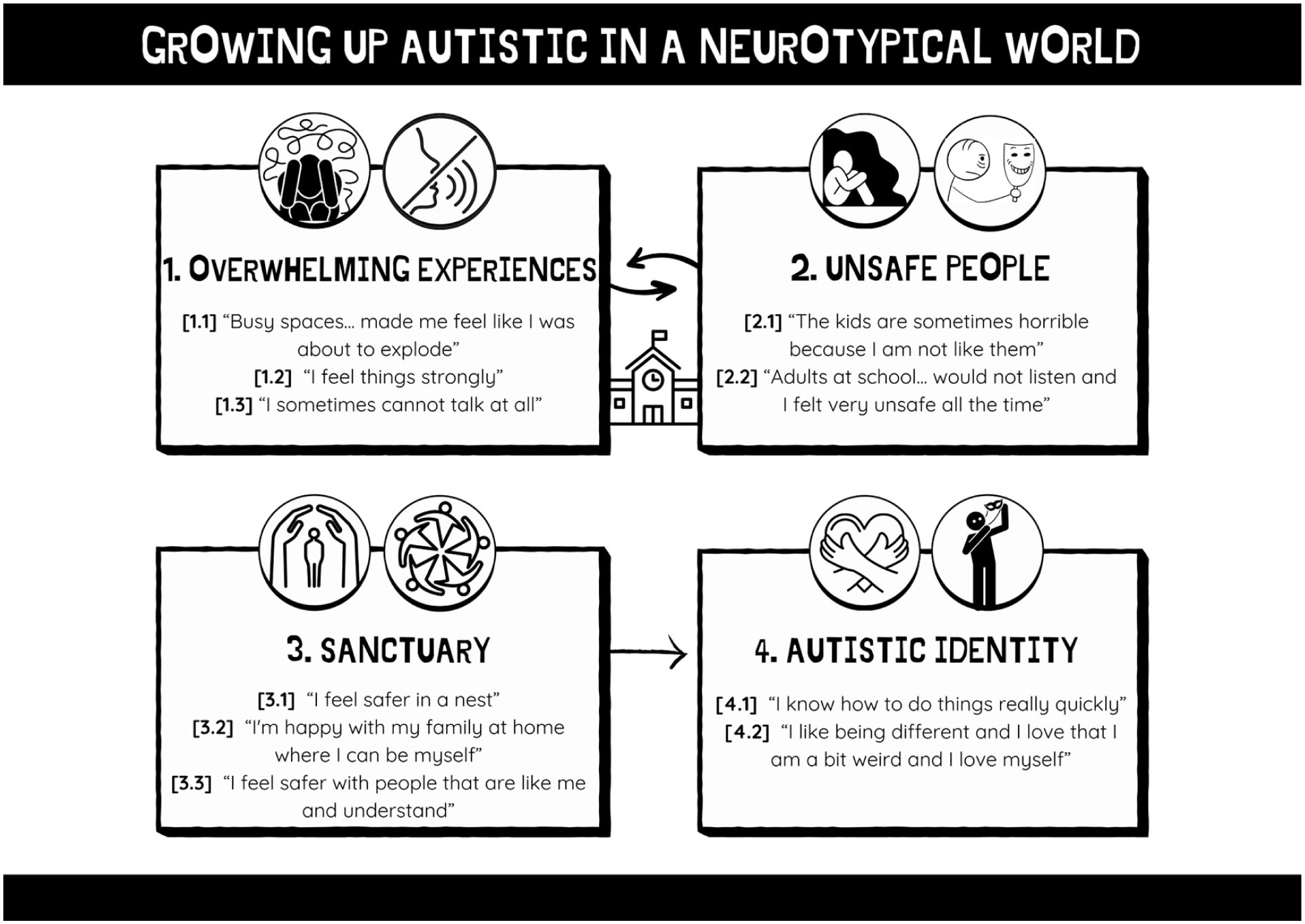
Thematic map showing the four main themes, alongside the subthemes and overarching theme.
Theme 1: overwhelming experiences
A prominent theme across children’s accounts was that navigating everyday life often felt overwhelming, frequently leading to dysregulation. This overarching theme was composed of three interrelated subthemes: (1.1) external sensory overwhelm, (1.2) emotional intensity and (1.3) communication shutdown (see Figure 5, Theme 1).
Subtheme 1.1: ‘busy spaces [. . .] made me feel like I was about to explode’
Children described frequent sensory overwhelm triggered by everyday environments, especially those outside the home. These included challenges across multiple sensory modalities (e.g. auditory, visual, tactile and olfactory) with auditory distress most cited. One child shared, ‘Loud noises scare me’ (Child 46, age 10, male), while another explained, ‘Bright light and noise are way too much. They made it feel hard to focus’ (Child 1, age 11, male). Sensory inputs could also cause exhaustion and pain: ‘I get very tired and overwhelmed, my senses cause me pain sometimes’ (Child 57, age 8, male).
Busy or crowded environments were particularly difficult. A vivid example came from one child who recalled, ‘Busy spaces like the packed boat we were on holiday [made] me feel like I was about to explode’ (Child 101, age 10, female). As a result, some children described anxiety about being outside their home environment: ‘[It is] Much harder when not at home, so I worry about going to other places’ (Child 32, age 13, female).
Subtheme 1.2: ‘I feel things strongly’
Many children described experiencing emotions with marked intensity, which they attributed to their autism. For some, this heightened sensitivity was framed positively: ‘You’re really kind and caring. You feel things a lot and more emotional’ (Child 124, age 11, male). Others expressed that such intensity could contribute to emotional overwhelm and anxiety: ‘[Being autistic] makes me feel more empathy . . . [but] makes me more stressed and anxious’ (Child 71, age 10, female).
Emotional regulation was often described as challenging, with several children reporting meltdowns when overwhelmed: ‘Managing my emotions [is harder for me because I am autistic], I have meltdowns when I’m overwhelmed’ (Child 40, age 10, female). Some also described difficulties identifying or expressing their own emotions, for example, ‘I’m good at recognising what other people are feeling (but not myself)’ (Child 3, age 12, female), making managing intense emotions more challenging and increasing risk of dysregulation.
Subtheme 1.3: ‘I sometimes cannot talk at all’
Many children described how overwhelm could inhibit their ability to communicate, especially in unfamiliar or stressful environments. For example, one child stated, ‘I sometimes cannot talk at all’ (Child 100, age 8, female), while another said, ‘I get anger inside and my eyes tingle and I can’t tell mummy [what I need] when we’re out’ (Child 110, age 10, male). Decision-making could also be difficult, for example, ‘I struggle to speak to people, I also struggle when people ask me to make lots of decisions at once’ (Child 105, age 11, female).
Some children reported using alternative communication strategies, such as writing: ‘When I am angry or sad I like to write instead of talk’ (Child 8, age 9, female). Others described concealing their distress due to difficulty explaining it, especially in school contexts: ‘School!!!! School is so hard and changes and when I can’t talk and nobody understands how hard it is for me as I can’t explain it well enough and I just say I’m fine at school but I’m not’ (Child 73, age 11, female).
Theme 2: unsafe people
A pervasive concern in the children’s narratives was the importance of identifying whether others, both peers and adults, were ‘safe’, with unsafe individuals, like overwhelming experiences (Theme 1), often appearing to activate the children’s threat response leading to heightened vigilance, and anxiety, and triggering protective behaviours such as withdrawal or masking. Unsafe individuals were typically described as (1) neurotypical peers or (2) adult professionals, particularly in school settings (see Figure 5, Theme 2). Feeling unsafe with peers was most frequently linked to vulnerability to victimisation while feeling unsafe with adults was more typically linked to feeling unheard and misunderstood.
Subtheme 2.1: ‘the kids are sometimes horrible because I am not like them’
Children often reported feeling different from their peers due to their autism, which heightened their vulnerability to bullying, exclusion and social isolation, especially in school. One child explained, ‘When at school, the kids are sometimes horrible because I am not like them’ (Child 93, age 12, female), while another shared, ‘People think I’m weird as I make faces and noise (stimming), but I can’t help myself’ (Child 1, age 11, male). Social isolation was common: ‘Not really [have] any friends at school (one autistic friend not at school)’ (Child 108, age 10, male).
In response, many children described masking their autistic traits to avoid victimisation. For example, ‘I don’t tell people [I’m autistic] at school because they will bully me’ (Child 96, age 8, female), and ‘[I hide my autism because] some people call me retarded’ (Child 11, age 14, male), and ‘At school I feel like I have to keep them [stims] down as people may see you as something else’ (Child 65, age 12, male). Several children noted the emotional toll of masking: ‘I can’t talk at school about it so I just mask and try fitting in then I let it out at home with Mum or sometimes Dad’ (Child 73, age 11, female), and ‘As a result of school recently I haven’t been great. I subconsciously try to hide the fact that I’m struggling and worry about what people notice. . . After school (or another social activity), I get very exhausted . . . Sometimes I wake up and feel that I can’t do anything’ (Child 3, age 12, female). This same child also noted the knock-on impact that struggling in one area could have on functioning in other areas of their lives: ‘If I’m having a hard time at school, other things that might not normally be hard could be’. Others expressed a sense of hiding their authentic selves: ‘When people make jokes about it, or they don’t know what it’s actually like, I feel like I have to hide it away, and who I actually am’ (Child 93, age 12, female).
Although some children noted that neurotypical peers could be supportive when curious and respectful – ‘Friends have questions and are interested’ (Child 74, age 10, female) – many were cautious about disclosing their autism. Trust was built slowly and selectively, ‘I told two of my friends at school . . . I don’t want anyone else to know’ (Child 3, age 12, female), and particularly difficult within the school context: ‘[I talk about being autistic] with safe adult [Mum] and friends, everyday. With [other] family, never. Not at school’ (Child 58, age 11, female). Others shared how past betrayals made them wary: ‘I talked about it with my ex-best friend . . . he used that to make fun of me. We are no longer friends’ (Child 1, age 11, male).
Some children reported difficulty identifying safe peers due to social inference challenges: ‘Talking to people and figuring them out are very stressful. I can’t tell whether people genuinely like me or not’ (Child 1, age 11, male).
Subtheme 2.2: ‘adults at school . . . would not listen and I felt very unsafe all the time’
Children frequently described feeling unsafe around adults who did not listen to or understand them, often school staff. One child reported, ‘Adults at school when I was there would not listen and I felt very unsafe all the time. This was all adults apart from one’ (Child 111, age 10, male). Others were highly discerning about which adults they could trust: ‘I feel alright talking to SENCO teacher . . . not around regular teachers’ (Child 93, age 12, female), and ‘I only hang around good adults like my parents, grandparents, and bushcraft mentor’ (Child 32, age 13, female).
One child illustrated this difference with a metaphor: ‘Talking to the right person feels like talking to a fluffy cat who is nice/friendly, make an effort to what I am saying, then I feel that they are the right person. The wrong person feels like a cat that tries to bite you’. (Child 69, age 11, female)
Children also reported that their needs were often unnoticed or misunderstood in environments without trusted adults: ‘If I get overloaded, I don’t think people would notice. People who know me well can pick up on when things are tricky’ (Child 79, age 8, female). Some masked in front of adults outside school as well: ‘I do hide [my autism] if you go to school or with CYPS [Children and Young People’s (mental health) Services]’ (Child 83, age 10, female).
A lack of adult understanding often discouraged children from self-advocating: ‘I don’t feel brave to tell people at school what I need. I don’t think they listen or get why I’m struggling . . . [and] I’m scared of being told off’ (Child 111, age 10, male). Previous failed attempts reinforced this: ‘Social worker doesn’t listen [to what I need] even when I was brave enough [to tell them]’ (Child 99, age 9, male).
Feeling misunderstood contributed to loneliness and isolation: ‘If they don’t [understand], it makes me feel alone and sad and isolated’ (Child 4, age 11, female). For some, these dynamics made school inaccessible: ‘At school they don’t listen to things we have asked for . . . I become tired more easily’ (Child 95, age 14, female), and ‘At school I never felt safe. My mum teaches me at home now’ (Child 63, age 13, male).
Despite this, the presence of even one trusted adult could help children manage difficult environments: ‘I feel safe at home and with close trusted people in unfamiliar or challenging environments’ (Child 51, age 11, female). Unfortunately, such trusted adults were rare in many school contexts.
Theme 3: sanctuary
For many children, safety was closely associated with specific people and places that allowed them to regulate, express themselves authentically and avoid the pressures of social masking (see Figure 5, Theme 3). Home, particularly when cohabited by supportive family members, emerged as a primary sanctuary, alongside other safe spaces and connections with similarly neurodivergent individuals or non-human companions. Notably, within this theme there was a sense of movement from states of overwhelm and threat-based emotions and behaviours (Themes 1 and 2) towards restoration, authenticity and social connection.
Subtheme 3.1: ‘I feel safer in a nest’
Home was frequently described as a place of comfort, autonomy and sensory relief. One child summarised this vividly: ‘I feel safer in a nest . . . I can only be happy and feel safe at home’ (Child 63, age 13, male). At home, children described greater control over their environment, which allowed them to meet sensory needs more easily, ‘At home I can use things I need (like chewy necklaces) and move more than at school’ (Child 132, age 8, male), and offered reprieve from social expectations: ‘I worry what people will think about my choices in other places’ (Child 107, age 13, male).
Home offered a contrast to school, which was often experienced as overwhelming or invalidating: ‘I don’t feel comfortable with a lot of the choices I make at school, and at home it is the opposite’ (Child 8, age 9, female). Several children referenced the physical comfort of home environments, such as being able to rest, escape from stimulation, or simply be alone when needed: ‘If things get too much at school, I can’t go somewhere quiet like at home’ (Child 36, age 9, female). For some, even small features contributed to sanctuary, such as ‘Home is better, more comfortable. School chairs are uncomfortable’ (Child 132, age 8, male). Physical containment or enclosed spaces were also comforting for some: ‘I feel more comfortable in enclosed spaces’ (Child 130, age 10, female).
Subtheme 3.2: ‘I’m happy with my family at home where I can be myself’
Home was not just a safe space physically but also socially. The presence of safe, understanding people, especially family, was vital. One child stated, ‘I’m happy with my family at home where I can be myself. I don’t like being out with other people’ (Child 63, age 13, male). Many children highlighted that home was where they felt most listened to: ‘At school, my choices are not listened to. At home, they mostly are’ (Child 55, age 8, female). Being at home also allowed children to unmask and engage in authentic behaviours such as stimming: ‘I don’t mask at home’ (Child 75, age 8, male), and ‘I can be me at home the most’ (Child 111, age 10, male). One child added, ‘I probably stim more around people I’m comfortable with’ (Child 16, age 13, non-binary).
Within trusted family relationships, children reported feeling more confident to self-advocate: ‘If I’m with my parents, I would feel comfortable [telling them what I need], but with someone like a normal teacher, I would probably be unable to’ (Child 3, age 12, female). They were also more comfortable making choices: ‘At home I’m very comfortable [to make choices that help me], but at school everything takes a lot of effort’ (Child 3, age 12, female). Conversations about being autistic were often limited to the home as well: ‘Only person I openly talk to about my autistic experiences is my mum’ (Child 55, age 8, female).
Subtheme 3.3: ‘I feel safer with people that are like me and understand’
Several children identified shared autistic identity, especially with family members, as key to feeling understood. ‘Different with mum . . . most likely autistic too, so understand what it’s like when crowds get too busy and it’s too loud’ (Child 93, age 12, female). Autistic peers and relatives were seen as easier to relate to and less judgmental: ‘Less judged by autistic friends’ (Child 69, age 11, female), and ‘I only talk about being autistic to friends I know Will understand (they either are autistic or have a family member who is autistic)’ (Child 1, age 11, male).
These relationships fostered mutual understanding and solidarity: ‘With my friends who have autism or are neurodiverse, it is easier to understand them or the way they are feeling’ (Child 93, age 12, female). Shared humour and collective experiences also contributed to feelings of connection: ‘Funny jokes with family/friends who are autistic about autism’ (Child 93, age 12, female). Some children participated in explicitly autistic spaces, such as art groups or online forums, to access this sense of belonging: ‘I go to an art class where everyone is autistic. We talk to each other about being autistic. I don’t talk like that in school’ (Child 57, age 8, male) and ‘I also talk about it [being autistic] on TrevorSpace because a lot of autistic people are LGBTQIA+’ (Child 16, age 13, non-binary).
For children without such social support, comfort was often found in non-human companions. One child shared, ‘I don’t have any friends . . . Toys become my friends and I can play with them’ (Child 109, age 8, male). Others described their affinity with animals: ‘I prefer reptiles. They are like me, they don’t show lots of emotion so I don’t have to read them’ (Child 1, age 11, male), and ‘[Because I’m autistic I’m] good at talking to animals (and understanding what they are saying)’.
Theme 4: autistic identity
Many children reflected on their autistic identity, with responses ranging from acknowledging unique cognitive strengths to articulating challenges in embracing this identity publicly (see Figure 5, Theme 4). The development of a positive autistic identity, closely linked to self-acceptance and reduced masking, was evident in some narratives but often complicated by contextual pressures and a lack of external acceptance.
Subtheme 4.1: ‘I know how to do things really quickly’
Children frequently linked their autistic identity to cognitive and sensory strengths. Descriptions included enhanced memory, pattern recognition and information processing: ‘Being able to suck in a load of information at one time. Being able to connect that to other pieces of information’ (Child 90, age 11, male), and ‘I know how to do things really quickly’ (Child 82, age 10, female). Others highlighted perceptual sensitivity as an asset: ‘Notice more than others so [I] would be a better detective’ (Child 61, age 10, female), and ‘Not having any sound filters can be helpful’ (Child 68, age 11, female). One child humorously expressed heightened awareness as protective: ‘[You] see things others don’t, [so you are] less likely to get murdered’ (Child 30, age 12, female).
Despite acknowledging these strengths, many children also expressed that being autistic often made life more difficult: ‘[Being autistic is a] harder life for people’ (Child 110, age 10, male), and ‘Everything is harder for me [because I am autistic]’ (Child 69, age 11, female). These experiences often overshadowed the benefits, particularly in environments where the children felt misunderstood or unsupported. Thus, while the capacity to name autistic strengths was evident, this did not always translate into the development of a positive identity – particularly where the need to mask to remain safe in everyday life remained strong.
Subtheme 4.2: ‘I like being different and I love that I am a bit weird and I love myself’
Here it was evident that a small number of children provided narratives consistent with developing positive autistic identities, for example, ‘I like being different and I love that I am a bit weird and I love myself’ (Child 121, age 8, male), ‘You’re unique, you feel like yourself’ (Child 126, age 11, male), and ‘It makes me me :-)’ (Child 55, age 8, female), while another child spoke of how acceptance increased their confidence to be openly autistic and resist masking, for example, ‘You can’t turn off autism – why bother hiding it?’ (Child 10, age 10, male). This was not, however, ubiquitous across the cohort, with some children feeling unanchored to the concept of autism, for example, ‘[I] don’t know what autism is’ (Child 29, aged 8, female).
Qualitative data summary
Four key themes were constructed, all relating to the children’s experiences of growing up as a neurominority. The world beyond the home was often described as overwhelming, unpredictable and socially unsafe. In these environments, children frequently felt misunderstood or unheard, leading to a pervasive loss of felt safety. To cope, many described the need to hide or mask their autism, which often led to exhaustion, worry and anxiety about future interactions.
In contrast, home was typically experienced as a sanctuary, providing sensory comfort, greater autonomy and emotional safety. Trusted relationships with family members (especially autistic relatives), safe adults and neurodivergent peers were central to this sense of sanctuary, offering understanding, companionship and the freedom to unmask and self-advocate.
While many children identified strengths associated with being autistic, such as perceptual sensitivity, deep empathy or unique ways of thinking, these were often overshadowed by daily challenges and limited opportunities for authentic self-expression. Still, a small number of children described a positive autistic identity, expressing pride in their differences and confidence in being their authentic selves.
Together, these four themes captured the children’s lived experiences of navigating between threat and safety. Across their accounts, there was a sense of movement from states of overwhelm and defensive responding often described within neurotypical-dominant school contexts (Themes 1 and 2) towards restoration, authenticity and social connection (Themes 3 and 4) often discussed within the contexts of home and/or neurodivergent community. These patterns appeared to reflect distinct yet interrelated emotional processes that shaped the children’s everyday experiences, which are explored further in the ‘Discussion’ section.
Discussion
This study set out to centre lived experiences of autistic children, addressing a well-documented absence of their voices in traditional autism research (DePape & Lindsay, 2016; Holt et al., 2022). Using baseline data from 136 autistic children (aged 8–14 years) enrolled in a longitudinal study, we explored their understanding of autism, their varied autistic experiences, their feelings about being autistic (both generally and by context) and their confidence in self-advocating for their needs across contexts.
The challenges of growing up autistic in a neurotypical world
A pervasive feature across the children’s narratives was the experience of being overwhelmed as a neurominority (Theme 1) – particularly at school – due to intense sensory input, complex and uncertain social interactions, and/or heightened emotional sensitivity. Overwhelm often resulted in distress, dysregulation, difficulties describing these experiences to others, and, at times, being unable to speak. It could also make decision-making difficult, with some children feeling frozen or unsure what to do in stressful situations.
Communication difficulties, often intensified by stress and external demands, reflect broader patterns identified by autistic adults, whose reports implicate both internal factors (like anxiety) and external ones (such as unaccommodating communication partners or overwhelming communicative environments) (Cummins et al., 2020). Difficulties making decisions in challenging environments also align with prior research showing that autistic individuals may experience slower decision-making, mental ‘freezing’ or a tendency to gather extensive information before acting, especially under stress (Luke et al., 2012, p. 615; Vella et al., 2018). It is also consistent with evidence that autistic adolescents tend to engage in more deliberate and cautious reasoning when making decisions, that is, they typically take more time to gather evidence and are less likely to jump to conclusions (Brosnan & Ashwin, 2023; Brosnan et al., 2014). Hence, while these traits likely reflect a careful and logical approach, they may also contribute to anxiety and difficulty coping in fast-paced or unpredictable environments. For educational professionals, recognising this profile, and responding compassionately and appropriately, is important (see the ‘Implications for schools and education settings’ section).
It was also evident from the children’s accounts that they were acutely aware of how they differ from their peers, and of the challenges that this presented for them (Theme 2). Autistic children’s awareness of themselves as different from their neurotypical peers is consistent with previous findings (for recent reviews, see Horgan et al., 2023; Lynam et al., 2024), as too is the finding that when these differences were perceived as negative, this negativity can become entangled within the children’s developing self-concepts (Humphrey & Lewis, 2008; see also E. I. Williams et al., 2019), hence constraining positive autistic identity (Davies et al., 2024). It is for this reason that many autistic advocates strongly argue in favour of informing autistic children about their diagnoses as soon as possible – as this increases opportunities to understand their differences in an informed manner (Oredipe et al., 2023) – hence decreasing the deep suffering described by autistic individuals prior to understanding their diagnosis (Prince-Hughes, 2005). We note, however, that access to assessment/support is uneven, and structured identity support post-diagnosis is frequently lacking; these system-level realities require attention alongside any recommendations for early, supportive disclosure.
Autistic identity: emerging, yet constrained
Viewing being autistic in a non-deficit manner, and perhaps with having unique skills and characteristics, has been linked with having a positive autistic diagnostic identity in the adult autism literature and with reduced masking/camouflaging and increased psychological wellbeing (for reviews, see Davies et al., 2024; Gray et al., 2024). Moreover, one of the first steps in developing a positive autistic identity is understanding what autism means for you personally (for a review, see Gray et al., 2024). However, few children in this cohort reported knowing ‘a lot’ about being autistic and over one-third reported knowing ‘nothing’ or ‘a little’. This lack of understanding and knowledge of autism will likely constrain the children’s self-understanding, the development of positive autistic identities and the ability to describe and advocate for their support needs (Davies et al., 2024; Gray et al., 2024; Oredipe et al., 2023). We also found that only 4.5% felt they ‘definitely’ had the language to talk about being autistic, thus further limiting opportunities to develop their understanding of autism and what it means for them personally through conversations with others.
Despite these challenges, nearly half of the children expressed that they liked being autistic, and a majority recognised personal strengths related to autism, such as heightened perception, creativity, deep empathy or rapid learning (Theme 4). This did not, however, always translate into an integrated, confident autistic identity, with positive self-assessments often overshadowed by pervasive concerns about being different from their neurotypical peers (see Theme 2).
Other studies have also found considerable variation between autistic young people in terms of how they view their autism diagnosis – ranging from ‘oppressive’ to ‘liberating’ (Mogensen & Mason, 2015; Trew, 2025), and even a co-existence of conflicting emotions within individual young people (e.g. J. L. Jones et al., 2015; Trew, 2025). For instance, Trew (2025) used in-depth narrative interviews with autistic adolescents to reveal that while many embraced their autism as an integral part of their identity, acknowledging strengths such as heightened perception and creativity, they also reported significant feelings of social and emotional disconnection.
Taken together, these findings, alongside earlier work, emphasise the nuanced and sometimes conflicting emotions involved in autistic identity development during childhood and into adolescence. This complex interplay of emotions has also been widely evidenced by autistic adults (for reviews, see Davies et al., 2024; Gray et al., 2024). However, to the best of our knowledge, this study is the first to document this in children so young, to quantify the prevalence of these emotions in a large sample of autistic children, and to confirm a preponderance of negative sense-making about being autistic among children.
Moreover, these collective studies suggest that the emergence of autistic pride in autistic children and young people may be constrained – not by a lack of strengths but by systemic barriers that restrict safe, informed identity exploration and expression. They also underline the importance of context, social acceptance, and the challenges of navigating stigma and masking in shaping how autistic young people understand and express their identities.
Stigma, masking and burnout/exhaustion
More specifically, the overshadowing of the children’s understanding of positive aspects of being autistic was likely linked to the children’s daily experiences, that is, that being ‘different’ makes them targets for bullying, ridicule and social exclusion (Theme 2). Indeed, only one-third of the children agreed that it is ‘probably’ or ‘definitely’ okay to be autistic around their friends/peers. These often school-based negative encounters led to social isolation, reduced felt safety and a need to mask their autistic identity to avoid mistreatment, conditions starkly contrasting with those known to support positive autistic identity development, such as external acceptance and support (Davies et al., 2024) (see also Theme 3).
These findings align with the findings of a longitudinal qualitative study exploring autistic young people’s identity development within mainstream educational settings, which found tension between a desire to be accepted as ‘normal’ and the reality of feeling different, often resulting in camouflaging or opting out-of-school-based support to maintain social acceptance (Mesa & Hamilton, 2022). Given the prevalence of derogatory autism stereotypes among students (Wood & Freeth, 2016), the documented feelings of shame and negativity around autism diagnoses in young people (e.g. Humphrey & Lewis, 2008; Mesa & Hamilton, 2022; Ruiz Calzada et al., 2012) and previous accounts that awareness of autism stigma and discrimination begins in childhood (Botha et al., 2022), it is unsurprising that many children reported feeling anxious, scared or panicked when discussing their autistic experiences. However, for many, masking carried a significant emotional toll, leading to exhaustion, dysregulation and a diminished sense of authenticity. These findings align with previous work linking masking with poorer mental health outcomes and burnout (Evans et al., 2024; Miller et al., 2021; Raymaker et al., 2020).
Teachers’ attitudes likely also contribute. Studies report greater dislike/avoidance of autistic students in vignettes (Chung et al., 2015) and lower teacher-reported closeness/higher conflict with autistic students versus non-autistic students (Blacher et al., 2014; Caplan et al., 2016; Eisenhower et al., 2015; Longobardi et al., 2012). It is unsurprising, then, that autistic children deduce that it is not conducive to positive relationships with their teachers to be openly autistic in the classroom. While few studies capture autistic students’ own perspective of teacher–student closeness, a substantial minority of autistic students (within the one cohort reported in the literature) reported feeling unheard, unfairly treated or often in trouble with their teachers (Losh et al., 2022). Although this sample was younger and from a different national context than the children who participated in this study, these findings dovetail with those in the current study and raise concerns. Future research should directly explore how autistic and nonautistic students perceive their relationships with teachers, particularly whether autistic students feel uniquely compelled to mask core aspects of themselves to gain acceptance from their teacher(s). This is crucial given consistent evidence linking poor-quality student–teacher relationships to worse school adjustment and outcomes (e.g. Baker et al., 2008; Fowler et al., 2008), and, as noted, the association between masking and poorer long-term mental health (e.g. Baker et al., 2008; Fowler et al., 2008).
Context and neurotype shape safety and identity
A core contribution of this study lies in its demonstration of the significant role context plays in shaping autistic children’s experiences. Children consistently reported feeling more able to talk about being autistic and to behave authentically at home than in school/public settings. Home was frequently described as a sanctuary (Theme 3) from an overwhelming (Theme 1) and unsafe (Theme 2) external world providing respite from public and anticipated stigma (Han et al., 2022). Quantitatively, perceived safety/acceptance differed by context, with home most supportive. Prior work also notes home as safer, although rarely with statistical comparison (e.g. Fielding et al., 2025; Mesa & Hamilton, 2022).
Children described home as physically and sensorily more manageable, descriptions that align with previous findings that caregivers report routines are more manageable at home due to more predictable sensory input and better access to supportive resources (Schaaf et al., 2011). Home environments also typically involve fewer social demands and provide greater autonomy and control (Heyworth et al., 2021). Viewed through this lens, home likely preferentially activates the soothing-affiliation system (associated with feelings of safety, contentment and calm; Gilbert, 2009), counterbalancing the chronic threat activation many children described in school/public settings.
Central to the sense of safety at home were trusted relationships – often with autistic family members – who were experienced allies attuned to the child’s needs. Shared neurotype appeared to enhance anticipation of distress and responsive support. Safety also emerged with autistic/neurodivergent peers outside school, characterised by shared understanding, freedom of expression and absence of judgement, contrasting sharply with interactions with school peers and professionals. These experiences mirror concepts from the adult autistic literature, such as autistic social connectedness and belongingness (Botha et al., 2022).
Likely relevant is the double empathy problem that recognises that communication between autistic individuals is highly effective and does not suffer the communication issues evident when autistic and non-autistic people communicate (Crompton et al., 2020; Foster et al., 2025; Milton, 2012). Being with autistic family members and friends likely facilitates affective communication, leading to relationships that feel harmonious and safer.
Distinguishing threat and safety systems in children’s accounts
It is important to reflect on the coexistence of Themes 2 and 3 – ‘Unsafe People’ and ‘Sanctuary’. We hypothesise that these themes do not reflect a simple ‘unsafe versus safe’ continuum but two interlocking yet distinct processes: threat activation versus upregulation of the soothing-affiliation (safeness/soothing) system. In compassion-focused frameworks (Gilbert, 2009; Kirby et al., 2017), the threat/protection system is associated with heightened vigilance, anxiety and defensive behaviours such as masking or withdrawal, whereas the soothing-affiliation system underpins feelings of calm, connectedness and social engagement. Children’s narratives aligned with this model: invalidation or misunderstanding by peers and adults activated threat and defensive responding (Theme 2), while experiences of acceptance, understanding and sensory comfort engaged the soothing-affiliation system – facilitating regulation, authenticity and social trust (Theme 3).
Implications for schools and education settings
Viewed through a compassion-focused lens (Gilbert, 2009; Kirby et al., 2017), home contexts appear to preferentially activate the soothing-affiliation system, counterbalancing chronic threat activation reported in school and public settings. The onus is on schools and education policymakers to reduce threat cues, for example, stigma, unpredictability, punitive responses, bullying and epistemic injustice (Fielding et al., 2025; Fisher, MacLennan, Mullally, Rodgers, & Tzemou, 2025; Horgan et al., 2023), and increase reliable cues of safety and affiliation, for example, relational warmth, predictability, sensory accommodations, trusted adults and autistic peer connection. Hamilton and Petty (2023) propose compassionate pedagogy as a framework for embedding safety, attunement and relational repair via predictable structure, low-arousal communication and reflective staff responses.
Drawing from neurodiversity-affirming education research (Crompton et al., 2023, 2024; Heyworth et al., 2021), practical applications include the following:
Predictable routines and transparent transitions that reduce uncertainty and support co-regulation. Heyworth et al. (2021) showed that autistic students experienced reduced anxiety and greater engagement when given flexibility, advance notice of changes and self-paced routines, that is, conditions that enhance regulatory capacity, confidence and sense of control.
Sensory-informed adjustments, such as quieter spaces, seating choice and movement breaks. Neurodivergent pupils in Fielding et al. (2025) described school as a ‘sensory nightmare’, with noise, crowded corridors and unexpected changes amplifying distress and attendance difficulties while advocating for quiet, safe spaces and reduced timetable changes as key supports.
Flexible communication pathways (e.g. writing, augmentative and alternative communication devices, gesture), and recognising the double-empathy framework, which emphasises that communication breakdowns are relational rather than individual (Crompton et al., 2020; Milton, 2012). Supporting multimodal communication affirms autonomy and reduces threat responses for both students and teachers.
Relational training for staff and peer-based support groups, including neurodivergent-led peer groups, which can foster mutual understanding, shared regulation and belonging (Crompton et al., 2023, 2024). Such initiatives leverage the affiliative-soothing system by providing opportunities for authentic connection and modelling of compassionate interaction.
Together, these directions integrate compassion-focused and double-empathy perspectives to offer concrete, evidence-based targets for school-based policy and research aimed at fostering emotional safety and autistic wellbeing.
Limitations and strengths
Potentially limiting this research is the format of long questionnaires, which lead to boredom and shortened answers and selection bias regarding who could participate. Lack of ethnic diversity within this study is critical to address, as is the necessity to acknowledge the nuanced intersectionality of race, ethnicity, sexuality, gender, socioeconomic factors and age as factors that create distinct barriers to self-discovery, community-building and advocacy within the context of autism. The dominant narrative surrounding autism has historically been white and Western-centric (Silberman, 2017), thereby alienating non-white individuals from safe spaces for communal discussion and connection surrounding their multiple marginalised identities.
Underlying issues of privilege are paramount in understanding this narrative. Individuals with more privileged identities may have the luxury of exploring and acting upon concepts such as neurodivergent authenticity or ‘unmasking’, without fear of repercussions. However, members of minority groups may not have the same level of safety and protection when advocating needs or expressing boundaries due to systemic biases and discrimination. This cohort likely had over-representation of families living in least deprived areas of the country. Our participants also all had parents actively seeking a better understanding of autism by engaging in this research, which limits generalisability. A key strength is the large, uniquely detailed baseline sample of autistic children, allowing triangulation across methods and contexts.
Conclusion
The data presented here highlight the urgent need to change how society, and particularly educational systems, engages with autistic children. The children’s accounts offer a compelling challenge to deficit-based narratives: they do not lack personhood (Chance, 1974), self-awareness and understanding (e.g. D. Williams, 2010), nor the capacity to produce reliable knowledge on autism (Frith & Happé, 1999). Across contexts, children demonstrated acute social perception, emotional insight and agency in how they made sense of being autistic, despite frequently encountering upset, stigma and exclusion.
What emerged most strongly was the central role of safety and acceptance in enabling autistic identity development and self-expression. Consistent with compassion-focused models of emotion regulation, contexts that activated feelings of safeness and soothing supported regulation, authenticity and connection, whereas those that evoked threat or social danger (most notably school) undermined these capacities. In affirming contexts, most notably at home and with trusted, often neurodivergent others, children were better able to explore what being autistic meant for them, to utilise self-regulatory strategies as required, to self-advocate for their needs to be met and, critically, to feel safe being themselves. In contrast, school environments were frequently described as unsafe, overwhelming and invalidating, contributing to anxiety, dysregulation, communication shutdowns and widespread masking and its emotional toll. These dynamics reflect not individual deficits but systemic failures.
Moving forward demands more than token inclusion. It requires structural and cultural transformation – rooted in respect, neurodiversity-affirming practice and the co-creation of safe spaces where autistic children are empowered to express themselves without fear of judgement or harm. This includes expanding access to trusted autistic adults, creating opportunities for autistic peer connection and rethinking educational norms to better accommodate diverse ways of being (Crompton et al., 2024; Fielding et al., 2025; Fisher, MacLennan, Mullally, & Rodgers, 2025). By centring autistic children’s lived experiences, this study underscores the urgency of dismantling neuronormative systems and narratives, and replacing them with those that affirm autistic identity, autonomy and personhood.
Supplemental Material
sj-docx-1-aut-10.1177_13623613261427795 – Supplemental material for Growing-up autistic: Sharing autistic children’s experiences and insights
Supplemental material, sj-docx-1-aut-10.1177_13623613261427795 for Growing-up autistic: Sharing autistic children’s experiences and insights by Sinéad L Mullally, Alice E Wood, Cherice C Edwards, Sophie E Connolly, Hannah Constable, Stuart Watson, Jacqui Rodgers, Kieran Rose and Nic King in Autism
Supplemental Material
sj-docx-2-aut-10.1177_13623613261427795 – Supplemental material for Growing-up autistic: Sharing autistic children’s experiences and insights
Supplemental material, sj-docx-2-aut-10.1177_13623613261427795 for Growing-up autistic: Sharing autistic children’s experiences and insights by Sinéad L Mullally, Alice E Wood, Cherice C Edwards, Sophie E Connolly, Hannah Constable, Stuart Watson, Jacqui Rodgers, Kieran Rose and Nic King in Autism
Supplemental Material
sj-docx-3-aut-10.1177_13623613261427795 – Supplemental material for Growing-up autistic: Sharing autistic children’s experiences and insights
Supplemental material, sj-docx-3-aut-10.1177_13623613261427795 for Growing-up autistic: Sharing autistic children’s experiences and insights by Sinéad L Mullally, Alice E Wood, Cherice C Edwards, Sophie E Connolly, Hannah Constable, Stuart Watson, Jacqui Rodgers, Kieran Rose and Nic King in Autism
Supplemental Material
sj-docx-4-aut-10.1177_13623613261427795 – Supplemental material for Growing-up autistic: Sharing autistic children’s experiences and insights
Supplemental material, sj-docx-4-aut-10.1177_13623613261427795 for Growing-up autistic: Sharing autistic children’s experiences and insights by Sinéad L Mullally, Alice E Wood, Cherice C Edwards, Sophie E Connolly, Hannah Constable, Stuart Watson, Jacqui Rodgers, Kieran Rose and Nic King in Autism
Footnotes

Author contributions
Funding
The authors received no financial support for the research, authorship and/or publication of this article.
Declaration of conflicting interests
The authors declared no potential conflicts of interest with respect to the research, authorship and/or publication of this article.
Supplemental material
Supplemental material for this article is available online.
References
Supplementary Material
Please find the following supplemental material available below.
For Open Access articles published under a Creative Commons License, all supplemental material carries the same license as the article it is associated with.
For non-Open Access articles published, all supplemental material carries a non-exclusive license, and permission requests for re-use of supplemental material or any part of supplemental material shall be sent directly to the copyright owner as specified in the copyright notice associated with the article.
