




Abstract
Internationally, there is a growing trend towards the inclusion of autistic pupils within mainstream schools. However, concerns have been expressed regarding this policy roll-out preceding empirical evidence demonstrating effective outcomes for autistic students. Concerns have also been expressed regarding the absence of the voices of autistic pupils themselves within research and policy literature. This review seeks to synthesise evidence from qualitative studies relating to the experiences and perspectives of autistic young people enrolled in mainstream second-level or post-primary education. Searches were carried out on three bibliographic databases: Education Research Complete, Education Resources Information Centre and PsychInfo. One thousand sixty-three studies were identified through a combination of database and hand searches of which 33 met the inclusion criteria for the review. Data were synthesised using ‘thematic synthesis’ and the validity of included studies was assessed using the ‘Critical Appraisal Skills Programme’ (CASP) checklist. Thematic synthesis resulted in the development of three analytical themes: ‘Demands of mainstream placements’, ‘Social participation’ and ‘Impacts on the student’. Our analysis revealed that for many autistic young people, mainstream school is a complex and demanding social environment. Further research conducted in partnership with this cohort is essential as inclusive policy and practice continues to develop.
Lay abstract
Internationally, more autistic pupils are being educated in mainstream schools. Some people have voiced concerns that this policy roll-out is happening before examining the effective outcomes for autistic students. Concerns have also been expressed regarding a lack of the voices of autistic pupils themselves within research and policy. This study was undertaken in order to gather literature that explores the views and experiences of autistic young people in relation to their mainstream school placement at the secondary level. This study aims to summarise the existing literature and provide a new, more complete account of the school experiences of this cohort. After an extensive search, 33 studies were identified by the authors as meeting a set of inclusion criteria. All of the studies included in this review elicited the views and perspectives of at least one autistic young person regarding their mainstream secondary school placement. Upon carefully analysing these studies, the authors developed three key themes as follows: ‘Demands of mainstream placements’, ‘Social participation’ and ‘Impacts on the student’. Our analysis revealed that for many autistic young people, mainstream school is a complex and demanding social environment. Further research that prioritises the voices and perspectives of this cohort is essential as inclusive policy and practice continues to develop.
Keywords
Background
Autism is a neurodevelopmental condition or difference formally characterised by a shared dyad of challenges in social communication and repetitive behaviours which may also include difficulties in social interaction and sensory processing. Often referred to as a ‘spectrum’ or ‘constellation’, it is important to recognise the heterogeneity of autism as this dyad of challenges is experienced differently by each autistic individual (Goodall, 2020). The prevalence of autism in Western countries is estimated to be about 1%, but there is considerable global variance due to differences in diagnostic procedures (Fletcher-Watson & Happé, 2019). For example, according to the National Council for Special Education (NCSE, 2016), 1.55% of the school population in the Republic of Ireland are autistic while the Health Department in Northern Ireland reported a prevalence rate 4.5% (Rodgers & McCluney, 2021). Differences in diagnostic practices and approaches to service provision have been reported to underpin differences in prevalence rates of autism diagnosis across different jurisdictions (Zaroff & Uhm, 2012). While the specific causal factors, or their interplay, have yet to be satisfactorily identified, the role of differing culture-specific patterns of support service provision across social or educational settings in different geographical areas has been suggested as underlying such divergences (Hahler & Elsabbagh, 2015).
Inclusion in education is described by UNESCO (2005) as ‘a dynamic approach of responding positively to pupil diversity and of seeing individual differences not as problems, but as opportunities for enriching learning’ (p. 12). At the core of inclusive education is the human right to education including access to free and compulsory education, the right to equality, inclusion, non-discrimination and the right to a quality education, content and process (Tomasevski, 2004). Influenced by several international declarations including the Salamanca Statement (UNESCO, 1994), the Convention on the Rights of the Child (United Nations, 1989) and the Convention on the Rights of Persons with Disabilities (United Nations, 2006), many countries around the globe, at different stages, have begun their journeys towards inclusion (Buchner et al., 2021). In many countries, for example, the United Kingdom and Ireland, the majority of autistic students are educated in mainstream schools (Jones, 2002; NCSE, 2016); however, special schools still exist for students with more complex/profound special education needs.
There is no doubt that mainstream education can be enabling for some autistic students, however, a growing body of empirical research has suggested that the experiences of autistic students enrolled in mainstream education are complex and often challenging. For example, autistic students are significantly more likely to be bullied (Humphrey & Hebron, 2015), more likely to have fewer friends (Locke et al., 2010), experience higher levels of rejection and lower levels of acceptance (Chamberlain et al., 2003; Symes & Humphrey, 2010), experience poorer mental health outcomes (Hebron & Humphrey, 2014) and are more likely to be placed on reduced timetables and be excluded from school entirely than their neurotypical peers (AsIAm, 2019; Moore, 2016). Some researchers have suggested that policy for the inclusion of autistic students within mainstream school settings is progressing ahead of both empirical evidence to support effective implementation of such an approach and teacher education reform to support increased student diversity within mainstream classrooms (Horan & Merrigan, 2021; NCSE, 2016).
In this context, it is perhaps surprising, given the emphasis within policy of moving towards mainstream inclusion for autistic pupils, that the voices of autistic pupils have generally not featured within the research or policy literature. Indeed, the absence of the voices of autistic young people in research and policy is well-established (Fayette & Bond, 2018; Preece & Jordan, 2010). In addition to this, autistic children and young people may be even less likely to have their views considered and indeed autistic individuals are still being excluded in decision-making, consultation and research (Milton, 2014; Pellicano et al., 2013). Given the speed and degree of policy change towards the inclusion of autistic students within mainstream schools and classrooms, the inclusion of the experiences and perspectives of autistic individuals regarding such a policy is increasingly important.
Objective
The objective of this review is to synthesise qualitative studies relating to the experiences of autistic young people enrolled in mainstream post-primary schools in the international context using a qualitative meta-synthesis approach. This approach allows the authors to push beyond the findings of multiple primary qualitative studies to offer a ‘fresh’, comprehensive understanding of social phenomena (Barnett-Page & Thomas, 2009; Tong et al., 2014). The review aims to answer the following questions:
What are the lived experiences of autistic young people enrolled in mainstream post-primary schools?
What are the impacts reported in the literature for autistic students included within mainstream school settings?
Review methods
The current review was informed and guided by the Preferred Reporting Items for Systematic Reviews and Meta-Analyses (PRISMA) guidelines for conducting and reporting systematic reviews (Moher et al., 2009).
Review criteria
Peer-reviewed journal articles published from 2005 that report primary qualitative data and were published in the English language were eligible for inclusion in the synthesis. Studies must have elicited the views of at least one autistic young person (aged 11–18 years) about their experience of second-level mainstream education. Quantitative studies that only report numerical data were excluded from the review.
Search strategy
The terms ‘Autism’, ‘Experience’ and ‘Mainstream Education’ were entered into the thesaurus tool across a range of databases and a number of related terms were identified. There was considerable variance relating to the term ‘mainstream education’ as this term is defined differently in different contexts. To ensure that all relevant studies were captured, the syntax of the search string was slightly altered for each database relating to the term ‘mainstream education’. The search strings for each individual database are outlined in Table 1. Pre-planned searches were then conducted in three bibliographic databases in February 2020: Education Resources Information Centre (ERIC), Education Research Complete (ERC) and PsychInfo. Electronic searchers were updated in February 2022. In addition to electronic searchers, the reference lists of included articles were hand searched in order to identify any other studies that fulfilled the inclusion criteria.
Search strategy.
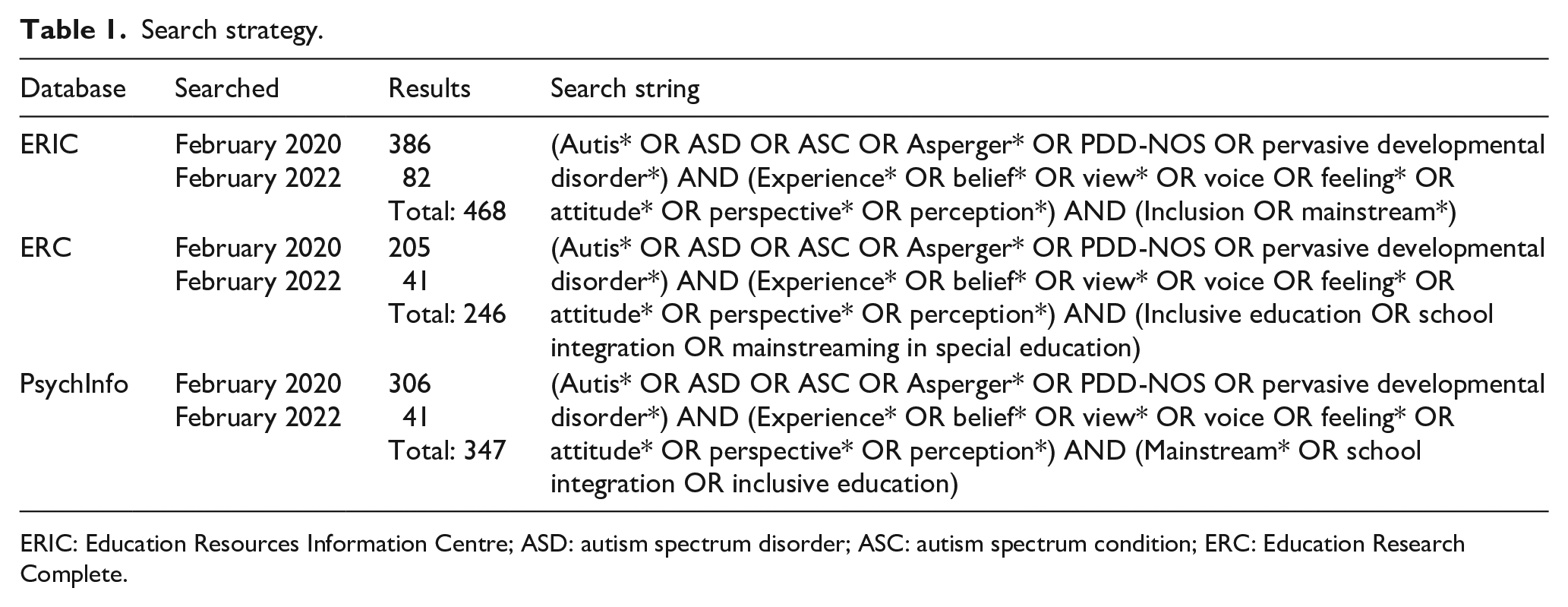
ERIC: Education Resources Information Centre; ASD: autism spectrum disorder; ASC: autism spectrum condition; ERC: Education Research Complete.
Screening procedure
Studies that fulfilled the inclusion criteria were identified through a rigorous screening process and were exported to a reference management software where duplicates were removed. The remaining articles were exported to Abstrackr, an online screening tool for systematic reviews which was used to screen the title and abstracts of the articles (Wallace et al., 2012). Given this research comprises as aspect of the doctoral research of the primary author, the team adopted a ‘practical solution’ as advocated by Boland et al. (2017) for students conducting systematic reviews. This involved all members of the research team screening a random sample (10%) of titles and abstracts with reviewers independently scoring each study in this sample. The results were compared and any disagreements were resolved through discussion until a consensus was met. Once this process was completed, the primary author screened the remaining articles by title and abstract. Finally, the primary author screened the full text of remaining articles and any issues during this final phase of screening were discussed with all reviewers.
Quality assessment
In order to systematically assess the trustworthiness and relevance of the included articles, the CASP (2018) was applied (CASP Qualitative Checklist). This tool, specifically designed to assess the quality of qualitative studies, consists of 10 focused questions relating to the appropriateness of the research question, the suitability of the methodology, the appropriateness of data collection methods and ethical considerations. All three reviewers applied the tool to five articles independently. The results of these appraisals were compared, and conflicts were resolved through discussion and a consensus was agreed upon. The inter-rater reliability for this process was 92%.
Synthesis
Before describing the process of analysis, it is important to consider the background of the authors as the position and assumptions they hold may have impacted the interpretations of the data during the analysis process. This qualitative synthesis formed part of the lead author’s doctoral research. The lead author is a Registered Nurse (Intellectual Disabilities) in the Republic of Ireland who comes to this research with a background of working with both adults and children with intellectual disabilities in residential care services, an autism aware wrap-around service and a summer camp for autistic young people based in the United States. The second and third authors are experienced researchers with expertise in research involving marginalised groups and young people with special educational needs (SENs).
Data were synthesised following Thomas and Harden’s (2008) ‘thematic synthesis’ for qualitative meta-syntheses. Line by line coding of the ‘findings’ or ‘results’ sections of the primary sources was conducted by the primary author on NVivo 12 data management software. This included the accounts of participants as well as the interpretations of the author(s). A bank of initial codes was kept and new codes were developed as required. Codes were then grouped into a hierarchical structure of ‘descriptive themes’. At this point of the synthesis, the reviewers met on a number of occasions to discuss the grouping of codes and the construction of descriptive themes. Finally, these basic themes were combined and grouped into overarching analytical themes.
Community involvement statement
This piece of desk-based research was not completed in partnership with the autism community or policy group stakeholders. This article comprises of the initial phase of the lead authors doctoral research.
Results
The initial database searches conducted in February 2020 combined with hand searches yielded a total of 899 results. The searches were updated in February 2022 yielding a total of 164 results. In total, the combined searchers identified 1063 studies of which 33 met the review criteria after a rigorous screening process (Figure 1).
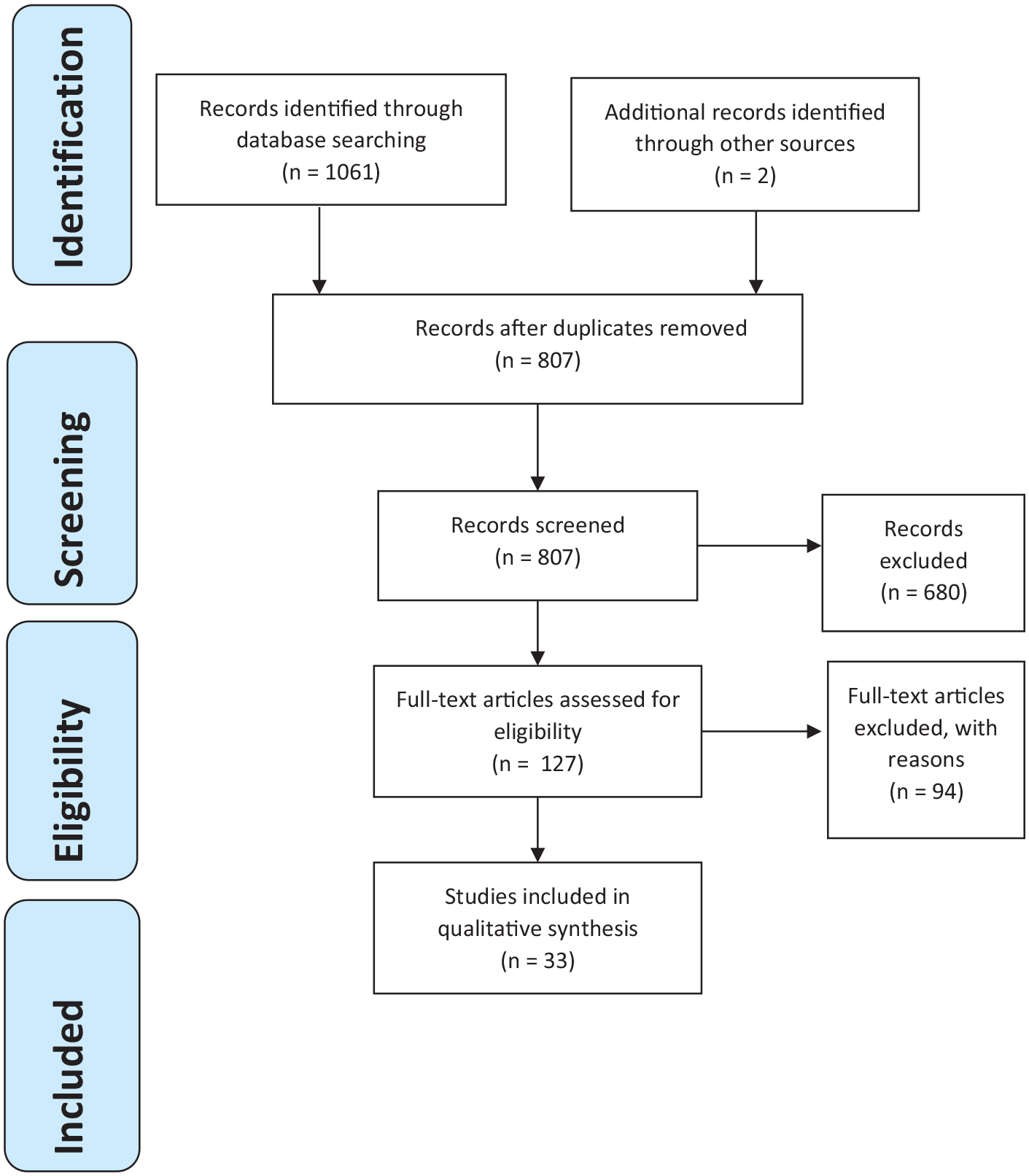
PRISMA flow diagram.
Systematic search results
The majority of studies (n = 23) were conducted in the United Kingdom and Northern Ireland, (n = 4) in Australia, (n = 2) in the United States, and the remaining studies were conducted in France, Norway, Singapore and Canada. Nineteen of the included studies were multi-informant and included the perspectives of stakeholders. Stakeholder groups ranged from five parents in Tobias (2009) to one hundred and six stakeholders in Hay and Winn (2005) which included parents, mainstream class teachers and special education teachers. Other adult stakeholders included across the remaining studies included support staff, paraprofessionals, school leaders, parent advisors, students with dyslexia and students with no SEN. All studies elicited the views of at least one student with a diagnosis of ‘autism’, ‘autism spectrum disorder (ASD)’ or ‘Asperger’s Syndrome’. Eight studies provided information on secondary or comorbid diagnoses which included anxiety, speech and language difficulties, global developmental delay, dyslexia, attention deficit hyperactivity disorder (ADHD), social emotional behavioural difficulties (SEBDs), obsessive-compulsive disorder (OCD), epilepsy and moderate learning difficulties. The ethnicity of participants was recorded in (n = 5) studies. Most studies employed a qualitative approach to data collection while (n = 3) studies also reported quantitative data. For the purpose of this qualitative meta-synthesis, quantitative data reported in these studies were not included in the synthesis. A table of characteristics is provided in the Supplementary Evidence.
Results of quality appraisal
In general, the studies included in this qualitative meta-synthesis appeared to be of high quality. However, (n = 24) studies did not provide sufficient detail regarding considerations relating to the relationship between the researcher and participants. A further (n = 10) studies did not provided sufficient detail regarding ethical considerations outlined in question 7 of the CASP tool which refers to how research was explained to participants, if the researcher(s) discussed issues relating to informed consent, confidentiality, how they handled the effects of the study on the participants during and after the study, and whether or not ethical approval was sought from an ethics committee. One study did not provide information regarding any of the ethical issues outlined above (see Supplementary Evidence for results of the CASP analysis).
Results of thematic synthesis
The line by line coding of text during synthesis resulted in the development of over 50 initial codes which were then grouped into nine descriptive themes. Analysis of descriptive themes and on-going discussion between reviewers led to the development of three analytical themes: ‘Demands of mainstream placements’, ‘Social participation’ and ‘Impacts on the student’ (Figure 2). These overarching themes, along with sub-themes derived from descriptive themes, form the basis of the discussion to follow.
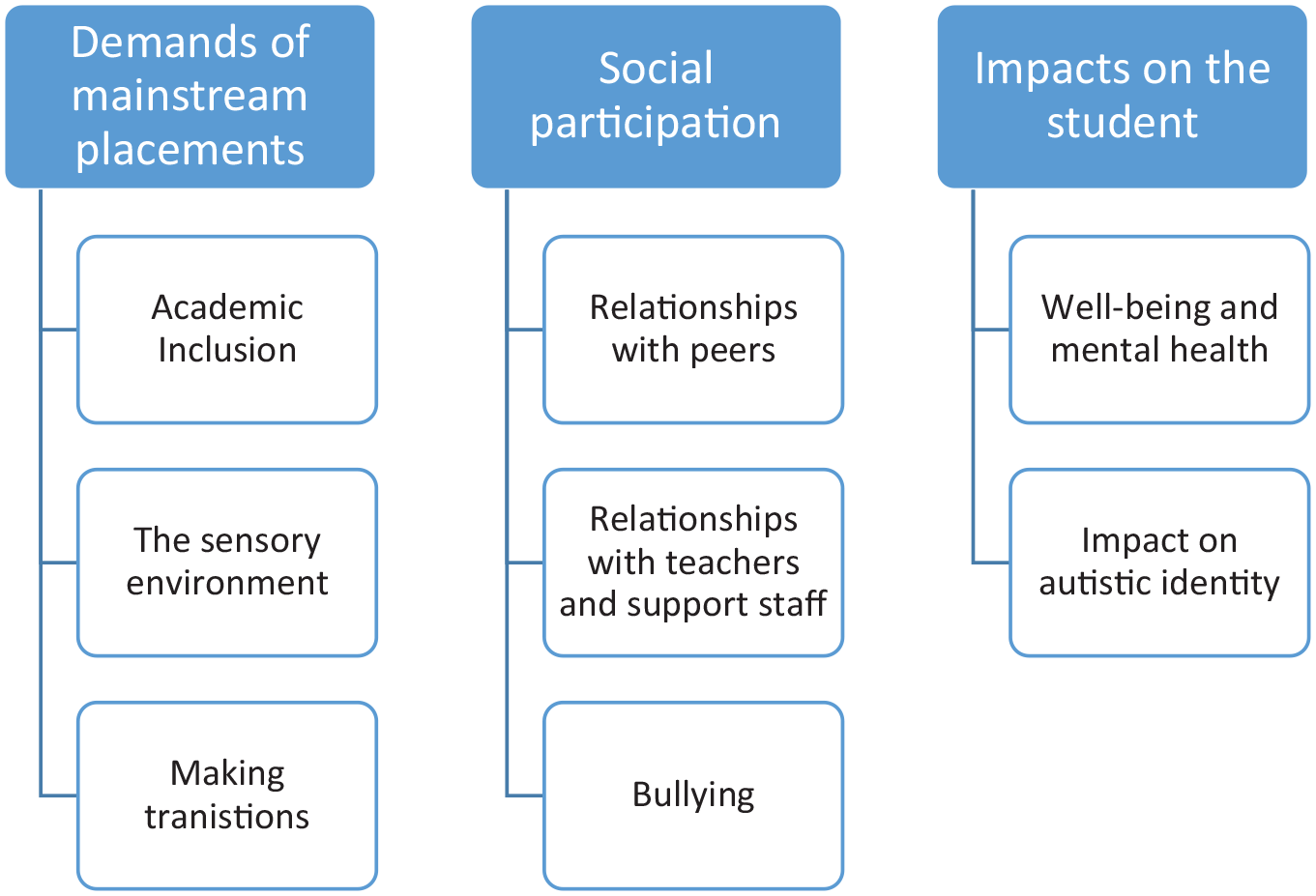
Thematic map.
Demands of mainstream placements
The first major theme derived from the included studies encompassed academic, sensory and transitional demands associated with the mainstream school. Across the studies, participants spoke about academic demands including academic demands, the sensorially demanding environment and demands relating to important transitions, specifically, the primary to post-primary transition.
Academic demands
Students across eight of the studies included in our synthesis referenced both challenges and opportunities in relation to the academic demands of mainstream school (Aubineau & Blicharska, 2020; Poon et al., 2014; Dillon et al., 2016; Goodall 2018a; Hebron & Bond, 2017; Neal & Frederickson, 2016; Saggers, 2015; Saggers et al., 2011).
The demands of addressing the requirements or academic targets outlined within the mainstream curriculum were a source of stress and anxiety for many participants in these studies and often lead to students feeling exhausted (Saggers, 2015; Saggers et al., 2011) and isolated academically (Goodall 2018a). These demands included an increased workload in secondary school coupled with looming deadlines (Poon et al., 2014; Saggers, 2015), an ‘unfair’ amount of homework (Neal & Frederickson, 2016, p. 365), the fast pace of lessons (Aubineau & Blicharska, 2020; Goodall, 2018a) and the demand for handwriting during lessons (Aubineau & Blicharska, 2020; Saggers, 2015; Saggers et al., 2011).
Not all aspects of academic life at mainstream school were considered challenging, however. Students in Hebron and Bond (2017) found the broad and varied curriculum at post-primary school allowed them to study subjects they were interested in. Interestingly, Dillon et al. (2016) reported some autistic students enjoyed opportunities to engage in collaborative work in small groups with their peers which made them feel happy and less like a ‘loner’ or ‘geek’, fostering a sense of inclusion and belonging (p. 226).
The sensory environment
Students across a number of studies referred to their mainstream environment as being crowded, chaotic and sensorially challenging (Goodall 2018b, 2019; Goodall & MacKenzie, 2018 ; Hill, 2014; Neal & Frederickson, 2016; Saggers et al., 2011; Skafle et al., 2020). The noise associated with mainstream school and large crowds also appeared to play a significant role in the experiences of the young people and impacted their ability to concentrate (Saggers, 2015). Some students employed their own tactics in order to avoid crowded spaces including one student in Goodall and MacKenzie (2018) who would go through the entire school day without eating to avoid the crowded canteen. ‘There are just too many people – it is too noisy, busy and stressful for children with autism. If more children with autism go to mainstream, there would be more fights as the children couldn’t cope’ (Goodall 2018b, p. 19). Autistic students advocated for smaller schools and smaller class sizes: ‘smaller schools would be more suitable for children with autism’ (Goodall 2018a, p. 11). Others emphasised the importance of having a safe space to retreat to when anxious or stressed in order to let off steam which often included a well-considered resource base (Goodall 2018a; Hill, 2014; McAllister & Sloan, 2016; Myles et al., 2019; Tobias, 2009).
Making transitions
Transitional experiences between school settings were discussed by students in six of the included studies (Dann, 2011; Fortuna, 2014; McNerney et al., 2015; Myles et al., 2019; Neal & Frederickson, 2016; Richter et al., 2019). While there was significant diversity regarding how transitions were viewed across the studies, experiences mostly related to the primary to post-primary transition. Some students described a lack of support and guidance prior to transitioning to secondary school while other students had more positive experiences regarding this important transition.
Students in two studies felt that they did not receive adequate transition support in their primary schools (Myles et al., 2019; Neal & Frederickson, 2016) and available supports, such as class discussions, often focused on negative aspects of the transition which student participants did not find helpful. Unsurprisingly, transitions were an area of concern for many students, with a perceived lack of predictability leading to feelings of uncertainty regarding the transition (Neal & Frederickson, 2016, p. 361). Other studies reported issues such as the prospect of being bullied, social interactions, the increased size of their new school and an increased workload (Fortuna, 2014; McNerney et al., 2015).
In contrast, students in Dann (2011) and McNerney et al. (2015) had positive attitudes towards their transition with the prospect of new lessons, classrooms, equipment and a broader more varied curriculum at post-primary being positive changes for these students. Participants in Neal and Frederickson (2016) and Richter et al. (2019), conducted in the United Kingdom and France, respectively, recounted more positive transitional experiences and highlighted strategies which they found made the transition easier. These strategies included meeting new teachers prior to the transition, visiting their new school and adapting the primary environment to mimic that of a secondary environment.
Social participation
The social participation of students with SENs has been considered a key issue in the inclusion debate. For the purposes of this review, term ‘social participation’ will be used to capture students’ relationships with their peers as well as their teachers and support staff. Also included in this theme is ‘bullying’ which is linked to social relationships with peers.
Relationships with peers
It was clear from our synthesis that mainstream secondary school can be a demanding and complex social environment for many autistic students. Friendships and peer relationships were an important factor and were discussed by students in (n = 22) of the included studies. Many participants struggled to make friends, and participants in three included studies made reference to having no friends at school (Cook et al., 2016; Goodall 2018a; Goodall & MacKenzie, 2018a). Having a friend was seen as an important basis for belonging and impacted positively on school experiences across a number of studies (Aubineau & Blicharska, 2020; Goodall, 2018a; Goodall & MacKenzie, 2018; Richter et al., 2019; Saggers, 2015). In addition, the quality of reported friendships differed greatly across studies (Hebron & Humphrey, 2014; Myles et al., 2019; O’Hagan & Hebron, 2017; Richter et al., 2019). The attitudes of the wider peer group were seen as an important factor in establishing relationships: ‘it’s all about themselves and if you have a disability they don’t want to know you’ (Goodall, 2018a, p. 9) and ‘If you say you are autistic or whatever syndrome or condition, they will instantly perceive you as stupid’ (Poon et al., 2014, p. 1075).
One interesting finding here was that there were differences in some girls’ social experiences when compared to their male counterparts. For example, autistic girls in four studies described concealing or masking their differences in order to fit in with their peer group or to avoid bullying (Cook et al., 2018; Halsall et al., 2021; Myles et al., 2019; Whitlow et al., 2019). In these studies, autistic girls described finding it difficult to make friends and concealing their differences enabled them to feel socially included. Autistic girls in Halsall et al. (2021) often concealed their challenges with learning in mainstream classes and the demands of this camouflaging strategy often affected their ability to learn. Feelings of loneliness and isolation in mainstream school were often reported by autistic participants across a number of studies (Goodall 2018a; Goodall & MacKenzie, 2018; Myles et al., 2019; O’Hagan & Hebron, 2017).
Relationships with teachers and support staff
Participants across a number of studies spoke about their relationships with their teachers and support staff. Students felt that it was critical for teachers to be understanding of individual needs, have high expectations, show an interest in their students and to not shout or get annoyed. Positive experiences related to teacher relationships articulated by students include the following excerpts from Goodall (2018a): ‘he got to know me and showed an interest’ and ‘She expected a higher standard from me’ (p. 11). Having strong relationships with adult staff at school was seen by students as yet another important contributor to a sense of belonging (Neal & Frederickson, 2016; Saggers et al., 2011) and students in Hummerstone and Parsons (2021) highlighted the importance of feeling cared for, supported and understood by their teachers. Conversely, a number of participants described their experiences with ‘bad’ teachers who were unsupportive, offered little interaction, did not seem to care, were not flexible and lacked understanding about autism: ‘I would ask them for help and they wouldn’t care’ (Goodall, 2018a, p. 9), ‘I never felt supported’ (p. 10), ‘they [teachers] don’t care’ (p. 10), ‘they just kind of abandoned people who had problems’ (p. 10) and ‘they don’t understand what I am going through’ (p. 9). This lack of understanding and support was also discussed by students in Hummerstone and Parsons (2021) where some students described negative examples of when they had felt unsupported by staff members.
In Dillon et al. (2016) and Woodfield and Ashby (2016), students referred to their school support staff as critical to their school experience. Elsewhere, students stated that support staff were a source of guidance when difficulties are encountered (Hill, 2014), not just in terms of accessing the curriculum but also personal matters (Saggers et al., 2011). However, many students also spoke of the negative connotations of the visibility and proximity of this support which appeared to impact student’s notions of difference and was sometimes experienced as being segregated by difference: ‘If they were following me then the other students know that there’s something different about me and I don’t like it at all’ (Humphrey & Lewis, 2008a, p. 38), ‘I just don’t like when I get, sort of like, treated differently’ and ‘I just don’t like them making it so obvious’ (Saggers et al., 2011, p. 181). In addition, due to the proximity and level of support they received, they often had little or no interaction with the class teacher (Humphrey & Lewis, 2008a; Humphrey & Lewis, 2008b): ‘normally none of the teachers really look at my work and none of them really come and talk to me like’ (p. 39). A preference among students for subtler support approaches that did not highlight their differences was clear.
Bullying
Worryingly, student participants in 19 studies discussed their experiences of bullying. Carrington et al. (2017) found that nine out of ten autistic participants had experienced bullying at some point through their school life and two students had experienced cyberbullying. Students across the studies employed their own tactics to avoid bullying such as ignoring hurtful comments, walking away from bullies or telling their teacher or parents (Cook et al., 2018; Humphrey & Lewis, 2008a; Saggers, 2015).
Verbal harassment was reported by students in 14 studies where peers used derogatory slurs such as ‘weirdo’ (Goodall & MacKenzie, 2018; Humphrey & Lewis, 2008a), ‘retard’, ‘special bastard’, ‘spastic’, (Goodall 2018b) and ‘mental’ (Hay & Winn, 2005). However, Saggers (2015) and Saggers et al. (2011) observed that the autistic students in their studies did not tend to report these instances of verbal harassment ‘as long as they don’t do anything physically harmful to me, there’s no point’ (Saggers, 2015, p. 39). Students in Saggers (2015) stated that they were more likely to disclose incidents of bullying to teachers or support staff they had a strong relationship with.
Physical abuse occurred with ‘alarming regularity’ according to students in Humphrey and Lewis (2008a) and included being pushed and squashed behind a door to being tackled and punched. One student in Goodall (2019) described how being bullied underpinned why he found mainstream school difficult: ‘That is one of the reasons why I cracked up in school. The bullying, it made me angry’ (p. 22). Students from three of the included studies reported being victims of sexual harassment or a target of sexual comments during their time in mainstream school. One student stated, ‘I got kicked in the private areas, pushed and punched. I have also had pupils make verbal sexual comments towards me’ (Goodall, 2018a, p. 8).
Carrington et al. (2017), with the help of autistic participants, developed recommendations for supporting autistic students in regard to bullying and cyberbullying prevention, which included increasing the awareness of bullying in schools including more serious consequences to deter bullies, the need for improvements in education around bullying and a need for government focus on specific strategies to reduce bullying including serious legal consequences and specific legislation.
Impacts on the student
It is perhaps unsurprising that a number of student participants spoke of the impact the mainstream environment had on their overall well-being and mental health, including feelings such as anxiety, loneliness, dread, anger and frustration. Student’s autistic identity and notions of difference, allied to negative perceptions of autism, often led to students masking or concealing their autism in order to ‘fit in’.
Well-being and mental health
A number of student participants reported high levels of stress, worry and anxiety related to their school experiences, experiences which were often described as overwhelming and upsetting (Cook et al., 2018; Humphrey & Lewis, 2008a). Students attributed increased levels of anxiety to the intensely social environment, the physical environment (Aubineau & Blicharska, 2020; Goodall 2018a; Hebron & Humphrey, 2014; Humphrey & Lewis, 2008a) and aspects of the mainstream curriculum including workload, deadlines and exams (Hill, 2014). Feelings of anger, frustration and dread towards their school placements were often internalised as a coping strategy: ‘Sometimes I scream into a pillow’, ‘I feel like I want to break stuff but I never do it . . . I feel like I want to run away, but I never, you don’t do it’ (Hebron & Humphrey, 2014, p. 27), ‘I would put off going to sleep to put off going to school as much as possible’ and ‘It was a never ending cycle, every day . . . I dreaded the repeat of that cycle’ (Goodall 2018a, p. 6). Worryingly, some students made reference to feeling depressed and even suicidal: ‘School was always awful, I went through a bit of severe depression’ (Goodall, 2018a, p. 6) and ‘other pupils are shouting kill yourself, the most common slur. This made me suicidal and teachers tried to help but it got too much’ (p. 8).
Impact on autistic identity
Discussions with student participants on the autism spectrum also provided a unique insight into the impact of their mainstream school on their perceptions of themselves. One notable aspect of this experience which emerged was feelings of difference. Students in 13 of the included studies discussed feeling different at school which was perceived as a barrier to making and maintaining friendships (Cook et al., 2018; Goodall 2018a; Goodall & MacKenzie, 2018). Young people also described how they were ‘isolated’ and ‘separate’ from their peers as a result of being ‘different’. The separation from peers may be an important vulnerability factor for bullying (Hebron et al., 2015) leading student participants to be reluctant to disclose their autism diagnosis to their peers: ‘I’d rather they did not know because then I wouldn’t be treated differently and that’s fine’ (Humphrey & Lewis, 2008a, p. 40). In contrast, however some students saw being autistic as part of who they are, and saw this difference as a positive attribute: ‘I like being like this you know, that’s the way it is’ (Humphrey & Lewis, 2008a, p. 32) and ‘I think I’m special, I am different from others and that marks me out of the crowd’ (Poon et al., 2014, p. 1075).
Discussion
The majority of student participants across the included studies described mainstream school as being a complex social environment. The term ‘social participation’ (Bossaert et al., 2012) was used to capture students’ relationships with their peers as well as their teachers and support staff in this report. Students appeared to have a desire to make friends at school; however, many struggled to make and maintain friendships, with many admitting to having no close friends at school. Interestingly, the social experiences of autistic girls differed from their male counterparts, with girls reporting a strategy of masking their differences to ‘fit in’ (Cook et al., 2018; Myles et al., 2019; Whitlow et al., 2019).
Relationships with staff members were equally as complex. Strong relationships with teachers and support staff and positive attitudes create the foundation for inclusive practice (NCSE, 2009; Pastore & Luder, 2021). However, student participants often described having poor relationships with their mainstream teachers who lacked understanding of their needs. Echoing the ‘dilemma of difference’ (Minow, 1990), students highlighted the visibility and proximity of adult support as sometimes being counterproductive, marking them out as ‘different’ from their peers. Within this ‘dilemma of difference’, there is potential for stigma and inequality which may be created by either ignoring or focusing on differences that exist between students. Autistic student participants advocated for more subtle and skilful ways of delivering support that does not impact on their self-identified perspectives of difference (Humphrey & Lewis, 2008a). As highlighted in the Irish context (Department of Education, 2020), appropriate teacher education and further autism-specific continuous professional development (CPD) are essential to support effective and positive inclusion.
Autistic young people are considerably more likely to be bullied than those with other or no special educational needs and disabilities (Wainscot et al., 2008; Hebron & Humphrey, 2014; Symes & Humphrey, 2010), and this was reflected in the experiences of students in this review. Students were less likely to report more common and subtle instances of bullying such as verbal teasing and more likely to report bullying to teachers and support staff they had strong relationships with. This point foregrounds the importance of fostering and maintaining strong relationships between autistic students and staff within schools. Some students appeared to be conscious of the negative perceptions and attitudes held by others in relation to autism. Thus, students often had to negotiate their differences by concealing or masking their autism in order to fit in which may adversely impact their self-perception.
Many students spoke about the negative impact mainstream school had on their well-being and indeed concerning trends regarding the mental health of this cohort of young people have been highlighted previously. Hebron and Humphrey (2014) found that autistic adolescents in mainstream education experience significantly greater levels of anxiety, depression, anger and lower self-concept than their peers with no SEN. In the present review, it is clear that many student participants experienced elevated levels of stress and anxiety as well as anger, frustration, loneliness and depression. Consistent with Hebron and Humphrey (2014), this was largely attributed to social relationships and disruptions to routine, interactions with an unpredictable environment and a challenging curriculum. It is also important for teachers and support staff to be aware of social camouflaging as it has been associated with mental health challenges such as anxiety, depression and higher rates of suicidality (Cage & Troxell-Whitman, 2019; Cassidy et al., 2018).
For student participants in this review, negative interactions with teachers and peers, experiences of bullying, interactions with an inflexible curriculum, an unpredictable environment and not feeling supported meant that many did not always experience a sense of belonging in their mainstream schools. Belonging can be defined as the extent to which students feel accepted, supported, respected and included in their school environments (Baumeister & Leary, 1995; Prince & Hadwin, 2013). There is a body of evidence that suggests that a sense of belonging at school is associated with a range of positive academic, psychological, behavioural and social outcomes including school completion and educational attainment (Bond et al., 2007; Goodenow, 1993). According to Maslow’s (1943) hierarchy of needs, the need for belonging must be met before motivation and engagement can take place. This begs the question: can a school be considered inclusive if it does not foster a sense of belonging among all students?
Strengths and weaknesses
The present review provides an up-to-date qualitative synthesis of literature regarding the lived experiences of autistic young people enrolled in mainstream second-level education. This review may be of interest to a number of stakeholders including school leaders, teachers, support staff, special needs co-ordinators, teacher educators, parents, young autistic people and those interested in inclusive education. The adoption of a rigorous search strategy and analysis framework ensured that relevant studies were identified and reported appropriately. A possible limitation of this review is the homogeneous nature of the settings of included studies as the vast majority of studies (n = 23) were conducted in the United Kingdom and Northern Ireland. Perspectives from student participants in the United Kingdom and Northern Ireland therefore dominate the review. This highlights a need for further research to be conducted across various countries to capture perspectives from different cultures and educational contexts. The majority of included studies required participants to engage with traditional research methods including semi-structured interviews. Therefore, the findings of the review may not be representative of the heterogeneity of autism as almost all participants were required to engage with verbal communication. Many of the included studies failed to provide sufficient detail regarding key ethical considerations including informed consent/assent was obtained. It is important for future research to be explicit in their reporting of these ethical issues.
Implications for future research
The low number of studies that met the inclusion criteria highlights the need for further research in this area in order to create a more complete picture of the lived experiences of this cohort. Based on the findings of this review, it is recommended that future research prioritises the voices of young autistic people regarding various aspects of their mainstream educational experiences including social experiences, impact of the environment, transitional experiences and the potential impact of the mainstream environment on well-being and sense of belonging. Autistic girls were under-represented in the majority of the included studies, and there is a need for further focus on the experiences of autistic girls regarding their educational placement. The analysis revealed the majority of included studies used traditional research methods including semi-structured interviews with little consideration for individual needs and abilities. Over half of the included studies (n = 19) were multi-informant, often prioritising the voices of adult stakeholders. Only a small number of studies adopted multi-modal approaches which included the use of participatory methods to elicit the voices of student participants. As highlighted in Fayette and Bond (2018), it is evident that research is still being conducted ‘to’ and not ‘with’ autistic student participants; however, there is potential for future research to adopt more participatory and inclusive approaches and to collaborate with the autistic community to inform and develop appropriate data collection methods.
Conclusion
For autistic students, mainstream school can be a complex, chaotic and demanding social environment. It is clear, due to the relatively small number of research studies identified as part of the review, that there is a need for further research regarding the views and perspectives of autistic young people regarding their education experiences. It is imperative therefore, as inclusive policy and practice continues to develop and more autistic students are educated alongside their peers in mainstream schools, that their voices are heard to better inform practice and policy. This review demonstrates that when appropriate and well-considered research approaches are adopted, autistic young people can offer detailed insights into their lived experiences, identifying perceived barriers and facilitators to inclusive education from their own perspectives.
Supplemental Material
sj-docx-1-aut-10.1177_13623613221105089 – Supplemental material for A systematic review of the experiences of autistic young people enrolled in mainstream second-level (post-primary) schools
Supplemental material, sj-docx-1-aut-10.1177_13623613221105089 for A systematic review of the experiences of autistic young people enrolled in mainstream second-level (post-primary) schools by Finbar Horgan, Neil Kenny and Paula Flynn in Autism
Footnotes
Funding
The author(s) disclosed receipt of the following financial support for the research, authorship and/or publication of this article: This study was supported by a postgraduate scholarship awarded by the DCU Education Trust.

Supplemental material
Supplemental material for this article is available online.
References
Supplementary Material
Please find the following supplemental material available below.
For Open Access articles published under a Creative Commons License, all supplemental material carries the same license as the article it is associated with.
For non-Open Access articles published, all supplemental material carries a non-exclusive license, and permission requests for re-use of supplemental material or any part of supplemental material shall be sent directly to the copyright owner as specified in the copyright notice associated with the article.
