




Abstract
Self-determination enhances a person’s quality of life and is a fundamental human right. According to self-determination theory, autonomy is one of three basic psychological needs that must be met to experience self-determination. The overarching aim of this exploratory study was to learn about autonomy from the perspective of autistic adults with intellectual disability, including what autonomy meant and how participants wanted to be supported to be autonomous. Participants (n = 8; median age = 24) engaged in a variety of participatory methods (e.g. discussions, arts and crafts, games) during weekly sessions. These sessions took place over 7–16 weeks and were each informed by a guiding question related to autonomy. Artifacts, video or audio recordings from each session, and reflexive journals were thematically analyzed. The results support an overarching meaning of autonomy as being able to be themselves. Participants identified (1) choice and control, (2) communicating their way, and (3) safe environments as important and showed us how they wanted to be supported in each of these three areas. We also identified having autistic facilitators as an overarching strategy. These results provide a foundation for implementing change to enhance autonomy for autistic adults with intellectual disabilities.
Lay Abstract
Autistic young adults with intellectual disabilities want to be autonomous but are less autonomous than other people. However, they can be autonomous with appropriate support. We wanted to learn how we can support autistic adults with intellectual disabilities to be more autonomous. We designed our study with help from five autistic community partners to make sure the research was relevant to autistic people and would improve their lives. We talked with eight autistic young adults with intellectual disabilities about autonomy. We defined “talk” as verbal language, as well as non-verbal cues such as body language, facial expressions, vocalizations, and laughter. We did art projects and played games while we talked. We met in small groups over multiple sessions. Our participants told us that being autonomous meant being able to be themselves. They told us three main ways to support their autonomy: (1) having choice and control, (2) being able to communicate in their own way, and (3) being in a safe environment. Families, support staff, and caregivers can use this information to help autistic young adults with intellectual disabilities to be autonomous.
Introduction
Self-determination refers to “acting as the primary causal agent in one’s life and making choices and decisions regarding one’s quality of life free from undue external influence or interference” (Wehmeyer, 1996, p. 177). It is a fundamental human right, universally applicable regardless of disability (United Nations, 2006) that is crucial to personal growth, well-being, and ability to thrive (Ryan & Deci, 2017), including for autistic individuals (Shogren et al., 2015; Weiss & Riosa, 2015). However, autistic individuals, and especially those with co-occurring intellectual disability (ID), tend to be less self-determined than their non-autistic peers, including those with other developmental disabilities (Chou et al., 2017; Hodgetts et al., 2018; Weiss & Riosa, 2015).
Self-determination theory (SDT) asserts that all individuals have three fundamental psychological needs to experience self-determination: (1) competence, the belief in one’s ability to effectively perform tasks and acquire skills; (2) relatedness, the sense of belonging and connection with others; and (3) autonomy, which includes feeling in control of one’s life, making choices, and acting voluntarily (Ryan & Deci, 2017; Wehmeyer, 1996). Decreased self-determination may be due to having fewer opportunities and/or less support to engage in self-determined behaviors than others (Moran et al., 2021; Wehmeyer et al., 2010). Opportunities and support for autonomy are critical as autonomy tends to also support competence and relationships and thus may enhance overall self-determination (Ryan & Deci, 2017).
ID should not affect an autistic young adult’s ability to be self-determined, including exerting autonomous behavior, but will affect the level of support the person needs (Cheak-Zamora et al., 2020). Indeed, people with ID experience greater well-being in environments that support their autonomy (Frielink et al., 2018). However, despite benefits of autonomy-supportive environments, professionals often exert external control over individuals with autism and/or ID (Ryan & Deci, 2017). This may be especially true for autistic people with ID, including those who do not communicate with spoken or written methods, because people think that they are not capable of autonomous behavior. For example, Cheak-Zamora et al. (2020) found that caregivers reported low capacity for self-determination for their autistic young adults, especially those with ID, which occurs in an estimated 50% of autistic people (Russell et al., 2019). Many autistic people with ID have a guardianship order, which can also negatively impact self-determination due to external control (Stancliffe et al., 2000). Difficulties often associated with autism, such as challenges with self-monitoring, self-regulation, goal setting and planning, as well as preferences for familiar environments and routines, are reported to increase reliance on caregivers and limit self-determination for autistic people in general, and especially those with ID (Cheak-Zamora et al., 2020).
Understanding and responding to the desires and preferences of people who do not communicate through spoken or written methods can be challenging (Estreder et al., 2023). Research on the lived experience of autistic people with ID is very limited (Nicholas et al., 2019), thus there is a significant gap in research related to the perspectives of autistic people with ID related to self-determination, including what autonomy might look like, and what opportunities and supports they desire to enact autonomy (Cheak-Zamora et al., 2020; Wullink et al., 2009). Thus, informed by SDT (Ryan & Deci, 2017), this exploratory study aimed to learn about autonomy from the perspective of autistic adults with ID. Specific objectives were (1) to understand the meaning of autonomy from the perspective of autistic people with ID and (2) to learn how autistic people with ID want to be supported to act autonomously.
Materials and methods
Approach
We chose interpretive description (Thorne, 2016) as a methodological approach because it allows investigators to explore meanings and explanations that may yield practice implications (Thorne et al., 2004). Interpretive description is well aligned with participatory research approaches given its methodological flexibility and pragmatic approach to research that best meets the needs of a clinical context (Thorne, 2016).
We used a community-based participatory research (CBPR) approach (Fletcher-Watson et al., 2019; Nicolaidis et al., 2011, 2019). CBPR aims to ensure the relevance of research to community needs and minimize barriers to implementation (Hacker, 2013). We also felt that evidence for the Double Empathy Problem (Milton, 2012) reinforced the value of engaging autistic people as co-researchers given our data collection and analysis methods. In other words, we felt that autistic people may be more accurate in their interpretation of nonverbal communication than non-autistic people. A group of five autistic adults without ID, autistic community partners (ACPs), played a crucial role in the research process. ACP members were recruited through our networks and purposefully chosen based on their different lived experiences (Nicolaidis et al., 2019). While the ACP were not directly representative of the community whose autonomy we wanted to learn about, they were indirectly representative as autistic people who could talk about their experiences of being autonomous. They were involved in all stages of the study and were fairly compensated for their time. The ACP received Research 101 training (Ryan et al., in preparation) to learn about research processes and collaboration, as well as training in reflexive thematic analysis (RTA; Braun & Clarke, 2019). The University of Alberta’s Research Ethics Board 1 approved this study.
Positionality statements
The first author (J.R.) has deep personal connections to the autism community. She is autistic and the mother of an autistic young adult with ID. Furthermore, she was employed at the autism service provider (SP) at the time of the study and created the studied program, although she had not been directly responsible for it for the past 5 years. To ensure objectivity and address any potential biases, she maintained accountability throughout the research process by seeking feedback on her positionality from her PhD supervisor (S.T.-H.) and committee, the ACP (H.M.B., A.B., C.D., A.K., A.L.), and other trusted colleagues, and keeping a reflexive journal about her own perspectives and potential influences.
S.T.-H., D.B.N., and B.K. are non-autistic allies with decades of clinical and research experience related to autism, qualitative methods, and CBPR. H.M.B. is an autistic professor who researches thriving and belonging for autistic people. Our ACP were from diverse educational and demographic backgrounds. A.B. is an autistic parent of an autistic child and a member of her local autistic rights community. C.D. is an autistic Registered Social Service Worker with a second degree in Disability Studies. A.K. is an autistic Linguist who has found a calling caring for autistic people with higher needs than his own. A.L. is autistic with a degree in computer science.
Recruitment
We conducted this study within an innovative post-secondary program, Quest, offered by a Canadian non-profit organization that supports autistic people and their families. As such, our inclusion criterion was participation in Quest, which infers both an autism diagnosis and co-occurring ID.
Because of J.R.’s affiliation with the SP, a program manager distributed and collected all information letters and consent forms. All Quest participants were under guardianship orders; therefore, J.R. conducted study information sessions for parents/guardians first and then for Quest participants whose parent/guardian had provided consent. Eight parents provided consent. Assent was then sought from each of their Quest participants (42% of total program participants), all of whom signed accessible (e.g. easy to read and/or pictorial) assent forms. We monitored ongoing assent of participants via verbal and/or behavioral check-ins.
Program description
The Quest program supports autistic adults with ID to actively participate in their communities. It had a total of 19 participants, aged 20–27 years, all of whom receive provincial disability support funding. The program maintained a high staff-to-participant ratio (approximately 1:2) to support individualized learning. Quest participants learn how to prepare meals, keep house, manage money and social activities, utilize public transit, and access community amenities such as gyms and libraries. It utilizes three community apartments and a model apartment at the Center’s main location. One of the program’s key goals is to foster self-determination, supported by its design as an environment that supports autonomy (Reeve, 2006).
Data collection
Descriptive and demographic data
All participants lived with their parents. They had all received certificates for completing high school. Participants communicated with speech, mostly short phrases, vocalizations, gestures, and body language, and experienced difficulty verbally expressing their thoughts and ideas. Additional relevant demographic information is provided in Table 1.
Descriptive and demographic information.
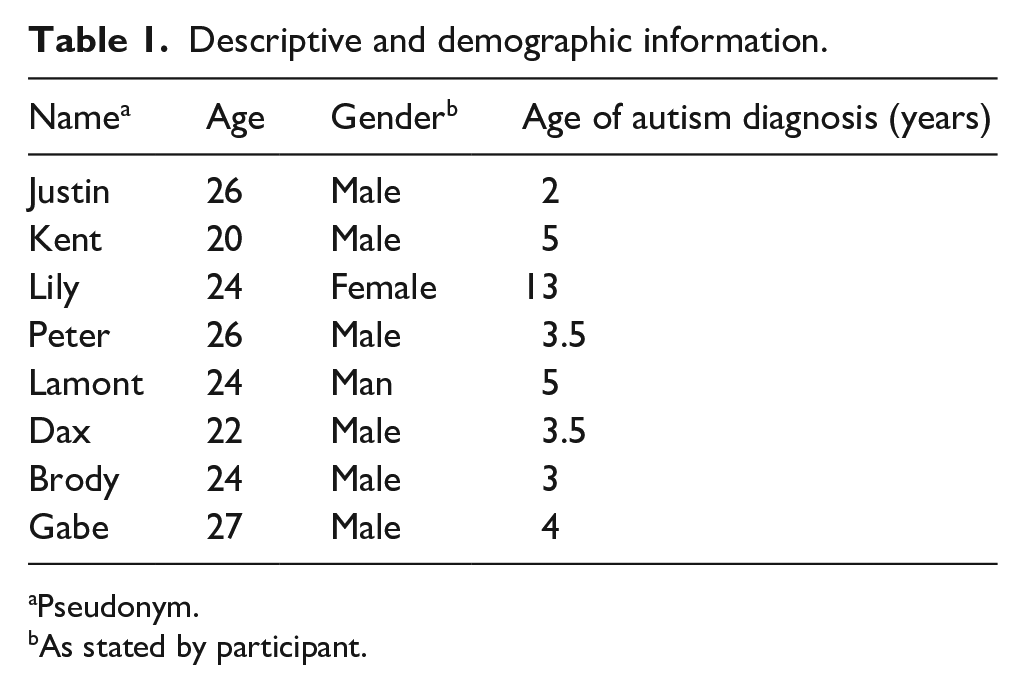
Pseudonym.
As stated by participant.
ACP data
ACP meetings took place monthly over Zoom, beginning 8 months prior to submitting the proposal for ethics approval. We discussed the proposed research questions, data collection, analysis and interpretation methods, and dissemination strategies. Once ethics approval was received, all meetings were recorded with documented consent from the ACP.
Participant data collection
We first reviewed the one-page profiles compiled by the participants, their parents/guardians, and program staff as part of the Quest program. The profiles provided information about their likes, support preferences, what is important to them, what others like and admire about them, and their hopes and dreams for the next few months.
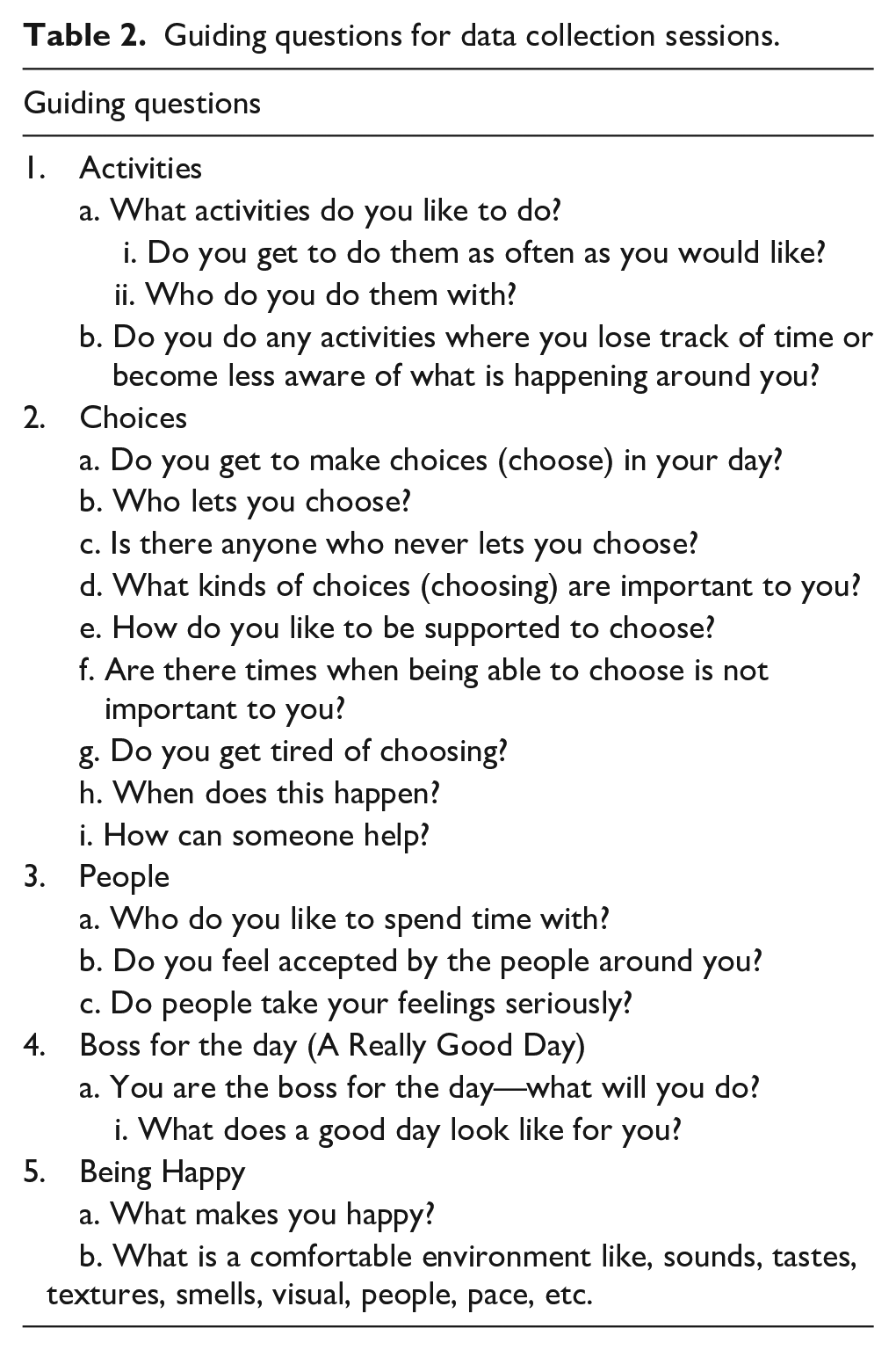
Participants were divided into two groups, G1 (n = 3) and G2 (n = 4), based on the order in which consent and assent were received, and one participant preferred to engage with a researcher on their own. The small groups facilitated getting to deeply know each participant. Weekly, 1-h sessions were held over several months (G1 = 16 sessions; G2 = 13 sessions; individual participant = 7 sessions), led by the autistic lead author and an autistic research assistant. Each session was framed around a guiding question (see Table 2) to gradually build a “picture” of the experience of autonomy. The guiding questions were formulated by the research team (researchers + ACP). Data collection for some questions occurred over multiple weeks. Data collection stopped when we felt that all guiding questions had been answered and we were not getting new data (Braun & Clarke, 2021).
Guiding questions for data collection sessions.
Participant observation was the primary data collection method. Participant observation is a useful technique when participants are unable to discuss the study topic (Merriam & Tisdell, 2016). Observations took place during researcher-led sessions and included analysis of a variety of ways of communication including spoken language and nonverbal cues such as facial expressions, vocalizations, laughter, gestures, body language (e.g. crossed arms, turning away), and overt actions such as leaving a space. Including nonverbal communication as data can help yield thicker descriptions and interpretations, thus increased understanding, in qualitative research (Denham & Onwuegbuzie, 2013). Study participants chose from a diverse range of supplies in each group session, including sculpting clay and tools, fuse beads, LEGO® bricks, paper, colored pencils, coloring pictures tailored to participants’ interests, magazines, and construction paper. Relevant artifacts created during the sessions were also data. One participant chose to engage in a series of spoken interviews conducted during community walks alongside an autistic research assistant. All sessions were audio and video recorded, except for the community walk interviews, which were solely audio recorded. Comprehensive field notes were kept about who was present, the activity, how the activity was chosen, and the guiding questions for the session. Researcher impressions and reflections were documented in reflexive journals following each data collection session.
Data analysis
The research team, which included the ACP, collaboratively used RTA to identify meaningful patterns in the data (Braun & Clarke, 2022). RTA involves going back and forth between phases of analysis, can be guided by both semantic (inductive) and latent (theoretically informed) coding, and emphasizes the active role that researchers play in knowledge production (Braun & Clarke, 2022).
First, all videos were watched multiple times by the first author and also viewed by the last author and/or an ACP. We initially identified a detailed list of timestamped preliminary inductive codes (akin to line-by-line coding for textual data). We then compiled these codes and categorized them deductively using the framework of SDT (coded as autonomy, competence, relatedness). This detailed analysis helped us understand how the participants demonstrated autonomy, competence, and relatedness (i.e. how we interpreted their behavior), which informed the next stage of analysis.
Next, we (research team + ACP) went back to the videos to look more holistically at each participant’s communication through the lens of our research questions: (1) what does autonomy mean to the participants and (2) how do the participants want to be supported to act autonomously? We identified candidate themes and subthemes based on review of four videos (two from each group) and one audio session. We then refined themes and subthemes by viewing the remainder of the videos and listening to the remainder of the audio sessions, paying attention to confirmatory, new, and contrary data for our themes or subthemes through discussion at 11 meetings. These discussions enabled us to explore multiple assumptions and interpretations of the nonverbal and verbal behaviors of the participants to achieve reasonable understandings of the meaning of the total communication expressed by each participant (Beaulne, 2022; Courchesne et al., 2022). Most of our data analysis involved our interpretation of the participants’ non-verbal communication in response to a variety of approaches and strategies that we used to engage participants and elicit responses to the guiding questions. Others’ understanding of nonverbal behaviors determines what they do in response to these behaviors (Beaulne, 2022). As such, we framed subthemes that address Research Question 2 as strategies to support autonomy (see Figure 1).
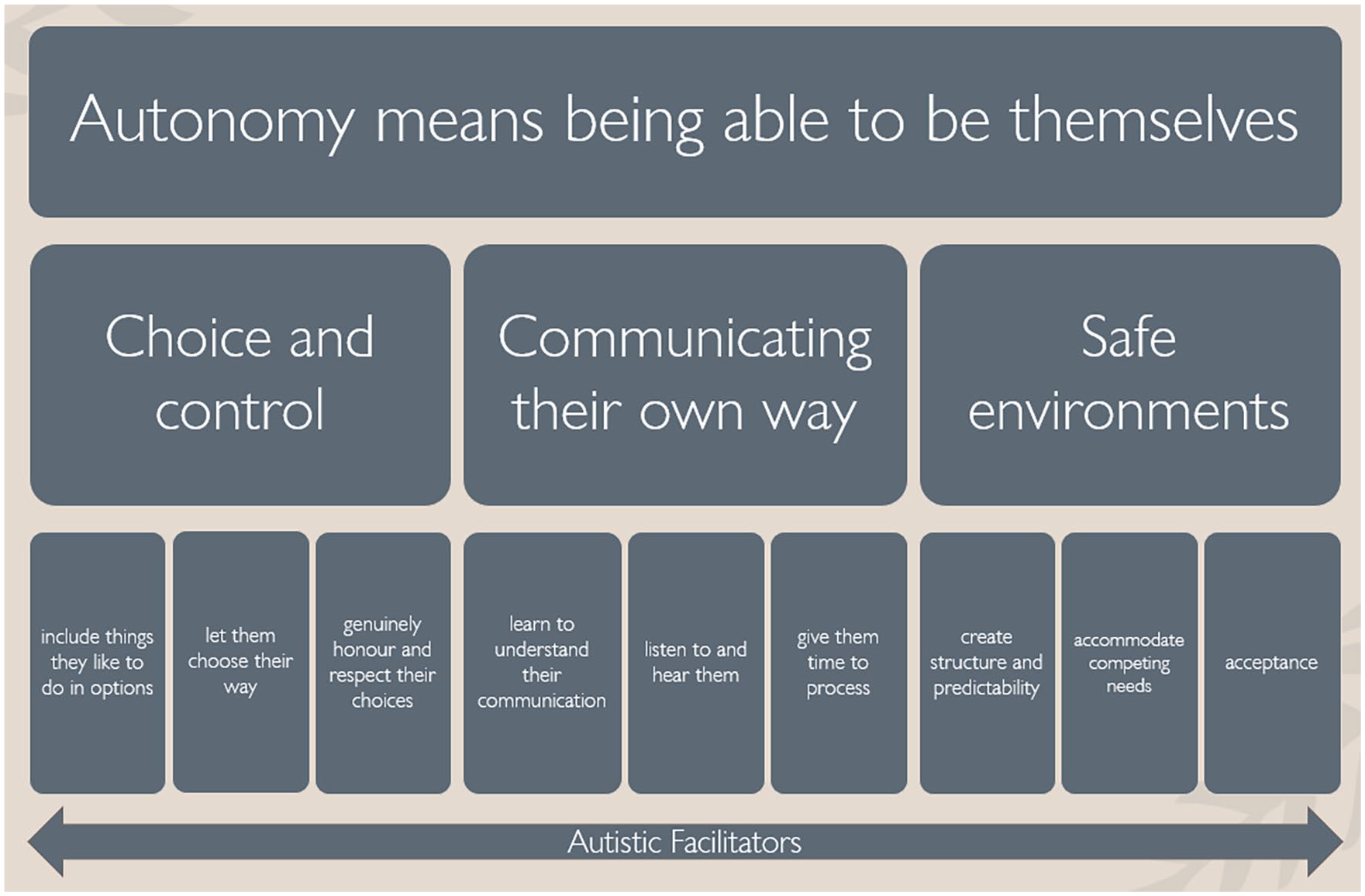
Themes and subthemes.
Quality and rigor
We incorporated many strategies to enhance trustworthiness including prolonged engagement with participants, maintaining personal reflexive journals, peer-researcher review in a safe space to have critical and supportive conversations throughout analysis, and an audit trail throughout the process, including written and video documentation related to our thoughts, insights, choices, and decisions (Mayan, 2009). Triangulation of data across different data sources and participant videos, including viewing and reviewing the entirety of each participants’ communication through all sessions, was critical to answering our first research question.
Community involvement
The research team included two autistic academics, four autistic members from the community, and three members from the autism community.
Results
Our objectives were to (1) understand the meaning of autonomy from the perspective of autistic people with ID and (2) learn how autistic people with ID want to be supported to be autonomous.
Regarding Objective 1, our data support that participants define autonomy as being able to be themselves. In line with Ryan and Deci’s (2017) conceptualization of autonomy, this definition reflects participants’ desire to feel in control of themselves and their lives. Our observations reinforced feelings of satisfaction, comfort, pride, and confidence when a participant’s attempt at control over a situation was validated, even if they demonstrated that control in different ways, and their choices were respected. These feelings were evident through participants’ words, body language, facial expressions, gestures, changes in behavior and actions, and were especially notable related to the unique preferences and abilities of each participant. In other words, for our participants, the essence of individuality within autonomy seemed especially important.
Regarding Objective 2, our data support three themes representing how participants want to be supported to be autonomous: (1) choice and control; (2) communicating their own way; and (3) safe environments. Within each theme, we identified corresponding strategies for supporting autistic people with ID to be autonomous, from their perspective (i.e. based on our themes of how they want to be supported). We also identified an overarching support strategy, having autistic facilitators. Each of these themes and strategies is described in detail below, supported by quotes or images from our data.
Theme 1: choice and control
This theme highlights the significance of providing meaningful opportunities for participants to exercise choice and control and respecting their capacity to do so. Some participants enthusiastically selected preferred activities from the offerings presented to them. However, others made different choices. For example, instead of opting for an art activity, Brody brought along a story he was actively working on. Peter sometimes chose to remain with the group while abstaining from participating in any art-related endeavors. Similarly, Gabe opted to embark on community walks alongside a researcher instead of engaging in art activities.
The first strategy we identified to support choice and control is including things they like to do in the options. Having preferred choices available was important; however, we noted that participants reinforced that choosing not to do a presented option should also be interpreted as a choice. For example, for five sessions, Peter did not choose any of the art activities offered and we wondered why. Once we introduced the option of looking at magazines, Peter actively made a choice and engaged with the group. Furthermore, he exercised his autonomy by selecting the specific magazine he wanted from a variety of options (Figure 2).

Peter leafing through a magazine.
The second strategy to support choice and control is to let them choose their own way. Our observations revealed a multitude of examples showcasing the participants’ individuality in decision-making and the specific support they required. For example, Brody preferred to approach the activities bin and select an activity in response to the researcher’s cue to “show us with his hands.” In one activity, each participant was tasked with describing their ideal day using any format they preferred. Lamont chose to respond to this open-ended question by compiling a list of activities in which he would engage. Considering our knowledge that Peter enjoyed browsing through magazines, we provided him with a magazine-like booklet containing pictures depicting various activities, allowing him to browse and select the things he would include in his “awesome day.” Peter went on to cut out the chosen pictures and affixed them to construction paper (Figure 3). In contrast, Gabe did not respond to the researcher’s questions about what he would like to do on an awesome day, but he did respond to the alternate question, “what makes Gabe happy?” by saying, “Movie, Mario Kart, big comfy chair.”
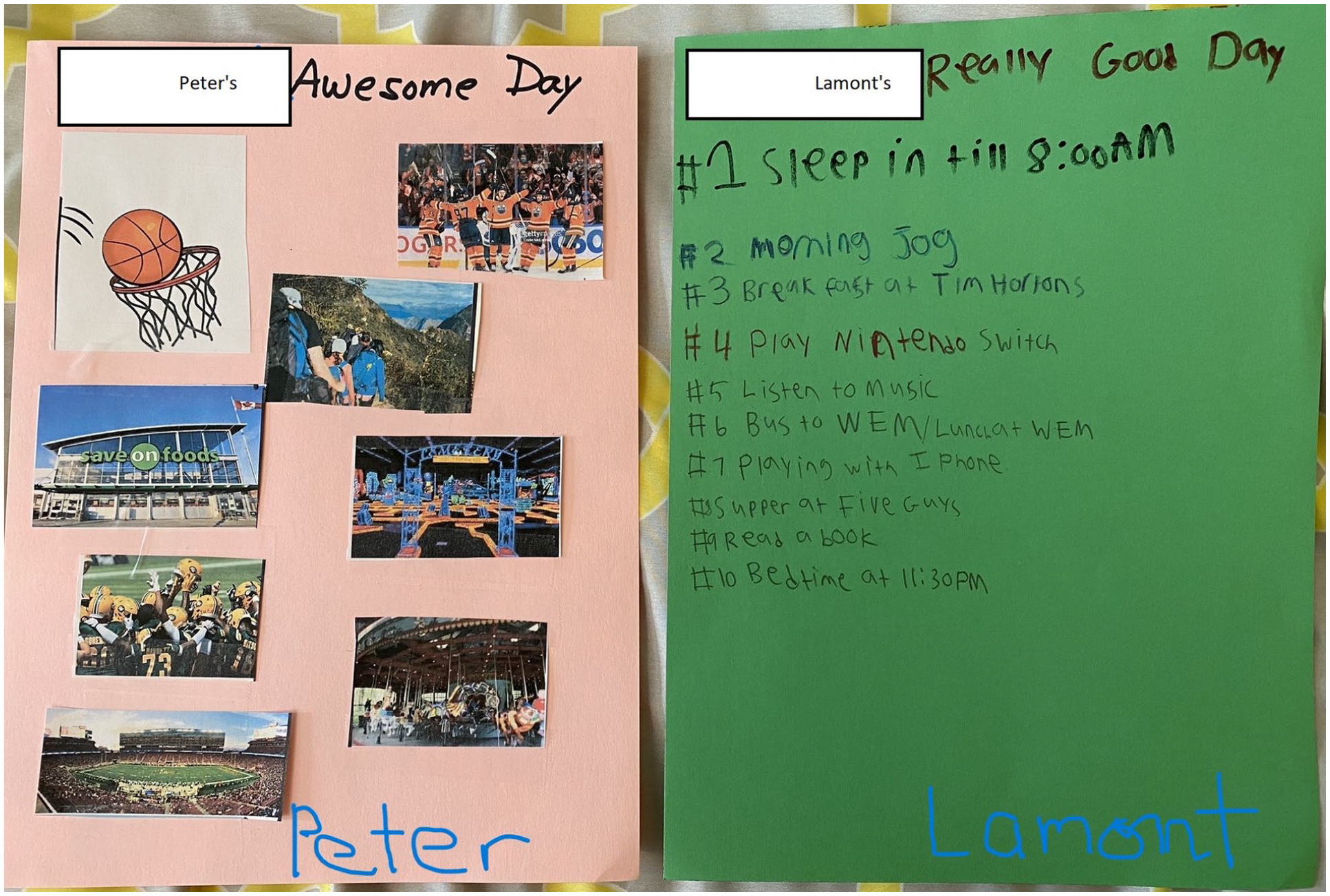
Peter and Lamont’s list of things to do in an awesome day.
Lily and Justin expressed choice and control by creating vision boards using a website (Figure 4). Lily’s vision board depicted various elements she aspired for in her future. She described, “I want to live in a house in the city and have a garden, have lots of friends, have a job, and be busy, but happy busy, not sad busy.” Justin’s vision board represented the importance of travel in his future with many different destinations, including outer space. Thus, the second strategy for supporting choice and control let individuals express their choices in diverse ways. This approach recognized the uniqueness of each participant and the varying support they required.

Justin (left) and Lily’s vision boards.
The third way to support choice and control is to genuinely honor and respect their choices, by both allowing and accepting them, even if they differ from your own preferences. We came to recognize the significance of this strategy through reflection about, and regret related to, researcher actions that did not align with this strategy. For instance, a researcher once suggested a particular approach for Lily to undertake a task, but Lily decided to pursue an alternative path. In response, the researcher said “your choice” in a tone of voice that conveyed an unintended negative connotation, which Lily interpreted as disapproval of her decision. Although the researcher technically honored Lily’s choice, the underlying tone displayed a lack of respect toward the participant’s autonomy. Similarly, Justin expressed his desire to engage with LEGO® bricks, but a researcher persistently suggested alternative activities. Justin, undeterred, repeatedly responded with “LEGO” to each suggestion until the researcher finally accepted his preference. Justin should not have been required to display unnecessary persistence to have his choice honored. These instances highlight the significance of allowing participants to make their own choices and genuinely accepting and respecting those choices.
Theme 2: communicating their way
This theme reflects the importance of working to understand the unique way in which each participant communicated, what each participant was communicating, and ensuring that they understand your communication.
The first strategy to support participants to communicate their way is to learn to understand their communication. This refers to the need to take time and put effort into ensuring that participants and researchers understand each other because they communicate in different ways. For example, Brody sometimes communicated his needs and desires by repeating a line from a movie or show. In one session he said “no, Eleanor, don’t be upset” when he was becoming dysregulated. In another example, a researcher asked Gabe, “What is a comfortable place to be?” and Gabe responded, “At the chair.” The researcher needed more details, so asked, “Which chair is the best chair?” Gabe answered, “Big comfy chair.” Dax spoke very quickly, and we sometimes required him to repeat himself several times to understand him. Although tedious at times, the extra requests ensured that Dax’s intent was understood. These examples illustrate the variety of communication forms that researchers and facilitators need to attend to.
The second strategy in this theme, listen to and hear them, refers to the need to recognize and “listen” to all forms of communication including verbal, body language, movement, facial expressions, and vocalizations. For example, Dax asked to take a picture of one of the researchers because Dax uses photographs to communicate with others and wanted to use that picture to show people what he did that day. In another session, Dax wanted his picture taken with his clay creations. The researcher quickly recognized that a photographic record of this event was important for Dax because photos were how he organized his memories (Figure 5).

Dax and his creations, ice cream cone and hot dog.
The third strategy, give them time to process, refers to allowing time for participants to respond or make a choice. For example, Brody often took so long to answer a question that we thought he was not going to answer. During the “Would You Rather” game, the question was “Would you rather have to walk while in a sleeping bag or sleep in a bathtub?” All participants had answered except Brody and the researcher was about to ask the next question when Brody responded, “sleep in a bathtub.” This was an important reminder for the researchers about the importance of allowing the participants time to respond.
Theme 3: safe environments
This theme refers to the importance of creating a physical and social environment that is comfortable and safe for participants. We observed that participants were able to make clearer choices and remain regulated when they were comfortable and calm.
The first strategy is to create structure and predictability. For example, Justin hit his head and appeared agitated when the researchers announced unexpected changes to the questions for that session. This unpredictability interfered with Justin’s ability to safely advocate for himself, for example, by saying no or leaving the session. The researcher reverted to the expected questions for the session and gave Justin a printed copy of the new questions that would be asked at the next session so that Justin would feel prepared. This helped Justin stay calm and regulated and take part in the activities at the next session. Dax had a routine that he did before he sat in a chair. Once he had done the movements and made the sounds, he sat and was then able to engage in the research activity. The researchers and participants did not interfere with Dax’s routine, helping him to feel safe in conducting his routine. Another example was holding the sessions on the same day of the week at the same time of day in the same location and providing notice of upcoming changes.
The second strategy, accommodate competing needs, refers to instances when participants have opposing needs. For instance, during one session, Dax unintentionally hit his small clay baseball into Brody’s area using a small clay bat. Brody firmly refused to return the ball to Dax. In response, the researchers asked Lamont to assist and return the ball to Dax. This approach honored both Dax’s desire to retrieve his ball and Brody’s wish to refrain from returning it. The researcher then suggested to Dax that he hit the baseball in a direction away from Brody. This allowed Dax to continue engaging with the baseball in a way that would not infringe upon Brody’s space or preferences.
In a second instance, an issue arose when Lamont’s LEGO® bricks scooter entered Brody’s space, which Brody did not like. Recognizing this concern, Lamont agreed to discontinue his actions, demonstrating a willingness to respect Brody’s boundaries. To further address the issue, the researchers took proactive measures in the next session by arranging for a larger table, ensuring that everyone had more personal space. These examples highlight the importance of actively responding to participants’ needs and concerns, fostering an environment where their preferences and boundaries are acknowledged and accommodated, and characterized by harmony and respect. This environment upheld the autonomy of participants and enhanced their overall experience.
The third strategy, acceptance, refers to holding space for participants to be themselves and express their interests. For example, Kent said, “maybe when I live on my own, I’ll buy some beer.” This was a recurring topic for Kent who also expressed a desire to get his driver’s license, watch action movies, get married, and have two children. The autistic researchers accepted Kent’s comments even though we never identified if it was sincere or if he was teasing (Kent liked to tease people). Attending to both what is being said and what is not being said is crucial. In another session, Brody started jumping up and down, waving his arms, and making loud vocalizations. This activity risked the environment becoming unsafe for people around Brody. Without judgment and with Brody’s permission, one of the researchers led him through a deep breathing exercise to help him to calm (Figure 6). When Brody was calm, we determined that he was being asked too many questions as part of the session’s activity, so we did not ask Brody any more questions in that session.
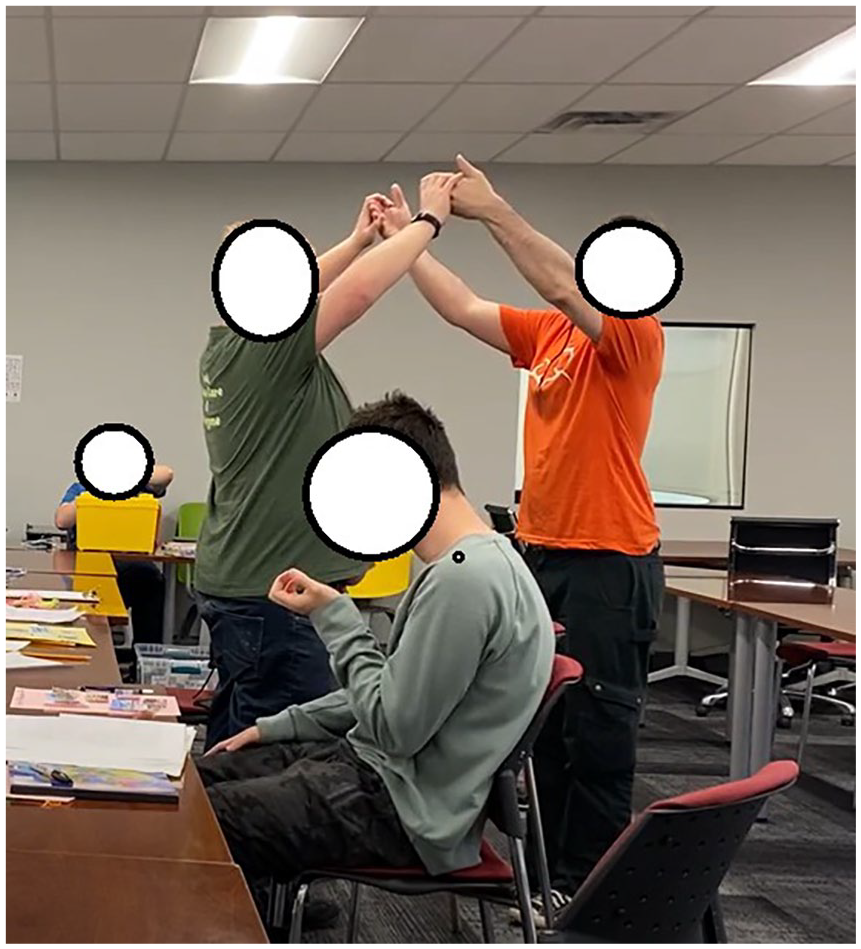
Brody and researcher co-regulating.
Finally, we identified an overarching strategy that supported the participants’ autonomy, autistic facilitators. Having autistic researchers strengthened the project due to shared understandings and a unique connection between the autistic researchers and participants. For example, when Lily expressed her perception of letters resembling shapes and one researcher explained their personal association of the letter “y” with a sweater, Lily flapped her hands in excitement, exclaiming, “You get it!” We found common ground in our love for puns, palindromes, and the enjoyment of creating words from car license plate letters. These shared interests and connections allowed for meaningful conversations and interactions. Lily also candidly expressed the significance of engaging with fellow autistic adults, stating, “It’s nice talking to other autistics. I never really have before. I’ve never been open with other people.” She also remarked, “I didn’t know a woman on the spectrum could be so independent!” These sentiments highlighted the positive impact of autistic facilitators and the value of building connections within the autistic community. Engaging in playful activities with the participants, such as the “Would You Rather” game, with a mix of serious and lighthearted questions, resulted in an abundance of laughter, fostering a joyful and inclusive environment.
During an ACP meeting, a partner commented that (based on watching data collection videos) they marveled at the autistic researchers’ abilities to lead the discussions with people who communicate in non-traditional ways and swiftly comprehend the subtle forms of communication employed by the autistic participants: [To] see two autistic people leading the discussion and tapping in right away to the indirect communication that the autistic participants are putting forth, such as saying villains, right away, picking up on the echolalia right away, . . . [not only] picking up on it, [but also] reflecting back what the person might be feeling, [and] de-escalating everything.
The partner went on to emphasize the beauty observed in this distinct communication style, attributed to the autistic mediators’ unique and intuitive response versus what might typically occur from a non-autistic mediator. In summary, autistic facilitators played a vital role in shaping our interactions and experiences throughout the study. The genuine connections, shared understanding, and appreciation for autistic perspectives and communication styles fostered a profound and enriching autonomy-supportive environment for all involved.
Discussion
There is a dearth of research that includes the perspectives of autistic adults with ID (Nicholas et al., 2019). Cheak-Zamora et al. (2020) called attention to the need to learn how autistic young adults themselves define and display autonomy. To our knowledge, this study is the first to explore the meaning of autonomy and how they want to be supported to be autonomous, from the perspectives of autistic people with ID. We found that our participants wanted to exert their autonomy through being themselves, and were supported by having choice and control, communicating their own way, and being in safe physical and social environments. We also found unique benefits of autistic-to-autistic connection and support.
When acting autonomously, consistent with SDT, participants were intrinsically motivated and experienced joy (Ryan & Deci, 2017). Our findings align with conceptualizations of self-determination related to being the primary causal agent in one’s life (Wehmeyer, 1999). Participants were more engaged when choosing activities that they genuinely liked, including beyond the offered suggestions. A recent systematic review on promoting self-determination of individuals with severe or profound ID found that existing interventions mainly focused on choice-making skills and training caregivers to interpret and respond to individuals “natural modalities of preference expression” (Kuld et al., 2023, p. 32). We found that we could better support participants’ autonomy after learning to understand each participant’s communication. Communication level (e.g. non-speaking, verbally fluent) predicts caregivers’ perceptions of autistic young adults’ ability to be autonomous (Cheak-Zamora et al., 2020). We learned from our participants that autistic people with ID may show their autonomy through actions, and it is incumbent on others to learn to interpret and respect these actions to support their autonomy.
Milton’s (2012) double empathy problem proposed that autistic people may not have deficits in social communication, but rather, problems may arise from a mismatch between autistic and non-autistic communication. Relatedly, Crompton et al. (2020) studied rapport in dyads of autistic, non-autistic, and mixed (autistic and non-autistic) groups. Both autistic and non-autistic raters gave poorer ratings of rapport for mixed neurotype pairs than for matched neurotype pairs. Our ACP observed uniqueness in how the two autistic researchers responded to the autistic participants with ID, offering support for a double empathy problem and that there may be empathetic strength in having autistic people working with autistic people. Indeed, having other autistic people in supportive roles, for example as researchers or support staff, might be important in supporting autonomy of autistic adults with ID (Capozzi et al., 2019; Dwyer et al., 2023; Lawrence, 2019). However, there is a dearth of research in this area. In fact, a systematic review of peer mentorship programs in postsecondary education found only one study that had autistic peer mentors (Duerksen et al., 2021).
Many autistic young adults experience challenges with self-regulation. Self-regulation develops through interactions with caregivers and the broader environment and can support one’s ability to make autonomous decisions (Smith & Douglas, 2024). Sensory processing differences experienced by autistic people influence their ability to self-regulate and participate in daily activities (Loh et al., 2023). When our participants were dysregulated due to an environmental stressor, such as loud noise or limited personal space, co-regulation was an effective strategy to assist participants to re-regulate so they could continue to engage in the sessions in a meaningful way. Consistent with Krieger et al.’s (2018) findings that order and predictability can help autistic people to feel secure and regulated in their environment, our participants were better able to make autonomous choices in structured and predictable environments.
Limitations and directions for future research
It is important to acknowledge that we cannot ensure that our interpretation accurately portrayed the participants’ messages because they were not directly told to us through spoken or written communication. However, we feel confident in our interpretations given our prolonged engagement with participants to learn and understand their communication, our depth and rigor of analysis, and our reflexivity throughout. Future research can evaluate skills and outcomes related to choice making, as well as closely related independence and self-regulation (Wullink et al., 2009). Future research can also evaluate outcomes with autistic others as supports. Other limitations of this study are our small sample size with minimal gender diversity, that data were collected from within only one SP, we did not consult parents/guardians, our ACP did not include any autistic adults with ID, and we did not take our interpretation of results back to the participants. A different or larger sample may have yielded different results. However, our approach aligns with the interpretive methodology and constructivist perspective that guided this research, and we believe that this study makes a meaningful contribution to knowledge given its novelty. We did not consult parents/guardians about their interpretation of their adult children’s communication. It is possible that parents/guardians may have interpreted their adult children’s communication differently. However, given that our research topic was autonomy, we felt that it was appropriate to center the participants. Future research could involve parents and staff to triangulate communication interpretations. Finally, although we engaged the ACP throughout the research, we did not include autistic adults with ID on the ACP, nor did we take our interpretation of results back to the participants for input. Future research could take the results back for review, input, and confirmation.
Implications for practice
Building secure relationships between autistic adults with ID and those who support them is critical as it enhances communication, contributes to better co-regulation, and supports autonomy. Indeed, opportunity for choice-making is a component of self-determined behavior that can be directly increased by support from others through the strategies outlined in this paper. As the primary people in their autistic adults’ life, parents/guardians can also facilitate autonomy by providing the necessary support to their autistic adults. Parents can provide support with similar strategies to those outlined above for service providers, especially in providing information, allowing time to process the information, and providing clarifying information when needed. Parents have a role to play in ensuring that other supporters understand how their autistic adult communicates.
Conclusion
Our findings reinforce that autistic adults with ID are capable of being autonomous with appropriate support. Our participants indicated that autonomy meant being able to be themselves and that autonomous behavior included having choice and control, communicating their way, and having a safe physical and psychological environment. Strategies include letting participants make choices in their own way, being sure to include things they like in the choices and honoring their choices. It also means learning to understand participants’ methods of communication, a process that often includes holding space and giving participants time to process information and decisions. Structure, predictability, and routine were key for participants to be regulated, and everyone benefited from co-regulation strategies and an environment that accommodated competing needs among participants. Finally, service providers should consider hiring autistic staff to also enhance the ability of autistic adults with ID to be autonomous. We hope that this work inspires others to consider how they can best support autistic people with ID to be autonomous, ultimately enhancing autonomy, self-determination, and quality of life.
Footnotes
Declaration of conflicting interests
The author(s) declared the following potential conflicts of interest with respect to the research, authorship, and/or publication of this article: At the time of data collection and analysis, J.R. was an employee of the autism service provider. Detailed information on how we navigated this is within the article. H.M.B. is a volunteer board member for the autism service provider with no involvement in day-to-day operations. The remaining authors have no competing interests to declare.
Funding
The author(s) disclosed receipt of the following financial support for the research, authorship, and/or publication of this article: This study was funded by a Social Sciences and Humanities Research Council of Canada (SSHRC) Partnership Development Grant (890-202-0012; PI: Sandy Thompson-Hodgetts) and a grant from Autism Edmonton and the Autism Research Centre.
