




Abstract
Our goal was to systematically identify, appraise and synthesise the qualitative research on parents’ experiences of the autism assessment process. The empirical studies were quality appraised using the Critical Appraisal Skills Programme tool. We synthesised the data using a meta-synthesis approach. Parents’ experiences were categorised into four phases namely: the pre-identification phase, the identification process, emotional reactions to the identification of the children as autistic and the post-identification phase. Informed by the social and human rights discourse on disability, we provide recommendations for future research, respecting the rights of all concerned. We discuss the implications of this review for future research into the autism assessment process. Parents consistently mentioned the importance of professional communication and we make recommendations for research on parent–professional partnerships. Given the sensitivities of the issues, we draw attention to ethical considerations when conducting research on the autism assessment process. Finally, we address the strategies that professionals can adopt in applying neurodiversity-affirmative approaches when identifying autistic children and supporting their parents.
Lay Abstract
Hearing about parents’ experiences of having their child recognised as autistic could help improve the supports offered to parents. Our article may also help guide future research on this topic. We made a list of the type of research that interested us. We searched the studies already completed, only studying the research that matched our interests. After reading the studies, we rated their quality using the Critical Appraisal Skills Programme tool.
It became clear that parents went through four phases during the identification process. The first phase occurred before their child was identified as autistic. The second involved the actual assessment of their child. Parents’ emotional reactions to the news were the focus of the third phase. The final phase occurred after their child was identified as autistic. We discuss the findings of our research. As there are sensitivities involved in conducting research on this topic, we identify how researchers can ensure that their research is of the best quality. We are committed to respecting the human rights of all involved, so we emphasise the need for professionals to develop good relationships with the parents of autistic children. Researchers have recently come to see autism as typical of human diversity. We encourage the professionals involved to adopt this understanding of autistic children and make practical suggestions to enable them to do so.
Keywords
Introduction
We aim in this systematic literature review to explore parents’ experiences of having their children identified as autistic. This review is concerned with parental experiences of what is called the diagnostic assessment process of their children. We refer to diagnosis as identification since diagnosis as a term is closely associated with the medical model of disability. We decided to employ the term identification as it is reflective of the social model of disability. The autism assessment process may include parents’ recognition of the need for information and help, and the nature of their interactions with professionals. Finally, there is the information sharing phase and parents’ understanding and acceptance of the insights yielded from the assessment process.
Justification for this systematic literature review
For many parents, having their children identified as autistic can be a challenging time (Brogan & Knussen, 2003; Keenan et al., 2010). Indeed, Guillon et al. (2022, p. 2) highlight that the assessment process ‘is an emotionally charged periods for parents, often described as painful, chaotic, and lengthy’. Our research is focused on parents’ experiences of having their children identified as autistic. We hope to highlight priorities for future research and a view to improving the delivery of services to parents.
There is no universally accepted approach for identifying autism (Psychological Society of Ireland [PSI], 2022, p. 3). A developmental history and assessment which are consistent with the Diagnostic and Statistical Manual of Mental Disorders (5th ed) or International Statistical Classification of Diseases and Related Health Problems criteria should be carried out as an essential component of the assessment process (National Institute for Health and Care Excellence [NICE], 2014). There is, however, broad agreement about what constitutes good practice, including adherence to international classification systems, selection, use and interpretation of standardised measures, the role of experienced clinical judgement and a team approach (PSI, 2022).
In practice, the ‘team approach’ may be represented by a multidisciplinary team of professionals. As noted in the Autism Education Trust Reports (Charman et al., 2011; Jones et al., 2008) and the NICE (2014) guidelines, the team should include various appropriately trained professionals with a range of expertise. As documented in British best practice guidelines, the core staff of the autism assessment team for children should include educational and/or clinical psychologists with the assessment to be completed within 3 months of referral (NICE, 2014). We therefore ensured that the inclusion criteria and composition of the assessment team were in line with these guidelines. However, there is no universal consensus that a psychologist should be involved in all autism assessments. Indeed, differing conceptualisations of autism may mean that the composition of the team may vary, a factor that should be borne in mind when interpreting the findings of this research to other contexts. It is also important to note that we are not seeking to promote one profession over another professional group. Our research should not be interpreted as implying that the involvement of a psychologist results in better quality assessments of autistic children as we have no basis for making such a claim. Future researchers may wish to consider whether parental experience could be impacted by the team composition, an issue which is beyond the scope of the current review. The adoption of specific assessment tools and/or procedures is also beyond the scope of our inquiry. Future researchers could consider whether the adoption of instruments and/or procedures has a bearing on the identification of autistic children.
Autism is now recognised as relatively common, resulting in an increase in referrals for autism assessment and identification (Russell et al., 2022). There is therefore a clear need for systematic literature reviews to inform professionals’ practice when identifying autistic children and when working with their parents during this process. There have been previous reviews on this topic (Boshoff et al., 2018; Legg & Tickle, 2019). In terms of the methodology adopted, our review is more like that of Boshoff et al. (2018) in that we each conducted a meta-synthesis of the research employing the Critical Appraisal Skills Programme (CASP) tool in the quality appraisal process.
Our research differs from previous reviews in that we are cognisant of differing conceptualisations of disability, the human rights discourse and neurodiversity-affirmative understandings of autistic individuals. The medical model is focused on individual difficulty, with the individual regarded as deficient in some respect. By contrast, the social model of disability emphasises the interaction between the individual and the environment (Gouzman et al., 2023, p. 5). Thus, disability is seen as a social creation, in that there is a relationship between the person and the disabling society (Shakespeare, 2013 p. 216). The social model calls for a paradigm shift as it seeks to change society to accommodate the individual (Saia, 2023, p. 795). Consequently, our review was concerned with the broader professional and societal issues that arise during the assessment process. Out of respect to the preferences of the autistic community (Arnhart et al., 2022), influenced by the human rights discourse and the neurodiversity-affirmative approach, we employed identity-first language. By contrast, Boshoff et al. (2018) and Legg and Tickle (2019) relied on person-centred language, referring to children with autism and children with autism spectrum disorder respectively. In the previous reviews, the term ‘diagnosis’ features when referring to the identification of autistic children, a term associated with the medical model of disability (Boshoff et al., 2018; Legg and Tickle, 2019). Implicit in the medical model of disability is the belief that the ‘problem’ is ‘within the child’, implying that all changes must occur at the level of the child.
However, Boshoff et al. (2018, e.155) acknowledge that ‘parents need to be recognised as being able to contribute valuable information, drawing on their understanding of their child and their observations of the child in their natural daily environment’. As such, Boshoff et al. (2018) recognise that parents can make a valuable contribution, a consideration that tallies with the social model of disability. Also recognising the importance of environmental factors in identifying autistic children, Legg and Tickle (2019, p. 1907) argue for the implementation of recommendations for ‘multi-agency training in early recognition of signs of autism (NICE, 2011)’. Thus, different conceptualisations of disability have informed previous research.
From the outset, our work was consistently informed by the social model of disability and a human rights perspective. We became aware of neurodiversity-affirmative understandings of autistic individuals at a later stage. It is important to clarify that we reported the research findings irrespective of the researchers’ conceptualisation of disability. We relied upon the social model of disability, the human rights discourse and neurodiversity-affirmative perspectives when interpreting the research findings. These conceptualisations also informed our language usage as well as our recommendations for future research and for professional practice in the area.
Recent understandings of disability
The social model of disability is premised on the understanding that the physical and social environment may be disabling to some children (Philpott & Muthukrishna, 2019). By the same token, the physical and social environment can be modified so that it is enabling for autistic children. Our interest in the social model of disability stems from the fact that it offers professionals practical and respectful strategies when working with autistic children and their families. Through the social model lens, an autistic individual’s experience of disability arises from ‘their environment’s failure to include and support the different ways people communicate, experience and interact in society’ (Fletcher-Randle, 2022, p. 392). Adherents argue that accommodating neurological differences will reduce the experience of disability for autistic individuals (Fletcher-Randle, 2022). However, Dwyer (2022) adopts an interactionist stance suggesting that disability arises due to an interaction between the characteristics of disabled individuals and their environment.
Informed by the Convention on the Rights of Persons with Disabilities (United Nations, 2006) and the Convention on the Rights of the Child (United Nations, 1989) more recently, the focus has shifted to a consideration of the rights of autistic individuals. Implicit in the human rights discourse on disability is recognition of the fact that children and their parents have rights, and we have a professional responsibility to respect their rights. However, Pellicano and den Houting (2022, p. 385) identify that autistic people themselves have had almost no say in shaping the research agenda. Pellicano, Dinsmore and Chapman (2014, p. 756) advocate for the greater involvement of the autism community in setting research priorities and in research more broadly to ensure that resources reach where they are most needed and can make the most impact. We identify priorities for research therefore on the clear understanding that future researchers will respect these rights.
As Fletcher-Watson (2022, p. 418) outlines, ‘humans vary in their neurological make-up and that this variability dictates the ways in which we process information – and therefore our experiences of and responses to the world’. Adherents of the neurodiversity paradigm regard autism as a difference that constitutes a disability in the context of the demands of the neurotypical world (Happe & Frith, 2020). For Christopher and Lord (2021, p. 1456), the neurodiversity perspective ‘changes the lens in which people view differences, guiding them to look for strengths and to accept differences as “normal variation”, rather than focusing on deficit-based labels that can be stigmatizing’. Autism is seen as a natural manifestation of neurological diversity, with the neurodiversity movement preferring descriptions of autism as a way of being (Chapman, 2020).
Autistic people have unique strengths and abilities, such as the ability to focus intensely on areas of interest, an innate sense of fairness and honesty and attention to visual detail (AsIam, 2022). As Davies (2022, p. 18) acknowledges, ‘working from a neurodiversity paradigm does not mean that the difficulties experienced by an autistic person need to be ignored or discounted’. It should be borne in mind that adopting the neurodiversity paradigm ‘does not, however, negate associated disability’ (Shaw et al., 2022, p. 1). Fletcher-Watson (2022, p. 419) suggests that the focus should be ‘on identification and acceptance of unmet needs without judgement, followed by provision of appropriate accommodations and supports’. The neurodiversity-affirmative approaches are characterised by acceptance of differing neurotypes, including autism, and the value that diversity brings to society.
Identifying autistic children: parents’ experiences
Many parents become aware of differences in their children’s development before they are aged 2 years and are frequently the first to alert professionals to their concerns, often doing so within a 5-month timeframe (MacKenzie et al., 2023). This may be due to a growing awareness of developmental differences in broader society (MacKenzie et al., 2023). These findings may suggest that young autistic children may be identified earlier due to early initiation of the assessment process. Despite the importance of early identification and intervention (Jonsdottir et al., 2011), parents can often wait years for their autistic children to be accurately recognised (Mooney et al., 2006). Autistic children are often not formally identified until they are of school-going age (Howlin & Moore, 1997; Osterling et al., 2002). Unclear pathways to accessing assessment services and lengthy wait lists for services may prolong the identification process (Howlin & Moore, 1997). Parents in the United Kingdom typically waited 1 year after they first noticed differences in their children’s development before seeking professional help (Crane et al., 2016). Parents continued to wait approximately 3.5 more years for their children to be identified as autistic (Crane et al., 2016) with half of the parents dissatisfied with the identification process.
Parents expressed confusion and uncertainty during the identification process. This uncertainty may be compounded by a lack of communication (Braiden et al. (2010) and the nature of the relationships with professionals. Keen (2007) reported that parental relationships with professionals are most effective when based on mutual respect, trust and honesty, and when mutually agreed planning, goals and decision-making occur. During and after the assessment process, parents experience a range of emotions (Banach et al., 2010). Boshoff et al. (2018, e. 154) suggested that service providors need to recognise ‘the critical role that advocacy plays in assisting parents to manage the emotional upheaval, and obtain a sense of coping’.
Objective of this systematic literature review
The objective of this review is to systematically identify and appraise the quality of qualitative research concerning parents’ experiences of the process of having their children identified as autistic. This review will offer an alternative perspective and add to the existing research literature, given that it is influenced by recent conceptualisations of disability, the human rights discourse and neurodiversity-affirmative approaches.
Research question
The goal of this review was to answer the question: What are parents’ experiences of the process of having their children identified as autistic? According to Brinkmann et al. (2017, as cited in Willing & Rogers, 2017), qualitative research enables the researcher to access and describe human experiences. We draw together the accounts of parents contained in qualitative and mixed methods studies to gain an in-depth understanding of parents’ subjective insights and experiences.
Search methods
The review methods were informed by the Preferred Reporting Items for Systematic reviews and Meta-Analysis (PRISMA) statement and guidelines (Page et al., 2021) and the CASP (2018) to create a valid and reliable appraisal of the evidence base. The PRISMA 2020 statement and guidelines include checklists, explanation and elaboration and a flow diagram which assist systematic researchers to report in a transparent manner why the review was carried out, the authors’ actions and their findings (Page et al., 2020). Our account of the step-by-step process of the methods followed in completing this review is informed by the PRISMA statement and guidelines (Page et al., 2021).
Selection criteria
A set of inclusion and exclusion criteria, informed by the Sample, Phenomenon of Interest, Study Design, Evaluation, and Research Type (SPIDER) tool (Cooke et al., 2012), were developed for the review and are detailed in Table 1.
Inclusion and exclusion criteria.
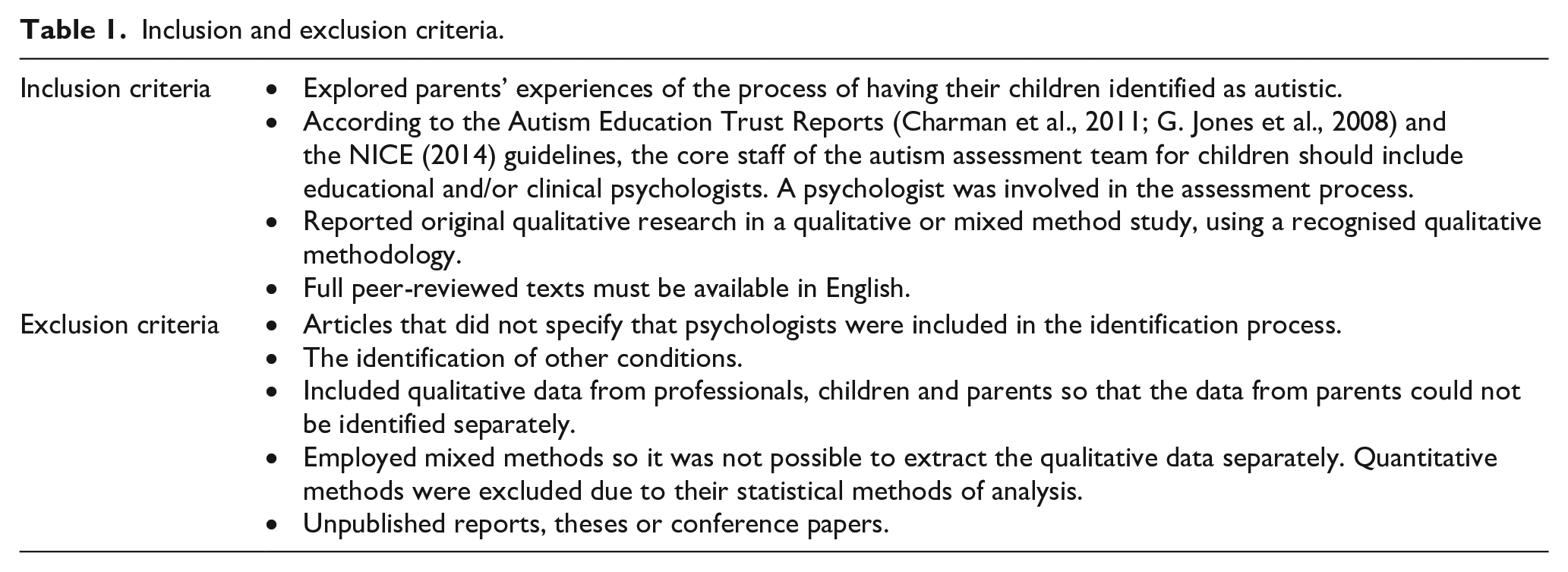
Parental status can be defined in many ways, ranging from legal guardianship to biological and/or adoptive parents. We adopted an inclusive definition to accommodate many diverse situations and attributed primacy to the self-perception of parents. Accordingly, we relied on the self-identification of parental status as recorded in the articles concerned. Autistic children may be identified as autistic at a range of ages. Those children who are older when recognised as autistic may differ in presentation from autistic children who are identified at a young age. We did not include age as an inclusion/exclusion criterion as we wanted to be as inclusive as possible. Future researchers may wish to impose age restrictions to ensure greater homogeneity among the autistic children.
We included all articles that satisfied the inclusion criteria, irrespective of the researchers’ conceptualisation of disability and language usage. The terms diagnosis, identification, ASD and Autism Spectrum Disorder were therefore included among others in the search string so that article selection was not restricted by our conceptualisation of disability or preferred terminology. Consequently, research suggestive of the medical model of disability was included in the current review.
Search strategy
Advanced searches of relevant databases (ERIC, PsycInfo, PsycArticles, Social Sciences Premium) of the ProQuest, Web of Science and Scopus databases were conducted to identify published studies.
Search string
Search strings were developed based on the SPIDER tool (Cooke et al., 2012). The search strings were tested and refined using scoping searches which resulted in numerous synonyms for ‘experiences’. Wildcards were used to extend word endings, spelling and form variations (e.g. perception vs perceive). Parenthesis and field codes specific to each database were input. Using the ProQuest database, the original search string based on the SPIDER tool (Cooke et al., 2012) failed to identify a substantial number of records and was deemed too narrow. Alternative search strings were considered. Once satisfied that the revised search string was free of errors, a final search was completed using the following search string.
AB,TI,IF(parent* OR mother* OR father* OR guardian OR famil*) AND AB,TI,IF(ASD OR ASC OR autism OR ‘autism spectrum disorder’ OR ‘autism spectrum condition’ OR ‘pervasive developmental delay’ OR autistic OR ‘autistic spectrum disorder’ OR ‘Autistic spectrum condition’) AND AB,TI,IF(ADOS OR ‘autism diagnostic observation’ OR BOSA OR ‘Brief observation symptoms of autism’ OR ADI-R OR ‘autism diagnostic interview’ OR refer* OR diagnos* OR assess* OR screen* OR identif* OR pathway OR ‘psychological assess*’) AND AB,TI,IF,SU(questionnaire OR survey OR interview OR ‘focus group’ OR ‘case study’ OR ‘case studies’ OR observe OR observation) AND AB,TI,IF(view* OR experience OR opinion OR attitude OR perception OR belie* OR feel OR know OR understand OR ‘lived experience’ OR perceive)
Further details are outlined in Appendices 1 and 2 (vide the Appendix for the developed search strings for Web of Science and Scopus databases).
Screening and selection process
The search returned 775 records for screening against inclusion criteria (ProQuest, n = 325, Web of Science, n = 114 and Scopus, n = 336). One author screened the records. All records were extracted for screening. After duplicates were removed, 663 records remained. After title and abstract screening, 531 records were excluded as they did not fit the topic or meet inclusion criteria. Full texts were retrieved, and the remaining 132 records were screened. Data relating to the sample, phenomenon of interest, design, evaluation, research type and the professional(s) involved in identifying autistic children were documented to establish if they met the inclusion criteria. Figure 1 outlines the search process. The remaining 16 studies met all inclusion criteria and were included in the review.
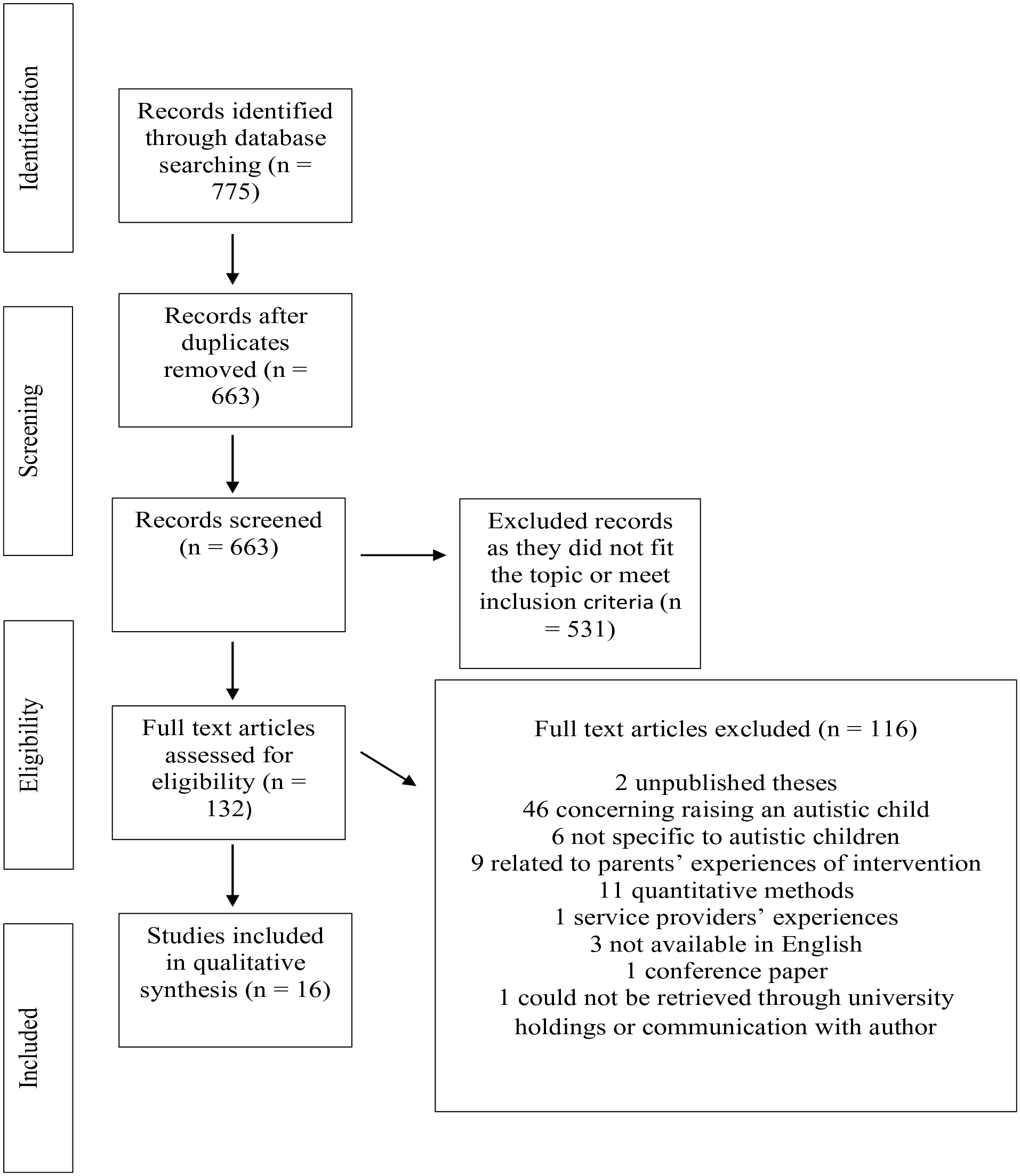
PRISMA diagram.
Importantly, the screening and selection process was not influenced by our understanding and preferred conceptualisations of disability. We paid attention to the use of language by the researchers, to the assumptions made, to the values held and to the ethical considerations. These issues are foundational to us as individuals and to our joint work in this article. We interpreted and presented the findings of the review considering current thinking about disability, autism, neurodiversity and human rights. Our recommendations for future research and for professional practice in the area draw from these conceptualisations.
Data extraction and synthesis
An excel file was created and a specific extraction table unique to this study was designed to extract and document relevant demographic data about the studies (i.e. title, author(s), year of publication, journal, study location, number of participants, research methods).
The selected studies were read and information relating to the research question and key findings was extracted. One author extracted the data and a discussion ensued with the second author. The authors ensured all relevant information was extracted. Information was synthesised using a meta- synthesis approach (Siddaway et al., 2019). The aim of a meta-synthesis is to synthesise qualitative studies on a topic to locate key themes, concepts or theories that provide novel or more powerful explanations for the phenomenon under review (Siddaway et al., 2019; Thorne et al, 2004).
Quality appraisal method
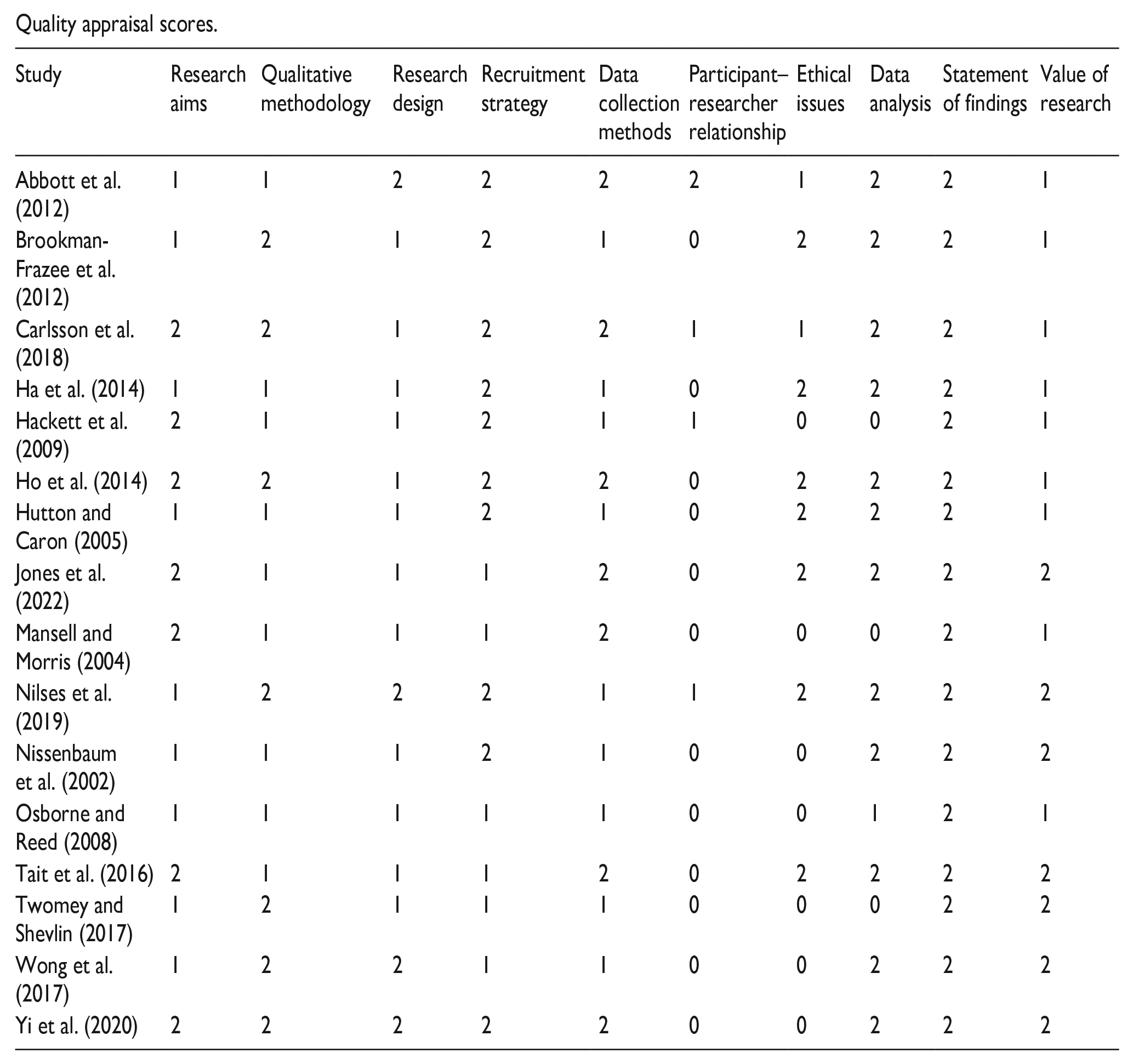
The CASP (2018) qualitative checklist was administered to assess the relevance and quality of each study. This appraisal tool is widely used and fits the purpose of the study. The tool is useful in considering (1) the research aims, (2) qualitative methodology, (3) research design, (4) recruitment strategy, (5) data collection methods, (6) relationship between researcher and participants, (7) ethical issues, (8) data analysis, (9) statement of findings and (10) to identify valuable research. A score of 2 was given if the category was met, 1 if it was partially met and 0 if it was not satisfied. A total score of 0–7 depicted low quality, a total score of 8–14 was deemed to be of medium quality with a total score of 15–20 expressive of high quality. To assess the quality of each study and ensure validity and reliability, each of the studies was quality appraised independently by three raters with an inter-rater agreement of 59%. The formula for inter-rater agreement was total agreement divided by the total number of items multiplied by 100%. Consequently, the agreement was calculated based on total scores. Following discussion, each study was re-assessed independently by the three raters resulting in an inter-rater agreement of 72%. A final discussion between the raters resulted in 100% agreement as to the ratings.
Strengths and limitations of the review
This study used a systematic method to identify, critically appraise and synthesise the results of relevant literature. On a positive note, this review is informed by differing conceptualisations of disability, human rights discourse and neurodiversity-affirmative approaches. Several limitations of the review should be noted. Questionnaires were included if they were qualitative in nature, hence instrumentation validity and reliability are a relevant concern. In addition, parents were provided with limited opportunities to outline their experiences, arguably limiting the usefulness of the data. This limitation cannot be overcome by adopting a new perspective such as the neuro-affirmative understanding of autistic individuals. It is our hope that future researchers would work in partnership with parents so that parents are afforded every opportunity to express their views freely.
Results of the systematic review
Findings from the studies are presented in Table 2 including key background information and a summary of the results.
Included studies.
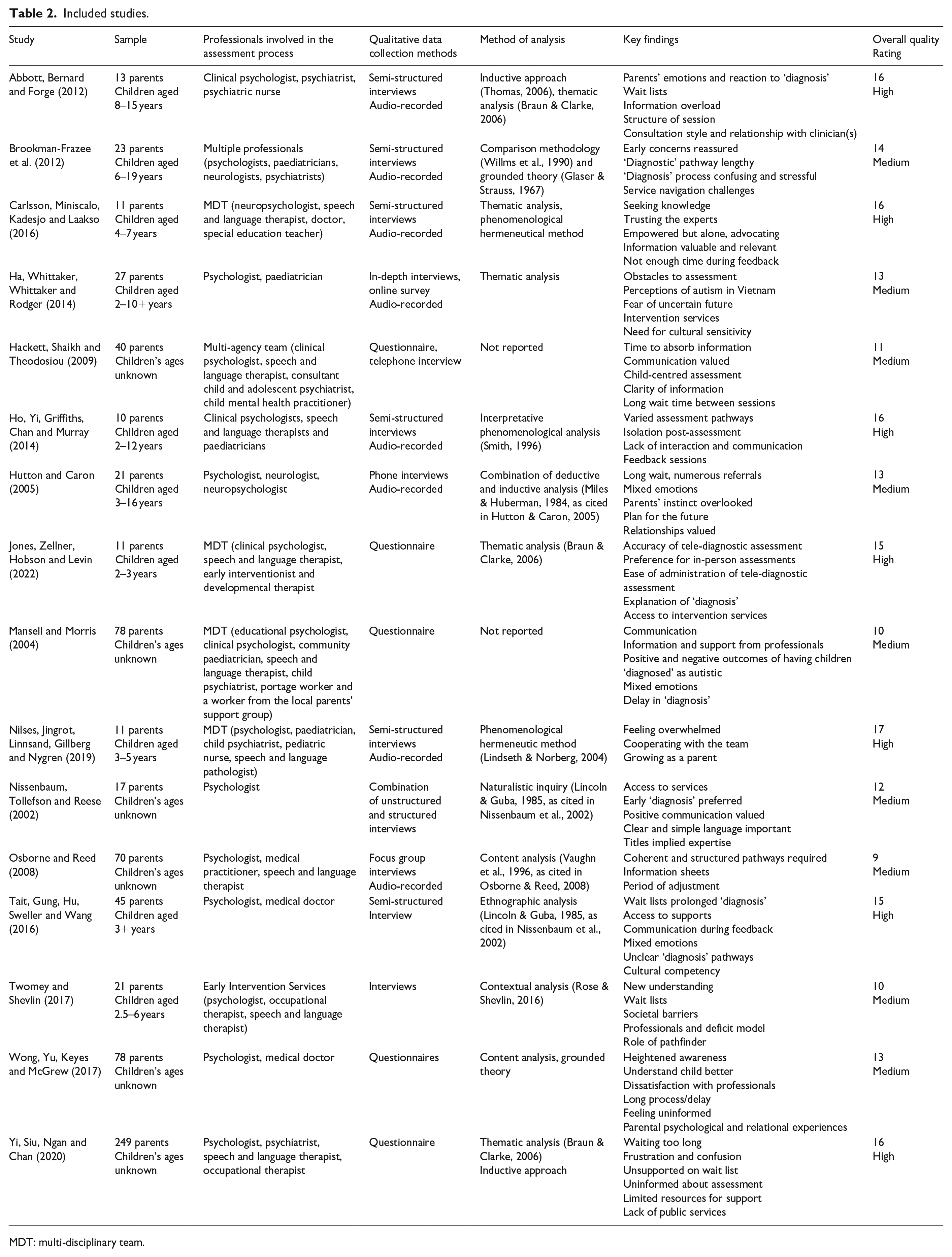
MDT: multi-disciplinary team.
Overview of the studies
Five studies originated from the United States, four from the United Kingdom, three from Hong Kong, two from Sweden and with one each from Ireland and Vietnam. We did not impose date range limits on the published articles as we wished to draw on as wide a sample of articles as possible. The studies were published over a 20-year period (2002–2022), perhaps suggesting increasing interest in parents’ experiences although the involvement of psychologists may also have had a bearing on the publication output. As the criteria for identifying autistic individuals were altered in 2013, this factor should be borne in mind in the interpretation of the data.
Quality appraisal results
As is evident from Table 2, all studies were judged to be of high or medium quality with seven studies considered to be of high methodological quality. However, greater clarity is needed regarding the research aims, specifically to include a description of the importance or relevance of the research. Researchers could have paid additional attention to aspects of their role, potential sources of bias and power differentials during the research process. Greater detail is advised on ethical considerations with nine studies reporting that ethical approval was secured. Qualitative methods were identified as appropriate in all studies, although the researchers did not always justify the selected methods. The findings were clearly presented and discussed in relation to the research questions. A further breakdown of the results of the quality appraisal is presented in Appendix 3.
A similar pattern was observed regarding the findings, informing our decision to include all studies in the review, giving equal weighting to the reporting of each study’s findings. Some researchers did not report or give a clear account of either the data collection or methods of analysis used, so greater weighting was given in those specific areas to studies which received a higher score.
Autism assessment process: parents’ experiences
Most studies included in this review (73%) explored parents’ experiences of the autism assessment process by categorising these experiences into four distinct phases: (1) ‘pre-diagnosis’, (2) the ‘diagnostic’ process, (3) emotional reactions to ‘diagnosis’ and (4) ‘post-diagnosis’. In this review, the word ‘diagnosis’, as evidenced in all studies, will be amended to ‘identification’ to move away from the medical discourse on disability. We sought to rename the four stages, referencing the chronology of events to be informative for readers. Therefore, the four distinct phases were recategorised as (1) the pre-identification phase, (2) the identification process, (3) emotional reactions to having a child identified as autistic and (4) the post-identification phase.
Abbott et al. (2012) and Nissenbaum et al. (2002) solely focused on specific elements of the identification process, namely the communication of the children’s identification as autistic. Most studies explored these phases in terms of parents’ positive and negative experiences with recommendations provided to improve the process.
The current study did not seek to determine whether the involvement of psychologists impacted on parental experiences of the assessment process. The four phases of the identification process are drawn from the existing literature, which was focused on parents’ experiences of each stage of the assessment process. Consequently, there is no mention of psychologists as their involvement may have been peripheral to each stage.
The pre-identification phase
Parents were first to notice differences in their children’s development, followed by professionals and educators (Wong et al., 2017). Some parents were reassured about their children’s early development by professionals, while others felt that their concerns were overlooked and discredited (Brookman-Frazee et al., 2012; Hutton & Caron, 2005). Some parents felt lost and confused as the pathways for seeking support and a formal identification were unclear (Tait et al., 2016; Yi et al., 2020). This was particularly the case for immigrant parents, who reported experiencing discrimination, stigma and obstacles in seeking and accessing help (Ha et al., 2014; Nilses et al., 2019).
The identification process
Parents preferred when their children were identified as autistic at a young age or soon after referral (Hutton & Caron, 2005; Nissenbaum et al., 2002). Most parents experienced long wait lists, with long periods of time lapsing from when they first noted concerns about their children’s development to receiving a formal identification (Hutton & Caron, 2005; Wong et al., 2017; Yi et al., 2020). Numerous referrals to services resulted in frustrating delays for parents and impacting early opportunities for intervention (Tait et al., 2016; Wong et al., 2017). Some parents sought expensive private assessments as they felt unsupported, confused and frustrated (Yi et al., 2020). Parents wanted a quicker, easier and more coherent and structured assessment process (Osborne & Reed, 2008). Some parents found the assessment process effective, quick and smooth, and were satisfied with the duration of sessions (Abbott et al., 2012; Carlsson et al., 2016). Others found the process lengthy, with short sessions, long waits between sessions and the involvement of multiple professionals (Brookman-Frazee et al., 2012; Hacket et al., 2009). Due to the COVID-19 pandemic, some parents experienced an autism assessment conducted remotely, noting the logistical convenience of the assessment (M. K. Jones et al., 2022).
Nilses et al. (2019) reported that parents felt worried and insecure during the assessment process. These feelings may have been exasperated by a lack of information as some felt in the dark about the content and procedure of the assessment (Osborne & Reed, 2008). While parents valued a child-centred approach to assessment (Hackett et al., 2009), some parents experienced a rushed assessment that was culturally insensitive (Ha et al., 2014).
Meeting the same professionals throughout the assessment was important to parents (Nilses et al., 2019), and respectful, empathetic, supportive and understanding relationships between parents and professionals were highly valued (Abbott et al., 2012; Ho et al., 2014; Hutton & Caron, 2005). Some parents perceived that there was a hierarchical nature to the parent–professional relationship with parents feeling stressed when professionals failed to interact and communicate effectively with them (Ho et al., 2014).
Communication style and information sharing were especially important to parents, particularly during the feedback sessions (Tait et al., 2016). Hearing their child was identified as autistic was a memorable moment for parents, and they shared ways in which this moment was supported or hindered. Some parents reported anxiety in anticipation of the feedback session (Abbott et al., 2012) and recommended that professionals aim to make parents feel comfortable (Nissenbaum et al., 2002). Parents welcomed a structured and focused approach to the session (Ho et al., 2014). Professionals need to be skilful when delivering feedback with parents expressing a preference for a positive communication style involving clear and simple language (Ho et al., 2014; Nissenbaum et al., 2002). Parents found it beneficial when professionals gave a thorough explanation about their children’s identification, including sharing next steps (Jones et al., 2022). Some parents reported finding the sharing and discussion of assessment scores helpful. Others recommended more time be allocated so they could ask questions and discuss their children’s care needs, appropriate interventions and educational supports (Mansell & Morris, 2004; Nissenbaum et al., 2002; Yi et al., 2020). Carlsson et al. (2016) reported that parents were satisfied with the information they received, finding it valuable and relevant. However, Osborne and Reed (2008) reported that parents suggested information sheets be used during the feedback session. Parents would welcome a follow-up appointment with more information regarding intervention, educational programmes and support groups (Osborne & Reed, 2008). Some parents experienced information overload during feedback sessions and, consequently, had difficulty absorbing the information (Abbott et al., 2012).
Emotional reactions to having a child identified as autistic
Some parents felt relief as the identification helped them understand their children’s needs and put a plan in place to support their children (Brookman-Frazee et al., 2012). Others experienced relief as up to then they believed that they themselves or their parenting style were the cause of their children’s presentation of needs (Wong et al., 2017). Other parents had mixed emotions and continued to feel confused (Nissenbaum et al., 2002; Tait et al., 2016).
The post-identification phase
Most researchers indicated that when children were identified as autistic, their parents had a better understanding of their children’s behaviour, needs and could plan (Hutton & Caron, 2005; Tait et al., 2016; Wong et al., 2017). Parents developed new understandings about their experiences and interactions with their children (Nilses et al., 2019; Twomey & Shelvin, 2017). According to Carlsson et al. (2016, p.336), in the end, parents felt left alone, ‘empowered but still alone’. They felt the need to voice their children’s needs to access services, reporting an everyday struggle to negotiate societal barriers (Twomey and Shelvin, 2017). The parents believed that the system was based on a deficit model with professionals operating on this basis. Most researchers reported that identification aided access to practical help and appropriate services (Nissenbaum et al., 2002; Tait et al., 2016; Wong et al., 2017). Parents could meet other parents of autistic children, share experiences and find relatable friends for their children (Mansell & Morris, 2004).
Discussion: priorities for future research
Autism assessment process: parents’ experiences
The discussion is structured around the four phases that parents experienced of the assessment process together with conclusions for future research.
The pre-identification phase
Waddington, Macaskill, Whitehouse, Billingham and Alvares (2023) highlight the importance of seeking and valuing parental input regarding their children’s early development. Indeed, parents are usually the first to notice differences in their children’s development (MacKenzie et al., 2023). During the pre-identification phase, some parents felt overlooked, and their instincts discredited (Brookman-Frazee et al., 2012; Hutton & Caron, 2005). Parents approach professionals because of their concerns and as Brown, Stahmer, Dwyer and Rivera (2021, p. 1172) advise ‘ignoring those concerns may leave parents feeling unheard and undervalued’. Research is warranted on the professional guidelines and the actual practices that team members employ during the pre-identification phase of the assessment process.
Parents believed their children would not receive support or intervention until they were identified as autistic and reported that their children did not receive support while waiting for a psychological assessment. From a human rights perspective, it is important for researchers to consider whether children needed to be identified as autistic to access early intervention, especially considering the well-established importance of early intervention (Jonsdottir et al., 2011).
Navigating the assessment system was identified as a significant barrier to accessing assessment. Parents did not always know where to seek professional support. Research could be conducted on whether a psychological advice clinic may provide parents with the opportunity to discuss their children’s development and make informed decisions about their options prior to assessment. An organisational decision tree could also be trialled, and its effectiveness judged in helping parents secure services.
The identification phase
The reported delays in assessment and the financial strain of private assessment are of particular concern. There is a need for research to review service delivery specifically to determine how the needs of those from disadvantaged backgrounds and parents with social, cultural and/or communication differences may be better considered in policy development, and professional practice. Informed by the human rights discourse, we are of the view that all children are entitled to access publicly funded services in a timely manner.
Brown et al. (2021, p. 1171) suggest ‘that an individual has a disability because of a complex interplay between the physical, cognitive, and emotional traits of that individual and the characteristics of their physical and social environments’.Informed by the social model of disability and neurodiversity-affirmative approaches, we suggest that a review is needed of the extent to which identification teams focus on children’s physical and social environments as well as on their individual characteristics. Also, of importance would be means of identifying children’s strengths and interests and how they may be used to support the children’s needs. Research is needed on the adoption of a strengths-based, child-centred and culturally sensitive approach to all interactions with the children and their parents.
Many parents of autistic children experienced a lack of commitment to partnership among professionals (Smith-Young et al., 2022). Parents are the experts on their children. They have knowledge of their children’s developmental and medical history, behaviour, personality and personal preferences. Research is warranted on listening to parents and on the effectiveness of the parent-suggested modifications to service delivery. Case studies of successful parent–professional partnerships may yield valuable insights in terms of the education and professional practice of psychologists and other professionals.
Brown et al. (2021, p. 1172) advise that ‘the way the diagnostician tells the “story of autism” makes a difference’. Some parents valued the information they received, while others requested more precise information, particularly regarding the scores their children obtained (Mansell & Morris, 2004). We encourage the professionals concerned to research the development of rapport, whether working in-person with parents or through remote work. Furthermore, there is a need to investigate the provision of feedback under different conditions to determine whether a single session or two feedback sessions best meet the parents’ needs. The accessibility of information provided should be considered, including language, format and the presentation of feedback. Jurin et al. (2022, p. 1015) state that providing parents with an opportunity to ask questions is a key component of a successful conversation about a child’s identification as autistic, an issue worthy of attention by researchers.
Emotions and the post-identification phase
For many parents, the process of having their children identified as autistic can be a stressful, a confusing and a challenging time (Brogan & Knussen, 2003; Keenan et al., 2010). According to Higgins et al. (2023, p. 1238) “social support should be promoted to all parents through several avenues, such as, facilitating access to local support groups, providing psychoeducational groups within service” among other initiatives. Given the emotionality of the assessment process, we suggest that services research means of providing emotional support to parents. Researchers could investigate the effectiveness of providing a family support worker to guide parents in navigating the various pathways to services.
Conclusions
Some researchers failed to clearly consider aspects of their relationship with research participants. Ethical issues warrant careful consideration by future researchers given the parents’ delicate, personal and emotional experiences during the assessment process.
Autistic children have rights, and they know themselves best. Ethically, we can honour autistic children by involving them in the assessment process, by listening to their experiences, by seeking their self-perceptions and by taking their views seriously.
Fletcher-Randle (2022) uses the term autistic parents to refer to autistic adults who are parents. A research priority is to hear the voices of autistic parents on the assessment process. Parents of autistic children may also have autistic family members. The assessment process may lead parents to question their own identity and/or that of other family members. Consequently, the autism assessment process may be uniquely personal for parents on many levels, a fact that professionals and researchers need to recognise. Assessment is not a value-free zone. As researchers, we must also consider our methods of assessment and how appropriate specific instruments are, especially in the light of the recent conceptualisations of disability, the human rights discourse and neurodiversity considerations.
According to Radulski (2022, p. 1), autism is widely understood as an “invisible” disability. Although many children are identified as autistic through the assessment process, some autistic children are not. The internal presentation of autism, masking and camouflaging behaviour highlights the need to explore new ways of assessment, so that all autistic children have an opportunity to understand their authentic self and reach their full potential.
The assessment process does not occur in a vacuum. Camilleri (2022) is of the view that professionals could do more to increase awareness of autism in society. Almog et al. (2023, p. 2) note that worldwide ‘stigma harms the well-being of autistic people and their families’. Milner et al. (2023, p. 11) acknowledge that there is a need to increase the understanding and acceptance of autistic behaviours and remove stigma and discrimination related to these. Shaw et al. (2022, p. 1) argue that changing ‘the narrative around autism will reduce stigma and may prevent mental ill health for some autistic people’.
In view of parents’ experiences of their children being described in terms of deficits, we suggest that professionals need to be neuro-affirmative in their discussions with families from their first meeting. It is especially important to recognise that being autistic is not about deficits (Pellicano & den Houting, 2022). Professionals need to emphasise autistic individuals’ human rights and preferences. As Hartman et al. (2023, p. 23) suggest, parents learn their language from professionals for the most part; therefore, leading by example is vital. Therefore, professionals should explain their use of neuro-affirmative language and how our understanding of autism has changed over time. As reported by Nissenbaum et al. (2002) and Ho et al. (2014), parents preferred a positive communication style involving clear and simple language. Parents found it helpful when professionals gave an explanation about their children’s identification as autistic (Jones et al., 2022). There is a need for the professionals to articulate, therefore, how each child meets the recognised criteria for autism and how individual strengths and areas of need are related to autism. The communication style and information sharing were important to parents, particularly during the feedback session, some parents were keen to have more time to ask questions and discuss their children’s needs (Mansell & Morris, 2004; Nissenbaum et al., 2002; Yi et al., 2020). Abbott et al. (2012) reported that some parents were overloaded with information during feedback sessions and struggled as a result to process the information. In view of these considerations, assessment teams could consider facilitating additional or follow-up sessions with parents.
Assessments should be personal to each individual child and assessment reports should reflect their individuality. Professionals should be cognisant of the fact that the way they write about children impacts how others perceive those children. Educating families helps break ongoing stigma (Hartman et al., 2023, p. 23). Highlighting the individual child’s strengths, preferences and areas of need in a neuro-affirmative and respectful way, together with empowering the adults who are supporting autistic children, may help change the existing narrative and reduce the stigma associated with autism.
Footnotes
Appendix 1
Appendix 2
Appendix 3
Quality appraisal scores.
| Study | Research aims | Qualitative methodology | Research design | Recruitment strategy | Data collection methods | Participant–researcher relationship | Ethical issues | Data analysis | Statement of findings | Value of research |
|---|---|---|---|---|---|---|---|---|---|---|
| Abbott et al. (2012) | 1 | 1 | 2 | 2 | 2 | 2 | 1 | 2 | 2 | 1 |
| Brookman-Frazee et al. (2012) | 1 | 2 | 1 | 2 | 1 | 0 | 2 | 2 | 2 | 1 |
| Carlsson et al. (2018) | 2 | 2 | 1 | 2 | 2 | 1 | 1 | 2 | 2 | 1 |
| Ha et al. (2014) | 1 | 1 | 1 | 2 | 1 | 0 | 2 | 2 | 2 | 1 |
| Hackett et al. (2009) | 2 | 1 | 1 | 2 | 1 | 1 | 0 | 0 | 2 | 1 |
| Ho et al. (2014) | 2 | 2 | 1 | 2 | 2 | 0 | 2 | 2 | 2 | 1 |
| Hutton and Caron (2005) | 1 | 1 | 1 | 2 | 1 | 0 | 2 | 2 | 2 | 1 |
| Jones et al. (2022) | 2 | 1 | 1 | 1 | 2 | 0 | 2 | 2 | 2 | 2 |
| Mansell and Morris (2004) | 2 | 1 | 1 | 1 | 2 | 0 | 0 | 0 | 2 | 1 |
| Nilses et al. (2019) | 1 | 2 | 2 | 2 | 1 | 1 | 2 | 2 | 2 | 2 |
| Nissenbaum et al. (2002) | 1 | 1 | 1 | 2 | 1 | 0 | 0 | 2 | 2 | 2 |
| Osborne and Reed (2008) | 1 | 1 | 1 | 1 | 1 | 0 | 0 | 1 | 2 | 1 |
| Tait et al. (2016) | 2 | 1 | 1 | 1 | 2 | 0 | 2 | 2 | 2 | 2 |
| Twomey and Shevlin (2017) | 1 | 2 | 1 | 1 | 1 | 0 | 0 | 0 | 2 | 2 |
| Wong et al. (2017) | 1 | 2 | 2 | 1 | 1 | 0 | 0 | 2 | 2 | 2 |
| Yi et al. (2020) | 2 | 2 | 2 | 2 | 2 | 0 | 0 | 2 | 2 | 2 |
Funding
The authors received no financial support for the research and authorship of this article. This is an open-access article distributed under the terms of the Creative Commons Attribution License (CC BY). The use, distribution or reproduction in other forms is permitted, provided the original author(s) and the copyright owner(s) are credited and that the original publication in this journal is cited, in accordance with accepted academic practice. No use, distribution or reproduction is permitted which does not comply with these terms.
