




Abstract
To provide inclusive education to autistic students, it is important that teachers possess knowledge about autism, feel competent in teaching autistic students, and have a positive attitude toward the inclusion of autistic students. In this study, we explored knowledge, self-efficacy, and attitude concerning autism among N = 887 teachers in Germany. The results showed that knowledge about autism was only moderate and teachers held some typical misconceptions about autism. Moreover, teachers did not possess overwhelmingly high self-efficacy beliefs whereas their attitude toward inclusion of autistic students was rather positive. Experience with teaching autistic students was associated with more knowledge and higher self-efficacy. Also, female teachers were more knowledgeable about autism and felt more competent in teaching autistic students than male teachers. However, the type of school where teachers were working made hardly any difference in their knowledge, self-efficacy, and attitude. Overall, the results suggest that teachers in Germany need more autism training to increase their knowledge about autism and their self-efficacy beliefs in teaching autistic students.
Lay Abstract
Nowadays, autistic students are often enrolled in mainstream schools. To successfully include autistic students in general education, teachers need to possess knowledge about autism, feel competent in teaching autistic students, and have a positive attitude toward their inclusion. However, in Germany, little is known about the knowledge, the self-efficacy, and the attitude concerning autism among teachers working at mainstream schools. Therefore, we conducted a study in which we used items to assess knowledge, self-efficacy, and attitude. A total of 887 general education teachers participated in the study. The results showed that the level of knowledge about autism was moderate among teachers. Similarly, teachers did not hold overwhelmingly high self-efficacy beliefs. However, their attitude toward inclusion of autistic students was rather positive. At the same time, teachers who had experience with teaching autistic students possessed more knowledge and higher self-efficacy than teachers who had no experience with teaching autistic students. In addition, female teachers were more knowledgeable about autism and felt more competent in teaching autistic students than male teachers. In contrast, knowledge, self-efficacy, and attitude were rather similar among teachers from different types of schools. The findings suggest that teachers in Germany should possess more knowledge about autism and feel more competent in teaching autistic students. Therefore, it is important to systematically include autism trainings in teacher education programs.
Introduction
Autism is a neurodevelopmental disorder characterized by difficulties in social communication and social interaction as well as restricted, repetitive patterns of behavior, interests, or activities (American Psychiatric Association, 2013; for other conceptualizations of autism, see Milton, 2019). Approximately, 1% of children and teenagers are diagnosed with autism spectrum disorder worldwide (Zeidan et al., 2022). Nowadays, a growing number of autistic students are included in general education. For example, in the United States (Meindl et al., 2020) and Australia (Roberts & Webster, 2022), the majority of autistic students are enrolled in mainstream schools. Analogous to the trend around the world, there is an increase in autism prevalence in Germany, too (Bachmann et al., 2018). Markowetz (2020) estimates that about 50% of all autistic students in Germany are in a general education classroom.
The growing number of autistic students in mainstream schools provides unique challenges to teachers. Cognitive (e.g. Demetriou et al., 2018), motivational (e.g. Meindl et al., 2020), and emotional factors (e.g. Huggins et al., 2021) can make it difficult for autistic students to perform academically well (e.g. Keen et al., 2023). In addition, communication and interaction with teachers and other students might be challenging for autistic students because of the very characteristics of autism (Watkins et al., 2019). Also, it is possible that autistic students display aggressive or self-injurious behavior which can seriously impair successful inclusion (Odom et al., 2021). To address these challenges, teachers need to be prepared for the inclusion of autistic students in mainstream schools (Reed & Osborne, 2014).
In Germany, little is known about how successfully teachers include autistic students. Therefore, we conducted a study to examine knowledge, self-efficacy, and attitude concerning autism among general education teachers in Germany as important aspects of their professional competence in teaching autistic students in mainstream schools.
Professional competence of teachers in including autistic students
The professional competence of teachers can be conceptualized as a multifaceted construct that consists of different aspects such as knowledge, self-efficacy, and attitude (e.g. Kunter et al., 2013). In the context of inclusive education for autistic students, knowledge about autism is part of the professional knowledge of teachers (e.g. Voss et al., 2011). In addition, feeling competent in including autistic students in mainstream schools refers to teacher self-efficacy (e.g. Woodcock et al., 2022). The attitude toward the inclusion of autistic students is another important aspect of a teacher’s professional competence (e.g. Yada et al., 2022).
Knowledge about autism
Knowledge about autism, such as knowledge about the symptoms of autism (e.g. Harrison et al., 2017), is usually associated with more positive impressions of autistic persons (e.g. Sasson & Morrison, 2019) and lower levels of stigma (e.g. Obeid et al., 2015). In particular, possessing knowledge about autism can help teachers to provide appropriate education to autistic students. For example, Segall and Campbell (2012) showed that more knowledgeable teachers more often reported to use educational practices such as providing choice-making opportunities (e.g. White et al., 2023) and using visual supports (e.g. Watkins et al., 2019) to include autistic students than less knowledgeable teachers. Moreover, having knowledge about autism can prevent teachers from overestimating their own knowledge about autism and help them to overcome their misconceptions about autism (Jones et al., 2021; McMahon et al., 2020).
In their summary of 25 studies, Gómez-Marí et al. (2021) showed that knowledge about autism among teachers in countries around the world was rather low. At the same time, the provision of training in autism and contact with autistic students were related to more knowledge about autism. Al-Sharbati et al. (2015) and Vincent and Ralston (2020) additionally found that female teachers possessed more knowledge about autism than male teachers even though this effect was rather small.
Self-efficacy for inclusive education of autistic students
Teacher self-efficacy refers to a teacher’s perception of their capabilities to support students and perform teaching tasks successfully (Tschannen-Moran et al., 1998). In their review, Zee and Koomen (2016) demonstrated that teachers with higher self-efficacy toward the inclusion of students with special educational needs felt more responsible for the learning problems of these students and were more willing to include them in their classroom than teachers with lower self-efficacy. Moreover, Woodcock et al. (2022) reported in their synthesis research showing that teacher self-efficacy was positively associated with the reported use of inclusive practices in classroom (e.g. Sharma et al., 2021; Sharma & Sokal, 2016).
Research that specifically focuses on teacher self-efficacy regarding autism suggests that feeling competent in including autistic students is linked with less teacher stress (Boujut et al., 2017) as well as with more teacher engagement and higher student outcomes (Love et al., 2020). However, teachers working at mainstream schools might lack confidence in their capabilities to appropriately deal with autistic students (Anglim et al., 2018). For example, Lu et al. (2020) showed that the level of self-efficacy among primary school teachers of autistic students was only moderate (see also Dignath et al., 2022).
Attitude toward the inclusion of autistic students
The attitude toward the inclusion of students with special educational needs refers to the way teachers think and feel about teaching these students in mainstream classrooms (Kielblock & Woodcock, 2023). A positive attitude toward inclusion is important because it can influence a teacher’s instructional practices in the classroom (Sharma & Jacobs, 2016). In their review, Gómez-Marí et al. (2022) found that teachers in most studies had a neutral attitude toward teaching autistic students in mainstream schools. In contrast, in the synthesis conducted by Russell et al. (2023), the majority of studies reported a positive attitude. In both summaries (Gómez-Marí et al., 2022; Russell et al., 2023), experience with teaching autistic students was not necessarily associated with a more positive attitude. Interestingly, the meta-analysis conducted by Kim et al. (2023) suggests that women in general possess a more positive attitude toward autism than men. This difference has been found between female and male teachers, too (Gómez-Marí et al., 2022).
Relationship between knowledge, self-efficacy, and attitude
Knowledge, self-efficacy, and attitude are important aspects of a teacher’s professional competence (e.g. Kunter et al., 2013). Therefore, they are examined not only in isolation but also in concert with each other (e.g. Lu et al., 2020). Research has shown a positive association between knowledge and self-efficacy (e.g. Lauermann & König, 2016) although there are also findings that do not confirm such a relationship (e.g. Depaepe & König, 2018). In the context of autism, Lu et al. (2020) observed a significant but rather small correlation between both variables for primary school teachers. Also, teachers’ knowledge about autism might be associated with their attitude toward the inclusion of autistic students. For example, knowing why autistic students might engage in aggressive behavior can raise a positive attitude toward them. Accordingly, Gómez-Marí et al. (2022) found that a number of studies reported a positive association between knowledge and attitude. As shown by the meta-analysis conducted by Yada et al. (2022), the attitude toward inclusion is linked to teacher self-efficacy, too. Similarly, in the context of teaching autistic students, the attitude toward their inclusion is related to teacher self-efficacy (Lu et al., 2020).
The present study
The number of autistic students enrolled in mainstream school is increasing (e.g. Meindl et al., 2020). Therefore, it is important that general education teachers possess knowledge about autism, have a high self-efficacy in teaching autistic students, and hold a positive attitude toward their inclusion (e.g. Reed & Osborne, 2014). Although the topic of inclusion has been a mandatory part of all teacher education programs in Germany since 2013 (e.g. Liebner & Schmaltz, 2021), autism is not a special education disability category in most of the federal states of Germany (Lindmeier et al., 2020). As a result, many general education teachers in Germany might not be systematically prepared for working with autistic students in mainstream schools (Markowetz, 2020). At the same time, little is known about their professional competence in including autistic students. To address this gap, the present study investigated knowledge, self-efficacy, and attitude concerning autism among general education teachers in Germany. In line with research examining teachers from other countries, we expected that teachers in Germany would possess limited knowledge about autism (Gómez-Marí et al., 2021), hold moderate self-efficacy beliefs in teaching autistic students (Lu et al., 2020) but have a rather positive attitude toward their inclusion (Russell et al., 2023).
A number of factors have been discussed to influence the level of a teacher’s professional competence in including autistic students (Reed & Osborne, 2014). In this study, we examined the following teacher factors: First, research suggests that contact with autistic students can positively influence a teacher’s knowledge, self-efficacy, and attitude (e.g. Gómez-Marí et al., 2021; Russell et al., 2023). Hence, we looked at whether knowledge, self-efficacy, and attitude would differ depending on whether teachers had experience with teaching autistic students. Second, the type of school where teachers are working might make a difference in their knowledge, self-efficacy, and attitude. For example, the reviews conducted by Gómez-Marí et al. (2021, 2022) suggest that primary school teachers not only have more knowledge about autism but also possess a more positive attitude toward autistic students than secondary school teachers. In Germany, schools are divided into primary and secondary schools. Secondary schools have a three-tiered structure and are split in lower, intermediate, and upper secondary schools. In some federal states of Germany, there are also comprehensive or integrative schools where students are taught in the same classroom but usually achieve different qualifications. We studied knowledge, self-efficacy, and attitude among teachers in Germany as a function of these different school types. Third, the gender of teachers might be linked to what they know about and how they think and feel about the inclusion of autistic students. In particular, women have been found to have more knowledge about autism (Al-Sharbati et al., 2015; Vincent & Ralston, 2020) and a more favorable attitude toward autistic people than men (e.g. Gómez-Marí et al., 2022; Kim et al., 2023). Thus, we examined the role of a teacher’s gender for knowledge, self-efficacy, and attitude in the context of autism.
Finally, given that knowledge, self-efficacy, and attitude concerning autism are important aspects of a teacher’s professional competence in including autistic students, we were interested in how they were related to each other. Lu et al. (2020) who studied primary school teachers found a rather strong association between self-efficacy and attitude whereas knowledge was only weakly related with self-efficacy and attitude. We also investigated possible relationships among knowledge, self-efficacy, and attitude regarding autism but, due to the cross-sectional nature of our study, did not interpret them causally.
Overall, we addressed the following research questions:
Research Question 1 (RQ1). What is the level of knowledge, self-efficacy, and attitude concerning autism that general education teachers in Germany possess?
Research Question 2 (RQ2). Is the level of knowledge, self-efficacy, and attitude concerning autism associated with autism experience, school type, and gender of general education teachers in Germany?
Research Question 3 (RQ3). What is the relationship between knowledge, self-efficacy, and attitude concerning autism among general education teachers in Germany?
Method
Sample
A total of N = 887 teachers from Baden-Wurttemberg, the federal state with the third largest population in Germany, participated in the study. Of them, 726 teachers were female, 123 teachers were male, and 38 teachers did not indicate their gender. The teachers were working at primary schools (Grundschule, n = 351), lower secondary schools (Haupt-/Werkrealschule, n = 41), intermediate secondary schools (Realschule, n = 115), upper secondary schools (Gymnasium, n = 235), and integrative schools (Gemeinschaftsschule, n = 109). Some teachers (n = 36) did not indicate the type of school they were working at. The teachers who reported their teaching experience (n = 820) had M = 15.72 years (SD = 9.18) of teaching experience. A total of n = 695 teachers reported that they had already taught an autistic student whereas n = 154 teachers indicated that they had not. A few teachers (n = 38 teachers) did not answer the question about their experience with teaching autistic students.
Measures
Knowledge about autism
Knowledge about autism was assessed by using items of the Autism Stigma and Knowledge Questionnaire (ASK-Q) constructed by Harrison et al. (2017). ASK-Q consists of 49 items covering the four aspects (1) diagnosis, (2) etiology, (3) treatment, and (4) stigma. In our study, we used 27 adapted items of the ASK-Q. We did not assess stigma because we separately examined attitude toward the inclusion of autistic students. To add items that assess misconceptions about autism, we also included two adapted items from the Autism Awareness Survey (AAS) developed by Tipton and Blacher (2014) and an adapted item used in the study by Segall and Campbell (2012). Thus, we had in total 30 items with 12 items assessing knowledge about symptoms (e.g. Many autistic students show the need for routines and sameness), 10 items assessing knowledge about etiology (e.g. Genetics play an important role in the development of autism), and 8 items assessing knowledge about treatment (e.g. There is currently no cure for autism). Each item was presented with the three answer options true, false, and don’t know. The items that were correctly answered were coded as correct whereas the items that were incorrectly answered or whose answer was not known were coded as incorrect. Reliability was good (Cronbach’s α = 0.77). The percentage of items correctly answered by a teacher was computed by dividing the number of all correctly answered items by the total number of items. In addition, the percentage of items correctly answered by a teacher for each of the three aspects of autism (i.e. symptoms, etiology, treatment) was computed by dividing the number of all correctly answered items for each of the three aspects by the total number of items for each of the three aspects.
Self-efficacy for inclusive education of autistic students
Self-efficacy for inclusive education of autistic students was assessed by using items from two scales that measure self-efficacy of teachers in the context of autism. The Self-Efficacy for Autism Scale (TSEAS) developed by Love (2016) consists of 14 items and the Autism Self-Efficacy Scale for Teachers (ASSET) developed by Ruble et al. (2013) comprises 30 items. In our study, we used a total of 23 adapted items (for examples, see Figure 2) with a 6-point rating scale ranging from 1 (disagree) to 6 (agree). Reliability was very good (Cronbach’s α = 0.94). The overall score for every teacher was computed by averaging the points assigned to all items. A higher score indicated a higher self-efficacy for the inclusion of autistic students.
Attitude toward the inclusion of autistic students
Attitude toward the inclusion of autistic students was assessed by using the Autism Attitude Scale for Teachers (AAST) developed by Olley et al. (1981). The original scale consists of 14 items. We used 11 adapted items (for examples, see Figure 3) with a 6-point rating scale ranging from 1 (disagree) to 6 (agree). Reliability was very good (Cronbach’s α = 0.87). Most items were worded negatively. To compute an overall score for every teacher, the negatively worded items were recoded. Then, the points assigned to all items were averaged. Thus, a higher overall score reflected a more positive attitude.
Demographic information
The teachers provided demographic information such as age, gender, and school type. In addition, we asked them to indicate whether or not they already had experience with teaching autistic students.
Procedure
Principals of all mainstream schools in Baden-Wurttemberg were contacted via email and asked to inform the teachers at their schools about the study. Teachers who agreed to participate in the study followed a link to the online survey and proceeded as follows: First, after the teachers had been provided with information about the purpose of the study and the principles of data protection, their informed consent was obtained. Second, the teachers completed the questionnaire measuring their attitude toward the inclusion of autistic students. Third, the teachers answered the items assessing their knowledge about autism. Fourth, the teachers filled in the questionnaire that measured their self-efficacy for inclusive education of autistic students. Fifth, the teachers provided demographic information. The study was approved by the Ministry of Education, Youth and Sports Baden-Wurttemberg and the Ethics Committee of the University of Freiburg.
Community involvement statement
No autistic person was directly involved in the development of the research questions addressed in this study. However, the first author has familial experience with autism.
Results
We used an alpha level of 0.05 for all statistical analyses.
Knowledge, self-efficacy, and attitude
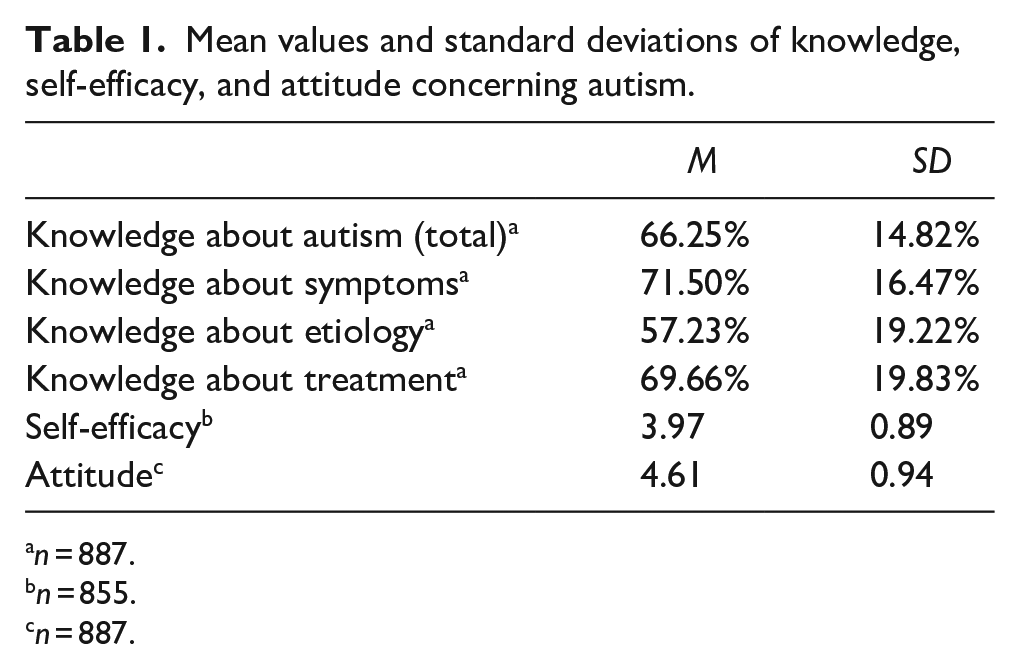
The descriptive statistics regarding knowledge, self-efficacy, and attitude concerning autism are displayed in Table 1.
Mean values and standard deviations of knowledge, self-efficacy, and attitude concerning autism.
n = 887.
n = 855.
n = 887.
On average, the teachers possessed a moderate level of knowledge about autism. Their mean score differed significantly from 50%, that is, from the score that would be obtained when merely guessing the correct answers, t(886) = 32.66, p < 0.001, η2 = 0.203. At the same time, they had significantly more knowledge about symptoms than about etiology, F(1, 886) = 496.87, p < 0.001, η2 = 0.359, and treatment, F(1, 886) = 8.74, p = 0.003, η2 = 0.010. Also, they were significantly more knowledgeable about treatment than about etiology, F(1, 886) = 382.28, p < 0.001, η2 = 0.301. The 10 items that were most often answered incorrectly by the teachers and the five items that were least often answered incorrectly by the teachers are shown in Figure 1. For example, the majority of teachers were not aware that traumatic experiences in early phases of life cannot cause autism. Conversely, nearly all teachers knew that many autistic students show the need for routines.
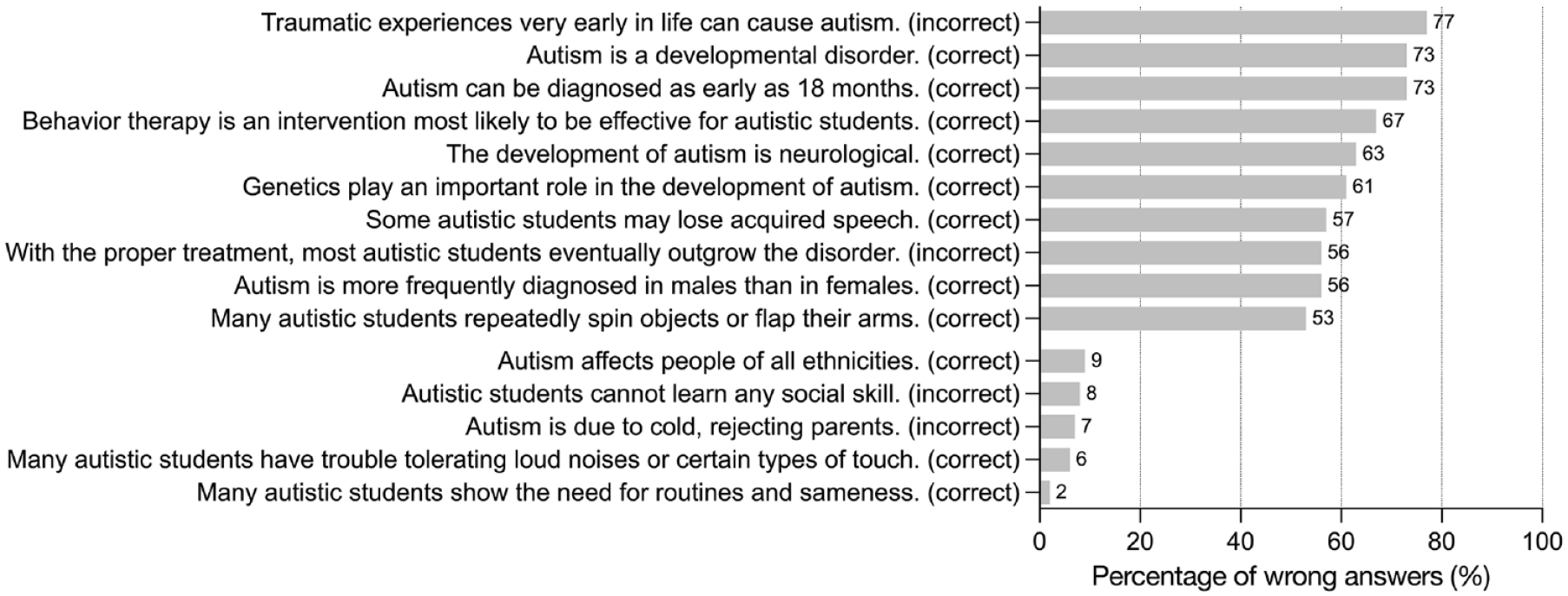
Knowledge items with the highest and lowest percentage of wrong answers given by teachers.
The mean level of a teacher’s self-efficacy for including autistic students was slightly positive and significantly differed from the theoretical mean score of 3.50 of the rating scale, t(854) = 15.36, p < 0.001, η2 = 0.066. The three items that received the lowest agreement by the teachers and the three items that received the highest agreement by the teachers are displayed in Figure 2. For example, the majority of teachers did not feel very competent in assessing the causes of an autistic student’s problematic behavior. In contrast, self-efficacy with regard to collaborating with special educators was quite high among most teachers.
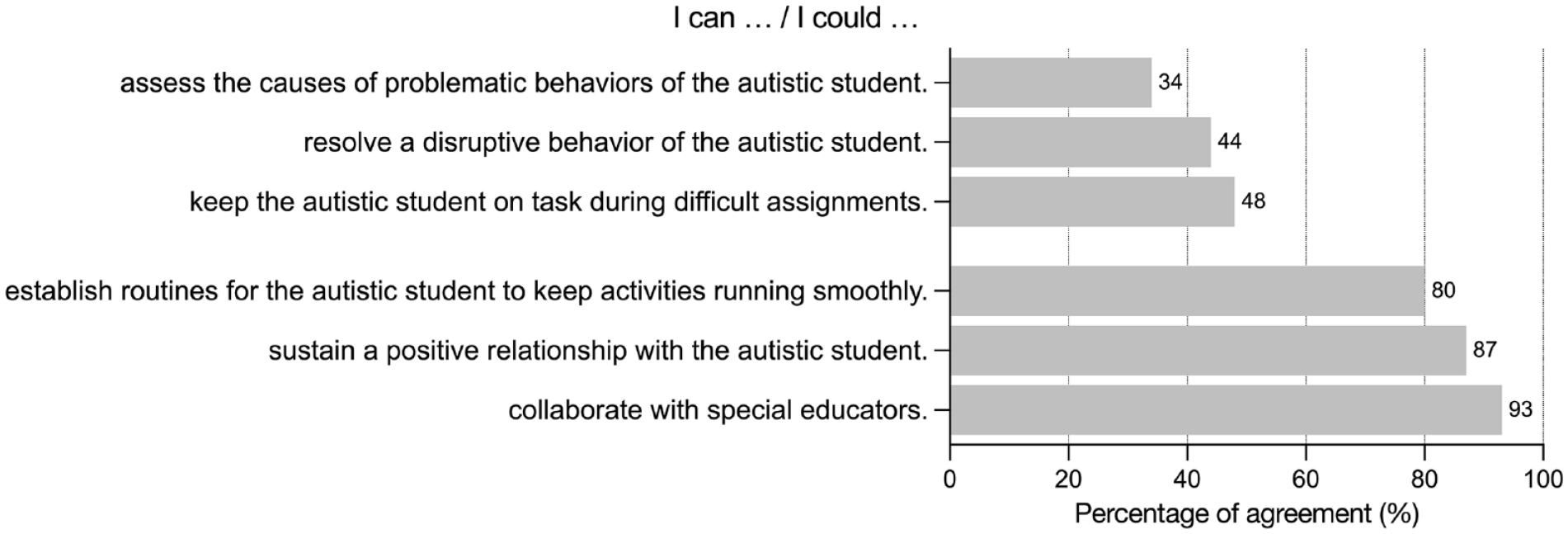
Self-efficacy items with the lowest and highest percentage of agreement provided by teachers.
The attitude toward the inclusion of autistic students was, on average, rather positive and significantly higher than the theoretical mean score of 3.50 of the rating scale, t(886) = 35.38, p < 0.001, η2 = 0.262. The three items that received the highest agreement by the teachers reflecting a more negative attitude and the three items that received the lowest agreement by the teachers reflecting a more positive attitude are depicted in Figure 3. For example, nearly half of the teachers assumed that only teachers with extensive special education could help an autistic student. However, almost all teachers disagreed with the statement that they would not want their students to have to put up with autistic classmates.
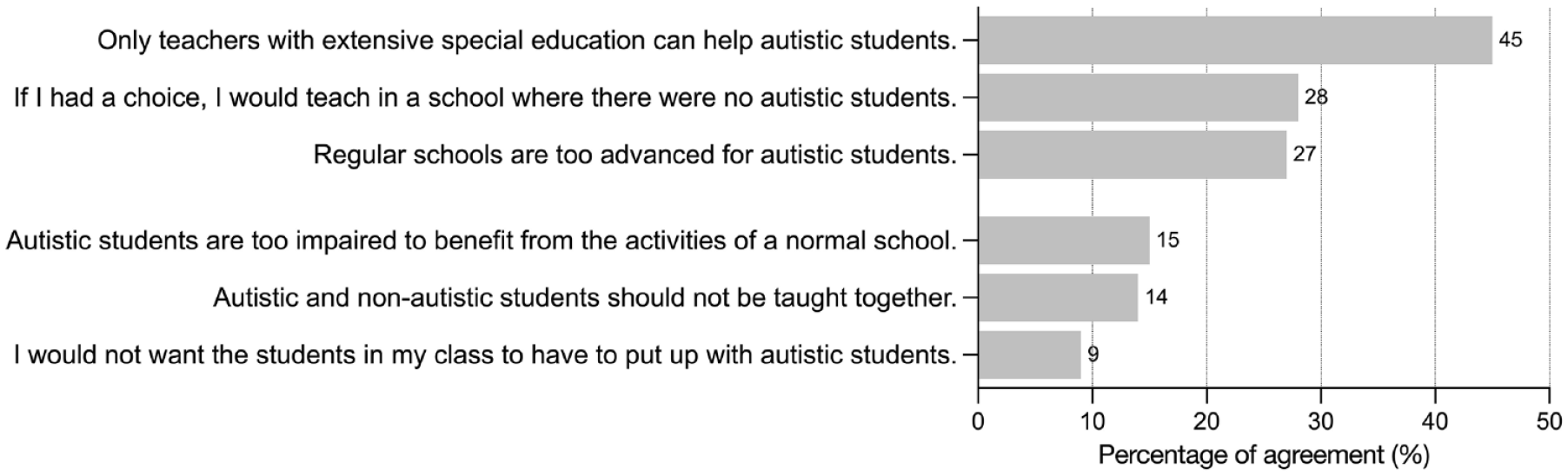
Attitude items with the highest and lowest percentage of agreement provided by teachers.
Knowledge, self-efficacy, and attitude as a function of experience with teaching autistic students, school type, and gender
To statistically analyze differences in knowledge, self-efficacy, and attitude concerning autism as a function of experience with teaching autistic students, school type, and gender, we performed for every independent variable three ANOVAs with knowledge, self-efficacy, and attitude as dependent variable. In addition, we conducted for every independent variable a MANOVA to examine differences in the three knowledge aspects, namely, symptoms, etiology, and treatment.
Experience with teaching autistic students
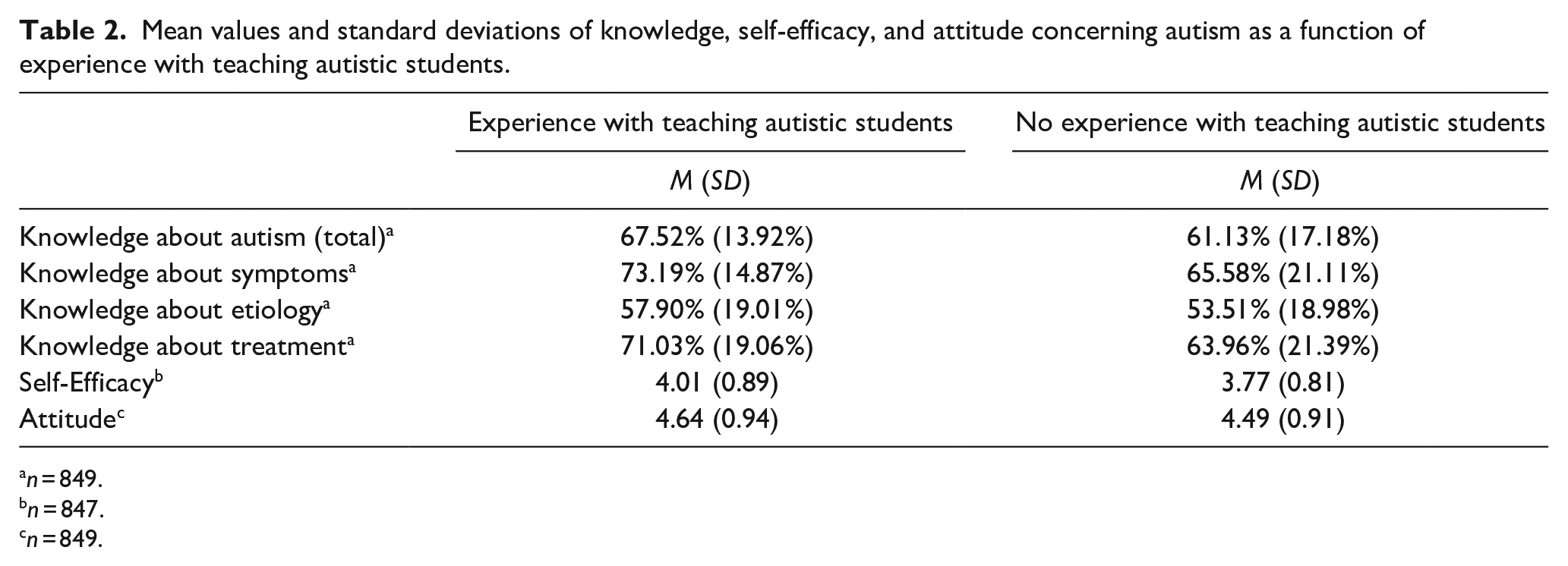
The descriptive statistics regarding knowledge, self-efficacy, and attitude as a function of experience with teaching autistic students are displayed in Table 2. The first ANOVA with knowledge (total score) as dependent variable showed a significant effect, F(1, 847) = 24.26, p < 0.001, η2 = 0.028. Teachers with experience possessed significantly more knowledge than teachers without experience. Moreover, the MANOVA with knowledge about symptoms, etiology, and treatment as dependent variables was significant, F(3, 845) = 10.32, p < 0.001, η2 = 0.035. Teachers with experience had significantly more knowledge about all three aspects of autism than teachers without experience, symptoms, F(1, 847) = 27.88, p < 0.001, η2 = 0.032, etiology, F(1, 847) = 6.74, p = 0.010, η2 = 0.008, and treatment, F(1, 847) = 16.55, p < 0.001, η2 = 0.019. The second ANOVA with self-efficacy as dependent variable was also significant, F(1, 845) = 9.79, p = 0.002, η2 = 0.011. Teachers with experience held significantly higher self-efficacy beliefs than teachers without experience. The third ANOVA with attitude as dependent variable just failed to reach the level of statistical significance, F(1, 847) = 3.09, p = 0.080, η2 = 0.004. However, descriptively, teachers with experience had a more positive attitude than teachers without experience. Overall, the teachers who had experience with teaching autistic students possessed higher knowledge and felt more competent in teaching autistic students than teachers who had no experience with teaching autistic students. However, all effects were rather small.
Mean values and standard deviations of knowledge, self-efficacy, and attitude concerning autism as a function of experience with teaching autistic students.
n = 849.
n = 847.
n = 849.
School type
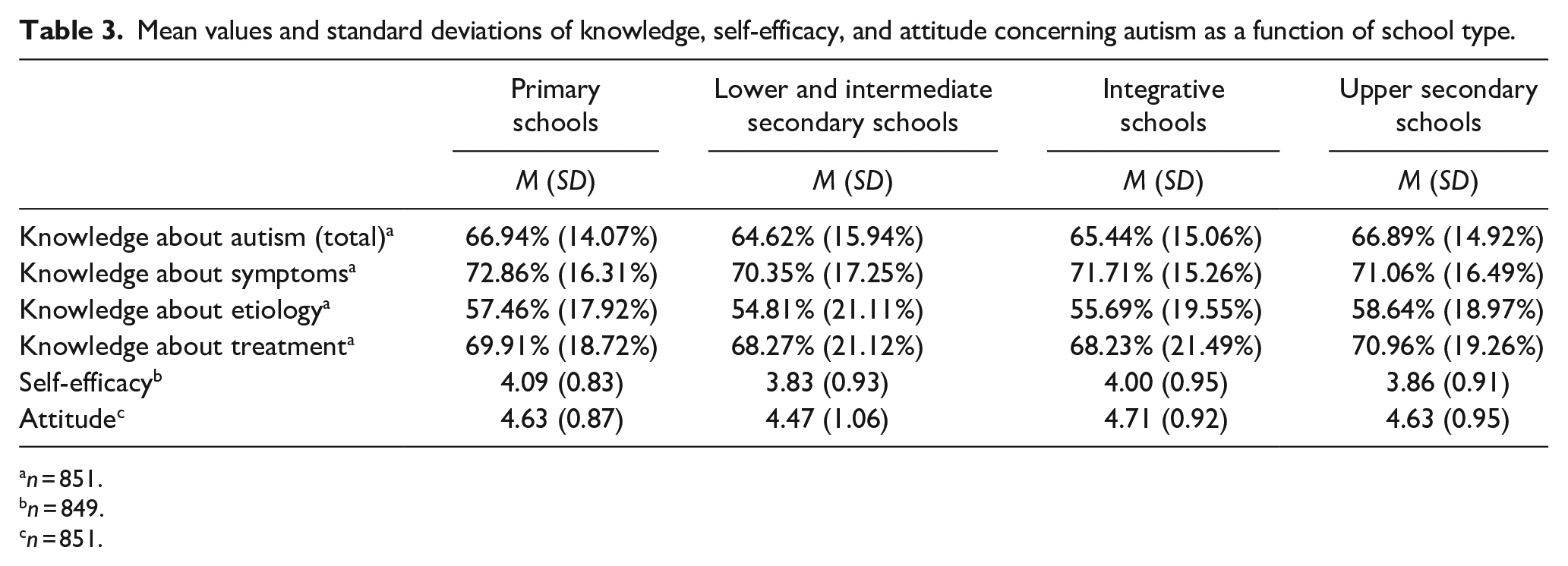
To statistically test for differences in knowledge, self-efficacy, and attitude associated with the type of school where teachers were working, we used (1) primary schools, (2) lower and intermediate secondary schools, (3) integrative schools, and (4) upper secondary schools as levels of the independent variable. The descriptive statistics regarding knowledge, self-efficacy, and attitude as a function of school type are shown in Table 3. The first ANOVA with knowledge (total score) as dependent variable showed no significant effect, F(3, 847) = 1.14, p = 0.331, η2 = 0.004. Similarly, the MANOVA with knowledge about symptoms, etiology, and treatment as dependent variables was not significant, F(9, 2541) = 1.05, p = 0.397, η2 = 0.004, symptoms, F(3, 847) = 1.04, p = 0.373, η2 = 0.004, etiology, F(3, 847) = 1.51, p = 0.211, η2 = 0.005, treatment, F(3, 847) = 0.81, p = 0.490, η2 = 0.003. However, the second ANOVA with self-efficacy as dependent variable showed a significant effect, F(3, 845) = 4.70, p = 0.003, η2 = 0.016. Post hoc tests with Bonferroni correction revealed that the self-efficacy of primary school teachers was significantly higher than the self-efficacy of lower and intermediate secondary school teachers, p = 0.018, η2 = 0.018, and the self-efficacy of upper secondary school teachers, p = 0.011, η2 = 0.017. Even so, the effects were rather small. All other post hoc tests were not statistically significant. The third ANOVA with attitude as dependent variable was also not significant, F(3, 847) = 1.62, p = 0.183, η2 = 0.006. Altogether, teachers of different school types were rather similar in knowledge, self-efficacy, and attitude with the exception of small differences in self-efficacy between primary school teachers and lower, intermediate, and upper secondary school teachers.
Mean values and standard deviations of knowledge, self-efficacy, and attitude concerning autism as a function of school type.
n = 851.
n = 849.
n = 851.
Gender
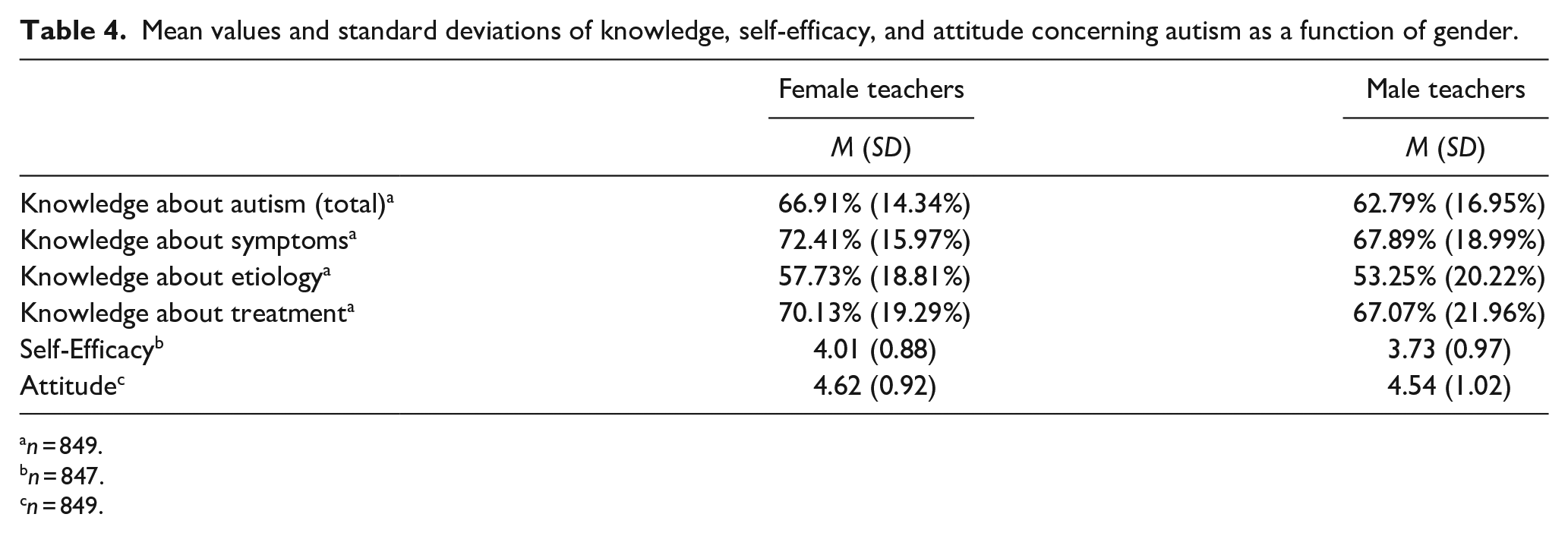
The descriptive statistics regarding knowledge, self-efficacy, and attitude as a function of a teacher’s gender are presented in Table 4. The first ANOVA with knowledge (total score) as dependent variable showed a significant effect, F(1, 847) = 8.19, p = 0.004, η2 = 0.010. Female teachers possessed significantly more knowledge than male teachers. In addition, the MANOVA with knowledge about symptoms, etiology, and treatment as dependent variables was significant, F(3, 845) = 3.25, p = 0.021, η2 = 0.011. Female teachers had significantly more knowledge about symptoms, F(1, 847) = 7.95, p = 0.005, η2 = 0.009, and etiology, F(1, 847) = 5.82, p = 0.016, η2 = 0.007, than male teachers. However, there was no significant difference in knowledge about treatment between female and male teachers, F(1, 847) = 2.53, p = 0.112, η2 = 0.003. The second ANOVA with self-efficacy as dependent variable was also significant, F(1, 845) = 10.48, p = 0.001, η2 = 0.012. Female teachers held significantly higher self-efficacy beliefs than male teachers. In contrast, the third ANOVA with attitude as dependent variable revealed no significant effect, F(1, 847) = 0.78, p = 0.372, η2 = 0.001. Altogether, female teachers were more knowledgeable about autism than male teachers. In addition, they felt more competent in teaching autistic students than male teachers. Nevertheless, all effects were rather small.
Mean values and standard deviations of knowledge, self-efficacy, and attitude concerning autism as a function of gender.
n = 849.
n = 847.
n = 849.
Correlations between knowledge, self-efficacy, and attitude
To statistically analyze the relationship between knowledge, self-efficacy, and attitude, we computed correlations. All three variables significantly correlated with each other. The highest correlation was between self-efficacy and attitude, r = 0.59, p < 0.001, followed by the correlation between knowledge and self-efficacy, r = 0.23, p < 0.001. The correlation between attitude and knowledge was the lowest, r = 0.19, p < 0.001.
Discussion
In this study, we examined knowledge, self-efficacy, and attitude concerning autism among general education teachers in Germany. The results showed that their knowledge about autism was, on average, quite moderate. Even though performance on the knowledge test was better than expected by chance, some statements about autism such as that traumatic experiences can cause autism were not known to be misconceptions by the majority of teachers. At the same time, teachers were rather knowledgeable about symptoms of autism. However, the factors that cause autism were less known. Knowledge about causes of autism could help teachers to better understand and, thus, accept autism. Therefore, teacher trainings might specifically focus on risk factors for autism. Similarly, teachers possessed limited knowledge about treatment of autism. For example, most teachers were not aware that behavior therapy is an effective treatment for autism. Important elements of behavior therapy are modeling, prompting, and reinforcing (Alberto et al., 2021). These techniques have been shown to be evidence-based practices for working with autistic students in schools, too (Hume et al., 2021). Given that many teachers in our study did not know that behavior therapy is an effective treatment for autism, it is very likely that they are also ignorant of modeling, prompting, and reinforcing as effective methods that they could use when teaching autistic students. Overall, the average level of knowledge about autism observed in general education teachers in Germany is comparable with the knowledge about autism possessed by teachers worldwide (e.g. Gómez-Marí et al., 2021). The fact that teachers in our study not only had moderate knowledge about autism but also possessed misconceptions about autism suggests that it could be helpful to use methods such as refutation texts to help teachers to systematically overcome their false beliefs (Paynter et al., 2019; Prinz et al., 2019).
In addition, we found that teachers did not feel overwhelmingly competent in teaching autistic students because their self-efficacy beliefs were, on average, moderate. This might not be surprising given that teachers in Germany are usually not systematically prepared for including autistic students in mainstream schools. In particular, their self-efficacy with regard to assessing the causes of an autistic student’s problematic behavior was quite low. Usually, determining the cause of a problematic behavior by means of a functional behavior analysis serves as a basis for developing a support plan for autistic students (Alberto et al., 2021). Consequently, when teachers lack confidence in assessing the causes of a problematic behavior, they cannot systematically help autistic students, for example, by teaching a new behavior to replace a problematic behavior. That the level of self-efficacy held by teachers in this study was only moderate is consistent with the study conducted by Lu et al. (2020) who examined self-efficacy in teaching autistic students among primary school teachers in China. Our results also confirm the findings obtained in the meta-analysis by Dignath et al. (2022) who synthesized research on teacher self-efficacy in including students with special educational needs in general.
Furthermore, our study showed that a teacher’s attitude toward the inclusion of autistic students was, on average, rather positive. For example, the great majority of the teachers disagreed with the statement that they would not want their students to have to put up with autistic classmates. At the same time, some teachers were reserved about the inclusion of autistic students. For example, nearly half of all teachers believed that only teachers with extensive special education could help autistic students. Our results are in line with the synthesis by Russell et al. (2023) who showed that teachers in most studies had a rather positive attitude toward the inclusion of autistic students. This suggests that teacher trainings could systematically draw upon a teacher’s positive attitude to increase their willingness to develop professional knowledge and self-efficacy concerning autism.
Our study also revealed that experience with teaching autistic students was significantly associated with more knowledge and higher self-efficacy as well as descriptively with a more positive attitude. The finding that experience with autistic students is linked with more knowledge is consistent with previous research (e.g. Gómez-Marí et al., 2021) and suggests that teachers who teach autistic students actively seek to acquire knowledge about autism to work with autistic students effectively. In addition, experience with teaching autistic students could directly serve as a source that teachers use to form their self-efficacy beliefs (Tschannen-Moran et al., 1998). Hence, when teachers feel successful in teaching autistic students, their self-efficacy beliefs might increase. Also, it is plausible to assume that teachers who get to know an autistic student personally have more empathy toward this autistic student and, thus, think about the inclusion of autistic students more positively. Although we found differences in knowledge, self-efficacy, and attitude as a function of experience with teaching autistic students, these differences were rather small. An explanation for this finding might be that we used a rather rough indicator for experience because we only asked the teachers whether or not they had experience with teaching autistic students. It is possible that other factors such as the years of experience with teaching autistic students or the number of autistic students being taught play an even more important role for acquiring knowledge about autism and increasing self-efficacy and attitude. However, we did not measure the years of experience with teaching autistic students or the number of autistic students being taught in our study.
We were also interested in whether the type of school where teachers were working made a difference in knowledge, self-efficacy, and attitude. In contrast to the reviews conducted by Gómez-Marí et al. (2021, 2022) that suggested that primary school teachers have more knowledge about autism and possess a more positive attitude toward autistic students than secondary school teachers, knowledge and attitude were quite similar among all teachers in our study. There was only a statistically significant but small difference in self-efficacy in favor of primary school teachers. Our findings might not be surprising given that autism training is usually not an integral part of teacher education programs in Germany (Markowetz, 2020).
Moreover, our study showed that female teachers were more knowledgeable about autism than male teachers even though this effect was rather small. This is in line with prior research (e.g. Al-Sharbati et al., 2015; Vincent & Ralston, 2020). In addition, our study revealed that female teachers also felt more competent in teaching autistic students than male teachers. This result is rather new because prior research has shown higher teacher self-efficacy in men than in women (e.g. Klassen & Chiu, 2010) or no effect of gender on teacher self-efficacy (e.g. Desombre et al., 2019). Why female teachers were more knowledgeable and confident than male teachers needs further investigation. For example, Kim et al. (2023) suggest that women are socialized to show more empathy toward others than men. Thus, female teachers might be more inclined to care about autistic students than male teachers.
Finally, we explored how knowledge, self-efficacy, and attitude concerning autism were related to each other. We found a positive and rather strong correlation between self-efficacy and attitude, which is in line with prior research (Lu et al., 2020; Yada et al., 2022). This correlation indicates that teachers with higher self-efficacy had a more positive attitude. In contrast and consistent with prior research (Lu et al., 2020), knowledge was only moderately associated with self-efficacy and attitude. Given the fact that we assessed a teacher’s general knowledge about autism but not their knowledge about practices that could be used to teach autistic students, it might not be surprising that knowledge was not more strongly related to self-efficacy and attitude.
Limitations
The sample of teachers in this study, that is, teachers from mainstream schools in Baden-Wurttemberg, was large and the proportions of teachers for school type and gender were similar to the corresponding proportions of the population of teachers in Germany. Nevertheless, the results might not be generalizable to all teachers in Germany. In three of the 16 federal states of Germany, namely, Berlin, Hamburg, and Schleswig-Holstein, autism is officially a disability category requiring schools to provide special education (Lindmeier et al., 2020). Therefore, it would be interesting to examine possible differences in knowledge, self-efficacy, and attitude between teachers in these federal states and teachers in this study.
The design of our study was cross-sectional. Thus, we refrained from interpreting the correlations between knowledge, self-efficacy, and attitude in terms of cause–effect relationships. Further research is encouraged to examine in more detail how these variables are causally related to each other. For example, experimental studies might investigate whether teacher trainings that aim to improve knowledge about autism also increase self-efficacy for inclusive education of autistic students. Similarly, longitudinal studies could use cross-lagged panel analysis to delve more deeply into the relationships between knowledge, self-efficacy, and attitude over time.
In the study, we assessed a teacher’s knowledge about general issues related to the treatment of autism such that there is currently no cure for autism (Harrison et al., 2017). However, we did not examine a teacher’s specialist knowledge about interventions that could be used to systematically support autistic students in school. Given that research has identified evidence-based practices that teachers can implement when working with autistic students in school such as task analysis, direct instruction, prompting, or reinforcement (Hume et al., 2021), it would be interesting to investigate the extent to which there is a research-to-practice gap among teachers in Germany. Other studies already suggest that teachers in mainstream schools often lack knowledge about evidence-based practices and, thus, seldom engage in evidence-based practices to support autistic students (e.g. Barry et al., 2022).
Implications
To successfully work with autistic students in mainstream schools, teachers need knowledge about autism, high self-efficacy beliefs in teaching autistic students, and a positive attitude toward the inclusion of autistic students. However, our study shows that knowledge and self-efficacy are rather low among teachers in Germany. Therefore, it seems to be necessary to systematically prepare teachers for the inclusion of autistic students. To do so, teacher trainings might provide valuable information about autism such as symptoms, risk factors, and treatments (Reed & Osborne, 2014). In addition, trainings could address evidence-based practices that teachers could use to support the academic, social, and communicative skills of autistic students (Hume et al., 2021). As a side effect, such trainings might improve self-efficacy beliefs and the attitude toward the inclusion of autistic students (e.g. Saade et al., 2021). Research suggests that preparation programs in teacher education might not be sufficient to guarantee the successful implementation of evidence-based practices at school (Odom et al., 2021). Therefore, it is important that teachers who already work at school also engage in professional development to acquire more knowledge and skills related to autism (e.g. Ruble et al., 2010). A teacher’s professional competence notwithstanding, successful inclusion of autistic students also requires schools to offer educational programs of high quality including, among others, a positive school climate, curriculum accommodations, the cooperation in interdisciplinary teams, and the involvement of the autistic student’s family (for more details, see Odom et al., 2022).
Footnotes
Data Availability
This article is based on data collected in the master thesis completed by the second author.
Funding
The author(s) received no financial support for the research, authorship, and/or publication of this article.
Ethical Approval
The study was approved by the Ministry of Education, Youth and Sports Baden-Wurttemberg and the Ethics Committee of the University of Freiburg.
