




Abstract
Schools are the portal through which many children with autism spectrum disorder access early intervention. Collaborating with teachers can be an effective way to implement evidence-based practices. In this study, teachers learned to embed strategies from the Joint Attention, Symbolic Play, Engagement, and Regulation intervention into the standard preschool curriculum. Twelve schools with special education preschool classrooms for students with moderate to severe disabilities from under-resourced neighborhoods were randomized to augment their curriculum with Joint Attention, Symbolic Play, Engagement, and Regulation strategies or continue the standard curriculum. Teachers’ strategy implementation, children’s time on task, and social communication were examined before and after completing the intervention phase. Teachers in the Joint Attention, Symbolic Play, Engagement, and Regulation group implemented more Joint Attention, Symbolic Play, Engagement, and Regulation strategies than the control group after the intervention phase. Children in both groups increased time on task during teacher-led small group instruction. Children in the Joint Attention, Symbolic Play, Engagement, and Regulation group were more likely to be engaged with peers during small group instruction at the end of the intervention phase. Children from both groups improved in standardized measures of joint attention, requesting, expressive language, and receptive language. Training teachers to embed Joint Attention, Symbolic Play, Engagement, and Regulation strategies into small group instruction can help facilitate peer engagement, providing children more opportunities for peer socialization.
Lay abstract
Children with autism spectrum disorder attending special education preschool classrooms may not receive support that addresses their core challenges, such as engagement and social communication. There are interventions designed to target these core challenges, like the play-based intervention known as Joint Attention, Symbolic Play, Engagement, and Regulation. Embedding strategies from an intervention like Joint Attention, Symbolic Play, Engagement, and Regulation into more traditional academic activities can help teachers target engagement and social communication throughout the school day. In the current study, we collaborated with special education preschool teachers to embed Joint Attention, Symbolic Play, Engagement, and Regulation strategies during small group time for moderate to severe disability students with autism spectrum disorder, 3–5 years of age. Compared to teachers implementing the standard preschool curriculum, teachers trained in Joint Attention, Symbolic Play, Engagement, and Regulation strategies effectively embedded these strategies in their small group activities, and their students were more likely to engage with peers during these activities. Supporting teachers to embed targeted strategies in academic activities can help them provide students more opportunities to engage with peers during the school day. Teachers can support their autistic students to interact appropriately with their peers. Unlike interventions that train peers to act as a teacher, embedding Joint Attention, Symbolic Play, Engagement, and Regulation strategies during small group academic activities facilitates naturalistic social interactions for autistic students.
Keywords
Introduction
Early intervention continues to be critical in improving the lives of individuals with autism spectrum disorder (ASD). While early intervention research for children with ASD 1 has made many advancements, less progress has been made in effectively implementing these practices at scale in communities (Vivanti et al., 2018). This is particularly true for traditionally marginalized and minority families (Thomas et al., 2007). Focusing efforts to train and support community professionals can be an effective way of bridging the research to practice gap, and a critical area of need for historically under-represented families (Locke et al., 2017; Stahmer et al., 2019). For many, schools are a vital portal through which they can most consistently access early intervention services for their children (Kasari & Smith, 2013; Simpson et al., 2011; Wood et al., 2015). Therefore, teachers can significantly impact the developmental trajectories of children with ASD. However, recent reports suggest there is still a significant lag in autism-specific research strategies implemented in community school settings (Iadarola et al., 2015; Nahmias et al., 2019).
One way to improve ASD-specific training is to examine ways to augment the curriculum students with ASD commonly receive. Many early intervention school programs have a specific early childhood curriculum that is anchored in typical development. Specific targets or strategies to address core challenges in children with ASD have historically rarely been addressed (Nahmias et al., 2019; Wong & Kasari, 2012), but it remains unclear if recent community programs have caught up with research study findings.
Preschool programs are increasingly adopting set curricula designed for use with all children, such as The Creative Curriculum for Preschool (Dodge et al., 2002). The Creative Curriculum for Preschool does not focus on core areas of difficulty for autistic children, and one study found that students with ASD fared better on cognitive outcomes in inclusive settings using the HighScope Curriculum when compared to mixed disability and ASD only settings that utilized The Creative Curriculum (Nahmias et al., 2014). However, other studies have shown promising results for students with ASD when specific autism interventions have been implemented within inclusive classrooms using The Creative Curriculum (D’Agostino et al., 2020; Strain & Bovey, 2011).
Social communication including joint attention, conversational turn-taking, and social initiations are core areas of early childhood development where children with ASD will often require support. However, school-based services addressing social communication for students with ASD rarely involve the classroom teacher and are often conducted outside of the classroom setting (Sutton et al., 2019). Furthermore, observations of children with ASD in preschool settings find that they are largely unengaged with their peers (Wong & Kasari, 2012). Training teachers to embed strategies in their curriculum can be a more sustainable way of addressing these needs in the naturalistic classroom context.
Joint Attention, Symbolic Play, Engagement, and Regulation (JASPER) is one example of an intervention that targets early core challenges for children with ASD and has been applied by teachers (Chang et al., 2016; Shire et al., 2019). As a naturalistic developmental behavioral intervention (Schreibman et al., 2015), JASPER uses behavioral techniques within a developmental framework to target joint engagement and social communication. JASPER is rooted in the idea that joint engagement provides the context for social communication development (Adamson et al., 2009), and early social communication skills of joint attention are critical for expressive language development (Mundy et al., 1994; Tomasello & Farrar, 1986). JASPER addresses these core challenges by using toy play and joint activities as the context for joint engagement, leading to increases in the use of joint attention skills, and ultimately expressive language (Shih et al., 2021).
While originally developed as a clinic-based or home-based intervention (Kasari et al., 2006, 2010), recent work has explored the utility of JASPER in school settings (Chang et al., 2016; Lawton & Kasari, 2012; Shire et al., 2019). JASPER-trained teachers were able to administer the intervention with strategy implementation scores ranging from 75% (Chang et al., 2016) to 80% (Shire et al., 2019). Follow-up work by Shire et al. (2019) also shows teachers maintained high levels of JASPER implementation (M = 70%) once University oversight was gone. Importantly, JASPER-trained teachers helped students with ASD show consistent improvements in joint engagement and joint attention skills (Chang et al., 2016; Lawton & Kasari, 2012; Shire et al., 2019) that predicted later language abilities (Shih et al., 2021). Altogether, these findings point to an important role in training teachers to identify and target joint engagement and social communication skills, like joint attention, for students with ASD.
In these previous studies, toy play served as the context of the intervention. However, other parts of the school day may provide further opportunities to target joint engagement and social communication. Embedding strategies during academic instruction may help teachers provide direct and targeted support for students in other contexts.
The present study expands on the current literature by further exploring ways to promote engagement and social communication among under-resourced preschool students with ASD. Training teachers to embed JASPER strategies within the existing curriculum may provide more opportunities to target joint engagement and social communication, and lead to greater sustainability of intervention strategies. In this pilot randomized controlled trial, teachers were taught to identify developmentally appropriate targets for joint engagement and social communication for their students with ASD and to address these targets by embedding JASPER strategies during academic instruction. Our aims were to determine: (a) the effect of training procedures on teachers’ implementation of JASPER strategies, (b) the main effect of augmenting the standard preschool classroom curriculum with JASPER strategies on children’s joint engagement and social communication, and (c) if students receiving the JASPER augmented curriculum would demonstrate greater improvements on a standardized test of language and cognition when compared to students receiving the standard curriculum. We hypothesized that teachers in the schools randomized to JASPER would demonstrate significantly greater use of JASPER strategies than teachers in the control schools, and that students in schools randomized to implement JASPER strategies would demonstrate greater joint engagement, social communication, language, and cognitive scores over students in the control schools.
Methods
Recruitment
The study took place in a large, urban school district. All schools contacted were located in traditionally under-resourced areas, and received federal funding through Title 1 of the Every Student Succeeds Act, which provides financial support based on the number of students from low-income families. Eligible schools also had a Preschool for All Learners (PAL) program, which served as the setting for the study. PAL is a special education, mixed disability program with classrooms that serve up to 10 moderately disabled students, 3–5 years of age, led by a special education teacher and two assistants. Classrooms ran four and a half hours daily, 5 days/week.
Study design and randomization
The randomized controlled trial design included randomization at the school level to avoid classroom level contamination between conditions. To account for any potential school level differences schools were matched based on location, and population (minority percentage, percentage of reduced-price lunch/low-income families). Schools were also matched on the number of eligible students enrolled. An independent statistician used a random number generator to determine the allocation of the treatment arm for the schools in each pair. Schools were randomized to one of two conditions; the treatment group, which received training to embed JASPER strategies into The Creative Curriculum, or the control group, which continued with standard implementation of The Creative Curriculum. Study enrollment took place in September, November, and February.
Figure 1 displays the enrollment and allocation procedures. Of 26 schools contacted, 15 agreed to participate and were randomized. Two of the randomized schools did not start due to delays in scheduling baseline data collection and time constraints of the school year, leaving 13 schools where baseline data were collected. Another randomized school stopped participation when the participating teacher withdrew due to health issues. The remaining 12 schools (7 treatment and 5 control) included 19 teachers serving 54 students. Two families moved away after randomization, and another two students switched to classrooms that did not consent to the study. A third student had an extended absence at the start of the intervention and did not complete entry assessments. In total, data from 49 students (29 treatment and 20 control) and 19 teachers (10 treatment and 9 control) were analyzed. All participating teachers and a parent or legal guardian for students provided their written, informed consent to enroll in the study.
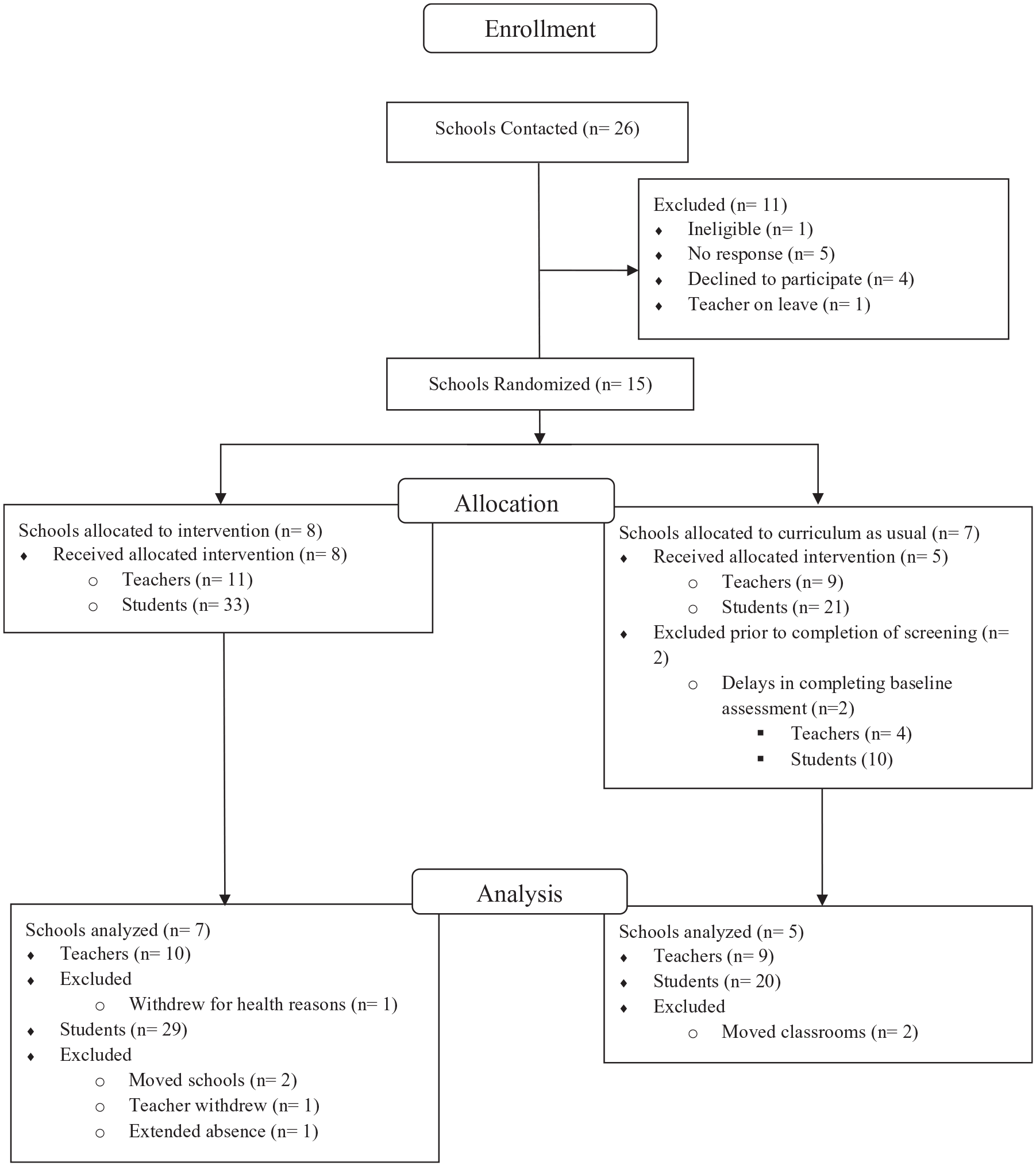
CONSORT flow diagram.
Participants
Teachers
The special education teacher in each classroom was the primary target for training. The average age of the special education teachers was 39.7 years (SD = 11.07). The all-female teachers identified as 69% Hispanic or Latino, 21% White, 5% Asian, and 5% declined to say. All teachers except one held a special education credential. On average, teachers reported having worked with children with ASD for 9.25 years (SD = 8.76).
Students
While the PAL program consisted of mixed disability classrooms, participants for the study only included students designated with “autism” by the school district. To confirm autism diagnosis, the research team administered the Autism Diagnostic Observation Schedule-2 (ADOS-2; Lord et al., 2012). The average age of the children was 49.10 months (SD = 7.28) and 95% were male. Cognitive ability, measured from the early learning composite from the Mullen Scales of Early Learning (Mullen, 1995), ranged from 49 to 96 (M = 58.2, SD = 13.0). Overall, students identified as 81% Hispanic or Latinx, 5% Black, 3% Asian, and 11% mixed race. Furthermore, 82% of the participating families reported a family income of $40,000 or less.
Classrooms and curriculum
All PAL classrooms were part of the same public school district and used The Creative Curriculum for Preschool. Each class used similar daily routines, classroom structure, activities, and materials. Following The Creative Curriculum, the school year was organized into “studies” where teachers implemented a curriculum based on a central theme. Academic goals targeting language, literacy, mathematics, social-emotional, and physical development were incorporated into the various themed activities. For example, a typical classroom day in the “Ball study” might consist of a morning carpet time with a ball-themed book, small group instruction (three rotations) with activities exploring the properties of various balls, and free-choice time with different types of ball play. The Creative Curriculum includes recommended modifications for a range of abilities, but with little guidance on implementing them based on a student’s developmental need. Activities are set up to encourage exploration and interaction among students, but little support for children that have difficulty engaging and communicating with peers.
The small group instruction in The Creative Curriculum is set up so that classroom teachers have an opportunity to work with two to five students in a hands-on activity. Each station, known as a rotation, takes 10–15 min and is led by the teacher or an assistant at a small table or carpeted area. The Creative Curriculum provides a schedule and lesson plans for small group instruction activities, which include themed work with letters or numbers, art activities, sorting, matching, and other early literacy skills. The structure of the small group rotations provides an ideal moment for teachers to embed additional strategies for their ASD students. The small groups allow for more hands-on work than the large group instruction or free-choice time. Teachers can also take on a more active role in providing individualized support to address student-specific goals. Because of these factors, small group instruction was selected as the context to embed JASPER strategies.
Intervention
The JASPER intervention consists of seven core strategy categories; supporting engagement and regulation, setting up the environment, balancing imitation and modeling, establishing play routines, expanding play routines, programming for joint attention and requesting, and developmentally appropriate language (Chang et al., 2016; Shire et al., 2020). Traditionally, interventionists learn to implement JASPER during a joint activity (typically toy play), and fidelity is rated across the seven strategy categories. For the current study, specific JASPER strategies relevant for small group instruction were selected, and teachers were trained to embed these strategies during their rotations (see Table 1).
JASPER strategies and modifications for small group instruction.
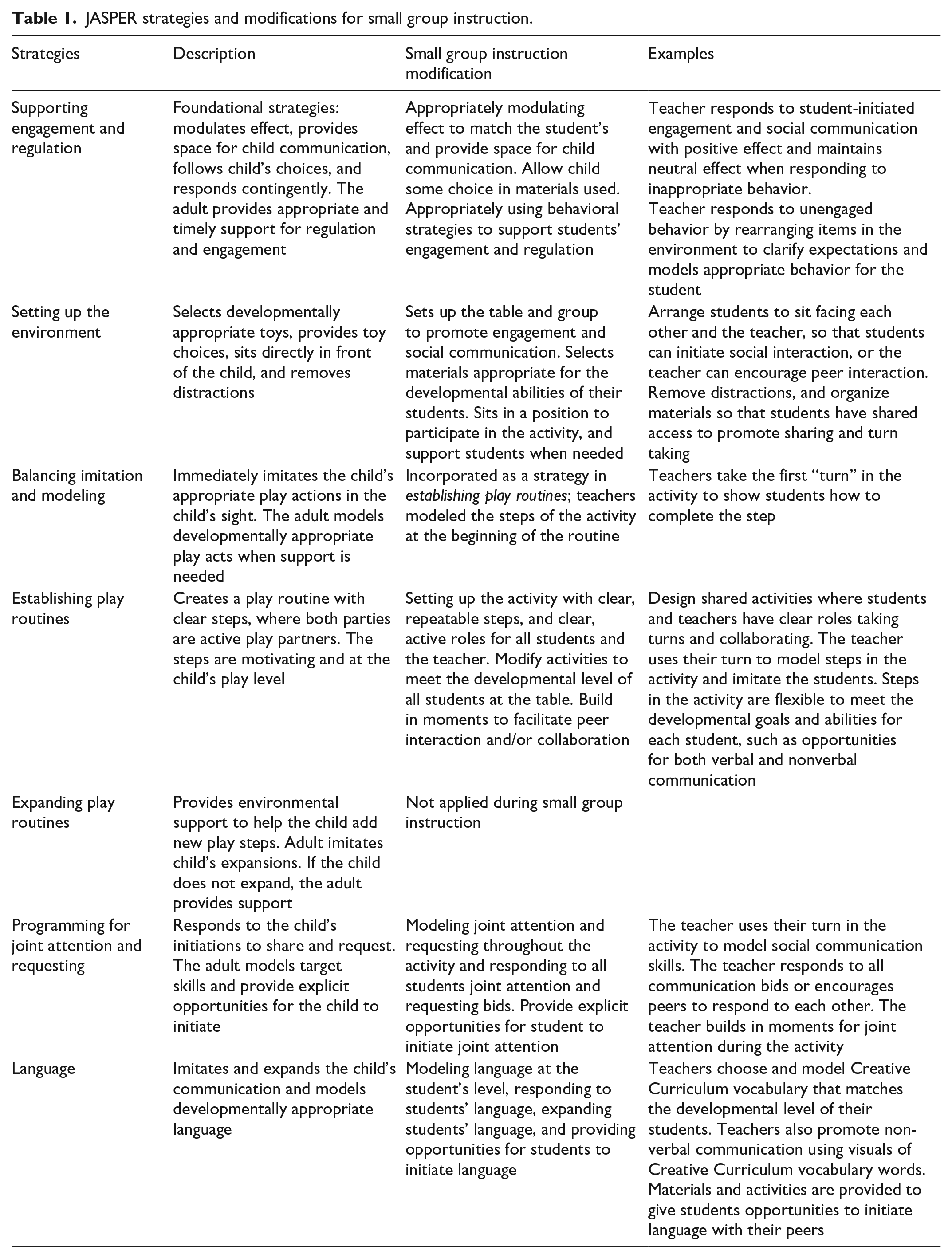
JASPER strategies for small group instruction
Supporting joint engagement and regulation
One core strategy is to actively monitor and support joint engagement and regulation. During small group instruction, this included teachers using the positive affect to encourage on task and engaged behavior. Teachers also provided more space for communication by limiting the majority of their instructions to the beginning of the activity and leaving more space to communicate throughout the activity. Teachers also actively controlled the materials and activity in response to the students’ engagement and regulation.
Setting up the environment
Another core strategy of JASPER is to use the environment to support joint engagement and joint attention. For small group instruction, this included (a) seating of the students and the teacher and (b) organization of the materials. First, seating emphasized social interaction with students positioned face-to-face when possible, or close enough to communicate and share materials. Teachers identified potentially prosocial peers that would be responsive to the target student’s social communication. Peers could be other target students with ASD, or any of the other students in the class. Second, coaches emphasized setting up materials so that all students could share. When possible, materials were set up to promote collaboration in a joint project rather than individual projects.
Balancing imitation and modeling
Another key strategy is the use of imitation and modeling during toy play. For small group instruction, this was modified by having the teacher model steps in the activities to reduce the amount of verbal instructions given and included as a strategy in establishing routines (see below).
Establishing routines
Another key JASPER strategy is the development of predictable and repeatable play routines. In lieu of toy play, small group instruction activities were augmented into routines where students took turns, and those turns were repeated throughout the rotation. With each turn, teachers could facilitate peer engagement and joint attention. In addition, teachers took on an active, participatory role by actively taking a turn along with their students. One example of an activity in The Creative Curriculum is “Bookmaking,” where students work with the teacher to make their own books. The Creative Curriculum lesson plan for bookmaking does not provide any guidance for collaboration or social communication. One way to augment this activity is to have students collaborate on a shared story. Teachers could set up a storyboard where students can work on building a story together, taking turns to add parts of the story to the board. Once completed, each student could then work on their own picture of the story. Modifications like premade story picture cards and visual supports on the storyboard (visual cues for sequencing of events) can be made to accommodate students with less expressive language or other developmental delays. In addition, the teacher’s role would shift to an active participant, contributing to the story along with the students and using their turn to model joint attention skills.
Programming for joint attention
A major emphasis in JASPER is the use of joint attention gestures and language. Teachers were trained to model more joint attention throughout the activity. In addition, teachers learned to build in moments for students to practice initiating joint attention skills. For example, while working on the bookmaking activity, each turn became an opportunity for students to share their own picture card, or comment on each other’s pictures. We emphasized the use of a least to most intrusive prompt hierarchy when supporting students to use joint attention, with the least intrusive prompt being teacher models and the most intrusive being physical prompting. During these programming moments, teachers would identify the least intrusive prompt needed to support the student’s use of joint attention.
Language
For this strategy, the emphasis is on building on the child’s current developmental language ability and to encourage more frequent use of joint attention language. Teachers learned to model more commenting, using language that would be developmentally appropriate for their target students. When appropriate, vocabulary words from The Creative Curriculum were chosen as models for the students. Teachers would also imitate any language the students used, and expand that language by adding another word. For example, if a student said “ball,” the teacher might respond by saying “the red ball.”
Implementation strategies
Teachers in the JASPER condition received training in two parts. In part one, teachers received a 2-h introduction to the basics of JASPER. Initial didactic trainings were held in classrooms, outside of instructional time, and during the teachers’ preparation time in a single 2-h session or two, 1-h blocks. The content focused on children’s development in the core skill domains, assessment, choosing targets, and using strategies within activity routines.
Part two of the intervention involved support in the implementation of JASPER strategies learned in part one. In the first meeting, a researcher scheduled time during instruction to coach teachers through assessment and target selection for their students using the Short Play and Communication Evaluation (SPACE; Shire et al., 2018). Researchers coached teachers through the assessment and real-time data collection, using the data to set targets for each student.
Once targets were set, coaches met with the teachers two times a week for an hour each time. One meeting served as a planning session and the second for live coaching. The planning meetings were 1 h during classroom preparation time without students. These sessions included discussion of specific JASPER strategies; supporting engagement and regulation, setting up the small group environment, building a small group routine, and programming for social communication gestures and language. An emphasis was placed on developing individualized strategies for the participating students based on their developmental needs and targets, and discussion topics were chosen based on the specific needs of the teachers and their target students. Coaches assisted teachers in embedding these strategies into their small group lesson plans. Coaches and teachers then reviewed the planned activities to embed developmentally appropriate social communication goals for each student’s turn in the activity. During the second meeting, a JASPER coach would join the teacher during their small group rotations and model the activity as discussed during the planning meeting. Over time, coaches would fade out support to provide feedback and troubleshoot. In total, target teachers received an average of 28 h of coaching. Schools that enrolled later in the academic year received at least 15 h of intervention.
JASPER coaching and fidelity
There were five coaches in total, and each met fidelity for the JASPER intervention over the span of several months, prior to coaching (>90%). Four of the coaches were doctoral students and the fifth was a staff research assistant. The first author served as the lead coach, having trained teachers in previous JASPER studies (Chang et al., 2016; Gulsrud et al., 2019). During the summer prior to the start of the school year, the study team met weekly to review The Creative Curriculum and develop a training protocol to embed JASPER strategies. During the intervention phase, the coaching team met weekly with the lead coach to discuss progress and receive feedback. Coaching fidelity was assessed through probes. Video-recorded coaching sessions were collected for each of the coaches at the start of the intervention phase and rated for fidelity by the first author. Coaches were rated on their use of strategies to support teachers, which included timely environmental support, appropriate verbal feedback, accurate modeling of strategies, prompting strategies, and responsiveness to teachers’ questions and comments. The average coaching fidelity was 90%.
Measures
The SPACE (Shire et al., 2018) is an assessment of nonverbal social communication (requesting and joint attention) and play skills. It is designed for community stakeholders working with developmentally delayed populations to assess their student’s current social communication and play abilities and develop intervention targets for each domain. Psychometric data are good and reported in Shire et al. (2018).
The Mullen Scales of Early Learning (MSEL; Mullen, 1995) is an assessment of early intellectual development and school readiness. It is appropriate for the ages from birth to 5 years 8 months. Child development is assessed across four domains; visual reception, fine motor, expressive language, and receptive language, and age equivalents are calculated for each subscale. The MSEL was administered before and at the end of the intervention phase.
The Early Social-Communication Scales (ESCS; Mundy et al., 1988) is a semistructured, play-based assessment designed to assess nonverbal and spoken joint attention and behavior regulation (requesting) skills. The ESCS was administered before and at the end of the intervention phase by a trained independent assessor (fidelity of administration, M = 87.08%, SD = 2.98). When available, students were assessed in a separate room or in the classroom while other students were not present (recess). Raters blind to study time point and treatment arm coded the videos for the type and frequency of spontaneous joint attention skills (IJA) and spontaneous behavior regulation skills (IBR).
Teacher–child interactions
Ten-minute small group rotations led by the primary classroom teacher were recorded before and at the end of the intervention phase by research assistants blind to classroom treatment allocation. The groups observed included up to seven students (M = 2.83, SD = 0.82). The small group instruction was coded for teachers’ JASPER strategy implementation and the students’ duration of joint engagement, also by research assistants blind to time, and assignment.
Teachers’ outcomes
JASPER strategy implementation
Implementation of JASPER strategies was coded from the 10-min recordings of small group instruction that included the target child. Previous studies in school-based JASPER rated strategy implementation based on seven strategy categories (see Table 1). In the current study, these JASPER strategies were modified to apply to small group instruction, focusing on five of the strategy categories: supporting engagement and regulation, setting up the environment, establishing routines, programming for joint attention, and using developmentally appropriate language. Teachers were rated on their strategy implementation based on 21 items across the five categories. Each item was rated on a scale of 1–5 with “1” reflecting little to no implementation, “3” indicating a mix of appropriate and inappropriate strategy use, and “5” indicating consistent, purposeful, and appropriate implementation of strategies. Items were summed and divided by the total possible points to calculate an overall percentage score for teacher strategy implementation. Overall ICC for teacher strategy implementation coding was 0.99.
Child outcomes
Joint engagement: small group instruction
Engagement states coding was based on the developmental states identified by Adamson et al. (2004) and reported in studies of JASPER (Chang et al., 2016; Kasari et al., 2010, 2014; Shire et al., 2017). Modifications were made to account for the interactions specific to small group academic instruction. Unengaged states were coded when the student was not clearly attending to the teacher, a peer, or appropriately engaging in the activity. Students were rated as person engaged when interacting with the teacher or a peer only, and the interaction was not coordinated around an object. For example, if the teacher engaged the students in a song, but no materials or objects were involved, that would be coded as person engagement. Supported joint engagement was modified to create the code jointly on task. This code was included to capture when students were appropriately participating in the academic small group activity. This included listening and attending to the teacher, or working on the activity. Coordinated joint engagement was coded whenever the student was clearly directing an interaction with a social partner around the shared activity. Coordinated joint engagement would be coded if a student appropriately and independently started to direct the shared activity, such as taking on the role of facilitator or appropriately directing peers in participating in the activity. For example, in an activity involving turn-taking with shared materials, a child that prompted a peer to share materials with another peer would be coded as coordinated joint engagement. Anytime a child was rated as jointly on task or in coordinated joint engagement, coders also identified if it involved interaction with any peer in their small group. Engagement states were coded second by second and used to calculate the proportion of time in an engagement state. Coding was done by three research assistants blind to timepoints and conditions. The overall intraclass coefficient (ICC) for engagement coding was 0.97.
Child IJA and behavioral requests (IBR): ESCS
Independent raters coded the ESCS for the frequency of the student’s spontaneous IJA (eye contact, pointing, showing, giving, and language) and IBR (eye contact, reaching, pointing, giving, and language). The coding system was consistent with prior studies (Chang et al., 2016). Frequencies of IJA and IBR were summed to create total counts of IJA and IBR. Overall ICCs for IJA and IBR were 0.68 and 0.95.
Statistical analysis
Univariate comparisons were conducted to test for potential baseline differences between groups in developmental skills, joint engagement, social communication skills, play, and symptom severity. To model trajectories of teacher JASPER strategy implementation and the primary child outcomes over the course of intervention, generalized linear models were applied including main effects of time (entry to end of intervention phase), treatment group by time interactions, and subject level random intercepts. Generalized estimating equations were used to investigate treatment effects on peer engagement. Treatment effects and overall time effects were estimated using a Chi-square ANOVA Type III test. Due to rolling recruitment, the duration of the intervention differed based on when the schools enrolled in the study. We compensated by attempting to ensure the similar intensity of treatment (total hours). This difference in duration is accounted for in all models. For variables measured during small group instruction, we tested for potential effects of group size, and when insignificant, it was not included in the final model. Analysis was conducted in R version 4.03 (R Core Team, 2020), using the packages lme4 (Bates et al., 2015) and geepack (Halekoh et al., 2006).
Community involvement
During the design of the current study, the school district was in the process of transitioning to the PAL program and The Creative Curriculum. District leadership recommended the PAL program as a potential context for the proposed intervention, and assisted in the recruitment of schools for the study. The district also emphasized the need for a partnered approach to training the teachers, working with teachers in their classrooms to facilitate implementation. Both of these recommendations were integral in the design of the current study, shaping the context and method of delivering the intervention.
Results
Child characteristics at study entry
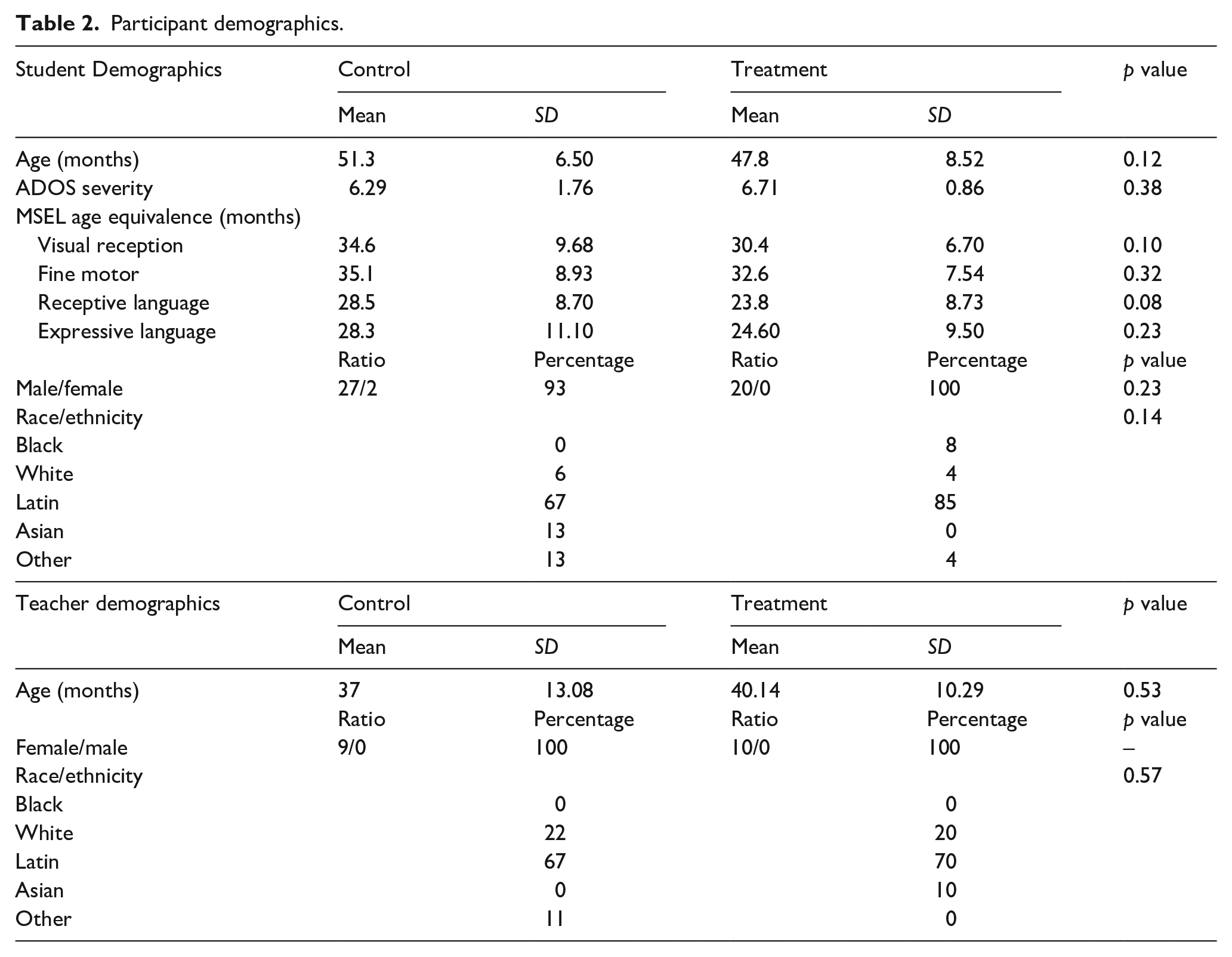
Table 2 summarizes participant demographics. There were no significant differences in the distribution of race, ethnicity, or caregiver demographics between the treatment groups at entry. Children in the treatment and control groups also did not differ on any measures of development on the MSEL or ASD symptom severity.
Participant demographics.
Primary teacher outcome: JASPER strategy implementation
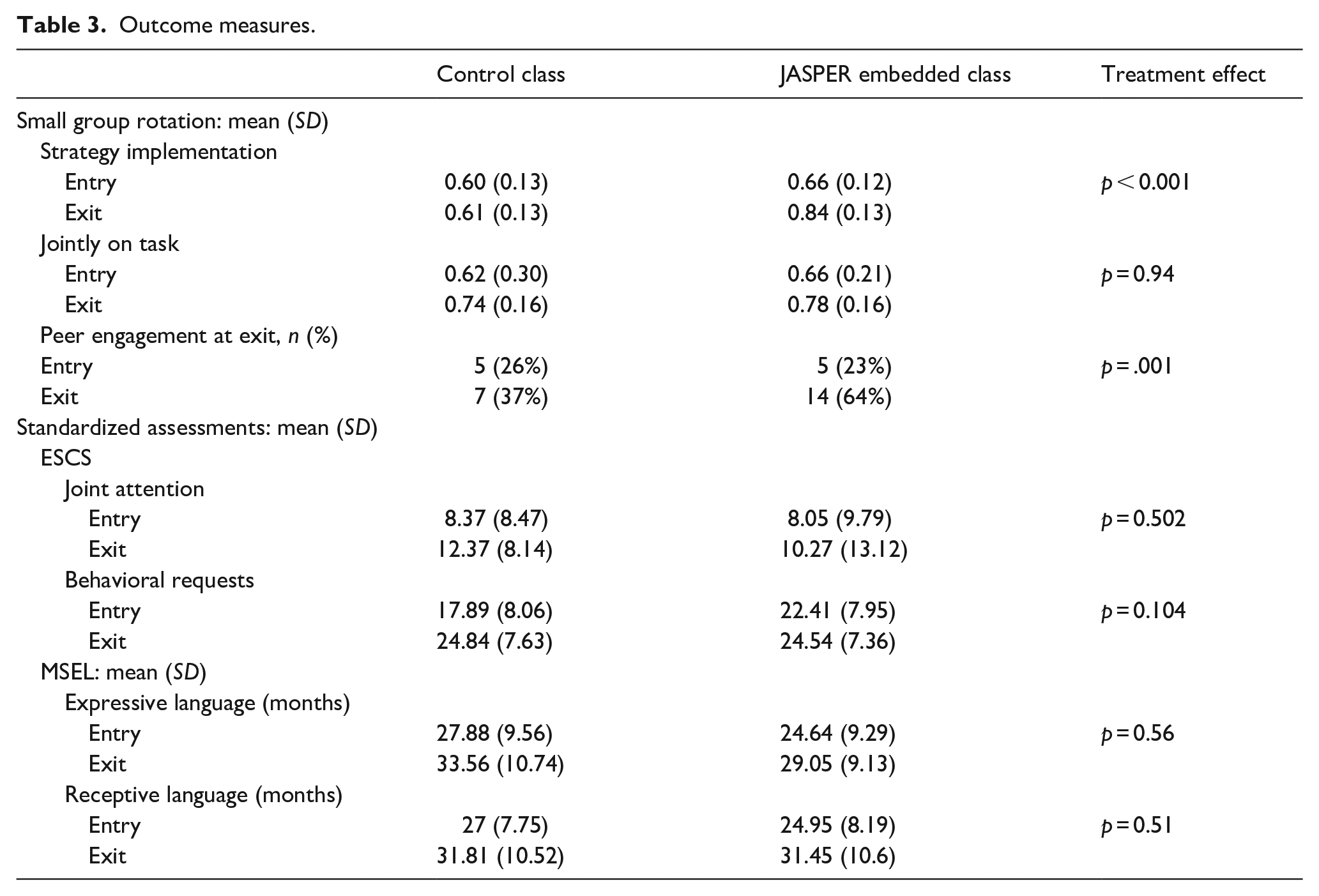
JASPER strategy implementation was coded from teacher–child interactions and overall implementation scores were calculated. The group size was not found to have a significant effect on strategy implementation scores and not included in the final model. There was an overall significant effect of time on JASPER strategy implementation (F(1,39) = 18.79, p < 0.001). There was also a significant treatment by time effect where teachers in schools randomized to JASPER improved significantly more in their use of JASPER strategies from entry to the end of intervention phase, F(1,38) = 17.14, p < 0.001 (See Table 3).
Outcome measures.
Primary child outcomes: joint engagement, joint attention, and requesting
Joint engagement
Table 3 summarizes all child outcomes. The overall percent of time jointly on task was coded from the small group classroom rotations. There was an overall effect of time on the percent of time jointly on task with both the treatment and control groups improving during small group classroom rotations, F(1,40) = 10.62, p = 0.002 with no significant interaction of group and time, F(1,39) = .004, p = 0.94). Times coded as jointly on task were also coded for the presence of peer interaction (see Figure 2). Students in the treatment group were found to have significantly increased odds of being engaged with peers during small group rotations at the end of the intervention phase compared to students in the control group (χ2 = 9.92, p = 0.001; odds ratio = 5.27). In addition, increased group size was associated with increased odds for being peer engaged (χ2 = 8.15, p = 0.004; odds ratio = 2.84).
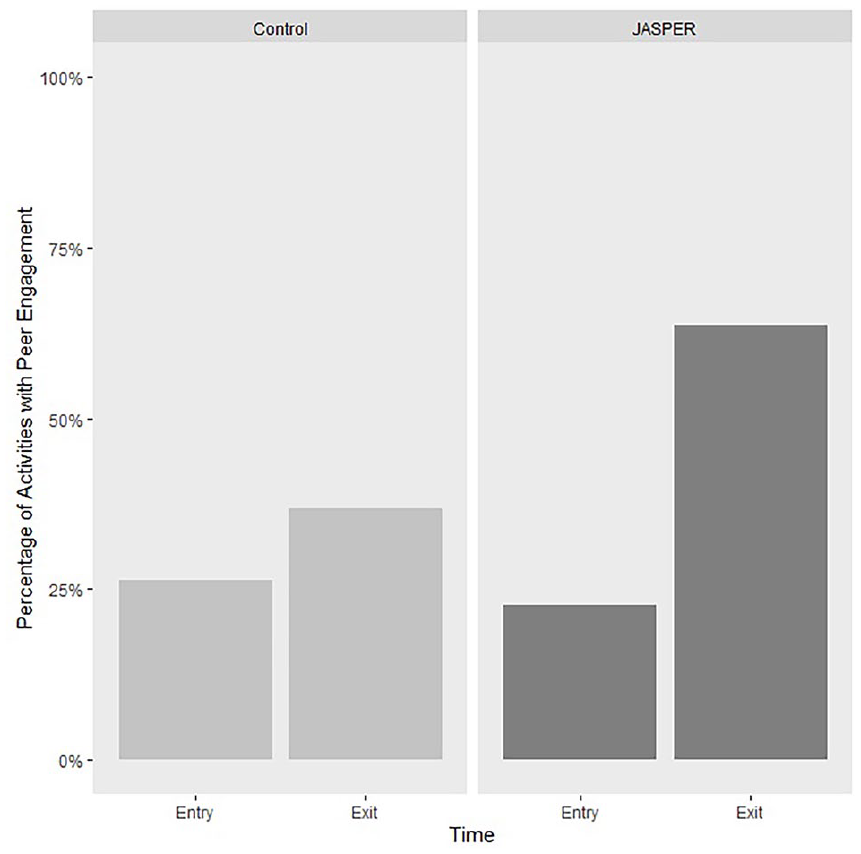
Presence of peer engagement by treatment group.
Initiations of joint attention and requesting
Spontaneous IJA and IBR were coded from the ESCS. There was an overall effect of time on IJA and IBR, with both groups increasing in each skill, F(1,40) = 5.53, p = 0.02; F(1,40) = 8.27, p = 0.006. There was no significant interaction between the treatment group and time for IJA, F(1,39) = .46, p = 0.502, or IBR, F(1,39) = 2.77, p = 0.104.
Secondary child outcomes: expressive language and receptive language
Expressive language and receptive language age equivalencies were calculated from the MSEL (Mullen, 1995). There was an overall effect of time for both expressive language and receptive language age equivalencies with both groups increasing over time, F(1,37) = 20.76, p < 0.001; F(1,37) = 21.28, p < 0.001. There was no significant interaction between the treatment group and time on either expressive language and receptive language age equivalent scores, F(1,36) = 0.33, p = 0.56; F(1,36) = 0.43, p = 0.51.
JASPER strategy implementation and peer engagement
We also explored the relationship between teachers’ JASPER strategy implementation and students’ peer engagement. At the end of the intervention phase, we found that higher overall JASPER strategy implementation scores increased the odds of the target students with autism engaging with peers during small group rotation activities for students in schools randomized to JASPER, χ2 = 4.4, p = 0.03; odds ratio = 1.06.
Discussion
The current study examined the effects of embedding targeted JASPER strategies within the school-district adopted curriculum and in special education preschool classrooms serving under-resourced children. Working with special education teachers, the research team collaborated with teachers to embed strategies and curricular content that specifically targeted joint engagement and social communication into their pre-existing small group instruction time. Creating more opportunities for engagement and social communication is particularly important for students with ASD in special education classrooms since these students may have fewer opportunities to receive ASD-specific intervention (Nahmias et al., 2014; Wong & Kasari, 2012).
The study produced two main findings. First, teachers improved their use of JASPER strategies during their small group instruction time. Whereas previous studies implemented JASPER through toy play, the current study extends teacher-mediated interventions by using implementation strategies including coaching and supported lesson planning, to help teachers learn to embed specific JASPER strategies into academic instruction (e.g. themed activities and STEM activities). The shift from toy play to embedding JASPER strategies in small group instruction allowed teachers to build targeted opportunities outside of play, and to closely attend to their students’ developmental levels and unique characteristics. The Creative Curriculum (for typically developing preschoolers) is often pitched too high developmentally, or without strategies that target specific areas of social communication difficulty common for children with autism. Teachers learned to modify or augment lessons to be developmentally appropriate for their students while also encouraging peer interactions and social communication skills. As we found in this study, all students improved in cognitive, language, and communication outcomes, confirming that community-based instruction for students with autism can make significant improvements in outcomes for low-income, minority children with disabilities.
Our second significant finding focused on increases in peer engagement. While students in both the treatment and control groups increased in time jointly on task, the group that received the JASPER augmented activities were more often engaging appropriately with their peers during small group instruction. Appropriate peer interaction is a core challenge for children with ASD that The Creative Curriculum does not sufficiently address. Augmenting the curriculum with JASPER strategies, teachers designed specific moments in the activities to encourage and facilitate peer interaction. Activities were set up with clear turns for each student and the teacher, with each turn being a moment for social communication and peer engagement. During these turns, students could share materials and work with peers. If a child showed their work to the teacher, the teacher took that opportunity to encourage or prompt the student to show it to a peer. If a student showed their peer their work, the teacher would then encourage the peer to reciprocate the gesture. This routine structure of turn-taking and sharing transformed academic small group instruction, which previously involved mostly independent work, into collaborative experiences for students and teachers. Embedding these JASPER strategies allowed teachers to prioritize communication and engagement with peers in ways The Creative Curriculum does not. Furthermore, these interactions supported natural peer connections. This is in contrast to peer-mediated interventions where peers are trained to act in a teaching role.
Intervention-specific effects were not found for jointly on task behavior and joint attention as routinely found in previous studies. The small group setting and Creative Curriculum emphasize teacher-supported joint engagement (rather than child-initiated in JASPER), and in this study, the on-task joint engagement improved for all children. Similarly, all students improved in standardized scores of expressive and receptive language. PAL classrooms, by design, incorporate speech and language services into their daily routines and instruction. This comprehensive intervention model supports children’s development, further countering the idea that community practices have not kept pace with research findings with respect to standardized test results (Nahmias et al., 2019).
Finally, this study sample is unique in that all of the students were from ethnic minority backgrounds, and nearly all (80%) of the teachers were of matched ethnic backgrounds. The students attended schools in low-resourced neighborhoods, and their families were classified as low income. Future studies should continue to prioritize work in under-resourced and under-represented communities to improve access to high-quality and evidence-based support for children with ASD.
Limitations
While the current study continues to build on the literature of teacher-implemented strategies to support students with ASD, there are several important limitations to consider. Conducting recruitment and intervention in school settings is challenging with teaching staff who already feel swamped with the number of demands on their day, and administrators who may not be interested in what they perceive as extra duties for their staff. Future studies should examine school and teacher factors that may influence the implementation and buy-in of professional development programs for students with ASD. This study was uniquely situated in low-resourced schools, drawing from their population of students from surrounding low-income neighborhoods, which is reflected in the demographics of our sample. There was limited attrition, but students or teachers who left the study early did so due to unforeseen reasons (health or relocation).
It is also important to note that group sizes were dynamic throughout the year. At any point during the year, group size during small group rotations was affected by absences, enrollment of new students, or students transferring out of the classroom. While infrequent, there were times when circumstances (such as peer absences) led to target students working one on one with the teacher during small group rotations. While this was not found to be a consistent occurrence for target students, we do account for this in our analyses. While group size had no effect on teacher strategy implementation, it did have a significant effect on peer engagement. This speaks to additional challenges teachers face when trying to promote peer engagement, even when equipped with strategies to do so.
Students were recruited in classrooms as rolling cohorts throughout the year. This led to some variation between cohorts in the duration of intervention due to holiday breaks, and other school-imposed interruptions (e.g. testing). We compensated for differences in duration by ensuring the total dose of intervention across cohorts. Subsequently, all statistical analyses also accounted for any cohort effects. Furthermore, by extending recruitment throughout the school year, we were unable to conduct any follow-up observations. Previous studies show slight declines in teacher strategy implementation (Shire et al., 2019), and future work should incorporate more robust follow-up procedures.
In the current study, we focused on a specific moment of the day, small group instruction. In addition to exploring the maintenance of strategies, future studies should also examine to what extent teachers may generalize strategies to other students and in other activities throughout the school day.
While our predominately male sample is not unexpected, considering reported gender bias in ASD diagnosis (Haney, 2016), it also does not reflect the commonly accepted ratio of 3:1 (Loomes et al., 2017). It is important to note that research has found differences in peer interaction between males and females with ASD (Dean et al., 2017). This is an important factor that future studies should explore further.
Conclusion
Early childhood special education teachers can modify existing curriculum activities with evidence-based strategies to improve peer engagement during small group instruction time. This can provide students with ASD with more opportunities to practice social communication skills. Future studies should continue to explore the implementation of evidence-based practices in the classroom.
Footnotes
Declaration of conflicting interests
The author(s) declared no potential conflicts of interest with respect to the research, authorship, and/or publication of this article.
Funding
The author(s) disclosed receipt of the following financial support for the research, authorship, and/or publication of this article: Grant sponsor - 3104 John & Marcia Goldman Foundation (PI: Kasari); UA3 MC11055 HRSA (PI: Kasari).
