




Abstract
There are marked racial and ethnic disparities in diagnosis and services for individuals on the autism spectrum, yet race and ethnicity are underreported and underexamined in autism research. The current study examines the reporting of race and ethnicity and the inclusion of participants across racial and ethnic groups in studies included in a large-scale systematic review of autism intervention research (1990–2017). Trained research assistants reviewed 1013 articles and extracted data on the reporting of race and ethnicity data and the inclusion of participants from different racial and ethnic categories from each article. Only 25% of the articles reported any data on race and ethnicity and reporting over time has slowly increased across the 28 years of the review. Descriptive statistics suggest that race and ethnicity reporting varied by study design, intervention, and outcomes. In studies with reported data, White participants had the highest rate of participation (64.8%), with a large gap between the next highest rates of participation, which were among Hispanic/Latino (9.4%), Black (7.7%), and Asian (6.4%) participants. The lack of reporting and the limited inclusion of participants across minoritized racial and ethnic groups are concerning and suggest a need to examine practices in autism research from planning to dissemination.
Lay Abstract
Researchers who study autism-related interventions do a poor job reporting data related to the race and ethnicity of autistic individuals who participate in their studies, and of those who do report these data, the participants are overwhelmingly White. This is problematic for many reasons, as we know little about how interventions are meeting the needs of culturally and linguistically diverse populations, and we assume that interventions are effective for all when they have been developed and validated primarily with and for White children. This study examined the reporting patterns of autism intervention researchers whose work was included in a large-scale systematic review of the intervention literature published between 1990 and 2017. We found that only 25% of studies (out of 1,013 included in the review) included data related to the race and ethnicity of their participants, with minimal change in reporting patterns across the years. In studies with reported data, White participants had the highest rate of participation, with a large gap between the next highest rates of participation among Hispanic/Latino, Black, and Asian participants. Other race and ethnicity groups had very low representation. This study includes additional analyses which examine how the reporting patterns and the inclusion of racially and ethnically diverse participants varies across study types, interventions, and outcome areas. Reporting this data is merely a starting point to begin to address the many disparities in autism-related healthcare, education, and research practices, and this article includes broader implications and next steps to ensure the field becomes more equitable and inclusive.
As the prevalence of autism has increased in recent years (Maenner et al., 2020), so has the racial and ethnic diversity of children who are identified. Contrary to the widespread perspectives on racial ideology from the 19th and early 20th centuries in America, which suggested that racial groups were biologically determined, race is a social construct that varies over time and across social contexts (Harris & Sim, 2002; Spickard, 1992). Race, along with other intersectional categories (e.g. gender, socio-economic status), predicts with disturbing accuracy, health disparities for children with autism (Jones & Mandell, 2020). These disparities have important implications for implementing evidence-based practices (EBPs) with individuals on the autism spectrum (West et al., 2016), and they highlight a critical need to explore patterns in participant inclusion and reporting of race and ethnicity in autism intervention research. Poor reporting practices and underrepresentation of individuals from certain racial or ethnic groups may maintain or perhaps even worsen disparities in service access and quality of care.
Historically, autism intervention research has reflected Anglo-centric and US-centric tendencies in reporting (Jones & Mandell, 2020; West et al., 2016). However, it is important to consider intersectionality of race with dis/ability within autism research. Intersectionality has been described as a framework that allows the simultaneous examination of multiple experiences and identities (Bal & Trainor, 2016). For example, special education labels can be perceived as a means of gaining access to individualized education for White families while at the same time being used to stigmatize and assign blame to racially and ethnically minoritized children (Bal & Trainor, 2016). Consistent with this notion of stigma and disability among racially and ethnically minoritized children, Pearson, Meadan, et al. (2020) describe the intersections of race and disability as the axis of oppressed identities. For example, Black autistic youth face inequities based both on their race (racism) and their disability (ableism). These combined systems of oppression are often reflected in disparities in service access and utilization that are unique to Black autistic youth. Importantly, there is a lack of inclusion of racially and ethnically minoritized families in autism research (Zamora et al., 2015), and the roles of race, ethnicity and intersectional identities have been often overlooked and/or underreported (Pierce et al., 2014; West et al., 2016).
Systemic inequities and disparities in autism practice and research
Systemic inequities in US healthcare and education are long-standing, pervasive, and extend to clinical practice and research in autism (Jones & Mandell, 2020). These inequities are evidenced globally as well (Durkin et al., 2015). Systemic injustices, race and other demographic factors can be social determinants of health and may further contribute to negative health outcomes for autistic individuals who are already at greater risk of these adverse outcomes (Bishop-Fitzpatrick & Kind, 2017). Trends in prevalence data show disparities in timely and equitable diagnosis (e.g. Maenner et al., 2020). Studies have found that Hispanic children are diagnosed on average 1 year later than non-Hispanic, White children (Magaña et al., 2013). Black parents report that their concerns about their children’s development are often ignored (Dababnah et al., 2018). Moreover, autism diagnoses for Black children come on average more than 3 years after parents first express concern, with a mean age of diagnosis above 5 years, 5 months of age (Constantino et al., 2020), which is over 1 year later than the average age of diagnosis for individuals with autism broadly (Baio et al., 2018).
Although not as widely documented, there are similar trends of racial inequities in access to and quality of services. Black and Latino children in the United States are less likely to receive specialty services and procedures than non-Latino, White children, and Asian children are less likely to receive occupational therapy and speech-language pathology services than White children (Smith et al., 2020). A family’s immigration status and a different educational system in their countries of origin may disproportionately impact Spanish-speaking immigrant families in accessing early intervention services (Luelmo et al., 2020).
Despite the fact that disparities in diagnosis and services almost certainly lead to disparities in outcomes, there is limited research available on differential outcomes across racial and ethnic groups. No studies were found that reported on disparities in health outcomes for individuals with autism (Bishop-Fitzpatrick & Kind, 2017) and no studies looked at the effectiveness of interventions by race, ethnicity, or socio-economic status (Smith et al., 2020) in two recent systematic reviews. There are research teams that have examined differential outcomes for racial and ethnic groups in intervention studies (e.g. Sam et al., 2021), but the gaps in examining outcome data are certainly concerning given the persistent inequities.
Underrepresentation of minoritized racial and ethnic participants in intervention research creates a critical gap in our knowledge of desirability, feasibility, efficacy, and cultural or linguistic considerations for non-White individuals with autism, their families, and the practitioners who serve them (West et al., 2016; Zwaigenbaum et al., 2015). There are exceptions including researchers who have developed interventions designed for families in minoritized groups (e.g. Burke, Magaña, et al., 2016; Pearson, Meadan, et al., 2020) or engaged in research to understand and/or adapt interventions in historically underserved countries (e.g. Makombe et al., 2019; Rahman et al., 2016). Still, the paucity of research is alarming as it is unclear whether interventions, many of which have been developed primarily with and for White children, are broadly effective.
Reporting race and ethnicity data as a starting point
The consistent reporting of demographic data on the race and ethnicity of participants is not in any way sufficient for understanding or addressing disparities that exist in autism intervention, but it is a necessary step toward elucidating and ultimately reducing those disparities. Previous research indicates that reporting of race and ethnicity data is low in autism research broadly. West et al. (2016) reviewed the reporting of race and ethnicity in articles included in a large-scale systematic review of autism intervention research and found that only 17.9% of the 408 articles reported data on race and ethnicity during the 1990–2011 time frame. Other studies also found low reporting in studies that examined (a) interventions with young children on the autism spectrum (21.5% of articles from 2000 to 2016; Harris et al., 2020), (b) three autism-related journals (28% of articles for even years in the 2000–2010 range; Pierce et al., 2014), and (c) parent-implemented behavioral interventions for children with autism (39% of articles from 2008 to 2015; Robertson et al., 2017). Some studies have found higher levels of reporting within specific interventions (e.g. 62.7% in social skills interventions from 2010 to 2017; Davenport et al., 2018) or within research in specific countries (e.g. 46% in studies conducted by Swedish researchers from 2013 to 2015; Engstrand et al., 2018). However, the data on reporting of race and ethnicity within research studies are still troubling overall.
The purpose of this study is to examine the reporting of data related to race and ethnicity and inclusion of participants across racial and ethnic groups in autism intervention research across over 25 years of research. The National Clearinghouse on Autism Evidence and Practice (NCAEP) updated a previously completed systematic review (Wong et al., 2015) to examine research on developmental, educational, and behavioral interventions for children and youth with autism from 1990 to 2017 available in English (Hume et al., 2021). The search, screening, quality appraisal, and data extraction process resulted in the identification of 28 EBPs (see the “Methods” section for more details). However, the review examined reporting of race and ethnicity data at a cursory level, thus, this study will examine the data in depth. The research questions for the current study are as follows:
What percentage of articles report information about participant race and ethnicity in autism intervention literature?
Do percentages differ by study features (e.g. study design, EBP categories, outcome domains)? How does the reporting of race and ethnicity data change over time?
Of the articles reporting participant race and ethnicity data, what are the percentages of inclusion across race and ethnicity categories for studies and participants?
Do the percentages of inclusion of participants from race and ethnicity categories differ by study features (e.g. study design, EBP categories, outcome domains)?
Methods
The current study examines the articles included in the NCAEP systematic review. The subsequent sections include a brief overview of the full systematic review (see Hume et al., 2021; Steinbrenner et al., 2020 for full details), the data extraction procedures used for the race and ethnicity data, and the subsequent data analysis procedures.
NCAEP systematic review
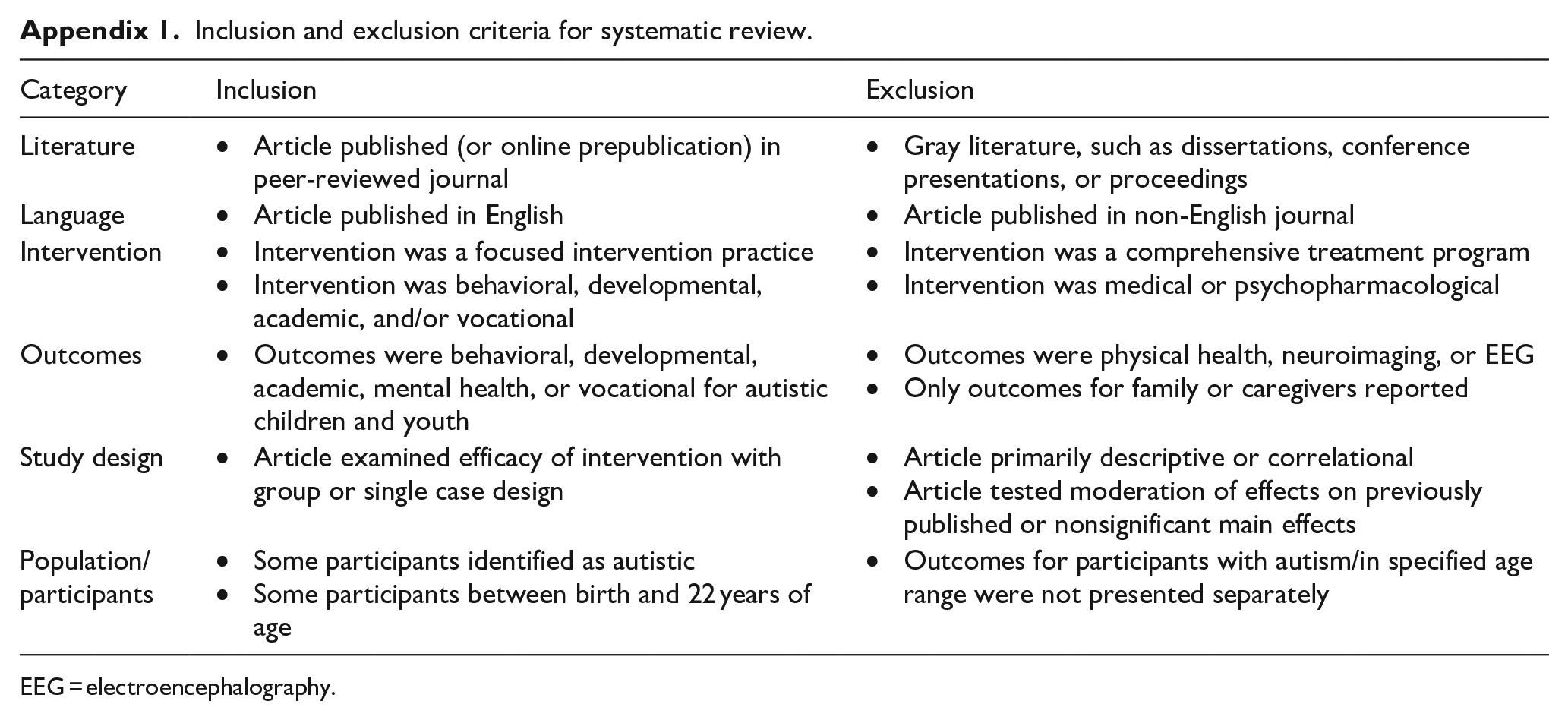
The NCAEP systematic review is an extension of a previous systematic review (Wong et al., 2014, 2015), adding literature from 2012 to 2017 to the previous 22 years of literature (1990–2011). The team collaborated with library scientists to conduct a broad search in nine databases using two sets of terms: autism-related terms (e.g. autism, PDD-NOS, autistic) and intervention-related terms (e.g. intervention, treatment, program). The search yielded over 31,000 de-duplicated articles during the 6-year period. Next, the NCAEP team used Covidence to complete screening in two phases: title/abstract and full-text reviews using inclusion and exclusion criteria (see Appendix 1). Notably, non-US studies were included if the article was available in English. Ultimately, 1282 articles were moved forward for critical appraisal. The critical methodological appraisal criteria were used in the previous iteration of the systematic review and were adapted from the What Works Clearinghouse evaluation criteria (2011) for group treatment studies (i.e. randomized control trials, quasi-experimental designs, sequential, multiple assignment, randomized trials (SMART) designs) and single-case experimental design studies (SCED, that is, ABAB withdrawal, multiple baseline, alternating treatment, changing criterion, hybrid designs). The remaining articles were sent to two external reviewers who were trained on the critical appraisal tools and data extraction for key information (e.g. participant information, dependent variables, independent variables) and had achieved reliability on practice articles. The interrater agreement for critical appraisal of articles was 73% for inclusion/exclusion and all disagreements were resolved by the NCAEP team. The NCAEP team also reviewed data extraction for participants, dependent variable, independent variable, and results (positive vs. null findings). For the grouping of data into meaningful categories, NCAEP team members reviewed the independent and dependent variables and coded the variables into EBPs and outcome domains based on categories from the previous iteration of the review. Then, the NCAEP team iteratively reviewed the variables and created new and/or adapted categories as needed for EBPs and outcome domains. For the current study examining the reporting of race/ethnicity data and race/ethnicity of participants, the team reviewed the 1013 studies meeting inclusion criteria including studies with both positive and null findings.
Race and ethnicity data extraction
The race and ethnicity data extraction was conducted after the updated review by our NCAEP team. The coding procedures, described below, were based on the article by West et al. (2016), but were slightly revised to reflect changes in research trends and societal trends more broadly related to the conceptualization and reporting of race and ethnicity data.
Coding system and training
The coding system included 11 race and ethnicity categories, which included eight categories focusing on distinct race/ethnicity categories and three categories that captured combined, missing, and other (see Table 1 for definitions). During coding, data for Hispanic/Latino was collected in two different questions—one question if the data were reported as ethnicity separate from race and one question if the data were reported as part of race. This was necessary due to differences in reporting of data across studies; however, data from both questions were combined for the results. The coding system included several steps: (1) identifying the total number of child/youth participants in the study, (2) indicating whether any race/ethnicity data were reported (yes/no), (3) indicating whether participants with autism from each race and ethnicity category were included (yes/no), (4) indicating whether the number of participants with autism from each race/ethnicity category was reported (yes/no), and (5) recording how many participants with autism from the race/ethnicity category were included in the study. The questions were entered into a Qualtrics survey with branching logic, so that questions were only shown if relevant.
Race and ethnicity coding categories and descriptions/examples.
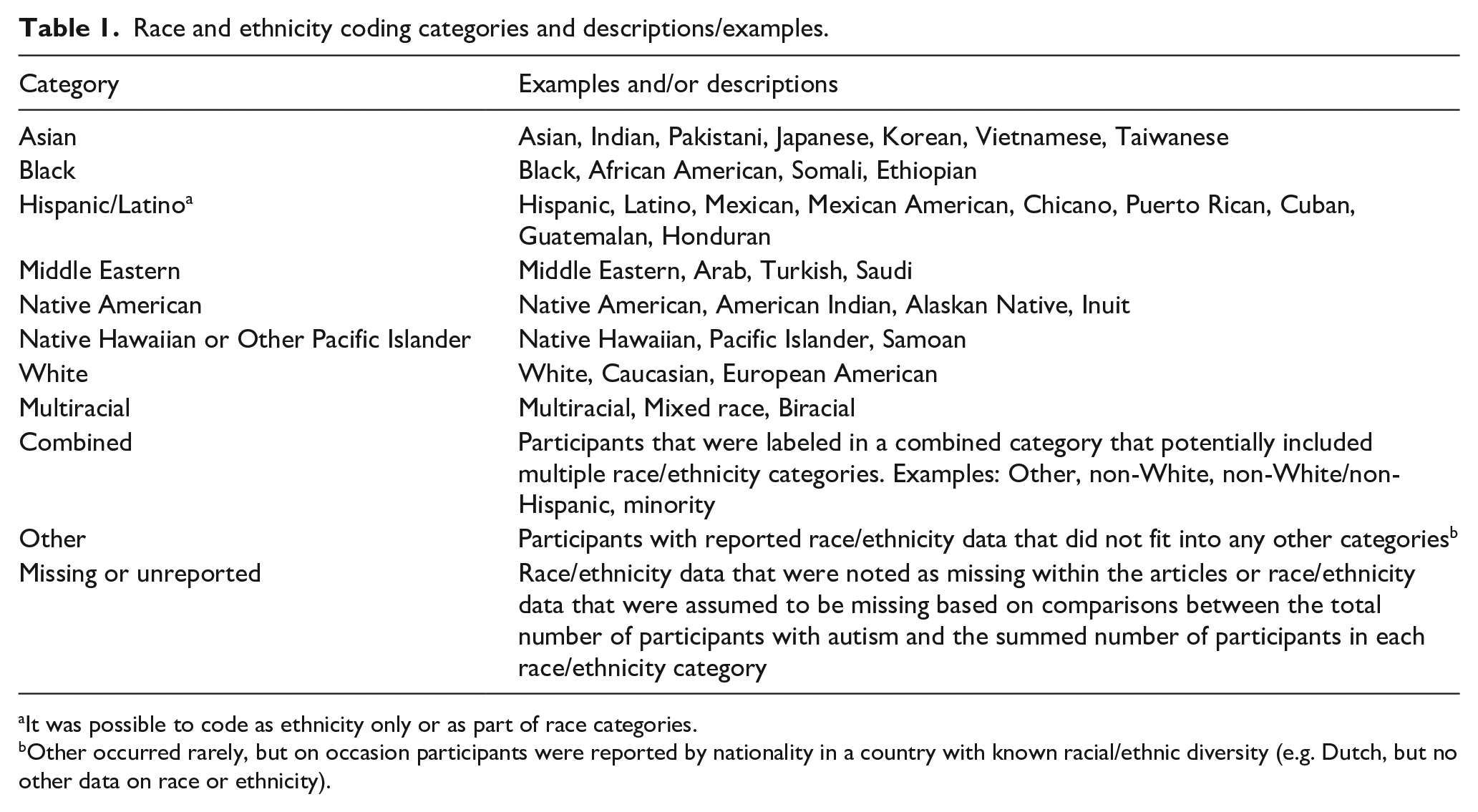
It was possible to code as ethnicity only or as part of race categories.
Other occurred rarely, but on occasion participants were reported by nationality in a country with known racial/ethnic diversity (e.g. Dutch, but no other data on race or ethnicity).
Research assistants (RAs) were the primary coders and were undergraduate and graduate students in paid RA positions or completing research hours as part of degree requirements. An NCAEP team member trained each RA with an overview of the procedures and examples and/or descriptions of each race/ethnicity category, followed by time for discussion. Next, the RAs coded two practice articles. The NCAEP team member (i.e. trainer) scored the practice articles for reliability and met with the RAs to discuss discrepancies. The RAs coded two additional training articles and all RAs achieved at least 80% reliability across the questions.
Coding
RAs completed a Qualtrics entry for each article coding all race/ethnicity data. The RAs could also indicate whether a second review was needed if information was unclear (e.g. converting from percentages to participant numbers, number discrepancies within the articles) and needed to be resolved by the trainer. This occurred for 8% of the articles. The trainer completed second reviews of all articles and made corrections if warranted, which was rare.
Interrater agreement
The trainer or an experienced RA completed interrater agreement checks on 29% of the overall articles, with at least 20% of articles checked for each RA. Exact agreement was calculated for all items (i.e. questions and reported of numbers of participants in categories). For the full set of articles, the agreement for the reporting of race/ethnicity data and the total participants were 97% and 94%, respectively. For the subset with race/ethnicity data, the agreement across race/ethnicity categories was 86% and the agreement on the number of participants across categories was 94%.
Analysis
The research team calculated descriptive statistics for the percentages of articles reporting race/ethnicity data, the percentages of articles that included at least one participant from a given race/ethnicity category, and the total number of participants that were included from each race/ethnicity category. We completed a regression to examine the relationship between date of publication and the percentage of articles reporting race/ethnicity data. We also examined trends in reporting of race/ethnicity data and inclusion of participants from the race/ethnicity categories across study features including the study design (i.e. group design vs SCED), independent variables (i.e. EBP categories), and dependent variables (i.e. outcome domains).
Community involvement. The systematic review included external reviewers who served in a variety of roles, including practitioners. Our project team included a person on the autism spectrum and a parent of a person on the autism spectrum who supported the publication and dissemination of the systematic review.
Results
Research Question 1: reporting of race/ethnicity data
Race/ethnicity data were reported in just under 25% of the 1013 total studies (see Table 2). Authors reported data more frequently in group studies (47% of 192 studies) compared to SCED studies (20% of 821 studies). There were striking differences in the percentage of reporting across EBP categories (i.e. independent variables) and outcomes domains (i.e. dependent variables; see Tables 3 and 4). The reporting of race/ethnicity data for EBPs ranged from 0% (Ayres Sensory Integration®) to 71% (music-mediated intervention). Only 11 EBPs had more than 25% of studies reporting race/ethnicity data, and of those, only three of the EBPs had more than 50% of studies reporting race/ethnicity data. The reporting of race/ethnicity data for outcome domains ranged from 18% (motor) to 50% (self-determination).
Number and percentages of studies including participants and total participants for race/ethnicity categories.
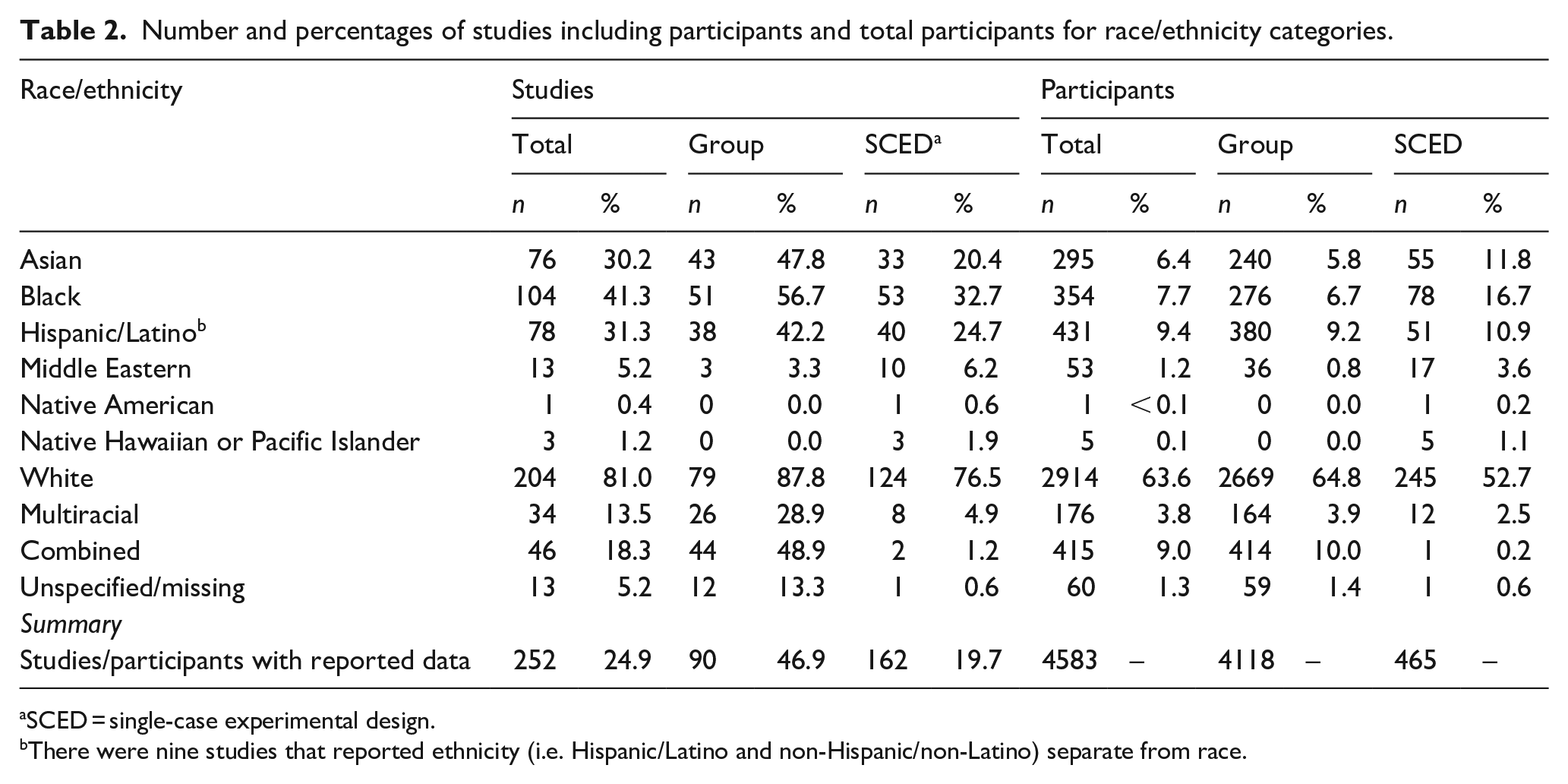
SCED = single-case experimental design.
There were nine studies that reported ethnicity (i.e. Hispanic/Latino and non-Hispanic/non-Latino) separate from race.
Reporting of race/ethnicity data for each EBP category.
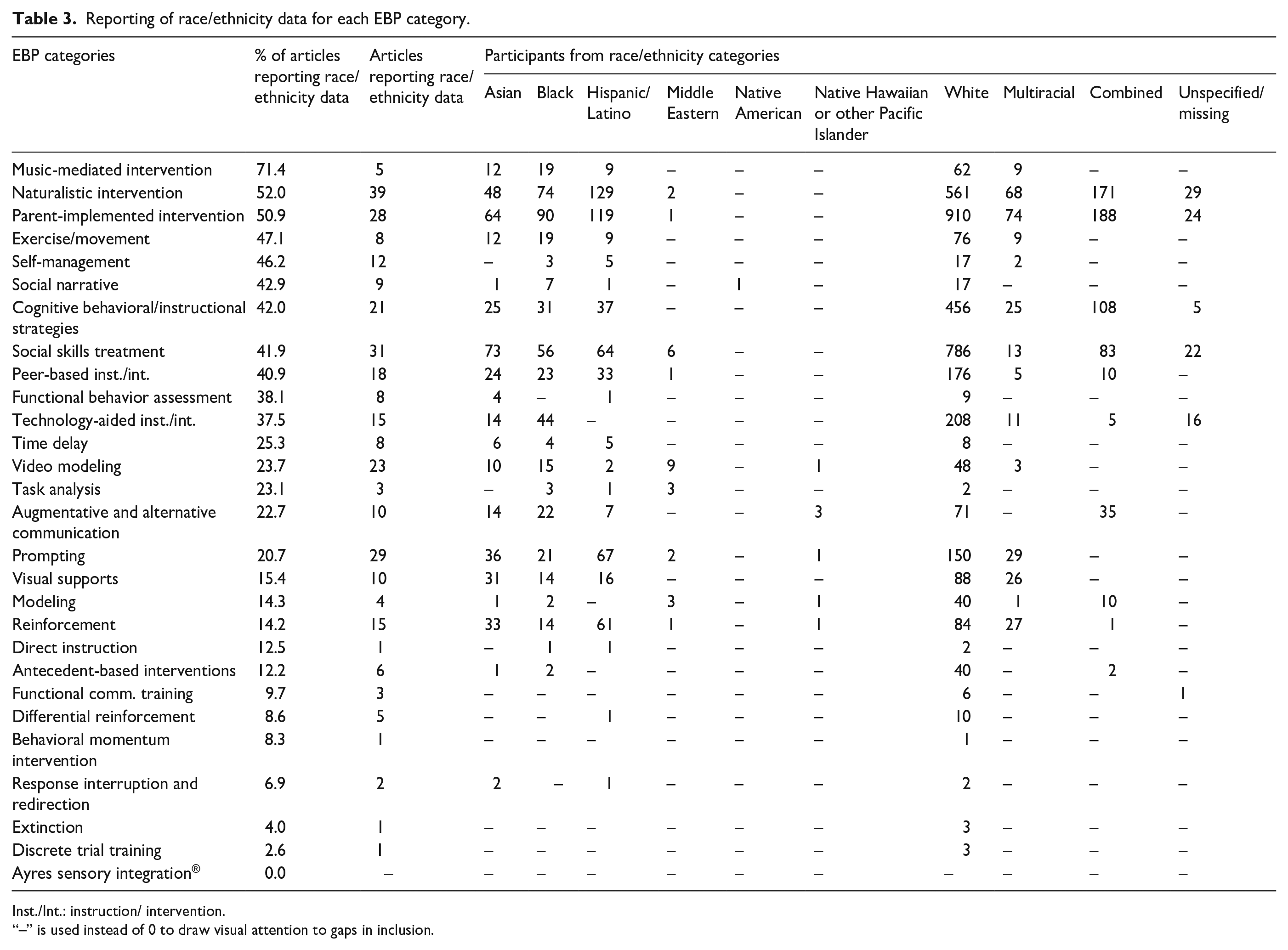
Inst./Int.: instruction/ intervention.
“–” is used instead of 0 to draw visual attention to gaps in inclusion.
Reporting of race/ethnicity data for each outcome domain.
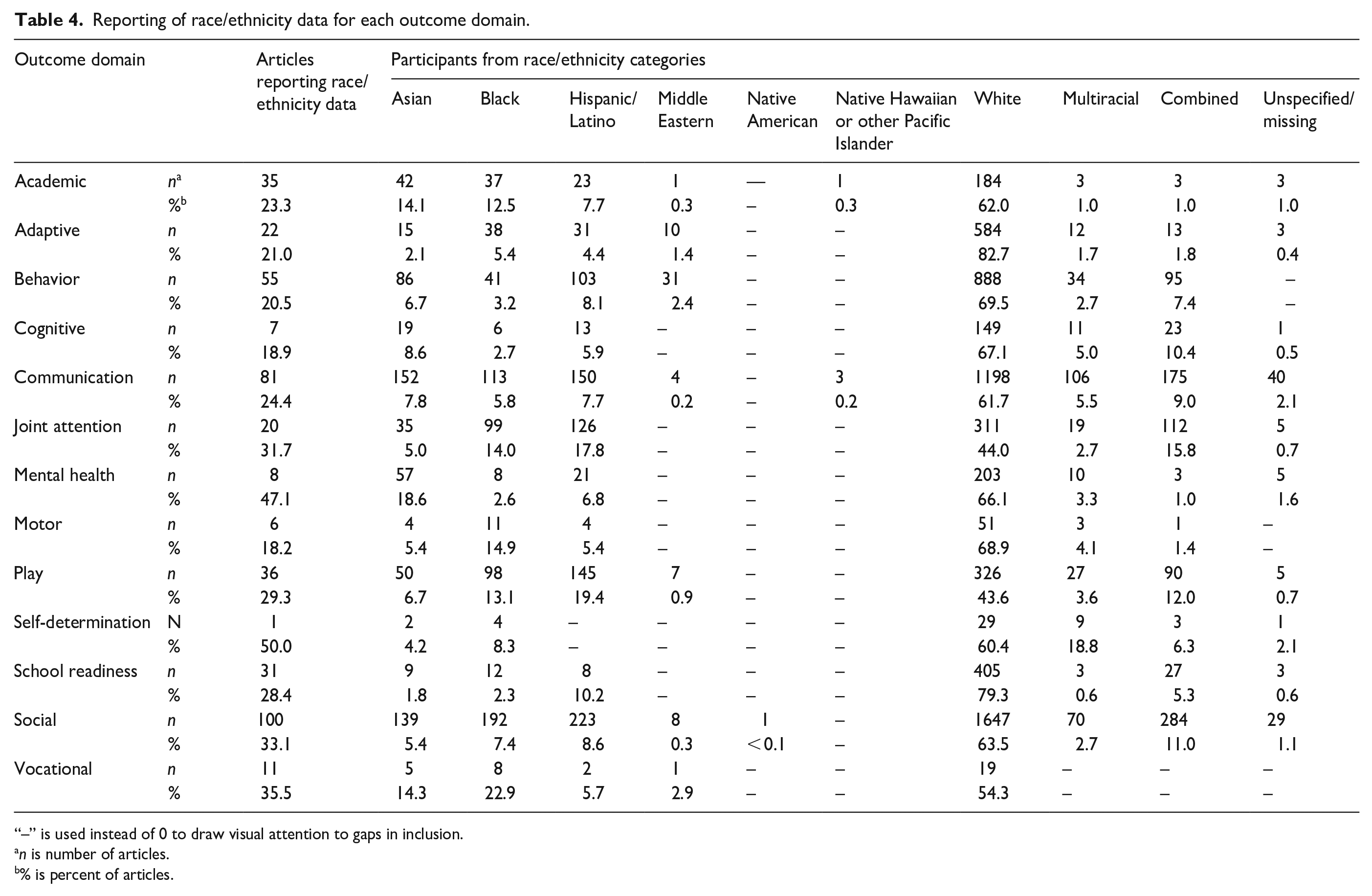
“–” is used instead of 0 to draw visual attention to gaps in inclusion.
n is number of articles.
% is percent of articles.
To examine changes in reporting across time, we examined year by year trends (see Figure 1) and conducted a regression with publication year as the sole predictor and percent of articles reporting of race/ethnicity data as the outcome. Although reporting varied from year to year, there is a trend toward increased reporting of race/ethnicity data over time with a mean growth in reporting of 0.9% per year overall. Notably, the last 5 years averaged a 1.9% increase per year, so there may be a modest change in trend in recent years. The year of publication significantly predicted the percentage of articles reporting race/ethnicity data, β = 0.57 (95% confidence interval (CI): 0.38–0.76), t(26) = 6.14, p < 0.0001, and explained a significant proportion of the variance in the percent of articles reporting race/ethnicity data, R2 = 0.59, F(1, 26) = 37.68, p < 0.0001.
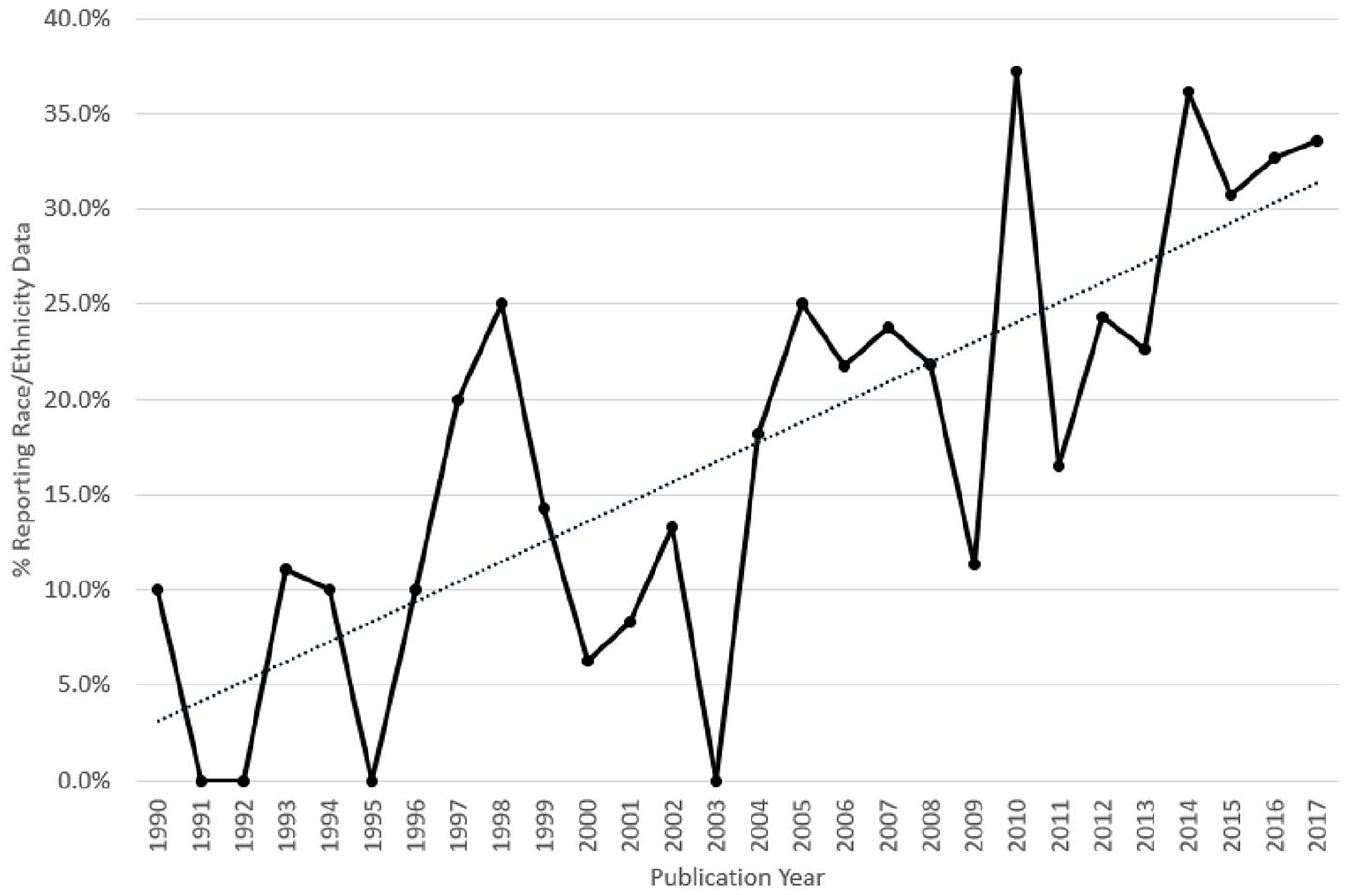
Percentage of articles reporting race/ethnicity data by year.
Research Question 2: race/ethnicity of included participants
Of the 252 studies that reported race/ethnicity data, we examined the inclusion of participants across the race/ethnicity categories (see Table 2). First, we examined the percentages of studies that included any participants from a given race/ethnicity category. Inclusion of any White participants was the highest percentage overall (81%) and across both group (88%) and SCED (77%) studies (i.e. 81% of the 252 total studies reporting race/ethnicity included at least one White participant). The percentage of participants for the next highest reported race/ethnicity categories (i.e. Black, Asian, and Hispanic/Latino for both study designs, as well as the combined category in group studies) was substantially below the percentage for White participants. The percentages for these race/ethnicity categories ranged from 42% to 57% for the group studies and from 20% to 33% for the SCED studies. The participants from the remaining race/ethnicity categories (i.e. multiracial, Middle Eastern, Native Hawaiian and other Pacific Islanders, Native American and unspecified/missing) represented a very low percentage (i.e. no Native Americans or Native Hawaiian or other Pacific Islander in any group studies and <1%–6% for SCED studies).
Next, we examined the percentages of participants from each race/ethnicity category. Again, the percentage of participants was highest for White participants in the studies reporting race/ethnicity data at 65% for group designs (i.e. 65% of participants in group studies reporting race/ethnicity data were White) and 52% for SCED designs. For group studies, there was a large drop for all other race/ethnicity categories with the highest percentage of participants at 10% for the combined category. For SCED studies, there was a notable drop to a set of categories (i.e. Black, Asian, and Hispanic/Latino) which ranged from 11% to 17%, and then another drop for the remaining race/ethnicity categories that ranged from <1% to 4%.
We also looked at the numbers and percentages of participants across the race/ethnicity categories for EBP categories and outcome domains. For the reported inclusion of participants from the racial and ethnic categories across the 27 EBPs with reported race/ethnicity data, 26 EBPs had studies with no reported Native American participants, 22 EBPs with no reported Native Hawaiian or other Pacific Islander participants, 18 EBPs with no reported Middle Eastern participants, 13 EBPs with no reported multiracial participants, eight EBPs with no reported Asian participants, seven EBPs with no reported Hispanic/Latino participants, and six EBPs with no reported Black participants. All 27 EBPs with reported race/ethnicity data included White participants. For outcome domains, there were large gaps in data across domains for Native American participants (no reported participants for 12 of 13 outcome domains), Native Hawaiian or other Pacific Islander participants (no reported participants for 11 of 13 domains), and Middle Eastern participants (no reported participants for six of 13 domains). At least some participants from the other racial/ethnic groups were represented in most outcome domains, although the percentages were quite variable (see Table 4). Studies with outcomes of joint attention and play had the most diverse participants (> 50% of participants were non-White and/or Hispanic/Latino), and studies with outcomes of adaptive behaviors and school readiness had the least diverse participants (around 80% of participants were White).
Discussion
This follow-up study of a large systematic review of behavioral, developmental, and educational interventions for children and youth with autism examined the reporting of race/ethnicity data within the articles that met methodological standards for the systematic review. The reporting of race/ethnicity data were approximately 25% across articles from 1990 to 2017, and there was statistically significant change in reporting over time. An earlier study that examined the race/ethnicity data from the previous iteration of the review found that 17% of articles from 1990 to 2011 reported these data (West et al., 2016). A systematic review of intervention literature for young autistic children found reporting of race/ethnicity data in 22% of studies for an overlapping time frame of 2000–2016 (Harris et al., 2020), and a survey of articles in several key autism-related journals noted reporting rates of 28% in even years of the 2000–2010 time frame for race/ethnicity data (Pierce et al., 2014). Taken together, despite some evidence of increases in reporting over time, the rates of reporting in the current study are alarmingly low, with the highest level of reporting in any year at just over 36% in 2014.
In examining trends between different types of study designs, our study found that authors reported race/ethnicity data nearly two-and-a-half times more often in group studies (46.9%) than in SCED studies (19.7%). West et al.’s (2016) study, in examining the previous iteration of the review, also found that the group studies reported race/ethnicity more frequently (28.2%) than the SCED (16.8%). The higher reporting in group design studies may be explained by the methodological intention of the design to make inferences about larger populations, but examination of race/ethnicity within analyses is not common (Pierce et al., 2014). For SCED research, there are low numbers of participants and systematic replication is the basis for generalization of results (Kazdin, 2010), so reporting is critical and also should be easy to include in publications. Given that the overall reporting of race/ethnicity in both research designs was low, more in-depth reporting on participant characteristics is necessary for all types of research designs.
Our data analysis indicates a slowly increasing trend across time with a change of just under 1% per year. However, there was a 1.9% mean change when examining the most recent 5 years of data. The regression analysis suggested a change of 0.57% per year when accounting for error in the model. This aligns with the upward trend found by Harris et al. (2020) that reported increases, though their increases were estimated at just over 2% per year, which is closer to the last 5 years of data from the current study. The trend across time was found to be much more variable across individual journals in the survey conducted by Pierce et al. (2014) with one of three autism-focused journals demonstrated increased reporting over time. In general, reporting appears to be slowly improving; however, the increases year to year are not substantial and would not approach 100% reporting for many years.
Of the studies identified in this systematic review that reported race/ethnicity data, the low proportion of studies including participants across racial and ethnic backgrounds and the low numbers of minoritized participants across studies are concerning yet unsurprising. When looking at the inclusion of any participants across racial/ethnic categories, studies most often included White participants (81% of all studies include at least one White participant) and the largest total group of study participants was White (65%). This overrepresentation of White participants was consistent across research designs, EBP categories and outcome domains reporting race/ethnicity. A moderately high percentage of studies included at least one Black (41.3%), Hispanic/Latino (31.3%), and Asian (30.2%) participant; however, these racial/ethnic groups made up only 7.7%, 9.4%, and 6.4%, respectively, across all included participants. This representation of Black and Asian participants is less than previously reported by West et al. (2016) for the earlier review, at 13.6% and 10.3%, respectively, indicating decreases in inclusion of Black and Asian participants over time. For comparison, the US Census Data notes 13.4% of the school-age population were Black, 18.5% were Hispanic/Latino, and 5.9% were Asian (U.S. Census Bureau, 2010). Multiracial, Middle Eastern, Native American, and Native Hawaiian or Pacific Islander were each represented sparsely across studies reviewed here. The limited inclusion of multiracial, Native American, and Native Hawaiian and Pacific Islander is similar to a systematic review examining interventions for students with emotional and behavioral disorders suggesting the lack of diverse participants may be characteristic of intervention studies with participants having other disabilities (Carrero et al., 2017). Studies also reported a combined category, sometimes listed as “minority” or “non-White,” in 18.3% of studies and comprising 9% of the total participants reported. It should be noted that this method of combining categories for reporting diminishes the representation of groups in the literature and results in limiting the possibility for inferences to be made about the results.
The patterns of reporting of race and ethnicity and inclusion of participants from different racial and ethnic groups for the EBPs and the targeted outcomes were highly variable. The EBPs with the highest percentages of articles reporting race/ethnicity data were practices that are more likely to occur in naturalistic settings, for example, music-mediated interventions (71.4%), naturalistic interventions (52.0%), and parent-implemented interventions (50.9%). EBPs with the lowest levels of reporting tended to be behaviorally based practices (e.g. discrete trial training with 2.6%, extinction with 4.0%, response interruption and redirection with 6.9%). While the limited reporting in behaviorally based interventions is not necessarily indicative of exclusion of varied racial and ethnic groups from these interventions, research indicates that these interventions have historically been more difficult for minoritized families to access potentially related to factors, such as high cost of services or age caps on insurance coverage which differentially impact minoritized children based on inequities in age of diagnoses (Irvin et al., 2012; Trump & Ayres, 2020). In the current review, Ayres Sensory Integration® was the only EBP with no articles reporting data on race and ethnicity, while West et al. (2016) found that 6 of the 27 EBPs had no reported data on race and ethnicity data.
The data on inclusion of participants across racial and ethnic groups are more complicated to interpret because they are sometimes based on very few studies reporting data. Of the EBPs that had at least 100 participants with reported race and ethnicity data across the included studies, reinforcement, augmentative and alternative communication, and prompting had more diverse participants with less than half of the participants with reported data who were White. There is some evidence that our EBP-specific data align with other systematic reviews. For example, 71% of the participants in social skills treatment studies with reported race and ethnicity data were White, nearly identical to the 72% and 73% of participants reported as White in studies conducted within the United States and outside of the United States, respectively (Davenport et al., 2018). In a recent systematic review of parent-implemented behavior interventions, 75% of the participants were White (Robertson et al., 2017), contrasted with 62% of participants in our study, although our study looked at parent-implemented interventions broadly (i.e. regardless of target skill) which may account for the difference.
For outcome domains addressed within studies, the gaps mirrored the overall data with limited inclusion of Middle Eastern, Native American, and Native Hawaiian or other Pacific Islander participants groups for studies addressing most of the outcomes. Studies that reported on joint attention and play outcomes had more diversity in participants with less than half of the participants identifying as White, likely due to a substantial number of those participants participating in studies of the Joint Attention and Symbolic Play (JASP)/Joint Attention Symbolic Play Engagement and Regulation (JASPER) intervention conducted by Kasari and colleagues in the Los Angeles area. Studies addressing adaptive behavior and school readiness had the least diverse participant groups with around 80% of the participants identifying as White. Although there is some evidence of overrepresentation of Black and Asian students in behaviorally focused autism intervention studies (Severini et al., 2018), this was not found in the current data with the percentages of Black, Latino, and Asian students in studies targeting behavior (3.2%, 8.1%, and 6.7%, respectively) at lower or similar percentages compared to their representation in all studies in the review (7.7%, 9.4%, and 6.4%). This is somewhat surprising given there is a history of overrepresentation of Black and Latino students relative to other racial and ethnic groups in educational disability categories related to behavior challenges (e.g. Zhang et al., 2014).
Implications
With increased attention on the systemic inequities and injustices prevalent at local, national, and global levels, there has been a focus on incorporating anti-racist policies, practices, and actions broadly in society—which involve intentionally and actively combatting systemic racism (e.g. Kendi, 2019). There have been calls for anti-racist practices across all phases of the research process—moving from conceptualization to implementation to dissemination (e.g. Boyd et al., 2018; de Leeuw et al., 2020). The current study shows that most authors of articles on autism EBPs are not reporting the races/ethnicities of their participants, and when they do, there is an overrepresentation of White participants. This is problematic for making inferences about “for whom” interventions are effective. These results from this study have several implications for autism researchers, as well as journals that publish autism research.
Recommendations for journal submission requirements and author reporting practices
The first step toward improving the reporting omissions is for journals to require participant demographics for publication. Journals should adopt submission requirements on reporting participant race and ethnicity data, and all journal editors need to enforce the policy. In addition, it is critical that authors are thoughtful about their reporting practices. As an example, it was common to see group studies that reported on data of “White” and “Non-White” participants or combine racial categories with lower participant numbers, which centers whiteness and fails to show the diversity of participants. Even if these decisions are made in response to space limitations, authors should consider providing detailed information about race/ethnicity in supplemental materials that promote transparency. One promising practice is the open science movement (e.g. Hagger, 2019; van Dijk et al., 2021), which includes public access to datasets. This will likely lead to more transparency about participant demographics as funders adopt these practices and policies. Journal policies and open science, however, are not likely to solve the problem of representation in participant samples.
Recommendations for improving representation in autism studies
The findings from this study produce critical implications for how the field should employ anti-racist frameworks to more effectively engage and recruit participants from racially and ethnically minoritized backgrounds. Importantly, cultural factors might impact why families choose to participate in research. For example, distrust with researchers and institutions has been shown to be a deterrent for some Black communities based on previous unethical practices (e.g. Tuskegee study), and language barriers may deter individuals from immigrant, Spanish-speaking communities. To combat the distrust that racial and ethnic minority communities have with researchers, autism researchers should engage in community-based rapport-building. Researchers must establish trust with historically minoritized communities by first seeking to learn more about their lived experiences and then establishing participant-centered partnerships. For example, Shaia et al. (2020) interviewed Black families to understand facilitators and barriers to engaging in research studies. Relatedly, researchers should make practical changes (either based on partnerships or using knowledge generated from other participant-centered research) that may decrease barriers to participation such as using research locations that are accessible and welcoming to diverse participants or having multiple research locations to engage communities with racial and ethnic diversity. Research teams should strive for diverse representation of race/ethnicity among team members, including investigators, project staff, and consultants, to reflect the communities they are engaging with in research. Autism researchers should also consider whether recruiting homogeneous samples or sub-samples (i.e. without White participants) of racially and ethnically minoritized participants is a feasible approach to more representative participant inclusion. For example, researchers can provide intervention programs in more than one language when working with immigrant Hispanic/Latino families.
Recommendations for broader issues related to race/ethnicity in research
Although we focused on aspects of research with more direct impact on the inclusion of participants across racial and ethnic groups, the impact of racism is evident in every facet of research. A recently published roundtable discussion led by Jones et al. (2020) and including Black, Indigenous, and People of Color (BIPOC) autistic and non-autistic discussants highlighted the structural racism that is pervasive in the field of autism, and noted that sweeping changes are necessary in academia, as well as the large systems serving autistic individuals (e.g. medical, educational). It is also important to be able to assess the use of practices in the existing body of research. For example, the Cultural Committee of the Group for the Advancement of Psychiatry (GAP) developed the Race, Ethnicity, And Culture in Health (GAP-REACH®) checklist (Lewis-Fernández et al., 2013) that has been used to examine the presence of racial, ethnic, and cultural considerations in autism research (e.g. Eilenberg et al., 2019; Engstrand et al., 2018). Explicit discussion of intervention development, cultural adaptations, and study limitations as they relate to historically minoritized groups should be included in publications.
Limitations
There are several limitations to this study. Only articles written in English were included in the systematic review, so the reporting and diversity of samples may not reflect the full breadth of autism intervention research. Also, the coding categories and definitions were based on US-centric views on race and ethnicity, which could result in biases given there are differences in nomenclature across cultures and countries that impact how race and ethnicity are reported in research. A cursory review suggested that approximately 78% of the included articles reflect research that was conducted in the United States and an additional 10% in other Western countries/entities (e.g. Canada, the United Kingdom, Australia, New Zealand) based on direct report or author affiliation from the articles.
Future directions
There are clearly many steps the field must take to promote equity in autism service provision and research that are beyond the scope of this dataset, however, there are several further questions that can be examined with additional data collection, extraction, and analysis. First, as described previously, though we know the research included in this review is US-centric, we have only cursorily examined the country of publication for included articles and have not examined how the reporting of race and ethnicity data and inclusion of various populations differs across location and culture. Though limited by the requirement for English-language publications, this analysis may contribute to the ongoing conversation in the field and across the globe about the role that ethnic background plays in the experiences of autistic individuals and their families (Begeer et al., 2009; Burke, Koot, et al., 2016). In addition, as an extension of this work we plan to analyze the race and ethnicity, and nationality of the authors of the included articles through a follow-up survey. This will allow us to examine the representation of historically minoritized populations as scholars in the autism research field, provide a link between the race and ethnicity of research team members and how it reflects that of study participants, and allow for a discussion of how structural racism creates barriers to entry in the field for scholars of color.
Finally, we plan to review the included articles to extract both social validity and fidelity data to better understand the acceptability and feasibility of interventions implemented with populations of varied race and ethnicity. There are disparities in the perceptions of service quality, appropriateness of services, and service burden across populations, with Black families of autistic children reporting less satisfaction with service provision and service quality (Morgan & Stahmer, 2020; Pearson, Traficante, et al., 2020), and non-English-speaking families indicating that services are inaccessible and arduous (Stahmer et al., 2019). Thus, an examination and discussion of these data when available, is an important next step.
Conclusion
The lack of reporting of data on race and ethnicity and the limited representation of participants across racial and ethnic groups in autism intervention research is hugely concerning. Certainly, journals must require reporting of data on race and ethnicity and enforce that requirement, but that does not address the issue of representation among participants. We need to critically examine all aspects of our research and address the implicit and explicit racism that is ubiquitous in our research and likely impacts our inclusion of participants of color. We need to regularly engage community partners of color throughout the entire research process—from conception to dissemination. We need more researchers of color working in the field of autism. From diagnosis to intervention to service access, individuals on the autism spectrum and their families from historically minoritized groups experience countless disparities. In attempts to explain and ameliorate disparities, researchers, policymakers, and other leaders often focus on the impact of race rather than the impact of systemic racism. We are likely asking the wrong questions or at the very least focusing on the wrong locus as we address issues—focusing on differences among people rather than the White supremacy culture embedded in many of our societies and therefore our studies. There are critical conversations and discussions that are bringing attention to issues of diversity and disparity in autism research and practice (e.g. Boyd et al., 2018; Jones & Mandell, 2020), but it is crucial that we continue to foster these discussions and commit to anti-racist action to reduce the disparities we see across all aspects of research and practice.
Footnotes
Appendix
Inclusion and exclusion criteria for systematic review.
| Category | Inclusion | Exclusion |
|---|---|---|
| Literature | • Article published (or online prepublication) in peer-reviewed journal | • Gray literature, such as dissertations, conference presentations, or proceedings |
| Language | • Article published in English | • Article published in non-English journal |
| Intervention | • Intervention was a focused intervention practice • Intervention was behavioral, developmental, academic, and/or vocational |
• Intervention was a comprehensive treatment program • Intervention was medical or psychopharmacological |
| Outcomes | • Outcomes were behavioral, developmental, academic, mental health, or vocational for autistic children and youth | • Outcomes were physical health, neuroimaging, or EEG • Only outcomes for family or caregivers reported |
| Study design | • Article examined efficacy of intervention with group or single case design | • Article primarily descriptive or correlational • Article tested moderation of effects on previously published or nonsignificant main effects |
| Population/participants | • Some participants identified as autistic • Some participants between birth and 22 years of age |
• Outcomes for participants with autism/in specified age range were not presented separately |
EEG = electroencephalography.
Acknowledgements
The authors are grateful to their colleagues who co-authored the National Clearinghouse on Autism Evidence and Practice Evidence-Based Practices report: Kristi Morin, Brianne Tomaszewski, Susan Szendrey, Şerife Yücesoy-Özkan, and Melissa Savage. They wish to acknowledge the support of the following individuals at the University of North Carolina and the Frank Porter Graham Child Development Institute who provided assistance, feedback, and technical support during the course of the project: Amelia Gibson, Kathleen Thomas, Ann Sam, Victoria Waters, Jeff Alpi, Andrea Ross, Stephanie Ridley, Luke Hayek, Tara Regan, Coral Morrow, Crisma Emmanuel, Benjamin Carter, Juliet Alegria, Mary Tran, and Ashley Freuler.
Declaration of conflicting interests
The author(s) declared no potential conflicts of interest with respect to the research, authorship, and/or publication of this article.
Funding
The author(s) disclosed receipt of the following financial support for the research, authorship, and/or publication of this article: The work reported here was supported by the Institute of Education Sciences, US Department of Education through Grant R324B160038 (Postdoctoral Training Program on Special Education Research) awarded to the University of North Carolina at Chapel Hill. The opinions expressed represent those of the authors and do not represent views of the Institute or the US Department of Education. Funding for this work was also provided by the Ireland Foundation, Mr John E. Rucker, and the Frank Porter Graham Child Development Institute.
