




Abstract
The neurodiversity approach recognizes autism as a natural variation of human experience, emphasizing unique strengths while acknowledging social and behavioral challenges that may affect quality of life. Peer support, based on shared experiences and mutual understanding, has shown benefits in mental health care, yet its impact for autistic individuals remains underexplored. This review is of peer-support programs for individuals with autism, focusing on impact, facilitators, and barriers. A systematic literature review was conducted using Cochrane Library, Web of Science, PubMed, Embase, PsycINFO, and Sociological Abstracts. Studies involving peer-support programs for autistic individuals aged 12 and older were selected. Fifteen articles described 12 unique peer-support programs with varying goals, such as enhancing personal development. Studies reported diverse improvements, including enhanced well-being, self-esteem, and academic performance. Many participants valued connecting with peers in an autism-focused context. Most articles discussed some facilitators and barriers. Peer support shows promising benefits for autistic individuals, fostering empowerment and well-being. However, the methodological limitations of the included studies, such as small sample sizes and lack of control groups, limit the strength of these conclusions. Future research should therefore use more robust research methods and investigate accessibility and potential risks to optimize peer support for this population.
Lay Abstract
Keywords
Introduction
Autistic individuals often have distinct sensory, cognitive, and emotional processing styles compared to non-autistic individuals, which may lead to challenges in communication, social interaction, and daily functioning (American Psychiatric Association, 2013). The global prevalence of autism is estimated at 100 per 10,000 individuals and is rising due to increased community awareness and changes in case definitions (Zeidan et al., 2022). Autism may impair quality of life by causing functional limitations in social and academic domains (Wong & Shorey, 2022). In addition, individuals may face challenges related to prejudice and stigma, which can hinder their ability to establish and maintain friendships with non-autistic people, leading to loneliness, and some may experience difficulties with achieving full independence (Friedman & Rizzolo, 2018; Kwan et al., 2020; Mason et al., 2021; Petrina et al., 2014; Ribeiro et al., 2023). Consequently, individuals with autism may require varying levels of support, from none to substantial (American Psychiatric Association, 2013).
To address these challenges, individuals with autism are often offered interventions within the (bio)medical model, which may include psychological therapies or pharmacological treatment for co-occurrent psychiatric problems such as anxiety, depression, and obsessive-compulsive disorder (Hume et al., 2021; Lai et al., 2019). While these interventions may benefit some individuals, they may overlook autistic individuals’ lived experiences and identities. The neurodiversity approach helped extend this (bio)medical view (Pisciotta, 2024), in which any form of neuropsychological development is seen as part of natural variation and holding equal validity (Dwyer, 2022). Rather than seeking to correct autistic traits, neurodiversity-informed approaches emphasize acceptance, empowerment, and the inclusion of autistic voices in the development of support systems (Pisciotta, 2024). This view urges health care to prioritize incorporating the autistic experience in different interventions.
Within this context, peer support has gained attention as a form of support grounded in lived experience (Solomon, 2004). Originating in the mental health field, peer support evolved both as a grassroots response to unmet needs and as a political movement advocating for self-determination and equality in care (Mead et al., 2001; Stratford et al., 2019). Peer support is support based on understanding another’s situation through shared and lived experience, providing knowledge and understanding not accessible through professional expertise alone (Fortuna et al., 2022; Mead et al., 2001). The foundational principles of peer support, reciprocity, shared identity, and empowerment (Fortuna et al., 2022) resonate strongly with neurodiversity-informed models.
Peer support can provide social and emotional support, as well as practical strategies related to managing everyday life, executive functioning, and future planning; it can also foster a sense of belonging and self-worth grounded in mutual understanding and shared identity (Bertilsdotter Rosqvist, 2019; Chen et al., 2021; Salzer & Shear, 2002; Solomon, 2004; Valderrama, 2023). Because peer support relies on mutual identification, self-reflection, and abstract reasoning (Fortuna et al., 2022; Shalaby & Agyapong, 2020), it may be particularly relevant from adolescence onward, when these cognitive and emotional capacities begin to emerge (Crone & Dahl, 2012; Inhelder & Piaget, 1958). Peer support may take place with or without professional facilitation, both online and in-person and involve trained or untrained peers (Fortuna et al., 2022; Naslund et al., 2016; Shalaby & Agyapong, 2020).
Studies exploring peer support across populations and settings report promising outcomes, such as improvements in clinical recovery within mental illnesses (Smit et al., 2023) and an enhanced empowerment in oncology patients (Ziegler et al., 2022). In spite of these promising results, research on peer support with autism being the shared experience remains scarce. Most existing studies focus on peer-mediated interventions involving neurotypical peers rather than peer-led, mutual support among autistic individuals (Chang & Locke, 2016). Therefore, the aim of this review is to provide an overview of the current state of scientific evidence on peer support among autistic individuals aged 12 and older, in order to explore its potential usefulness in health care. This systematic review addresses the following questions: What is the impact of peer-support programs on individuals with autism, and what are key challenges and facilitators associated with peer support in this population?
Inclusive language statement
This review acknowledges the varying preferences for language when referring to autism, using both identity-first (autistic person) and person-first (person with autism) language (Buijsman et al., 2023).
Methods
Study design and data sources
A systematic review was performed, using the Preferred Reporting Items for Systematic Reviews and Meta-Analyses (PRISMA) Checklist (Page et al., 2021) to report this study (see Supplemental Material, File 1). The protocol of the systematic review was registered on the international prospective register of systematic reviews (PROSPERO, registration number: CRD42024491679).
Data sources and search strategy
The systematic search of literature took place on January 17, 2024, in the following electronic databases: Cochrane Library, Web of Science, PubMed, Embase, PsycINFO, and Sociological Abstracts. The keywords that formed the basis of the search terms and synonyms were: (1) “autism” and (2) “peer support” (see Supplementary Material, File 2). There were no restrictions for publication date during the search. A librarian with expertise in systematic reviews supported the design of the search strategy. The reference lists of the full-text screened articles were manually screened to identify additional studies.
Eligibility criteria
Included were studies that (1) were original and published in international peer-reviewed journals; (2) were published in English; (3) focused on individuals between 12 and 99 years old with autism; and (4) developed, used, or evaluated a program involving peer support between individuals with autism. The age cutoff reflects that peer support requires cognitive and emotional capacities, such as self-reflection and abstract reasoning, which typically develop from adolescence onward (Crone & Dahl, 2012; Inhelder & Piaget, 1958). As peer support was defined in this review as support provided by and for autistic individuals, grounded in shared lived experience, studies were excluded that (1) focused on peer support between a person with autism and a neurotypical person and (2) did not report on the impact, barriers, or facilitators concerning the peer support. Also, for the purpose of the present systematic review, gray literature and non-peer-reviewed articles were excluded. Although we acknowledge that many valuable practices take place outside of formal research settings.
Identification and selection of studies
All articles found were loaded into EndNote X9 (The EndNote Team, 2013) to identify and delete potential duplicates. All duplicates were manually checked before deletion. The results were exported into Rayyan (Ouzzani et al., 2016), and titles and abstracts of all entries were screened by two researchers (M.H.M.V. and M.v.W.). Any disagreement between reviewers about inclusion or exclusion was resolved by discussion. In case of lasting doubt, the articles were included for full-text screening. Next, the remaining articles were full text screened by two researchers (M.H.M.V. and M.v.W.). Any disagreement between reviewers or doubt about definite inclusion or exclusion was resolved by discussion with the research team until consensus was reached.
Data extraction and synthesis
All included articles were assessed by two researchers (M.H.M.V. and M.v.W.) on the following data: study characteristics (e.g., title and country), participant characteristics (e.g., age and gender), program characteristics (e.g., name of the program, setting), and outcomes (e.g., impact on individual, facilitators, or barriers). In addition, program websites were researched to find supplementary information that was not included in the articles. Furthermore, the risk of bias of all included full-text articles was assessed using the Joanna Briggs Institute (JBI) Critical Appraisal Tool (Joanna Briggs Institute, 2017), which is suitable for the design of a study (qualitative, semi-experimental, or narratives). These checklists contain six to ten items with the response options of yes, no, unclear, and not applicable. The higher the number of questions answered with yes, the lower the risk of bias.
Community involvement statement
This study is a review that synthesizes existing literature and does not involve the collection or interpretation of new empirical data. Therefore, no autistic individuals, family members, or other community stakeholders were directly involved in the research process. We acknowledge the importance of community involvement in autism research and encourage future studies using new data to actively include autistic individuals and other community members in their design and implementation.
Results
Study selection
The initial search (dated on January 17, 2024) yielded 4274 articles. After removal of duplicates, the titles and abstracts of 2478 articles were screened, and 142 studies were selected for full-text reading. Title and abstract of 35 additional articles were screened after identification through reference list checking. In total, 15 articles were included in this review (Brownlow et al., 2023; Capozzi et al., 2019; Crane et al., 2021, 2023; Farkas et al., 2020; Hillier et al., 2007; Hotez et al., 2018; Jantz, 2011; MacLeod, 2010; Manett, 2022; McConkey et al., 2021; Shea et al., 2022; Song et al., 2023; Tomfohrde et al., 2022; Weiler et al., 2022) (see Figure 1 for the flowchart).
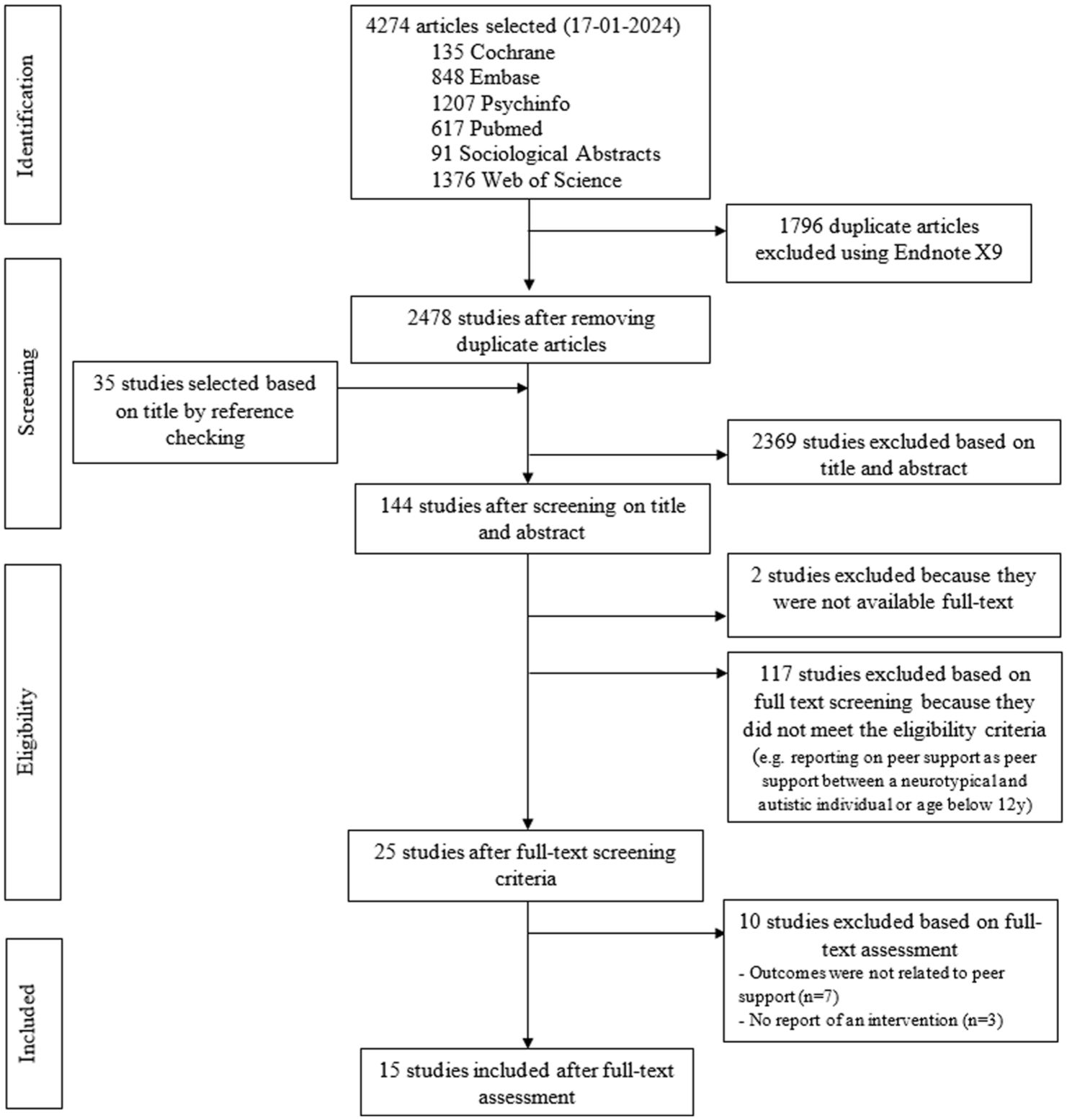
Flow of studies in a systematic review of peer support for individuals with autism, January 2024.
Program and study characteristics
A total of 12 unique peer-support programs were identified in the 15 included studies. The descriptions of the programs are summarized in Table 1. The peer-support programs took place in Western, English-speaking countries (see Figure 2). All included studies were fairly small, with sample sizes ranging from 5 (Tomfohrde et al., 2022) to 54 (McConkey et al., 2021) (see Supplemental Material, File 4). While the specific aims of the programs differed, nearly all included a component of sharing thoughts and experiences with peers in similar situations. More specifically, programs in educational settings aimed to support autistic students in transitioning to and succeeding in higher education, while in mental health care, peer support aimed at fostering self-understanding, emotional well-being, and social inclusion (see Table 1).
Characteristics of identified peer-support programs.
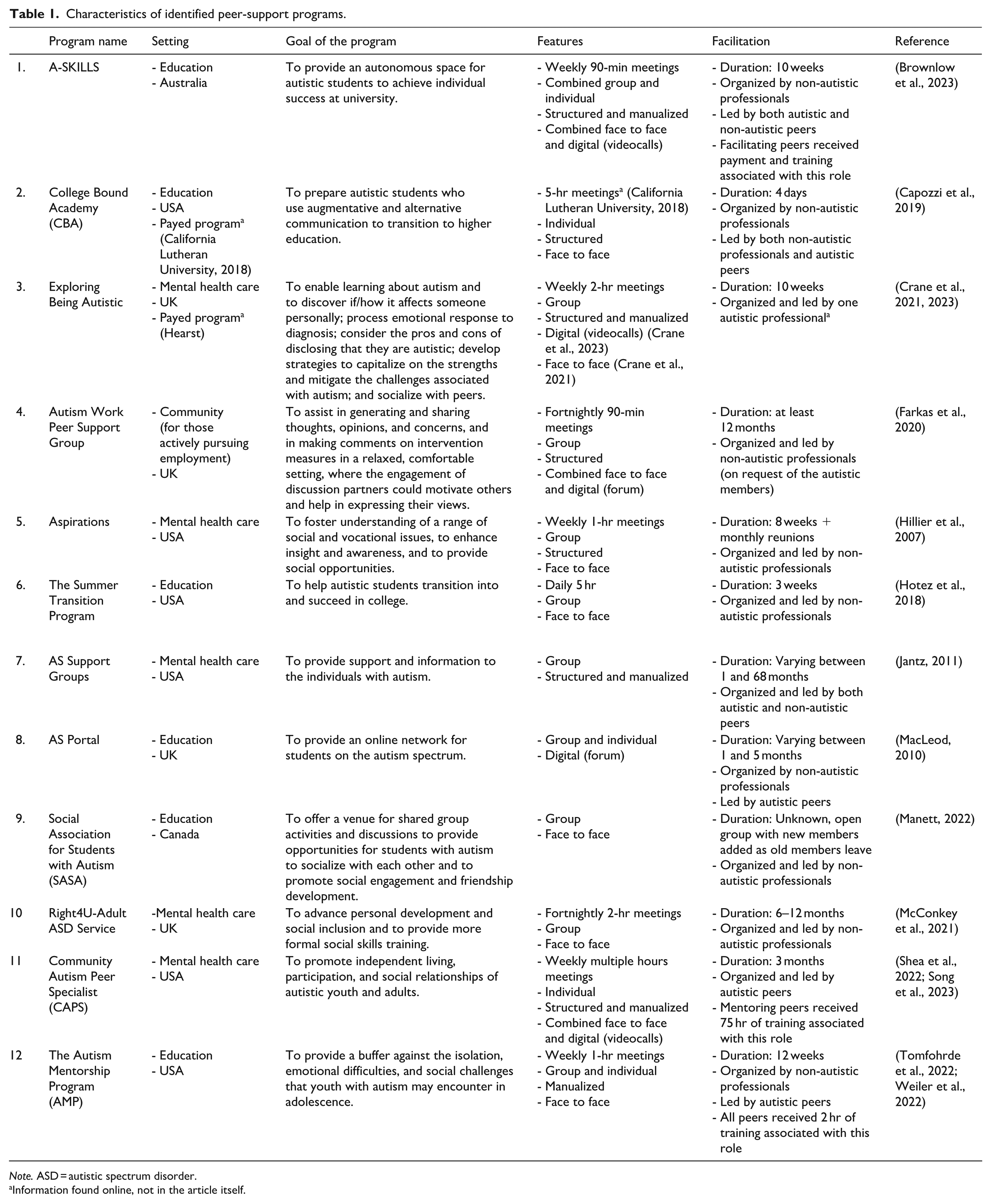
Note. ASD = autistic spectrum disorder.
Information found online, not in the article itself.
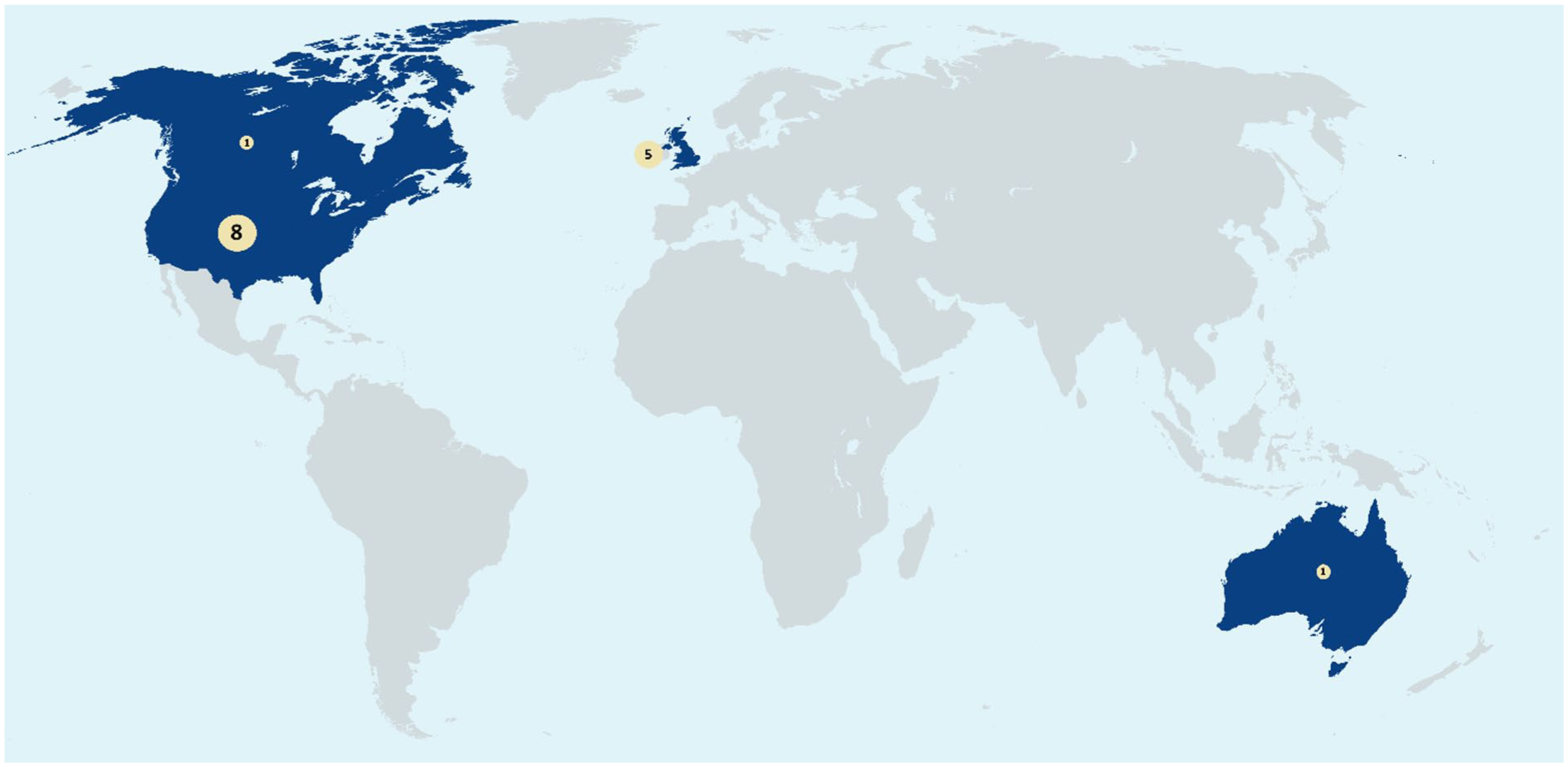
Geographic representation of studies included in this review.
Outcomes
All studies reported that peer support had positive effects on the peers receiving support, but outcomes and designs varied between studies (see Table 2 and Supplemental Material, File 5). Throughout these varying research designs, being able to connect with like-minded others and a community of autistic individuals was found to be beneficial in most articles (Brownlow et al., 2023; Capozzi et al., 2019; Crane et al., 2021, 2023; Hillier et al., 2007; Manett, 2022; McConkey et al., 2021; Tomfohrde et al., 2022). Furthermore, peer support was found to enhance well-being, empowerment, and acceptance among individuals, with some studies assessing this using interviews (Crane et al., 2021; MacLeod, 2010), while another used both self-developed and validated questionnaires in a pre-test/post-test design (Weiler et al., 2022). Improvements in social skills were found within a validated questionnaire (Song et al., 2023) and with focus groups (McConkey et al., 2021). Furthermore, peer support also led to an increased sense of social connection, with participants noting better communication with both family members and neurotypical peers (Tomfohrde et al., 2022). In addition, participants reported the added benefit of making friends during the program (Hillier et al., 2007).
Six programs did not make a distinction between peers offering and receiving support (Farkas et al., 2020; Hillier et al., 2007; Jantz, 2011; MacLeod, 2010; Manett, 2022; McConkey et al., 2021), as opposed to other programs with peer-support receivers and providers (Brownlow et al., 2023; Capozzi et al., 2019; Crane et al., 2021, 2023; Hotez et al., 2018; Shea et al., 2022; Song et al., 2023; Tomfohrde et al., 2022; Weiler et al., 2022). Only two studies, both focusing on the Autism Mentorship Program, explored the perspectives of peer-support providers in addition to the experiences of the peer-support receivers (Tomfohrde et al., 2022; Weiler et al., 2022). In addition, four other studies included experiences of peer-support providers in their results, even though this was not the primary focus (Capozzi et al., 2019; Hotez et al., 2018; Manett, 2022; Shea et al., 2022). Across these studies, peer-support providers reported in interviews feelings of empowerment and pride in their role (Capozzi et al., 2019; Hotez et al., 2018; Tomfohrde et al., 2022) as well as in validated questionnaires (Weiler et al., 2022). Improved leadership skills were also reported within these questionnaires (Weiler et al., 2022), with similar findings emerging from focus groups (Hotez et al., 2018). Finally, one study reported on the effects of a training on being a mentor; peers providing support reported that they were better able to build relationships with their peer, and the training helped them prepare for being a mentor (Tomfohrde et al., 2022).
Overview of the study characteristics, including results in terms of impact of the program on participants.
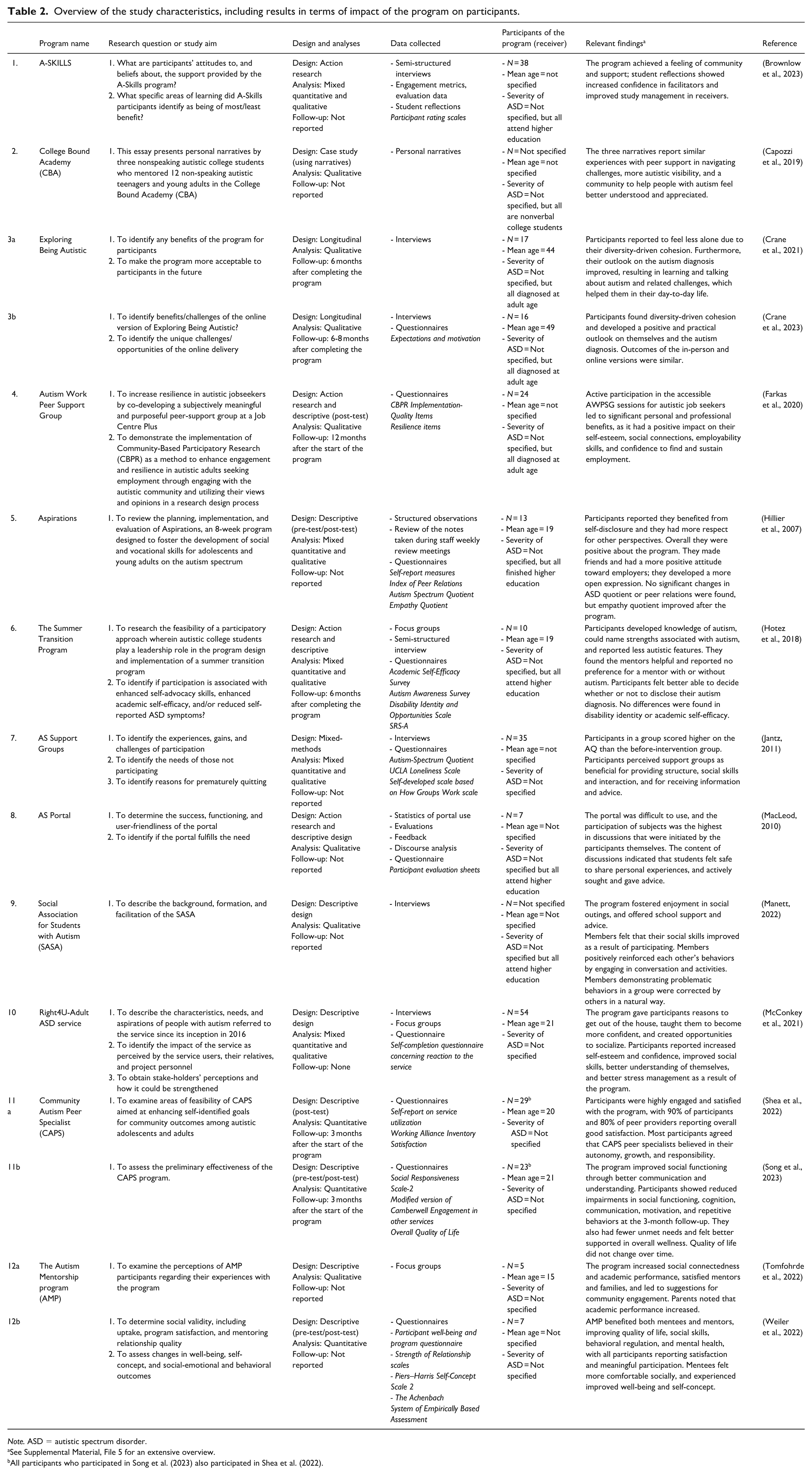
Note. ASD = autistic spectrum disorder.
See Supplemental Material, File 5 for an extensive overview.
All participants who participated in Song et al. (2023) also participated in Shea et al. (2022).
Barriers and facilitators
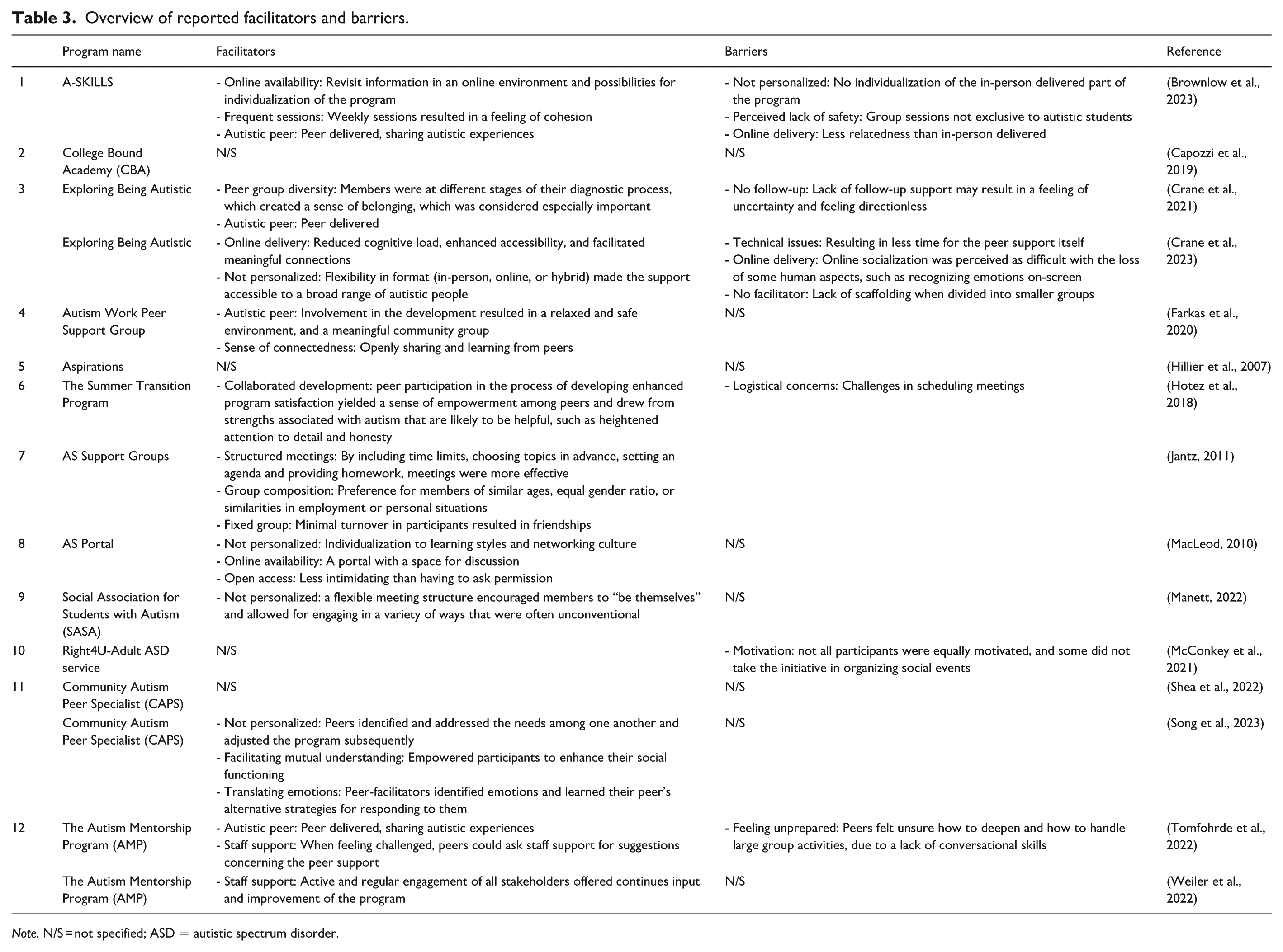
Almost all studies reported on barriers or facilitators affecting either the specific program or peer support in general (see Table 3). Facilitators were, for example, active encouragement toward members to be themselves and a flexible format to enhance accessibility such as individual choices in sessions or hybrid formats (Brownlow et al., 2023; Crane et al., 2023; Manett, 2022). Furthermore, the involvement of autistic experts-by-experience during the development, implementation, and evaluation of the peer-support programs was described as being essential for the success of the program (Brownlow et al., 2023; Capozzi et al., 2019; Crane et al., 2021; Farkas et al., 2020; Hotez et al., 2018; Tomfohrde et al., 2022) (see Table 3). Reported barriers for peer support were logistical impediments such as scheduling issues, lack of meeting structure, or bureaucratic processes in the health care system (Hotez et al., 2018; Jantz, 2011; McConkey et al., 2021). It was noted that some facilitators were also reported as barriers and vice versa.
Overview of reported facilitators and barriers.
Note. N/S = not specified; ASD = autistic spectrum disorder.
Risk of bias
A risk-of-bias assessment was performed on each of the 15 included full-text articles, using the JBI Critical Appraisal Tool (Joanna Briggs Institute, 2017) suitable for each study design. As for these studies, the quality generally met the JBI standards; however, none of the studies complied with all the criteria (see Supplemental Material, File 6). For example, none of them included a control group, and only five studies reported a follow-up period with a minimum of 3 months (Shea et al., 2022) and a maximum of 12 months after the start of the program (Farkas et al., 2020). Overall, the qualitative studies met more of the JBI criteria than the quasi-experimental studies.
Discussion
This review aimed to provide an overview of the existing literature on peer-support programs for autistic individuals. Importantly, gray literature and informal peer-support initiatives were not included in our review, as they often fall outside formal evaluation frameworks, even though they may constitute a substantial part of peer-support initiatives all over the world. Fifteen studies were identified, which described 12 unique peer-support programs for individuals with autism aged 12 and older. Although structural differences were found among the programs applying peer support, and studies examining the same program used various evaluation methods, all studies described an overall positive impact of peer support provided by and to individuals with autism.
In all studies, participants expressed that as a result of the peer-support program, they felt better understood and empowered, and that they experienced a sense of belonging by being part of a group of people sharing similar challenges and experiences (Capozzi et al., 2019; Crane et al., 2021; Hillier et al., 2007; Hotez et al., 2018; MacLeod, 2010). These results align with the theoretical foundation of peer support, which emphasizes acceptance, understanding, and socialization (Valderrama, 2023). Furthermore, our results suggest that participants of the peer-support programs not only learned coping strategies for potential challenges associated with autism but also gained self-understanding and confidence (Hotez et al., 2018; Weiler et al., 2022). Considering these results in light of what is known about peer support, the opportunity to discuss and reflect with a peer may be especially valuable in gaining a personal understanding of what autism means on a personal level (Salzer & Shear, 2002). This may lead to a more favorable perception of autistic traits (Fortuna et al., 2022), which was seen in two of the included mixed-methods studies, with results highlighting increased confidence and self-advocacy skills (Hotez et al., 2018; McConkey et al., 2021). Other included studies reported improvements in social skills, communication, and friendships (MacLeod, 2010; McConkey et al., 2021; Song et al., 2023; Tomfohrde et al., 2022). Other positive outcomes consisted of academic improvements (Tomfohrde et al., 2022), decreased needs for mental health services (Song et al., 2023), and increased well-being (Weiler et al., 2022). Furthermore, providing peer support was reported to enhance empowerment, leadership skills, and self-confidence (Capozzi et al., 2019; Hotez et al., 2018; Manett, 2022; Shea et al., 2022; Tomfohrde et al., 2022; Weiler et al., 2022).
True to the definition and concept of peer support we used (Fortuna et al., 2022), we chose to focus on peer support with autistic peers only and excluded peer support delivered by neurotypical peers (Bertilsdotter Rosqvist, 2019; Chang & Locke, 2016; Morris et al., 2024). Whereas non-autistic individuals may share experiences with the school or work context, they lack the experience of living with autism (Bertilsdotter Rosqvist, 2019). Our results from the present review showed that peer support between autistic peers was highly valued among participants (Brownlow et al., 2023; Crane et al., 2021, 2023; Farkas et al., 2020; Tomfohrde et al., 2022). This may be because of similar lived experiences (Fortuna et al., 2022), fewer stigmatized viewpoints toward autistic spectrum disorder (ASD) by peer “providers” (Gillespie-Lynch et al., 2017), more empathy toward each other (Komeda et al., 2015), more mutual understanding (Milton et al., 2022), and a general preference among autistic individuals to communicate with other autistic peers (Morrison et al., 2020; Sledge et al., 2011). This aligns with relational learning theories, such as Coactive Vicarious Learning, which propose that learning is most effective when knowledge is co-constructed through mutual reflection and shared interpretation of lived experiences, rather than through one-way instruction or observation (Myers, 2018).
Various barriers and facilitators were identified, with findings showing that what functions as a facilitator in one context may serve as a barrier in another, both within and across studies. For example, an online peer-support format was experienced in different studies as both a facilitator and as a barrier (Brownlow et al., 2023; Crane et al., 2023; MacLeod, 2010; Manett, 2022), and this was the same for diversity of the peer group (Crane et al., 2021; Jantz, 2011). Reported factors that specifically facilitated peer support included customizing the program to meet individual needs, such as offering flexibility in format (Crane et al., 2023), and adapting the program to accommodate various learning preferences (MacLeod, 2010). Preparing peer-support providers by training and education, and in-the-moment support by program staff for peer providers, was reported as helpful and facilitating (Song et al., 2023; Tomfohrde et al., 2022). Examples of factors exclusively reported as barriers were a lack of feeling related to other participants and scheduling issues (Brownlow et al., 2023; Hotez et al., 2018).
Studies investigating peer support typically include individuals interested in participating. It is valuable to examine the perspectives of individuals who are unwilling to participate or who have discontinued a peer-support program prematurely to get more understanding of barriers. Only one study explored this; reasons for refusal to participate included discomfort with sharing sensitive topics, fear of judgment, fear of being mistreatment, concerns about upsetting others, sensory overload, and social anxiety (Jantz, 2011). The same study also identified a lack of direction during meetings, large group size, and difficulty being around other adults living atypical lives as reasons for quitting prematurely (Jantz, 2011). One other important finding was that none of the included studies reported harmful or adverse effects of the interventions. Only one study provided information about challenges, showing conversational difficulties within the mentoring (Tomfohrde et al., 2022).
Strengths and limitations
To our knowledge, this is the first systematic review on peer support in autism, offering unique insights. A strength is the rigorous methodology; we conducted a comprehensive search in numerous databases, and we screened over 5% of the full-text articles to identify whether peer support involved neurotypical or autistic peers. This approach reduced the risk of missing studies and enhanced the reliability of this review. Limitations include the quality of the included studies, none meeting all appraisal criteria (see Supplemental Material, File 6), complicating comparisons between studies, programs, or outcomes and increasing bias risk. This aligns with challenges in novel psychological interventions, often marked by inconsistent methods and limited validated evaluation tools (Chacón-Moscoso & Sanduvete-Chaves, 2017). Outcome measures sometimes diverged from research aims, and publication bias favoring positive results cannot be ruled out. In addition, our results only included studies from Western, English-speaking countries, limiting generalizability and insights into peer support across other cultural and health care contexts. Furthermore, our findings may not apply to individuals under 12 or those with significant functional challenges.
Future research
Our review identified promising peer-support programs for individuals with autism, but methodological limitations hinder firm conclusions. None of the included studies used a control group, and follow-up was often absent or short-term. Future research should focus on more robust research methods, ideally using randomized controlled designs with adequate sample sizes, validated outcome measures, and sufficient follow-up. Mixed methods may enrich the understanding of peer-support interventions, especially when these methods are conceptually grounded and focused on outcomes like participation, empowerment, and well-being. Including perspectives of individuals who declined or discontinued participation could enhance accessibility and relevance. Potential adverse effects, such as the burden of hearing about suicidal thoughts or distress in the peer-support relationship, should be further researched.
Involving autistic individuals throughout the research process is essential. While some programs engaged peers in design, most did not, even though peer support fundamentally relies on lived experience (Hotez et al., 2018). Co-design and participatory approaches are likely to improve the fit and sustainability of interventions (Cairns & Nicholls, 2018). Furthermore, future research should examine the development and impact of peer support in more diverse settings, as current academic literature focuses mainly on education and health care. Future research should also examine how factors like age, training, mode of delivery, social relationships, cultural norms, and organizational frameworks shape their effectiveness and acceptability. Although peer support may offer a cost-effective alternative to professional care, only one study reported on this (McConkey et al., 2021). Further economic evaluations are needed.
Importantly, our review excluded gray literature and informal peer-support initiatives, which often fall outside scientific research despite potentially representing a substantial part of peer-support practices. Future research should therefore include environmental scans or mapping studies to capture this broader landscape, ensuring a more comprehensive understanding of peer support for autistic individuals beyond peer-reviewed evidence. Finally, future research should also provide transparent descriptions of the content and processes of peer-support programs to enable replication and the identification of key elements that underpin effectiveness. A deeper understanding of these contextual and structural influences is critical to designing accessible, responsive, and impactful peer support.
Conclusion
This review aimed to explore the impact of peer-support programs for individuals with autism. Overall, all peer-support programs impacted positively on autistic participants, fostering empowerment and overall well-being, despite structural differences between programs. We found that peer-support methods, styles, and goals vary widely, and its key elements are not yet clearly defined. Despite these variations, peer support remains a promising intervention that can be implemented in diverse settings and formats. The methodological limitations in the included studies highlight the need for more robust methodologies to evaluate the effects of peer support for autistic individuals and examine barriers, facilitators, and accessibility of these programs to facilitate uptake and implementation.
Supplemental Material
sj-docx-1-aut-10.1177_13623613251374971 – Supplemental material for Impact of peer-support programs for individuals with autism: A systematic review
Supplemental material, sj-docx-1-aut-10.1177_13623613251374971 for Impact of peer-support programs for individuals with autism: A systematic review by Monica HM Verkooijen, Marjolijn Ketelaar, Max van Woerden, Wouter G Staal, Indira Tendolkar and Janneke R Zinkstok in Autism
Supplemental Material
sj-docx-2-aut-10.1177_13623613251374971 – Supplemental material for Impact of peer-support programs for individuals with autism: A systematic review
Supplemental material, sj-docx-2-aut-10.1177_13623613251374971 for Impact of peer-support programs for individuals with autism: A systematic review by Monica HM Verkooijen, Marjolijn Ketelaar, Max van Woerden, Wouter G Staal, Indira Tendolkar and Janneke R Zinkstok in Autism
Footnotes
Correction (November 2025):
Article updated online to remove the paragraph “Six programs did not make a …” from footnote “b” under Table 2 and to add the same as a separate paragraph, placed directly above the heading “Barriers and facilitators”.

Ethical approval
Not applicable.
Consent to participate
Not applicable.
Consent for publication
Not applicable.
Author Contributions
Funding
The authors received no financial support for the research, authorship, and/or publication of this article.
Declaration of conflicting interests
The authors declared no potential conflicts of interest with respect to the research, authorship, and/or publication of this article.
Data availability statement
The data extraction form is available upon a reasonable request. Please, put in this request to the corresponding author.
Supplemental material
Supplemental material for this article is available online.
References
Supplementary Material
Please find the following supplemental material available below.
For Open Access articles published under a Creative Commons License, all supplemental material carries the same license as the article it is associated with.
For non-Open Access articles published, all supplemental material carries a non-exclusive license, and permission requests for re-use of supplemental material or any part of supplemental material shall be sent directly to the copyright owner as specified in the copyright notice associated with the article.
