




Abstract
The parents of adolescents with autism spectrum disorder have a vital and proactive role in encouraging healthy physical activity habits, and they possess important knowledge about the adolescents’ needs when it comes to enhancing participation in physical activity. But promoting healthy physical activity habits in adolescents can be difficult. The purpose of this study was thus to describe parents’ perceptions of their adolescent child’s participation in physical activity and to describe the parental role in promoting such participation. Twenty-eight parents of adolescents aged 12–16 years with autism spectrum disorder were interviewed. The interviews were analyzed using an inductive content analysis approach. The parents described how challenging participation in physical activities could be for their adolescents. Despite this, they wanted to see their children participate more in physical activity but found the promotion of physical activity to be an overwhelming task that was difficult to cope with on their own. The results reveal a need for support and collaborative efforts among different actors to give these issues increased priority in order to promote the adolescents’ physical activity participation.
Lay abstract
Physical inactivity is considered one of the biggest public health problems of this century (Blair, 2009; Kohl et al., 2012). Levels of physical activity decline and sedentary behavior increases before the child reaches adolescence (Basterfield et al., 2011; Blair, 2009; Findlay et al., 2009), leading to increased risk of impaired health (Biddle & Asare, 2011; Janssen & Leblanc, 2010). Children and adolescents with autism spectrum disorder (ASD) generally have lower physical activity levels compared to typically developing peers, and their physical activity level decreases as they get older (Jones et al., 2017; McCoy & Morgan, 2020). Therefore, the physical activity habits of these adolescents need to be better understood and their participation in physical activities should be promoted. Parents are pivotal in this context, and they are an important influence on their child’s physical activity habits, which are established throughout childhood and adolescence (Cheng et al., 2014; Erkelenz et al., 2014; Trost & Loprinzi, 2011). Their role is particularly important when it comes to enhancing adolescents’ participation in physical activity because they possess unique knowledge about the adolescent’s behaviors, wishes, and needs.
Participation in physical activity can be a challenge for adolescents with ASD. In fact, these adolescents often report that physical activity is the recreational activity they like least (Potvin et al., 2013). This may be due to several different factors, since both physical impairments and socio-behavioral mechanisms affect their participation; for example, they often have difficulties with communication, limited social interaction, or delayed or impaired movement skills (Damme et al., 2015; MacDonald et al., 2013; Obrusnikova & Cavalier, 2011; Staples & Reid, 2010). A previous study described adolescents’ perceptions of participation in physical activity, revealing a conditional participation in physical activity (Arnell et al., 2018). The adolescents in that study expressed a variety of individual conditions for participating in physical activity, which included perceived competence and confidence, motivation, adjustment to external demands, predictability of physical activity, and freedom of choice regarding type of physical activity, activity partner, or activity context. The expression of these distinctive person-specific conditions can be interpreted as a means for the adolescents to control their participation in physical activity and even the physical activity context. Thus, failure to recognize each individual’s conditions and demands for participation in physical activity may negatively affect these adolescents’ ability and willingness to participate. Being aware of and recognizing these specific and individual conditions may be a key factor for promoting and establishing healthy physical activity habits.
In addition, parental support may be important for adolescents with ASD, since they face more limited support outside the family, such as limited opportunities to participate in physical activities, a lack of peers as activity partners, or a lack of trained instructors when they participate in organized or unstructured physical activities (Egilson et al., 2017; Gregor et al., 2018; Must et al., 2015). This need of parental support may continue into adulthood (Nichols et al., 2019). Thus, the support that the parents offer is often pivotal to the adolescent’s or young adult’s ability and willingness to participate in physical activities at all (Buchanan et al., 2017; Nichols et al., 2019; Obrusnikova & Cavalier, 2011). Parents’ efforts to encourage their adolescent child to participate in physical activities place high demands on their own involvement, which may affect the whole family’s physical activity habits (Ayvazoglu et al., 2015). This may impact the siblings’ participation in extracurricular activities (Wigston et al., 2017), intensifying the parental stress. Previous research has primarily focused on parents’ perspectives on strategies, barriers, and facilitators affecting their child’s participation in physical activity (Bowling et al., 2019; Buchanan et al., 2017; Nichols et al., 2019; Obrusnikova & Miccinello, 2012). There are, however, still only limited in-depth studies of parents’ perception of the parental role when promoting participation in physical activity among adolescents on the autism spectrum. The aim of this study was thus to explore parental perceptions of participation in physical activity among adolescents with ASD and to describe the parental role in promoting such participation, including the following research objectives: thoughts on adapting physical activity to the adolescent’s habits, the parents’ role in promoting physical activity habits, and factors affecting such efforts.
Method
Design
This study has a descriptive design using data from semi-structured interviews focusing on promotion of participation in physical activity among adolescents with ASD from a parental perspective. We chose interviews in order to obtain a deeper understanding of parental perceptions. Semi-structured interviews are useful in this context since they allow themes relevant for the study to be covered, as well as providing flexibility in the question format (Brinkmann & Kvale, 2015).
Procedures and participants
Participants were recruited using convenience sampling by sending a letter of invitation with information about the study to all (n = 201) parents or legal guardians meeting the inclusion criteria: (a) caring for an adolescent, aged 12–16 years, diagnosed with ASD (Diagnostic and Statistical Manual of Mental Disorders (5th ed.; DSM 5) 299.00) with no co-occurring intellectual disability according to confirmed diagnoses in medical records, and (b) the adolescent attended the Child and Youth Habilitation Center in a county in the central region of Sweden. A follow-up phone call was conducted in order to answer any questions from the parents about the study. Parents who agreed to participate in the study submitted written consent. The parents were informed that their participation was voluntary and confidentiality was guaranteed. They were assured that their identity would be handled confidentially in all reporting of the study. The study was approved by the Regional Ethical Review Board in Uppsala, Sweden (approval number 2015/250).
Twenty-eight parents, 25 mothers, and three fathers of adolescents with ASD participated in this study. All the adolescents followed the national curriculum of the Swedish mainstream compulsory school but the school form varied (see Table 1).
Participant and child characteristics.
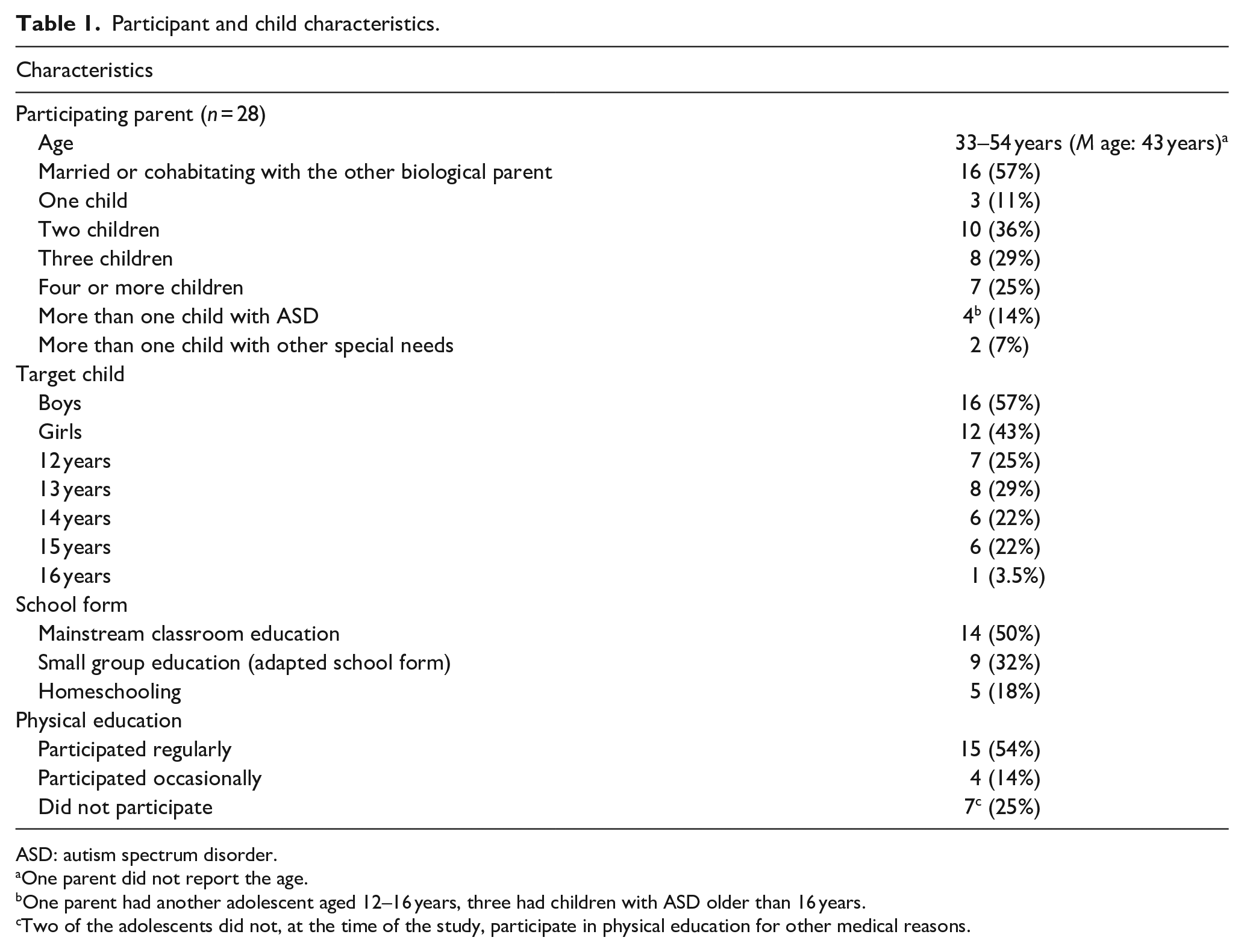
ASD: autism spectrum disorder.
One parent did not report the age.
One parent had another adolescent aged 12–16 years, three had children with ASD older than 16 years.
Two of the adolescents did not, at the time of the study, participate in physical education for other medical reasons.
The families had varying physical activity habits and preferences. Some parents described their families being physically active on a regular basis, up to several times per week, whereas others described a more sedentary lifestyle. Some families never participated in any physical activities. The physical activity habits within a family could also vary between the family members, depending on varying interests, available activity options in their local area and in the different seasons. However, for some adolescents with ASD, the parents reported that the mandatory physical education (PE) was the only occasion when the adolescent was physically active.
The interviews
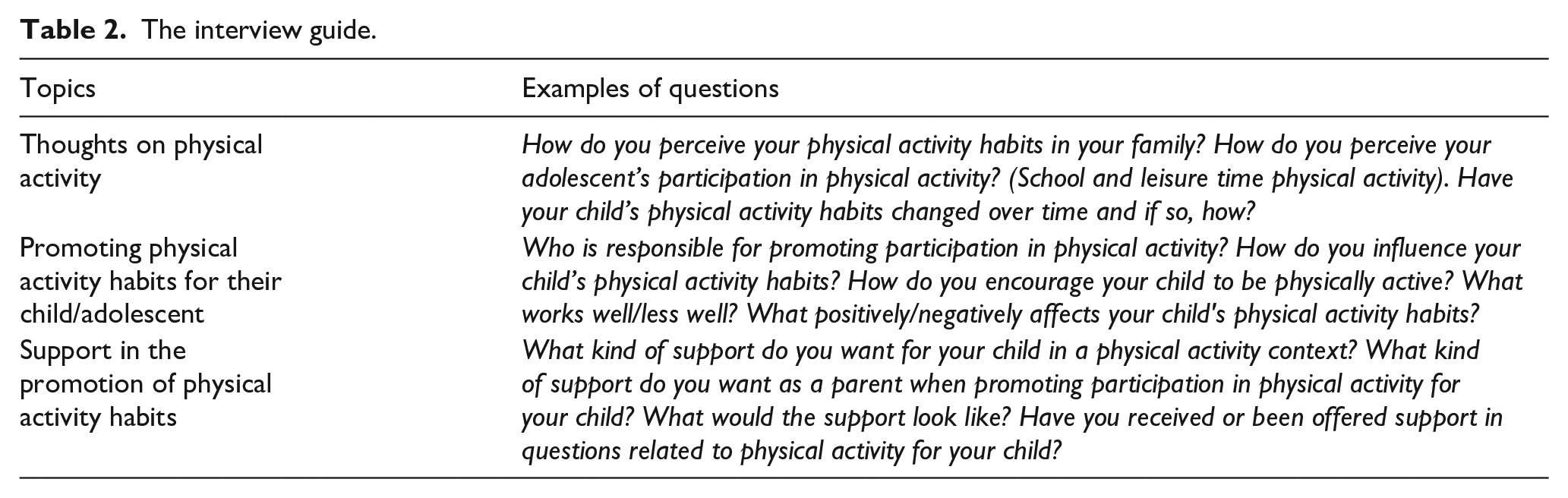
Twenty-seven semi-structured interviews were conducted in total. In one of the interviews, both parents of an adolescent participated, but otherwise the interviews were carried out individually. The interviews were based on a semi-structured interview guide, consisting of open-ended questions. The interview guide was developed to capture the parents’ perceptions regarding involvement in physical activity and the promotion of increased physical activity for adolescents with ASD. Topics regarding physical activity in general and the family’s physical activity habits, the adolescent’s participation in physical activity, and parental efforts when physical activity was enhanced were included (see Table 2). Prior to the study, two pilot interviews were performed in order to test and improve the construct validity of the interview guide. After the pilot interviews, the interview guide was revised and an open-ended question regarding responsibility for promoting healthy physical activity habits was added in order to better encompass the objectives of this study. The pilot interviews were not included in the study results.
The interview guide.
The first author, who is experienced in the data collection method, conducted all interviews. The interviews were carried out as a conversation between the parent and the interviewer, allowing follow-up questions to be posed in order to obtain rich descriptions. Before the interviews started, the participants were reminded that their participation was voluntary, that it was possible to withdraw at any time without having to explain why, and that confidentiality was guaranteed.
In this study, a broad definition of physical activity was used and defined as all body movements produced by skeletal muscles that increase energy consumption (Caspersen et al., 1985). In the beginning of each interview, the terminology and concepts that are commonly used in physical activity in general and in different physical activity contexts were discussed and defined together. It was clarified that the meaning of the concept physical activity included all kinds of physical activity, both organized activities such as PE and team sports but also solitary activities. The interviews took place according to the participants’ preferences: at the family’s home, at the parent’s place of work, or at the local habilitation center. The length of the interviews varied between 28 and 58 min. All interviews were digitally recorded and afterward transcribed verbatim by the first author.
Data analysis
The data were analyzed using qualitative content analysis, with an inductive category development approach (Elo & Kyngas, 2008). Each interview in its entirety was chosen as a unit of analysis. The latent content was analyzed in order to find the underlying meaning of the text. The transcripts were read several times to provide an overall picture of the content prior to the analysis. Meaning units pertaining to the aim of this study were identified and condensed and thereafter assigned codes. The codes were compared and grouped based on the content, such that similarities and differences led to the development of subcategories and further to generic categories and major categories through abstraction.
The following measures were taken to achieve trustworthiness (Lincoln & Guba, 1985). Verification and credibility were obtained by peer debriefing among the authors throughout the analysis process. The credibility of the analysis was further ensured by first having one of the most comprehensive interview transcripts analyzed by each author independently, whereupon they together compared and consolidated the codes, after which a coding process was agreed upon. Thereafter, the first author completed the analysis of the remaining interviews in close discussion with the other authors. The iterative process during the analysis enabled questioning of data from the researchers’ different perspectives and competencies within autism, promotion of physical activity, physiotherapy, and education. Quotations from the parents will be presented in the “Results” section to illustrate the content of the inductive analysis and to enhance the confirmability of the results (Patton, 2002) as well as to achieve credibility (Graneheim & Lundman, 2004). In the representative quotations by the parents, filler words that are common in speech have been replaced with ellipses (. . .). The Nvivo 11 software program (QSR International, 2015) was used during the analysis.
Results
Based on 776 statements that corresponded to the aim of this study, the inductive analysis resulted in three main categories: (a) difficulty handling the transition into adolescence, (b) identifying obstacles to adolescents’ participation in physical activity, and (c) the parental burden of promoting physical activity participation (Table 3). Descriptions of the parental burden generated the most statements (387) at the main category level.
The main categories, generic categories, and subcategories from the inductive analysis.
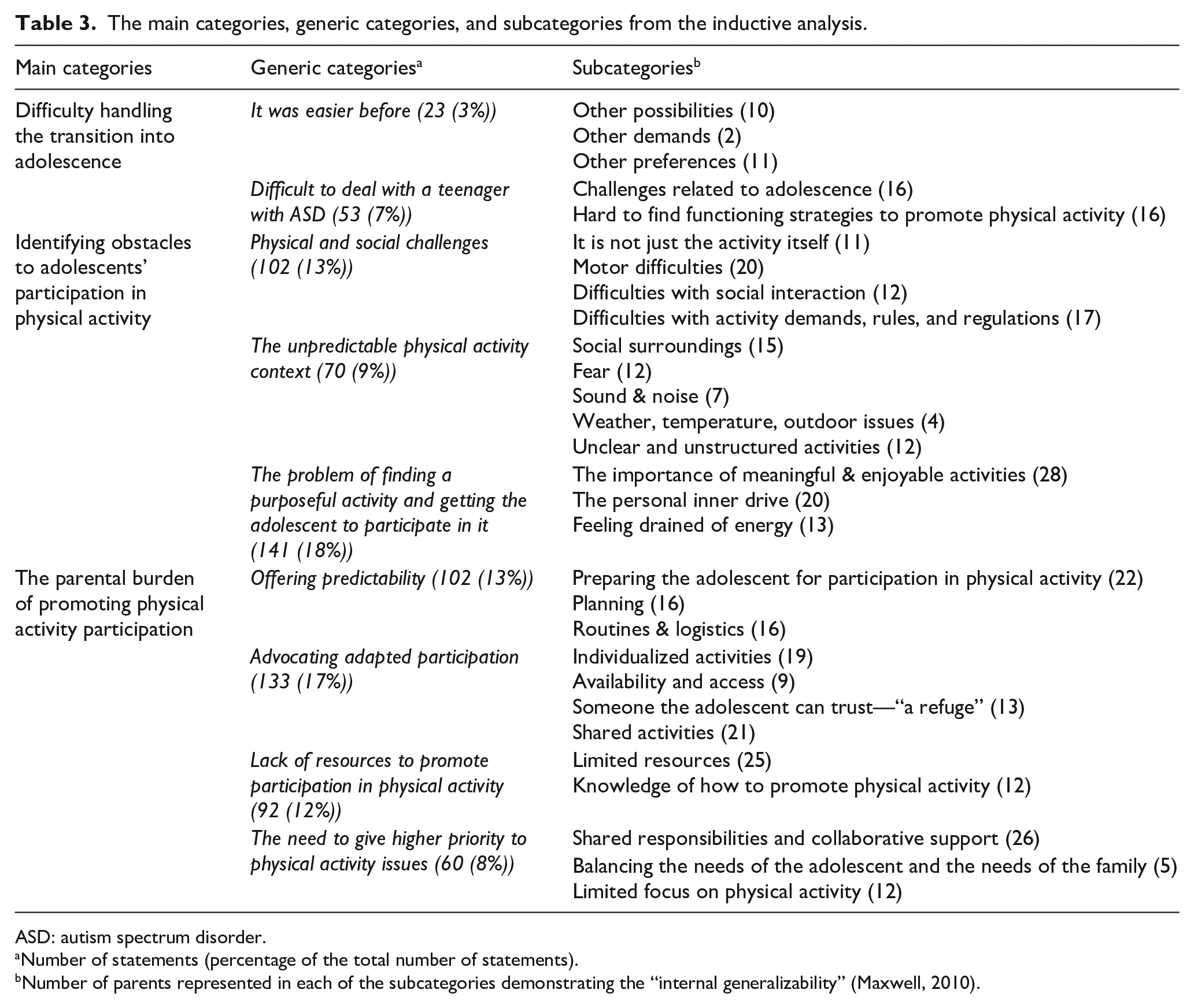
ASD: autism spectrum disorder.
Number of statements (percentage of the total number of statements).
Number of parents represented in each of the subcategories demonstrating the “internal generalizability” (Maxwell, 2010).
Difficulty handling the transition into adolescence
Parents reflected on changes in their adolescents’ physical activity habits, as well as on successful or less successful strategies to promote their children’s participation in physical activity as they grew into adolescence. The transition into adolescence brought insights regarding other kinds of challenges and priorities among the adolescents.
“It was easier before.”
As the children grew into adolescence, the physical activity options and demands changed, as did the adolescents’ activity preferences. The parents reported that, when their children were younger, their physical activity was more spontaneous. On the contrary, some parents observed that their child at an early age needed more structured physical activities and therefore they took the child to various organized activities. Although finding an activity was not always easy, there were more activities available for younger children than for adolescents. For instance, several of the adolescents participated in team sports when they were younger, but with increasing age, the demands for athletic competence also increased and, as a consequence, the opportunities for organized physical activity decreased and so did their willingness to participate.
In addition, changes in interests led to less physical activity participation, which one mother described as follows: it was easier when she was younger . . . but now it is a struggle even to get her outside at all . . . I don’t know if it has something to do with her age . . . and now she has discovered this thing about computers. (Mother, 2)
Thus, changed interests, especially for games on computers and smartphones, meant longer sedentary periods and consequently less physical activity. On the contrary, these games provided a valuable opportunity for social interaction, and the parents recognized their adolescents’ changing needs and behaviors; they were aware that this required them to adapt their promotion of healthy physical activity habits: . . . before he got so into computer games, he was outdoors much more . . . he went out on his bike more . . . but on the other hand he now has closer contacts with his classmates [through computer games] and that is of course also important . . . you have to live and compromise. (Father, 5)
Difficult to deal with a teenager with ASD
Promoting healthy habits in adolescents in general can be difficult but dealing with an adolescent with ASD may be an even greater challenge according to the parents. The parents were aware that, during adolescence, young people are expected to become more independent: “Somehow the children themselves are responsible, I suppose, once they start reaching that age . . . and they are certainly aware of the necessity to exercise, it’s just that some of them find it so hard” (mother, 19). Thus, although they expected changes in interests and more sedentary activities as the child grew older, it was harder to handle their adolescent with ASD, as described by one of the mothers: “The combination ASD and teenager can in itself . . . so when you then add physical activities it is definitely not so easy . . .” (mother, 25). Irritation and quarrelling were much more common as parents tried to encourage their adolescents to be more physically active. Most of the parents described how they had tried various strategies, such as negotiation, nagging, praising, and rewarding, to promote their adolescent’s participation, with varying results. Finding a reasonable level of encouragement was difficult and could instead create more performance anxiety in the adolescent: “come on, come on—that’ll just have the opposite effect” (father, 27). A more successful strategy could be to gently guide the adolescent: I still have to stick to the light coaxing approach . . . that is to make her believe that it’s her own doing . . . although I know I sometimes have to sweep aside some obstacles first, which she might not even notice. (Mother, 12)
Identifying obstacles for adolescents’ participation in physical activity
Parents identified several challenges that adolescents with ASD face when they participate in physical activity. The challenges are multifaceted and related to physical and social challenges associated with ASD, and to organizational and environmental challenges related to the availability of activities that are meaningful to the adolescents.
Physical and social challenges
Participation in physical activity usually requires having the appropriate physical abilities, understanding the rules of the game or activity, and managing the social interaction in different contexts, which can be challenging for adolescents with ASD. According to the parents, the challenges in participating in physical activity were often due to difficulties related to the ASD per se. They frequently mentioned the adolescent’s motor difficulties and uncertainty regarding physical skills, resulting in low athletic competence, but difficulties with social interaction during physical activity were also highlighted: . . . Her autism affects her terribly much . . . that is, she has so many obstacles to tackle before she can actually join this or that activity . . . so it is a big process which is much harder for her to master than it is for anyone else . . . (Mother, 12)
The parents reported that their adolescents often chose not to participate in physical activities because they perceived the demands as too high. The parents considered school-based physical activities, such as PE, important, but the majority reported that PE participation was a challenge for their adolescent: “. . . but in school it is all so much about performance . . . and she can’t really cope with that, with having to perform” (mother, 12).
Many challenges described by the parents were related to team sports and their associated social interaction demands: [Team sports] did not work at all . . . I think it was a bit too mixed-up for her . . . many players on the field running to and fro . . . she didn’t grasp what she was supposed to do . . . no, that didn’t turn out well . . . (Mother, 12)
The physical activity itself could be within their capabilities but demands linked to the activity made it difficult. “There was too much interaction with others and that turned out to be hard” . . . “not because of the activity itself, it is rather everything around it that feels disturbing” (mother, 1). Team activities require an understanding of and ability to follow rules and regulations. Some of the parents observed that their adolescents needed not only to understand and follow rules themselves but also to control other participants’ compliance with rules, which could impair their participation: “He was also pretty irritated when there were some rules and someone didn’t follow them . . . even that sort of thing didn’t go well” (mother, 20).
The unpredictable physical activity context
Different kinds of challenging demands commonly occur simultaneously in a physical activity context, and the adolescents have to adapt to these demands when they participate. Demands such as varying weather conditions or unclear expectations, as well as demands related to social surroundings, could be difficult for these adolescents to manage. The demands can vary and are not solely linked to the physical activity itself. According to the parents, the circumstances around an activity include the social environment, for example, who else participates or is nearby. These unpredictable circumstances affected the adolescents’ willingness and ability to participate, and they could be a reason for withdrawing from the activity. The challenges became particularly evident if the adolescent had sensory processing difficulties or anxiety linked to social interaction, which were both frequently mentioned. The parents thus described a vulnerability in their adolescents that was linked not only to the physical activity itself but also to the different physical activity contexts. In particular, they mentioned physically exposed situations in dressing rooms before and after PE, but also activities during PE, which led to anxiety among the adolescents.
Equally, unclear and unstructured activities could contribute to increased anxiety and avoidance. With regard to the adolescents’ need for clear guidance, parents explained that knowing what was expected of the adolescent was often a prerequisite: “He has his task on the field and knows exactly what he is supposed to do and all that . . . he does though have certain problems with his team mates, but it’s OK” (mother, 10).
The problem of finding a purposeful activity and getting the adolescent to participate in it
Participating in activities requires a certain degree of inner drive and motivation, in which enjoyment and meaningfulness can be included. All of the parents reported that the adolescents had to find the physical activity meaningful and enjoyable in order to participate at all. They described how sometimes the adolescent’s evident enjoyment of the activity could overcome some perceived discomfort: There is a public bath just by the school so it is very convenient, and she likes that, you see, so she always tries to participate in that . . . and then she can even disregard a conflict . . . she finds it all that tempting . . . (Mother, 1)
Finding enjoyment and meaningfulness in an activity could even lead to accomplished participation in a specific sport at an advanced level due to the adolescent’s ability to focus and persist in practicing a skill. In this way, social difficulties were less evident: I sort of don’t have any proof of this, but I do think that once she has found something she likes, it can be . . . rewarding . . ., that she can enter her own bubble . . . and practice by herself without thinking of other people around . . . (Father, 7)
However, parents more often described how difficult it was for the adolescents to find a purposive activity and how difficult it was to initiate that or any physical activity at all. The parents had to act as initiators most of the time because the adolescent lacked the motivation: “He needs someone to drag him out, someone he feels safe to be with. He doesn’t take any initiative of his own” (mother, 24). Another reason for low levels of commitment in physical activities was that the adolescent was drained of energy. This was especially evident during weekdays, when activity demands and social interaction demands in school were exhausting, leaving the adolescent little energy for leisure time activities: It is a dilemma for us as parents, the fact that there is so terribly much that we as parents would like him to take part in—including physical activities that we are familiar with but don’t have the time to exercise, and he just hasn’t got enough energy, since he is so extremely exhausted after a day in school. (Mother, 26)
The parental burden of promoting physical activity participation
The parents’ concerns regarding the adolescent’s low levels of physical activity led to parents taking an advocacy role. This highlights the parental burden, which includes various efforts such as offering predictability and actively advocating the availability of adapted activities to increase the adolescents’ sense of control in order to increase their participation in physical activity. It also highlights the parents’ perceived lack of resources and their need for support from involved actors.
Offering predictability
Knowing what, where, why, with whom, how, and for how long are crucial questions that, for many of the adolescents, had to be resolved before they would consider participation. All of the parents’ narratives described a palpable need for the adolescents to be sufficiently prepared prior to participation in activities. Being familiar with the physical activity and knowing how to perform it were described as elementary requirements to ensure the adolescent’s participation. Efforts such as offering predictability through rigorous planning and routines were frequently described by the parents as essential, since unpredictability could lead to anxiety, uncertainty, and unwillingness to participate at all. Insufficient predictability could in some cases lead to challenging behaviors such as tantrums and aggression. Despite rigorous planning, it was still not guaranteed that the adolescents would even want to attend: I think that a big hindrance is when he doesn’t know how things are going to be, and then he says no before even getting there, I mean just to know what it’s going to be like, how it looks, which people will be there . . . how it is all planned, and his own position in relation to everything else . . . and then it is just “no,” then it is a dead stop. That is the way it is with everything . . . that he’s just got to know. (Mother, 21)
Creating routines and planning could also be a challenge, since some parents reported a need for flexibility whereas others described how difficult it was for them to change plans that had already been set. The commitment to routines also inhibited spontaneity, which was seen as limiting for the adolescent but also for the whole family. Another strategy to provide more structure was to offer the adolescent logistical help, which, according to the parents, was sometimes a prerequisite for attending the activity at all.
Advocating adapted participation
In the present study, the parents were asked about how they perceived their adolescent’s participation in any kind of physical activity, which included both voluntary recreational activities and mandatory PE activities. The parents often had an advocacy role, which included finding adaptable, accessible activities and sometimes even accompanying the adolescent. Being able to meet the adolescent’s wishes or requests regarding type of activity, and to provide with opportunities in line with these requests, was important to the parents. They further stated that offering an opportunity to the adolescent to be able to influence the level and manner of participation, such as how and to what extent to participate, may be an appropriate way of promoting participation in physical activity. However, several parents described how this need was not met, especially in mandatory PE. They considered it important that “everybody doesn’t have to do the same thing” (mother, 12) and that the adolescent should have an understanding teacher, because the degree of participation was influenced by the teacher’s responsiveness. Not being assured that participation in activities could be individually adapted meant continuously fighting for the adolescent’s right to participate in physical activities based on his or her individual needs. This led to an increased advocacy burden at different levels: but . . . it is hard, you know . . . are you supposed to phone around to all the leaders and ask: are you aware of the circumstances? How do you react if he refuses to take part in that or that? . . . is it OK or not? . . . how inflexible are your rules? Is everyone supposed to follow them to the letter? Well, are they aware of their needs? (Mother, 21)
According to the parents, the limited range of available and accessible physical activity programs, particularly in their neighborhood or local area, further reduced the possibility of choosing suitable physical activities. The availability of activities was often limited due to difficulties related to the symptoms of ASD: We try to keep her going and doing things she likes to do and can do . . . but when you don’t want to . . . it is definitely linked to the autism . . . when you have problems connecting to other people . . . that is where it so much reduces the selection of available contacts. (Mother, 16)
These limitations resulted in the adolescents being largely dependent on their parents’ logistical support, also mentioned previously as a way of offering predictability. In addition to providing transport, the parents’ involvement could also include explaining to activity leaders the needs of the adolescent in different activity contexts and giving information about how these needs and conditions for participation could be met. Therefore, the parents requested adapted physical activities that the adolescents could try out with knowledgeable leaders or coaches: I wish there were more organized physical activities . . . to help testing different sports, because it is not so easy with all this investigating thing . . . as a parent . . . to check whether this or that club can do anything at all . . . (Mother, 26)
Another important aspect that affected the adolescents’ ability and willingness to participate in physical activities was the need for someone the adolescent knew and trusted who would attend or engage in the activities. As well as knowing the adolescent, this person should also be familiar with how the adolescent may act or react in different situations. This trusted person could be an activity partner or a leader who offered clear guidance to the adolescent and provided them with a refuge from the demands and unpredictability of physical activities. Parents described how they sometimes even got involved as leaders or coaches in organized physical activities to facilitate their adolescent’s participation. However, the parents’ degree of commitment and involvement in physical activities varied greatly. Some actively participated in physical activities together with the adolescent and considered themselves role models, while others did not feel that they set a good example to their children when it came to physical activity.
Lack of resources to promote the participation in physical activity
The parents were all aware of the benefits of physical activity and considered it important for their children to be physically active, regardless of whether they were physically active themselves. They expressed the view that physical activity is important but a struggle and that trying to encourage their adolescent’s participation in physical activities was an overwhelming task. The parents often lacked the energy, time, or money to adequately engage in this issue: “. . . so as a parent I simply cannot cope . . . I don’t think . . . it is quite enough for us with all the rest in order to keep our everyday life going” (mother, 25).
As well as their limited personal and financial resources, they also indicated that a lack of knowledge was limiting the support they could offer their adolescents. They expressed a need for information and guidance on the best way to meet the adolescents’ needs when promoting their participation in physical activity. Lacking awareness of opportunities for physical activity was another issue. Sometimes they asked other parents in the same situation for advice, support, and hints because they found it burdensome to tackle this challenge on their own.
The need to give higher priority to physical activity issues
Almost all parents felt that they had a parental responsibility to promote good physical activity habits for their children but that the burden should not rest on them alone. They believed that responsibility should be shared with others. The role of the school in particular and the responsibility of society at large were raised: . . . all sports contexts that they [adolescents with ASD] visit frequently, I mean school also has a responsibility. Well, just on different levels, so to say . . . it is society’s responsibility to provide resources for the kids to get plenty of sports activities in school. (Mother, 8)
External initiatives, such as a contact person, could provide support in the promotion of physical activity, but it did not always work optimally because the adolescent’s specific conditions influenced their behavior. The parents expressed a wish for additional support and collaborative efforts in the promotion of physical activity in all its contexts, such as at school and in leisure time.
Having a child with ASD affected the whole family’s physical activity habits, leading to a need for adaptations and a greater parental and sibling involvement. Siblings of adolescents with ASD, who were often described by the parents as more physically active, were also described as attracting and motivating the adolescent with ASD into physical activity even if they themselves had different needs. Competing needs, such as the adolescent’s other treatments or therapies, as well as the obligation to meet the needs of other family members, also restricted the parents’ ability to offer support.
Despite their awareness of the importance of physical activity, most parents said that they did not prioritize it. “We have never brought it up [the question of physical activity] since there have been other things that have been more urgent” (mother, 27). In families that engaged in regular physical activity, it was a result of conscious efforts: We have struggled along quite well over the years . . . just as we struggle with our daughter, who has had some additional difficulties . . . like in her motor function . . . so it is just that the threshold to go outside . . . it is just not as easy for her as it is for others . . . (Mother, 8)
But, in general, the parents gave the promotion of physical activity a low priority.
The parents also perceived that the issue of physical activity support had rarely been prioritized within the educational system or in the health care service. In the few mentioned cases where physical activity issues had been raised and low physical activity levels had been pointed out, the responsibility for promoting good habits had been placed on the parents: “It was only that the nurse found it alarming that he didn’t take part in any [physical activity] . . . so the responsibility fell on me to fix it” (mother, 6). Which issues were given priority and which needs were highlighted could be perceived as unjust: “I suppose that those with more . . . what’s it called . . . physical disorders, that they get more help with the motor issues . . . but I actually think they have forgotten the autistic children . . .” (mother, 20).
Discussion
The results of this study revealed the parents’ concerns and highlighted the parental burden, showing their ongoing efforts to increase the adolescents’ sense of control when participating in physical activities. There was a pre-existing awareness among the parents that their adolescents needed a variety of skills for proficient participation in physical activity but also about what challenges their adolescents might face. The parents recognized to a large extent the individual conditions, needs, and wishes that their adolescents expressed and how that influenced the adolescent’s participation. Furthermore, the results particularly draw attention to the perceived lack of collaborative support from the relevant public services and how difficult parents found it to cope on their own.
The parents generally wanted their adolescents to participate more in physical activity, which is in line with research findings focusing on patterns of participation in younger children with ASD (Simpson et al., 2018); this may be due to the high levels of sedentary behavior and low levels of physical activity in this population, lower than their typically developing peers (Corvey et al., 2016; Healy et al., 2017; Jones et al., 2017; McCoy et al., 2016). However, these parents’ recognition of their adolescents’ conditional participation in physical activities and their desire for the adolescent to participate more often entailed increasing their own involvement. The approaches and strategies they described in this study reflected previous research findings concerning how parents of children with ASD promote participation in physical activity (Obrusnikova & Miccinello, 2012) and how they manage problem behavior in these children (O’Nions et al., 2018). A strategy that was described was to accommodate the adolescent by adapting activities and demands. Predictability was created through rigorous planning and routines, and by carefully choosing the most suitable contexts where physical activity was available. These descriptions confirm Blagrave and Colombo-Dougovitos’ (2019) findings where “over-planning” and safety considerations were addressed as important when participating in community physical activity. The parents recognized the need for predictability, but the adolescents’ inflexibility regarding routines placed high demands on them. The parents commented that all these preparations could be both time-consuming and a financial burden, without always resulting in increased participation in physical activity. This is in line with previous research showing that the support given to adolescents with ASD may not be sufficiently effective to overcome the perceived barriers to participation in physical activity (Pan & Frey, 2005).
Parents who had several children observed that they could see that their adolescent with ASD needed more and extended support from them compared to the siblings without ASD when it came to physical activity participation. The adolescents with ASD could demonstrate an ambivalent attitude to extended parental support during adolescence, and thus the parental role was considered ambiguous, involving both being there and remaining discreetly out of sight. The parents’ efforts to encourage participation can be described as greater and more complex for adolescents with ASD compared to parenting demands with other populations. Gregor et al. (2018) refer to this as hidden labor, which includes taking on an advocacy role in order to enhance the adolescent’s participation in activities.
Even though the parents in the current study clearly identified the mission to promote healthy physical activity habits as a parental responsibility, some found it burdensome. This is in line with research showing that parents experience high levels of stress in connection with their efforts to meet the adolescent’s needs and demands associated with ASD, and to coordinate care and interventions with public services (Hoffman et al., 2009; Karst & Van Hecke, 2012). Parents of adolescents with ASD may thus find increasing the adolescent’s level of physical activity to be an overwhelming task. Fortunately, the parents in the current study also saw promotion of healthy physical activity habits as a shared responsibility between different actors, such as the parents, the school, community, and health care services, which has also been found in previous research (Licence, 2004). Nonetheless, a lack of available opportunities for physical activity and a lack of knowledge among activity leaders regarding ASD were reported to restrict the participation of these adolescents. This is confirmed by previous research showing that adolescents on the autism spectrum face more barriers to participation in physical activity compared to other adolescents, and their families report more challenges when attempting to engage them in physical activity (Blagrave & Colombo-Dougovito, 2019; Must et al., 2015). PE, for example, is one of the primary contexts in which healthy physical activity habits are developed but, according to the parents’ interview responses in this study, only about half of the adolescents participated in PE, leaving a greater burden of physical activity promotion on parents. The perceived greater burden on parents resulting from a lack of understanding from the community, different actors’ lack of knowledge and training about ASD, and a lack of adaptations to the individual’s needs have also been reported in previous research (Ayvazoglu et al. 2015; Blagrave & Colombo-Dougovito, 2019; Gregor et al., 2018). The need for strategies to support participation in physical activity is also highlighted in a recent systematic review (Ruggeri et al., 2020).
The results from the parental interviews clearly show that the promotion of healthy physical activity habits in adolescents with ASD needs to be prioritized, and that the support that is offered needs to be tailored to the adolescents’ and the families’ needs. The parents stressed the lack of appropriate support, which was not clearly stated by the adolescents with ASD themselves when interviewed in an earlier study (Arnell et al., 2018). This need for more family-centered support is in line with other studies that reported parents’ need for more support, direction, and guidance from experts (Galpin et al., 2018; Gregor et al., 2018). On the contrary, the parents’ willingness to take control of their children’s physical activity, which brought both possibilities and problems, is also reflected in another study (Healy et al., 2018). In our study, it became evident that the parents’ expressed need for collaborative support was important due to the already high parental burden. Individually tailored collaborative efforts may be beneficial to increase participation in physical activity, especially since multicomponent interventions that include school, family, and community involvement have proven to have the potential to make a difference in typically developing adolescents’ physical activity habits (Van Sluijs et al., 2007).
Methodological considerations and limitations
While this study supports previous research and provides additional insights regarding physical activity participation in adolescents with ASD and the parents’ role in its promotion, methodological considerations and limitations have to be taken into account.
A qualitative approach was chosen in order to provide detailed descriptions of the parents’ situation and to better understand the different determinants that parents perceived as affecting their adolescents’ level of participation in physical activity. By using semi-structured interviews, in-depth information was obtained, which could potentially guide the development of more effective strategies to enhance physical activity that include the adolescents and their families. In order to minimize inconsistency during data collection and to strengthen the dependability, each decision made during every step of the research process was continuously logged. Other measures taken to ensure dependability were the consistent use of the same interview guide as well as an open dialogue with the co-researchers. In order to enhance transferability, descriptions of the setting, selection, and characteristics of the participating parents were included. Given the consensus among parents, it is reasonable to believe that the findings are transferable to other parents in similar situations and contexts; however, the convenience sampling procedure used in this study limits the generalizability of the findings to the population of parents with autistic children.
Even though this study had a relatively large number of parents (28), including parents with daughters and those with sons, and parents with several children and those with only one child, a limitation of this study was that only three of the parents were fathers. Thus, the results may not reflect the fathers’ experiences to the same extent as they reflect the mothers’ experiences. A further limitation is the lack of information about whether or to what extent other co-occurring impairments in addition to ASD may affect how parents perceive physical activity promotion. Only intellectual disabilities were excluded in this study.
Clinical implications and future research
This study highlights the need to recognize parental efforts in encouraging adolescents with ASD to participate in physical activity. It also reveals a need for increased collaborative support, which is in line with previous research that argues for such an approach (Gregor et al., 2018). In order to promote and support healthy physical activity habits successfully, interventions thus need to be collaborative and to include different socio-ecological levels, such as support at intrapersonal, interpersonal, organizational, and community levels (McLeroy et al., 1988).
Parental decision-making regarding what interventions to prioritize for their child with ASD is influenced by the available resources and the professionals they meet (Shepherd et al., 2018). Thus, an increased awareness among professionals of the kind of support that is needed in physical activity promotion for adolescents with ASD would benefit the development of healthy physical activity habits in this group. Support and collaborative work should not solely be directed toward the adolescent but also toward parental efforts, and it should include different actors at different socio-ecological levels. Future research should also incorporate other actors’ perspectives, outside the family context. The focus should be on how different actors within a socio-ecological system manage to recognize the adolescents’ conditional participation in physical activity and the families’ need for support when promoting physical activity participation.
Conclusion
This study illustrates the need to recognize the individual conditions for participation in physical activity that adolescents on the autism spectrum express. Their parents recognize these conditions to a great extent and take various steps to provide their adolescents with an increased sense of control over their participation. But, in order to enhance physical activity participation among adolescents with ASD, increased attention should be given to the issues raised in this study, and support should be provided to relieve the burden on the parents.
Footnotes
Acknowledgements
We wish to thank all the parents who participated and shared their experiences. We would also like to thank Ulla Roseen who professionally translated the parents’ “voices” in all quotations.
Author contributions
S.A., K.J., and L.-O.L. collectively conceived the study, participated in its design, assisted with analysis and interpretation of data, drafted the manuscript, and revised it for important intellectual content. All authors read and approved the final manuscript.
Declaration of conflicting interests
The author(s) declared no potential conflicts of interest with respect to the research, authorship, and/or publication of this article.
Funding
The author(s) disclosed receipt of the following financial support for the research, authorship, and/or publication of this article: This research was financially supported by Region Örebro County, Sweden.
