



Abstract
This study investigates an eTandem virtual exchange program designed for Korean and English language learners to enhance their target language proficiency and intercultural understanding. The program was implemented through synchronous Zoom sessions between 31 Korean learners at a U.S. state university (U-A) and 32 learners of English as a foreign language (EFL) at a Korean science and engineering university (U-K). Program effectiveness and participant satisfaction were assessed through student questionnaires and professor interviews. Findings indicate that 89.3% of U-A participants felt the program was beneficial for improving their Korean language skills, while 77.3% of U-K participants reported similar benefits regarding their English proficiency. Thematic analysis of discussion preferences revealed that participants tended to gravitate toward less complex topics – such as college life, food, and dating culture – while showing lower engagement with politico-social subjects, which were perceived as more challenging. Despite logistical challenges, such as time zone differences, participants highly valued the interpersonal connections formed with their peer language partners. This research offers valuable insights for optimizing eTandem language exchange programs, emphasizing the importance of incorporating accessible and engaging content to support both linguistic development and intercultural competence.
I Introduction
Limited access to meaningful interaction and authentic communication has presented hurdles to language learners, especially those studying in an environment where the target language is not natively spoken. To overcome this barrier, language learners are often encouraged to participate in study-abroad programs to immerse themselves in the target language, enhance language skills, and deepen cultural understanding. However, the high cost of study-abroad programs often deters language learners from fully benefiting from these experiences (Houser & Bornais, 2023; Salisbury et al., 2009).
With recent advancements in technology, virtual exchange (VE) has emerged as an effective instructional approach offering opportunities to foster reciprocal virtual language exchange. Within language education, VE has followed one of two primary models (O’Dowd, 2017). The first model, known as ‘eTandem’, emphasizes learner autonomy and the development of independent language learning beyond the classroom setting (O’Rourke, 2007). The second model, commonly referred to as ‘Intercultural Telecollaboration’ or ‘Online Intercultural Exchange’ (O’Dowd, 2012), focuses on intercultural communication and sociocultural competence in language learning. As the current study focuses on virtual language exchange, the term ‘eTandem’ will be employed consistently to ensure conceptual clarity.
II Literature review
1 Tandem language learning
The organized form of Tandem first emerged in Europe in 1968 as part of a French–German youth exchange program. Initially, Tandem involved in-person interactions where partners met in the same physical space, commonly within exchange programs between students from two different European countries. In 1979, Jürgen Wolff introduced Spanish–German Tandem partnerships in Madrid, which laid the foundation for the TANDEM® Network established in 1983 (Cziko, 2004). Another significant milestone occurred in 1992 when the internet was first utilized for Tandem, beginning with an English–German online discussion group created by Helmut Brammerts (Cziko, 2004).
Tandem language learning is based on three main principles: use of one language at a time, reciprocity, and autonomy (Brammerts, 2003). The first Tandem principle – that languages must not be mixed – means that each language should be spoken separately or sequentially, allowing both learners to have their respective turns using their language. That is, by separating languages, learners can focus solely on the language they are learning, which optimizes comprehensible input and output. The second principle – reciprocity – ensures that both language learners are on equal terms by using the same amount of time, taking turns as a learner and as a language expert. Since they act as both learners and experts, they may not perceive error corrections as face threatening as they might in other situations (Kötter, 2003). The third principle – autonomy – means that Tandem language learners are free to decide what, when, where, how, and how long they study the language. However, autonomy is interpreted differently depending on where Tandem takes place: within an institution or independently between individuals (Brammerts, 2003). Nevertheless, even when tandem language learners are enrolled in a course that follows a specific curriculum, the primary goal should be to foster their ability for autonomous language learning by allowing them to plan, direct, and assess their own learning as much as possible (Karjalainen et al., 2017).
Tandem language learning has several key characteristics. It is highly versatile, taking place in various formats, with or without a teacher, and in settings ranging from classrooms to immersion programs. For example, Classroom Tandem is defined as language instruction within lessons that also incorporates explicit grammar teaching. In this setting, the native speaker in the tandem pair acts as both a model and an expert in the target language, while the teacher plays a crucial role as an expert in both language and content (Karjalainen et al., 2017). It is argued that Tandem ‘shares aspects of both natural settings and formal instruction, in addition to combining the best aspects of both’ (Cziko, 2004, p. 2). It is also suggested that Tandem offers opportunities for both sociability and individualization in language learning (Vassallo & Telles, 2006). Tandem language learning is learner-centered, meaning that the Tandem curriculum is tailored to individual needs, while it emphasizes interaction and collaboration between language learners, making socialization central to the language learning experience (Vassallo & Telles, 2006). Another characteristic of Tandem is that it encourages the enjoyment of intercultural interaction. Tandem creates an immediate and personal context that facilitates intercultural and interpersonal interactions. Tandem conversations fall on a continuum between genuine, naturally occurring communication and communication focused on learning (Gilmore, 2007). They include strategies from natural communication, such as negotiating meaning (NoM), but also involve language learning behaviors where the conversation explicitly shifts towards language instruction (O’Rourke, 2005).
2 eTandem language learning
With the emergence of the internet, Tandem has evolved into eTandem or electronic Tandem, while maintaining most of the principles and characteristics of the original Tandem model. Initially, eTandem was restricted to written mediums, such as email and chat, but with the availability of audio-visual platforms like Skype and Zoom, eTandem has become more naturally interactive. While the in-person Tandem is limited to individuals who are in the same geographical area, eTandem overcomes geographical limitations by enabling language learners to connect with speakers of different languages and cultures in distant areas (O’Rourke, 2007). Through the internet, people can engage in daily communication with speakers of various languages from around the world. Moreover, similar to formal classroom settings, eTandem learning also emphasizes attention to form and provides corrective feedback (Cziko, 2004). Language learners can enhance their oral and written skills in the target language through synchronous mediums such as video conferencing platforms and asynchronous mediums such as email (Wang & Vásquez, 2012). This strengthens their ability to self-correct and learn from feedback from their partners. eTandem can enhance learners’ native-like vocabulary and grammatical structures and cultural awareness and provide a dynamic, interactive learning environment (O’Dowd, 2003). Furthermore, language learners can develop digital literacy skills through eTandem as it takes place online (Turula et al., 2019). Hence, researchers have promoted eTandem as an optimal setting for foreign language learning (Rienties et al., 2022).
However, several issues have been identified with eTandem: the difficulty of securing institutional recognition of eTandem as a valid credit-bearing activity and its assessment (Rienties et al., 2022), as well as the limited research on its use in English language teaching and its effectiveness in developing EFL learners’ speaking skills (Rahimi & Fathi, 2024). As eTandem often lacks a structured curriculum or designated learning materials, tracking learners’ progress can be challenging. Conventional assessment methods are often considered ineffective for measuring the outcomes of eTandem learning (Bower & Kawaguchi, 2011). Moreover, technical limitations may lower the efficacy of eTandem learning. When students are faced with technological problems such as unstable internet connection, software errors, or computer hardware malfunctions, it can interfere with their language learning (Cziko, 2004). Also, compared to text-based eTandem, language learners often find computer-mediated synchronous oral communication more intimidating (Van der Zwaard & Bannink, 2014). Moreover, with the principle of autonomy, the lack of guidance from a teacher or tutor can negatively impact participants’ learning (Cavalari & Aranha, 2019). The information provided by Tandem partners may be unreliable depending on their education or cultural background, and they may not be compatible as partners, leading to discomfort during their interactions (Appel & Mullen, 2000). As learning partners and instructors are not physically present, eTandem participants may find it difficult to stay engaged and committed (McCarthy & Armstrong, 2021; Serrato & Rodriguez, 2020). Limited teacher guidance and pedagogical structure can undermine the effectiveness of eTandem (Cziko, 2004); therefore, carefully designed activities and incorporation of online interactions within the curriculum are essential for successful eTandem learning. (O’Dowd, 2012). Living in different time zones may lead to scheduling conflicts, and to prevent these issues, eTandem partners need to be flexible and committed (Kobayashi, 2021).
3 Tandem or eTandem language learning between Korean and English speakers
Several studies have examined Tandem or eTandem language learning between Korean and English speakers. The majority of these investigations focused on eTandem experiences through written mediums: Choi (2020) investigated the effects of incorporating eTandem language learning via written mediums, Facebook and Kakao Talk, into a Beginners Korean course. The participants, paired as Korean–English speakers, included multinational students studying Korean at a U.K. university, along with Korean speakers recruited from universities and high schools in Korea. The study demonstrated that eTandem benefited the Korean learners by fulfilling their need for authentic linguistic and cultural experiences through interaction with native Korean speakers. The participants improved their Korean language skills and deepened their intercultural awareness. Most importantly, eTandem language learning enhanced learner agency and autonomy while also fostering collaborative learning skills. Yang (2019) analysed the interaction patterns and topic discussed during online writing exchanges by Korean and American college students, identifying four frequently discussed subjects: culture, language, career, and personal experiences. The results show that their discussions reflected varying preferences, influenced by the social and cultural contexts. Jee and Byun (2016) also focused on eTandem language learning through written mediums, specifically Kakao Talk and Facebook, between Korean and English speakers: the English speakers were attending a large public university in Australia, while the Korean speakers were attending a university in the southwestern part of Korea. The participants demonstrated limited knowledge of their target culture in a word-association task on Facebook. However, their online interactions revealed aspects of intercultural communicative competence (ICC), such as curiosity and reflection on their own culture. Most students reported that they enjoyed the online chats, but they pointed out challenges, including the limited number of online interactions and the absence of in-class discussions. Chung et al. (2005) conducted a longitudinal study on the collaborative learning experiences of adolescent English and Korean speakers in Canada as they engaged in computer-mediated Korean–English chat rooms. Both tandem partners were part of the same community and attended the same class in a program. This close connection allowed them to form strong partnerships. Common chat practices and existing computer resources were adapted for purposeful activities within the instructional program. As time went on, through teacher-facilitated online collaborative activities, members of the two groups formed relationships with each other and gradually began to depend more on each other’s expertise to improve their understanding of the other language and their partners’ cultural practices.
On the other hand, studies on eTandem using audio-visual platforms are scarce: Lim and Lee (2015) investigated a one-on-one videoconferencing project where real-time online exchanges took place between an intermediate Korean class at a U.S. university and an English class at a university in South Korea. It was shown that the Korean language learners significantly enhanced their linguistic abilities, particularly in vocabulary and spoken fluency in Korean, and that both groups felt that the project had deepened their intercultural awareness by allowing them to view things from different perspectives.
In addition, Ahn (2011) explored how expert and novice identities were formed during language exchange conversations between Korean students learning English and American students learning Korean at a U.S. university. It was found that the construction of these identities in language exchange interactions was a collaborative process. Rather than being predetermined, the roles of language expert and novice were achieved as participants in the exchange either validated or rejected the identities that their partners presented during their interaction.
III The current study
Our literature review reveals a limited number of studies on eTandem language learning between Korean-speaking and English-speaking college students, and most of them focus on the effects of written mediums on language exchange experiences. The current study examines real-life communication using an audio-visual platform between Korean learners at an American university and English learners at a Korean university. The research questions are as follows:
Research question 1: How did eTandem participation shape students’ perceptions of language learning and its challenges?
Research question 2: What factors influenced students’ engagement and outcomes in the eTandem program?
IV Method
1 Participants
Undergraduate students and language professors from two universities – one in Korea and one in the United States – participated in the study. The Korean university will be referred to as University K (U-K), and the American university as University A (U-A).
U-K is a science and engineering university located in Daejeon, a major city in central South Korea often referred to as the country’s ‘Silicon Valley’ due to its strong emphasis on science, technology, and research. The university has a student population of approximately 10,000, most of whom are native Korean speakers. As the majority of courses are conducted in English, English language education is emphasized. U-K offers a structured, three-level EFL curriculum for its undergraduate students. U-A is one of the largest state universities in Pennsylvania, with an enrollment of approximately 47,000 students. The campus where the study was conducted offers a Bachelor of Arts in Korean – the first program of its kind in the state.
The U-K student participants were 32 native Korean speakers enrolled in Advanced English Listening as part of their EFL studies, and the U-A student participants were 31 learners of Korean enrolled in intermediate- or advanced-level Korean language courses.
The faculty participants included three professors who taught intermediate- or advanced-level Korean language courses at U-A and one professor who taught EFL courses at U-K. Two of the U-A professors participated in the joint eTandem program for two semesters, while one participated for only one semester. The U-K professor took part in the program during both semesters and had prior experience running an eTandem program with another state university in the U.S. All four were native Korean speakers. The three U-A professors had between 8 and 12 years of experience teaching Korean language, while the U-K professor had over 25 years of experience teaching EFL or ESL to college students.
2 Procedure
To enhance students’ second language proficiency and promote cross-cultural understanding through discussion, the professors at U-K and U-A agreed to introduce and implement an eTandem program as an out-of-class requirement. Both the program and the associated courses were conducted over two semesters spanning a two-year period.
For the eTandem virtual exchanges, students were randomly paired into one-on-one or one-on-two groups during the first year. In the second year, pairings were arranged more systematically, taking into account students’ weekly schedules and availability. The eTandem program comprised eight virtual exchange meetings over Zoom in the first year and six meetings in the second year. The reduction in the number of meetings was based on student feedback, as many found eight sessions challenging, primarily due to the time difference. Each session lasted 40 minutes, consisting of 20 minutes in English and 20 minutes in Korean. Longer or additional meetings were encouraged.
The student data were collected through a written questionnaire at the end of the semester. Students were required to respond to a Google Form survey, which was distributed via email following oral communication from course instructors and teaching assistants. The survey assessed participants’ language proficiency (Korean for American and international students at U-A and English for EFL learners at U-K), understanding of each other’s culture, satisfaction with the program structure, and partnership effectiveness. Most students completed the survey, which was available in two versions: one in Korean for native Korean speakers and one in English for the Korean-learning students. This distinction ensured clarity in understanding the questions and provided accurate responses. (The complete questionnaire survey items used in this study are available from the corresponding author upon request.)
The survey consisted of six sections, ranging from demographic questions to feedback on the virtual exchange’s benefits and challenges. Part 1 gathered basic information such as school year, gender, major/minor, target language experience, and study abroad experience. It also included self-assessment of language proficiency levels (speaking, writing, listening, and reading). Part 2 focused on language skills, asking whether the virtual discussions were beneficial for enhancing language skills (listening, reading, writing, speaking) over the semester. Part 3 addressed understanding of culture (Korea, United States, and globally), asking how helpful the virtual discussions were in deepening cultural understanding and how enjoyable/helpful/challenging the given topics were. Part 4 asked for feedback on handling partner’s speaking errors, the types of errors corrected, and the timing of corrections. Part 5 inquired about the partnership, including ratings of collaboration and interactions, the most challenging aspects of communication, (dis)satisfaction with the randomly assigned partner, and reasons for any (dis)satisfaction. Part 6 evaluated the program, including overall satisfaction with the virtual discussion program, aspects that students enjoyed the most, desired changes, the effectiveness of the Zoom format, and ideal meeting times. All surveys were anonymous and were kept only by the professors.
All study procedures adhered to institutional ethical standards at the participating universities. Participation was voluntary, had no effect on students’ grades, and involved no risk to participants. All students provided written informed consent prior to taking part in the eTandem activities and subsequent surveys.
We adopted a questionnaire survey, a self-reporting method, rather than relying on spoken data such as face-to-face interviews, as self-reports provide access to participants’ inner thoughts and attitudes that may not be evident in spoken data. Moreover, self-reports enable the collection of responses from a larger number of participants within a relatively short period, which is particularly useful in studies of short-term eTandem programs.
At U-K, 22 (68.8%) of the 32 students enrolled in the EFL course completed the end-of-semester questionnaire survey, whereas at U-A, 28 (90.3%) of the 31 American and international students enrolled in the Korean language courses completed the end-of-semester survey (Table 1).
Student participants.

Notes. U-K: EFL learners at a Korean science and engineering university; U-A: Korean language learners at a U.S. state university.
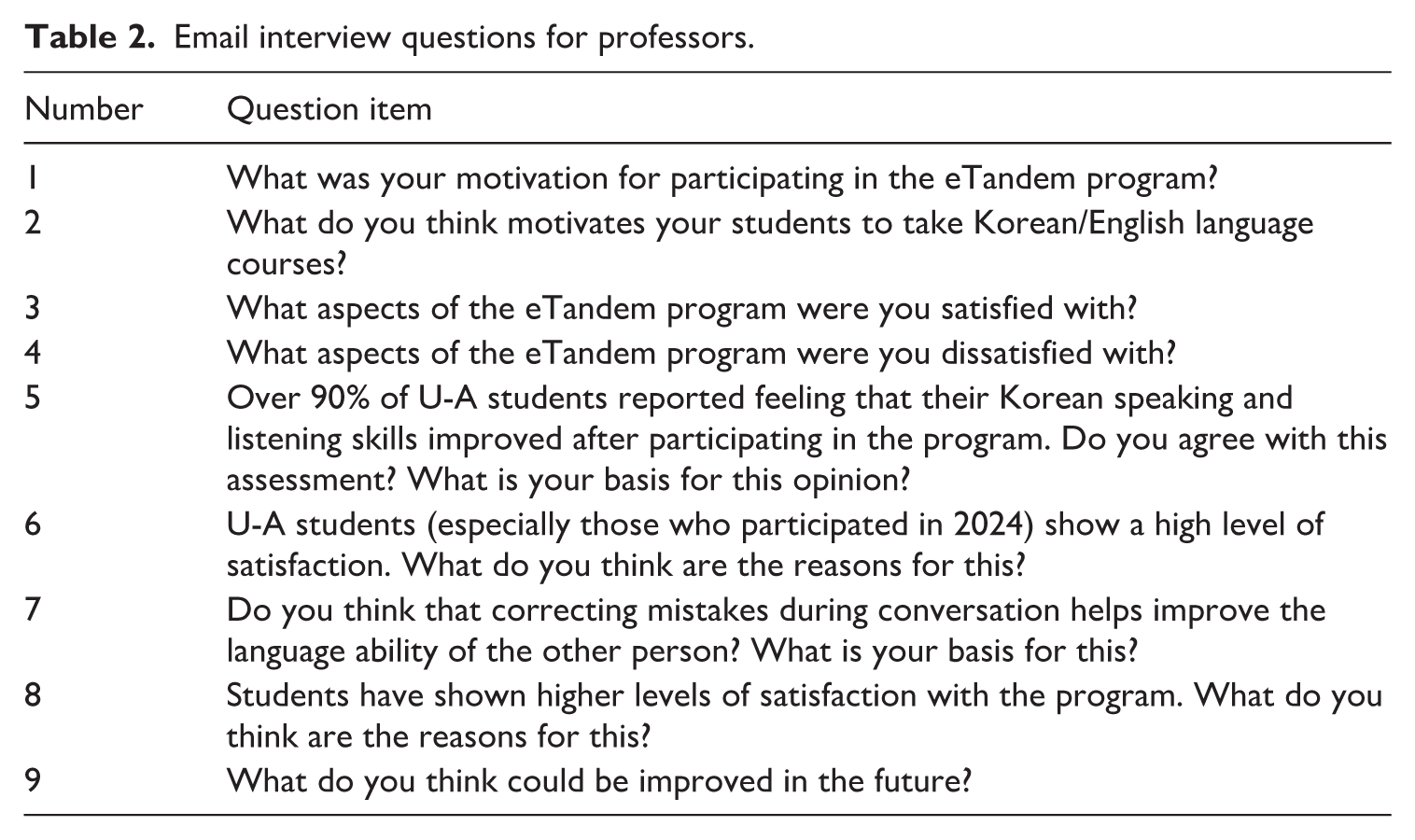
To examine the professors’ opinions on the eTandem program, the three professors at U-A and the professor from U-K were invited to participate in email interviews, and all four agreed to take part. The interview questions were designed to inquire about what motivated them and their students to participate in the program, interviewees’ levels of satisfaction or dissatisfaction with the program and their reasons for those levels, and suggestions for the program’s improvement (Table 2). To protect the anonymity of the participants, the interviewees were assigned labels using randomly selected letters between A and D.
Email interview questions for professors.
3 Analysis
Once the student questionnaire responses were collected via Google Forms at the end of the semester, two of the researchers conducted an initial descriptive analysis of the data, including Likert scale responses, means, standard deviations, frequency counts, and percentages. Their analysis results were verified by the other researchers.
For the analysis of faculty interview responses, textual analysis was conducted. After all interviews were completed, the responses from each participant were anonymized by assigning random identification numbers. One researcher performed an initial thematic content analysis using a coding approach, and analysis results were subsequently verified by the other researchers.
For the analysis of faculty email interview responses, a textual analysis was conducted. After all interviews were completed, the responses from each participant were anonymized by assigning random identification numbers. One researcher carried out the initial coding and thematic categorization, and the other three researchers independently reviewed the anonymized data and preliminary results. Through iterative discussion, the team compared interpretations, refined category boundaries, and confirmed coding consistency. This collaborative verification process ensured analytic transparency and strengthened the credibility of the findings.
V Results
Research question 1: How did eTandem participation shape students’ perceptions of language learning and its challenges?
a Students’ interest in language learning
A total of 32 students were enrolled in the U-K courses, while 31 students attended the U-A courses. The U-K course was required for students who did not meet certain standardized English test score requirements, whereas most of the U-A students (75.0%) enrolled in Korean language courses voluntarily, typically out of personal interest. The remaining 25.0% were Korean majors who, as is customary, had chosen the major themselves and took the course as a graduation requirement.
The majority of students take Korean classes because they have a strong interest in Korean culture through K-pop, K-drama, e-sports, K-food, K-literature, etc. This passion often encourages students to pursue a Korean Minor or Major. Additionally, some students take it to fulfill their foreign language requirement, which also motivates them to learn the Korean language. (Professor A)
As a result, U-A students were generally more motivated to participate in the program than U-K students, who tended to view the eTandem activity as an obligation or a grade-related task. This imbalance seemed to cause frustration among U-A students, who felt that their partners lacked enthusiasm and were less engaged.
Most of the U-K students were undeclared majors, as is typical for first-year students at the university, while the remaining students majored in science and engineering, reflecting the university’s academic focus (Table 3).
Fields of study of the EFL learners at a Korean science and engineering university (U-K) (n with percentages in parentheses).
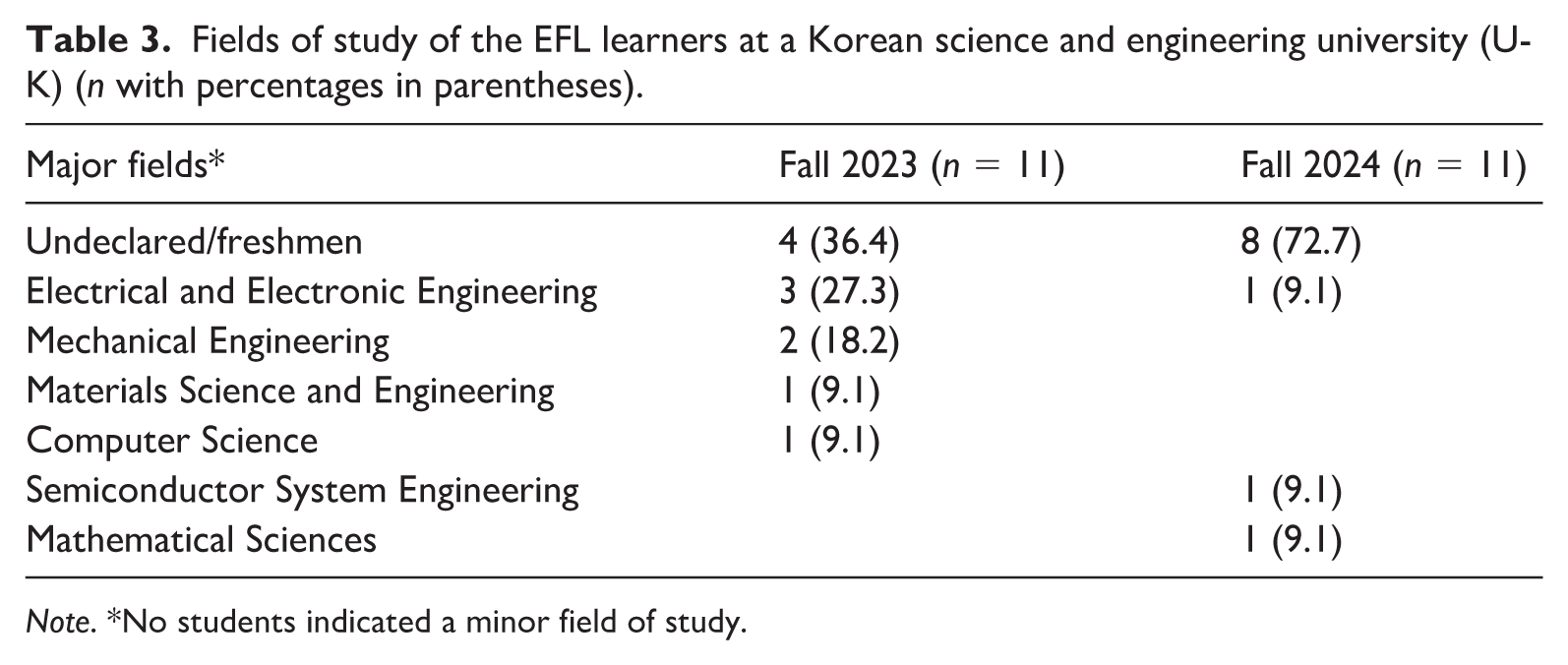
Note. *No students indicated a minor field of study.
At U-A, 42.3% of the survey participants were either majoring or minoring in Korean, while 61.8% came from various other fields. This suggests that interest in learning Korean at U-A extends beyond students formally studying it as a major or minor, reflecting the broader appeal and relevance of Korean language learning (Table 4).
Fields of study of the Korean language learners at a U.S. state university (U-A) (n with percentages in parentheses).

Note. *Including advertising, international relations and psychology.
b Self-evaluation of language ability
Korean students in general receive English language education during elementary and secondary school. By the time they enter college, they typically have received nine years of formal English language instruction: three years in elementary school, beginning in third grade, and six years in secondary school (Kang, 2013). In addition, many Korean children attend private English academies before starting primary school and continue while they are in school. Therefore, it is likely that many of the U-K participants have received English language education for more than a decade. In comparison, the survey results indicated that U-A students had studied Korean for an average of 3.3 years, which is significantly shorter than the Korean cohort’s experience with English.
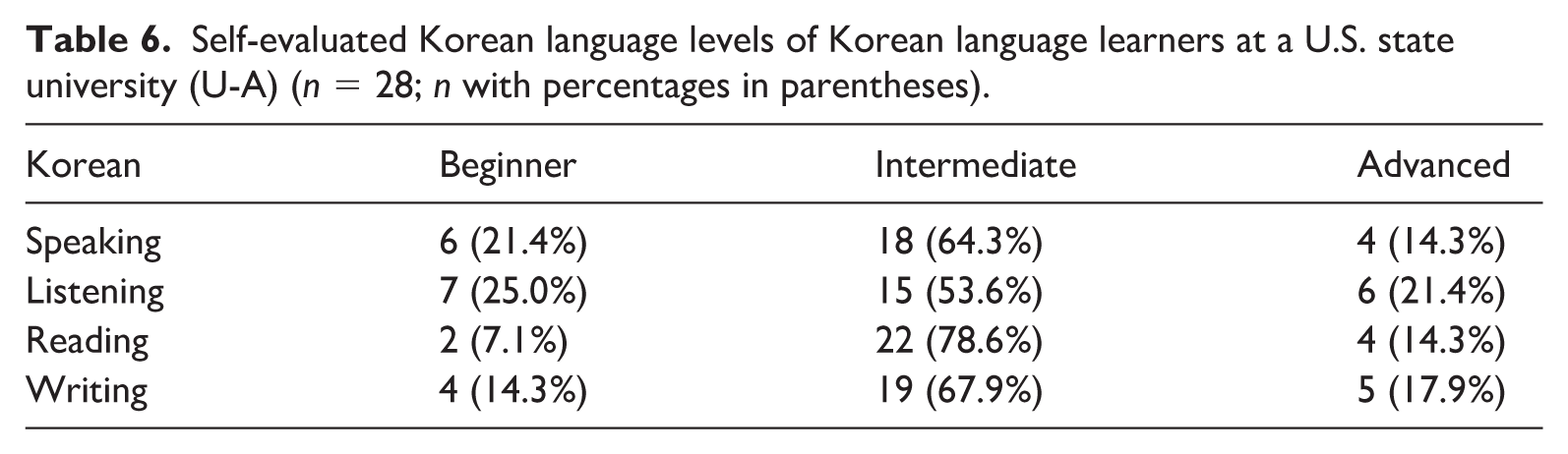
Interestingly, students’ self-evaluations of their language proficiency revealed that a higher percentage of Korean students rated their English skills at the lowest level compared to the U-A cohort. Conversely, a smaller percentage of U-K students rated their English skills as advanced, compared to the percentage of U-A students who rated their Korean skills at advanced levels (Tables 5 and 6). In other words, U-K students demonstrated significantly lower confidence in – or perhaps greater humility about – their English proficiency than U-A students did regarding their Korean language abilities, despite having studied English for many years.
Self-evaluated English language levels of EFL learners at a Korean science and engineering university (U-K) (n = 22; n with percentages in parentheses).

Self-evaluated Korean language levels of Korean language learners at a U.S. state university (U-A) (n = 28; n with percentages in parentheses).
c Language improvement
The vast majority of both groups – 77.3% (17/22) of the U-K students and 89.3% (25/28) of the U-A students – reported that the eTandem experience enhanced their English or Korean skills. Significantly more U-A students felt that the program was helpful in improving their Korean language skills, with 96.4% in listening and 92.9% in speaking, compared to the Korean cohort’s perception of their English improvement, with 68.2% in listening and 59.1% in speaking. This discrepancy appears to be related to their respective language environments. While the U-A students had limited exposure to Korean outside of the eTandem experience and therefore found the program more helpful, the Korean students were continuously exposed to English beyond the program, as most of their university courses were conducted in English.
It is worth noting that, in response to the question about how much their burden and fear of speaking in English or Korean decreased, the U-K students reported an average of 4.23/5.00, while the U-A students reported an average of 3.54/5.00, on a scale from 1.00 (‘not at all’) to 5.00 (‘very much’). As previously noted, the U-K students tended to have lower confidence in their English abilities. The experience of interacting with native or fluent English-speaking peers in the eTandem program appeared to reduce U-K students’ anxiety about speaking English more effectively than it did for their U-A counterparts when speaking Korean.
During the discussions, students from both institutions endeavored to balance their use of the target languages. After spending the designated time in one’s target language, they switched to their partner’s target language to facilitate mutual learning, using their native or more fluent language only when clarification of difficult terms was necessary. The professors believed that emphasizing adherence to the allotted time further reinforced balanced language practice.
d Enhancement of cultural knowledge
Regarding the question of how helpful the language exchange was in deepening their understanding of the target culture, both groups found the experience positive. The U-K students reported an average rating of 4.31/5.00, while the U-A students reported a slightly lower average of 4.18.
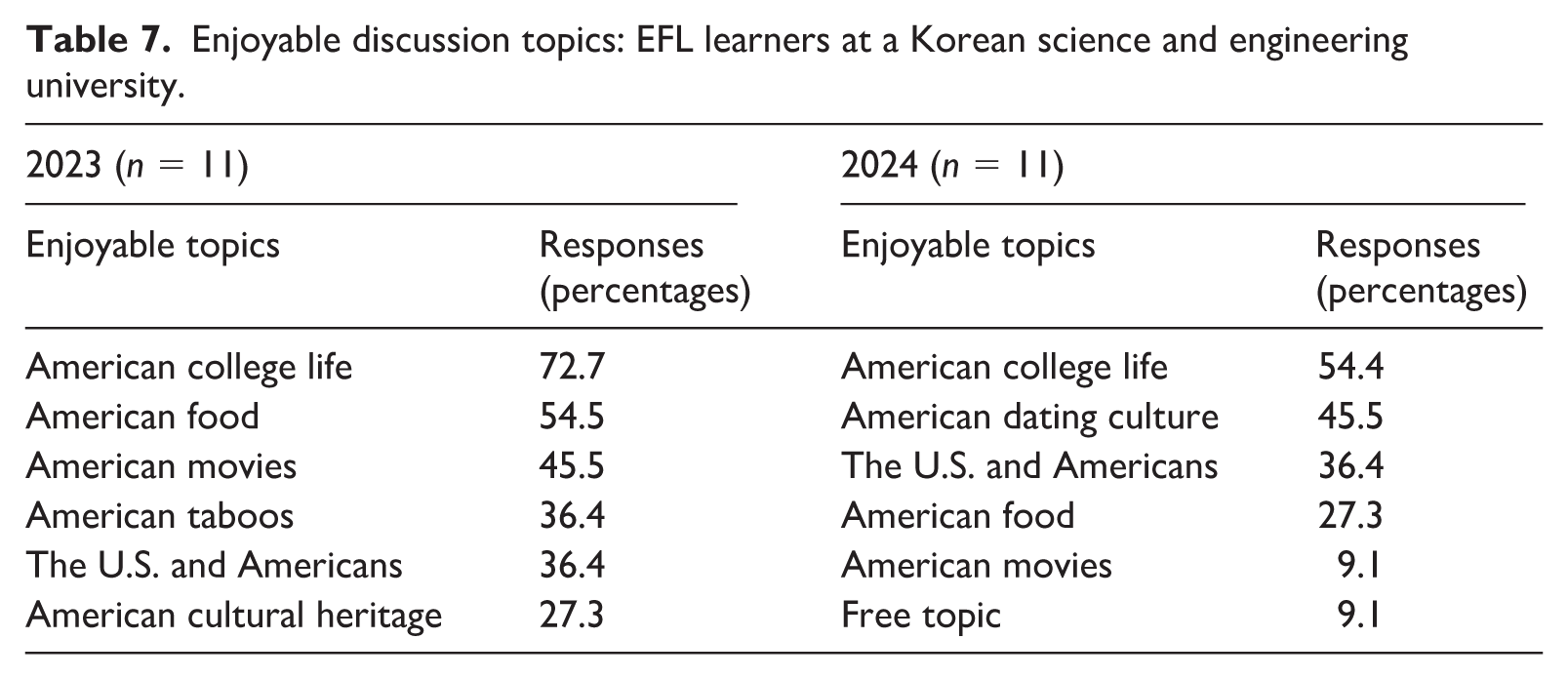
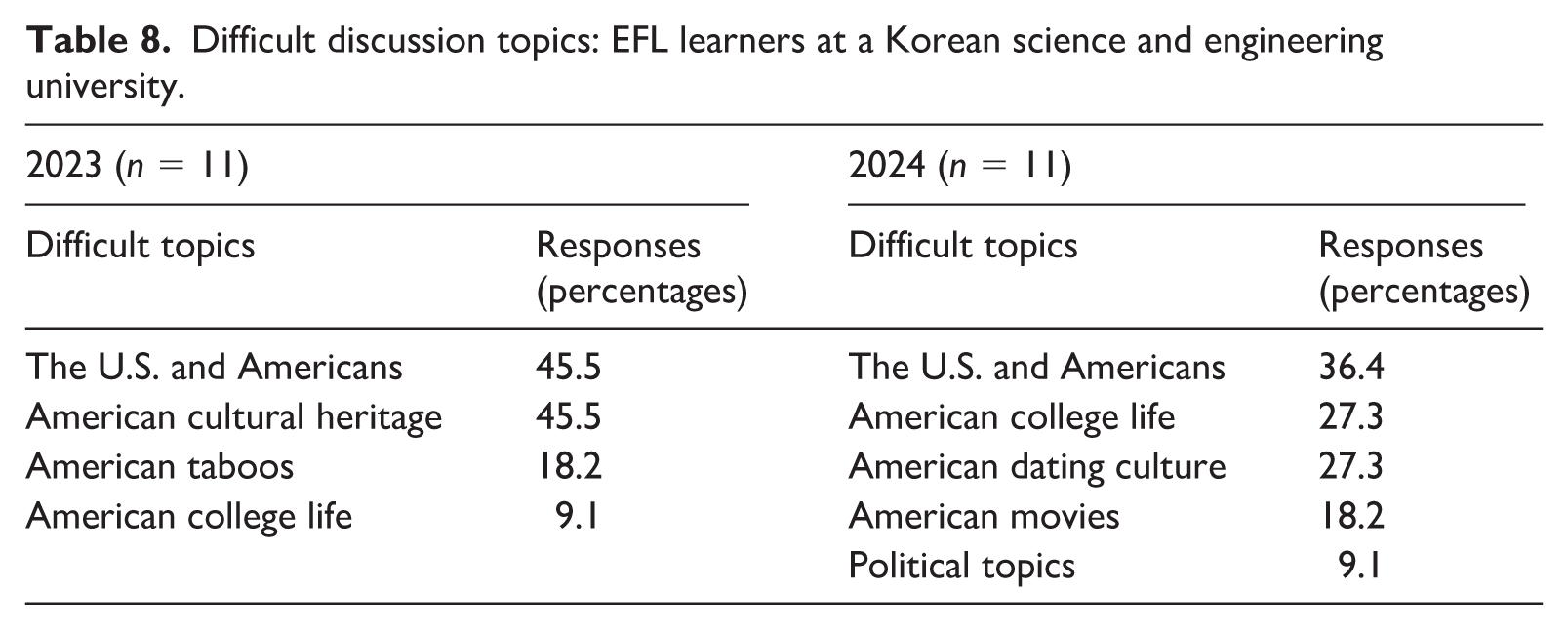
Among the topics discussed, the Korean students found American college life the most enjoyable, while they considered the U.S. and Americans and American cultural heritage the most difficult to discuss (Tables 7 and 8).
Rather than difficult topics like history, everyday topics that are easily encountered in daily life were better for building rapport and easier to understand. (2023 survey participant, U-K, 2nd year, electrical engineering major) I found other topics to be abstract, but school life felt relatively more relevant to the present and had many commonalities, which made it easier to ask questions and have more to talk about. (2023, U-K, 1st year, undeclared major)
Enjoyable discussion topics: EFL learners at a Korean science and engineering university.
Difficult discussion topics: EFL learners at a Korean science and engineering university.
On the other hand, the U-A students most enjoyed discussing Korean food and Korean college life, whereas they found the topic of South Korea and North Korea the most challenging (Tables 9 and 10).
I think the more free and light the topic is, the easier it is to carry on a conversation and think of new questions. It’s very easy to relate back to my own experiences to build a back and forth conversation rather than a simple question answer format. (2023, U-A, 4th year, psychology & African American Studies) Harder topics such as South and North Korea and cultural heritage was more difficult because the students themselves didn’t know much of the information and we weren’t really equipped with the vocabulary to discuss such topics. (2023, U-A, 4th year, Psychology & African American Studies)
Enjoyable discussion topics: Korean language learners at a U.S. state university.

Difficult discussion topics: Korean language learners at a U.S. state university.

In general, both groups preferred discussing ‘lighter’ and more immediate topics, such as food and college life, over heavier or more complex subjects, such as cultural heritage and inter-Korean relations, which may have required deeper reflection and more advanced language skills. After careful consideration, the professors agreed to eliminate some of the discussion topics that students had found difficult in the first year of the program
Student comments suggest that difficulties with certain topics were often due to limited vocabulary and lack of background knowledge rather than lack of interest. For example, several U-A participants noted that they did not know the words needed to talk about cultural heritage or inter-Korean relations, while U-K participants described abstract themes as harder to discuss compared to everyday life. Some participant responses demonstrated students were cautious about addressing sensitive or potentially controversial subjects in a cross-cultural peer setting, as per their instructor’s guidance. These factors likely contributed to the lower engagement with complex or politico-social topics. The observed preference for accessible, everyday topics (e.g. food, college life) over politically or historically complex themes resonates with prior findings that ICC development progresses more smoothly when learners engage with relatable, low-stakes content before moving to more abstract or sensitive subjects (Liu et al., 2025). This suggests that scaffolding topic complexity within eTandem exchanges may be critical for gradually deepening intercultural communicative understanding.
The current topics are more relatable and practical, aligning with what students learn in my class. I think this makes students more engaged and encourages enjoyable discussions. (Professor C)
For future discussion topics, students expressed interest in discussing personal experiences, such as growing up in Korea/America and forming friendships:
Making friends in Korea, Korean culture and tradition, Korean family life. (2024, U-A, 3rd year, Computer Science) Korean and American school life, growing up in Korea and growing up in America. (2024, 3rd year, Marketing)
Regarding enjoyable topics, U-K students’ responses were moderately varied, indicating a general level of agreement with some variation in their preferences (Table 11). In contrast, U-A students’ responses showed a higher standard deviation, suggesting more diverse opinions on which topics were enjoyable. For difficult topics, U-K students’ responses were relatively consistent, reflecting shared views on which topics were challenging. On the other hand, U-A students’ responses had the highest standard deviation overall, indicating a wide range of opinions on what they considered difficult.
Standard deviation of students’ ratings for enjoyable and difficult topics.

Notes. U-K: EFL learners at a Korean science and engineering university; U-A: Korean language learners at a U.S. state university.
It should be noted that, before participating in the discussions, students were instructed to avoid sensitive or personal topics that might cause discomfort, such as gender issues and political or religious matters. Furthermore, the professors at both institutions agreed that all discussions would be recorded on Zoom for feedback purposes. In conjunction with the prior guidance on sensitive topics, the professors believed that this measure might also have discouraged students from engaging in potentially problematic discussions that can arise in cross-cultural communication.
e Error correction
Regarding their partner’s errors in discussions, an equal percentage of Korean students (45.5%, 10/22) either rarely corrected them or occasionally corrected them. In contrast, more U-A students occasionally corrected their partner’s errors (50%, 14/28) than rarely corrected them (32.1%).
The most frequently corrected type of error for both groups was vocabulary choice, with 77.3% of U-K students and 67.9% of U-A students addressing it. U-A students (46.4%) were more likely to correct pronunciation errors than U-K students (22.7%). Both groups tended to correct speaking errors most often after their partner had finished speaking, with 72.7% of U-K students and 60.7% of U-A students following this approach.
The professors believed that correcting errors can be helpful for language learners, but it should be done carefully and in a supportive environment:
Immediate feedback allows learners to recognize and correct errors in real time, which reinforces proper language use. In a VE program, this type of interaction is particularly effective because it provides learners with practical, context-based corrections. However, it is important to provide corrections in a supportive and non-intrusive manner to avoid discouraging learners. (Professor B)
f Communication difficulties
Regarding the most challenging aspect of communication with their partners, U-K students (63.6%, 14/22) indicated difficulty in finding time for communication, whereas U-A students (53.6%, 15/28) cited their lack of Korean language skills. This difference may be attributed to the fact that U-K students have studied English for many more years than U-A students have studied Korean. Some students tried to overcome their communication difficulties caused by insufficient language skills by listening to meeting recordings.
The main challenges included scheduling conflicts and time zone differences, which made it difficult to find mutually convenient meeting times. Language proficiency gaps between partners sometimes hindered effective communication, leading to frustration. (Professor B) When my Korean partner spoke so quickly or with complicated language that I couldn’t follow at all. When this happened, I would listen to the meeting recording after it was uploaded to see if I could understand what she had said. (2024, U-A, 4th year, Linguistics & Spanish) I think my Korean wasn’t enough to carry on a conversation but my partner helped me a lot. (2024, U-A, 4th year, Advertising)
It should be noted that both groups experienced a significant reduction in discomfort related to scheduling challenges for communication in the second year: U-K students from 72.7% to 54.5% and U-A students from 46.2% to 26.7%. This improvement occurred because, after student complaints in the first year, students with compatible schedules were matched in the second year.
Research question 2: What factors influenced students’ engagement and outcomes in the eTandem program?
Both groups expressed high levels of satisfaction with the eTandem program, usually because it allowed them to further develop their language skills in an authentic language-learning environment.
Virtual global discussion gives real and hands on experience interacting with native Korean speakers. When we stick strictly to the class, we are learning a very textbook format of speaking Korean. (2023, U-A, 4th year, Psychology & African American Studies) The virtual global discussion allowed me to test my Korean skills outside of class in a real-life conversation with a peer, and learn new slang and words used in everyday life. Also, I was able to gain insight into what the current generation of young Korean people think about certain questions, and trends! (2024, U-A, 4th year, Biology)
Regarding collaboration and interactions with their partners, U-K students rated their experience 4.30/5.00, while U-A students rated it 4.18 (1 = not at all satisfied, 5 = very satisfied). Satisfaction with partners increased significantly in the second year compared to the first. That is, U-A students’ ratings improved from 3.62 to 4.67, while the Korean cohort’s scores rose from 4.09 to 4.55. The researchers believe that this is because more motivated U-K students participated in the program in the second year than in the first year.
In addition, both groups reported a strong preference for working with their partners, with 95.5% of U-K students and 89.3% of U-A students expressing positive responses. They particularly enjoyed engaging in conversations with their peers.
I liked learning about my partners to get to know them better as friends, but also to get a better understanding of what native Korean students are interested in. Forming a connection with Korean people my age was a meaningful experience. (2023, U-A, 4th year, Information Sciences & Technology) Virtual discussion allows us to practice Korean listening and speaking skills with native Korean speakers. Since students are around the same age, it is easier to talk to in comparison to talking to adults. (2023, U-A, 4th year, International Relations)
Notably, U-A students’ positive responses increased dramatically from 76.9% in the first year to 100% in the second year. As noted, this improvement may be attributed to U-K students in the first year being more hesitant in their interactions with international peers, which is a typical trait among Korean students, and being less prepared due to a lack of prior knowledge about the program. In contrast, students enrolled in the second-year course were likely to be informed about the program and better prepared for interactions with their international peers. The overall satisfaction of both groups with the program increased significantly from the first year to the second year, with U-K students’ ratings rising from 4.36/5.00 to 4.64, and U-A students’ ratings improving from 3.77 to 4.47.
Both the U-K group (4.45/5.00) and the U-A group (4.27) found the reciprocal eTandem format (minimum 20 minutes per language) effective (1 = not effective at all, 5 = very effective). Likewise, the majority of both groups were satisfied with the meeting duration of 40 minutes, with 68.2% (15/22) of U-K students and 67.9% (19/28) of U-A students expressing approval.
A professor also noted that awarding a program certificate and a T-shirt, for which all students participated in the design contest, as a token of participation helped boost students’ satisfaction with the program:
I like that it’s a two-way exchange rather than just one group assisting the other. Additionally, students enjoy receiving an official certificate and T-shirts, which give them a sense of accomplishment. I believe these elements truly help reinforce their sense of achievement. (Professor C)
Furthermore, most participants expressed interest in taking another course with a similar eTandem program, with 77.3% of U-K students and 92.9% of U-A students responding positively. Among U-A students, positive responses increased dramatically from 84.6% in the first year to 100% in the second year. The majority of participants also stated that they would recommend the program to others, with 81.8% of U-K students and 78.6% of U-A students in favor. Both groups saw a significant increase in recommendation rates from the first to the second year: U-K students’ responses rose from 72.7% to 90.9%, while U-A students’ responses increased from 69.2% to 86.7%.
The success of the eTandem program can be attributed to several key factors. First, the strong motivation of the participating students played a crucial role. U-A students demonstrated a keen interest in learning the Korean language and culture, likely influenced by the growing global appeal of Korean media and culture, and they voluntarily enrolled in their Korean language courses. On the other hand, while U-K students initially showed less enthusiasm since their course was mandated, those who participated in the second year were more familiar with the program and actively chose to enroll in a course section that included the eTandem component when multiple options were available.
Second, the program was ‘well aligned with young students’ learning preferences, such as the use of technology and interactive, peer-driven learning, which resonated well with this demographic’ (Professor B). Third, the program was well structured with its dual-language format, curated topics, and partner matching system.
Fourth, the commitment of the involved professors also served as a key factor for the program’s success:
I believe that the close collaboration and camaraderie among the dedicated professors, along with our systematic approach to program development and maintenance, contributed to the program’s effectiveness. Our efforts to continuously refine the program based on student feedback further enhanced the learning experience. (Professor A) I think this year’s collaboration was successful because of the team’s experience. We adjusted the program details based on insights from previous meetings and feedback from students. (Professor C)
Lastly, since the program was integrated as a required assignment within credit-bearing courses, students may have felt a greater sense of responsibility to engage actively in the exchanges.
For improvements, professors suggested adopting assessments to measure students’ language progress and diversifying topics:
I wish there were a method to assess students’ Korean proficiency levels before and after the program, allowing us to visualize their language growth. (Professor C) We could consider introducing a broader range of topics that resonate more with students’ interests and experiences. (Professor A)
VI Discussion
1 Implications
The findings of this study offer valuable insights into the design and implementation of eTandem programs, in the context of language education and intercultural exchange. First, the program demonstrated significant effectiveness in improving language skills, particularly in listening and speaking, for both Korean-speaking and English-speaking students. However, the results also revealed a disparity in confidence levels between the two groups. Despite having significantly more years of formal English education, Korean-speaking students reported lower confidence in their English proficiency compared to English-speaking students’ confidence in their Korean skills. This suggests that traditional language education in Korea may not adequately address students’ speaking confidence or real-world communication skills. Programs like eTandem, which provide authentic, interactive language practice, are therefore essential for bridging this gap and fostering greater confidence in language use.
Notably, eTandem appears to play a critical role in reducing language-related anxiety. Korean-speaking students, who initially reported higher levels of anxiety when speaking English, experienced a significant reduction in their fear of communication through regular interactions with native or fluent English speakers. This suggests that structured, low-pressure environments like eTandem can alleviate language anxiety and encourage more confident communication. Professors emphasized the importance of creating a comfortable environment where students feel safe making mistakes and taking risks with the language, underscoring the value of supportive learning environments. This finding aligns with the broader literature on foreign language anxiety, which shows that anxiety is a significant affective barrier to L2 communication (MacIntyre & Gardner, 1991). In line with more recent perspectives that highlight the dynamic interplay between anxiety and positive emotions our results suggest that structured, supportive peer exchanges like eTandem can reduce anxiety while simultaneously fostering enjoyment and confidence.
Another key implication is the importance of tailored content and topic selection in intercultural exchanges. Students from both groups expressed more enjoyment and engagement when discussing relatable, everyday topics such as college life and food. On the other hand, more complex subjects like cultural heritage and inter-Korean relations posed challenges. Everyday topics helped students build rapport and were easier to understand, indicating that educators should design discussion topics that align with students’ language proficiency and cultural familiarity. The lower engagement with difficult topics can be explained by a combination of linguistic and cultural factors. Limited vocabulary and conceptual knowledge made it harder for students to sustain conversations on abstract or historically complex issues, particularly when they lacked the linguistic resources to clarify or negotiate meaning. In addition, students may have avoided sensitive topics such as politics or inter-Korean relations to prevent possible misunderstanding or face-threatening exchanges, reflecting cultural norms of caution in peer-to-peer interactions and/or following instructor’s guidance. This finding echoes prior research on telecollaboration, which shows that learners often prefer ‘safe’ topics that support rapport-building, while treating culturally or politically sensitive themes with hesitation (O’Dowd, 2012; Van der Zwaard & Bannink, 2014). These results underscore the importance of scaffolding both the vocabulary and the cultural framing of more challenging topics if educators wish to integrate them effectively into eTandem programs.
This ensures that topics are both accessible and meaningful, therefore maximizing engagement. Professors also emphasized the need for a broader range of topics that resonate with students’ interests and experiences, reinforcing the importance of flexibility in topic selection.
The study also highlights the importance of continuously refining the program based on student feedback. A notable difference in satisfaction was observed between the two student groups, those who participated in the first year of the eTandem program and those who participated in the second year, with the latter group reporting higher levels of engagement and satisfaction. This improvement can be attributed to several curricular adjustments made in response to feedback from the first-year participants. For example, the number of sessions was reduced from eight to six to accommodate students’ schedules, and more challenging topics, such as North Korea, were replaced with topics students had specifically requested, like dating culture in South Korea. These changes not only made the program more accessible but also ensured that the content was more relevant to students’ interests. This iterative approach to program design demonstrates the importance of adapting the program to meet students’ evolving needs and preferences, ensuring that eTandem remains effective and engaging over time.
Additionally, the findings highlight the importance of addressing logistical challenges, such as scheduling conflicts and technical issues. These challenges, which initially hindered communication, were mitigated in the second year through better partner matching and increased program familiarity. This underscores the need for adaptive program design that responds to operational challenges and student feedback.
The success of eTandem in fostering cultural understanding and intercultural competence has broader implications for global education. By facilitating meaningful cross-cultural interactions, eTandem not only enhances language skills but also promotes empathy, cultural awareness, and global citizenship. These outcomes align with the growing need for intercultural competence in an increasingly interconnected world.
Finally, the study identifies the significance of motivation and program structure in ensuring the success of eTandem programs. English-speaking students, who were highly motivated by their interest in Korean culture, demonstrated greater engagement and satisfaction compared to Korean-speaking students, whose participation was initially mandated.
In summary, this study demonstrates the potential of eTandem programs to transform language education by fostering meaningful cross-cultural connections and authentic learning experiences. Considering these implications may allow language educators to design and implement effective eTandem programs across various linguistic and cultural backgrounds, promoting language learning, cultural understanding, and student engagement.
2 Conclusions
This study examined the impact of an eTandem program on language skill development, cultural understanding, and intercultural communication between Korean-speaking and English-speaking college students. Using Zoom as the platform for global communication, the program offered an accessible and cost-effective alternative to traditional study-abroad experiences, enabling students to engage in authentic, real-time language practice despite geographical barriers.
The findings show that both groups made significant progress in their target language skills, particularly in listening and speaking. English-speaking students, who had limited prior exposure to Korean, found the program especially valuable for building foundational skills. In contrast, Korean-speaking students, despite their extensive formal English education, reported a reduction in anxiety and increased confidence in speaking English. These outcomes highlight the effectiveness of eTandem in addressing the diverse needs of learners with varying language backgrounds and prior exposure. These results also align with frameworks of intercultural communicative competence (ICC), which emphasize that language learning in telecollaboration is not only linguistic but also intercultural. Prior research shows that video-based telecollaboration can effectively foster ICC by giving learners opportunities to negotiate meaning and perspective-taking in authentic contexts (Lenkaitis et al., 2019). Our findings extend this line of work by showing that even short-term, course-embedded eTandem exchanges reduced anxiety and promoted confidence in speaking about various real-life topics, thereby supporting both linguistic and intercultural dimensions of competence.
Beyond language development, the program fostered a deeper appreciation and understanding of each other’s cultures. Students engaged more actively with relatable topics such as college life and food, while more complex subjects like cultural heritage and inter-Korean relations proved challenging. This highlights the importance of selecting culturally relevant and accessible discussion topics to maximize engagement and learning outcomes.
In conclusion, this study underscores the potential of eTandem programs as an innovative and practical approach to language learning. By combining principles of autonomy, reciprocity, and interaction in a digital environment, eTandem not only enhances linguistic proficiency but also promotes intercultural competence and digital literacy – skills that are increasingly vital in today’s interconnected world. Furthermore, the use of audio-visual platforms in this study distinguishes it from prior research, which has predominantly focused on written interaction. By facilitating real-time, face-to-face communication, this approach offers a more immersive and dynamic learning experience, bridging the gap between traditional classroom instruction and study-abroad immersion.
This research contributes to the growing body of evidence supporting eTandem as a viable alternative to costly study-abroad programs, particularly for learners in environments where the target language is not natively spoken. It also sheds light on the necessity of continuous program refinement, informed by student feedback, to address logistical challenges and optimize learning outcomes. Moving forward, eTandem programs have the potential to transform language education by fostering meaningful cross-cultural connections and authentic learning experiences in a globally accessible format.
This study was conducted with student groups from a Korean science and engineering university and a U.S. state university, which may limit the generalizability of the findings. Since participants were primarily STEM majors with varying levels of prior language exposure, the results may not fully represent students in humanities or social sciences, or those from institutions with different academic focuses. Another limitation is the reliance on self-reported survey data as the primary indicator of language gains. Without independent proficiency measures (e.g. standardized oral proficiency interviews, vocabulary/grammar tests, or performance-based assessments), our conclusions about language development remain tentative. Future research should triangulate self-report with objective proficiency measures to more robustly capture the extent of learning.
Additionally, the short-term nature of the program may not capture long-term language retention or sustained intercultural development. Rather than a single-term program, future implementations could embed eTandem activities across multiple semesters or include delayed post-tests or follow-up surveys to assess sustained language and intercultural development. To enhance the applicability of the findings, future research could expand the eTandem program in collaboration with a comprehensive Korean university, incorporating a more diverse participant pool across disciplines. Furthermore, to increase global relevance, multinational eTandem programs would provide valuable insights into more complex intercultural dynamics.
Footnotes
Author Contributions
EunGyong Kim, Lan Kim and Na-Young Ryu conceived the presented idea. EunGyong Kim developed the theoretical framework, analysed the data and took the lead in writing the manuscript. All authors contributed to the design and implementation of the study, as well as to the writing of the manuscript.
Data availability
The authors confirm that the data supporting the findings of this study are available from the corresponding author upon request.
Funding
The authors disclosed receipt of the following financial support for the research, authorship, and/or publication of this article: This work was supported by the Seed Program for Korean Studies of the Ministry of Education of the Republic of Korea and the Korean Studies Promotion Service at the Academy of Korean Studies (AKS-2024-INC-225001). It was also supported by the School of Digital Humanities and Computational Social Sciences at KAIST.
Ethical considerations
The need for ethics approval was waived for the collection, analysis, and publication of retrospectively obtained and anonymized data in this non-interventional study.
Consent to participate
All participants provided written informed consent prior to participating.
