



Abstract
Drama-based pedagogy (DBP) has been proposed as a way to enhance learner engagement, performance, and motivation, particularly in contexts where opportunities to practice English are limited, such as the context of this study: a small, private college in a second-tier Chinese city. This study employed a mixed methods concurrent case study design to investigate DBP’s benefits, challenges, and relationship to motivation. Quantitative data were collected through a motivational questionnaire based on the second language motivational self system (L2MSS) and international posture (IP) models, administered to 31 participants after a semester-long DBP course. Qualitative data were gathered through student self-reflections and interviews to gain a multidimensional understanding of the DBP course from the participants’ perspectives. Analysis revealed several benefits, including communicative practice, language improvement, and increased confidence, alongside challenges related to affect, performance, and preparation. Unexpectedly, the qualitative data uncovered participants’ understandings that seemed to misalign with certain assumptions underpinning the L2MSS and IP models. Learnings from this study not only prompt the need to reconsider the epistemologies underpinning the L2MSS and IP models, but also illuminate ways to adjust DBP to improve the communication and motivation of learners in various EFL contexts.
Keywords
I Introduction
One challenge for learners of English as a foreign language (EFL) is communicative practice, especially in the context of this study, which took place in a small, private Chinese college in a second-tier city. In such contexts, the opportunities to use English can be infrequent (Gan, 2013; Peng, 2019). In fact, participants’ only exposure to English might be in class (Gan, 2013; Peng, 2019). Therefore, the relevance of learning English to students’ lives may seem minimal (Dörnyei, 2009a; Rao, 2018). Additional challenges in such contexts are low language proficiency, making EFL classes feel daunting, the pervasive washback effects of assessment-heavy learning, and disengaged teachers or teaching approaches (Gan, 2013; Rao, 2018), which might be demotivating. Despite policy efforts to encourage more communicative approaches to English learning in mainland China, the execution of such policies has been uneven and often unsuccessful, with approaches such as grammar-translation remaining prominent (Gan, 2013; Rao, 2018; You & Dörnyei, 2016). As a result, despite studying English for many years, students remain unable to communicate in English effectively, which might also be demotivating.
One proposed approach to address these pedagogical and motivational challenges is drama-based pedagogy (DBP) (Belliveau & Kim, 2013). DBP comprises learning and teaching activities ‘involving students’ pre-performance planning, performance through multimodal expressions in different roles, and post-performance reflections’ (Zhang, 2024, p. 581). Proponents of this approach argue that it can boost communicative competence, language accuracy, willingness to communicate (WTC), and learning motivation, as it entails language practice in an environment that is controlled (e.g. the language classroom) yet engaging, flexible, and empowering (Belliveau & Kim, 2013; Hameau, 2024; K.K. Lee et al., 2020; Zhang, 2024). Indeed, DBP has been empirically shown to facilitate improvement in students’ expression and contextualized understanding of various topics and viewpoints (Papavassiliou-Alexiou & Zourna, 2016). While there have been studies examining the effects of DBP on learners’ language levels, abilities, and proficiency, the current study adds to the extant literature by examining DBP participants’ motivational profiles based on the second language motivational self system (L2MSS) (e.g. Dörnyei, 2005, 2009b) and international posture (IP) (Yashima, 2002) models. These models were chosen as they are amongst the most established motivational models in the research landscape (Boo et al., 2015; Mahmoodi & Yousefi, 2022), they have been implemented across a variety of contexts, including Chinese universities (You & Dörnyei, 2016), and their measurement instruments have been validated (Aubrey & Philpott, 2021). Further, these models view motivation not as a static attribute but as a dynamic factor determined by context (Aubrey & Nowlan, 2013; Boo et al., 2015). Therefore, the combination of the L2MSS and IP models can offer contextually relevant insights and foundational understanding of how the L2MSS and IP models’ constructs manifest in those who participated in a DBP course. Further, this study exemplifies how DBP can be implemented in tertiary classrooms, offering insight into its benefits, challenges, and relationship to motivation.
II Literature review
1 Drama-based Pedagogy (DBP)
The epistemological foundation of DBP is the sociocultural belief that learning is co-constructed via interactions with the environment (Wells et al., 2023). In DBP, ‘participants make meaning through collaborative lived and emotional experiences within a fictional context’ (Wells et al., 2023, p. 2). The rationale for implementing DBP in English language learning is that it creates a ‘more contextually situated, engaging, multi-modal, and empowering L2 learning experience’ (Belliveau & Kim, 2013, p. 7). DBP is divided into three broad categories:
‘games and improvisations’ for L2 practice in the classroom (McGovern, 2017);
‘process drama’, in which students and teachers take on roles to complete extended in-class improvisations (Schewe, 2013); and
‘theatrical performance’ in front of audiences (McGovern, 2017).
Investigations into DBP have included reviews of the literature (Belliveau & Kim, 2013; Janzen Ulbricht & Kruger, 2023; McGovern, 2017; Schewe, 2013), revealing that most studies have utilized qualitative observational data. Such studies have included teacher training, development, and identity construction (Dawson et al., 2011; B. Lee et al., 2013; Papavassiliou-Alexiou & Zourna, 2016; Wells et al., 2023; Zhang, 2024), acquiring the target language (Bora, 2021; Faitaki et al., 2025; Galante & Thomson, 2017; Manabe et al., 2023), intercultural competence (Belliveau & Kim, 2013; Cheng & Winston, 2011; McGovern, 2017; Piazzoli, 2018), and addressing power structures (McGovern & Yeganeh, 2023). Further investigations have examined DBPs’ effects on affective factors such as anxiety (Galante, 2018), WTC (Hameau, 2024; K.K. Lee et al., 2020), which has been identified as an obstacle to developing language proficiency in the Chinese university context (e.g. C. Li et al., 2025; Peng, 2019), and motivation (e.g. Araki & Raphael, 2018; Piazzoli, 2011; Shand, 2008). The central argument of these studies is that DBP: enhances comfort levels because it puts learners in a role: thus, any anxiety related to speaking the L2 can be assigned to the character rather than the learner [and provides] opportunities for learners to develop the L2 in a friendly environment. (Galante, 2018, p. 282)
Even when focusing on motivation, to our knowledge, none of the extant DBP-focused studies have quantitatively measured DBP courses’ participants’ motivation. Therefore, this study offers a unique contribution to the field in its use of a validated, quantitative measure of motivational variables according to the L2MSS and IP constructs, bolstered by examining how these variables manifest in qualitative data. Further, unlike the aforementioned research, which mostly incorporated process drama, this study focuses on an adapted version of DBP’s theatrical performance variant.
2 The L2MSS model
According to L2MSS conceptualizations, motivation is the force that prompts learners to make choices, take actions, and persistently expend efforts (Dörnyei, 2009a; Dörnyei & Csizer, 2005; K.K. Lee et al., 2020). Motivation is prompted by ‘students’ recognized discrepancies between their current and future images of themselves as L2 users’ (Zhou et al., 2025, p. 1). In trying to bridge the gap between their current language proficiency and their desired future language proficiency, learners strive to attain success in being what they perceive to be proficient L2 users (Mahmoodi & Yousefi, 2022). This concept is derived from earlier concepts, such as integrative motivation, in which people aspire to integrate with a ‘native speaker’ community (Gardner & Lambert, 1972), and self-discrepancy theory, in which people are motivated by the possible selves to which they aspire (Markus & Nurius, 1986). However, contemporary global English communication is transnational, and supposed ‘native speaker’ communities are actually a minority of English speakers globally (Rose & Galloway, 2019). Therefore, the L2MSS model better explains contemporary learners’ motivation to learn an L2 by focusing on learners’ ‘identification process within the individuals’ self-concept’ rather than actually integrating into an L2 community (Mahmoodi & Yousefi, 2022, p. 275, emphasis in original). In other words, given the global spread of English and the fact that English first language (L1) speakers represent a minority of English speakers worldwide, L2MSS epistemology focuses on the learners’ projected future image of themselves (internal) rather than identification with a specific group (external) (Mahmoodi & Yousefi, 2022). The L2MSS system comprises three components.
The ‘ideal L2 self’ represents a learner’s aspirations, envisioning an idealized version of him/herself in the future. The ideal L2 self represents a ‘promotion focus’ on positive outcomes associated with L2 learning and proficiency (Dörnyei, 2009a, p. 18).
The ‘ought-to self’ is learners’ perceived obligations to become an L2 user. The ought-to self has a ‘prevention focus’ (Dörnyei, 2009a, p. 18), aiming to avoid negative outcomes, such as failing to learn the L2.
The ‘L2 learning experience’, which represents learners’ feelings about their learning experiences and environment. Whereas the first two components are future-looking, the L2 learning experience is based on previous or current experience (Dörnyei, 2005, 2009b).
Notably, L2 learning experience is ‘the most under-theorized component’ (MacIntyre, 2022, p. 88), prompting this study’s collection of qualitative data to understand this component in the context of a DBP course, from the learners’ perspectives.
As the volume of literature examining the L2MSS model is vast, it is useful to consider meta-analyses and review articles (Al-Hoorie, 2018; Boo et al., 2015; Liu, 2024; Mahmoodi & Yousefi, 2022). These analyses found that the L2MSS model was the most studied of all motivational models (followed by self-determination theory), and that the model had been validated in multiple studies across numerous contexts. Specifically relevant to the present study, investigations included an L2MSS-based study in Taiwan, finding that L2 learners’ possible selves had to align with their Confucian society’s social role obligations (Huang et al., 2015). Next, Teimouri (2017) found that ought-to L2 selves are divided into two strands: ought-to self (own) and ought-to self (other). Learners perceived their ought-to selves both according to their own expectations as well as their perceptions of others’ expectations. Finally, You and Dörnyei (2016) conducted a large-scale motivational survey across mainland China, finding that motivation in China functioned similarly to other geographical and linguacultural contexts. Although the literature on L2MSS is extensive, as mentioned, this study is the first to empirically measure the motivational profiles of those who participated in a DBP course in the EFL classroom.
3 International posture and motivation
IP has been found to affect motivation, and it has been examined in conjunction with the L2MSS system (Amorati, 2023; Aubrey & Philpott, 2021; Zhou et al., 2025). IP is defined as an interest in foreign or international affairs, willingness to go overseas, and readiness to interact with those from other cultures (Yashima, 2002). IP is based on the premise that English is now a global lingua franca; hence, students learn English to participate in an ‘imagined broad international community’ (Zhou et al., 2025, p. 4) rather than specifically integrating with Anglo-American ‘native English speaking’ cultures or societies. In other words, EFL learners see themselves as part of a perceived international English-speaking world, which drives motivation. Therefore, encounters with those who speak English are likely to be highly motivating to EFL learners (Aubrey & Philpott, 2021; Yashima & Nishida, 2024). IP has been positively linked to the improvement in variables related to motivation, such as WTC (Yashima, 2002), the ideal L2 self (Aubrey & Nowlan, 2013), as well as language proficiency (Yashima, 2002). In the Chinese higher educational context, Zhou et al. (2025) examined L2MSS and IP for learners of English versus learners of languages other than English (LOTEs), finding that IP predicted intended efforts to learn English but not LOTEs. Another study comparing learners of English to LOTEs found that learners seemed to express integrative motivation (aspirations to communicate with native speakers) alongside sentiments aligning with the IP construct (joining a global English-speaking community) (Amorati, 2023). Further studies have investigated the impact of intercultural contact on the L2 learning experience and IP (Aubrey & Philpott, 2021), finding significant changes after such exposure, especially after direct contact with English speakers from different linguacultural backgrounds (Ockert, 2015a, 2015b). The current study, using English language movies and TV shows from the USA and UK, aligns with existing IP research, which has shown that classroom content and practices ‘utilising global study content’ (Botes et al., 2020, p. 9) can improve motivation. The degree to which engagement with this study’s global content impacts the IP of this study’s learners is a key question.
III Research problem and research questions
Given the contextual background and extant research surrounding this topic, the research problem is as follows: How did the learners experience and perceive this DBP course according to the L2MSS and IP constructs, and what are the pedagogical implications of their perceptions? Based on this overall research problem, the specific research questions arise.
Research question 1: What L2MSS and IP profiles emerge from the questionnaire data?
Research question 2: How do the L2MSS and IP components manifest from participants’ perspectives?
1 Methodology
This investigation employed a mixed methods case study with a convergent design in which multiple sources of data, both quantitative and qualitative, were simultaneously collected and then analysed (Creswell & Plano Clark, 2018). This design was selected to capture the complexity of learner experiences and the impact of DBP, facilitating an in-depth exploration of multiple dimensions of the phenomenon (Creswell & Plano Clark, 2018). Additionally, this approach leverages the collection and analysis of quantitative and qualitative data to gather a ‘holistic perspective on the lived experience of language learners’ (Mahmoodi & Yousefi, 2022, p. 285). Another advantage of this design is that it retains the ecological validity of the DBP classroom without requiring major adjustments to gather data. For a visual of the design’s process, see Figure 1.
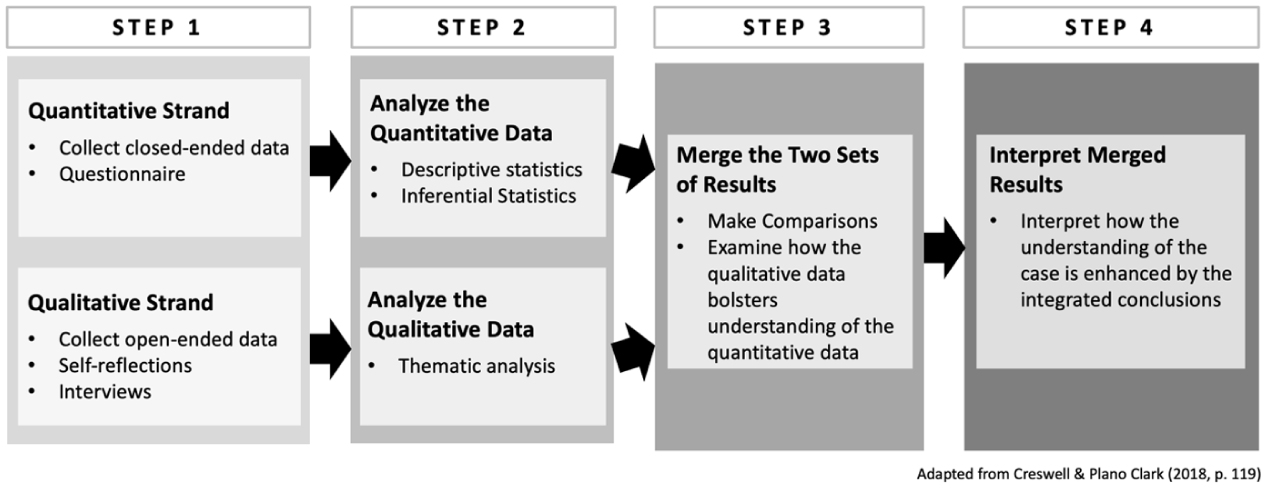
This study’s mixed methods convergent case study process.
2 Participants
The participants were 31 university EFL learners in an elective course called ‘Speak Out Through Acting’. See Table 1 for information about the course participants and post-course interviewees.
Course and interview participants.
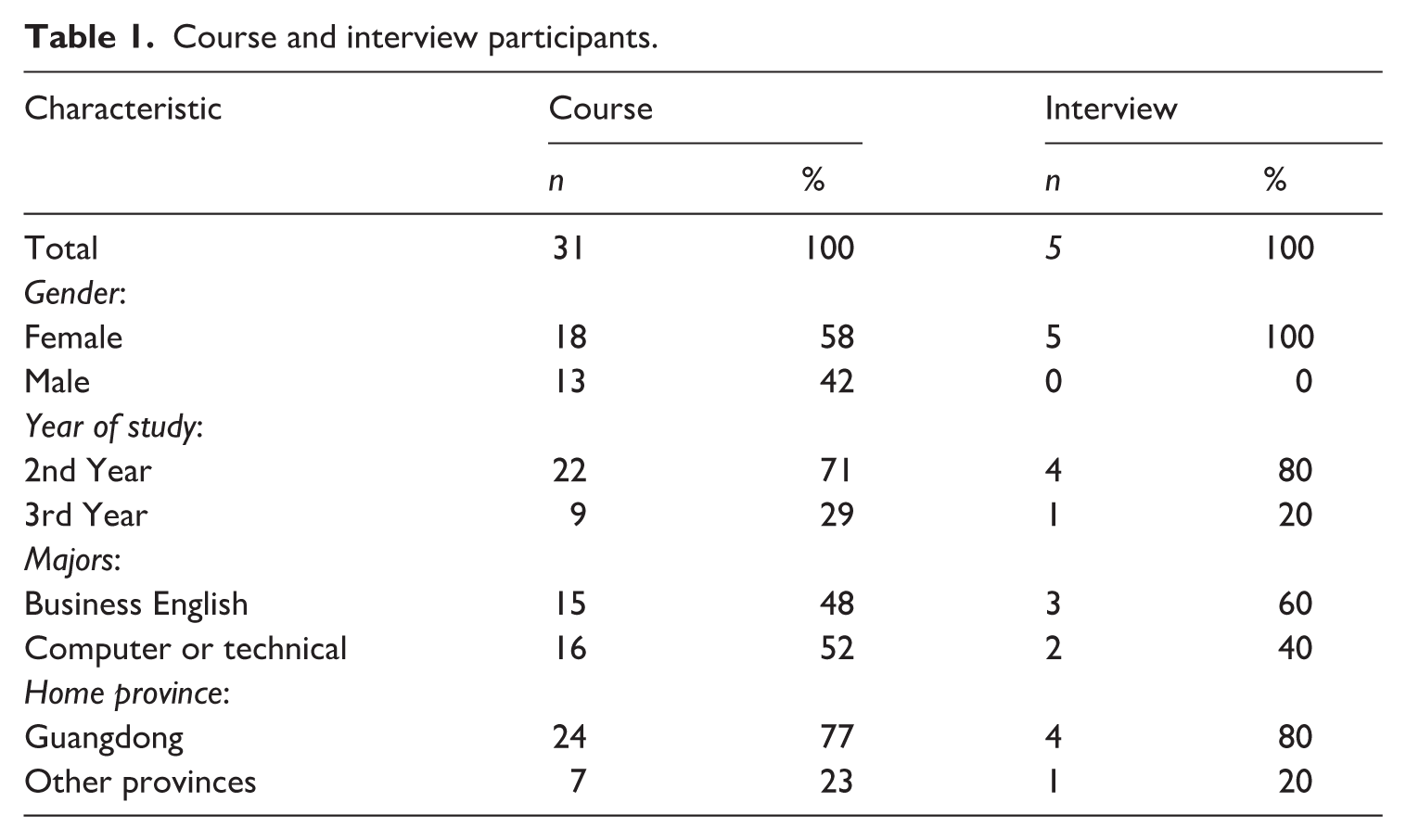
Participants hailed from 13 cities in Guangdong Province and seven cities in six other provinces. Regarding language level, all participants had passed the College English Test Band 4 (CET-4) examination, which is given to non-English major university students in mainland China. It measures listening, reading, writing, and translation skills and generally aligns with the Common European Framework Reference (CEFR) scale’s B1 level (J. Li, 2021). Participants were recruited through volunteer/convenience sampling (Creswell & Plano Clark, 2018) as they registered for the course and agreed to participate in the research project. Though 42 students joined the course, 33 completed the questionnaire, and two participants’ data were deemed outliers and removed from statistical analysis. Hence, 31 students’ data were analysed.
The interview participants were selected using purposeful sampling’s typical case strategy, ‘to describe and illustrate what is typical to those unfamiliar with the setting’ (Palinkas et al., 2015, p. 535). We recruited participants from different majors and backgrounds to try to understand commonalities that could inform our understanding of their experiences. Details of the participants’ majors are in Appendix A in supplemental material.
The study was approved by the Ethics Committee of the Internal Review Board (IRB) of the Hong Kong Polytechnic University. Participants were given information sheets explaining how their anonymity would be preserved, how their data would be protected, and that they could withdraw from participation at any time without it affecting their grades. All participants signed informed consent forms based on the information sheet, showing that they understood the research and their protections.
3 The learning context
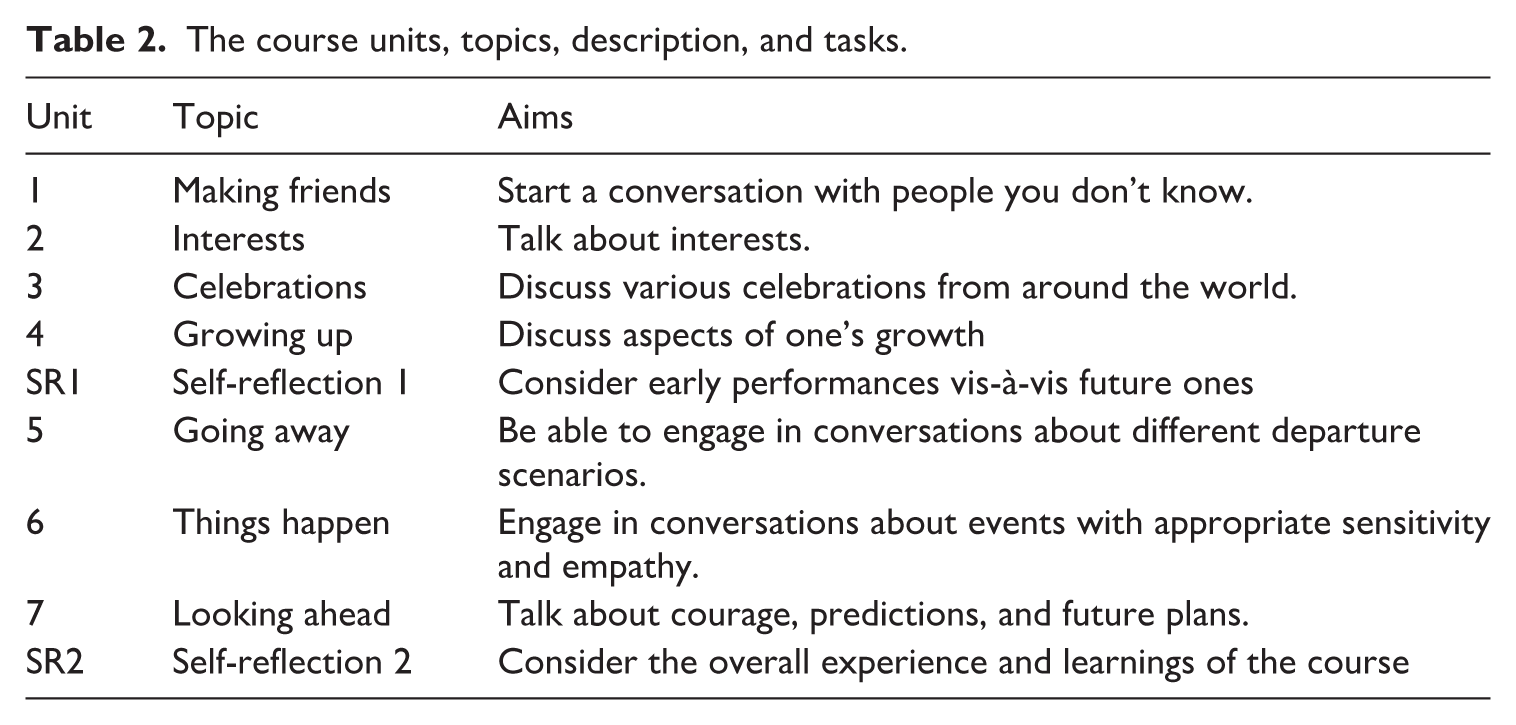
This study was conducted in a small, private college in a second-tier city in Guangdong Province, Foshan. The college has about 14,000 students, all undergraduate. As mentioned, the participants elected to study in a newly developed course called ‘Speak Out Through Acting’. The course was created by the second author, also the lead instructor (named Instructor One below), who had previously taught a drama-based course for a summer semester. The course, which met one time per week for 90 minutes, ran for 16 weeks. It was divided into seven units, focusing on the topics listed in Table 2. The topics were selected because, based on Instructor One’s experience, they were deemed to be practical and useful to the learners. The inception of the course was Instructor One’s own learning experience, in which fluency was developed by engaging with movies and TV shows in an environment with few opportunities to speak English.
The course units, topics, description, and tasks.
Students were divided into 12 groups of three to five students each and were required to perform four times during the course of the semester. In the first three performances, students acted out a clip from a movie or TV show. Each performance lasted about two minutes. The last performance was the final exam, in which participants could choose to act out a TV or movie clip or create their own material to perform. The course was taught by three instructors with EFL teaching backgrounds. Instructor One is an Associate Professor at the college and holds a master’s degree in TESOL. Instructor Two has over 10 years of experience teaching and holds a master’s degree in English Education. Instructor Three is a relatively recent graduate, holding a master’s degree in TESOL. Instructor One taught units one and two. Instructor Two taught units three and four. Instructor Three taught units five and six. All three instructors co-taught unit seven. The teaching approach was a modified version of Present-Practice-Produce (PPP), in which learners were first exposed to the requisite language for the unit, then they practised it in a controlled exercise, often in pairs or groups, and were finally encouraged to use the language freely (Harmer, 2001; Scrivener, 2011). The approach was modified in that the ‘Produce’ phase was based on video clips or students’ own scripts rather than being a completely open communicative exercise. Students’ performances were assessed by peers as well as the instructors according to a rubric measuring pronunciation, intonation, naturalness of speech, and expression of emotions. As mentioned, the drama-based pedagogical approach was a modified version of theatrical performance (McGovern, 2017), in that the performances were for classmates, as opposed to the public. For a detailed course outline, see Appendix B in supplemental material.
4 Data collection
The following sections describe the instrument and data collection.
a Instrument
The participants completed a self-report questionnaire measuring their motivation. The questionnaire was developed and validated by Aubrey and Philpott (2021). For a table outlining how they assembled the questionnaire, see Appendix C in supplemental material. We re-validated it for this study, as will be described. The questionnaire consisted of 36 items rated on a Likert scale (1 = strongly disagree, 6 = strongly agree). Items were designed to address the components of L2MSS and IP. We changed several items to make them relevant to the current study’s context. Items 15 and 28 were changed from ‘Japan’ to ‘China’. Item 20 was changed from ‘news’ to ‘movies and TV shows’ to align with the ‘Speak Out Through Acting’ course. The questionnaire was translated into Chinese to ensure absolute clarity of understanding. The initial translation was done by the Poe GenAI translation tool, then checked and corrected by the second author, whose first language is Chinese. The survey was administered via a SurveyMonkey link. Participants completed the survey on their phones in class. For the questionnaire items, see Appendix C in supplemental material.
b Qualitative data
Qualitative data included two video self-reflection assignments from each participant (n = 62) and the post-course interviews (n = 5). The first self-reflection assignment was collected after the students’ fourth drama performance. The second self-reflection was collected at the end of the semester, after participants’ final performance. The self-reflections were assigned to ‘help learners recognise and track their learning progress’ (K.K. Lee et al., 2020, p. 82) while simultaneously providing researchers with insights into participants’ experiences. Self-reflections were submitted in English on video because such presentation aligned with the media-based and performative focus of this DBP class, thereby integrating this aspect of data collection with the course itself (Rose, 2020). Because the self-reflections were in the participants’ L2, to ensure that the self-reflections expressed the participants’ perspectives accurately, the participants were given time to prepare their reflections and investigate the language they needed. Such preparation precluded having to face the pressure that exists in real-time interactions, such as interviews (Rolland et al., 2020). Additionally, the multimodal nature of the video self-reflections enabled participants to read cues, present PPT slides or use any other support they chose to ‘communicate their experiences effectively’ (Rose, 2020, p. 355). For the self-reflection questions, see Appendix D in supplemental material. Semi-structured interviews were used because they are flexible, and ‘an intriguing answer can be followed by further prompts and in-depth explanations’ (Bora, 2021, p. 464). The interviews were conducted by the first author in Chinese and followed an interview guide, per Appendix E in supplemental material. They lasted 10–12 minutes on average. The interviews were conducted after students received their semester’s grades as assurance that their grades were not connected to their interview participation. The timing of the interviews was intended to eliminate potential power imbalances (Rolland et al., 2020) and minimize the possibility that the participants provided answers they thought would please the interviewer (Gibson & Hua, 2016) because the interviewer was also the course’s lead instructor. Further, a key affordance of semi-structured interviews is that the interviewer can ask probing and follow-up questions to verify the participants’ perspectives in an effort to gather reliable data (Bora, 2021; Kallio et al., 2016). They were conducted via WeChat calls, digitally recorded, and then translated and transcribed using TurboScribe. After that, the first author, whose L1 is English, corrected the self-reflection transcriptions, as they were in English. The second author manually corrected the interview transcriptions, ensuring the translations from Chinese were accurate.
5 Data analysis
a Questionnaire
Though the questionnaire was previously validated by Aubrey and Philpott (2021), it was necessary to perform our own validation procedures to determine its validity in the current context. Therefore, we performed a Rasch analysis (Aryadoust et al., 2021). As a double-check, we calculated Cronbach’s Alpha to determine the reliability of the items in the current context. After that, to address research question 1, we examined the descriptive statistics to understand the overall motivational profiles. Specifically, we analysed and compared the questionnaire scores according to each component of the scale (e.g. motivated learning behaviours, ideal L2 self, ought-to self, learning experience, IP).
b Self-reflections and post-course semi-structured interviews
To address research question 2, we performed thematic analysis on the qualitative data arising from the self-reflections and post-course interviews, using the six-step approach of Braun and Clarke (2006) using MAXQDA. Initial coding garnered 23 codes and 406 coded segments. These codes were then re-examined and arranged thematically according to how they offered insight into the five components of the motivation questionnaire. Further, because emergent data addressing the L2 learning experience component were prominent, these codes were divided into two main themes: benefits and challenges. To ensure coding reliability, the authors independently examined a selection of coded segments and compared their findings, which were highly consistent. Disagreements were resolved through discussion.
6 Data integration
Data integration is the process of combining quantitative and qualitative data to address research questions and gain a more holistic perspective (Creswell & Plano Clark, 2018). In this study, after independently analysing the quantitative and qualitative findings, data were integrated to determine how the identified motivational profiles manifested in the participants’ lived experiences with emphasis on the L2 learning experience: how the learners perceived the DBP course’s benefits and challenges. This process enabled the gathering deeper understanding of the participants’ lived experiences and DBP’s affordances, challenges, and potential avenues of improvement.
IV Findings
The following section reports the quantitative and qualitative findings gleaned from the questionnaire, self-reflections, and interviews.
1 Questionnaire validity and reliability
Rasch analysis of the questionnaire results offered evidence of validity in terms of data-to-model fit, multidimensionality, and high item and person reliability (Aryadoust et al., 2021). The Cronbach’s Alpha reliability coefficients for the overall questionnaire and the five components revealed high levels of reliability, ranging from .83 to .90, well above the recommended .70 threshold (You & Dörnyei, 2016). Taken together, these results offered evidence of the questionnaire’s validity and reliability.
2 Findings from the questionnaire
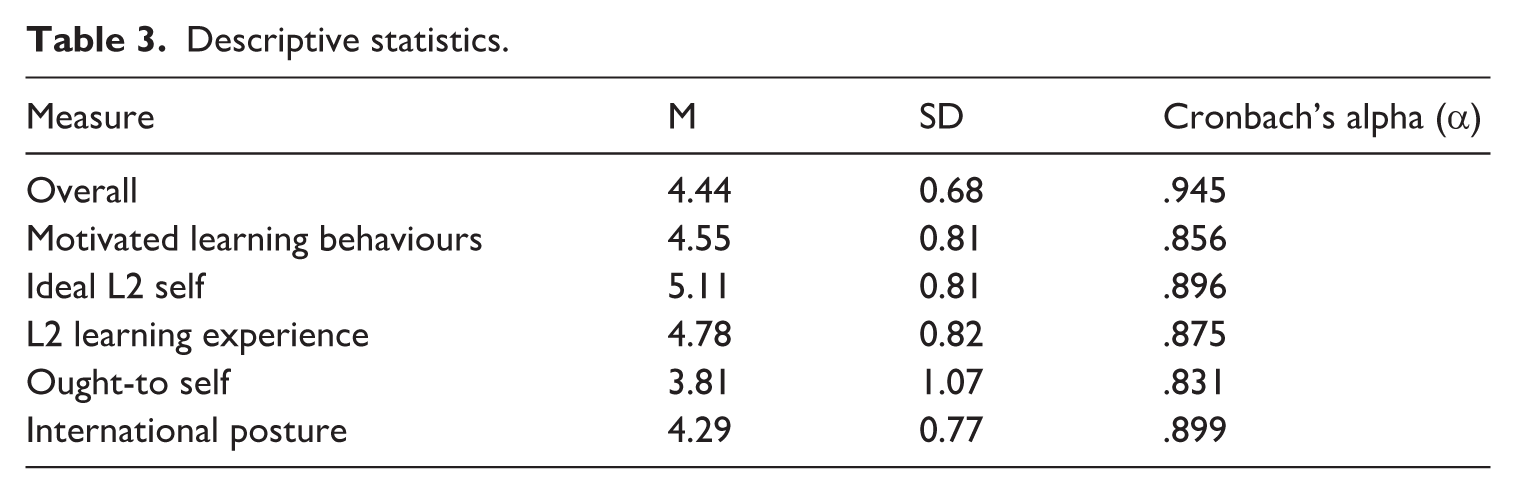
The quantitative analysis addressed research question 1 of this study, exploring the motivational profiles of the DBP course participants. Per the descriptive statistics in Table 3, the ideal L2 self received the highest scores (M = 5.11), followed by the L2 learning experience (M = 4.78), motivated learning behaviours (M = 4.55), and IP (M = 4.29). Ought-to self received the lowest scores (M = 3.91).
Descriptive statistics.
3 Qualitative findings according to the questionnaire constructs
The qualitative data offered valuable insights into the learners’ perspectives, such as factors, benefits, and challenges influencing their experience. For themes arising from the qualitative analysis according to each component, see Figure 2.
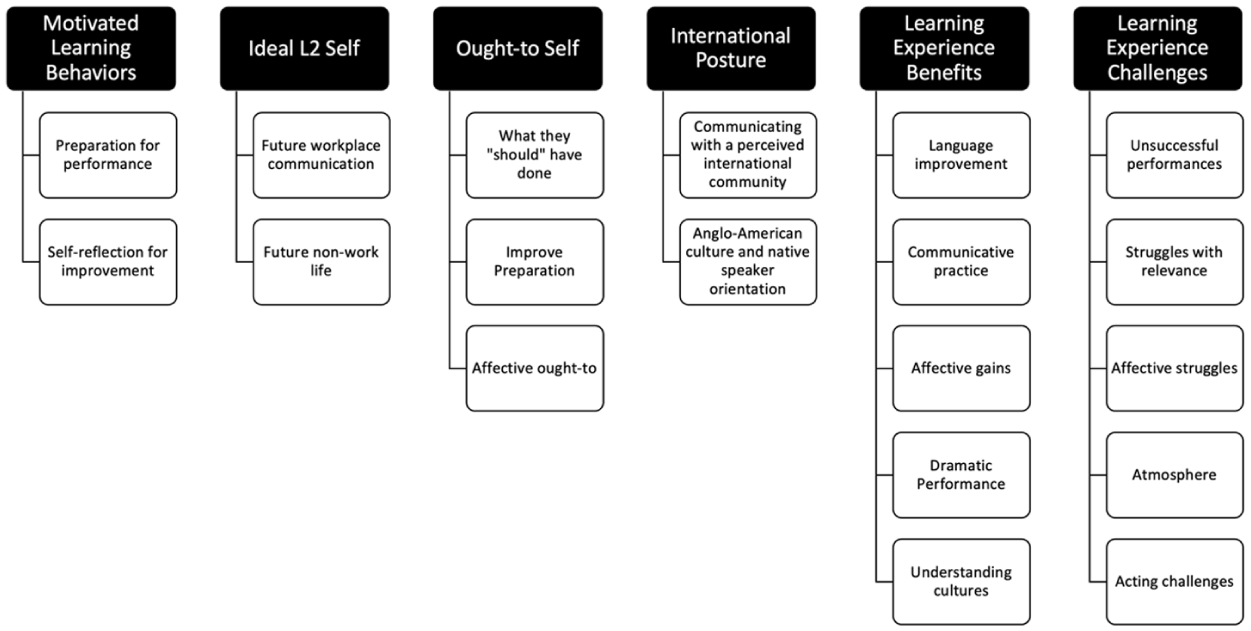
Themes according to component.
a Motivated learning behaviours
In the qualitative data, motivated learning behaviour manifested according to two sub-themes. First, participants underwent extensive and detailed preparation for performance. P#10’s description is an example: ‘I first carefully studied the relevant materials. Then, I practised rapidly to ensure that I was familiar with every detail. I also sought feedback from my peers and made adjustments based on their suggestions.’ Such descriptions were offered by almost every participant. Another motivated learning behaviour was the participants’ honest and objective self-reflection for improvement, exemplified by P#14, who said, ‘I would also allocate more time for individual character development, delving deeper into psychological of each character to enhance the emotion depth of the performance.’ Similar sentiments were echoed by most participants. That said, not all students demonstrated motivated learning behaviours. P#11 expressed feeling ‘sleepy’ in class, while other participants complained about students sitting in the back of the class, not paying attention, not engaging, or being poorly prepared (P#12, P#19).
b Ideal L2 self
Expressions of participants’ ideal L2 selves manifested as aspirations, primarily concerning future workplace communication. For example, P#28 said, ‘[improved English] will enhance my career prospects. As many international companies and industries agree, they need to use English professionally.’ Similar comments were offered by P#3, P#6, P#7, P#9, P#14, P#18, and P#26. Next, participants expressed an Ideal L2 self regarding future non-work life in terms of developing relationships with people from other backgrounds, whether through travel, work, or daily life. P#18 offered an example: ‘I will apply what I’ve learned in this course to my future endeavors, both in my work and during my travels, I plan to maintain and improve my English proficiency.’ Similar thoughts were shared by P#3, P#6, P#7, P#14, P#18, and P#28. Notably, regardless of the specific expression of ideal L2 self (work or non-work life), the participants unanimously felt that their English language communication required improvement. That is, despite acknowledging the benefits of the course, participants continued to perceive a gap between their current and ideal proficiency, in both the contexts of their professional and non-professional futures.
c Ought-to self
Participants expressed ought-to sentiments in several ways. First, they reflected on ‘what they “should have” done’ in their performances: ‘By paying closer attention to the subtext and emotional undercurrents in the lines, I could have made the exchange more dynamic . . . truly embodying the characters, understanding their emotions, and reacting authentically to the situation’ (P#18). Others felt they would have improved with deeper research into the text (P#10), better time management (P#19), more practice (P#1, P#13, P#19, P#20, P#22, P#29, P#30), more precise technical arrangements (P#3, P#17, P#23, P#25), more dramatic character development (P#12, P#14, P#18, P#23, P#25), and greater language accuracy (P#9). Relatedly, participants felt they should improve their affective dispositions by gaining confidence (P#6, P#18, P#28, P#30), decreasing shyness (P#5, P#19), and being less nervous (P#4, P#7, P#15). They believed these feelings inhibited their performances and communication. Interestingly, participants differed regarding their goals moving forward. Some participants sought ‘the perfect performance next time’ (P#13), while others intended to ‘let go of perfectionism and embrace the imperfections as part of the charm’ of performance (P#1). Still others were satisfied with their performances and did not seek improvement (P#21, P#24). In sum, most learners felt they ought to address practical and emotional issues to improve their performance.
d International posture (IP)
IP was expressed in seemingly dichotomous ways. Some participants envisioned functioning in a perceived international community, using English, in the future. For example, P#14 said, ‘I will definitely apply what I have learned in the course to my study and work, having depth discussions and exchanges with people from different countries and cultural backgrounds, use the English language to carry out communication.’ Such sentiments aligned with those expressed by P#3, P#9, P#11, P#12, P#14, P#19, P#21, P#26, and P#29. There were a few explicit expressions of contemporary global Englishes orientations, such as by P#7, who said, ‘[m]y language confidence has been improved because I learned that everyone’s pronunciation is unique, even foreigners. So don’t worry too much about your pronunciation. As long as you feel confident and say it, it’s already the best.’ Participant #7 was expressing the concept of English varieties according to World Englishes as well as English as a lingua franca (ELF) conceptualizations that prioritize meaning over accuracy. On the other hand, a prominent aspect of expressions of IP was a focus on Anglo-American language and culture, exemplified by statements such as ‘we complete the study of British and American drama in our group, which improved our oral English ability’ and ‘we can see many funny fragments in the English movies, and it will reflect the native speaking.’ Aspirations to communicate like and with native speakers were also offered by P#3, P#4, P#5, P#8, P#12, P#19, P#26, and P#29, indicating that integrative motivation to join supposed native speaker communities was a prominent sentiment in this population, functioning alongside IP motivational conceptualizations.
e Learning experience
The participants spoke extensively about their learning experience, outlining the benefits and challenges of the DBP course. Almost all participants believed that the course led to language improvement due to the amount of communicative practice it provided. For example, P#28 said, And the best part for the class was the opportunities to practice and speak English with classmates and receive conscientious feedback. It gave me a safe space to make mistakes and learn from others, which boosted my confidence in learning the language.
Notably, P#28 also mentions confidence. In fact, almost every participant believed that this course prompted affective gains such as improved confidence. Relatedly, several participants appeared to reference improvement in their WTC, manifested as overcoming their own ‘bottlenecks’ (P#10), developing ‘courage’ (P#6), ‘bravery’, and ‘initiative’ (P#8), and communicating ‘more freely’ (P#16), ‘boldly’ (P#12), or ‘actively’ (P#29). Another benefit of the course regarded dramatic performance itself: when performances were successful, participants felt a sense of accomplishment. For example, P#1 wrote, ‘the most satisfying aspect of the process was seeing the vision come to life on stage. The sense of connection and shared emotion was incredibly rewarding.’ Feelings of accomplishment resulting from the performance were also shared by P#10, P#14, P#15, P#17, P#25, and P#30. Finally, participants explained that part of their preparation was understanding the circumstances of their characters, which included understanding the cultures in which they functioned. Participant #26’s statement was illustrative: ‘I think this kind of education is a way for us to learn more about the cultural differences between China and the U.S. And it’s a way for us to create our own values.’ Cultural learning was also mentioned by P#13, P#14, P#16, P#21, P#25, and P#28 as a benefit of the DBP course.
At the same time, the course held challenges. First, participants struggled with unsuccessful performances. For example, P#18 said, ‘There’s still plenty of room to perform to improvement, especially in making my reactions more exaggerated and expressive.’ Similar sentiments were expressed by almost every participant. Further, some students continued to struggle to find the relevance of the course to their daily lives, in which they do not use English. For example, P#4 said, ‘I don’t think we will use this class cover in the future because we haven’t mastered the English skill and we lack to use the native speaking in our daily life.’ Participants #5 and #21 felt similarly. Another challenge regarded affect. As mentioned, participants cited feeling inhibited by shyness, nervousness, and a lack of confidence. One reason for these feelings was that some participants felt that the learning atmosphere of the class was not supportive or engaging enough (P#9, P#26). Pertaining to the actual performances, acting challenges included an inability to control one’s voice (P#17), forgetting lines (P#4, P#15, P#30), acting without enough emotion (P#18, P#18, P#22, P#23), and getting distracted (P#3, P#29). In conclusion, qualitative data revealed a range of perceived successes, benefits, and challenges regarding DBP.
V Discussion: Research question 1: What L2MSS and IP profiles emerge from the questionnaire data?
The ideal L2 self and L2 learning experience received the highest and second-highest scores, respectively. These findings align with extant studies revealing ‘the sizeable impact of both L2 learning experience and ideal L2 self on motivated behavior’ (Aubrey & Philpott, 2021, p. 442). The ideal L2 self component’s high scores were well-supported in the qualitative data, as these participants articulated continued gaps between their current proficiency and their ideal proficiency. Indeed, this component appeared to be top-of-mind with these learners. Relatedly, the high L2 learning experience scores indicate that it was relevant to these participants, likely because they had just been exposed to a novel way of learning (for them), in the form of DBP (Belliveau & Kim, 2013). Regarding the L2 learning experience, participants expressed overall positive sentiments, citing perceived improvements in communicative accuracy, fluency, and affect. The ought-to L2 self received the lowest scores, echoing previous studies showing a ‘weak contribution of Ought-to L2 self to motivated behavior’ (Aubrey & Philpott, 2021, p. 442). It is possible that by electing to take this course, the learners’ ought-to selves were less relevant because they felt they were already doing what they ought to do to improve their language proficiency. Next, participants showed relatively low IP scores. In the extant literature, high scores on this scale have been attributed to globally focused courses (Yashima & Zenuk-Nishide, 2008), which this course attempted to be. However, consuming TV and movies from overseas (especially the USA and UK) has been common practice for university students in mainland China (Rao, 2018). Familiarity with such media, though global in focus, might not have been novel or thought-provoking enough to prompt higher IP scores.
VI Discussion: Research question 2: How do the L2MSS and IP components manifest from participants’ perspectives?
1 Benefits to learning and affect
As shown in the findings, the DBP course offered a positive L2 learning experience. Participants expressed a sense of accomplishment attributed to confronting and overcoming their negative emotions, successful dramatic performance, and expressing themselves in English. Such sentiments illustrate how DBP can provide enjoyable and fulfilling learning experiences, foster positive affect in students (Schewe, 2013), and improve WTC (Hameau, 2024; K.K. Lee et al., 2020), thus contributing to motivation, learning engagement and, ideally, improved proficiency.
Relatedly, almost every participant cited language learning as a benefit of the DBP course. They conceptualized language learning in a variety of ways, ranging from communicative competence (expression, fluency) to language form (pronunciation, grammar, vocabulary). On the surface, these findings align with the extant literature that has illustrated the language learning affordances of DBP (Bora, 2021; Faitaki et al., 2025; Galante & Thomson, 2017; Manabe et al., 2023). However, there are important nuances to consider. Most DBP-based investigations have focused on communicative competence rather than language form. In fact, from its inception, DBP has been positioned as an alternative to form-focused language pedagogy such as that practised in traditional Chinese grammar-translation-based classrooms (Schewe, 2013; Zhang, 2024). DBP advocates have argued that the main affordance of DBP is that it ‘places students in a realistic quasi-immersive language situation in which language learners are involved both physically and emotionally’ (Bora, 2021, p. 462). Additionally, the rehearsal process facilitates repeated ‘spontaneous and authentic’ language practice (Bora, 2021, p. 462), resulting in a classroom environment that is highly communicative in focus. At the same time, these very same DBP advocates have argued that ‘new grammatical structures and vocabulary to be learned are more easily understood if presented in an emotional way in the process of creating a character’ (Bora, 2021, p. 462). That is, learners are more likely to learn language forms when the forms are connected to the feelings and motivations of the characters they are portraying. Therefore, DBP is purported to carry advantages for both language form and communicative competence. As this study’s learners cited improvement according to both form and communicative competence, it seems that, rather than experiencing a tension between language form and communicative practice, the DPB course facilitated a holistic and integrated language learning experience for them. The interplay, tension, and integration of form-focused and communicative-focused language education can be explored in future DBP-based courses, which might be especially motivating for participants who envision their ideal L2 selves as being accurate and competent communicators.
2 Motivational mismatches
The qualitative findings uncovered participant perspectives that appeared to misalign with assumptions underpinning the L2MSS and IP models. These misalignments manifested in participants’ perspectives of aspirations, culture, Global Englishes, and learner beliefs.
a Course content misalignment with learner aspirations
Ideal L2 self: As mentioned above, the ideal L2 self scale had the highest scores of all of the components, suggesting that the learners perceived a gap between their current proficiency and their ideal proficiency. The participants expressed expending enormous efforts to manage language, emotions, and the dramatic performances, yet they were not aspiring thespians. They were from business English or technical disciplines. From that perspective, perhaps the content of the course misaligned with their ideal L2 selves (e.g. communicating in the workplace), which would affect the L2MSS constructs as measured. However, this misalignment offers potentially fruitful pedagogical implications. Understanding that these learners envisioned communicating proficiently in transnationally functioning workplaces could prompt adjustments to the content of the drama studied. For example, the topics of this course could be changed from general English topics (i.e. discussing interests, celebrations, and growing up) to professional ones, such as meetings, negotiations, presentations, and workplace cultural competence. Including topics more relevant to these learners’ envisioned future selves might address their motivational needs more directly, perhaps affecting their motivation in such a course.
International posture: As mentioned above, the IP component scores were relatively low. Despite learners mentioning that cultural understanding was required to accurately portray their dramatic characters, perhaps English-language TV and movies from the US and the UK lacked the direct cross-cultural interactions required to affect the learners’ IP (Yashima & Zenuk-Nishide, 2008). After all, acting out movie or TV scenes is not the same as interacting with overseas interlocutors. A pedagogical implication of this finding might be to integrate a cross-cultural drama project between these learners and learners from overseas. Though perhaps logistically complicated, such transnational communicative projects have been successfully executed in other contexts, such as exposing aspiring professionals to simulated workplace communication (e.g. Komori-Glatz, 2017; Nielsen, 2020). Perhaps performing a piece for, or with, those from other cultural backgrounds would engage these learners and spur deeper engagement with and relevance to IP, prompting higher motivation.
b Cultural influence or individual differences affecting motivation?
The data revealed a complex interplay between cultural influences and individual differences. It has been argued that DBP courses misalign with Chinese learners’ preferred and expected learning experiences in part due to the Confucian belief that students should silently absorb and digest knowledge before applying it (Rao, 2018). Relatedly, Belliveau and Kim (2013) explain that ‘[s]tudent-centered drama-based approaches are often unfamiliar to [Chinese] students, as their English learning has been confined to grammar and reading skill’ (p. 19). The findings of this study align with the above to the extent that participants expressed nervousness, shyness, and a lack of confidence, and were therefore less participatory than they wished. Although the course was explicitly designed to prompt the participants to ‘speak out’, the reality of facing the unfamiliar and highly communicative aspects of drama performance was outside of their realm of experience and comfort. Additionally, participants’ hesitation to communicate could also be attributed to the Chinese concept of ‘losing face’. You and Dörnyei (2016, p. 514) found that ‘avoiding losing face was a powerful motivating factor’ (p. 514). From that perspective, engaging in a DBP class in which one is expected to ‘take chances, be wrong, look silly’ (Miccoli, 2003, p. 124) might feel counterintuitive, overwhelming, or even demotivating.
On the other hand, not a single participant cited ‘culture’ as the basis of their struggles. Rather, participants attributed their communicative challenges to affective factors such as nervousness, shyness, and a lack of confidence. These struggles appeared to be connected to their ought-to selves, representing a prevention focus (Dörnyei, 2009a) because they were based on fear of failure or humiliation rather than on success. Participants struggled with confidence in two ways. First, they were not confident communicating in English because they believed their language level was inadequate. Second, they were not confident in their abilities to perform drama in English. The learners expressed that these struggles with negative affect impeded successful dramatic performance and optimal English language communication during the course, a perception aligning with previous DBP-based studies (Zhang, 2024). Pedagogical implications arising from these findings are that the DBP-based classroom must endeavor to provide a positive atmosphere in which learners can feel safe to address their negative affect, insecurities, and obstacles in their pursuit of improved language proficiency, confidence, or WTC (Belliveau & Kim, 2013; Hameau, 2024; K.K. Lee et al., 2020; Mahmoodi & Yousefi, 2022; Miccoli, 2003). Additionally, as discussed, one form of DBP is games and improvisations that support communicative proficiency (McGovern, 2017). Perhaps scaffolding the learners toward performances through structured activities such as creating and performing short monologues, speeches, or dialogues (as suggested by P#19 and P#21) could have prepared the learners for full theatrical performances more gradually (Bora, 2021; Galante, 2018; K.K. Lee et al., 2020). Such scaffolding might have built the learners’ confidence, improved their WTC, and positively impacted their motivation. That said, these participants expressed pride in their persistence despite their perceived affective obstacles, indicating that a potential benefit of DBP is that it develops persistence: Learners practice in the face of discomfort, in the safety of the classroom, in preparation for real-world communication (Galante, 2018; Hameau, 2024; K.K. Lee et al., 2020).
c The issue of integrative motivation
The qualitative findings from this study seem to highlight a disconnect between the underpinnings of the L2MSS construct and these learners’ beliefs. As outlined in the literature review, earlier conceptualizations of integrative motivation (Gardner & Lambert, 1972) were replaced by the ideal L2 self (Dörnyei, 2005) to account for globalization, a pivot from aspiring to join the Anglo-American community to joining a broad, international English-speaking community (Mahmoodi & Yousefi, 2022). Convincing arguments were made for a realignment of motivational understanding, because ‘if learners are highly aware of the importance of English as an international language used among nations and people, they have more reasons to learn it, finding more value and meanings for its actual use’ (Munezane, 2013, p. 164). While these evolutions reflect the sociolinguistic reality of how English functions in the world today, they do not necessarily align with this study’s participants’ learner beliefs. While some participants expressed sentiments aligning with the global position of English, several expressed (supposedly outdated) conceptualizations of integrative motivation: They wished to join the community of ‘native English’ speakers, as depicted in the course’s TV and movies, rather than joining a broad international English-speaking community. In fact, this course was founded on the idea that exposure to and engagement with media depicting ‘native’ speakers would provide an ideal communicative model to the learners. In other words, this course, from its inception, had an Anglo-American and native speaker focus, which might be unsurprising because aspirations to native speaker proficiency have been embedded in Chinese language learning for decades and continue to be supported at a policy level (Rao, 2018). Accordingly, native speaker and Anglo-American-oriented learner beliefs and aspirations would be recalcitrant.
The pedagogical implications of this finding are that this course could have provided exposure to media that included non-native English speakers, facilitating preparation for more globally oriented communication and to realign participants’ thinking toward contemporary, Global Englishes-informed beliefs. Research has found that the more specialized and advanced Chinese students’ education is, the more it ‘opens up their horizon onto the global world beyond China, bringing about an increasing appreciation of Global English’ (You & Dörnyei, 2016, p. 517). However, these students were in a small, private university in a second-tier city. They likely did not have exposure to the contemporary epistemologies espoused by Global Englishes scholars; hence, it is unclear how receptive the participants would be to dramas with English dialogue that is not deemed ‘native’ (i.e. English language TV or movies from India, Europe, or Africa). It follows that DBP courses would have to gradually incorporate Global Englishes perspectives to facilitate changes in the learners’ beliefs and provide a strong rationale for a successful transition toward including non-native speaker media alongside Anglo-American TV and movies. After all, such adjustments would offer a more holistic and realistic depiction of how these participants in this context will actually communicate in the future.
At a theoretical level, the above findings suggest that the definitions of the ideal L2 self or IP components may require modification at the construct level, at least in this context. These learners simultaneously expressed aspiring to join a native speaker community and a global community, displaying evidence of the ideal L2 self, IP, and integrative motivation. The simultaneous expression of these seemingly contradictory beliefs represents a potential jingle fallacy, which is when different constructs (e.g. integrative versus ideal L2 self/IP orientations) are measured similarly (e.g. by the L2MSS and IP scales) (Henry & Liu, 2024). This study aligned with previous investigations in finding that ‘many language learners in the globalized world are driven by both the desire to affiliate both with the specific L2 communities [integrative motivation] and by the wish to become more open to “otherness” ’ (Amorati, 2023, p. 992). The conceptualization of the ideal L2 self or IP might need to be adjusted and clarified to account for contextual variations and include integrative motivation rather than view it as an obsolete concept (Amorati, 2023; Henry & Liu, 2024).
VII Conclusions
This study involved a semester-long DBP course. Quantitative data collected from a questionnaire based on the L2MSS and IP constructs provided motivational profiles. The profiles aligned with the extant literature regarding the relative levels of importance assigned to the different L2MSS and IP components. Qualitative data revealed how the participants understood the L2MSS and IP constructs. Further, the findings according to the L2 learning experience uncovered DBP’s benefits (e.g. language improvement, cultural learning, increased confidence and WTC) as well as challenges related to language, emotions, and dramatic performance. Crucially, the qualitative data revealed mismatches between the assumptions of the L2MSS and IP constructs and this group of learners’ beliefs. How these gaps could be addressed theoretically and pedagogically was discussed.
The contributions of this study are threefold: theoretical, pedagogical, and methodological. The theoretical contribution of this study was that, by examining L2MSS and IP motivational constructs via a DBP course’s participants, potential mismatches of understanding of these models at the construct level arose, highlighting the multifaceted and contextual nature of learners’ understanding. That is, learners’ degree of alignment with the L2MSS and IP models’ assumptions appears to vary, based on the learners’ background, course content, and pedagogical approach. These findings highlight the need to revisit and potentially redefine them, incorporating multifaceted and contextually grounded considerations (Amorati, 2023; Henry & Liu, 2024). Future investigations into L2MSS and IP in different contexts may need to continue to compare the learners’ expressed conceptualizations to extant theoretical conceptualizations and reconcile any differences. In terms of pedagogy, this investigation illustrated how an EFL DBP course could be implemented in a tertiary context in China and provided insight into how DBP for university-level EFL learners might be improved to support and develop learners’ affective states, language proficiency, WTC, and motivation. Methodologically, this study was unique in its use of a validated quantitative assessment instrument along with a rich qualitative data set for a holistic understanding of these participants’ perspectives of the DBP course and the L2MSS and IP components. The lessons learned from this study offer insight into how DBP can (and should) be carefully crafted to match learners’ aims and goals, and how L2MSS and IP scales can be stress-tested against learners’ conceptualizations, for a more sophisticated understanding of these motivational constructs in specific contexts.
This study’s contributions notwithstanding, there were some limitations. First, the sample was limited, so the results might not be generalizable, even to larger populations of students in small Chinese colleges. Second, an experimental or quasi-experimental study with two groups of learners would be informative in comparing the motivation of learners in a drama-based pedagogical condition compared to a different learning condition. In light of this study’s findings and limitations, we recommend that future research be carried out in multiple contexts with larger sample sizes. For example, multi-semester iterations of a DBP course might reveal greater understanding of motivational variables. Additionally, conducting research measuring language level improvement alongside motivation to understand how they interact would be a fruitful endeavour.
Supplemental Material
sj-docx-1-ltr-10.1177_13621688261430058 – Supplemental material for Examining how L2MSS motivation and international posture manifest in a drama-based pedagogical course at a private university in China
Supplemental material, sj-docx-1-ltr-10.1177_13621688261430058 for Examining how L2MSS motivation and international posture manifest in a drama-based pedagogical course at a private university in China by Lucas Peltonen and Zidan Ning in Language Teaching Research
Footnotes
Data availability statement
The data supporting this study’s findings are available from the corresponding author upon reasonable request.
Funding
The authors received no financial support for the research, authorship, and/or publication of this article.
Compliance with Ethical Standards
This study was approved by the Institutional Review Board of The Hong Kong Polytechnic University (approval number HSEARS 20241104005). Participants gave written informed consent, as outlined in our methodology section.

Supplemental material
Supplemental material for this article is available online.