



Abstract
Metacognition, the ability to understand and regulate one’s cognitive processes, is recognized as a key factor in effective English as a foreign language (EFL) learning. It involves both an awareness of the cognitive demands of tasks and the ability to manage these tasks to achieve specific outcomes. Similarly, grit, defined as perseverance and passion for achieving long-term goals, has emerged as a significant predictor of success in English learning. However, the relationship between metacognition and grit remains largely unexplored, especially how learners perceive and regulate their grit at a metacognitive level. This study addresses this gap by adopting a mixed-methods approach, combining semi-structured interviews and questionnaires to examine English learners’ metacognitive awareness of grit, their regulation strategies, and the potential effect on learning outcomes and self-efficacy. Results from the qualitative interview unearth deep and nuanced understanding of the metacognitive awareness of grit mechanism, which can be corroborated (or contrasted) by findings from the quantitative phase with data from large samples and statistical analysis. Findings suggest that learners’ metacognitive awareness of grit often operates implicitly, with many participants unaware of these underlying processes. Despite this, learners reported employing deliberate strategies to regulate their grit, such as setting intermediate goals, self-monitoring progress, and seeking external support when English learning grit waned. These strategies were found to significantly improve both English language performance and self-efficacy, suggesting a strong link between grit regulation and positive educational outcomes. The study highlights the need for greater awareness and explicit instruction in metacognitive strategies to enhance learners’ ability to harness grit effectively. Implications for language teaching practices, study limitations, and potential directions for future research are discussed, offering a comprehensive understanding of this emerging intersection.
I Introduction
Metacognition, broadly defined as the knowledge and regulation of one’s cognitive processes and experiences (Q. Sun & Zhang, 2022; Q. Sun et al., 2021), is fundamental to effective learning (Zhang & Zhang, 2018). Within the domain of English as a foreign language (EFL), the importance of metacognitive research is well-documented, with scholars investigating its role in various aspects of EFL learning and teaching. For example, in EFL reading, studies have examined learners’ metacognitive knowledge of reading strategies (L.J. Zhang, 2001) and how such knowledge influences second language (L2) achievement (L.J. Zhang, 2010). Similarly, in writing, research has explored the effect of metacognitive knowledge, regulation, and strategy use on learners’ writing experiences (Teng, 2020; Z. Wang & Han, 2017). Specific areas of focus include how feedback affects metacognitive strategy use in writing (J. Zhang & Zhang, 2022) and the role of metacognitive strategy knowledge in improving writing performance (Qin & Zhang, 2019).
In addition to metacognition, success in education and life often depends on qualities beyond talent or intelligence, such as perseverance and passion, traits captured by the concept of grit. Defined by Duckworth et al. (2007) as the persistence and passion for long-term goals, grit distinguishes itself from related constructs such as resilience and self-control, which lack the characteristic of sustained long-term commitment (Credé et al., 2017). Grit is composed of two dimensions: Consistency of interest (CI), the ability to maintain steady interest in a goal despite challenges, and perseverance of effort (PE), the determination to work hard in the face of difficulties (Duckworth & Gross, 2014). These qualities allow gritty individuals to remain steadfast in pursuing their goals, even when encountering setbacks. Research has shown that grit is a key differentiator in the performance of individuals with comparable cognitive abilities (R. Wei et al., 2020). Moreover, because grit is malleable, it can be enhanced through targeted intervention and instruction (Clark & Malecki, 2019), providing educators with an opportunity to foster perseverance and passion among students to improve their learning behaviors.
The relationship between grit and academic achievement has received significant attention in educational research (e.g., Credé et al., 2017). Given the sustained effort required for successful L2 learning, the link between grit and language achievement has also become a focus in the field of second language acquisition. For instance, Teimouri et al. (2020) utilized a language-specific grit scale to explore the relationship between EFL learners’ grit and language achievement, revealing a positive correlation between L2 grit, language learning motivation, and achievement.
Despite the established significance of both metacognitive awareness and grit in academic success, several critical questions remain unanswered. Specifically, how do learners perceive and regulate their learning grit? Are they consciously monitoring their perseverance and passion for learning? Do they employ metacognitive strategies when their PE and CI wane? To date, no studies have fully explored these questions from a metacognitive perspective. Furthermore, research on grit in L2 learning has predominantly relied on quantitative methods, leaving a gap in qualitative explorations of this construct.
To address these gaps, this study employs a mixed-method design, combining semi-structured interviews and questionnaires to examine EFL learners’ metacognitive awareness of grit (MG), their strategies for regulating it, and its effect on their language learning outcomes and self-efficacy (SE). This investigation aims to provide a deeper understanding of how learners navigate and leverage their grit for academic success.
II Literature review
1 Metacognition in the language education realm
Metacognition, first characterized by Flavell (1979, p. 907), encompasses four subprocesses: Metacognitive knowledge, metacognitive experiences, cognitive goals or tasks, and cognitive actions or strategies. Around the same time, Brown (1978, 1987) introduced a widely adopted two-component model of metacognition, comprising knowledge of cognition and regulation of cognition. Metacognitive knowledge refers to individuals’ understanding of their cognitive processes, the ability to achieve desired learning outcomes, and the strategies available to assist their learning. In contrast, metacognitive regulation entails planning, monitoring, and actively controlling cognitive activities to ensure successful task completion.
In the realm of second/foreign language education, Wenden (1998) emphasized the importance of metacognitive knowledge and strategies in language learning. Her insights underscored the necessity of exploring how learners’ reflections on their beliefs and knowledge about learning influence their language learning process. Following this foundational work, numerous studies have systematically examined the role of metacognitive knowledge and strategies in EFL learning. The literature reveals two key areas of focus pertaining to the present study: (1) The predictive role of metacognition in language performance, and (2) the connections between metacognition and affective factors.
a Metacognition and language performance
Research consistently identifies metacognition as a significant predictor of English language performance. For example, Bozorgian et al. (2022) and Q. Sun et al. (2021) confirmed strong correlations between metacognition and EFL performance. Teng (2020) further dissected metacognition into its components, showing that both metacognitive knowledge and regulation positively influence EFL writing performance, with regulation being a stronger predictor of writing proficiency. Similarly, studies on metacognitive strategies reveal their crucial role in improving academic performance. Teng et al. (2022) highlighted that learners’ direct application of metacognitive strategies significantly enhances language learning outcomes. Providing learners with targeted instruction on selecting and using metacognitive strategies is thus vital (Birjandi & Rahimi, 2012; Zhang, 2025).
b Metacognition and affective factors
Metacognition also intersects with affective factors such as motivation, SE, and emotions. Motivation, a critical driver of learning persistence, has been extensively studied alongside metacognition in EFL contexts. It encompasses two major components: Intrinsic and extrinsic motivations, which represent the internal or external factors that motivate learners to engage in learning activities. Chon and Shin (2019) used latent class analysis to identify profiles of self-regulated learners and found that higher metacognitive awareness was associated with stronger motivation and better language performance. Similarly, ÿz (2016) confirmed that metacognitive awareness, encompassing knowledge and regulation of cognition, significantly predicts academic motivation in L2 learning. Further, Teng et al. (2023) applied structural equation modeling to explore relationships among metacognitive strategies, motivation, SE, and English achievement in remote learning contexts. They demonstrated that metacognitive strategies and motivation mediated the effects of SE on English achievement, a finding echoed by Teng and Yang (2023). Research also indicates that metacognitive instruction can enhance learners’ motivation (e.g., Kramarski & Feldman, 2000; Ozturk, 2019).
Metacognition also plays a pivotal role in learners’ emotional experiences in EFL learning. For instance, learners equipped with effective metacognitive strategies exhibit reduced anxiety and improved performance (Movahed, 2014). Additionally, metacognitive instruction has been shown to boost learners’ SE (Rahimirad & Zare-ee, 2015), while metacognitive awareness strongly predicts positive attitudes toward L2 learning (Feiz, 2016). These findings highlight the broader psychological benefits of metacognition in language learning beyond academic performance.
In sum, the extensive body of literature underscores the crucial role of metacognition in EFL learning. From fostering learners’ metacognitive strategy use through instruction to its predictive power on language performance and its influence on motivation and emotions, metacognition remains a cornerstone of effective EFL education. However, gaps remain, particularly in understanding how metacognitive processes interact with other constructs, such as grit, to influence learners’ learning outcomes. This study builds on the existing literature to address these gaps and offer new insights into the interplay between metacognition, grit, and EFL learning success.
2 Grit
As previously highlighted, Duckworth et al. (2007) introduced grit as “perseverance and passion for long-term goals” (p.1087). Within Oxford’s (2016) EMPATHICS framework of positive psychology, perseverance is recognized as a crucial element in developing foreign language (FL) skills and improving performance. However, Duckworth et al.’s (2007) conceptualization of grit extends beyond perseverance, emphasizing the consistent passion required to achieve long-term objectives. Individuals with high levels of grit view their pursuits as a “marathon” rather than a “sprint,” maintaining the focus on their ultimate goals despite setbacks or failures. Where others might shift direction in response to obstacles, gritty individuals remain committed to their chosen path. To capture this dual nature, Duckworth et al. (2007) defined grit as a higher-order construct comprising two components: PE and CI.
In second and foreign language learning contexts, research on grit has grown considerably over the past decade, reflecting its increasing relevance to language education. While this burgeoning field highlights the importance of grit, it also reveals ample opportunities for further exploration. Grit has been linked to various psychological factors and learning outcomes in many different settings. For instance, studies have demonstrated a positive association between grit and L2 willingness to communicate (WTC). Lee and Lee (2020) and Lee and Drajati (2019) found that higher levels of grit correlate with greater L2 WTC. Similarly, Lee and Hsieh (2019) identified significant positive relationships between grit and WTC across different classroom settings, including traditional, digital, and online environments. However, not all findings are consistent. Cheng (2021) reported only moderate or weak predictive relationships between grit components and WTC, while Fathi et al. (2021) found that although grit and FL anxiety were predictors of WTC, anxiety had a stronger predictive power than grit.
Beyond WTC, grit has also been associated with foreign language enjoyment (FLE). Studies conducted in Chinese and Iranian contexts have revealed significant correlations between grit and FLE among learners at various educational levels, including middle school, high school, and university (Hejazi & Sadoughi, 2022; E. Liu & Wang, 2021; Pawlak et al., 2022; Dewaele & MacIntyre, 2014). C. Liu et al. (2021) reported a negative relationship between grit and English learning anxiety, while Lan et al. (2021) documented a similar negative association between grit and shyness. These findings suggest that grit not only supports language achievement but also contributes to a positive emotional experience in FL learning. Findings from the present study also detected the relationship between grit and enjoyment.
The predictive role of grit in L2 achievement has been another focal point in the literature. Research shows that grit significantly predicts learning motivation, academic engagement, and English performance. Wu et al. (2022) and W. Zhang et al. (2022) demonstrated these relationships among Chinese university students, highlighting grit’s critical role in language learning success. Khajavy et al. (2021) emphasized that a growth mindset amplifies grit’s positive effects on L2 achievement. Baierschmidt (2022) similarly found that grit strongly predicts English proficiency among Japanese university students, even when controlling for GPA (Grade Point Average). In addition, H. Wei et al. (2019) discovered that grit indirectly enhances FL performance by fostering FLE and a supportive classroom environment in Chinese middle schools.
Overall, the literature underscores the central role of grit in FL learning. Its predictive power for language achievement and its influence on psychological variables such as WTC, FLE, and anxiety highlight its significance. As research in this field continues to expand, exploring grit’s mechanisms and its interaction with other constructs will provide valuable insights for both scholars and educators.
3 The present study
The pivotal roles of metacognition and grit in shaping students’ learning experiences are key motivations for this study. Given that grit is crucial for fostering language learning achievement, the ability to metacognitively perceive and regulate grit warrants significant attention. Despite the growing recognition of grit as a determinant of academic success, the exploration of its cognitive and metacognitive dimensions in language learning remains limited.
Although prior research has linked metacognition and grit, these studies have largely focused on their independent contributions to learning rather than examining grit through a metacognitive lens. Arslan et al. (2013) reported that grit positively correlates with metacognition, with both subcomponents of grit, namely, CI and PE, positively predicting metacognition. Similarly, Wolters and Hussain (2015) found that the PE component of grit enhances students’ self-regulated learning. Bibi et al. (2022) further highlighted the predictive effects of metacognitive learning strategies on L2 learners’ grit. However, these studies treated metacognition and grit as separate constructs and failed to investigate grit as a second-order cognitive perception. To our knowledge, no research has yet examined how learners metacognitively perceive and regulate their grit, or how this process affects academic achievement and SE in English learning.
Self-efficacy, a concept introduced by Bandura (1978), refers to an individual’s belief in their ability to achieve specific outcomes. It is widely recognized as a significant predictor of academic motivation and performance (Basith et al., 2020). Usher et al. (2019) found that SE mediates the relationship between grit and academic outcomes, while Shehzad et al. (2018) demonstrated its importance in applying metacognitive strategies in language learning. Understanding how MG influences SE could provide valuable insights into the interplay between cognitive, affective, and behavioral factors in language learning.
To fill this academic gap, the present study adopts a mixed-methods approach, employing semi-structured interviews and questionnaires. This design aims to explore how learners perceive and regulate their English learning grit and how this metacognitive process affects their language learning achievement and SE. The overall assumption was that English learners possess the capability to metacognitively perceive and regulate their English learning grit and that such metacognitive activities lead to enhanced academic achievement and SE. The specific research questions that guided the qualitative phase were as follows.
RQ1. What do participants feel about their English learning grit when reflecting on their learning experiences?
RQ2. How do participants perceive and reflect on their English learning grit during these experiences?
RQ3. What strategies do participants use to regulate their English learning grit?
RQ4. How do participants’ reflections and regulatory strategies influence their English learning achievements and SE?
RQ5. What is the relationship between reflections and regulations on English learning grit, SE, and learning achievements?
The quantitative phase with questionnaire data was designed to validate the findings that answered research questions four and five from the qualitative phase, as they are more quantifiable. The research hypotheses were as follows.
English learners’ MG positively predicts their English learning achievement.
English learners’ MG positively predicts their SE.
English learning achievement mediates the relationship between MG and SE.
By unveiling the mechanism and consequences of learners’ MG, we will not only realize that individuals’ positive personality traits (such as grit) can also be metacognitively perceived and regulated, which opens a new research arena of positive psychology and metacognition, but also gain a deeper understanding of how metacognition and positive aspects together contribute to enhanced performance.
III Methodology
1 Procedure
The present study adopts an exploratory sequential mixed-methods design (Creswell & Creswell, 2017), beginning with qualitative exploration to provide a deep understanding of the research focus, followed by a quantitative phase to validate the findings. The rationale for adopting this exploratory mixed-method design lies in the theoretically innovative nature of the present study. It is the first one to propose a metacognitive perspective for factors outside of our cognitive processes. We know little about whether English learners will metacognitively perceive and regulate their English learning grit and whether it is different from perceiving and regulating their cognitive processes. Hence, a qualitative study that will offer insights into these questions should be conducted. Following that, with a basic understanding of the MG mechanism, we then should proceed to test whether the results we uncovered are individual cases or a generalized phenomenon.
The study was first led by qualitative exploration. Semi-structured interviews were employed, offering flexibility and openness to uncover new themes and insights organically. This method is particularly suited for studies investigating participants’ perceptions, attitudes, or experiences, aligning well with the goals of the present study. To ensure smooth and natural conversations, the interviews were conducted in Chinese, audio-recorded, and subsequently transcribed into text for thematic coding. A set of guiding questions were designed to ensure that the interviews stayed on track. However, a good number of improvised questions were asked as the interviews progressed. The qualitative data analysis followed the reflexive thematic analysis (RTA) approach outlined by Braun and Clarke (2006, 2013), a method that not only introduces a systematic framework for thematic analysis (TA) but also emphasizes the importance of a constructivist perspective in qualitative research.
With the initial evidence of whether and how learners perceived and regulated their English learning grit unveiled, the quantitative phase was conducted to test whether the results can be generalized to a large population. It involved an online questionnaire designed to collect data on participants’ demographic information, MG, and SE. This dual-phase approach aims to provide a comprehensive understanding of the research topic by integrating qualitative and quantitative findings.
2 Participants and the analytic process
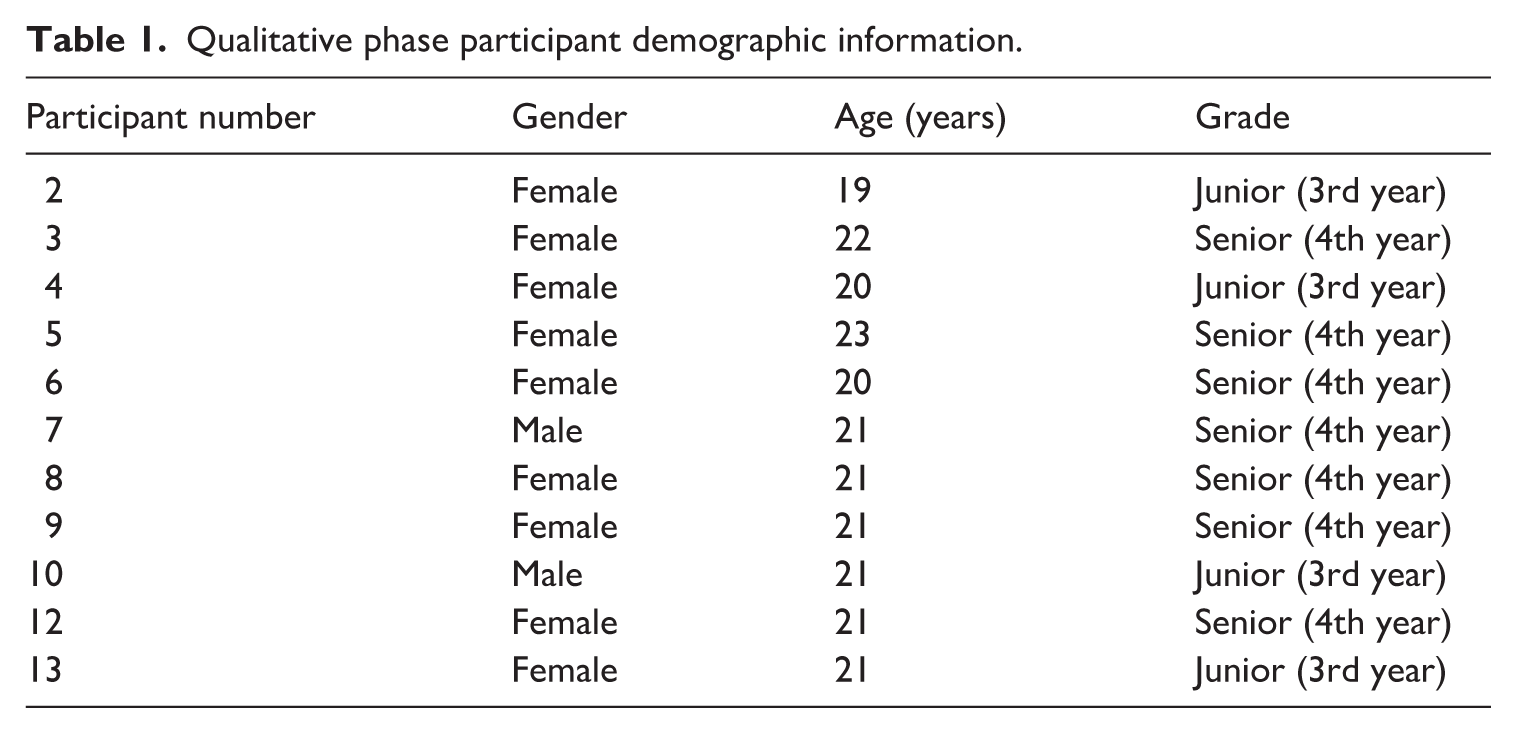
The participants of this mixed-method study included 11 English major students (Table 1) from a university in China for the qualitative phase and 468 university students from various Chinese universities for the quantitative phase. A convenience sampling strategy was adopted as it’s the most commonly adopted data collection method in this realm of research and best fits the present study. The decision to recruit English majors rather than students from other disciplines in the qualitative phase was based on the assumption that these students, having chosen English as their major, are more likely to demonstrate perseverance in learning. This focus was essential, as the interviews would yield limited insights if participants lacked sustained effort in their English learning journey.
Qualitative phase participant demographic information.
The qualitative data analysis adhered to Braun and Clarke’s (2021) six-phase RTA, a recursive process that allows for a thorough examination of the data (detailed steps will be introduced later). NVivo 14 was the software that served as the primary tool for coding and theme development. The original data was in Chinese, but all codes, themes, and data excerpts included in the results were translated into English for reporting. This study employed a constructionist framework, recognizing the socially constructed nature of reality and adopting a deductive approach grounded in theoretical frameworks. Additionally, the analysis took an experiential stance, focusing on participants’ subjective experiences and perspectives rather than a critical approach aimed at uncovering power dynamics or ideological influences. This method enabled a nuanced interpretation of latent meanings within the data.
For the quantitative phase, demographic data indicated that the sample included 120 men (25.6%), 346 women (73.9%), and two participants identifying as other genders (0.4%), with ages ranging from 18 to 28 (M = 20.63, SD = 1.739). Most participants were aged between 19 and 22 (81.6%). Their CET-4 scores, a measure of English proficiency, ranged from 300 to 700 (M = 494.49, SD = 54.221). Reported MG ranged from 28 to 119 (M = 90.739, SD = 14.297), and SE scores ranged from 14 to 40 (M = 29.885, SD = 4.337). Quantitative data were analyzed using SPSS 27.0.
The study was approved by the University of Auckland Human Participants Ethics Committee (Protocol no. UAHPEC24080). Participants provided informed consent via a participant information sheet and consent form. To protect anonymity, no identifiable information, such as names or contact details, was collected.
3 Instruments
A set of guiding interview questions was carefully designed prior to the interviews to ensure that key areas of interest were addressed. The questions were formulated in Chinese to facilitate a natural flow of communication. However, the interview process was not rigidly structured around these questions. Flexibility was emphasized, allowing additional questions to be included as needed and the sequence of questions to be adjusted based on the dynamics of the conversation. Aside from ice-breaking, background, and interval questions, several interview questions were designed directly to address the research questions. Table 2 provides further details.
Research questions and interview guiding questions.

For the quantitative phase, the questionnaire included instruments measuring learners’ MG and SE, alongside demographic questions and an assessment of English achievement. Learners’ English achievement was gauged using their scores from the College English Test Band 4 (CET-4), a standardized national examination for university students in China. Since CET-4 scores are often required for earning a bachelor’s degree, they serve as a valid and reliable measure of English learning performance.
The Metacognitive Awareness of Grit Scale (MCAGS), a 17-item instrument developed by M. Wang et al. (2023), was used to measure learners’ MG. The scale employed a 7-point Likert format, ranging from 1 (“I strongly disagree”) to 7 (“I strongly agree”). This scale was designed specifically to probe into English learners’ MG, which is the best fit for the present study compared to other domain-general metacognition or grit scales. Items in this scale reflect learners’ perceptions and regulation strategies for their PE and CI levels. Sample items are “I am a good judge of how well I can persist in learning English,” and “Setting specific goals helps me maintain a consistent interest in learning English.” To assess learners’ SE, the 10-item General Self-Efficacy Scale (GSE) by Schwarzer and Jerusalem (1995) was included. The scale was answered on a 4-point scale from 1 (not at all true) to 4 (exactly true). This reliable scale has been widely used across different research realms when examining individuals’ SE level. For the present dataset, the MCAGS and GSE demonstrated excellent reliability, with Cronbach’s alpha scores of .920 and .873, respectively.
4 Data analysis
The audio transcripts from the qualitative study were analyzed using the RTA method. Unlike traditional TA, RTA provides a flexible framework that prioritizes researcher subjectivity, making it especially suitable for studies requiring nuanced and interpretative approaches. In RTA, themes are not viewed as simply emerging from the data. Instead, they are actively constructed by researchers through deep engagement with the dataset and theoretical frameworks. This approach values depth, complexity, and insight over the objectivity and replicability emphasized in traditional TA, which aligns with a quantitative, positivist paradigm. In RTA, the researcher’s positionality, experiences, and reflexive insights are central, ensuring that subjectivity informs the analysis. The decision to adopt RTA was guided by its alignment with the study’s aim of exploring English learners’ metacognitive awareness and regulation of grit, an area requiring interpretative depth and flexibility.
RTA involves six recursive phases, providing a structured yet adaptable framework for analysis. The first phase involves immersing oneself in the data to develop familiarity and record initial insights. In the second phase, relevant data segments are systematically coded to address the research questions. The third phase focuses on theme generation, where codes are grouped into candidate themes based on shared meanings and guided by theoretical approaches. The fourth phase involves reviewing and refining themes to ensure coherence and relevance. In the fifth phase, themes are finalized, named, and defined, with clear organizing concepts. Finally, the sixth phase involves producing a cohesive narrative that integrates researcher reflexivity and participant insights. These phases are iterative, allowing for ongoing refinement of codes, themes, and interpretations as deeper engagement with the data occurs. Figure 1 depicts this procedure in a more accessible manner.
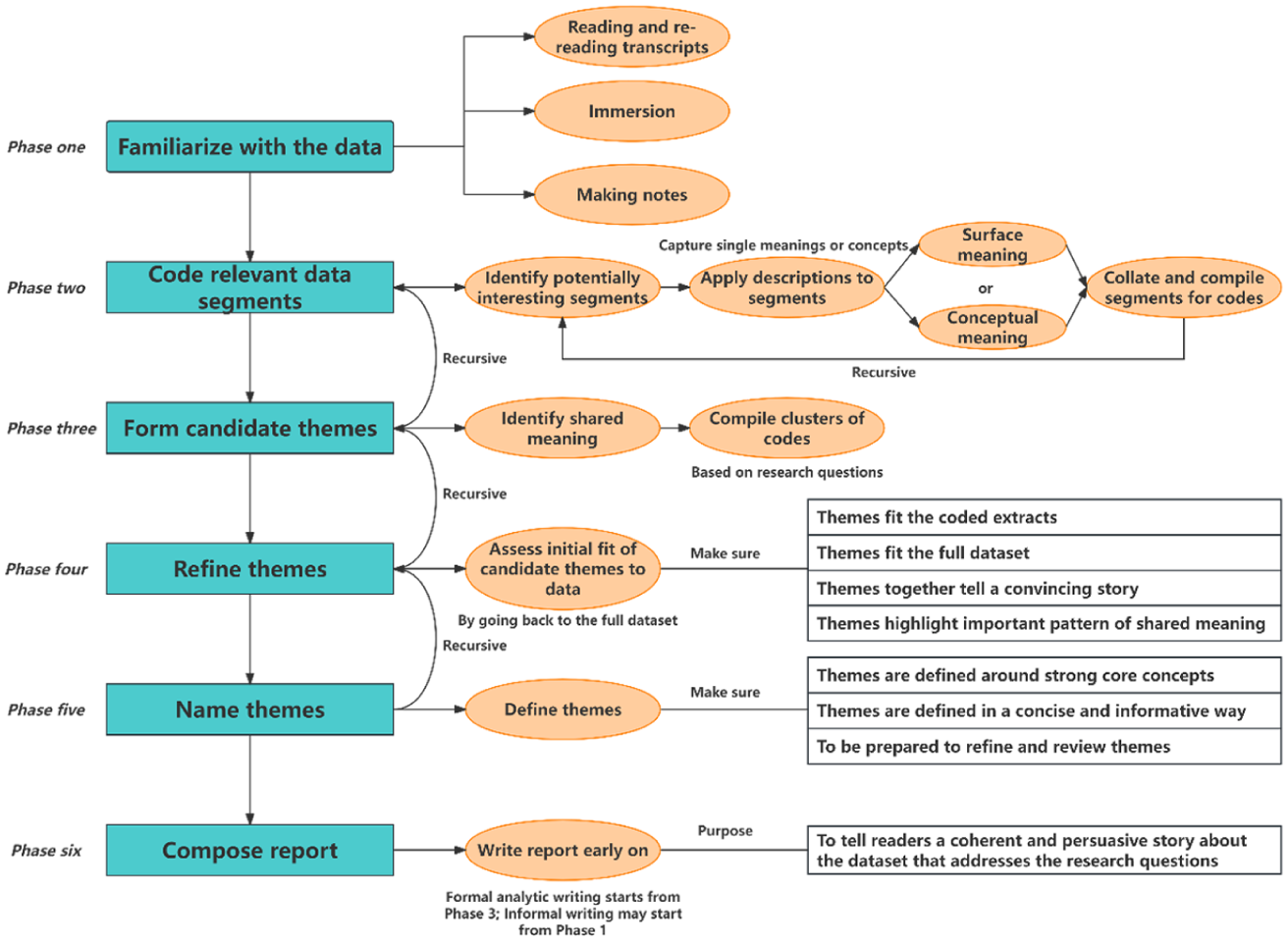
Six-phase RTA procedure diagram.
For the quantitative study, regression analysis was used to test the first two research hypotheses. The mediation role of learners’ language achievement was examined using the PROCESS macro (Model 4) for SPSS (Hayes, 2022), employing 5,000 bootstrap samples to estimate confidence intervals for indirect effects. This approach ensures robust statistical analysis and provides insight into the relationships among MG, English learning achievement, and SE.
IV Results
1 Qualitative findings
A key finding of the qualitative study was that while some participants initially stated they had never reflected on their grit, deeper discussions revealed otherwise. Participants shared that reflections occurred and strategies were used to regulate their grit. Five themes were constructed to address the research questions: (1)
a Grit and gritless
When asked what their opinion of their English learning grit was, some participants acknowledged having low levels of grit: Interviewer: Next, I’d like to understand more about your grit in learning English. Over such a long period, how do you view your grit in learning English? Participant 3: Grit. . . I don’t think I actually have much grit.
This comes as a surprise when being discovered. Learners in the Chinese educational system mainly had studied English for over nine years before college. Since our participants were all English major students, we wondered what kept them going through this process and resulted in their enrollment in the English major if they could not maintain perseverance in learning English. It is possible that the compulsory nature of taking English courses in the Chinese educational system represents the sophisticated curriculum design and systematic learning throughout the entire preuniversity English learning stages. Under such a condition, learners are just required to comply with what the teachers taught and complete whatever assignments are requested by teachers. It signals that learners do not need too much grit to learn English. They just need to follow the instructions. However, some participants shared that they do not have high grit levels, not because they cannot have, but because they do not need to have: Interviewer: So, in the process of persisting in learning English, how do you manage to stick with it? What’s the process like for you? Participant 12: Actually, for me, I’ve never really had to make a special effort to stick with it. . . I simply love learning it. I feel like I’ve truly managed to make learning enjoyable.
Here, another crucial revelation was clear. Learners’ grit seems to be highly connected to their enjoyment. But this is not a surprise as it is supported by the findings from the exisiting literature (Elahi Shirvan et al., 2021; E. Liu & Wang, 2021). Although participants generally reported that they did not need to be perseverant in learning, their grit levels were still high because they exhibited consistent interest.
Together, these findings answered our first research question: What do participants feel about their English learning grit when reflecting on their learning experiences? English learners in a Chinese university experience mixed statuses of English learning grit. Some reported having low levels of grit while some displayed consistent interest.
b Grit-promoting factors
Achievements seem to be the strongest factor that promotes learners’ grit, which was mentioned by the majority of our participants: Interviewer: So, when you see your achievements and progress, do you think this will, in turn, motivate you to continue learning more persistently? Participant 10: Yes, definitely. When you see progress, you feel that all the time you’ve spent persisting has been worthwhile. Without any progress, it would actually feel quite frustrating.
Interest is another significant factor that drives learners to persevere in English learning: Participant 2: I also used to sing the ABC song when I was little. This was where my interest started. Later on, in middle school, besides having good teachers, I found that I could understand things quickly and my grades were good. I think getting good grades gave me a sense of satisfaction. That’s how I got through middle school. But when I got to high school, I started feeling a sense of burnout. Why? I'm not sure, but maybe because high school was less fun, and the focus was more on textbooks, grammar, and vocabulary.
This description from Participant 2 demonstrates that her interest in English started with listening to English songs. It was her interests that cultivated her passion for English learning, resulting in desirable achievement that kept her going through middle school. Her sense of burnout due to the lack of access to her interests during high school further supported the argument that interests can promote learners’ English learning grit. Naturally, with interest being the significant factor, enjoyment also plays a crucial role in promoting or maintaining grit: Interviewer: So, what is the source of your perseverance in learning English? Participant 13: The source of my perseverance primarily comes from my strong interest in English and also from the enjoyment I mentioned earlier.
Throughout the coding process for grit, it appears that participants tended to avoid discussing their perseverance in English learning. Instead, they loved to talk about what promoted their CI. Aside from these, participants also reported that factors such as responsibility, goals and tasks, the expectation for test rewards, and even sunk cost promoted their English learning grit.
c Denial of grit reflection
When my participants were directly asked about whether they had ever reflected on their grit, some of them responded “No”: Interviewer: I also want to know if you often reflect on whether you’re still persisting in learning. Do you ever think about this process? Participant 2: I haven’t really thought about it because I usually have a lot going on. . .
Another participant provided the reasons why the reflection on grit is absent: Interviewer: During your learning process, did you ever reflect on or think about your perseverance in learning? Did you ever wonder why you kept persisting in learning English? Participant 5: Because of exams, this question doesn’t need to be thought about. . . It’s just day after day. You spend so many hours a day, and every teacher comes in and reminds you of it, so you don’t need to think about it.
Participant #5 offered an interesting explanation as to why there is no reflection on one’s English learning grit: because it is a natural process. This supported our hypothesis mentioned previously regarding why grit is not needed. Learners only need to “go with the flow” and do whatever their teachers tell them to do to achieve better performance. However, we believe this is still not accurate. Although teachers and the educational system have governed the planning and goal-setting process, teachers cannot supervise learners’ every learning process. Learners themselves made efforts to achieve their goals and tasks. In this process, they will need to maintain or promote grit. And where grit is needed, reflections and regulations may also take place.
d Implicit grit reflection
Nearly half of the participants reported having those moments when they thought about their English learning grit instead of being asked directly. Participant Number 3 provided a response: Interviewer: During the pandemic, when you weren’t putting in much effort, did you ever reflect on your state? Like, did you think to yourself, “Oh, I’m not persisting in learning English anymore”? Did you ever think about that? Participant 3: I feel like I did reflect a bit on why I fell into that state of not studying English. . . During the pandemic, I was more focused on having fun, and since my major is English, if I don’t study English well, I’m not doing my main job properly, so it had a significant impact on me. Because the impact was so big, I definitely had to reflect on it. It might affect my future employment, so I feel I need to do my job well.
Aside from general reflection on grit, some participants also reported that they are aware of strategies to help them maintain grit: Interviewer: So, what methods do you think help you persist in learning English? Can you summarize what works for you? Participant 2: Reading, listening to music, and reading some articles. Interviewer: So, basically, the methods that make you happy. Participant 2: Yes, pretty much those.
Once again, the aspect of consistent interest is prominently revealed. To this point, findings from the data offer an insight that when considering grit as a concept signaling learners’ ability to keep learning, maintaining a consistent interest in English is valued more than maintaining PE. More importantly, participants’ reflection on their English learning grit seems to be an implicit process considering their explicit denial of having reflected on their grit but later confirmed with engaging conversations. This answered our second research question: How do participants perceive and reflect on their English learning grit during these experiences?
e Grit regulation
When awareness of strategies available to use for maintaining and promoting English learning grit is confirmed, it is natural to assume that empirically using these strategies to achieve this purpose is possible. Over half of our participants reported the use of strategies to regulate their grit: Interviewer: Now that you’re reflecting on it, what methods do you think you could use to help yourself persist or maintain a long-term interest in English? Participant 10: For example, setting a long-term goal.
Setting goals is a good way to help learners persist in English learning. Meanwhile, finding easier ways to learn is also preferable: Interviewer: When you feel that you no longer like it when you can’t maintain your interest or even your perseverance, have you ever used any methods to force yourself or to boost your interest in order to change the situation? Participant 6: Yes, I have. I’ve tried telling myself to find easier ways to learn. For example, I’ve always liked a certain concept, but I didn’t start learning it until college. In high school, I would tell myself to build a solid foundation, that these things are actually simple. I kept telling myself, “These things can be easy; you just haven’t found the key points yet.” So, I would keep going over the 3,500 vocabulary words and doing basic exercises. But later, I realized that what I enjoyed doing was what I already knew well.
Participant 2 reported that an occasional shift of attention helps maintain grit: Interviewer: Now, carefully think back and reflect on this: When you were studying, and you realized, “I can’t keep studying, I can’t keep going,” but you knew you still had to study, what did you do? Participant 2: At that moment, I might shift my attention and maybe go out for a walk.
These results provide insight into the answer for our third research question: What strategies do participants use to regulate their English learning grit? Learners actively used various strategies to help them improve or maintain their grit status.
Participants also reported that using strategies to regulate their grit can promote their English learning achievement, which partly answers the fourth research question: How do participants’ reflections and regulatory strategies influence their English learning achievements and SE? Interviewer: Great, so it’s your interest that drives you. Not only does it push you to keep moving forward, but it also drives you to actively identify and solve your own problems. Do you think this approach—where you notice a problem, reflect on it immediately, and then find a way to solve it—has an impact on your academic performance? Participant 13: Of course. If I identify and solve problems right away each time, I’m constantly in a process of learning and improving, so it definitely helps my academic performance.
Participant 9 also discussed how regulation of grit leads to better achievement, thus promoting her SE, when she was talking about how she managed to recover from low grit levels: Interviewer: Do you think using this method to help you maintain your interest in learning English, such as reading novels, contributes to improving your academic performance? Participant 9: Yes. . . Maintaining a long-term passion for it motivates me to invest more time and energy into learning English. So, essentially, I’m still focusing on learning English, which, in turn, helps improve my academic performance. Interviewer: So, do you think that methods like reading books, which help you maintain your interest in learning English, also contribute to boosting your self-efficacy in learning English? Does it make you feel “the more I learn, the more confident I become”? Do you experience this? Participant 9: Yes, but I feel that this process is quite slow. . . For example, after a year of using my current study methods to learn English, I personally don’t see significant changes in myself. My confidence (partly) comes from . . . receiving good results . . . That’s what really gives me a noticeable boost in confidence.
The statement from Participant 9, along with most other participants, provided an insight that metacognitive perception and regulation of English learning grit leads to enhanced SE through their improved study outcomes, which answers our final research question: What is the relationship between reflections and regulations on English learning grit, SE, and learning achievements?
Participant Number 2 even explicitly stated that regulating grit does not affect SE: Interviewer: So, when you realize you can’t keep studying and then use some methods like “I need to clear my mind or find a way to continue studying,” and you actually manage to keep going, does this have any effect on your confidence in learning English? Participant 2: Confidence? I don’t think it has much to do with confidence. To build confidence, you usually need to achieve something or gain some recognition. But in this case, I’m just making minor adjustments to keep going, and I don’t feel like I’ve achieved anything. It’s more about going through the motions and doing what needs to be done.
This response also supported the argument that achievement promotes SE; not the other way around.
In summary, results from this qualitative exploration offered significant and interesting findings that shed light on how learners metacognitively perceive and regulate their English learning grit, and, more importantly, how their language learning achievement and SE can be affected. See Figure 2 for a diagram summarizing the main findings.
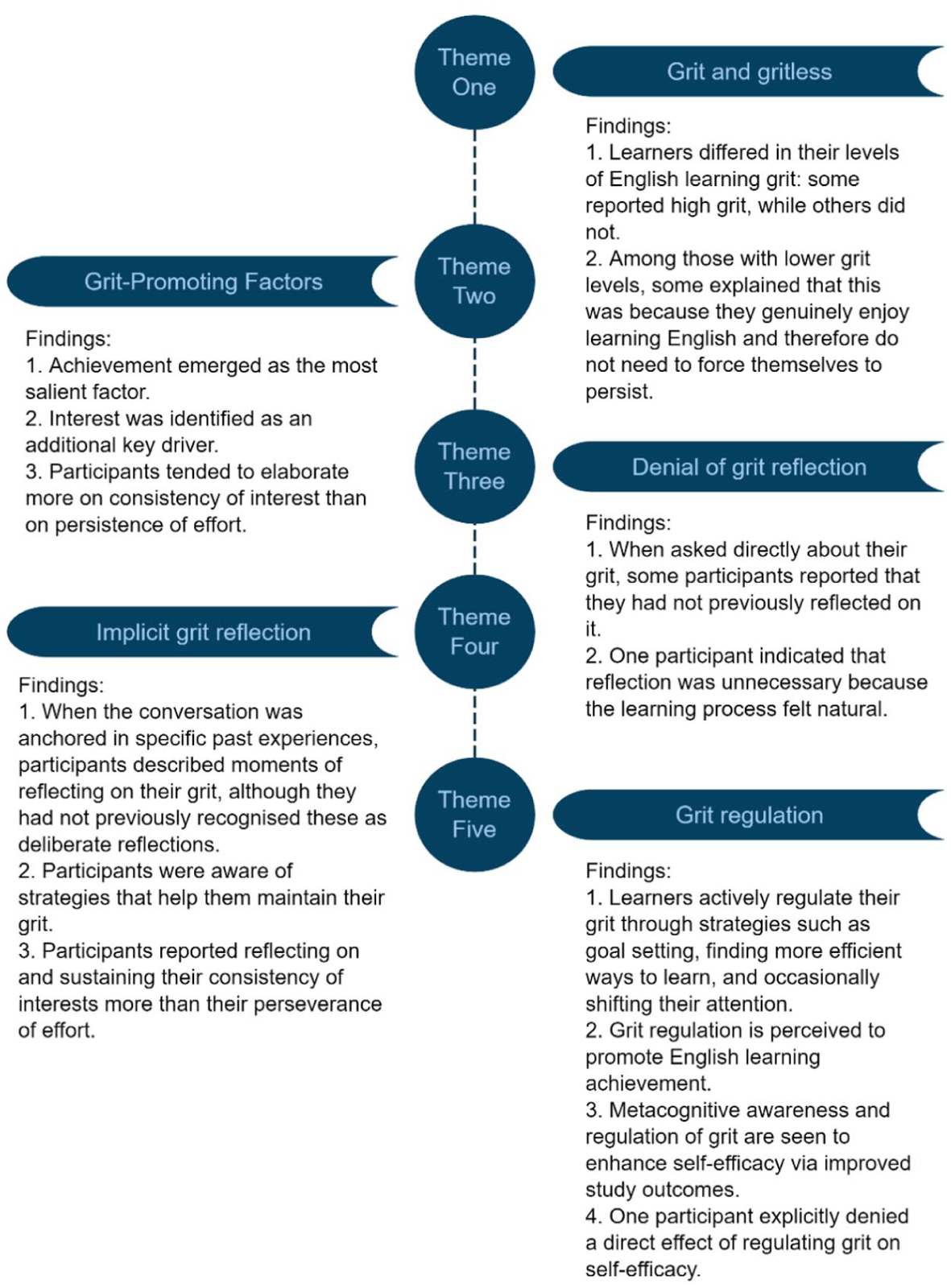
Summary of main findings.
2 Quantitative study
a The effect of MG on achievement and SE
Regression analysis indicates that learners’ MG significantly and positively predicted their English learning achievement (F1, 466= 24.528, p < .001). Table 3 presents a more detailed statistical report.
Regression analysis of MG on achievement.
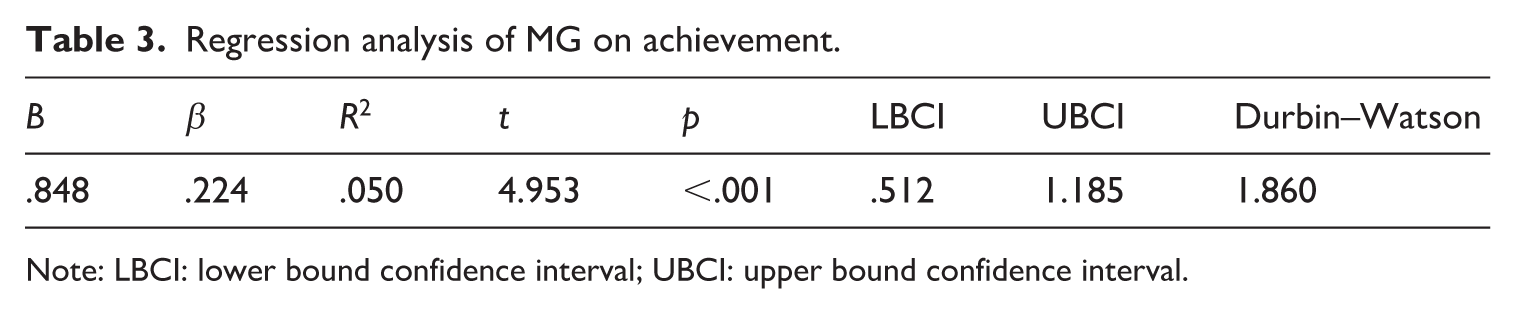
Note: LBCI: lower bound confidence interval; UBCI: upper bound confidence interval.
Regression analysis indicates that learners’ MG significantly and positively predicted their SE (F1, 466= 175.508, p < .001). Table 4 presents a more detailed statistical report.
Regression analysis of MG on SE.
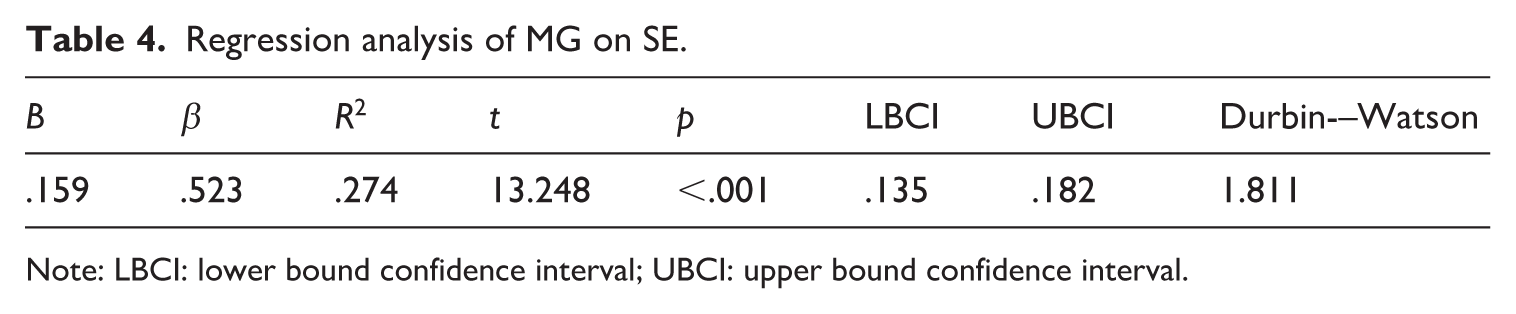
Note: LBCI: lower bound confidence interval; UBCI: upper bound confidence interval.
b The mediating role of English achievement
The results from the qualitative study indicate that learners’ English learning SE was boosted by enhanced performance, which is the consequence of learners’ MG. Hence, a mediation analysis was conducted to examine the role of English learning achievement (CET-4) as a mediator in the relationship between MG and SE. Existing literature also supports our proposal of achievement as a mediator because prior work shows that grit, especially the PE factor, positively predicts academic performance (Wu et al., 2022; W. Zhang et al., 2022), and performance (mastery experiences) is a primary source of SE (Bandura, 1978), implying a plausible pathway from grit to achievement and to SE. The analysis was performed using the PROCESS macro (Model 4) for SPSS (Hayes, 2022), with 5,000 bootstrap samples to estimate the confidence intervals for the indirect effects.
Results of regressions for the direct path (MG→CET-4) and the direct effect of MG on SE have been reported previously. Although both of these paths revealed significant results, the indirect effect of MG on SE through CET-4 was not statistically significant, b = –.001, SE = .003, 95% CI [–.007, .006], and the standardized indirect effect was negligible, β = –.003. The model accounted for 27.4% of the variance in SE, R2 = .274. Considering that the total effect of MG on SE, without considering the mediator, was significant (see previous results), higher levels of MG are directly associated with higher levels of SE.
The mediation analysis suggests that the relationship between MG and SE is predominantly direct, with no significant mediation by English learning achievement. This implies that MG influences SE directly, rather than through its effect, the English learning achievement.
V Discussion
1 Qualitative exploration
a Nature and perceptions of grit
Participants demonstrated differing levels of grit, with some maintaining high academic performance despite low perseverance. This outcome appears linked to external factors, such as the structured and compulsory nature of English education in China. In this context, PE often depends more on teacher guidance and institutional frameworks than on individual motivation. This reflects findings from collectivist cultures, where external expectations shape persistence (Datu et al., 2016; Teuber et al., 2021).
Conversely, participants driven by intrinsic motivation expressed a deep and consistent interest in English learning, which naturally sustained their perseverance. These learners reported that their passion for English reduced the need for deliberate effort, as their perseverance occurred organically. This finding aligns with prior research, suggesting that intrinsic motivation and consistent interest are critical for sustaining long-term goals (Karlen et al., 2019; Von Culin et al., 2014). For instance, Elahi Shirvan et al. (2021) found that L2 learners who sustained high levels of FLE over time subsequently exhibited higher levels of grit. Similarly, studies show that positive emotions and internalized goals broaden learners’ engagement and build resilience in language study (Jin, 2024; Lee, 2022). Our participants’ testimonies echo this dynamic: Those who truly enjoyed English tended to put in extensive study hours willingly, an outcome well-documented in motivation research (i.e., interest-driven learners persist longer and attain more).
Notably, several learners in our study remarked that without genuine interest, forcing themselves to persevere was unsustainable; they would “burn out” or lose focus despite external pressures. This emphasis on CI over PE is intriguing in light of the broader grit literature. While passion has been theorized as one of the two pillars of grit (Duckworth et al., 2007), some large-scale analyses have reported that the perseverance facet is a stronger predictor of performance than the consistency facet (Lam & Zhou, 2022). Yet, participants in our study implicitly understood the opposite side: Without sustained interest, perseverance may not be self-renewing. In language learning especially, maintaining enthusiasm for the language can be the driving force that makes persistence possible over the many years required to achieve proficiency. This learner perspective finds support in L2 motivation frameworks—long-term success in a L2 is often attributed to internal desire (integrative or intrinsic motives) that keeps learners invested despite challenges (Ushioda & Dörnyei, 2021). Additionally, participants expressed a desire for greater autonomy in their learning experiences, suggesting a preference for methods that enhance personal agency. This aligns with self-determination theory in L2 acquisition, which posits that supporting learners’ autonomy and intrinsic goals yields more persistent effort and better outcomes (Noels et al., 2019).
Finally, achievement emerged as the most significant factor influencing grit, with students who experienced success tending to persist more, aligning with social-cognitive theories that past mastery experiences bolster one’s motivation (Bandura, 1978). Several participants emphasized that doing well in English reinforced their commitment in devoting effort, which aligns with prior observations that achievement and perseverance reinforce each other (Sudina & Plonsky, 2021). Nevertheless, even when largely involuntary, learners’ grit regulation strategies effectively enhanced perseverance, which positively influenced their academic success and SE.
b Implicit reflection and regulation
An unexpected finding was the participants’ limited deliberate reflection on their grit, challenging traditional metacognition theories emphasizing conscious self-monitoring for effective learning (Flavell, 1979). The implicit nature of perceiving and regulating grit resonates with research indicating that self-regulation can occur automatically without conscious awareness (Vohs & Baumeister, 2017). It also aligns with theories of unconscious metacognition (Koriat & Levy-Sadot, 2000). In other words, learners were regulating their persistence in English without always articulating or even being fully aware that they were doing so. This implicit regulation may stem from the structured nature of English education in China, where well-defined curricula and detailed syllabi reduce the necessity for active self-regulation. When the learning path is largely prescribed, students can rely on routine and external scaffolding to stay on track, rather than consciously strategizing how to persevere. Similar phenomena have been noted in cognitive science: For routine tasks, individuals often develop automatic self-regulatory habits that operate below the level of conscious thought (Vohs & Baumeister, 2017). Our participants seemed to exhibit such automatized perseverance, cultivated by years of attending English classes and preparing for tests as part of their normal academic routine.
Despite the lack of deliberate reflection, participants demonstrated awareness of various strategies to regulate their grit. These strategies included setting realistic goals, seeking validation from teachers, and engaging in enjoyable learning activities. Participants emphasized that these strategies helped maintain motivation and perseverance during challenging periods, even if they had never explicitly labeled these tactics as “grit regulation” strategies before. Pintrich’s (2004) concept of metacognitive control supports this finding, suggesting that learners’ ability to monitor and adjust their efforts is integral to achieving learning goals. Our results extend this idea by indicating that such monitoring and adjustment can be effective even when done intuitively rather than consciously. Many learners, for example, described how they would take a break to watch English movies or songs when they felt bored or discouraged with studying, which is a way to refresh their interest. Others noted that simply having a clear long-term goal (e.g., “I want to study abroad”) pushed them to keep trying, even if they were not actively encouraging themselves at each study session. These examples align with the notion that metacognitive strategies can be deployed implicitly; learners might feel when their effort is waning and respond by gravitating to more enjoyable practice or by reminding themselves of why they started, without a formal self-reflection dialogue. The fact that students could recount these methods when interviewed suggests that they possess a latent MG, one that operates in the background until brought to their attention.
However, the motivation behind grit regulation varied. For some, it was driven by intrinsic interest, while others relied on extrinsic factors such as achieving recognition or meeting academic expectations. This distinction maps onto well-established motivational orientations in educational psychology (Ryan & Deci, 2000): Some learners self-regulate out of internal desire, others due to external pressure. Both groups in our study found ways to persist, but the former often did so with less effort. This again underscores the interplay between the CI component of grit and the PE component. The intrinsically motivated students leveraged their interest (CI) to automatically drive effort (PE), whereas the extrinsically motivated students had to consciously push their effort (PE) due to outside demands, potentially with less inherent enjoyment. Importantly, even the latter group benefited from implicit forms of support—for example, one student mentioned she would picture the moment of her parents’ pride at graduation whenever she felt like giving up on a difficult English assignment, a largely automatic visualization that reignited her effort. Such findings invite further research into unconscious motivational strategies: To what extent can learners cultivate productive habits of mind that support grit without continuous conscious oversight? Our results suggest that in environments where structure is provided, learners develop an intuitive form of self-regulation. In less-structured environments (i.e., self-study or online learning), making these processes explicit might become more necessary. Overall, this study’s qualitative insights add to a growing recognition that metacognitive processes need not always be explicit, a recognition also emerging in cognitive science with terms like “implicit metacognition” (Frith, 2012). Language educators might thus consider not only teaching explicit learning strategies, but also shaping the learning context and routines in ways that foster beneficial automatic behaviors (for instance, consistent study schedules or habitual reflection prompts), effectively allowing grit to be regulated with minimal conscious effort.
c Effects on achievement and self-efficacy
Participants frequently attributed their academic success and enhanced SE to their ability to regulate grit. For example, consistent interest motivated learners to invest significant time and effort in English learning, which contributed to improved performance. However, while qualitative findings highlighted the importance of grit in fostering achievement, quantitative results indicated that its predictive power was modest. This suggests that external factors, such as classroom dynamics, teaching methods, and peer support, may exert a greater influence on academic outcomes.
Self-efficacy, on the other hand, was strongly linked to grit regulation. Participants reported that reflecting on and adjusting their perseverance positively impacted their confidence in tackling language challenges. This finding aligns with Bandura’s (1978) theory, which emphasizes the role of self-reflection and emotional regulation in building SE. Interestingly, participants often attributed their SE to external achievements rather than internal processes, suggesting a gap in their awareness of the mechanisms underlying their confidence. Further discussion will be presented in the next section along with the quantitative findings.
2 Quantitative evidence
The quantitative results confirmed the significant role of MG in predicting both language achievement and SE. However, the findings revealed divergent effects: While grit strongly predicted SE (R2 = 27.4%), its impact on achievement was relatively small (R2 < 10%). These findings highlight the complexity of grit’s influence on academic and psychological outcomes.
a Divergent effects on achievement and SE
Taken together, the mixed-methods findings revealed a clear divergence in grit’s influence on academic achievement versus SE. On one hand, both the qualitative narratives and the quantitative survey data converged in showing that grit is strongly linked to learners’ SE in English. Participants described how persevering through challenges bolstered their confidence, and this aligns with the quantitative result that grit significantly predicted higher SE levels. This convergence is well-supported by prior research: Grit (especially the perseverance component) tends to correlate positively with academic SE (Usher et al., 2019). In university student samples, those with greater grit reported stronger confidence in their learning capabilities. For example, Alhadabi and Karpinski (2020) found that gritty students set more ambitious learning goals and maintained higher SE, which in turn contributed to better academic persistence. Such findings echo educational psychology theories that sustained effort builds mastery experiences, thereby enhancing SE (Bandura, 1978). Consistent with this, large-scale studies have shown moderate correlations (around r = .3 to .5) between perseverance and SE (Usher et al., 2019), suggesting that students who persist longer and overcome obstacles tend to develop a stronger belief in their own abilities. Our participants’ experiences of “grit breeding confidence” thus resonate with the broader literature indicating grit’s positive impact on motivational beliefs such as SE (Alhadabi & Karpinski, 2020).
In contrast, the effect of grit on English achievement was notably modest in our quantitative results, even though learners in our qualitative phase believed their gritty efforts improved their grades. The statistical analyses showed only a small portion of variance in English exam performance attributable to grit (a finding mirrored by the low correlations between grit and GPA in other studies; Lam & Zhou, 2022; Usher et al., 2019). This discrepancy suggests that while students credit perseverance for helping them learn, in practice grit alone does not translate strongly into higher test scores or course grades. One possible explanation is that FL achievement is highly multifaceted, and dependent on numerous external and individual factors beyond grit. Prior research in L2 acquisition has indeed found that motivational and contextual variables (e.g., teacher support, learning strategies, anxiety, and prior proficiency) collectively overshadow any single trait in predicting language outcomes. For instance, Alrabai and Moskovsky (2016) showed that a combination of motivation, attitude, anxiety, and autonomy had significant effects on EFL achievement, underscoring that persistence alone cannot guarantee success. Similarly, Ardasheva and Tretter (2013) demonstrated that English learners’ academic performance was jointly influenced by individual differences (such as motivation and self-regulation) and environmental support, rather than by perseverance in isolation. Our finding that grit explained relatively little of the variance in English scores aligns with large meta-analyses in education: Overall, grit has at best a weak to moderate link with academic performance (Lam & Zhou, 2022). Notably, PE tends to exert the most predictive power grit has, while the passion for long-term goals (CI) often shows negligible associations with grades (Bowman et al., 2015). Some research even suggests that once factors such as prior achievement or general conscientiousness are accounted for, grit adds little unique prediction of GPA (Rimfeld et al., 2016). Thus, the quantitative result that grit’s direct impact on English achievement was limited is not an anomaly but rather consistent with a body of evidence cautioning against overestimating grit as an academic booster (Credé et al., 2017). Qualitatively, our participants believed that perseverance helped them get better results, a belief in line with the idea that hard work pays off, but the modest empirical effect implies that other elements (e.g., quality of instruction, language aptitude, or learning strategies) substantially mediate success in English learning. Indeed, it appears grit contributes more reliably to psychological outcomes like confidence and resilience than to short-term test outcomes (Usher et al., 2019).
b Achievement as a mediator
This divergence is further reflected in the attempted mediation pathway between grit, achievement, and SE. One might expect that perseverance improves language performance, which in turn boosts SE through a sense of accomplishment. Results from our qualitative phase offer support for such a claim. However, our quantitative statistical analysis found no significant mediation: English achievement did not carry the effect of grit to SE. In other words, gritty students did not become more confident because they achieved higher scores; instead, their grit and confidence were directly linked. This nuanced result diverges from participants’ own attributions (many felt that doing well in exams due to hard work made them more confident) and points to an important insight: Grit may bolster SE through pathways other than immediate grade gains. Prior studies offer a similar conclusion. Usher et al. (2019), for example, observed that when grit and SE were modeled together, SE emerged as the stronger direct predictor of academic outcomes, and it mediated much of grit’s effect on those outcomes. In that longitudinal study, perseverance had only weak direct effects on students’ actual grades, but it was associated with higher SE, which then drove performance improvements. Translated to our context, this suggests that gritty language learners might reap the benefits of their perseverance in forms like increased confidence, engagement, or WTC, even if their test scores do not immediately reflect a large jump. Over time, those psychological benefits could lead to better performance, but within the cross-sectional timeframe of our study, grit’s payoff was more evident in SE than in grades. This finding is in line with the broader grit literature: Perseverance fortifies learners’ motivational resilience (e.g., pushing them to keep practicing despite setbacks), thereby directly elevating SE, but academic achievement in a complex skill like language is influenced by so many factors that grit’s indirect effect via improved scores remained elusive. In sum, the quantitative evidence corroborated the qualitative insight that grit builds learners’ confidence (a convergence supported by many studies) while simultaneously diverging from learners’ perception that grit guarantees higher achievement. Our results reinforce the consensus that grit’s academic benefits are real but modest (Lam & Zhou, 2022), and that its more pronounced impact may lie in nurturing self-belief and adaptive learning behaviors rather than instantly boosting language test scores. Importantly, this does not undermine the value of perseverance; rather, it situates grit as one piece of a larger puzzle in language learning success, whose influence is significant for affective outcomes but interwoven with other factors for academic outcomes.
VI Conclusion
This study highlights the critical role of MG in English learning. While participants demonstrated implicit regulation of grit, their strategies significantly contributed to academic success and SE. However, the modest impact on achievement underscores the need for further exploration of external factors influencing language learning outcomes.
1 Implications for educators and learners
The significant role of MG in language learning is prominent both for educators and learners. To enhance students’ perseverance and engagement, educators may consider integrating explicit metacognitive strategy instruction, encouraging reflection through self-assessments, goal-setting exercises, and self-monitoring techniques that promote sustained effort. A growth-oriented classroom environment that values progress over perfection, along with enjoyable and meaningful learning experiences such as storytelling and real-world tasks, can help sustain motivation (Bardach et al., 2019). Collaborative learning, peer support, and emotion regulation training should be incorporated to help students navigate challenges and persist in their language learning journey. Encouraging self-reflection to strengthen SE, along with fostering long-term engagement beyond the classroom through immersive experiences and extracurricular activities, can further support learners’ development (Chung et al., 2021).
For learners, developing MG can significantly enhance their ability to persist in language learning. Engaging in self-reflective practices such as journaling and goal tracking can help students recognize their progress and adjust their strategies accordingly (Hübner et al., 2010; Schunk, 1990). Setting realistic yet challenging goals and monitoring their own learning process can foster a sense of autonomy and intrinsic motivation (Deci & Ryan, 2000). Building resilience through emotion regulation techniques, such as reframing setbacks as learning opportunities, can help learners maintain long-term commitment (Troy et al., 2023). Participating in peer-supported learning communities and seeking feedback from teachers can further reinforce their perseverance (Tinto, 1997). By actively implementing these strategies, learners can develop the self-discipline, confidence, and persistence necessary for sustained language learning success.
2 Limitations and future directions
This study has several limitations. The qualitative findings are context-specific, reflecting the unique cultural and educational environment of Chinese learners. Future research should adopt cross-cultural approaches to examine how grit operates or how compulsory instruction influences grit components across diverse educational systems, particularly in individualist cultures. Additionally, the low explanatory power of grit for achievement suggests that more comprehensive models are needed to capture relevant external factors, such as teacher support, peer recognition, and classroom atmosphere.
The contrasting effects of grit’s subcomponents, PE and CI, warrant further investigation. Qualitative data emphasized the role of consistent interest in sustaining long-term motivation, while quantitative findings suggested that PE might be more relevant for short-term achievements. This dichotomy reflects ongoing debates in the literature about the distinct yet interconnected nature of grit’s dimensions (P.P. Sun et al., 2024; Zhao & Wang, 2023). Future research could explore how these components interact in different learning contexts and how their relative importance varies across cultural settings.
Longitudinal studies could provide deeper insights into the long-term effects of metacognitive awareness on language outcomes. Exploring the interaction between grit and related constructs, such as motivation and self-regulation, would further enrich our understanding of the complex processes underlying successful language learning.
Footnotes
Data availability statement
Data can be made available upon reasonable request.
Declaration of Conflicting Interests
The authors declare that they have no known competing interests.
Funding
The authors received no financial support for the research, authorship, and/or publication of this article.
Ethics statement
The studies involving human participants were reviewed and approved by the University of Auckland Human Participants Ethics Committee (Protocol no. UAHPEC24080), with M. Wang as the first researcher and PhD student, and L.J. Zhang as the supervisor. Informed consent was obtained from all participants. No potentially identifiable human images or data are presented in this study.
