



Abstract
The teaching profession has undergone a dramatic shift in pedagogical practices due to COVID-19. Already facing numerous challenges prepandemic, language teaching in particular has become significantly more difficult, and the effect on language teacher stress and well-being is still being explored. Key to this study is the exploration of growth during trauma, an adaptation of post-traumatic growth. Following previous studies from MacIntyre et al., this article examines changes in language teacher stress, well-being, resilience, and growth during trauma from April 2020 to December 2021 in an online survey of over 1,100 language teachers internationally. Correlations revealed relative stability in associations between stress, growth, resilience, and well-being across three time points. Multivariate analysis of variance (MANOVA) results indicate that language teachers are experiencing less stress regarding their health, higher levels of growth during trauma, and stable levels of resilience and well-being over time. Stress, resilience, and The World Health Organization-Five Well-Being Index (WHO-5) all predicted growth via multiple regression. Mediation analyses revealed significant suppression effects of resilience and WHO-5 well-being on the relationship between personal, professional, and health-related stress and growth during trauma. The current study highlights the importance of growth as a positive outcome resulting from stress, particularly when individuals are resilient and have high levels of well-being. Implications for teacher stress, well-being, and growth during COVID-19 are discussed further.
Keywords
I Introduction
What Does Not Kill Me Makes Me Stronger
- Nietzsche
Teachers are tested by what is a stressful occupation at the best of times, with myriad potential stressors too numerous to comprehensively inventory. Often it is taken for granted that stress leads to a wide variety of negative psychological outcomes such as poorer physical and mental health, lower job satisfaction, and employment turnover. However, the above quote from Nietzsche challenges the notion that stress is unequivocally a bad thing. On the one hand, prolonged or chronic stress has been shown to generate adverse health outcomes, burnout, and even post-traumatic stress disorder (PTSD), a collection of especially severe negative outcomes (Lazarus, 1996, 2006; Maeng & Milad, 2017; Turner & Garvis, 2023). On the other hand, effectively dealing with stress can activate individual protective factors associated with coping and resilience (Carroll et al., 2020; Greenfield, 2015; Reinke et al., 2025; Salvo-Garrido et al., 2025). Successfully navigating stressful, traumatic events can lead to a sense of accomplishment and personal growth consistent with Nietzsche’s oft-quoted maxim (Merton, 2023) and captured in positive psychology concepts such as resilience, grit, and post-traumatic growth (PTG), the other side of the PTSD coin.
In some circumstances, stress and trauma can stimulate profound personal transformation through PTG (Calhoun & Tedeschi, 2014). Unlike PTSD, where individuals experience persistent negative symptoms, PTG represents the positive psychological changes that emerge from grappling with extremely challenging, adverse life circumstances (Calhoun & Tedeschi, 2004). People experiencing PTG often report discovering newfound personal strength, developing deeper relationships, finding new possibilities in life, gaining greater appreciation for life, and experiencing spiritual or existential growth (Henson et al., 2021). Individuals may also develop more sophisticated coping mechanisms, greater empathy for others’ suffering, and a clearer sense of life’s priorities. Rather than negating the pain of trauma, suffering becomes a catalyst for meaningful life changes and deeper understanding (Tedeschi & Calhoun, 2004).
The present study is a quantitatively oriented follow-up to a qualitative study that documented positive and negative language teacher reactions to stress during the COVID-19 pandemic (Gregersen et al., 2021). In our study, we positioned COVID-19 as the catalyst, a stressor for the ages that undoubtedly required adaptation and possibly growth. However, rather than focusing on the negative effects, here we focus on the somewhat surprising, positive side of reactions to COVID-19, proposing a mediation model describing how different types of stress may be related to perceived growth among language teachers during the COVID-19 pandemic, with resilience and well-being playing a role as protective factors.
II Background literature
1 Teacher stress and well-being
Stress generally refers to a negative psychological reaction associated with changes in thoughts, emotions, and behaviors in response to conditions that are considered threatening to one’s well-being (Lazarus, 1996, 2006). A core tenet of the transactional model of stress is the idea that stress results from an appraisal of the interactions between individuals and the environment (Lazarus & Folkman, 1984). Not only does a person generate appraisals of the threat itself, but secondary appraisals also marshal resources to address the threat, activating relevant coping strategies. As such, teacher stress refers to the identification of contextual factors that affect teachers in their profession. In the context of the current study, well-being was measured and defined as the overall positive state (i.e., mood, energy, and interests) experienced by individuals in their daily lives (encompassing quality of life) and is not characterized by the absence of depressive symptoms (Bech et al., 2003; World Health Organization, 2021).
Prior to COVID-19, teaching was considered an especially stressful profession with high turnover rates due to difficult job demands and perceived lack of support (Bottiani et al., 2019; Desrumaux et al., 2015; Fitchett et al., 2018; Johnson et al., 2005; Ryan et al., 2017). Similar concerns are present and may be amplified among language teachers (Bowen, 2016; MacIntyre et al., 2019) dealing with cultural differences, teaching internationally, and experiencing job insecurity (King, 2016; Mercer et al., 2016). Teacher stress impairs student–teacher interactions and the development of effective learning environments, and is consistently indicative of burnout (Breeman et al., 2015; Desrumaux et al., 2015; Larson et al., 2018), reduced teacher self-efficacy and commitment/engagement with the profession (Skaalvik & Skaalvik, 2016), and an overall decline of teacher well-being (MacIntyre et al., 2019; Skaalvik & Skaalvik, 2015, 2018). The language teaching profession was described as “in crisis” (Hiver & Dörnyei, 2017) even before COVID-19 affected the system.
During the pandemic, teachers reported high levels of stress (Huseth-Zosel et al., 2024; Santamaría et al., 2021). Common difficulties included navigating unfamiliar technology, a disconnect from students and colleagues, work–life balance, the maintenance of personal relationships (including parental obligations), and health-related stress, in addition to the rapid conversion to online teaching (Blaydes et al., 2024; Lepp et al., 2021; Marshall et al., 2020). Many teachers said they intended to leave the profession following the 2020–2021 academic year (Steiner & Woo, 2021), with most citing the pandemic as their reason (Diliberti et al., 2021). Consistent with prepandemic research, the presence of emotional support services and autonomy/flexibility were seen as crucial in preventing burnout and emotional exhaustion, and promoted overall teacher well-being (Blair et al., 2024; Blaydes et al., 2024; Çetiner & Levent, 2024; Chan et al., 2021; X.-M. Chen et al., 2024; Collie & Carroll, 2023). Teachers also had to make difficult decisions regarding their instruction, using technology unfamiliar to them, and reducing the amount of individual feedback to balance their workloads (Lepp et al., 2021). Even language teacher candidates experienced difficulties and negative perspectives toward navigating the challenges of the profession in the pandemic (Kissau et al., 2024; Köroğlu, 2023), adding to the already perilous state of language teaching.
As the pandemic progressed, adjustments were made and teaching-related stress seems to have abated somewhat (Blaydes et al., 2024). Some teachers indicated that most challenges declined in intensity following the development of COVID-19 vaccination, and teachers were able to find silver linings over time, citing the pandemic as the reason for deeper, more meaningful relationships with colleagues (Blair et al., 2024). In a previous article, we reported data from a qualitative study of 756 language teachers that described their potential stressors and uplifts (Gregersen et al., 2021). As expected, health-related concerns were top of mind, referring to the health of the teachers themselves as well as their families, friends, pupils, and colleagues. Teachers described high levels of uncertainty and reduced financial and job security. Working from home blurred the lines between employment and domestic life as mandates to teach online (from home) were put in place. Yet during this complex set of conditions, teachers also reported uplifts. One of the largest categories coded was the sense of growth as a teacher, and in particular a sense that the personal relationships between students and teachers were enhanced by their shared concern for each other’s health and well-being. More time at home, not having to commute to their workplace, greater autonomy over their schedules, and an overall slower pace of life were noted as additional uplifts. One teacher said that the extra sleep was “amazing.” Although the pandemic presented a serious challenge to teachers, they adapted in a variety of ways—some for better and some for worse.
2 Teacher resilience and growth
Individual factors are at play during the adaptation that can be captured in concepts such as teacher resilience, which might help tip the balance of an individual’s reaction toward a sense of growth. Resilience has been defined as “the process of adapting well in the face of adversity, trauma, tragedy, threats or even significant sources of stress” (American Psychological Association, 2014). Mansfield et al. (2012) propose four dimensions of teacher resilience: professional (e.g., effective pedagogical practices, commitment to students), emotional (e.g., regulation, promotion of well-being), social (e.g., communication, problem-solving), and motivational (e.g., goal setting, enjoyment despite challenges) that can be linked to job satisfaction, job commitment, and teacher well-being (Amtmann et al., 2020; Mansfield et al., 2016; see also Çetin, 2019). Previous research on teacher resilience has predominantly taken place prepandemic, with a growing body of work beginning to understand teacher resilience in the context of extreme conditions of stress and burnout (Yang et al., 2023). According to Papazis et al. (2023), resilience in teachers was negatively associated with stress during the pandemic and has also been utilized as a protective factor between stress and well-being (Zewude et al., 2023). Importantly, the pandemic heightened the need for resilience in the context of stressors (Prime et al., 2020). Teachers identified several factors that were meaningful in building resilience, such as the drive to succeed and optimism (Çetiner & Levent, 2024).
Resilience and well-being can be conceptualized as relatively stable individual difference characteristics, and it is possible that they each have a role to play in perceiving a sense of growth during a traumatic time. There has been considerable literature built around the concept of PTG, which serves as a counterpoint to the well-known PTSD. PTG is conceptualized by the perception of traumatic events being beneficial in various ways, such as changes in relationship quality or changing world views and living life to the fullest (Tedeschi & Calhoun, 1996, 2004). PTG was conceptualized in response to research rarely focusing on positive outcomes resulting from traumatic events and is not considered merely illusory (Calhoun & Tedeschi, 2004; Tedeschi & Calhoun, 1996). The process of generating coping responses and cognitive processing as well as social support may be key to developing PTG (Tedeschi & Calhoun, 2004).
PTG has been connected to positive interpersonal changes, such as changes in relationships and new life philosophies (Tedeschi & Calhoun, 1996). It has been found that the experience of PTG may be a more common response to trauma than a diagnosed disorder and is associated with resilience in the face of adversity (Tedeschi & Calhoun, 2004). It may be useful here to draw a distinction between resilience and growth. Resilience refers to the idea of “bouncing back” from adversity, but a sense of growth suggests changes for the better resulting from coping with adversity (Elam & Taku, 2022). Because data collection for the current study was conducted at a time when the traumatic event was occurring, we reoriented PTG items from past to present tense and will modify the label to be growth during trauma in the current study.
Growth is closely related to stress, where both past and current levels of stress associated with a traumatic event were positively correlated with growth (Park et al., 1996), further suggesting the importance of current growth. Adaptive coping strategies resulting from stress create more potential for PTG, while maladaptive coping fosters development of post-traumatic stress (MacIntyre et al., 2020; Peters et al., 2021). Individuals have experienced high levels of PTSD symptoms during the pandemic (Carson et al., 2021; Wall et al., 2022) even in the absence of an official diagnosis, but some research suggests the co-occurrence of PTG (Wall et al., 2022). Language teachers identified a variety of stressors as a result of COVID-19 but expressed that the opportunity for growth was an uplifting experience (Gregersen et al., 2021).
Resiliency may be built simultaneously with growth, although the literature shows mixed results concerning the relationship between growth and resilience, with some studies reporting a negative relationship (Levine et al., 2009; Zerach et al., 2013) and others a positive association (Bensimon, 2012; Elam & Taku, 2022; Yu et al., 2014). It has been hypothesized that highly resilient individuals have less opportunity for growth (Levine et al., 2009). PTG has been found to have a positive relationship with recent ruminating thoughts and overall quality of life (Cann, Calhoun, Tedeschi, & Solomon, 2010), and is associated with higher subjective well-being in various contexts (Jankovic et al., 2022; Veronese et al., 2017). The relationship between PTG and well-being can be modeled in different ways, with various factors developing (1) simultaneously, (2) in a bidirectional manner, or (3) in a mediation model.
3 A mediation model of stress and growth
Our model begins with language teachers’ appraisal of stress, emerging from the established transactional model (Lazarus & Folkman, 1984). Given the complexity of the demands and responses generated by COVID-19, we examine stress in three areas: health-related concerns, stress in one’s personal life, and the specific issues related to the teaching profession. Our central question is whether higher levels of primary appraisals of stress in these areas can lead to a greater sense of growth during the traumatic events of COVID-19. However, there is a need to model the critically important secondary appraisal process that reflects marshaling resources to deal with stressors (Lazarus & Folkman, 1984). On the one hand, teachers who maintained a greater sense of subjective well-being (for example appreciating a slower pace of life, greater autonomy, more sleep) may have the relevant resources necessary to deal with key aspects of pandemic stressors effectively on an ongoing basis (Babic et al., 2025; Jeliseh et al., 2025; Mavi et al., 2025). Resources such as these buffer the negative effects of stress and may create a sense of growth. In addition, teachers with a stronger sense of resiliency may perceive themselves to be adapting relatively well in the face of adversity (J. Chen & Chi-Kin Lee, 2022; Prime et al., 2020; Schoeps et al., 2023; Shirazizadeh & Abbaszadeh, 2023). The model suggests that there is a pathway whereby resiliency is triggered by stress and leads to growth. Therefore, we propose individual differences in both well-being and resiliency mediate the connection between stress and growth.
Statistically untangling the web of interrelated concepts can be aided by mediation analysis. Mediating variables can help to explain the reasons for a relationship between an independent and dependent variable, an approach that has been appealing for decades and continues to receive significant attention (Baron & Kenny, 1986; MacKinnon et al., 2000; Preacher & Hayes, 2004). Mediation analyses utilizes a series of regression equations. The first regression (expressed as the “a” coefficient) represents the direct relationship between the independent variable and the mediator. The second regression pathway is between the mediator and the dependent variable (labeled as the “b” coefficient). The third is the direct pathway between the independent and dependent variables (the “c” coefficient). The “total effect” combines the direct and indirect pathways (the cʹ coefficient). Figure 1 presents a conceptual diagram of a simple mediation analysis. A total mediation effect occurs when the initial relationship between the independent and dependent variable becomes zero after controlling for the mediator(s). Partial mediation occurs when the initial relationship between the independent and dependent variables is reduced in strength after controlling for the mediator(s).
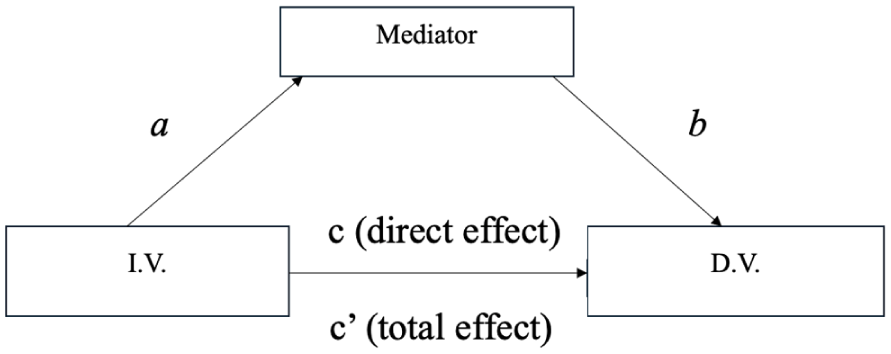
Conceptual diagram of mediation analysis. IV, independent variable; DV, dependent variable.
In most cases, the inclusion of mediating variable(s) will reduce the strength of the direct relationship between the independent and dependent variable (MacKinnon et al., 2000). However, other types of mediation are possible. Confounder effects occur when a mediator variable distorts the relationship between an independent and dependent variable, suppression effects occur when the mediating variable(s) enhances the relationship by removing extraneous variance between the variables of interest, and collider effects suggest that the independent and dependent variables have a causal relationship with a third variable (MacKinnon & Lamp, 2021; MacKinnon et al., 2000). Figure 2 illustrates these relationships.
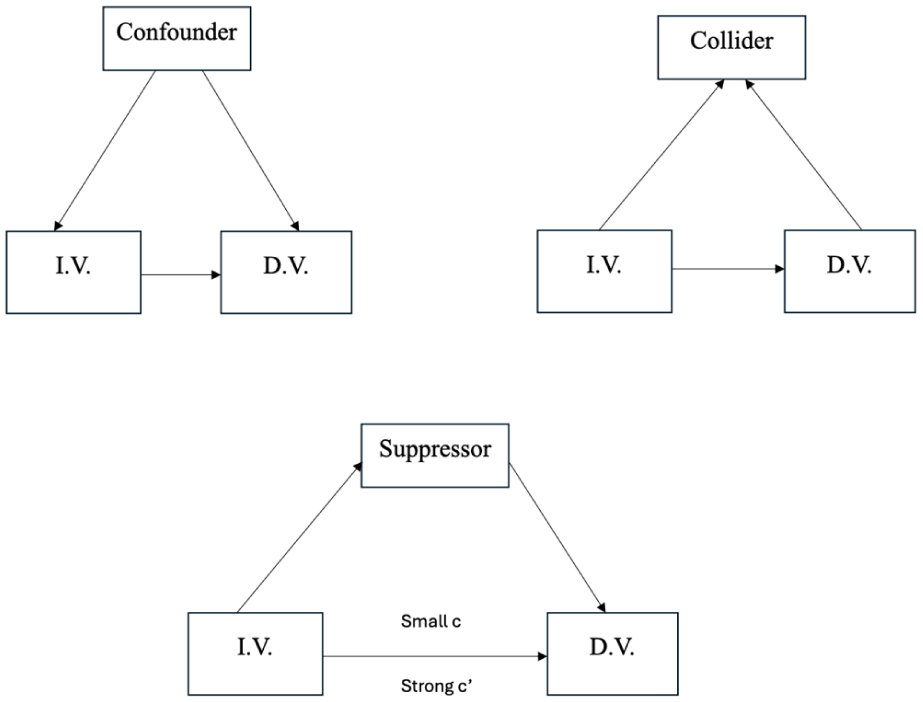
Conceptual model of confounding, colliding, and suppressing effects. IV, independent variable; DV, dependent variable.
4 The current study
The purpose of this study is twofold. Firstly, to extend previous work (Gregersen et al., 2021; MacIntyre et al., 2020, 2022) examining language teachers and their adaptation to the COVID-19 pandemic across three waves of data. Differences in stress, WHO-5 well-being, growth, and resilience were explored. The second goal of the study was to further examine the concept of growth during trauma in language teachers. PTG has been proposed as a possible result of stress after-the-fact (Calhoun & Tedeschi, 2004; Tedeschi & Calhoun, 1996, 2004) but has not been widely explored in the context of growth during trauma (in this case, COVID-19). Measuring stress and growth along with resilience and well-being provides a unique opportunity to investigate growth during trauma in an international sample of language teachers. Given the relationships in the literature between teacher stress and well-being, PTG, and (post-traumatic) stress, as well as stress and resilience, the current study proposes well-being and resilience as mediators to further explain the relationship between stress and growth in language teachers.
RQ1: How strongly does stress, growth, resilience, and well-being correlate across three time points?
RQ2: Are there mean differences in stress, growth, resilience, and well-being across three time points?
RQ3: Do stress, resilience, and well-being predict growth?
RQ4: Does resilience and/or well-being mediate the relationship between aspects of stress and growth during trauma?
III Method
1 Participants
A total of 1,213 language teachers and teacher candidates participated in three waves of data collection for this study (765, 245, and 203 at Times 1, 2, and 3 respectively). Data were collected anonymously so we are not able to track teachers over time. Also, due to missing values, the sample sizes for subsequent analyses will fluctuate. For more details on the sample characteristics of the participants at Time 1 and Time 2, see MacIntyre et al. (2020) and MacIntyre et al. (2022) respectively. Over 40 countries were represented in this study. In the sample, 73.4% of participants were female, 17.7% of participants were male, 4.4% identified their pronouns as “they/them,” and the remaining participants preferred not to identify their gender. The largest age group was between 33 and 43 (n = 393), followed by those 44–55 (n = 361), under 33 (n = 269), and the smallest age group was over 55 (n = 184).
2 Measures
a Stress index
A 15-item stress index was used for the present study (MacIntyre et al., 2020). Stressors assessed include the prospect of teaching online, a blurred work–life balance, and the inability to travel due to public health regulations. Higher item ratings indicated higher stress. There were three subscales utilized in the current study:
b WHO-5 Well-Being Index
Internationally, one of the most frequently used measures of well-being was developed by the World Health Organization, the WHO-5 Well-Being Index, which is a brief, generic measure designed to assess subjective well-being using five positively worded items (for more details, see Topp et al., 2015). WHO-5 has been used in clinical populations and as a screening tool for depression but is recommended more broadly for applications in group comparisons and studies of well-being over time. The index has been used around the world and translated into over 30 languages. Items included feeling cheerful, active, refreshed, and interested, with higher scores indicating greater well-being. A score of <50 indicates individuals at risk of depression (Topp et. al., 2015). Excellent internal consistency was established for the current study (Cronbach’s α = .91).
c University of Washington Resilience Scale
An eight-item index was used to assess resilience, with items reflecting keeping calm, keeping going, bouncing back, and doing important things (Amtmann et al., 2020). Scores range from 8 to 40, with higher scores indicating higher resilience. Internal consistency was shown to be excellent for the current study (Cronbach’s α = .89).
d PTG Inventory
A revised short form of the PTG scale was used, with the key revision being to rephrase the items to capture present growth, rather than past growth (Cann, Calhoun, Tedeschi, Taku, et al., 2010; Taku et al., 2008). Items reflected the ability to handle difficulties, the value of life, and the ability to feel stronger. Items are rated on a six-point ordinal scale and range from zero to 50; higher scores indicated higher levels of growth. Excellent internal consistency was established (Cronbach’s α = .93).
3 Procedure
Google Docs was used to administer the survey. Data (n = 765) from Time 1 was collected in March and April 2020, data from Time 2 (n = 245) was collected in November and December 2020, and data from Time 3 (n = 203) was collected from November to December 2021. Participants were required to be 18 years of age or older to participate. Participation was voluntary; the first page of the survey advised participants that they were free to withdraw without consequence if they were feeling uncomfortable answering any questions. Informed consent was set as a mandatory question for all participants to ensure that they understood the purpose of the study before answering further.
4 Data analysis
Pearson correlations, multivariate analysis of variance (MANOVA) analyses, follow-up post hoc tests, and regression analyses were conducted using the IBM Statistical Package for Social Sciences (v. 29). MANOVA analyses sought to examine changes in growth during trauma, resilience, and various forms of stress over time and based on participants’ WHO-5 well-being classification, and regression analyses sought to determine which variables were most strongly associated with growth during trauma. Regression-based mediation analyses were conducted using PROCESS macro v. 4.2 (Hayes, 2022), with bootstrapping set at 5,000 samples and corrected to 95% confidence intervals. A mediation effect is considered significant when the confidence interval does not contain zero (Hayes, 2022), and mediations either followed the causal step approach (Baron & Kenny, 1986) or the more recent indirect-only mediation pattern (Zhao et al., 2010).
IV Results and discussion
Given that different types of data analyses are being reported, each analysis is presented along with a brief discussion of the findings. A more general discussion follows the presentation of the results.
1 Correlations across time
Pearson correlations were conducted to explore how WHO-5 well-being, resilience, growth, and stress were correlated, and how those correlations differ over time (Table 1). Despite disparities in sample sizes at each time point, the correlations remained remarkably stable across Times 1, 2, and 3, with well-being, resilience, and growth consistently positively correlated with each other and negatively correlated with stress. Professional stress and growth were more inconsistently correlated across the three time points compared with other coefficients. However, all correlations were significant at p < .05.
Pearson correlations for well-being, resilience, growth, and stress across three time points.
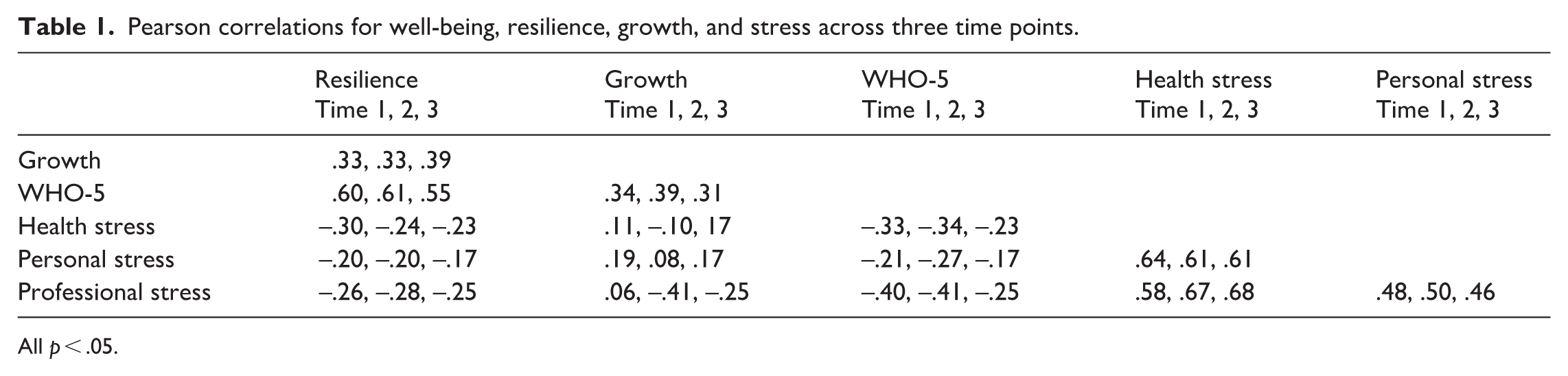
All p < .05.
Consistent with the literature, these results suggest that language teacher well-being, growth, and resilience were all positively intercorrelated. It should be noted that most correlations were moderate in strength, with correlations between growth and stress showing the weakest associations. Among the strongest relationships across the three time points were WHO-5 well-being and resilience; previous research has established the importance of resilience in improving well-being, including with teachers (Amtmann et al., 2020; Zewude et al., 2023). Unsurprisingly, all types of stress were negatively associated with well-being and resilience, suggesting that the stress within the unique context of the pandemic was consistently detrimental to language teacher resilience and well-being for over a year. Professional stress and WHO-5 well-being were moderately associated at Times 1 and 2, but at Time 3, this relationship was smaller, which may result from teachers adjusting to professional challenges as the pandemic wore on (Blaydes et al., 2024; Lepp et al., 2021). Interestingly, the most inconsistencies in correlations with stress across time occurred with the measure of growth, especially professional stress, which seems inconsistent with some prior research (Dündar, 2024). The literature on teacher stress during COVID reports that some teachers felt they developed more collaborative relationships with colleagues (Blair et al., 2024), highlighting the potential focus of language teachers on dealing with personal challenges over workplace stressors during the pandemic. These results hint at the possibility of growth during trauma becoming a stress-mitigating factor over time.
2 Differences across time
To examine the second research question, a one-way analysis of variance (ANOVA) was conducted to assess differences in stress, growth, and resilience over the three waves of data collection. 1 Results show that homogeneity of variance could be assumed for all variables except resilience. There was a significant main effect showing that growth during trauma and health stress changed across time (Table 2). Pairwise comparisons revealed growth increased from Time 1 to Time 2, and while there was no significant difference in growth from Time 2 to Time 3, growth was still higher at Time 3 than at Time 1 (Figure 3). Health stress did not differ significantly from Time 1 to Time 2, but language teachers were less stressed about their health and well-being from Time 2 to Time 3 (Figure 4).
Univariate results for the main effects of time.
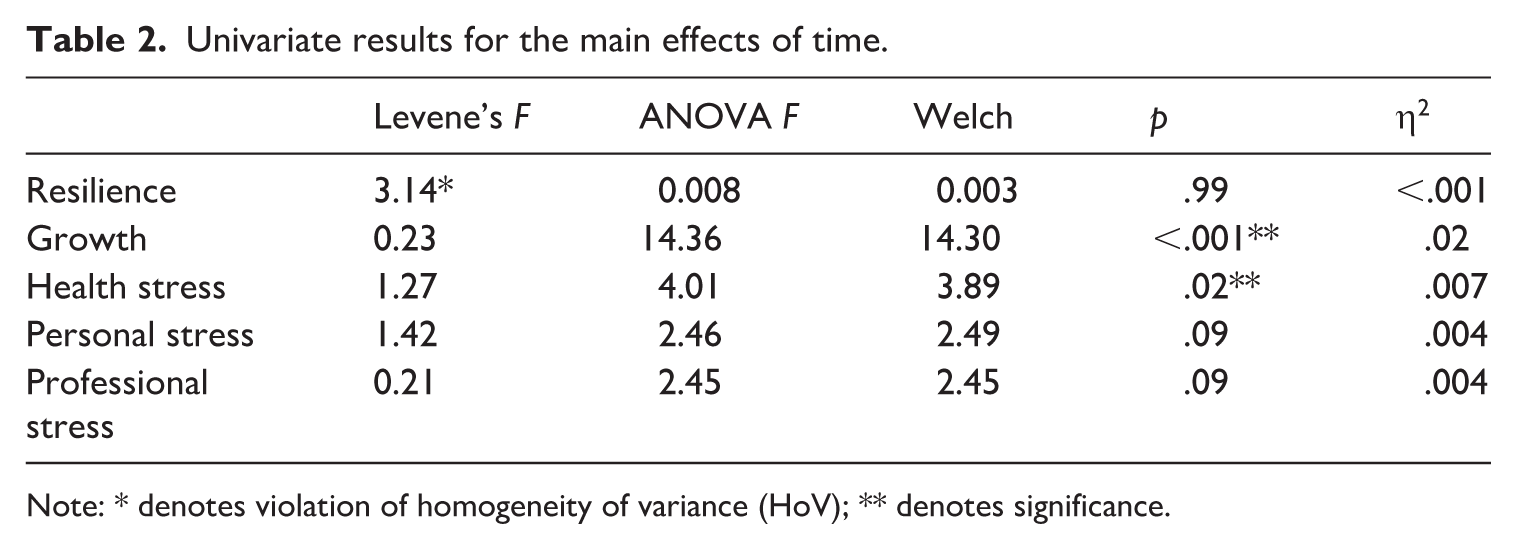
Note: * denotes violation of homogeneity of variance (HoV); ** denotes significance.
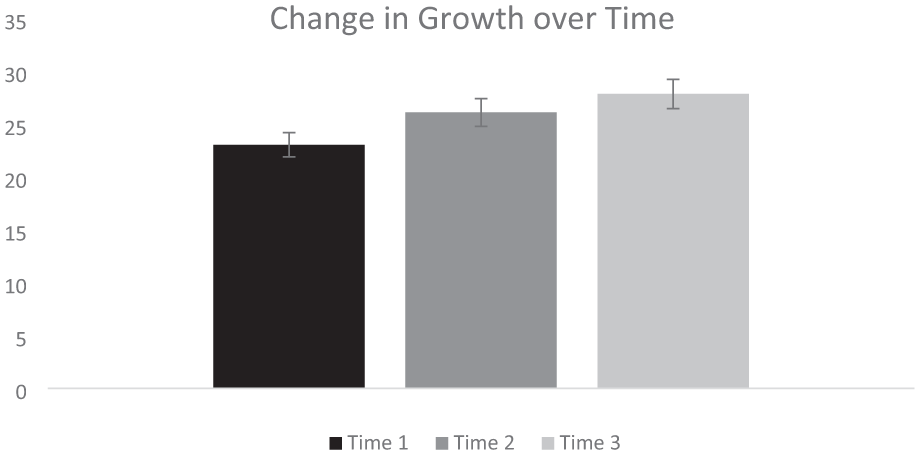
Mean change in growth during trauma over time.
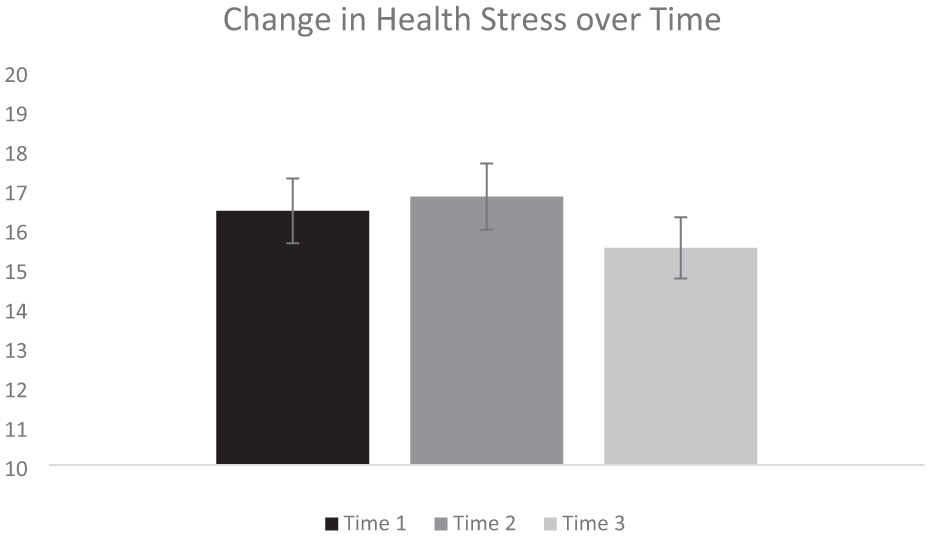
Mean change in health stress over time.
The findings for growth during trauma show an upward trend. In addition, language teachers demonstrated remarkably stable resilience across three time points. The profession had already been experiencing significant challenges prior to the pandemic (Gkonou & Miller, 2019; Mercer & Gregersen, 2020), trends that were magnified during COVID-19 (Gregersen et al., 2021; MacIntyre et al., 2020, 2022). Therefore, it may be reasonable to propose that language teachers who stay in the profession typically show development of resilience, and this might also be a factor in the perception of growth during trauma. Furthermore, health stress peaked approximately six months following the declaration of COVID-19 as a global pandemic but dropped with the rollout of vaccinations over time (Blair et al., 2024). Personal and professional stress data did not fluctuate significantly across time. Given the nature of personal stress as measured in the current study (e.g., family/relationship problems, blurred work–life balance), perhaps it is not surprising that personal stress was stable, and these stressors were considered particularly impactful for teachers from the beginning of the pandemic (Blaydes et al., 2024; Gregersen et al., 2021; Lepp et al., 2021; Marshall et al., 2020). It is also expected that professional stress is prevalent in language teachers, due to the challenges of teaching in general (Bottiani et al., 2019; Fitchett et al., 2018; Johnson et al., 2005; Ryan et al., 2017) and language teaching in particular (Borg, 2006; MacIntyre et al., 2019; Mercer & Gregersen, 2020). Overall, the changes over time suggest that stressors took a consistent toll on teachers, but some of their intrapersonal resources to deal with stress (including perceiving growth) remained stable or appeared to have increased over time.
3 Predictors of growth, regression and mediation analyses
To further examine language teacher growth, a multiple regression was conducted using the Enter method, with WHO-5 well-being, scores for three types of stress, and resilience as predictors of growth. The overall regression equation was significant for growth (R = .40, R2 = .16, Adjusted R2 = .16, F (5, 1,138) = 42.98, p < .001). The regression coefficients ranged in strength; notably, the strongest predictor of growth was WHO-5 well-being, followed by personal stress and resilience (Table 3).
Beta coefficients for language teacher growth during trauma and resilience.
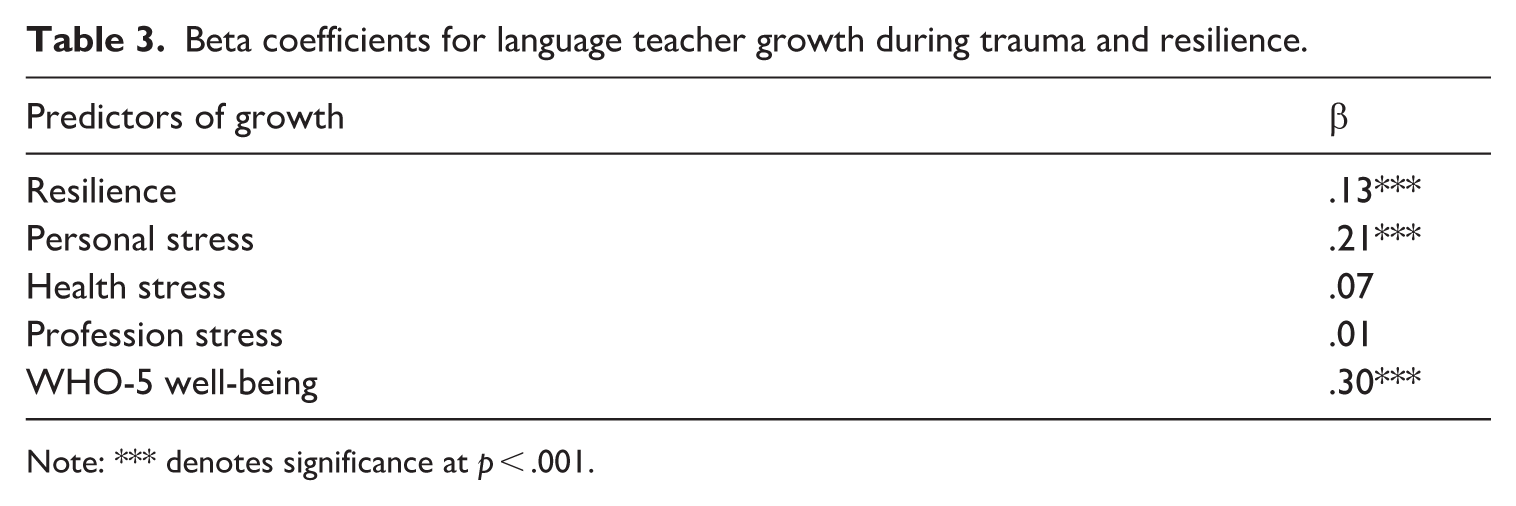
Note: *** denotes significance at p < .001.
Well-being and resilience predicting higher growth is consistent with previous research (Elam & Taku, 2022; Mols et al., 2009; Read et al., 2022). Interestingly, among the types of stress, only personal stress was predictive of higher growth in this regression equation. This would seem to contradict the findings that teachers experienced growth as they addressed the emergency challenges of transitioning to online learning at the beginning of COVID-19 (Gregersen et al., 2021). As previously stated in discussion of prior results, it may be that the progression of the pandemic shifted priorities for language teachers toward interpersonal relationships, which became the most potent stress in their lives (Blaydes et al., 2024; Lepp et al., 2021; Marshall et al., 2020). The teachers who were able to address their personal relationships may have been the ones to experience the strongest sense of growth. However, the transactional model of stress (Lazarus, 1996, 2006; Lazarus & Folkman, 1984) would suggest that various sources of stress likely would be relevant to growth because they generate coping efforts that would be expected to also affect resilience and well-being.
Further pursuing the connection between different types of stress and growth, three independent mediation analyses were conducted to assess the prediction of growth-based stress (health stress, personal stress, and professional stress), with resilience and WHO-5 serving well as mediators in each analysis. Unstandardized pathway coefficients across the three models are reported in Table 4.
Unstandardized coefficients for all regression pathways across three stress models.
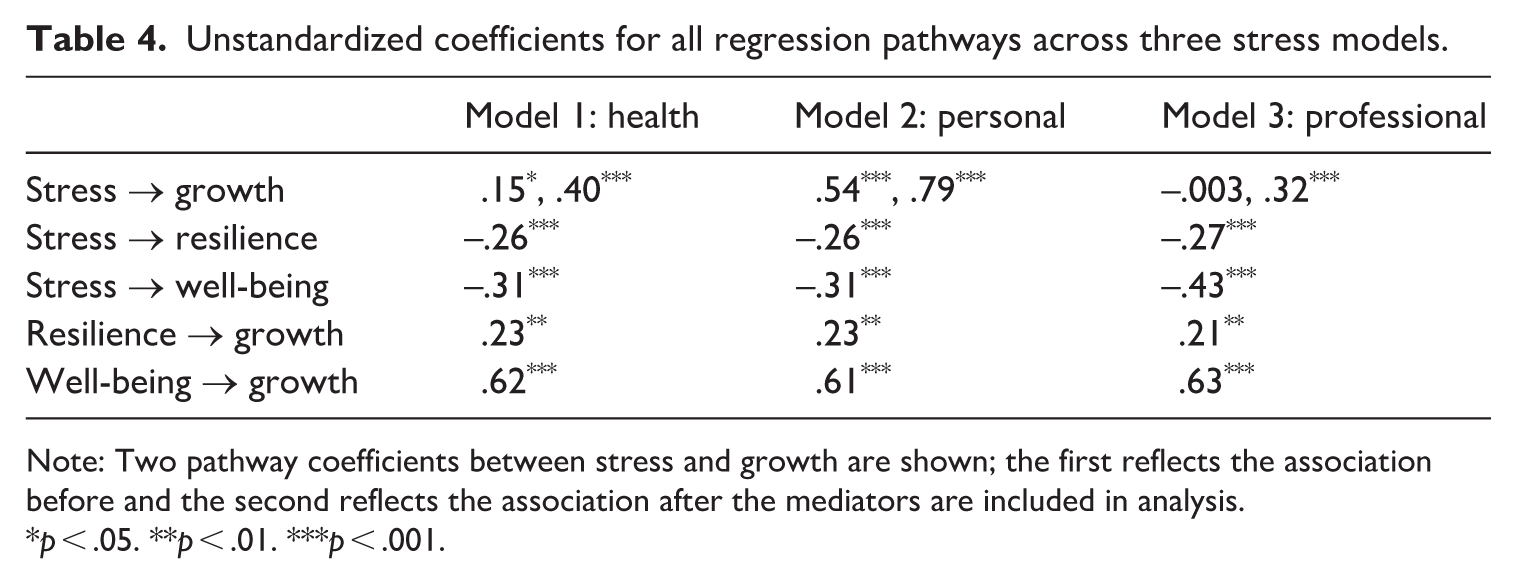
Note: Two pathway coefficients between stress and growth are shown; the first reflects the association before and the second reflects the association after the mediators are included in analysis.
p < .05. **p < .01. ***p < .001.
a Health stress
An independent multiple mediation analysis was conducted to examine the relationship between health stress and growth during trauma. WHO-5 well-being and resilience served as mediating variables (Figure 5). All the direct effect relationships shown in the model were significant (p < .05). The total effect of health stress on growth was significant (R = .07, R2 = .005, F [1, 1,149] = 5.64, p = .018), but it is noteworthy that the association was stronger in the presence of resilience and well-being as predictors (b = .40, p = .001) than without them (b = .15, p = .018).
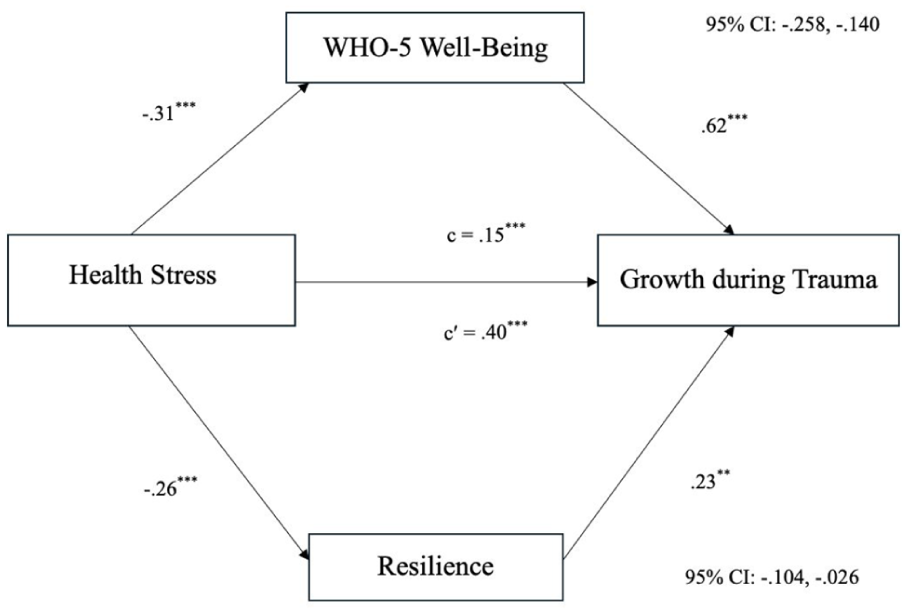
Multiple mediation model of language teacher health stress, resilience, WHO-5 well-being, and growth during trauma.
b Personal stress
A second multiple mediation analysis, similar to the one above, was conducted to examine the effects of personal stress on growth during trauma, with WHO-5 and resilience as mediators (Figure 6). As with the mediation model above, all of the direct effects in the model were significant (p < .001). The total effect of personal stress on growth was significant (R = .17, R2 = .03, F [1, 1,145] = 34.36, p < .001), but, as above, the association was strengthened by adding the mediating variables, (b = .54, p < .001 versus b = .79, p < .001).
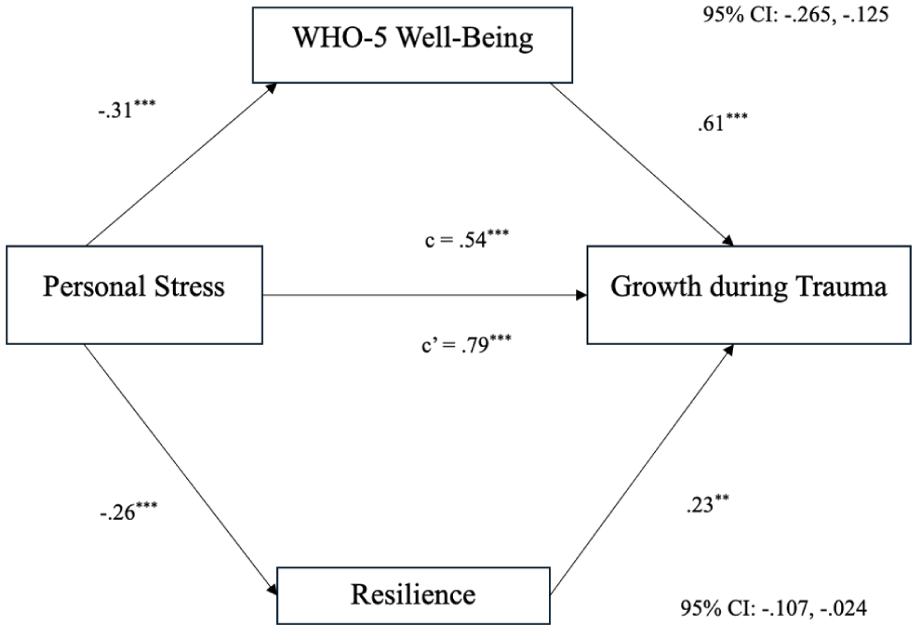
Multiple mediation model of language teacher personal stress, resilience, WHO-5 well-being, and growth during trauma.
c Professional stress
A third multiple mediation analysis, similar to the previous two analyses, was conducted to examine the effects of professional stress on growth (Figure 7). As previously, the effects of professional stress on WHO-5 well-being and resilience were significant and negative (b = –.43, p < .001 and b = –.27, p < .001, respectively). However, it is noteworthy that the simple, direct effect of professional stress on growth was nonsignificant (R = .001, R2 < .001, F [1, 1,146] = .002, p = .965). The overall mediation model was significant (R = .33, R2 = .11, F [3, 1,144] = 120.23, p < .001), showing effects of professional stress, WHO-5, and resilience all positively predicting growth. The indirect effect (through WHO-5 and resilience) was significant (95% CI: –.098, –.022) (Figure 7) despite the lack of a significant direct effect between professional stress and growth. This suggests that the model may be showing suppressor effects.
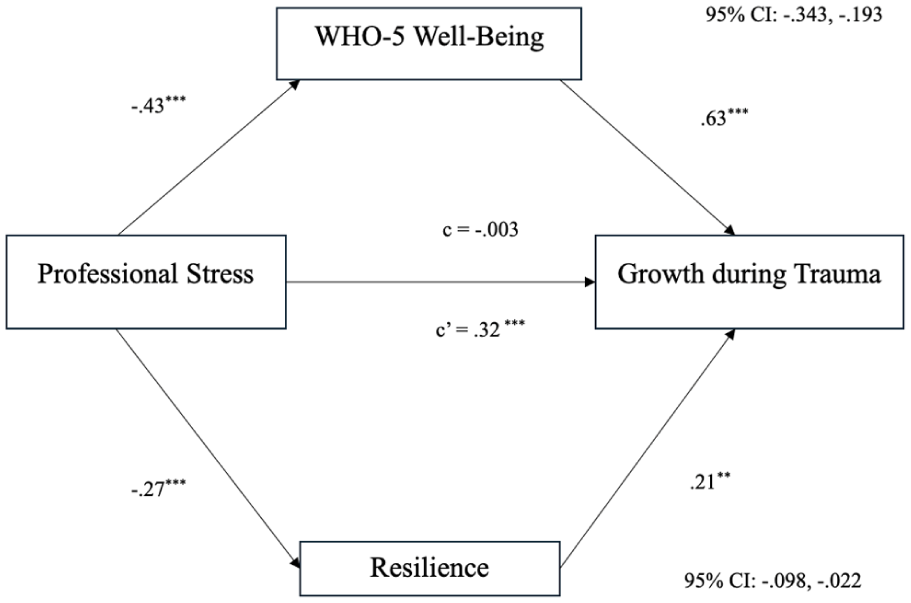
Multiple mediation model of language teacher professional stress, resilience, WHO-5 well-being, and growth during trauma.
Taken together, the models show that the effect of various types of stress can be clarified by including the mediating variables of well-being and resilience. The common elements of the model show that higher WHO-5 well-being and resilience were associated with higher growth, consistent with previous research (Elam & Taku, 2022; Jankovic et al., 2022; Veronese et al., 2017). However, the three models differ in the type of stress on which the model originates. Although they correlate somewhat differently with growth at Times 1, 2, and 3, health-related stress, personal stress, and professional stress all positively predicted growth during trauma. Perhaps most interesting is the relationship between all three types of stress and growth that significantly increased when the mediating variables were introduced. This is consistent with the presence of a suppressor effect in the mediation analysis (MacKinnon et al., 2000) whereby WHO-5 well-being and resilience appear to be strengthening the relationship between stressors and growth by absorbing extraneous, unexplained variance in the simple regression model. This is a novel finding that requires further investigation. Although “third variable” effects (i.e., mediation, suppressing) have been demonstrated to be statistically equivalent (MacKinnon et al., 2000), it is also possible that alternative models can account for relationships among these variables, and cannot be ruled out.
Baron and Kenny (1986) propose a causal steps approach when conducting a mediation analysis, where each path coefficient (except the total effect) must be statistically significant for a mediation effect to occur. This approach has been criticized as rigid and conservative, and because there can be different types of mediation effects beyond total and partial mediation. For example, indirect-only mediations have been proposed as alternatives when there is no direct relationship between an independent and dependent variable despite a significant mediation effect (Zhao et al., 2010). As modern mediation macros have become available (Hayes, 2022; Preacher & Hayes, 2004), the implementation of bootstrapping procedures have allowed for more robust mediation analyses (Zhao et al., 2010). The establishment of a “true” mediating effect typically requires longitudinal research, where the temporal ordering of variables is crucial (Stuart et al., 2021). Variables proposed as independent and mediating variables may be switched and still result in a significant mediation effect, thus creating the conundrum of which variable should be considered the “true mediator.”
Nevertheless, the notion that different types of stress predict growth, which is observed statistically in the presence of resilience and WHO-5 well-being, is a viable explanation, as growth is built simultaneously with resilience and well-being (Read et al., 2022). Language teachers must deal with numerous unique challenges in their profession, and it may be that maintaining a level of resilience and well-being is necessary before workplace stressors become meaningful for growth, explaining why professional stress is not directly associated with growth. Language teachers have moderately high levels of resilience in the current study, which allows opportunities for growth (Levine et al., 2009) that would otherwise be unavailable if language teachers simply experienced professional stress.
V Limitations and future directions
There are several noteworthy limitations. Although the study includes three waves of data, the results cannot be considered longitudinal, as anonymity was maintained at each instance of data collection and data was not matched over time as it would be in a repeated measures design. There were significantly more participants recruited at Time 1 compared with Times 2 and 3, creating disparity between the time points. Furthermore, the presence of suppressor effects in all mediation analyses cannot be generalized and requires further study. Theoretically, our results support the potential of suppressor effects (MacKinnon et al., 2000) in the relationship between stress and growth, but other factors may have also influenced these results. The nonsignificant association of professional stress and growth violates the causal step approach to mediations (Baron & Kenny, 1986; Kline, 2015), but this approach is considered by some to be a rigid conceptualization of mediations (Zhao et al., 2010). In addition, the results are more robust due to the use of bootstrapped samples (Hayes, 2022). Nevertheless, caution must be utilized when interpreting results, particularly due to the lack of temporal ordering of variables (Stuart et al., 2021).
In addition to further investigating the indirect relationships between stress and growth, future research should explore growth more broadly among language teachers. Although COVID-19 is still classified as a pandemic, teachers have settled into a more prepandemic state of teaching. This does not mean that growth arising from the pandemic is now passé. Since the current study focused on growth during trauma, more research is needed to investigate language teachers’ perceptions of PTG from the pandemic; it may be that the sense of growth has changed now that time has passed and teachers have gained perspective on what they went through, a conceptualization of growth more consistent with the original approach to studying PTG. Qualitative research may elaborate further on experiences of growth in language teachers, particularly professional growth (Gregersen et al., 2021). As pandemic challenges fade, new challenges present themselves, including the use of AI in education. Future research might explore potential growth in language teachers resulting from adapting to the advancement of AI, and technology in general, as online teaching becomes more widespread following the pandemic. It is possible that teachers experience feelings of technostress and anxiety toward the future due to the rapid advancement of AI, which may affect their potential for growth. On the other hand, the presence of psychological safety within one’s department and organization may serve as an additional protective factor against teacher stress (Fleming et al., 2024), possibly fostering more potential for growth.
VI Conclusion
Although research investigating the effects of the pandemic indicates a plethora of challenges language teachers needed to face, less is known about perceived positive changes. Language teachers have described the process of online language teaching as “working in a minefield,” but acknowledged the need for innovation during COVID-19 as “a breath of fresh air” (Dündar, 2024, pp. 7–8). The focus of growth during trauma in the current study suggests that language teachers experience positive changes because of health-related, personal, and professional stress. In particular, growth was directly promoted in the context of personal stressors, suggesting the perceived importance of adapting to health and personal challenges over professional stressors, in a time of upheaval in various contexts. However, the perception of growth resulting from stress occurs most prominently for language teachers experiencing high resilience and well-being. Results indicate the importance of building resiliency and well-being among language teachers as mechanisms for perceived growth, which may be beneficial for training programs to emphasize in a profession that has experienced significant turnover rates before and during the pandemic. Fostering a workforce of language teachers with a capacity to experience growth will empower a generation of educators to cope with future challenges that present themselves in the teaching profession, enabling the presence of stress to be transformed into genuine positive development as the teaching profession continues to evolve.
Footnotes
Funding
The authors received no financial support for the research, authorship, and/or publication of this article.
Ethical considerations
The Research Ethics Board at Cape Breton University approved this study on September 29, 2021 (approval number: 1920-110). Respondents were required to provide consent online before completing the survey.
