



Abstract
In Australia, many Aboriginal and Torres Strait Islander children speak contact languages, dialects and creoles, formed from traditional languages and English. Upon entry to the schooling system, these students are required to learn standardized Australian English (SAE) to access curriculum content. In our experiences, dominant monolingual English-only teaching approaches did not meet the English as an additional language and/or dialect (EAL/D) learning needs of students who speak Indigenous contact languages, and we decided to undertake a classroom-based critical participatory action research (CPAR) study to investigate why learning SAE is so difficult in these contexts. To do this, we explored some language differences between an Indigenous contact language and SAE using contrastive analysis with students in years 1, 3 and 5. With a focus on grammatical differences, our sociolinguistic discourse analysis of student responses over three lessons showed they were highly engaged with the learning and were mostly able to notice the language differences but sometimes found it difficult to separate and switch between the two languages, despite their explicit knowledge of the grammatical rules. To make sense of this, we turn to Schmidt’s Noticing Theory and theories of second dialect acquisition that propose acquiring two closely related languages may present a greater challenge for the learner. Using this to guide our future practice, we conclude that contrastive analysis is useful to develop learners’ language awareness but must form part of an ongoing program for teaching language differences supported by partnerships between Indigenous and non-Indigenous practitioners with sufficient opportunity for students to engage with oral language practice. To do this, teachers require a high level of language awareness and knowledge about language learning.
Keywords
I Introduction
In the Australian education system, supporting the learning of standardized Australian English (SAE) for speakers of Indigenous contact languages has been a longstanding issue (Oliver et al., 2021; Sellwood & Angelo, 2013; Silburn et al., 2011; Steele & Wigglesworth, 2023). The reasons for this are both numerous and complex, including the invisibility of these languages in education (Sellwood & Angelo, 2013) where monolingual English-only perspectives dominate and often constrain teaching (Dobinson et al., 2024; Slaughter & Cross, 2020), a lack of appropriate professional learning for teachers working in these contexts (Steele & Wigglesworth, 2023; Steele et al., 2025), and the very few illustrations of practitioner practices for teaching English as an additional language and/or dialect (EAL/D) to Aboriginal and Torres Strait Islander students (Silburn et al., 2011). There are also complexities related to the local language context, and the diverse language ecologies present including traditional Aboriginal and Torres Strait Islanders languages, creole languages, and varieties of English including Aboriginal Englishes (see Angelo et al., 2025).
As practitioners in this field, we are very familiar with these contexts and the challenges. Author 1 (Carly) has spent over 7 years working with Aboriginal and Torres Strait Islander students in a range of regional and remote school settings across Australia. In her first experience teaching in a remote Aboriginal community school, she was confronted by her lack of knowledge and skills to teach EAL/D to multilingual Aboriginal students with diverse language backgrounds that included traditional languages and Aboriginal English, which formed the impetus for years of study. She undertook a Master of Applied Linguistics (Steele & Oliver, 2019), and a PhD (Steele, 2020) focusing on teaching EAL/D in Aboriginal and Torres Strait Islander contexts. Author 2 (Bernadine) is a Yidinji woman from an Aboriginal Community in far north Queensland where the study took place. She is a fully qualified teacher with over 20 years of experience and a speaker of the local creole language in this community. She has dedicated much of her working life to raising awareness and achieving recognition for this language both inside and outside of education systems (see Yeatman & Angelo, 2024). Together, we undertook a critical participatory action research project (CPAR) to investigate why it is so difficult for students in these language learning contexts to learn SAE.
The Aboriginal Community where the study took place was established as a ‘mission’ in 1892 (Mushin et al., 2016). First Nations peoples from over 40 distinct language groups were forcibly displaced from across Queensland and relocated to this mission site (Mushin et al., 2016). Using prohibitive language policies, Aboriginal and Torres Strait Islander languages were banned and the use of English enforced (Mushin et al., 2016). Under these conditions, a highly localized Indigenous contact language emerged that can be defined as a creole language (Angelo et al., 2019). This is the language of the students who attend the local school and participated in our study.
The school consists of an early childhood centre, a primary school and a high school until Year 10. All students identify as ‘Indigenous’ and 99% of students have a language background other than English (ACARA, 2023). Despite this, most teachers are non-Indigenous and do not have training for teaching EAL/D. The school curriculum is delivered in SAE, and students are assessed in SAE. Because the community is somewhat isolated from nearby towns, for some children, school is the only regular source of SAE input that they receive. Students are not afforded the opportunity to develop literacy in their own language and upon entry to school, are developing SAE language skills and literacy through monolingual literacy approaches rather than being supported by specialized EAL/D instruction.
This context shares similarities with others across Australia, including those that Author 1 had previously worked in. Collectively, we shared our frustration with the dominant monolingual literacy approaches that not only silenced children’s language backgrounds but also failed to support their learning of SAE. In our experiences, we saw intelligent, capable children not academically performing at levels that we felt reflected their knowledge and ability. We attributed this to a lack of specialized EAL/D learning and teaching, which was not only impacting children’s SAE learning but also their wider academic performance. It felt grossly unfair, and we set out to develop our own teaching practices to better meet the language learning needs of our students.
We knew students were proficient in their own language, called ‘Lingo’ for anonymity, but were finding aspects of SAE difficult to acquire as shown by previous testing (Steele & Wigglesworth, 2023). We decided to start by finding out whether students could notice and orally produce some of the language differences between Lingo and SAE. Given the sociocultural context, we felt that teaching SAE in isolation would be inappropriate. It was important to include students’ language in our teaching to counteract the standard language ideologies present in education systems and to promote a positive view of their language whilst also embracing their sociolinguistic identities. This led us to adopt a team-teaching approach using the language skills and sociocultural knowledges and identities of each teacher to support the language learning, which ended up being a defining feature of our collaboration and study. In Australian contexts, team-teaching approaches that bring together Indigenous and non-Indigenous languages, cultures and knowledges are referred to as ‘Two-Way’ learning and teaching (also see ‘both ways’; Ober, 2009).
Previously, we had both used Making the Jump: A resource book for teachers of Aboriginal students (Berry & Hudson, 1997) and found the contrastive approach that underpinned this book useful for teaching the differences between Indigenous contact languages and SAE. Contrastive analysis has been applied to these language learning contexts on the premise that learners do not necessarily have the language awareness to distinguish between and separate the two closely related languages (Berry & Hudson, 1997; Nero, 2005, 2014; Siegel, 2010, p. 68; Wheeler, 2006; Wolfram & Schilling-Estes, 1998, p. 287) hypothesizing that learners would benefit from teachers directing their attention to dialect differences by ‘contrasting’ the two languages to aid ‘noticing’ and promote acquisition (Schmidt, 1990; Siegel, 2010). Thus, we used this resource and the contrastive approach to help us create a series of lessons to find out whether students could both notice and orally produce the language differences between Lingo and SAE. The lessons focused on pragmatic, phonological, semantic and grammatical differences between the two languages. In this article we focus the research question on the grammatical differences, asking:
Why is it so difficult for our students to learn SAE? Specifically, why is it so difficult for our students to notice and orally produce grammatical differences between Lingo and SAE?
II Critical participatory action research
To use contrastive analysis as the teaching method, it was imperative to have a speaker of each language teach their respective languages because it is considered inappropriate for non-Indigenous people to teach Aboriginal and Torres Strait Islander languages. A collaborative team-teaching approach was, therefore, essential. Initially, Carly approached Bernadine to co-teach these lessons with her as part of her PhD. This collaboration involved a period of getting to know one another before the teaching could take place. Fortunately, prior to the teaching component of the CPAR, we spent time talking to other First Nations staff members at the school, as well as community members when seeking their consent for their children’s participation in the project. This provided opportunity to learn about each other and the context. We also spent time testing students’ SAE prior knowledge to inform the lesson design.
The CPAR model we used has four main stages:
designing the series of lesson plans;
delivering the lessons;
documenting the lessons; and
critically evaluating the process. (Kemmis & McTaggert, 1988)
When designing the lessons, we each had our own initial ideas and, through co-planning, we were able to bounce ideas from one another to develop lessons that exceeded both of our expectations. Having said this, the lesson planning relied on Bernadine’s linguistic and cultural knowledge. The Two-Way learning and teaching or team-teaching dynamics were a key feature of the lesson delivery. During the lessons we were able to work together to build student understanding and cater to their needs by alerting each other to information and making conscious shifts in our teaching to respond. After each lesson, we critically evaluated the process by analysing the aspects of the lesson that were effective and those that were less so, as well as examining student responses and gathering evidence of their prior knowledge and learning in the lesson. We made comparative observations between the year levels, adding our personal hypotheses for the patterns that emerged. Afterwards, we planned the next lesson making adjustments to our initial planning based on these observations. This partnership was a crucial component of the CPAR that allowed us to develop a depth of understanding and insight not available to outsiders (Hymes, 1996).
There were two distinct challenges faced when designing and teaching the lessons. First was ensuring that the language features of Lingo being used in contrastive analysis were correct. To achieve this, Bernadine consulted other First Nations school staff about the Lingo grammatical forms, and specific tasks were used to elicit and check the desired language. She also made sure that everyone knew about the study and invited them into the classroom to observe the lessons, which they did. Second, due to schooling constraints, we were limited to only three lessons. In the current climate of immense pressure on schools and teachers, the school principal felt that this was all they were able to commit to.
1 Participants
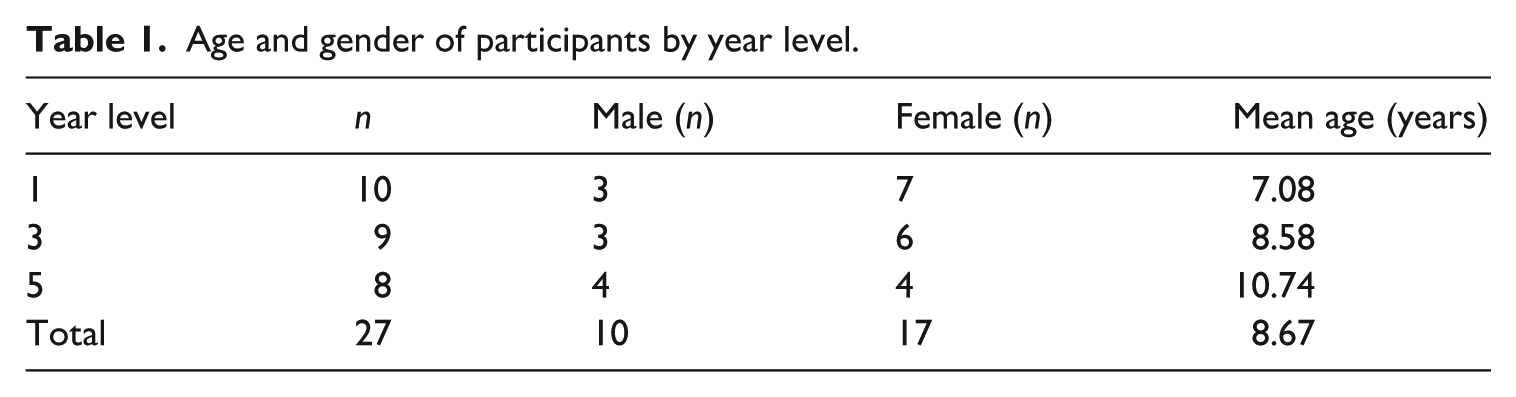
The CPAR involved First Nations students in years 1, 3 and 5 (Table 1) all of whom spoke Lingo as their first language and were learning SAE as an additional language. Students’ ages ranged from 6 years through to 11 years with the mean ages for each year level shown in Table 1. In years 1 and 3, there were more female students who participated.
Age and gender of participants by year level.
2 Ethical considerations
Ethics approval was obtained from the University of Melbourne (Ethics ID: 1748589), and approval to conduct research in school sites was received from the Department of Education, Queensland (File number: 550/27/1888). The school provided written consent as did the parents/carers of all participants. Each child provided recorded verbal consent. We spoke with parents to explain the research, whilst their responses were very positive and parents expressed the desire for their language to be represented in classroom contexts, we did not have the time or the ability to make contact with all parents, hence the low participation numbers.
3 Lessons
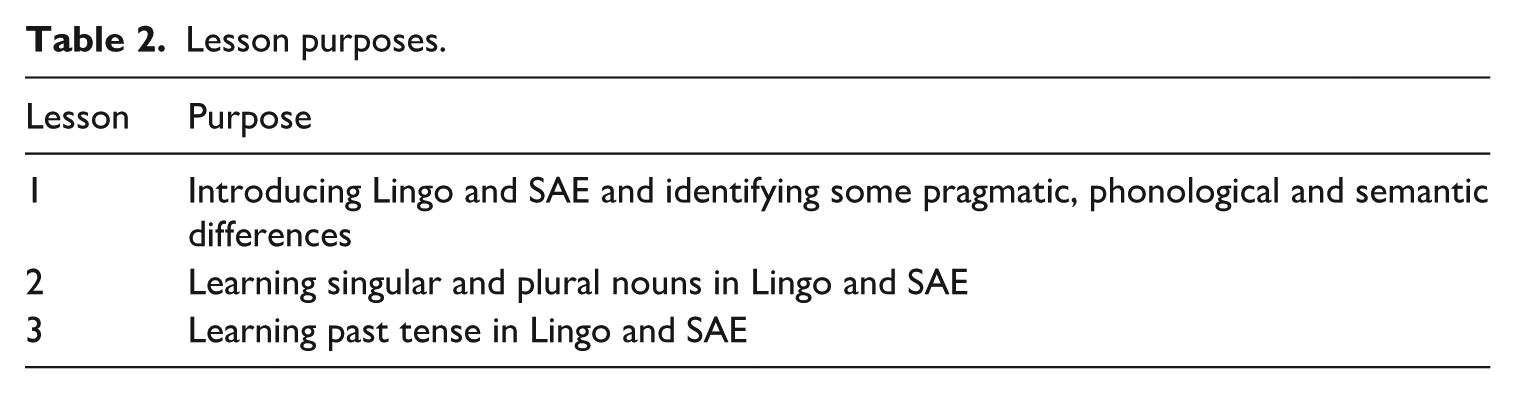
The three lessons of 30 minutes each were held separately in a spare classroom over three consecutive days: Tuesday, Wednesday, Thursday. They were designed to explicitly teach a variety of pragmatic, phonological, semantic and grammatical differences between the two languages, as shown in Table 2. In this article, we describe the grammatical differences in lessons 2 and 3 (for the pragmatic differences, see Steele, Yeatman, & Oliver, 2025). The language content for the lessons was based on SAE oral language testing conducted one week prior to the lessons (see Steele & Wigglesworth, 2023). Testing revealed that students found plural nouns and irregular past tense in SAE difficult forms to orally produce across all year levels.
Lesson purposes.
Across the three lessons, a similar structure was followed:
activation of prior knowledge;
the introduction of lesson goals;
a ‘noticing’ task using a contrastive approach;
guided practice with teacher scaffolding, which is characterized by teacher support, prompting, joint interaction and problem-solving;
an interactive activity (for example, a language game) for independent oral language practice and checking for understanding;
a summary of the lesson.
Positive language was actively used to support and promote student learning throughout the lessons. A simple search of the phrase ‘well done’ in the third lesson with the Year 5 group showed 21 occurrences, while ‘excellent’ was used 11 times. This is in addition to culturally appropriate forms of praise used by the Lingo teacher, such as ‘too deadly’, which is a term used in Aboriginal Englishes across Australia to mean ‘awesome’ or ‘great’.
4 Data collection and analysis
All nine lessons (three for each year group) were digitally recorded with a Zoom H1 Handy recorder held by the teachers. In the second and third lessons, we explored grammatical differences between Lingo and SAE, specifically, singular and plural nouns and past tense. Students were presented with a series of pictures that the Lingo teacher and the SAE teacher took turns speaking about in their respective languages, and students were asked to figure out the grammatical rules by ‘noticing’ the differences (see ‘explicit inductive instruction’ in Leow, 2019, p. 483). Students were largely able to do this for both Lingo and SAE demonstrating a high degree of metalinguistic knowledge, with some differences noted between the year levels, and some instances of confusion between Lingo and SAE being shown, as will be described in Section III.
Each lesson was transcribed in ELAN for analysis. Student data was analysed using classroom based sociolinguistic discourse analysis (Mercer, 2010) in response to the research question by examining whole class responses when asked to figure out the grammatical rules by ‘noticing’ the differences between the two languages and by examining instances of individual language use when asked to orally produce sentences in Lingo and SAE. In this data, noticing was viewed as the moment that language differences were correctly identified by students or were correctly produced in their oral language. These utterances are
III Findings
The excerpts presented below, first, represent the whole class responses across the year levels for each of the grammatical features introduced in this order: Lingo singular and plural nouns; SAE singular and plural nouns; Lingo past tense; SAE regular and irregular past tense. Next, pertinent examples of the confusion noted have been selected from the data set to illustrate how students simultaneously applied the grammatical rules from Lingo and SAE for plural nouns and the past tense forms in their oral language. For each excerpt, the grammatical feature is introduced beforehand, and it is followed by the commentary.
1 Student engagement with nouns
For singular nouns in Lingo, the word ‘dat’ is used before a noun to mark it as singular.
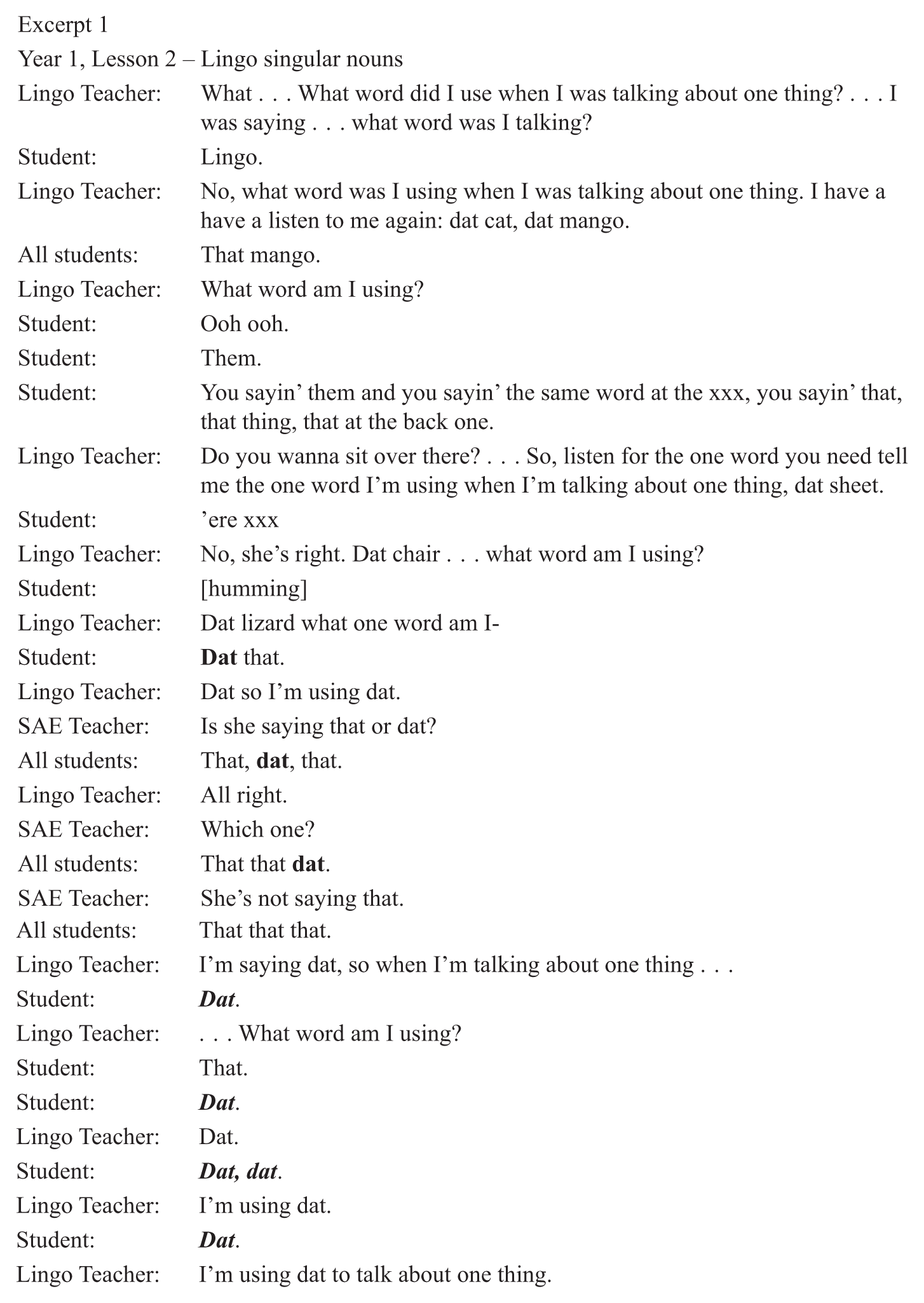
Year 1 students found the use of ‘dat’ + noun difficult to notice at first and were becoming confused with the SAE word ‘that’ (Excerpt 1). The teachers were required to correct them (‘She’s not saying that’) and further explain, ‘I’m saying dat, so when I’m talking about one thing . . .’ The teacher repeats and prompts five times with some students still using ‘that’. The teaching episode ends with the Lingo teacher repeatedly confirming, ‘I’m using dat’ and students correctly responding with ‘dat’.
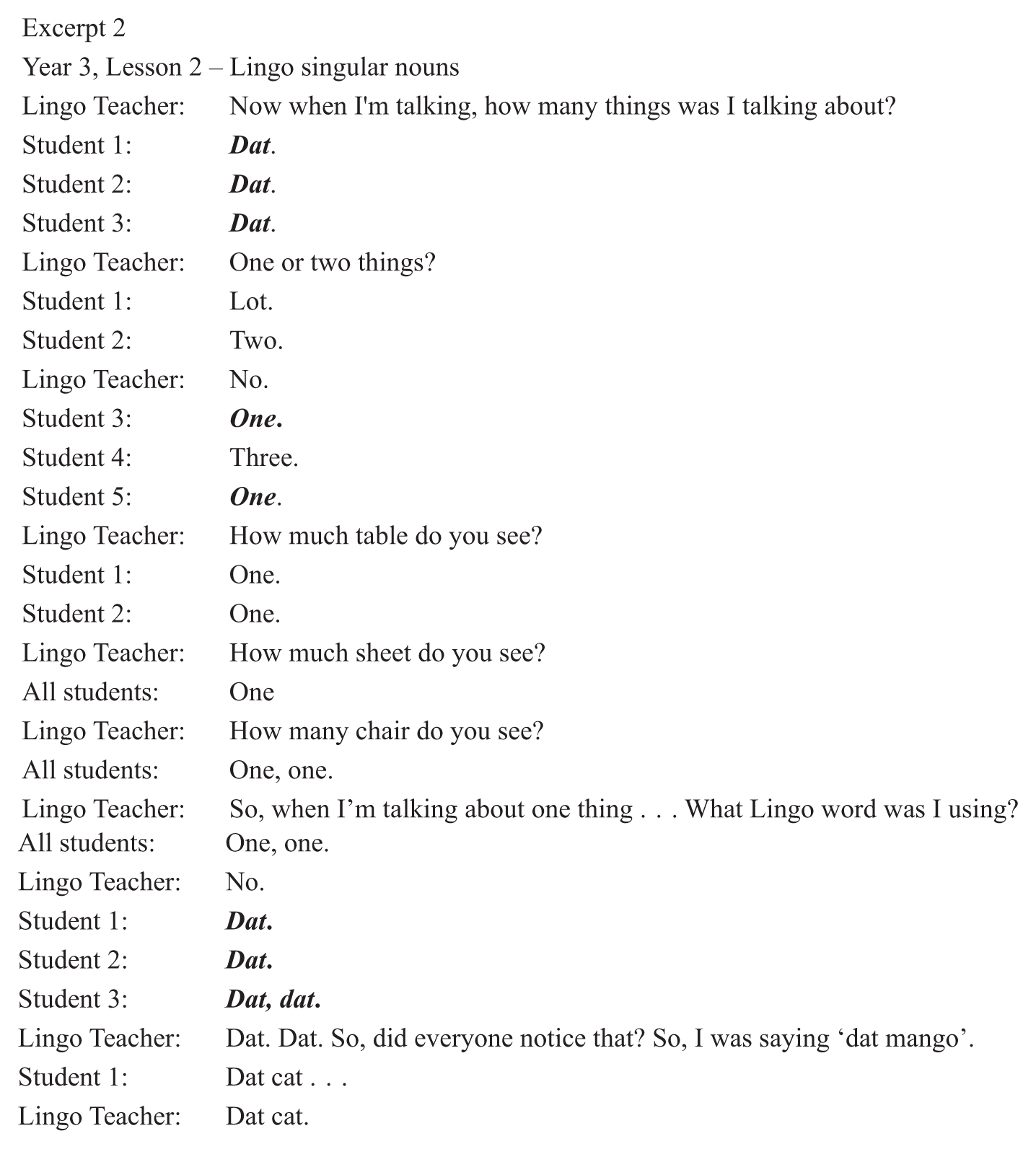
In contrast, Year 3 students immediately noticed the use of ‘dat’ (Excerpt 2). But when asked, ‘Now when I’m talking, how many things was I talking about?’ they were unable to articulate the grammatical function ‘dat’ performed in the examples provided, answering ‘lot’, ‘two’ ‘one’ and ‘three’. The Lingo teacher goes through the examples again showing the pictures and asking the children how many were being represented (e.g. ‘How many chair do you see?’) to which they responded ‘one, one’. She then asks, ‘So, when I’m talking about one thing . . . What Lingo word was I using?’ and students again respond ‘one, one’ before they are corrected to provide the response ‘dat’. The Lingo teacher confirms this, ‘Dat. Dat. So, did everyone notice that? So, I was saying “dat mango”.’
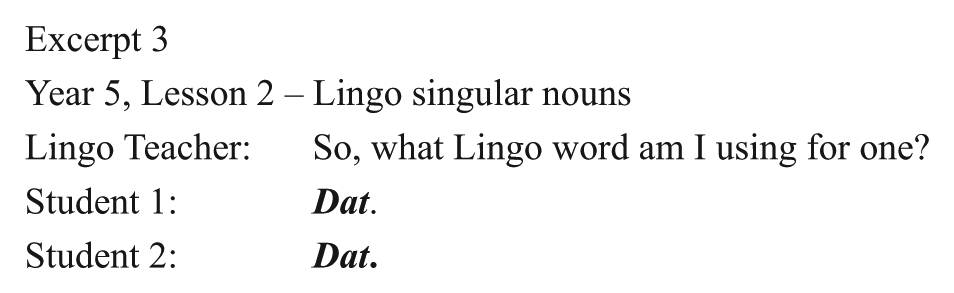
Year 5 students were able to correctly answer ‘dat’ to the question ‘So, what Yarrie Lingo word am I using for one?’ demonstrating their ability to notice this grammatical feature and point to its function (Excerpt 3).
After exploring singular nouns in Lingo, the teacher introduced the plural marker, ‘dem’ that students were quick to identify.
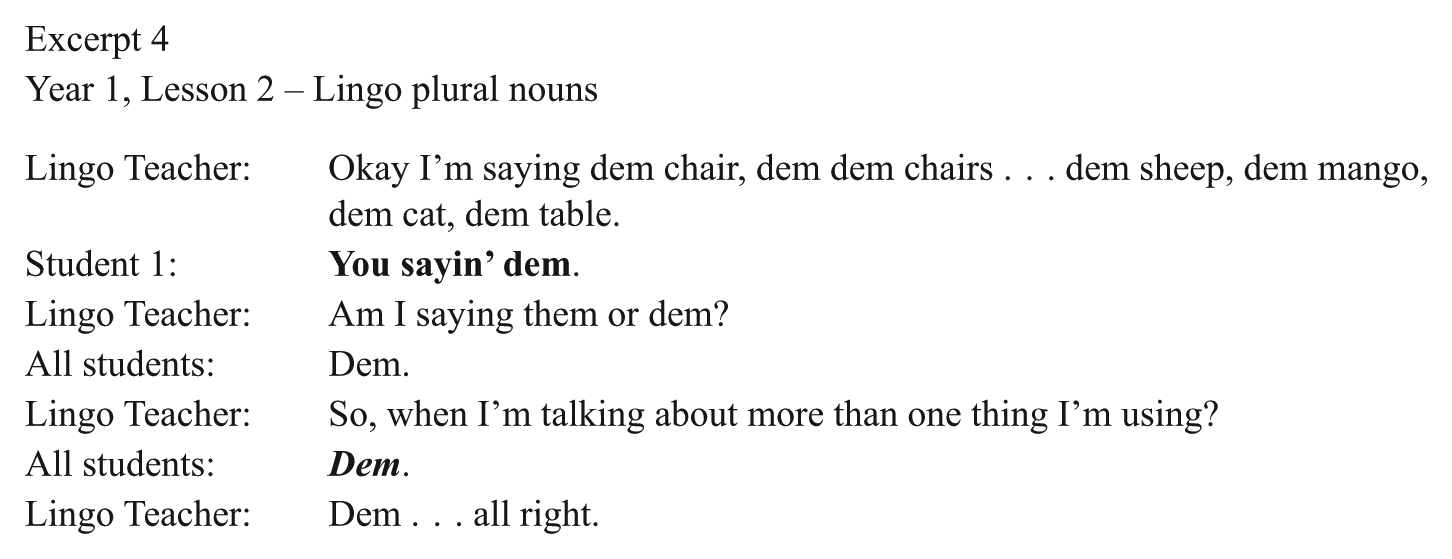
In response to the question ‘So, when I’m talking about more than one thing I’m using?’ students in each year level were able to correctly respond with ‘dem’ (Excerpt 4). This example from Year 1 illustrates the clarity students experienced, potentially signaling their ability to extend the grammatical rule learned for the singular form in Lingo to the plural form.
Next the teachers introduced SAE singular nouns, followed by SAE plural nouns.
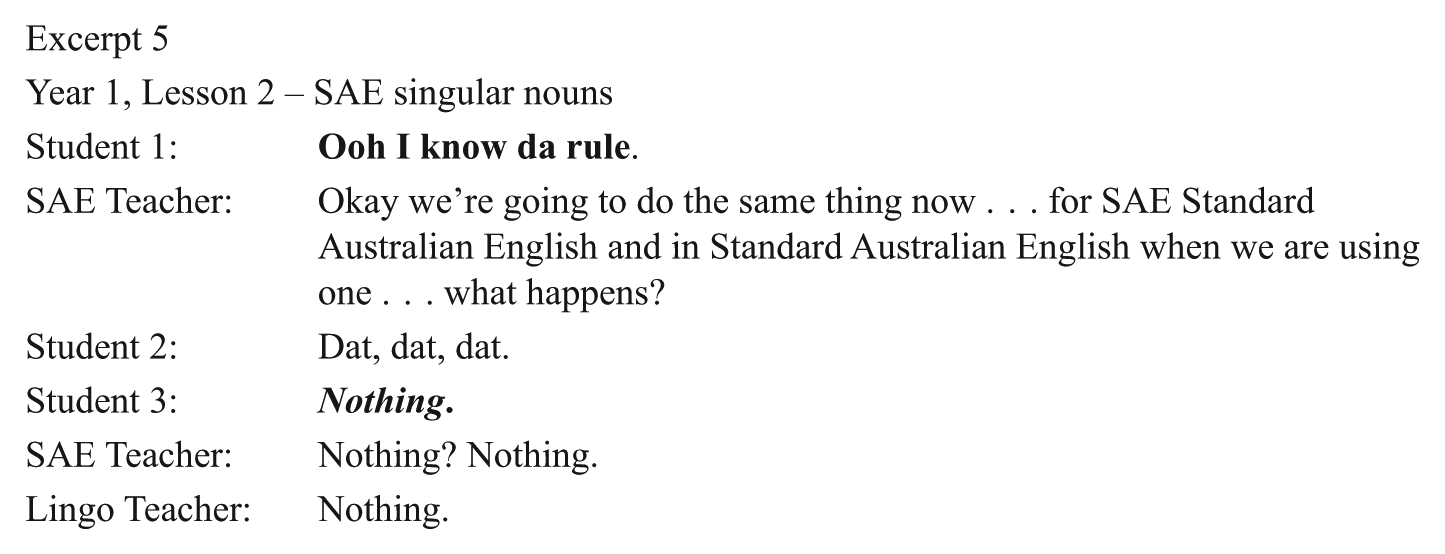
Except 5 begins with a student exclaiming ‘Ooh I know da rule’ suggesting that they have noticed a difference when switching from Lingo to SAE. However, it was difficult initially for students to articulate what this difference was. When the SAE teacher asked the students, ‘in Standard Australian English when we are using one . . . what happens?’ one student answered ‘Dat, dat, dat’ before another student guided the class to the response, ‘nothing’ indicating that the words do not change for SAE singular nouns.
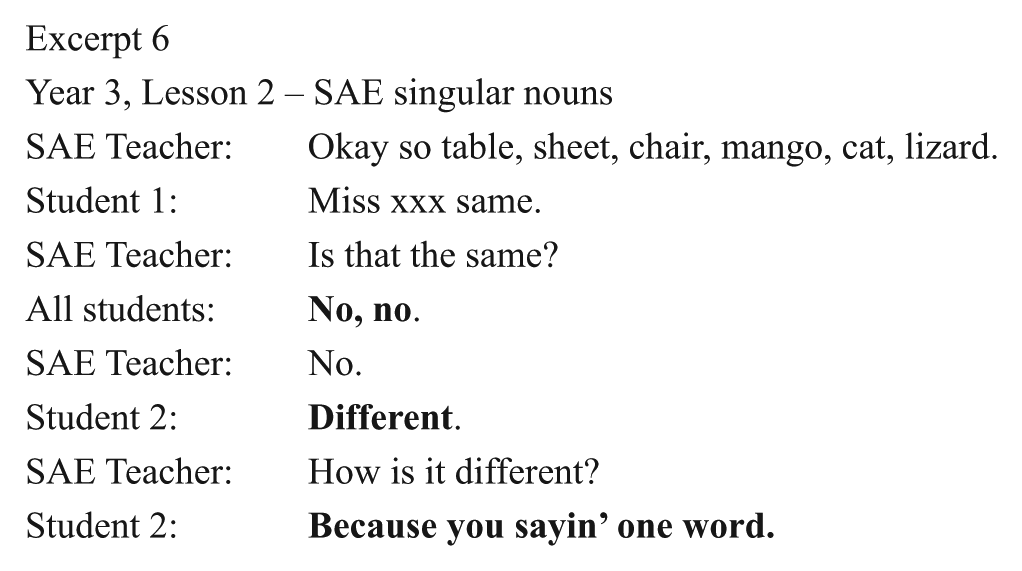
When the SAE teacher shares the words with the Year 3 class (‘Okay so table, sheet, chair, mango, cat, lizard’) and asks them if this was ‘the same?’ (as Lingo), students responded with ‘no, no’ before labeling it as ‘different’ demonstrating that students noticed the difference between Lingo and SAE (Excerpt 6). When prompted to explain the difference by the teacher (‘How is it different?’), one student was able to correctly respond with, ‘Because you sayin’ one word.’
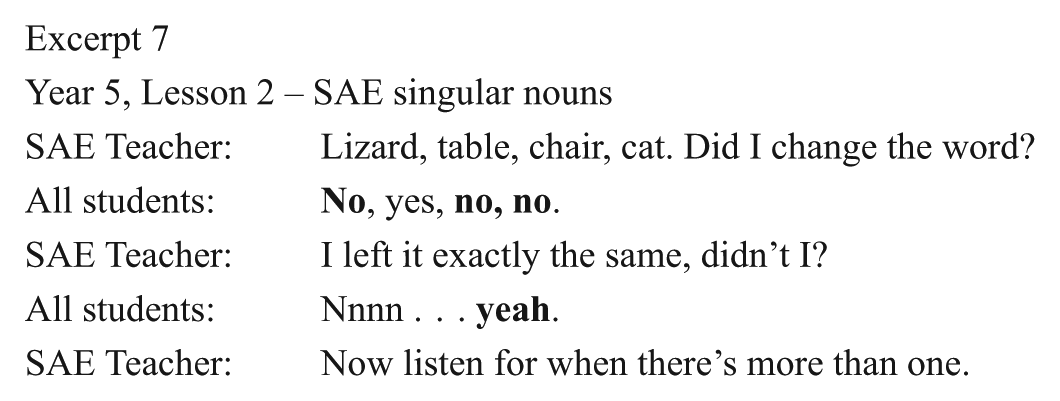
The Year 5 students expressed some confusion to the question about what happens to the noun for singular in SAE (‘Did I change the word?’) responding with ‘no, yes, no, no’ and ‘Nnnn . . . yeah’ (Excerpt 7). In response, SAE teacher elected to move to the SAE plural form (see Excerpt 10) to aid understanding (‘Now listen for when there’s more than one’).
Next, SAE plural nouns were introduced with the marking of ‘-s’ for the plural form being highly salient and readily noticed across all year levels.
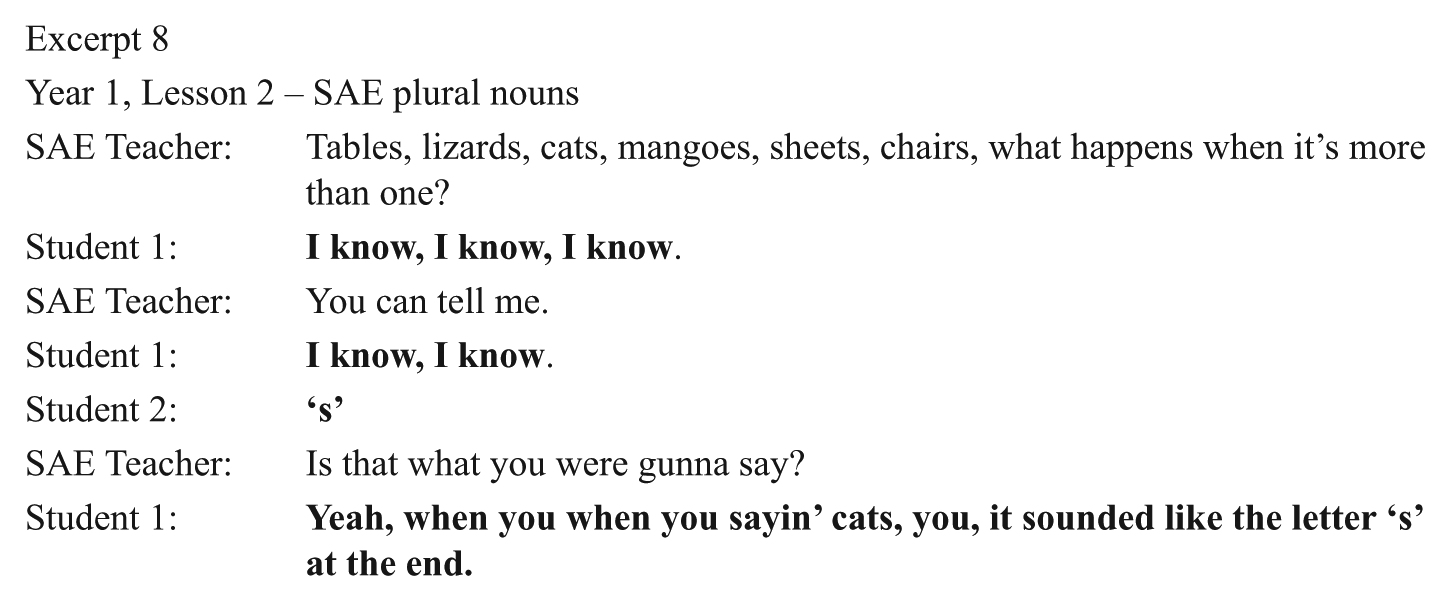
In Excerpt 8, a student immediately notices the differences saying, ‘I know, I know, I know.’ When asked to explain the difference, ‘what happens when it’s more than one?’, one student identifies ‘s’ and another responds with, ‘Yeah, when you when you sayin’ cats, you, it sounded like the letter ‘s’ at the end.’
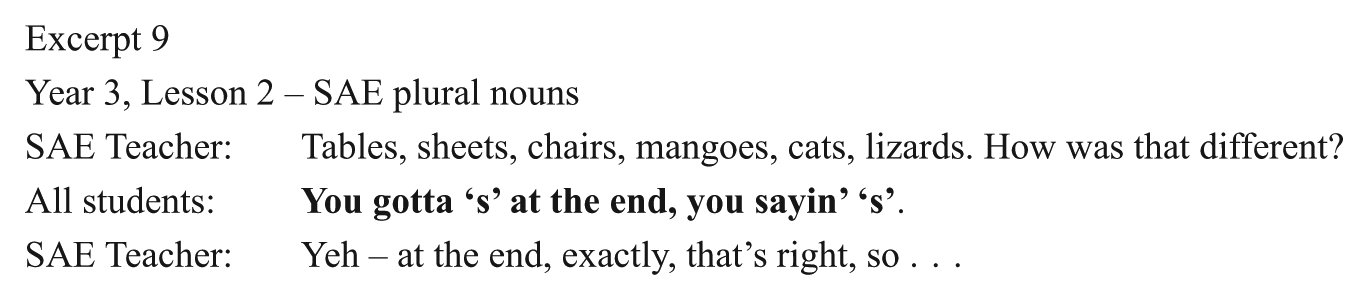
In Year 3, a child articulately answers, ‘You gotta “s” at the end, you sayin’ “s” ’ when the SAE teacher asks, ‘Tables, sheets, chairs, mangoes, cats, lizards. How was that different?’ (Excerpt 9).
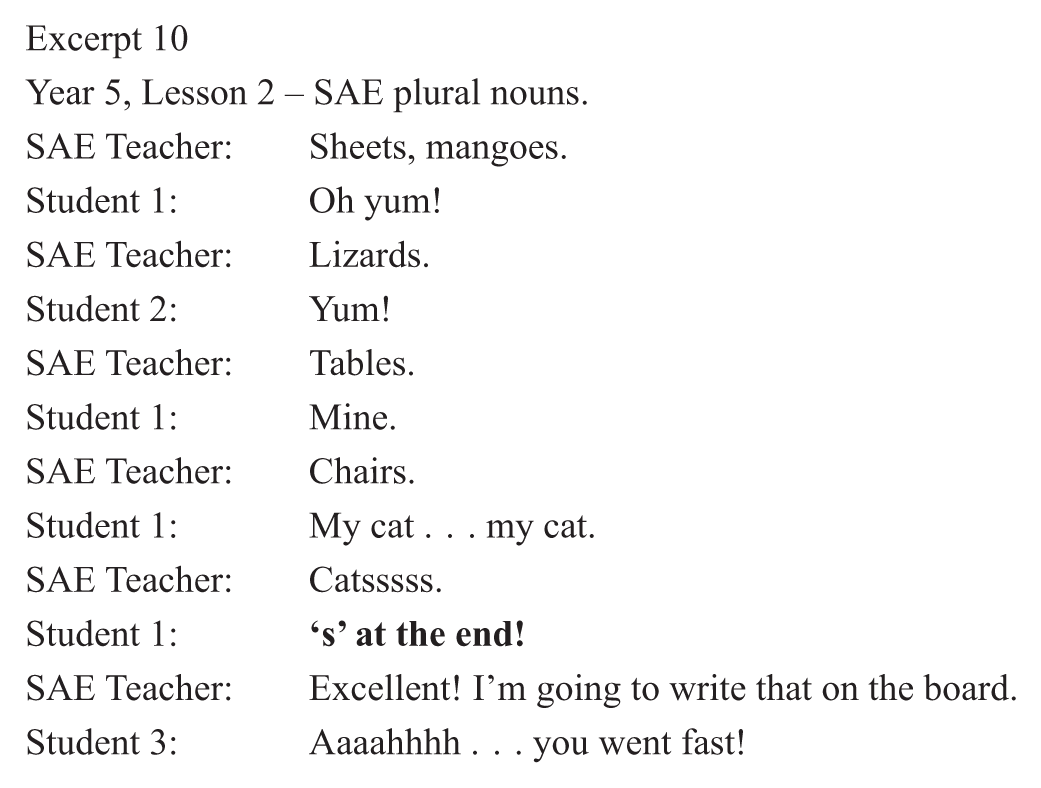
In Year 5, a child excitedly responds to the examples given with, ‘ “s” at the end!’ (Excerpt 10) before the SAE teacher can even ask the question. Another student exclaims, ‘Aaaahhhh . . . you went fast!’ indicating the speed of the classroom interaction, and how quickly this difference was noticed. Presumably students had a high degree of familiarity with this grammatical feature from their SAE classroom instruction.
2 Student engagement with past tense
For Lingo past tense, which is marked using the word ‘bin’ in front of the verb, very similar responses and thought processes were noted with the grammatical features of SAE being more readily provided.
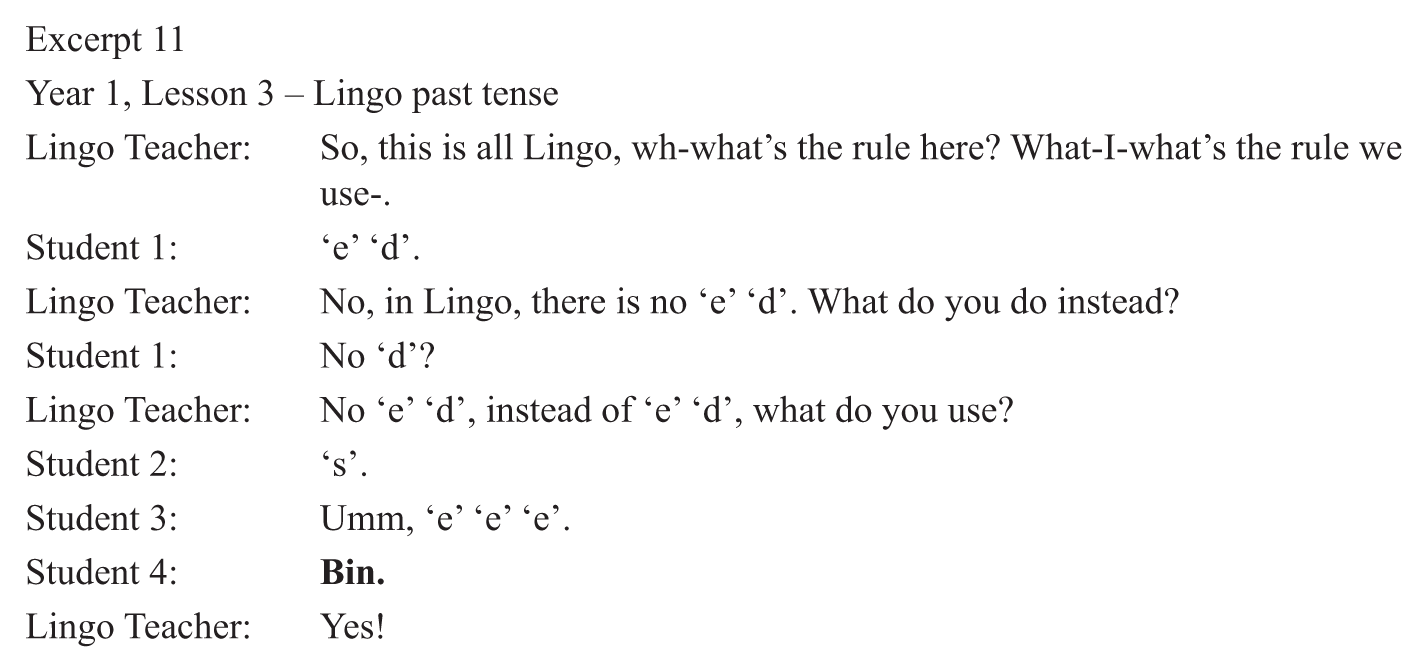
When presented with the Lingo examples and asked, ‘what’s the rule we use?’, Year 1 students responded with ‘ “e” “d” ’ to which the teacher replies, ‘there is no “e” “d”. What do you do instead?’ Another child offers ‘s’ along with some other responses from children (‘Umm, “e” “e” “e” ’) before a fourth child correctly responds with ‘bin’ (Excerpt 11).
Students in Years 3 and 5, on the other hand, were quick to recognize ‘bin’ as the pattern in Lingo and knew the word signaled past tense.
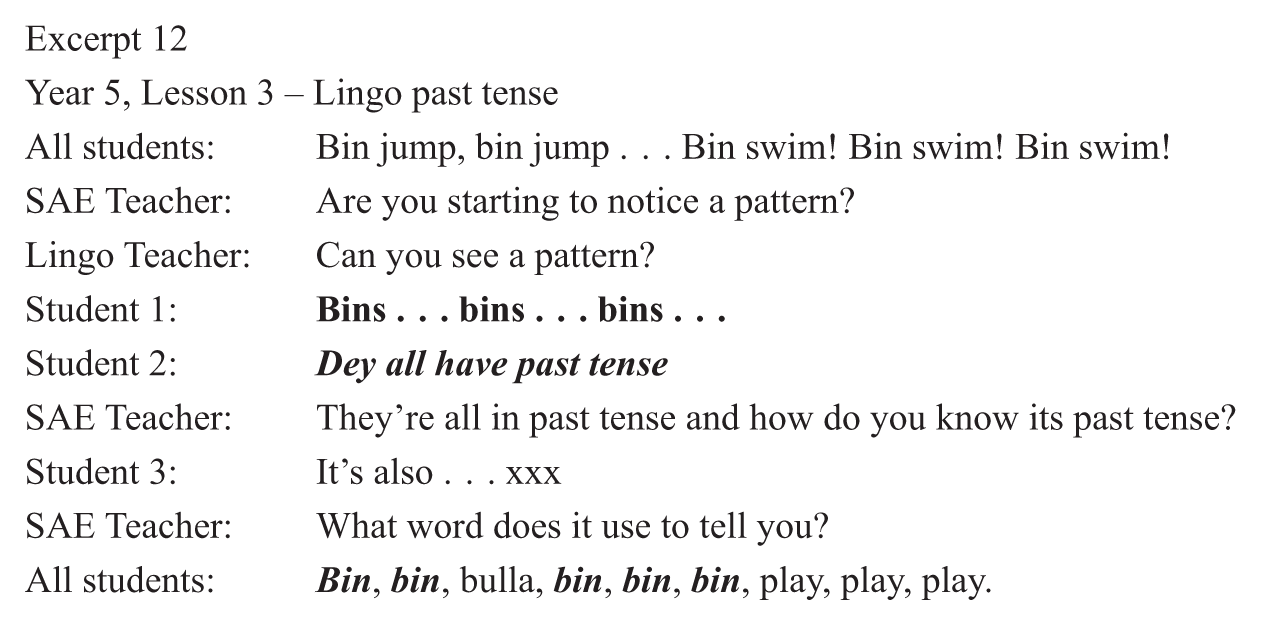
In Excerpt 12, the Lingo teacher asks the Year 5 students, ‘Can you see a pattern?’ One child identifies the use of ‘bins . . . bins . . . bins’ before another articulates the grammatical function, ‘Dey all have past tense.’
For SAE, students across all year levels were well-versed in the rule that ‘-ed’ is used at the end of the word for past tense, as they were for the previous SAE grammatical rules.
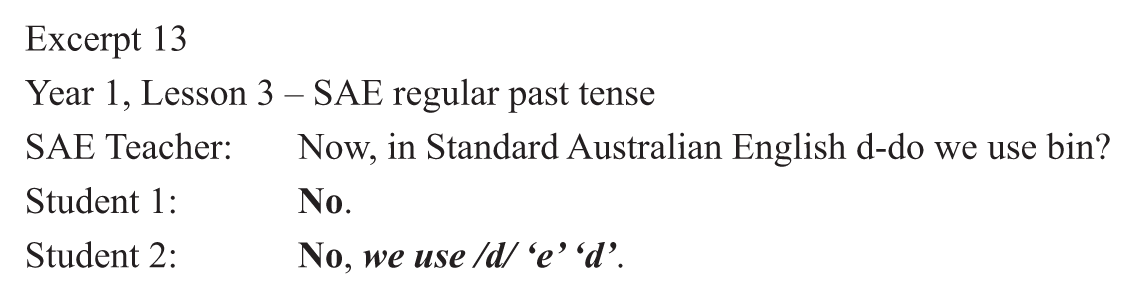
For example, in Excerpt 13, when the SAE teacher asked the Year 1 students ‘Now, in Standard Australian English d-do we use bin?’, one child in Year immediately responded with ‘No’ while another explained ‘No, we use /d/ “e” “d” ’.
This grammatical knowledge did not appear to extend to the SAE irregular past tense form, and students across the years spent some time figuring it out. Despite this, they were very quick to present their theories for the grammatical rule and with teacher support were able to conclude that the word changes. This was surprising and suggests an improvement in their ability to attend to this type of thinking.
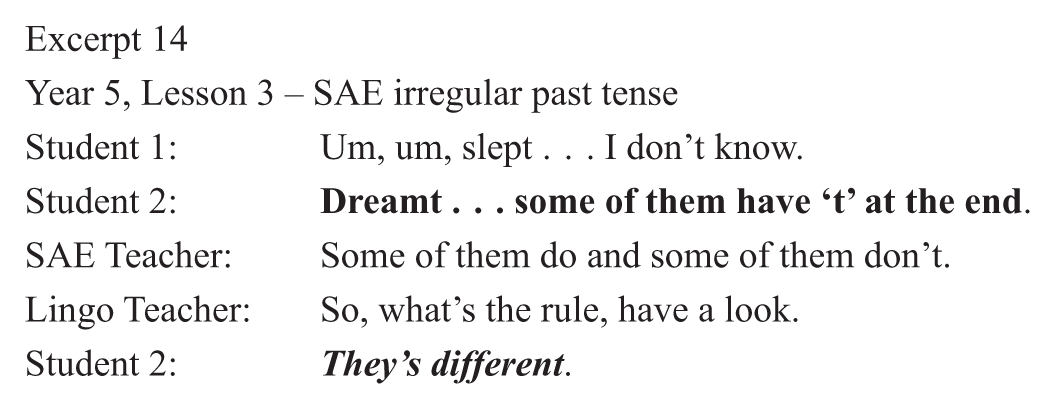
For example, in Excerpt 14, when asked the grammatical rule for SAE irregular past tense, a student in Year 5 repeats the word given as an example, but confesses not knowing, ‘Um, um, slept . . . I don’t know.’ This prompts another student to notice that many of the example words have ‘t’ at the end, ‘Dreamt . . . some of them have “t” at the end.’ The SAE teacher points out that this is not always the case, ‘Some of them do and some of them don’t.’ The same student realizes that ‘They’s different’ and the teachers go on to explain that these irregular words need to be learned.
3 Students’ oral language practice
Despite the metalinguistic knowledge demonstrated by students in their ability to ‘notice’ language differences and formulate grammatical rules, when students were asked to orally produce the languages in response to picture prompts, there was a notable level of confusion.
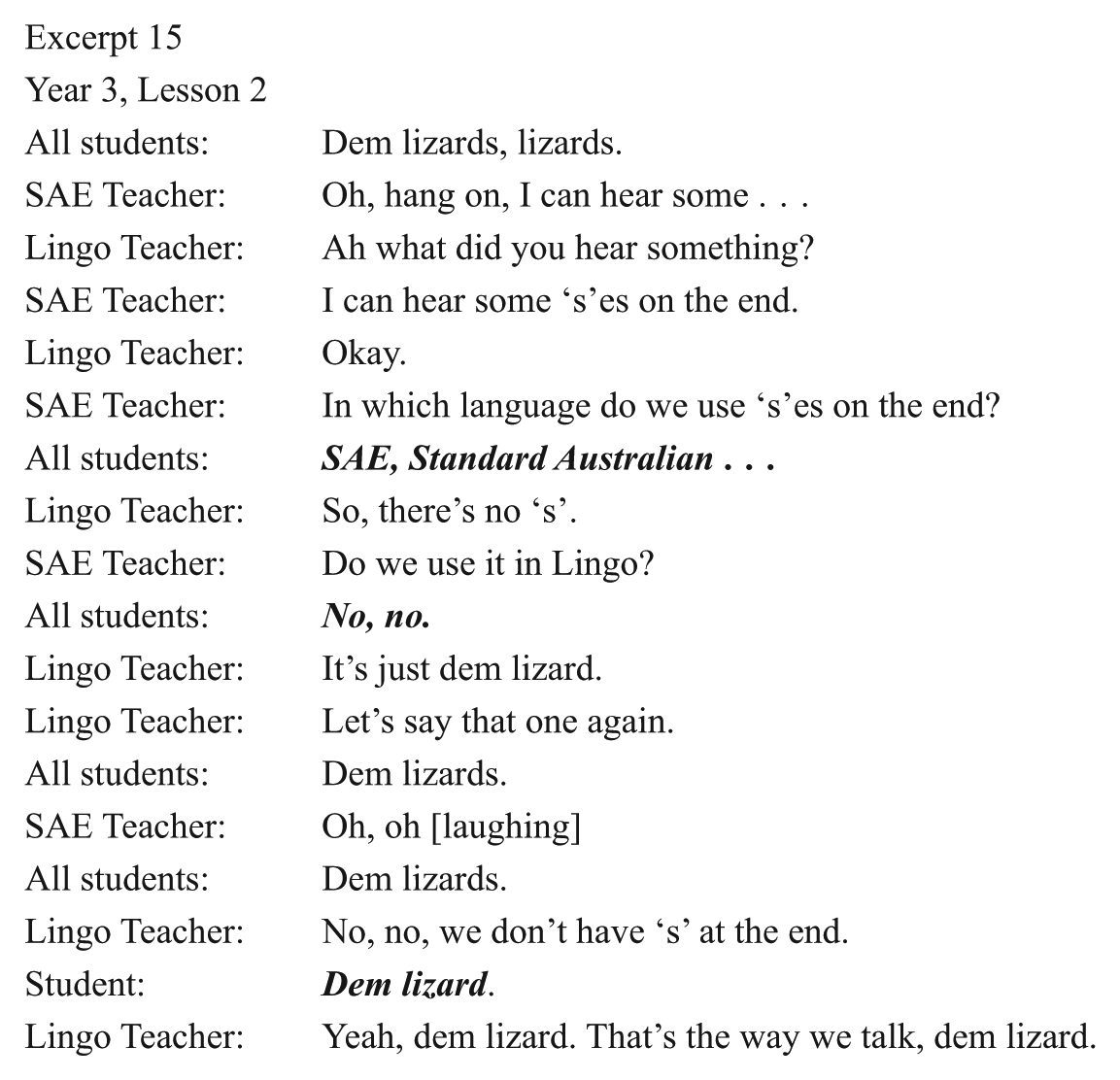
The confusion between the two languages was noted by the teachers during the lessons. In Excerpt 15, the teachers point out, ‘Yeah, cos I can hear we’re getting a little bit mixed up, aren’t we, between the two.’ In the example, students are simultaneously applying the rules from each language, for example, ‘Dem lizards’ uses both ‘dem’ from Lingo and ‘-s’ from SAE. The teachers correct the students stating that they should not use ‘s’ on the end for Lingo, ‘It’s just dem lizard.’ However, students continue to repeat ‘Dem lizards’ before being corrected again. Once the teachers receive the correct form from the students ‘Dem lizard’, the Lingo teacher concludes with, ‘Yeah, dem lizard. That’s the way we talk, dem lizard.’ This confusion was interesting to note, as the prior testing showed that the same students often did not include the SAE plural form in their attempted SAE speech. This confusion re-occurred for the different grammatical forms, in whole class practice and during individual practice.
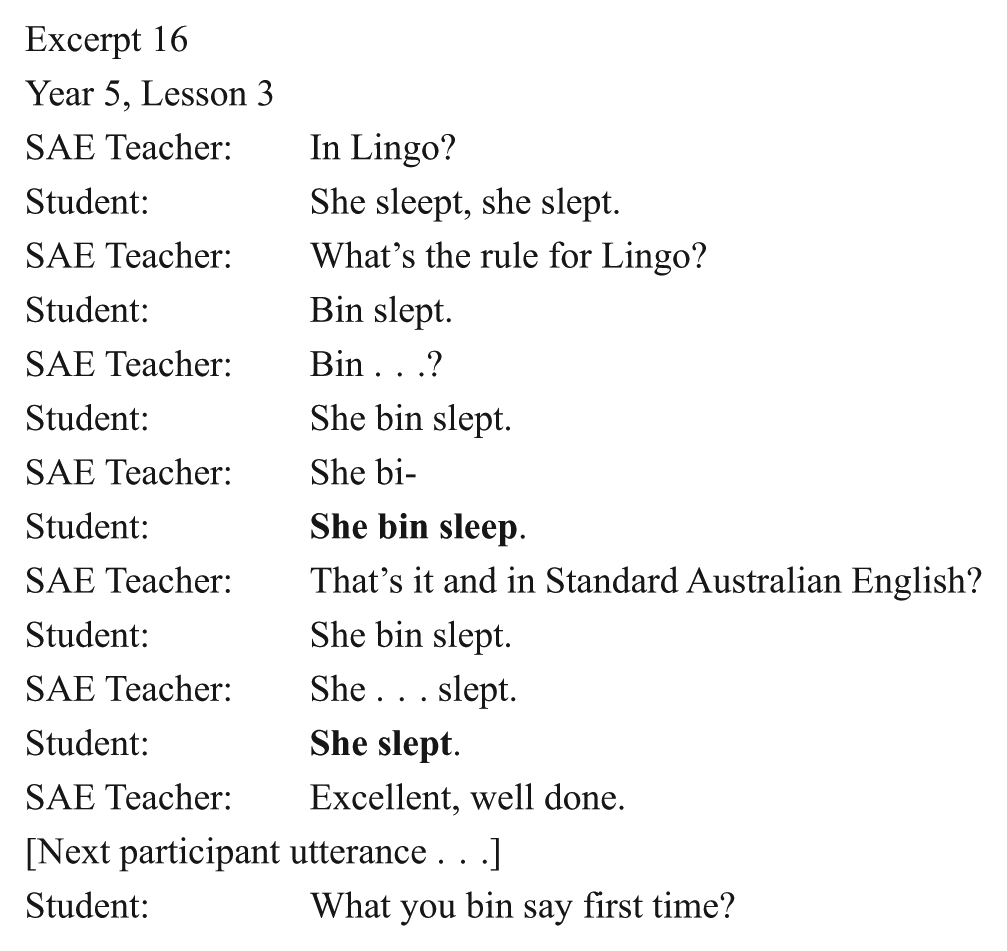
In Excerpt 16, the SAE teacher is asking a Year 5 student to produce the Lingo form, ‘In Lingo?’, but the student replies in SAE, ‘She sleept, she slept.’ In an attempt to lead the student to the correct response, the SAE teacher asks, ‘What’s the rule for Lingo?’ Instead of providing the rule, the student answers with ‘Bin slept’; another example of mixing the two languages with ‘bin’ from Lingo and the SAE irregular past tense form. Again, the teacher prompts for the Lingo form, ‘Bin . . .?’ but the student repeats the mixed form (‘She bin slept’). On the fourth attempt the student correctly produces, ‘She bin sleep.’ However, when the teacher asks the student to answer in SAE, the mixed form is again produced, ‘She bin slept.’ The teacher provides support (‘She . . . slept’) for the student to produce the correct form of ‘She slept.’ Ironically, in the very next utterance from the student, they seamlessly produce the Lingo form in their natural speech when they turn to their peer to ask, ‘what you
It is important to note that not all students found this code-switching difficult, and some performed it perfectly.
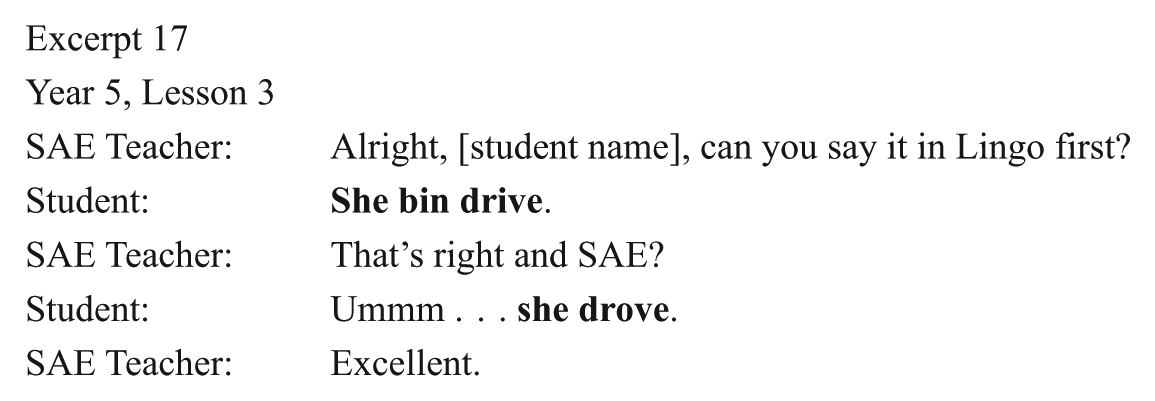
When asked to produce a sentence for each language based on a picture, Excerpt 17 shows a student in Year 5 being able to correctly produce the Lingo form, ‘She bin drive’ followed by the correct SAE form, ‘Ummm . . . she drove.’ Approximately half of the students in Year 3 were able to do this, while others required teacher scaffolding to produce the target language. Some, but not all students in Year 5 were also able to effectively code-switch.
IV Discussion
For the most part, students were able to notice and articulate differences between the languages with older students performing better than younger ones as would be expected. In many cases, students were able to apply inductive linguistic reasoning skills (Leow, 2019) to develop grammatical rules for singular and plural nouns, and regular and irregular past tense for both languages, demonstrating a high degree of metalinguistic awareness. However, through examining the languages side-by-side using contrastive analysis, there was a degree confusion between Lingo and SAE noted and a disconnect between students’ metalinguistic knowledge and linguistic performance. Students demonstrated an explicit grammatical knowledge of SAE but were not necessarily proficient in the target grammatical features as testing showed. Conversely, as would be expected, although fluent in Lingo, students did not always have explicit grammatical knowledge of it, and the lessons were important to bring this to our attention. Naturally, we questioned: how could this confusion be resolved? This caused us to reflect on the challenges learning two closely related languages, the relationship between implicit and explicit knowledge, the role of oral language in language learning. We begin by reflecting on our collaborative practices, what we have learned from the CPAR study and conclude with the implications for practitioners and educational systems.
1 Our collaborative practices: What we learned from each other
Our collaborative practices were important for maintaining Aboriginal and Torres Strait Islander peoples’ language sovereignty, and for embracing students’ languages and sociolinguistic identities. It allowed us to both use our own language skills, sociocultural knowledges and identities to support students’ language learning. Beyond this, it also provided us with a meaningful opportunity to learn from each other, as we both reflect on.
a Carly’s reflection
I learned a lot from Bernadine. She made sure that the learning was fun and interactive for the students. The grammar lessons were not dry and boring as is often associated with grammar. Instead, we always had different games to play that provided plenty of opportunity for oral language development. But the one thing I observed that has really stuck with me over the years is the way Bernadine quietly involved everyone in what we were doing. She always talked about what we were doing with other school staff, she checked the Lingo language with other local First Nations staff members and invited them into the classroom when we were teaching, and they did come and watch. I remember noting how different this was to how non-Indigenous teachers tend to operate, and I realize now that she was following important cultural protocols and ways of working for Aboriginal and Torres Strait Islander people.
b Bernadine’s reflection
Working with Carly helped me see that there is a real need for both Indigenous and non-Indigenous educators to work collaboratively together to discuss, design and deliver lessons that support Indigenous students’ language learning. The fact that both Carly and I brought different world views, different viewpoints and different language skills to the planning and delivering of the lessons helped to make the lessons more engaging and more able to support the students’ language learning. What I liked about working with Carly was that she was respectful of our culture and community and always checked that what she was doing was culturally appropriate. What struck me the most was that Carly was willing to listen to the viewpoints of the local staff and valued the input given by our Indigenous staff. This is often not the case with many non-Indigenous staff who come to our community. Working with Carly showed me that there is a real need for ‘Two-Way Learning’ and ‘Two-Way Teaching’ partnerships between Indigenous and non-Indigenous educators who are ‘language savvy’. (Note. ‘language savvy’ refers to a person who has grammatical and linguistic knowledge of a language.)
2 What we learned about language learning in this context
At the conclusion of the three lessons, we wanted to continue teaching the lessons. This drive was motivated by the enjoyment the students experienced, and the learning that was evident, as well as our desire to resolve several outstanding questions we still had. First and foremost, we wanted to know whether using contrastive analysis would support students’ language learning in the long-term. We were not sure whether some of the initial confusion between the two languages could be resolved through continuing to develop students’ language awareness through contrastive analysis and with sufficient opportunities for oral language practice. Here, we draw on Schmidt’s (1990, 1995) Noticing Theory alongside theories of second dialect acquisition (Berry & Hudson, 1997; Siegel, 2010) to make sense of students’ learning experiences, and to inform our future practice.
Some of the confusion between the two languages that was noted could be linked to the challenges of learning two closely related languages (Siegel, 2010; Wolfram & Schilling-Estes, 1998). Schmidt’s (1990) Noticing Hypothesis states for language to be acquired it must first be noticed. Berry and Hudson (1997) suggest that for speakers of Indigenous contact languages learning SAE, there may not be a strong awareness that a new language is being learned due to the linguistic similarities between these varieties of English. Learners often do not ‘notice’ dialect differences due to the minor linguistic distance between them (Siegel, 2010), and as a result, it is often difficult for them to process these differences and effectively separate the two languages. In the learning and teaching context for our CPAR, students are constantly receiving input in both languages throughout the schooling day, which may blur language boundaries making it difficult to decipher which language is which. Neither language could be considered novel input making language acquisition more difficult. It is therefore possible that through the continued use of contrastive analysis, students may develop the language awareness skills needed to notice the language differences, and in doing so, acquire SAE.
There is also the disconnect between students’ metalinguistic knowledge and linguistic performance that was noted to consider. Some students demonstrated an explicit grammatical knowledge of SAE but were not necessarily orally proficient in the target grammatical features as testing showed. Conversely, although fluent in Lingo, many students did not have explicit grammatical knowledge of it. There are three main arguments in the interface issue which attempt to explain the relationship between implicit and explicit knowledge. The first is the view that explicit knowledge does not convert to implicit knowledge (Ellis, 2005, p. 307). In the examples from the lesson, there was a disparity between students’ explicit and implicit knowledge in that moment. This does not mean that it is not possible for explicit knowledge to become implicit knowledge with practice over time, which is the second position in the interface issue (DeKeyser, 1998; Sharwood Smith, 1981). There is also the perspective that explicit knowledge will only become implicit knowledge when learners are developmentally ready (Karmiloff-Smith, 1986; Pienemann, 1998, 2015) and with motivation (both positive and negative). From this viewpoint, explicit knowledge and instruction alone does not provide a sufficient condition for language learning. It must be accompanied with the opportunity to practice language at the appropriate stage of learners’ development. Thus, we concluded that the sustained use of contrastive analysis would likely have eventuated in improvements to students’ linguistic performance over time, but for this to happen there needed to be appropriate opportunity for oral language practice in the classroom.
Lastly, we reflected that language learning takes a long time, and this time may be even longer for those who are learning a closely related language (Steele & Wigglesworth, 2023). Consequently, three lessons would never suffice, and more time was needed to further explore how SAE is learned in educational contexts where Indigenous contact languages are spoken.
V Conclusions and implications for practitioners and education systems
Many Indigenous contact languages are undocumented, and consequently there are very few resources available to learn about them, and even fewer that can be used as resources in the classroom. Consequently, community members who are speakers of local Indigenous contact languages are the primary sources of knowledge for these languages. Unfortunately, in Australia, First Nations peoples remain under-represented in the teaching profession (Gower et al., 2022), and those who have the specific language knowledge, skills and metalinguistic awareness to teach using contrastive analysis are even rarer. In this study, we were fortunate to have such a person (Bernadine). To implement a similar approach, practitioners would need to form relationships with the local community and partnerships between First Nations and non-Indigenous teachers. Together, they would need to design their own lessons and create accompanying resources for that particular Indigenous contact language. This presents an impediment but is a worthwhile pursuit given the currently dominant monolingual literacy approaches that have largely been ineffective for Aboriginal and Torres Strait Islander students in the Australian schooling system (Angelo et al., 2025; Oliver et al., 2021; Sellwood & Angelo, 2013; Silburn et al., 2011; Steele & Wigglesworth, 2023).
In our approach, there was opportunity for students to practice their oral language skills. However, in the Australian schooling system this is rarely the case as literacy is frequently given precedence over oral language skills (Oliver et al., 2005). Under these conditions, it is not surprising that students had explicit knowledge about SAE but did not possess a level of communicative ability commensurate with their knowledge. Sufficient opportunity to practice SAE oral language skills is needed. Kiramba (2018) described a very similar learning environment in Kenya where students underwent many hours of explicit language instruction to little effect due to the largely silent classroom environment. She also noted the need to address the prevalent standard language ideologies that underpin such approaches. Teachers and education systems, therefore, need to ensure that adequate classroom time is provided for the development of oral language skills. This is part of the knowledge about language learning that is currently absent from missing from teacher education (Steele et al., 2025) and teacher professional learning (Gilmour et al., 2018) and needs to be addressed.
Footnotes
Acknowledgements
Our heartfelt thanks to the students who enthusiastically participated in this study and the schools and teachers who provided the opportunity. We are grateful to the anonymous reviewers and the editor for their valuable feedback. Any errors are our own.
Funding
The authors disclosed receipt of the following financial support for the research, authorship, and/or publication of this article: This research was conducted as part of a PhD at The University of Melbourne (Steele, 2020), funded by the Australian Government Research Training Program (AGRTP) Scholarship and the Australia Research Council Centre of Excellence for the Dynamics of Language (CE140100041).
