



Abstract
The Covid-19 pandemic has demonstrated how ubiquitous and pervasive technology to support communication and collaboration has become in people’s lives. This article seeks to provide an overview of the use of computer-mediated communication (CMC) in learning Chinese as a foreign language (CFL). The authors systematically reviewed 68 empirical research articles and 3 review articles published between 2008 and 2022 (early April). This in-depth review aims to investigate: (1) the characteristics of CMC-facilitated CFL learning in the worldwide context; (2) common theoretical foundations and methodological approaches; (3) CFL learners’ linguistic and intercultural communicative competence development through CMC; (4) affordances and limitations of CMC in the field of CFL research. Findings from this review suggest that the majority of studies were in formal education contexts within Anglosphere countries. The most commonly acknowledged theoretical foundations in CFL were well aligned with the wider second language acquisition (SLA) domain. A mixed-methods approach was the predominant methodological approach undertaken in the selected papers, with a small number of experimental or quasi-experimental studies between 2008 and 2022. The analysis also identified a clear research gap in relation to young CFL learners in the literature. The predominance of studies at ab initio level would suggest that more research is needed on younger CFL learners and on intermediate and advanced CFL learners using CMC. Additionally, the synthesized affordances of applying CMC technologies in CFL practice from this review were: (1) active engagement; (2) authentic communication; (3) learner centeredness; and (4) opportunities for practice and discovery. By addressing technological and individual CMC implementation limitations in a CFL context, suggestions and recommendations about further research and teaching practice are highlighted in the conclusion section.
I Introduction
The rapid change to remote and online learning during the Covid-19 pandemic has highlighted the critical importance of technology as a mediating tool for learning. Technology-mediated learning is no longer a desirable addition to learning but has become an essential pedagogical practice. However, studies of educational practices during school closures have noted how educators have struggled to establish collaborative activity outside of the face-to-face context of the classroom (Devitt et al., 2020). This systematic review sets out to synthesize and critique the empirical evidence base for computer-mediated communication (CMC) in the context of Chinese as a foreign language (CFL) learning in and out of the classroom since 2008. It addresses three aspects: (1) the characteristics of CFL participants in various learning contexts; (2) theoretical foundations and methodological approaches undertaken in the field of CMC; (3) technological affordances and limitations pertinent to CFL studies. It, first, overviews the state of the art in CMC and its contributions in the domain of second language acquisition (SLA) and CFL. Second, the method and procedures of this systematic review are explicitly demonstrated. Third, findings and in-depth discussions are presented by addressing each research question. Section V proposes suggestions for CMC research and teaching practice in CFL.
II Literature review
1 Computer-mediated communication in SLA
Computer-mediated communication (CMC) has become an indispensable sub-field of computer assisted language learning (CALL), in particular since the advent of available multimedia and internet in the phases of Integrative CALL in the twenty-first century (Warschauer, 2004). Herring (1996) defined CMC as: ‘communication that takes place between human beings via the instrumentality of computers’ (p. 1). Thorne (2007) defined CMC as ‘multimodal, often (but not exclusively) internet-mediated communication’ (p. 325) to incorporate the affordances of the internet through various CMC tools and devices rather than solely through computers. The common forms of CMC technological tools are often categorized as synchronous and asynchronous. The key point to distinguish these two forms is whether communication occurs concurrently (as in video calls) or not (as in email). The common modes integrated in CMC tools are text, audio, video, and the combination of these three (Chun, 2016; Mahdi, 2014). As new communication technologies have emerged and developed, CMC tools have been included and explored in language learning research and practice, for example the extensive research on virtual environments such as Second Life in recent years (Milton, 2012; Sadler, 2017; Shih & Yang, 2008; Sykes, Oskoz & Thorne, 2008).
Linguistic and/or intercultural exchange with native speakers of the target language is recognized as another specific type of CMC by some researchers (Antoniadou, 2011; Cappellini & Mompean, 2015; Fuchs et al., 2017; Godwin-Jones, 2019; Lewis & O’Dowd, 2016). A number of terms have been used to refer to those online collaborative learning opportunities of linguistic and/or intercultural exchange, such as E-tandem (O’Rourke, 2007; Renner, 2017; Tian & Wang, 2010), teletandem (Cappellini, 2016; Cappellini & Mompean, 2015; Zakir, Funo & Telles, 2016), telecollaboration (Akiyama & Cunningham, 2018; Godwin-Jones, 2019; Schenker, 2012) or online intercultural exchange (Avgousti, 2018; Lewis & O’Dowd, 2016). This article adapts the term ‘telecollaboration’ to refer to learning activities that incorporate communication using CMC technology in any mode or mixture of modes through a target language. Researchers frequently demonstrate that telecollaboration projects provide learners with more opportunities to be exposed to the target culture and enhance their intercultural communicative competence (Antoniadou, 2011; Chun, 2011; Godwin-Jones, 2019; Lee & Song, 2019; Lee & Markey, 2014; O’Dowd & Dooly, 2020) and intercultural sensitivity (Avgousti, 2018). Furthermore, such projects have also been shown to be helpful for learner identity building (Chun, 2016; Çiftçi & Savaş, 2018). Learners are able to construct intercultural awareness by critically reflecting on and comparing their own and other cultures.
Collectively, the studies of CMC in SLA contributed to the normalization process of CALL, where ‘the technology becomes invisible, embedded in everyday practice’ (Bax, 2003, p. 23).
2 Computer-mediated communication in Chinese as a foreign language (CFL) / Chinese as a second language (CSL)
Xu (2015) reviewed the literature on the development of CALL in CFL and categorized it into four stages, which fit approximately in the three stages of CALL in SLA defined by Warschauer (2004):
CALL in CFL Pioneering Stage (1970–1985);
CALL in CFL Starting and Developing Stage (1986–1999);
CALL in CFL Omni-directional Development (2000–2004);
New Trends in CALL (2005–2015).
It is clear that Xu’s Stage 3 Omni-directional Development and Stage 4 New Trends correspond to Warschauer’s Integrative CALL stage. More specifically, the literature shows that CFL researchers have been investigating the utilization of different CMC tools for developing learners’ different language skills, such as listening (Tang, Sung & Chang, 2016), speaking (Chen, 2010; Guo & Möllering, 2016; Lan, 2016; Lan & Lin, 2016; Lan et al., 2013; Shi & Stickler, 2018; Xie, Chen & Ryder, 2021; Xu & Peng, 2017), reading (Thoms, Sung & Poole, 2017), writing (Eubanks, Yeh & Tseng, 2018; Lan, Lyu & Chin, 2019; Wang & Vásquez, 2014; Wong et al., 2011; Zhang, 2009; Zhang & Lu, 2014). In addition, the field of intercultural communicative competence (ICC) has also been the focus of CFL researchers, especially in telecollaborative communications (Jiang, 2011; Jin, 2008; Luo & Gao, 2022; Qu & Hagley, 2021; Ruan & Medwell, 2020; Wang et al., 2013, 2016; Zhang, 2016).
Given that CMC has been widely deployed in CFL practice in recent years, it is useful to synthesize the results of past studies and to provide both researchers and practitioners with a comprehensive picture of how CMC has been deployed in different CFL contexts.
III Systematic review method
1 Aims of the review
Research would suggest that CMC has many direct and indirect positive outcomes for language learners. In contrast with a meta-analysis review approach, a systematic review can explore and synthesize both quantitative and qualitative research which is in line with the contextualized nature of common classroom practice (Téllez & Waxman, 2006). This article aims to provide researchers and practitioners with a timely and in-depth exploration of the literature on the use of CMC in different CFL contexts across age ranges and proficiency levels. The goal of this review is not only to identify linguistic and intercultural outcomes among CFL learners, but also to provide recommendations for both researchers and practitioners through examining present research methods, and the affordances and limitations of deploying CMC tools in CFL practice. To provide an overview of CMC-facilitated CFL studies since 2008, this review addresses the following research questions:
What are the contexts and participant groups in empirical research on the use of CMC technologies in the field of CFL from 2008 to 2022?
What are the common theoretical foundations and predominant research methods deployed in CFL studies using CMC?
What types of CMC tools and language competences are investigated in CFL studies? And what are their affordances and limitations?
2 Review process
This systematic review adopted the five key principles set out in Macaro, Handley and Walter (2012):
Include more than one reviewer.
Use transparent procedures and agreed protocols throughout.
Implement a reliable and extensive search to ensure that a full range of articles is included.
Act to reduce reviewer bias.
Focus on evidence in the synthesis produced.
To address the research questions, this review followed the style of a Cochrane systematic review (Higgins & Green, 2019) and included a qualitative synthesis of answers, focusing on the available evidence. The review only included peer-reviewed articles and did not include grey literature, such as doctoral dissertations. Figure 1 sets out the stages of the review process and the papers included at each phase.
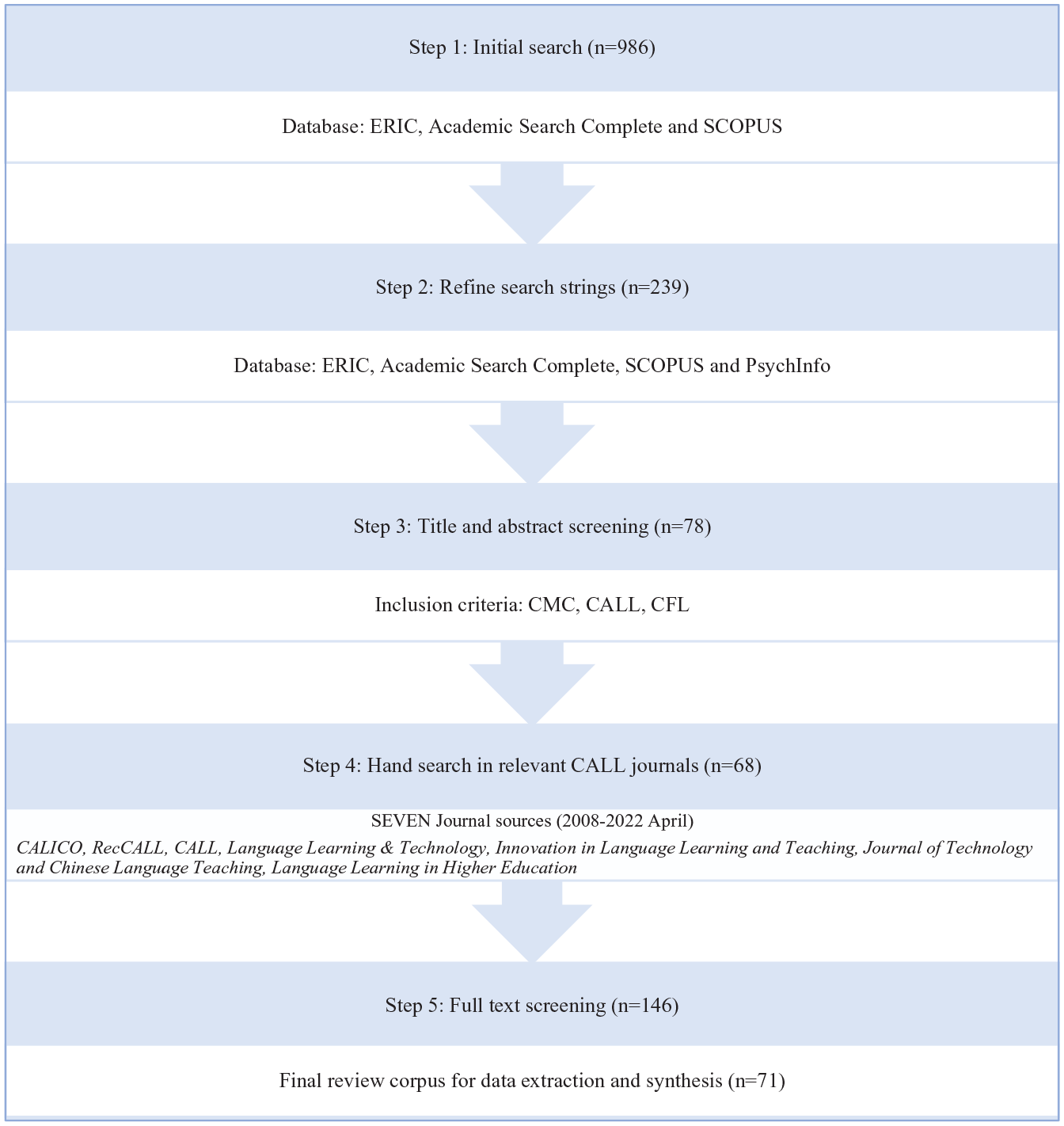
Screening and selection process.
3 Search strategy
The search was carried out across four databases (ERIC, Academic Search Complete, SCOPUS and PsychInfo). The search string was defined from the research questions to include Chinese/Mandarin language learning and CMC technology. This initial scoping search yielded 986 results from the ERIC, Academic Search Complete and SCOPUS databases. It is necessary to identify a manageable number of papers in the systematic literature review. Therefore, the research team refined the search string through an iterative process progressively incorporating additional relevant technologies (i.e. software, social media, wikis, Twitter, etc.) to saturation where additional technologies no longer yielded new results (for the full search string, see Appendix 1 in supplemental material).
In order to include relevant papers not retrieved from the database search, a manual search process of CALL specific journals was added. The manual search included the following seven peer-reviewed journals from 2008 to early 2022: Computer Assisted Language Learning, ReCALL, CALICO, Language Learning and Technology, Journal of Technology and Chinese Language Teaching, Innovation in Language Learning and Teaching, Language Learning in Higher Education. After removing duplicate papers, 146 studies were selected for the full text screening stage.
4 Inclusion/exclusion criteria
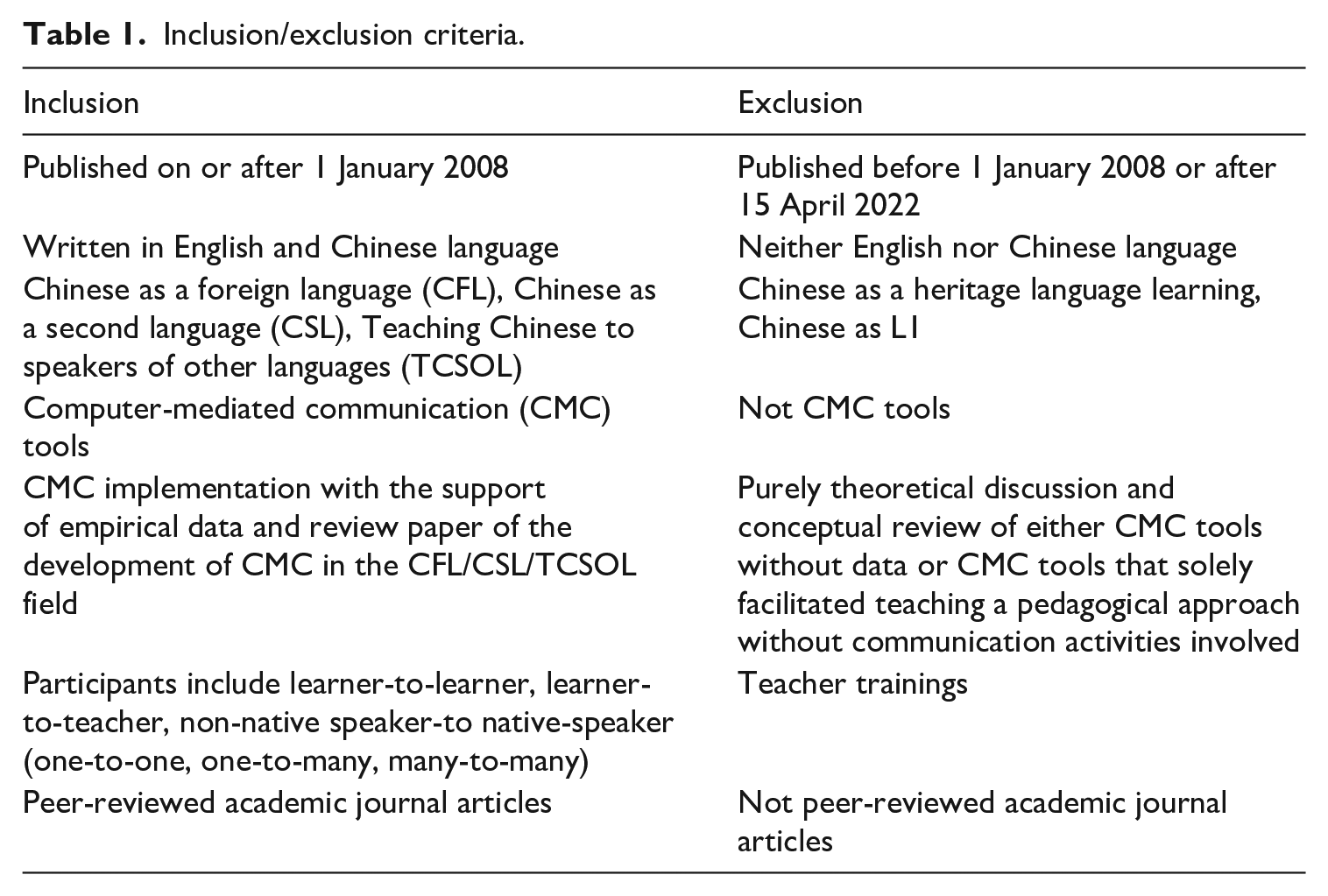
Some technologies which may have been prevalent in society in previous years are no longer in use while others, such as the smartphone, have emerged and grown to dominate the technology landscape. Given the pace and scale of change in digital technologies over recent years, only papers published since 1 January 2008 were included. Focusing on the past 15 years (2008–2022) allowed technological development and its application in CFL to be examined. While there was a broad literature review on CALL and Chinese language learning, only papers referencing CMC tools specifically for CFL were included for screening. This category excluded papers exploring the development of Chinese as first language (L1) as well as heritage language and literacy. Given the language expertise of the two reviewers, any papers written in Chinese or English were included. The inclusion and exclusion criteria are shown in Table 1.
Inclusion/exclusion criteria.
5 Screening steps
The process of screening was divided into two steps: title/abstract screening and full text screening.
Step 1 Title/abstract screening
Where abstracts were not fully clear as to their relevance for this review, they were included for full text screening. Altogether 146 academic articles, which were consistent with the inclusion criteria, remained after title/abstract reviewing. The full paper texts were imported into Zotero (the open-source reference management software) for full text screening.
Step 2 Full text screening
Both authors comprehensively read 146 papers, applying the inclusion/exclusion criteria during the full text screening phase. Seventy-five papers were excluded during this phase for a variety of reasons, in particular because the language learnt was Chinese as L1, technology was deployed but not CMC, i.e. there was no computer-mediated interaction among learners, or no access to the full text. This left a total of 71 papers for the data extraction and coding phase.
6 Coding schema and data extraction
The data extraction process was conducted by reading 71 full text selected papers in depth to extract study data details relevant to the research questions for this review. This coding schema (imported in a spreadsheet on Microsoft Excel) included the following information for each study:
publication details (year, author, title, publication source);
study design details (theoretical framework, methodology, data collection instrument, intervention duration, competence foci, communicative task type, range of participation);
CMC profiles (CMC type, specific CMC tool, modality);
participant demographics (number, gender, region, educational level, learning context, Chinese proficiency level).
The completed coding schema is presented in Appendix 2 in supplemental material. All relevant data in each paper was coded to the corresponding category by the authors and refined through discussion. The data extraction phase yielded a rich data set on the 71 articles including 68 empirical studies and 3 review papers of CMC development in CFL for further analysis and synthesis.
IV Results and discussion
In order to observe the developmental trends of CALL and CMC in CFL, this section presents a qualitative synthesis of this review set as guided by the research questions. A summary of the reviewed papers is shown in Appendix 3 in supplemental material.
1 What are the contexts and participant groups in empirical research on the use of CMC technologies in the field of CFL from 2008 to 2022?
a Research context
The introduction of educational technology in schools breaks boundaries of time and space (Sung & Poole, 2017). The studies in this review took place across 12 countries/regions and 4 continents with 31 in the USA, 12 in Australia, 8 in Europe and 17 in Asia (see Figure 2). Details of countries/regions are available in Appendix 3 in supplemental material. Of these, 26 were telecollaboration exchanges between CFL learners and Chinese native speakers (see Section IV.1.d). The majority of studies (55 studies) included learners living in or originating from Anglosphere countries (USA, Australia, UK, Ireland, Singapore) while the remaining 13 papers included learners from a range of other language backgrounds.
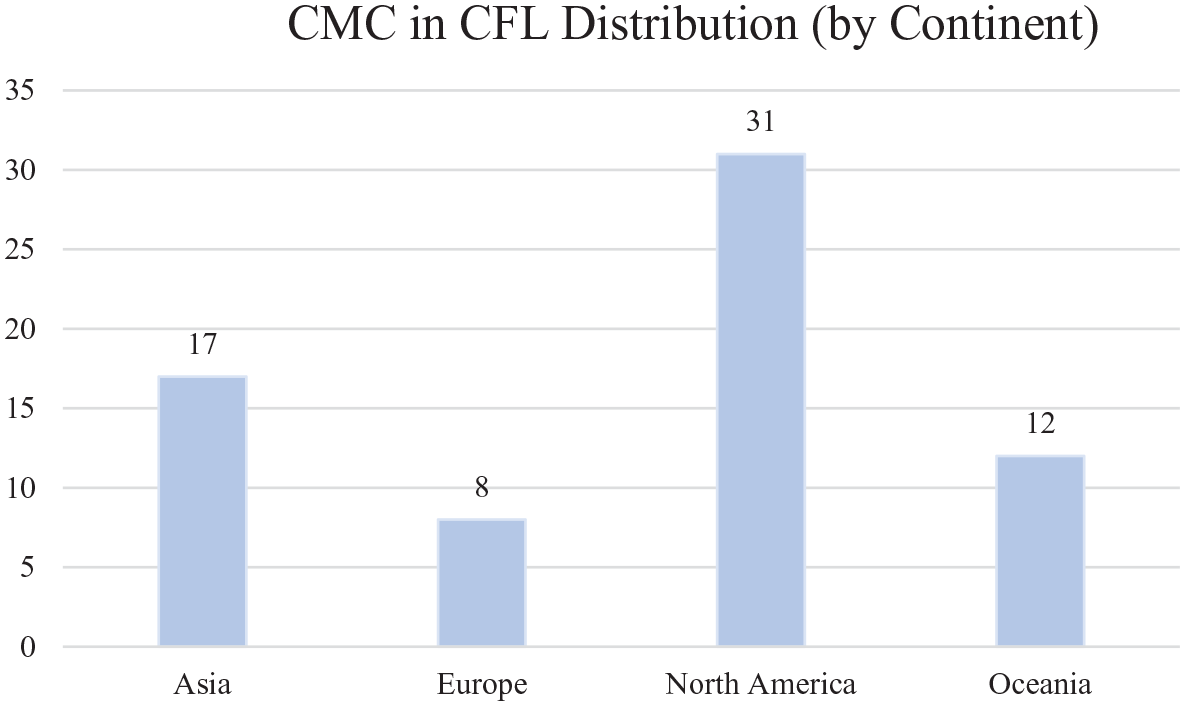
Continent distribution of 68 empirical studies in this review corpus.
In terms of learning contexts (Figure 3), the empirical studies in the systematic review were predominantly within a formal educational class context (30 out of 68 studies) while 13 took place out of class time and three did not comment on the research context in the article. Twenty-two studies presented interventions that spanned formal and informal contexts, breaking traditional learning boundaries.
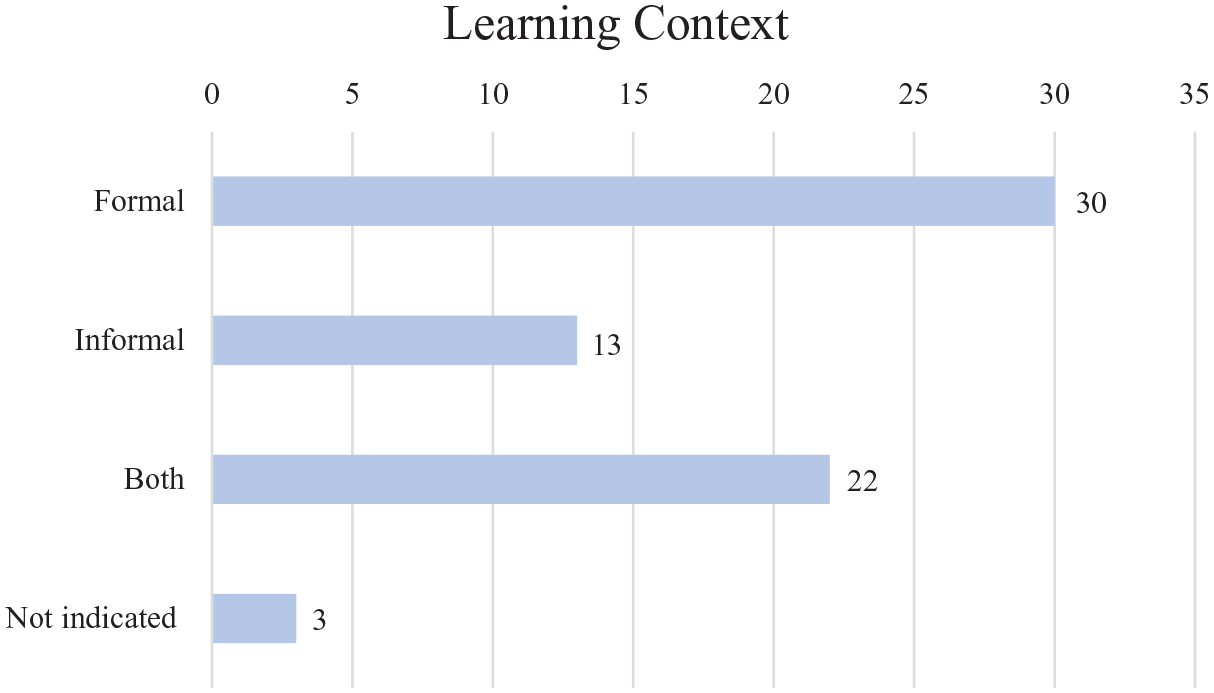
Learning context of 68 empirical studies.
b Participant demographics and Chinese language proficiency
With regard to the age and educational level of the learners, the vast majority (55 studies) recruited CFL learners from higher education institutions. Of the remaining studies, five focused on primary learners and eight on post-primary learners. The studies with young learners were predominantly within two countries (five based in Singapore and four based in the USA). It would be worth considering the curriculum or educational policy contexts that may support the use of CMC in these locations. The logistical and ethical issues of working with younger cohorts of learners may have limited the scale and scope of research with this age range. Unquestionably, the limited number of studies indicates a clear research gap in the literature in relation to younger learners that needs to be addressed.
The Chinese language proficiency level of learners, summarized in Figure 4, was not reported in many of the papers (18 studies), in particular the studies of primary and post-primary learners. Fourteen studies stated they included learners across a range of levels. The majority focused on learners at the beginning level. Only three papers specified that the learners were at an advanced level. It is worth noting that where the learners’ proficiency levels are reported, it is often not benchmarked to a clear language proficiency evaluation criterion. Only five studies referred to the Common European Framework of Reference for Languages (CEFR) to describe the participants’ Chinese language proficiency level (Cappellini, 2016; Lan, 2016; Qu & Hagley, 2021; Renner, 2017; Sunaoka, 2018). Two studies (Hsiao & Broeder, 2014; Jiang & Li, 2018) used Hanyu Shuiping Kaoshi (HSK), a standardized Chinese proficiency test in Mainland China.
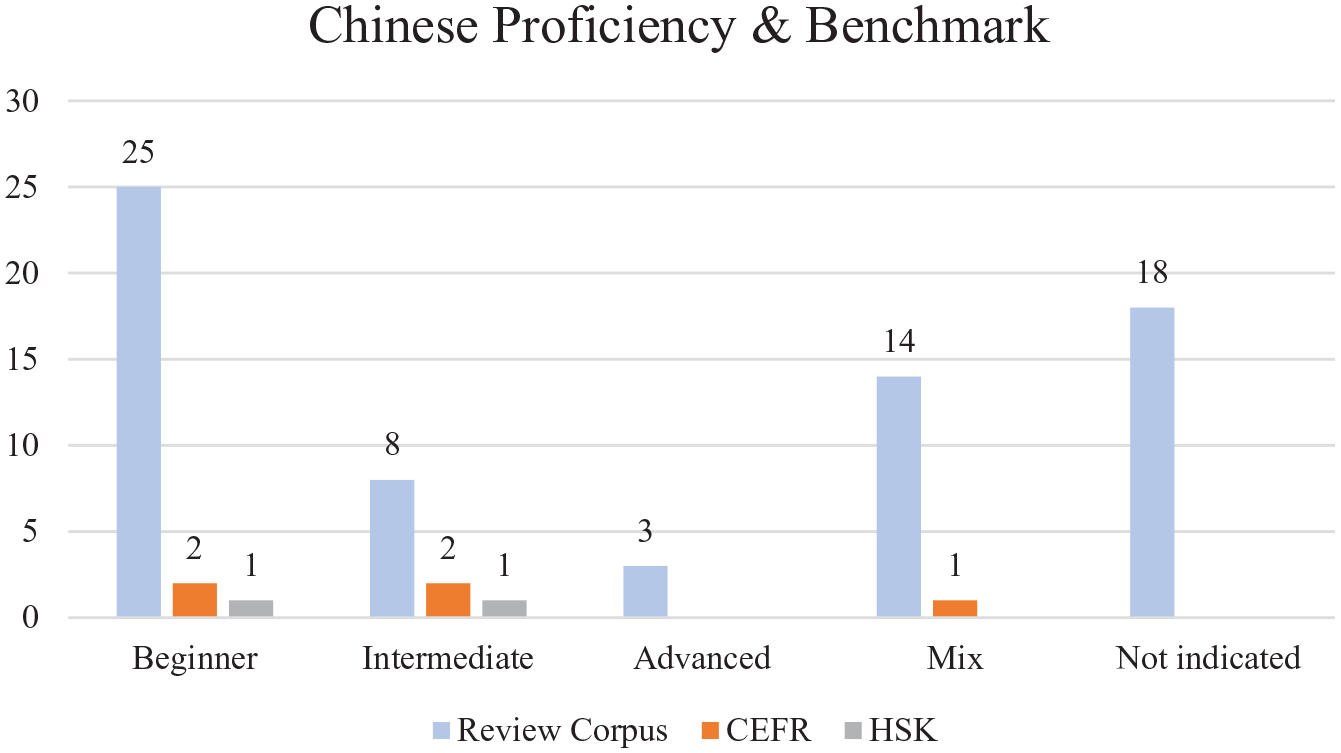
Chinese language proficiency and benchmark distributions (68 empirical studies).
c Intervention period
It is important to note that it is difficult to compare the study duration in the selected studies as seven studies did not report the duration and the remaining 61 took different measures (years, semesters, weeks, hours). Using a rough classification (short < 12 weeks; medium <= one year; long > one year), 28 studies were short in duration, 26 were medium and 7 were long. Details are shown in Appendix 3 in supplemental material. Spring, Kato and Mori (2019) demonstrate that learner language level and intervention time are two key factors which contribute to participants’ enjoyment, attitudes, motivation and perceptions of the language course facilitated by CMC tools. Therefore, we took a further step to cross-reference the intervention duration and participants’ Chinese language proficiency level (see Figure 5). As demonstrated in Figure 5, there was an even spread of study duration across the different proficiency levels. For example, beginner-level learners, which predominated in the overall corpus of articles, also predominated at each intervention duration level (13 out of 28 in short intervention studies, 7 out of 26 in medium, 3 out of 7 in long-term studies).
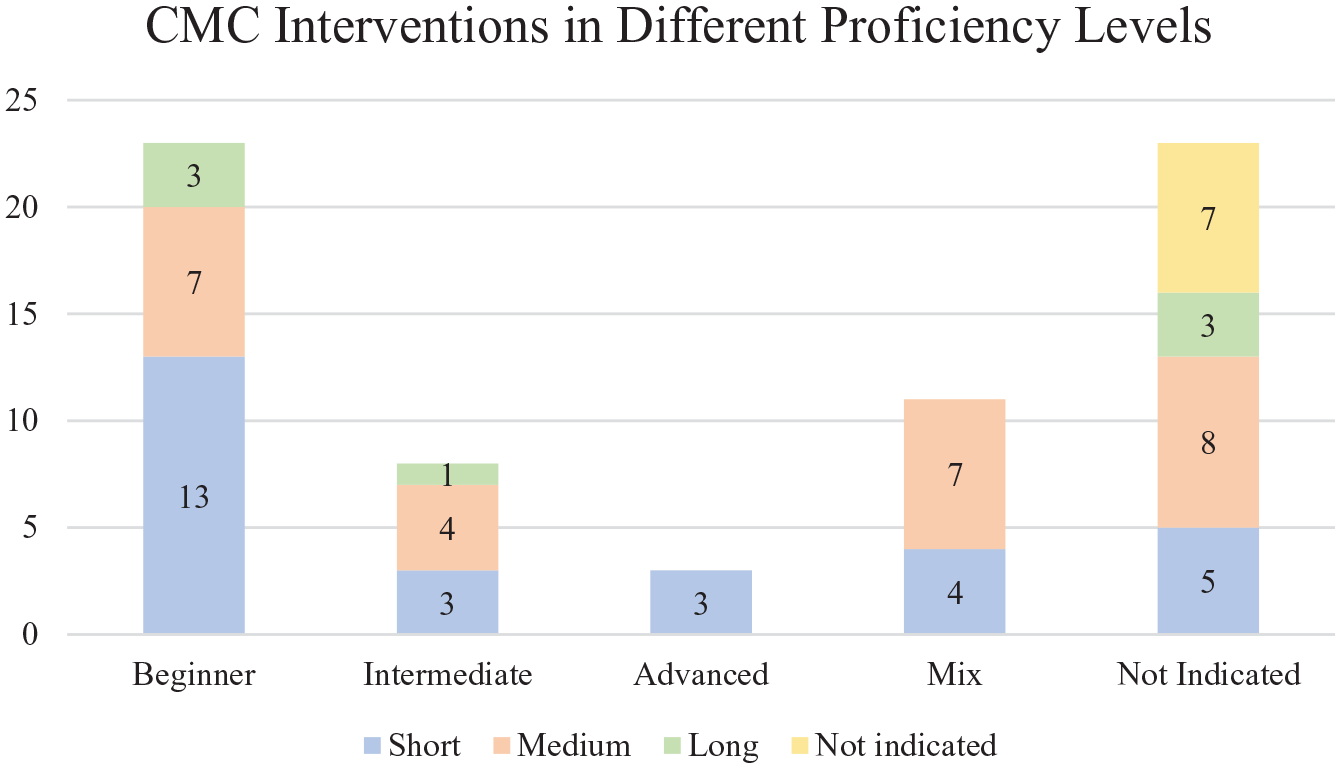
Spread of computer-mediated communication (CMC) intervention period in different proficiency levels (68 empirical studies).
In summary, the last 15 years of CMC studies in CFL have been predominantly in the small to medium intervention scale exploring learner and educator viewpoints using a wide range of CMC technological instruments. Additionally, most of the published research was based within the Anglosphere at higher educational institutions. The primary focus for research in the field was beginner-level learners. The findings would certainly suggest a need for greater precision in reporting learner language proficiency using established benchmarks in order to refine the emerging picture of how CMC is deployed in the context of CFL practice. Furthermore, the lack of research on child/adolescent learners and on advanced learners would indicate uneven development research in the field that should be addressed in future research.
d Opportunities to collaborate with native speakers
CMC does of course provide opportunities for communication in a meaningful context between language learners and others. In this review, we explored different pairs of CMC communication partners in CFL studies. In most of the studies, learners were paired with other learners of Chinese in their own classes rather than native Chinese speakers. However, 25 of the selected studies provided opportunities for learners to collaboratively learn with Chinese native speakers, with 23 of these involving learners from universities (see Figure 6).
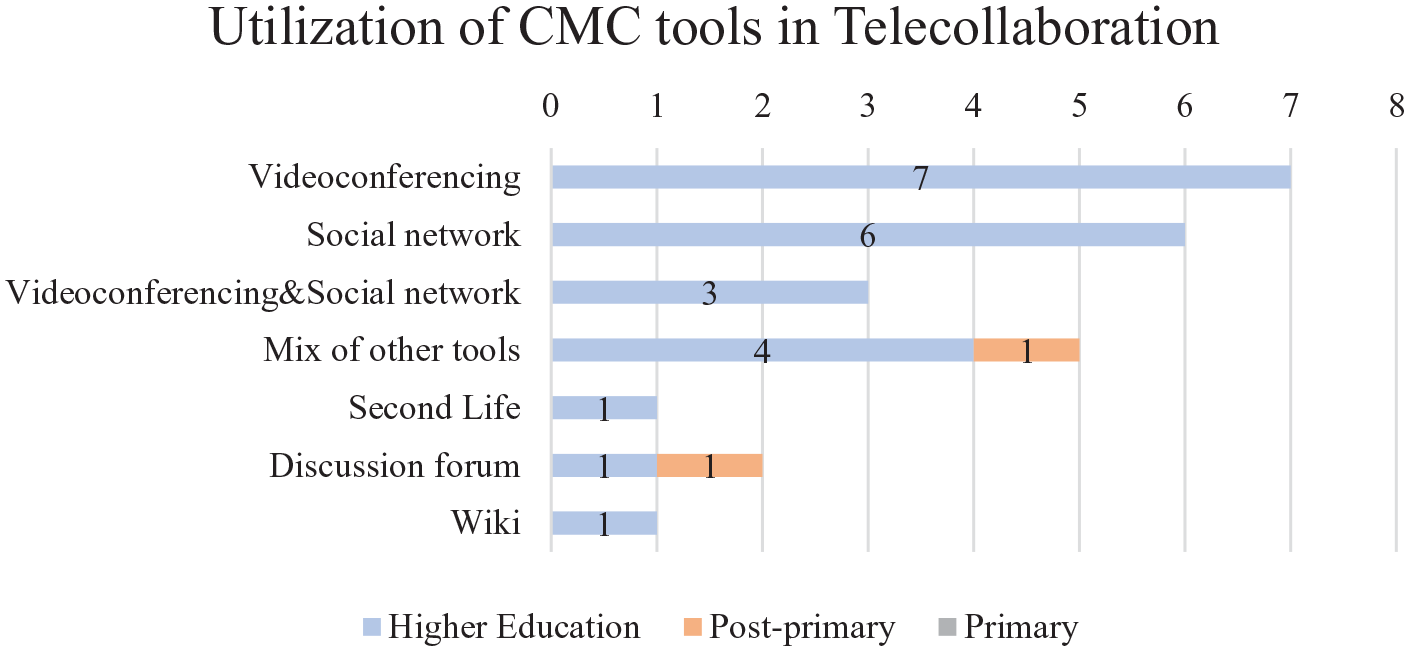
Utilization of computer-mediated communication (CMC) tools in 25 telecollaboration studies.
The synthesized benefits of telecollaboration projects from this review set are:
Develop linguistic knowledge/competence and (inter)cultural awareness through interactive communications with native speakers in an authentic environment (Jiang, 2011; Jin, 2013, 2018; Luo & Gao, 2022; Luo & Yang, 2022; Sugie & Mitsugi, 2014; Sung & Poole, 2017; Tang, Sung & Chang, 2016; Tian & Wang, 2010; Tseng, Sun & Lan, 2020; Wang et al., 2013, 2016; Zhang, 2016).
Gradually build up confidence among participants along with increasing interaction times (Ji & He, 2020; Sugie & Mitsugi, 2014; Tang, Sung & Chang, 2016; Zhang, 2016).
Increase CFL learner’s learning motivation and resilience (Jiang & Li, 2018; Luo & Gao, 2022; Sugie & Mitsugi, 2014).
Activate a supportive learner community for each participant group (Cappellini, 2016; Jin, 2013; Luo & Yang, 2022; Wang et al., 2013).
Provide CFL learners with interaction opportunities for further career development (Wang et al., 2013).
Develop CFL learners’ identity recognition (Jin, 2018; Sugie & Mitsugi, 2014).
The limited number of studies working with native speaker peers and the focus on adult learners demonstrated a practical but crucial issue with organizing and researching telecollaboration projects facilitated by CMC tools, namely logistics. The logistics of organizing telecollaboration between institutions in different time zones and under different academic structures are difficult and can easily be exacerbated by technical and operational issues (Luo & Gui, 2021; Sung & Poole, 2017; Zhang, 2016). The prevalence of studies within class groups can be explained at least in part by the logistical difficulties for researchers and practitioners of engaging across class, school, geographic and temporal boundaries. A small number of studies addressed this issue by combining in and out of class learning (Jin, 2013; Oakley et al., 2018; Sung & Poole, 2017). Uneven language proficiency levels of target languages were recognized as another issue which hindered CFL learners from interactive communication with native speakers (Jiang & Li, 2018; Sugie & Mitsugi, 2014; Sunaoka, 2018, Zhang, 2016).
In summary, studies suggest that CMC between learners and native speakers may not always be feasible and it was particularly rare in the literature for younger learners. This highlighted the logistical difficulties associated with CMC and would suggest a need to focus not only on what is effective but also on what makes CMC interventions feasible and practical within learning contexts.
2 What are the common theoretical foundations and predominant research methods deployed in CFL studies afforded by CMC?
a Theoretical foundations
In the broader literature on CMC research in SLA, the theoretical frameworks can vary. In a review of theoretical concepts of CALL research, Thorne and Smith (2011) presented four theoretical approaches: Psycholinguistics; Interaction Theory; Sociocultural Theory; and Ecological Theory. Chun (2016) referred to Ortega’s (2015) 10 contemporary categories to address that ‘. . . much, but certainly not all, of CALL research can be positioned among four of the most commonly recognized theories and approaches: Usage-based approach, the Interaction approach, Skill Acquisition Theory and Sociocultural Theory’ (Chun, 2016, p. 99). In a review corpus of 40 articles focusing on technology-mediated language learning, Su and Zou (2020) emphasized that Social Constructivism and Sociocultural Theory were the two predominant theory strands from 10 synthesized categories of theoretical constructs. A common focus across these frameworks was on the relationship between learners and the social environment, which affects their learning as well as tools or activities which mediate learning.
In terms of theoretical foundations, findings from this systematic review (Appendix 3 in supplemental material) were in line with the broader literature: Interaction Theory (Hung & Higgins, 2016; Lan et al., 2013; Renner, 2017), Social Constructivism (Cohen & Ezra, 2018; Tseng, Lin & Chen, 2018; Tseng et al., 2020) and Sociocultural Theory (Jin, 2013; Lai, 2017; Lan & Lin, 2016; Luo & Gui, 2021; Oakley et al., 2018; Sung & Poole, 2017; Thoms et al., 2017; Tseng et al., 2018; Wong et al., 2016; Zhang, 2019). The other theoretical frameworks addressed in CFL were: Byram’s Intercultural Communicative Competence (Ruan & Medwell, 2020), Blended Learning (Huang & Lin, 2011; Qu & Hagley, 2021; Sugie & Mitsugi, 2014), Communicative Language Teaching (Li & Jiang, 2017; Xie, Chen & Ryder, 2021), Multiliteracies Theory (Zhang, 2016), Task-Based Language Teaching (Jiang & Li, 2018; Lai, Zhao & Wang, 2011) and Community of Inquiry (Wang et al., 2016).
The scaffolding construct from Sociocultural Theory was adopted to explore meaningful social interactions among learners (Cappellini, 2016; Jin, 2013; Sung & Poole, 2017). In some cases, two theories have been used in combination as the framework for studies: Sociocultural Theory with Social Constructivism (Zhang, 2009); Ecological Theory with Sociocultural Theory (Jin, 2018; Wang & Jiang, 2022); Interaction Theory with Sociocultural Theory (Cappellini, 2016; Chen, 2013, 2020; Guo & Möllering, 2016, 2017). The combination of Interaction Theory and Sociocultural Theory is also known as socio-interactionism (Mondada & Doehler, 2004). However, it was difficult to synthesize the theoretical foundations as nearly half of the selected studies did not explicitly articulate a clear theoretical framework.
b Methodological approach, scope and scale
In terms of methodological approach, 36 out of 68 papers reported on mixed-methods studies with a further 16 qualitative and 13 quantitative studies. Only 3 out of 68 studies did not explicitly state their research approach but the methods were extrapolated by the reviewers as two qualitative studies (Chen, 2013; Jiang, 2011) and one mixed-methods (Sunaoka, 2016) based on reported data collection and analysis procedures. For many studies which included quantitative data, the quantitative analysis only comprised descriptive statistics for the purposes of exploration rather than inferential statistics for hypothesis testing.
Only three papers (Lai, Zhao & Wang, 2011; Lan, 2016; Lan & Lin, 2016) took an experimental design by randomly assigning participants to control and experimental groups. Nine studies were described as quasi-experimental studies with a design of pre- and post-tests/surveys/interviews to compare the potential learning gains as well as participants’ perceptions of CMC interventions (Hung & Higgins, 2016; Jin, 2008; Lan, Lyu & Chin, 2019; Qu & Hagley, 2021; Sugie & Mitsugi, 2014; Tseng, Sun & Lan, 2020; Wang & Vásquez, 2014; Wong et al., 2011; Zhang, 2019). One study involved two stages where there was experimental and quasi-experimental design respectively (Lan, 2014). The spread of data collection methods across all studies is illustrated in Appendix 3 in supplemental material with many studies using multiple data instruments to explore their research questions. In this review corpus, a range of perspectives was adopted in the papers with most focusing on the student perspective by reporting their attitudes/motivations and perceptions of specific CMC tools. For instance, a number of studies explored students’ attitudes/motivations, enjoyment and engagement with CMC (Chin, Sum & Foon, 2008; Guo & Möllering, 2017; Huang, Lin & Chiang, 2010; Jiang & Li, 2018; Lai, Zhao & Wang, 2011; Li & Jiang, 2017; Luo & Gui, 2021; Sugie & Mitsugi, 2014; Zhang, 2016). Other studies focused on language gains (Chen, 2020; Huang, 2020; Lai, 2017; Jiang, 2014; Tian & Wang, 2010; Wang et al., 2013; Wong et al., 2011; Xie, Chen & Ryder, 2021; Xu & Moloney, 2011; Xu & Peng, 2017) and/or the development of intercultural awareness (Sugie & Mitsugi, 2014; Sung & Poole, 2017; Tian & Wang, 2010; Wang et al., 2013; Zhang, 2016, 2019). Additionally, the perspectives from teachers and researchers were also addressed in seven studies to investigate the different kinds of opportunities which CMC activities afforded students (Huang, Lin & Chiang, 2010; Jin, 2008; Luo & Gui, 2021; Thoms, Sung & Poole, 2017; Xu & Moloney, 2011; Zhang, 2009; Zhang, 2016).
Regarding the scale of the studies (Figure 7), most studies (53 papers) were small to medium in scale with 10–50 participants. A reason for the predominance of small- to medium-scale studies may relate to researchers drawing on participants from particular limited CFL language courses. There were five medium- to large-scale studies with 50–100 participants (Chen, 2020; Chen, Wang & Rodway, 2021; Cohen & Ezra, 2018; Lan, Lyu & Chin, 2019; Tong, Yin & Tsung, 2022) and three large-scale studies involving cohorts of over 100 learners (Grant & Huang, 2010; Jiang, 2014; Qian & McCormick, 2014). Five of the studies were small scale involving fewer than 10 participants (Cappellini, 2016; Guo & Möllering, 2016; Jin, 2018; Ruan & Medwell, 2020; Sugie & Mitsugi, 2014) but as they provided an interesting qualitative perspective they were included in this review.
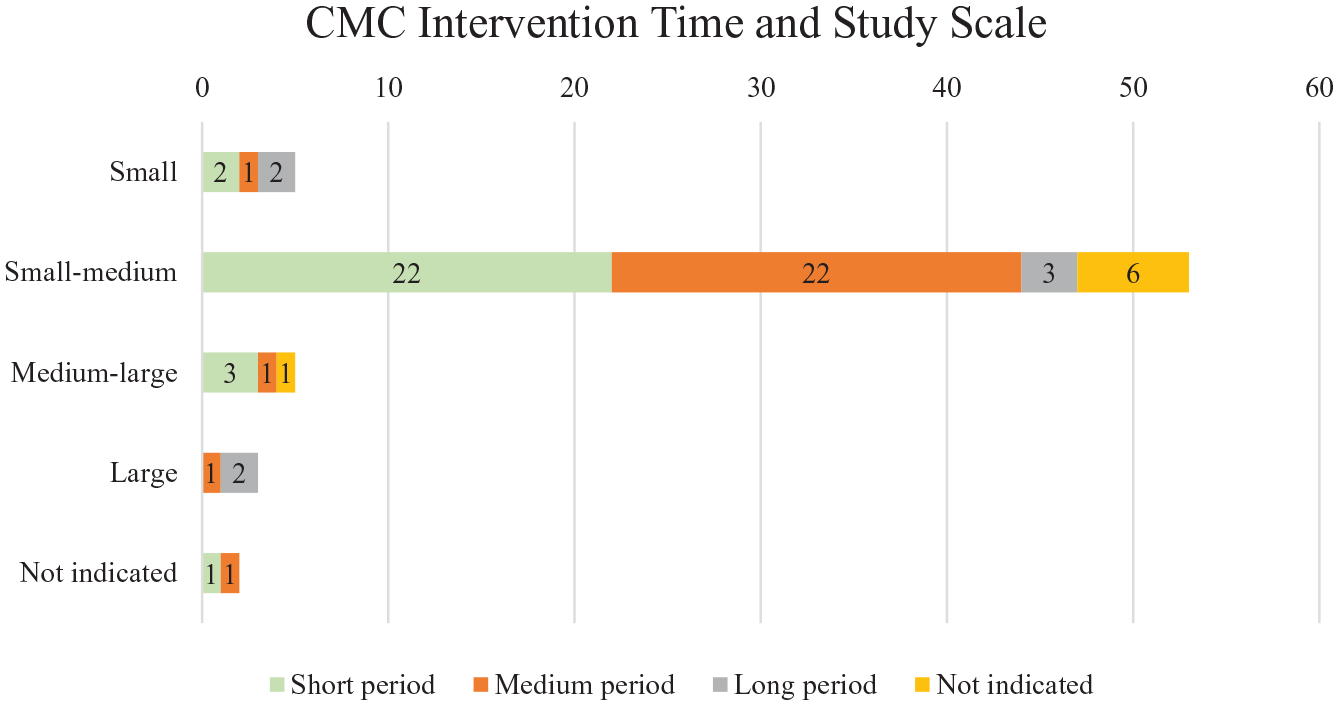
Distribution of computer-mediated communication (CMC) intervention period in different study scales (68 empirical studies).
This synthesis indicated that the scale of CMC studies in CFL was somewhat limited while the range of research instruments in use was broad and diversified for data triangulation. Furthermore, the limited range of experimental and quasi-experimental studies compelling inferential statistics could be offset by further in-depth qualitative studies.
3 What types of CMC tools and language competences are investigated in CFL studies? And what are their affordances and limitations?
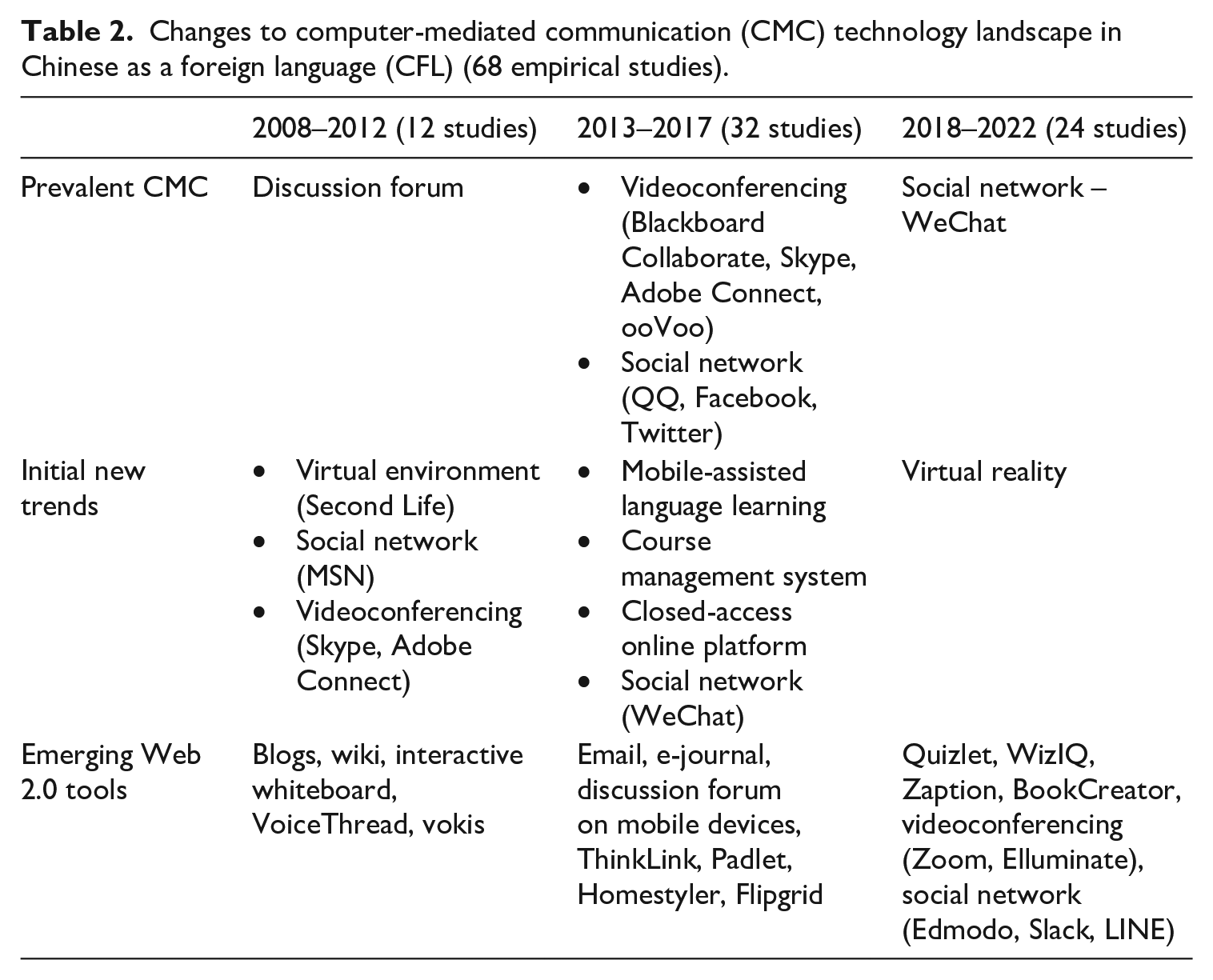
This subsection introduces the developmental trends of CMC tools in the field of CFL research over the past 15 years. The selected studies displayed a rapidly changing technology landscape since 2008 (Table 2). We first examined which tools were deployed and then discussed the affordances and limitations of different tools in the CFL context.
Changes to computer-mediated communication (CMC) technology landscape in Chinese as a foreign language (CFL) (68 empirical studies).
a CMC utilization
From 2008 to 2012, the main characteristics of CMC implementations in CFL were asynchronous text-based discussion forums and wikis, while virtual environments, social networks and videoconferencing were only in the initial stages of development. Wikis as an asynchronous collaborative platform in formal learning settings have been deployed to enhance learners’ written competence (Wong et al., 2011) and intercultural communicative competence (Wang et al., 2013). In addition, asynchronous discussion forums allow participants to obtain more time and space to think about and organize their content in collaborative activities (Chin, Sum & Foon, 2008; Qian & McCormick, 2014; Zhang, 2009).
With the advent of more available resources, videoconferencing began to thrive between 2013 and 2017. There was a downward trend in the number of studies using text or email during this period (Jin, 2008, 2013). By contrast, the studies using social networks such as Facebook, Twitter, WeChat were on the increase reflecting their growth in daily life as well as their educational value for the construction of learner communities. It is worth noting that with the wide diffusion of mobile devices in daily life, text-based tools like wikis and discussion forums were installed on mobile phones and the opportunities for their use were expanded (Lan & Lin, 2016; Wong, 2013; Wong et al., 2016). Another emerging trend in this period was the great variety of web 2.0 tools available in course management systems (such as Moodle, Blackboard). This allowed teachers to integrate different tools within one platform and make them easily accessible for CFL learners (Chen, 2013; Guo & Möllering, 2016, 2017; Jiang, 2014; Li & Jiang, 2017; Ryder & Yamagata-Lynch, 2014).
Over the last five years (2018 to 2022), social networks, especially WeChat have become much more prevalent. The affordances of WeChat have been identified and documented in prior studies (Ji & He, 2020; Jin, 2018). Specifically, Jin (2018, pp. 35–42) summarized four affordances provided by WeChat as: (1) a casual space with easy access to native speakers of Chinese; (2) authentic meaning-focused communication with native speakers of Chinese; (3) linguistic resources and multiliteracies; (4) space for new identity creation. This period has seen WeChat integrated into telecollaborative programmes for communication with native Chinese speakers (Luo & Gao, 2022; Luo & Gui, 2021; Luo & Yang, 2022; Ruan & Medwell, 2020; Wang & Jiang, 2022).
Nearly half of the selected papers (30 out of 68) used synchronous CMC technology. Although synchronous CMC implementations were very frequently deployed in CFL practice, this also resulted in negative outcomes, such as an increase of anxiety while participants engaged in telecollaboration with native speakers (Sugie & Mitsugi, 2014; Tian & Wang, 2010; Zhang, 2016). Therefore, the alternative options of asynchronous communication or the combination of synchronous and asynchronous CMC tools has become more prevalent in practice to diversify affordances and to maximize learners’ engagement. The range and variety of CMC tools deployed in the reviewed articles demonstrated that it would be necessary to report not only the tools but also to explore the fine-grained detail of how tools were used to make effective learning possible.
In summary, this analysis highlighted the constantly changing landscape of CMC tools deployed in CFL contexts. It also mirrored the rapid change in technology use in general. More recent studies tended to integrate different tools in order to achieve their learning goals. In collaborative contexts, the value of synchronous learning activities was appreciated by both students and teachers despite the logistical difficulties noted in organizing such activities.
b Individual competence development
In terms of learning gains linked to CMC use, the research consistently identifies that CMC tools improved learners’ language competence as well as their intercultural communicative competence. As noted above, the research approaches deployed were varied and often included both qualitative and quantitative perspectives. While the evidence base did not provide strong quantitative evidence for a causal relationship between CMC and learning gains, for example through randomized control trials, the breadth of evidence types and the consistency of the thrust of the findings would strongly suggest that positive outcomes in linguistic and intercultural competence are plausible in CMC interventions.
The reviewed articles allowed a fine-grained analysis of the language gains across different linguistic competencies. With respect to Chinese character writing, the mode of text-based CMC such as discussion forums, blogs, wikis, social network chats helped students learn to use Chinese character input software as well as to improve the quantity and quality of their online writing (Huang & Lin, 2011; Huang, Lin & Chiang, 2010; Luo & Yang, 2016; Sung & Poole, 2017; Zhang, 2009). Videoconferencing and Second Life played a crucial role in the improvement of oral accuracy and fluency among CFL learners (Chen, 2010; Lan, 2014, 2016; Lan et al., 2013; Renner, 2017; Shi & Stickler, 2018; Sunaoka, 2018; Tseng, Sun & Lan, 2020; Xie, Chen & Ryder, 2021). The majority of participants agreed on the effectiveness of WeChat oral feedback in enhancing their speaking ability, specifically in improving such aspects as pronunciation, grammar, vocabulary and content (Xu & Peng, 2017). As regards reading, one study found that online collaborative reading activities ‘collectively scaffold/build on each other’s understanding of the word within the context of the literary text itself allows for a more content-based, collaborative learning experience when compared to the traditional, isolated reading activity’ (Thoms, Sung & Poole, 2017, p. 44).
Twelve studies focused on the development of intercultural communicative competence through telecollaboration projects with native Chinese speakers, and identified positive outcomes such as extending awareness of intercultural differences between home and target language cultures (Ruan & Medwell, 2020; Sugie & Mitsugi, 2014; Tian & Wang, 2010; Wang et al., 2013) and developing intercultural sensitivity (Jin, 2008; Qu & Hagley, 2021).
However, some research suggested that the deployment of CMC might not be as effective as expected in developing communicative skills due to learners’ limited language knowledge in the face of anxiety, especially at ab initio level (Jiang & Li, 2018; Lan et al., 2013; Qian & McCormick, 2014; Ryder & Yamagata-Lynch, 2014; Zhang, 2016) or where the frequency of CMC usage was insufficient (Jiang, 2014). Therefore, it is important for researchers and teachers to be both aware of the limitations of CMC tools as well as the challenges of conducting CMC activities in different contexts.
c Affordances of CMC
Sociocultural Theory emphasizes that development takes places within a context and mediated by elements in that context. The term ‘affordance’ was coined by James Gibson (1979) to denote the reciprocal relationship between an organism and a particular feature of its environment (such as air, water, tools, objects etc). Van Lier (2000) develops the concept of affordance within language learning as the interaction between aspects of the learning environment and learners dynamic development process. In terms of technology, and specifically CMC tools, these elements embedded in the learning environment offer affordances which can enhance learners’ learning experience and increase their opportunities for development. Given the key features of CMC, its affordances in CFL are synthesized and discussed below.
Participation type: active engagement
CMC affords active learning and engagement for learners, as evidenced through their enjoyment, motivation and time focused on a task facilitated by tools. In a physical classroom setting without CMC, students may play a more passive role in perceiving information. However, empirical evidence from this review corpus showed that learner participation was predominantly active within collaborative activities entailing peer communication facilitated by CMC. Some studies (17 out of 68 studies) examined the effects of CMC in CFL focusing on students’ perceptions of technological tools. Thirteen of these studies reported that the introduction of CMC technology increased their enjoyment of CFL learning (Chen, 2010; Chin, Sum & Foon, 2008; Guo & Möllering, 2017; Huang, Lin & Chiang, 2010; Ji & He, 2020; Jiang & Li, 2018; Lai, Zhao & Wang, 2011; Li & Jiang, 2017; Luo & Gao, 2022; Luo & Gui, 2021; Qian & McCormick, 2014; Sugie & Mitsugi, 2014; Zhang, 2016). For instance, discussion forums provided students with a space and more preparation time to express their thoughts and opinions without the interruptions which could happen in the physical classroom (Chin, Sum & Foon, 2008). In the case of the virtual reality platform Second Life, its simulated 3D environment offered an immersive context which afforded participants authenticity, relevance and enjoyment (Chen, 2010; Grant & Huang, 2010; Lan, 2014, 2016; Lan et al., 2013; Lan, Lyu & Chin, 2019; Tang, Sung & Chang, 2016; Wang, Grant & Grist, 2021). High levels of synchronous and asynchronous interactivity among learners and learners-to-instructors were addressed and emphasized (Grant & Huang, 2010). CMC activities also pave the way to consolidate and transfer Chinese language knowledge into authentic interactions (Chen, 2013, 2020; Grant & Huang, 2010; Jiang & Li, 2018). In summary, engagement in collaborative CMC activities afforded learners opportunities to deploy their developing language resources in a focused and interactive way, promoting engagement and enjoyment among students.
Language learning context: from simulated to authentic
Sociocultural Theory focuses on the developmental process of learning and the relationship between learners and the social environment. Two key elements in the SLA process, authentic contexts and social interaction, have been acknowledged as essentials to language learning by researchers (Ellis, 2005; Nunan, 1989) and practitioners. However, it is challenging to provide students with authentic opportunities to communicate especially when they have limited target language knowledge. The simulated interactional contexts within a traditional classroom may not only demotivate learners but also limit their potential learning outcomes. In this review corpus, the authentic context afforded by social network and telecollaboration projects has been emphasized in many studies (Jiang & Li, 2018; Jin, 2018; Ruan & Medwell, 2020; Sugie & Mitsugi, 2014; Sung & Poole, 2017; Tian & Wang, 2010; Tong, Yin & Tsung, 2022; Wang et al., 2016; Wong et al., 2016; Zhang, 2014). Apparently, the authentic communicative environment was the key driver of learning activities in the context of WeChat (Jin, 2018). Furthermore, Wong et al. (2016) emphasized that the richness of authentic contexts enabled students to develop their vocabulary use and improve the quality of the artefact creations. However, Sung and Poole (2017) remarked that the authenticity required access to digital materials, language knowledge and technology skills, therefore they emphasized the importance of preparing and training learners, in particular adolescent learners, in the use of technology to maximize positive outcomes and avoid negative ones.
Role shift for teachers: from instructors to activity facilitators
Scaffolding is defined as the assistance/help from adults or experts in the learning process (Wood, Bruner & Ross, 1976). The selected studies emphasized that CMC implementations require CFL teachers to move away from a more traditional ‘sage on the stage’ role to a more facilitative ‘guide on the side’ role within the learning process. As facilitators, their key function is to design and prepare CMC activities with appropriate language and technology scaffoldings and to provide appropriate formative feedback to learners.
Although many of the articles did not explicitly discuss the details of teachers’ responsibilities in facilitating CMC interventions, a small number of studies did explore this aspect (Huang, Lin & Chiang, 2010; Ji & He, 2020; Lan et al., 2013; Luo & Gui, 2021; Oakley et al., 2018; Ryder & Yamagata-Lynch, 2014; Zhang, 2014; Zhang, 2016). These studies noted that the teacher’s role had changed to a facilitative role rather than a strictly didactic presence. The participating teacher from Xu and Moloney’s study (2011) highlighted the shift in teaching from a delivery model to a more student-centred one by deploying the interactive whiteboard in the class. Ji and He (2020) addressed the importance of simultaneous feedback and scaffoldings from teachers as it ‘may also effectively change participants’ attitudes, energize participants, as well as increase and broaden their participation in various ways’ (p. 109). Zhang (2014) noted that the analysis of chat logs among CFL learners and native speakers helped teachers to identify ‘teaching points and moments’ (p. 541). Grant and Huang (2010) categorized the roles of teachers within Second Life as: (1) to create and design the environment and activities; (2) to scaffold learners during activities, (3) to confirm the completion of activities. In addition, Oakley et al. (2018) reported that scaffoldings may vary depending on teachers’ expectations of their students.
The above studies explicitly adopted a teacher perspective in exploring the CMC intervention. O’Dowd (2015) addressed the importance of supporting telecollaborative practitioners with accessible structured training in order to foster four competences: organizational, pedagogical, digital and attitudinal. Some studies in our review corpus also demonstrated that teachers who had both sufficient technological expertise and an open attitude would positively impact on the effectiveness of CMC adaptions and implementations in practice (Lai, 2017; Oakley et al., 2018; Xu & Moloney, 2011). These studies emphasized the critical role of teachers in structuring, supporting and providing feedback to learners in order to maximize the learning opportunities of CMC interventions.
d Limitations and challenges of CMC
Although the overall findings were positive, there were certainly limitations and challenges in the field of applying CMC in CFL research. The following paragraphs outline two problem dimensions: technological-level issues and individual-level concerns.
Technology is largely facilitative in the case of CMC implementations. However, it may also bring a range of challenges that negatively impact on learners. The issues noted across the review studies were related to technological problems and access. In terms of the technology itself, time lags or sound delays caused by unstable internet connections had a negative impact on participant engagement (Lai, Zhao & Wang, 2011; Lan, 2016). Furthermore, insufficient technological support from IT specialists was identified as an issue in the reviewed corpus. Learning outcomes were affected by a lack of familiarity with tools among students (Lan, 2014; Wang et al., 2013). To ensure that both teachers and learners have adequate technological knowledge of the selected CMC tools, training prior to CMC activities was suggested by some studies (Huang, Lin & Chiang, 2010; Lai, Zhao & Wang, 2011; Renner, 2017; Wang et al., 2013). In relation to text-based CMC tools, learners must have a firm grasp of Chinese Pinyin or character typing skills. For example, participants stated that mastering faster typing and posting skills in Chinese would make them engage more in the online discussion forum (Chin, Sum & Foon, 2008). Finally, digital access was often problematic. To maximize the effects of CMC activities on learning performance, Sung and Poole (2017) suggested that flexibility of access to CMC technology would allow students to effectively participate in activities in and out of class.
Moving on to individual-level concerns, from the teachers’ perspective, the major logistical, technological, and pedagogical organization issues when preparing CMC activities can be much more time-consuming when compared to traditional CFL classes. Adequate scaffoldings from teachers at each stage of CMC tasks were required to maintain a well-supported environment for authentic communications (Wang, Grant & Grist, 2021). However, some teachers had a more negative attitude towards new technologies which influenced the implementation of CMC activities (Xu and Moloney, 2011). In addition, the challenge of establishing a sustainably interactive relationship between students and teachers was identified as the biggest obstacle (Lai, Zhao & Wang, 2011).
From the learners’ perspective, telecollaboration projects led to concerns about increased anxiety levels and frustrations due to inadequate target language proficiency compared to native speakers (Lan et al., 2013; Jiang & Li, 2018; Sugie & Mitsugi, 2014; Sung & Poole, 2017; Tian & Wang, 2010). Nervousness was another factor which consistently hindered the quality of interactions with language partners (Zhang, 2016). Obstacles caused by individual differences (e.g. personal interests, expectations from language partners) was a further factor which prevented participants from in-depth communications (Luo & Gui, 2021; Zhang, 2016). Logistical issues were also discussed frequently in the review corpus such as scheduling synchronous communications with language partners out of class time (Luo & Gui, 2021; Oakley et al., 2018; Ryder & Yamagata-Lynch, 2014; Sung & Poole, 2017; Zhang, 2016).
In summary, the utilization of CMC in CFL practice, brought new requirements not only for learners but also for teachers. While many benefits of CMC were noted in the review corpus, there remained many challenges which could inhibit the successful implementation of CMC in CFL environments.
4 Limitations of this systematic review
The transparent procedures of the review process were carefully followed in order to maximize the reliability of the results. However, as in any systematic review, the review may be subject to publication bias inherent in the research field as it only drew on peer-reviewed journal articles and did not include potentially relevant grey literature. In particular, doctoral theses offer an opportunity to explore findings that are not subject to the ‘file drawer’ effect whereby negative findings are less likely to be published (Rosenthal, 1979). A further limitation of systematic reviews is the potential bias imposed by the electronic databases which may not catalogue or include all relevant journals. In order to address this limitation, the initial database search was supplemented with an extensive manual search of the key journals in the field. The manual search process also ensured a high quality and coverage of the articles entering the screening process. In spite of following a rigorous review process, potential interpretive bias or human error might occur in terms of screening and data extraction. In this study, active steps were taken to reduce this possibility through cross-validation of the screening and data extraction outputs, such as inter-rater reliability checking for a sample of 10% of the selected papers by both authors. Regarding the final set of articles selected, we were unable to access the full-text version of three articles which were excluded from further analysis.
V Conclusions and future suggestions
This systematic review sought to provide a comprehensive overview of CMC in the field of CFL from 2008 to 2022. The majority of studies were in a formal education context across Anglosphere countries predominantly with adult learners in higher education institutions and most commonly with beginner-level learners. The review highlighted the limited number of studies focused on younger CFL learners or on intermediate and advanced learners.
This review also demonstrated that CFL in this corpus drew on the broader theoretical foundations of the wider SLA field: in particular, Interaction Theory, Social Constructivism and Sociocultural Theory (including Ecological Theory). The empirical studies were predominantly Mixed Methods with a small number of experimental or quasi-experimental studies in the review corpus. Further considerations should be given to experimental, quasi-experimental and longitudinal studies where feasible in order to increase the weight of evidence to support conclusions, especially for the effectiveness of CMC. Qu and Hagley’s study (2021) may provide us with a practical approach to the quasi-experimental design by taking the prior year of participants as the control group to evaluate the effects of CMC. In terms of scope and scale, studies tended to be short/medium term and relatively small to medium scale. As noted previously, the logistics of implementing CMC interventions can be challenging, and this is reflected in the study design, scope and scale.
With respect to the utilization of CMC in the past 15 years, we reviewed its development over five-year increments. In the first five-year period (2008–2012), asynchronous text-based CMC tools predominated in CFL practice. Videoconferencing has been more widely deployed along with the dispersion of mobile and course management system within schools in the second five years (2013–2017). Over the recent five years (2018–2022), integrating multiple platforms as well as social networks, especially WeChat, have been widely investigated to create authentic communicative contexts in reviewed studies.
This review highlights the key affordances of using CMC technologies in a CFL context:
Active engagement: Participants become more actively engaged in learning through CMC activities.
Authenticity of communication: Participants have opportunities to immerse themselves in an authentic language environment by communicating with native speakers.
Learner centeredness: The role of teachers has to shift from an instructor to an activity facilitator.
Opportunities for practice and discovery: CMC interventions support the development of both language competences and intercultural communicative competence.
It also identifies critical challenges and limitations of implementing CMC interventions in practice, such as time lags and delays, increased teacher workload for planning and preparation, increased skills requirements of teachers and students, increased levels of anxiety and self-consciousness of learners.
Our review findings have generated the following recommendations for future research:
Broaden the scope of research to incorporate more studies with younger learners and learners at higher language proficiency levels.
Use established benchmarks, such as the CEFR or HSK, to report CFL language proficiency in order to facilitate comparison of results across studies.
Provide more explicit details on how CMC tools and task design interact within an overall pedagogical approach. For instance, including some discussions on the logistics of operationalizing the approach in a real-world classroom.
In order to establish the effectiveness of CMC interventions, consider experimental study designs and clearly articulate the rationale and process for measuring effectiveness and student outcomes.
Drawing on the findings of this review, the following recommendations for practice identify some of the critical elements for successful CMC implementations:
To ensure essential trainings is available to different participant groups (e.g. CFL learners, native speaker partners, teachers) in each stage of CMC tasks (pre/during/post). It is suggested that the focus for training be centred on introducing functions of CMC tools, peer feedback as well as communicative strategies.
To explore the application of CMC technology in cross-discipline CFL courses (e.g. Business Chinese, Law in Chinese). Among the 68 empirical studies in this review set, there is only one study that involved participants from Business Chinese courses (Wang et al., 2013), which supported students’ professional development by setting up a mock company with Chinese native partners on wikis. . This study showed a possibility to integrate CMC in a cross-disciplined CFL course rather than a pure language class. In addition, Luo and Yang (2018) also addressed the importance of cross-disciplinary telecollaborations as a new trend in the CFL field.
To set up a range of specific and reachable learning objectives for students (from minimum/basic to maximum/advanced) considering their language proficiency differences even though they are from the same class. This will help learners be aware of achievable goals thus reducing the level of anxiety and preventing them from becoming overwhelmed.
In order to maximize the effectiveness of educational technology applications in practice, it may be necessary and more feasible to combine in and out of class learning. While effective CMC can be possible in an intra-class setting between peer learners, it is feasible and desirable to encourage telecollaborative learning between Chinese language learners and Chinese native speakers by conducting meticulously designed collaborative tasks based on their language proficiency and learning needs.
The integration of different CMC types (synchronous or asynchronous), technological tools and task activities is becoming more common, especially since the pandemic. This makes a clear narrative about CMC tools and task characteristics in papers even more important. An explicit explanation of the CMC intervention design will not only allow researchers to conduct comparisons across studies, but also provide both practitioners and researchers with clear parameters and instructions to potentially replicate the intervention in other classrooms and contexts. If CMC and task designs among teachers is well understood, it would be possible for CFL learners to retain their passion to sustainably learn Chinese in the future.
Supplemental Material
sj-docx-1-ltr-10.1177_13621688221132475 – Supplemental material for A systematic review of computer-mediated communications in Chinese as a foreign language from 2008 to 2022: Research contexts, theoretical foundations and methodology, affordances and limitations
Supplemental material, sj-docx-1-ltr-10.1177_13621688221132475 for A systematic review of computer-mediated communications in Chinese as a foreign language from 2008 to 2022: Research contexts, theoretical foundations and methodology, affordances and limitations by Mengdi Wang and Ann Devitt in Language Teaching Research
Footnotes
Funding
The author(s) disclosed receipt of the following financial support for the research, authorship, and/or publication of this article: This work was supported by China Scholarship Council – Trinity College Dublin Joint Scholarship.

Supplemental material
Supplemental material for this article is available online.
References
Supplementary Material
Please find the following supplemental material available below.
For Open Access articles published under a Creative Commons License, all supplemental material carries the same license as the article it is associated with.
For non-Open Access articles published, all supplemental material carries a non-exclusive license, and permission requests for re-use of supplemental material or any part of supplemental material shall be sent directly to the copyright owner as specified in the copyright notice associated with the article.
